Horse Driver Record’s debut release focuses on 3 Brooklyn Heroes, that first saw the day of light in 1983, alongside one of the most prolific producers to ever grace our planet.
This record takes the listener from the east coast all the way to LA to solve the infamous coast battle of the nineties in one single 45rpm record.
On the A Side the listener is invaded by the rawness of the legendary fusion of these heroes with their original producer that carries the double 18th letter as his initials.
When the Brooklyn boys moved to the west, they got hit with lot of dust, which shows in the unique flavour of the flip side Johnny and Sharon.
quête:double v
- 1: My House
- 2: Adobe Clay
- 3: Unquenchable Craving
- 4: Kings And Queens
- 5: The Lesson
- 6: Telephone
- 7: The Other Side
- 8: As The Stars
- 9: The Curse
- 10: Big World
Sydney artist Natalie Slade's debut album Control, co-written with Hiatus Kaiyote's Simon Mavin, is now followed-up with a second instalment of Australian future soul in Molasses, an album featuring a range of UK and Antipodean artists. Joined by The Dieyoungs on keys and Laneous on guitar, Natalie's songwriting and vocals are brought to the fore with excellent production by key Melbourne scene driver, Brisbane's Sampology and additional production from guest Dan Kye. Staying true to the debut album's style of Australian future soul Molasses has an emphasis on poetic storytelling, Natalie's lyrics and melodies that are heard against a lush bed of string arrangements and the influence of Sampology’s soulful but gritty sensibility. As well as her amazing eponymous releases Natalie has also featured on tracks from artists as important and diverse as Posy, Plutonic Lab, Parker and Rhodes and Dojo Cuts among others. Sampology is an innovative producer who, for the past 15 years or so, has been a driving force behind Australia's Hip-Hop, Neo-Soul and Broken Beat/Jazz explosion and has worked with the likes of Ron Trent, Tiana Khasi and Charlie Hill as well as releasing his own tracks. This collaboration between Natalie and Sampology on Molasses is a real high-water mark of music, song-writing and production. Releasing on digital and double vinyl LP, Molasses further chronicles the rising stars of Australia's burgeoning and increasingly important neo-soul and future soul scenes.
- 1: Nina’s Dream
- 2: Mother Me
- 3: The New Season
- 4: A Room Of Her Own
- 5: A New Swan Queen
- 6: Lose Yourself
- 7: Cruel Mistress
- 8: Power, Seduction, Cries
- 9: The Double
- 10: Opposites Attract
- 1: Night Of Terror
- 2: Stumbled Beginnings…
- 3: It’s My Time
- 4: A Swan Is Born
- 5: Perfection
- 6: A Swan Song (For Nina)
Black Swan is a 2010 American psychological thriller film directed by Darren Aronofsky and starring Natalie Portman, Vincent Cassel, Mila Kunis and Winona Ryder. The plot revolves around a production of Tchaikovsky’s Swan Lake ballet
by a prestigious New York City company. Usually described as a psychological thriller, Black Swan can also be interpreted as a metaphor
for achieving artistic perfection, with all the psychological and physical challenges one might encounter.
The original score for the film was composed by Clint Mansell, an English musician, composer, and former lead singer of the band Pop Will Eat
Itself. Mansell was introduced to film scoring when director Darren Aronofsky hired him to score his debut film, Pi. Ever since Mansell wrote the score for many of Aronofsky’s films. Notable additional film scores include The Fountain, Moon, Smokin’ Aces, Requiem for a Dream, The Wrestler, Doom, and High-Rise.
BLKG 7 is an essential triple-threat for collectors who go deep into that jazz-funk-psych crate.
Side A features Joe Pass’ haunting “A Time For Us,” lifted from his slept-on Guitar Interludes LP (1970, World Pacific). Heavy w/ cinematic strings, sparse drums & spacious guitar—perfect for blends, loops, or just zoned-out listening. J Dilla thought the same on “Chopped Thoughts”, & for Slum Village’s “Too Much”, but the original stands alone as pure mood.
Side B is a masterclass in moody grooves: “Enchanted Lady” (Milt Jackson & Ray Brown, Much In Common, 1964) is an underrated modal slow-burner w/ a hypnotic swing. Pete Rock & CL Smooth double dipped in “Caramel City” & Escape”, but others were also inspired: Large Professor “Ijuswannachill”, De La Soul“Dinninit”, Rob Swift“Natural Hight”, Knxwledge “3Koins”, among others.
Then comes “Cross Country” by Archie Whitewater—famously Kanye chopped it for Common’s “Drivin’ Me Wild”, but the OG is all groove: head-nod drums, brass stabs & electric piano that goes there.
Kobe Dupree unveils debut album, ‘Voice from the Inside’, arriving 21st May 2025. It lands on fellow Chicagoan DJ Hyperactive’s 4Trk (4 Track Recordings), and features twelve tracks already supported by the likes of Dustin Zahn, Truncate, Korea Town Acid, Amanda Mussi & more, coming out on wax alongside the digital release.
Dupree’s cosmic ambient opener, 'Jacurutu', sinks you into deep, sub-aquatic techno hypnosis before 'Heretics' layers up alien sounds and rolling kick drums. 'Syk' brings edgy, unrelieved loops and muffled spoken words over more mind-melting rhythm. The supple sounds and otherworldly atmospheres continue on 'Forms', which is marbled with static electricity, with 'Interlude of Voice' marking a moment to reset amongst gorgeous celestial synth smears.
The second half of the album takes in the more punchy but still perfectly loopy deep techno of 'Memory Replacement' and psychedelic swirls of 'Tongue of the Unseen'. There is a mystical charm to the harmonic tones of 'Gammu', a moodier vibe pervades the suspensory 'Fogwood', then 'Semuta Music' traps you in tightly coiled drums and hi-hats while a backlit glow soothes the soul. 'One of Many Faces' closes with a heart-aching piano piece that gets deeply emotional.
Kobe Dupree is a techno artist from Chicago with a deep interest in sound design and minimalism. His musical experiments have been released on Trax Research, Double Vision Records and DJ Hyperactive’s 4 Trk, on which he released the ‘Stimulate | Iterate’ EP in 2024. He has a hybrid approach to production, which involves using a modular rig for sound design before moving to a DAW for arrangement and final touches, heard on the sophisticated and cerebral ‘Voice from the Inside’ album.
Das dritte Album der Supersuckers aus Tucson, AZ - "The Sacrilicious Sounds of the Supersuckers" von 1995 - ist ein Klassiker und endlich wieder erhältlich, und zwar auf limitiertem, undurchsichtigem, rotem Vinyl! "The Sacrilicious Sounds of The Supersuckers" wurde von Paul Leary von den Butthole Surfers produziert und ist wütender, höhnischer Punkrock, der die besondere Mischung aus Hardrock, Punk und anspruchsloser Country-Kultur der Band perfekt auf den Punkt bringt. The Damned trifft ZZ Top? Die Motörhead des Südwestens? So etwas in der Art, sicher, aber letztendlich sind The Supersuckers ihr eigenes Ding, und auf "The Sacrilicious Sounds..." - und vor allem auf der Single "Born With a Tail" - beginnen die kläglichen Country-Klagen von Sänger Eddie Spaghetti selbstbewusster durch das rohe Punk-Aggregat zu stoßen. Apropos Aggro: Dies ist das einzige Album der Band mit Rick Sims von den Punk-Legenden Didjits aus Illinois an der Gitarre, und Sims treibt die ohnehin schon gewaltige Wand aus übersteuerten Gitarren der Supersuckers pflichtbewusst in die Höhe. Als zusätzliches Schmankerl übernimmt Sims den Leadgesang bei dem rasanten "Run Like a Motherfucker".
- A1: Quasimode - High Tech Jazz (Paul Murphy 45 Edit)
- A2: Christian Prommers Drumlesson - Trans Europa Express
- A3: Pamela Wise - Gibraltar
- A4: Jazzbois - Nutville (Live At Ninety One Living Room)
- A5: Antonio Hart - Sticks
- A6: Saimaa - Super Strut
- A7: Clementine - Sandalia Dela
- A8: Barry Adamson - - Miles
- B1: Version City Session - Riot In Lagos (Slowly Version)
- B2: 3Io - Born Slippy Nuxx
- B3: Giacomo Gates - Is That Jazz
- B4: Frank Morgan &Amp; Bud Shank - Quiet Fire
- B5: Blue Mode - Jungle Strut (Feat Chip Wickham)
- B6: Mike Ledonne Groover Quartet Plus Gospel Choir - Bridge Over Troubled Water
Jazz Room Head Honcho Paul Murphy kept hearing all these fab versions of some of his favourite tunes.
He couldn't release them all, a year is just not long enough so it was time to put together the first Jazz Room Records Compilation, entitled JAZZ ROOM PRESENTS: COVERS. Snappy & to the point.
Some exclusives and first time Vinyl releases on this Double Vinyl album, ranging from the Psychedelic Jazz Fusion of Helsinki Collective "Saimaa" with their epic LIVE version of the Deodato Classic "Super Strut" to the Japanese Shibuya Jazz Artistry of Quasimode with a Jazzy take on the Galaxy2Galaxy 90's Techno Floor Filler. Jazz meets Dub in the "Slowly" produced "Riot In Lagos" and some finger snapping Cool New York Vibes on Giacomo Gates Hip To The Trip version of Gil Scott-Heron's "Is That Jazz".
There's even a Gospel meets Soul Jazz tribute to Simon and Garfunkel. Oh yeah. Did we say there's a Chip Wickham exclusive too?
Louie Vega says: "This is an Awesome Compilation!"
d 04: Jazzbois - Nutville (Live At Ninety One Living Room) feat. Dom Beats
- 1: Hip Hug-Her
- 2: Soul Sanction
- 3: Get Ready
- 4: More
- 5: Double Or Nothing
- 6: Carnaby St
- 7: Slim Jenkins’ Place
- 8: Pigmy
- 9: Groovin’
- 10: Booker’s Notion
- 11: Sunny
One of the treasures of listening to this album is hearing their signature sound moving through the culture of the 60s while holding onto what made them…well…them. Even as the album art veered towards a counter-culture sensibility, the music inside was not letting the listener mistake them for anyone else but themselves… always Booker T. & The MGs. 1967’s Hip Hug-Her is one of their most beloved records, with its toe tapping into the pop world. Spawning two significant hits, their cover of the Young Rascals “Groovin” and the title track, which many recognize as the iconic opening and closing credit sequence music for the movie ‘Barfly.’
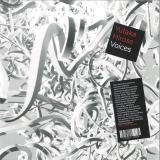
WRWTFWW Records is very excited to announce its third release from visionary Japanese ambient/experimental/environmental composer/producer Yutaka Hirose, this time with brand new album Voices, available on limited edition heavyweight-sleeved double LP as well as double CD, both with liner notes from the artist.
Voices finds Yutaka Hirose expanding his signature spatial layering into a three-dimensional videography of sound, blending field recordings, electronic manipulations, and abstract narratives. The 12-track album is a journey through a crumbling library where books whisper, history collides, and sonic textures weave new realities. Chaos, memory, and transformation – Hirose’s voices echo throughout the space, creating a fully immersive sonic experience.
The pioneering experimental and abstract electronic piece with deep hints of ambient and IDM is beautifully represented by the original artwork by Koji Shiroshita and Mifuku gracing the double LP and double digipack CD sleeves.
Voices marks Yutaka Hirose’s third full-length release on WRWTFWW Records, following his kankyõ ongaku classics Nova + 4 (an expanded version of his genre defining Soundscape 2: Nova album) and archival compilation TRACE: Sound Design Works 1986-1989, both available in vinyl, CD, and digital formats.
- I Ride
- Sleeping With My Boots On
- Eagle Eyes
- Old Time Religion
- This Mortal Bed
- Murder In Slow Motion
- Stolen Kiss
- The Life In Me
- I Will Forget You
- The Knife Within
- We've Come A Long Way
- Dark Matter
"After the success of his album Le Bal des Crocodiles in 2023, the Parisian label Teenage Kicks Production has announced the imminent release of the new album by the artist Homme Bleu, titled Dark Matter. Recorded at Garage Studio in Montpellier, this album will feature 12 tracks in English. The mixing was done in New York by Alex Conroy, except for the track The Life in Me, which was mixed by Steve Lyon (Depeche Mode, The Cure, etc.). A resolutely rock album that highlights guitars with modern arrangements. Introspection, existential questions, human relationships, and the passage of time are the artist's favorite themes, with a distinctly pop-rock influence infused with an electro whirlwind. Three singles have already been released from the album: The Life in Me, a high-energy rock track dominated by guitars; I Ride: a groovy mid-tempo ballad reminiscent of Radiohead's universe, an ode to inner freedom and resilience; titletrack Dark Matter, an eponymous track, a piano-vocal ballad. The album cover was designed by Frank Loriou (Manu Chao, Miossec, etc.), with whom Homme Bleu has collaborated since the beginning of his career." Double-LP in gatefold sleeve, blue vinyl.
- Laugh
- Living Machine
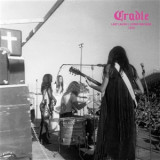
Cradle was a late-60s/early-70s Detroit rock band that evolved from the groundbreaking all woman rock group The Pleasure Seekers, led by the Quatro sisters-Patti, Nancy, Suzi, and Arlene, By the final lineup of The Pleasure Seekers, Nancy Rogers had joined as drummer, bringing a new thunderous presence with her double bass drum kit and playing a key role in the group's transfornation into their heavier sound under the new moniker, Cradle. With raw, intricate instrumentation and powerful dual vocals-Suzi's Joplin-esque edge and Nancy Quatro's Robert Plant-like wail-the band delivered socially relevant hard rock with grit and attitude. Touring extensively, they shared stages with legends like Mountain. Ten Years After, Jeff Beck, Santana, and Jefferson Airplane, cementing their place in Detroit's hard rock movement. Despite theit undeniable talent and determination. Cradle faced industry roadblocks, disbanding in 1973. But today, their music sounds better than, ever-and their legacy serves as an important chapter! in music history, helping pave the way for women in heavy rock.
- History Repeats
- We're Still Singing
Color Vinyl[12,82 €]
Double A-Side release by two of Englands best Streetpunk/Oi! Bands with two new songs on a ltd vinyl 10inch! GIMP FIST celebrating their 20years anniverary with brandnew track "History Repeats"."HISTORY REPEATS" is something very special in every way: The song surprises with a sound that is very atypical for Gimp Fist, with excursions into folk punk, and for good reason: It is released exactly 20 years after their first pub concert back on June 6, 2005, in Bishop Auckland, and it has captured just that atmosphere musically. Instead of merely celebrating themselves as is usual with anniversary songs, the lyrics convey a clear message to society and politics for mutual respect and peace, as the signs unfortunately point to 'History Repeats' with all the current conflicts worldwide. UK's Streetpunkers RIOT CITY RADIO shouting out loud to all football and soccer fans with their new song "We're still singing" A terrace themed anthem calling out all the 'fair weather' supporters who turn their back on their sports team when times get hard. Catchy Singalongs paired with melodic hooklines and straight forward guitars, for good reasons RIOT CITY RADIO are handled as on of UK's actual best Streetpunk bands! Classic black vinyl, here's the Gimp Fist cover art displayed.
GIMP FIST / RIOT CITY RADIO
HISTORY REPEATS/WE'RE STILL SINGING (SPLIT 10")
Double A-Side release by two of Englands best Streetpunk/Oi! Bands with two new songs on a ltd vinyl 10inch! GIMP FIST celebrating their 20years anniverary with brandnew track "History Repeats"."HISTORY REPEATS" is something very special in every way: The song surprises with a sound that is very atypical for Gimp Fist, with excursions into folk punk, and for good reason: It is released exactly 20 years after their first pub concert back on June 6, 2005, in Bishop Auckland, and it has captured just that atmosphere musically. Instead of merely celebrating themselves as is usual with anniversary songs, the lyrics convey a clear message to society and politics for mutual respect and peace, as the signs unfortunately point to 'History Repeats' with all the current conflicts worldwide. UK's Streetpunkers RIOT CITY RADIO shouting out loud to all football and soccer fans with their new song "We're still singing" A terrace themed anthem calling out all the 'fair weather' supporters who turn their back on their sports team when times get hard. Catchy Singalongs paired with melodic hooklines and straight forward guitars, for good reasons RIOT CITY RADIO are handled as on of UK's actual best Streetpunk bands! Classic black vinyl, here's the Gimp Fist cover art displayed.
- A1: It's All True
- A2: If I Could Talk I'd Tell You
- A3: Break Me
- A4: Hospital
- A5: The Outdoor Type
- A6: Losing Your Mind
- B1: Something's Missing
- B2: Knoxville Girl
- B3 6: Ix
- B4: C'mon Daddy
- B5: One More Time
- B6: Tenderfoot
- B7: Secular Rockulidge
- C1: If I Could Talk I’d Tell You (Single Version)
- C2: The Outdoor Type (Remix)
- C3: Pin Yr Heart
- C4: Balancing Act
- C5: Galveston
- C6: Arise
- D1: Keep On Loving You
- D2: It’s All True (No Drums)
- D3: Losing Your Mind (Live Acoustic Version)
- D4: How Will I Know (Acoustic)
- D5: I Don’t Want To Go Home
- D6: Fade To Black
- D7: Live Forever
Car Button Cloth' is an extraordinary affair of musical and emotional extremes, a soundscape spanning “the most beautiful piano-led mourning in the history of the broken heart” that switches into perky jangle-pop for fleeting moments and contains the ultimate self-deprecating classic ‘The Outdoor Type’, penned by Smudge cohort Tom Morgan, as well as a cover of the bluegrass standard ‘Knoxville Girl’ and ‘If I Could Talk I’d Tell You’ co-written with The Vaselines’ Eugene Kelly. All bases are covered. “One of the most distinctive voices of the ‘90s” The New York Times. To further unravel where Evan’s head was at during the period of its creation, this deluxe double album comes with a record of exquisite and typically eclectic scene setting covers that occupied B-sides and alternative format versions, plus other super rare offcuts, live takes and remixes. A diet of Volcano Suns, Glen Campbell, The Jacobites, The Sir Douglas Quintet and Whitney Houston influenced Evan’s thinking and added further colour to an album that remains something of a Dorian Gray-style masterpiece. The first side of extras is rounded off with the never before released ‘Arise’, originally set for the remake of Great Expectations and later realised as Rancho Santa Fe on solo album ‘Baby I’m Bored’.
- A1: Elizabeth On The Bathroom Floor
- A2: Going To Your Funeral Part I
- A3: Cancer For The Cure
- A4: My Descent Into Madness
- B1 3: Speed
- B2: Hospital Food
- B3: Electro-Shock Blues
- B4: Efils’ God
- C1: Going To Your Funeral Part Ii
- C2: Last Stop: This Town
- C3: Baby Genius
- C4: Climbing To The Moon
- D1: Ant Farm
- D2: Dead Of Winter
- D3: The Medication Is Wearing Off
- D4: P.s. You Rock My World
Originally released in 1998, ‘Electro-Shock Blues’is the emotional centrepiece of EELS’ catalogue -a stark, beautiful exploration of grief, survival andultimately, hope.
Written in the wake of tragic personal losses, itblends fragile melodies with raw, often darklyhumorous lyrics.
From the haunting opener ‘Elizabeth On TheBathroom Floor’ to the defiant closer ‘P.S. YouRock My World’, it’s a deeply human record thatdoesn’t flinch from life’s hardest moments.
This special two-disc edition is pressed on solidblue 140gram double vinyl at 45 RPM, offeringupgraded sound from the original 10” 33 RPMedition and bringing new depth to its layeredproduction.
A landmark album of the late 1990s, ‘ElectroShock Blues’ remains a poignant, cathartic listen -as vital today as it was upon release.
The discovery of Doris Dennison's score represents a genuine musicological breakthrough—what once would have been "a tree falling in the woods" thirty years ago now holds the potential to render "a thunderous clap in our minds." While researching Anna Halprin's lesser-known collaborators, scholar Tom Welsh uncovered the archives of AA Leath, one of Halprin's principal dancers. Buried within these materials was Dennison's handwritten score for Earth Interval, dated May 1956. Born in Saskatchewan, Canada, in 1908, and raised near Seattle, Dennison (1908-2009) encountered John Cage while teaching Dalcroze eurythmics at the Cornish College of the Arts. She joined Cage's earliest percussion quartet—alongside Margaret Jansen, the composer and his wife Xenia—in the group widely regarded as having performed the first complete concert of percussion music in the United States. This historic December 1938 concert was followed by tours and the landmark May 1941 performance at the California Club, comprising Cage and Lou Harrison's Double Music, the premiere of Cage's Third Construction, and Harrison's 13th Simfony.
As Bradford Bailey observes in his extensive liner notes, Earth Interval demonstrates "an extraordinary balance of elements that imbues the piece with a sense of clarity, directness, and constraint that is both distinct and ahead of its time." The work's most remarkable innovation lies in its approach to extended techniques, particularly Dennison's notation for the central movement: "In 2nd movement, 1st player lowers + raises a gong into a tub of water while beating." This technique, absorbed from Cage's experimental vocabulary, generates what Bailey describes as "fields of acoustic abstraction that bend and warp time through sustained resonances, beat, and space." The temporal sophistication of these manipulations anticipated Karlheinz Stockhausen's Mikrophonie I (1964) and Annea Lockwood's water-based sound investigations by over a decade. After joining Mills College as dance accompanist, Dennison maintained crucial connections to the Bay Area's experimental scene, collaborating with figures like Merce Cunningham and programming Cage's music throughout the 1950s.
Comprising three movements—Land Form, Air Tide, and Earth Play—Earth Interval is scored for recorder, drums, gongs, maracas, muted gongs, and bowl gongs. In total, the piece is just under eight minutes: "a fleeting glimmer of moment in time, a life spent at the cutting edge, and a singular creative vision that packs a powerful punch." When viewed in historical context, placed in contrast to roughly contemporaneous avant-garde percussion works by Cage, Harrison, Louis Thomas Hardin (Moondog), and Harry Partch, or important precursors like Edgard Varèse's Ionisation (1931) and Henry Cowell's Ostinato Pianissimo (1934), it's clear that Dennison was following her own path. Earth Interval is not derivative. It is a precursor to what was yet to come, alluding to developments of avant-garde and experimental music that wouldn't begin to appear on the cultural landscape until the 1970s and '80s, with the emergence of Post-Minimalism and more idiosyncratic artists and ensembles like Midori Takada, Ros Bandt, Peter Giger, Frank Perry, Christopher Tree, Michael Ranta, Gamelan Son of Lion, and Niagara.
This recording by Chicago's Third Coast Percussion, captured in March 2022, represents the first complete documentation of this pioneering work. The ensemble's interpretation reveals the piece's remarkable contemporaneity while maintaining its historical specificity. Where Cage, Harrison, and Partch employed "self-consciously off-kilter polyrhythms," Dennison's rhythmic sensibility anticipates minimalist developments by nearly a decade, yet integrates "forceful rests, as well as sharp shifts in sonic character, tempo, and meter, that break the momentum and breathe a sense of life into the piece's structure." This positions her work closer to Post-Minimalism decades before its emergence. The architectural approach demonstrates Dennison's understanding that "the composer almost entirely disappears" in favor of phenomenological listening experience, creating what might be called an egoless music that places its realities and meaning entirely in the ear of the beholder. The present recording, realized by Chicago's distinguished Third Coast Percussion ensemble, represents a significant achievement in experimental music scholarship and performance practice. As specialists in the Cage tradition and contemporary percussion repertoire, Third Coast Percussion approached Earth Interval with the historical sensitivity and technical precision required to illuminate Dennison's subtle compositional innovations. The March 2022 recording sessions, engineered by Colin Campbell, capture both the work's intimate chamber music qualities and its bold exploration of extended techniques. The ensemble's interpretation reveals the piece's remarkable contemporaneity—its ability to speak directly to current musical concerns while maintaining its historical specificity.
This recording serves multiple scholarly functions: it provides the first complete documentation of Dennison's compositional voice, offers insight into the broader network of experimental music practitioners surrounding Cage and Harrison, and demonstrates the sophisticated level of compositional thinking that was occurring within the Bay Area's dance-music collaborations of the 1950s. The work's emphasis on phenomenological listening—what might be called an "egoless" approach to musical experience—places it within a lineage of American experimental music that prioritizes perceptual process over compositional personality. The work's original obscurity—limited to AA Leath's performances at venues like the 1957 Pacific Coast Arts Festival at Reed College—paradoxically allowed it to remain "entirely on its own terms," free from the constraints of historical categorization. Drawing on Jacques Derrida's Archive Fever, the argument emerges that "the archive can acknowledge, celebrate, and resurrect" overlooked voices, transforming our understanding of experimental music history. The present Blume edition, featuring Third Coast Percussion's authoritative interpretation, includes a lavishly illustrated 16-page booklet designed by Bruno Stucchi / dinamomilano, containing complete scholarly apparatus, historical photographs, and detailed production notes. This recording enables "cross-temporal intersectionality," allowing Dennison to "belong to a newly formed and more dynamic understanding of the present and past," demonstrating how forgotten voices can reshape entire historical narratives when given proper scholarly attention and performance advocacy.
Recorded at the legendary Atlantis Studio in Stockholm, Words Were Coming Out Our Ears captures a unique musical encounter in the moment. Pianist Johan Graden, bassists Vilhelm Bromander and Pär Ola Landin, and drummer Nils Agnas entered the studio without a fixed plan – the music emerged organically through improvisation and attentive interplay.
What sets this album apart is the instrumentation. With two double bass players, the music gains an unusual depth and weight, where the bass not only supports the harmony but also takes on melodic and textural roles. This is no traditional piano trio – rather, it's an ensemble where roles shift constantly, and the sonic landscape is shaped by sensitivity and openness.
One track features additional layers of sound with guest musicians Katarina Agnas on contrabassoon and Emil Strandberg on trumpet.
With Words Were Coming Out Our Ears, the ambition is to create a cohesive sonic identity – to allow each piece to take its own shape while still belonging to a unified whole. The music invites deep listening, guided by intuition and presence in the moment.
I envision this music as emanating from a moon inhabited by otherworldly life forms and ecosystems; these sounds as evoking the moon’s topographies, beings, lunar rivers, and strands of light — as if this moon’s essence were itself sonic, vibrational matter.
Musically and acoustically, Strands Of Lunar Light departs from a set of tones corresponding to a confined harmonic series segment of a very low fundamental frequency: 5.15 hertz. Through twelve continuous sections, each employing various methods of activating openly tuned guitar strings, the music is sculpted from the twenty-four pitches corresponding to harmonics 24 through 47 of this fundamental frequency.
At times, the natural second (octave) harmonics of the open strings are activated and introduce a secondary, octave transposed version of the original harmonic series segment, doubling the fundamental frequency to 10.30 hertz, and thereby revealing a brighter vibrational realm.
As a consequence of the rational pitch relationships integral to harmonic series of tones, these two sub-audio fundamental frequencies (pitch wise existing two and three octaves below the E-string of a double bass, respectively) can be heard in the music as the frequencies of the interference patterns produced by the simultaneous sounding of any pair of adjacent tones in the respective sets of tones.
These interference patterns, of 5.15 or 10.30 hertz (depending on the octave of the tones produced), are perceived as even pulsations occurring with varying degrees of clarity over the course of the piece.
I imagine these fundamental frequencies and their related harmonic tones as the elemental components of a moon, and this music as offering a glimpse into its vast lunar-sonic existence.
Fredrik Rasten, August 2024
- 1: Press Play
- 2: Pop’s Love Suicide
- 3: Tumble In The Rough
- 4: Big Bang Baby
- 5: Lady Picture Show
- 6: And So I Know
- 7: Trippin’ On A Hole In A Paper Heart
- 8: Art School Girl
- 9: Adhesive
- 10: Ride The Cliché
- 11: Daisy
- 12: Seven Caged Tigers
Experience the Double-Platinum 1996 Album in Audiophile Sound for the First Time
Mobile Fidelity’s Numbered-Edition 180g 45RPM 2LP Set Is Sourced from the Original Analogue Tapes
1/2” / 30 IPS analogue master to DSD 256 to analogue console to lathe
If great art, as many believe, is inherently polarizing, then the Stone Temple Pilots’ Tiny Music… Songs from the Vatican Gift Shop easily ranks as the California-based band’s finest album. Simultaneously celebrated and castigated upon release in spring 1996, the group’s third full-length finds vocalist Scott Weiland and company expanding their “grunge” palette with a smart blend of glam rock, psychedelia, jangle pop, and other related styles. Having benefited from long-view reassessments that shed the biases and meanness of initial criticisms, the double-platinum effort is now largely and rightly seen as a creative masterwork. All the more reason why it deserves reference-grade production.
Overseen by producer Brendan O’Brien, Stone Temple Pilots used bedrooms, hallways, bathrooms, and the lawn to capture a broad blend of textures, spaciousness, and ambience that helped underline the group’s obvious (and somewhat unexpected) leap from normal “alternative” status to an artist whose aspirations went beyond that of many of its contemporaries. You can hear the multitude of details and tonalities with previously unattained clarity, presence, and scope on this fantastic reissue, which also delivers the impact and punch every rock record deserves. Another tremendous asset: The depth, grain, and pitch of Weiland’s voice.
For all the contagious choruses and glossy melodies that help make Tiny Music… Songs from the Vatican Gift Shop sparkle, the vocal performances of the late singer arguably rank as the best that the much-missed Weiland committed to tape. None other than the Smashing Pumpkins’ Billy Corgan — who, like many peers and critics, felt a pressing need to reevaluate the record as both time marched on and the self-importance attached to the “alternative” scene faded — praised Weiland’s efforts by noting: “Like Bowie can and does, it was Scott's phrasing that pushed his music into a unique, and hard to pin down, aesthetic sonicsphere.”
Smooth and diverse, those traits are everywhere on Tiny Music… Songs from the Vatican Gift Shop. From the clever combination of emotional closeness and distance he brings to the catchy albeit ultimately melancholic “Lady Picture Show”; to the lounge-fly balladeering that causes “And So I Know” to lightly swing akin to a bleary-eyed house band’s final number at a 4 A.M. bar; to the effortless cool and laissez-faire casualness he articulates on the grinding “Pop’s Love Suicide”; to the dimensional raspiness, defiant energy, and let-loose wail that sail through the crunchy “Big Bang Baby.”
The latter tune, the record’s first single and per Weiland a conscious attempt by the band to deconstruct its prior approaches, clearly borrows from the Rolling Stones’ “Jumpin’ Jack Flash.” Because of it, the song drew all kinds of barbs from naysayers. Their disdain extended to most material on Tiny Music… Songs from the Vatican Gift Shop, which indirectly references other prized acts such as the Beatles, Cheap Trick, T. Rex, and Lush. Those cynics failed to grasp that Stone Temple Pilots were paying homage and having a blast, with even Weiland, then battling serious substance-abuse and legal issues, getting in on the action.
Stone Temple Pilots’ skeptics also turned a deaf ear to the records’ stellar pop craftsmanship, sticky hooks, and sly commentary on music-industry machinations and fame. Not to mention the band’s intent, made clear from the outset. In an interview conducted in 1994, guitarist Robert DeLeo stated: “The last thing I wanted to do with this band was make everybody believe we invented something.”
Seen through that lens and the hindsight afforded history, and appreciated independent of the self-righteous authenticity standards of the day, Tiny Music… Songs from the Vatican Gift Shop sounds borderline fearless while authoritatively checking all the right boxes for fun, flavor, and finesse. Part winking send-up, part tribute to the glitter rock age, and part middle finger towards the hip crowd that didn’t know what they were missing, this mid-90s classic repeatedly invites you to drop the needle and press play.
2024 repress!
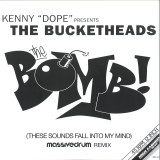
Masters at Work member Kenny “Dope” Gonzalez is the genius behind The Bucketheads – The Bomb! (These Sounds Fall Into My Mind). An established History of House hall of famer’, The Bomb’ is a 90’s house, party soundtrack essential that mixies electro, hip-hop and 4/4 house it features samples from Chicago’s ‘Street Player’ & Green Velvet’s ‘The Preacher Man’ fused into a disco-funk and house groove with edgy, funky, rough and ready beats and subtle latino flavour. It easy to see why its ranked in the 100 Greatest Dance Singles of All Time! Portuguese house producer Massivedrum is on remix duties. He has remixed dance royalty from Bob Sinclar, Axwell, Mory Kantè, Alexandra Stan, DJ Chus, Kentphonik, Yolanda B Cool among many others. He lends his house sensibilities and ear for the floor to enhance ‘The Bomb’ to new levels for an unforgettable experience. Besides the Massivedrum remix and it’s dub, also the full 14’51” minutes original version is available on this double A sided release! The Massivedrum remix is taken from the album “High Fashion Dance Music 5 – Mixed by Ben Liebrand”, which is available on LP/CD/MC and DCC.