Mint Condition - A record label focused on excavating the outer fringes of classic House and Techno. Unreleased mixes, classics, overlooked gems and never heard before material, mined from the last 30+ years of contemporary dance music are the order of the day. From Chicago, Detroit and New York, London, Berlin and beyond. Mint Condition have got their digging hats on to bring you exclusive heat and those rarer than rare jams that have been in your wants list for years. Dig in......
Rewind to 1997 and Uk's finest clubs are alight to the tech-house sounds emanating from South London. Terry Francis, a key figure in the scene, needs no introduction, Fabric resident, Wiggle co-founder, as well as part of the seminal Housey Doingz collective, 'Dubtown' was his first solo outing, all 4 tracks are instant classics, and the EP itself has become his most sought after release to date.
The tracks themselves are varied and brilliant, EP opener 'Hannah's House' kicks off with an infectious bass line and builds with expertly programmed percussion. Simple yet effective riffs intertwine with warm pads and deep chord stabs. 'Hannah's Dub' strips the track down, eerie synths add a tuneful swagger without ever losing dancefloor appeal. 'As You Cry' broadens the sonic palette with swinging rhythms, crisp snares and dreamy chords that deliver the peak time funk and bump. Lastly 'Reggae's House' is a deep dub infused jam, acidic 303 touches combine effortlessly with pads and stabs, whilst echoing bursts of percussion make some real tripped out musical moments.
All 4 tracks are deep winners, tweaked to maximum effect by a master of the genre. A rarity for decades now available once more. 'Dubtown' has been legitimately re-released with the full involvement of Terry Francis, lovingly remastered by London's Curve Pusher from the original sources especially for Mint Condition. 100% legit, licensed and released. Dug, remastered, repackaged and brought to you by the caring folks at your favourite reissue label - Mint Condition!!
Cerca:down south music
*press Release From David Katz*
The Hardest Working Reggae Band In Southern England, Dubheart Is On A Mission To Spread Messages Of Peace, Love, Unity And Resistance Through A Heady Stew Of Contemporary Roots Reggae, Delivered On Live Instruments With A Hefty Dose Of Dub In The Mix. Cool Under Pressure, Their Latest Offering, Is The Band's Most Compelling Set To Date, A 'showcase'-style Album Where Every Vocal Track Is Followed By Its Dub Counterpart, And The Vital Contribution Of The Brassica Horns—from Rising London Ska Band Chainska Brassica—is Another Intriguing Element That Makes This Album Tougher Than The Rest.
Drawing On The Foundations Laid By Jamaican Stalwarts Such As Burning Spear, Dennis Brown And Culture, Dub Pioneers Like Scientist And Jah Shaka, Plus Newer Vanguards Such As Tarrus Riley, Grounation And Conscious Sounds, Dubheart Has Crafted A Distinctly Appealing Style That Is Very Much Their Own, Based On The Organic Presentation Of Their Musical Vision. Indeed, This Fully Self-contained Five-piece Is Firmly Engrained In The Neo-roots Movement Of The Present, With A Sound That Faces Ever Forwards.
The South Coast-based Band Was First Formed Back In 1999, And Slowly Built A Following Through Their Intense Live Performances, Which Always Harnessed A Live Dub Element. Their First Ep, the Solid Foundation Rhythm,' Issued On Their Own Karnatone Label In 2011 And Featuring Dub Mixes By Russ D Of The Disciples, Became A Regular Part Of Jah Shaka's Live Playlists. It Was Followed By The 7' 45, we Chant,' Featuring The Band's Charismatic Bristol-based Lead Singer, Tenja (who Originally Hails From France), The Track Becoming An Underground Anthem In Japan (via Rob Smith, Aka Rsd). Dubheart's First Album, Mental Slavery, Was Released In 2013, A Momentous Year That Also Saw The Band Win The European Reggae Contest Staged By Rototom Sunsplash, Leading To A European Tour With Festival Appearances At Summerjam (germany), Reggae Sun Ska (france), Overjam (slovenia), Sudoweste (portugal), United Islands (czech Republic) And The Sardinia Reggae Festival, As Well As Rototom In Spain. Then, In 2015, Karnatone Issued The Dub Companion To Mental Slavery, Mixed Down In A Heavy Dubwise Fashion By Drummer Gavin Sant, Otherwise Known As Fullness, The Band Was Then Invited To Participate In The Bbc Television Show, The Uk's Best Part-time Band, Leading To Their Ep Of Cover Tunes, 2016's full Time Pressure,' Again With Dub Versions From Fullness. part Of The Band's Appeal Lies In Its Tightness As A Recording And Performing Unit, When You See Them Live, You Understand That This Band Of Brothers Is On A Higher Mission, United In Their Wish To Use Music As A Means Of Upliftment. And That Sentiment Is Entirely Evident On Cool Under Pressure. The Melodic Bass Grooves Of Mark Shepherd Act As The Perfect Buffer To The Furious Rolls And Expressive Drum Patterns Of Fullness, David 'daddy U' Mountjoy Adds Scintillating Melodies On Keyboards, Including Some Delightful Wurlitzer Lines, And Richard Ramsey's Guitar Licks Tend Towards The Understated, Aside From The Occasional Solo Pyrotechnics, As Heard Here On rocky Road.' And On Songs Like can't Wait,' watcha Gonna Do' And The Title Track, The Brassica Horns Add Further Melodic Depth Through Fanfares Of Treble Brass Texture. with The Rhythms Laid Entirely Through Live Recording Sessions Cut At Fullness' Home Studio In Bournemouth (with Horn And Wurlitzer Overdubs Done Elsewhere), Cool Under Pressure Reveals Dubheart As A Band On The Rise, Heading For Unstoppable Heights.
The Dub Deconstructions On The Disc Allow The Listener To Hear The Exceptional Quality Of Their Playing, Emphasizing Each Member's Individual Talent, While The Lyrics Tackle Subjects We Can All Relate To, With watcha Gonna Do' Addressing Social Inequalities, can't Wait' Alluding To The Refugee Crisis, rocky Road' Imploring Everyone To Hold Strong In Trying Times, And rise Up' Calling For Direct Action Against The Unjust System That Rules Our Lands. Overall, The Outstanding Title Track cool Under Pressure' Really Sums Up The Band's Ethos: The System May Burden Us With The Stresses Of Censure And Control, But Our Obligation Is To Stay True To Ourselves And Resist. And The Music Can Help Us To Achieve This.
MAMMOTH is a grabber right out of the gate, every step they take is unleashed with deadly economical precision. They may flash on Lynyrd Skynyrd and other vintage southern rock traditions but the brilliant way the vocals are recorded and the to-the-point interlocking guitar moves will fire up anybody into any sort of hard rock. They can rip it up with hot leads, probably jammed out on these songs at live shows but lucky us, they laid them down for all times here with the sort of thought out unified force and construction that screams hit radio. Loads of personality, accessible, produced and mixed with the clarity of classic rock that never loses it's perfectly deployed impact. The uncluttered arrangements leave plenty of space, crafted with the kind of balanced mojo in the mix where every detail adds to the whole. Down and dirty but also achieving a universal pop-friendly appeal! The Mammoth LP was recorded in 1981 at Relayer Studios in DeLand, Florida with the two guitars, bass and drums quartet line-up sounding like it could have been a decade earlier. Buzz Fetters on lead guitar, Bill Abell on rhythm guitar, Joey Costa on bass and Ron Herman on drums… with everybody contributing to the vocals. Rather than having a strong up front emotive singer the lead vocals here are multi-tracked and integrated into the songs with plenty of attitude but also a genre-transcending presence… you can imagine the vocal ambience working in punk, glam, even psychedelic contexts. Mammoth have a sound informed by roots music but it is really in the rear-view mirror the way they roll. The songwriting here is terrific, they have a way of saying things that comes off as sincere but not too serious. You get plenty of in-your-face hard rock action but also several melodic tracks that have a more reflective charm to round out the trip. AND… when you hear their brilliant ode to southern rock titled "Southern Sounds" I challenge you to find any song about the subject more delightful. These guys keep it real, whether they're being bad ass or vulnerable they express themselves with 100% genuine feeling as contagious and life affirming as it gets!
- A1: Prequel - Nothing Better
- A2: Silentjay X Jace Xl - Just Waking Up
- B1: Dan Kye - Change
- B2: Mallard - Surface
- B3: Duke Hugh - Zoe
- C1: Ruf Dug Presents The Committee - Down 2 It (Feat Watson)
- C2: Vels Trio - The Wad
- D1: Paula Tape - Astroturismo
- D2: Nicola Cruz - Surface Tension
- D3: Special Feelings - Down Goose
- E1: Retiree - Pumice Stone (Boulderhead Remix)
- E2: Local Artist - Feelings (Joey G Ii X Klein Zage Mapped Remix)
- E3: Jerome Thomas - Secret (Saul Remix)
- F1: Mmyykk - Science (Session Victim Remix)
- F2: The Colours That Rise - Deep Space (Private Joy Funk Joint)
- F3: Cato - 1 Man (Tone Remix)
- G1: Hiatt Db - Every Daybreak (Fyi Chris Remix)
- G2: Klein Zage - Prince (Gallegos Park Street Tube Mix)
- H1: 30/70 - Misrepresented (30/70 Jungle Flip)
- H2: Wallace - Whirl (Ruf Dug Remix)
- I1: Retromigration & Monty Dj - Tornado
- I2: Bamao Yende & Low Jack - Collina 4Am
- I3: Roni - Angel
- J1: Gayance, Magi Merlin & Funkywhat - Collect$$$Save
- K1: Douniah & Dhanya - A Fever Dream
- K2: Nitai Hershkovits & Rejoicer - Oye Igal
- L1: Frank Liin - 60 Chemical (Dub)
- L2: Cousin Kula - Pixie Prog
- J2: Pinty & Tomos - Want U Too (Feat Ell Murphy)
- J3: Dj Pitch & Mle - Hit From The Right
Rhythm Section International, the impossible-to-define label founded in South East London by Bradley Zero in 2014 has reached the ripe old age of 10 years.Spanning 6 discs and 30 tracks, the compilation begins by taking us on a walk down memory lane and presenting one track from each year of the labels output
Rhythm Section International, the impossible-to-define label founded in South East London by Bradley Zero in 2014 has reached the ripe old age of 10 years. Funny thing is, it feels like it could have been almost double that. It’s hard to imagine the Landscape of the London music scene without this foundational force whose influence is felt more than ever.
With this special anniversary release, the label takes stock at this milestone to present a compilation in 3 parts: PAST, RE-IMAGINED AND FUTURE: honouring the labels tradition of always paying homage to what has come before while setting sights firmly forwards.
With 100-odd releases in their extended back catalogue covering every imaginable style and boasting influence in every inhabited continent on earth, it’s been quite a decade for the independent label, which began on a shoestring budget with funds made via the now legendary Rhythm Section pool hall parties in Peckham.
From humble beginnings to an era defining output - few would have predicted the slow and steady rise of the imprint and the impact it has had on generations of Dj’s, musicians and listeners - at home and abroad.
Spanning 6 discs and 30 tracks, the compilation begins by taking us on a walk down memory lane and presenting one track from each year of the labels output - highlighting some forgotten classics from the archives over the first 2 discs. For discs 3 & 4, the label invited it’s stable of artists to pick a track from the back catalogue to re-imagine in their own style. This process resulted in some incredibly playful contributions from the likes of Ruf Dug, Session Victim and Private Joy - whose playful reinterpretations add new depth to old material.
Finally, the last 2 discs are entirely new material for 2024, carrying the torch of the previous SHOUTS compilations - whose sole aim is to shine light on new music from emerging artists
- A1: Jimmy Carter & Dallas County Green - Travellin
- A2: Mistress Mary - And I Didn't Want You
- A3: Plain Jane - You Can't Make It Alone
- A4: Dan Pavlides - Lily Of The Valley
- A5: Angel Oak - I Saw Her Cry
- B1: Kathy Heidiman - Sleep A Million Years
- B2: Deerfield - Me Lovin' You
- B3: Arrogance - To See Her Smile
- B4: Jeff Cowell - Not Down This Low
- B5: Kenny Knight - Baby's Back
- C1: The Black Canyon Gang - Lonesome City
- C2: Allan Wachs - Mountain Roads
- C3: Mike & Pam Martin - Lonely Entertainer
- C4: Bill Madison - Buffalo Skinners
- D1: White Cloud - All Cried Out
- D2: Ethel Ann Powell - Gentle One
- D3: Sandy Harless - I Knew Her Well
- D4: Fj Mcmahon - The Spirit Of The Golden Juice
- D5: Doug Firebaugh - Alabama Railroad Town
Over 19 tracks, Wayfaring Strangers: Cosmic American Music mines gold from dollar bin country-rock detritus to reconstruct events as seen from the genre's wild west - Americana's vast private press substructure. As progenitor and contemptuous poster boy for the music that came to be Cosmic American, Gram Parsons found himself mired in a recording career spent mostly in scouting the perimeters of chart success. "He hated country-rock," Parsons collaborator Emmylou Harris would later reflect. "He thought that bands like the Eagles were pretty much missing the point." Parsons had been orbiting the idea of Cosmic American Music for some time. In 1968 he'd parted ways with the Byrds and was looking to take air with a new project. "It's basically a Southern soul group playing country and gospel-oriented music with a steel guitar" he told Melody Maker, on the subject of The Flying Burrito Brothers. So it was that when A&M's Burrito Brothers debut The Gilded Palace of Sin made it to shelves in February of 1969, early adherents to the Cosmic American gospel were already echoing its message from areas flanking Gram Parsons' Southern California hills and canyons. There was F.J. McMahon in coastal Santa Barbara, Mistress Mary further inland in Hacienda Heights, and Plain Jane of Albuquerque, New Mexico, each responding by committing their own private readings to tape before day one of the 1970s. Parsons himself might've disdained them, had he even been aware of such minor ripples, shimmering at the edges of his desert oasis. But these were true believers all the same, given over fully to his roots music concept, each filling vinyl grooves with non-rock instrumentation like fiddle, banjo, and pedal steel guitar, the last undoubtedly Cosmic American Music's most distinguishing stringed signifier. Only too predictably, big labels did the grunt work of confining and defining the movement, as ABC, United Artists, RCA, and more played catch-up with Asylum's raptor rock juggernaut, via backwoods crossover also-rans with names like Gladstone, American Flyer, and Silverado. Twang reigned, the shitkickers kicked shit, and the vaguely western-sounding guitar records piled up. Country-rock became "the dominant American rock style of the 1970s," as Peter Doggett's comprehensive Are You Ready for the Country put it much later. Wayfaring Strangers: Cosmic American Music picks up and dusts off golden ingots from the dollar-bin detritus of that domination, to reconstruct events as seen from the genre's real Wild West-America's one-off private press label substructure.
“My introduction to “noise” came from a record shop in Lake Worth, Florida ran by a musician named Kenny 5. Kenny had left Detroit sometime in the mid nineties and had begun selling used records and CD’s from the downtown strip of this tiny southern Florida city in a humble shop sandwiched between a deli and a dog grooming business. Kenny previously was on labels like Amphetamine Reptile and timeSTEREO, and the records and videotapes that would be on repeat at his shop were a vast sonic expanse that spoke to the eclecticism of his experience as a touring musician participating and adjacent to American noise culture through the early to late 90’s. In 1998, I was eleven years old and I would order a pizza with him and watch VHS tapes of Japanese noise and deathmatch bootlegs, as well as any other sonic and subcultural rarities that far outstripped my age to comprehend (notably the RRR “Journey Into Pain” compilation and various Vanilla Tapes videos). This widecast net of information formed an introduction to a reality that did not fall deaf on me, but it took many years later for me to reorient the specific freedoms of what this dense and cathartic sound culture had imparted on my life and would continue onward to.
What does this have to do with this selection of choice recordings from the Secret Boyfriend catalog for the enmossed label? For the uninitiated, Secret Boyfriend is the long running moniker of Ryan Martin, North Carolina musician and label proprietor of the Hot Releases imprint. For over a decade from this writing I have watched Secret Boyfriend, and Hot Releases by extension as a curatorial and archival effort, embodying the multiplanal capacity that noise loosely functions from as an umbrella ideology and formalist avenue for sound creation. For anecdotal purposes, from (before) 2006 until roughly 2023 the East Coast of the United States showcased a vibrant network of eclectic regional festivals that saw wide swaths of artists addressing and negotiating the notion of what qualified “noise” from a conceptual and ideological perspective. Some festivals honed in on particularities in aesthetics and tropes, and others had a kind of “catch-all” implementation that allowed for a salvation of the sort of alienated and singular artistry that was amassing throughout these territories. While clear guidelines had been set from regional predecessors as to how noise with a capital “N” should maneuver, Secret Boyfriend is emblematic in the spirit of fluidity that was either implicitly coupled to the notion of the genre, or grew to evolve towards or devolve from.
Within Secret Boyfriend performances, I have seen and admired a mirroring from a ravenous appreciator of this culture at large back towards itself. Typical of a Secret Boyfriend set is an interchangeable narrative arc wherein blistering feedback laden scrap metal improvisations are forayed into naive ambient or “pop” songs, or skipping CDs, or mixer feedback play, or delayed Roland 707 drum workouts all at once and in a unique hegemony. Secret Boyfriend's stylistic mastery of each endeavor is at once an homage to a history of loving listening and enacting, while a brave step into the realm of actualizing the unique fluidity of his own practice. In performance and the action of network engagement, Secret Boyfriend operates a survey of that which he sought to hear and that which he cultivates around his work. His operations are mirrors, and the project (alongside his other peers) is a reflection on the ethos of his time.
Conversely his recording practice narrows in on these moments and allows for a different kind of intimacy or alienation for the non live listener. This record of selected “pop songs” (let's call them that) is particularly poignant at a time when the culture Martin mirrors is at a strange crossroads with itself. The aforementioned festival networks necessarily change and shift. The onlookers become the artists, the artists find new horizons, and the spaces for these cycles fade into locales of a distant memory. It seems, from my perspective, that audiences currently yearn for a more bottlenecked experience, searching for some ontologically vetted manifestation of an idea, of a sound and less for an experience that functions in opposition to our collective banalities. This makes sense in the face of general global catastrophism that plagues us. We need certainty of what something is somewhere, don’t we? Noise as an idea has expanded and contracted to so many iterations of itself it is hard to tell what it even is, and it is particularly difficult to identify in the absence of solid network activations a moment to reflect on its own complexities and nuances. In the face of so much change, I argue that the language of noise culture at large has on one hand become increasingly didactic and predictable, and laughably inclusive and non linear on the other. Probably has always been this way, but now we are in the midst of a moment of extreme access and indexicality, which somehow cauterizes expansion and naivety and chance.
This record highlights the Secret Boyfriend that obscures didacticism by highlighting output that opens up for more challenging catharsis and emotive signal processing. It provides an entry to the materialism of a cultural field full of ecstatic complexity and beautiful inconsistency. In these muted moments Secret Boyfriend has given us over his career we have an argument for evolving languages that further challenge our notions of what is supposed to happen and how it is supposed to be presented. In his more song oriented expansiveness, we can punctuate the ability to think in new modalities. Listening to these recordings reminds me of the polarity of sitting in the record store as a kid and understanding that His Name Is Alive is on 4AD and (gasp!) timeSTEREO. This trite early impression that nothing is really as different as our imaginations might want them to be, and that we can do whatever we want mostly within the creative realms we work through is an important filter to look through Secret Boyfriend as a project and a vessel. If we can achieve abandon and vulnerability through our artistic endeavors, then we have a sound model for, maybe, new potentialities. If that’s too much projection, or just complete liberal bullshit, I am fine with that. Secret Boyfriend's oeuvre at best offers us moments of reprieve to ponder these complexities, or at least a moment to zone out on a drive through North Carolina Highway 54.
You have one pocket of life that you must do whatever you want to inside of. Secret Boyfriend does it affectionately, in a variety of forms, and always with deep sentimentality. These recordings are a wonderful set of songs to begin further investigation from. Thank you Ryan for allowing as many avenues as possible to continue a broad cultural exchange and conversation that intersect and refract while being the kind of artist that is brave enough to not phone in the effort.”
- Nick Klein , May 2024
- 1: Don't Let Me Down
- 2: I'm Looking Through You
- 3: Can't Buy Me Love
- 4: Rain
- 5: While My Guitar Gently Weeps
- 6: Let It Be
- 7: Yer Blues
- 8: I've Got A Feeling
- 9: I'm So Tired
- 10: Something
- 11: With A Little Help From My Friends
- 12: The Long And Winding Road
'Lucinda Williams Sings The Beatles From Abbey Road' features 12 Beatles songs that include classic hits such as “Can’t Buy Me Love”, “With A Little Help From My Friends” and “Something”. Williams and her band also take on beloved deeper tracks such as “I’m So Tired”, “I’ve Got A Feeling," and “Yer Blues”. Being raised on the blues in the South, the latter is a song Williams was clearly meant to sing. Recorded at The Beatles' legendary studio in London, the new collection serves as Vol. 7 of her celebrated 'Lu’s Jukebox' series and is the first new volume in almost four years. While many great artists have recorded in the hallowed Abbey Road Studios, as it turns out, Williams is the first major artist to actually record Beatles’ songs there aside from the Fab Four themselves. As an acclaimed, award-winning singer/songwriter for more than four decades, Williams’ music has been highly influential and covered by a multitude of artists. Williams is also an extraordinary interpreter who, like all great interpreters, has the ability to inhabit a song and make it her own. She does just that throughout this selection of Beatles tracks, as she has done on each 'Lu’s Jukebox' volume.
Jabu return with ‘A Soft and Gatherable Star’, an LP that sees the Bristol-based trio evolve from a uniquely spectral take on trip hop to proffer a singular vision between cloudy, downered dream-pop, off-kilter ambient, and the warm, low-end throb of sound system culture. This development is aligned with contemporaries like HTRK, Dean Blunt, Tarquin Manek, YL Hooi and Rat Heart Ensemble, whilst also harkening back to the likes of AR Kane (with whom they are set to play shows and release a collaborative single), the languorous drift of 'Victorialand' era Cocteau Twins or The Cure circa ‘Disintegration’. Comprising Jasmine Butt (vocals, guitar), Alex Rendall (vocals, keys) and Amos Childs (production, bass guitar), the trio’s method may have shifted but the feel remains consistent - slow, spatial, sensuous and gently melancholic. With a career arc unlike almost any other current guitar outfit, Jabu sit within a strong lineage of off-centre Bristolian music, and a very British strain of home-spun DIY bands. Self-recorded between Jas and Amos’ home in South Bristol and Amos’ mum’s house in rural North Somerset, the album came together via a process of trial and error - learning to play on borrowed instruments, using the equipment “wrong”, staying up late recording and slipping into strange, semi-conscious sleep deprived/inebriated headspaces. Having captured over 50 tracks, they honed in on those they liked most, shaping them further, whilst carving out space to allow input from people they love and admire - Daniela Dyson’s voice and Will Memotone's clarinet on ‘Ashes Over Shute Shelve’, Birthmark's synth on ‘Gently Fade’ and ‘Sea Mills’, Rakhi Singh (Manchester Collective) and Sebastian Gainsborough (Vessel)’s strings and arrangements on ‘All Night’, Josh Horsley’s cello on ‘If I Asked You, You'd Tell Me’, and Lorenzo Prati’s sax, again on ‘Sea Mills’. The album was mastered by Amir Shoat (HTRK, ML Buch, Dean Blunt, Carla Dal Forno). Influence-wise, the guitar-based material recalls the bands Amos listened to when younger, and Jas’ more folk-leaning inspirations. Deep-lying dub, hip hop and soul influences are also evident in both the way the LP was mixed, and the space ingrained in their subconscious. Tinged with melancholy, the songs cohere as a set of soliloquies and ruminations on love and tenderness. The album’s title comes from a poem by Amos’ late father which hangs on his wall and seeped into the record. ‘Ashes Over Shute Shelve’ is formed of lines from another poem of his. Recited by longtime collaborator Daniela Dyson and with Will Yates (Memotone) playing his mother’s clarinet, the track was imagined as a conversation between his parents. Geography and location also play a big part in the record, with several significant places name-checked in songs. Shute Shelve itself is a hill near Amos’ mum’s house, who explains “There’s a tree at the top with a 360° view of the Mendips, where my dad’s ashes were scattered. We used to go up there when we could first buy booze from the petrol station down the road, get drunk, light a fire, listen to music from my little battery powered CD player and sleep out without tents.” Titled after a Bristol suburb near where Amos’ grandparents lived and where Jas would spend time as a teenager, ‘Sea Mills’ references her being abandoned by friends on the Downs while high on mushrooms, stranded and missing the bus back. ‘Kosiše Flower’ references the city in Slovakia where Amos and Jas holidayed shortly after getting together and a flower he gave her, which she pressed in a book after an argument. ‘Oceanside Spider House’ is a location in Nintendo 64 game The Legend of Zelda: Majora’s Mask, where someone seeks shelter from the falling moon. Genre: Electronic / Ambient / Dream-pop
Lex first grabbed our attention following his brilliant release on B2 Recordings which became a staple vibe setter in Jimpster’s DJ sets and Sofa Sessions streams in 2021. Gaining his deep musical knowledge through his own revered record store Radical Soundz, the Greek DJ and producer has been immersed in dance music for over 20 years and considered one of the key figures in the Athens underground house scene. With releases and remixes on labels such as Leng, Samosa, King Street and Black Riot, Lex is making waves internationally with a unique sound that fuses live elements and expansive arrangements taking influence from masters such as Ron Trent but adding a warm, cosmic glow. Fellow Greek artist Locke joins pro- ceedings for this EP bringing his own psychedelic sound garnered from his years playing crazy events taking in South American jungle parties, burning hot African desert raves, the underground clubs of Berlin to the sparkling coastal shores of Baja California. Locke is more than just a DJ. He is a connector, educator and traveler whose soulful music has the crowds chasing the sun as he brings love and celebra- tion to the events he plays.
On title track 7 Day Path we’re treated to a beautiful spacious jam which unfolds across 7 minutes, driving, live percussion keeping the energy high whilst Herbie- esque synth leads help to create a beautifully paced and dynamic arrangement.
Next up we have Italian legend DJ Rocca onboard for a remix of 7 Day Path. The prolific producer and DJ has been a tour de force since the late 90’s collaborating with the likes of Howie B, Dimitri From Paris, Chris Coco, Daniele Baldelli and Jazzanova producing singles, remixes and albums for labels such as Sonar Kollekt- iv, Compost, Classic, Rekids, Futureboogie, !K7, Tirk, International Feel, Defected, Rotters Golf Club and Faze Action Recordings. Here he adds his trademark dubby disco wiggle pushing the original in a jazzy direction with live flute. Definitely one to be heard under the stars on a Croatian beach for maximum Adriatica effect!
Flipping over, things head deeper and darker with See No Ball featuring Locomot- ives, a more straight-up heads-down stripped back club jam with a repeated vocal, funky guitar chops and a smattering of improvised synth and Hammond B3 keeping things jazzy and musical.
Closing out this brilliant EP we have Catch Up With The Sun which drops the BPM’s for a low-slung cosmic jam loaded with good vibes.
The Invisible Road: Original Recordings, 1985–1990 compiles an unheard, previously unreleased body of recordings by Sussan Deyhim and Richard Horowitz, dissidents from diametric backgrounds who met during the heady days of Downtown New York in the 1980s. This collection reveals the creative and life partners’ radical shared vision of avant-garde pop in all of its boundary pushing freedom, combining Deyhim’s singular approach to vocalization, Horowitz’s invention of new musical languages, and touchstones of traditional music from around the world, creating a new music that ultimately retains a voice entirely its own. Despite their difference in backgrounds and respective journeys, at the time of their meeting in the early 1980s in New York City, Sussan Deyhim and Richard Horowitz were both products of the search for freedom and understanding (and resultant awakenings) that swept the globe and helped culturally define the late 1960s and 70s. Deyhim, born and raised in Tehran, spent her teens dancing with Iran’s Pars National Ballet company, performing weekly on Iranian national television, and travelling her home country studying with master folk musicians and dancers, before relocating to Belgium and joining Maurice Béjart’s prestigious Béjart Ballet of the 20th Century. Horowitz, born and raised in Buffalo, New York, had spent much of the decade before abroad, first departing for Paris under the shadows of the Vietnam War, where he studied piano, Eastern philosophy, and became entrenched the city’s free jazz scene, playing with the likes of Steve Lacy, Anthony Braxton, and Alan Silva, before embarking south to Morocco where his friendship with Paul Bowles helped cultivate a deep passion for the country’s musical traditions and a shift in his musical practice.
The pair met by chance sometime in 1981 at Noise New York, a small studio on West 34th Street founded by the musician and recording engineer, Frank Eaton, as a utopian creative laboratory that beckoned artists and bands like Arthur Russell, Christian Marclay, Liquid Liquid and Butthole Surfers into its orbit. Both artists had recently relocated to the city, Horowitz having recently released his debut album, Oblique Sequences (Solo Nai Improvisations), on the legendary Paris based imprint Shandar, and fallen in with members of New York avant-garde like La Monte Young, Jon Hassell, David Byrne, and Brian Eno, and Deyhim having begun to more actively incorporate singing into her practice, notably recording a vocal score for choreography she was doing at La MaMa Experimental Theatre.
Initially bonding over a cassette tape of field recordings made by Paul Bowles that had been given to mutual friend and writer Brian Cullman (seeking answers for Ornette Coleman’s question “what is the sound of sound”), their earliest collaboration was documented on Horowitz’s 1981 album, Eros In Arabia, with Deyhim contributing vocals to the track “Queen Of Saba.” Over the coming years, their deep connection would routinely gravitate them into the studio, culminating in the body of recordings that would appear on their 1986 album for Crammed Discs, Desert Equations: Azax Attra. Unknown to nearly all but the artists, laying in wait over the decades on numerous multi-track and stereo reels, DAT tapes, and reference cassettes, were a vast array of recordings made by Deyhim and Horowitz bookending Desert Equations. The 13 pieces represented on The Invisible Road: Original Recordings, 1985–1990 were recorded largely between Noise New York and Daylight Studio in Brussels, during a period that Deyhim describes the partnership between herself and Horowitz’s as seeking a music “free of any specific cultural reference, with a personal musical signature,” blossoming into a body of sonority that embraced the energy of contemporary boundary pushing pop and the avant garde, filtered through their mutual love and study of various musical traditions from across the globe and deep engagement with the ideas and tactics of experimental music.
Undeniably rooted in Horowitz’s study of the North Africa ney and the music of the Berber and Gnawa cultures during his time in Morocco, Deyhim’s deep engagement with the folk traditions of Iran, and the couple’s immersion in the interconnected Downtown underground music scenes, each piece on The Invisible Road offers its own vision creative and cultural hybridity. Deyhim sings in both English and Farsi, as well as a composite tongue that she developed by drawing upon numerous indigenous vocal techniques from around the world, intuitively responding to Horowitz’s simultaneous sound syntax forming and combining a wide range synthetic and acoustic instrumentation, and experimental tape techniques, within a visionary series of free-standing expressions.
"Black Stone Cherry is the debut album from American southern rockers Black Stone Cherry. They offer more than your traditional southern rock sound, it's a mix of classic rock & hard rock tight together with some ballads. This 4 piece knows how to roll & deliver, Chris Robertson’s powerful, rough voice, Ben Wells’ bluesy guitar riffs, Jon Lawhon’s impressive bass play and John Fred Young’s technical skilled drum rolls it's all there. Black Stone Cherry's debut album is indeed a real treat for rock fans.
Black Stone Cherry is available as a limited edition of 1000 individually numbered copies on translucent red colored vinyl. It comes in a gatefold and contains an insert."
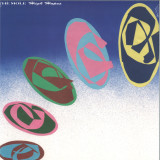
High Hopes - New album from the Mole.
High Hopes is 17 songs across 40 minutes on one slice of wax that, as advertised, sounds nothing like last month’s Ep, High Dreams. Here, rather than the long form dance form, is a continuation of the beat tape pacing from the last album, a collection of moments posing as ideas posing as a narrative stuffed with oddities and surprises that reward the close listen.
What’s heard on High Hopes is the Mole’s exploration of a love letter, from one person to a family, from the northern Pacific to the southern Atlantic, from a boy to a painted bird. Vancouver Island to Manantiales. The songs range from ambient sound bath and hip hop sludge, up to micro boogie and almost House before tumbling back down and forth again. Bubbling synths, MPCs swung out, samples chopped and chewed, bass and violins from Rick and Sophie, field recordings of birds and frogs and beaches, friends and family and fiestas. Did we mention the love ?! This album has got it all! Original collages from Antonio Carrau envelope this wax: jacket, sleeve and cookie. Antonio’s work is typified by playful combinations and bold statements about living in a embrace of analog and digital health. His co lages marry the corporeal world with an updated, digitalized age of reproduction, inducing feelings of gratitude for the simple everyday scenes we sometimes lose touch with when we forget to slow down. Good living, like breathing, requires inhaling as well as exhaling.
We can’t always produce content, make art, we must also pause, and listen. And enjoy. The Mole is joined by friends and colleagues on several songs included on High Hopes. Rick May plays bass on both Que Rico and album stand out GoinF4er. Sophie Trudeau (Godspeed You Black Emperor) plays and arranges violins on GoinF4er and Danuel Tate (Cobblestone Jazz) and Julz Chaz (Wagon Repair) both play Vibes and Emaxx throughout the album. Working with these incredible talents not only enriched this album, but fulfilled a long standing goal of the Mole’s; to work again with the musicians from whom he learned so much. People who helped inform the shape of Mole to come.
The Mole who was As High As The Sky. The Mole has been ‘recognized’ by the ‘global underground’ since his critically celebrated premiere album, As High As The Sky, but his earlier Eps (Wagon Repair, Philpot, Musique Risquee) got the attention of Top DJs, clubs, and festivals around the world first. His sound remains unique, fresh and deep: enjoying plays in a wide variety of spaces and places.
High Hopes is the Mole’s 5th solo album and his 2nd album for Circus Company (The River Widens) who have also proudly released two eps of Mole magic (Little Sunshine, High Dreams).
*Isn’t that too much time for one record? Short answer - No. Long answer - depends on the material. Due to the many quiet passages in the album, the groove spacing can be modulated and the needle can slow it’s progress towards the center/end resulting in longer sides with continued high gain and low distortion.
High Hopes - New album from the Mole.
High Hopes is 17 songs across 40 minutes on one slice of wax that, as advertised, sounds nothing like last month’s Ep, High Dreams. Here, rather than the long form dance form, is a continuation of the beat tape pacing from the last album, a collection of moments posing as ideas posing as a narrative stuffed with oddities and surprises that reward the close listen.
What’s heard on High Hopes is the Mole’s exploration of a love letter, from one person to a family, from the northern Pacific to the southern Atlantic, from a boy to a painted bird. Vancouver Island to Manantiales. The songs range from ambient sound bath and hip hop sludge, up to micro boogie and almost House before tumbling back down and forth again. Bubbling synths, MPCs swung out, samples chopped and chewed, bass and violins from Rick and Sophie, field recordings of birds and frogs and beaches, friends and family and fiestas. Did we mention the love ?! This album has got it all! Original collages from Antonio Carrau envelope this wax: jacket, sleeve and cookie. Antonio’s work is typified by playful combinations and bold statements about living in a embrace of analog and digital health. His co lages marry the corporeal world with an updated, digitalized age of reproduction, inducing feelings of gratitude for the simple everyday scenes we sometimes lose touch with when we forget to slow down. Good living, like breathing, requires inhaling as well as exhaling.
We can’t always produce content, make art, we must also pause, and listen. And enjoy. The Mole is joined by friends and colleagues on several songs included on High Hopes. Rick May plays bass on both Que Rico and album stand out GoinF4er. Sophie Trudeau (Godspeed You Black Emperor) plays and arranges violins on GoinF4er and Danuel Tate (Cobblestone Jazz) and Julz Chaz (Wagon Repair) both play Vibes and Emaxx throughout the album. Working with these incredible talents not only enriched this album, but fulfilled a long standing goal of the Mole’s; to work again with the musicians from whom he learned so much. People who helped inform the shape of Mole to come.
The Mole who was As High As The Sky. The Mole has been ‘recognized’ by the ‘global underground’ since his critically celebrated premiere album, As High As The Sky, but his earlier Eps (Wagon Repair, Philpot, Musique Risquee) got the attention of Top DJs, clubs, and festivals around the world first. His sound remains unique, fresh and deep: enjoying plays in a wide variety of spaces and places.
High Hopes is the Mole’s 5th solo album and his 2nd album for Circus Company (The River Widens) who have also proudly released two eps of Mole magic (Little Sunshine, High Dreams).
*Isn’t that too much time for one record? Short answer - No. Long answer - depends on the material. Due to the many quiet passages in the album, the groove spacing can be modulated and the needle can slow it’s progress towards the center/end resulting in longer sides with continued high gain and low distortion.
- Go-Go Gadget Gospel
- Crazy
- St. Elsewhere
- Gone Daddy Gone
- Smiley Faces
- The Boogie Monster
- Feng Shui
- Just A Thought
- Transformer
- Who Cares
- Online
- Necromancer
- Storm Coming
- The Last Time
In 2006, Danger Mouse is King Midas of the music world. He has an uncanny knack for creating jagged, dense, frenzied beats and odd, eerie, vivid soundscapes that never compromise the music's natural flow. Meanwhile, rapper and singer Cee-Lo, a veteran of Atlanta's Dirty South scene, has never been one to be constrained by hip-hop conventions, and is a willing partner in adventure. The result is an intrepid psychedelic blend of pop, hip-hop, soul, and rock that consistently challenges and delights. It's no wonder that "Crazy," with its modest riff, irresistible hook, and disarming opening line ("I remember when, I remember, I remember when I lost my mind") became a worldwide Internet sensation a full six months before the official release of St. Elsewhere. But that relatively simple soul-pop gem is the tamest track on this wide-ranging, often dark and introspective collaboration. (In fact, the duo considers Gnarls Barkley to be a wholly new creation, as opposed to a collaboration of existing artists.) "Everybody is somebody, but nobody wants to be themselves," Cee-Lo croons on "Who Cares?" He and Danger Mouse try very hard not to be their old selves as they creatively and confidently break down boundaries, but the brilliant cores of their musical personae--Cee-Lo's eccentric spiritual soul man and Danger's bold sonic explorer--remain. --Marc Greilsamer
Flat Duo Jets: White Trees 2024 Remaster Fronted by the late Dex Romweber. The duo’s fourth album was the first album of all original material. Produced by Caleb Southern, White Trees is a Jets’ masterpiece that proved that Romweber could diversify his band’s material without losing his recklessness and urgency.
Dex passed away earlier this year on February 16th and this reissue is dedicated to his memory and legacy. Jack White from the White Stripes has called Dex and the Flat Duo Jets a major influence when starting out. White declared that seeing the Jets for the first time “opened up a whole new inspiration for me about the guitar.” And he was downright effusive in the 2006 cult-classic Romweber documentary ""Two Headed Cow"", calling Romweber “a huge influence on my music… one of the best-kept secrets of the rock & roll underground.” In 2009, White recorded a seven-inch with Romweber, and in 2011 he reissued the Jets’ long-out-of-print 1991 album Go Go Harlem Baby on his Third Man Records imprint.
“[White Trees] by North Carolina’s Jets is a tarnished neo-rockabilly gem. Dexter Romweber’s battered honk is the perfect voice to wrap around these twisted tales about Charlie Dick (Patsy Cline’s hubby), UFOs, and dining with Van Gogh. It’s as if the ”Eraserhead” soundtrack were recorded at Sun Studios and sent to Weekly World News for editing.”- Entertainment Weekly Arguably the busy Duo’s most accomplished set, ‘93s handily diversified White Trees jumbled stylistically antiquated originals in a cohesively dignified manner. -Beermelodies"
- Liberation Movements
- Teardrop
- A Dance More Sweetly Played
- For Oumou Sangaré
- Shozi
- Neo Marabi
- Amada Part 1
- Amada Part 2
"Join the Kyle Shepherd Trio on 'A Song More Sweetly Played' as they explore, collaborate and improvise on the ‘songs we like to play’. The album’s title is a dedication to the celebrated South African artist William Kentridge, with whom Shepherd collaborated on a joint-work “Waiting for Sybil” that has toured world-wide. In addition to ten Shepherd originals, perhaps most unexpected is the inclusion of an exquisite reading of Massive Attack’s ‘Teardrop’ and a deconstructed take of Journey’s ‘Don’t Stop Believing’, a favourite rock anthem that Shepherd describes as a ‘guilty pleasure’.
‘The inclusion of the Massive Attack and Journey tunes – that’s something out of character to me,’
observes Shepherd. The selection rests well within the grand jazz tradition of repurposing popular songs as vehicles for improvisation, thought, and pleasure. ‘It just came down to playing some tunes that we like and we can flow with, so that we can be inspired and express ourselves in a very natural organic way,’ he says. ‘We walked away from the from the studio feeling like – you know, we actually really enjoyed playing this record! I felt less attached to any sort of predetermined concepts except that we would play some music that I wrote that we like – a selection of things that we like to play. It felt like a bit of a tonic – every musician gets a chance to breathe through the music, and the music just flows and moves as organically as we could make it.’
To hear one of South Africa’s foremost pianists play with intention, freedom and enjoyment, in the tradition and beyond it, is above all a gift to the listener, and Matsuli Music is proud to be able to share the Trio’s first album in a decade, A Dance More Sweetly Played.
Kyle Shepherd is one of South Africa’s leading jazz, film and theatre music composers and pianists of his generation, internationally recognised for his distinctive compositional style and performances. He was the Standard Bank Young Artist of the Year for Jazz in 2014 and the UNISA piano competition winner in 2019, and has performed in 28 countries around the world, including 11 concert tours to Japan."
The Kyle Shepherd Trio: Kyle Shepherd (Piano), Shane Cooper (Double Bass) and Jonno Sweetman (Drums).
All Compositions by Kyle Shepherd except “Teardrop” by Massive Attack and “Don’t Stop Believing” by Journey.
Recorded May 2024 at Sunset Studios, Cape Town
Recording Engineer - Jürgen von Wechmar
Mixed by Martin Ruch.
Mastering by Frank Merritt.
Artwork and Design by English Designed and produced with support from the Baxter Theatre, Cape Town.
TexiCali, the new album from Grammy winner Dave Alvin and Grammy nominee Jimmie Dale Gilmore, continues to bridge the distance between the two troubadours’ respective home bases of California (Alvin) and Texas (Gilmore). The geographic theme reflects Alvin’s repeated journeys to record in Central Texas with Gilmore and the Austin-based backing band that has toured with the duo for the past few years. As Alvin puts it in the liner notes, those road trips informed the music they made on TexiCali. The 11 songs on this double LP also connect their shared fondness for a broad range of American music forms. Gilmore is primarily known for left-of-center country music, while Alvin’s compass points largely toward old-school blues. But there’s a lot of ground to cover beyond those foundations, and both artists also are well-known for transcending genre limitations. So it’s not surprising that they’ve spiked TexiCali with cosmic folk narratives, deep R&B grooves and even swinging reggae rhythms.
‘I Got What You Need’ is the statement from a troubadour coming into town to inform and entertain the people. Bearing songs of soul searching, of spiritual uplift, of tunes to groove to. Equipped with a powerful voice and stinging guitar the troubadour lays down his marker and backs up the statement. Two Times UK Blues Award winner Mississippi MacDonald has it all to play that troubadour as he presents his third album on APM Records. The gravelly Gospel tones on If I Could Only Hear My Mother Pray Again, and the imploring emotion on Your Dreams have MacDonald stretching out vocally. The former song in turn also showcasing another tour de force from regular backing vocalist Lucy Randall. Two self-penned instrumentals pay tribute; 3.35AM, to one of MacDonald’s prime influences Freddie King, and Soul City One to the in-house studio sound of Stax / MacDonald continues to be an excellent interpreter of southern soul and two more songs from the stable of Memphis studio and publishing house Ecko in Hard Luck and Trouble and the title track prove this. So too the band’s take on the R&B classic We’re Gonna Make It which in MacDonald’s hands really swings. Sinking is an epic ballad in which to lose yourself completely. The album is rich in variety, vibe and soulful energy. It’s MacDonald’s Blues and a whole lot more. MacDonald is a guest artist with the ‘Take Me To The River All Stars’, performing on stage at Red Rooster, filmed in session with Eric Gales and Jools Holland, and is filmed again at Royal Studios in Memphis on October 1st. MacDonald and band will perform at the UK Blues Challenge on October 8th, MacDonald is special guest of Visit Mississippi in Liverpool on October 18th when they unveil the first ever Blues Trail marker outside The Cavern. MacDonald will perform with Clarksdale veteran Super Chikan. International PR agent Blind Raccoon has been engaged to promote the new album. Last album ‘Heavy State Loving Blues’ was no. 1 on Roots Music Radio Contemporary Blues, no.1 on the IBBA chart for albums of the year 2023, and top 50 on the US Apple iTunes Blues chart, plus plays and a session on BBC Radio 2 Blues Show (Cerys Mathews). Live shows running up to end of March 2025. A singer/ songwriter from London who speaks quietly but makes music with real gravitas. A rising star since winning Traditional Blues Artist Of The Year and Acoustic Act of the Year at the 2024 UK Blues Awards. MacDonald has released two previous albums on APM Records. ‘Heavy State Loving Blues’ in 2023, and ‘Do Right Say Right’ in 2021- selected as a top 10 Blues album of the year in MOJO.
Oliver Coates' Throb, shiver, arrow of time is a portal into somatic chiaroscuro, aglow with the embers of imperfect memories and smudged with the plumes of internal echoes, which augment in vast, mercurial dimensions. For his third album on RVNG Intl., the British cellist, composer and producer offers a capsule of personal resonance and remembrance, assembled over the past six years. Throb, shiver, arrow of time traces the familiar metallic anatomy and viscous string modulations of his 2020 release skins n slime, while recentering his inner compulsions following a procession of lauded score writing projects, including the films Aftersun (Charlotte Wells, 2022), The Stranger (Thomas M Wright, 2022) and Occupied City (Steve McQueen, 2023). While working on Aftersun, Wells asked Coates how music could signal that someone is going on a trawl through their memory_a question that has stayed with him ever since and fosters a heartbeat running through the record. Throb, shiver, arrow of time is "all about inaccurate transmissions from our memories, overlaid with emotions from other sources," says Coates. The release is imbued with the ache and glow of recollections mulched together, where the guttural dissonance of misremembering is shrouded by strange orbs of sentiment. At the record's inner core is "Shopping centre curfew," a swift yet cavernous track that emerged five years ago when two real world events, both occurring in South London during the pandemic lockdowns, became fused in a dream: the demolition of Elephant and Castle shopping center, and the discussion of a curfew as a real possibility for all men following a violent crime. A strange simultaneity occurred with this piece of music and Coates built the album out from there, a sense of temporal entropy refracting shimmers of lurking convulsions into lucid sonic topologies. The ten compositions of Throb, shiver, arrow of time find weightless melodies soaring across after-image gradients, magnified and compressed. Misted tones within "Please be normal" and "90" soften drone-soaked shudders of inner acoustics messing up. Vocal invocations appear from long-term collaborators Malibu and chrysanthemum bear, as well as drifting synth radiance from Faten Kanaan. Throb, shiver, arrow of time furthers Coates' reach in collapsing the digital into the analogue and vice versa, allowing serendipity to reorganize the material and push out against the confines of flatness. This sculptural approach to sound is deeply influenced by the intricate installations of artist Sarah Sze, whose permutations of visual matter with its own after-image form kaleidoscopic epitaphs for ephemera and emotion. Coates' thinking about Sze's work and processes flowed together with his own playing and editing techniques, superimposing the textural relief of a live take back into a composition, and allowing the sound to succumb to a dream of itself. As Coates expands, "The cello is a kind of melancholic instrument with a light ethereal spirit. When the sound is flattened into digital processes, with shifted frequencies and time stretching I'm trying to give it even more of those qualities. Sometimes I'm distancing myself from it, so it becomes a piece of discarded debris that has soul in it, a down-sampling. Or other times, it's trying to maximize the present tense in the act of playing, and collapse that vivid color into a burnished, photocopied kind of sound. So the music acts like weather, weathering the listener, or as flames licking at the sides of objects." As the record unfurls, the compositions swell in duration, until the granular glimmers of its finale "Make it happen" persist in almost violent delight. "There's a feeling of not wanting to let this album go, trying to defy the extinguishing sound at the end of the music, trying to push the colors beyond the confines of the structure, to defeat the silence." In the scramble to resist denouement, Coates suspends the arrow of time in its eternal flight, just for a moment, to reveal the solace of the dust settling in the afterglow. Oliver Coates' Throb, shiver, arrow of time will be released on vinyl, Japanese import CD, and digital editions on October 18, 2024. On behalf of Oliver and RVNG Intl., a portion of the proceeds from this release will benefit The Traditional Music and Song Association of Scotland, an organization fostering opportunities for people of all ages to participate in the traditional music and culture of Scotland.
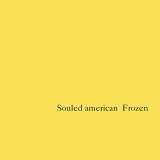
There are cult bands and then there's Souled American. In 1988, the Illinois group arguably invented "alternative country" with the album Fe. While the alt-country sound is widely recognized as Southern roots rock with an indie-punk sensibility largely defined by Uncle Tupelo's No Depression released two years later — Souled American's early music feels as if it was formed in a vacuum, inspired by the timestretching space of reggae. But over the course of the following decade, Souled American's music grew increasingly slow, insular and esoteric. Although Fe, Flubber and Around the Horn are inarguably more accessible, upbeat and even sometimes fun, if you've never heard this music before, it actually makes sense to start at the end.
Their last two albums Frozen and Notes Campfire will now be re-issued in limited, 30th Anniversary Editions with a fresh abundance of stories, technical information, musician credits, and cartoons that detail the unexpected origins surrounding these two early classics of “ambient Americana.” These records sound at once both old and new with brilliant melodies and profound performances stacked in unusual patterns like soft-hued bricks.