Singer-songwriter Dora Morelenbaum is one of the stunning voices at the forefront of Brazil’s exciting new musical wave. Her sublime 'Vento De Beirada' EP takes you on a trip into the sensuous sounds of Dora's world. On first hearing her music, we were reminded of the transformational moment when we first discovered the Brazilian singer-songwriter, Joyce. The music is completely new to you, yet instantly familiar, like rediscovering a past love.
Dora is a member of the Brazilian Latin-Grammy-winning superstar quartet Bala Desejo; a trailblazing light opening up Brazilian music to a whole new audience outside of the country. 'Vento De Beirada' EP showcases a different sound to the riotous, joyful, avant-garde Tropicália sound of Bala Desejo. This solo set takes a more dream-like, downbeat, MPB stance. It is firmly contemporary, yet you can also trace the lines of influence back to idols such as Gal Costa and Maria Bethânia.
The EP is comprised of four tracks that have already garnered critical acclaim following their digital release. It starts with the tender and gentle 'Japão', which was inspired by the melodies of the legendary Japanese composer, Ryuichi Sakamoto. Sakamoto once collaborated with Dora's musician parents, Paula and Jaques Morelenbaum, when she was young. 'Dó a Dó' is drenched in lush, sweeping strings that were arranged by her father himself, and is co-written by Dora and Tom Veloso of the band, Dônica. There’s further collaboration on the EP, including production from one of the lynchpins and stars of the current Rio scene, Ana Frango Elétrico. Fellow Bala Desejo band member, Lucas Nunes, contributes towards the production, writing, and guitar with Guilherme Lírio also on production, guitar, and bass. Whilst Bala Desejo’s Zé Ibarra penned the song 'Vento De Beirada' with Lucas and Victor Vasconcellos.
The four-track EP has been cut to 12" and mastered for vinyl by Joker (Liam McLean). With crystalline beauty and a breezy sense of ease and serenity, sounding classic yet contemporary. This release serves as the perfect introduction to an extraordinary talent.
Suche:downbeat
Audiophile reviews rave about saxophone master John Coltrane's immortal Impulse! records, A Love Supreme (1964) and Ballads (1963). In fact, jazz critics have lauded A Love Supreme as Coltrane's most important recording. The rave reviews which appeared in the magazines Downbeat, Jazz Hot, Jazz Podium and Swing-journal reflected this: critics all over the world, in America, Europe and Japan recognized that Coltrane's deep religious belief had influenced both his approach to life and his music-making.
You're about to experience A Love Supreme at its peak of vinyl perfection — in UHQR format on Clarity Vinyl, with the added bonus of a double 45 RPM cut by Ryan K. Smith at Sterling Sound. Ryan's cut has his characteristic clarity and transparency all set against Quality Record Pressing's usual noiseless backgrounds on 200-gram flawless records. Each UHQR will be packaged in a deluxe box and will include a booklet detailing the entire process of making a UHQR along with a hand-signed certificate of inspection. This will be a truly deluxe, collectible product.
For this 45 RPM 2LP edition you'll also receive a 12" x 12" 12-page booklet featuring liner notes by Ashley Kahn and images from the Coltrane home.
The original master tape is available but it's not in the best shape. This LP was cut from a flat tape copy made by Rudy Van Gelder and used for cutting in the UK in April of 1965. Of course, the original recording was in December '64, so only a handful of months later. This tape was discovered at Abbey Road and had been untouched between 1965 and 2002. So while the original tape is available and while we would always opt for the original whenever we can, in this case this copy was the better choice as the tape has incurred less overall wear and sounds much better than the original.
A Love Supreme was Coltrane's pinnacle studio outing that at once compiled all of his innovations from his past, spoke of his current deep spirituality, and also gave a glimpse into the next two and a half years (sadly, those would be his last). Recorded at the end of 1964, Trane's classic quartet of Elvin Jones, McCoy Tyner, and Jimmy Garrison stepped in and created one of the most thought-provoking albums of their relationship.
The album not only enabled Coltrane to express himself with great intensity but also lent him the necessary inner peace to conceive a work of almost 40 minutes in length and to lead his quartet along the same path as himself.
Julian Cannonball Adderley's only Blue Note album, Somethin' Else, would likely forever be famous in music lore if just for the presence of Miles Davis. The iconic composer/trumpeter steps into the role of sideman on the 1958 set, one of just a handful of times he'd make such a move after the calendar passed the mid-1950s. Yet evaluating Somethin' Else strictly on Davis' involvement misses the big picture. Plain and simple, Adderley's jubilant work remains a jazz landmark due to the chemistry of its Hall of Fame personnel, enthusiasm of its participants, and sophistication of its arrangements – not to mention the reference-grade production and inclusion of the definitive renditions of two all-time jazz standards.
Limited to 6,000 numbered copies, pressed on dead-quiet MoFi SuperVinyl at RTI, and mastered from the original master tapes, Mobile Fidelity's ultra-hi-fi UltraDisc One-Step 180g 45RPM 2LP collector's edition pays tribute to the record's merit and includes the bonus track "Allison's Uncle." Offering reference-calibre sonics, this spectacular collector's version provides a clear, transparent, ultra-dynamic, and up-close view of a cornerstone effort that witnesses Adderley and Davis sharing horn duty alone for the only time in their fabled careers – an arrangement that occurred as a result of Adderley having joined Davis' majestic sextet a year prior.
The premium packaging and beautiful presentation of the UD1S Somethin' Else pressing befit its extremely select status. Housed in a deluxe slipcase, it features special foil-stamped jackets and faithful-to-the-original graphics that illuminate the splendour of the recording. No expense has been spared. Aurally and visually, this UD1S reissue exists as a curatorial artefact meant to be preserved, touched, and examined. It is made for discerning listeners that prize sound quality and production, and who desire to fully immerse themselves in the art – and everything involved with the album, from the iconic photos to the gorgeous finishes.
The vibrant potency reveals itself openly on an analogue set that provides full-range reproduction of an ensemble that also includes pianist Hank Jones, bassist Sam Jones, and drummer Art Blakey. Each and every snare hit, downbeat, and cymbal splash registered by the latter take on realistic proportions, blooming and decaying as they would right in front of you on a stage. Jones' foundational bass lines register with uncommon depth and palpability, the litheness of the strings and fullness of the instrument epitomizing the definition of rhythm. Stellar, too, are the surefooted 88s. Sublime in scale, tonality, and attack, with the delineation such you can practically separate the white and black keys in your mind. As for that liquid interplay between Adderley and Davis? Breathtakingly lifelike in timbre, naturalism, purity, and presence. This collector's version takes you there – there being Rudy Van Gelder's legendary New Jersey studio in March 1958 to witness it all unfold, again and again.
For reasons that extend far beyond the outstanding playing and flawless repertoire, Somethin' Else is without question a record you'll always want to watch and hear come together. As veteran critic Bob Blumenthal observed writing about the album four decades after its release, "The instant rapport achieved by the quintet is thus the product of much shared and common history, though the tensile strength that they create throughout created a totally unique feeling that can be attributed to the sensitive musicianship of all concerned, including the supposedly hard bopping leader and drummer." Such inimitable feeling, or emotion, courses throughout every passage, and no where more obviously than on "Autumn Leaves" and "Love for Sale."
Without question, the discreet interpretations of the Johnny Mercer and Cole Porter songs, respectively, found on Somethin' Else have long been considered part of jazz's alluring mystique. Adderley and Davis bring contrasting approaches to the table yet sound of a singular mind on "Autumn Leaves," with the latter's muted trumpet and the headliner's lush alto saxophone dovetailing into a performance that endures as a blueprint for expression, counterpoint, sophistication, fluidity, and linearity. Blues, melody, and romance pour from their horns. Their bandmates, picking up on the intimate vibe and calm mood here – as well as on the spry, head-over-heels spirit of "Love for Sale" – join in on the conversation with sharp economy and float-on-air roundedness.
Not to undersell the other three numbers, all deserving five-star status. Twelve measures in length, the title track offers a slow burn in swing. Written by Adderley's brother, Nat, the 12-bar "One for Daddy-O" transmits funk flavors. The closing "Dancing in the Dark" pops with lushness and temptation, its stream of bold colours and understated textures calling for a moonlight twirl, or at least fantasies suggestive of a memorable night. Somethin' else, indeed.
Over the past eight years Teenage Wrist have continually evolved their sound, a process that"s peaking with their third full-length, STILL LOVE. Reaching new heights in both scope and execution, the album sees the duo-Marshall Gallagher (vocalist, guitarist, bassist) and Anthony Salazar (drums, vocalist, percussion)-producing the album themselves to handcraft their most expansive collection of songs to date from the ground up. ? e result is a self-realized collection of songs that saw the band borrowing vintage gear, bringing in friends in the form of members from 311 vocalist/turntablist Doug "SA" Martinez and Softcult and incorporating tasteful pop sensibilities to craft a collection of songs that rede? nes the band"s sound while staying true to their guitar-driven roots. From the atmospheric, fuzzed out opener "Sunshine" (which Gallagher says is "the coolest ri? he"s ever written") to the midtempo rocker "Dark Sky"" (the latter of which features the aforementioned cameo from 311 vocalist/turntablist Doug "SA" Martinez), the album will undoubtedly please fans who favor distorted guitars and crunchy chords. However, that"s only one aspect of the album and Teenage Wrist aren"t ashamed to admit that there"s a strong pop sensibility on the album that shows how much they"ve grown as songwriters since 2021"s Earth is a Black Hole. From the brain-invading ballad "Something Good" to the downbeat electronic vibe of "Diorama," the album is teeming with unexpected moments that are reminiscent of Radiohead"s ? air for experimentation. ? e powerful bond between these two collaborators lies at the core of Teenage Wrist"s music and, more than any other factor, that"s evident on every moment of STILL LOVE. "? ere was a certain feeling that music gave me as a kid and this is honestly the ? rst time on any record I feel like we kind of came close to achieving that," Gallagher says of the end result. "We just shot from the gut on this record and tried not to overanalyze things... and I think the record speaks for itself."
On 'Love Hallucination' Jessy Lanza is in control as a songwriter and producer, flexing her skills in the studio and rebuilding her sound, taking chances with production and energy in all directions, from club-ready, to downbeat and sultry, with the theme of trusting yourself in the moment and using intuition as a compass driving the record forward. ‘Love Hallucination’ is the sound of an artist in bloom, an album of big emotions and big songs, with direct, personal lyrics, such as the upbeat but panicked opener 'Don't Leave Me Now' and the 2-step drama of 'Midnight Ontario', or 'Limbo', an ear worm disco stomper about produced with Marco 'Tensnake' Niermeski. Also featured as co-producers are David Kennedy (Pearson Sound), adding slick arrangements for the club, long-time collaborator Jeremy Greenspan (Junior Boys), and Paul White. ‘Love Hallucination’ is a bold and immediate record from Jessy Lanza, her most clear, authentic and best to date.
Those two prior releases were voted #4 and #5 best albums of the year, respectively, in the annual Francis Davis Jazz Poll of over 150 jazz critics. In two 4 1/2 Star reviews, Downbeat called Mesmerism "wonderfully simple, yet breathtakingly deep" and Off- Off Broadway (featuring saxophonist Greg Osby) "music robust enough to have you believe the energy generated by the group is its own discrete force."While the new release features the same musicians as on Mesmerism - Sorey on drums, pianist Aaron Diehl and bassist Matt Brewer - the result could not be more different.
A kind of hush pervades throughout Standards Vol VI, the latest release by The National Jazz Trio of Scotland, the ironically named project helmed by Falkirk’s musical polymath, Bill Wells, that is neither a trio, nor a jazz band. If this collection of ten covers probably comes closest to the latter in its late night renditions of actual standards, the presence of long-term NJToS member and collaborator Aby Vulliamy as the record’s lone vocalist adds to its solitary air. This follows Standards Vol IV (2018), which featured fellow NJToS co-founder Kate Sugden as primary vocalist, while Gerard Black, a member of the group since 2016, took centre stage in similar fashion on Standards Vol V (2019). Wells has long been a fan of Vulliamy, both of her work as a viola player with numerous collaborators, and as a singer.
Vulliamy played viola on Everything’s Getting Older, Wells’ 2011 collaboration with Arab Strap vocalist Aidan Moffat. Wells went on to play melodica on Vulliamy’s solo record, Spin Cycle, released on Karaoke Kalk in 2018. With the intent of producing the saddest heartbreak record ever made, Wells sourced a back catalogue of miniature epics, reinterpreting each tale of everyday yearning to make a canon of melancholy loungecore designed for nights in alone, if not always lonely. Beyond the concept of isolation behind Standards Vol VI, practical concerns added to the affair, with Wells recording backing tracks at home in Glasgow, while Vulliamy added her voice from her home in Yorkshire. The result on Standards Vol VI is a thing of quiet beauty that sees Wells and Vulliamy reimagine a panoply of pop classics in their own aloof sounding image.
Shades of Margo Guryan and Claudine Longet abound in Vulliamy’s delivery over Wells’ woozy, low-slung guitar and piano, with samples culled from a session with Teenage Fanclub’s Norman Blake. Little electronic percussive clicks and hisses lend things an even more otherworldly air on a record bookended by opener, Donovan’s proto hippy classic, Catch the Wind, and Dixieland miniature, Careless Love. The eight points in between take in a first half led by The Beatles’ normally jaunty We Can Work it Out, flipping the loveable mop-tops’ perky optimism for something more soul searching. This is followed by I Wish You Love, Albert Beach’s English language version of French songwriter Charles Trenet’s evergreen, Que reste-t-il de nos amours. The Bee Gees lost classic, To Love Somebody, is up next, with more impossible to answer questions coming in Why Can’t I?
The latter is a Rodgers and Hart composition that first appeared in the duo’s 1930 Broadway musical, Spring is Here, in which the show’s two heroines commiserate each other over their shared loneliness. Wells stumbled on the song in a tatty Rodgers and Hart songbook, which, like its subjects, had been left on the shelf before he and Vulliamy brought it in from the cold. The second half of Standards Vol VI leads with Matchmaker, Matchmaker, Jerry Bock and Sheldon Harnick’s much covered evocation of a pre dating app era from their 1964 hit musical, Fiddler on the Roof. This is followed by Billy Rose and Dave Dreyer’s showbiz staple (with Al Jolson also taking a credit), Me and My Shadow. While made famous by showbiz double acts ranging from Frank and Sammy to Robbie and Jonathan, here it flies decidedly solo. Johnny Mercer and Hoagy Carmichael’s Skylark comes next, a song inspired by Mercer’s yearning for Judy Garland. We hear ya, bub. The most downbeat take on Bacharach and David’s The Look of Love you’re ever likely to hear comes next, ushering in the short farewell of Careless Love, before the lights are turned out forever. Yeah, well. Whatever gets you through the night…
Images Of Goo is what Munich sound bricolageurs Leo Hopfinger aka LeRoy (head of Das Hobos, H, Spiritual Emojis and others) and Cico Beck aka Joasihno (active member of The Notwist, Aloa Input, Spirit Fest and others) call their first musical dialogue in album format.
It is equally a dialogue with the elements of their sonic repertoire of echo variations and sonic shadows from the percussive instrument box. In their sum, a Wunderkammer of a panaudic, which can be approached and departed in six tracks per side.
There we pass a fuzzy factory flow music of sound tiles and find ourselves in the next station in a game of pot banging and gong shower with firecrackers and other sound explosions. Tinpan tinkertoy and sparkler warehouse become an offbeat downbeat of sound loops, and already we imagine ourselves amid the hammering and pounding of a magic sound forge at the center of the earth, which may be the center of a distant galaxy.
On side two, we enter a dripstone cave boogaloo ("Let's start tripping") and it drips candle wax from a vocoder space-age melody, emoting and coagulating into a Morse-coding cumbia chant. Wax music this is - music that grows out of itself, even if by the means of tape and collage.
At the end there is a music snake, which, having become snake music itself, disappears in front of our ears with a swing. And maybe this is the beginning ...
Metroplex dont need an introduction, arguably worlds first and longest running Techno label. OCb aka Driss Bennis is a new face at Metroplex. Since starting his own label Casa Voyager in 2017, the Moroccan artist has gained a reputation for being as versatile an A&R as a producer. Hie debuts his OCB project on Metroplex with ,,The Sequel", an expansive five-tracker, covering a wide range of musical territory from funk-infused breakbeats, fast-paced electro bass, chilled downbeats to focused techno. The astral pads in the opening track ,,THX (The Sequel)" give way to lush electro beats, a funky bass line and warm chords before a vocoded voice exclaims ,,trans human express". Despite its slightly menacing title, ,,Global Warning" has the same ethereal star-gazing vibe, driven by breakbeats and accentuated by dreamy piano chords. On the flip side, the fast-paced electro of ,,Syntax Error" does its title justice with highly-processed fragments of a robotic voice propel the track forward. ,,Translate" is classic Motor City techno - Metroplex style. ,,The Sequel" rounds off with a short, chilled downtempo track, that once again underscores Bennis' musicality. Metroplex is back!!
Lost soul phenomenon Lewis Taylor's Numb finally arrives on double vinyl! One of UK soul’s most fascinating artists, most enigmatic figures and most under-appreciated talents, Andrew Lewis Taylor is a prodigious multi-instrumentalist and eclectic polymath. He enjoys a fiercely loyal following which, over the years, has included celebrity champions like Bowie, Elton and D'Angelo. Numb is Taylor's sixth album, initially released on his own label Slow Reality (an anagram of his name) and licensed to Be With for this long-awaited physical edition. It captures Taylor's wholly unique, intoxicating take on lush, late-night psychedelic soul music.
Lewis wrote and recorded these 10 brand new tracks after a 17 year break from making music, although the album came together over a two-year period. The years away have done nothing to dull Taylor's unique musical vision. He still astounds. The lyrical themes, however, have shifted. Understandably, more than a decade and a half of soul searching and unflinching self-examination cannot fail to influence this most honest of songwriters, and boy does it show. Numb marks a return to the darker, more mysterious side of his output: "Brian Wilson-channels-Smokey Robinson atmospheres", as Mojo put it recently.
After playing a rapturously received gig at the Bowery Ballroom in NYC in 2006, Lewis unceremoniously walked away from music and disappeared completely. An interview in 2016 shed light on some of the reasons for Taylor’s withdrawal from the business, but there was no hint of a return anytime soon. Then in June 2021, news emerged out of the blue that he was readying new music alongside Sabina Smyth with whom he had worked first time around.
On Numb, Lewis deftly balances stark, soul-bearing lyrics with moody mid-tempo pop-soul sheen. He deals candidly with depression, mental turmoil, even thoughts of suicide - clearly more personal than Taylor's earlier songs. The music is rich, warm and layered, with infectious melodies and hooks that stick with you. A true grower of an LP, it really does reward repeated listens. As Jim Irvin in Mojo reflected, "despite the depths these plumb, it's a curiously uplifting experience, unfurling like a concept album about life's challenges with an optimistic beauty at its heart."
Triumphant dubwise horns ring out yet, almost instantly, “Final Hour” takes on a dark, downbeat vibe. With lyrics that confront (and, seemingly, confound) death head-on, Lewis ensures the groove is still there, the beats still swing and your head still nods, strings glissade. Woven around delicate yet insistent piano and subtle strings over a killer bassline, the title track “Numb” is a good example of the lyrical themes throughout the album. As Taylor reflects, "So removed I feel no pain / And for all I know I could be having the time of my life" with a coda that feels very much in conversation with Brian Wilson's finest harmonies. "Feels So Good" is sophisticated 90s-sounding soul of the highest order. The music and vocals feel simultaneously optimistic and despondent. Downlifting. A neat trick, and one Lewis has been so adept at over the years. "Apathy" is a mini-epic, a symphonic-soul gem which builds and glides and, eventually, soars. “Worried Mind" is another slow-builder, creeping out the gate in a sketchy, discordant fashion before climbing to half-crescendo but never quite breaking free of its disorientating restraint.
The brighter "Please" presents a more hopeful mood, with the refrain "I still believe" ringing out as Lewis harmonises with himself. "Brave Heart" quietly struts from step one, as Lewis's falsetto swaggers over a downtempo backdrop with ace echoey drums, beautiful strings and serene electric guitar. Closing out Side C, "Is It Cool" answers its own (non-) question with a spellbinding five and a half minutes of swoonsome deep soul that oscillates between a restrained, barely-there backdrop and a lushly full musical accompaniment of acoustic and electric guitar and organ over bass and slick drums. The penultimate track "Nearer" is a magical, soul-stirring ballad in which Lewis sings of reaching a sweet salvation and achieving a peace of mind. If the hairs on the back of your neck aren't standing up by the midway point, you might need to check your pulse. Album closer and true tear-jerker "Being Broken" places Lewis's gorgeous voice high in the mix and the wordless falsetto and melodies invite you to ponder what Pet Sounds might sound like if it were refashioned as a dubby 21st Century electronic soul album. Astonishing.
Simon Francis’s vinyl mastering spreads out the ten tracks over a double LP so, as ever, nothing is compromised. And as usual, the records have been cut by Cicely Balston at Air Studios and pressed at Record Industry. Turn it up and let the Lewis Taylor sound envelop you.
Clear Vinyl
Cairo’s trip hop, illbient and club producer Hashem L Kelesh aka Dijit documents a decade of sprawling productions at his home studio, fuelled by the energies of his friends and collaborators.
Populated with the vocal presences of vocal spars Deedz, 7aleeb, and Lella, ‘The Room’ is a metaphoric synecdoche for Kelesh’s studio output between 2008-2019, featuring 9 tracks of lo-slung but levitating trip hop and illbient that overlaps his productions on the long sold-out ‘Hyperattention: Selected Digital Works Vol.1’ album, and augmented by a number of fiery percussive pieces and future folk works that give a wider frame of reference to his style.
While the album follows the smoke curl dynamic of his previous work, the glorious mesh of electro-chaabi breaks and Eno-esque ambient guitar licks on ‘Dreak’, and the heat-seeking street rave scenes of ‘Saga’ will no doubt disrupt your preconceptions, while his folk prayer-like ‘Loli’ reaffirms a knack for captivating downbeats. ‘Leban’ brings a chopped ’n screwed trip hop temporality, deploying laminar layers of male/female vocals that inevitably call to mind Tricky via Leila Arab, while ‘Hasheesh’ trades in red-seal levels of heads-down pressure shades away from Portishead or even Pessimist’s snapped productions.
Dijit smartly manages to keep it all just the right side of gloomy though, with the shatterproof tension between screwed vox and ascendant hyaline electronics on ‘Hamhama’, or likewise in the high-register piquancy and celestial chorales of ‘Dream of a bee’, while the upfront burst of drums in ‘Saga’ will bring heads to their feet.
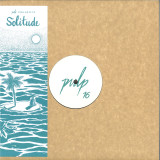
UK artist Jayson Wynters debuts on Pulp with four tracks of atmospheric house and funk that come complete with remixes by Jarren and Mogwaa.
Kung fu master Wynters hails from Birmingham and has been a key player on his local scene for years. More recently he has broken out with impressive EPs on mighty Dutch label Delsin and Adam Shelton's EON. He has a real love of hazy house and always brings his own unique take on that to his timeless analogue grooves. This latest EP was written during lockdown, which provided Jayson a chance to explore different sounds and delve into different styles.
Opener 'Solitude' proves that with its misty-eyed melodies and dreamy pads. The drums tumble loosely, the percussion has a frayed edge and the whole thing is coated in warmth and soul. Half Moon's Jarren is based in LA and brings plenty of that city's musical charm to his remix. It has far-sighted chords, soft-focus harmonics and well swung claps and drums that are simply irresistible.
Wynters then offers 'Corns Funk,' which pairs another dusty drum line with pinging kicks and woodpecker-like percussive hits. A superb twanging bass riff brings some real funk and retro-future feels as the groove builds and bright synths shine through the haze to enrich your soul.
'Night Drive' is a lush downbeat tune for sunset cruises. It has heart-melting chords that prompt deep inward reflection and features an aching guitar riff full of melancholy. The remixer for the one is Seoul musician and master beatmaker Mogwaa who layers in squelchy synth bass and dreamy, loved-up pads. Last of all, 'Uncle's Jam' is Dam Funk-style electro bliss doused in lo-fi chords and languid late-night funk and packed with romance.
Jayson Wynters shows off another superb side to his sound with his expansive Solitude EP.
mule musiq dives into the archives of humanoid ambient music history, bringing the vinyl premiere of a masterwork by german dj, producer, and musician david moufang, globally known as move d. released in 1995 on pete namlook’s fabled fax +49-69/450464 label, the album marks his only output as solitaire, featuring heroic, supple ambient music, that some folks call one of the best works by move d.
just three years before he dropped it, moufang launched with jonas grossmann the celebrated label source records, active from 1992 to 2005. it was the platform for his first move d album “kun-ststoff”, likewise released in 1995, highlighting diverse genres like techno, house, idm, ambient, electro, and downtempo.
“solitaire” works with pulsating rhythms, too. gentle ones, that cater sensations beyond the propel-ling dance sectors. a spiritual album. recorded at the resource studios/heidelberg in july/august 1994. it reaches out to higher ground, never leaving the sediment.
still state of the art. not a single melody, note, tone has aged. all sparkle, all innocence is still there, somewhere deep in the arpeggiated space, absorbing time. an exploratory early electronic work by an artist, who still had his most prolific years to come.
and yet, “solitaire” sounds like being shaped by a fully mature creative mind, that defined his sonic language already profoundly. six epic tunes between five and 16 minutes, listening to emblematic titles like “damaskus/dakar, “sergio leone’s wet dream”, or “indian mantra”, while opening ambient into investigative textural layer landscapes, that subtly incorporate acid, downbeat, idm, or early techno districts.
for those who have been around in the electronic music sphere for a while, “solitaire” is a classic. for those who are young at heart, it opens new horizons. each new passive or active listing loop fresh ones. hidden in the harmonies. hidden in the melodies. somewhere inside the sound. leading outside into a visual texture, where you can almost see the music!
On The Fly tells about the small moments of the big journey that is the path of jPattersson as a musician: Barefooted gratitude in the shade of a palm tree, a hike through the dreamlike colours of the highlands, a balcony scene with a glass of wine and the view of another galaxy... It's these small moments that fuel his contagious enthusiasm and hope that form the backbone for his signature 'jPatterssong-writing'. On The Fly is a very personal album that invites us to join the flight ourselves: Six of the eight tracks come with the highly stimulating catchiness of a four-to-the-floor beat. Sometimes it’s jPattersson's voice that sets the mood, sometimes it’s his trumpet, and then again it's the frequencies of electronically processed harmony which stretch like elastic rubber bands between delicate introspection and buzzing euphoria. A track generously marinated in sunlight and Dub as well as a piece of oceanic downbeat relaxation round off this forth jPattersson album just perfectly.
On The Fly erzählt von den kleinen Momenten jener großen Reise, auf der sich jPattersson als Musiker befindet: Barfüßige Dankbarkeit im Schatten von Palmen, eine Wanderung durch die traumartige Landschaft des Hochlands, eine Balkonszene mit Weinglas und Ausblick in eine andere Galaxie... In diesen kleinen Momenten findet er die ansteckende Begeisterung und Hoffnung, denen er in seiner unverwechselbaren 'jPatterssong'-struktur Ausdruck verleiht. On The Fly ist ein sehr persönliches Album, das uns ausdrücklich zum Abheben einlädt: Sechs der acht Titel kommen mit Vierviertel-Beats und entsprechendem Bewegungsdrang daher. Manchmal prägt jPattersson's Stimme die Atmosphäre, manchmal seine Trompete, und manchmal sind es elektronisch generierte Frequenzen, die er wie bunte Gummibänder zwischen Augenblicken der Introspektion und flächig aufgetragener Euphorie spannt. Ein in sonnigem Dub marinierter Track sowie eine ozeanische Downbeat-Entspannung runden dieses vierte jPattersson Album perfekt ab.
Limited edition 180g vinyl reissue of ‘Workin’ With The Miles Davis
Quintet’ on blue vinyl. Classic Miles Davis Quintet studio session from
1956 (released Jan. 1960) produced by Bob Weinstock for Prestige Records.
“This is the sort of thing that is going to be owned and played and dug and redug for all time. Few bands in the history of jazz have had the quality of this group. The whole LP is a gas. I don’t see how anyone can do without it.” - Ralph J. Gleason, DownBeat
Tor.Ma in Dub’s bass-quaking Terra and it’s fierce flipside Terra Dub drop on 7” this May 5th.
Terra’s pulsating bassline is complemented by sparse tribal percussion and disembodied vocals, creating a grounded and meditative vibe.
Terra Dub is straighter and heavier, with a punchy bass and a relentless steppers rhythm, guaranteed to lively up the dancefloor.
Both tracks are taken from the Solve et Coagula album, which focused on alchemy and transformation, with the elements presented in pairs. Downbeat dubs morph into uptempo steppers, all crafted with the unique blend of roots and psychedelia that are the hallmarks of the Mexico-based producer’s style.
The album is an atmospheric exploration into bereavement and nostalgia,
covering subjects such as worker's rights, adversity and hope. Upbeat, downbeat,
with swelling synths, jagged guitars and atmospheric percussion, it is unafraid to
be stark and bare, yet vivid and uplifting.Deborah is also known for her
enchanting vocals and musicianship in well-loved and critically-acclaimed band
Blueflint. This album is a collaboration with multi- instrumentalist Pat McGarvey
and leading percussionist Rich Kass. Deborah received funding from Creative
Scotland to create the album with renowned producer Paul Savage.
The album will be launched at Leith Depot in Edinburgh on 27th April. Deborah
will also perform at The Glad Cafe in Glasgow alongside LNFG label-mates Gates
of Lights (Louise Quinn) and Xan Tyler. So far Air In The Lungs has received a
great response and the recent singles have been played on BBC Radio 6 Music,
BBC Radio Scotland, BBC London, BBC Radio Ulster and more.
The Well Street label welcomes Yushh for her debut EP. The Pressure Dome label-head (who has previously landed on Facta & K-LONE's Wisdom Teeth as well as Banoffee Pies) brings a mind-altering mix of sounds here. There is sparse and futuristic space techno on 'Kara Arriba' then deeply introspective downbeat on 'Siro Silo'. 'Dough' is a percolating rhythm piece with rubbery bass and dreamy pads while 'OXI Ambigan' floats through space next to fizzing synth details, distant nebulas and alien life forms.
You reach a point in life where the question of how to stay at the top of your game looms; the only real solution being, you change the game. Our Love, the new album from Caribou, is the sound of Dan Snaith doing just that. Our Love is due October 6th on City Slang and is the sixth studio album from Caribou. The album features collaborations with Jessy Lanza and Owen Pallett. It was mixed by David Wrench and features artwork by Jason Evans/ Matthew Cooper.
Our Love is formed around a mixture of digital pop production, hip hop inspired beats, muted house basslines and a love of shuffling garage that can be traced all the way back to the time of Start Breaking My Heart which are, of course, all filtered through Dan's own unique perspective. The warm analogue sounds of classic soul should not be overlooked either, for they weave themselves most intensely into the records DNA. In fact, Our Love is probably Caribou's most soulful record to date, chock-full of heartfelt lyrics and organic nature which cuts through bubbling synths and blissful euphoria of their synthetic constructions. It's not all downbeat of course, whilst some thoughts linger on mortality, loss and letting go, there is always an element of celebration.
Having followed up his Polaris Prize winning 2007 record Andorra with the universally adored Swim in 2010 (selling nearly 175, 000 copies worldwide and being named 'Album of the Year' by Rough Trade, Mixmag and Resident Advisor whilst also hitting The Guardian, Pitchfork, Spin and Mojo's Top 20), Dan has spent the intervening four years not only touring the world, bringing not only the sounds of Caribou to the stage but proving his immeasurable worth as a DJ with epic 7.5 hour long sets. In 2012 Caribou were personally invited to join Radiohead on the road whilst Dan released his first album under the guise of his dance floor loving pseudonym, Daphni, to widespread critical acclaim. Following the shape shifting sounds of JIAOLONG and the brightly textured, fluid constructions of Swim - both inward looking records in their own way - Dan withdrew to the basement once more to work on Caribou's next opus. Only he didn't: Our Love isn't the sound of isolated creation but the sound of Dan at his most connected - with love for his listeners, his collaborators and those closest to him.
- 1: Jamaica Girls - Rock The Beat
- 1: 2 Denroy Morgan - High On Your Love
- 1: 3 The Jiving Juniors - Sugar Dandy
- 1: 4 Chico Booth & The Upsetters - The Shimmy
- 1: 5 Lloyd Williams - Funky Beat
- 1: 6 Tommy Mccook & The Supersonics - Work Your Soul
- 1: 7 Owen Gray - Something To Remind Me
- 1: 8 Stranger & Patsy - Give Me The Right
- 1: 9 Vernon Vermont - Too Late
- 1: 0 Jimmy James - Come To Me Softly
- 1: Pat Kelly - Try To Remember
- 1: 2 Ronald Russell - Rhythm Hips
- 2: 1 Denroy Morgan - Happy Feeling
- 2: Marcia Griffiths - Everything I Own
- 2: 3 Norma Lee - Hurt
- 2: 4 The Downbeats - Thinkin' Of You
- 2: 5 Laris Mclennon - Turn Me Loose
- 2: 6 Jimmy James & The Vagabonds - Hey Girl
- 2: 7 Adiche - Chuka-Ja (Get Ready)
- 2: 8 Norma Lee - Rolling On
- 2: 9 Phyllis Dillon - Humpty Dumpty
- 2: 10 Hoagy Benson - Kangaroo
- 2: 11 Sugar Simone - Take It Easy
- 2: 1 Maynell Wilson - Motown Feeling
Rare Groove Collection Explore the fusion of world music with soul, funk and disco through the Rare Groove Collection. With this new volume, discover unique groove tracks straight from Jamaica! Fully remastered original versions Jamaican Rare Groove From the beginning of the 60s to the end of the 80s, Jamaica had a worldwide influence with ska, rocksteady, dub and reggae, but the small Caribbean island did not escape the global trends of funk, soul and disco. This mix of influences has given birth to unique groove songs, highlighted by this Jamaican Rare Groove. Double vinyl Jamaican Rare Groove From the beginning of the 60s to the end of the 80s, Jamaica had a worldwide influence with ska, rocksteady, dub and reggae, but the small Caribbean island did not escape the global trends of funk, soul and disco. This mix of influences has given birth to unique groove songs, highlighted by this Jamaican Rare Groove.
Belgian-Japanese piano wizard Alex Koo seemed destined for a career as a classical concert pianist, but in his teens, he became completely enamored with jazz. Driven by his passion, he moved to New York, where he studied and taught at the renowned NYU Steinhardt. There he came into contact with jazz greats Mark Turner and Ralph Alessi, with whom he released the album "Applebueseagreen" in 2019, which was promptly included in the prestigious list of "Best Albums of 2019" by the legendary Downbeat Jazz Magazine with the words "Stunningly original". Domestically, too, one blazing review upon another: "Belgium is too small for pianist Alex Koo" or "We are stunned ", we read in national newspapers De Tijd and Le Soir.
With his brand new Etudes for Piano, composed for and commissioned by BoZar Brussels, he shows how his passion for both worlds - jazz and classical - merge perfectly. Adventurism and virtuosity go hand in hand with melancholy and elbow work (literally, for those who really know Koo knows). His music sounds like a marriage between Debussy, Chopin, Reich, Rachmaninov on the one hand and Keith Jarrett, Craig Taborn, Brian Eno and Philip Glass on the other. Alex Koo is a conjuring natural born storyteller on piano.
- 1: Winston Jarrett - Poor Mi Isrealites
- 2: The Flames - Scare Him
- 3: The Meditators- Give Me True Love
- 4: The Helpers - Help
- 5: Jackie Mittoo - Night Doctor
- 6: Lloyd Robinson - Run For Rescue
- 7: The Meditators - Tomorrow When Youre Gone
- 8: W Wellington - Too Many Miles
- 9: Lloyd Robinson - Double Crosser
- 10: The Helpers - Sweet Talking
- 11: Winston Jarrett - Just Cant Satisfy
- 12: The Gladiators - Jane
Studio One was founded by Clement "Coxsone" Dodd1 in 1954, and the first recordings were cut in 1963 on Brentford Road in Kingston.12 Amongst its earliest records were "Easy Snappin" by Theophilus Beckford, backed by Clue J & His Blues Blasters, and "This Man is Back" by trombonist Don Drummond. Dodd had previously issued music on a series of other labels, including World Disc, and had run Sir Coxsone the Downbeat, one of the largest and most reputable sound systems in the Kingston ghettos.
In the early 1960s, the house band providing backing for the vocalists were the Skatalites[3] (1964–65), whose members (including Roland Alphonso, Don Drummond, Tommy McCook, Jackie Mittoo, Lester Sterling and Lloyd Brevett) were recruited from the Kingston jazz scene by Dodd. The Skatalites split up in 1965 after Drummond was jailed for murder, and Dodd formed new house band the Soul Brothers (1965–66), later named the Soul Vendors (1967) and Sound Dimension (1967-). From 1965 to 1968 they played 9 a.m. to 5 p.m., 5 days a week, 12 rhythms a day (about 60 rhythms a week) with Jackie Mittoo as music director, Brian Atkinson (1965–1968) on bass, Hux Brown on guitar, Harry Haughton (guitar), Joe Isaacs on drums (1966–1968), Denzel Laing on percussion, and on horns (some initially and some throughout): Roland Alphonso, Dennis 'Ska' Campbell, Bobby Ellis, Lester Sterling, among others on horns during the era of Rock Steady. Headley Bennett, Ernest Ranglin, Vin Gordon and Leroy Sibbles were included among a fluid line-up, to record tracks directed by Jackie Mittoo at Studio One from 1966-1968.
During the night hours at Studio One from 1965-1968, singers like Bob Marley, Burning Spear, The Heptones, The Ethiopians, Ken Boothe, Rita Marley, Marcia Griffiths, Judy Mowatt, Alton Ellis, Delroy Wilson, Bunny Wailer[4] and Johnny Nash, among others, would put on headphones to sing lyrics to original tracks recorded by the Soul Brothers earlier each day. These seminal recordings included "Real Rock" (by Sound Dimension), "Heavy Rock", "Jamaica Underground", "Wakie Wakie", "Lemon Tree", "Hot Shot", "I'm Still In Love With You", "Dancing Mood", and "Creation Rebel".
Jackie Mittoo, Joe Isaacs, and Brian Atkinson left Studio One in 1968, recorded drums and bass for Desmond Dekker's and Toots' biggest hits at other Kingston studios, then moved to Canada. Hux Brown stayed in Jamaica to record on the soundtrack The Harder They Come, The Harder They Fall, and toured in Nigeria with Toots and the Maytals and Fela Kuti. The Soul Brothers (a.k.a. Sound Dimension) formed the basis of reggae music in the late 1960s, being versioned and re-versioned time after time over decades by musicians like Shaggy, Sean Paul, Snoop Lion, The Clash, String Cheese Incident, UB40, Sublime, and countless other Billboard originals and remakes trying to emulate their original Rock Steady sound at Coxsone's Studio One.
The label and studio were closed when Dodd relocated to New York City in the 1980s.
Studio One was founded by Clement "Coxsone" Dodd1 in 1954, and the first recordings were cut in 1963 on Brentford Road in Kingston.[1][2] Amongst its earliest records were "Easy Snappin" by Theophilus Beckford, backed by Clue J & His Blues Blasters, and "This Man is Back" by trombonist Don Drummond. Dodd had previously issued music on a series of other labels, including World Disc, and had run Sir Coxsone the Downbeat, one
of the largest and most reputable sound systems in the Kingston ghettos.
In the early 1960s, the house band providing backing for the vocalists were the Skatalites[3] (1964–65), whose members (including Roland Alphonso, Don Drummond, Tommy McCook, Jackie Mittoo, Lester Sterling and Lloyd Brevett) were recruited from the Kingston jazz scene by Dodd. The Skatalites split up in 1965 after Drummond was jailed for murder, and Dodd formed new house band the Soul Brothers (1965–66), later named the Soul Vendors (1967) and Sound Dimension (1967-). From 1965 to 1968 they played 9 a.m. to 5 p.m., 5 days a week, 12 rhythms a day (about 60 rhythms a week) with Jackie Mittoo as music director, Brian Atkinson (1965–1968) on bass, Hux Brown on guitar, Harry Haughton (guitar), Joe Isaacs on drums (1966–1968), Denzel Laing on percussion, and on horns (some initially and some throughout): Roland Alphonso, Dennis 'Ska' Campbell, Bobby Ellis, Lester Sterling, among others on horns during the era of Rock Steady. Headley Bennett, Ernest Ranglin, Vin Gordon and Leroy Sibbles were included among a fluid line-up, to record tracks directed by Jackie Mittoo at Studio One from 1966-1968.
During the night hours at Studio One from 1965-1968, singers like Bob Marley, Burning Spear, The Heptones, The Ethiopians, Ken Boothe, Rita Marley, Marcia Griffiths, Judy Mowatt, Alton Ellis, Delroy Wilson, Bunny Wailer[4] and Johnny Nash, among others, would put on headphones to sing lyrics to original tracks recorded by the Soul Brothers earlier each day. These seminal recordings included "Real Rock" (by Sound Dimension), "Heavy Rock", "Jamaica Underground", "Wakie Wakie", "Lemon Tree", "Hot Shot", "I'm Still In Love With You", "Dancing Mood", and "Creation Rebel".
Jackie Mittoo, Joe Isaacs, and Brian Atkinson left Studio One in 1968, recorded drums and bass for Desmond Dekker's and Toots' biggest hits at other Kingston studios, then moved to Canada. Hux Brown stayed in Jamaica to record on the soundtrack The Harder They Come, The Harder They Fall, and toured in Nigeria with Toots and the Maytals and Fela Kuti. The Soul Brothers (a.k.a. Sound Dimension) formed the basis of reggae music in the late 1960s, being versioned and re-versioned time after time over decades by musicians like Shaggy, Sean Paul, Snoop Lion, The Clash, String Cheese Incident, UB40, Sublime, and countless other Billboard originals and remakes trying to emulate their original Rock Steady sound at Coxsone's Studio One.
Tape
Originally born in days of a global lockdown, Johannes Albert gets ready for a second round of Ambient music. "Spessart II" follows the footprints of its predecessor and keeps things mostly quiet yet very thrilling at the same time. Starting off with "Frischling" the beat maker takes us on a calm synth trip through his home forest Spessart, using wild boar - Wildschwein - vocabulary all the way. Sparks of early Downbeat ("Gewaff"), even Trip Hop ("Überläufer") and instrumental Sade ("Leitbache") occur in the well balanced 8 track album. Johannes' dad Rudi adds to the vibe playing the Jagdhorn on "Keiler". If you like the band "The Art Of Noise" you will most likely love this too.
Time to Play Records strikes back with a new 4 tracks ep, late night club-ready, with heavy bass-kicks tracks straight to your chest.
Filippo Tazzer, label manager and executive producer, continues in his search, musical sensitivity and evident production skills. After having entrusted the baptism of the label to Reekee and Colosimo, the moment is propitious to introduce another Italian Producer:
Phonorem, fresh with a new album called “Algorythm”.
Phonorem production skills in those 4 tracks embrace different styles forged by his 90’s hip-hop and drum and bass roots, by mixing synthetizers and drum machines with samples.
SEAMLESS, the track that gives the EP its title, is a deep-house track with double bass – bassline and atmospheric scenarios by manipulating old Italian movie soundtracks samples.
PREE, is a downbeat track which made homage to DJ Premier beats, with some melodies created with a Chinese hammered dulcimer.
FLIP DOWN gives a high contrast experience: fusing a raw drum machine rhytm with dreamy pads and a mysterious vocal.
LOW FAT is a heavy bass kick track with some sythetizers-melodies with a story to tell. With a happy end :)
James Brandon Lewis is a New York-based jazz tenor saxophonist, composer, and bandleader. His instrumental voice marries the emotional power of gospel and the grit and groove of blues and R&B to the modal and vanguard influences of Albert Ayler and John Coltrane, and Sonny Rollins" expressive melodic and tonal discipline. Moments, his 2010 debut, was followed by two outings for Sony Masterworks" revived OKeh imprint: Divine Travels in 2014 and the widely celebrated Days of Freeman the following year. After working American stages and clubs, he toured European and Asian festivals. Radiant Imprints, a duo outing with drummer Chad Taylor, appeared in 2018 and was followed by the quintet offering An UnRuly Manifesto a year later. In 2021, after he was selected as the "Rising Star Tenor Saxophonist" in the Downbeat International Critics Poll, Lewis issued The Jesup Wagon, his debut for Tao Forms. Along the way, Lewis drew the attention of many improvising artists, most notably the saxophonist and jazz deity Sonny Rollins, who doesn"t offer effusive praise very often. Moved by Lewis" deep, spirit-seeking sound, Rollins said "When I listen to you, I listen to Buddha, I listen to Confucius ... I listen to the deeper meaning of life. You are keeping the world in balance." Eye of I opens with 44 seconds of gritty, high-throttling low-down groove, an ear pulverizing opening designed to cleanse all traces of ordinary from the palette. From there, Lewis offers a prayerful cover of Donnie Hathaway"s "Someday We"ll All Be Free" and then the first of his disarmingly addictive originals, "The Blues Still Blossoms" in addition to many others.
If naming is a form of claiming, of being claimed, how is one tethered to both the physical landscape that surrounds us, as well as our own internal emotional landscape_at times calm, at times turbulent, and ever changing? H.C. McEntire's new album Every Acre grapples with those themes_themes that encompass grief, loss, and links to land and loved ones. And naming_claiming land, claiming self, being claimed by ancestry and heritage_permeates the hauntingly beautiful landscape that is this poignant collection of songs. The songs straddle the line between music and poetry. In "New View," McEntire cites poets "Day, Ada, and Laux, Berry, and Olds"_fixtures in the world of writing, whose works are beacons of light over bleak horizons. The beginning of the song is backed by soft guitar plucks that fall on the downbeat and spangle like stars, and, throughout, guitar, bass, and drums swell together gently, mimicking ebbing and flowing tides under the moon. McEntire's voice (at once tender and fierce) intones the truth of both giving and taking, releasing and claiming: "Bend me, break me, split me right in two. Mend me, make me_I'll take more of you." Permeated by heartbeat-like drums, "Shadows" develops quiet ruminations on surrender and loss_reminiscing, moving on. This ponderous, dreamlike song asks the question of how "to make room." How does one make room, for self and for renewal and surrender, when it is so difficult to leave what you know behind? Playing with slivers of descending chromatics, along with the occasional downward-stepping bass, here McEntire yearns for home, and for nesting. Perhaps one of the more grief-stricken songs, "Rows of Clover" is a lamentation, one that touches on the loss of a "steadfast hound." The lone piano in the beginning of the song is rhythmically hymn-like. The stark verse arrangement gradually leads to a chorus that reads like a moody exhale, swollen with lush guitar strums and a Bill Withers-esque understated soul groove. But what stands out the most is an image of being "down on your knees, clawing at the garden"_the only explicit mention of a person in the song. "It ain't the easy kind of healing," sings McEntire, seemingly from further and further away as her voice echoes; and healing ta;kes time, time takes time_truths that linger painfully. "Dovetail" is a song that tells of various women. The song moves back and forth between solo piano and the addition of bass and drums under vocals. McEntire's gentle, trembling vibrato_harmonized in thirds in a celebratory manner_calls to mind a rejoicing psalm and shines through these images, leaving the listener cuttingly fraught with emotions_such as wonder, sadness, nostalgia_that can only arise with these juxtapositions. Gracious (and graceful) with its lilting melodies and lush harmonies, Every Acre ex - plores the acres of our physical and emotional homes. These songs are reaching for the kind of home that we all seek: one where we can rest and lay down (or tuck away) our burdens of loss. And maybe, moving through every acre of a world that often tries to tear our sense of identity and heritage down, McEntire sheds light on what it is to be human in this life_both stingy and gracious, both hurtful and kind.
Orange Viny
If naming is a form of claiming, of being claimed, how is one tethered to both the physical landscape that surrounds us, as well as our own internal emotional landscape_at times calm, at times turbulent, and ever changing? H.C. McEntire's new album Every Acre grapples with those themes_themes that encompass grief, loss, and links to land and loved ones. And naming_claiming land, claiming self, being claimed by ancestry and heritage_permeates the hauntingly beautiful landscape that is this poignant collection of songs. The songs straddle the line between music and poetry. In "New View," McEntire cites poets "Day, Ada, and Laux, Berry, and Olds"_fixtures in the world of writing, whose works are beacons of light over bleak horizons. The beginning of the song is backed by soft guitar plucks that fall on the downbeat and spangle like stars, and, throughout, guitar, bass, and drums swell together gently, mimicking ebbing and flowing tides under the moon. McEntire's voice (at once tender and fierce) intones the truth of both giving and taking, releasing and claiming: "Bend me, break me, split me right in two. Mend me, make me_I'll take more of you." Permeated by heartbeat-like drums, "Shadows" develops quiet ruminations on surrender and loss_reminiscing, moving on. This ponderous, dreamlike song asks the question of how "to make room." How does one make room, for self and for renewal and surrender, when it is so difficult to leave what you know behind? Playing with slivers of descending chromatics, along with the occasional downward-stepping bass, here McEntire yearns for home, and for nesting. Perhaps one of the more grief-stricken songs, "Rows of Clover" is a lamentation, one that touches on the loss of a "steadfast hound." The lone piano in the beginning of the song is rhythmically hymn-like. The stark verse arrangement gradually leads to a chorus that reads like a moody exhale, swollen with lush guitar strums and a Bill Withers-esque understated soul groove. But what stands out the most is an image of being "down on your knees, clawing at the garden"_the only explicit mention of a person in the song. "It ain't the easy kind of healing," sings McEntire, seemingly from further and further away as her voice echoes; and healing ta;kes time, time takes time_truths that linger painfully. "Dovetail" is a song that tells of various women. The song moves back and forth between solo piano and the addition of bass and drums under vocals. McEntire's gentle, trembling vibrato_harmonized in thirds in a celebratory manner_calls to mind a rejoicing psalm and shines through these images, leaving the listener cuttingly fraught with emotions_such as wonder, sadness, nostalgia_that can only arise with these juxtapositions. Gracious (and graceful) with its lilting melodies and lush harmonies, Every Acre ex - plores the acres of our physical and emotional homes. These songs are reaching for the kind of home that we all seek: one where we can rest and lay down (or tuck away) our burdens of loss. And maybe, moving through every acre of a world that often tries to tear our sense of identity and heritage down, McEntire sheds light on what it is to be human in this life_both stingy and gracious, both hurtful and kind.
If naming is a form of claiming, of being claimed, how is one tethered to both the physical landscape that surrounds us, as well as our own internal emotional landscape at times calm, at times turbulent, and ever changing? H.C. McEntire’s new album Every Acre grapples with those themes that encompass grief, loss, and links to land and loved ones. And naming claiming land, claiming self, being claimed by ancestry and heritage permeates the hauntingly beautiful landscape that is this poignant collection of songs. The songs straddle the line between music and poetry. In “New View,” McEntire cites poets “Day, Ada, and Laux, Berry, and Olds” fixtures in the world of writing, whose works are beacons of light over bleak horizons. The beginning of the song is backed by soft guitar plucks that fall on the downbeat and spangle like stars, and, throughout, guitar, bass, and drums swell together gently, mimicking ebbing and flowing tides under the moon. McEntire’s voice (at once tender and fierce) intones the truth of both giving and taking, releasing and claiming: “Bend me, break me, split me right in two. Mend me, make me I’ll take more of you.” Permeated by heartbeat-like drums, “Shadows” develops quiet ruminations on surrender and loss reminiscing, moving on. This ponderous, dreamlike song asks the question of how “to make room.” How does one make room, for self and for renewal and surrender, when it is so difficult to leave what you know behind? Playing with slivers of descending chromatics, along with the occasional downward-stepping bass, here McEntire yearns for home, and for nesting. Perhaps one of the more grief-stricken songs, “Rows of Clover” is a lamentation, one that touches on the loss of a “steadfast hound.” The lone piano in the beginning of the song is rhythmically hymn-like. The stark verse arrangement gradually leads to a chorus that reads like a moody exhale, swollen with lush guitar strums and a Bill Withers–esque understated soul groove. But what stands out the most is an image of being “down on your knees, clawing at the garden” the only explicit mention of a person in the song. “It ain’t the easy kind of healing,” sings McEntire, seemingly from further and further away as her voice echoes; and healing takes time, time takes time truths that linger painfully. “Dovetail” is a song that tells of various women. The song moves back and forth between solo piano and the addition of bass and drums under vocals. McEntire’s gentle, trembling vibrato harmonized in thirds in a celebratory manner calls to mind a rejoicing psalm and shines through these images, leaving the listener cuttingly fraught with emotions such as wonder, sadness, nostalgia that can only arise with these juxtapositions. Gracious (and graceful) with its lilting melodies and lush harmonies, Every Acre explores the acres of our physical and emotional homes. These songs are reaching for the kind of home that we all seek: one where we can rest and lay down (or tuck away) our burdens of loss. And maybe, moving through every acre of a world that often tries to tear our sense of identity and heritage down, McEntire sheds light on what it is to be human in this life both stingy and gracious, both hurtful and kind.
- A1: Kronos Island: 1St Mvt
- A2: Kronos Island: 2Nd Mvt
- A3: Kronos Island: 4Th Mvt
- A4: Kronos Island: 6Th Mvt
- B1: Ares Island: 1St Mvt
- B2: Ares Island: 2Nd Mvt
- B3: Ares Island: 4Th Mvt
- B4: Ares Island: 6Th Mvt
- C1: Chaos Island: 1St Mvt
- C2: Chaos Island: 2Nd Mvt
- C3: Chaos Island: 4Th Mvt
- C4: Chaos Island: 6Th Mvt
- D1: Rhea Island
- D2: Ouranos Island
- D3: Theme Of Starfall Islands
- D4: Theme Of Koco
Released in partnership with SEGA of Japan and composer Tomoya Ohtani, The Music of Starfall Islands is a collection of beautiful instrumental and classical-inspired tracks which are used as the background music for the various islands in Sonic Frontiers. The music for each island is presented as a suite, containing several movements that layer upon one another and build up to a climax, each with its own distinctive tone and feel, much like the islands themselves, which range from green meadows, to arid deserts, volcanoes and beyond. The music, composed solely by Tomoya Ohtani, is often stripped down, melancholic, and unexpectedly experimental, featuring an array of unusual sound sources (including Iranian percussion, Celtic vocal samples and Armenian folk instruments). In other moments, it is often rhythmic and emotive, with the addition of subtle electronics and the grandiose strings of The Nashville Scoring Orchestra.
While this release is by no means the complete soundtrack to Sonic Frontiers, we are thrilled to be able to present these beautiful and intriguing tracks as a collection on their own. With its downbeat tone and new compositional approaches, this music is unlike any Sonic soundtrack that has come before and may well subvert the expectations of some long-term fans, but should also surprise and delight audiences both new and old.
As Tomoya Ohtani explains in his liner notes for this release: “I wanted to create an atmosphere for each song that, despite the sadness it carries, also has a glimmer of hope. I do not believe there are many other pieces of Sonic game music that focus so much on the atmosphere as the tracks on Sonic Frontiers do.”
- 1: The Creation Recordings Why Does The Rain
- 2: Like
- 3: Winter
- 4: Up The Hill And Down The Slope
- 5: Your Door Shines Like Gold
- 6: Lonely Street
- 7: Time
- 1: Bbc Radio Janice Long Session - 9/2/84 On A Tuesday
- 2: Skeleton Staircase
- 3: The Canal And The Big Red Town
- 4: Lonely Street
- 1: Live At The Living Room - 8/6/84 On A Tuesday
- 2: Your Door Shines Like Gold
- 3: Time
- 4: Colours I See
- 5: Emily
- 6: The Nothing Box
- 7: The Canal And The Big Red Town
- 8: Why Does The Rain
- 9: Over The Hill And Down The Slope
- 10: Day’s End
- 1: Bark Studio Recordings - 5-7/2/05 Model Village Rickety Frame
- 2: Beware
- 3: Mad Old Woman Mad Old Man
- 4: Ride
- 1: Bbc Radio 6 Music Gideon Coe Session - 24/9/5 Why Does The Rain
- 2: I Can’t Keep My Mind Off You
- 3: Up The Hill
Triple coloured vinyl version (Each disc is a different colour) of the double CD that came out on Cherry Red in 2021 Presented in Tri-fold gatefold sleeve with 16 page 12x12 colour booklet, poster & photograph.
ONLY 350 COPIES WORLDWIDE
Among the first crop of Creation Records bands in the mid-1980s, THE LOFT seemed the most likely to break through. Following the success of The Smiths, guitar-based independent pop was in vogue, Alan McGee’s Creation label was turning heads – its bands blending 60s psychedelia, the melodic end of punk and a new sound which would soon be immortalised on NME’s C86 cassette. And in this London quartet, Creation had their answer to bands like Television, The Only Ones or early Modern Lovers, offering taut, off-kilter songs with an irresistibly deadpan cool.
Sadly, after just two singles, 1984’s downbeat debut ‘Why Does The Rain’ and the punchier sequel, ‘Up The Hill And Down The Slope’ – an indie hit which the band performed live on TV show The Oxford Road Show, The Loft dissolved, with various members founding new bands The Weather Prophets, The Caretaker Race and The Wishing Stones. They left behind seven studio tracks, a BBC Radio 1 session for Janice Long and one track from a Creation LP documenting the scene’s roots in small club The Living Room.
However, The Loft’s legend endured, eventually prompting a reunion in the early 2000s with all four original members – singer/songwriter/guitarist Pete Astor, guitarist Andy Strickland, bassist Bill Prince and drummer Dave Morgan. Alongside various well-received live shows, that led to a new single, ‘Model Village’ (2006) and more recently a session for Gideon Coe on BBC 6 Music (2015). The Loft’s reputation as founding fathers of a new breed of mid-80s indie pop continues to grow to this day, with the band often cited as an influence.
Compiled and coordinated by the band, Ghost Trains & Country Lanes expands on previous retrospectives of The Loft, adding those reunion recordings (including three previously unissued tracks), the Gideon Coe session and several live recordings from that historic performance at The Living Room back in 1984. (including many exclusive songs which were never recorded in the studio).
With new sleeve-notes by Danny Kelly, this is the definite tribute to The Loft
Most audiophiles know Alan Parsons Project's I Robot by heart. Engineered by Parsons after he performed the same duties on Pink Floyd's Dark Side of the Moon, the 1977 record reigns as a disc whose taut bass, crisp highs, clean production, and seemingly limitless dynamic range are matched only by the sensational prog-rock fare helmed by the keyboardist and his creative partner, Eric Woolfson. Not surprisingly, it's been issued myriad times. Can it be improved? Relish Mobile Fidelity's stupendous UltraDisc One-Step 180g 33RPM box set and the question becomes moot.
Mastered from the original master tapes and pressed at RTI on MoFi SuperVinyl, I Robot comes to life with reference-setting realism on this numbered, limited-edition reissue. Boasting immaculate highs and lows, generous spaciousness, and see-through transparency that takes you into the studio with Parsons and Woolfson at Abbey Road, this definitive edition is designed to demonstrate the full-range capabilities of the world's best stereo systems while offering listeners the convenience of having all the music on one LP.
Featuring a nearly inaudible noise floor, this transcendent UD1S edition functions as a repeat invitation to savor reference-grade soundstages, immersive smoothness, sought-after instrumental separation, three-dimensional imaging, and consummate tonal balances. Able to be played back at high volumes without compromise or fatigue, it is a demonstration record for the ages – the likes of which are no longer being made. This is the very reason you own and invest in high-end audio gear.
The special characteristics of this UD1S version extend to the premium packaging. Housed in an elegant slipcase, the reissue features special foil-stamped jackets and faithful-to-the-original graphics. Aurally and visually, it is made for discerning listeners who prize sound quality and production, and who desire to fully immerse themselves in everything about this conceptual landmark. The Alan Parsons Project's most famous record deserves nothing less.
Inspired by and loosely based around the Isaac Asimov stories of the same name, I Robot delves into themes of artificial intelligence and technological dominance that make the record extremely relevant in the 21st century. Indeed, Parsons and Woolfson's pinnacle creation dovetailed with the ascendency of Star Wars, which itself is experiencing a rebirth in an age of self-driving cars, smart devices, and mindless automation. Lyrically, songs such as "The Voice" call into question human behavior – and their relationship to increasing robotic supremacy – in everyday life. Parsons and Woolfson reflect the associated paranoia, dichotomy, and transformation via shifting sci-fi arrangements steeped in drama and moodiness.
The absorbing tunes on I Robot also continue to fascinate due to their perfectionism and innovation. Borrowing from Pink Floyd's strategies, Parsons and Woolfson utilize a looped sequence on the title track to create new downbeats. "Some Other Time" employs two different lead vocalists and yet gives the illusion that only one is involved. Captivating strings, a piccolo trumpet, and bona fide pipe organ grace "Don't Let It Show." The origins of "Nucleus" stem from a unique analog keyboard concoction dubbed "the Projectron," devised by Parsons and electronic engineer Keith Johnson. Andrew Powell's orchestral and choral arrangements top it all off, with "Total Eclipse" arriving as a frightening track that presages the climactic "Genesis Ch. 1 V. 32."
Does man or machine win in the end? Decide as you get lost in Mobile Fidelity's UltraDisc 180g 33RPM LP pressing. Secure your numbered copy today!
More About Mobile Fidelity UltraDisc One-Step and Why It Is Superior
Mobile Fidelity Sound Lab's UltraDisc One-Step (UD1S) technique bypasses generational losses inherent to the traditional three-step plating process by removing two steps: the production of father and mother plates, which are created to yield numerous stampers from each lacquer that is cut. For UD1S plating, stampers (also called "converts") are made directly from the lacquers. Since each lacquer yields only one stamper, multiple lacquers need to be cut. Mobile Fidelity's UD1S process produces a final LP with the lowest-possible noise floor. The removal of two steps of the plating process also reveals musical details and dynamics that would otherwise be lost due to the standard multi-step process. With UD1S, every aspect of vinyl production is optimized to produce the best-sounding vinyl album available today.
MoFi SuperVinyl
Developed by NEOTECH and RTI, MoFi SuperVinyl is the most exacting-to-specification vinyl compound ever devised. Analogue lovers have never seen (or heard) anything like it. Extraordinarily expensive and extremely painstaking to produce, the special proprietary compound addresses two specific areas of improvement: noise floor reduction and enhanced groove definition. The vinyl composition features a new carbonless dye (hold the disc up to the light and see) and produces the world's quietest surfaces. This high-definition formula also allows for the creation of cleaner grooves that are indistinguishable from the original lacquer. MoFi SuperVinyl provides the closest approximation of what the label's engineers hear in the mastering lab.
Three generous portions of blissful beats on the Electric Shrine imprint, kicking off with the downbeat (in BPM terms) but lively 'Solar Visions' coming on like a dub mix of a lost Chic classic, 'What You Love' more like prime-era John Carpenter remixed by a mischievous Orb and 'Un Amore Supremo' a slow motion (one of the slowest we've ever encountered) reverb-fest, designed for more eccentric chillout rooms. And that's all before the opera singer pitches in.
“It was so great to see what came back when I gave these tracks from Flicker to various comrades, friends and heroes to play with,” says Andy. “They’ve given them a new technicolour life.” “David Holmes requested the opening track as he had formed a bit of a connection with it, and what he came up with turns the song into an hallucinogenic beast, taking pride of place here as the opening track but in a whole different way to how Flicker opens. “James Chapman AKA Maps has taken ‘It Gets Easier’ to a bigger, brighter and shinier place, he’s given quite a downbeat track a euphoric and epic sheen. James is an absolute master of electronic production and he’s taken the same care and attention over this remix as he does with his own wonderful music. “I couldn’t put Richard Norris’ lovely widescreen take on ‘Something Like Love’ better than the man himself – in his own words he found the ‘hitherto undiscovered sweet spot between ‘Roscoe’ and ‘Outdoor Miner’’ and he tapped into the melancholy euphoria at the core of the song. “bdrmm’s remix of ‘Way Of The World’ is one for headphones. There are so many great moments to love, all held together by a bassline worthy of Jah Wobble (by way of Andrew Weatherall). Astonishing!” A1 The Sky Without You (David Holmes Radical Mycology Remix) A2 It Gets Easier (Maps Remix)B1 Something Like Love (Richard Norris Remix) B2 Way Of The World (bdrmm Remix) Reworkings of songs from Flicker by David Holmes, Maps, Richard Norris and bdrmm.
When British Airways got privatized and listed on the London Stock Exchange, somewhere in Canada the first Starbucks outside of the US opened, and the Walt Disney Company signed an agreement with the French Prime Minister to construct Disneyland Paris. In the sky above southern Argentina, Equatorial Guinea, Cameroon, Sudan, Ethiopia, Djibouti, northern Somalia, and the Atlantic Ocean a hybrid solar eclipse materialized for 7.57 seconds, whilst Margaret Thatcher performed for 45-minutes on Soviet television. Some days later, The Simpsons cartoon first appears as a series of shorts on The Tracey Ullman Show, Diego Maradona wins his first Italian soccer championship with Napoli, and Eighteen-year-old West German pilot Mathias Rust lands a private plane on Red Square in Moscow. In the mists of the world's first conference on artificial life at the Los Alamos National Laboratory, the first Kentucky Fried Chicken restaurant in Mainland China opens in Beijing, and Prozac gets approved for use as an antidepressant in the United States. Much give way for the future, down there in 1987, the year that marks the title of Benedikt Frey’s freshest mini album, out into the world on R.i.O., the label he runs with some pals in the North of Berlin. It’s a dubby melancholic conqueror, wistfully, repetitive, drilling, absorbing, spooking. It makes you dream. Not particular of the year 1987. But it’s all there: The Red Square, the untouched land of the Val d'Europe, Diego on fuego. Six dark-ish tracks in trance, melancholic dub, downbeat heaven, journey music depths, all full of light and yet so dark. Futuristic dramas linked to a speculative past. In our dreams all might look different. The eclipse may last 27- minutes. You meet Neuromancer cyberpunks and blade running Ghost dogs, all taught to hack by Phrack. Cristal clear melodies, sampled voices, and veiled basslines, analogue scopes, and digital ropes, longing for a past that storm into the future. A time where deep listening widens the acoustics into infinity, while neon glows charm the light smog. Benedikt Frey been down there. Or maybe not. His latest music tells stories from the bygone, vested with the forthcoming. Come in and look out. There is nothing to see, yet so much to hear.
- A1: We Rock It Feat Sammy Dread
- A2: Bushmaster (Kid Kenobi Session Remix Feat Mc Shureshoc
- A3: Dunk
- A4: The Only Redeemer Feat Vido Jelashe I /Adrian Sherwood
- B1: Love To The Rhythm Feat G.rizo (Paolo Baldini Dubfil
- B2: All A Dem A Do Feat Juggla (Paolo Baldini Dubfiles R
- B3: Prelaunch Sequence
- B4: Jah Dub (Adrian Sherwood Remix)
The sound company operating under the project name "Noiseshaper" is poised to release a very special vinyl album into record shops worldwide. The band received great acclaim for their first albums, which were released on the legendary and famous Rockers Hifi label Different Drummer. They later became celebrated for their musical contribution to the US television series CSI - Miami ! The Viennese coffeetable boys Axel Hirn und Florian Fleischmann achieved cult status with their 12-inch single "The Only Redeemer", which was later released in the US by Quango (Island Records /Palm Pictures) and fast became a permanent fixture on the playlists of the best and most popular DJs in Berlin, Vienna, Tokyo, Paris, London and New York. The next dancefloor filler followed with "All A Dem A Do", sung by Juggla, which was the band"s first release to get heavy rotation on many European and US radio stations. Next up were remixes by and for heavyweights such as Sly & Robbie, Outkast, Seven Dub and Carl Douglas. Noiseshaper"s defining sound has been distilled and condensed an utterly distinctive blend of "housey downbeats with a fat reggae flavour" has brought the Noiseshapers international acclaim and popularity. The very special VINYL release is the essential of what NOISESHAPER has ever done all over the years with a special focus on HEAVY bass remixes by Adrian Sherwood & Paolo Baldini. It is another very impressive display of how a musical style has progressed. Dub as a style with all its reference points between commerce and innovation ! 8 pounding dub flavour tunes all are best for bringing the dancefloors of the dub universe to boiling point. Heavy bass for heavy dancing!
Cosmopolitanism is creeping into the bedroom studios of producers worldwide. Romanski is another agent evolving transcultural hybrids, which blend from retained folkways to modern aged club grooves. A mixture of electronic beats in a rigid machine order and handmade organic moments woven together to form an eclectic sound. With a bit of drama, the hamburg based dj & producer Romanski, invites you on a diverse journey with his unique vision of club music. Balearic groove patterns accompanied by repetitive bongo motives & dimmed synth themes flow along the 4 tracks (2 of them featured on 7" vinyl) of this EP. The title track "Karma Calling" is a passionate homage to Mulatu Astatke, "Tagh Tagh" is surrounded by an iranian children’s song, "Gaugin" features a tahitian vocoder line about the french painter and on "Ants" Romanski reflects on lyrics that came to him when resident at a sanatorium years ago. Romanski is using his custom sound range & tools to express his downbeat grooves in this well balanced release. Hide below or turn around the umbrella with devotion and delight.
It is no exaggeration to say that Norwegian tenor
saxophonist Marius Neset plays in his own league.
In addition, he is one of the most fascinating and
versatile composers in jazz and far beyond -
which, among other things, currently takes him as
far as London’s Royal Albert Hall.
Downbeat states, “Marius Neset is not the future,
but the present of European jazz.”
‘Happy’ features Neset with a new, top-class
quintet. The album is divided into two parts - in the
first half, playful, intricate, energetic songs
dominate. And in the second part, Neset and band
take the listeners into a calmer suite. What all
pieces have in common is that you can hear the
musicians’ pure joy of playing in every note.
LP on 180g virgin vinyl with digital download code.
Daniel Barenboim will turn 80 on November 15th. Warner Classics are celebrating the great musician, who has had tremendous success since the ‘60s both at the piano or conducting, with an album made in the mid-90s that is close to his heart and Argentinian origins, though aside of the classical repertoire. Tangos Among Friends - Mi Buenos Aires Querido (named after a tango by Carlos Gardel) proves again all the talent and swing Daniel Barenboim has, and has been a huge success since released by Teldec on CD in 1996.
“I spent the first nine years of my life in Argentina and only in Argentina. The rest of the world was far away. Everything Argentinian was close to my heart. The concepts of cosmopolitan existence or international thinking were not yet awakened. The air that I breathed was Buenos Aires, the language that I spoke was Spanish porteño and the rhythm to which I danced (figuratively speaking…) was the tango! My idol was Carlos Gardel. Nearly half a century later I came back not only to Argentina, not only to my childhood but especially to my Buenos Aires querido and many other wonderful melodies that make up this sentimental record.”
Daniel Barenboim – from album booklet
In an interview made in the 90s, Daniel Barenboim added: “In Argentina during the late 1940s there was no chasm between classical music and the tango, in the way there was a chasm between classical music and jazz. The tango is a basic part of Argentine popular culture; when you went to a restaurant or a party, that was the music you would hear. (…) Already as a child I was crazy about the tango. I still am.”
“The young Daniel found himself drawn to the bittersweet tales of passion, tragedy and nostalgia sung by Gardel, the tango singer and songwriter who exerted a major influence in popularizing the tango throughout the Western hemisphere and Europe. (…) Over the following decades Barenboim would regale friends at home or at parties with piano arrangements of tangos he heard in his youth. (…) Barenboim never thought of sharing his passion for tangos with the public until last year when he had returned to Buenos Aires for concerts with his Berlin Staatskapelle orchestra. At a reception he found himself talking tangos with a young Argentine. Learning of Barenboim’s interest in performing them, he offered to drum up a few local musicians with whom Barenboim could play tangos at home. That’s how he met Mederos and Console. “The first day we just played for fun,” Barenboim says. “Then we decided to make a recording. So we rehearsed for two days and made the record in one afternoon.” (…) Once he, Mederos and Console set out to record their tango program, Barenboim was surprised at how much of the characteristic tango rubato – a subtle alteration of rhythmic weight and accent – he still had at his fingertips, more than four decades after leaving Buenos Aires. That said, he insists on sharing credit for the success of the disc with his Argentine colleagues. “What they gave me was a pure sense of the tango, especially in the melodic freedom over a very strict rhythmic foundation. Performing tangos, you are constantly anticipating the downbeat or coming after it; this is part of the tradition. What I gave them was the necessity to rethink certain aspects – say, the volume and transparency of sound – so that playing tangos didn’t sound routine.”
– The Chicago Tribune, Oct. 1996