As a longtime member of Hot Chip and LCD Soundsystem, Al Doyle has spent decades working alongside two of the most distinct vocalists in modern pop: Alexis Taylor and James Murphy. If he’s had a song or an idea, there’s always been someone else he’d rather have sing it.
But on November 20, 2026, the British multi-instrumentalist will release Hollywood Saviour, an album that drove him to finally embrace his own voice. “It’s me discovering a way to write and sing stuff that I could live with,” he says of his first-ever solo outing.
Recorded in his East London studio, Relax and Enjoy, Hollywood Saviour has the feeling—the rush and release—of a breakthrough, of an artist letting go. Doyle’s found freedom in simplicity here, leaning into the many pleasures of guitar-bass-drums, indulging wholeheartedly in the weird, spontaneous, raucous, and raw. He sounds free.
That sense of fun and rampant possibility can be felt in every groove, Doyle finding added inspiration in the loose and the louche, from Sexual Harassment’s 1983 electro-funk raunch-o-rama “I Need A Freak” to Throbbing Gristle’s locomotive 1980 paean to jerking off, “Something Came Over Me,” which is lovingly covered here.
At times, this album feels like a delirious response to the darkness of our current moment. On opener “Hard Times in America,” Doyle offers us a psychedelic window into his experiences traveling back and forth to the United States in recent years, feeling fascism’s hold tighten with each visit.
That sense of character comes through in Doyle’s vocal approach, a giddy combination of Iggy Pop, Pete Shelley, and PIL-era John Lydon. On “All I Want for Christmas”—a dark and devastating highlight—he takes on the shape of a drug addict come holiday season, “both dead and alive,” abandoned by his family, stumbling through a garden of drum machine and piano. It’s a pop song, lovely and lovingly rendered. It just wouldn’t be the same without his voice.
We welcome back one of Ireland’s most important electronic music pioneers, Roger Doyle for his third solo release on our Allchival label. For those who don’t know, Doyle is a composer, producer, founding member of the influential music-theatre company Operating Theatre, and friend to the label. Doyle has been exploring the possibilities of electronic sound since the 1970s which we have been mining.
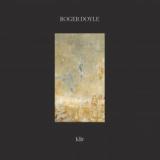
Idir brings together new fixed electronic works, software piano improvisations and voice, alongside a new recording of music from Operating Theatre’s 1986 production of Sebastian Barry’s The Pentagonal Dream, performed by Olwen Fouéré. Also included is a response to the dreamlike language of James Joyce’s Finnegans Wake.
Meaning “between” in Irish, Idir feels like a fitting title for an album that moves between eras, technologies, theatre and electronic composition: connecting Doyle’s pioneering past with his continuing practice. Returning back to an electronic foundation, the majority of tracks were composed between 2023 and 2025.
Thieves is a document of Kelly Doyle’s 30 years as a musician steeped in country, jazz and ‘50s exotica. Marked by freedom and restraint, he showcases his ability to unreel, flex, tease, cajole, inundate, and revel within the bounds of a single work. Composed for saxophone and guitar, Thieves offers an interplay of timbres that brings delicacy to complex melodies—tethered by unflinching bass and drums.
Harry Potter and the Goblet of Fire soundtrack, composed by Patrick Doyle, introduces a darker tone to the franchise. Key tracks like "Hedwig's Theme" and "The Quidditch World Cup" capture the excitement of the Triwizard Tournament. Nominated for a Grammy, the score blends new themes with familiar motifs, enhancing the film's emotional depth
Mit 'Ekko' legt die in Berlin lebende irisch-norwegische Künstlerin Tara Nome Doyle ihr drittes Album vor - eine Reise ins Unbekannte und in die Tiefen des eigenen Ichs. Auf dem Weg dorthin geht es um Schmerz, Abschied, Neuanfang und schließlich um Akzeptanz.
In nur 30 Minuten strahlt das Album eine bemerkenswerte Klarheit aus - nicht nur in seiner Kürze, sondern auch in seiner emotionalen Tiefe.
Tara hat 'Ekko' größtenteils selbst produziert und die musikalische Palette bewusst einfach gehalten. Sie arbeitete mit dem Grammy-prämierten Produzenten und Toningenieur Simon Goff (The Joker, Chernobyl) zusammen, um eine präzise, zurückgenommene Klanglandschaft aus Stimme, Klavier, Gitarre, Streichern, Mellotron und gelegentlichen analogen Synthesizern zu schaffen.
"The title is a description of what I do - making music in the home studio on a keyboard (real and virtual), reflecting some kind of dream world. Initially I had read in a book the phrase Homemade Pipe Dreams which I changed to Homemade Ivory Dreams - referencing ivory that often describes a piano keyboard."
First released digital only, June 2, 2017
From a review in Classical Ear August 2017:
It carries itself with all the vivid – and here often hallucinogenic – intensity typical of Doyle’s work. Structure and detail, rhythmic propulsion, tonal variation and textural intricacy all reveal his equally characteristic meticulousness. There’s a palpable emotional energy to, a discernible intellectual interrogation of, pieces that are acutely personal, adroitly framed and superbly realised. It’s as if Debussy had collaborated with dance-music duo Orbital.
Tara Nome Doyle's latest EP »Agape« marks her return to the music scene after a two-year hiatus following the success of her acclaimed sophomore album »Værmin« (Modern Recordings, BMG, 2022).
»Agape« is a profoundly intimate collection of songs documenting TND's emotional journey through grief, commemorating the passing of a loved one. Each track explores different facets of this emotional landscape, showcasing TND's otherworldly performances and unique approach to songwriting.
This self-produced EP represents an artistic leap for the Norwegian-Irish songwriter. Skill-fully capturing the arresting beauty of her compositions, TNDs minimalistic arrangements feature the haunting melodies of Norwegian-Scottish cellist Sunniva Shaw of Tordarroch (known for her work with Fay Wildhagen, Liv Jakobsen and Juni Habel). The ethereal atmosphere they create together evokes a distinctly Scandinavian eeriness while TND's dedication to crafting poetic lyrics and vivid storytelling pays tribute to her Irish singer-songwriter roots.
The EP's title »Agape« translates to unconditional, selfless love - a sentiment that permeates each of the six tracks. This timeless collection of songs aims to be a comforting and cathartic companion for anyone caught in the throes of grief. 1
pas en stock
Dernière livraison il y a 2 ans réapprovisionnement sans garantie
Returning to the well of Roger Doyle once again, his “Babel” project spans a decade of composition work before its’ initial release in 1999 as a 5CD set. Over 100 pieces and almost 50 collaborators it marks a journey through a virtual tower of Babel with each piece corresponding to a room within an imagined giant tower city. For the 25th Anniversary vinyl edition Doyle has revisited it- remastering it and providing its first vinyl edit - 80 minutes spread across two 180gm LP’s - rounding out the package with extended liner notes and a download code to the full 6 hours.
We’ve previously explored Roger’s Operating Theatre days and the idea for this project came in the early nineteen eighties while Doyle was heavily involved with the experimental theatre group. Working with emerging technologies and across a variety of genres he realised that he would be unlikely to achieve an overarching compositional style. Instead deciding to make a virtue out of the fact that he composed so schizophrenically, he wished to create a musical alphabet out of short abstract sounds with these sounds being analogous to phonemes in speech. With Blade Runner and sci-fi embedded in the zeitgeist of the times he came to the idea of the Tower of Babel as both a futuristic skyscraper and also an embodiment of language.
In the spring of 1990 Babel was finally begun and kept growing until it reached over 6 hours of music and was released in 1999.A large-scale musical structure making use of many technologies and music languages, with each piece of music being thought of as a 'room' or place within an enormous tower city. Each track in the main section corresponds to a virtual sonic architecture. The pieces are divided into two kinds: aural representations of actual spaces like The Dressing Room, The Stairwell and Mr. Brady's Room alongside internalised dream spaces like the Room Of Rhetoric, the Spirit Levels and the Mansard childhood memory room. Listeners can navigate their way differently through this virtual building at each hearing. As a supplement to the Babel Tower KBBL - the fictitious radio station – broadcasts a number of shows. Each has its own style and atmosphere. Collaborating with DJs, actors, writers and singers, KBBL is made to sound like a real radio station with ads, traffic reports and phone-ins.
Examples of the connections within the project can be found via the architecture were the saxophonist in the off-stage dressing room is rehearsing for her solo in the concert-hall (heard in Pagoda Charm) or the room off the stairwell, where the sounds of piano lessons and apartment life can be heard and the apartment where a muffled KBBL can be overheard At a molecular level The Iron Language Alphabet is a sound alphabet containing tiny fragments of sound representing letters or characters of an alien alphabet. This sound alphabet can be heard scattered through other pieces like The Room of Rhetoric, Pagoda Charm and in KBBL in Johnny’s Body at 002. Other molecular scatterings can be found in Cantilena where two songs sung by Operating Theatre’s Elena Lopez in KBBL are exploded and re-arranged to form new entities.
Doyle’s Babel celebrates language - a slight variation on the Biblical morality tale - and musical expression in all its variety.
Near Future Residence is music for an imagined place based on real ideas; the soundtrack for an ecologically sustainable housing development somewhere in a not-too-distant future Britain. The eleven instrumental pieces here come from a place of optimism, imagining a future that is based on cooperation, community and ecological urbanism. It's music intended to sit in this imagined environment rather than impose upon it, similar in principle to the function of Kankyō Ongaku (Japanese environmental music). The ideas contained on Near Future Residence laid the groundwork for - and can be seen as a companion piece to - the album Your Wilderness Revisited, released to critical acclaim in 2019. Doyle explains how the pieces “were composed in entirely generative ways using samples of instruments, synthesisers and field recordings I've collected and developed throughout 2018. In generative composition, rules are set and parameters are chosen and then put into motion, the results constantly changing and surprising.”
WILLIAM DOYLEs neues Album "Springs Eternal" folgt auf das von der Kritik hochgelobte Album "Great Spans Of Muddy Time" (10/10 Loud & Quiet, 9/10 Line of Best Fit, 4/5 Mojo, 8/10 Uncut, 5. The Quietus 100 Albums of the Year) aus dem Jahr 2021. "Springs Eternal" ist das bisher ehrgeizigste und verspielteste Werk des für den Mercury nominierten und von der Kritik gefeierten Künstlers WILLIAM DOYLE und bietet Kunst-Pop für das Anthropozän. Das Album bietet einen Panoramablick auf die Ekstasen und Qualen des Lebens in den 2020er Jahren und stellt die Frage, wie wir als zerbrechliche Wesen aus Fleisch und Blut - unsere Herzen schlagen und unsere Gedanken rasen - in einer beispiellosen, fast unvorstellbaren Zeit der rasenden Klimazerstörung und technologischen Expansion existieren. In 11 Tracks hören wir von Erzählern, die am Abgrund der globalen Katastrophe, des Herzschmerzes, der Sucht, der Indoktrination und der Geisteskrankheit stehen, bis sie ins große Unbekannte gehen. Die Texte, die abwechselnd ernst und ironisch, offen und allegorisch sind, werden mit ansteckenden Melodien und oft mit einer gewissen Überheblichkeit gepaart. Co-produziert von Indie-Superproduzent Mike Lindsay (TUNNG, LUMP) in seinem MESS-Studio in Margate, hören wir den Sirenengesang des Meeres, umspült von pulsierender Elektronik und mitreißender Instrumentierung, mit Beiträgen der Musiker ALEXANDER PAINTER, GENEVIEVE DAWSON und BRIAN ENO. "Springs Eternal" ist das nächste Kapitel in der klanglichen Odyssee von WILLIAM DOYLE, der mit seiner Inkarnation als EAST INDIA YOUTH ("Total Strife Forever", 2014; "Culture Of Volume", 2015) begann und sich unter seinem eigenen Namen weiterentwickelte, indem er die von der Kritik gelobten Alben "Your Wilderness Revisited" (2019) und "Great Spans Of Muddy Time" (2021) produzierte. Neben seinem eigenen Output produzierte DOYLE kürzlich das gefeierte Debütalbum "A Common Turn" (2021) von ANNA B SAVAGE und spielt in der Band von ORLANDO WEEKS, sowohl live als auch auf seinem kommenden Album. Farbige LP sowie CD.
We have a very limited amount of these available now for stores. 4LP boxset - white vinyl - edition of 300 - includes: The Dream Derealised LP, Lightnesses I & II LPs, Near Future Residence LP. It’s nearing a decade since William Doyle released his Mercury Music Prize nominated debut album, Total Strife Forever, as East India Youth in 2014. A year later, he had toured the world and was releasing his second album, Culture of Volume, but it would be another four years before Doyle returned with his third full album, and the first official release under his own name. The dizzyingly ambitious Your Wilderness Revisited arrived in 2019 and was followed last year by the artpop masterpiece, Great Spans of Muddy Time. In the years between leaving the old project behind and re-emerging under his own name, Doyle self-released a string of ambient-leaning albums, The Dream Derealised, Lightnesses Vol I & II and Near Future Residence, which are now to receive a first vinyl pressing via Tough Love as both a highly limited four LP box set, titled ‘Slowly Arranged: 2016-19’, and as separate albums. The Dream Derealised is a collection of nine abstract, lo-fi pieces that were recorded during the summer of 2016, when focusing on creating them helped guide Doyle through a “difficult period of anxiety, panic and a regular dissociative feeling called derealisation.” At the time, doing something creative in a quick and immediate fashion felt vital to Doyle, carrying him to a new place: “I’m releasing them now as a cathartic measure, and as a message for others who may be going through difficult times themselves. What I told myself at the time, what I can tell you now: You are not in danger. You are not going insane. You are not alone.” Lightnesses Vol. I & II sees Doyle create what we might understand as true ambient music – that is, music intended for the background that wasn’t composed as such, but allowed to blossom out of the setting of some rules and parameters, played by sounds he created and then resampled. The deceptively simple, droning pieces are unlike anything Doyle has made before or since. “During their creation I’d often take photographs of the light coming in through the windows of the two houses I lived in during their creation. I’d post these on social media and they became quite popular parts of my output. This music was intended to accompany those visuals. The first volume’s photo is a double exposure of the sun shining in on my notebook and my hand, whereas the photo for the second volume was taken in Joshua Tree Park, California as I saw our tail lights illuminate one of the trees.” Near Future Residence is music for an imagined place based on real ideas; the soundtrack for an ecologically sustainable housing development somewhere in a not-too-distant future Britain. The eleven instrumental pieces here come from a place of optimism, imagining a future that is based on cooperation, community and ecological urbanism. It's music intended to sit in this imagined environment rather than impose upon it, similar in principle to the function of Kankyō Ongaku (Japanese environmental music). The ideas contained on Near Future Residence laid the groundwork for - and can be seen as a companion piece to - the album Your Wilderness Revisited, released to critical acclaim in 2019. Doyle explains how the pieces “were composed in entirely generative ways using samples of instruments, synthesisers and field recordings I've collected and developed throughout 2018. In generative composition, rules are set and parameters are chosen and then put into motion, the results constantly changing and surprising.”
Reduced with immediate effect from £16.99 to £8.99 while stocks last. Lightnesses Vol. I & II sees Doyle create what we might understand as true ambient music – that is, music intended for the background that wasn’t composed as such but allowed to blossom out of the setting of some rules and parameters, played by sounds he created and then resampled. The deceptively simple, droning pieces are unlike anything Doyle has made before or since. “During their creation I’d often take photographs of the light coming in through the windows of the two houses I lived in during their creation. I’d post these on social media and they became quite popular parts of my output. This music was intended to accompany those visuals. The first volume’s photo is a double exposure of the sun shining in on my notebook and my hand, whereas the photo for the second volume was taken in Joshua Tree Park, California as I saw our tail lights illuminate one of the trees.”
It’s nearing a decade since William Doyle released his Mercury Music Prize nominated debut album, Total Strife Forever, as East India Youth in 2014. A year later, he had toured the world and was releasing his second album, Culture of Volume, but it would be another four years before Doyle returned with his third full album, and the first official release under his own name. The dizzyingly ambitious Your Wilderness Revisited arrived in 2019 and was followed last year by the artpop masterpiece, Great Spans of Muddy Time. In the years between leaving the old project behind and re-emerging under his own name, Doyle self-released a string of ambient-leaning albums, The Dream Derealised, Lightnesses Vol I & II and Near Future Residence, which are now to receive a first vinyl pressing via Tough Love. The Dream Derealised is a collection of nine abstract, lo-fi pieces that were recorded during the summer of 2016, when focusing on creating them helped guide Doyle through a “difficult period of anxiety, panic and a regular dissociative feeling called derealisation.” At the time, doing something creative in a quick and immediate fashion felt vital to Doyle, carrying him to a new place: “I’m releasing them now as a cathartic measure, and as a message for others who may be going through difficult times themselves. What I told myself at the time, what I can tell you now: You are not in danger. You are not going insane. You are not alone.”
Tara Nome Doyle is a 24-year old singer-songwriter with Norwegian-Irish roots. In April 2018 her first release, the song Down with You came out. Since then it has been streamed more than four million times. More singles and an EP called Dandelion followed. In January 2020 her debut album Alchemy was celebrated by the German press (“… like Kate Bush singing songs by Nick Cave at Berghain”, SPIEGEL). TND’s second album, Værmin, will be released in January 2022 on Modern Recordings. The album was produced by Simon Goff, a Grammy-award winning producer (for his work for Hildur Guðnadóttir’s Chernobyl score), violinist and engineer.
TND likes to collaborate: In spring 2021 she co-wrote an original song with Isobel Waller-Bridge (Fleabag) for the upcoming Netflix feature film Munich - The Edge Of War. In July 2021 the EP The Moments We Keep, which she co-wrote and co-produced with the Italian pianist Federico Albanese, came out on Mercury KX. In late 2020 TND released recordings with Malakoff Kowalski (Bad Dreams) and 1k Flowers (Clemency). TND has also collaborated twice with Max Rieger (Die Nerven; producer of e.g. Caspar and Drangsal).
On Væermin TND tells a tragic love story, rich in symbolism and nuances, orchestrated with piano, violin and synthesizer and sometimes pulsating beats – and with singing that is both intense and varied, sometimes angelic, sometimes rough and threatening. Væermin is touchingly beautiful – and yet it also celebrates the supposed ugliness that lives in all of us and that we like to suppress and ignore. All songs are named after animals that are considered undesirable pests: leeches, caterpillars, snails and worms. Væermin celebrates their beauty and thus also asks a political question: What would happen if we welcomed these vermin instead of rejecting them? Wouldn't we then arrive at a much richer, balanced relationship with ourselves, to a more differentiated relationship to the world around us and to other people?
Værmin is a grand, wise, deeply moving album. And the songs get stuck in your head immediately, pulling you into their depths: existential music by an extraordinary artist.
It’s nearly a decade since William Doyle handed a CD-R demo to the Quietus co-founder John Doran at a gig, who loved it so much he set up a label to release Doyle’s debut EP (as East India Youth). Doyle’s debut album, Total Strife Forever, followed in 2014, as did a nomination for the Mercury Music Prize. A year later, he was signed to XL, touring the world and about to release his second album – all by the age of 25.
After self-releasing four ambient and instrumental albums, Doyle’s third full-length record – and the first under his own name – Your Wilderness Revisited arrived to ecstatic reviews in 2019: Line of Best Fit described it as “a dazzlingly beautiful triumph of intention” and Metro declared it an album not only of the year, but “of the century”. Just over a year later, as he turns 30, Doyle is back with Great Spans of Muddy Time.
Born from accident but driven forward by instinct, Great Spans was built from the remnants of a catastrophic hard-drive failure. With his work saved only to cassette tape, Doyle was forced to accept the recordings as they were – a sharp departure from his process on Your Wilderness Revisited, which took four long years to craft toward perfection. “Instead of feeling a loss that I could no longer craft these pieces into flawless ‘Works of Art’, I felt intensely liberated that they had been set free from my ceaseless tinkering,” Doyle says.
“The album this turned out to be – and that I’ve wanted to make for ages – is a kind of Englishman-gone-mad, scrambling around the verdancy of the country’s pastures looking for some sense,” says Doyle. “It has its seeds in Robert Wyatt, early Eno, Robyn Hitchcock, and Syd Barrett.” Doyle credits Bowie’s ever-influential Berlin trilogy, but also highlights a much less expected muse: Monty Don, presenter of the BBC programme Gardener’s World, Doyle’s lockdown addiction.
“I became obsessed with Monty Don. I like his manner and there's something about him I relate to. He once described periods of depression in his life as consisting of ‘nothing but great spans of muddy time’. When I read that quote I knew it would be the title of this record,” Doyle says. “Something about the sludgy mulch of the album’s darker moments, and its feel of perpetual autumnal evening, seemed to fit so well with those words. I would also be lying if I said it didn’t chime with my mental health experiences as well.”
Lead single “And Everything Changed (But I Feel Alright)” is representative of the album as a whole: eclectic and unpredictable, but also playful and properly danceable. On top of the gently pulsing electronics, soothing harmonies and glowing melodies, there’s a ripping guitar solo that ricochets around the song like a pinball. “I wanted to get back into the craft of writing individual songs rather than being concerned with overarching concepts,” Doyle says. Elsewhere there’s the synth pop strut of “Nothing At All”, pulsating static on “Semi-Bionic”, incandescent synths and enveloping soundscapes in “Who Cares”, and the ambient glitch groove of “New Uncertainties”.
Great Spans of Muddy Time is a beautiful ode to the power of accident, instinct and intuition. The result, however, is far from an anomaly: this celebration of the imperfect album is one that required years of honed craft and dedicated focus to achieve, “For the first time in my career, the distance between what I hear and what the listener hears is paper-thin,” Doyle says. “Perhaps therein reveals a deeper truth that the perfectionist brain can often dissolve.”
»Alchemy« is the debut album from 22-year old singer-songwriter Tara Nome Doyle, following the singles »Heathens«, »Neon Woods« and »Mercury«. Doyle’s 2018 EP »Dandelion«, featuring her breakthrough-hit »Down with You«, has so far amassed nearly two million streams. Recently, two of her songs featured in Sophie Kluge’s feature film »Golden Twenties«. Doyle is a member of Kat Frankie’s choir on whose a capella EP she features.
»Alchemy« deals, in two songs each, with the four phases of development of the pre-modern natural philosophy, the alchemy. The album can be read psychologically or as a portrait of someone coming of age. Experience and reflection are closely entwined which is as beautiful as it’s threatening.
Doyle, whose middle name is pronounced just like »Naomi«, is from Berlin-Kreuzberg, her parents are from Ireland and Norway. She speaks (and sings) both languages without accent. Is it permissible to recognize the biographical background of these landscapes in her art? The stored heat and the fog from the Irish peat bogs, the magic of the the Norwegian forests?
The concept album was recorded in large parts with David Specht (bass player and producer of Isolation Berlin) and Doyle's newly founded band in Berlin. Specht remains reserved, keeping the band in check. It’s the interiors that we should hear – acoustically, but also thematically. The drums sound more like a knock on the window pane than the city noise outside the door, the guitar controls the harmony and not the power supply. The first instrument remains Doyle’s voice, which is always working and is looking for a way. Inward, outward. All songs were written by Doyle, for the arrangement for »Neon Woods« she worked with Max Rieger (Die Nerven, producer for e.g. Drangsal and Ilgen-Nur).
pas en stock
Dernière livraison il y a 3 ans réapprovisionnement sans garantie
The second EP of remixes from Man Jumping's reissue on Emotional Rescue features luminaries Bullion, Reckonwrong, Gengahr and William Doyle with their reversions of songs from the Jumpcut album.
Nathan Jenkins aka Bullion follows his recent rerub of Thomas Leer (ERC072) to provide two remixes. His remake of In The Jungle keeps the originals (leftfield) dance floor roots, but sprinkles the ubiquitous warm glow and off kilter fun(k) that he evokes; while his retake of Walk On, Bye drifts back, highlighting intricate percussion; congas, bass and vocal atmospherics along some breezy swing.
Reckonwrong is next; turning the bossa vibes of Sqeezi into his own new wave meets italo reversion; topped with his unique 'under the cupboard stairs' vocals. Funky, driving, this overlooked star adds to his cannon for Whities, Pinkman and DEEK.
After a string of impressive releases for Trangressive / Beggars, Gengahr make a surprise addition, lifting Down The Locale from deceptive beginnings to anthemic heights, adding echo-laden guitar and vocals to the original's underbelly, before a bass break and return lifts to the heavens.
Finally, William Doyle provides perfect closure. Moving away from his East India Youth moniker (XL Recordings), his output has drifted towards ambient introspection, however, here points to addtional layers; rebuilding Belle Dux On The Beach with added bass, guitar, drums and finally vocals that culminate in a prefect 'to the skies' outrospection.
pas en stock
Dernière livraison il y a 6 ans réapprovisionnement sans garantie
Australian Soul Jazz holy grail from 1968! Limited to 300 copies w/wide. Debut release on Pacific Theatre Encore, the reissue label started by Melbourne's contemporary funk / soul lynchpin Australian Lance Ferguson (The Bamboos, Menagerie, Lanu, ex Cookin' On 3 Burners). Two high energy Mod burners, both originals taken from the forthcoming album 'Whatever It's Worth'.
Lead by Australia's own rival to Jimmy Smith and Jimmy Witherspoon, the '68 line up of Col Nolan & The Soul Syndicate would prove to be an Australian jazz super-group, consisting of John Sangster on drums / percussion (whose own late '60s Festival albums are highly collectable), John Allan on bass, Col Loughnan on sax and Jimmy Doyle on guitar (the latter two were also in mid Oz '70s jazz-rock giants, Ayers Rock).
"Pacific Theatre Encore will be reissuing music from across the globe, but it was important to me for the first release to shine a light on the important legacy of our own scene" says Ferguson, who meticulously restored the audio himself, which was then remastered.
pas en stock
Dernière livraison il y a 6 ans réapprovisionnement sans garantie
On The 25th Anniversary Of D1 Recordings, Label Boss Eamonn Doyle Revives The Independent Ethos Of The Acclaimed Dublin Techno Label, Presenting A Rare 12 On Lunar Disko Records.
'the Long Game Ep' Features Four Lost Tracks Uncovered From The Depths Of The 147 Basement In Dublin 1.
An Essential Record For Seekers Of The Purist Techno Funk.
Artwork: Andy Doyle
pas en stock
Dernière livraison il y a 6 ans réapprovisionnement sans garantie
This compilation is also the story of our parties since the beginning, of happy moments spent inParisian night-clubs, but of periods during when we were slaving away too...his compilation includes unforgettable tracks that flood andstick to your mind for ever!It would have been impossible to set up the compilation without the unconditional support of all the artists...a big THANKS to everybody! » Niko (Dj Okin Akaniko)
On 8th February 2019, Eric Gales returns with his brand new album 'The Bookends' on Provogue/Mascot Label Group and it features collaborations with B. Slade and Provogue artists Doyle Bramhall II and Beth Hart. The challenge for making 'The Bookends' was for Gales to challenge himself. 'As a guitar player it's been established that I can play a little bit, just a little bit,' he smiles. But for this album he not only wanted to push himself as a musician, but also as a vocalist, to build up his vocal discography. Gales' story is an incredible one, he was a child prodigy and released his debut album The Eric Gales Band in 1991 as a 16 year old on Elektra Records. It was the first of 10 albums on a major label through a blistering career. He has released 15 studio albums in total ahead of 'The Bookends' and a host of other collaborations. He has battled drink and drug issues and spent time in jail in 2009 for possession of drugs and a weapon. Gales proudly tells his story every night before every show, now over two years sober he is creating some of the most breath-taking music he has ever made. If his previous album 'Middle of the Road' was the rebirth of Eric Gales, then 'The Bookends' is him knocking away his boundaries and taking flight on a voyage of self-discovery asking himself what do you think you can do and pushing that into the stratosphere.
I love the shared experience of music more than almost anything, but the longer I exist in the industry, the harder it is to stay emotionally connected to an album once it’s reduced to numbers and statistics. So I wanted to release this in a way that feels more human—and affordable, especially in wartime. Your support helps create more music, not ads for ICE. Someday the machine will get it, but for now I just want this to feel like an experience again.
Reconcile at the Tile Works, Recorded Live, was captured inside Moravian Tile Works in Doylestown, Pennsylvania. A place built by artist Henry Chapman Mercer, who spent the early 1900s shaping tiles by hand, one at a time. No shortcuts. Just craft, fire, and time. That spirit is all over this record. Some of these songs I haven’t played in years because of how they made me feel and what they conjured in me.
Reconcile at the Tile Works, Recorded Live, won’t be on streaming services. Because art and music deserve more. If you want to hear it, go where music still lives:
Support artists directly. Support the shops that keep the culture alive.
Connecters Vol. 1: Original Recordings, 1992-1999 ist die erste Veröffentlichung von Larrison, dem Pseudonym des bildenden Künstlers und Musikers Larrison Seidle aus dem Mittleren Westen. Larrison komponierte, programmierte und nahm alles komplett auf einem Casio CZ-5000 auf, während der guten alten Zeit der selbstgemachten Experimente und Entdeckungen in den frühen 90ern. Er lebte in einer Traumwelt, die er selbst erfunden hatte, mit Soundtracks aus Space-Age-Pop-Vignetten, gespickt mit hypnotischen, überschwänglichen, vielschichtigen Synthesizer-Melodien. Mit 26 Tracks, die alle neu restauriert und aus den Originalquellen gemastert wurden, erfindet sich Connecters Vol. 1 Song für Song neu, überwindet die Zeit und trotzt der vorbestimmten Vergessenheit dieser brillanten, diskreten Musik, die vor drei Jahrzehnten entstanden ist. Larrison Seidle wuchs in den 70er und 80er Jahren in Greenwood, Indiana, einem Arbeitervorort von Indianapolis, auf. Er stammte nicht aus einer Musikerfamilie, aber aus einem Haushalt, in dem Musikalität gefördert wurde. Sein Vater kaufte eine elektrische Orgel, in der Hoffnung, dass Larrison und sein älterer Bruder das Instrument lernen würden. ,Am Ende saß mein Vater einige Abende an der Orgel, improvisierte und spielte immer wieder dieses eine Lied, von dem ich mich noch an die ersten Takte erinnern kann", erinnert sich Larrison. Möglicherweise war es in diesem Moment, in dem es zwar keine formale Ausbildung gab, aber viel Ermutigung und Entdeckungsfreude, dass der Künstler seine ersten musikalischen Experimente machte. Diese Erlaubnis, sich auszuprobieren, sollte seine kreative Arbeit in den folgenden Jahren deutlich prägen. Während in Larrisons Elternhaus klassische Rockplatten leicht zugänglich waren, lieh sich sein Vater 35-mm-Dokumentarfilme aus der Bibliothek aus, um sie im Wohnzimmer zu zeigen, die alle mit skurrilen Instrumentalstücken unterlegt waren. Als Teenager nahm er John Carpenters und Alan Howarths Endthema aus ,Die Klapperschlange" mit einem kleinen Kassettenrekorder neben dem Fernsehlautsprecher auf und liebte Tangerine Dreams Beiträge zu Ridley Scotts düsterer Fantasy ,Legend". Seine Faszination für diese weitgehend textlosen, synthesizerbasierten Kompositionen führte zu einem eigenwilligen Verständnis davon, wie Musik nicht nur das ergänzt, was wir vor uns sehen, sondern auch das, was wir in den Tiefen unseres Bewusstseins erleben. 1985, als er dreizehn Jahre alt war, überzeugte Larrison seinen Vater, ihm ein Casio CZ-5000-Keyboard zu kaufen. Wie zuvor die Orgel war auch dieses Instrument eine Neuheit im Haushalt der Seidles. Erst nach seinem Highschool-Abschluss 1991 und dem Beginn seines Studiums an der Herron School of Art in Indianapolis entdeckte er den in das Casio integrierten Sequenzer und begann, seine Kompositionen auf Band aufzunehmen. ,Das CZ-5000 und sein 8-Spur-Sequenzer sind die einzigen Musikinstrumente, die ich benutzt habe. Es hat eine fast unbegrenzte Funktion zur Erzeugung neuer Klänge", erklärte Seidle. Während seiner Zeit an der Herron School of Art freundete sich Larrison mit seinem Kommilitonen und Klangkünstler Michael Northam an, den er bei einem Konzert auf dem Campus kennengelernt hatte. Nachdem Northam Larrison für die Musik von Severed Heads, Throbbing Gristle und Roger Doyle begeistert und damit seine Zuneigung und sein Vertrauen gewonnen hatte, überredete er ihn, nach Austin, Texas, zu ziehen, das in den frühen 90er Jahren für seine lebendige Kunst- und Musikszene bekannt war. Die beiden wohnten zunächst bei Northams Freund Daniel Plunkett, dem Herausgeber und Verleger von ND, einem einflussreichen Magazin, das sich von 1982 bis 1999 mit DIY-Musik und Tape-Trading beschäftigte. In seiner Blütezeit hatte ND Tausende von Lesern, und Plunkett verschickte die Ausgaben weltweit. In den letzten Monaten des Jahres 1993 und Anfang 1994 schrieb und nahm Larrison mit begrenzten Mitteln und grenzenloser Intuition eine Reihe von Songs mit seinem CZ-5000 in einer kleinen Wohnung nördlich der Innenstadt von Austin auf, bastelte eine farbenfrohe, illustrierte Beilage, in der einige Songtitel durch Linien oder Pfeile dargestellt waren, und gab sie an Plunkett weiter, damit er sie für ND rezensieren konnte. Diese einzelne Kassette mit dem Titel Connecters sic war eine von 1200, die im Laufe des Bestehens der Publikation bei ND eingereicht wurden und die Jed Bindeman, Mitbegründer von Freedom To Spend, 2020 erworben und fast wie durch ein Wunder entdeckt hat. ,Ich hatte große Schwierigkeiten, mir die Kassetten in dieser Sammlung anzuhören", gibt Bindeman zu. ,Aber dann legte ich Larrisons Connecters ein und dachte sofort: ,Wow! Was höre ich da?' Die Kassette war von Anfang bis Ende einfach fantastisch." Mit Musik von genau dieser Kassette und anderen Aufnahmen aus Larrisons Experimenten in den 90er Jahren ist Connecters eine Übersicht über Instrumentalmusik, die sowohl durch vielfältige konzeptionelle Strategien als auch durch spielerische Neugierde geprägt ist. Seidle arbeitete unter Bedingungen, die viele Musiker als Einschränkung empfinden würden, und entwickelte technisch innovative Ansätze, um die Klänge und integrierten Effekte des CZ-5000 zu modifizieren. Das Gerät ermöglichte es ihm, die Wellenform, die Hüllkurve und die Tonart von Klängen mithilfe der Phasenverzerrungssynthese zu verändern und so im Grunde genommen Instrumente zu schaffen, während er Songs komponierte. Die Tracks zeichnen sich durch eine durchdachte impressionistische Vielfalt aus, die mal lo-fi, mal symphonisch klingt. Inmitten der Zerlegung und Verstärkung der Fähigkeiten des CZ-5000 gibt es auch einen geschmackvollen Rückgriff auf eine kindliche Interaktion und Erfahrung von Klang. Vielleicht ist es diese Erfahrungsqualität, die es so schwierig macht, Larrisons Projekt einfach als Ambient oder Elektronik zu verstehen. Sein Wille, die ihm zur Verfügung stehenden Werkzeuge zu transformieren, hebt die daraus resultierenden Kompositionen auf eine persönliche Ebene und verleiht der Musik einen bezaubernden Sinn für Mystik. Connecters ist ein Beweis für eine künstlerische Vision, die sich nicht durch Grenzen einschränken lässt und keine Angst vor Informalität hat. Diese Aufnahmen, die dreißig Jahre nach ihrer Dokumentation auf magische Weise an die Oberfläche kommen, zeigen, wie personalisierte Produktionsmittel die Zeit ausdehnen und verkürzen können. Larrison lädt die Zuhörer ein, sich auf die Wunder der auditiven Vorstellungskraft einzulassen - eine Brücke zwischen visueller Erinnerung, emotionaler Resonanz und der grenzenlosen Möglichkeit, mit den uns zur Verfügung stehenden Mitteln Musik zu machen. Larrison's Connecters Vol. 1: Original Recordings, 1992-1999 wird am 3. April 2026 von Freedom To Spend als Vinyl- und Digitalausgabe veröffentlicht.
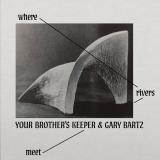
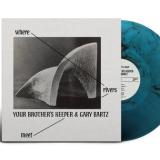
Gary Bartz und das neue Londoner Ensemble Your Brother’s Keeper präsentieren mit "Where Rivers Meet" ein tiefgründiges und intuitives Studioalbum, das die seltene Begegnung zweier Generationen von Jazzmusikern einfängt. Das Album, das pünktlich zum 20-jährigen Jubiläum von Brownswood erscheint, vereint Bartz' Tradition mit der jungen, pulsierenden Szene Londons. Das Ergebnis ist Musik, die sich mit Offenheit und Intensität entfaltet, getragen von tiefem Zuhören und gemeinsamer Improvisation.
Im Zentrum des Projekts steht Bartz, eine der einflussreichsten Vertreter des modernen Jazz. Der Saxophonist, dessen Karriere sich über mehr als fünf Jahrzehnte erstreckt, machte sich einen Namen durch Auftritte mit Charles Mingus, Max Roach und Art Blakey, bevor er sich Miles Davis in dessen elektrisierender Phase der frühen 1970er-Jahre anschloss. Mit seinen gefeierten Aufnahmen mit der NTU Troop wurde er schnell zu einer prägenden Figur des Spiritual Jazz und schuf ein Werk, das Generationen von Musikern und Zuhörern gleichermaßen begeistert. Sein Spiel – lyrisch, tiefgründig und unverkennbar gefühlvoll – zählt nach wie vor zu den markantesten Stimmen des Jazz.
Das Album markiert zudem die Gründung von Your Brother’s Keeper, einem neuen Kollektiv um Schlagzeuger und Produzent Jake Long (Maisha), dessen musikalischer Dialog und die Improvisation tief in der Musik verwurzelt sind. Mit Ali MacSween (Piano, Synthesizer, modulare Effekte), Axel Kaner-Lidstrom (Trompete), Twm Dylan (Kontrabass), Tim Doyle (Percussion) und Chelsea Carmichael (Tenorsaxophon) sowie Long am Schlagzeug spiegelt die Gruppe eine Szene wider, die den Sound des zeitgenössischen Jazz im letzten Jahrzehnt maßgeblich geprägt hat.
Allchival present their second look at the music of Roger Doyle and Operating Theatre (a little known proto synth-pop act and experimental theatre group that he led.)
In reverse chronological order the second disc contains music from the United Dairies release of 1979 – ‘Rapid Eye Movements’. Experimental tape work heavily influenced by the French school of music concretists and recorded at various points during the 70s in Finland, Holland and Ireland, although it is most certainly a Roger Doyle solo record the label ran by Nurses With Wounds John Fothergill decided to release it under the group name for reasons now lost to the fog of time.
After this a volte-face towards a more accessible sound, coming via his friendship with future Hollywood actress Olwen Fouéré and her connection to the theatre. It also featured the vocals of a young Spanish immigrant Elena López- bucking the 80’s trend by moving to rather than from Dublin. With Fouéré adding the theatrical element to the group (an almost essential part of any early 80s synth act) alongside pulsing synths, brass, a vocoder and the electro acoustic production talents of Doyle himself, it was the first time a Fairlight sampler was used in an Irish studio setting and gives a prescient but alternative take on the new wave sound that came to dominate the charts soon after.
Doyle’s work on the newly released Fairlight sampler had brought him to the attention of U2’s Bono who had seen a feature about his sampling experimentations and reached out to him for piano lessons. This led to a deal on the bands embryonic Mother records for what Doyle calls his first “popular song” - Queen of No Heart - which alongside “Spring is Coming” made up the backbone of the EP which was released some years later (1986) on the Mother Records label. Established by U2 in 1984 and initially intended to launch Irish bands, many of the acts – including this one – were subsequently unhappy about the label’s haphazard approach to releases and lack of promotion. The record was released as a die cut 7 inch with the two main tracks and a 12 inch EP with additional tracks – ‘Part of My Make-Up’ / ‘Atlantean’ / ‘Satanasa’. The Mother experience was for Doyle and the rest of the group a frustrating one with no promotional plan and no tour. After that Operating Theatre as a quasi pop project ‘just kind of fizzled out’ says Doyle.
Doyle, the musical maverick at the heart of the act, continues to produce to this day and has released 30 albums. A frequent collaborator we round out the record with a remix from another Irish outsider - Morgan Buckley of the Wah Wah Wino fame.
Hand stamped sleeves. Limited one off vinyl pressing. A 50+ minute collage of exclusive material from all over the place. A VERY BIG TIP on this!!!
Features: Roger Doyle, Mr & Ms KWalker, Sli Town Crier, Olmo, Davy Kehoe, Morgan Buckley + some other surprise guests. It was compiled and stitched together over 3 years by Morgan Buckley and was stepped on by Riess Spätburgunder.
Gary Bartz und das neue Londoner Ensemble Your Brother’s Keeper präsentieren mit "Where Rivers Meet" ein tiefgründiges und intuitives Studioalbum, das die seltene Begegnung zweier Generationen von Jazzmusikern einfängt. Das Album, das pünktlich zum 20-jährigen Jubiläum von Brownswood erscheint, vereint Bartz' Tradition mit der jungen, pulsierenden Szene Londons. Das Ergebnis ist Musik, die sich mit Offenheit und Intensität entfaltet, getragen von tiefem Zuhören und gemeinsamer Improvisation.
Im Zentrum des Projekts steht Bartz, eine der einflussreichsten Vertreter des modernen Jazz. Der Saxophonist, dessen Karriere sich über mehr als fünf Jahrzehnte erstreckt, machte sich einen Namen durch Auftritte mit Charles Mingus, Max Roach und Art Blakey, bevor er sich Miles Davis in dessen elektrisierender Phase der frühen 1970er-Jahre anschloss. Mit seinen gefeierten Aufnahmen mit der NTU Troop wurde er schnell zu einer prägenden Figur des Spiritual Jazz und schuf ein Werk, das Generationen von Musikern und Zuhörern gleichermaßen begeistert. Sein Spiel – lyrisch, tiefgründig und unverkennbar gefühlvoll – zählt nach wie vor zu den markantesten Stimmen des Jazz.
Das Album markiert zudem die Gründung von Your Brother’s Keeper, einem neuen Kollektiv um Schlagzeuger und Produzent Jake Long (Maisha), dessen musikalischer Dialog und die Improvisation tief in der Musik verwurzelt sind. Mit Ali MacSween (Piano, Synthesizer, modulare Effekte), Axel Kaner-Lidstrom (Trompete), Twm Dylan (Kontrabass), Tim Doyle (Percussion) und Chelsea Carmichael (Tenorsaxophon) sowie Long am Schlagzeug spiegelt die Gruppe eine Szene wider, die den Sound des zeitgenössischen Jazz im letzten Jahrzehnt maßgeblich geprägt hat.
pas en stock
Dernière livraison il y a 11 jours réapprovisionnement sans garantie
Nothing have always been rule-breakers. Shoegaze renegades who've rebuilt the stereotypically lightweight genre in their own bloodyknuckled American image. Outlaw poets spilling existential dread on mile-wide canvasses of fuzz and reverb. Beginning as a Philly-born bedroom solo project in 2010, Nothing's music has always captured the full scale of the human condition, both the blaring anger and the whispering sadness. a short history of decay, Nothing's fifth solo album and first for Run For Cover Records, widens that aperture even further, providing the most hi-def rendering of Nothing to date. The band have never sounded this colossal, never felt this intimate, never been this honest. With the strongest arsenal in Nothing's ever-shifting lineup locked in -- guitarist Doyle Martin (Cloakroom), bassist Bobb Bruno (Best Coast), drummer Zachary Jones (MSC, Manslaughter 777), and third guitarist Cam Smith (Ladder To God, also of Cloakroom) -- singer-songwriter Domenic "Nicky" Palermo knew he had the manpower to make the band's most ambitious record yet. Co-written and produced with Whirr guitarist Nicholas Bassett, and with additional production and mixing work from Sonny Diperri (DIIV, Julie), a short history of decay, is the most evolved musical statement in Nothing's catalog. Songs like "Cannibal World" and "Toothless Coal" are cataclysmic lashings of mechanized industrial-gaze that sound like My Bloody Valentine -- except more extreme. On the other end of the spectrum, the ornately morose "Purple Strings" boasts a beautiful string arrangement that includes harpist -- and two-time Nothing contributor -- Mary Lattimore. That baroque delicacy permeates other a short history of decay, highlights, particularly "The Rain Don't Care," a lilting ballad that channels the worn-down elegance of Mojave 3, and also "Nerve Scales," a pattering bop that resembles Radiohead in its marriage of otherworldly atmosphere and mortal precision. Palermo calls the new record "a final chapter." Not the end of Nothing, but the conclusion of a story that began with Nothing's 2014 debut, Guilty of Everything -- another album about time, regret, and confronting uncomfortable truths -- and now resolves with a short history of decay,. As much a snapshot of Palermo's past as it is a leap into Nothing's future.
Preston duo White Flowers announce new album, Dreams For Somebody Else - due for release 1st May 2026 via The state51 Conspiracy.
White Flowers, the long-running collaboration between Joey Cobb and Katie Drew, exists within what they call “the realm” – a shared creative space, wherein time, rather than being a restrictive force, is fluid and boundless, and music exists as an endless conversation with their past and present selves. Adopting what the band describe as a “sketchbook” approach to writing, White Flowers is the product of a decade’s worth of recordings - snippets nestled away on hard drives, only to truly make sense years later.
On Dreams For Somebody Else, the band expand upon the dark-hued dream pop of their debut, channeling the catharsis of dance music via repetitive structures and “sad, euphoric sounds”. Working alongside LCD Soundsystem and Hot Chip’s Al Doyle on production, the album maps out a mosaic of soaring choruses that swirl around imposing arrays of synths, guitars, and percussion.
Through this new lens, the band explore themes of isolation, dissociation and identity - drawing inspiration from Annie Ernaux’s The Years. “Whilst recording the songs for ‘Dreams For Somebody Else’, we really connected with the concept of Annie Ernaux’s book, ‘The Years’ - a ‘collective autobiography’ pieced together from mismatched fragments from her past, conjuring the effect that she’s merely an observer of her own life. This concept merges into the White Flowers world, where time, rather than being restrictive, is fluid and boundless, with our music existing as an endless conversation with versions of ourselves at different stages of our lives.”
“The album has that same feeling of disassociating from your own life, because you’re just blending into everyone else”, the band explains. “There’s a sadness there, because it’s as if you’re looking back on things that happened to you, and they feel like they don’t belong to you anymore”. It’s the dull ache of nostalgia intertwined with a sense of wonder at what could lie ahead - the hopeful optimism and endless loss that defines the human experience. “It’s this idea of identity not being a fixed thing, but something that’s always changing. It’s a fluid thing, similar to time. Things aren’t really fixed, but rather in a constant state of change. It’s important to remember that we’re all going through that.”
In the pantheon of classic free jazz, Noah Howard's The Black Ark looms large. Recorded at Bell Sound Studios in New York City in 1969 – just prior to the alto saxophonist's relocation to Europe – the album was eventually released in 1972.
The Black Ark exhibits not only the power and imagination of Howard's playing, but also his breadth as a composer and bandleader. Listeners expecting unrelenting blasts of "energy music" might be surprised to find a cohesion atypical of free jazz; amidst the wild, impassioned solos, Howard weaves in Latin rhythms and fat-bottomed grooves.
The first side, consisting of "Domiabra" and “Ole Negro,” sets the album's tone. Both tracks sound as if they could have appeared on some of Blue Note's proto-spiritual jazz, groove-heavy releases – evoking the likes of Lou Donaldson or Horace Silver – before ceding the floor to the horn players' anarchic firepower.
As John Corbett writes in the liner notes, "Two players stand out. Bassist Norris Jones – who would soon consolidate his name into a one-word reversed amalgamation/permutation of the two, Sirone – is given ample room, largely unaccompanied; his corporal approach foreshadows later work with the Revolutionary Ensemble. But the secret weapon on The Black Ark is Arthur Doyle. Straight from basement rehearsal sessions with Milford Graves, whose ensemble he had joined and who remained a favorite of the drummer for decades, Doyle is a human flamethrower."
Trumpeter Earl Cross' guttural, vocal effects complement Doyle's take-no-prisoners approach, while the estimable combination of Muhammad Ali (Rashied's brother) on drums and Juma Sultan on congas adds an ever-shifting propulsion. The septet is rounded out by the enigmatic pianist Leslie Waldron, who anchors the group with imaginative accompaniment and occasional boppish flourishes.
Every bit worthy of its reputation as an "out-jazz" holy grail, The Black Ark only sounds better with age. It remains the ideal record to convert the remaining free-jazz skeptics.
Nothing waren schon immer Regelbrecher. Shoegaze-Rebellen, die das typischerweise leichtgewichtige Genre nach ihrem eigenen, knallharten amerikanischen Image neu erfunden haben. Outlaw-Poeten, die existenzielle Ängste auf kilometerbreiten Leinwänden aus Fuzz und Hall ausbreiten. Angefangen als Solo-Projekt in einem Schlafzimmer in Philadelphia im Jahr 2010, hat die Musik von Nothing immer die ganze Bandbreite des Menschseins eingefangen, sowohl die schreiende Wut als auch die flüsternde Traurigkeit. ,A Short History of Decay", das fünfte Soloalbum von Nothing und das erste für Run For Cover Records, erweitert diesen Horizont noch weiter und bietet die bisher hochauflösendste Darstellung von Nothing. Die Band hat noch nie so kolossal geklungen, sich noch nie so intim angefühlt, war noch nie so ehrlich. Mit dem stärksten Arsenal in der sich ständig verändernden Besetzung von Nothing - Gitarrist Doyle Martin (Cloakroom), Bassist Bobb Bruno (Best Coast), Schlagzeuger Zachary Jones (MSC, Manslaughter 777) und dem dritten Gitarristen Cam Smith (Ladder To God, ebenfalls von Cloakroom) - wusste Singer-Songwriter Domenic ,Nicky" Palermo wusste, dass er die nötige Manpower hatte, um das bisher ambitionierteste Album der Band aufzunehmen. Mitgeschrieben und produziert wurde es zusammen mit Whirr-Gitarrist Nicholas Bassett, zusätzliche Produktions- und Mixing-Arbeiten übernahm Sonny Diperri (DIIV, Julie). a short history of decay ist das musikalisch ausgereifteste Statement im Katalog von Nothing. Songs wie ,Cannibal World" und ,Toothless Coal" sind katastrophale Ausbrüche mechanisierten Industrial-Gaze, die wie My Bloody Valentine klingen - nur extremer. Am anderen Ende des Spektrums steht das kunstvoll-düstere ,Purple Strings" mit einem wunderschönen Streicharrangement, an dem die Harfenistin und zweifache Nothing-Mitwirkende Mary Lattimore beteiligt ist. Diese barocke Zartheit durchdringt auch andere Höhepunkte von ,A Short History of Decay", insbesondere ,The Rain Don't Care", eine beschwingte Ballade, die die abgenutzte Eleganz von Mojave 3 kanalisiert, sowie ,Nerve Scales", ein prasselnder Bop, der in seiner Verbindung von jenseitiger Atmosphäre und tödlicher Präzision an Radiohead erinnert. Palermo bezeichnet das neue Album als ,letztes Kapitel". Nicht das Ende von Nothing, sondern der Abschluss einer Geschichte, die mit dem Debütalbum von Nothing aus dem Jahr 2014, Guilty of Everything, begann - einem weiteren Album über Zeit, Reue und die Konfrontation mit unangenehmen Wahrheiten - und nun mit A Short History of Decay ihren Abschluss findet. Es ist ebenso sehr eine Momentaufnahme von Palermos Vergangenheit wie ein Sprung in die Zukunft von Nothing.
Nothing waren schon immer Regelbrecher. Shoegaze-Rebellen, die das typischerweise leichtgewichtige Genre nach ihrem eigenen, knallharten amerikanischen Image neu erfunden haben. Outlaw-Poeten, die existenzielle Ängste auf kilometerbreiten Leinwänden aus Fuzz und Hall ausbreiten. Angefangen als Solo-Projekt in einem Schlafzimmer in Philadelphia im Jahr 2010, hat die Musik von Nothing immer die ganze Bandbreite des Menschseins eingefangen, sowohl die schreiende Wut als auch die flüsternde Traurigkeit. ,A Short History of Decay", das fünfte Soloalbum von Nothing und das erste für Run For Cover Records, erweitert diesen Horizont noch weiter und bietet die bisher hochauflösendste Darstellung von Nothing. Die Band hat noch nie so kolossal geklungen, sich noch nie so intim angefühlt, war noch nie so ehrlich. Mit dem stärksten Arsenal in der sich ständig verändernden Besetzung von Nothing - Gitarrist Doyle Martin (Cloakroom), Bassist Bobb Bruno (Best Coast), Schlagzeuger Zachary Jones (MSC, Manslaughter 777) und dem dritten Gitarristen Cam Smith (Ladder To God, ebenfalls von Cloakroom) - wusste Singer-Songwriter Domenic ,Nicky" Palermo wusste, dass er die nötige Manpower hatte, um das bisher ambitionierteste Album der Band aufzunehmen. Mitgeschrieben und produziert wurde es zusammen mit Whirr-Gitarrist Nicholas Bassett, zusätzliche Produktions- und Mixing-Arbeiten übernahm Sonny Diperri (DIIV, Julie). a short history of decay ist das musikalisch ausgereifteste Statement im Katalog von Nothing. Songs wie ,Cannibal World" und ,Toothless Coal" sind katastrophale Ausbrüche mechanisierten Industrial-Gaze, die wie My Bloody Valentine klingen - nur extremer. Am anderen Ende des Spektrums steht das kunstvoll-düstere ,Purple Strings" mit einem wunderschönen Streicharrangement, an dem die Harfenistin und zweifache Nothing-Mitwirkende Mary Lattimore beteiligt ist. Diese barocke Zartheit durchdringt auch andere Höhepunkte von ,A Short History of Decay", insbesondere ,The Rain Don't Care", eine beschwingte Ballade, die die abgenutzte Eleganz von Mojave 3 kanalisiert, sowie ,Nerve Scales", ein prasselnder Bop, der in seiner Verbindung von jenseitiger Atmosphäre und tödlicher Präzision an Radiohead erinnert. Palermo bezeichnet das neue Album als ,letztes Kapitel". Nicht das Ende von Nothing, sondern der Abschluss einer Geschichte, die mit dem Debütalbum von Nothing aus dem Jahr 2014, Guilty of Everything, begann - einem weiteren Album über Zeit, Reue und die Konfrontation mit unangenehmen Wahrheiten - und nun mit A Short History of Decay ihren Abschluss findet. Es ist ebenso sehr eine Momentaufnahme von Palermos Vergangenheit wie ein Sprung in die Zukunft von Nothing.
Hidden away amidst the bustle of Rio de Janeiro’s Catete neighbourhood is a small alleyway behind a cast iron gate. At its end is Bairro Saavedra, the courtyard surrounded by Neo-colonial houses where Brazilian guitar virtuoso Fabiano do Nascimento spent much of his childhood. Built in 1928, this secluded neighbourhood with its wooden shutters, tiled floors and tranquil benches, provides the inspiration for the title of Do Nascimento’s new album VILA, a collaborative project with a sixteen piece orchestra led by trombonist and arranger Vittor Santos.
Recorded between Rio de Janeiro and Los Angeles, VILA is grand, tender, warm, playful and nostalgic. On this stunningly ambitious work, the delicate compositions led by Nascimento's guitar, which sits central in the mix, are surrounded by Santos’ breathtaking orchestral arrangements which swirl in all directions: complimenting, questioning, responding; in constant conversation.
Like the eclecticism of the architecture Do Nascimento grew up surrounded by, his music straddles many worlds at once. He is known as a Brazilian acoustic guitar master and as such has collaborated with Arthur Verocai, Airto Moreira and Itibere Zwarg. But equally at home in Los Angeles's jazz and experimental music scenes, Do Nascimento is also known for his work with artists like Sam Gendel and Carlos Nino.
Vittor Santos is an arranger and Trombonist who has worked extensively with many of the greats of Brazilian music, including João Donato, Marcos Valle, Toninho Horta, and Elza Soares.
=====================================
Credits:
Fabiano do Nascimento – 6, 7 and soprano guitars.
All orchestral arrangements and production by Vitor Santos.
Recorded at Electro-Sound studio, Los Angeles and Estúdio Fibra, Rio de Janeiro
Engineered by Jason Hiller and Garbiel Lucchini
Mastered by Mike Bozzi
Oboe – Francisco Gonçalves
Contrabaixo – Rodrigo Villa
Drums – Márcio Bahia
Violino - Ricardo Amado
Violino – Thiago Teixeira
Violin – Daniel Albuquerque
Violin – Márcio Sanches
Viola – Ivan Zandonade
Viola – Dhyan Toffolo
Cello - Hugo Pilger
Cello – Janaína Salles
Double Bass – Rômulo Gomes
Clarinet – José Batista
French Horn – Philip Doyle
Trombones - Vittor Santos
Violin – Daniel Guedes
pas en stock
Dernière livraison il y a 4 mois réapprovisionnement sans garantie
Nothing waren schon immer Regelbrecher. Shoegaze-Rebellen, die das typischerweise leichtgewichtige Genre nach ihrem eigenen, knallharten amerikanischen Image neu erfunden haben. Outlaw-Poeten, die existenzielle Ängste auf kilometerbreiten Leinwänden aus Fuzz und Hall ausbreiten. Angefangen als Solo-Projekt in einem Schlafzimmer in Philadelphia im Jahr 2010, hat die Musik von Nothing immer die ganze Bandbreite des Menschseins eingefangen, sowohl die schreiende Wut als auch die flüsternde Traurigkeit. ,A Short History of Decay", das fünfte Soloalbum von Nothing und das erste für Run For Cover Records, erweitert diesen Horizont noch weiter und bietet die bisher hochauflösendste Darstellung von Nothing. Die Band hat noch nie so kolossal geklungen, sich noch nie so intim angefühlt, war noch nie so ehrlich. Mit dem stärksten Arsenal in der sich ständig verändernden Besetzung von Nothing - Gitarrist Doyle Martin (Cloakroom), Bassist Bobb Bruno (Best Coast), Schlagzeuger Zachary Jones (MSC, Manslaughter 777) und dem dritten Gitarristen Cam Smith (Ladder To God, ebenfalls von Cloakroom) - wusste Singer-Songwriter Domenic ,Nicky" Palermo wusste, dass er die nötige Manpower hatte, um das bisher ambitionierteste Album der Band aufzunehmen. Mitgeschrieben und produziert wurde es zusammen mit Whirr-Gitarrist Nicholas Bassett, zusätzliche Produktions- und Mixing-Arbeiten übernahm Sonny Diperri (DIIV, Julie). a short history of decay ist das musikalisch ausgereifteste Statement im Katalog von Nothing. Songs wie ,Cannibal World" und ,Toothless Coal" sind katastrophale Ausbrüche mechanisierten Industrial-Gaze, die wie My Bloody Valentine klingen - nur extremer. Am anderen Ende des Spektrums steht das kunstvoll-düstere ,Purple Strings" mit einem wunderschönen Streicharrangement, an dem die Harfenistin und zweifache Nothing-Mitwirkende Mary Lattimore beteiligt ist. Diese barocke Zartheit durchdringt auch andere Höhepunkte von ,A Short History of Decay", insbesondere ,The Rain Don't Care", eine beschwingte Ballade, die die abgenutzte Eleganz von Mojave 3 kanalisiert, sowie ,Nerve Scales", ein prasselnder Bop, der in seiner Verbindung von jenseitiger Atmosphäre und tödlicher Präzision an Radiohead erinnert. Palermo bezeichnet das neue Album als ,letztes Kapitel". Nicht das Ende von Nothing, sondern der Abschluss einer Geschichte, die mit dem Debütalbum von Nothing aus dem Jahr 2014, Guilty of Everything, begann - einem weiteren Album über Zeit, Reue und die Konfrontation mit unangenehmen Wahrheiten - und nun mit A Short History of Decay ihren Abschluss findet. Es ist ebenso sehr eine Momentaufnahme von Palermos Vergangenheit wie ein Sprung in die Zukunft von Nothing.
"Ballad of a Small Player" ist eine der großen Veröffentlichungen von Netflix im Jahr 2025. Der Film mit Colin Farrell erzählt die Geschichte von Brendan Reilly, einem in Ungnade gefallenen irischen Finanzier, der sich als der aristokratische "Lord Doyle" ausgibt und in Macau lebt, nachdem er vor seinen Finanzverbrechen im Vereinigten Königreich geflohen ist. Reilly wechselt zwischen Hotels und Kasinos, während seine Abhängigkeit von Alkohol und Glücksspiel wächst.
Die Musik für diesen Film wurde von Volker Bertelmann komponiert, einem der bekanntesten zeitgenössischen Filmkomponisten. Nach "Conclave" und "All Quiet on the Western Front" ist dies die dritte Zusammenarbeit zwischen dem Komponisten und dem Regisseur Edward Berger. Bertelmann verleiht dem Film eine angespannte, paranoide Atmosphäre, die die Welt von Brendan Reilly perfekt einfängt.
"Ballad of a Small Player" ist auf Translucent Red Vinyl erhältlich und enthält eine Beilage.
After so long it becomes harder to say new things about older things you now just do. Some things you've become. Some things you simply (never simply) are. The thing becomes a slippery notion. The self slides along with it. After this long, the story is whatever are the songs. A Self-portrait at two decades. Here are 11 new ones, from the current constellation, and a future still to come. The cement is still wet on that one. From the forest near where I now live you can hear a chorus of different birds in voice at once, competing but each defined, in defence of a territory or to attract a mate. There's an app that tells you so. I wonder, too, what that app doesn't reveal, if their nature need not share those same purposes. This is simply (never simply) how it exists. If we can't speak to the mysteries of these strategies, they at least persist, regardless of who picks up the frequency. Singing to itself, and there will always be these kinds of songs. 1. Ulrika Spacek - 'Interesting Corners' 2. Empty Country - 'D3SP4IR' 3. The Reds, Pinks & Purples - 'New Market Space (Down the Stairs Ver.) 4. Cindy - 'The Thousand First' 5. April Magazine - 'U Bop' 6. Index For Working Musik - 'Going to Heaven On the End of A String' 7. Midding - 'Do As You Would' 8. Luft - 'My Third Eye' 9. Hospital - '25 Jade Place' 10. William Doyle - 'The Sun Ain't Doing It For Me Lately' 11. Daily Toll - 'Begin Again'
pas en stock
Dernière livraison il y a 11 mois réapprovisionnement sans garantie
After so long it becomes harder to say new things about older things you now just do. Some things you've become. Some things you simply (never simply) are. The thing becomes a slippery notion. The self slides along with it. After this long, the story is whatever are the songs. A Self-portrait at two decades. Here are 11 new ones, from the current constellation, and a future still to come. The cement is still wet on that one. From the forest near where I now live you can hear a chorus of different birds in voice at once, competing but each defined, in defence of a territory or to attract a mate. There's an app that tells you so. I wonder, too, what that app doesn't reveal, if their nature need not share those same purposes. This is simply (never simply) how it exists. If we can't speak to the mysteries of these strategies, they at least persist, regardless of who picks up the frequency. Singing to itself, and there will always be these kinds of songs. Indies only Blue Vinyl! 1.Ulrika Spacek - 'Interesting Corners' 2. Empty Country - 'D3SP4IR' 3. The Reds, Pinks & Purples - 'New Market Space (Down the Stairs Ver.) 4. Cindy - 'The Thousand First' 5. April Magazine - 'U Bop' 6. Index For Working Musik - 'Going to Heaven On the End of A String' 7. Midding - 'Do As You Would' 8. Luft - 'My Third Eye' 9. Hospital - '25 Jade Place' 10. William Doyle - 'The Sun Ain't Doing It For Me Lately' 11. Daily Toll - 'Begin Again'
"Humdrum" ist das neue Album des Ostlondoner Sextetts Home Counties. Geschrieben im Sommer 2024 und aufgenommen im vergangenen Herbst mit Al Doyle von LCD Soundsystem, behandelt das zweite Album der Band Themen wie streitsüchtige Kommunikation, stillen Groll und die Spirale des Grübelns. Erzählt durch die Doppelstimmen und Perspektiven der Leadsänger Will Harrison und Lois Kelly, setzt "Humdrum" auf drahtige Grooves, zwischen Bedrohung und Euphorie schwankende Synthesizer und messerscharfe Pop-Instinkte – und verpackt vertrackte Ideen in Songs, die sich zugleich sorgfältig konstruiert und vergnüglich verrückt anfühlen.