Dieses Album gilt als das brutalste, technischste, aggressivste und schnellste unter den klassischen PRESTIGE- Alben.
Es ist die musikalische Antwort der Band auf die damals aufkommenden Musiktrends, insbesondere auf die Grunge-Szene. Nach ihrer Auszeit im Herbst 1992 gelang es ihnen, im Gegensatz zu vielen bedeutenden Thrash-Bands dieser Ära, keine unbeholfenen, vom Grunge beeinflussten Alben zu produzieren.
Dieses konsequente Festhalten an ihrem einzigartigen Stil zeichnet PRESTIGE aus.
Für die Produktion dieses Albums wählte die Band ein neues Studio und einen anderen Produzenten als für ihre früheren Veröffentlichungen. Sie haben sowohl den Songs, als auch der Produktion große Aufmerksamkeit geschenkt und mehr Zeit im Studio verbracht als je zuvor, insgesamt etwa drei Wochen.
Wer auf kompromisslosen Highspeed-Thrash mit Attitüde steht, für den ist dieses Album ein Muss.
Search:dr break
Dieses Album gilt als das brutalste, technischste, aggressivste und schnellste unter den klassischen PRESTIGE- Alben.
Es ist die musikalische Antwort der Band auf die damals aufkommenden Musiktrends, insbesondere auf die Grunge-Szene. Nach ihrer Auszeit im Herbst 1992 gelang es ihnen, im Gegensatz zu vielen bedeutenden Thrash-Bands dieser Ära, keine unbeholfenen, vom Grunge beeinflussten Alben zu produzieren.
Dieses konsequente Festhalten an ihrem einzigartigen Stil zeichnet PRESTIGE aus.
Für die Produktion dieses Albums wählte die Band ein neues Studio und einen anderen Produzenten als für ihre früheren Veröffentlichungen. Sie haben sowohl den Songs, als auch der Produktion große Aufmerksamkeit geschenkt und mehr Zeit im Studio verbracht als je zuvor, insgesamt etwa drei Wochen.
Wer auf kompromisslosen Highspeed-Thrash mit Attitüde steht, für den ist dieses Album ein Muss.
- A1: I Can't Lose
- A2: Walking
- A3: Key To The Highway
- A4: Crippled Clarence
- A5: Pet Cream Man
- B1: Messin' With The Kid
- B2: Don't Quit The Man You Love For Me
- B3: Rolty's Banjo Shuffle
- B4: Strobe Lemming's Lament
- B5: Long Distance Call
- B6: Feel So Bad
After briefly replacing Eric Clapton in John Mayall’s Bluesbreakers, guitarist/bassist Geoff Krivit formed Doctor K’s Blue Band with pianist Richard Kay and singer/harmonica player Mick Hasse, the lineup completed by bassist Harold Vickers, slide guitarist Roger Rolt and future Steve Hillage drummer Eric Peachey. Their self-titled debut had top-notch renditions of blues classics such as ‘I Can’t Lose,’ ‘Key To The Highway’ and ‘Pet Cream Man,’ as well as spirited originals such as ‘Strobe Lemming’s Lament’ and the piano stomp ‘Crippled Clarence,’ but the album failed to break through. Grab a copy of this rarity to be blown away!
"I wish I could turn or turn back" "Sometimes it’s hard to resist the feeling that there was a crucial turn in life out of which everything else flowed. Maybe in our more reasonable frames of mind we can dismiss that thought and take our plans and intentions very seriously. But, there’s often a lurking conviction that, like the oak from the acorn or the movie from its opening scene, it is already all there. In the first moment of Relics of Our Life, anything could happen, anything could come next. But as the suspense is broken with the first notes, the world of the record springs up as both an internal experience and a landscape of which we will learn something, but definitely not everything. The songs induce a swimming sense of cycling repetition and variation where shifting details tilt the ground under us. The round and round doesn’t make us dizzy; like breathing the right way, it makes us both heavier and higher. "Pawliczek’s songs can be located in the company of the greats of Flying Nun Records – maybe the delicacy of The Great Unwashed with the heavy heart of The Verlaines and smartness of The Chills. But, ultimately, his interests are elsewhere – a heart-break song over an earthly lover feels like only the tipping point for longing and devotion that outstrips the personal. In this sense, Popul Vuh for their hymnal geometry and switched-on Palestrina, and Terry Riley for cosmic elation come to mind. The songs have sweeping and cinematic proportions and depths of field constrained by a pop economy love of leanness. "But who’s supplicating whom here? The songs’ devotional quality is not upward to the sacred or even outward to the profane. It’s more like a magnetism between its elements – sounds, voices and rhythms. The track No Talk intones “why don’t you talk to me?” over a driving guitar and one feels visited by some kind of archaic god on whom the tables have been turned, finding himself jealous of our thousand little thoughts. The record finishes with his distorted lilting dance, trying to seduce us with some red red wine that is no one’s blood, but everyone’s favorite drug." -- Karina Gill (Cindy, Flowertown) 2024
Sea Blue Vinyl[27,31 €]
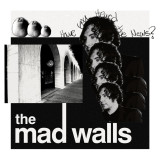
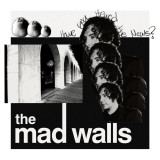
Eight years since the breathtaking Somewhere Anywhere EP, The Mad Walls return to re-ignite psych rock with this gorgeous, floatily heavy, effortlessly groovy and sublimely sinuous debut LP. Driven by bone shaking acoustic guitar, visceral drums, wonderfully trippy basslines and the throwaway perfection of Christopher Mercado’s spooked vocals. Pure rock n’ roll yet devoid of cliché. Informed by, but no way in hock to, early MC5, Skip Spence, Sonic Youth, Syd Barrett and Jefferson Airplane when they still all lived together.
Recorded on tape in Mercado’s garage, there’s a DIY heart with epic results across sixteen songs. Only one track over three minutes and some under thirty seconds. “It’s just chatter about life and human feelings. Stylized human expression”. - Is Christopher's self effacing explanation of his mind bending, playful, storytelling. It opens with the walloping drum canter/bass attack of WHO WANTS TO DIE FOR RELIGION. Passes through the furious distorted acoustic guitar solo on I TELL YOU HOW I FEEL. The woozy, elastic time-stretching of COOL TRIPPER. The brief, funky lurch of IN YOUR DREAM YOU ARE NO ONE. The almost lush, cinematic SEVEN DAYS which conjures Serge Gainsbourg by way of Moby Grape. HIP COMMA’s floaty strut and the groovy raga of MAKA THE NATIVE, which has not one but two ‘breath solos’. CLOUDS OF DUST is a skeletal Krautrock fragment and THERE ONLY IS a luminous psych-pop single. Final track APPLES ends the album with a sinewy twelve bar blues and a killer psych guitar break. Bliss.
Somehow the MAD WALLS manage woozily florid and sharp as a blade. Studiedly detailed but effortless. Whip smart and dumb. And as we said at the start - just gorgeous…
Black[25,17 €]
Eight years since the breathtaking Somewhere Anywhere EP, The Mad Walls return to re-ignite psych rock with this gorgeous, floatily heavy, effortlessly groovy and sublimely sinuous debut LP. Driven by bone shaking acoustic guitar, visceral drums, wonderfully trippy basslines and the throwaway perfection of Christopher Mercado’s spooked vocals. Pure rock n’ roll yet devoid of cliché. Informed by, but no way in hock to, early MC5, Skip Spence, Sonic Youth, Syd Barrett and Jefferson Airplane when they still all lived together.
Recorded on tape in Mercado’s garage, there’s a DIY heart with epic results across sixteen songs. Only one track over three minutes and some under thirty seconds. “It’s just chatter about life and human feelings. Stylized human expression”. - Is Christopher's self effacing explanation of his mind bending, playful, storytelling. It opens with the walloping drum canter/bass attack of WHO WANTS TO DIE FOR RELIGION. Passes through the furious distorted acoustic guitar solo on I TELL YOU HOW I FEEL. The woozy, elastic time-stretching of COOL TRIPPER. The brief, funky lurch of IN YOUR DREAM YOU ARE NO ONE. The almost lush, cinematic SEVEN DAYS which conjures Serge Gainsbourg by way of Moby Grape. HIP COMMA’s floaty strut and the groovy raga of MAKA THE NATIVE, which has not one but two ‘breath solos’. CLOUDS OF DUST is a skeletal Krautrock fragment and THERE ONLY IS a luminous psych-pop single. Final track APPLES ends the album with a sinewy twelve bar blues and a killer psych guitar break. Bliss.
Somehow the MAD WALLS manage woozily florid and sharp as a blade. Studiedly detailed but effortless. Whip smart and dumb. And as we said at the start - just gorgeous…
- A1: Jonathan Halper - Leaving My Old Life Behind
- A2: The Royale Coachmen - Killer Of Men
- A3: The Savages - Gone To The Moon
- A4: Vicki Lynn - Don't Break My Heart
- A5: Yesterday's Obsession - The Phycle
- A6: Wwh (2) - Tell Me The Reason Why People Don't Like Me
- B1: The Bohemians - Like Stoned
- B2: Früt Of The Loom - One Hand In The Darkness
- B3: The Perils - Hate
- B4: Feebeez - Season Comes
- B5: Jimm Olsen - Last Drop Of Wine
- B6: Little Willie & The Wonders - How I Feel
The new album from Lebanese-American musician Solpara, Melancholy Sabotage, marks his full length debut and return to Nicolas Jaar's Other People label. While it was recorded over Covid lockdowns, Jaar had been talking about wanting to back a Solpara full-length since he put out Swing. The album came to life while Solpara was living alone in a Brooklyn loft, collecting unemployment checks and viewing ample free time as the artist residency he'd dreamed of; he'd previously been forced to make music in odd windows between numerous jobs and the unmerciful pace of city life. Free from obligations, he would wake up early to take Arabic lessons online, read Tracey Thorn's autobiography, and skateboard the deserted streets, then come home and design sounds until he had a track that felt like it needed to be released. While this easy going lifestyle was peaceful in many ways, Solpara found more complex inspiration in the emotion that stemmed from participation in Black Lives Matter protests and the 2020 Beirut Port explosion, which rocked all of his extended family members in Lebanon.
Melancholy Sabotage explores the theme of sabotaging melancholy. Echoing sounds from the post-punk, trip-hop, and ambient genres, it is about sabotaging the cycle of melancholy and looking at this process without ignoring the sources that put it into motion. It may be compared to a rattling breaking free from retention, reaching states of dreamy euphoria while simultaneously acknowledging the sources of retention, viewed from above. The sources can be personal, political, or socio-economic. They are to be apprehended post-melancholy, after the sabotaging of the initial cycle of melancholy. In other words, it is about transcending melancholy and understanding where it came from with some distance. It may be beautiful and healthy to feel for a while, but how may one sabotage this cycle when it becomes paralyzing? Ultimately, this album is about feeling melancholy but also resisting it and naming the sources that initiated it.
"Time To Hold Better" points to neglect on both personal and group levels. "This Time Last Year" is a personal time capsule. "We Keep Us Safe" is about solidarity, autonomy, and care witnessed within protest groups. "Melancholy Sabotage" is a sonic exploration of the album concept illustrating anger and sadness, but finally, resistance and liberation from these feelings. "Measures" is a more fluid exploration of the latter after the initial storm has passed. "We Don't Owe" points to bigger bodies inflicting harm on populations that we owe nothing to. "Breaking Points" harkens the times that we may lose focus while pushing to transcend melancholy. "Eviction" is about being pushed out of a space unwillingly while simultaneously being forced to move forward.
Melancholy Sabotage pulls from a range of genres, uniting electronic sounds under the same post-punky glow. It pulls from complex, heavy themes including damage and injustice, presenting Solpara's most moving body of work to date. It highlights the poignance that has always been at the heart of his fluid sound, which caters to dancefloors and avant-garde spaces in equal measure. Working with a mix of dissonant guitars, distorted drum machines, and distant, reverb-washed vocals, Melancholy Sabotage is Solpara's uneasiest outing to date. The record pinpoints the duality at the heart of Solpara's sound, which is as plaintive as it is searing.
Second in a series of reissues from Pierre Jaubert’s Parisound studio archive on Strut Record IS Lafayette Afro Rock Band's elusive funk/Afro original album, 'Soul Makossa' originally released in 1973. Transparent blue colored LP
In 1971, an undocumented seven-member Afro-American ensemble known as the Bobby Boyd Congress made a transformative journey from the United States to France. Bandleader Frank Abel recollects, "We sensed that the soul and funk market was saturated back home, and our original plan was a brief 6-month stint in Paris. Surprisingly, we ended up staying for a decade." Upon lead singer Bobby Boyd's return to the U.S., the group rebranded as Ice and crossed paths with independent producer Pierre Jaubert, a seasoned studio professional with credits on groundbreaking recordings alongside Charles Mingus, John Lee Hooker, and Archie Shepp, among others.
Drawing inspiration from Motown's work ethic, Jaubert initiated regular rehearsals with Ice. He recalled, "I didn't want to mimic Berry, but with seven talented musicians collaborating daily, something unique emerged." The band, residing in Paris and immersed in the African-dominated Barbesse district, began infusing African elements into their music frequently performing with Paris-dwelling Camaroonian and legendary composer Manu Dibango.
Rechristening themselves Lafayette Afro Rock Band, the group's musical direction shifted towards predominantly instrumental compositions, characterized by a weightier, more intricate Afro-funk sound. Their debut recording under this new moniker, 'Soul Makossa,' made a powerful impact with a dynamic rendition of Dibango's classic, coupled with the intense break of 'Hihache' and the contagious 'Nicky.' Initially released by Musidisc in France and later in the U.S. via Editions Makossa, the album omitted the title track due to publishing clearance issues.
Despite modest sales upon its initial release, the album's enduring influence became evident as hip-hop culture surged in the '80s, establishing it as a primary source for samples and riffs. The iconic 'Hihache' break found fame in Biz Markie's 'Nobody Beats The Biz,' and tracks from the album were lifted by LL Cool J, The Beatnuts, Kruder & Dorfmeister, and numerous others.
- A1: The Loop Digga: Sounds Of The Studio - Prelude
- A2: The Professionals - Madlib & Oh No: Hold Up
- A3: The Loop Digga: Handmade Hustle (Instrumental)
- A4: The Professionals: Start Sumthin' - 93033 (Feat. Roc C)
- A5: Guilty Simpson: Thoughs Of An Old Flame
- A6: The Loop Digga: Minze - Come Closer
- A7: Madlib: Louder - Blast Your Radio Theme
- B1: The Loop Digga: The Ride - Nightcoastin' (Instrumental)
- B2: A.g.: O.g. Pt. 1 (Whirlwind Mix)
- B3: Oh No: O.g. Pt. 2 (Underwater Mix)
- B4: Frank Nitt: Stageridin' (First Demo Double Image Mix)
- B5: The Loop Digga: Love/Hate (Instrumental)
- B6: Strong Arm Steady: Loose Girl (Electronic Drunk Demon Version)
- C1: The Loop Digga: Smoke Break - Whodat?
- C2: Supreme Team - Madlib & Karriem Riggins: Interview #4080
- C3: The Loop Digga: Embryo Thought (Instrumental)
- C4: The Loop Digga: The Adventures Of Soul Bra And Docta Dic'em Pts. 1 And 2 C5. Med & Poke: Cheaters - Episode #3
- D1: The Loop Digga: Interliberation Interlude
- D2: The Loop Digga: Mic Check - Smoke Break Ii
- D3: Lmd: Real Talk
- D4: The Loop Digga: The Sound Of Champions (Instrumental) D5. Strong Arm Steady: Charlie Hustle
- D6: The Loop Digga: Girls - Prelude
- D7: The Loop Digga: Same
- D8: Med: Snakes 101
- D9: J Rocc: Girls
- D10: J Rocc: Uh - Outro
LP[30,46 €]
Repressed. In 2010, Madlib launched an ambitious series of releases known as the Madlib Medicine Show, which allowed
the prolific producer to release new material on a monthly basis. The series touched on all the genres Madlib digs, and that’s just about any genre you can consider from Jazz to Rock, Soul to Disco, myriad African musics, Brazilian and Reggae. On the 11th installment in series Madlib returned to his hip hop roots with Low Budget High-Fi Music. Featuring a run-down of regular Madlib collaborators who provide the Beat Konducta’s foil, it also included a hint of what was meant to come on the never-realized second Jaylib album, with a previously unreleased J Dilla collaboration.
- A1: Platform 9 ¾
- A2: The Hogwarts Express
- A3: Welcome To Hogwarts
- A4: Wand Dance
- A5: Albus Severus Potter
- A6: The Blanket
- A7: Hut On The Rock
- A8: A Malfoy
- A9: Anything From The Trolley, Dars?
- A10: Ministry Of Magic
- A11: St Oswald S
- A12: Wizarding World
- A13: Shadows And Spirits
- B1: Privet Drive
- B2: Into Mcgonalgall S Office
- B3: The Forbidden Forrest
- B4: Edge Of The Forest
- B5: Dragons!
- B6: Dumbledore
- B7: Staircase Ballet
- B8: The Duel
- B9: Invisibility Cloak
- B10: Moaning Myrtle
- B11: Scorpius Alone
- C1: Dementors
- C2: Expecto Patronum
- C3: In Trouble (Again)
- C4: Slytherin Dormitory
- C5: The Owlery
- C6: A New Prophecy
- C7: The Augurey
- C8: Extraordinary General Meeting
- C9: Godric S Hollow
- D1: Paint And Memory
- D2: Something Written
- D3: The Final Battle
- D4: The Arrival
- D5: Lilly And James
- D6: Burning Bed
- D7: A Nice Day
- D8: A World Of Darkness
- D9: Another Hogwarts
Harry Potter And The Cursed Child is a play based on the latest magical Harry Potter story, written by Jack Thorne from an original story written by J.K. Rowling, Thorne and John Tiffany. It’s the eighth story in the Harry Potter series and the first official to be presented on stage. The critically acclaimed production is the most awarded new play in theatre history with a record-breaking eleven nominations and won another record-breaking nine awards, including Best New Play at the 2017 Laurence Olivier Awards. The music is written, composed, performed, and recorded by Grammy and Ivor Novello Award-winner Imogen Heap. It is presented as four contemporary musical suites, each showcasing one of the play’s theatrical acts. This unique new album format from Imogen Heap chronologically features the music heard in the stage production, further reworked to transport listeners on a sonic journey through the world of Harry Potter and the Cursed Child. Harry Potter And The Cursed Child is available as a limited edition of 1000 individually numbered copies on translucent yellow coloured vinyl. This 2LP is housed in a gatefold sleeve and includes an 8-page booklet.
A true jack-of-all-trades, he has played and recorded virtually every style of music you can think of - Soul, Reggae, Jazz, Spirituals, Blues, African, Electro. Etc... Initially trained on classical piano, his musical career began in Brussels and Paris in the 50s. In the 60s, he flew to the Congo as a member of Joseph Kabasele's African Jazz group, Le Grand Kalle. Next came Cameroon in 1963, where he formed his own group before returning to Paris in 1965. For the Manu 76 album, we are - obviously - in 1976, still in Paris. Four years after his international breakthrough with his hit Soul Makossa, Manu assembled a prestigious cast of musicians including Jo Tongo on bass, Slim Pezin on guitar, Lucien Dobat (from Kassav) on drums, Alex Francfort on piano and 7-year-old Georgia Dibango as guest vocalist.
MERMAID'S TAILS ist ein kraftvoller Mid-Tempo-Track mit Deep-Soul-Flavour, Psyche-Einflüssen und einem starken Hip-Hop-Feeling. Der Song führt die Hörer durch die verträumten Sehnsüchte der perfekten Liebe. Die Melodie und der Text sind sowohl poetisch als auch trivial. Der Track verschmilzt Fantasie und Realität in einer Psyche Soul Stimmung. Der Bass ist schwer und tief, das Schlagzeug klingt wie ein Hip Hop Sample, während das Rhodes und die Gitarren satt sind. Zusammen mit dem Fuzz-Gegengesang und den Flötenimprovisationen bilden sie die perfekte Musik zu Rachel Yarabous intensiver und doch sehr sanfter Stimme.
KICK OFF THE ROAD ist ein Uptempo-Song mit bluesigen Strophen, einem starken, treibenden Beat und einem schweren, stampfenden Bass.
Sie führen uns zum funkigen Refrain voller Orgelschläge und Drum-Breaks. Das Stax-Feeling der Band vermischt sich mit den Einflüssen von James Brown bis zur Bridge, die den Song in eine erhabene, psychedelische Klammer treibt. In diesem Song singt Rachel Yarabou die Geschichte eines Mädchens, das seinen eigenen Weg gehen will und es vorzieht, die Straße zu verlassen, bis sie am Ziel ist. Christelle Amoussou, die Songwriterin der Band, schenkt uns eine weitere Soul-Hymne für die Freiheit und die Emanzipation der Frau.
Two years after the release of the Polarius EP Inner Voices Of A Clown, Danny Wolfers returns to Altered Circuits, this time under his best-known alias Legowelt, for Ruins Of Cracktopolis: a collection of "hymns to survive the dystopian circus of today's techno scene" in the artist's own words. On Do You Know Who You Never Be, a short staccato lead and dark chords revolve around a monolithic kick drum pattern that takes care of the cadence and bass. A mysterious vocoder and a laser sequence that gets torn and twisted to the max join, but the track never loses its steady pace - it gets help from shakers so much mixed to the front they could be lifted from a B'more track.
Amidst the effervescing 303 lines and bold drum sequences of In A Trance Dance All Night" Wolfers finds a canvas for a stretched synthesizer jam with eighties breaking allure. This melody, together with the pads and vocal, are drenched in reverb - they float like mist ascending from the The Hague dunes. Throughout Ruins Of Cracktopolis, more vintage Dutch West Coast, the hiss-laden broken beat that guides the bass sequences and ominous blippy synth patterns switches to a 4/4 structure and back. These make for captivating shifts in pace while the minor progressions continue unfolding. Like Twin Peaks targets prime energy once the arpeggiator sequence present from the start lowers an octave. The track runs smooth like a pomade slick-back; it's only tempered slightly when the crunchy kick and tom change place for a moody chord sequence break. Even if these four tracks target the club, they are equally suited for - quoting Wolfers again - "leisurely home listening". Their greatest strengths are, as so often, their melodic aspects.
The artist is known to be a synthesizer aficionado, but his unique personal touch immediately shines through no matter which gear he works with. The machines never seem to dominate the composing process; quite the opposite: it's as if he isn't programming or registering as much as trying to teach them his take on electronic music.
Joanna Gemma Auguri releases her new album "Hiraeth" on 28th June via Duchess Box Records Joanna Gemma Auguri is a Berlin musician, songwriter and actress. In the various stages ofher musical solo and band projects, she incorporates influences from folk, ambient andavant-garde music.Being five years old she escaped with her parents from Poland, which was under martial law,and had to learn at an early age what uprooting means. This experience is reflected in her music as an expression of personal sadness, compassion, but also despair about the state of the world.2021 she released her solo debut "11" on her own label Lavender Music. It was mainly characterized by accordion, zitherand her vocals. Her new album "Hiraeth" was recorded at Candy Bomber Studios in Berlin by Ingo Krauss, with a large number of musicians. Besides choir, double bass, lap steel guitar, drums, cello, horns , different organs and keyboards her original instruments accordion and zither still shine through from time to time. Joanna's voice sits unmistakable on top of the majestic,nearly monumental compositions which despite their richness always stay basic and delicate. "Hiraeth" is an untranslatable Welsh word that describes the longing for a home, a place or a feeling that no longer exists or never existed.The album will be released June 2024 on Duchess Box from Berlin.
Blue[26,85 €]
First in a series of reissues from Pierre Jaubert’s Parisound studio archive on Strut Record IS Lafayette Afro Rock Band's elusive funk/Afro original album, 'Malik,' originally released in 1974. Transparent blue colored LP
In 1971, an undocumented seven-member Afro-American ensemble known as the Bobby Boyd Congress made a transformative journey from the United States to France. Bandleader Frank Abel recollects, "We sensed that the soul and funk market was saturated back home, and our original plan was a brief 6-month stint in Paris. Surprisingly, we ended up staying for a decade." Upon lead singer Bobby Boyd's return to the U.S., the group rebranded as Ice and crossed paths with independent producer Pierre Jaubert, a seasoned studio professional with credits on groundbreaking recordings alongside Charles Mingus, John Lee Hooker, and Archie Shepp, among others.
Drawing inspiration from Motown's work ethic, Jaubert initiated regular rehearsals with Ice. He recalled, "I didn't want to mimic Berry, but with seven talented musicians collaborating daily, something unique emerged." The band, residing in Paris and immersed in the African-dominated Barbesse district, began infusing African elements into their music frequently performing with Paris-dwelling Camaroonian and legendary composer Manu Dibango.
Under the new moniker Lafayette Afro Rock Band, the group's music transitioned to predominantly instrumental compositions, featuring a denser Afro-funk sound. Their inaugural recording with the new name, 'Soul Makossa,' included a compelling rendition of Dibango's classic and the impactful break in 'Hihache.' The subsequent release a year later, 'Malik,' refined their sound with the percussive Afro party jam 'Conga,' the atmospheric vocoder and piano-led piece 'Djungi,' and the robust funk of 'Darkest Light.' Despite a limited impact upon its initial release, 'Malik' found appreciation as hip-hop culture flourished in the '80s, establishing itself as a rich source of samples and riffs. 'Conga' was featured in the 'Ultimate Breaks And Beats' series, while the opening horn line from 'Darkest Light' became a pivotal hip-hop motif, employed by Jay-Z, Public Enemy, Wreckx 'N' Effect, and many others
engorn - This new label invites you on a trip through ambient, house, and techno with an unmistakable vibe. It proudly presents the first catalogue number as a various artist compilation with two as yet unknown artists: gustav krach and taschendrachen.
The A-side of the record, curated by taschendrachen, is a true feast for the dancefloor. Two warm house tracks, accompanied by catchy vocals, create a good vibe on the floor.
If we turn the record over, we find ourselves in a completely different world. The B-side, presented by gustav krach, creates an atmospheric soundscape away from the tumult. Four ambient tracks with breakbeats create a dreamy, calm, and beautiful mood.