UFC is proud to present its tenth release, “Music For A Dreaming Generation”, by R.I.P. Bestia, featuring remixes by Rabbit In The Moon, a mini-album produced between 2022 and 2024, where Analog Hardware and Sampling collide to form “Everything.”
'E.X.P.A.N.S.I.V.E (Ancestral Technologies Mix)' a fusion of Electro and Nu-Skool Breaks under a choral mantle of shamanic psychedelia. 'Music For A Dreaming Generation (Dub Botanical Reaction Mix)' the original version is brutalized and reactivated with the acids of the beloved TD-3, a colliding immersion of frequencies, dreamy pads, and hypnotic melodies filtered through the cherished JP-8080. 'Law 7/2023, of March 28' a humble, reivindicative sonic tribute to animal rights, compressed breaks and charming vocals are guided by a psychedelic melody up to a “Drop” where a monstrous Bassline takes the helm, steering you into an emotionally gravitational State of Dance.
About the remixes, Rabbit in the Moon delivers this legendary Techno-Trance gem 'Music For A Dreaming Generation (Nightowl Mix)' a remix we envision as “a crushing technoid mass” that lifts you up to an epic drop before bringing you back down to the earthly realm.'(Daydream Mix)' in this version, Rabbit in the Moon reimagines the original into a “2-Step Garage” interpretation, a pure Braindance journey, with graceful arrangements fused with epic vocals and mysterious Basslines.
Buscar:dr break
Berlin’s OYE Records returns with a heavy-hitting 12” from Carl Hang, a producer already well respected in underground circles for his bass-driven club sound. Three cuts of breaks and electro-inspired grooves with a heavy nod to the old school. Sharp drums, raw machine funk, and basslines built to move bodies.
Limited edition of 300, cut and mastered at Dubplates & Mastering, pressed at Objects. Artwork by Finley Stewart
The Dynamite Coorporation is the brainchild of Robbert Peperkamp aka @infestmusic and Tommy Willetts aka @thenightservicecommute. After meeting in music school their joint interest in jazz, breaks, tape and dark cinematic soundscapes resulted in a collaboration that led to this fantastic album.
Expect dark cinematic soundscapes, Drums, trumpets, guitar, keys and resample madness.
2025 Repress
The breakthrough dance collective of the year bar none! Having made a name for themselves creating the evilest drum&bass music the world has ever seen, in recent months Noisia have been seen DJ-ing at house clubs, releasing singles with prominent house labels and most recently remixing for the likes of Robbie Williams! However, it wasn't long before they decided to go back to the dark side and join forces with good friend Mayhem (USA) to come with something more disgusting than ever, oh and they got KRS-One to provide the vocal!
A truly breathtaking intro bursting with evil foreboding sets the scene, before Noisia and Mayhem unleash the darkness with their signature drum programming alongside futuristic never heard before beats and breaks. Be sure to wait for the hip-hopesque interlude that features the immense vocal talents of none other than KRS-One. If you're not nodding your head by that point, you best check your neck isn't broken!
Comes in standard full colour Vision Recordings repress sleeve.
To submit or to surrender? Robert Johnson resident Oskar Offermann doesn’t have the answers, and that’s kind of the point. Things change: one moment you’re touring the globe as a recognizable face of one of the greatest clubs in the world, the next you’ve started a new life as a teacher. How do you handle that shift? On this record, Offermann doesn’t offer solutions so much as trace his own way through it, reflecting the whole process in his music and creative work.
Whatever the story, whatever the case, Oskar Offermann can still produce some of the most emotive, bleepy, strange dance music out there and this 12 inch is the proof. Sonically and conceptually it leans into that precise, melancholic German school: at points drawing from 80s wave and experimental music, then flirting with trancey motifs and closing in divinely crafted breakbeat. In just four tracks it packs in a surprising amount of functional range, exactly what you’d expect from one of RJ’s longest-standing residents. The A- and B-sides mirror each other: they open at full intensity, tempos pushed well past the 130 BPM mark, easy to imagine ripping through a peak-time floor – and still both sides land on something far more personal and reflective.
Even inside a framework of high-intensity club tunes, Oskar’s character shines through loud and proud. Think the slightly disjarring yet melodically captivating winds in the middle of the B1 trance induced number “Accepting”, or the masterfully paced build of opener “Planet Interface”. The same goes for A2 “Televise Improvise” and B2 “Sei mal nur lieb”: on paper they should feel like breathers next to the two behemoths, but they don’t. Offermann crams so much substance and personality into them that they become quietly dangerous. There’s that magical mix of squelchy acid, rough low end and naturalistic melodies on B2, and the relentless emotional drive of A2 “Televise Improvise”. Oskar is really, really good at making dance music irresistible.
Character, skill and honesty in one record, meant for the attentive listener and the brave DJ. A rare combination nowadays, get it fast!
Flanked by a team of collaborators - including Nick León, more eaze, Ultrafog and Kissen - Ben Bondy captures the Kwia-pop zeitgeist on 'XO Salt Lif3', sluicing down dappled emo and downtempo grooves with log drum thwacks, tempered field recordings and sandblasted shoegaze guitars.
Forget what you think you know about Ben Bondy; like Naemi's fuzzy 'Breathless Shorn', ‘XO Salt Lif3’ is a decisive shift away from the ambient world and towards contemporary underground pop. Last year's amapiano-tinted loosie 'Bend' serves as the album's opener and is the best taster, its slick DSP squelches, granulated drones and sub rumbles immediately swapped out for breezy acoustic guitar riffs, tuned log drum hits and Bondy's own Autotuned vocals. When Bondy turns down the temperature a little, letting the orchestral synth arrangements slip into fuller view on 'Halfmoon', a collaboration with Nick León and Aussie producer Lovefear, it's tempered by low slung emo riffs and mumbled sweet nothings.
By the time we hit 'Dreamseed', Bondy's in full swing, offsetting slow breaks and multi-tracked vocal harmonies with full-spectrum shoegaze power chords that cut into the mix like a chainsaw, with crunchy amp crackle foreshadowing the Bark Psychosis-like drop. Bondy hits a cruise when More Eaze helps out on 'There Is A Place'. Maurice's unmistakable pedal steel draws us in, used by Bondy to add an Americana accent to his euphoric fusion of amapiano and indie pop. It's music that'll make perfect sense if you've caught one of Bondy's notorious DJ sets, where you might hear anything from American Football and Jessica Pratt next to Gwen Stefani, Skinny Puppy or Sneaker Pimps. It’s this chaotic, open-hearted approach - which also plays a part in the Shineteac material - that makes 'XO Salt Lif3' so effortlessly enjoyable.
A1. Cars
Smoove tears this classic apart to reveal its raw, drum-heavy break and solo bass riff. Epic synth lines weave through the extended rework, seamlessly transporting us from the 1980s straight into the modern era.
A2. Midnight Rider
An unexpected choice, but irresistibly funky nonetheless. The signature 12-string guitars are replaced with lush Fender Rhodes and Hammond organ, both pushed forward in the mix. The drums hit hard, backed by crisp percussion that drives the groove home.
B1. You Belong to Me
Opening with an extended Fender Rhodes intro, this rework builds gradually with real strings, subtle guitar licks, and groovy drums. Smoove reshapes the structure, dubbing out Carly’s lead chorus vocals to spotlight the stunning harmonies underneath.
B2. Searching
Luther’s vocals are utterly transcendent here. Smoove slows the pace and strips back the arrangement, leaving only Fender Rhodes and a string orchestra to accompany the soulful performance — a truly breathtaking moment.
The Éthiopiques series returns! Essential archive recordings from an extremely fruitful period in Ethiopian music.
Before “Swinging Addis” took over the world, there was Moussié Nerses Nalbandian — the Armenian-born composer who shaped modern Ethiopian music. Mentor, arranger, and pioneer, he laid the foundations of Ethio-jazz.
This Éthiopiques volume revives his forgotten legacy, recorded live by Either/ Orchestra First issue ever with new exclusive photos and in depth liner 8-page insert.
“Ethiopian jazzmen are the best musicians that we have seen so far in Africa.
They really are promising handlers of jazz instruments.”
Wilbur De Paris
(1959, after a concert in Addis Ababa)
አዲስ፡ዘመን። *Addis zèmèn* **A new era.**
The time is the mid-1950s and early 1960s, just before "Swinging Addis" bloomed – or rather boomed – onto the scene. Brass instruments are still dominant, but the advent of the electric guitar, and the very first electronic organs, are just around the corner. Rock’n'Roll, R’n’B, Soul and the Twist have not yet barged their way in. Addis Ababa is steeped in the big band atmosphere of the post-war era, with Glenn Miller's *In the* *Mood* as its world-wide theme song, neck and neck with the Latin craze that was in vogue at the same period. Life has become enjoyable once again, with the return of peace after the terrible Italian Fascist invasion of Ethiopia (1935-1941). The redeployment of modern music is part and parcel of the postwar reconstruction. *Addis zèmèn* – a new era – is the watchword of the postwar period, just as it was all across war-torn Europe.
The generation who were the young parents of baby boomers** were the first to enjoy this musical renaissance, before the baby boomers themselves took over and forever super-charged the soundtrack of the final days of imperial reign. Music is Ethiopia's most popular art form, and very often serves as the best barometer for the upsurge of energy that is critical for reconstruction. Whether it be jazz in Saint-Germain-des-Prés or the *zazous* who revolutionised both jazz and French *chanson* after the *Libération*, be it Madrid's post-Franco Movida, or Dada, the Surrealists and *les années folles* that followed World War I, the periods just after mourning and hardship always give rise to brighter and more tuneful tomorrows. Addis Ababa, as the country's capital, and the epicentre of change, was no exception to this vital rule.
**Two generations of Nalbandian musicians**
Nersès Nalbandian belonged to a family of Armenian exiles, who had moved to Ethiopia in the mid-1920s. The uncle Kevork arrived along with the fabled "*Arba Lidjotch*", the** "*40 Kids*", young Armenian orphans and musicians that the Ras Tafari had recruited when he visited Jerusalem in 1924, intending to turn their brass band into the official imperial band. If Kevork Nalbandian was the one who first opened the way of modernism, pushing innovation so far as to invent musical theatre, it was his nephew Nersès who would go on to become, from the 1940s and until his death in 1977, a pivotal figure of modern Ethiopian music and of the heights it. Going all the way back to the 1950s. Nothing less. And it is Nersès who is largely to thank for the brassy colours that so greatly contributed to the international renown of Ethiopian groove. While the younger generations today venture timidly into the genealogy of their country's modern music, often losing their way amidst a distinctly xenophobic historiographical complacency, many survivors of the imperial period are still around to bear witness and pay tribute to the essential role that "Moussié Nersès" played in the rise of Abyssinia's musical modernity.
Given the year of his birth (15 March 1915), no one knows for sure if Nersès Nalbandian was born in Aintab, today Gaziantep (Turkiye/former Ottoman Empire) or on the other side of the border in Alep, Syria... What is certain is that his family, like the entire Armenian community, was amongst the victims of the genocide perpetrated by the Turks. Alep, the place of safety – today in ruins.
Before Nersès then, there was uncle Kevork (1887-1963). For a quarter of a century, he was a whirlwind of activity in music teaching and theatrical innovation. *Guèbrè Mariam le Gondaré* (የጎንደሬ ገብረ ማርያም አጥቶ ማግኘት, 1926 EC=1934) is his most famous creation. This play included "ten Ethiopian songs" — a totally innovative approach. According to his autobiographical notes, preserved by the Nalbandian family, Kevork indicates that he composed some 50 such pieces over the course of his career. This shows just how much he understood, very early on, the critical importance of song as Ethiopia's crowning artistic form. Indeed, for Ethiopian listeners, the most important thing is the lyrics, with all their multifarious mischief, far more than a strong melody, sophisticated arrangements or even an exceptional voice. (This is also why Ethiopians by and large, and beginning with the artists and producers themselves, believed for a long time — and wrongly — that their music could not possibly be exported, and could never win over audiences abroad, who did not speak the country's languages).
Last but not least, one of Kevork's major contributions remains composing Ethiopia's first national anthem – with lyrics by Yoftahé Negussié.
Nersès Nalbandian moved to Ethiopia at the end of the 1930s, at the behest of his ground-breaking uncle. Proficient in many instruments (pretty much everything but the drums), conductor, choir director, composer, arranger, adapter, creator, piano tuner, purveyor of rented pianos,... he was above all an energetic and influential teacher. From 1946 onwards, thanks to Kevork's connexion, Nersès was appointed musical director of the Addis Ababa Municipality Band. In just a few years, Nersès transformed it into the first truly modern ensemble, thanks to the quality of his teaching, his choice of repertoire, and the sophistication of his arrangements. It was this group that would go on to become the orchestra of the Haile Selassie Theatre shortly after its inauguration in 1955, which was a major celebration of the Emperor's jubilee, marking the 25th anniversary of his on-again-off-again reign.
At some point or other in his long career, Nersès Nalbandian had a hand in the creation of just about every institutional band (Municipality Band, Police Orchestra, Imperial Bodyguard Band, Army Band, Yared Music School…), but it was with the Haile Selassie Theatre – today the National Theatre – that his abilities were most on display, up until his death in 1977. To this must be added the development of choral singing in Ethiopia, hitherto unknown, and a sort of secret garden dedicated to the memory of Armenian sacred music, and brought together in two thick, unpublished volumes. Shortly before his death (November 13, 1977), he was appointed to lead the impressive Ethiopian delegation at Festac in Lagos, Nigeria (January-February 1977).
His status as a stateless foreigner regularly excluded him from the most senior positions, in spite of the respect he commanded (and commands to this day) from the musicians of his era. Naturally gifted and largely self-taught, Nerses was tirelessly curious about new musical developments, drawing inspiration from the very first imported records, and especially from listening intensely to the musical programmes broadcast over short-wave radio – BBC *First*. A prolific composer and arranger, he was constantly mindful of formalising and integrating Ethiopian parameters (specific “musical modes”, pentatonic scale, and the dominance of ternary rhythms) into his “modernisation” of the musical culture, rather than trying to over-westernise it. It even seems very probable that *Moussié* Nerses made a decisive contribution to the development of tighter music-teaching methods, in order to revitalise musical education during this period of prodigious cultural ferment. Flying in the face of all the historiographical and musicological evidence, it is taken as sacrosanct dogma that the four musical modes or chords officially recognised today, the *qǝñǝt* or *qiñit* (ቅኝት), are every bit as millennial as Ethiopia itself. It would appear however that some streamlining of these chords actually took place in around 1960. It was only from this time onward that music teaching was structured around these four fundamental musical modes and chords: *Ambassel*, *Bati*, *Tezeta* and *Antchi Hoyé*. A historical and musical “details” that is, apparently, difficult to swallow, especially if that should honour a *foreigner*. Modern Ethiopian music has Nersès to thank for many of its standards and, to this day, it is not unusual for the National Radio to broadcast thunderous oldies that bear unmistakable traces of his outrageously groovy touch.
A year after her rebirth on the 2.0 EP, Maedon returns to her Rant & Rave imprint with the intentions of her previous release now distilled and focused into bold new forms. Whereas before the artist was transitioning from her earlier work towards new directions, Matter & Form arrives as an extended concept piece featuring four variations on a bracing, developed sound, an equally impressive remix from Lady Starlight, and a contrasting mix of the opening track. Where 2.0 charted emergence, 'Entelechy I-IV' unites to actualize this potential into a single-minded purpose behind fundamental principles.
Immediately launching into territory her last release only hinted at, 'Entelechy I' is a showcase for her now-mature approach. Her rhythmic dexterity and groove focus remains, with drum programs subtly evolving phrase by phrase, but they now form the basis for layered, complex compositions in a decidedly contemporary vein. 'Entelechy II' shifts focus towards the arrangement while keeping its drums steadily driving, drawing attention to details in its densely designed sounds through deliberate, gradual processing. Relaxing the tempo slightly, 'Entelechy III' fills in the extra space with more dark atmospherics and finely detailed soundscapes, finding a heavy medium between dark ambience and hammering techno. Another deeper effort, 'Entelechy IV' counterbalances insistent, finely-tooled percussive bleeps and equally persistent bass figures against another sweeping bass pulse, at times breaking down into carefully-controlled atonal aggression. Lady Starlight's remix is skeletal in comparison, deploying its parts sequentially over ticker hi hats and a massive kick while using small shifts to incrementally build tension. 'Entelechy I (Bent Mix)' is more accurately described as hellbent, stripping out the original's harmonic elements to grind the heavy rhythmic workout against an unrelenting acid line.
Polymania is a collaboration between Earl Grey and Aroma Nice, both of whom hail from the North West of the UK and are known for their genre-pushing productions in and around the overlapping modern Drum & Bass, Jungle and Drumfunk spheres. This record is a euphoric ravey jungle affair with strong acidic inflections, extrovert and dancefloor-focussed, where effortlessly slick percussive flair shines and rolling acid lines squirt out through the seams - the result of two long-time friends with heaps of production experience having a lot of fun.
A-side opener 'Farce of Nature' sets the tone with high energy stabs and a big grooving bassline, rooted in 90s jungle techno but rendered in full high definition, while 'Happy Slaps' continues the theme with crisp drums dancing over an undulating resonant acid line. 'Tank Ammo' deftly ramps up the euphoria with a spiralling melody rising towards a lethal switch-up midway, using filtered choppage to burst the tension with extreme precision. Bouncy acid breaks bubbler 'Give U Up' closes the EP slowing the tempo a touch and dialling up the funk - a refreshing palate cleanser laced with rich braindance melodies and an infectious vocal hook.
- A1: Scratch Pad 1
- A2: Messij Received
- A3: God's Gift
- A4: Tentative
- B1: Canada 2048
- B2: Wiped Out
- B3: Body In Motion (Body Plus Mix)
- B4: Onyx (Dark Side Of The Moon)
- C1: Messij Received (Wstwgbe Mix)
- C2: Canada (Drunken Auslander Mix)
- C3: Tentative (Woffenfum Mix)
- D1: Messij (Bobbing Boat Mix)
- D2: Body In Motion (Timeless Techno Mix)
- D3: Doh-T (Am / Fm Mix)
- E1: 95 Future Echoes
- E2: Turbine
- E3: Pencil Neck
- E4: Messij 2005 (New Science Mix)
- F1: Canada (Tim Reaper Remix)
- F2: Messij (Sherelle's Messij In A Bottle Hardcore Remix)
- F3: Doh-T (Mantra Remix)
- F4: Canada (Niknak Remix)
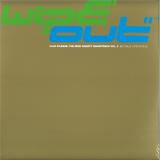
The legacy of wipE′out′′ has transcended time and cemented itself as a true transgenerational phenomenon. Launched in 1995, it didn’t just revolutionise the gaming industry, it created a bridge between the gaming ecosystem and the raver community. Its futuristic aesthetics and forward-thinking sound left a mark not only on mainstream audiences but also on the most demanding corners of the underground.
Decades later, the game’s impact is still alive. The release in 2023 of The Zero Gravity Soundtrack on Lapsus Records proved once again that wipE′out′′’s accompanying audio will go down in history as much more than just an anti-gravity racing game soundtrack.
This is why we decided to go deeper into the slipstream and build the second volume you’re now holding in your hands. Drawn from the original archives of Tim Wright, aka CoLD SToRAGE, this new collection surfaces unreleased cuts, pieces that couldn’t fit on the first edition, and a suite of self-authored ambient reworks that translate pure velocity into wide-screen atmospherics engineered for the long straights, the drone of airbrakes, the blue hour between checkpoints. It also reconnects the circuit, gathering selections and variants tied to later chapters of the saga — wipE′out′′ HD and wipE′out′′ Pure — plus alternative mixes that, until now, only existed in the Sega Saturn dimension of the franchise.
Finally, the material takes a leap into the future in the hands of four remixers especially chosen for this release: Tim Reaper, SHERELLE, Mantra, and NikNak, who collectively forge links between CoLD SToRAGE’s pioneering musical vision, the sound world of the game, and the contemporary breakbeats and drum & bass vanguard.
Expect the DNA you remember — accelerated breaks, trance-vector synths, jungle influences, sub-bass rumbling neatly beneath the craft’s hull, and at times even echoes of classic hardstyle — now revealed with new angles and air. The previously unheard material carries the same aerodynamic design sense that made these tracks feel faster than the track map itself, while the ambient versions open the field of view with melodies hovering at the lip of overdrive. Without a doubt, here you’ll find a strong sense of nostalgia. But this isn’t just nostalgia; it’s also proof that this sound world continues to evolve when you ease off the throttle.
For the faithful — crate-digging ravers, speed-run obsessives, and design nerds — this is an essential expansion pack: compiling rarities, restoring context, and reframing the emotional core of wipE′out′′ for late nights and early mornings alike. Bridging memory and momentum, club and console, rush and afterglow. Strap in.
Detailed tracklist, with annotations by Tim Wright aka CoLD SToRAGE
· Scratch Pad 1: “This track was composed using incomplete tracks that were developed around the time of the first wipE′out′′. It’s so long because it was used for a marathon-length Psygnosis promotional video.”
· Messij Received: “Messij was a firm favourite with wipE′out′′ fans, so it made sense that there’d be more where that came from — this was one of those re-workings.”
· God’s Gift: “I was always very fond of Erasure’s track Love to Hate You with the canned crowd FX sounds. God’s Gift was a tongue-in-cheek reference to how some musicians think they are just that. This was way before I even played live as CoLD SToRAGE.”
· Tentative: “I wasn’t sure about introducing some wacky beats and distorted sounds into one of the tracks, because it was kinda heading away from the other tracks, hence Tentative — but it turned out OK.”
· Canada 2048: “When wipE′out′′ 2048 was launched I decided to re-make Canada as a kind of tribute, but in a slightly new-tech, laid-back way, using Propellerhead Reason and all software synths.”
· Wiped Out: “Based on a few riffs from a MIDI file unused at the time of the original wipE′out′′ game compositions, this featured on my debut album MELT.”
· Body in Motion (Body Plus Mix): “A more trippy interpretation of Body in Motion that featured on non PlayStation versions of the game e.g. Sega Saturn.”
· Onyx (“Dark Side of the Moon”): “Onyx was my sole contribution to wipE′out′′ Pure on the Sony PSP handheld gaming console. This version was something I developed in a darker style, that eventually erupts into a crescendo.”
· Messij Received (WSTWGBE Mix): “Like I say, Messij was a hit with most wipE′out′′ fans, so when I was asked to compose more music for non-PlayStation versions, I adapted this tune into a parallel-universe version for PC and Sega Saturn. By the way, WSTWGBE refers to Who Said This Was Going To Be Easy?”
· Canada (Drunken Ausländer Mix): “In early 2018 I released a fresh album called Ch'illout′′, a re-working of many of my wipE′out′′ tracks in an ambient, Sunday-morning vibe style — it was a few years’ work, here and there.”
· Tentative (Woffenfum Mix): “Another chilled re-working of one of my wipE′out′′ tracks, the mix named with a nod to a good friend of mine, Carl Woffenden — someone who I've worked with for many years in the games industry.”
· Messij (Bobbing Boat Mix): “A nice cheesy computer blip-blop start belies its deep and upbeat chilled-out melodic finale.”
· Body in Motion (Timeless Techno Mix): “Another classic track given the chilled-out vibe mix, as featured originally on my Ch'illout′′ album. This one’s a really trippy, deep-space take on the original.”
· DOH-T (AM / FM Mix): “The idea with this chilled-out mix was to imagine all the melodic parts of this varied track being broadcast on terrestrial radio, so each theme drifts in and out through the radio static.”
· ’95 Future Echoes: “Originally developed as a companion album for wipE′out′′ HD, this track actually has its roots in a tiny loop of a song that never progressed to anything special back in the mid-’90s when I was composing for the original game.”
· Turbine: “Also from my wipE′out′′ HD album, it leans heavily into the upbeat, uplifting tunes from the original game, but also steals a bit of vibe and energy from The Prodigy, with those distorted flute sounds.”
· Pencil Neck: “This excerpt from my wipE′out′′ HD album features lots of sounds centre-stage and forward from Propellerhead Reason’s Subtractor virtual synth. I learned to love this more than my JD-800!”
· Messij 2005 (New Science Mix): “Yet another take on the track that still raises a smile, this time through a mix of samples from the original and Propellerhead Reason — the ‘new science’ when compared to an Amiga 1200 running Bars and Pipes.”
SPTLP008 - Aural Imbalance - Fractional Spaces LP
Returning for his third solo album on Spatial, Aural Imbalance continues his journey through the cosmos with a breathtaking array of breaks, bass and inimitable ambient wizardry.
A1 - Fading Reality
Kicking off the album we are treated to a blissfully ambient intro akin to a perfect sunrise across a tranquil unfurling landscape - just as we have come to know and love from Aural Imbalance. Long, airy washes of textured pads usher in a fantastically snappy break pattern which brings an alluring energy to proceedings, driving the track along with funnels of tuneful melodies lazily drifting by in the ambience.
A2 - This Time
Jumping right into the breaks DJ-style with a delicious Hot Pants pattern, This Time's central theme utilises a hypnotic simple but effective chime melody that plays a key role throughout the track, alongside fluttering birdsong and a luscious array of samples. The exquisite breakdown which delights with an incredible blend of bass atmospheric synths & pads is both beautiful and poignant.
B1 - Always With You
Introduced by what sounds like footsteps echoing through the darkness, Always With You lives up to its title by surrounding you with a warmth usually reserved for arriving home and nestling by the fire. Driven by delicate but vibrant breakbeats, this track showcases Aural Imbalance's relentless dexterity with ambient soundscapes dancing in perfect harmony with deep 808 bass and old school beats.
B2 - Solarity
Lightly excitable hats and elegantly filtered breaks open Solarity, a deeply evocative track with breakbeats rising through the intro towards a drop with solid analogue kicks and a wonderfully deep and persistent bassline. Sporadic micro melodies cruise the waves of floating synthwork, effects rippling gently in the foreground and background of the mix like playful phosphorescence.
C1 - First Protocol
Up next we see Aural Imbalance crack the amen knuckles with a real treat for old school heads - an ambient, synthy ambient laden with incredibly light spaced-out hats through the flowing waves is soon jolted into life by a satisfyingly crisp amen break, edited and programmed with flair and majestic detail that sits perfectly with the light, often sullen textured soundscape drifting above.
C2 - Crystals
An otherworldly landscape brimming with wonder and intrigue unfolds with Crystals, an atmospheric delight with a twist. The serene opening leads into a terrific old school break which takes center stage, punchy in the mix and edited with a precision as shimmering textures and meditative synthwork are expertly layered around the ever-rolling beats, perfect for any occasion at home or the 160bpm dancefloor.
D1 - Velarious
Continuing his showcase of breaks from across the atmospheric drum & bass spectrum, Aural Imbalance introduces Velarious with a quietly epic ambient flow, with filtered drums creeping in before the drop arrives, breakbeats buoyed by some seriously deep 808 bass and distinct hi hats. Micro melodies intersect and reverberate throughout the track to complete an enduring and eclectic composition.
D2 - South Coast Sunrise
Closing with a good old fashioned love letter to the Hot Pants break, South Coast Sunrise perfectly encapsulates its title with a gorgeous panoramic overlay of ambience, spread over an intensely memorable edit of that classic break - programmed and mixed to remarkable effect and cementing Aural Imbalance's ongoing rise as a master of edits as well as ambience, fully realised for our listening pleasure on Spatial.
SPTLP007 - ASC - Vanishing Point LP
Evolving further with each release, ASC delivers his latest monumental album on Spatial, a varied and memorable journey through stunningly realised fusion of modern and classic atmospheric breakbeats.
A1 - Mystic Street
Setting a murky tone with light cymbals and synthwork flecking the intro, Mystic Street calmly purrs and growls towards a drop of analogue kicks and a sparse, menacing drum pattern to kick off this incredible album. Enveloped by a dense cloud of darkly atmospherics, the track coils with tension, each element rippling through the mix like distant memories as the suitably enigmatic bassline rumbles beneath.
A2 - Convergence
Straight into the beats with a DJ-friendly two step intro, ASC utilises sparse, sci-fi hits and persistent danceable breakbeats with a melodic bassline. As the atmosphere builds, percussive tones punctuate the swirling pads, creating a luscious sense of forward motion with echoing samples and effects combining in the mix to create a dreamlike soundscape perfect for the dancefloor and headphones alike.
B1 - Invisible Borders
No ASC album would be complete without an amen workout, and we certainly have that here as Invisible Borders rushes into view with simmering intent, melodic samples tore from battlegrounds of yesteryear providing a truly epic atmosphere, rippling breakbeat trickery teasing the listener before crushing full contact amens arrive with panache and veracity - twisted across yearning bass with an unflinching fighting spirit.
B2 - Celestial Bodies
Up next a moment of calm as we soak up the charms of the dreamlike Celestial Bodies, a soothing journey of beats, breaks and atmosphere from Spatial's label head. Melodic notes ripple across the mix with old school breaks filtering to and fro, conjuring images of a cosmic journey unfolding, where old school breakbeat rhythms pulse like distant constellations, echoes shimmering in the vast expanse of ASC's versatility.
C1 - Losing Track Of Time
Into an absolute stunner next as ASC unleashes a modern classic which has a wonderfully instant familiarity to it - like it was lifted directly from the golden era of atmospheric drum & bass. The old school breaks have a distinctive feel while a variety of pads teaming with life swirl around above. A myriad of spirited melodies develop and maintain your attention with classic 808 basslines to complete this remarkable composition.
C2 - Slipstream
Switching up the vibe in style, ASC delivers an intense, cosmic intro to Slipstream which builds gradually with whooshing effects and long female vocals before a crisp, crunchy slice of Hot Pants breakbeat heaven tears through the mix, chock-full of excitable edits portrayed in a brilliant clarity. Warm sub bass punctuates the track while a reverberating earworm melody slowly etches itself into your mind.
D1 - Paradigm Shift
A good old fashioned roller up next as Paradigm Shift sees ASC blend a superb 2-step rhythm with a sumptuous smooth bassline - guaranteed to move the dancefloor. Atmospherics take no back seat either as elegant synthwork swirls and washes across the soundscape with subtly used vocal samples adding texture and warmth to an impressively layered mix that maintains its pace right through to an echoing conclusion.
D2 - Transmitter
Sending us back to interstellar space for an inspired mission through vast unexplored star systems, Transmitter sees ASC create a stunningly evocative, ethereal collage of atmospherics with sonar-like beeps punctuating and persisting throughout. Driving the track along are the superbly programmed drums, filtered and layered with twisted, distorted vocal samples to complete this exhilarating album in pure Spatial style.
Don’t Trust The Snippets – Play The Full Track Before Buying A Record is a finely tuned four-track compilation from NOREPRESS Records, exploring a broad emotional and rhythmic spectrum — from atmospheric breaks to dub-infused tech house. Each piece invites deep listening, rewarding full attention rather than surface impressions.
A1. Osman Oz & SUBLIMINAL. – Johto opens with a beautifully crafted breaks track — rich in ambient layers and cinematic depth, setting a contemplative tone. A2. Pat Jensenn – Heaven Tapes follows with crisp percussion and hypnotic melodies, shifting the mood into uplifting, forward-driving territory. The young Argentinian producer blends instinct and elegance in equal measure.
On the flip, B1. Genning & Kirill Matveev – Orbiter lifts off with bounce and finesse — tight, articulate, and designed for that moment when the dancefloor begins to bloom. B2. Neptuna, also by Genning & Matveev, closes the record with sensual dub textures and refined detail — balancing movement and stillness in perfect harmony.
Led by visionary Kirill Matveev, with strong contributions from Genning, Pat Jensenn, and the always-excellent Osman Oz & SUBLIMINAL, NRP005 serves as a reminder: the full track always tells the real story.
NOREPRESS is a division of MixCult Records
Best Intentions announces Inverse, a new 4-track EP from Melbourne-based producer and DJ; Pugilist, arriving 12 December on digital and limited white-label 12" vinyl. Marking his first release on the London imprint, Inverse sees Pugilist expanding further into the shadowy, percussive terrain he has become known for, merging future-focused techno, lo-fi industrial, and the energy of early hardcore breaks through his own atmospheric lens. The EP captures both the toughness of the dancefloor and the subtle experimentation that runs through his catalogue. A Scottish/Kiwi artist now based in Melbourne, Pugilist has built a reputation for stylistic range and rhythmic depth. His releases on Modern Hypnosis, Samurai Records, and 3024, along with the recent launch of his own imprint Ruff Kutz, demonstrate his ability to move across tempos and moods while maintaining a distinctive sonic identity. On the decks, he is celebrated for tightly curated sets, deep crates, and an array of unreleased dubs. Speaking on joining the Best Intentions roster and the inspiration behind the project, Pugilist shares: "Stoked to be joining the Best Intentions fam with 4 x retro rave rollas across the hardcore continuum, from minimalist Techno, to smoked out Electro, to krusty Hardcore and Breaks. This EP is a mix of styles which have informed my production style over the years. It is great to be putting out music with a shared vision for giving back for a greater cause. I have been a fan of the label since its inception so jumped at the chance to do a 12". I will be donating my share of profits to the Asylum Seeker Resource Centre - a wonderful Melbourne-based charity for asylum seekers here in Naarm. They do wonderful work." The EP's closing track, FKRY, a collaboration with POD, brings warped leads, stepping drum work, and old-school jungle tension into a modern, heavyweight techno frame.
- A1: Aleksi Perala - Fi3Ac2502126
- A2: Conrad Van Orton - Plaintive Drift
- A3: Dynamic Forces - Ms4
- B1: Force Reaction - Mysteries Unfolding
- B2: Jeroen Search - Void Signal
- B3: Kerrie - Proxima K
- C1: Marcel Dettmann - This Is A Test
- C2: Peder Mannerfelt - The Alternate Current
- C3: Sanna Mun - The Testament
- D1: Section 6 - Phalanx
- D2: Sonic Propaganda - Triangle Maze
- D3: Ufo95 - Apollo 95
Repetitive Rhythm Research presents: FW25/26 The sound of the season? Or a tongue-in-cheek reflection on fleeting trends? Techno has always moved in cycles--styles fade in and out of focus, but true character stands the test of time. As the genre enters its fourth decade, it's fascinating to see how experimentation sometimes becomes formula, and how fresh ideas can either break the mould or quietly slide into the mainstream. This new compilation on Repetitive Rhythm Research explores exactly that tension. 12 tracks by 12 artists--ranging from rising talents to established names--each bringing their own distinct approach. This isn't your typical 'cut from the same cloth' compilation. It's a diverse journey through contemporary techno with all its depth, quirks, and raw energy. From Marcel Dettmann's dark and spooky slow-burner This Is a Test, to Peder Mannerfelt's forward-thinking Alternate Current. Force Reaction dives into trippy terrain with Mysteries Unfolding, while Sanna Mun and Dynamic Forces channel classic Detroit vibrations. Section 6 (a well-known Dutch producer) and Sonic Propaganda (aka Earwax and Rosati) deliver peak-time power. UFO95 takes you on an epic trip with Apollo95, while Conrad Van Orton's Plaintive Drift operates in a lane of its own--fast-paced, hypnotic, and emotionally rich. And then there's the ever-consistent Jeroen Search, the fierce energy of Kerrie, and the unmistakable sonic fingerprint of Aleksi Per?l?--each contributing to this wide-ranging exploration of techno's current landscape. This Fall/Winter 25/26 release isn't just another techno compilation. It's a curated statement that embraces contrast, personality, and forward momentum. Pick your favorites. Revisit the outliers. Let the rhythms unfold.
dungeon acid review 25-09-03 by Joakim Cosmo A acid house style EP by swedish acid techno pioneer on swedens oldest underground label? Making a acid house EP in 2025 that makes a difference is a challenging task but this one just nails it. Here you see a softer and more musical side of Dungeon Acid in the shape of 5 dark yet hopeful Acid House tracks. Despite the classic form and ingredients it somehow avoids feeling retro but I guess this is what happens when you let a true grand master do it combined with a selector and label boss beyond the ordinary. It's like a paralell universe version of what Acid House could have become, and its a beautiful vision. A1-101-303 starts off with a dreamy, moody dubby and slightly romantic track that is just utterly beautiful in all its simplicity. The elegance and easy touch strikes me instantly. Nails the essence of the genre. One more like this and im buying it. The way A2-Unlock rewind builds up gives me goosebumps. So hypnotic and dark and experimental and the way it progresses to the ravey chord-break. The sounds and effects and details feel so alive and on the fly. In the record store this is where id already go "ok, im having this one" B1-Lonely Acid boy is yet another simple yet super atmospheric track. The contrasts between the rough robotic parts and the jazzy live solos ontop just gets to me. The roughness in the mix, that second beat with the hi-hats and extra bass, the fact that its so loud and sudden, is just great. And then we get to B2-Shnukki and all of a sudden, a romantic melodious electro track with a asian touch and acid bassline, that somehow goes well together with the other tracks. This one isnt my favourite or what I would buy the record for, but it would probably be the one I discover years later. Typical Borft Records to think that far ahead. The EP ends with B3-Chiliflex BB come on and this one starts with more late 80's ravey chords but the further you get into the track the more disharmonic, tweaky and punky it becomes. Things dont really fit together yet they do. To sum it up, these tracks are raw, funky, gutsy, streety, visionary, full of contrast and a bit challenging, just like acid house should be, but often isnt. I think Dungeon Acid and Borft Records nails it here. I'd buy doubles of this.
The 12-track record is the first album on SHDW's influential label and explores the past, present, and future of techno.
Planet X label head and 20-year scene veteran Exos, hailing from Iceland, draws on his native country's influences in his work, which explores the interplay between light and dark, warmth and cold. His high-octane sounds over the last 20 years have appeared on vital imprints like Tresor, X/OZ, and, of course, Mutual Rytm, with his releases for
the label having been extremely well received, garnering support from the scene's key DJs. Whether dubby or hard, his techno is always authentic and channels the purity of the 90s style. This new album follows Exos's inaugural X-Release, the Infrared 10", the Icebreaker 12" from last year, and his track on the latest Federation of Rytm IV compilation. It's a real journey through all facets of his sound, including a trip back to his dub techno roots, ambient
explorations, and emotional vocal pieces with lifelong memories fused into sounds that reflect the artist's decades spent in Iceland.
'Sweet Dreams' opens with an atmospheric intro in the form of a 28-year-old collaboration with his father. This full-bodied analogue ambient piece is rich with the mysterious tones of the Nord Modular and was recorded during their shared studio days at D17 in Reykjavik. The title track is a hypnotic, linear groove with icy synth modulations and glistening melodies. 'Hinn Vioforli' then brings dub warmth while 'State of Mind' recalls the spirit of the legendary Reykjavik club 'Thomsen', a cornerstone of Iceland's late 90s underground scene. 'Glaour Og Reifur' and
'Fogur Er Hlioin'pay homage to the echoes of ancient Viking heritage, 'North of January' conveys the cold of Exos's homeland, and 'Hvarvetna' brings textured percussion and darker undertones before '101 After Dark' slows to a bass-heavy broken beat exploration of texture and post-dubstep pressure.
After the heady and atmospheric sound of 'The Dolphin Oracle', another key collaboration comes with 'Freefall', an emotional breakbeat piece featuring vocalist Amelia Rodriguez,' who also lends her voice to 'Shock', a magnificent track that channels Exos's modern techno energy. The album closes with a haunting paradox, 'Paradise Lost,' questioning whether our sweet dreams are truly moments of bliss or simply reflections of what we've already left behind. The three bonus digital cuts offer sleek minimalism, punchy deep techno, and suspenseful ambient.
Venice, Italy – 2025 Paolo Mosca, the Italian producer, composer, and DJ acclaimed for his soulful approach to electronic music, unveils his new alias I.O.N with the forthcoming debut EP Signals, set to be released on Ritmotherapy. Known for releases on Slow Life, Altered Circuits, and a recent collaboration with Alex Neri, Mosca now steps into uncharted territory fusing experimental electronics with rock-inspired textures and raw energy for the dancefloor.
Signals is a daring reimagining of 90s sonic aesthetics, drawing inspiration from the breakbeat and hip-hop influences of cult films like Blade & The Matrix. Each track on the EP blurs the line between nostalgia and innovation, layering hypnotic riffs, rolling basslines, and gripping vocal samples with futuristic precision.
The EP kicks off with “Camouflage” , where breakbeat rhythms and hip-hop flavors meet futuristic atmospheres. A grabbing vocal, heavy low-end, and hypnotic riff drive the track into a world of cinematic tension and release.
“Escape” follows with a slower tempo, but its restrained pulse only builds anticipation. Classical violin lines cut through break-driven drums, leading to a long-awaited drop that delivers an overwhelming yet deeply satisfying release.
Next, “Neo” builds momentum with a gritty 303 bassline and sharp synths, locked into a relentless 4x4 rhythm. The track feels like an expedition through acid-soaked landscapes, equal parts raw and refined.
“They Are Looking at You” closes the EP with explosive energy, bursting with hip-hop vocals that command “don’t stop. ” Propelled by a nasty bassline and oriental-inspired synth melodies, it’s a track built to ignite dancefloors and spark spontaneous breakdance energy.
With Signals, I.O.N presents more than just an EP; It's a manifesto for a new era of club music. It’s heavy yet soulful, experimental yet deeply physical, and above all, a fresh signal to the global electronic scene that something new has arrived. Reserved for their official release on Ritmotherapy, the anticipation around this project signals a bold new chapter for both artist and label.
Born from a transatlantic collaboration between Toscal Records (Santa Cruz de Tenerife) and People Unpleaser (Santa Cruz de la Sierra), CIRCA91 launches with its vinyl-only debut 12-inch, CIRCA001.
Five floor-breakers from Andy Somoza & Aka Juanjo, Ritacco & Igna, Emi Koto, Gian, and Santiago Ritacco connect both scenes under an early ’90s house/techno framework—old-school drum machines, hypnotic synths, and heavy basslines, cut for late nights and large systems.