Some artists embrace their success by repeating the steps that originally granted them fame. Billy Joel did the opposite, refusing to be contained by prescribed approaches or constrained by a given label. The follow-up to the breakthrough The Stranger, 52nd Street further expands on its predecessor's bold production techniques and inventive arrangements, incorporating more sophisticated textures as well as reflecting a jazz edge gleaned from New York City's thriving club scene.
A key piece of Mobile Fidelity's Billy Joel catalogue restoration series, 52nd Street is here sourced from the original master tapes and pressed on 45RPM 180g LP at RTI. The wider and deeper grooves – as well as the meticulous mastering – yield resplendent dynamics, broad soundstages, three-dimensional perspectives, and tonal balances absent from prior editions. This is how you want to experience the 1978 LP that captured the Grammy Award for Album of the Year.
Teaming again with producer Phil Ramone, Joel capitalizes on his momentum, churning out another direct-sounding affair replete with captivating melodic devices, showmanship accents, and penetrating lyrics. The singer's concision and focus is evident via the tune's lengths, with only "Until the Night" breaking the six-minute mark. Hit singles "Big Shot" and "My Life" rattle forth with an urgency and intensity that Joel had not previously demonstrated, the combination of passionate deliveries, snide overtones, and insistent grooves setting the table for what follows.
Broadening his palette, and drawing from New York's thriving jazz club scene and the city's late-70s grit, Joel splashes Latin and jazz colours on several pieces, employing veterans such as Dave Grusin and Freddie Hubbard to contribute along with a cast that includes a team of background vocalists and horn players. Everything is tastefully appointed, and yet the vocalist's trademark Broadway gaze and knack for the grand gesture coincide with the straight-ahead swagger.
52nd Street is one of the main reasons why Joel has always been championed for consistency. Everything here, from the production to the stand-up songs, helped redefine mainstream pop-rock. Decades later, it's finally available in fidelity that nears that of the Columbia Records' master tapes produced right on 52nd Street.
Search:dr m bee
- Mar Vista - Visions Part 1 Her Eyes Are Closed
- Kennlisch - Kennlisch
- Crystal Eyes - Crystalzed
- Warlus - Girl Like You
- Gerard Alfonsi - Fana Stickle
- Geoffroy - Viking
- Amphyrite - Symphonie Pour 3 Oeufs Brouilles
- Eole - Friendship
- Capucine - Les Elephants
- Rictus - Flashes
- Inscir Transit Express
- Polaris - Polaris
- Joel Boutolleau - Force
- Spotch Forcey - Frustre
- Demon Wizard - Black Witch
- Temple Sun - Voyage Sans Retour
- Chantal Weber - Ballade Aux Chataignes Tombees
- Jean-Claude Zemour - X Kmh
- Rhodes Co - Baoum
- Guidon Edmond Et Clafoutis - Stormy Sunday
"For a long time, I'd come across these discs without really understanding what connected them, apart from a button and that famous logo designed by René Dessirier. Then, with a little more digging, I discovered the "self-production" link. For choirs, schools, folk singers, young pop groups, popular homes and even great composers who engraved unique copies of certain recording sessions...
The French equivalent of the English "Derby Service", the Kiosque d'Orphée, formerly at 7 Rue Grégoire de Tours in the 6th arrondissement, was taken over by Georges Batard in 1967 and moved to 20 Rue des Tournelles in the 4th arrondissement of Paris. The adventure lasted until 1991. Georges Batard was a sound engineer who used a Neumann tube engraver to engrave acetates from the tapes he received, before printing the precious vinyls in the press factories of the day, where he was able to produce very small runs of between 50 and 500 copies.
Of course, there were other structures for releasing his records, such as Voxigrave or, later, FLVM, but none of them had so many records in their catalog. Le Kiosque d'Orphée was neither a label nor a publisher, but a structure that allowed you to press your own vinyl, at a time when it was quite an adventure to get your first 45 rpm or 33 rpm album released!
Georges Batard was described as passionate and conscientious. His son, bassist Didier Batard, wrote of him:
"Georges was passionate about recording and reproducing the stereo sound of his great passion, music. He paid close attention to distortion rates, signal-to-noise ratios, response curves, rise times and other damping factors in audio equipment. He was looking for the exact reproduction of concert hall sound in his living room (with the same sound level, if possible...). In the late '50s/early '60s, he found other sound enthusiasts in AFDERS (Association Française pour le Développement de l'Enregistrement et de la Reproduction Sonores). He became its honorary president. Every Saturday afternoon, its members met to test au- dio equipment. Their opinions were published in the monthly Revue du Son.
All you had to do was send in your tapes and choose the number of record copies you'd like to take home with you, so you could finally share your creations and, in a way, exist. You could opt for a generic sleeve, available in several colors, directly customizable with your name and credits, or you could design your dream sleeve yourself in your living room or at a printer's.
This "Do It Yourself" temple gave birth to some superb pouches. Stencilled, hand-written, illustrated with paintings, drawings, illustrations by friends or girlfriends of the time, photo prints hastily stuck in the middle of a blank, white sleeve, on which the traces of time would leave their imprints, so that collectors and the curious would come and buy them decades later, with the promise of a musical discovery, unfortunately not always fulfilled...
What most of these records have in common is the youth of their songwriters, whether or not they've had a career. Stories of buddies, of getting by and dreams of glory made up this catalog. Most of them were amateur productions, both in terms of the level of the musicians and the quality of the recordings, made on a two-track or, the ultimate luxury, a 4-track in a teenager's bedroom or parents' living room.
It was the beginning of the home studio, thanks to the advent of the Revox portable tape recorder. A bit of a shaky DIY system, but, in return, the luxury of setting no limits: one-sided tracks, no outside censorship, no artistic director, no manager, no Barclay or EMI/Pathé Marconi logos...
When you finally had your own record, you could give it away or sell it to friends, family or after concerts. You could also drop it off at the nearest record shop, with undisguised pride.
It was also a calling card that could be sent to radio stations or music labels, in the hope of launching a career...
Many of the protagonists in this story tried to sign with labels, but in those days, bridges were not so easy to build between one's hometown, or even one's village, and the major or more specialized label that might have released these records. At the time, the advertisements published in the press by the Kiosque d'Orphée opened up the field of possibilities for provincial composers. It was now possible to make their own record, without having to go through the process of signing with a label.
Some of the composers who have gone on to make a career have used this channel to release their first record or parallel projects (Claude Engel, Dominique A, Andy Emler, Michel Deneuve, Claude Mairet, Mick Piellard, Tristan Mu- rail...) and sometimes even single or very limited pressings of work or promotional copies (Bernard Parmegiani, Jef Gilson...).
This album is the conclusion of a long investigation, begun six years ago. It took a long time to find the records, scattered all over the place, in the homes of collectors and sometimes the musicians themselves, and then to listen to them, sometimes painstakingly, to unearth these moments of grace.
From this work, 23 tracks remain, but there are dozens of others that could have been included, so we had to choose, and the choice had to be as universal as possible. This selection is obviously not objective, but I hope you'll like it.
Today's music is raw, touching and powerful. "
Jean-Baptiste Guillot - Born Bad Records
Introducing, the experimental violinist and performer Vanessa Bedoret.
The London-based French musician today announces that she’ll be joining, Scenic Route, a label renowned for selecting and nourishing rising stars for the release of her debut album, Eyes, due out on 8th of March 2024. Launching with a taste of what’s to come, today she also shares single “1/2”, a textural track that tells of the dichotomy between those who are selfless and those who are self-centred, and their need to merge as one. This duality is reflected in the industrial metallic echoes under Vanessa’s soaring vocals and the piercing strings of her chosen instrument, the violin.
Treating songwriting as an instinctive process, Bedoret transforms her deeply personal experiences into pure emotion. Not following any set narrative, Eyes takes the listener on a journey via their own experiences, prompting introspection through Bedoret’s hypnotic melodies.
Through the album, she awakens the audience's imagination, to open up their emotional response. On “Ballad”, a vague, loving lyrical letter to someone close, Bedoret’s heartbreakingly soft lament is barely audible over the dramatic atonal strings. She flips her narrative again in the titular track, “Eyes”, so the listener empathises through her isolated violin, and takes on her anguish, not needing to understand the full story.
Bedoret began her classical training at age 6 and on completion at 18 she embraced the thrill of playing guitar in punk bands, and like many at the turn of adulthood, was quickly captured by the allure of the dancefloor. Her far-reaching taste doesn’t stop there, she also counts black metal to opera and from eurodance to IDM as inspiration. Her deep understanding of musical form elevates her experimentation to a truly unique sonic experience, one that never strays too far from her original love of classical music.
With only a string of releases under her belt via independent labels like Laura Lies In and Archaic Vaults, her refined skillset has meant she’s been in high demand for both solo shows and collaborations. These accolades include playing violin with New York avant garde collective Standing On The Corner at The Serpentine, as well as a part of Kahil El’Zabar conducts MOKI at the ICA, and Linder: Another Music in a Different Arcadia at the Design Museum alongside artist Linder Sterling, Naima Cherry, Maxwell Sterling, Kenichi Iwasa & Ella Frears.
For her solo performances, she’s shared stages with Standing on the Corner, Ekaterina Bazhenova-Yamasaki, Philomème Pirecki, John T. Gast and Nexcyia to name a few. She’s also performed as a duo alongside musician Severin Black in support of their collaborative EP release, First Passage / Excommunicated.
Through the lens of a life lived to it’s fullest and one that does not shy from experiencing the rawest of emotions, it’s clear that Bedoret has a nack for translating personal observations into cinematic crescendoes. The field recordings throughout only heighten this feeling adding both a grounding and other worldy sensibility. Lyrically, she allows you to peek into her private world and for a fleeting moment letting you lock eyes with hers, asking what do you see?
This debut is a glowing experimental work that purrs with a distinctive narrative. Vanessa Bedoret is a promising new act, ready to take 2024 by storm.
Der Dark-Ambient-Pionier, die stygische Drone-Legende und das fast schon mythische Wesen LUSTMORD durchstößt mit "Much Unseen Is Also Here" einmal mehr den Schleier - die neueste Solo-Veröffentlichung des Künstlers in einer beeindruckenden, 40-jährigen kreativen Karriere an der Spitze der Industrial-Musik. Auf Drängen von Cosey Fanni Tutti und Chris Carter von Throbbing Gristle, Musik zu machen, die seine unverwechselbare Aura einfängt, übernahm Brian Williams 1980 Lustmord und begann mit Sounds zu arbeiten, weil die Musik, die er hören wollte, einfach nicht existierte. Lustmord veröffentlichte 1989 sein drittes Album "Heresy", das zu einem Meilenstein in der Industrial-Szene wurde und heute allgemein als Ursprung des Dark-Ambient-Genres gilt. 35 Jahre später führt Much Unseen Is Also Here" das Vermächtnis von Heresy" fort und knüpft an dessen fesselnden Erzählbogen an. "Much Unseen Is Also Here" besteht aus drei verschiedenen Teilen und ist dazu gedacht, in einer einzigen, ununterbrochenen Durchgang angehört zu werden; es entführt den Hörer in eine kompromisslose Parallelwelt, die nur in der Musik existiert, bevor es ihn am Ende für immer verändert wieder hinauswirft. Lustmord, der seit 1994 in L.A. lebt, hat auch als Komponist und Sounddesigner an der Musik für ikonische Film- und Fernsehproduktionen mitgewirkt, darunter "The Crow", "Strange Days", "From Dusk Till Dawn", "Underworld" und in jüngerer Zeit die FX-Serien "Fear The Walking Dead" und "First Reformed"von "Taxi Driver"-Autor Paul Schrader aus dem Jahr 2017. Immer noch entschlossen, die Grenzen von Sound, Genre und Medien zu erweitern, hat Lustmord auch zu den Soundlandschaften von Videospielen wie Assassin's Creed, League of Legends und, passenderweise, dem von H.R. Geiger inspirierten Survival-Horror-Spiel Scorn von 2022 beigetragen. Other Woes Are Yet To Come Edition (single colored (pink) vinyl, ltd to 220 copies ww)
Most audiophiles know Alan Parsons Project's I Robot by heart. Engineered by Parsons after he performed the same duties on Pink Floyd's Dark Side of the Moon, the 1977 record reigns as a disc whose taut bass, crisp highs, clean production, and seemingly limitless dynamic range are matched only by the sensational prog-rock fare helmed by the keyboardist and his creative partner, Eric Woolfson. Not surprisingly, it's been issued myriad times. Can it be improved? Relish Mobile Fidelity's stupendous UltraDisc One-Step 180g 33RPM box set and the question becomes moot.
Mastered from the original master tapes and pressed at RTI on MoFi SuperVinyl, I Robot comes to life with reference-setting realism on this numbered, limited-edition reissue. Boasting immaculate highs and lows, generous spaciousness, and see-through transparency that takes you into the studio with Parsons and Woolfson at Abbey Road, this definitive edition is designed to demonstrate the full-range capabilities of the world's best stereo systems while offering listeners the convenience of having all the music on one LP.
Featuring a nearly inaudible noise floor, this transcendent UD1S edition functions as a repeat invitation to savor reference-grade soundstages, immersive smoothness, sought-after instrumental separation, three-dimensional imaging, and consummate tonal balances. Able to be played back at high volumes without compromise or fatigue, it is a demonstration record for the ages – the likes of which are no longer being made. This is the very reason you own and invest in high-end audio gear.
The special characteristics of this UD1S version extend to the premium packaging. Housed in an elegant slipcase, the reissue features special foil-stamped jackets and faithful-to-the-original graphics. Aurally and visually, it is made for discerning listeners who prize sound quality and production, and who desire to fully immerse themselves in everything about this conceptual landmark. The Alan Parsons Project's most famous record deserves nothing less.
Inspired by and loosely based around the Isaac Asimov stories of the same name, I Robot delves into themes of artificial intelligence and technological dominance that make the record extremely relevant in the 21st century. Indeed, Parsons and Woolfson's pinnacle creation dovetailed with the ascendency of Star Wars, which itself is experiencing a rebirth in an age of self-driving cars, smart devices, and mindless automation. Lyrically, songs such as "The Voice" call into question human behavior – and their relationship to increasing robotic supremacy – in everyday life. Parsons and Woolfson reflect the associated paranoia, dichotomy, and transformation via shifting sci-fi arrangements steeped in drama and moodiness.
The absorbing tunes on I Robot also continue to fascinate due to their perfectionism and innovation. Borrowing from Pink Floyd's strategies, Parsons and Woolfson utilize a looped sequence on the title track to create new downbeats. "Some Other Time" employs two different lead vocalists and yet gives the illusion that only one is involved. Captivating strings, a piccolo trumpet, and bona fide pipe organ grace "Don't Let It Show." The origins of "Nucleus" stem from a unique analog keyboard concoction dubbed "the Projectron," devised by Parsons and electronic engineer Keith Johnson. Andrew Powell's orchestral and choral arrangements top it all off, with "Total Eclipse" arriving as a frightening track that presages the climactic "Genesis Ch. 1 V. 32."
Does man or machine win in the end? Decide as you get lost in Mobile Fidelity's UltraDisc 180g 33RPM LP pressing. Secure your numbered copy today!
More About Mobile Fidelity UltraDisc One-Step and Why It Is Superior
Mobile Fidelity Sound Lab's UltraDisc One-Step (UD1S) technique bypasses generational losses inherent to the traditional three-step plating process by removing two steps: the production of father and mother plates, which are created to yield numerous stampers from each lacquer that is cut. For UD1S plating, stampers (also called "converts") are made directly from the lacquers. Since each lacquer yields only one stamper, multiple lacquers need to be cut. Mobile Fidelity's UD1S process produces a final LP with the lowest-possible noise floor. The removal of two steps of the plating process also reveals musical details and dynamics that would otherwise be lost due to the standard multi-step process. With UD1S, every aspect of vinyl production is optimized to produce the best-sounding vinyl album available today.
MoFi SuperVinyl
Developed by NEOTECH and RTI, MoFi SuperVinyl is the most exacting-to-specification vinyl compound ever devised. Analogue lovers have never seen (or heard) anything like it. Extraordinarily expensive and extremely painstaking to produce, the special proprietary compound addresses two specific areas of improvement: noise floor reduction and enhanced groove definition. The vinyl composition features a new carbonless dye (hold the disc up to the light and see) and produces the world's quietest surfaces. This high-definition formula also allows for the creation of cleaner grooves that are indistinguishable from the original lacquer. MoFi SuperVinyl provides the closest approximation of what the label's engineers hear in the mastering lab.
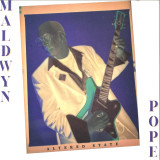
Starting his career with appearances on BBC Radio 1 and signing with Elton Johns label as a teenager, Maldwyn Pope's presence in music has been rich and productive from an early age eventually leading to working with people like Cliff Richards, Art Garfunkel and Bonnie Taylor. However, his presence in Italo-Disco has been quite scarce, but completely on point. "Altered State" is a masterpiece amongst enthusiasts and collectors of dancefloor sleaze and downtempo wellness. Heavy rock influence meets Rimini with this one off experiment from the seasoned multi instrumentalist. Original instrumental remix done by none other than Alessandro Novaga, the entity responsible behind one of Ron Hardy's favorite DJ tools (Faces Drums). B-side features an 11 minute excursion into a completely new altered state of dubby delayed trance, for special cosmic holes only. Re-issued with new full artwork.
DIE LEGENDÄREN ALBEN DER INTERNATIONALEN POP-IKONE BRITNEY SPEARS AUF FARBIGEM VINYL ERHÄLTLICH! Zusammengenommen stellen diese Alben einen beeindruckenden Wandel in der Popmusik dar, vom Ende eines Jahrtausends zum Beginn eines neuen. Britneys avantgardistische Pop-Kollaborationen und ihr sich ständig weiterentwickelnder Musikstil haben sie zu einer kulturellen Ikone gemacht, die Generationen beeinflusst hat. Insgesamt erreichten alle ihre Alben die Top 5 der Billboard 200 - fünf davon den ersten Platz. Mit weltweit fast 150 Millionen verkauften Tonträgern ist Britney Spears eine der erfolgreichsten Künstlerinnen in der Geschichte der Popmusik und hat mehrere Platinauszeichnungen und Grammy Awards gewonnen.l.
HJirok is a mythical figure, conceived as a fictional character by Iranian-born Kurdish singer and artist Hani Mojahedy. Together with versatile music producer And Toma of Mouse On Mars, she combined a variety of sounds collected during their joint travels to Iraqi Kurdistan and elsewhere with heavily processed recordings of Sufi drum rhythms and setar melodies. The result is a driving, dubbed-out, and deeply intricate soundscape that perfectly sets the stage for Mojahedy's extended, unconventional vocal techniques and polyglot lyrics. Both informed by tradition and rigorously forward-looking, »Hjirok« (with a lowercase J) is at once a profoundly personal album and a universal utopian promise. As a ghost from the past, HJirok draws on Mojtahedy's memories to mould a new future out of them.
The foundation for »Hjirok« was laid in the city of Erbil in the Kurdish part of Iraq. During one of their stays in the region, Mojahedy and Toma recorded the three percussionists Hadi Alizadeh, Jawad Salkhordeh and Serdar Saydan as well as setar player Ali Choolaei from Motahedy's backing band while they were playingthe rhythms and notes that she had grown up with in the house of her grandfather in the Iranian city of Sanandaj. Her memories of that place revolve around hypnotic Sufi music, dervishes in deep trance, and ecstatic singing. Much like this music seemed to open a portal to other dimensions, the inhabitants of the house lived in a sort of alternative reality: It provided them with a hideaway from political circumstances. Following the Iranian revolution in 1979, a Kurdish rebellion ensued but was met with the utmost brutality by the new regime, which resulted in the death of thousands.
It is no coincidence that the music on »Hirok« would draw on rhythmic patterns that were passed on from one generation to the next for hundreds of years. »The project is rooted in the figures of the Sufi dervishes and thus a culture that precedes today's political, social, cultural, and religious systems,« explains Mohtahedy. »The Sufi sound travelled around the entire world. I like to think of it as a dialogue between peoples-one based on the rhythms of the drums and the sound of their voices.« Toma adds that by electronically transforming the recordings and enriching them with field recordings from both rural and urban spaces, they were able to use the stories told by the drums and the setar to create an entirely new narrative.
The story told by these eight pieces is hence a deeply personal, but also inherently political one. Moitahedy herself left Iran in 2004 and relocated to Berlin in 2010. Having continued to use her art as a platform to tirelessly advocate for the rights of the Kurdish people and women under oppressive regimes, she has not been allowed to return to her country of origin ever since. »Hani is singing for equality and there are people who are afraid of that-her femininity, her strength.« Toma says. Much like earlier Hirok sound installations addressed human-made climate change and other systemic ills, also »Hjirok« can hardly be disconnected from far-reaching struggles for liberation and equality.
This is also true on a thematic and even linguistic level. »The lyrics are about a promise,« Mojahedy says, citing Kurdish writer Ebdulla Pesêw as an inspiration. »At their core, these are about that day on which violence and fear become a thing of the past; what they tell you is ot not give up, to keep hoping,« she adds. The promise embedded in them is an emancipatory one. These contents are mirrored on a linguistic level: The lyrics were written in both Kurdish and Farsi, blurring the lines between the two languages and thus, Kurdish and Persian cultures.
Mojahedy, or rather HJirok, conveys these philosophical themes with elegance. Herversatile vocal performance is only loosely basedo n established styles. »Of course everything started with traditional rhythms, but we kept pushing things further and further, so Idid the same with my voice,« Mojahedy explains. »There were no boundaries.« The same can be said of the field recordings that she and Toma used. Whether it's conversations between members of the Pesmerge, the Kurdish armed forces, having a chat in meadow full of bunnies or the humming and buzzing of metropolises like Tehran: »Hirok« paints a sonic picture that is quite literally autopian one; that of a non-place in which different soundscapes, cultures and ways of life coexist peacefully.
What the album conjures up from Mojahedy's memory is not only a very specific place during a unique time in history as experienced by a single person. It is also ametaphorical home open to anyone who wishes to enter - promise of a better, more egalitarian future for everyone. Hence, HJirok will bring it on tour, presenting the material as an audio-visual live show that makes use of the photo and video material that Mojahedy and Toma have collected during their travels through Kurdistan.ja
»Sound of Matter« is the debut album by Romanian sound artist and composer Simina Oprescu. The two pieces draw on research conducted with 15 historical church bells at the Märkisches Museum and the Stadtmuseum Berlin. After the artist had presented the results of her studies of the connection between matter and harmony in the form of a multi-channel installation, she has translated the underlying approach of this site-specific work into an album that unfolds slowly, consistently setting in motion subtle tonal changes that continuously change the mood of the two pieces. »Sound of Matter« is both minimalist and maximalist, creating an infinitely rich and multi-layered dronescape that modestly invites its audience to get lost in the sonic experience.
Oprescu has been fascinated by church bells since her childhood spent in Transilvania since the instruments were shrouded in mystery, as she explains in an in-depth essay that accompanies the album. Having received a Bachelor’s degree at UNArte in Bucharest and after studying at the Royal Conservatory of Mons in Belgium, Oprescu enrolled at Berlin’s Universität der Künste for an M.A. in Sound Studies and Sonic Arts. She started working with the archive of the Märkisches Museum, which included 15 historical church bells that were built between the 15th and the early 19th century.
Since every bell sounds different according to its shape, material, and density, Oprescu abstracted these qualities in the formula f = K1t/d^2√E/s(1-m^2). This enabled her to recreate the harmonic tone of the individual bells with Max/MSP. She then composed a piece with semi-overlayed tones, i.e. overlapping frequencies. Naturally, this resulted in a beating effect that provided the music with a sense of urgency, though the five second-long natural reverb of the Märkisches Museum’s Große Halle turned it into a »warm blanket of sound,« as the artist herself puts it. This is perfectly recreated on »Sound of Matter« due to the music being presented in mono, bringing out the intrinsic movement of the beatings with more nuance than a stereo version would.
»Sound of Matter« feels warm and welcoming even when different frequencies seem to create friction between each other or when the subtle beating effects turn into throbbing rhythms, like at the end of the record. It manages to explore both Oprescu’s personal fascination with church bells and psychological and psychoacoustic questions relating to them as well as philosophical issues connected with them. This music is profoundly physical, but also intellectually stimulating—perfectly at home in the catalog of the Swiss Hallow Ground label between records by Kali Malone, Lawrence English, or Siavash Amini.
The booklet features an in-depth essay on church bells by Simina Oprescu.
- A1: Moon's Milk Or Under An Unquiet Skull (Part One)
- A2: Moon's Milk Or Under An Unquiet Skull (Part Two)
- B1: Bee Stings
- B2: Glowworms/Waveforms
- B3: Summer Substructures
- B4: A Warning From The Sun (For Fritz)
- C1: Regel
- C2: Rosa Decidua
- C3: Switches
- C4: The Auto-Asphyxiating Hierophant
- C5: Amethyst Deceivers
- D1: A White Rainbow
- D2: North
- D3: Magnetic North
- D4: Christmas Is Now Drawing Near * Featuring – Robert Lee, Rose Mcdowall
- E1: Copal
- E2: Bankside
- F1: The Coppice Meat
- F2: Ü Pel (Insense Offering)
Red in Clear Vinyl[57,35 €]
First compiled as a double CD in 2002, Moon's Milk (in Four Phases) is a suite of four EPs that Coil released seasonally via their in-house Eskaton imprint across 1998. The line-up for these sessions were John Balance, Peter "Sleazy" Christopherson, Drew McDowall, and William Breeze. Recorded primarily at their home studio in Chiswick, London on the eve of a permanent relocation to the small seaside town of Weston-Super-Mare, the collection has long loomed as a pivotal and pinnacle work in the group's discography, but has never been officially reissued, or repressed on vinyl. Time has only ripened its tapestry of regal strangeness. Arranged sequentially in tribute to the equinoxes and solstices, Moon's Milk captures Coil at a revelatory crossroads, leaning deeper into improvisation, spontaneity, and sound design. "Moon's Milk or Under an Unquiet Skull" initiates the proceedings on Spring Equinox, a two-part netherworld organ séance woven from vocal drones, cathedral keys, seasick strings, and opiated undertow. From there, Summer Solstice skews lighter but no less incantational, with Balance embracing his voice-as-instrument across lucid dream torch songs ("Bee Stings"), purgatorial spoken word ("Glowworms/Waveforms"), sultry chamber pieces ("Summer Substructures"), and falsetto ravings ("A Warning From The Sun (For Fritz)"). Autumn Equinox exudes more of a pensive and twilit mood, from the Rose McDowall-sung folk ballad "Rosa Decidua" ("I hear your voice sing near to me / I've put away the poisoned chalice (for now) / And lie down amongst the flowerbeds") to hall-of-lords hallucination "The Auto-Asphyxiating Hierophant" to the liminal string-plucked classic "Amethyst Deceivers," featuring excellent alien guitar by Breeze layered with Balance's oft-quoted couplet: "Pay your respects to the vultures / For they are your future." The album's final chapter, Winter Solstice, is its most swooning, remote, and ceremonial. Opener "A White Rainbow" stirs strings, layered choral vocals, and shivering rhythm into an imploding burial hymn. "North" oscillates bleakly, a ghost in the machine murmuring opaque prophecy ("This black dog has no owner / This black dog has no odour"), while "Magnetic North" is its inverse, a guided meditation of gently flickering software and surreal chakra poetics ("Red rose filling the skull / Yellow cube in the lower pelvis / Silver moon crescent below the navel"). The suite fades to grey with a traditional English carol ("Christmas Is Now Drawing Near"), rendered like an executioner's song by Rose McDowall's doomed, beautiful voice. The Dais box set includes the entirety of the rare Moon's Milk Bonus Disc CD-R / 2019 Threshold Archives Copal CD, which includes three collaborations with Thighpaulsandra. This material is as rich and intoxicating as the previous four phases, ranging from electro-acoustic singing bowl rituals ("Copal") to dissonant electronic recitations of visionary Angus MacLise poetry ("The Coppice Meat") to ominous classical melancholia ("Bankside"). Once again, Coil confirm the vastness of their confounding, infinite alchemy, explored and refined across decades of experimentation - both sonic and bodily. From postindustrial to post-everything, theirs is an art untethered, in the wilds of its own design.
Luis Vasquez never intended for The Soft Moon to reach the public's ears; for him, music has always been about self-actualization rather than self-aggrandizement. Nevertheless, the bleak, hushed sounds he created years ago in his small Oakland apartment bubbled to the surface and 2010 saw his debut LP, The Soft Moon, released on Captured Tracks rise to critical acclaim. Pitchfork's 8.1 review stated that Vasquez made "oblivion seems likean enticing prospect" and, indeed, listeners were immediately drawn into his murky musical wasteland, swathed in the moody atmospheres of jagged dark wave and wayfaring postpunk. For them, and for Vasquez, there was no turning back. The Total Decay EP and Zeros emerged soon after, and now Vasquez returns with The Soft Moon's most introspective and focused album to date: Deeper.With eerie, immersive tracks like the dogged "Far" and slow, beautifully melancholic "Wasting", the album is a penetrating portrait of Vasquez as he wrestles thoughts of suicide, vulnerability and what it means to heal. Deeper may have delivered Vasquez back to the waking world, but it willingly drags us further into The Soft Moon's dark, euphonic universe once more.
Tucked away in a corner of northwestern Europe and so small you could drive through it in minutes without noticing you were ever there, Luxembourg is often overlooked. This is also true for Luxembourg’s music scene, and even more so in the early 1980s. Aside from a string of victories at the annual Eurovision song contest or the mighty Radio Luxembourg that had for decades been blasting jazz, rock and other modern music into stolid Western European ears, very little else seemed to be going on. But even in a country of barely 350,000 people, musical adventurers had picked up on the spaced-out jazz-funk of bands like Return to Forever, Herbie Hancock’s Mwandishi, Weather Report, George Duke, and the electric Miles Davis. Under the leadership of trumpet player Gast Waltzing, a handful of them put together a band called “Atmosphere” and used the sound of their inspirations as a launchpad for their own musical exploration.
What you hold in your hands is a “best of” the Atmosphere band, which released two albums and a 7” single between 1981 and 1986. Privately pressed and long out of print, with original copies very hard to come by even in their country of origin, these records have for years been unheard by anyone outside hardcore collector circles. With no master tapes available, it was a real labor of love to track down the best quality vinyl copies and to reissue a selection of our favorite tracks in professionally remastered form.
Editions de Lux is a new label dedicated to unearthing and releasing records we love and believe deserve more attention, with a focus on Luxembourg and the surrounding countries. We are just the latest in a long line of immigrants who have come to work in Luxembourg and who are trying to find our own path into the heart of this mysterious little country that has much more to it than dark forests, medieval castles, rusting steel mills, and shadowy banks.
Dersu and Diego Figueura are Basel-based brothers also known as Alma Negra and have been responsible for some seriously fresh and funky, afro-inspired dance music since their inception a decade ago. With releases on Heist, Lumberjacks In Hell, Basic Fingers and their own Alma Negra imprint, the duo wear their Cape Verdean roots proudly on their sleeves ensuring a warm, tropical sound emanates through their productions. For their Delusions debut Alma Negra have delivered a compelling and well-rounded EP which shows off their skills across two original tracks, a dub version and a brilliant remix from Yuksek.
Title track Madrugada takes us directly to the afterparty. More specifically, the kitchen of the house party where the action invariably continues to the early hours. Live horns, guitar, percussion and bass all bring a big sound and real band groove to the production making for a feel good modern-day boogie tune guaranteed to lift the spirits.
Next up we have the aptly named Funky Fever which treads a similar path with big horn parts rubbing up alongside Moog synth lines and punctuated with 80’s tom fills and a rock solid rhythm guitar riff. The real star of the show is the vocal which is unashamedly raw and unpolished giving an authentic and endearing hook to the track.
French producer Yuksek is someone whose productions we’ve been loving for some time and really happy to finally have him onboard for a remix for what we feel is the perfect project for him. Like Alma Negra, Yuksek is another talent who is difficult to pigeonhole and enjoys mashing up genres and incorporating many outernational influences into his sound. On his remix of Madrugada he keeps many of the live parts intact but generally ‘houses’ up the drums and mix which increases the energy without losing the overall vibe of the original.
Closing out the EP we have Alma Negra’s own Dub Mix of Madrugaga which goes for a classic dub approach; pairing back the parts, muting the vocals and creating space for the groove to shine, all making for a perfect track to warm up the dance floor early doors.
After humble lo-fi beginnings in the Australian Art-Pop Underground, Donny Benet has expanded his cult-like following across the Globe with a resonant Array of danceable Repertoire dealing with Love- and Affection. New album "Mr Experience" marks a new chapter, informed by a wealth of musical- and personal development.
For Mr Experience, Donny envisioned a Soundtrack to a Dinner-Party- Set in the late 1980's. While his earlier Recordings drew Inspiration from DIY Pop Conspirators such as Ariel Pink & John Maus, Donny channelled the Stylings of Bryan Ferry & Hiroshi Yoshimura as the Impetus for new Material, evident on the Intimacy found on ‘Girl Of My Dreams’ and it's lush production- with a soothing whistle-along Chorus for good Measure!
Sincerity has been a key component of Donny Benet’s output since the beginning. His songs deal with genuine Emotion served on a kitsch Platter. An alter-ego manifested in the beginning of the 2010's, Donny has blurred the Lines of Artifice to create a back- Catalogue that can embrace- and challenge, often simultaneously, - the notion of Irony in Art.
"Mr Experience" moves further away from ironic Notions as Donny explores lyrical- and musical themes which embody Observations of Maturation in his audience, his tightknit musical Community- and himself. While ‘mature’ is a term that often rings hollow as an album descriptor, the term couldn’t be more apt for Mr Experience.
Previous album The Don was created with the luxury of time. The phenomenal Response to that Album across Europe- and the United States - fuelled by accompanying Music Videos clocking in Views in the Millions- meant that there were scant Windows of Opportunity to write- and record a follow-up.
With a legacy in Sydney’s music community, working with Sarah Blasko, and tightknik collaborators Jack Ladder & Kirin J Callinan, Donny Benet is accustomed to collaboration on the Stage- and in the Studio, mostnotably on the 2014 full-length release Weekend At Donny’s.
“There is such immense talent evident in every aspect of the Donny Bene experience - the vision of the character, the steadfast adherence his narrative and the musicality of Benet himself all combine to makesomething truly genius.” - Double J, Australin.
“Donny Benet makes feminine music for everybody” - Vice, Netherlands.
“The Don does not sound like amusical copying machine”. - 3voor12 National, Netherlands.
“The set was punctuated with virtuosic solos and exquisite harmonies, and added another layer of genius to the show.
We almost couldn’t handle it... Donny for president!" - Indie Berlin.
“Everyone loves Donny Benet” - Feature in Gonzai, France.
“Phenomenal Australian Showman... Offers Top-Class Dance Music with Virtuose-Bass Guitar- and Keyboard Parts & incredible Sound-Colour feel.” - Podujatie.sk, Slovakia.
Donny has toured Europe five times since the start of 2018 and has played in the UK, Austria, Germany, Slovakia, France, Netherlands, Spain, Portugal, Belgium, Denmark, Switzerland, Czech Republic, Greece and Sweden. The Don will revisit Europe twice in 2020, once for his own headline shows in May then back again in August for festivals!
6-track EP compilation with Terada's work for the Ape Escape games, tip!
Outside of the international house underground, where his early ‘90s works for the Far East Recording label he co-founded with Shinichiro Yokota are rightly celebrated as bona-fide classics, Soichi Terada is best-known for his work composing music for video games. Yet until now, few of his productions for video games have been released outside of Japan, especially on vinyl.
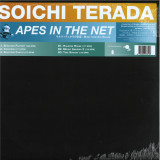
Apes In The Net, a six-track EP featuring music composed for the popular PlayStation 1 series Ape Escape, sets the record straight. It not only showcases Terada’s quality as a composer and producer, but also his versatility. Like much of Terada’s work on the Ape Escape series, the tracks featured don’t explore deep, New York and New Jersey influenced house sounds, but rather his lesser-celebrated love of jungle and drum & bass – a sound he fully explored on 1996 album Sumo Jungle.
“The producer of the Ape Escape games heard that and got in touch,” Soichi remembers. “They asked me to make the soundtrack, and then work on the music for the sequels after that. I used to love making music with AKAI hardware samplers, synthesisers, and computers, so I played and recorded the tracks using almost the same methods as I did when I made house music. Using breakbeats and audio samples with a sampler was the most useful way to make the soundtracks.”
The six tracks on show, which were originally recorded in the ‘90s but reconstructed and remastered for Japan-only CD and digital releases over a decade ago, mix elements of Terada’s familiar deep house style – think warming chords and pads, memorable melodies, and emotive musical motifs – with blistering D&B breakbeats, 16-bit synth sounds, electronic bleeps and undeniably weighty basslines. They’ve stood the test of time and arguably sound just as fresh now as they did at the turn of the millennium.
For proof, check the soaring, spellbinding ‘Spectors Castle’, where uplifting lead lines and sumptuous chords dance atop punchy beats and growling bass, the jazzy and saucer-eyed rush of ‘Mount Amazing’ (all twinkling piano motifs, alien synth sounds, squelchy bass and skittish drums) and the intergalactic, liquid D&B excellence of ‘Time Station’, whose whistling melodies and stargazing chords are undeniably alluring.
There are plenty of other delights to be found across the EP, too, from the bustling, race-to-the-finish breathlessness of D&B/bleep techno fusion workout ‘Spectors Factory In’, and the rumbling sub-bass, creepy pads and suspenseful melodies of ‘Haunted House’, to the bombastic, all-out-assault on the senses that is ‘Coaster’, the set’s most “purist” jungle workout – albeit one that also doffs a cap to the pulsating world of big room techno.
Apes In The Net, then, celebrates Soichi Terada’s mastery as a video games composer and early Japanese junglist. Props are well and truly overdue.
The Knife’s Olof Dreijer continues his new adventure as a solo producer with a three-track EP, also marking a unique sonic chapter in his work.Olof has been pushing the borders of electronic music for two decades, both as a part of The Knife and with the secret pseudonym Oni Ayhun - releasing music that traverses experimental avenues, exploring themes surrounding gender.
The Coral EP draws inspiration from the lively steel-drum experiments featured in last year's "Souvenir" EP with Mt. Sim
Vibrant compositions and distinct melodies create an ambient progression where electronic and acoustic sounds delicately dance together, forming friendships and blending seamlessly, reminiscent of white magic.
Olof has recently co-produced several tracks on Fever Ray’s critically acclaimed 2023 album “Radical Romantics”, produced Tunisian multi-instrumentalist and composer Houeida Hedfi’s debut album “Fleuves De L'âme”, as well as helped create music with Planningtorock and Zhala.
Unreleased, "lost" 7inch off the Bruton library music album "Deep Funk". The last two cuts by the Sound Stylistics: Heavy Soul is exactly what the title suggests, an "instrumental with a driving groove" and a perfect tune to get a party started, while "Move It Up" has a more relaxed vibe while still being gritty.Officially licenced from BMG Zomba Production Music in 2007, manufactured and forgotten. These 45s have just been unearthed from the pressing plant's storage room after more than 15 years.
When accidents happen, they are normally over in seconds, sometimes minutes; this one has been going on for 20 years. It is two decades since the members of Emile Parisien’s quartet played a jam session together. At the end, they looked at each other in disbelief. They had not just been hit by a collective musical thunderbolt, they also knew they had just brought...well...something...into being. The common ground between them was jazz, but each had all kinds of seeds to sow in it, from classical music and contemporary sounds to rock, electronica and chanson. Saxofonist Emile Parisien, Pianist Julien Touéry, Bassist Ivan Gélugne and drummer Julien Loutelier rip up labels, break down barriers, upset codes, and yet they know exactly where they are headed. There is a shared obsession with narrative. “The central axis of the quartet has always been storytelling,” Parisien emphasizes.
“Let Them Cook” is like a breath of fresh air, and with a band sound now firmly and unmistakably of 2024 rather than 2004. There was a particular turning point: at a concert in Sweden near the end of their “Double Screening” album tour, they had taken a chance and tried out a move from an entirely acoustic sound to incorporate some electronics.It worked, so they stayed with it: they found that these electronic punctuations never polluted the band’s DNA, but rather stimulated it. The electronic apparatus was clearly additive to the stories of these compositions, the way it all fitted together was astounding.
Which brings us back to the ever-present question: how do you get away from the classic jazz quartet of sax, piano, bass and drums? “We’re always trying to find the answer! There’s no point in redoing what the John Coltrane and Wayne Shorter groups did, because in many ways you’ll never reach their level.” “There’s a certain road in life most people walk on,” Wayne Shorter once said, “because it’s familiar, and they can jostle to get in front. I prefer to take a different road that’s less crowded, with many forks, where you get a wider view of life. I call it ‘the road less travelled’. That’s where I want to be.” In the year which marks its 20th anniversary, Emile Parisien’s quartet has never been more in tune with the thinking of one of its main influences.
slide 7 to 10 of 8
Les Égarés
Les Égarés
Brothers Dana and Alden McWayne, along with a troupe of multi-instrumental artists, come together to create jazzy melodies with indie sounds inspired by their unconventional upbringing in Eugene, Oregon. Dana (saxophone) is an organic farm inspector while Alden (drums) is a recent grad of Berklee College of Music. Their debut full-length album, Quiet Music for Young People, is a lush album that melds vintage sounds with the aesthetic and experience of existing in Gen Z and the digital age. Quiet Music For Young People also reminisces of the brother's childhood, summer days spent working at an apple orchard and jamming at jazz clubs on rainy Oregon nights. The experimental smooth jazz-infused album closer "Dragonfly" has been gaining traction on streaming due to trends across Instagram and TikTok.
**Ltd First Pressing on Black/Red Splatter Vinyl** Introducing Observers “The Age of the Machine Entities” an instrumental heavy metal reimaginin of Stanley Kubrick and Arthur C Clarke's 2001 A Space Odyssey. Observers is a new project fronted by Martin Kennedy whose ambient rock band All India Radio has seen music used in CSI, One Tree Hill and many more. Canadian metal titan Devin Townsend even covered an All India Radio song that he fell in love with while on holiday. Kennedy has also released over fifteen albums with Steve Kilbey of psychedelic rock legends The Church. Kennedy says “I’ve been fascinated by 2001 A Space Odyssey ever since my mum took me to see it in the 1970s. It blew my mind. I started making my own 2001 inspired super 8 movies, I collected everything I could afford and I’m still obsessed with it into my adult years.” “The Age of the Machine Entities” is entirely instrumental and takes us on a cosmic journey through melodic metal, atmospheric riffs and psychedelic ambient sequences with echoes of Gojira, Black Sabbath and Tangerine Dream and the early 70’s work of Pink Floyd. Indeed treats us to a searing metal version of the obscure but fan favourite “The Narrow Way Part 2” from the Floyd’s Umma Gumma. The album was mixed by Joe Haley from Tasmania’s legendary Psycroptic and the line up is Rich Gray (Annihilator) on bass, Chris Bohm on drums, and guest soloists including Joe Haley and Jake Weber. The all important visual aspect is brought to life by Ryan T Hancock (known for work with King Buffalo, ᴀɢɴᴏxɪᴀ, Robot God), who created the mesmerizing album artwork. Observers' "The Era of Machine Entities" is a fusion of artistic brilliance that pays homage to the timeless mystery of "2001: A Space Odyssey.”