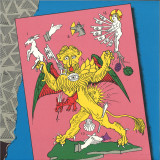
It’s been an exhilarating 40-year ride for Voivod, the Jonquière, Quebec quartet that has, over the years, defied the odds, faced tragedy head on and also seen the band rise above many of the contemporaries to a point where the band’s intricate progressively fuelled heavy metal sound also brings with it honours and awards. The 2018 Voivod album, ‘The Wake’, won the band a Juno Award for Heavy Metal Album of The Year, while the previous year Away had picked up the Visionary Award at that year’s Progressive Music Awards in London.
The music contained in this set proves that Voivod were very much pioneers of the sound, as their own music became more refined and experimental. You can hear the development of the band’s sound over the three albums contained here (Rrröööaarrr, Killing Technology & Dimension Hatröss). In the five year span from 1984’s ‘War And Pain’ debut to 1989’s ‘Nothingface’, Voivod forged a defiant progressive metal sound that they would expand upon with later albums and ensure that they are one of the most exhilarating metal bands in existence today. ‘Forgotten In Space’ is a deluxe celebration of Voivod’s, Noise Records discography and is the definitive collection of their recorded work plus rare and previously unreleased material.
Includes :
- Includes following 5 Albums:
Rrrröööaaarrr
Killing Technology
Dimension Hatröss
Dimension Hatröss – The Demos
No Speed Limit Weekend ‘86
- Chaosmongers - DVD (Containing a mini documentary plus a previously unseen concert from 1987 and an audio recording of the legendary WWIII show from 1985.)
- 12” x 12”, 40 page book of photography, and brand new interviews with founding member Michel ‘Away’ Langevin. Contains a vast array of previously unseen photos from the era.
- ‘Körgull’ f¬igurine USB drive containing MP3
Cerca:dr m bee
We all make mistakes. We all have regrets. We all look back on the loves and losses life brings and lament on how things might have been different. In these deeply personal moments of reflection our emotions can run wild as we contemplate our choices and come to terms with what’s next. Hindsight is a powerful and complex thing, and a phenomenon whose intricacies are explored in captivating fashion on The Greatest Mistake Of My Life, the second album from Cardiff’s Holding Absence.
Building on the excellent foundations laid down by the band’s eponymous debut record, released in 2019, and following standalone singles ‘Gravity’ and ‘Birdcage’, the four-piece have returned with a group of songs that, in the view of vocalist Lucas Woodland, are the truest representation of Holding Absence to date.
Inspired by a song of the same name that was recorded in the 1930s by actor and singer Dame Gracie Fields, The Greatest Mistake Of My Life is rooted in a time long before Holding Absence even existed. Lucas’ great uncle covered the song during the 1950s – something the frontman repeats on this album – and after finding this out from his grandmother, the singer decided the poignancy of its words were worthy of titling Holding Absence’s next record.
Holding Absence – the band completed by bassist James Joseph and drummer Ashley Green – carry the The Greatest Mistake Of My Life’s contemplative and thoughtful spirit throughout their second album. Whereas their debut was a concept record about the subject of love, The Greatest Mistake Of My Life’s inspirations are more complex, as Holding Absence stare down love in the face of death, all the while musing on the vast array of emotions we as humans experience throughout our lives.
Lead single ‘Beyond Belief’ is a soaring epic about the risk of loving someone forever, when their definition of ‘Forever’ might be different to yours, and a song that, Lucas says, argues how “love is something worth taking a risk on.” Holding Absence’s unique approach to romance is also present on atmospheric tracks like ‘Curse Me With Your Kiss’ and ‘Afterlife’, but for every display of affection, The Greatest Mistake Of My Life counters with despondency. ‘Die Alone (In Your Lover’s Arms)’ tells of the loneliness two people feel within a relationship long-turned sour, while ‘In Circles’ speaks to the monotony of everyday life and the crushing of dreams.
The Greatest Mistake Of My Life soundtracks the journey of our lives via all of its despair, elation, joy and pain, but never once tells the listener how they should be feeling.
Shedding their skins and emerging into a bright new phase for their band, with The Greatest Mistake Of My Life, Holding Absence are embracing change whilst holding onto the things that make them special. Aesthetic, for instance, remains important to Lucas and his bandmates, but as seen in the video for ‘Beyond Belief’, no longer do they exist in a world of purely black and white colour. Ushering in a colourful new era for Holding Absence, Lucas speaks of a desire “to bring warmth to people’s lives.”
Armed with a stellar new album and an unflinching belief in their craft, this new incarnation of Holding Absence promises to excite and impress like never before. An enthralling collection of songs and stories that tell of love, life, death and everything in between, The Greatest Mistake Of My Life is a thrilling record, and one its creators were born to make.
As Holding Absence have proved, the greatest mistakes can sometimes open the door to even greater triumphs.
Recorded under a loft bed in the guest bedroom of his Nashville home, Michael Ruth aka Rich Ruth’s “I Survived, It’s Over” starts in a humble space. And while many contemporary music projects are produced in such an environment, “I Survived, It’s Over” sets itself apart in its transformative properties as well as its transparency. What we have here is honest sound exploration, session musician-level instrumentation, and a true love for nature run through the fingers of a dude who can channel some acute and undeniable magic. This music goes deep. "I conceived much of this record amidst the quiet and tumult of 2020 in my neighborhood that had recently been ravaged by a tornado," Ruth recalls, "I spent most of my days working on these pieces between bicycle rides - watching the beautiful Tennessee ecosystem flourish in Shelby Park, listening to Keith Jarrett’s The Koln Concert and John Coltrane’s Ascension." Underneath the swell of the strings and the shredding of the guitars, this record has hard working, rustbelt, drum-heavy roots all over it (which makes sense as Ruth hails from outside of Toledo, the album was mixed by John McEntire from Chicago band Tortoise). Many of the flutes, saxophones, pedal steel, and other instruments were recorded remotely because we live in the future, but this only adds to the collage of sampled and sample-able material that Rich Ruth has to offer. The organic relationships between the artist and other musicians on the album is evident even in the compilation style sampling that needs to occur in putting such a project together. "Working on this music is a daily meditation," says Ruth. "I constantly experiment with sound until it reflects the way I am feeling and attempt to sculpt something meaningful from it. Through years of being a touring musician, it is a constant inspiration and privilege to collaborate with the individuals that graced this record with their voices." And those relationships pay off, because “I Survived, It’s Over” is a sonic meal. It’s rich (no pun intended) with massive instrumentation that’s usually reserved for more symphonic delights. But at the same time it’s simple and leaves space to breathe–space you didn’t know you needed. In his own words; "I Survived, It’s Over is a meditation on healing, confronting trauma, surrendering, and finding peace. I wanted to encapsulate the tranquility and disarray found within this process." Ruth’s heart and the peace that his presence produces is all over this album. And despite his midwestern humility and willingness to brush off any praise, he’s put together something really special that carries its own weight. It's the kind of record that only comes around every once in a while and it's worthy of all the head-bobs, acclaim, and celebratory potlucks that Mike and the gang have coming their way. “I Survived, It’s Over” is a record you should buy for your friend, your foe, and yourself. It’ll sit perfectly on your shelf between Alice Coltrane and Hiroshi Yoshimura.
Lasse Marhaug is one of those characters that operates at the nexus of so much stuff that’s important to us here - working as a producer (over the last couple of years alone he’s helped shape albums by Jenny Hval, Kelly Lee Owens, Okkyung Lee, Hillary Woods etc etc), a mastering engineer (far too many releases to mention), a prolific sleeve designer (likewise), publisher (his occasional Personal Best magazine is still going strong) and, perhaps most importantly - a recording artist in his own right. ‘Context’ is his most substantial release in years - a crushing assembly of bone-dry/darkside drone/machine malfunctions that’s bursting with a visceral, throbbing, mass of feeling. If yr into anything on the spectrum from Mika Vainio to Grouper to Kevin Drumm or Deathprod - this one’s as good as it gets
Over almost three decades of activity, Marhaug has carved out notoriety as a solo performer, a prolific collaborator (working with everyone from Sunn O))) to Jim O'Rourke) and as a busy producer, who's notched up credits on some of the most striking-sounding albums of the last few years. This new album was created as a swan song for the infamous Oslo studio that he's inhabited for 17 years, prior to his move back to the Arctic Circle where he originally came from. Recorded over a 14-month period and painstakingly edited from hours upon hours of material, it might just be the most impressive, moving record we’ve heard from him so far.
The interplay between piercing softness and deafening noise is the key to "Context", displaying a philosophy Marhaug has been exploring for years. Few other artists are able to balance chaos and harmony with such ease; Marhaug does it without grandstanding, it's music that sounds as simultaneously beautiful and as daunting as the Arctic landscape he's returning to. At any moment a sound can be alluring or treacherous, like the frozen sun reflecting on a snowy mountaintop. Marhaug's deftness with rhythm and bass emerges on 'Context 3', as he pairs Vainio-esque low-end pulses with crumpled noise and widescreen tones; as disquieting music-box chimes absorbed into the blasted soundscape on 'Context 5', while we're thrust into the freezing cold on 'Context 6', subjected to punctuating gusts of white noise and trapped string loops.
Trust it’s a rare and near-mythical beast, conjuring vast, treacherous soundscapes illuminated with pangs of sentiment that naturally weave strands of his non-musical practice in their psychosensual lustre and gritty attrition. As he steps into a new phase of his career, we're left with a concluding chapter that stands as a summation and open-ended post-credits reveal.
When they released their first single, ‘Give It To Me’, in the summer of 2021, Classless Act were immediately praised for their ability to sound both fresh and timeless. Loudwire instantly added the song to their ‘Weekly Wire’ Spotify playlist, identifying it as one of the top new releases of the summer. Other iconic outlets such as SPIN Magazine were also early to show support. It was a fitting public introduction to a band who embody what it means to be modern rock stars. The band initially formed in 2018 after connecting and bonding virtually by their love and passion of music. Now in Los Angeles, they are united on a mission to be the next great generation-defining act, drawing inspiration from classic rock acts of the ‘70s and alt-rock groups from the ‘90s. Their music echoes the hallmarks of previous generations - anthemic rhythms, shredding guitars, soaring vocals - but punches its way into the future with clever arrangements, sharp musicianship and proficient songwriting. Already making a big noise within the industry, the band have recently been in the studio with world-class producers such as Bob Rock, Michael Beinhorn and Joe Chiccarrelli, who have helped craft hits for the likes of The Red Hot Chili Peppers, Metallica, Soundgarden and The White Stripes. Their debut album coincides with the band hitting the road in North America alongside Mötley Crüe, Def Leppard and others on their 2022 Summer Stadium Tour.
- A1: Brace Yourself Jason
- A2: Hasty Boom Alert
- A3: Mushroom Compost
- B1: Blainville
- B2: Lunatic Harness
- B3: Approaching Menace
- C1: My Little Beautiful
- C2: Secret Stair (Part 1)
- C3: Secret Stair (Part 2)
- C4: Wannabe
- D1: Catkin & Teasel
- D2: London
- D3: Midwinter Log
- E1: Hanky Pokery
- E2: Jiggery Panky
- E3: Worcester
- E4: The Cut Of My Jib
- F1: Lunatic Harness
- F2: Lunatic Harness (Remix)
- F3: Mr Angry (Remix)
- G1: Brace Yourself (Remix)
- G2: Kubba
- G3: Vaken Bolt
- G4: Losers' March
- H3: Abmoit
- H4: Brace Yourself (Reprise)
- H1: Summer Living 2
- H2: Intellitag
Clear Vinyl[116,60 €]
Lunatic Harness, µ-Ziq's rare and sought-after fourth album, was originally released in July 1997 on Virgin's Hut Recordings label. It is generally considered to be Mike Paradinas's best work of the nineties. An Apple Music review describes Lunatic Harness as "the prettiest album to come out of the mid-'90s "drill'n'bass movement", noting that Paradinas eschewed the abrasiveness of similar works by Squarepusher and Aphex Twin in favour of "atmospheres of ethereal color and shimmering melody", bringing the album "closer to pop music than anything Paradinas had previously attempted". Planet Mu has compiled a special 256th anniversary edition 4xLP boxset bringing together the My Little Beautiful EP, the Lunatic Harness album and May 1998's Brace Yourself EP (released by USA's Astralwerks label) with the addition of four rare tracks. Discs one and two of the vinyl are the original Lunatic Harness album, disc three compiles the My Little Beautiful b-sides with three unreleased cuts from the period and a remix of Mr.Angry from 1997's Mealtime compilation, while disc four is the 8-track Brace Yourself EP which hasn't been re-issued since 1998. This all comes in individual printed sleeves housed in a rigid box with an insert collage of some of the press Mike received at the time. There is also a 2xCD edition with the same tracklisting.
A selector, producer and label head at the top of his game, Enzo Siragusa continues to prove exactly why he’s held in such high regard as a staple of the underground music scene. While developments have seen the FUSE boss adjust his approach, recent months have combined a wealth of studio time with the unveiling of new projects – most recently announcing the launch of his new genre-bending all-night-long event series, E:Dimension. Yet, there’s something about a release from Siragusa on home turf that stands out amongst the pack, with productions like ‘Sagamore’, ‘Desire’, ‘Flexin’ and the ‘Kilimanjaro’ cuts instantly recognisable after just a few seconds, and the same looks set to happen as he makes his highly-anticipated return with his first solo material on the label for over two years. Unveiling one of his most heavily requested tracks to date alongside further peak-time business on the flip, April finally welcomes the arrival of the two-track ‘Nothing Matters’.
A track that’s been making waves for months, ‘ICV (Double Flake Mix)’ brings the sub-shaking, cavernous reese bassline now captured by many across the globe as Siragusa launches into his signature blend of heads-down, hands-up sonics, while the vinyl-only dub delves into afterparty territories to offer up an exclusive version for wax owners. On the flip, title cut ‘Nothing Matters’ graces the B-Side and keeps things moving as meandering melodies ride rumbling low-ends, swinging drums and chunky grooves to shape up proceedings in emphatic fashion. It’s safe to say Siragusa’s back, and he’s back like he never left.1
Concept Of Man is Martin Knorz - Berlin based keyboarder, producer and DJ.
A studied jazz pianist, Knorz is known for playing keys in the highly acclaimed, german experimental pop band Hope, with whom he’s been touring around Europe and UK over the past couple of years, as well as forming the sound of Austrian pop icon Teresa Rotschopf‘s solo debut „Messiah“.
In 2019 he started devoting himself to modular sound-synthesis, playing live shows and remixing acts as Hellotrip (Mutant Rebuilds) and Hara Crash (Bali).
His debut “Regularities” will be released on Patrick Pulsinger’s Big Beak Recordings in 2022. It’s a modular infused tape majestically crafted by a sound surgeon. Drawing inspiration from Robag Wruhme, James Holden and Patrick Pulsinger (with whom he has collaborated on his album Impassive Skies and the EP Nocturnal Cat), „Regularities“ consists of four minimal tracks and a durational modularsynth-only-performance, both of which feed the realm of sound caviar. Tribal rhythms join the darkness of modular sounds, regular beats oscillate on irregular impulses, while intriguing basslines and uplifting chords remind us that Knorz is first and foremost a pianist, a master of melody.
Wooden but soft percussive chords create a tribal rhythm that carries through the song, interrupted by a contrapuntal rhythm. Another drum group provocatively steps in the arena, together they build a rolling total. Then a „squelching“, juicy, nearly acid melody grounds the track, to be drummed out by the two groups when approaching the end.
NEW 45 BY DEEP-FUNK PIONEER LUCKY BROWN RECORDED DURING THE MYSTERY ROAD SESSIONS!
"Funk is a living, breathing, creative and generative entity and The New Lucky Seven celebrate its life with a mysterious and authentic sonic snapshot from the iconic Mystery Road sessions: WOODHEAD!"
Woodhead is a steady medium groover built around an acute chanky guitar part that Joel Ricci aka Lucky Brown composed while living in the "Woodhood" district of Bellingham Washington, USA in the fallout shadow of an industrial area on the outskirts of town. The Woodhood was so named because the streets were all named after different kinds of trees; Cottonwood, Alderwood, Birchwood, etc. Though members of the band had been performing Woodhead since as early as 2004, it had never been officially committed to tape. So during the 2013-2014 span of living room "Magik Carpet" sessions at drummer, Oliver Klomp's house in West Seattle, the combo dubbed by Lucky as "The New Lucky Seven" casually hit the head a couple times before calling it a night as Lucky rolled tape.
Opening with the now world-famous guitar player, Jabrille "Jimmy James" Williams dropping deftly into his rhythmic part, Lucky chants in the background the words "don't stop" as the tension builds up into the moment the whole band comes in. With Bob Heinemann on bass, Marc Hager on Rhodes and Oliver Klomp on drums, the thick but honest groove is instantly palpable. Trombone player Mars Lindgren and Sax player Thomas Deakin, along with Lucky on Trumpet lay down the 'head' to the tune right off the bat with everyone in the band giving that hard hit on the 4 count of the last bar of the repeated figure. This 'hit' returns again to form the breakpoint between soloists Jimmy James, Marc Hager, and on side B, Thomas Deakin, and Lucky Brown on the flute. The horn section microphone was situated on the dining room table and Lucky just had to lean over to reach it with his instrument! Michael Iris of Bell Creek Studio transferred and mixed these two tunes from Lucky Brown's cassette machine.
This tune was left off of the Mystery Road compilation album but comprises one of the last tracks created during those sessions therefore the concept, vibe, style, and intention should resonate and be interchangeable with the rest of the 45s from that epic Box Set TR-9043 released by Tramp Records on May 4, 2015.
As you spin and interact with the Mystery Road recordings, you are invited to allow Woodhead to take its rightful place specifically alongside the other "The New Lucky Seven" recordings and generally as a part of the suite of crude and naive living-room "Magik Carpet" funk of the rest of the Mystery Road.
As illuminated before in Lucky's artist statement regarding the Mystery Road sessions, the music contained therein was always intended to put emotion, vibe, feeling, and spirit before technical, spatial, or even performance constraints and to serve as a gift of discovery to lovers and aficionados of the deep funk idiom and the rare 45rpm format. Funk is a living, breathing, creative and generative entity and The New Lucky Seven celebrate its life with a mysterious and authentic sonic snapshot from the iconic Mystery Road sessions: WOODHEAD!
From 2008 comes 'Keys, Strings, Tambourines' - Kenny Larkin's fourth full length LP.
Yet another advanced, singular and funked out techno milestone that bears all of Larkin's idiosyncratic stylings and melodic touches. Once more he shows us how it's done, sounding like nothing you've heard from him previously, 'Keys, Strings, Tambourines' is a truly adventurous record that defies categorisation today. Quietly influencing producers and DJs since its release, it points to where techno can go and what it can be and is a truly and criminally overlooked modern Detroit techno classic. This is an essential purchase for all electronic machine-funk aficionados worldwide. This special expanded edition boasts a slightly reshuffled track order and some additional cuts that were only available on singles at the time, now giving the world 3 solid slabs of futurist techno sonics for the believers! Essential music from the motor city.
'Keys, Strings, Tambourines' has been legitimately reissued for 2022 on Kenny’s own Art Of Dance imprint. Remastered from DAT tapes and original sources by Curve Pusher. Artwork redesigned by Atelier Superplus.
Originally released as an obscure private-press LP by the Florida trio of Ben Champion, Ken Burkhart and Danny Burger.
Special guest on this super rare funky jazz outing is Mike Longo who says a few words on behalf of the group on the back cover, and sure enough he contributes scorching Rhodes in the style of his early 70s Greasy Groove sides for Groove Merchant and Mainstream. Also on board are Kelton Champion on guitar, Gary Champion on Bass, Mickey McGann on keys and David Winters on Congas and Percussion: (Just what we love to see on these kind of grooves. Added Phat Funkiness!)
The 20 minute title number weaves, bobs, and scorches with a sound that has been described as a "Headhunters Headspace" the groove never dropping for an instant with a Fender Rhodes meets Hammond B3 Prestige Style Scene with an added flavouring of some chunky Moog Synthesizer.
This has gotten a lot of chatter on the underground Jazz Vibes lately, copies changing hands for $300 and more. The track "These Are My Friends " regularly sells for upwards of $500 and is one of the most hard to find singles on the Rare Soul circuit.
The band are from South Florida, a well known melting pot of culture and music.This area has produced an impressive number of Super Star Jazz Musicians.
Among them Cannonball Adderly, Blue Mitchell, Jaco Pastorius, and Mike Longo and a multitude of others.
Jazzberry Patch can now be added to that roster with this fantastic re-issue from Jazz Room Records.
The Idealist is one of the many projects of Joachim Nordwall who has a long history in Swedish experimental music running the quintessential iDEAL Recordings record label since 1998, as a member of the psych-drone duo Alvars Orkester, avant punk rock trio Kid Commando and ritual drone rock group The Skull Defekts and through his many solo recordings and collaborations with people such as John Duncan, Aaron Dilloway, Mika Vainio, Mats Gustafsson, Leif Elggren, Gabi Losoncy, Mark Wastell and Christine Abdelour.
As The Idealist, he has been delving into an amalgam of experimental techno, dub and industrial music since 2006. His new A Lion Is A Lion And Not A Lamb continues this perspective unabatedly, conjuring up six tracks that shimmer with an almost psychotropic intensity, sometimes including acidic touches, dwelling in a confrontational minimalist musical stance where repetition, bursts of gorgeous noise and dubbed out skeletal rhythms make for wayward yet driving grooves at home on the dance floor and a set of headphones alike. The Idealist looks for engagement within rhythm, in its almost purest
form.
- 01: Cold Water
- 02: Opium Fogs
- 03: Docker Blues
- 04: Submerged
- 05: Haunted Cassette Spools From &Apos;92 Jungle Tape Packs Washed Up On Bermondsey Beach Waste Away And Dissolve Into The Thames Like Nightmares
- 06: Mysterious Rural Experiences Leak Into The Town And Colour His Perception Of It
- 07: The Relatively Poor Quality Of London's Water
- 08: Sliding Into The Thames
- 09: Drink The City
- 10: Subterranean Southwark
- 11: This Is Where C Wilson Wrote Ritual In The Dark
- 12: Have You Been To The English Deer Park?
'For the born Londoner the country ever remains an incredible mystery. He knows that it is there – somewhere – but he has no true vision of it. In spite of himself he Londonises it, suburbanises it; he sticks a gas lamp or two in the lanes, dots some largish villas of red brick beside them, and extends the District or the Metropolitan to within easy distance of the dark wood.' – Arthur Machen, Far Off Things
Official re-issue of Javier Segura's album from 1986. Exciting tribal, ambient and experimental sonorities brought back in a newly remastered release.
Originally released in 1986, 'Nostalgia De Lo Humano' is almost unclassifiable. For Segura, styles are another form of repression, something that serves to label and keep track of those who sees, listens, buys or plays, and especially who sells. Despite the fact that Segura has been producing music continuously since the 1970s, his recognition as a musician was for a long time limited to experimental music circles. He had always controlled his career on his own, on the fringes of the industry. As Javier Segura himself says, his head is full of textures, rhythms and melodies. Through his textured productions, Segura opened up new dimensions to experimental music, using guitars, drum machines, trumpets, synths, or pedals.
- A1: Season For Love (3:06)
- A2: The Twelfth Of Never (2:25)
- A3: Trying To Understand A Woman (2:27)
- A4: When A Boy Falls In Love (2:38)
- A5: The Shortest Distance (0:36)
- B1: Hurt So Bad (3:16)
- B2: Walking On My Love (3:02)
- B3: Wichita Lineman (3:21)
- B4: Let's Try It Over Again (2:09)
- B5: The Magic Of Love (2:47)
2022 re-press, 180g vinyl
A monumental force firmly rooted in the soul canon, Willie Hutch is most notable for recording two of the best Blaxploitation soundtracks, The Mack and Foxy Brown. Yet his legacy is much greater. Outside of Marvin Gaye, Stevie Wonder and Smokey Robinson, Hutch was arguably Motown's top male solo artist of the 70s. Prior to his association with Gordy et al, Hutch crafted his opening statements for RCA, two vital LPs that Be With Records is honoured to present today.
Often-overlooked, his second album Season For Love (1970) is a must for all deep soul fans and has been sought-after by collectors of different stripes for decades. Whereas his debut featured thundering, gritty numbers, Hutch treats us to a mellower soul here - sumptuous, warm and string-led. He compared his approach to that of Otis Redding and there are definite parallels, from the raspy, rough-hewn vocals that tend to roam between sweet and deeply impassioned to the horn-heavy, emphatic sonic backdrops.
With flawless originals presented alongside a few well-chosen classics (his stunning cover of "Wichita Lineman" arguably bests the original's splendour), it's easy to see why sample-based musicians have been falling over themselves to plunder from this album. Witness the sweeping strings that grace "The Magic Of Love" and the heartbreaking "Walking On My Love", the mellifluous guitar work on the contemplative instrumental "The Shortest Distance" and gorgeous single "When A Boy Falls In Love".
Whilst the arrangements and playing are subtly jaw-dropping throughout, Hutch's uncontrived voice has a certain warmth to match a Nat "King" Cole and a purity of tone that even recalls the great Sam Cooke. Indeed, a few numbers are almost in a jazz vocal territory reminiscent of artists Lou Rawls. That's not to say that others lack the righteous energy and undeniable groove of Willie's later sound.
Remarkably consistent throughout - a rare commodity for many 70s soul albums - the lack of one signature song likely hindered its progress. Regardless, it deserved to make more of an impact and now, paired with the majestic debut, Soul Portrait, these recordings shine a new light on the early work of a soul legend.
Original vinyl copies of this album are extremely rare - and correspondingly expensive - so we're thrilled to present the first ever vinyl reissue of a true lost classic. This release is officially licensed and has been remastered for vinyl by our esteemed engineer Simon Francis. It has been pressed on audiophile 180g vinyl for the first time and features the original, rarely seen artwork.
- A1: Pale Blue Care Biobiopatata06 09
- A2: Crossing The Tamariver Maher Shalal Hash Baz 48
- A3: Bayern Mitamurakandadan? 02 39
- A4: Anton Popo 04 08
- A5: Tohonoko Kourakuen 03 03
- A6: People Have Called Them Flowers Various Sighhorns 03 32
- B1: A Sparkle To Your Eyes Zayaendo 04 58
- B2: Swamp Strada05 18
- B3: New Window (Onto A Collapsed House) Sekifu 01 41
- B4: Gone Astray Hose 04 44
- B5: Ghhgh Compostela02 40
- B6: Wippi Zayaendo 01 25
- C1: Just Watching Gratin Carnival 04 35
- C2: Apple Ringo Pascals 02 50
- C3: Way To The Seatail 02 59
- C4: Pensive Miss Noahlewis’ Mahlon Taits 03 33
- C5: Nagyon Szeretrek Mindenkinek K`dlokk 05 57
- D1: Kemuri Fuigo 04 28
- D2: Mado Petit Daon 05 53
- D3: Minato Nrq 02 35
- D4: The Ending Theme Tenniscoats 02 59
- D5: A Day With The Saints Satomi Endo 03 13
Alien Transistor present Alien Parade Japan, a joyous double-album compilation of groups from Japan’s indie-pop and avant-garde undergrounds, all of which feature brass or woodwind instruments as part of their line-up. Compiled by Markus Acher (Alien Transistor, The Notwist, Hochzeitskapelle) with plenty of support and help from his Spirit Fest bandmate, Saya (also of Tenniscoats), it features some familiar names – Tenniscoats, naturally, but also Zayaendo, Tori Kudo’s Maher Shalal Hash Baz – alongside lesser-known groups like Biobiopatata, Mitamurakandadan?, Kourakuen, sekifu, and Noah Lewis Mahlon’ Taits, amongst many others.
The collection of songs here rests upon a simple question, and an interesting parallel: Why do so many groups from Japan include brass and woodwind, and how closely does this echo the scene that Acher is involved with in Munich? The idea was formulated in Acher’s mind after one of his groups, Hochzeitskapelle, had been invited by Saya to Japan in 2019, to take part in the Alien Parade Japan tour. “Saya and her friends recommended a lot of music to me that I didn’t know of,” Acher recalls, “and I was surprised and excited to find so many Japanese bands who use brass and woodwind instruments.”
This approach was something Acher had been familiar with for a while, thanks to his experiences in Munich: “Until then I thought of the Munich scene, where Hochzeitskapelle come from, as being quite unique in having ex-punk and still-indie musicians form loud acoustic bands with many brass instruments and play a wild mixture of styles.” And indeed, that variety is reflected in the twenty-two songs on Alien Parade Japan, which flits from the pastoral melody of Maher Shalal Hash Baz’s “Crossin The Tama River”, through the tenderness of various sighhorns’s “people have called them flowers”, to the folksy lament of Gratin Carnival’s “Just Watching”.
Alien Parade Japan reaches further afield, too, drawing in some groups, like HOSE, Fuigo, and popo, that feature musicians like Toshihiro Koike, Masafumi Ezaki and Taku Unami, who may be better known for their experimental and improvised releases on labels like ftarri and Erstwhile. It also looks back to material recorded in the 1990s - the swinging slide guitars and sax/tuba duet of Strada’s “Swamp”, from 1998, and Compostela’s energetic, rousing “ghhgh”, from 1990. Both pieces were written by, and feature, saxophonist Kanji Nakao; Compostela’s membership also included late saxophonist Masami Shinoda, who was also part of such storied Japanese groups as Pungo, A-Musik, Orquestra Del Viento, Ché-SHIZU, and the fiery free jazz outfit, Seikatsu Kōjyō Iinkai.
Groups like Compostela help to draw some through-lines to the aesthetics of chindon’ya, a type of Japanese marching band made up of costumed street performers who advertise businesses; the music made by these bands is brash, spirited, and full of energy. Alien Parade Japan weaves all of this together – chindon’ya; jazz; indie-pop; psych-folk; big band – into one beautiful, big tapestry of gorgeous melody, sweetness, and melancholy, with plenty of creative fraying at its edges. “The collection is a very personal view of Japanese bands using brass and woodwind instruments,” Acher concludes: “it’s not a representative anthology, it’s mainly held together by my personal taste, experiences, and friendships.” But it’s also a wonderfully coherent collection of some of the most playful and elated music you’re likely to hear this year. As musician and writer David Grubbs says:
„Now it is confirmed: my favorite genre of music is Alien Parade Japan. Hopefully now people will know what I’m talking about when I gush about the unassailable brilliance of longtime favorites like Maher Shalal Hash Baz, Popo, Mitamurakandadan?, Hose, and Tenniscoats, presented here alongside others whose music I have only begun to search out. Please share in my gratitude and enjoyment of this lovingly assembled collection, one that I welcome into my home as I would a long-anticipated guest.“
Musically, Hackney-based female trio deep tan draw on the brooding, melodic indie of early FOALS and Warpaint, their sound is always seductive, but also underpinned with an edge of darkness. An undercurrent of post-punk in the vein of contemporaries Dry Cleaning, Drahla and black midi – in addition to multiple comparisons with post-punk pioneers Television – mean their sets never stray far from the shadows. In the past year and a half deep tan have been the darlings of indie tastemaker press such as So Young, DIY, NOTION, Dork, CLASH, had a 3 page spread in Loud & Quiet December 2019 issue and have been selected as NME 100 and for the Green Man Rising competition. Their tracks have had plays on BBC Radio 6, BBC Whales, Apples Beats 1 and Radio X, as well as Apple Music’s ‘Breaking alternative' in the US.
Mr. K transports us to the golden era of the Loft with two disparate, but equally heavyweight classics from the Mancuso oeuvre mastered and cut loud, deep, and clear for club play.
First up is an edit of a track that embodies the spirit of early ’80s downtown New York City. Released in 1982, “Konk Party” was the band’s calling card and first hit, and represented their multicultural, no wave, hip-hop/disco hybrid perfectly, the opening sax riff itself a sly nod to Wild Sugar’s breakbeat classic “Bring It Here” that the Beastie Boys would later sample. A Loft staple — the video was even filmed there — “Konk Party” was also played widely across the influential clubs of the day, becoming an instant staple at Danceteria, Mudd Club, and other hot spots. The easy-going groove, heavy on the percussion and low-slung bass, complimented by bilingual lyrics from Angel Quiñones, has dated well, and sounds especially ready for action in this new edit from Mr. K, largely inspired by the original 12-inch’s choice Uptown Breakdown Mix. This is the first time “Konk Party” has been available on 7-inch.
The heavy percussion backing is perhaps the only similar element that links our A-side to its flip, but that only goes to show the breadth of styles that coexisted in the audio landscape of the Loft. “Hold On To Your Mind,” first released in 1970 by Northern Irish rock group Andwella, is a heavy, psychedelic tour de force that more than lives up to its cautionary, heady title. Mr. K has outdone himself with his new mix, a supercharged blend of extended percussion breaks — absent on previous 7-inch mixes — driving vocals, and fuzz guitar. For those who have never been able to track down the original single, an expensive proposition, and even for those who have, this new edit is certainly the definitive version.
The third instalment of the Best OF Various series sees Malta's Melchior Sultana return to Ten Lovers Music with an amazing new track called Spectres. Following that we have a special reprise of Secret Garden by Paul David Gillman Presents Red Earth Design, from England. The main mix of Secret Garden features on Paul's debut album (TLP004) of the same name, we thought this reprise was too good to remain unreleased. On to the AA side and we have two tracks back to back from Italy's ReeKee with his debut release on TLM, Here We Stay and Next To Me showcase his unique sound. We have been a fan for a while so great to have him on board. Finally someone who needs no introduction, from the USA, Detroit's very own Javonntte following up his TLM 7' release last month with this superb track called Satellites and Dreamers.
It is to the detriment of our understanding of musicality that we mostly measure it by the capacity to produce, and much less by the capacity to receive some sort of acoustic information or event. The virtuosity of listening, of understanding the sonic situation and its potential, is, however, that which defines one's capacity to interact – with other musicians, with the audience, and with the environment. This could also be taken to mean that an ethical act is implied in the situation of listening – the decision to relate, to be attentive to, to actively position oneself in relation to what is heard.
Rarely is this capacity so thoroughly pronounced and ethically conscious as in the case of Manja Ristić, the Belgrade-born and Royal Academy of Music-schooled musician, composer, sound and multimedia artist (the list could go on), who currently lives on the island of Korčula in the Croatian part of the Adriatic. Ristić’s recent, field recording-based work, is indeed all about attentiveness, most of all towards the environment and the acoustic traces of the endangered ecological layers of her old-new Mediterranean surroundings. With that in mind, it is indeed no wonder that her newest album draws from Milton’s Paradise Lost, which could easily be the anti-slogan of the endangered Croatian coast, eaten up by the pressures of touristification and the usurpation and privatization of once common space. More precisely, the album is inspired by one of the fifty Gustave Doré illustrations of Milton’s epic, Him, fast sleeping, soon he found, In labyrinth of many a round, self-rolled, from which it draws its title. The verses and the scene are from Book IX, and depict the moment Satan inhabits the Serpent, the beginning of his subversion of God’s autocratic rule, as some interpretations would have it.
For Ristić, the actual Paradise she introduces us to is in a state of imbalance – the idyllic soundscapes of her island surroundings overlain with sonic anxiety, such as on the album’s first track, The Flies, with its unrelenting, nervous buzzing evoking the ominous Biblical entity of Beelzebub, or The Lord of the Flies. The next track, Whales, which beautifully utilizes archival whale recordings, could also be taken to establish an intertextual relation to Milton through Melville, whose Moby Dick was strongly influenced by Paradise Lost. The middle track of the album, dedicated to the Croatian-American painter and muralist Maksimilijan Vanka, uses to great, unsettling effect what to my ears sounds like a buried hydrophone, a technique often employed by Ristić in her work, giving us a rough, grinding impression of water beating the pebbles over a high-pitched drone. But perhaps the most ominous, pessimistic image is painted in The Flag Pole, in which the symbol of revolutionary victory (I’m thinking of the Yugoslav modernist Tin Ujević and his proto-avant-garde sonnet Farewell from 1914) becomes a source of terrifying sonic unease, as we are listening to the incessant sound of its rope hitting the metal pole. However, with Dlana Night comes relief – the drones become airier, calmer; there is a distant notion of people, dogs, everyday life, all shrouded in the calming sound of the crickets on the island of Silba. Ristić, ultimately, serves us some hope on this wonderful new album, showing us that something has been lost, but that something can also be gained through the thoughtful attention with which she listens to the world around her.
„My recording techniques all boil down to one thing – intuition. I do not use expensive or highly sensitive equipment nor do I employ special techniques. On the contrary, I believe that the information regarding a space or an object can be recorded well enough on an average device. My personal guideline when recording sound is the positioning of myself as the listening medium, active and with the intention of establishing a connection that is sometimes intellectual, sometimes conceptual, and sometimes phenomenological.” - Manja Ristić, in an interview for Kulturpunkt.hr