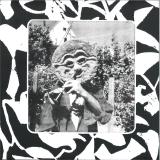
Barcelona-based Rob Clouth returns to Leisure System with the Deep Field 12', a stomping showcase of his focused sound design and knack for memorable melodies with additional remixes from Kowton and Vessels.
Deep Field is Clouth's Leisure System follow-up to the Clockwork Atom EP, which was named one of the top EPs of 2014 by Bleep and introduced his electronic wizard by to a wider audience following prior releases as Vaetxh and under his own name. Debuted on Max Cooper's Boiler Room and appearing again on his Essential Mix, 'Deep Field' is tactile and threatening, with disorienting glitches weaved into the 4/4 structure. The belching low-end brings to mind a talkative machine that's been muzzled, eager to burst from its restraints.Livity Sound boss Kowton inverts the original into a gelatinous mass, adding jackhammering drums to the cloudy atmosphere and creating a spacious and stuttering lesson in tension and release. Fresh off the release of their LP Dilate, Leeds band Vessels put their own euphoric electronic magic to work with a housier take, drawing out Clouth's propulsive percussion with an added dose of lush melodicism that
should make it a new favorite for house DJs looking for a spirited twist on the typical. Deep Field is the third in Leisure System's new GRIDLOCK series, melding the freaky and functional
for modern dance floors.
Buscar:dr m bee
- A1: Black Feat Caitlin
- A2: Around Feat Hayze
- A3: Let It Go Feat Caitlin
- B1: Real Feat Symbol
- B2: Found Out Feat Richard Davis
- B3: Time Feat Hrrsn
- C1: Explode Feat Chris James
- C2: In A Vacuum Feat Richard Davis
- C3: My Fault Feat Hrrsn
- D1: Angel Feat Hayze
- D2: Glass Feat Symbol
- D3: Out Of Control Feat Cari Golden
2x12" Vinyl + full cover artwork
One of the world's most in demand DJs and producers, Noir has been responsible for some of the most poignant - as well as explosive moments in clubland's recent history. Arguably best known for his huge dancefloor bomb 'Around', Noir now drops his debut studio album, a project that has been nearly half a decade in the making.'Around', a sexy, synthesizer-tinted groove featuring vocalist Hayze dominated dancefloors across the world for close to two years, making Noir a household name across clubland. And it's still as popular as ever - the Solomon Vox remix of 'Around' has amassed more than 12 million views on YouTube.
As well as 'Around', Noir includes further club hits 'Around feat. Hayze', 'My Fault feat. HRRSN' and current single 'Black feat. Caitlin', evidencing Noir's desire to work with a variety of vocalists to create something far 7 weightier than simply a collection of club tracks. Noir is about telling stories, boating 12 completely unique productions that chart the artist's evolution over the course of his expansive career. With many of its cuts moving away from the strict four-to-the-floor parameters of house music production, the horizons of Noir stretch way beyond the dancefloor. Taking cues from a range of artists from Depeche Mode to Kraftwerk, and Massive Attack to Timbaland - all of whom have heavily influenced Noir's aesthetic - Noir is an emotionally charged and
utterly engrossing body of work. Says Noir of working on the album: 'The album has been in the making since I started working on 'Around' back in 2010, so for me it's a body of work that spans nearly 5 years, with changes to productions, melodies and moods before I was happy with the final tracks. 'What you hear on the album is the culmination of all the music and influences I grew up and have lived with over the years: it is absolutely my identity and honestly represents my musical passions. Unlike many 'dance' albums that are little more than a collection of thrown-together club tracks, Noir combines tirelessly creative songwriting with multi-faceted production that reveals fresh delights with every listen: a timeless release from a truly singular artist.
Having been a fan of Reelow for, well, as long as we care to remember, we are really proud to present you his new outstanding EP on Cellaa Music. Now residing on Ibiza, Reelow has enjoyed yet another successful year. With the talent taking a back seat, its the music hogging the spotlight and rightly so. Two new Tracks and two massive Remixes that look to the past whilst sitting firmly in the present.
- Leave Me Alone' riding on massive percussion and a tough house beat, with this tough Drums and drunken, wubby Sounds it is running right through its core. Plenty of sonic details flesh out the languorous but slightly groove and you'd imagine this Track is to be the sort of many Artits will love.
- Your Crowd' is again about little tiny details and how they evolve with time. This one take you on a voyage of natural rhythms and big Drums. Developing from harmonic FX Sounds and a infectious groove, the track is full of surprises as it twists and turns into different sounds that come and go to take it further than the dancefloor.
The first of the remixes comes from the in form, Massimo Cassini. He team up with a hypnotic rework of - Leave Me Alone' that demonstrates just why he is one to keep a close eye on as he gears up on the production front. Massimo is delivering a muscular house bomb, carefully placed FXs and a nice and catchy line to make this a dancefloor mover.
Next we have Cellaa Music Co Founder Martin Heyder providing a soulful tech house surrogate to the original of - Your Crowd'. His remix has a deeper houseier twist with a smooth 303 pad sound and a concrete percussive arrangement to convey a fantastic production.
We'll meet you on the Dance Floor!!!
After the success of the first A-sides compilation in 2012, Adam Beyer has decided its time to release another. With Adam's stature steadily growing as one of the leading talents in the Techno scene and the rise of Drumcode, the standard of demo's that have been sent to Adam have been top notch. Adam has now decided to release two compilations with 10 tracks each, consisting of tracks that Adam has tried and tested.
There are also new artists that have been invited to release on Drumcode for this compilation and others who are a staple in Drumcode's core family. Combining both old and new talents Drumcode have come up with something unique and distinctive to make this two-part compilation something extra special.
After the success of the first A-sides compilation in 2012, Adam Beyer has decided its time to release another. With Adam's stature steadily growing as one of the leading talents in the Techno scene and the rise of Drumcode, the standard of demo's that have been sent to Adam have been top notch.
Adam has now decided to release two compilations with 10 tracks each, consisting of tracks that Adam has tried and tested. There are also new artists that have been invited to release on Drumcode for this compilation and others who are a staple in Drumcode's core family.
Combining both old and new talents Drumcode have come up with something unique and distinctive to make this two-part compilation something extra special.
Cellaa Music are very happy to welcome our great friend Marc Faenger and Label Head Sven Jaeger back to the fold. This one - obviously called B2B Volume 1 features two artists, two universes, two different ways to approach the music theory to form a B2B Cellaa relationship.
Young, skilled and supremely talented, Marc Faenger, is an artist set for great things on the international scene. Marc´s - Nip' contains an infectious groove an elegant labyrinth of percussive dub textures and sinusoidal tones and fast shuffling hats. Deep, fresh and seductively satisfying, this tune was designed for the discerning dancefloor.
Sven Jaeger returns to Cellaa Music with his second release for his label. - Get The Fuck' is a track that immediately commands attention with it's rolling, rich bassline surrounded by punchy, organic drums that delivers a soothing atmosphere. The track is really powerful and works really well on all dance-floors. People love it!'
The first of the remixes comes from the in form, Reelow. His releases have been huge hits, ruling the DJ charts. Here he strips the oringinal of Marc Faenger to it's essential parts. The super dry kickdrum and percussion in combination with the deep subs together create Reelow´s own techno vision.
Next we have Dan Noel providing a soulful tech house surrogate to the original of Mr. Jaeger. His remix has a deeper twist with glittering sounds and a concrete percussive arrangement to convey a fantastic Remix.
The first taste from Joseph Capriati's 'Self Portrait' has landed, as Drumcode drop a double shot from techno's heir apparent hugely anticipated second album. The tracks 'Fratello' and 'Awake', have been highlights of Capriati's sets in recent months, punctuating performances at landmark gigs such as his main room closing set at the internationally respected Time Warp Festival in Germany and maiden coast-to-coast tour of the US.
'Awake' was born out of Joseph's longstanding love affair with Holland's famous Awakenings parties and is a homage to the fanatical fans who turn out en masse at each event. Tense, atmospheric and relentless, 'Awake' captures the feeling of a momentary release of energy that is such a part of the high-octane Awakenings experience.
'Fratello' has achieved anthem status since it debuted in Capriati's sets last September, such is the reaction it has garnered from fans. A work of rare beauty, this is techno at its most emotive, as hypnotic melody is laced with intricate key patterns, while the Italian's trademark shaking percussion propel the track forward.u
Als Compilation-Reihe im Jahre 2001 gegründet um ein paar lose Fäden unserer Stammkünstler zu verknüpfen, hat sich SPEICHER inzwischen zu einem Garanten für fortgeschrittene Tanzklänge aus aller Welt weiterentwickelt, der es KOMPAKT erlaubt Musiker aus allen Bereichen des elektronischen Spektrums einzuladen und zu fördern. Für SPEICHER 73 haben sich Hollands Synth-Epiker QUINCE sowie der in Berlin lebende Techno- und Modekünstler TOM PETERS hinters Mischpult begeben, um in zwei meisterhaft auskomponierten Tracks der Suche nach dem Horizont zu frönen.
Weltweit von DJs zum Einsatz gebracht, sind QUINCE's Techno-Etüden ein bekannter Klang im elektronischen Kosmos, dank starker Releases auf respektierten Labels wie etwa DELSIN oder MUSIC MAN RECORDS. Seine Produktionen beeindrucken generell mit ihrer profunden Kenntnis der großen Skylines, doch irrt der holländische Meister hier ein wenig ab von seinem Kurs durch 4/4-Welten und verliert sich stattdessen in den weitläufigen Kellerkorridoren des wolhltemperierten Schaffelbeats. LOST baumelt fast acht Minuten lang von der Klippe und gibt sich ganz als kubistisches Märchen vom einsamen Helden im dunklen Wald: in Erwartung einer zu errettenden Prinzessin bahnte der sich einen abenteuerlichen Weg durchs Unterholz und berichtet nun von unermeßlichen Schätzen und Momenten großen Glücks. Schon massiv gut, wenn sich die eigene, jahrelange Live-Erfahrung so anstandslos in perfekte DJ-Munition ummünzen last.
Zwei Stunden nördlich von Berlin liegt Kartlows kleiner Ortsteil Unnode, wo der ansonsten eher umtriebig veranlagte TOM PETERS wohlverdiente Ruhe in den Alltag eines DJs, Produzenten und angehenden Modezaren einkehren last. Hier, in inspirierender Nähe zur Ostsee, entwirft er die Skizzen für die meisten Tracks; so auch für TAKE YOUR CHANCE, dessen Silhouette sich deutlich geprägt sieht von der Weite der lokalen Natur. Toms Produktionen weisen alle Anzeichen transzendentaler Melancholie auf, verfehlen jedoch nie das urbane Momentum: sein Beitrag für SPEICHER 73 präsentiert eine simple, doch weitläufige Melodie, deren Haar vom Beat elegant zurückgebunden wurde, Futter für die Beine und die Seele. Ganz wie die handgedruckten Botschaften seiner eigenen Modeserie SAVE FASHION, vermag nämlich auch Toms Musik auf dem dünnen Seil zwischen dem Einfachen und dem Mehrdeutigen zu balancieren... dream on, dreamer.
Historia y Violencia proudly presents Raiz's "Curandero" EP.
Coming from the notorious L.A. promoters/multi-media group Droid Behavior, Vangelis and Vidal Vargas are no strangers to Techno. These brothers have been shaping and molding L.A. dance floors since the early 2000's. Formerly known as Acid Circus, they started to record as Raíz in 2010 for their first release on Historia y Violencia.
Here, the brothers dive deep into the realm of music and structure, with two moving tracks that defy their live performances. Curandero builds up through out the track with every bit of 909 drum and just enough fx's to keep you focused on your 1-2 step. With Sabio, Raíz dives deep using the classic Convextion formula to hypnotize the audience in their style. Both tracks tell a story of what Raiz is about and what part they hold in L.A. Techno History.
The Spinning Plates imprint returns this October with Club Winston’s ‘Guzzle’ EP, comprised of four gritty club workouts from the London artist.
The UK’s Club Winston has been steadily unveiling a series of tripped-out club ready cuts via his own UKGEORGE label over the past few years along with remixes from the likes of D.Tiffany and Tim Reaper. Here though we see him join the roster of Spinning Plates with his latest collection of works, an imprint that’s played host to material from the likes of SHKN, Neksha, Andy Rantzen, DJ Spider and Bruno Schmidt since its inception in 2015.
Title-track ‘Guzzle’ leads, laid out across five minutes with a menacing arpeggio bass lead, howling atmospherics and crunchy analogue drums. ‘Hell’ follows and tips the focus over to heavy doses of sub bass, intricately dynamic, modulating drums and intense swells of processed synths throughout.
Opening the flip-side is ‘Chart’, upping the energy levels with a pacey 4/4 drum groove while twitchy resonant synth lines, low-end pulsations and cavernous reverberations ebb and flow throughout. ‘Partook’ then rounds out the release, a cinematic ambient composition which lays focus on swirling, textural pads, glitched out resonant bleeps and fluttering low end hits.
Tripmode made a superb start to life with its first EP and is now back with more goodness, this time from family member Daniele Temperilli. We're told he is inspired by 'love, freedom and matured childishness' and he brings some big bass and bouncy minimal house to this 12". 'Beatback Haze' is tight and clipped in its tech funk, then 'Peace What?!' Brings more low-swinging drums and a prying bassline topped with big hits and warped pads. 'BeesTreb' taps into a darker vibe with gritty drum textures and more rapping, farting bass that's perfect for a darkened room. Last of all is 'Pachyderm', which bounces and swings, with macho drums but a sense of lithe energy that keeps you on your toes.
After a six-year hiatus, Efdemin returns with POLY — his fifth studio album, released on the recently revived Berghain-affiliated label, Ostgut Ton.
As the title suggests, POLY explores multiplicity: of rhythm, texture, style, and emotion. Across eleven meticulously sculpted textures, the album weaves a multidimensional web of sonic references, nodding to the origins of techno while pushing resolutely into uncharted terrain. POLY feels like an afterglow—of decades on the dancefloor, of restless sonic exploration, and of a profound connection to the spaces and communities that have shaped Efdemin’s sound.
Over the course of 60 minutes we are taken through different territories and landscapes of sound. Mysterious and swirling, abstract and droning textures over at times fast and stoic rhythmic concepts. Sometimes the sunlight breaks into the opaque and mysterious soundscapes before the pulse is taken over and sucks us back straight into the club.
The overall tone of POLY is mild and playful, introvert and at times dreamy. The music is rich in sonic expression and breathes the spirit of musical concepts that have been refined over the course of decades. What Sollmann has condensed here feels like a culmination of his multilayered and polyphonic personality situated between Club, Museum, Studio and Academy.
The album cover features a striking photograph of a human ear by renowned German artist Isa Genzken. Known for her radical visual language, Genzken’s work here functions as a metaphor for deep listening. The ear symbolises the layered complexity and immersive quality of the music on POLY — an invitation to perceive sound in all its depth, fragility, and force and unlock it’s potential to unite different voices in a distorted reality.
Nach einer sechsjährigen Pause kehrt Efdemin mit POLY zurück – seinem fünften Studioalbum, das auf dem kürzlich wiederbelebten Label Ostgut Ton, dem in-house Label des Berghain erscheint.
Wie der Titel vermuten lässt, beschäftigt sich POLY mit Vielfältigkeit: von Rhythmus,Textur, Style und Emotionen. In elf Stücken webt das Album ein multidimensionales Netz aus klanglichen Referenzen, das auf zurückliegende Ansätze der Klubmusik verweist und gleichzeitig entschlossen in neues Terrain vordringt.
POLY wirkt wie ein Nachglühen – von Jahrzehnten auf der Tanzfläche, von unermüdlicher klanglicher Erkundung und von einer tiefen Verbindung zu den Räumen und Communities, die Efdemins Sound geprägt haben. Im Laufe von 60 Minuten werden die Hörer*innen durch verschiedene Territorien und Klanglandschaften geführt. Mysteriöse und wirbelnde, abstrakte und dröhnende Texturen über teilweise schnellen und stoischen rhythmischen Konzepten. Manchmal bricht das Sonnenlicht in die undurchsichtigen und geheimnisvollen Klanglandschaften ein, bevor der Puls wieder die Oberhand gewinnt und uns direkt zurück in den Klub saugt.
Der Gesamteindruck von POLY ist mild und verspielt, introvertiert und manchmal verträumt. Die Musik ist reich an klanglichem Ausdruck und atmet den Geist musikalischer Konzepte, die im Laufe von Jahrzehnten verfeinert wurden. Was Sollmann hier verdichtet hat, fühlt sich wie eine Kulmination seiner vielschichtigen und polyphonen Identität an, die sich zwischen Klub, Museum, Studio und Akademie bewegt.
Das Albumcover ziert die Nahaufnahme eines menschlichen Ohrs der renommierten deutschen Künstlerin Isa Genzken. Genzken´s Arbeit wirkt hier als Metapher für deep listening. Das Ohr symbolisiert die vielschichtige Komplexität und immersive Qualität der Musik auf POLY – eine Einladung, Klang in seiner ganzen Tiefe, Zerbrechlichkeit und Kraft wahrzunehmen und sein Potenzial zu erschließen, widerstreitende Stimmen in einer verzerrten Realität zu vereinen.
"I think I have never met anybody, with the exception of Brazilian guitarists Baden Powell and Toquinho, as connected to his instrument as Agustín Pereyra Lucena" – Vinicius de Moraes
Far Out continues its exploration into the singular catalogue of Argentine guitarist and songwriter Agustin Pereyra Lucena with a special Record Store Day edition of his most celebrated album Ese Dia Va A Llegar.
Agustín Pereyra Lucena was one of South America’s outstanding guitarists. Hailing from Buenos Aires but obsessed with the music of neighbouring Brazil, Agustin abandoned his architecture studies to pursue music full-time, earning friendship and collaborations with Brazilian music's greatest figures including Vinicius de Moraes, Baden Powell, Toquinho, Dorival Caymmi, Maria Bethania and Chico Buarque.
Originally released in 1975, the album has been better known in some parts of the world as Brasiliana – a title repurposed by Agustín's European record label in the 70s to exoticize the sounds of South America for the continental market. It finds Agustin and band—which includes key collaborators Guillermo Reuter on contrabass, and Carlos Carli on drums and percussion— at their most blissfully laid back. The album features idiosyncratic renditions of classics by Antonio Carlos Jobim, Vinicius de Moraes, João Donato and Agustin’s personal hero and friend Baden Powell, alongside Agustín's own works which ooze with captivating mystical wonder.
The analog warmth of the recording is such that it feels like you’re there in mid-seventies Buenos Aires, on a balmy late night session at Estudios Audión, with a group of phenomenally impressive musicians. The heat generated is offset only by the cool temperament of everyone involved. On the handful of vocal tracks on the album, Agustin’s gentle voice is responded to by the liquid smooth vocals of Laura Hatton, Luis Maria Cosenza and Patricia Scheuer.
Agustin’s unique position in the annals of his continent’s musical history has been lovingly maintained by Agustin’s nephew Jose Luis Pereyra Lucena, who has entrusted Far Out Recordings to preserve and re-release Agustin’s works. The music has been professionally remastered at London’s Metropolis Studios, using multiple copies of well kept original vinyl.
Reissued worldwide for the first time under its original title and cover as Agustin originally intended, Ese Dia Va A Llegar will be presented in a limited edition obi-stripped gatefold replica sleeve.
- Profondo Rosso
- Death Dies
- Roller
- Chi? - Parte Uno
- Chi? - Parte Due
- Suspiria
- Blind Concert
- Un Ragazzo D’argento
- Opera Magnifica
- Yell
- Amo Non Amo
- Funky Top
FOLLOWING THE SUCCESS OF “THE OTHER HELL”, GOBLIN ARE BACK FOR RECORD STORE DAY 2026 WITH AN EXCLUSIVE COMPILATION OF SINGLES RELEASED BETWEEN 1975 AND 1979!
For the very first time on vinyl, this compilation gathers together all the singles released by Goblin during their golden era between 1975 and 1979, a journey that begins with the explosive, legendary debut Profondo Rosso, a true chart phenomenon of its time, and reaches the rare Amo Non Amo, passing through unforgettable milestones of Italian film music and progressive rock.
The collection opens with Profondo Rosso and Death Dies, taken from the soundtrack of Dario Argento’s masterpiece that catapulted Goblin to fame, blending dark atmospheres, virtuosity, and a unique sense of cinematic tension. It continues with Roller and Snip Snap, drawn from the instrumental album Roller (1976), a record not tied to any film, yet considered a cult cornerstone of Italian progressive music for its intricate structures and expressive power.
Chi? and Chi? - Parte Seconda follow; two tracks originally composed as the theme for a 1976 RAI television show, which saw Goblin bring their unmistakable sound to a different medium, experimenting within a shorter, punchier format.
Next comes Suspiria with its haunting counterpart Blind Concert, from the soundtrack of Argento’s 1977 horror classic. This remains one of Goblin’s most iconic and unsettling works, where music becomes an active narrative force: hypnotic, percussive, and filled with eerie vocal layers that made it a cornerstone of horror soundtracks worldwide.
From Il Fantastico Viaggio del Bagarozzo Mark (1978) come Un Ragazzo d’Argento and Opera Magnifica, two tracks that highlight the band’s more conceptual and visionary side, a move away from cinema toward a self-contained narrative and progressive experimentation.
The single Yell stands as another late-decade gem. Originally composed as the opening theme for the RAI television series “Sette storie per non dormire” (1978), it captures Goblin’s ability to merge rock energy with electronic pulse, proving their versatility far beyond the horror realm.
The compilation closes with Amo Non Amo and Funky Top, taken from the soundtrack of the 1979 film Amo Non Amo, one of the group’s lesser-known but fascinating cinematic works.
Far more than a simple anthology, The Singles Collection 1975–1979 maps the evolution of Goblin’s sound, from the worldwide success of Profondo Rosso to their most mature and experimental phase. It finally restores to vinyl a body of work that had long been scattered across rare 45 rpm releases, offering fans and collectors a complete, vivid portrait of one of Italy’s most inventive and influential musical ensembles.
LP in Picture Sleeve
Unearthed from the band’s own archive and signed from the band, these previously unreleased demo sessions capture The Cool-Notes at the height of their Brit-soul creativity in the early ‘80s. This RSD release remasters and reissues this once super-limited release which has been selling for £300. This is exactly the kind of find collectors dream about — unreleased UK soul gold. Remastered, 180g Heavyweight Vinyl, Reimagined Sleeve and Labels.
- 1: Driven By Death
- 2: Verrot
- 3: The Black Flame
- 4: These Wounds Never Healed
- 5: She Carries The Curse
- 6: Devils Stone
- 7: Vlaamse Vloek
Violet Vinyl[26,01 €]
Uncompromising Dutch Black Metal – DOODSWENS’ sophomore album out in April via Svart Records Doodswens is a Dutch Black Metal band formed in 2017 by I. Live she performs the drums and vocals, joined by R. & P. on bass and guitar. Doodswens translates to Deathwish, but the meaning and heavy load to the word in Dutch translates better to Driven by Death. The self-titled sophomore album by Doodswens is out on April 17th 2026.
After establishing themselves in the Dutch scene, Doodswens gained an international following doing tours with Marduk & Gorgoroth. Doodswens’ performances are ceremonial and ritualistic, which have been reported to be as uplifting as they are devastating, depending on the demons you bring them to offer. Whatever you carry with you will be exposed. They like to confront instead of bringing comfort. If you've been on the verge of ending your life, or think about it more often than not, then you're living with a death wish. A heavy feeling, like a gray cloud hovering around you, gasping for breath and blurring your vision. This is incomprehensible to anyone. Except for those caught in the middle of it. But this album isn't about giving up. It's about finding strength, about someone who regains new energy after facing death.
This album isn't about wishing for death, but the death of the wish. Band’s establisher I. talks about the new single "Driven by Death": “For me, it was on the way back from a spontaneous adventure, full of music, new connections, and inspiration. A path without a plan and a journey without a goal, with only a very strong feeling that this is where I'm meant to be. With a misty horizon of endless asphalt before me. A large tree at the edge of the road, in the corner of my eye, screaming that this could just be the end. But what I felt wasn't fear, it was happiness. With the thought that if I crash into that tree now, I won't care at all. Because up until this moment, I've done everything possible, experienced every adventure, and each time, gotten up again and faced life with that gray cloud around my head. I have a death wish, so if it happens now, it's okay, and I'm at peace with it. This was the moment I realized, I'm not afraid of life. I'm driven by death.”
- 1: Driven By Death
- 2: Verrot
- 3: The Black Flame
- 4: These Wounds Never Healed
- 5: She Carries The Curse
- 6: Devils Stone
- 7: Vlaamse Vloek
Black Vinyl[25,17 €]
Uncompromising Dutch Black Metal – DOODSWENS’ sophomore album out in April via Svart Records Doodswens is a Dutch Black Metal band formed in 2017 by I. Live she performs the drums and vocals, joined by R. & P. on bass and guitar. Doodswens translates to Deathwish, but the meaning and heavy load to the word in Dutch translates better to Driven by Death. The self-titled sophomore album by Doodswens is out on April 17th 2026.
After establishing themselves in the Dutch scene, Doodswens gained an international following doing tours with Marduk & Gorgoroth. Doodswens’ performances are ceremonial and ritualistic, which have been reported to be as uplifting as they are devastating, depending on the demons you bring them to offer. Whatever you carry with you will be exposed. They like to confront instead of bringing comfort. If you've been on the verge of ending your life, or think about it more often than not, then you're living with a death wish. A heavy feeling, like a gray cloud hovering around you, gasping for breath and blurring your vision. This is incomprehensible to anyone.
Except for those caught in the middle of it. But this album isn't about giving up. It's about finding strength, about someone who regains new energy after facing death. This album isn't about wishing for death, but the death of the wish. Band’s establisher I. talks about the new single "Driven by Death": “For me, it was on the way back from a spontaneous adventure, full of music, new connections, and inspiration. A path without a plan and a journey without a goal, with only a very strong feeling that this is where I'm meant to be. With a misty horizon of endless asphalt before me. A large tree at the edge of the road, in the corner of my eye, screaming that this could just be the end. But what I felt wasn't fear, it was happiness. With the thought that if I crash into that tree now, I won't care at all. Because up until this moment, I've done everything possible, experienced every adventure, and each time, gotten up again and faced life with that gray cloud around my head. I have a death wish, so if it happens now, it's okay, and I'm at peace with it. This was the moment I realized, I'm not afraid of life. I'm driven by death.”
Even in these most turbulent of times, dub musician and fatigued onlooker Elijah Minnelli remains an inexplicable stalwart on the lower rungs of the Breadminster County Council.
His latest record ‘Clams As A Main Meal’ continues his astute siphoning of council funds, this time with help from the Breadminster Board of Abstinence. As a further mark of respect, the original head of the Board, Dr. K'houldoux, graces the cover art in his infamous ‘Looming Moon of Desire’ guise.*
As fine a backdrop as any for Minneli’s off-brand dub experiments, and ‘Clams...’ is the truest representation of his varied wheelhouse yet...
We find vocal appearances from dub goliath Dennis Bovell and Welsh-language singer Carwyn Ellis. A pair of tracks which build on 2024’s acclaimed ‘Perpetual Musket’, a collection of folk songs reworked alongside reggae vocalists, released by FatCat Records. It garnered glowing reviews, with nods from The Guardian and The Quietus concluding with prominent appearances on their respective yearly round-up lists.
Elsewhere, the album finds Minnelli in a more experimental mode, all wheezing contraptions and cockeyed bass, creaking with the weight of creation, a satisfying tactility laid seam-side up.
As well as ‘Perpetual Musket’, the new album follows years of sold out 7" singles, handmade and self-released. Online, the tracks have amassed global streams numbering in the millions. His tracks have found play across an eclectic range of radio mixes and dance floors, most notably the likes of Andrew Weatherall, Batu, Optimo and Zakia Sewell (BBC6Music).
It is perhaps worth mentioning that this everbuilding interest in his work is at great odds with the growing suspicions amongst his fellow townsfolk, who see his Breadminster County Council Music Initiative as nothing more than an empty cash-grab.
Further Reading on the Breadminster Board of Abstinence
In the late 70s, Breadminster was awash with the last vestiges of the hippy era. Though the flared silhouette of the lower leg remained, the utopian ideals that had once flowed merrily around the youth's shaded ankles had begun to wane. LSD and free love had led to a sharp spike in population and a generation of children raised by air-headed psychonauts unprepared for the bleary-eyed strictures of parenthood.
Aware of the crisis, the County Council entrusted Dr. Paulinque K'houldoux to spearhead a pushback, and it was his pro-abstinence movement - a mixture of education initiatives and radical renutrition campaigns - that came to impact Breadminster's census deep into the new millennium.
Being a pseudo-archipelago Breadminster has fundamentally limited resources, however deep-seated ties to distant coastal villages meant that oysters were a regular part of the local diet. K'houldoux pinpointed this as a factor in the town's overpopulation, and believed that simply replacing these with clams (a “lesser mollusk”) would help lower the erotic urges of the people. It was his “anti-aphrodesia” movement that first championed the idea of “Clams As A Main Meal,” and the slogan “Consider Abstinence” carried the message yet further.
The Breadminster Board of Abstinence soon became involved in all cultural happenings in the area, with K'houldoux MCing at prominent festivals and performances, sometimes dressed as the “Looming Moon of Desire” - an idea of his relating to the tide, seafood, menstrual cycles, and his privately held celestial predilections.
It was in 1981 that it was revealed Dr. K'houldoux had never fully qualified as a doctor and was seeking exile in Breadminster due to a series of botched bracelet heists in which he had previously been involved. K'houldoux was subsequently extradited to Basingstoke, where he served 3 of a 12-year sentence, owing to the lunar-oriented prisoner health campaigns he helped implement.
It has been a strange twist of bureaucratic fate that the Breadminster Board of Abstinence has never stopped receiving public funding, despite its lack of clear utility. And while its roots are tied to a rose-tinted past, the Board continues to sponsor cultural events and projects to this day.
An extract from: Eugeniq Schooner's article in Sydney Parishioner: “Clams, Breadminster and Countercultural Abstinence Trends” (2008)
- A1: Les Masques - Il Faut Tenir (1969)
- A2: Isabelle Aubret - Casa Forte (1971)
- A3: Christianne Legrand - Hlm Et Ciné Roman (1972)
- A4: Jean Constantin - Pas Tant D'chichi Ponpon (1972)
- A5: Billy Nencioli & Baden Powell - Si Rien Ne Va (1969)
- B1-: Marpessa Dawn - Le Petit Cuica (1963)
- B2: Jean-Pierre Sabar - Vai Vai (1974)
- B3: Sophia Loren - De Jour En Jour (1963)
- B4: Isabelle - Jusqu’à La Tombée Du Jour (1969)
- B5: Sylvia Fels - Corto Maltesse (1974)
- C1: Frank Gérard - Comme Une Samba (1972)
- C2: Ann Sorel - La Poupée Des Favellas (1971)
- C3: Charles Level - Un Enfant Café Au Lait (1971)
- C4: Andrea Parisy - Les Mains Qui Font Du Bien (1970)
- C5: Audrey Arno - Quand Jean-Paul Rentrera (1969)
- C6: Aldo Frank - T’as Vu Ce Printemps (1970)
- D1: Christianne Legrand - Cent Mille Poissons Dans Ton Filet (1972)
- D2: Clarinha - Lemenja (1970)
- D3: Hit Parade Des Enfants - Aquarela (1976)
- D4: Jean-Pierre Lang - Tendresse (1965)
- D5: Magalie Noël - Une Énorme Samba (1970)
- D6: Françoise Legrand - La Lune
Ever since the late 1950s bossa-nova revolution, Brazil’s influence on French music has been undeniable. Pierre Barouh, Georges Moustaki and a vast array of lesser known artists, all made the Musica Popular Brasileira (MPB) an axis of promotion at the service of a cool and metaphysical, modern and mixed Brazilian lifestyle. Some were seduced by the poetic languors of the bossa, some were looking for fun, and others just loved the American hybridization of jazz-bossa, jazz-samba.
What is bossa nova? One of its creators, Joao Gilberto said: "Its style, cadence, everything is samba. At the very start, we didn't call it bossa nova, we sang a little samba made up of a single note - Samba de uma nota so .... The discussion around the origins of bossa nova is therefore useless”. It is nevertheless useful to remember that these magnificent Brazilian songs, which the guitarist describes as samba, were shifted and balanced around improbable chords. "I like things that lean, the in-betweens that limp with grace," said Pierre Barrouh, quoting Jean Cocteau.
With emotion, arrangements for violin and supple guitar licks, bossa nova rapidly changed. A transformation that can be heard in the Tchic, tchic, French Bossa Nova 1963-1974 compilation, the result of a cultural reappropriation, which traveled through the United States and supplemented itself in France.
A musical revolution that has remained significant, bossa nova was born in Rio. From 1956 to 1961, Brazil lived through its golden years. In five years, the country had invented its modernist style. Elected president in 1956, Juscelino Kubitschek de Oliveira, an elegant man with a broad forehead, brandished a promising slogan: "Fifty years of progress in five years". He quickly got to work. Not worried about increasing debt, he launched the project for a new federal capital, Brasilia, designed by the communist architect Oscar Niemeyer. Volkswagen opened state-of-the-art factories and created the “fusquinha”, the Beetle. In Rio, the Vespa made its first appearance. The Arpoador Surf Club crew run into the “girl” from Ipanema, Helô Pinheiro - the tanned garota ("chick"), between a flower and mermaid, who at 17 walked by the Veloso bar, where the fiery author and composer, Tom Jobim and Vinicius de Moraes, were getting drunk on whiskey. From then on, bossa symbolized cool.
In 1958, Joao Gilberto recorded Chega de Saudade, which the directors of Philips denied, calling it "music for fagots". The marketing director, who believed in it, secretly pressed 3000 78-inch vinyls and distributed them at schools around Rio, creating a tidal wave.
American jazzmen then took over. In particular, trumpeter Dizzy Gillespie and guitarist Charlie Byrd. In November 1962, the Brazilian Ministry of Foreign Affairs funded a "Bossa-Nova" concert at Carnegie Hall in New York, inviting the genre’s pioneers. Unprepared, the show soon turned to disaster. But the troupe was invited to the White House by Jackie Kennedy. The first lady loved "the new beat" and in particular Maria Ninguem, a song by Carlos Lyra, later covered by Brigitte Bardot.
In Brazil, the 1964 military coup quickly ended this euphoria. The destructive atmosphere that ensued pushed many Brazilian musicians to leave, if not to exile. Thus, Tom Jobim, Sergio Mendes and Joao Gilberto arrived to the United States. In New York, Joao Gilberto met saxophonist Stan Getz. At the time, he was married to the Bahianese Astrud Weinert Gilberto, who had a German father. She had never sung before, but she knew how to speak English. Getz therefore asked her to replace her husband on The Girl From Ipanema. The Getz/Gilberto record with Tom Jobim on piano, was released in March 1964. Phil Ramone, the "pope of pop" was in charge of sound.
Bossa nova arrived in Paris through the classic “guitar-voice” channel (Pierre Barouh, Baden Powell, Moustaki…) But France loved jazz and Paris had already welcomed its American contributors. All these good people were to pass through Saint-Germain-des-Prés. The cabaret l'Escale became the Mecca of Latin American sound where one could find Pierre Barrouh and his friends, such as the Camara Trio, samba-jazz aces, whose only record was published by the Saravah label. With a band strangely called Les Masques (a band that included Nicole Croisille and Pierre Vassiliu, among others), the Camara Trio recorded an interesting Brazilian Sound, including the track Il faut tenir which is present on this tasty compilation of rarities.
Other enlightened musicians can also be found on the compilation, such as Jean-Pierre Sabar (songwriter for Hardy, Auffray, Leforestier ...) and the French pop rock organist Balthazar. In 1975, Sabar recorded Aurinkoinen Musiikkimatka on a Finnish label, which featured the crazy Vai, Vai, included on this record. We are now following the footsteps of Brazilian electronic musicians such as Sergio Mendes, Eumir Deodato or Marcos Valle who created funk and disco sounds on their keyboards and synthesizers. A style that influenced Véronique Sanson when she wrote Jusqu’à la Tombée de la nuit in 1969 for Isabelle de Funès, the niece of Louis and a great friend of Michel Berger - Sanson did end up singing this track on her 1992 Sans Regret record.
The pinnacle of exoticism and travel, Sylvia Fels’ Corto Maltese includes bongos, sea mist and ocean sounds. The title was taken from Jacky Chalard’s concept album written in 1974, Je suis vivant, mais j’ai peur (I am alive, but I am scared), based on Gilbert Deflez’s science fiction novel.
However, bossa nova extended the scope of popularity. "In the 1970s, I was a fan of Sergio Mendes, Getz / Gilberto. I fell in love with this music that I knew because I had been an orchestral singer, " explained Isabelle Aubret, who in 1971 delivered a composite record of covers by the very funky Jorge Ben, Orfeu Negro, Tom Jobim, Vinicius de Morais and Jean Ferrat. "I recorded this album for Meys Records in Paris, far from Brazil, with wonderful musicians, François Raubert, Roland Vincent, Alain Goraguer...". The latter wrote the arrangements for Casa Forte, a very percussive title borrowed from Edu Lobo, one of the initiators of the bossa who spent time in California. "Jazz and bossa came together and produced very rhythmic music. I love singing, it allows me to dream, to have fun, to feel a high on stage, and these songs brought me joy, made me swing, my singing felt like a dance.”
The world tours of French singers and their desire for the tropics, often brought them to Rio with its hills, forests, caipirinhas and tanned bodies. There are surprises though, like this Iemenja (Iemenja is the goddess of the sea in the Afro-Brazilian candomblé religion). Not unlike the composer and musician Jean-Pierre Lang, based in Sao Paulo, Claire Chevalier taught Brazil to Brazil. In 1970, the singer and painter published a 45-inch vinyl, Mon mari et mes amants (My husband and my lovers), under the improbable pseudonym of Clarinha (little Claire). She was then living in Rio, with her husband, Joël Leibovitz, who founded a band called Azimuth, and who owned a record label specialized in "sambas enredos" songs for samba school parades.
For its B side, she asked Pierre Perret to come up with lyrics for a song composed by Carlos Imperial: "Oh goddess of the sea, o goddess Iemenja, I bring a white rose to adorn your long hair ..." . "Perret came to see us, and we had fun, remembers Joël Leibovitz. We wrote Lemenja for fun, we recorded it at the Havaí studio, behind the Central do Brasil the central station. Erlon Chaves, the arranger who worked with Elis Regina, joined us" adding his share of Afro-Brazilian percussions and funky brass to the mix.
There is a common misunderstanding in Franco-Brazilian history: that bossa, admittedly hedonistic, is perceived as funny, even though the poets who wrote the texts are often philosophizing on the human condition. Its French interpreters pull it towards a carnival inspired universe, far removed from its fundamental essence. Thus, Jean Constantin covered the famous Samba da minha terra, an ode to the art of samba written by the classic Bahian composer Dorival Caymmi, renaming it with the enticing title of Pas tant de tchi tchi pompon: "On your pier there is no tchi tchi / when you arch your back, you know everything is alright ”(lyrics by Gérard Calvi). This expedited bossa aims for the absurd, but retains a certain elegance.
Indeed, Jean Constantin was not an idiot, the rather large man had a huge mustache and liked fantasy, (Les pantoufles à papa, Le pacha, inspired by cha-cha-cha-cha, salsa and jazz) but he was also the lyricist of Mon manège à moi interpreted by Edith Piaf, the composer of Mon Truc en plume by Zizi Jeanmaire and the soundtrack of François Truffaut’s 400 Blows. Le Poulpe, published in 1970, from which this bossa is extract, was arranged by Jean-Claude Vannier, an accomplice of Serge Gainsbourg’s Melody Nelson. In short: "There is enough of samba / By looking at the parasol / Because my poor cabeza / Is going to die in the sun".
Even the American actress Marpessa Down, who was at the heart of the bossa nova revolution with her role as Euridyce in Marcel Camus’ film Orfeu Negro, winner of the 1959 Cannes Palme d'or, fed the clichée with Je voudrais parler au petit cuica - "Tell me how you manage to always make people want to dance / It's true, I must admit that I cannot resist your magic" - in consequence, once can hear the cuica, a little drum inherited from the Bantu.
But bossa nova had many angles. Societal, of course, pushing actresses who were symbols of women's liberation like Brigitte Bardot, Jeanne Moreau, or Sophia Loren to engage in the exercise of accelerated bossa. In February of 1963, Sophia Loren made a record in French in Rome, Je ne t'aime plus, featuring the song De jour en jour, a bossa written by two Italians, Armando Trovajoli and Tino Fornai, which was released a little later by Barclay. Bossa accompanied the 1960s, a decade of moral liberation. Ann Sorel, who interpreted La Poupée des favellas, caused a sensation with L’amour à plusieurs, a provocative song written by Frédéric Bottom and Jean-Claude Vannier. As for the actress Andrea Parisy, she displayed her bourgeois cheekiness in Marcel Carné's Les Tricheurs before interpreting Les mains qui font du bien. And Magalie Noël, the friend of Boris Vian, who sung Johnny fais-moi mal, was hired to sing Une énorme Samba, composed by Alain Goraguer (arranger to Gainsbourg, Bobby Lapointe and Jean Ferrat) with lyrics by Frédéric Botton.
But in the end, of what wood is bossa nova made of? The answer is given by Christianne Legrand, daughter of Raymond the conductor, and sister to Michel the composer: "With me, with jà" - jà means "immediately" in Portuguese. In 1972, the singer, an expert in vocal jazz and a member of the Double Six, published Le Brésil de Christianne Legrand. Two songs included on the Tchic Tchic compilation that demonstrate how bossa, jazz, funk, rock, etc. work like a swiss army knife: the music is used to denounce broken systems, or miracles, HLM et ciné roman, Cent mille poissons dans ton filet, two songs from the O Cafona soundtrack, a successful telenovela broadcast, at the time in black and white, on TV Globo. The first was adapted in French by the fighter and friend of the Legrand tribe, Agnès Varda. The second is content with a play on words, jostling them into a summer fun.
Véronique Mortaigne
Petter Eldh's explosive ensemble Koma Saxo continues their adventures with a new album "Koma West", out on We Jazz Records, 18 March 2022. The album sees Koma Saxo expand on their previous sound with the addition of vocalist Sofia Jernberg and a strong cast of featured artists, including cellist Lucy Railton, violinist Maria Reich, pianist Kit Downes and accordionist Kiki Eldh (Petter's mom!). The hard-hitting key quintet remains, including Eldh on bass and assorted instruments, Christian Lillinger on drums, plus saxophonists Otis Sandsjö (of Y-OTIS), Jonas Kullhammar and Mikko Innanen bringing the SAXO to the KOMA operation.
At 14 tracks, "Koma West" is a full menu of monumental compositional ideas that could spawn entire albums. True to his chop & go production style, Eldh relies on continuous movement while presenting another all killer no filler program taking Koma Saxo on a sonic outing not quite like anything that had previously appeared under the band's name. That being said, there's very much the Petter Eldh touch here, one which might be hard to pinpoint and verbalise, but nevertheless a recognisable style of composing, producing and arranging.
Thematically, the album is rooted in the West Coast of Sweden, where Eldh grew up – he's from a tiny town called Lysekil. There's a thread of Swedish folk song tradition that has been part of the Koma Saxo DNA from the get-go and you can hear that here as well, especially on cuts such as "Närhet", beautifully sung by Sofia Jernberg.
Petter Eldh says:
"In a way, it's a concept album and a celebration of the Swedish West Coast. The first single is called 'Koma Kaprifol', and kaprifol is the landscape flower of Bohuslän on the West coast, where I grew up. I'm not too wild about attaching strong narratives to my music but there's no way around it this time. The oysters, a common snack around the coast, are a strong conceptual presence here. Anyway, they seem to pop up here and there quite often already thus far in the Koma Saxo narrative, even though it's not always so obvious. Koma Vocals! Koma Strings! I love the presence of Sofia Jernberg here and I love writing string arrangements, too, although I never thought I would do it for Koma, but of course, Koma should have some strings, why not?. Koma Saxo should and can become anything."