Dave Wallace is one third of Aquasky, as well as a founding member of Mad Dog and Fugitive. He also released his own EP’s on Moving Shadow and R&S in the 90’s and more recently an EP on TeeBee’s Subtitles label as well as a return to the rave with various Fugitive tracks and remixes on Vinyl Fanatiks over the past few years.
But one track has always alluded a release, there was always something that prevented it from being released. Originally written in 1995, it wasn’t until 1996 that he sent it to LTJ Bukem who went nuts for it, advising Dave to speed it up from its original 156bpm so he could play it. Upon doing so, it was also sent to Fabio and the pair of them played it on Kiss, Radio 1 and various gigs and festivals across the world. Dave was just in discussions to release it when Dillinja made a Bladerunner track using the same samples. In light of that and how the hierarchy worked in the 90’s drum and bass scene, Dave decided to pull the release and the track went back into the DAT draw… for 26 years!
This track has been requested by many to be pressed since Vinyl Fanatiks started as it had such a huge fanbase, so many people loved the track after hearing it either back in the day or on copies of mixes uploaded in recent years to the internet. An extremely desired track! But there was never a B-side to it… until Dave stepped into his Fugitive guise and brought the track up to date with one of the baddest basslines we have released on the label.
Join us as we take you on a ride from the smooth to the ruff!
Its all an expression!
Cerca:dr m bee
- A1: Another Friday Night
- A2: Head & Heart Feat Mnek
- A3: Bed Feat Raye & David Guetta
- A4: Out Out Feat Jax Jones, Charli Xcx & Saweetie
- A5: Desire Feat Icona Pop & Rain Radio
- A6: Dance Around It Feat Caity Baser
- A7: Do U Want Me Baby? Feat Billen Ted & Elphi
- B1: 0800 Heaven Feat Nathan Dawe & Ella Henderson
- B2: Lionheart Feat Tom Grennan
- B3: History Feat Becky Hill
- B4: Sorry
- B5: Lonely
- B6: I Wish Feat Mabel
- B7: What Would You Do? Feat David Guetta & Bryson Tiller
Black[29,37 €]
On 6th October, multi BRIT-nominated DJ/producer Joel Corry releases his debut album, ‘Another Friday Night’ via Asylum / Atlantic Records, with the pre-order going live on the 18th August.
To be released on both vinyl & CD, as well as via streaming/download, ‘Another Friday Night’ is a collection of Joel’s most iconic records of the last five years, including breakthrough hit ‘Sorry’, ‘Lonely’, multi-platinum UK #1 single ‘Head & Heart’ ft. MNEK, ‘BED’ w/ RAYE & David Guetta, ‘OUT OUT’ w/ Jax Jones, Charli XCX & Saweetie, plus fresh 2023 cuts like ‘Dance Around It’ with Caity Baser and the anthemic ‘0800 HEAVEN’ with Nathan Dawe & Ella Henderson, ‘Another Friday Night’ toasts a remarkable run of releases that’s seen Joel become one of the UK’s biggest and most impactful dance acts.
“My debut album ‘Another Friday Night’ is the biggest moment of my life”, says Joel Corry. “Everything I have dreamed about and worked so hard for has come together with the release of this record. It has been an incredible journey and I am so proud to have reached this moment in my career. I want the songs to make people feel good and bring happiness to their days, and the album includes everyone’s favourite bangers from over the years, as well as some really exciting new material. This is the ultimate Joel Corry playlist, perfect for Another Friday Night.”
Ahead of the release of ‘Another Friday Night’ on October 6th, Joel has also announced a special headline show at London’s Ministry Of Sound on Friday 29th September – his first London headline date since playing at former 5000-cap venue, Printworks, in autumn 2021.
Fans who pre-order ‘Another Friday Night’ will be granted early pre-sale access to tickets on August 24th, before general sale opens on August 25th
Laputa, a title taken from the fantastical floating island of Gulliver's Travels is aptly named as 'The album that never landed' for, apart from a limited touchdown in Japan, Laputa was never released. This mystical world is a summation of Yokota's journey so far, a complex and at times challenging work but immeasurably rewarding. Beguiling and bewitching in equal measure.
Over fifteen undulating sonic fugue states, he guides listeners round a liminal world, made up of familiar materials but formed in a way defying all laws of perspective and physics. Background murmurings give way to almost uncomfortably foregrounded chattering, and one perceived soundstage segues into another impossible tableau of sonic apparitions, some recognisable in form, but all boldly decontextualised and arranged in expertly cluttered amalgams.
Laputa's obscurity was a prime reason Lo Recordings decided on the Skintone retrospective. Falling as it did between The Boy and the Tree on The Leaf Label and our own debut of Symbol. It was something of an audio crime that the album had never been properly explored and discovered. Lo Recordings hope Laputa can now ascend to its rightful place... hovering above us.
The second album from Big Owl, Bird T, Rusty Take-Off & Deformed Wing has been repressed on an all new 2 x 12” ‘Mask’ colourway (never to be repressed in this colourway).
Home to classics including ‘Assassination’ feat. Dirty Dike, ‘Old Earth’ and the legendary ‘Think Twice’ produced by DJ Premier, the 16-track album changed the game for the Owls and is a certified High Focus classic.
Limited edition pressing of 500 copies.
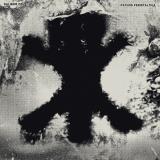
Marking the second 12” on new Bristol label Northfield is the enigmatic Dalibor Cruz of Chicago. Pathos Peristaltica is a carefully calculated collection of 7 twisted & scuzzed out beats & interludes, expertly mastered by Beau Thomas @ Ten Eight Seven Mastering.
Echoes of Muslimgauze, Beau Wanzer, Laszlo Hortobagyi, 5 Gate Temple & Pablo’s Eye run throughout Dalibor Cruz’s work. However it seriously sounds unlike anything else out there, a true original in electronic music.
Previous releases of Dalibor Cruz have been on Natural Sciences & Chicago Research.
Artwork designed by Guillaume De Ubeda.
UILTY RAZORS, BONA FIDE PUNKS.
Writings on the topic that go off in all directions, mind-numbing lectures given by academics, and testimonies, most of them heavily doctored, from those who “lived through that era”: so many people today fantasize about the early days of punk in our country… This blessed moment when no one had yet thought of flaunting a ridiculous green mohawk, taking Sid Vicious as a hero, or – even worse – making the so-called alternative scene both festive and boorish. There was no such thing in 1976 or 1977, when it wasn’t easy to get hold of the first 45s by the Pistols or the Clash. Few people were aware of what was happening on the fringes of the fringes at the time. Malcolm McLaren was virtually unknown, and having short hair made you seem strange. Who knew then that rock music, which had taken a very bad turn since the early 1970s, would once again become an essential element of liberation? That, thanks to short and fast songs, it would once again rediscover that primitive, social side that was so hated by older generations? Who knew that, besides a few loners who read the music press (it was even better if they read it in English) and frequented the right record stores? Many of these formed bands, because it was impossible to do otherwise. We quickly went from listening to the Velvet Underground to trying to play the Stooges’ intros. It’s a somewhat collective story, even though there weren’t many people to start it.
The Guilty Razors were among those who took part in this initial upheaval in Paris. They were far from being the worst. They had something special and even released a single that was well above the national average. They also had enough songs to fill an album, the one you’re holding. In everyone’s opinion, they were definitely not among the punk impostors that followed in their wake. They were, at least, genuine and credible.
Guilty Razors, Parisian punk band (1975-1978). To understand something about their somewhat linear but very energetic sound, we might need to talk about the context in which it was born and, more broadly, recall the boredom (a theme that would become capital in punk songs) coupled with the desire to blow everything off, which were the basis for the formation of bands playing a rejuvenated rock music ; about the passion for a few records by the Kinks or the early Who, by the Stooges, by the Velvet mostly, which set you apart from the crowd.
And of course, we should remember this new wave, which was promoted by a few articles in the specialized press and some cutting-edge record stores, coming from New York or London, whose small but powerful influence could be felt in Paris and in a handful of isolated places in the provinces, lulled to sleep by so many appalling things, from Tangerine Dream to President Giscard d’Estaing...
In 1975-76, French music was, as almost always, in a sorry state ; it was still dominated by Johnny Hallyday and Sylvie Vartan. Local rock music was also rather bleak, apart from Bijou and Little Bob who tried to revive this small scene with poorly sound-engineered gigs played to almost no one.
In the working class suburbs at the time, it was mainly hard rock music played to 11 that helped people forget about their gruelling shifts at the factory. Here and there, on the outskirts of major cities, you still could find a few rockers with sideburns wearing black armbands since the death of Gene Vincent, but it wasn’t a proper mass movement, just a source of real danger to anyone they came across who wasn't like them. In August 1976, a festival unlike any other took place in Mont-de-Marsan – the First European Punk Festival as the poster said – with almost as many people on stage as in the audience. Yet, on that day, a quasi historical event happened, when, under the blazing afternoon sun, a band of unknowns called The Damned made an unprecedented noise in the arena, reminiscent of the chaotic Stooges in their early adolescence. They were the first genuine punk band to perform in our country: from then on, anything was possible, almost anything seemed permissible.
It makes sense that the four+1 members of Guilty Razors, who initially amplified acoustic guitars with crappy tape recorder microphones, would adopt punk music (pronounced paink in French) naturally and instinctively, since it combines liberating noise with speed of execution and – crucially – a very healthy sense of rebellion (the protesters of May 1968 proclaimed, and it was even a slogan, that they weren’t against old people, but against what had made them grow old. In the mid-1970s, it seemed normal and obvious that old people should now ALSO be targeted!!!).
At the time, the desire to fight back, and break down authority and apathy, was either red or black, often taking the form of leafleting, tumultuous general assemblies in the schoolyard, and massive or shabby demonstrations, most of the time overflowing with an exciting vitality that sometimes turned into fights with the riot police. Indeed, soon after the end of the Vietnam War and following Pinochet’s coup in Chile, all over France, Trotskyist and anarcho-libertarian fervour was firmly entrenched among parts of the educated youth population, who were equally rebellious and troublemakers whenever they had the chance. It should also be noted that when the single "Anarchy in the UK" was first heard, even though not many of us had access to it, both the title and its explosive sound immediately resonated with some of those troublemakers crying out for ANARCHY!!! Meanwhile, the left-wing majority still equated punks with reckless young neo-Nazis. Of course, the widely circulated photos in the mainstream press of Siouxsie Sioux with her swastikas didn’t necessarily help to win over the theorists of the Great Revolution. It took Joe Strummer to introduce The Clash as an anti-racist, anti-fascist and anti-ignorance band for the rejection of old-school revolutionaries to fade a little.
The Lycée Jean-Baptiste Say at Porte d’Auteuil, despite being located in the very posh and very exclusive 16th arrondissement of Paris, didn’t escape these "committed" upheavals, which doubled as the perfect outlet for the less timid members of this generation.
“Back then, politics were fun,” says Tristam Nada, who studied there and went on to become Guilty Razors’ frontman. “Jean-Baptiste was the leftist high-school in the neighbourhood. When the far right guys from the GUD came down there, the Communist League guys from elsewhere helped us fight them off.”
Anything that could challenge authority was fair game and of course, strikes for just about any reason would lead to increasingly frequent truancy (with a definitive farewell to education that would soon follow). Tristam Nada spent his 10th and 11th unfinished grades with José Perez, who had come from Spain, where his father, a janitor, had been sentenced to death by Franco. “José steered my tastes towards solid acts such as The Who. Like most teenagers, I had previously absorbed just about everything that came my way, from Yes to Led Zeppelin to Genesis. I was exploring… And then one day, he told me that he and his brother Carlos wanted to start a rock band.” The Perez brothers already played guitar. “Of course, they were Spanish!”, jokes their singer. “Then, somewhat reluctantly, José took up the bass and we were soon joined by Jano – who called himself Jano Homicid – who took up the rhythm guitar.” Several drummers would later join this core of not easily intimidated young guys who didn’t let adversity get the better of them.
The first rehearsals of the newly named Guilty Razors took place in the bedroom of a Perez aunt. There, the three rookies tried to cover a few standards, songs that often were an integral part of their lives. During a first, short gig, in front of a bewildered audience of tough old-school rockers, they launched into a clunky version of the Velvet Underground's “Heroin”. Challenge or recklessness? A bit of both, probably… And then, step by step, their limited repertoire expanded as they decided to write their own songs, sung in a not always very accurate or academic English, but who cared about proper grammar or the right vocabulary, since what truly mattered was to make the words sound as good as possible while playing very, very fast music? And spitting out those words in a language that left no doubt as to what it conveyed mattered as well.
Trying their hand a the kind of rock music disliked by most of the neighbourhood, making noise, being fiercely provocative: they still belonged to a tiny clique who, at this very moment, had chosen to impose this difference. And there were very few places in France or elsewhere, where one could witness the first stirrings of something that wasn’t a trend yet, let alone a movement.
In the provinces, in late 1976 or early 1977, there couldn’t be more than thirty record stores that were a bit more discerning than average, where you could hear this new kind of short-haired rock music called “punk”. The old clientele, who previously had no problem coming in to buy the latest McCartney or Aerosmith LP, now felt a little less comfortable there…
In Paris, these enlightened places were quite rare and often located nex to what would become the Forum des Halles, a big shopping mall. Between three aging sex workers, a couple of second-hand clothes shops, sellers of hippie paraphernalia and small fashion designers, the good word was loudly spread in two pioneering places – propagators of what was still only a new underground movement. Historically, the first one was the Open Market, a kind of poorly, but tastefully stocked cave. Speakers blasted out the sound of sixties garage bands from the Nuggets compilation (a crucial reference for José Perez) or the badly dressed English kids of Eddie and the Hot Rods. This black-painted den was opened a few years earlier by Marc Zermati, a character who wasn’t always in a sunny disposition, but always quite radical in his (good) choices and his opinions. He founded the independent label Skydog and was one of the promoters of the Mont-de-Marsan punk festivals. Not far from there was Harry Cover, another store more in tune with the new New York scene, which was amply covered in the house fanzine, Rock News (even though it was in it that the photos of the Sex Pistols were first published in France).
It was a favorite hang-out of the Perez brothers and Tristam Nada, as the latter explained. “It’s at Harry Cover’s that we first heard the Pistols and Clash’s 45s, and after that, we decided to start writing our first songs. If they could do it, so could we!”
The sonic shocks that were “Anarchy in the UK”, “White Riot” or the Buzzcocks’s EP, “Spiral Scratch” – which Guilty Razors' sound is reminiscent of – were soon to be amplified by an unparalleled visual shock. In April 1977, right after the release of their first LP, The Clash performed at the Palais des Glaces in Paris, during a punk night organised by Marc Zermati. For many who were there, it was the gig of a lifetime…
Of course, Guilty Razors and Tristam were in the audience: “That concert was fabulous… We Parisian punks were almost all dressed in black and white, with white shirts, skinny leather ties, bikers jackets or light jackets, etc. The Clash, on the other hand, wore colourful clothes. Well, the next day, at the Gibus, you’d spot everyone who had been at this concert, but they weren’t wearing anything black, they were all wearing colours.”
It makes sense to mention the Gibus club, as Guilty Razors often played there (sometimes in front of a hostile audience). It was also the only place in Paris that regularly scheduled new Parisian or Anglo-Saxon acts, such as Generation X, Siouxsie and the Banshees, the Slits, and Johnny Thunders who would become a kind of messed-up mascot for the venue. A little later, in 1978, the Rose Bonbon – formerly the Nashville – also attracted nightly owls in search of electric thrills… In 1977, the iconic but not necessarily excellent Asphalt Jungle often played at the Gibus, sometimes sharing the bill with Metal Urbain, the only band whose aura would later transcend the French borders (“I saw them as the French Sex Pistols,” said Geoff Travis, head of their British label Rough Trade). Already established in this small scene, Metal Urbain helped the young and restless Guilty Razors who had just arrived. Guitarist for Metal Urbain Hermann Schwartz remembers it: “They were younger than us, we were a bit like their mentors even if it’s too strong a word… At least they were credible. We thought they were good, and they had good songs which reminded of the Buzzcocks that I liked a lot. But at some point, they started hanging out with the Hells Angels. That’s when we stopped following them.”
The break-up was mutual, since, Guilty Razors, for their part, were shocked when they saw a fringe element of the audience at Metal Urbain concerts who repeatedly shouted “Sieg Heil” and gave Nazi salutes. These provocations, even still minor (the bulk of the skinhead crowd would later make their presence felt during concerts), weren’t really to the liking of the Perez brothers, whose anti-fascist convictions were firmly rooted. Some things are non-negotiable.
A few months earlier (in July 1978), Guilty Razors had nevertheless opened very successfully for Metal Urbain at the Bus Palladium, a more traditonally old-school rock night-club. But, as was sometimes the case back then, the night turned into a mass brawl when suburban rockers came to “beat up punks”.
Back then, Parisian nights weren’t always sweet and serene.
So, after opening as best as they could for The Jam (their sound having been ruined by the PA system), our local heroes were – once again – met outside by a horde of greasers out to get them. “Thankfully,” says Tristam, “we were with our roadies, motorless bikers who acted as a protective barrier. We were chased in the neighbouring streets and the whole thing ended in front of a bar, with the owner coming out with a rifle…”
Although Tristam and the Perez brothers narrowly escaped various, potentially bloody, incidents, they weren’t completely innocent of wrongdoing either. They still find amusing their mugging of two strangers in the street for example (“We were broke and we simply wanted to buy tickets for the Heartbreakers concert that night,” says Tristam). It so happened that their victims were two key figures in the rock business at the time: radio presenter Alain Manneval and music publisher Philippe Constantin. They filed a complaint and sought monetary compensation, but somehow the band’s manager, the skilful but very controversial Alexis, managed to get the complaint withdrawn and Guilty Razors ended up signing with Constantin with a substantial advance.
They also signed with Polydor and the label released in 1978 their only three-track 45, featuring “I Don't Wanna be A Rich”, “Hurts and Noises” and “Provocate” (songs that exuded perpetual rebellion and an unquenchable desire for “class” confrontation). It was a very good record, but due to a lack of promotion (radio stations didn’t play French artists singing in English), it didn’t sell very well. Only 800 copies were allegedly sold and the rest of the stock was pulped… Initially, the three tracks were to be included on a LP that never came to be, since they were dropped by Polydor (“Let’s say we sometimes caused a ruckus in their offices!” laughs Tristam.) In order to perfect the long-awaited LP, the band recorded demos of other tracks. There was a cover of Pink Floyd's “Lucifer Sam” from the Syd Barrett era – proof of an enduring love for the sixties’ greats –, “Wake Up” a hangover tale and “Bad Heart” about the Baader-Meinhof gang, whose actions had a profound impact on the era and on a generation seeking extreme dissent... On the album you’re now discovering, you can also hear five previously unreleased tracks recorded a bit later during an extended and freezing stay in Madrid, in a makeshift studio with the invaluable help of a drummer also acting as sound engineer. He was both an enthusiastic old hippie and a proper whizz at sound engineering. Here too, certain influences from the fifties and sixties (Link Wray, the Troggs) are more than obvious in the band’s music.
Shortly after a final stormy and rather barbaric (on the audience’s side) “Punk night” at the Olympia in June 1978, Tristam left the band ; his bandmates continued without him for a short while.
But like most pioneering punk bands of the era, Guilty Razors eventually split up for good after three years (besides once in Spain, they’d only played in Paris). The reason for ceasing business activities were more or less the same for everyone: there were no venues outside one’s small circuit to play this kind of rock music, which was still frightening, unknown, or of little interest to most people. The chances of recording an LP were virtually null, since major labels were only signing unoriginal but reassuring sub-Téléphone clones, and the smaller ones were only interested in progressive rock or French chanson for youth clubs. And what about self-production? No one in our small safety-pinned world had thought about it yet. There wasn’t enough money to embark on that sort of venture anyway.
So yes, the early days of punk in France were truly No Future!
- A1: Let It Hurt – 2:24
- A2: Dub, It Hurt – 0:54
- A3: My Moon – 3:05
- A4: Hang On Feat. Benji. – 3:32
- A5: Call Me Back Feat. Sadboi And Kabusa Oriental Choir – 2:56
- A6: Let Go – 3:02
- A7: Interlude 1 – 0:28
- B1: I Am What I Am What I Am – 2:39
- B2: I Dream, I Rush – 2:21
- B3: Interlude 2 – 0:53
- B4: Room333 Feat. Zacari – 3:01
- B5: Sodom And Gomorrah Feat. 36Birds – 3:34
* Edition of 500 colored vinyl (transparent purple)
* Artwork developed in collaboration with Paris-based visual artist Caroline Ventura
* Including download code
i got a song, it’s gonna make us millions is the highly anticipated new album by Sirens Of Lesbos, led by sisters Jasmina and Nabyla Serag. The dynamic release is a vibrant showcase of the group's expansive musical range, blending R’n’B/Soul, Afrobeats, electronic music, and lo-fi indie pop into a rich, genre-defying experience. With its eclectic sound and captivating melodies, the album solidifies Sirens Of Lesbos as a standout force in modern music.
Featuring on the album are the singles “Room 333” feat. Kendrick-Lamar-collaborator Zacari, a futuristic R’n’B song with progressive club beats; the epic “Call Me Back” (feat. Drake-co-signed rapper SadBoi and the Kabusa Oriental Choir); and dub-infused reggae song “Let It Hurt”, plus new song “My Moon”, which draws inspiration from artists like Bruce Hornsby, Justin Vernon, and Jai Paul. Sirens Of Lesbos have earned widespread acclaim from outlets like CLASH, COLORS, Dork, Tsugi and Earmilk, with BBC 1Xtra’s CassKidd calling the collective “magical.”
As Black women living in the diaspora, Jasmina and Nabyla navigate the intersection of their parents’ collectivist North-East African culture and the Western emphasis on individuality. Questions of identity have always been central to their journey. While society often demands clear-cut definitions, the sisters have come to embrace their multifaceted identities: “We have always been many things.”
Both artists are deeply rooted in the technical and philosophical dimensions of sound. Jasmina recently completed her Sound Arts degree, and Nabyla is now finishing hers. Their academic pursuits have included creating abstract sound installations in exhibition spaces. However, their focus for the foreseeable future is on elevating the Sirens Of Lesbos project, writing and producing standout indie pop tracks, performing live, and delivering unforgettable experiences for their audiences.
—
The vinyl version of i got a song, it’s gonna make us millions is published by Präsens Editionen, a Switzerland-based publishing house and music label. Founded in 2011 in the process of launching zweikommasieben Magazin, Präsens Editionen has since released music on vinyl, cassette, CD, and digital formats—alongside magazines, books, and other printed matter. Recent audio releases include works by Martina Lussi, spalarnia, Magda Drozd, Anom Vitruv, Belia Winnewisser, and Red On, among others.
- 1: Reichpop
- 2: Lady Blue
- 3: A Woman's Wisdom
- 4: Japanese Alice
- 5: Life Of Pause
- 6: Alien
- 7: To Know You
- 8: Adore
- 9: Tv Queen
- 10: Whenever I
- 11: Love Underneath My Thumb
White vinyl. Signed Print Edition. When Jack Tatum began work on Life of Pause, his third full-length to date, he had lofty ambitions: Don't just write another album; create another world. One with enough detail and texture and dimension that a listener could step inside, explore, and inhabit it as they see fit. "I desperately wanted for this to be the kind of record that would displace me," he says. "I'm terrified by the idea of being any one thing, or being of any one genre. And whether or not I accomplish that, I know that my only hope of getting there is to constantly reinvent. That reinvention doesn't need to be drastic, but every new record has to have its own identity, and it has to have a separate set of goals from what came before." What came before: a rightfully acclaimed, much beloved display of singular pop craftsmanship. Tatum's dreamy, unexpected 2010 debut, Gemini, was written while he was still a student at Virginia Tech University. Its equally disarming follow-up, 2012's Nocturne, marked the first time he'd been able to bring his bedroom recordings into a studio, to be performed and fully realized with the help of other musicians. There has been a set of wonderfully expansive EPs in between_each hinting at new directions and punctuating previous ideas_but with Life of Pause, Tatum delivers what he describes as his most "honest" and "mature" work yet, an exquisitely arranged and beautifully recorded collection of songs that marry the immediate with the indefinable. "I allowed myself to go down every route I could imagine even if it ended up not working for me," he says. "I owe it to myself to take as many risks as possible. Songs are songs and you have to allow yourself to be open to everything." After a prolonged period of writing and experimentation, recording took place over several weeks in both Los Angeles and Stockholm, with producer Thom Monahan (Devendra Banhart, Beachwood Sparks) helping Tatum in his search for a more natural and organically textured sound. In Sweden, in a studio once owned by ABBA, they enlisted Peter, Bjorn and John drummer John Ericsson and fellow Swedish Radio Symphony Orchestra veteran Pelle Jacobsson, to contribute drums and marimba. In California, at Monahan's home, Tatum collaborated with Medicine guitarist Brad Laner and a crew of saxophonists. From the hypnotic polyrhythms of "Reichpop" to the sugary howl of "Japanese Alice" to the hallucinogenic R&B of "A Woman's Wisdom," the result is a complete, fully immersive listening environment. "I just kept things really simple, writing as ideas came to me," he says. "There's definitely a different kind of `self' in the picture this time around. There's no real love lost, it's much more a record of coming to terms and defining what it is that you have_your place, your relationships. I view every record as an opportunity to write better songs. At the end of the day it still sounds like me, just new."
Broadside has never been a band to stay in one place for too long—musically or otherwise. The Richmond, Virginia-based band has spent the past decade carving out their own space in the pop rock scene. Drawing influence from The Killers, AFI, Kings of Leon, and Taking Back Sunday, their sound seamlessly fuses nostalgic rock energy with a fresh, modern edge. Their evolution has been nothing short of remarkable, taking them from underground favorites to genre staples, all while embracing the idea that growth and change are not just inevitable but necessary. With Oliver Baxxter (vocals), Domenic Reid (guitar), and Patrick Diaz (bass/backup vocals) at the helm, Broadside has built a career on crafting music that feels both deeply personal and universally relatable.
Their last full-length album, Hotel Bleu, served as a bold chapter in their story, using the transient nature of hotel stays as a metaphor for self-reflection, fleeting moments, and personal reinvention. The album marked a significant milestone in their career, amassing over 100 million streams and standing as their boldest, brightest, and most ambitious work to date. Now, as they prepare to enter their next era, the band is gearing up to release their most dynamic music yet, continuing to evolve while staying true to the energy and authenticity that first captivated listeners.
Broadside has never been a band to stay in one place for too long—musically or otherwise. The Richmond, Virginia-based band has spent the past decade carving out their own space in the pop rock scene. Drawing influence from The Killers, AFI, Kings of Leon, and Taking Back Sunday, their sound seamlessly fuses nostalgic rock energy with a fresh, modern edge. Their evolution has been nothing short of remarkable, taking them from underground favorites to genre staples, all while embracing the idea that growth and change are not just inevitable but necessary.
With Oliver Baxxter (vocals), Domenic Reid (guitar), and Patrick Diaz (bass/backup vocals) at the helm, Broadside has built a career on crafting music that feels both deeply personal and universally relatable. Their last full-length album, Hotel Bleu, served as a bold chapter in their story, using the transient nature of hotel stays as a metaphor for self-reflection, fleeting moments, and personal reinvention. The album marked a significant milestone in their career, amassing over 100 million streams and standing as their boldest, brightest, and most ambitious work to date. Now, as they prepare to enter their next era, the band is gearing up to release their most dynamic music yet, continuing to evolve while staying true to the energy and authenticity that first captivated listeners.
Bristol's Tara Clerkin Trio return to World of Echo and the EP format for a five song collection of quixotic, emotional redolence. But do not mistake their absence for inertia. If their musical output has been a little sparse during those in-between years, limited to a few solo ventures and an astonishing ten minute long piece as a trio, their time has otherwise been richly spent: continuous writing and recording, extensive live performances across Europe and Japan, a cultivation of local and more far-flung artistic connections (musical and otherwise), and a monthly NTS show that, through the voice of others, speaks most obviously to their own unorthodox interests. It's the conflux of that winding activity that leads indirectly to On The Turning Ground, 26 minutes of probing, thoughtful composition that draws from no one specific source. Their inspirations might be centreless, but the trio still possess a very obvious anchor in the form of their hometown. Bristol stands as a city of multitudes, heterogenous and vibrant in such a way as to allow it to renew and remake time and again. Tara Clerkin Trio drink from that same well, duly reflecting a rich musical heritage built on fwd-facing electronic subcultures and experimental urges.
As such, On The Turning Ground finds them subject to their own subtle internal evolution, the pervasive sense that you've caught them mid-bloom, on their way to becoming but never anything but themselves. The two instrumental pieces that bookend the EP stand as a perfect case in point, displaying an increasing mastery of compositional space. Pensive and restrained, 'Brigstow' and 'Once Around' both emanate an interstitial quality that's not so much after- as in-between-hours, miniature dub-folk symphonies held together by the kind of tacit understanding that remains the preserve of only the closest of family units. If those two tracks are shaped by a sense of shifting temporality, then the three vocal-led pieces that comprise the record's core feel like a gentle ossifying of aesthetic into something approaching their own unique form of avant-pop. 'Pop' is, of course, a broadly subjective concept, but there's no avoiding the overt sparkling melodicism of songs like 'Marble Walls' and 'The Turning Ground', undeniable re-directions of that late 90s impulse to bend pop sensibilities into off-centre terrain, to render the familiar new again. This is what Tara Clerkin Trio do, gently pulling the ground from under your feet, turning you to face something you'd not quite seen before. To view the world as they do: sideways, sometimes, all of the time.
Carlos Giffoni reconnects with Thurston Moore for two sides of loose-limbed axe noise, oscillator worship and hard-phased, Spacemen 3-style feedback.
Giffoni’s been on a roll recently. Since the No Fun founder returned to the scene with »Vain¡, a genius set of synth mutations that appeared in iDEAL back in 2018, he’s been slowly ramping up the activity, dropping the celestial »Dream Walker« on Stephen O’Malley’s Ideologic Organ in 2024 and following it with »Pendulum«, a bumper compendium of collaborations, just a few weeks back. For those who remember Giffoni’s first trip round the block, he was always able to hold his own chopping it up in person, not just by mail.
Just scrub through his early catalog and you’ll see collabs with Nels Cline and Chris Corsano, Merzbow, Jim O’Rourke and Lasse Marhaug, and of course, Thurston Moore. The two rekindle their thing on »IGUANA’« picking up where 2001’s fabled »4 Guitars Live« performance left off. Here, Giffoni straddles a tabletop synth and FX while Moore attacks his signature Jazzmaster with a drumstick and a screwdriver – vibes fully intact.
Moore is on blistering form, sounding as if he’s taken a step back to refresh his approach since the early ‘00s when he could be spotted moonlighting on any number of basement-adjacent noise sides. Sawing at his strings and turning the guitar into a shrieking resonator, he leaves only faint vapours of the classic Sonic Youth sound as opiating accents on his animalistic wails and rumbles. On the opening half, his whammy – assisted shreds are balanced out by Giffoni’s off-world whirrs and airlocked vibrations, building a dense wall of noise towards an unexpectedly elegiac conclusion. At some point, Giffoni’s rasping churr transforms into a simmering shudder and Moore’s into hymnal drones – squint a bit and you could almost call it pretty.
Of course, they ramp things up on the flip, dissolving the melancholia with smokey white noise and twangy, post-Derek Bailey chimes that Giffoni accompanies with aggy oscillations. Like every great taped noise set, the recording quality is crucial - »IGUANA« was captured from the pit by Guillermo Hernandez Avendano, the dad of Lia Miranda who provides the cover photo. It’s that kinda show.
Night is about to fall, the day slowly fades away, and it is this twilight time that Magda Drozd’s latest album inhabits. Divided by Dusk carries the promise of a crepuscular otherworldliness. Inspired by Drozd’s stays in Japan, its rich tradition in ambient and experimental music and a collaboration with Japanese flutist Rai Tateishi, as well as a renewed engagement with her roots in Poland and its folk and ancient history, her work is a form of sonic excavation. Layers of dark-ambient tones intertwine with field recordings, textured violin, and luminous folk motifs, invoking long-gone, unspecified rituals.
The album freely interprets traditional folklore, unleashing those ghosts of past cultures we inherit through music that has been passed down to us. Paired with experimental ambient sonic textures, the album carries a magnificent, wandering, melancholic air. The compositions take on an incantatory dimension, welcoming us into a liminal world—one filled with buried treasures.
First time reissue of JP / US free jazz rarity.
The 1970s were Marion Brown’s most searching decade, a period during which he sought to move beyond the free jazz of the previous era and find more personal approaches to structuring improvisation and composition. After leaving New York for Europe in 1967, Brown began reshaping his music into what he described as “a more deliberate kind of music that had more structure to it,” pacing it so that moods and modes could develop over time. Albums such as In Sommerhausen, Afternoon of a Georgia Faun, Geechee Recollections, and Sweet Earth Flying trace this evolution: rhythmic structures moved to the foreground, harmony receded, and composition became a matter of orchestrating interlocking rhythmic parts as one would polyphonic lines.
Released in 1976, Awofofora is an overlooked but crucial entry in that sequence. At the time, its use of funk and reggae beats, electric guitars, and grooves drawn from contemporary Black popular music led some to misread it as a jazz-rock detour. In retrospect, it is entirely consistent with Brown’s methodology. As he admired in the Art Ensemble of Chicago, the stimulus comes from within the community. Here Brown filters Afro-Caribbean rhythms and funk through his own sensibility, abstracting their structural qualities rather than adopting surface style.
“La Placita,” making its first recorded appearance, layers distinct rhythmic phrases in a manner reminiscent of African drum ensembles, over which Brown and trumpeter Ambrose Jackson spin extended improvisations. The standard “Flamingo” is reshaped through diasporic rhythm and lyrical soloing, while “Pepi’s Tempo” and “Mangoes” harness crisp funk and reggae grooves to generate what Brown called a “manifestation of community” through collective improvisation. Even the overdubbed solo feature “And Then They Danced” reflects his structural thinking, ingeniously re-voicing a duet composition for two alto saxophones performed by one player.
This was the only recording by a short-lived band that briefly polarized audiences during festival appearances in 1976. Yet Brown consistently sought unity across change: different sounds, same principles — rhythm as structure, melody as architecture, collective improvisation, and above all, the primacy of tone. Awofofora stands not as a departure, but as a vivid synthesis of the elements he had been refining since the late 1960s, its grooves and golden alto lines conveying a sound drawn, in his words, “from life and from the world of experience.”
Multi Culti seasonal balance returns with Equinox III Kicking things off Guadalajara-based Bofo Dab (known for their blog 'Drops a Banger') does what their name suggests. This one has been getting caned by the Keinemusik crew, legions of phone-holders' shazam-prayers will only now be answered. It's a restrained big-room horn-loaded banger. Mehmet Aslan slides in to the proceedings with an awesome FM-sounding heads-down slice of clubby introspection. Long-time cult-hero Gilb'R of Versatile records fame spaces out the side with a deep, sparkly, live synth jam. On the flip, Mytron brings a fun stripped-back cover of a stone-cold classic with Higher (state of consciousness, that is). Brazillian hotboy Niev sounds right at home on the label with the aptly titled 'Professor Banjo.' Yuki Miyauchi lends an ethereal 90s bleep-inflected chunk of vibe with 'Donkey Conga.' Finally, fellow Japanese but London-based DJ Himitsu drops the deep, rollicking 'Waterfall.'
- A1: Just One Of Those Days
- A2: Wave The Nine
- A3: Champloo
- A4: World Jumper
- B1: Just One Of Those Days (Instrumental)
- B2: Wave The Nine (Instrumental)
- B3: Champloo (Instrumental)
- B4: World Jumper (Instrumental)
Just before dropping the 3rd chapter in his "Threesome" series, Hus Kingpin surprises us with a brand new EP on which he gets out of his comfort zone, rapping on some chill hop beats provided by Wun Two and Made In M, once again proving the versatile and creative MC he's always been! Hand-Numbered pressing limited to 350 copies.
- Fleurs
- Régate
- Petit Matin
- Le Temps
- Fleuve Vii
- Fleuve Viii
- Navigation Vii
- (A Travers Les) Chablis
LIMITED EDITION GREEN VINYL[21,81 €]
Die Botschaft, das Wesentliche, das sich teilen lässt, ist Licht; es ist der Samen in der Erde, der zu einer Pflanze wird und dann zu einer Blume, die in voller Blüte steht und schließlich unvermeidlich verwelkt, damit der Zyklus von Neuem beginnen kann; es ist die Suche nach Schönheit im Chaos, aus dem Harmonie entsteht, um es zu überwinden. Auf Volume III kehren Mathieu David Gagnon und sein Projekt Flore Laurentienne zurück, um die Pracht des Flusses und seiner floralen und waldreichen Umgebung zu feiern.Volume III ist zudem eine tiefere Erkundung der Verbindung von akustischen und synthetischen Elementen, die den Charakter von Flore Laurentienne ausmachen. Anders als bei den ersten drei Alben wurden die meisten Stücke gemeinsam mit den Bandmitgliedern während Residenzen und Konzerten entwickelt, bevor sie aufgenommen wurden. Dies bereicherte die Kompositionen in einer Phase, in der sie sich noch im Wandel befanden. Die Band treibt das Projekt an und inspiriert Gagnons Schreibprozess, indem sie den Klang weiterentwickelt, nährt und ihm erlaubt, neue Wege zu gehen.Dieser neue Meilenstein markiert zugleich den Abschluss einer Trilogie, die 2019 mit Volume I begann - mit dem inhärenten und parallelen Bestreben, ein drittes Volume zu erreichen, um Volume 3 von L'Infonie (einem Kultkollektiv aus Québec, das Jazz, Prog, Kunstmusik und Poesie verband) zu würdigen. Letzteres beeinflusste die Musik von Flore Laurentienne nicht direkt, sondern vielmehr das Verständnis von Freiheit in der Komposition, die Klassik und Improvisation vereint.Die Entwicklung von Volume III folgt der Evolution des Projekts: Während der erste Track ,Fleurs" dem ähnelt, was Volume II bot, gibt uns der abschließende Titel ,(A travers les) Chablis" einen Vorgeschmack darauf, wie der nächste Schritt klingen könnte. Es ist ein Album, das man zusammen mit seinen beiden Vorgängern genießen sollte - und dabei gespannt auf das Kommende blickt. Flore Laurentienne entwickelt sich ständig weiter, doch die Vision ist seit Beginn dieselbe geblieben: Musik zu schaffen, die lebendig, wahrhaftig, menschlich und kompromisslos ist.
Black Vinyl[21,81 €]
Die Botschaft, das Wesentliche, das sich teilen lässt, ist Licht; es ist der Samen in der Erde, der zu einer Pflanze wird und dann zu einer Blume, die in voller Blüte steht und schließlich unvermeidlich verwelkt, damit der Zyklus von Neuem beginnen kann; es ist die Suche nach Schönheit im Chaos, aus dem Harmonie entsteht, um es zu überwinden. Auf Volume III kehren Mathieu David Gagnon und sein Projekt Flore Laurentienne zurück, um die Pracht des Flusses und seiner floralen und waldreichen Umgebung zu feiern.Volume III ist zudem eine tiefere Erkundung der Verbindung von akustischen und synthetischen Elementen, die den Charakter von Flore Laurentienne ausmachen. Anders als bei den ersten drei Alben wurden die meisten Stücke gemeinsam mit den Bandmitgliedern während Residenzen und Konzerten entwickelt, bevor sie aufgenommen wurden. Dies bereicherte die Kompositionen in einer Phase, in der sie sich noch im Wandel befanden. Die Band treibt das Projekt an und inspiriert Gagnons Schreibprozess, indem sie den Klang weiterentwickelt, nährt und ihm erlaubt, neue Wege zu gehen.Dieser neue Meilenstein markiert zugleich den Abschluss einer Trilogie, die 2019 mit Volume I begann - mit dem inhärenten und parallelen Bestreben, ein drittes Volume zu erreichen, um Volume 3 von L'Infonie (einem Kultkollektiv aus Québec, das Jazz, Prog, Kunstmusik und Poesie verband) zu würdigen. Letzteres beeinflusste die Musik von Flore Laurentienne nicht direkt, sondern vielmehr das Verständnis von Freiheit in der Komposition, die Klassik und Improvisation vereint.Die Entwicklung von Volume III folgt der Evolution des Projekts: Während der erste Track ,Fleurs" dem ähnelt, was Volume II bot, gibt uns der abschließende Titel ,(A travers les) Chablis" einen Vorgeschmack darauf, wie der nächste Schritt klingen könnte. Es ist ein Album, das man zusammen mit seinen beiden Vorgängern genießen sollte - und dabei gespannt auf das Kommende blickt. Flore Laurentienne entwickelt sich ständig weiter, doch die Vision ist seit Beginn dieselbe geblieben: Musik zu schaffen, die lebendig, wahrhaftig, menschlich und kompromisslos ist.
the first-ever reissue on studio mule of the debut album by japanese jazz legend and bassist yoshio ikeda.
having performed with such illustrious figures as sadao watanabe, masabumi kikuchi, and terumasa hino, ikeda’s first album as a leader features pianist and vocalist ichiko hashimoto—also known for her involvement with yellow magic orchestra—berlin-based jazz pianist aki takase, and leading japanese drummer motohiko hino.
avant-garde yet imbued with a distinctly japanese sense of melancholy, this is a work that resonates profoundly with the present moment.
the gem “whispering weeds,” highlighted by thrilling piano and hashimoto’s evocative scat vocals, was also included on a compilation by bbe.
remastered from the original master tapes by kuniyuki, the album has been revived with a richer, more lustrous sound in this definitive reissue.
- 01: The Sun
- 02: Smell Of Fire
- 03: Cumulus &Amp; The Subterranean
- 04: Wild Things
- 05: Grasping All Corners
- 06: Metamorphosis
- 07: Five Cent
- 08: Deep Woods
Following the strong reception of their second album, Totem of Quiet Mystic (2023) Jiyu have earned praises from outlets such as Jazzwise, Enlace Funk and The Chillout Tent, as well as support from a wide range of iconic DJs including Patrick Forge & Chris Coco. The singles to this new album, Cumulus & the Subterranean, Smell of Fire and Deep Woods, have immediately been embraced—drawing glowing reactions and airplay from dj's like, Phil Cooper, Dj Vadim, Fred Everything, David Patterson, Jon Kennedy and Curtis Colin
On this third album from Jiyu, the Copenhagen band stretch their cosmic–spiritual jazz language into deeper, wilder terrain. Dropping April 10th on vinyl and digital via Dubsoul Records, the record captures six musicians in full telepathic flight, recorded at 12 Ton Studio in Copenhagen. Across eight tracks, elastic basslines, jazz-dub-soul—tinted drums and percussion, Wurlitzer and jazz-guitar glow and flute-swept atmospheres drift between grounded groove and open-sky improvisation, while guest vocalist Mai Lan Doky adds dreamlike textures on Cumulus & the Subterranean. From the shuffled broken-beat pulse of Smell of Fire to the slow-burn haze of Deep Woods, the Wild Things album is a rich analogue-soul excursion—earthy, exploratory and tuned to the outer frequencies.


![WILD NOTHING - LIFE OF PAUSE (LENTICULAR SLEEVE) [SIGNED PRINT ED]](https://www.deejay.de/images/l/9/4/1227394.jpg)