First time reissue of JP / US free jazz rarity.
The 1970s were Marion Brown’s most searching decade, a period during which he sought to move beyond the free jazz of the previous era and find more personal approaches to structuring improvisation and composition. After leaving New York for Europe in 1967, Brown began reshaping his music into what he described as “a more deliberate kind of music that had more structure to it,” pacing it so that moods and modes could develop over time. Albums such as In Sommerhausen, Afternoon of a Georgia Faun, Geechee Recollections, and Sweet Earth Flying trace this evolution: rhythmic structures moved to the foreground, harmony receded, and composition became a matter of orchestrating interlocking rhythmic parts as one would polyphonic lines.
Released in 1976, Awofofora is an overlooked but crucial entry in that sequence. At the time, its use of funk and reggae beats, electric guitars, and grooves drawn from contemporary Black popular music led some to misread it as a jazz-rock detour. In retrospect, it is entirely consistent with Brown’s methodology. As he admired in the Art Ensemble of Chicago, the stimulus comes from within the community. Here Brown filters Afro-Caribbean rhythms and funk through his own sensibility, abstracting their structural qualities rather than adopting surface style.
“La Placita,” making its first recorded appearance, layers distinct rhythmic phrases in a manner reminiscent of African drum ensembles, over which Brown and trumpeter Ambrose Jackson spin extended improvisations. The standard “Flamingo” is reshaped through diasporic rhythm and lyrical soloing, while “Pepi’s Tempo” and “Mangoes” harness crisp funk and reggae grooves to generate what Brown called a “manifestation of community” through collective improvisation. Even the overdubbed solo feature “And Then They Danced” reflects his structural thinking, ingeniously re-voicing a duet composition for two alto saxophones performed by one player.
This was the only recording by a short-lived band that briefly polarized audiences during festival appearances in 1976. Yet Brown consistently sought unity across change: different sounds, same principles — rhythm as structure, melody as architecture, collective improvisation, and above all, the primacy of tone. Awofofora stands not as a departure, but as a vivid synthesis of the elements he had been refining since the late 1960s, its grooves and golden alto lines conveying a sound drawn, in his words, “from life and from the world of experience.”
Buscar:marion brown
- 1
An der Seite von John Coltrane und Archie Shepp hatte Altsaxofonist Marion Brown ab 1965 bei Impulse!
Records zur Speerspitze der avantgardistischen ”New Wave in Jazz” gehört. Von einer vollkommen anderen
Seite - sehr entspannt, meditativ und melodienselig - zeigte sich Brown dagegen 1975 auf ”Vista”, seinem
vierten und zugleich letzten Album für das Label.
Originally released onPrivilege, a sub-label of Polydor, this soundtrack by free jazz saxophonist Marion Brown is almost impossible to find in its original pressing. Nowmore than fifty years later it is finally reissued, to the delight of free jazz enthusiasts and film music collectors.
By 1967, Brown, then aged 36, already had a very successful career in the United States, appearing on John Coltrane’s ‘Ascension’, Archie Shepp’s ‘Fire Music’, performing with Sun Ra and Pharoah Sanders and recorded several records under his name for renowned avant-gade jazz label ESP Disk.
That year, he however decided to move to Europe where he met with German saxophonist and vibraphonist Gunter Hamphel. Accompanied by Steve Mc-Call (drums and percussions), Barre Phillips (double bass), Alain Corneau (Cowbells) and Ambrose Jackson (trumpet), they recorded in 1969 in the legendary Parisian studio Davout, the soundtrack of the movie by Marcel Camus entitled
“Le temps fou”.
This film, which starred Nino Ferrer, was released in 1970 under the title “Un été sauvage” and unfortunately it did not make history in cinema. Fallen into oblivion, only his two original soundtracks (there is also a 7’’ with titles composed by Richard de Bordeaux and Daniel Beretta) are spreading the word.
- A1: Wooley The Newt (Feat Sulaiman Hakim, Richard Raux, Michel Graillier &Amp; Jack Gregg)
- A2: Soyuz Dance (Feat Sulaiman Hakim, Richard Raux, Michel Graillier &Amp; Jack Gregg)
- B1: Allah (Feat Sulaiman Hakim, Richard Raux, Michel Graillier &Amp; Jack Gregg)
- B2: Tender Eyes (Feat Sulaiman Hakim, Richard Raux, Michel Graillier &Amp; Jack Gregg)
- B3: Ahiri-Lalita (Feat Sulaiman Hakim, Richard Raux, Michel Graillier &Amp; Jack Gregg)
Stephen McCraven's WOOLEY THE NEWT was originaly released on Marion Browns own Sweet Earth record label in 1979, this is the first reissue on vinyl and cd.
The LP is limited to 450 copies on black vinyl and is housed in a reverse board printed sleeve , with postcard insert and CD is limited to 1000 in gatefold card sleave ..
Its a post bop-spititual jazz beauty,, a record you think you should have known about already,, with OG copys going for $500 this edition should sell fast..
remastered by the carvery in london from master tape and pin drop,,, as half the tapes servived
For five decades, Harold Budd stood on the forefront of the West Coast avant-garde. Born in Los Angeles, he studied with Schoenberg-pupil Gerald Strang and began teaching at CalArts in 1970. While searching for his own voice, he was influenced as much by abstract expressionist painters as by John Cage and Morton Feldman. In his work, Budd brought delicate, slowing-moving melodies to the foreground – creating a new musical language based on “eternally pretty music” and smooth surfaces.
In the early ’70s, Budd started an extended cycle of compositions that would comprise The Pavilion Of Dreams. For Budd, the album was a signpost for a new direction in thinking about music: “The Pavilion Of Dreams erased my past. I consider that to be the birth of myself as a serious artist. It was like my Magna Carta.”
Produced by Brian Eno in 1978, The Pavilion Of Dreams stands toe-to-toe with another minimalist masterpiece also released that year, Steve Reich’s Music For 18 Musicians. Budd’s gorgeous pieces reveal a lightness of touch that draws the listener in, while sublime voices float in and out as if in a recurring dream. Featuring saxophonist Marion Brown and multi-instrumentalists Gavin Bryars and Michael Nyman, The Pavilion Of Dreams remains a master class in exquisite timbre and shimmering texture.
The Pavilion Of Dreams was both the final release on Eno’s Obscure imprint and a transition point towards his seminal ambient series. This first-time reissue is recommended for fans of Ryuichi Sakamoto, Jon Hassell and Mark Hollis.
Monde UFO follow the celebrated ‘7171’ album with a trip to the mysterious ‘Flamingo Tower’. In the shadows of the Los Angeles bustling music scene, the enigmatic collective led by visionary Ray Monde create a trance-like fusion of psychedelia and avant jazz, mantra-like evocations, brash moody ambience and passages reminiscent of long-lost library music.
Magnifying Monde UFO’s idea of musical chaos, their early sonic escapades into off-kilter exotica is now elevated with sweeping atmospheric waves of sound inspired by an eclectic brew of Arto Lindsey, Khan Jamal’s ‘Drum Dance To The Motherland’, Keith Hudson, Milford Graves, Marion Brown, Don Cherry and Lennie Tristano.
Cast deep into number theory with occasional quasi-religious touchstones, ‘Flamingo Tower’ bustles with background sounds overlaid with intimate melodies conjuring plenty of suitably strange illusions; a synthetic orchestra plays baroque pop, a guitar is set to auto destruct and Ray Monde’s hushed vocals carry a bracing narrative. It’s an evocative album, one for the heavy music nerds, sprinkled with ear candy and proliferated by mysterious numbers which litter the song titles.
“Monde UFO wander through a humid mist of exotic samba shuffles, shamanic whispers, and reverberating laser beam synthesizers.” New Commute
An unsung modernist classic from 1974 – Pitchfork Bennie Maupin hat mit seinem Erfindungsreichtum zu ikonischen Platten wie Bitches Brew von Miles Davis, Mwandishi und Headhunters von Herbie Hancock und Afternoon Of A Georgia Faun von Marion Brown beigetragen. Aufnahmen unter eigenem Namen waren eher selten, aber sein Leader-Debüt ist ein Juwel. „Ein selbstloseres Album ist schwer vorstellbar“, schrieb Down Beat 1975. „Der Klang auf The Jewel In The Lotus ist überragend, und alle Musiker bemühen sich darum zu einer Einheit zu verschmelzen“. 1974 in New York aufgenommen, überschneidet sich das Personal des Albums mit dem aus Herbie Hancocks Umfeld dieser Zeit, doch die Musik hat einen gänzlich eigenen Charakter. Die Luminessence-Vinyl-Edition des Albums kommt in einem Tip-On-Gatefold und enthält neue Liner Notes
Hermon Mehari and Tony Tixier first met in 2010, in their early twenties, in a club on Paris's Rue des Lombards for a concert with saxophonist Rodolphe Lauretta. Over the next decade, the two musicians took opposite paths, while continuing to collaborate on two continents. The American trumpeter moved to France to discover European culture and the world cultures that coexist there, while the Parisian pianist of Martinican origin spent several years in the USA, immersing himself in the roots of jazz and Afro-American music.
In June 2024, the two musicians, who had been working for fifteen years on numerous albums and collaborations, and whose musical understanding had continued to be forged in clubs, festivals, and on recordings, met again for a duet at the TOC-TOC festival in the Puisaye region, where Antoine Rajon was a collaborator. Enthusiastic about the idea, the artistic director of the KOMOS label invited them back to his home in this corner of Burgundy to record this Fender Rhodes/trumpet formula. He called on sound engineer Christian Hierro, who traveled with his mobile studio for the album recording, then mixed and produced the master in his studio in Lyon, using the best analog equipment and his expert ear.
At dusk on November 12, 2024, the duo played eight tracks in a single, direct take on a 33-minute magnetic tape.
Four unusual cover versions were carefully chosen. "Maimoun" is a composition emblematic of pianist Stanley Cowell's style, also recorded by Marion Brown. George Duke's "The Black Messiah" was captured live by Cannonball Adderley's band on an album of the same name but has never been released as a studio version. "Hello To The Wind" was created by Bobby Hutcherson in 1969, sung by Eugene McDaniels. Finally, "Laini," dedicated by the great Martinican pianist Marius Cultier to one of his daughters, is a mazurka dear to Tony's heart.
Each of the musicians also contributed a composition: Hermon with "This Is Our Fantasy," written especially for the session, and Tony with "Poem For The Oppressed," a moving composition with an explicit title. Lastly, the duo improvised two tracks, without repetition, in mutual symbiosis and echo.
SOUL SONG captures a moment without enhancement, transformation, or additives, far removed from contemporary virtual technologies.
2024 Repress
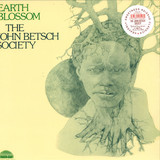
180 Gram, Tip On Sleeve RSD version of this classic. One of the rarer records of the mythical Strata East albums is finally reissued for the first time on Heavenly Sweetness!
The recording of Earth Blossom, the John Betsch Societys one and only album, seems something of an enigma nowadays. For even though Nashville is clearly one of the towns in the US with the highest number of recording studios, who would have thought that the capital of country music would give birth to one of the forgotten masterpieces of 1970s spiritual jazz. The path leading to the album starts in 1963 when John Betsch, originally from Jacksonville in Florida, arrives in Nashville to study at Frisk University. He is a young drummer and joins Bob Holmes trio. Holmes is one of the towns major jazz organists and pianists; he becomes Betschs mentor and, over the space of two years, John will play alternately with him and with the trumpeter Louis Smiths group. However, in 1965, John leaves town to go to the prestigious Berkeley University in Boston and do a two-year course along with his fellow debutants with names like John Abercrombie, Ernie Watts and Alan Broadbent. Two years later, he is invited by a pianist friend, Billy Chilf, to join the legendary singer/songwriter Tim Hardins group. Just after Woodstock, John Betsch and Tim record a psychedelic album Columbia will never release together with the members of the future group Oregon: Colin Walcott, Glen Moore, Paul McCandles and his friend Billy Chilf. But he soon leaves this group to return to Nashville where he hooks up again with his friend Bob Holmes. Two years later, he is accepted on Archie Shepp and Max Roachs famous course at the University of Massachusetts Amherst (UMASS) and for the next four years he participates in this collective of intellectuals and musicians under the aegis of the two masters.
During this period he returns to Nashville to form his Society whose music is obviously influenced by the Afrocentric ideas of the UMASS student and political movement. However, the album, recorded in one day and in one take, also bears the hallmark of their generations psychedelic experiences, and in the themes and playing of the musicians we can hear a less violent form of music than the radical free jazz of New York or Chicago. Nature and environmental themes are the inspiration behind tracks touched by the spirit of Coltrane but also of Flower Power.
After Amherst, John Betsch joins Marion Browns group in 1976, leaves Tennessee for good and makes his home in New York over the next ten years or so. He plays and records with Dollar Brand, Kalaparusha Maurice McIntyre and many others, before heading off to France. He has lived in Paris for the last twenty years and played in Steve Lacy, Mal Waldron and Archie Shepp bands, as well as forming groups of his own. He now lives in Paris and plays with many musicians/bands.
Black Vinyl[30,21 €]
Artistry was Sirone's first album as a leader, recorded in 1978, just after the split of the Revolutionary Ensemble. Artistry has an Atypical combination of instruments, bass, cello , flute and percussion and delivers aplenty. Listen and you will know. Sirone ( Norris Jones) had an enormously prolific career as a bassist, both as a member of the Revolutionary Ensemble and playing with many of the best musicians of the 20th century - from Pharoah Sanders, Albert Ayler, John Coltrane, Gato Barbieri, Noah Howard, William Parker, Cecil Taylor, Sun Ra, Sonny Sharrock,Marion Brown ... and the list goes on.
played on
NTS radio
bbc radio 3 LATE JUCTION
LAST FM
radio peng
White Vinyl[33,57 €]
Artistry was Sirone's first album as a leader, recorded in 1978, just after the split of the Revolutionary Ensemble. Artistry has an Atypical combination of instruments, bass, cello , flute and percussion and delivers aplenty. Listen and you will know. Sirone ( Norris Jones) had an enormously prolific career as a bassist, both as a member of the Revolutionary Ensemble and playing with many of the best musicians of the 20th century - from Pharoah Sanders, Albert Ayler, John Coltrane, Gato Barbieri, Noah Howard, William Parker, Cecil Taylor, Sun Ra, Sonny Sharrock,Marion Brown ... and the list goes on.
played on
NTS radio
bbc radio 3 LATE JUCTION
LAST FM
radio peng
- A1: Jj's Powerhouse ? Running For The Line
- A2: Storm Queen ? Raising The Roof
- A3: Jameson Raid ? It?S A Crime
- A4: A.r.c. ? Homemade Wine
- A5: Metropolis ? The Raven
- B1: Prowler ? Temporary Insanity
- B2: Christian Steel ? Need Your Love
- B3: Black Rose ? Sidewinder
- B4: Dark Age ? Star Trippin?
- B5: Sorcery - Whales
If you were smart enough to get your grubby paws on the first Scrap Metal compilation, you probably have a pretty good idea of what you’re in for with our second installment. Featuring long-lost gems from ultra-rare 45s and private press singles—plus one previously unreleased banger—Scrap Metal 2 maintains a steady NWOBHM course. Packed with infectious outliers and supremely talented one-and-done metal warriors from the crucial British movement of the late ’70s and early ’80s (and some killer American obscurities inspired by them), this collection delivers all the fist-pumping, riff-mongering and flashy solos of heavy metal’s golden age. As always, every track has been officially licensed and every artist gets paid. As a late entry into the NWOBHM sweepstakes, JJ’s Powerhouse was formed in Merseyside, England, by guitarist Jon “J.J.” Cox with members of his previous band, Quad. Much like the opener to the original Scrap Metal comp, you can hear early Metallica coursing through this legendary ripper. Coincidentally, this ultra-rare 45 was released in ’83, the same year as Kill ’Em All. Taking their name from a 1978 sci-fi novel by Marion Zimmer Bradley, Welsh super troopers Storm Queen reveled in animal-print clothing and flying Vs. The Motörhead-meets-Priest anthem “Raising the Roof” is the flipside to their only single, which the band self-released in 1982. Led by guitarist Dave Morse, Storm Queen’s earliest lineup included bassist Bryn Merrick (RIP), who would go on to join The Damned. Roaring out of Birmingham, England, in 1975, Jameson Raid palled around with fellow Brummies Black Sabbath and named themselves after a failed 19th century attack that helped kick off South Africa’s Second Boer War. Their three-song 1979 debut featured the infectious “It’s a Crime,” which comes across like a deadly hard-glam version of Budgie. Still fronted by vocalist Terry Dark, they’re going strong as of 2022. A.R.C., a punky proto-metal group from the UK, released the boozy single “Home Made Wine” b/w “The Chase” in 1979 and—as far as we know—were never heard from again. They’re not to be confused with a gang of Tolkien enthusiasts also called A.R.C., who released two NWOBHM singles in the early ’80s and actually were heard from again. Nonetheless, the A.R.C. we have here was led by a thirsty lad named Klaus Brunnenkant, who liked to rock n’ roll all night and party every day. Both sides of Metropolis’ sole single bear the legend, “Unauthorized duplication shall result in getting your ass beat.” This San Jose metal squad released their only single in 1986 and dedicated it to Metallica bassist Cliff Burton, who had recently been killed in a bus accident. “The Raven” is the serpentine NWOBHM- and Edgar Allan Poe-influenced flipside to “Time Heals Everything,” and yeah, you can hear the guitars going out of tune on the solo, but that’s part of the charm. Of the two dozen or so metal bands that have called themselves Prowler over the years, we’re pretty sure this particular Prowler is the only one from San Diego. These dudes take a thrashier approach than most of the bands here on Scrap Metal 2: “Temporary Insanity” strikes a deft balance between early Anthrax and early Testament, with just enough hard rock swing to keep it from getting overly staccato. Self-released in ’86 as the band’s only single, the song is the flip to “I Love It.” Not much is known about Christian Steel beyond this: They put out their only single in 1983, which boasted “Need Your Love” as the flip to “I Don’t Want To.” The former, included here, sounds kinda like a dizzy, more metallic version of ’70s Jersey rockers Starz, who famously influenced the likes of Mötley Crüe, Poison and Twisted Sister. Ohio guitarist/vocalist Marty Soski’s career dates back to at least 1969 with the Inside Experience track “Be On My Way,” which we unearthed for our own Brown Acid: The Third Trip. This time, we’ve got a monster Soski cut that he recorded under the name Black Rose. Released in 1982, the absolutely smokin’ “Sidewinder” was the A-side on the band’s sole single. The main riff isn’t far off from Y&T’s major-label banger “Mean Streak,” which was released the following year. When Dark Age titled their 1987 album The Youngest Metal Band in the World, they weren’t even sort of kidding. Legend has it that “Star Trippin’,” which was released as a single a year earlier, was written by guitarist CJ Rininger when he was just 12 years old. His brother Dave, the vocalist, was two years younger. Old photos of the band—complete with pineapple haircuts—seem to bear this story out. Either way, the song is pure flash metal, conjuring Sunset Strip sleaze all the way from Ohio. By now, all you heads know Los Angeles magic men Sorcery from their storied appearance in—and soundtrack for—the death-defying Ozploitation flick Stunt Rock. What we have here in “Whales” is a previously unreleased track from the same 1978 recording sessions. It’s a little bit Zeppelin, a little bit prog, and a whole lotta thundering riffage. Why this languished in the vaults for so long is anyone’s guess. Better late than never!
- A1: Jj's Powerhouse ? Running For The Line
- A2: Storm Queen ? Raising The Roof
- A3: Jameson Raid ? It?S A Crime
- A4: A.r.c. ? Homemade Wine
- A5: Metropolis ? The Raven
- B1: Prowler ? Temporary Insanity
- B2: Christian Steel ? Need Your Love
- B3: Black Rose ? Sidewinder
- B4: Dark Age ? Star Trippin?
- B5: Sorcery - Whales
If you were smart enough to get your grubby paws on the first Scrap Metal compilation, you probably have a pretty good idea of what you’re in for with our second installment. Featuring long-lost gems from ultra-rare 45s and private press singles—plus one previously unreleased banger—Scrap Metal 2 maintains a steady NWOBHM course. Packed with infectious outliers and supremely talented one-and-done metal warriors from the crucial British movement of the late ’70s and early ’80s (and some killer American obscurities inspired by them), this collection delivers all the fist-pumping, riff-mongering and flashy solos of heavy metal’s golden age. As always, every track has been officially licensed and every artist gets paid. As a late entry into the NWOBHM sweepstakes, JJ’s Powerhouse was formed in Merseyside, England, by guitarist Jon “J.J.” Cox with members of his previous band, Quad. Much like the opener to the original Scrap Metal comp, you can hear early Metallica coursing through this legendary ripper. Coincidentally, this ultra-rare 45 was released in ’83, the same year as Kill ’Em All. Taking their name from a 1978 sci-fi novel by Marion Zimmer Bradley, Welsh super troopers Storm Queen reveled in animal-print clothing and flying Vs. The Motörhead-meets-Priest anthem “Raising the Roof” is the flipside to their only single, which the band self-released in 1982. Led by guitarist Dave Morse, Storm Queen’s earliest lineup included bassist Bryn Merrick (RIP), who would go on to join The Damned. Roaring out of Birmingham, England, in 1975, Jameson Raid palled around with fellow Brummies Black Sabbath and named themselves after a failed 19th century attack that helped kick off South Africa’s Second Boer War. Their three-song 1979 debut featured the infectious “It’s a Crime,” which comes across like a deadly hard-glam version of Budgie. Still fronted by vocalist Terry Dark, they’re going strong as of 2022. A.R.C., a punky proto-metal group from the UK, released the boozy single “Home Made Wine” b/w “The Chase” in 1979 and—as far as we know—were never heard from again. They’re not to be confused with a gang of Tolkien enthusiasts also called A.R.C., who released two NWOBHM singles in the early ’80s and actually were heard from again. Nonetheless, the A.R.C. we have here was led by a thirsty lad named Klaus Brunnenkant, who liked to rock n’ roll all night and party every day. Both sides of Metropolis’ sole single bear the legend, “Unauthorized duplication shall result in getting your ass beat.” This San Jose metal squad released their only single in 1986 and dedicated it to Metallica bassist Cliff Burton, who had recently been killed in a bus accident. “The Raven” is the serpentine NWOBHM- and Edgar Allan Poe-influenced flipside to “Time Heals Everything,” and yeah, you can hear the guitars going out of tune on the solo, but that’s part of the charm. Of the two dozen or so metal bands that have called themselves Prowler over the years, we’re pretty sure this particular Prowler is the only one from San Diego. These dudes take a thrashier approach than most of the bands here on Scrap Metal 2: “Temporary Insanity” strikes a deft balance between early Anthrax and early Testament, with just enough hard rock swing to keep it from getting overly staccato. Self-released in ’86 as the band’s only single, the song is the flip to “I Love It.” Not much is known about Christian Steel beyond this: They put out their only single in 1983, which boasted “Need Your Love” as the flip to “I Don’t Want To.” The former, included here, sounds kinda like a dizzy, more metallic version of ’70s Jersey rockers Starz, who famously influenced the likes of Mötley Crüe, Poison and Twisted Sister. Ohio guitarist/vocalist Marty Soski’s career dates back to at least 1969 with the Inside Experience track “Be On My Way,” which we unearthed for our own Brown Acid: The Third Trip. This time, we’ve got a monster Soski cut that he recorded under the name Black Rose. Released in 1982, the absolutely smokin’ “Sidewinder” was the A-side on the band’s sole single. The main riff isn’t far off from Y&T’s major-label banger “Mean Streak,” which was released the following year. When Dark Age titled their 1987 album The Youngest Metal Band in the World, they weren’t even sort of kidding. Legend has it that “Star Trippin’,” which was released as a single a year earlier, was written by guitarist CJ Rininger when he was just 12 years old. His brother Dave, the vocalist, was two years younger. Old photos of the band—complete with pineapple haircuts—seem to bear this story out. Either way, the song is pure flash metal, conjuring Sunset Strip sleaze all the way from Ohio. By now, all you heads know Los Angeles magic men Sorcery from their storied appearance in—and soundtrack for—the death-defying Ozploitation flick Stunt Rock. What we have here in “Whales” is a previously unreleased track from the same 1978 recording sessions. It’s a little bit Zeppelin, a little bit prog, and a whole lotta thundering riffage. Why this languished in the vaults for so long is anyone’s guess. Better late than never!
Recorded in St. James Norlands church in London in November 1968 and first released in the following year, this work stands as the first solo bass album in the history of Jazz and improvised music. Born in 1934 in San Francisco, Barre Phillips is one the most influential bassists of his generation. In his long career Phillips has played and recorded with almost everyone in the world of Jazz and beyond, a long list of forward thinking music icons including Don Ellis, Bobby Hutcherson, Dave Holland, Archie Shepp, Marion Brown, John Surman, Paul Bley, Evan Parker just to name a few! Originally recorded as part of a 3 hours session this solo tour-de force expresses the true essence of a genius. A multifaceted, kaleidoscopic journey through a myriad of melodic, rhythmic, fretted and bowed lines. In other words: a true master class and a seminal statement from one of the greatest figures in creative music!
"...Not just an improviser of the highest order; but a true sound sculptor capable of drawing from his instrument such a vast array of shapes and colours that his creation is almost a form of visual art for the ears." Jazzwise
- A1: Bergsonist – Southern Sea Palm (Eisenia Arborea)
- A2: 400Ppm – Spiny Lobster (Panulirus Interruptus)
- A3: Virgo Four – Giant Black Sea Bass (Stereolepis Gigas)
- A4: Ouse – Neptune’s Necklace (Hormosira Banksii)
- A5: Lst – Crystal Jellyfish (Aequorea Coerulescens)
- A6: Nick Klein – Bladder Wrack (Nereocystis)
- A7: Suburban Cracked Collective – Garibaldi (Hypsypops Rubicundus)
- A8: Spor Tranquil – Giant Bladder Kelp (Macrocystis Pyrifera)
- A9: Ivory Whips – Blacksmith Chromis (Chromis Punctipinnis)
- A10: Léo Hoffsaes – Juvenile Painted Greenling (Oxylebius Pictus)
- B1: Dopplereffekt – Bat Ray (Myliobatis Californicus)
- B2: Tolouse Low Trax – Elk Kelp (Pelagophycus Porra)
- B3: The Hobbits – Treefish (Sebastes Serriceps)
- B4: Dissemblance – Clouded Moray (Echidna Nebulosa)
- B5: Liquid Soap – Jewel Anemone (Corynactis Viridis)
- B6: Axel Larsen – Brown Macroalgae (Sargassum Horneri)
- B7: Scythe – Sunflower Star (Pycnopodia Helianthoides)
- B8: The New Wagers – Old Souls
- B9: Newworldaquarium – Nudibranch (Hermissenda Opalescens)
Bladder by the Light is a conceptional compilation between Obsolete Future and the Parisian painter Marion Guillet. It was compiled by Marion Guillet & Conor Walker.
The music world is most fortunate that the past two decades have witnessed the rediscovery of mind-opening music that went under-recognized when originally released, and the wellspring of musical content produced by a generation of brilliant musicians. One such musician was the late great drummer Steve Reid, whose reissued eclectic recordings on his own Mustevic Sound label gave his career a second wind.
Though teased on a well-received compilation, one Mustevic release never saw reissue: New Life Trio’s Visions Of The Third Eye, a tremendous collaborative effort between Reid, guitarist Brandon Ross and bassist David Wertman.
Due to overwhelming demand, Early Future Records and Finders Keepers Records are proud to announce a second limited edition pressing of the classic and final Mustevic recording. The release also includes a 20-page written zine featuring an in-depth testimonial and interview with Brandon Ross, and an explorative essay by Finders Keepers’ Andy Votel, as well as a wealth of archival photos, scores and reviews.
Reid’s long and varied career began in his native New York City, where he was involved early on as a member of the Apollo Theater House Band and the R&B scene of the 1960s, including recordings with Martha Reeves and James Brown. In the late 1960s, Reid spent three years in West Africa absorbing musical traditions and experimenting with artists such as Fela Kuti, Guy Warren and Randy Weston. After a stint in prison for dodging the draft as a conscientious objector, the drummer came out swinging in the 1970s. He worked regularly as a session and Broadway musician even while immersing himself into the jazz world, from the straight-ahead styles of Freddie Hubbard and Horace Silver to the otherworldly sounds of Sun Ra and Charles Tyler.
The do-it-yourself ethos of the New York Loft Scene inspired Reid to create his own label, Mustevic Sound, on which he began releasing his own recordings and those of a couple of friends. One of these trusted friends was David Wertman, a young bassist from New York who released his own Kara Suite on Mustevic in 1976.
New Life Trio’s story began when Wertman moved from New York to the more sedate but creatively vibrant town of Northampton, Massachusetts. Here Wertman met Brandon Ross, a young guitarist from New Jersey who had relocated there with his brother to join a coterie of New York expats who had found a comfortable, collaborative environment amidst the liberal college towns in the area, including avant-garde legends Archie Shepp and Marion Brown. Wertman and Ross became friends and began to perform together regularly, both formally and informally.
A string trio of Wertman, Ross and violinist Terry Jenoure was set to record, but Jenoure dropped out just prior to the date. This led Wertman to call his friend Steve Reid to come join the two at the Tin Pan Hollow Studios in Vermont to record what would become Visions Of The Third Eye on December 6, 1978. Originally conceived as an all-acoustic date, the recording would morph slightly when Ross added electric guitar muscle on a number of pieces. Reid would then take the helm and release the recording in 1980, giving a very auspicious birth to what has now become a classic spiritual jazz recording.
Fast forward to 1995…..New Life Trio gets a belated second wind from Stuart Baker’s inclusion of the Ross-voiced “Empty Streets” on his Universal Sounds of America compilation. The brief, haunting lead track just hinted at what the full Visions Of The Third Eye album had to offer. Audience awareness resulted in the pursuit of out-of-print original LPs, thus the rarity of Visions Of The Third Eye led to it becoming a kind of “holy grail” record for collectors of jazz and creative music. The album’s cover image was even incorporated into the cover of Freedom, Rhythm & Sound (SJB, 2009), a wonderful coffee table book presenting album covers from those revolutionary decades in Black creative music. The recording’s legend was cemented.
New Life Trio’s legend continues to grow partly due to the brevity of its existence. The triumvirate of Reid, Ross and Wertman would never work together again. Each member would continue along his own path, finding success in numerous projects. Reid’s career was reinvigorated with the reissue of the bulk of his Mustevic Sound recordings in the early 2000s, which led him to a rewarding partnership with Four Tet’s Kieran Hebden until Reid’s untimely passing in 2010. Wertman balanced life between Florida and Massachusetts as a regular in the local jazz scene, recording numerous projects with his wife, Lynne Meryl, before passing away in 2013. The fantastically creative Ross has remained active in the New York creative music scene with a number of projects, most notably with Henry Threadgill, Cassandra Wilson and Harriet Tubman, a wildly eclectic co-led band with underpinnings of rock, dub and free jazz.
“As a human being it’s really important to feel and express
emotions whether happy or sad,” says Hiro Amamiya, the
Teleman drummer whose solo guise is Hiro Ama. “I sometimes
struggle to and so these are a collection of songs that explore
different emotions. I want people to feel something through my
music so I called this EP ‘Animal Emotions’.”
Amamiya follows up on swiftly on 2020’s field recording-heavy
EP ‘Uncertainty’ with a record made in his bedroom and during
a time of introspection to create something even more personal.
“On ‘Uncertainty’ I was using sounds from everywhere and
whatever sounded good,” he says. “But for ‘Animal Emotions’ I
stuck with fewer instruments so the EP feels much more united.
I also used more acoustic instruments as I sometimes feel
electronic music in general lacks some organic and human
elements so I tried to make this EP as organic as possible.”
However, buried beneath the warm electronics, gently pulsing
grooves, infectious melodies and immersive soundscapes - that
veer from disco strut to IDM via jazz-laced ambient - you’ll still
find some field recordings. “You might not hear them as
obviously as on my previous EP but field recordings are there,”
he says. “I like them because it's very spontaneous and gives
some human feel. It also adds some air to a recording which I
quite like.” On the opener ‘Free Soul’ - which marries funk bass
with subtle electronics and squelchy grooves - you can hear a
voice sample of a woman from Southeast Asia singing a lullaby.
“I wanted to make an up-tempo and danceable song so I can
dance in my room during the lockdown. I got lost in Jazz music
the last couple of years and it really changed and opened up
the way I make music.” The moods, tones and emotions on the
EP shift as seamlessly as the genres, never quite settling into
one single place and constantly exploring and expanding into
new musical terrain. A process mirrored by Amamiya’s own
varied influences and tastes that were funnelled into the record,
from film soundtracks to IDM to spiritual jazz such as
‘November Cotton Flower’ by Marion Brown and ‘Harvest’ by
Pharoah Sanders.
Artistry was Sirone's first album as a leader, recorded in 1978, just after the split of the Revolutionary Ensemble. Artistry has an Atypical combination of instruments, bass, cello, flute and percussion and delivers aplenty.
Available in White coloured vinyl (200 ltd press only) and Black standard vinyl
Sirone - Bass
James Newton - Flute
Muneer Bernard Fennell - Cello
Don Moye - Percussion
Sirone (Norris Jones) had an enormously prolific career as a bassist, both as a member of the Revolutionary Ensemble and playing with many of the best musicians of the 20th century - from Pharoah Sanders, Albert Ayler, John Coltrane, Gato Barbieri, Noah Howard, William Parker, Cecil Taylor, Sun Ra, Sonny Sharrock ,Marion Brown ... and the list goes on.
Artistry was Sirone's first album as a leader, recorded in 1978, just after the split of the Revolutionary Ensemble. Artistry has an Atypical combination of instruments, bass, cello, flute and percussion and delivers aplenty.
Available in White coloured vinyl (200 ltd press only) and Black standard vinyl
Sirone - Bass
James Newton - Flute
Muneer Bernard Fennell - Cello
Don Moye - Percussion
Sirone (Norris Jones) had an enormously prolific career as a bassist, both as a member of the Revolutionary Ensemble and playing with many of the best musicians of the 20th century - from Pharoah Sanders, Albert Ayler, John Coltrane, Gato Barbieri, Noah Howard, William Parker, Cecil Taylor, Sun Ra, Sonny Sharrock ,Marion Brown ... and the list goes on.
- A1: The John Coltrane Quartet — Africa 16:27
- B1: Max Roach — Garvey's Ghost 7:52
- B2: Quincy Jones And His Orchestra — Hard Sock Dance 3:20
- B3: John Coltrane — Up 'Gainst The Wall 3:14
- B4: Elvin Jones/Jimmy Garrison Sextet — Just Us Blues 5:55
- C1: John Coltrane — Alabama 5:09
- C2: Charles Mingus — Better Get Hit In Yo' Soul 6:31
- C3: Shirley Scott Trio — Freedom Dance 4:50
- C4: Yusef Lateef — Sister Mamie 5:27
- D1: Archie Shepp — Malcolm, Malcolm—Semper Malcolm 4:48
- D2: Stanley Turrentine — Good Lookin' Out 5:21
- D3: Earl Hines — Black And Tan Fantasy 5:11
- D4: Oliver Nelson — The Rights Of All 3:58
- E1: Pharoah Sanders — The Creator Has A Master Plan (Edit) 9:08
- E2: John Coltrane & Alice Coltrane — Reverend King 11:03
- F1: The Ahmad Jamal Trio — The Awakening 6:22
- F2: Albert Ayler — Music Is The Healing Force Of The Universe 8:41
- F3: Charlie Haden — We Shall Overcome 1:19
- G1: Alice Coltrane — Blue Nile 7:02
- G2: Pharoah Sanders — Astral Traveling 5:50
- G3: Archie Shepp — Blues For Brother George Jackson 3:52
- G4: Michael White — Lament (Mankind) 2:28
- H1: Dewey Redman — Imani 7:09
- H2: Marion Brown — Bismillahi 'Rrahmani 'Rrahim 6:02
- H3: John Handy — Hard Work 6:58
Orange and black. Fire and ebony. Fury and pride. Wearing its signature colors proudly and raising its exclamation point high, Impulse! Records was the go-to label for music that harnessed the searching and political stand-taking of the Sixties. Launched in 1961, Impulse grew to become an inherent part of the era’s velocity as well as its volume, pulling jazz into the age of Black Power, Afrocentricity, and Spiritual Expansion. In its balance of tradition and transition, it bridged the golden age of jazz, that brief window from the late Fifties to the Seventies when players representing every jazz era were alive and active—from Louis Armstrong to Albert Ayler, from the legends of lore to a new generation of energy players. Impulse treated all its musicians as innovators, revolutionaries even—from swing and bebop, to free and Afrofuturist. The performances on Impulse Records: Music, Message and the Moment draw their staying power from a wide embrace of styles and sounds, as well as a tight focus on a historic moment when the promise of change was in the air and the message of racial harmony was in the music. Today that music has lost none of its relevance: the promise still deferred, the message still on time.
Real Real World is the first collaborative effort from Nantes-based Australian drummer/percussionist Will Guthrie and Australian keyboardist/composer James Rushford. Primarily recorded in a fluid, spontaneous studio session in Nantes, with overdubs added later in Melbourne and Nantes, Real Real World presents five spacious, unhurried pieces that inhabit a unique sound world characterised by wheezing, half-voiced organ chords, chiming metal percussion, and eruptions of small sounds. Beginning with the eerily beautiful, shakuhachi-esque sound of Rushford performing on detuned portative organ, the opening title track is abruptly transformed by the entry of Guthrie’s sizzling cymbals, deep gong strikes, and rustling hand percussion. On the epic ‘Lumbering’, which occupies the majority of the record’s first side, organ chords define a space in which a kaleidoscopic succession of amplified thuds, chiming bells, rustled and dragged objects, and abruptly silenced clusters advance and recede in an oneiric blur, eventually making way for a passage of Guthrie’s virtuosic polyrhythms, itself unexpectedly overtaken by waves of melting fairground organ. The record reaches an energetic climax mid-way through the second side with the stunning ‘Slakes’, where lugubrious chords in the organ’s lowest register are joined by Guthrie’s skittering rhythms, which somehow manage to call to mind both the most chaotic moments of Balinese Gamelan and the stochastic breakbeats of late-90s Autechre. On this piece, Guthrie and Rushford are joined by Melbourne saxophone maverick Scott McConnachie, who contributes an alto sax solo of burning precision, working with a single-minded palette of piercing long tones and wild intervallic leaps. Though it makes extensive use of overdubbing, Real Real World retains a strong sense of having been performed, rather than constructed: while at times the fleeting succession of events can recall electroacoustic music, its primarily acoustic nature and unhurried pace is also reminiscent of the music of AACM affiliates or Marion Brown’s classic Afternoon of a Georgia Faun. Immediately engaging while also hiding countless details in the folds of its polychrome fabric, Real Real World is a relaxed and joyous document of collaborative musical invention.
Artwork by Patrizia Bach. Layout by Lasse Marhaug. Mixed and mastered by Joe Talia at Good Mixture, Berlin.
- A1: In The Mood
- A2: Moonlight Serenade
- A3: Chatanooga Choo Choo (Vocals: Tex Beneke)
- A4: (I’ve Got A Gal In) Kalamazoo (Vocals: Tex Beneke & Marion Hutton)
- A5: Moonlight Cocktail (Vocals: Ray Eberle)
- A6: That Old Black Magic (Vocals: Skip Nelson)
- A7: Pennsylvania 6-5000
- B1: A String Of Pearls
- B2: Tuxedo Junction
- B3: Little Brown Jug
- B4: The Woodpecker Song (Vocals: Marion Hutton)
- B5: Don’t Sit Under The Apple Tree (With Anyone Else But Me) (Vocals: Marion Hutton & Tex Beneke)
- B6: Juke Box Saturday Night (Vocals: Marion Hutton & Tex Beneke)
- B7: A Nightingale Sang In Berkeley Square (Vocals: Ray Eberle)
Glenn Miller, leader of the best-loved dance band of all time
enlisted in 1942 in a personal crusade to entertain Allied
troops with his own distinctive brand of music. Whether
delivering ballads or setting the dancefloor moving with
‘Pennsylvania 6-5000’ and ‘The Woodpecker Song’, Miller
and his merry men set the mood of not only his fellow troops
but whole nations. He, and they, will never be forgotten.
- A1: John Coltrane - A Love Supreme - Pt 1 Acknowledgement
- A2: Elvin Jones - Fantazm
- A3: Max Roach - Lonesome Lover
- A4: Yusef Lateef - Sister Mamie
- B1: Freddie Hubbard - The 7Th Day
- B2: Mccoy Tyner - Three Flowers
- C1: Elvin Jones - Half & Half
- C2: Mccoy Tyner - Groove Waltz
- C3: Archie Shepp - Le Matin Des Noire
- D1: Michael White - The Blessing Song
- D2: Alice Coltrane - Turiya & Ramakrishna
- D3: Phil Woods - A Taste Of Honey
- E1: Pharoah Sanders - Hum-Allah-Hum-Allah-Hum-Allah
- E2: John Klemmer - Constant Throb (Part 1)
- F1: Pharoah Sanders - Thembi
- F2: Marion Brown - Maimoun
- F3: Alice Coltrane - Journey In Satchidananda
In our latest chapter of Spiritual Jazz, we return to the source – the Impulse! label, and the monumental influence of its most prominent artist, John Coltrane.
Since the first release in the series back in 2008, we have mapped out the growth of the spiritual sound in jazz. Spiritually energised and politically conscious, the spiritual sound in jazz music is one of the most important currents in the music. Our series has charted the growth of the style from early experiments at Blue Note and Prestige to European excursions, exiled experimentalists, and sounds from across the globe. But whenever you think of spiritual jazz, it's a fair bet that the double exclamation mark and orange and black spine of Impulse quickly comes to mind. Home to John and Alice Coltrane, Pharaoh Sanders, Yusef Lateef, McCoy Tyner and countless other musical pioneers, Impulse! was the most important and forward-thinking jazz label of the 1960s. With the music-first attitude of an independent but the clout of a major, producers Creed Taylor and Bob Thiele made Impulse the defining imprint of a crucial decade. They hand picked the top players of the moment and gave them freedom to record the music they wanted, setting out their stall with a bold slogan – 'The New Wave Of Jazz Is On Impulse!'
Here we dive deep into the Impulse! catalogue, bringing celebrated masterpieces from Alice Coltrane and Pharaoh Sanders into the arena, together with lesser known cuts from Phil Woods and John Klemmer as well as straight-up classics such from Yusef Lateef and Elvin Jones. Fifty years on and the new wave of jazz still sounds fresh, vibrant and as relevant as ever.
Lascelle 'Lascelles' Gordon - the driving force behind Vibration Black Finger – astonishes us yet again with a magnificent second album. Once more his inspiration is drawn from the obscure spiritual jazz collectives of the 1970s where he employs a vast array of like-minded collaborators to create a listening experience infused with an ever-present undercurrent of personal expression and cultural empowerment that's as enriched with ideas as it is progressive in its form.
Having earned his chops as founding member of the Brand New Heavies, Campag Velocet and Heliocentric World, Lascelle's latest album Can You See What I'm Trying to Say bursts with energy and vivid contrasts, flowing effortlessly between beat-laden grooves, oscillating improvisations, soulful recitations, audio verité and moody atmospherics. The album drops like a post-hip-hop reimagining of foundational genres, with a prayer to the future.
''Can You See What I'm Trying to Say' is a quote from Marion Brown, the great alto saxophonist' explains Gordon. 'The album was put together over the last three years, not in the conventional way of going into the recording studio with musicians, but starting from ideas I had on various formats (cassettes, mini disc, DATs & reel to reel). I also used field recordings. I did a lot of home recording with long time musical friends Ben Cowen & Diana Gutkind, some of them going back 20 years. The voices of my nieces (heard on Law of the Universe) were recorded 25 years ago. 'Only in a Dream' and 'Empty Streets' are the only songs that were recorded live in the studio.'
'I was blown away by the New Life Trio 'Empty Streets' (from 1978) and was fascinated by the vocals' continues Lascelles. 'I always thought it would be great to cover this tune'. Such is the power of this song, it's used to open the album, with vocalist Ebony Rose turning in a thoroughly haunting vocal performance. While not a concept album as such, Lascelles has nonetheless conceived and presented Can You See What I'm Trying to Say to be heard as a complete listening experience, with each track blending into the next, resulting in a seamless expression of music.
Following 'Empty Streets', some instrumental interludes segue into a dimensional drift of beats, space synths, horns and electronics; there's a vocal reprise of 'Acting For Liberation', sung with gusto by Maggie Nichols, and then there's the album's momentous finale, 'Only In A Dream', which takes off as an ominous drone before a delicious bassline from the late Ken Kambayashi transforms it into an intense, soaring epic which finally descends onto another world.
In a career spanning several decades, Lascelle Gordon remains an omnivorous musical force, whether as DJ, collaborator or radio broadcaster. As amply demonstrated on Can You See What I'm Trying to Say, he refuses to rest on his laurels and continues to impress with music that is as rich, vital and contemporary as anything he's done before, covering an incredible amount of musical ground in the process.
Guadeloupean pianist Jonathon Jurion explores the legacy of American saxophonist Marion Brown, a cult figure whose time in Paris left an indelible mark on the French Jazz scene. The session blends traditional Ka drums from Guadeloupe and the exceptional double bass of Michel Alibo with Jonathan’s piano to bring a percussive Caribbean reading of Brown’s diverse repertoire.
- A1: Trying To Find A Way
- A2: The Gembhre
- A3: Shimmy Shewobble
- A4: Parlour Blues
- B1: Thank You My People
- B2: Travelin' Man
- B3: Lullabye
Around the time of this recording, Stanley Cowell had achieved a degree of prominence as the pianist for the advanced bop quartet Music Inc., which he co-led with trumpeter Charles Tolliver, as well as for unusual projects like his Piano Choir. With Regeneration he chose another path, essentially trying to produce a jazz-infused pop album with strong African roots, perhaps owing a little bit to Stevie Wonder. He assembled an extremely strong cast of musicians for the venture, including Marion Brown, Billy Higgins, and Ed Blackwell, as well as several African string and percussion masters and, by and large, succeeded conceptually if not commercially. A few songs use vocals in a fairly standard pop framework, and, while they are performed capably enough, the lyrical content leaves something to be desired in typical mid-'70s fashion. But much of the rest of the music makes up for this with, among other things, a delightful fife and drum piece by Brown and strong bass work by Bill Lee (Spike's dad). Regeneration is an interesting, often enjoyable album which, aside from its own small pleasures, provides a snapshot of some of the cross-fertilization in genres occurring at the time.
- 1