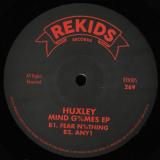
Pain Management welcomes London cult favourite DJ ojo, who arrives on the label with a hazy three tracker of trademark nether zone system music. On his most dubbed out full length to date, ojo span’s the full emotive spectrum of dub sonics with a range of both the eerie and more tender expansions of low end atmospherics, the resulting 12” equally suited for the club and the journey home alike.
‘Tongue Tied’ opens the record, a lysergic offering from the darker edges of dub music. A slippery fugue-state hit of narco-ambience built around a crooning, intelligible vocal refrain and chest shot sub weight. A real nightfall system pusher built to simmer in the early hours. It kicks off the EP on an amorphous, hypnotic note that sustains throughout.‘Oil Dub’ sinks deeper into the fog, melodic kinesis and expansive delays upholding an underworld of feedbacked percussion and tongue in cheek sub motion; a seven minute sound bath of ambiguous dub ASMR.
The B-side balances out the darker strains found on its counterpart with an overtly tender digidub closer. Clocking in at almost ten minutes long ‘Cloud Suck’ is a nebulous bliss of perpetually ascending late-summer warmth. The kind of liminal dream-state embrace that you wish would never end. True to the name, it evokes tender, dusk and dawn hued moments, a quiet ride-home flash of introspection on the way to or from some pursuit of meaning. Pain Management essential right here.
Limited run of 200 hand-stamped 12” records available now.
Cerca:dr res
Glossy Mistakes Reissues Resonance 001, a Proto-House & Trance Milestone from Belgium from 1992
Glossy Mistakes is proud to announce the reissue of Resonance 001, the groundbreaking debut EP by Belgian producer Fabrice Lagrange, created in collaboration with Frank Beekman and originally released in 1992. Long overlooked, this forward-thinking record captures a pivotal moment in the early European evolution of house and trance-melding minimalism, emotion, and club-oriented experimentation into a sound that remains strikingly fresh over three decades later.
Resonance 001 stands among the earliest European records to explore the fertile intersection of hypnotic house rhythms and atmospheric trance. The A-side, featuring The Awakening Earth and Pure Self, channels a stripped-down yet euphoric energy-deeply inspired by the spirit of Detroit techno but undeniably forward-looking. As Frank Beekman recalls: "This record was recorded in a very simple studio, with minimal gear, inspired by the Detroit techno sound."
On the B-side, the EP ventures further into experimental territory. Paris By Night offers a dreamy, tech-tinged house excursion, leading into Redondanz, a meditative downtempo closer that perfectly encapsulates the release's subtle charm.
The enduring appeal of Resonance 001 lies in its restraint: crafted with minimal tools, it delivers maximum emotional depth. It seamlessly blends hazy trance atmospheres, early house grooves, and ambient-inflected textures, capturing the open-minded, exploratory ethos of early '90s electronic music.
Now remastered for vinyl by Wouter Brandenburg, Resonance 001 returns in pristine form-faithfully preserving its original character while bringing new clarity to its timeless sound.
- 1: Love Will See Us Through This
- 2: Bergab
- 3: Die Bestie Mit Dem Brennenden Schweif
- 4: Ich Hab Von Der Musik Geträumt
- 5: Die Satanischen Fersen
- 6: Mein Eid
- 7: Pervert The Source
- 8: Fka M & M 1
- 9: Wheelgreaser
- 10: Hab Gnade!
- 11: Funke & Benzin
- 12: Your Fears Are Well-Founded
- 13: Mein Mo(Nu)Ment (Feat. Sophia Blenda)
- 14: Inkomplett
- 15: Rosa
- 16: Nation Of Resignation
- 17: Ein Haus
Man singt und es wird: Im Zuge eines Zusammenbruchs hat Max Gruber den Soloartist Drangsal gekillt und die Band Drangsal gegründet. Am Ende des Tunnels steht das im Juni 2025 erscheinende Album, Aus keiner meiner Brücken die in Asche liegen ist je ein Phönix emporgestiegen.
Seit über zehn Jahren sichelt Max Gruber mittlerweile die Zick-Zack-Schneise Drangsal durch die deutsche Poplandschaft: Harieschaim aus 2016, Zores aus 2018 und zuletzt Exit Strategy – das ihm 2021 Platz 6 der Albumcharts bescherte – erdachte Gruber größtenteils im Alleingang. Und dann war da noch etwas nach seiner Exit Strategy: Ein Zusammenbruch. Max Gruber wusste nicht mehr, ob und wenn ja, wie er weiter Drangsal machen will, veröffentlichte im Ullstein-Verlag sein literarisches Debüt »Doch«, gründete Die Benjamins, holte so gemeinsam mit Charlotte Brandi, Thomas Götz und Julian Knoth Hans-A-Plast Frontfrau Annette Benjamin aus dem Ruhestand und reaktivierte unlängst das 2016 mit Stella Sommer gegründete Duo Die Mausis.
Und doch, von innen wie von außen, immer wieder die Frage nach einem neuen Drangsal-Album. Wenn es denn überhaupt nochmal eines geben soll, erkannte Gruber, musste er die Arbeitsweise, auf deren Grundlage Drangsal-Songs entstehen, fundamental verändern. Auf alles Ringen folgte, was unvermeidbar war: Der Reset. Max Gruber hat den Soloartist Drangsal gekillt und die dreiköpfige Band Drangsal gegründet – zusammen mit zwei Mitmusikern, die ihn aus seinen Gewohnheiten gelöst haben: Lukas Korn und Marvin Holley.
Erstgenannter ist Gitarrist und Produzent, spielt in der Band Lyschko, produzierte zuletzt das Album silber von Mia Morgan und hat seit 2020 als Bassist an der Drangsal-Liveband partizipiert. Zweiterer studierte Jazz- und klassische Gitarre sowie Komposition in Stuttgart und Wien, stand mit Sam Vance-Law und Fil Bo Riva auf der Bühne und arrangierte für Film und Theater. Lukas Korn und Marvin Holley haben dafür gesorgt, dass sich die zentrale Figur im Kosmos Drangsal dreiteilt.
Das Liedermachen in Bandkonstellation ließ alle Angst platzen: Getragen von Euphorie nahmen Gruber, Holley und Korn ab Ende 2022 etliche Songskizzen und damit den Unterbau eines siebzehnteiligen Albums auf. Nach Kreativurlauben an der polnischen Grenze und Ostsee stand eine von Max Rieger produzierte und von Lukas Korn Co-produzierte vierte Drangsal-LP. Sie trägt den schwergängigen Titel Aus keiner meiner Brücken die in Asche liegen ist je ein Phönix emporgestiegen und erscheint im Juni 2025. Gruber, Holley und Korn haben sich auf das Credo so wenig wie möglich, so viel wie nötig verständigt – und dadurch einen Umbruch im Klangkosmos Drangsals manifestiert, der völlig neue Dynamiken mit sich bringt. Aus keiner meiner Brücken die in Asche liegen ist je ein Phönix emporgestiegen hält Leerstellen aus, in seinem Zentrum stehen, statt Synthesizer, Akustikgitarren, die immer wieder an der Grenze zu Blues und Jazz wandeln. Wo speziell auf Exit Strategy noch überzuckerter Synth-Pop preschte, ist nun Klavier zu hören; Orgel, Klavinet und Cembalo; Xylophon, Violinen und Celli; von Ralph Heidel gespielte Querflöten und Saxophone.
Dazwischen drei Episoden, in denen sich Gospel Chöre und Technobeats breitmachen. Max Rieger hat die drei dazu motiviert, Echtheit, auch Imperfektion im Moment der Aufnahme zuzulassen – und großen Anteil daran, dass »Aus keiner meiner Brücken die in Asche liegen ist je ein Phönix emporgestiegen« ein realistisches Abbild des Trios bietet. Die Stimmung? Dagegen eher ein Wechselbad. Max Gruber singt von Selbstentfremdung, vom Für und Wider des Stillstands, vom Sichhingeben und Sichwegschmeißen – mal auf deutsch, mal auf englisch, mal zart, mal angewidert. Grubers Stimme klingt, nach einer klassischen Gesangsausbildung, die der Einunddreißigjährige angetreten hat, zielbewusster. Umarmungen Marke »Ich hab von der Musik geträumt und Inkomplett treffen auf Gewitterwolken à la Mein Eid und dem Sophia-Blenda-Feature Mein Mo(nu)ment. Entlang rigoroser Entkernung und Hexenjagd geht es Bergab – für dich, für mich, für Max Gruber sowieso. Er ist über weite Teile der Platte hinweg auf der Flucht vor sich selbst, den alten Geistern, dem leidigen Wachzustand: Wär’ ich doch bloß nimmermehr erwacht, ich schliefe in ewigem Glück. Gruber sucht und sucht: Nach innerem Frieden, nach Gnade, nach unverbranntem Boden, nach neuen Versionen seiner Selbst – und das vergeblich. Immerhin scheinen Erinnerungen mit der Zeit zu verschwimmen: Grubers Worte – zu sich und zur Welt – klingen im hinteren Teil der Platte sanfter, vergebender, resümierender. Ein Schlüsselmoment? Das von der Schauspielerin Rosa Lembeck eingesprochene, Monolog artig formulierte Klanggedicht Rosa – Es ist so: Man singt und es wird.
Phantasy proudly presents a new AA single from Ewan McVicar, ‘Careless Drifter / Basic Foundation’. Undoubtedly one of the most prominent and successful figures in UK dance music in recent years, McVicar’s contribution to Erol Alkan’s long-standing London label is a love letter from his earliest days raving in rural Scotland. Debuted by McVicar at I Love Acid at Corsica Studios, and road tested at his own Handpicked parties, each track is a paean to communal party spirit that has informed his musical philosophy.
Patient but instantly trippy, ‘Careless Drifter’ coaxes dancers into a bottom-heavy bath of bassline and oscillations, revealing an alluring saxophone break that bridges the rawest end of the rave with unexpected opulence.
On the flip side, ‘Basic Foundation’ further strips back this instinct for club composition, dropping the tempo while dazzling with razor-sharp synths. The result is primo acid-house chug, alternating between light and shade, as McVicar’s knack for a melody emerges from his modular experiments.
- A1: For The Love Of Life (Ending Theme Full Version) 04 21
- A2: Grain (Opening Theme) 01 26
- A3: Drift Mind 03 01
- A4: Part 02 00
- A5: Float Flower 02 22
- A6: Collage Man 01 39
- A7: Sweet Home 01 53
- A8: Gingerly 01 40
- A9: Nacht Tour 01 36
- A10: Xenia 01 36
- A11: Room 02 16
- B1: Idler Wheel 01 13
- B2: Bush 02 01
- B3: Drift 01 47
- B4: Rest 01 33
- B5: Sweeper 03 03
- B6: Be Lit Up 01 30
- B7: Decola 01 35
- B8: Mid Point 01 44
- B9: Twip 02 03
- B10: Red Line 01 42
- B11: Angel Hand 01 48
- B12: Make It Home 03 47
- C1: What Do I See 02 25
- C4: Hold On 01 24
- C5: Close Your Eyes 01 55
- C6: Our Destinations Calls 02 08
- C7: Right And Wrong 01 35
- C8: Cast Upon The Wind 01 45
- C9: Catch 01 47
- C10: You Are The Move You Mak 03 11
- D1: S’alright 01 35
- D2: Faith 02 16
- D3: Than One 03 59
- D4: Present 01 32
- D5: The More That I See 01 58
- D6: It’s A Long Way To Go 02 02
- D7: We’ll Be Waiting For The Night 03 48
- D8: Changes 01 55
- C2: The Seeds Of Time 04 26
- C3: Before You Go To Sleep 02 15
A young doctor on the verge of greatness finds his career and life shattered after choosing to treat two children rather than the town mayor. The deaths of one of the children are inexplicable. What if he had saved a monster?
Monster, the manga created by Naoki Urasawa, is an acclaimed psychological thriller that has been a huge critical and commercial success. The complex and gripping story, which follows the moral choices of a surgeon confronted with a serial killer he has saved, has attracted a wide international audience. Monster has won several awards and is regarded as one of Urasawa's major works, affirming her place as a master of suspense in the world of manga.
Kuniaki Haishima is a Japanese composer best known for creating the soundtrack to the anime Monster. In addition to his contribution to Monster, Haishima has also composed music for TV series (Terra Formars and S-CRY-ed) and films (Tokyo Tribe and Helter Skelter).
- Ramping
- Cross-Temporal Sync
- Mosh
- Particles
- The Cyclical Culture
- The Violet Lux
- The Alignment Movement
- Zero-Ones
- Countdown
- Reclaimers
- Quantum Modern
PHASE SHIFTING INDEX is a time capsule record of Jeremy Shaw's vast original artwork that includes audio excerpts, voiceover passages and music composed by There in Spirit and Konrad Black. Shaw's seven-channel video, sound and light installation-that premiered at Centre Pompidou in 2020-uses science fiction, documentary, visual effects and synchronisation to induce an ecstatic experience in narrative temporality. Each video details the belief systems of one of seven fictional subcultural groups spread across time that aspire to induce parallel realities that could redirect the evolution of the human species through embodied forms of ritual, ideology and movement. The vinyl release serves as a gathering of the piece's key audio elements, focussing on their importance to the engineering of the artwork and their stand-alone listening qualities. Side A of the record follows the dramaturgy of the artwork in full-swing, including audio segments from four of its five distinct chapters. Written by long time collaborators Konrad Black and Jeremy Shaw together as There in Spirit, "Cross- Temporal Sync" soundtracks the strobing peak of the installation at the moment when all seven disparate videos fall into a unified choreography in which every person on every screen performs the same ecstatic series of slow-motion movements. The pulsing, hypnotic dirge aligns with the locked choreography in mood and action, caught somewhere between ecstatic trance and somatic takeover. A steady sub line, clipped stabs and a swooping choral gasp harmonise with the dancers movements onscreen while restrained filters open slowly to reveal a submerged melody that builds in intensity towards the chaotic rupture of Black's "Mosh". Here the score breaks into digital shards as heard through analog bodies colliding and pixelating into each other. The dancers eventual dissolution into "Particles" sounds like the field recording of a disembodied neural cosmos. The B-side of the record contains a narrative outline edit of the artwork comprised of music, excerpts and pieces of narration from each video. Listeners can follow along in an accompanying thirty-six page booklet of full-bleed film stills documenting each of the seven groups as they move through the five chapter dramaturgy. Composer Konrad Black's authentically backwards-glancing production and sound design is as disparate as the groups represented on screen. From the bespoke-16mm-tribal-techno of "The Cyclical Culture" and retro-cyber-funk of the "Zero-Ones," to the VHSdark- wave of "The Violet Lux" and skewed vocal/piano minimalism of the "Quantum Modern," each group exists in its own custom-made world out-of-time. The record ends where it began, with the full sequence of "Ramping" playing out as each subcultural world begins to lose control, galvanise, sync, rupture, atomise and scatter throughout the universe, only to loop back into another inevitable beginning. Phase Shifting Index premiered at Centre Pompidou, Paris, in 2020 and has since been exhibited in nine international venues including ARoS, Denmark, MONA, Tasmania, MAC, Montreal and Hamburger Bahnhof, Berlin
Satya is excited to welcome Sweden’s very own Chris Llopis, a veteran of electronic music, with his highly anticipated EP Echo Ridge, to its vinyl only catalog.
Chris has been a prominent figure in electronic music since the late ‘90s, releasing on respected labels like Fabric Records, Tooloop, and Micronica. Inspired by a trip to Spain at age 13, Chris began DJing on Technics SL1210 turntables and later immersed himself in Copenhagen’s vibrant techno scene. His first vinyl release on Tatsu in 1998 brought him global recognition. Today, Chris’s sound blends timeless influences with modern techniques.
Echo Ridge is inspired by Chris’s love for funk-driven bass lines and the energy of underground raves. “I wanted to create tracks with strong rhythms and a playful edge,” he says. “The bass line is the soul of a track, and this EP captures the vibe of late-night moments when everything clicks.” The EP combines the groove-heavy minimal style of the late ‘90s with a fresh, contemporary edge, delivering tracks that energize the dance floor.
Chris’s creative process thrives during early morning studio sessions. “It’s the perfect time for clarity and creativity,” he shares. For Echo Ridge, Chris used iconic gear like the Juno 106, Elektron Analog Four, Eventide H3000, and Roland Space Echo RE-201, alongside Ableton 12 and Max for Live, to craft its warm, textured sound.
Out on the shelves June 13, 2025, the EP is a celebration of Llopis’s evolution as an artist and his deep connection to the dance floor. With its groove-driven energy and meticulous attention to detail, the release is a must-have for fans of minimal house and vinyl enthusiasts alike.
- A1: Breakthrough
- A2: Innocence
- A3: Be Free
- A4: Blaze Awa
- A5: Goal
- A6: Honoo No Running Back
- B1: Dang Dang
- B2: Be Survivor
- B3: Blaze Line
- B4: A Day Dreaming…
- B5: Flower
- B6: Song Of Power
- C1: Go!!
- C2: Futari No Imi
- C3: Max Wind
- C4: Go For It!!
- C5: Atarashii Kaze
- D1: Make My Way
- D2: Thanks
- D3: Chain Of Power
- D4: Midnight Sunshine
- D5: Run To Win!
The story of Eyeshield 21 follows the protagonist Sena, the whipping boy of his classmates, who wants to earn respect by joining a club at the start of the school year. He crosses paths with Hiruma, head of the American soccer club, who recruits him for his exceptional running skills. They must quickly find 11 other players, as the inter-school championship begins in 24 hours.
Numerous artists and composers were involved in creating the theme music and accompanying songs, including Kosuke Morimoto, who contributed to various theme songs for Fullmetal Alchemist and One Piece. Any fan of the series will have a strong feeling of nostalgia when they recall the music that marked them during their teenage years. The very Pop-rock and J-pop tones will remind them of those after-school afternoons watching episodes of this epic anime on Game One. You'll also be able to hear the voices of the Japanese cast, including the voice of the main character, Sena Kobayakawa, on many of the credits and accompanying songs.
The manga turns 21 in 2023. To celebrate, the author wrote a 55-page one-shot called “Brain X Brave”, which appeared in early January 2024 in Weekly Shonen Jump. The anime has been broadcast frequently on Game One since September 2009 and on France Ô since September 2012.
Iori Wakasa, one of the leading lights of the Tokyo club scene is set to release his second 12” from his own label, “BOTANICA” which he established to express his own primal sensibilities.
The Concept of the Label:
Tokyo-based DJ/producer, Iori Wakasa launched BOTANICA to assert that his label’s activities in itself is art and a palette for his creative, self-expression. It is also based on 2 main concepts: To integrate the sensibilities of both "nature" and “artificial and human activities" and to “contribute music that presents a scenery from the listener's point of view”.
For Iori, his label is an interface of some sort and is also a symbol of his own personal musical expectations.
Iori produced these 2 new tracks during the recent pandemic when the world was under severe restrictions. While taking into account and focusing on both 'his current outlook' and returning to “the roots of his own production aesthetic', he strived to produce something that would substitute it and as a result, created these two new tracks and the artwork that are presented in the label's second release, 'The Party Is Here EP’.
In this EP, he also attempts to express the sentiment that 'the experience that music provides to people is invaluably infinite' and that 'if you truly want to go out and party, it will happen, then and there!’.
About the tracks:
For the track, ’Bedroom Disco’, Iori tries to express his memories of 'a virtual night of partying’ that he experienced during Covid and created this track while being ‘in a state of wanting to break free from oppression’ and reminiscing about a party in a bedroom at night.
He also wanted to express the idea that no matter what situation or environment you are in, you can go to anywhere you want if you really want to and with that sentiment, he wanted to express a scenerio that transcends it and at the same time, he also wanted to convey his feelings of nostalgia for the past, rebellion against the environment and his feelings of desire.
For this track, Iori did not use any sampled voices or field recordings and created it by layering pure sonic imagery repeatedly folded and desolved which triggered the creation of new developments while imagining the thought that “a party actually begins when you step out” and the swaying of emotions that take place from it.
’Tropica' is a track that Iori produced by heavily mixing a utopian feel that people have inside of them with his own sensuality and is designed to ‘guide you to a tropical seaside', regardless of what the listener may have experienced in the past.
Unlike 'Bedroom Disco', this track uses a variety of samples and envisages "many elements intertwining with each other, working together to create this sound structure”. And it also expresses that equal opportunity exists for anyone who wants to visit an imaginary tropical land as well as the hope that even a brief break of the mind can be created by yourself and those close to you, if one pursues it.
About the artwork:
The cover of this new EP, the concept text 'Is your window open?', and the label's logo was designed by illustrator, HILOSHI SHINOZAKI who also worked on the first release, BOTANICA EP. For over 10 years, he has been a regular visitor of Hawaii, where he tries to cultivate his "true way of life” in his art.
And, artwork for the cover and label design of the EP is complemented by the label design and art direction of the record by hiro, a graphic designer who has been his partner and best friend since the first Botanica EP.
hiro expresses Bedroom Disco track's shifting compositional changes and its complex series of sound waves by creating an intricately multi-layered design that is a perfect representation of the way he sees it.
Also initially inspired by the fluctuations of waves, islands, sun, rays, sky and time, the artwork of Tropica also found inspiration from a drawing that made by Iori’s daughter who drew a picture of a scenery when she listened to the track. So through this design, one of the label’s concept of “the label’s activities is in itself art” was realised via the surprising contribution coming from his own family.
- Creative Director Blues
- Dog Race
- Jukebox
- Six Music Dads
- Twenty Year Cycle
- Shout
- Get Clean
- Modern Love
- Get Clean (Live)
- Birkenstocks (Live)
- Six Music Dads (Live)
- Creative Director Blues (Live)
- Modern Love (Live)
After leading the cult performance art collective Lazarus Kane, Ben Hambro took a more introspective, lyrically driven approach with Vegas Water Taxi. Their debut album, Things Are Gonna Be Alright, was self-released in November 2023a beautiful yet jarring collection of songs capturing the chaos and contradictions of your twenties. Now, the album is getting reissued, along with its first-ever vinyl release via PNKSLM Recordings (ShitKid, Clutter, Chemtrails), featuring four exclusive bonus tracks recorded live at The Windmill. Hambro, who's also collaborated with artists such as Katy J Pearson, continues to craft music that resonates and surprises. RIYL: Stephen Malkmus, Townes Van Zandt, Courtney Barnett
"For Japanese people, min'yo is both the closest, and most distant, folk music" explains band-leader Katsumi Tanaka. "We may not feel it in our daily, urban lives, yet the melodies, the style of singing and the rhythm of the taiko drums are engrained in our DNA".
Initially indifferent to min'yo, a tragic event in recent Japanese history set Tanaka on his current path: "Following the Tohoku earthquake of 2011, I reflected on my life, work and identity. A fan of world music, I began searching for Japanese roots music I could identify with. Discovering mid-late 20th century acts like Hibari Misora, Chiemi Eri and the Tokyo Cuban Boys, I was captivated by their eccentric arrangements and how they mixed min'yo with latin and jazz music."
Lead singer Freddie Tsukamoto fell for min'yo after hearing a song from his hometown on a TV competition whilst in a restaurant. It was a revelation – until then he had been an aspiring jazz singer yet was uncomfortable singing in English. The restaurateur told him a min'yo teacher was his neighbour and the two connected. Tanaka and Freddie formed Minyo Crusaders in 2011 in Fussa, a city where the US military Yokota Air Base is located, in western Tokyo.
Recruiting other local musicians versed in afro and latin rhythms, they began hosting jam sessions at the Banana House, a building that was previously part of the military base and that used to house US soldiers. The band started recording their music, and their debut album "Echoes Of Japan" was released in 2017. It received huge acclaim in Japan and abroad, and was also released by British label Mais Um in 2019. Several European tours followed, as well as some US and South America gigs.
In this second opus, the Minyo Crusaders take us on a trip to Japanese folk songs fused with latin rhythms. Their unique arrangements breathe new life to classics like Kiso Bushi, Sado Okesa or Soran Bushi, among many other min'yo songs from all over Japan that were originally performed by Japanese fishermen, coal miners and sumo wrestlers hundreds of years ago. The magical groove created here proves once again that the Minyo Crusaders are one of the most dynamic representatives of the current Japanese world music scene. Yoi Yoi, Enjoy!
- A1: High Noon
- A2: Real Ones
- A3: Elevator
- A4: Go Brooklyn
- A5: Maybe So
- B1: One Life
- B2: Valleys
- B3: Eye See U
- B4: Free Nt Woke
- B5: Thank You
Following their 2021 collaboration on “To Kill A Sunrise”, Brooklyn native Kota The Friend runites with iconic Boston producer Statik Selektah, now also a full time BK resident, on the follow-up “To See A Sunset”. The two have crafted yet another classic album, picking up where they left off with some fresh and soulful boom bap anthems, continuing with the always inspiring theme of turning your dream into a reality and the realisation that you’re living your best life!
- Super Natural
- Sunshine Type
- What Got In The Way
- Butterfly Dream
- Curiosity
- Pure Devotion
- Nightlight Girl
- Breeze
- All That It Ever Was
- Living Small
- Bonnie (Rhythm & Melody)
Front man Austin Getz doesn't blink when asked to sum up Turnover's third full-length, Good Nature. "Learning," he replies. "This whole record is about learning. Opening your eyes to new things, going outside of your comfort zone, and learning to grow into something new."The album's unique blend of musical and spiritual growth is immediately audible on the opening track, "Super Natural," a late-summer idyll of intertwined guitar parts and laidback vocals. Listening to how the leisurely "Nightlight Girl" melts into a more propulsive selection like "Breeze," and the way Good Nature flows together as a seamless whole, it's also evident that the foursome has been paying closer attention to how artists from earlier eras made full-length albums: the range of textures, tempos, and dynamics on Good Nature are infuenced in part by bossa nova, cool jazz, electronic music, and psychedelic grooves. This infux of new infuences and inspiration, navigated by Peripheral Vision producer Will Yip, results in the band's best album to date. Good Nature comes from a place of calm and contentment, nurtured by looking inward.
Manuel Darquart’s Bluesurf89 EP is a dynamic exploration of electronic music's diverse genres, blending Balearic, House, Breaks, and Acid with a nostalgic twist. Out on Permanent Vacation, this five-track EP serves as an homage to sun-drenched afternoons, sweaty basements, and the soulful
vibes of the late '80s. Darquart’s unique ability to meld these distinct influences results in a release that's as danceable as it is atmospheric, bridging the past and present.
- La Brume (Odysseus Intro)
- Odysseús
- Tune Out
- 4: Sneakers On The Telephone Line
- Buffoon Of Love (Feat. Mayon)
- Into The Darkness Indeed
- Grenache (Odysseús Interlude)
- 369: (The Sun Gon' Shine)
- Head Against The Wall (Feat. Odessa)
- A River Keeps Running (When A Good Man Dies)
- Moonlight On Gaffey Street
- Viduy (Confession)
Nach 25 Jahren Herman Dune und 15 Alben freut sich BB*ISLAND, Odysseús zu präsentieren, eine neue Sammlung von Songs, die den Hörer auf eine Reise durch das turbulente Leben von David Ivar mitnimmt, eine Reise voller Sehnsucht, Schmerz, Liebe, Tod, Glaube und Erlösung. Es ist das erste Mal, dass Herman Dune mit einem externen Produzenten, David Garza, zusammenarbeitet. Das Set-up besteht fast ausschließlich aus akustischen Instrumenten, die live mit der Band in einem Raum aufgenommen wurden. Es ist Folk-Musik im typischen Stil von Herman Dune mit Anklängen an Americana, Country, jüdische und hispanische Traditionen, aber mit einer ganz neuen Wendung in Sound und Arrangements, vor allem im Vergleich zu seiner letzten rein akustischen Trilogie The Portable Herman Dune. David Herman Dune über die Produktion: "...David Garza getroffen zu haben war reiner Zufall. Ich mühte mich gerade mit einem Geigenarrangement für einen der Songs ab, als er sich in einem überfüllten Café in der Innenstadt von San Pedro an meinen Tisch setzte und mich fragte, woran ich gerade arbeitete. David, ein mit einem Grammy ausgezeichneter Produzent und Musiker, hatte mit Fiona Apple, Iron & Wine, John C. Reilly und den Milk Carton Kids gearbeitet und mit einigen meiner musikalischen Helden wie Lucinda Williams und Townes Van Zandt gespielt. Wir verstanden uns auf Anhieb, und er bot mir an, meine Songs zu produzieren. Wir begannen, die Stücke jeden Abend bei mir zu Hause zu spielen, und einmal pro Woche in einem französischen Restaurant namens Le Compagnon. David kannte die besten Musiker in L.A. - Leute wie Sebastian Steinberg am Kontrabass (Fiona Apple), Richard Edson (Schlagzeuger von Sonic Youth, Schauspieler in Jim Jarmuschs Stranger Than Paradise und Spike Lees Do The Right Thing), Odessa (violin, Edward Sharpe and the Magnetic Zeros) und Paul J. Cartwright (violin, Olivia Rodrigo). Als wir uns bereit fühlten, versammelten wir alle in meinem Haus für drei Tage Live-Sessions. Es war ein chaotischer, schöner Prozess, bei dem alle in einem Raum zusammen spielten, keine Kopfhörer, keine Overdubs - nur rohe, echte Musik. Aufgenommen und gemischt wurden die Sessions von Chris Sorem (ebenso Grammy-prämiert für seine Arbeit mit den mit den LA-Legenden Los Lobos). Chris brachte eine Wagenladung alter Mikrofone mit und konzentrierte sich auf "Raummikrofone" - djene, die die Atmosphäre des Raums einfangen. Er sagte, dies sei eine Technik, die auf Alben wie Buena Vista Social Club verwendet wurde, und es erzeugte eine Magie im Raum, die spürbar war. Sogar die traurigsten Lieder wurden lebendig mit so viel Freude, Energie und Elektrizität. Die Aufnahmen waren ungefiltert, organisch und hatten Seele. Als wir mit dem Abmischen begannen, waren wir alle vom Ergebnis erstaunt, wir hörten einen Moment in der Zeit, der sich gleichsam zeitlos anfühlte"
- 1: Ten Degrees Of Strange
- 2: Nether
- 3: The World To Come
- 4: Flood In The Desert
- 5: Tree Rings
- 6: Gods And Monsters
- 7: Enkidu Walked
- 8: Bonedigger
- 9: I Can’t Swim There
- 10: Home And Dry
- 11: Ferryman
Johnny and Robert began work on the album in the first weeks of the pandemic, wanting to make music that sang of those dangerous, disorienting spring days; when birdsong was brighter –– and the sense of bewilderment more powerful –– than any of us had known before. They drew inspiration in part from The Epic of Gilgamesh, the oldest surviving work of world literature; an epic poem from Ancient Mesopotamia that contains the earliest version of the Flood Myth. To Johnny and Robert, Gilgamesh resonated eerily with the present moment –– and it catalysed their song-writing. For Gilgamesh is a story of friendship, love, loss, grief, bad governance and good dreaming; of natural disaster and environmental crisis. It also contains the first recorded act of human destruction of the natural world: when Gilgamesh and Enkidu travel to the Sacred Cedar Wood, slay the guardian spirit of the forest, and cut down the trees with their axes, thereby bringing catastrophe upon themselves. Johnny and Robert wrote the album between March 2020 and February 2021, during a year in which we all wandered unsure of our path, lost in the cedar wood. The songs were composed in large part as a correspondence, through a back-and-forth of notebook pages, voice-recordings and WhatsApp-messages, at a time when lockdowns made meeting in person impossible. The first eight songs were recorded in an off-grid cottage deep in a Hampshire forest, with the sounds of chainsaws felling trees drifting in through the windows along with the birdsong. The result is an album at once urgent and ancient, which fuses poetry, landscape, myth and music into something unique. These are songs that ring with hope, love and sadness –– and one need not know anything about The Epic of Gilgamesh to be touched by them.
- A1: Chatham Drive
- A2: General Belgrano
- A3: Scapa Flow
- A4: The Wrong Man
- A5: The Klansmen Kometh
- A6: Thunderbird
- A7: Mumble The Peg
- B1: The Yorkshire Ripper
- B2: Flatfoot
- B3: Dogwatch On Monkey’s Paw
- B4: Every Corner
- B5: Can You Tell?
- B6: Dreadnaught
- B7: Shed Country ‘83
DESCRIPTION
Having endured no less than three long-players and a brace of singles featuring the caterwauling of Messrs Hampshire and Childish, the Milkshakes’ audience figured it might be time for an instrumental outing. In response the group gave them just that. But this was to be no run-of-the-mill effort – no Dick Dale-esque surf marathons or Shadowsy twangers are apparent here. These tunes are more ‘rhythm-and-mood’-based compositions; occasionally leaning more towards the Link Wray end of the spectrum – as you would probably expect. This IVth album (hence the name) was recorded in 1983 at Oakwood Studios – as were all previous releases – but this was the first in their new facilities in a converted church near Canterbury, which opened up a whole new golden vista of shimmering, silvery sounds in atmospheric conditions. Of course, the Milkshakes were having none of that. We suggest you plonk the wax on your gramophone and let whatever happens happens. Hasty bananas.
The road is a wrinkled timeline. Uncanny flatness conceals unfolding textures, transparent layers and open tabs. The truck cuts the landscape, tracing the road with a line of mad logic that composites time, space, thought. On “Le Camion de Marguerite Duras,” French duo Jean-Marie Mercimek have returned with a road movie for the blind. Composed and recorded by Marion Molle and Ronan Riou over six years across France and Belgium, this unlikely distillation of microtonal MIDI composition, French B.O., and post-punk chansons brazenly expands the duos’ penchant for lowkey narrative spectacle.
Across “Le Camion,” sounds form a theatrical screen. Our ears are the curtains drawn wide and listening with a look that pans across the shot. No title cards, they cut straight to action. The truck is a camera, zooming and framing the tracks as scenes. Songwriting and sound design blur in a tangle of delicate economy. The balance of mutant music-boxes and dewy miniatures recalls otherworldly hits from Gareth Williams’ Flaming Tunes, Residents, and catchier corners of the Lovely Music catalog. Strange, sure, but this flick is never quite a cartoon. Molle and Riou’s vocals dilate into a cast of very human characters. Voices sing borrowed texts like untrained actors (playing themselves, in fact) stepping into the frame once before disappearing forever. And when they’re gone, you miss them. But here in the truck, it all comes back again under the cyclic spell of repose in perpetual motion. Turn up the radio and appuyez sur le champignon. - Turner Williams Jr.
- A1: So Many Miles Away
- B1: Groovy Thang
Chicago recording artist Reggie Soul (real name Reginald Stone) recording career consisted of three 45singles spread over 3 separate labels. Firstly, the funk outing “I Got Jody” backed with the soulful “I Feel So Bad” for the Red Balloon label. “I Feel So Bad” was a Lee Sain composition which Lee himself recorded under the title of “Baby Don’t Leave Me” for the Broach label. Reggie’s “I Got Jody” also came out a second time on Nation Time Records as the flipside to “Soul Walkin’” a cover version of the James Brown song but mis-credited as the performing artist Reggie Smith?
Reggie’s third release “My World of Ecstasy/Mighty Good Loving” was released on the Scott Brothers owned Capri Records label in 1968. The fledgling Capri Records Company having been set up in premises at 409, East 47TH Street in Chicago’s Southside, used the front of the building as a record store with the rehearsal studios situated at the rear, the final recording sessions took place initially at some of the smaller independent studios across the city before using the major Columbia and RCA Recording Studios as Capri Productions grew. Reggie co-wrote both sides of his Capri 45 with Charles and Walter Scott respectively. The arrangements were provided by John Jackson and Bill McFarland who alongside Claude Williams provided the horn section to many of the Scott’s future productions. The Scott Brothers were also the house band at one of the Southside’s most popular night clubs ‘The Bonanza Lounge on 7641, South Halsted. Besides performing, they used the club to scout for potential artists for their label and it is believed that’s where their business relationship with Reggie Soul initially began.
Surviving witness accounts always cite Reggie as a solo performer which begs the question who are the credited ‘The Soul Swingers’ on the Capri 45? Well, it transpires that this was a pseudonym used by the Scott Brothers present on the recording, Charles (Chuck) drums, Tommy (bass guitar) and Walter (Rhythm guitar).
At the beginning of Soul Junction’s working relationship with Scot-Tees a further Reggie Soul unissued session was mentioned and sure enough two tape boxes arrived one containing “My World Of Ecstasy/Mighty Good Loving”, great, but disappointingly the second named tape had been reused as a rehearsal tape of several recognizable riffs of later Scott-Tees productions, doh!
Then months later lady luck intervened, a box containing two unmarked acetates held together with a nut and bolt was found. After considerable investigation, it transpires that they are the missing Reggie Soul tracks which we now present to you. Both songs are A.C Carson compositions, The A-side “So Many Miles Away” is a wonderful crossover song that shares some lyrical similarities to fellow Capri stablemate Judson Moore’s released Chicago Music Bag 45 “Lisa” while the flipside of our release features Reggie’s interpretation of Judson’s “Groovy Thang”. So, at long last Soul Junction are able to present to the lost Reggie Soul sessions that several veteran soul scribes who known their onions have likened to another great Chicago recording artist, the mighty, Tyrone Davis.
2025 Record Store Day title - now available for general sale. A very special album to mark Room In The Sky’s 200th physical release. A selection of beautiful instrumental tracks, and featuring some of the best reggae musicians: Vin Gordon who basically played 90% of all the reggae hit horn lines , from Studio One to Bob Marley & the Wailers; Ernest Ranglin top jazz/reggae guitarist, now 93 yrs old and still playing, he produced the first Jamaican number 1 record “My Boy Lollipop” for Island Records; Dean Fraser, the number 1 Jamaican sax player; The Megahband - Michael Fletcher and Alborosies’ riddim section; Sly Dunbar the greatest reggae drummer; Alan Weekes - UK jazz reggae guitarist who played on most of UK reggae created in the late 70s, and 80s, and produced Carrol Thompson’s Hopelessly in Love LP; Jackie Mittoo responsible for 80% of all the biggest reggae riddims.