Repress!
Leif Vollebekk, the Montreal singer songwriter and multi instrumentalist had hit a wall. In the midst of endless touring Leif found himself retreating to his lonely hotel rooms after shows and listening to Nick Drake's 'Pink Moon' alone in the dark. His own songs didn't sound right and he felt the bright spots in his sets were the covers he'd end with: songs by Ray Charles or Townes Van Zandt. In this deep blue mood he booked a secret show at a Montreal dive bar, only playing covers with a band that rehearsed once. The experience led Leif to change his approach to songwriting: explore the ideas that came spontaneously to him, and let the songs shape themselves. Soon the songs came pouring out of him. This approach is what created the lush, freewheeling and often devastating 'Twin Solitude,' out February 24 on Secret City Records.
"By the time the last notes die away, all that's left should be you," Leif says. "And I'll be somewhere else. And that's Twin Solitude.'
Leif's third album, features 10 delicate and expansive original songs, with lyrics that pour out of this singer songwriter that are often compared to Jeff Buckley. Leif's words lay on a bed of elastic instrumentation full of piano, synthesizer, guitar, rich electric bass and strings.
Several songs on the album came to Leif and were written in one sitting. 'Into the Ether' came to be while he was exploring a Moog synthesizer. 'Elegy' is a bedside soliloquy, of love slipping through fingers and came to Leif while he was riding his bike through Montreal. The meditative 'Michigan' was written on a half-tuned guitar and fully written as he was about to go to sleep. Other songs on the album capture the countless hours Leif has spent on the road, crisscrossing North America. 'Big Sky Country' recalls a trip to Vancouver with his family when he was young, never forgetting the expanse of Montana and listening to Ian Tyson's song 'The Gift' in the car over and over again.
'Twin Solitude' features Olivier Fairfield from Timber Timbre (drums), Sarah Page from the Barr Brothers (harp) on 'Rest' Shahzad Ismaily of Marc Ribot's Ceramic Dog and SecretCheifs3 (bass) on several tracks and the string duo Chargaux throughout the album as well. It was engineered by Dave Smith and recorded at his Breakglass Studios in Canada. Produced by Leif Vollebekk.
Vollebekk made his album debut in 2010 - and since then has performed at the Newport Folk Festival, and shared stages with Daniel Lanois, Beth Orton, Sinéad O'Connor, Patrick Watson, Coeur de Pirate, William Fitzsimmons and Sam Amidon. His debut 'Inland' was described as beautiful, memorable and moving' by NPR and timeless and monumental' by The Independent.
Поиск:dr res
Все
Nina Ryser's music has always inhabited its own world; a singular and cohesive collection of Keyboard-centric home recordings that marry her undeniable pop sensibilities with a truly bizarre dreamlike aesthetic. With a solo career spanning 7 releases as well as her work in the highly influential art-punk trio Palberta, Nina's artistic voice has been a staple in the American underground for over a decade, her distinctive and consistent sound earning a cult following. Her latest effort Water Giants signifies a departure in both sound and artistic practice - her first solo release recorded outside of her home studio, with a myriad of first time collaborators, it's Nina's most lavish and expansive offering to date, honing in on the heartfelt songwriting at the core of her work. After completing her usual process of demoing the songs for Water Giants, Nina felt that she wanted to try something new, escaping the confines of her minimal studio setup and the limitations of working alone. At the recommendation of several friends, she began working with Lucas Knapp, a Philly based producer who has contributed work to many Dear Life releases (including Florry's The Holey Bible, Hour's Ease the Work, and Joey Nebulous's Joey Spumoni Creamy Dreamy Party All the Time ). Lucas and Nina's recording sensibilities aligned quite seamlessly, breathing new energy into the songs in what she describes as an "effortless collaboration". The result is some of her most pristine experimental pop offerings to date, centering Nina as a dynamic performer and lyricist without foregoing the surreal qualities of her previous work. The album features contributions from many of her peers in the Philly music community, including Jill Ryan (Great Time), Victoria Rose and Nino Soberon (@, Brittle Brian), Eli Kleinsmith (The Knee Jerk Reaction), and her husband Gabe Adels, whom she frequently collaborates with in the synth-pop duo Data. Even the cover art is a departure for Nina, who has previously crafted it herself or with longtime friend/visual artist Izzy Kross, this time assembling a collage of photographs taken by Eve Alpert (Palm) fit for the album's newfound dimensionality. Lyrically, Water Giants stands as Nina's most personal work to date. Taking a cue from her previous release, I Miss My Dog, which was written as Nina was processing the imminent loss of her and Gabe's dog Billy, Nina approached the writing process with unbridled honesty and chose not to edit or overthink her words as she had in the past. The result is a number of candid, heartfelt reflections on love, illness, addiction, anxiety, and the beautiful absurdity of a trash pile on the street. Interspersed throughout the album are Nina's signature woozy instrumentals, which add some escapism to the grounded nature of the material. By putting faith in a newfound collaboration without straying from her natural instincts, Nina has crafted the most dynamic album in her discography, an exciting testament to her songwriting prowess and what can be accomplished by stepping out of your comfort zone as an artist.
Combining the signature soundscapes of Scorn with tartareous textures, the current album "The Only Place" reaches a psychedelic groove, based on what Harris calls "Pushing an original idea further" with his own shades of light and dark and celestial electricity of what SCORN is. These 10 tracks add elements unheard in Scorn since Evanescense and Gyral - ethereal ambiences and floating, near-melodic-but-not-quite moments, a signature of Harris' abilities to generate feelings in a lost world of his own creation. Mick Harris is one of the world's greatest compositional treasures. Starting his career as the energy dynamo behind the drum kit of the UK's Napalm Death, he made the term Blastbeat a household reference, wrote the band's music on his mother's one string guitar, and joined the Guinness Book of World Records for composing the world's shortest song. In the decades succeeding, he has re-inventedmusic several more times, from the wild abstract jazz of Painkiller with John Zorn and Bill Laswell, to the drowning ambience of his Lull project, all while continuing to build a world that he can truly call his own - the dark post-dub of SCORN. "Reaching 54 this year - this won't stop the challenge, driving me more so now than ever" - says Mick Harris, commenting on the recent phase in his creativity. The pandemic isolation and lockdown pushed the work of the maestro more than anything else could have. In 2021, his output is ever-increasing, releasing the newest collabs with Justin K. Broadrick and the single "Distortion", featuring one of the most outstanding voices of hip-hop - Kool Keith - his closest collaborator, Ohm Resistance founder - Submerged. Commenting on the release of "Distortion", Mick Harris said to mxdwn: "I enjoy collabs - they bring something different to the swim." Working on his own and collaborating with everyone from Sleaford Mods' James Williamson, on the previous SCORN release or with Kool Keith and Submerged on "Distortion", Mick Harris never had problems with putting energy into beats and sound landscapes, combining various surreal elements with three basic elements that always push Harris further, that are extremely crucial for both Mick Harris and SCORN as a project - frustration, anger and anxiety. 2024 vinyl version on orange coloured vinyl!
- 1: Greetings (Intro)
- 2: Here, Alive (Spirits High)
- 3: Alive And Free (Interlude)
- 4: Magic (Let Yourself Go)
- 5: Clear The Bench (Interlude)
- 6: Butter (Green Light)
- 7: Breathe (Interlude)
- 8: We Are The People (All Around The World)
- 9: Liberation And Love (Interlude)
- 10: Unguarded (Still)
- 11: Still (Love)
- 12: Breathe (Again) (Interlude)
- 13: Always Love (Always)
- 14: Dreaming Out Loud (Outro)
Mystic, member of the legendary rap collective Digital Underground, is releasing her 3rd album Dreaming In Cursive: The Girl Who Loved Sparklers on Vinyl. She is most known for her classic Cuts For Luck and Scars for Freedom which was released on vinyl last year. This new album find a return to her roots working with long time collaborator Walt Liquor to create the sonic landscape she's most known for. There was a crowd-sourcing campaign to create the visuals for this project that was successful and from it came three visuals that will be the foundation for a short film released this summer called A Black Love Trilogy. This project is the healing balm the world needs in these trying times.
GRAMMY-nominated rapper, singer, and Bay Area legend Mystic (affectionately known as the “DU Goddess of Digital Underground”) has returned to bless the world with a new album like only she can. "Dreaming In Cursive: The Girl Who Loved Sparklers" is Mystic’s first new release from her label, Beautifull Soundworks, and is produced by herself and Walt Liquor. With song and voice that resonates with the beauty of unadulterated womanhood, Mystic’s new album is what she coined, “Healed Black woman music.” As a seasoned veteran in the music business, Mystic reminds us of her ability to seamlessly weave together harmonies and vivid lyrics that invoke thoughts of love, community, and healing. Always on time with her offerings, this new project warms the soul as only Mystic can—a perfect reminder to long-time fans of their love for her and a welcoming invitation to music lovers around the world looking for high-quality, meaningful, and banging music at once.
Quote: “I am known for moving in between the intersections of trauma and healing--the beauty and the pain. My healing journey and life journey have brought me to a place where the art reflects my level of healing and the knowledge, wisdom, and joy I passionately pursue. My fans have healed and grown with me, and I look forward to the joy and conversations this album will encourage.”
Born in Aldershot on 11 September 1947, Catley's family moved to the Tile Cross area of Birmingham when he was young. He went on to attend the nearby Central Grammar School for Boys (Birmingham) and left to start an apprenticeship at the GPO before deciding on a musical career shortly after meeting similarly minded individuals at college. Whilst at college he joined several bands, such as The Smokestacks (Jeff Clark-guitar, Ron Savage-guitar, Derek Danks-bass & Brian Worrell-drums, Life and Clearwater). His first professional band was when he joined local outfit The Capitol Systems. The initial line-up was Bob Catley (vocals) Paul Sargent (guitar) Paul Whitehouse (bass), Dave Bailey (keyboards) and Bob Moore (drums). Shortly afterward they changed their name to Paradox, inspired by a science-fiction novel. A one-off deal was arranged with Mercury after Paradox had come to the attention of Francis Rossi and Rick Parfitt. The tracks were "Ever Since I Can Remember", backed with "Goodbye Mary". In addition, they recorded "Mary Colinto" and "Somebody Save Me". All of these songs were written by Dave Morgan. Paradox played festivals in the Netherlands and Italy before splitting up upon their return to the UK in 1970. Formed in 1972, Magnum throughout the next 16 years consisted mainly of Bob Catley on vocals and Tony Clarkin on guitar. Magnum began as the house band at Birmingham's famous Rum Runner night club (later the home of Duran Duran). They began to develop their own style by playing Clarkin's songs at a residency at The Railway Inn, in Birmingham's Curzon Street, in 1976. Joining Clarkin and Catley were drummer Kex Gorin and bassist Dave Morgan (later a member of ELO). Their most notable success during these early years was the Jeff Glixman produced Chase The Dragon (1982) which reached No. 17 in the UK, and included several songs that would be mainstays of the band's live set, notably ‘Soldier of the Line’, ‘Sacred Hour’ and ‘The Spirit’. Their breakthrough album came in 1985 with On a Storyteller's Night which featured the single ‘Just Like an Arrow’. This success continued in the following years with the Roger Taylor (Queen) produced Vigilante in 1986, the top 5 album Wings of Heaven in 1988, and the Keith Olsen produced Goodnight L.A. reaching No. 9 in the UK album charts in 1990. Subsequently, Clarkin decided to maintain a tighter control, and after their initial mainstream success, the band lost their major label backing and returned to a more personal level of production. This finally found the band splitting and the formation of Hard Rain in 1995, which saw Clarkin pursue a more Pop orientated direction with a band that included Sue McCloskey on lead vocals. This new direction didn’t sit well with Catley, and after a headline performance at The Gods in the late 90s, a conversation with Bruce Mee of Now & Then Records saw Catley agree with a decision which eventually led to his debut solo album, ‘The Tower’. This release was completely written by Gary Hughes of Ten, with the writing completely decided to be in the vein of classic Magnum. The album itself was recorded by various members of Ten, including the amazing Vinny Burns (Dare) on guitar. On release, the many positive reviews concluded that the release of ‘The Tower’ had succeeded beyond its wildest imagination…..and Bob Catley’s solo career had been launched with amazing success!! With a lyrical intricacy and majestic pomp, songs like ‘Far Away, ‘Fear of the Dark, ‘Madrigal’ and ‘Deep Winter’ take you back to that glorious period of Magnum between ‘Chase The Dragon’ and ‘Wings Of Heaven’ whilst hard melodic rockers such as ‘Scream’, ‘Dreams’ and title track ‘The Tower’ show just what Magnum would have sounded like if they’d gone a little bit harder. Another absolutely brilliant album that totally deserves to be filed alongside those mid-period Magnum classics.
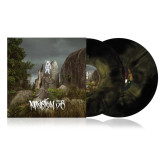
After over a year spent in a slight creative slump in a crumbling terraced house in Tottenham, Jam Baxter rang his label boss while heavily intoxicated to request they fly him to Bangkok forthwith, to rejoin forces with '...so we ate them whole' producer and engineer, Chemo. After an initial period of understandable hesitancy, the flights were booked and Baxter found himself suddenly regurgitated from the belly of a Jet Airliner into the magical and surreal surroundings of Mansion 38.
Mansion 38 is the name of the apartment block in Bangkok in which Baxter wrote the entire album, all the while going slowly insane on a heady mix of local liquor and multicoloured pharmaceuticals. The album is very much a product of the month he spent there in a dream-like state, becoming a delusional half-man half- goat figure to be admired and feared in equal measure.
Despite not being the wholesome and creative Zen retreat he anticipated and most probably needed, the backdrop of seedy late nights and impulsive tropical hedonism has resulted in some of his most intriguing and honest work to date. Chemo once again provides the haunting and evocative canvas that is all too perfect for Baxter's colourful imagery and dark psychedelic storytelling, blending a huge array of influences into an album that flows seamlessly from start to finish.
With comrades Lee Scott and Trellion flying to Bangkok on a whim to record their contributions and with videos shot in Bangkok, Hanoi and London this is truly an international project born of grand ambition and abject madness.
Mansion 38 is clear proof that after several years and multiple solo and group projects, Jam Baxter is still angrily shoving the boundaries of hip hop and lyricism further outward.
What an unbelievable record. From the wild cover to the iconic breakbeats, Roots from Ian Carr’s Nucleus is one of the dopest albums we know. This is seriously thick, funky-prog jazz-rock heaven. Originally released on Vertigo in 1973, other than a couple of versions at the time for other territories, Roots was never re-pressed since so it’s gone on to become another one of those impossible to find records.
Maybe it was a little too out there for the time, but it’s aged very, very well indeed and this Be With re-issue, re-mastered from the original analogue tapes, shows off just why this deserves to be back in press.
Genius trumpeter and visionary composer Ian Carr was one of the most respected British musicians of his era. He was a true pioneer and saw the potential in fusing the worlds of jazz with rock, just as Miles Davis and The Tony Williams Lifetime did in the US. In late 1969, following the demise of the Rendell-Carr quintet, and tiring of British jazz, Carr assembled the legendary Nucleus. Regarding music as a continuous process, Nucleus refused to “recognise rigid boundaries” and worked on delivering what they saw as a “total musical experience”. We can get behind that.
Under bandleader Carr, Nucleus existed as a fluid line-up of inventive, skilled musicians. This constant evolution and revolution was all part of the continuous musical exploration and discovery that took jazz to new levels.
Working together with producer Fritz Fryer and engineer Roger Wake, the seven compositions by Carr, Brian Smith and Dave MacRae that make up Roots flirt with perfection, and Nucleus at that time made up of the cream of 1970s UK jazz with Brian Smith on tenor saxophones and flutes, Dave MacRae on piano and electric piano, Jocelyn Pitchen on guitar, Roger Sutton on bass, both Clive Thacker and Aureo De Souza on drums and percussion, Joy Yates delivering the vocals and of course Carr on trumpet.
The spellbinding title track immediately renders the album indispensable. Riding the illest of loping breakbeats, “Roots” is low-slung, doped-out heist-funk. An absolute monster. If it sounds familiar then that’s likely down to it being sampled by Madlib for Lootpack and Quasimoto’s “Loop Digga”, as well as by a whole host of beat manipulators. “Roots” conjures prime instrumental hip-hop / beat music, only 20 years ahead of its time. Truly, these are the roots. Through sinuous bass, twinkling keys and a hypnotic guitar riff, a smoky brass motif weaves its way into a gloriously deep haze around Carr’s solos. “Roots” is over 9 minutes long, but there’s not a single wasted second, not surprising given that this is a condensed version of an originally 40 minute long commissioned composition.
The soothing vocal fusion delight of “Images” follows. Meticulously constructed, with gorgeous flute work from Brian Smith, with Joy Yates’ silky vocals and Dave MacRae’s Rhodes never sounding better. The cool, driving “Caliban” closes out the first side. Originally the third movement in a four part commission to celebrate Shakespeare’s birthday it stands up on its own, all robust rhythms and blended brass. Keyboard colour and Carr’s trumpet are splashed across the funk drums and basslines (and there’s even some bamboo flute). This really is fusion: the elements of jazz and rock coming together in beautifully synthesis.
Side two opens in riotous fashion with the short, thrilling samba of “Wapatiti”. Next up, “Capricorn” forms a smoothed-out, jazzy constellation. Mellow and dreamy, its twinkling percussion and languid horns slowly build the vibe before head-nod drums and a killer bassline enter the fray. With a distinct heaviness that Black Sabbath would’ve envied, “Odokamona” is a venomous slice of riff-soaked jazz metal (yes, you read that right), elevated by Carr’s wah-wah horns.
The album closes with MacRae’s exceptionally cosmic “Southern Roots and Celebration”. Very much in conversation with Weather Report, it opens as a languorous, spiritual jazz of chiming keys and serene guitar that turns slowly, gorgeously into a mid-paced, brass-laced banger. It’s another sure-fire party starter and the sound of the band having a righteous blast, building an ecstatic chaos that ends with Yates screaming.
And of course we need to talk about Keith Davis’ cover for Roots. Perhaps the coolest record cover of all time? Certainly one of the most bonkers. Just your run-of-the-mill high-gloss, acid-tinged airbrush dystopian/utopian living-room party scene. Consider this your chemical flashback trigger warning.
Front-and-centre the hip-to-death green robot holds court with their giant ball of yellow barbwire wool, hooked up to… something(?) being teased out from under the stairs (probably best not to ask). A thoroughly zoned-out, long-legged Pop Art party-goer lounges half-plugged in to the painting behind her as a pair of legs flail into shot from the the top of the stairs opposite. We won’t even begin to guess what the chap’s up to in the middle, but the view out of the windows is rather nice, and someone’s already got the hoover out ready to tidy up. All of the Nucleus sleeves are something special, but this particular one? Crikey.
This Be With edition of Roots has been re-mastered from the original Vertigo master tapes, Simon Francis’ mastering working together with Pete Norman’s cut to weave their usual magic with these wonderful recordings. The crazy cover has been restored at Be With HQ as the finishing touch to this long overdue re-issue.
In this electrifying 2024, we're buzzing with excitement as we celebrate 40 years of Flexi, the record emporium that's weathered countless storms amidst the ever-shifting tides of the music industry, catering to vinyl aficionados across the ages. Alongside the raves and swag, no doubt, there's a killer compilation dropping on the indie label "Flexi Cuts," dubbed evocatively as "Musica Solida" spread across 3 or perhaps 4 12-inch samplers, boasting a carefully curated selection of singles from cherished Flexi-affiliated artists and producers. The vision? To cultivate a virtuous movement of sublime tunes, echoing the fervor and zeal to persist within the realm of quality that Flexi embodies within the Italian scene, alongside kindred spirits... despite the daunting challenges of the market in recent years.
Musica Solida # 1 showcases
DJ Rocca: One of the most solid producers on the panorama, a respected maestro of the clubbing scene in Italy and worldwide.
Club Soda: Live electronic ensemble, still dreamin' from their latest EP 'Basso e Batteria', which packs an unreleased track recorded directly from their house-flavoured jam sessions.
Lex (Athens) & Locke : A Greek producer who is well established in today's dance house scene, with quality-vibey releases and a very nice and classy and groovy sound. We will definitely hear from him in the future!
Hiroyuki Kato: Emerging Osaka-based multi-instrumentalist makes his debut with a very punchy and catchy track!
The Mechanical Man (feat. Bob Vito) : Neapolitan super producer. Raw-sounding, gritty, powerful and never dull, a pleasure to have him with us.
The record will be released in about 200 vinyl copies no more.
Packaged in the classic discobag 2- holes, with a distinctive letterpress print in a beautiful silver cover.
Compiled by Simone Guerra aka Relative
Mastered by Francesco Brini (except track B1, Mastered by Marco Spaventi)
Distributed by Rubadub, Glasgow
Pressed by Desslab
Design by GLZ
Following on from his 2022 debut release on American Dreams Records, 'Choreographies of Decay', J. Doursou offers a critical reflection in 'The Deafening Veil' of the West's warped relationship with war in other regions.
The Deafening Veil has early support with reviews confirmed with MOJO Magazine, Headphone Commute (single premiere), A Closer Listen, and Noise Narrative. A writer from Quietus is also pitching to editorial with a review TBC. Doursou began the creative process of the album when Russia invaded Ukraine. The album's lead single, 'song for Elena', is a tribute to Doursou's close friend from Ukraine. The rest of the album critiques the silence that surrounds war in other regions.
Aesthetically, Ed Schrader’s Music Beat hates to tread water. At the same time, the Baltimore-based two-piece of vocalist Ed Schrader and bassist Devlin Rice won’t force their songs to fit a preconceived style. “The next album’s always gotta be different from the last one. We’re different people from record to record. So, writing authentically to ourselves will always bring our work to a place that we haven’t been to yet,” Rice said. Schrader added, “We’re terrified of turning into AC/DC. We never want to be married to one scene or time or sound. We want to be the Boba Fett of bands! Constantly altering the way in which we make records has been pretty key in that process.”
For Orchestra Hits, the band’s latest, that alteration was welcoming longtime musical comrade Dylan Going into the fold as a co-writer and co-producer. A songwriter in his own right, a guitar sideman for ESMB on their last two tours, and a collaborator with Rice in the noise riffage band Mandate, Going had both a unique vision and an intimate familiarity with the ESMB vibe.
“Dylan came to every show we’ve ever played in New York—no matter how weird it was,” Schrader said. “He’d be standing there ready to move an amp or feed us barbecued cactus after the gig and toss on some Golden Girls so we could decompress. It felt like family as soon as we began working, but I honestly had no idea how damn good he was at tossing out these hooks.”
According to Schrader, the songs “just poured out of us” over the course of a highly caffeinated three-day weekend in a tiny room in Devlin’s house while his cat, Sandy Goose, screamed continually. “It was like three kids hiding from the world to get into some lovely mischief,” they said. The lack of external pressure in the process gives Orchestra Hits an almost paradoxical vibe. For all of the album’s layers, that mix live and sequenced instruments, it never loses the raw energy of a small handful of friends in the same room plugging in, cranking up, and playing until they pass out.
Lyrically, the album finds Schrader, now 45, meditating on experiences in their youth to make sense of the present moment. “We are not into the garden,” Schrader wails on the relentless “Roman Candle,” a song about the sad debacle of Woodstock ’99, and a direct response to Joni Mitchell’s “Woodstock,” a utopian ode to hippie idealism. A 19-year-old Schrader, having snuck into Woodstock ’99 through a hole in the fence, was there the night members of the crowd used candles intended for a vigil for victims of the Columbine High School massacre to set fires all over the grounds. Even before the fires, Schrader remembered feeling disconnected from the music, the nostalgic cash grab, and the meatheads in the crowd. After watching a press tower collapse, they boarded a random shuttle bus and were dropped off near a Denny’s. “It was a far cry from the Garden of Eden,” Schrader said. “That experience defined what I didn’t want to be a part of, and yet America is more like Woodstock ’99 than ever.”
With percolating synthesizer arpeggios, and climbing bass grooves, “IDKS” is the album’s dance-floor slapper. “’IDKS’ is a funny one,” Schrader said. “We already had a pretty satisfying suite of songs when Dylan was packing up to head back to New York, but he missed the train because of a freak snowstorm. Realizing he’d be stuck in town another day, he says to me, ‘Here’s this other weird thing I have.’ It was ‘IDKS.’ The hooks were so good I felt like Homer Simpson at a free donut convention. I just dove right in, and we cranked that baby out in like 20 minutes.”
Lyrically, “IDKS” is a letter from the true self to public-facing self. “It’s an angry song,” Schrader said. “Because the public-facing self is always looking for an easy escape, but it forces the true self into a cage. I honestly thought my lyrics were corny and was about to change them, but Dylan was digging it just the way it was. So that’s what you hear.”
With the soaring “Daylight Commander,” the band went against all of their musty-basement-bred instincts. “I went full High School Musical with the vocals,” Schrader said. “At first it felt almost embarrassing, but I remember reading somewhere that Bowie recommended always floating a little bit above your comfort zone, and that’s what we did here.” The song is part exercise in absurdity and part pop Trojan horse. “If ever we had a ‘Shiny Happy People’ moment, I guess this is it,” Schrader said.
- A1: Wtp (Feat Metronomy) (4 26)
- A2: Beat Of Your Heart (Feat Asdis) (3 31)
- A3: Dirty Pleasures (Feat Lorenz Rhode & Jake Shears) (5 34)
- A4: Honey Boy (Feat Benjamin Ingrosso, Nile Rodgers & Shenseea) (3 50)
- B1: Paradisco (Feat Datebull) (7 08)
- B2: Paradise (Feat Sophie & The Giants) (3 19)
- B3: Bad Company (4 44)
- B4: Contact (Feat Yung Bae & Tobi) (5 04)
- C1: Can't Stop Loving You (Feat Morgan) (3 16)
- C2: Substitution (Feat Kungs & Julian Perretta) (3 03)
- C3: Heartbreaker (Feat Chromeo) (3 51)
- C4: Something On My Mind (Feat Duke Dumont & Nothing But Thieves) (3 38)
- D1: Higher Ground (Feat Roosevelt) (4 35)
- D2: All My Life (Feat The Magician) (3 25)
- D3: Die Maschine (Feat Friedrich Liechtenstein) (8 46)
Purple Disco Machine's third studio album "Paradise" will be released on September 20th. On the album, Purple Disco Machine has collaborated with artists such as Metronomy, Jake Shears, Duke Dumont, Sophie and the Giants, Nothing But Thieves and many more.
With over 1.8 billion streams worldwide, a Grammy win for Best Remix for Lizzo's "About Damn Time" in 2023 and being named Beatport's #2 artist of all time, Purple Disco Machine continues to dominate the global dance music scene with each new release. His recent successes include collaborations with international superstars Nile Rodgers, Benjamin Ingrosso and Shenseea on 'Honey Boy'.
Purple Disco Machine grew up in Dresden and developed his passion for disco and house music, which has seen him become a worldwide radio and streaming sensation with hits such as "Hypnotized", "Fireworks", "Dopamine", "In The Dark" and "Substitution". Beyond radio, Purple Disco Machine is a respected force among DJs worldwide, while the tracks 'Body Funk', 'Dished (Male Stripper)', 'Playbox' and 'Devil In Me feat. Duane Harden & Joe Killington' continue to dominate dance floors. Purple Disco Machine has remixed tracks for Dua Lipa, Mark Ronson, Calvin Harris, Sir Elton John & Britney Spears, Fatboy Slim, the Rolling Stones, Ryan Gosling's "I'm Just Ken" and many more
The maestro of nu disco is also a dedicated performer. His energizing festival appearances include Coachella, Tomorrowland, Lollapalooza, Ibiza and many more. Purple Disco Machine will embark on his own sold-out PARADISE tour of mainland Europe in the fall.
Purple Disco Machine's influence on the global dance scene is undeniable. His tireless commitment to inclusion and diversity in music ensures that his legacy will endure for generations to come.
The album PARADISE is another homage to the new age of disco and surprises with numerous top-class dance features, as well as of course the big hits of recent months.
Ever-evolving the mythologies and magic of Dialect's sonic sphere, Andrew PM Hunt returns with Atlas of Green, elegantly molding unexacting details of memory and mistranslation into the framework of the British musician and composer's creative pursuit. The album imagines a young musician named Green working in a future dawning era where lost signals and enduring impulses are unearthed from the sediments of technology and time. Across twelve compositions, Green becomes the compass in an epoch of transition; one shaded with pastoral patinas and studded with the fragments of allegorical ruin. As tattered as it is tender, Atlas of Green is a patchwork of scavenged relics and bygone hues, cast through the iridescent shimmers of a mid-future in flux. Growing up on the Wirral Peninsula in North West England, Hunt was surrounded by stone age landmarks and rock carvings that infused the landscape with legend. It was beside those carvings on a residency at Bidston Artistic Research Center where he began the journey of Atlas of Green, experimenting with tape loops and exploring the center's library of sci-fi. Here Hunt also encountered the work of Italian philosopher Federico Campagna, a writer who believes we're at the end of our current world. This encouraged Hunt's exploration of how the fabric and fantasies of our current era might endure into the future of Green, as they try to make sense of the riddles of the past, utilizing broken electronics and simple acoustic instruments to create new mythic forms. This question of endurance led Hunt to inscribe Atlas of Green with its own lucid markings - sometimes almost anthemic adornments - which unfurl through the album's melancholic air as possible new metaphors for how the human spirit might persist through dark days and regain lost wisdom. As Hunt reflects, "We're not just on an endless procession through constantly better worlds. Our lack of action (on climate and inequality) feels hopeless at times. I find some comfort in the idea that maybe the world needs a new song in order to tell a new story about itself". The image of Green as a journeying adolescent in-between eras developed out of a burgeoning interest in the fantasy writing of Ursula K. Le Guin and Gene Wolfe and occurred at a point in Hunt's life where the question of starting a family was looming. Green became a device for thinking about the future, or futures, putting someone in another world and granting access to a slightly longer timeframe than one's own life. What would this person, in this as-yet-unsung world do with something as powerful as music? As Hunt notes, "I imagined them doing what we've always done with music - using it to build a map of feeling, providing boundaries and tracing the edges of our emotions, defining a space of possibility and giving voice to our intuition. This is an alternative future to the one of endless growth but one which still holds space for hopes and dreams." Mapping new folds in the passage of time, Atlas of Green is traced with an aura of sonic urgency which arises through its process-led construction. Following a series of live shows in early 2023, the record was created with an assemblage of analogue electronics and acoustic instruments, including scratched records and a broken four track, collaging studio work with recorded live recordings featuring work in progress. Where the indeterminate energies of Under~Between (2021) appeared through digital processing, Atlas of Green embraces chance encounters within the malfunctions of physical media and glitching gear. Within these interwoven clusters of organic and blemished sound, Dialect reclaims the joyfulness of the inner amateur and creates a soft landing for new seeds of magical possibility - rooted in the bounds and abundance of realism. "As a planet of people we have to deal one way or another with our finite existence. We have to deal with that loss with hope still in our hearts - our capacity to love cannot be contingent on things lasting forever, and so this image of Green is not a vision of dystopia, nor utopia but an expression of trust and an acceptance of limits."
Sunset Rubdown are set to release their fourth studio album_the first in fifteen years!_Always Happy To Explode.Twenty years ago Spencer Krug began using the name Sunset Rubdown for his solo bedroom recordings, experiments too low-fi and odd for what was then a blossoming Wolf Parade, but by 2005 Sunset Rubdown had evolved into a full band, with Michael Doerksen, Jordan Robson-Cramer, and Camilla Wynne joining Krug on stage and in the studio. The band recorded their third critically-acclaimed album, Dragon Slayer, in Chicago in 2008, then went on to play their last show in Tokyo in 2009, with the implicit knowledge it was their last. They broke up quietly, their certitude that they'd never reunite growing as the years rolled on. Then one night more than a dozen years after their final show Krug had a dream (he really did) that the band reunited, and the first thing he did upon awakening was email the band to see if the dream might be made real. The answer was a resounding yes, and soon enough Sunset Rubdown was onstage again. The first show in fourteen years was in Montreal, where they had formed so long ago. The tour was a success, most crucially in terms of having fun, the main condition of their continued pursuits. This fun was thanks in no small part to their blithesome new member, bassist Nicholas Merz. And thus they decided to make a new album together. The record is composed of nine songs cherry-picked from demos that Krug has been posting to his Patreon page over recent years, with the songs in many cases being pared down from their previous incarnations, yet no less lush. Being a band is no easy feat, perhaps especially as members age and spread across the continent, but it certainly is a privilege. With Always Happy to Explode, Sunset Rubdown have made something that captures their gratitude and the energy of their joyous (and sometimes difficult) reunion.
Die neue EP, „blush“, ist eine Hommage an den eklektischen Sound der frühen 2000er Jahre, die nahtlos Elemente aus Club-, Rock- und Garagenmusik miteinander verbindet. Sie wurde von Girl Ultra in enger Zusammenarbeit mit ihren engen Freunden, Sam Katz und Kiddie, produziert. Die Songs mischen nahtlos Elemente von trockenem, klarem Gesang, resonanten akustischen Gitarren und pulsierenden Drums mit einem ansteckenden, von Clubmusik inspirierten Flair. Im Herzen der „blush“-EP liegt eine zutiefst emotionale Geschichte, die von der turbulenten Überschneidung von Anziehung, Verlangen und Melancholie erzählt. Girl Ultra teilt eine ehrliche Erkundung der modernen Weiblichkeit, die sich mit der komplexen Dynamik von Selbstbild und Sexualität auseinandersetzt, mit einem ergreifenden Hauch von Bitterkeit. Die neue Musik von Girl Ultra folgt auf ihre bahnbrechende, in Deutschland jedoch gänzlich übersehene EP, „EL SUR“, aus dem Jahr 2022, die in der New York Times, Pitchfork und Harper's Bazaar besprochen wurde. Der internationale Rolling Stone beschrieb die herausragende Single, „Punk“, mit Little Jesus, als „aufregende klangliche Wendung... ruhig, intensiv und unendlich eingängig“ - der Song hat mittlerweile mehr als sieben Millionen Streams. Nach der Veröffentlichung der EP nahm sie Sessions bei NPRs Tiny Desk Concert und KEXP in Seattle auf. Weitere Presseunterstützung erhielt sie von COLORS, DAZED und gal-dem.
Mit "The Machine in the Ghost" erreichen HAUJOBB den beeindruckenden Meilenstein des zehnten Studioalbums. Auch ihr neuestes Werk unterscheidet sich von all seinen Vorgängern. Das derzeit in Leipzig residierende Duo verweigert sich weiterhin standhaft jeder Wiederholung. "The Machine in the Ghost" unterscheidet sich bereits durch die Verwendung von Feldaufnahmen, um die Sounds für dieses Album zu erzeugen. Um die gewünschten Effekte zu erzielen, haben HAUJOBB bewusst auf eine Mischung aus Software und Hardware gesetzt - letzteres in Form von mit Alltagsgegenständen erzeugten Tönen. Diese symbolische Anspielung auf eine Zeit, in der es weniger Software und mehr analoges Drehen an den Reglern gab, ergänzt das Thema von "The Machine in the Ghost" um einen Hauch von Retro-Feeling - ohne jede nostalgische Verklärung. Das Album dreht sich um die spannungsgeladene Beziehung zwischen analog und digital, Geist und Materie. Als sich HAUJOBB im ostwestfälischen Bielefeld zunächst zu einem Trio formierten, kamen ihre Haupteinflüsse noch aus der Vancouver-Schule des Industrial - und speziell SKINNY PUPPY sowie FRONT LINE ASSEMBLY. Dies ist auf ihrem ersten Album "Homes & Gardens" (1993) noch hörbar, doch schon bald wurden HAUJOBB selbst als Aushängeschilder eines modernen elektronischen Industrial-Sounds angesehen. Auf den folgenden Alben "Freeze Frame Reality" (1995) und "Solutions for a Small Planet" (1996) entfernten sich die Deutschen zunehmend von den kanadischen Einflüssen, indem sie damit begannen, IDM (Intelligent Dance Music) mit Industrial und EBM zu verschmelzen. Damit katapultierten sich die Deutschen mitten in die internationale Szene und verschafften sich sogar in den USA einen Kultstatus. Auch nachdem HAUJOBB zum Duo mutiert waren, blieben sie einflussreich und insbesondere ihr 2011 in Eigenregie veröffentlichtes Album "New World March" gilt als weitere Großtat. Mit "The Machine in the Ghost" schlagen HAUJOBB ein neues spannendes Kapitel in ihrer bemerkenswerten Karriere auf. Unmittelbar zu Beginn der nächsten industriellen und kreativen Revolution, die der rasante Aufstieg der künstlichen Intelligenz auszulösen verspricht, legen HAUJOBB ihre metaphorischen musikalischen Finger erneut direkt an den Puls der Zeit.
Nigerian electronic musician and violist Ibukun Sunday debuts on Phantom Limb with Harmony / Balance, a brooding, introspective take on Afro-ambient music that follows two acclaimed digital-only albums for Phantom Limb imprint Spirituals.
Based in Lagos, Ibukun Sunday has expertly positioned himself between the rarely-married cultures of ambient and West African musics. He entwines his compositions with field recordings from his native Nigeria and deeply considered philosophies of existence, humanity, and society. The themes of Harmony / Balance derive from Swami and Hare Krishna founder A. C. Bhaktivedanta and his work Bhagavad-Gita Eng: “As It Is”, a script on the duality of human nature. In Bhaktivedanta’s text, two cousins - warriors from the sacred Hindu text the Mahābhārata - and their armies are pitted against each other. The humility, self control, and devotion of one cousin against the arrogance, envy, and pursuit of power of the other. Bhaktivedanta writes that from this battle we see the necessity to cultivate and nurture our love and faith, but to simultaneously understand our selfishness and hubris. Appropriately, in Ibukun Sunday’s music, a heavy, apocalyptic dread contrasts fascinatingly with passages of light. The static-spiked, corrosive sound design of Harmony / Balance conjures darkness, but its skipping rhythmic patterns and melodic contours are made of beautifully vibrant colours.
Though Sunday excels in the kind of drawn-out elegance also found in the work of Kali Malone, William Basinski or Fennesz, and also in a magisterial repetition akin to Terry Riley or Manuel Göttsching, his unique practice, classical training, and core culture shine through in a pure and singular way. Scattered throughout Harmony / Balance are unexpected melodic antiphonies closely aligned with African music, interspersed between huge, spacious drones and field recordings.
Lead track “Arrayed On The Battlefield” evokes mythical and deific wars with hissing, buzzing synthesis that could be dystopian if not for a levitational, sunlit harmonic structure. It rolls and shimmers, transcendent frequencies alive with rhythm. Later, “Enemy Of My Enemy” employs shimmering, meditative chord pads and blissful negative space, while towards the end of the record, “To Fight With” could have been taken from a Denis Villeneuve sci-fi - the fizzing, fiery distortion at its peak gradually, carefully yields a rumbling, distant thunder as it closes. Throughout the record, Sunday’s education as a classical viola player is also evident. A honed musicality and developed ear for harmonic resonances lend the work a measured eloquence, even amidst deep, spiritual intuitiveness. This intensely personal and powerfully expressive creativity is key to the grace with which he crosses divides.
Ibukun Sunday is a solo electronic musician and violist based in Lagos, Nigeria. He has released two albums with Phantom Limb’s digital-only imprint Spirituals, which enjoyed rightful acclaim as unique and powerful works of experimental ambient music. He also performed at Phantom Limb’s 5th anniversary celebrations in 2023, playing alongside Richard Skelton at St. John’s on Bethnal Green in London, UK.
No one has lived a life quite like Marcos Valle. He became an overnight international sensation, fled a military dictatorship, dodged the Vietnam war draft, had his music sung by Homer Simpson, made enemies with Marlon Brando, and became an unsuspecting fitness guru for multiple generations. But to truly understand the great Brazilian composer, arranger, singer and multi instrumentalist, one must listen to his music.
Lead Single (Life Is What It Is) : Between the release of his first album in 1962 and today, Marcos Valle has released twenty-two studio albums traversing definitive bossa nova, classic samba, iconic disco pop, psychedelic rock, nineties dance and orchestral music. He has also had his songs recorded by some of the all time greats, including Frank Sinatra, Sarah Vaughn, Sergio Mendes, Elis Regina, and (last but not least), Emma Button of the Spice Girls. He has also had his music sampled by Jay-Z, Kanye West, Pusha T and many more.
With his twenty-third studio album Túnel Acustico, Valle set out to bring it all together.
“I believe my music is many things. It goes in different directions. I have many different ways of writing music, sometimes it’s melodies and harmony, sometimes the groove is the focus. But all the music I have made over my sixty year career is unified. It is all natural and it is all sincere. And this is what I wanted to bring to my new album.”
A prominent feature of Valle’s career has been his dual residence between Brazil and the USA. Originally moving over in the mid-sixties on the back of bossa nova’s international proliferation, Valle toured with Sergio Mendes and became hugely in demand as a composer and arranger. But the Vietnam War loomed and the threat of being drafted saw him return to Brazil. He spent the following years in Rio writing music for TV and film, as well as four cult favourite albums in collaboration with some of Brazil’s most groundbreaking musicians including Milton Nascimento, Azymuth, Som Imaginario and O Terco.
By 1975, Brazil's military dictatorship was at its most oppressive, making living and working increasingly difficult. Valle moved back to the US where he would reside in LA, writing songs for, and collaborating with the likes of Eumir Deodato, Airto Moreira, Chicago, Sarah Vaughn and Leon Ware, amongst others.
Túnel Acústico features two songs originally conceived during Valle’s time on the West Coast: “Feels So Good”, a stirring two-step soul triumph written in 1979 with soul icon Leon Ware, and the sublime AOR disco track “Life Is What It Is”, composed around the same time, with percussionist Laudir De Oliveira from the group Chicago.
Built around an unfinished demo Marcos found on a shelf in his house 44 years after it was made, the “Feels So Good” demo was restored with the help of producer Daniel Maunick, who also utilised AI stem-separation to remove the placeholder vocal ad-libs. Valle added Portuguese lyrics to sit alongside Ware’s vocal hook, as well as extra keyboards and percussion.
Also written in late seventies LA, “Life Is What Is It” was co-penned by Laudir De Oliveira from the band Chicago and first released on the bands’ Chicago 13 album with lyrics by Robert Lamb. Another nod to his good times in LA, Valle recorded his own version for Túnel Acústico, upping the tempo and deepening the groove for a blast of irresistible summer soul.
On Túnel Acústico, Valle's core band features two members of the renowned Brazilian jazz-funk group Azymuth: Alex Malheiros on bass and Renato Massa on drums. The rhythm section is completed by percussionist Ian Moreira, with additional contributions from guitarist Paulinho Guitarra and trumpeter Jesse Sadoc.
The contemporarily composed music on Túnel Acústico features an impressive lineup of guest lyricists, including renowned Brazilian artists: Joyce Moreno (Bora Meu Vem), Céu (Nao Sei), and Moreno Veloso (Palavras Tão Gentis) as well as Valle's brother Paulo Sergio Valle (Tem Que Ser Feliz).
The album closes with "Thank You Burt (For Bacharach)", a tribute to the legendary composer who passed away in 2023.
Túnel Acústico will be released on 20th September 2024 via Far Out Recordings. Valle is set to tour Europe and America in support of the album.
DEFTR (pron - ‘Defuture’): The Revolutionary Collaboration Redefining Ambient and Techno Music
DEFTR, the newly formed alias of Answer Code Request and Jan Wagner, presents their debut album “Run Away” on npm, introducing a captivating fusion of ambient and techno. This collaborative project marks a departure from Answer Code Request's renowned 4/4 techno framework, venturing into expansive auditory realms enriched by Jan Wagner's classical expertise.
Spanning eight meticulously crafted tracks, DEFTR's debut album explores a spectrum of blissful and resonant soundscapes. The compositions unfold with a delicate balance of ambient textures and rhythmic innovation, punctuated by evocative vocal samples that enhance the album's atmospheric depth.
Having previously released three EPs that hinted at this innovative direction, DEFTR solidifies their unique sonic identity with this full-
length release. The interplay between Answer Code Request's intricate rhythms and Wagner's ambient sensibilities creates a dynamic tension, resulting in a listening experience that is both immersive and transformative.
DEFTR's vision extends beyond the studio, aiming to bring their sound to life on stage with a focus on live performance elements, including drum machines and synths. While details of the debut album release show are forthcoming, Berlin is anticipated to host this significant event.
With their debut album, DEFTR not only establishes a new creative path for Answer Code Request and Jan Wagner but also sets a high standard for npm's inaugural release, promising an engaging and profound auditory journey.
Limited Edition of 1000 Opaque Pink 180 Gram Vinyl LP. Kiss Each Other Clean, Iron & Wine's fourth full length record was originally released in 2011 and came three years after his biggest selling record up to that point, The Shepherd's Dog. The bands two earlier albums had been sparse, intimate solo affairs that offered no hint of the direction he would take with records three and four. Like The Shepherd's Dog, Kiss Each Other Clean is layered with textures, poly-rhythmic sounds and a more is more approach. His lyrics sprung to life in ways initially unimaginable to early fans and critics helping each song tell its story and build to climaxes thru various sounds and editing techniques. However what remained at the core of KEOC, and what fans of the band had come to love, was the song writing and singing of principle songwriter Sam Beam. Beam's ability to invite you in with his hushed singing tone and knack for a melody remained front and center even in his drive to replicate something in the vein of Waits' Swordfishtormbones Principle recording for KEOC was at home in Dripping Springs, Texas where Beam resided at the time. After laying down the bulk of the record Beam moved recording to Chicago to work with Brian Deck. A cast of musicians helped Beam find his sound and see his vision for KEOC including Joe Adamik (Califone), Jim Becker (Califone), Thomas Bartlett (Doveman), Stuart Bogie (Antibalas), Rob Burger (Tin Hat Trio), Benny Massarella (Red Red Meat/Califone), Chad Taylor (Chicago Underground Duo) and Matt Lux (Isotope 217). With KEOC Beam and company brought in soft rock smoothness, dub reggae textures, and instruments that hadn't been featured on previous records. The vintage synths on 'Monkeys Uptown', the Stevie Wonder funk on 'Big Burned Hand,', the strum and drang of 'Walking Far From Home' all give the otherwise very organic-sounding arrangements a welcome cheesy kick. The record also produced the biggest radio single of the bands career with the vintage AM friendly vibes of 'Tree by the River.' It was an adventurous period in the career in Iron & Wine and one in which Beam was defying categorization.
DREAMLESS VEIL make their debut with the new album, Every Limb of the Flood. The band, featuring members of INTER ARMA, ARTIFICIAL BRAIN, and PSYCROPTIC manifest terrifying Blackened Extreme Metal and offer one of the year's most haunting releases. Every Limb of the Flood is a concept album. Through tracks such as "A Generation of Eyes", "Saturnism", and "Cyanide Mine" Vocalist Mike Paparo and co. task the listener to consider what it would be like for an individual to fully disappear. DREAMLESS VEIL delves into this murk through 8 tracks - dramatic swells, melodic crescendos, and abrasive blast-beat poundings make way to more introspective moments ultimately resulting in pure horror. Paparo explores the concept of corporeal disintegration with pained shrieks and disembodied bellows, resulting in one of the most unchained performances of his storied career. Lyrics for the record show, but don't tell. DREAMLESS VEIL's concept alludes to misery leading to grotesquery - The opener "Dim Golden Rave" throws the listener into an ambiguous time and place: "Grief, spiritless, collapses against the filth-ridden street". The second track, "A Generation of Eyes" follows this narrative by invoking Neil Young, quoting him to the extent of "rust never sleeps." What ensues is a grief so powerful it decomposes from within. The end result manifests in the album closer "Dreamless" - the body is now fully discarded, hinting at a possible enlightenment through a horrible, gruesome process. Sonically, Every Limb of the Flood is a caustic, corrosive journey. Critically acclaimed drummer David Haley flexes some of his most creative drum work to date, dragging the listener through wild tempo changes, breakneck speeds that come to sudden halts, while guitarist Dan Gargiulo (ARTIFICIAL BRAIN) interweaves disorienting guitar madness. Recorded by Brett Bamberger (REVOCATION) Every Limb of the Flood was mixed by Gargiulo and mastered by Colin Marston (Gorguts, Krallice, and more.)