Temple, Bassey, MacLaine and now, Hurt; in a world of Shirleys, the name Sophia Ruby Katz has chosen for her music is perhaps prophetic as it captures her stunningly emotive vocal approach. And whilst Shirley Hurt might be the perfect nom de plume for the creative Toronto-based artist, it’s her self-titled debut album which positions her as protagonist of her own universe.
Traversing sonic landscapes, Shirley Hurt’s vocals ebb and flow like lyrical Ley lines tracking the contours of her own well-travelled map. By the age of 18, Hurt had travelled extensively, having lived in upwards of 20 different apartments and houses, as a result never really feeling “at home” anywhere. At this age was when Hurt found herself in New York, dipping her toes into various scenes and musical realms. The first and only place she ever felt at home, and a partial home-base for her, she travelled between Toronto and New York until the age of 26.When the project she was working on in New York reached a dead-end she returned West, moving in with musicians Harrison Forman (Hieronymus Harry, Zones) and Patrick Lefler (Roy, Possum). Being surrounded by their improvising at all hours, a new approach emerged. “Harrison is a virtuosic guitar player, and I hadn't picked up a guitar in any serious way since I was 16,” she says, “by osmosis I started playing again for fun.” Without agenda, the process grew organically from there.
Hurt and Forman decided to travel across the US and Canada in a trailer for half a year, with the entire album written in the final months of their trip. Hurt had been writing loose ideas here and there but felt blocked creatively. When the pair reached Berkley, they wound up house-sitting for a tuned-in friend who recommended she pray, in a very direct way, to remove the block. “I took her advice and to my surprise it worked. The album was conceptualized and finished within a couple of months.” Shapeshifting in tone and phrasing, Hurt’s music alchemizes the furthest corners of experimental indie folk, pop, and country into a singular sound with elegant unpredictability.
Whilst Shirley Hurt’s lyrical and structural ideas may have emerged on the road, the album was self-produced and recorded at Joseph Shabason (The War on Drugs)’s Aytche studio in Toronto’s West End. It was engineered by Nathan Vanderwielen and Chris Shannon (Bart), and Hurt enlisted collaborators Jason Bhattacharya, Nick Dourado, Patrick Lefler, and Harrison Forman to hone her vision. “I wasn’t sure what was going to happen with the songs until we returned to Toronto,” she recalls. “Joseph and I had been talking about working together after sending across some demos and Jason happened to recommend his studio at the exact same time, so everything came together naturally at that point.”
Whilst her most recent adventures may have seen Shirley Hurt bound for Texas as an official SXSW artist (hand-picked by Gorilla Vs Bear to perform at their own showcase), she currently resides in her native Canada, more specifically rural Ontario, close to friends and family, and is already working on her second album. The ties to lineage are interwoven in the fabric of the music. Hurt’s mother, artist Leala Hewak, instilled a lust for life and innate value of creativity in her from a young age as she explored the role of gallery owner, vintage jewellery show host, mid-century modern furniture expert, real estate agent, painter. Hurt’s father, a civil litigation lawyer and new-wave obsessed music lover with an extensive vinyl collection, introduced Hurt to a wide-range of artists at a young age such as Nina Hagen, Laurie Anderson, Tom Tom Club, and endless others.
In her video for ‘Problem Child’ Hurt’s grandmother walks her through a generationally revered pie-making process. One would be tempted to hear this, and other songs, as autobiographical. Yet, Hurt’s lyrics are rarely pulled from her relationships or personal history––at least not consciously. Rather, they arise from somewhere less tangible or defined. “Lyrics tend to come to me when I am doing non-musical things - washing dishes, brushing my dogs, walking to the grocery store. I have a lot of voice memos on my phone and half-filled notebooks and when I hear something, I have to stop what I'm doing to get the idea down. Usually it’s bits and pieces. It's rare a full song comes to me in one go, but it's great when they do, and those are often my favourites.”
Carving out a space of her own in an all-encompassing universe, Shirley Hurt is the introduction to a long artistic story, and if the journey so far is anything to go by, it will be stippled with evermore unpredictable chapters.
Поиск:dr res
Все
White Vinyl Repress
The 12 track album was written and produced since the turn of 2013 and mixed with Erol Alkan at 'The Phantasy Sound', the label's own studio in London.
A difficult trick to master but like Carl Craig's 'More Songs About Food And Revolutionary Art', Plastikman's 'Consumed' or more recently the work of Four Tet, the album works as a cohesive whole rather than a disparate collection of tracks. Innovative and forward thinking, Drone Logic manages to draw influences from beyond the dancefloor via My Bloody Valentine, NEU! and Chris Carter while still having the techno pulse to scale the walls of any club. The wide array of plaudits and early adopters of Avery's music is proof of this, ranging from acid house legends like The Chemical Brothers, Andrew Weatherall and Richie Hawtin to the best of the new breed in Maya Jane Coles, James Holden and Factory Floor.
Limited Edition of 3,000 on Opaque Blue vinyl. - Includes 4 Bonus Tracks from the "Commitment" sessions. - Includes 12 Page Booklet with Liner Notes by Critically Acclaimed Writer, Michael Krugman. // Bobby Darin was, by any definition, a superstar - a chart-topping, multimillion-selling, Grammy Award-winning singer-songwriter, a Golden Globe-winning actor, visionary entrepreneur, and committed political activist. Restless and daring, his refusal to be constrained by genre, resulting in an endless string of top 10 hits, including "Splish Splash," "Queen of the Hop," "Dream Lover," "Beyond the Sea," and "If I Were a Carpenter." While his public persona was all bright lights and glamour, Darin was driven and inspired by the generational shifts and social upheaval of the 1960s. Despite his weakened health, Darin devoted nearly all of his free time towards multiple causes, tirelessly campaigning for his friend Robert F. Kennedy until his assassination in June 1968, after which Darin withdrew from the spotlight and embarked on an unlikely personal journey. He swapped his crooner's tuxedo for folk singer denim, his toupee for an outlaw mustache, a Beverly Hills mansion for a secluded trailer at Pfeiffer Beach in Big Sur. Commitment is grittier and more audacious than Darin's previous work. From the counterculture anthem "Me and My Hohner" (with its ironic reference to "The Star-Spangled Banner") and the soul-searching "Sausalito" to the wryly autobiographical "Distractions (Part 1)" and the tense funk of "Light Blue," the album's experimentation and free-wheeling songcraft affirm Darin as a generational talent uniquely capable of crossing the borders of age and politics.
Die schwedische Metal-Band CORRODED veröffentlicht mit PLAGUE ihr sechstes Studioalbum, aus dem bereits 3 Singles ausgekoppelt wurden: 'Monster', 'The More Things Change' und 'Rain'. Auf den 2019er Vorgänger BITTER folgte eine ausgedehnte Europatour. Wie die meisten Bands traf sie die Pandemie hart, aber CORRODED stürzten sich in ein schwarzes Loch und nahmen PLAGUE auf. Sie kommentieren: 'Wir haben 5 'Kinder' ... jedes einzelne ist genauso wichtig wie die anderen ... aber dieses hier ist unser Liebeskind, unser ganz besonderer 'Spätzünder' oder 'Nachläufer', geboren aus der Angst und Langeweile der Pest ... bis auf das Mastering alles von uns selbst erledigt ... willkommen in der dunklen Seele von CORRODED ... genießen Sie die Fahrt.'
Following up his anthemic late-summer burner, Hope, Credit 00 returns to Pinkman to deliver the album Midnightlife Crisis. Hopping between genres whilst remaining resolutely coherent, the twelve-track double LP is a showcase of the Rat Life boss' many influences. From the driving, mesmeric techno of Music Is A Spiritual Thing to the sci-fi electro on Bouncing Bell and Love Warrior's downtempo, half-time shuffle, the collection of tracks is broad and varied yet simultaneously unified by belonging to the club. Whether it's warm-up material, peaktime rollers or afterhours sludge for tired legs and scrambled heads, there's something for every scenario on Midnightlife Crisis. And with recurring themes of melancholy and anxiety throughout, the album perhaps reflects that all too familiar period for every club enthusiast when the years are ticking by and the lights are coming on. "I just hope there's hope", sings the voice on the album's lead single, before reminding us that the dancefloor's sweet release is often the best remedy to these negative thoughts - "I see you shaking on the floor, that gives me hope, gives me hope."
Altered Circuits' next release comes by way of Bologna-to-Berlin transplant Jacopo Latini. On the Motherboard EP he combines stubby drums and sultry, efficient basslines with richly hued synth work. Once the cuts get going, a tapestry of melody reveals itself: gated leads are accompanied by burbling arpeggios, momentous chord progressions and bright pads that crawl in and out. The patches often incline to the bright and dreamy but are deployed with restraint; in the same vein, concealed and aloof vocal samples get sprinkled in. These techniques - staples for the artist - add an inscrutable quality to his work's mood. It is dance music that feels direct on the surface yet hides more ambiguous emotions underneath. Being a DJ was Latini's first approach to the electronic genres, and it arguably still is his main inspiration - it even occurs he writes tracks with a specific venue in mind. Since starting over a decade ago, and having meanwhile swapped the local Italian stages for the international ones, he has amassed a ton of analogue gear to help him do so. On this occasion, he plugged in his Roland D-50, Moog Sub 37 and microKorg XL, among other favorites, to take on progressive, trance and tech house. "Motherboard", "High Voltage", "It Comes In The Morning", and "Dual Effect" make for a diverse selection but have indeed the same objective: the club floor.
Robert Hood's techno and Femi Kuti's Afrobeat intertwine in a new form where jazz-grooves reign supreme. For the fourth season of La Compagnie des Indes & Sourdoreille "Variations" live series of creations for France TV, the duo were united around the singer and producer James Brown, performing a tribute to the legendary Godfather of Soul who passed away in 2006. This "Variations" album is the live recording of this unique collaboration and performance, capturing a very special moment in time.
The evening witnessed a meeting of two icons in their own genres: one with synths and drum machines, the other on saxophone: Robert Hood and Femi Kuti embody excellence in their respective fields and the pair combined to make something truly unique, soulful, funky and spontaneous. Recorded in one 30+ minute take, "Variations" is embellished by Femi's exquisitely free-flowing yet restrained saxophone, whilst Hood anchors the groove with layers of pads and kicks with the long-time mastery of a true DJ.
Alongside Jeff Mills and Mad Mike, Hood is one of the original members of Detroit techno group Underground Resistance. His style is characterised by minimalist and experimental tones with an assertive groove. Throughout the '90s, he helped pave the way for techno to flourish - giving birth to minimal techno with his seminal album "Minimal Nation". Since then, he has been consistently forwarding electronic music culture with ground-breaking productions, sensational performances and his M-Plant label.
Alongside him, Femi Kuti takes on every musical style with his saxophone, which he plays with a virtuoso touch: pop, soul, electronic music and Afrobeat, of which he is one of the leading exponents. The son of Afrobeat singer and political activist Fela Kuti, he has inherited his father's zeal for both music and activism, where he continues to highlight the plight of most Nigerians living conditions in the oil rich state.
With "Variations" the duo capture an explosive combination on a special night in Paris 4 years ago, November 2019, filmed at the ADP Group headquarters (Paris Aéroport - Charles de Gaulle (CDG) - Roissy).
"It is so amazing when a vision comes to fruition. I enjoyed collaborating with the legendary Femi Kuti for this special project." Robert Hood
Black Truffle is pleased to announce the first LP documenting master khene player Sombat Simla, the label’s first collaboration with Japanese sound artist, field recordist, and researcher Yasuhiro Morinaga. Simla is known in Thailand as one of the greatest living players of the khene, the ancient bamboo mouth organ particularly associated with Laos but found throughout East and Southeast Asia. His virtuosic and endlessly inventive renditions of traditional and popular songs have earned him the title ‘the god of khene’, and he is known for his innovative techniques and ability to mimic other instruments and non-musical sound, including, as a writer for the Bangkok Post describes, ‘the sound of a train journey, complete with traffic crossings and the call of barbecue chicken vendors’. Aided by a group of Thai friends, in 2018 Morinaga travelled to the Maha Sarakham province in the Isan region, arranging to meet Simla in a remote spot surrounded by rice fields. Then and there, Morinaga recorded the solo performances heard on the LP’s first side. At Morinaga’s request, Simla began with a rendition of the train song ‘Lot Fay Tay Lang’. Beginning with long tones that seem to mimic a train horn, the performance soon moves into a rapid chugging rhythm, interrupted at points by vocal exclamations and the remarkable timbre Simla produces by singing through the khene. To listeners unfamiliar with Thai music, the pentatonic scales and rhythmic chug of many of the pieces can have surprising echoes of the rawest American blues. The range of Simla’s performance is astonishing, moving from compulsive rhythmic workouts on single chords and rapid-fire runs of single notes to gentle sing-song melodies, and using a fascinating array of techniques, including a rapid tremolo that sometimes sounds almost electronic. Later the same day, Morinaga followed Simla to a cattle shed where he met percussionist Mali Moodsansee to play some molam (folk songs found in Isan and neighbouring Laos), with Pattardon Ekchatree joining in on cymbal. At times, these molam songs have a wistful, romantic character quite different from the solo pieces. Backed up by the propulsive hand drums, Simla again dazzles with his melodic fluidity, rhythmic drive, and wild displays of unorthodox technique. As Morinaga writes, ‘It felt like they had been playing together so long that their breathing was perfectly in sync, and it was like listening to the precision of James Brown’s funk’. Accompanied by extensive liner notes by Morinaga detailing the day of recording, this is a stunning document of a master musician, seamlessly integrating tradition and innovation.
Die wegweisende feministische Punkband FRIGHTWIG ist mit ihrem neuesten Album 'We Need to Talk...' (Label 51 Recordings) zurück, inklusive einer besonderen Bonus-7''-Single, die ihrer verstorbenen, aber immer präsenten Schlagzeugerin Cecilia Kuhn gewidmet ist, die 2017 diese irdische Ebene verlassen hat.
Seit ihrer Gründung in San Francisco im Jahr 1983 verfolgt Frightwig zwei Ziele: Freude verbreiten und das Patriarchat bekämpfen. Seit 40 Jahren haben sie auf beiden Fronten Erfolg, mit einer Mischung aus knalliger Hardcore-Energie und einem furchtlosen Aktivismus. Die Band war eine prägende Einflussgröße auf die Riot Grrrl-Bewegung und darüber hinaus. Sie begrüßt Mitstreiter, Sünder und Ausgestoßene, und die Anhängerschaft von Frightwig ist im Laufe der Zeit nur größer und stärker geworden.
Das Album wurde von Eric Drew Feldman produziert (bekannt für seine Arbeit mit PJ Harvey, Pixies, The Residents, Frank Black, OK Go und Captain Beefheart). Frightwig entführt eine Welt des feministischen Punkrock entführen, der sowohl Energie als auch Aktivismus verkörpert.
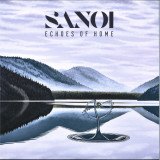
Drawing inspiration from his homeland Germany, with a particular focus on the organic house and techno scene of Berlin, Sanoi has meticulously crafted Echoes Of Home to reflect his diverse influences.
Echoes Of Home finds Sanoi challenging conventional music production norms, steering clear of familiar tropes and techniques. The result is eight carefully curated tracks with a rich tapestry of ambient layers, recorded sounds, and melodies that range from quirky and playful to nostalgic and melancholic. The finely crafted drums take centre stage, emphasising the unique groove that defines Sanoi's distinctive sound.
The album traverses warm, bouncy & melodic house music, with touches of deep-house, techno & organica. While largely instrumental, the album’s centrepiece is a collaboration with Christchurch artist Beacon Bloom on the track ‘Silver’. Both artists previously collaborated on the popular single ‘Club Jesus’, once again featuring Ryan Ferris' delicate yet strong vocals. The final track on the album, ‘Moon Boy’ offers a few moments of quiet as the journey draws to an end with just Sanoi & his piano.
Created at his home in Auckland, and road-tested across multiple live performances across NZ & Australia over the past two years, Echoes Of Home sees Sanoi’s composition & production step up another level. Available on limited edition vinyl, the digital release also includes an eclectic collection of four remixes from acclaimed New Zealand artists micronism & Paige Julia, alongside German producers Gabriel Ananda & Fabian Krooss.
Over the past five years, Sanoi has become an integral part of the growing underground house and techno scene in New Zealand, all the while expanding his international presence with releases on labels Bar 25, Stil Vor Talent, Magician On Duty, and Zehn Records. Sanoi's music has already gained support from student radio stations in New Zealand and has caught the attention of tastemaker DJs worldwide
- Let's Have A Good Time
- Boogie In The Dark
- I'm A Woman
- Down Home Blues
- Stormy Monday
- The Midnight Hour
- Dirty Mississippi Blues
- The Patton Basie Shuffle
- Evil Gal Blues
- Look What You've Done
- Just For A Thrill
- Rock Candy
Led by musical director Scotty Barnhart, the Count Basie Orchestra keeps Basie’s unmistakable style alive and thriving around the world. In the great traction of the Basie Swings albums comes this explosive album of collaborations with some of the greatest living blues and jazz artists, Basie Swings The Blues. In preparation for these sessions, Barnhart took a pilgrimage to the Mississippi Delta to immerse himself in the land where blues began. The resulting album is joyful mix of downhome blues with the deep swing and sophistication that only The Count Basie Orchestra can provide. As Count Basie famously once said, “our blues will make your blues go away.” Produced by Barnhart along with Grammy-winning producer John Burk (Ray Charles Genius Love Company), and Grammy-winning drummer/producer Steve Jordan (The Rolling Stones), the album brings together Buddy Guy, Bobby Rush, Keb’ Mo’, Shemekia Copeland, Robert Cray, Charlie Musselwhite, Betty LaVette, Ledisi, George Benson, and others to bring the blues and swing back together for a set that jumps and jives with an energy not heard since Louis Jordan and T-Bone Walker lit up stages in the ’40s and ’50s.
- City Gate
- Rumble
- Side Walk
- Cool Weasel Boogie
- Got A Match?
- Elektric City
- No Zone
- King Cockroach
- India Town
- All Love
- Silver Temple
- Light Years
- Second Sight
- Flamingo
- Prism
- Time Track
- Starlight
- Your Eyes
- The Dragon
- View From The Outside
- Smokescreen
- Hymn Of The Heart
- Kaleidoscope
- Home Universe
- Passage
- Beauty
- Cascade Part 1
- Cascade Part 2
- Trance Dance
- Eye Of The Beholder
- Ezinda
- Amnesia
- Inside Out
- Make A Wish Part 1
- Make A Wish Part 2
- Stretch It Part 1
- Streeth It Part 2P
- Kicker
- Child's Play
- Tale Of Daring Chapter 1
- Chapter 2
- Chapter 3
- Chapter 4
- Beneath The Mask
- Little Things That Count
- One Of Us Is Over 40
- A Wave Goodbye
- Lifescape
- Jammin E. Cricket
- Charged Particles
- Eternal Child
- Free Step
- 99: Flavors
- Illusions
- Forgotten Past
Led by the legendary pianist and composer Chick Corea - the venerated 27-time Grammy winner and National Endowment for the Arts Jazz Master - The Elektric Band stormed onto the jazz scene in the mid-1980s, making an immediate and lasting impact on the genre. With their electrifying performances and innovative blend of jazz fusion, the group produced a series of albums that set the bar for excellence in contemporary jazz. Featuring a core lineup of virtuosic musicians - John Patitucci on bass, Dave Weckl on drums, Eric Marienthal on saxophone and Frank Gambale on guitar - the group created a dynamic and electrifying sound that came to define the jazz fusion style. Their collective musicianship was on full display on each album, as they seamlessly blended complex compositions with captivating improvisations. With each outing, the band explored new sonic territories, incorporating elements of funk, Latin and Afro music, and pop sensibilities. Their 5-album studio discography is a masterful tapestry of multi-layered music, showcasing their creativity, innovation, and musicianship. A restlessly creative, eternally youthful and uncommonly generous spirit, Armando Anthony “Chick” Corea left behind an incredibly rich legacy of recorded music when he passed away on February 9, 2021. The music of the Elektric Band continues to inspire and influence musicians to this day, cementing their legacy as one of the most important and iconic jazz fusion bands of all time
Having met as teenagers touring the late-‘90s North American post-punk scene, guitarist/vocalist Sean Madigan Hoen and drummer Dan Jaquint established an ongoing musical collaboration that for years remained a mostly-private endeavor relegated to cassette-only releases. After living together in Brooklyn, the duo found themselves returning to their home state of Michigan in 2018 where they reconnected with Detroit’s music scene and formed KIND BEAST. Taking its name from the writing of Carl Jung, KIND BEAST is at once a distillation of several decades of electric guitar music and a lyrical exploration of shadow themes and deep-psyche explorations. Described by NPR affiliate WDET as “perfect for late-night freedom cruising on the outskirts of town,” the music is sophisticated and nocturnal, metabolizing ‘70s arena rock and Krautrock as readily as the post-Fugazi cannon on which its members were raised. What commences is a vast blending of rock swagger infused with a distinctly-Detroit eeriness, set to Hoen’s (a widely-published author) imagistic lyrics. Joining Hoen and Jaquint are bassist Sean Bondareff (known for a fifteen-year stint with Mitch Ryder and The Detroit Wheels) and guitarist Martin Rodgers, fifteen years younger than the other members and who has made a name for himself as one of Detroit’s most talented guitarists. KIND BEAST pays little homage to Hoen and Jaquint’s teenage bands (Thoughts of Ionesco and Small Brown Bike, respectively) and finds itself most often compared to mature constituents of the rock/pop pantheon such as Arctic Monkeys, Spoon, and Queens of the Stone Age while discerning listeners pinpoint a deeper influence of the great indie labels of yore (Touch and Go; Dischord).
The BBC’s Third Programme aired four radio broadcasts between January 1964 and September 1965, collectively known as Inventions for Radio.
They were ground-breaking in both form and content, conceived by playwright Barry Bermange and consisting of the voices of the general public answering questions on four themes,
one for each programme: dreams, the existence of God, life after death and ageing. At a time when it was unheard of to give a media platform to anyone perceived as being of
low socio-economic status, the broadcasts generated many complaints for the “rough” voices of its participants.
Delia Derbyshire was assigned by the Radiophonic Workshop to edit and add electronic music/ effects.
The collaborative result is dreamlike and mesmerizing, an audial window to another era.
For many years Derbyshire was not credited for her contribution, nor were the broadcasts available commercially, although they still managed to acquire something of a cult following.
This boxset includes one LP for each broadcast and two further LPs of additional material.
There is a 20-page booklet with extensive notes by Mark Ayres (Producer) and David Butler, (one of the lead researchers and
curators of the Delia Derbyshire Archive and co-founder of Delia Derbyshire Day).
The insight into Derbyshire’s archive, her music and its influences and her collaboration with Bermange is fascinating, providing context for
these extraordinary pieces which have been the most elusive of Twentieth Century classics until now.
Indie pop quartet Melenas hail from Pamplona, Spain, a picturesque region nestled just south of the Pyrenees. Such beauty can't help but inform the band's songwriting, but Melenas aren't content to just sit placidly & take in the scenery. Since they burst onto the scene in 2016, the band has hit the ground running, playing incessantly both locally & on the stages at national festivals like Primavera Sound & Eurosonic as well as releasing a debut full length (2018's "s/t" album) and a 7-inch single both triple-released on local labels Elsa, Nebula & Snap! Clap! Club. Trouble In Mind is honored to be releasing their new album Dias Raros and is the first label outside of Spain to release Melenas music to the world.Dias Raros hums right from the get-go, peppering their garage-pop punch with elements of lysergic dream pop, melancholic indie rock and strident guitar jangle. The album title translates to "Strange Days" an acknowledgement - according to the band - of "...those days where you spend more time inside than outside. Inside your own self, inside your bedroom and your own universe thinking about your wishes, dreams, memories, obsessions or fears." The lyrics - sung entirely in their native Spanish - reference "those interior dialogues where sometimes you fight to escape from a situation, you wonder what another person will be thinking about or feeling, you gotta say goodbye, or you just enjoy the time by yourself. Days that, for different reasons, you're feeling different, they are strange". Opener "Primer tiempo" buzzes with an urgent organ drone, unfolding into a yearning ballad of modern guitar-pop bolstered by the group's lush harmonies & sets the tone for the rest of Dias Raros. Songs like "No puedo pensar" "3 Segundos" and "Despertar" follow suit, with the rhythm section galloping headlong into an insistent guitar strum, while ballads like the tender "El Tiempo ha Padsado" rely on the band's melodious voices bolstered by a lilting guitar riff and gentle organ swells. Elsewhere mid tempo rockers like the stomping "Los alemanes", the simmering "Ciencia Ficción" and "Ya no es Verano"s insistent jangle recall underground greats like The Pastels, R.E.M. and Shop Assistants. "Vals" ("Waltz") closes the album in 3/4 time, named for the ballroom dance as well as the last name of a close friend - a dedication to her. Its dreamy sway alluding to classic Brill Building songwriting; dusted with melancholy, but lifted by cascading voices, and organ and guitar waves and guitars that twinkle and shimmer over a cracking backbeat. Dias Raros is the perfect introduction to a band bursting with promise, confidently inhabiting their own space built upon the foundation of their influences both geographically and culturally, as well as musically.
Los Angeles-based visual artist and musician Lionel Williams was born and raised in a family of musicians - he is the grandson of soundtrack composer John Williams. Since 2010, he has been releasing music as Vinyl Williams. After three albums released on No Pain In Pop (Lemniscate, 2012) and Chaz Bundick's Company (Into, 2015 and Brunei, 2016), Vinyl Williams joined French label Requiem Pour Un Twister for his fourth album Opal released in 2018. Throughout his art, both musical and visual, Lionel Williams explores the syncretistic territory between reality and dreams, between earth and space. "Music is a chance to transmute qualitative opposites into the center, to dissolve all illusions of duality", he says. Since chaos and disorder are an illusion, Vinyl Williams is trying to reach a new state of celestial harmony on Opal. The result is an album fueled with mysticism and space age utopia, ten kaleidoscopic lush pop songs that takes you into a transcendental journey on an opal marbled vinyl limited to 500 copies.
Scout (Amsterdam, 17 februari 2001) heeft in de afgelopen jaren volledig zijn eigen geluid gevonden binnen de Nederlandse popmuziek. In een wereld tussen Hip-Hop en alternatieve Pop ziet de zanger en producer zich als verhalenverteller. In zijn EP "littekens" komt zijn grootse en melancholische geluid tot leven in een verhaal over zijn ervaringen met liefde en mentale gezondheid. Door in zijn eigen slaapkamer te schrijven en op te nemen is de EP doordrenkt met kwetsbaarheid en intimiteit. Hierdoor neemt de opkomende ster de luisteraar mee naar zijn eigen wereld.
Na jaren ervaring te hebben opgedaan op piano pakt Scout in 2016 voor het eerst een basgitaar op en voordat hij het weet schrijft de jonge artiest op zijn kleine studentenkamertje in Delft zijn eigen muziek. Het ging ineens niet meer over noten, rijmschema's en akkoorden: het maken van muziek was uitgegroeid tot zijn therapeutische uitlaatklep. Hieruit volgt in 2020 uiteindelijk zijn self-titled debuutalbum "Scout".
Sinds eind 2022 brengt het opkomend talent consistent muziek uit en vindt hij zijn eigen weg binnen het muzieklandschap. Door steeds meer instrumenten onder de knie te krijgen en meer en meer te leren over muziek en emotie ontstaat een werkelijk nieuw, echt en eigen geluid wat maar met één woord te omschrijven valt: kippenvelmuziek.
Na het uitkomen van zijn EP "littekens" in april 2023 wordt hij benaderd om dit werk uit te brengen op vinyl. Om deze muzikale reis uit te breiden en om nog dieper in de wereld van scout te duiken bevat de LP vier bonustracks. Hieronder valt een akoestische versie van het populairste nummer "herfst", die de kwetsbaarheid van de jonge maker nog verder naar voren brengt. Ook bevat de LP een live versie van "de wereld draait door". Deze versie is opgenomen in beroemd restaurant "De Goudfazant" in Amsterdam. Een speciale plek voor Scout, hier heeft veel van zijn familiegeschiedenis zich afgespeeld. Het nummer komt hierdoor nog meer tot zijn recht door het rauwe geluid van alleen piano en stem. Ook bevat de LP twee extension tracks die het verhaal van de spreekwoordelijke littekens verder uitbreiden. Zo komt Scout in zijn nummer "hartendief" tot de realisatie dat zijn partner hem niet ziet zoals hij haar en komt hij in het nummer "kwijt voor altijd" tot een besluit om het hoofdstuk van deze littekens voorgoed af te sluiten. Deze extension tracks zijn tot op heden alleen te beluisteren op de LP maar zullen in de loop van 2024 ook op streamingdiensten verschijnen. Deze releases zijn de voorzet voor een reeks singles in 2024 die uiteindelijk zullen leiden tot zijn eerste studioalbum in 2025.
Red Vinyl
For the first time in their diverse second act, they allow themselves to be a rock band, freed of adornment and embellishment. As much as Carlson’s guitar has always been the focal point of EARTH’s music, it’s been surrounded by consistently diverse instrumentation. Here the dialog between Carlson and Davies drumming remains pivotal, underpinned by the sympathetic bass of Bill Herzog (Sunn O))), Joel RL Phelps, Jesse Sykes and the Sweet Hereafter) and thickened by additional layers of guitar from Brett Netson (Built To Spill, Caustic Resin) and Jodie Cox (Narrows). Perhaps the largest left turn on Primitive And Deadly, though, is the prominence of guest vocalists Mark Lanegan and Rabia Shaheen Qazi (Rose Windows) who transform the traditionally free ranging meditations of EARTH into something approaching traditional pop structures.
On “Rooks Across the Gates,” a song stylistically the closest to the folk inspired modality of Angels Of Darkness, Carlson stretches out into some of his most lyrical playing to date, creating an almost symbiotic relationship between his performance and the vocals of old friend Mark Lanegan. “From the Zodiacal Light,” meanwhile, takes the late 60s San Franciscan/freaked-out jazz-rock transcendence of The Bees Made Honey In The Lion’s Skull and quickly re-appropriates that sound into a musky torch song for the witching hour.
This contradictive tension between a band pushing itself ever-forward whilst surveying their history is reflected in the albums twin recording locales. The foundation of the record was laid in the mystic desert highlands of Joshua Tree, California where EARTH recorded hour after hour of meditations on each track's central theme at Rancho de la Luna. Upon returning to Seattle these were edited, arranged and expanded upon at Avast with the help of long-term collaborator Randall Dunn (who was previously at the helm for the Hex, The Bees Made Honey In The Lion's Skull and Hibernaculum sessions).
The band quickly garnered attention with their explosive live performances and a unique sound that effortlessly blends elements of hardcore punk and metal.
The band's lineup features members from the renowned group Cult Leader, bringing a wealth of experience and a collective passion for creating music that resonates with listeners on a visceral level. With their debut album, 'Pessimist', set to release on October 27th via Church Road Records, RILE is poised to make a resounding impact on the music world.
Pessimist is a cathartic journey through the depths of human emotion, delving into themes of inner turmoil, existential struggles, and the darker aspects of the human psyche. From start to finish, the album showcases RILE's exceptional musicianship and their ability to craft songs that are both haunting and sonically crushing.
Drawing influences from bands like Converge and Trap Them,
essimist delivers a relentless onslaught of churning riffs, blistering drums, and gut- wrenching vocals. The band's tight- knit chemistry and artistic cohesion shine through on tracks like lead single 'Climb Out', where they seamlessly weave together melody and aggression to create an unforgettable sonic experience.
With their heartfelt and thought- provoking lyrics, RILE lays bare their
vulnerabilities and fears, inviting listeners to confront their own inner demons. The album's dynamic production enhances the intensity of each track, immersing the audience in a maelstrom of sound that leaves a lasting impact
Some of the earliest works by American composer Phill Niblock, including three never before released pieces: "Index" (1969), "Tenor," and "Boston III" (both from 1972). Until now, it's been impossible to encounter Niblock's compositions from earlier than the 1960s, a reality thankfully rectified by the long overdue publication of this Boston/Tenor/Index LP on Alga Marghen.
"Tenor" (1972) represents the first evolution of Niblock's musical thought towards the aesthetics of microtones, overtones, and drones which the composer would develop in following decades. The piece was recorded by the photographer Martin Bough on tenor saxophone and gradually dubbed back and forth by the composer in his New York studio. "Boston III" (1972) was recorded at the Intermedia Sound studio in Boston with Rhys Chatham (flute, voice), Martin Bough (tenor saxophone), and Gregory Reeve (viola, voice); the composer himself also contributed with his voice. The LP also includes "Index" (1969), an improvised sound performance by the composer himself. Guitar (both its body and strings), fingers and fingering fuse in a vehement action around which barely listenable sounds and resonances vibrate. Considering the extended pulsation as an organic blend of impulse, rhythm, drive, strength, vitality and passion, the end of this sole solo in Niblock's complete oeuvre is not defined by the fixed duration of the piece but as the consequence of the tiredness of the performer. The music changes according to the loudness of playback. The interaction of the upper harmonics changes especially, with much richer overtone patterns being produced at louder levels.