The late percussionist Milford Graves was one of the most unique artists the world has ever seen. Born in Jamaica, Queens in 1941, he began his career in the early '60s as a part of New York's vibrant Latin jazz scene. His focus quickly turned inward, shifting towards a practice that explored the very nature of self. From his work in the New York Art Quartet and collaborations with Albert Ayler, Sonny Sharrock and more to his important contributions during NYC's loft era – he is, simply put, free jazz royalty.
In April 1966, the duo of Graves and pianist Don Pullen played at Yale University. As John Corbett writes in the liner notes, "This performance was something of a turning point for Graves. Until then he had been working in other people's bands or collective ensembles. He was phenomenally busy. In 1965 alone, he recorded with NYAQ (two LPs), Giuseppi Logan Quartet, Paul Bley Quintet and Lowell Davidson Trio, and he made his first recording released under his own name, Percussion Ensemble. Every one of these is important in its own way, but none of them quite anticipate how radical was the music that he and Pullen would unleash that evening in New Haven."
Originally released on the artists' own Self-Reliance Program label, this legendary one-night performance would be split into two volumes: In Concert At Yale University and Nommo. While rooted in African rhythms, Graves' music has its own sense of time. As the drummer stated in a 1966 DownBeat interview, "Time was always there, and the time I see is not the same as what man says time is. It works by impulsion."
quête:dr rhythm
The late percussionist Milford Graves was one of the most unique artists the world has ever seen. Born in Jamaica, Queens in 1941, he began his career in the early '60s as a part of New York's vibrant Latin jazz scene. His focus quickly turned inward, shifting towards a practice that explored the very nature of self. From his work in the New York Art Quartet and collaborations with Albert Ayler, Sonny Sharrock and more to his important contributions during NYC's loft era – he is, simply put, free jazz royalty.
In April 1966, the duo of Graves and pianist Don Pullen played at Yale University. As John Corbett writes in the liner notes, "This performance was something of a turning point for Graves. Until then he had been working in other people's bands or collective ensembles. He was phenomenally busy. In 1965 alone, he recorded with NYAQ (two LPs), Giuseppi Logan Quartet, Paul Bley Quintet and Lowell Davidson Trio, and he made his first recording released under his own name, Percussion Ensemble. Every one of these is important in its own way, but none of them quite anticipate how radical was the music that he and Pullen would unleash that evening in New Haven."
Originally released on the artists' own Self-Reliance Program label, this legendary one-night performance would be split into two volumes: In Concert At Yale University and Nommo. While rooted in African rhythms, Graves' music has its own sense of time. As the drummer stated in a 1966 DownBeat interview, "Time was always there, and the time I see is not the same as what man says time is. It works by impulsion."
“A piece of music never truly comes to An end. Revisiting a theme illustrates this idea that life goes on.” These are the words of Wayne Shorter, uttered in 2018 upon the release of Emanon, his final opus. On this record, the octogenarian uses dusky hues to shade in the passions of his youth - drawing and science-fiction, as well as the causes he has defended all his life - the fight against ecological upheaval and structural racism. This sentiment did not fail to resonate with Julien Lourau, who has reached a stage in life where he has begun to look back over certain pages written by the man he has always considered one of the masters of his trade. Five years later, this Parisian native has also chosen to revisit his glory days, offering reworked versions of specific tracks composed by his titular elder throughout the 80s. “When I play this music, I find myself back in my teenage bedroom. These are my standards, and they remind me of autumn in Rambouillet.” At that time, after practising his scales, Julien would also play Dungeons & dragons, and immerse himself in SF as well as heroic fantasy - epic influences which are not without a certain connection to the dreamworlds Shorter conjured up, as another fan of landscapes beyond the grasp of reality.
This album features four themes taken from Atlantis, which came out in 1985, and two from Joy Ryder, released three years later. To these, he has added a composition penned at around the same time for Sportin’ Life, the penultimate LP by Weather Report. This is rounded off by a tune taken
from Native Dancer, the record which, ten years earlier, in 1975, brought together this saxophonist who learnt his trade alongside Art Blakey, before joining Miles’ second quintet, and Brazilian Milton Nascimento.
“Between Native Dancer and Atlantis, Shorter did not release anything under his own name, but he took the time and care to really perfect his writing. Upon his return, he injected a very Brazilian form of subtlety into his compositions, especially rhythmically. And from a harmonic point of view, these themes are extremely sophisticated, and reveal truly singular colours. In fact, he decided to display the score as if it constituted the liner notes of Atlantis.”
Julien Lourau is a fan of every Wayne Shorter era, from his Blue Note days, where Mr Gone defined the bases of a truly unique repertoire, all the way to his final quartet - a reference like no other. He decided to focus on this “highly electric” period, which is not necessarily Shorter’s best known, nor his most widely appreciated - despite being a unanimous reference, Shorter has nonetheless never had a direct descendent. In Lourau’s line of sight there lies a desire to focus on typically South American tonic accents which characterise this repertoire, twinned with the ambition to switch up their actual sound “by attempting to open up onto a production highly influenced by eighties fusion". However, he admits that modifying the structures of these most unique of worlds constituted a fresh challenge. “There’s this labyrinthine harmonic system where you’ve no idea how it holds together, but where it’s actually impossible to touch the slightest element without the whole edifice wavering. It is in fact a very difficult thing to achieve!”
In order to successfully transcribe all this creativity free of obstacles, Julien Lourau once again called upon the help of Mathieu Debordes. From January 2023 onwards, Mathieu endeavoured to break down all the musical elements, on paper, before creating any actual music. The record was therefore constructed on the faith of these scores, without necessarily transiting through a creative residency - just two live gigs, to make sure the setup worked. Besides Mathieu Debordes and his synthesisers, Julien Lourau has assembled an ad hoc team by his side. On the bass, according to the track, we can hear erstwhile companion Sylvain Daniel or a new acolyte on the fretless bass, Joan Eche Puig.
Stéphane Edouard, on percussion, even dives headfirst into an unlikely proto-rap of sorts, on Pearl On The Half Shell (where, on the original version, Bobby McFerrin adjusted his interventions in a rather madcap style). Aesthete and drummer Jim Hart as well as pianist Leo Jassef also figure on this release - both were present on previous project devoted to label
CTI. “At sixteen, I wanted to sound like Michael Brecker rather than Ben Webster - that was equated with modernity in those days”, adds Julien with a smile, as for him, all this rings out a little like a logical next step, a joyful immersion into the fountain of youth. And if, for this record, he plays the soprano more than ever, the saxophone Shorter set in his sights on, he never tries to replicate an unattainable ideal note by note. What would be the point?
“Wayne Shorter is not just a saxophonist’s saxophonist. In fact, I don’t know a single person who has risen to challenge of his solos. I have not done it myself either, but on the other hand, I have retained a lot of his phraseology. His way of approaching the instrument reveals a more evanescent language, a work on colour and shape. Keeping this in mind has allowed me to gravitate towards certain elements, that in hindsight, I find echoes of in my work, even in Groove Gang.” Shorter etches out these phrases, creating a groove within which Lourau had traced subtle punctuation, managing, from a highly written base, to create fresh apertures, promises of a great escape. Emblematic of this standpoint, his regal version of Ponte de Areia, originally a wonderful dialogue between Milton Nascimento and Wayne Shorter. Here, the Frenchman takes liberties with the original melodies, without ever growing distant from the original spirit, extending one section with delicacy, offering a rubato development and then a groove “like a little suite”. Julien Lourau also renews with an accomplice from last century, Magic Malik, who lends his high-pitched vocals to the track. Though they had not recorded together for more than twenty years, the two of them got on as if they had only ceased collaborating yesterday, everything flowed naturally. The track was wrapped up in just one take, much like other themes, such as opener Who Goes There where the flautist deploys smooth, enchanted and smoky wisps.
Fundamentally, reflecting of the sleeve which features a child playing with a ball, image that could symbolise the sun just as much as the moon, Julien Lourau manages to translate the ambiguous candour which characterizes Shorter’s work - solar and crepuscular at the same time, that of a visionary and poet definitively situated outside of all chronology, but with whom Julien shares surprising and ‘timely’ coincidences. Shorter was born August 25, 1933, the same day as Julien’s father, “if we take time zones into account”, and who died on Lourau’s birthday, March 2, 2023. Should we take this as a random fact? Or could we not see here the sign of a destiny connecting the agnostic Frenchman to the man who, as a fervent Buddhist, believed in the transmission of his spiritual flow ?
Five groups, one mythical studio - documenting the emergence of a generation!
The initial postulate was simple: five groups, one emblematic studio and 24 hours for each to imagine and record two unreleased tracks with one objective - the will to document a French jazz scene in the midst of renewal.
In these last few years, several innovative currents have shaken up the world of jazz and attracted new fans. They have bubbled up from Los Angeles, impregnated with hip-hop culture (Kamasi Washington, Terrace Martin, Thundercat), or from London, tinged with African rhythms (Nubya Garcia, Kokoroko, Ezra Collective). Meanwhile, in France, a new scene is emerging, carrying with it more of a dancefloor-oriented sound influenced by electronic music - an obvious kinship with the French Touch explosion of the late 90s.
Historically, every movement has been assimilated to a certain neighbourhood, to specific clubs where late at night, young guns stayed up to imagine the jazz of tomorrow - the Cotton Club for the jazz of the 20s, Minton’s Playhouse in Harlem for Be-Bop, the Black Hawk in San Francisco for West Coast jazz, Birdland in New York for Hard-Bop or a lot more recently, the Total Refreshment Centre which has been the playing field for the new London scene.
In Paris too, this new sound is associated with actual venues, places which have allowed these groups to form, create a repertoire and forge an aesthetic - Le Baiser Salé for Monsieur Mâlâ, La Gare/Le Gore for Photon, La Pêche in Montreuil for Ishkero, La Petite Halle for Underground Canopy and also le Duc des Lombards and le 38 Riv’ for Alex Monfort; it’s in a live context that this music will always continue to evolve.
Keeping this “live” spirit, with all its spontaneity, was actually the guiding line for the elaboration of this Studio Pigalle compilation. Each take was recorded in the most organic way possible, bringing all the musicians together in the same room to limit post-production alterations before the final cut was assembled, in just one day, by studio in-house sound engineer, Felix Rémy.
A feeling of urgency permeates a record guided by an artistic production taking care to crystalise the essence of this artistically free-range generation whose childhoods were rocked just as much by Bill Evans and Roy Hargrove as by J Dilla and Jeff Mills. One of the two tracks recorded is geared towards the dancefloor, and the other, more cosmic/ambient gives freer rein to individual interpretation.
There were therefore many possible ways of interpreting these guidelines for the five formations which number among the most distinctive on the current French musical landscape, and the occasion, for some, to rummage through their archives! With Transe (Mbappé) and Da Verdere (Vella), Monsieur
Mâlâ present us with two unreleased tracks issued from the very first rehearsals of the quintet reworked especially for this compilation. “Seen the aesthetic range of this group, it all worked out very naturally in the studio”, recounts keyboardist Nicholas Vella “Recording like they did in the sixties with all the channels live and working with small imperfections was a very interesting task, even when it came to the mix, we had to make do with the takes we had... “
“Our group is very recent, and with this session, in just two tracks, we had the opportunity to present the entirety of our musical universe,” says Photons pianist Gauthier Toux. “All too often, we assimilate this fusion between jazz and dance music to computers and post-production modifications. For “Dessine”, we kept the first take, and we must have recorded just three or four for the other track with more of a techno bent. In one day, we understood that we could play our entire repertoire live, from A to Z”.
“When the Komos label offered me this project, it immediately spoke to me”, remembers Alex Monfort “Straight away, I thought of “Since I Met You”, a track with a nine/four time signature which really is reminiscent of a new- soul groove, but with this extra cosmic vibe! I wrote the words to the chorus and Nina Tonji placed her voice on the track, adding her own verses. For “Tonight”, the up-tempo track, I wanted to head off in more of a hybrid direction inspired by Kaytranada or the Black Radio series by Robert Glasper. A cross-over between jazz and hip-hop which really does represent my world, and I also tried to place vocals centre stage (Emcee Agora)”.
“We truly resonated with the way Antoine Rajon imagined this compilation and the recording session”, confide Warren Dongué and Jérémy Tallon from Underground Canopy. “When arriving in this studio we felt as if we had gone backtothe70s! Inkeepingwiththespiritofthisera,heknewhowtoletus keep our spontaneity, without recording in too many takes, and that’s how we like to work”.
“We managed to adhere to the themes of the compilation without changing our instrumentation, we wanted to remain faithful to the sound of Ishkero on these new compositions and take them somewhere else” – says drummer TaoEhrlich -“Withoutaddinganyelectronics.Thesessionwassupervisedin a truly subtle and benevolent manner. From a human perspective, it was also a wonderful experience”.
Whether turned towards hip-hop, ethnic or electronic music, the artists featured on this Studio Pigalle compilation represent the eclecticism of a new generation in the process of writing the first chapters of its history. Open to experimentation, these artists continue to hold high an immutable love for improvisation and creation in the moment... another definition of the word Jazz!
For new beginnings, one must sometimes look into the past. Amb.Caveti has done such thing by inviting producer Martin Abrahamsson to the label under the moniker Deltidseskapism. Originally released in 2004 on Source Records, Martin’s aptly titled ‘Nattmusik’ mimics exactly that - the long drawn out winters of Sweden.
Floating basslines and ethereal high’s leave the imagination to roam, whilst rhythmic clicks and cuts maintain focus on the journey ahead. It’s one for the drive home or late night wander, amidst the icy fog and solitary streetlights.
‘Blind On A Galloping Horse’ serves as David Holmes’ first solo album since 2008’s ‘The Holy Pictures’. A 14-track interrogation of the last decade, time spent watching a decaying, fraying Britain visibly buckling in real time while tending to his own battles with mental health. Holmes’ soundtrack to this inquiry is at times claustrophobic, often euphoric, driven by the rattle and snap of analogue drum machines, wild oscillations of droning analogue synths and the voice of Raven Violet, which beguiles and commands in a way that could part oceans. On this album, there are songs of hope for an age of uncertainty; love songs to leap the barricades to and, on ‘Necessary Genius’, a comprehensive roll call of the great and good - those ‘dreamers, misfits, radicals, outcasts’ that we’ve lost and just a few who’ve managed to cling on in the churn of the 21st century. And there are elegiac electronics evocative of an endless Europe where pulsating, crackling rhythm tracks fuse with dreamlike textures and the underground pulse of psychedelic therapy to form something unique that feels nothing less than radical. CD in 4pp digisleeve with 8pp booklet. Double vinyl in 300gsm gatefold sleeve with reverse side print and 180gsm reverse side print inner sleeves.
Portrait of Art Farmer enthält Aufnahmen aus dem Jahr 1958 und war das erste Album von Art Farmer, das unter dem Label Contemporary Records von Lester Koenig veröffentlicht wurde.
Obwohl Art Farmer erst 1958 (dem Jahr, in dem dieses Album aufgenommen wurde) in der Down BeatUmfrage zum ”New Star” des Jahres gewählt wurde, hatte sich sein Ruf unter Musikern aufgrund seiner Arbeit mit Lionel Hampton, Gigi Gryce und Gerry Mulligan bereits etabliert.
Obwohl er für sein Flügelhorn bekannt ist, hat er viele Jahre lang eine vergleichbare Lyrik als Trompeter erreicht, wie diese Seiten zeigen.
Mit einer Rhythmusgruppe, zu der auch sein Zwillingsbruder, der verstorbene Addison Farmer, am Bass sowie der Pianist Hank Jones und der Schlagzeuger Roy Haynes gehören, ist er hier mit drei Originalen (zwei davon sind Blues) und fünf anderen geeigneten Stücken wie Benny Golsons ”Stablemates” zu hören.
Farmer war der Meinung, dass dies das beste Album war, das er in dieser Phase seiner Karriere gemacht hatte.
Svart Records are proud to present the vinyl debut of the album '8 Convulsions' (1994) by Crisis (NYC, USA) "I am really glad that Svart are re-releasing 8 Convulsions, so more people can rediscover this wonderful and intriguing heavy music." Michel 'Away' Langevin, Voivod Remastered and repackaged with the vinyl format in mind, the package comes with a large booklet full of lyrics and exclusive photos. This is the first time an album from the NYC cult band's oeuvre is pressed on vinyl. There will also be a CD edition of the remaster. Hailing from the mean streets of NYC in the year 1993, Crisis was a band that defied classification from the very start. During a time when heavy music was dominated by a mostly male presence, founders Afzaal Deen and original drummer Fred Waring envisioned a female-fronted band to run against the grain and destroy expectations. Seeking out a singer with a singular sound and presence, and found their match in groundbreaking vocalist and avant-visual artist Karyn Crisis. Soon after, a newspaper ad for a bass player was answered by Gia Chuan Wang and the original unit was formed. During their first rehearsal, Karyn became so enmeshed and driven by the music that she inadvertently destroyed a microphone stand and threw herself to the floor in an outpouring of unmitigated expression. This was barely a hint at the intensity she would soon bring to the stage and studio. Karyn’s guttural growls and angelic melodic notes meshed perfectly with the mixture of grinding guitar, pounding rhythm and deep bass tones. The underground music scene would now begin to experience the dynamic intensity of this burgeoning powerhouse band in full force. Crisis signed to Too Damn Hype records and released their debut album '8 Convulsions', now being reissued to mark its 30th anniversary. In a time where inclusivity is more crucial than ever, Crisis remains a band as diverse and distinct as the city from which they originally hailed. “The United Nations of Rock” as they’ve been called, continue to break boundaries and crush antiquated archetypes with their unprecedented sound and vision. "One of the most captivating bands I’ve ever experienced in New York City in the early 90s. They had a very unique sound where you couldn’t categorize them though they had elements of metal, punk with a very dark experimental approach, which gave them their unique sound. Just raw and relentless energy." Roy Mayorga, Ministry/Soulfly/Nausea etc 8 Convulsions is available on Svart exclusive blue/red marble vinyl, limited transparent yellow vinyl, classic black vinyl, and CD. Release date October 20th.
In 2021 Nijs and Smolders started a series of free improvisations. Each came from a different background (see bio’s) and wanted to explore musical horizons that they were not used to. As a next step they decided to record an album of composed tracks. The experimental platform shifted from long improv sessions to composition and structure, with the work of Delaere as a source of inspiration. The material of his work, the unevenness, the detail of pigments clashing, superimposing on the canvas served as a metaphor and inspiration for sonic canvases that they constructed.
The result has become a record full of surprises. Rhythm, drone, dynamics, timbre, notes, tones, all have been thrown in the tumble dryer and during the process many times led the two musicians towards an outcome they couldn’t have possibly foreseen. But here we are. Our own experience is that the music works best when it’s played loud. Crank up the level of your amp and dive into these 35 minutes of colorful sounds.
DEVO’s Hardcore documents the group’s beginning as pre-punk outcasts in the fertile Akron, Ohio, underground rock scene. Spawned at the nearby college of Kent State, site of the infamous May 4 Massacre, DEVO formed as a conceptual art project armed with the radical philosophy of de-evolution. Brothers Mothersbaugh (Mark, Bob and Jim) and Brothers Casale (Jerry and Bob) along with drummer Alan Myers soon whipped up an otherworldly brand of “devolved blues” that could hold its own alongside the beatnik groove of 15-60-75 (a.k.a. The Numbers Band) or the primal rock poetry of The Bizarros. Recorded on various four-track machines and in tiny studios, basements and garages between 1974-1977, Hardcore reveals their strikingly clear vision: rock ’n’ roll stripped bare of its collective cool and jerked back into propaganda fit for post-modern man. It’s no surprise that these transmissions would soon catch the eye and ear of Brian Eno, who later produced their landmark 1978 debut album. Noisy synth, strangled guitar chops and a primitive rhythmic thud power the early DEVO sound. Threaded beneath it all are lyrical themes of post-McCarthy paranoia, middle-class ephemera and DEVO’s long-running topic of choice: sex, or lack thereof. Few moments in pop music history can match the grinding, pent-up energy of “Mongoloid” and the spastic bounce and sputter of “Jocko Homo” (two anthems presented in their earlier and superior versions here). Cult favorites like “Mechanical Man” and “Auto-Modown” make Volume 1 essential listening. Superior Viaduct and Booji Boy Records are proud to present DEVO’s Hardcore to a new generation of spuds, lovingly packaged with Moshe Brakha’s stunning cover photography. As David Bowie said in 1977, DEVO is indeed “the band of the future.”
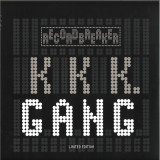
Giorgio Gordano and Giorgio Dolce originally produced ''KKK'' back in 1983, and the track was taken into the hearts of the blossoming Balearic scene hovering around DJ Alfredo at Amnesia. It's as gentle and sweet natured as Italo disco can be, and of course it makes perfect sense that Best Records would dig it out of the archives and give it the shiny new reissue it deserves. The ''Club Mix'' of ''KKK'' is a feast of simple, charming programmed melodies and crisp drum machine rhythms with the innocence of the early 80s in its heart. The ''Dub Mix'' and ''Bonus Beats'' on the flip are handy for the technical DJs out there, but the ''Club Mix'' is where it's at for the lovers.
Having toured the world with Mczo and been at the helm of his own studio Pamoja Records since he was just 18, influential Singeli producer Duke, now 25, is one of Tanzania's busiest club alchemists. On his acclaimed solo debut "Uingizaji Hewa" we were introduced to his idiosyncratic "hip-hop Singeli" sound, a slower cousin to the Dar Es Salaam-rooted hard 'n fast club template that takes as much special sauce from Busta Rhymes and Eminem as it does the 200BPM clatter of genre veterans Jay Mitta and Sisso. On September's "Sounds Of Pamoja," we were treated to a closer look into Duke's studio, and specifically at his work with the city's best young MCs like Dogo Kibo, Pirato MC and MC Kuke. "Early Instrumentals" allows us to witness the depth of Duke's evolution with a selection of unearthed genre melting Singeli mutations laid completely bare without vocals. This 11-track set features some of his most arresting hybrid dance music yet, expressing his visionary fusion of contemporary rave sounds, US rap attitude, and Tanzanian dance history. While the roots of Singeli are in taraab, a popular fusion of East African and Middle Eastern traditional dance rhythms and melodies, Duke steers the sound into a synth-led, syncopated firework display that sounds spry and futuristic. Centered arounda bumping staccato melody and urgent synth strings 'Dukelo Fl Sing' echoes the lo-swung swagger of early Dr. Dre productions, but kicks the tempo into overdrive, decorating any gaps with flickering late-nite synths. 'Beat Kali Duke' meanwhile drives carnival trance leads through hard and fast rolls of kick drums, whistles and woodblock cracks. It's not all completely high speed either: 'Duke Selecta' is almost afro-house, with slow, sexy bass and woozy vocal melodies, and 'KKKKKKKKKKKKKKK' absorbs the propulsive spirit of South African gqom. "Early Instrumentals" is the most varied picture we've been presented yet of Duke's rousing dance cocktail. IT's a physical call to action that assures listeners the genre is for movement, not headphone listening
The latest report from the SMM0000 record label. A remote
collaboration between Big Hands and Banishsh. A-side: Original
production by Big Hands (Andrea Ottomanni). B-side: two versions by
Banishsh (Simone Guido Izzi). Somewhere between bass-oriented
electronic music, jungle, drum and bass and techno with an
experimental and unusual perspective. The rhythmic pattern of the Aside collides with the sparse, glittering synth arpeggio. Unexpected
narrative paths are layered over repetitive percussive drum sounds.
The B-side versions take the original ideas and turn them into a more
abstract sonic machine, forecasting glitchy rain, micro-tonal shifting
melodies and poly - rhythmic drum sessions
- A1: Unseen Small Steps
- A2: Light Years
- A3: Noon At The Moon
- A4: The Other Side Of The Moon
- B1: Tsukiyo
- B2: Between Worlds
- B3: Authentic Love Song
- B4: Oasis
- C1: Light Years (Daydream Dub)
- C2: Noon At The Moon (Daydream Dub)
- C3: The Other Side Of The Moon (Daydream Dub)
- D1: Tsukiyo (Daydream Dub)
- D2: Authentic Love Song (Daydream Dub)
- D3: Oasis (Daydream Dub)
Following on from the warm reception to Hell Yeah and Music Conception reissuing Calm's cult Before album, the labels have come together once more to offer up a reissue of the Japanese master's highly sought-after long player Moonage Electric Ensemble. The hard-to-find original has been given an all-new mixdown from original stem files and then re-mastered by Calm himself, and the double LP will also come with a bonus 12" featuring his very own Daydream Dubs plus an obi-strip and original artwork by FJD.
The blissful yet soul-stirring Moonage Electric Ensemble, which landed first in 1999, was Kiyotaka Fukagawa's stunning sophomore album and the one that kept the bar high following his debut Shadow of the Earth. It investigated all new worlds of future jazz, ambient and downtempo and has since become a cult classic that often fetches three figures on secondhand markets. He has released over 18 albums since including Before which was reissued in 2022, though Moonage Electric Ensemble remains a favourite with those who enjoy the most accomplished and innovative sounds from the first wave of chillout.
This escapist charmer opens with the suspensory synths and piano keys of 'Unseen Small Steps' featuring spoken words from Dan Gamble, then 'Light Year' has gently tumbling rhythms and shimming synth moving about the soothing mix. 'Noon At The Moon' brings gorgeously fizzing future jazz drums and mellifluous piano playing full of subtle joy, and 'The Other Side Of The Moon' then layers up melancholic chords and chunkier rhythms that are detailed with gorgeous persuasive details and mystic flutes. 'Tsukiyo' is a new age charmer with paddy hand drums and romantic interplay between sax and trumpet, 'Between Worlds' is an ambient interlude with distant winds blowing and intimate whispers from Gamble before closer 'Authentic Love Song' rides on dusty trip hop breaks as lazy piano chords melt the heart and Gamble serves up another aloof monologue.
This is another welcome reissue of a sublime album that is not only one of Calm's finest but also a true gem in the wider world of downtempo music.
Obliques and Atmospheric are very happy to present their new album “Golden Apples of the Sun”. It is the result of a close cooperation between Suzanne Ciani and Jonathan Fitoussi. The American electronic music pioneer (5 time Grammy award-nominated) has joined the French composer to sign a four-hand album around mythical synthesizers like Buchla, Moog and Ems...
Mainly recorded in California, facing the Pacific Ocean, the white sound of synthesizers mixes constantly with the sound of the waves and wind.The music generated is directly blended with the surrounding elements of nature.It is both organic and live, hypnotic and rhythmical, powerful and dreamlike.
Suzanne is a five-time Grammy award-nominated composer, electronic music pioneer, and neo-classical recording artist who has released over 20 solo albums. Her work has been featured in films, games, and countless commercials as well. She was inducted into the first class of Keyboard Magazine's Hall of Fame alongside other synthluminaries. Most recently, she is the recipient of the Independent Icon Award from A2IM. Suzanne has provided the voice and sounds for Bally's groundbreaking "Xenon" pinball machine, created Coca-Cola’s pop-and-pour sound, designed logos for Fortune 500 companies, and carved out a niche as one of the most creatively successful female composers in the world.
Straight Outta Caledonia is the first commercially available “Greatest Hits” of the outsider songwriter Jackie Leven, an artist
who has largely remained in obscurity in his native Scotland despite being one of the greatest wordsmiths – and singers – it ever
produced. A well-travelled musician who began making psychedelic, progressive music in the late 60s before emerging as an
epic storyteller full of pathos, humour and humanity in the 90s, Leven lived and wrote like many of the fragile, gregarious
characters of his songs; large, full of life and empathy. Leven passed away in 2011 after recording 30+ albums under different
guises or with his briefly successful New Wave band Doll by Doll. Straight Outta Caledonia is a compilation collated by Night
School Records on its Archival label School Daze that seeks to introduce Leven’s music to new generations.
In an age of isolation, alienation and loss of visceral experience, Jackie Leven’s music can be massive and welcoming. It feels
connected to some universal humanity and vibrates with vitality. His songs are often full of tragedy and comedy simultaneously,
cutting straight to the heart, often plugging directly into the nervous system of the listener. His lyrics are rich, dense with imagery
that can veer from apocalyptic to the comically banal in a sentence, with a songwriting panache that can be heavy handed to
almost bursting point before skewering the song with a clownish, warm punchline. His productions ranged from Bob Dylan’s
Rolling Thunder Revue style rock band orchestrations with strings and organ as on the epic Ancient Misty Morning or they could
be pared down to the purest form of folk song as on Poortoun: Leven on stage alone with an acoustic guitar, albeit played with a
mastery of the instrument that he often only hinted at. Musically his sound can bend traditional structures or stay completely
confined within them yet still forever push towards an ecstatic release, as on the cinematic Snow In Central Park.
The most exciting, jaw-droppingly effective tool at Leven’s disposal was his voice. A multi-octave instrument that, though
damaged during a savage assault in Fife, he used with flair; he had both a brazen disregard for the rules and a deep humility, all
of which is evidenced with every phrasing. A baritone that could flit up through the register – always touched by his gentle
Kirkcaldy accent – it’s the prime delivery method for his songs. Leven’s voice enabled him to inhabit the characters in his songs to
an uncanny degree, a skill that in turn enables the listener to empathise with them and, subsequently, the singer. It’s most evident
in stand out song The Sexual Loneliness Of Jesus Christ, a breathtaking re-telling of the life of its protagonist, not as a pure,
sinless messiah but as a sexually frustrated, solitary man condemned to an existential loneliness no one else will ever feel. In
many ways the track is the archetypal Jackie Leven song. Produced by Pere Ubu’s David Thomas, what strikes the ear first –
after the samples of unemployed workers in Glasgow following the closing of the Clyde shipyards – is the audacious, rhythmic
tremolo effect Leven employs through the verses before the production opens up to allow Leven’s vocal to lift into a soar, a
freeing glide powered both by the force of the singer’s chutzpah and the inherent, doomed destiny of the protagonist. With any
other singer such subject matter could come across as gauche or worse, pretentiously sonorous, but Jackie Leven’s genius was
such that he could be this cinematic and brazen while touching something elemental and true in the beholder. It’s a skill evident in
every song on Straight Outta Caledonia, the trademark of a songwriter who revelled and excelled in intensity with a lightness of
touch.
In his lifetime, Jackie Leven toured, wrote and recorded at a ferocious rate. He recorded under aliases to avoid record contract
restrictions, played house shows in Europe after or instead of official concerts, events which were often spoken word story telling
masterclasses as well as performances of his often bewilderingly dense songbook. His music has traditionally been catalogued
as “folk” music and has been largely banished to a small, dedicated group of international fans and apostles both private and well
known, like author Ian Rankin or Glenn Matlock. Since his passing in 2011 however, there has been a growing recognition
amongst a newer generation, with artists like James Yorkston or Molly Nilsson publicly stating the influence of the unsung
troubadour on their own craft. Jackie Leven’s fairytales for hard men are often forensic deconstructions of masculinity, sad and
ecstatic, light and shadow, always endlessly rich, a resource as bountiful as Leven himself’s human spirit undoubtedly was.
Repress!
Debut single by 'TURBO Q 3000', a project by Turbo Sonidero (Grupo Jejeje / Kumbia Net) & Principe Q (Kumbia All Stars / Royal Highness)
Turbo Sonidero is a music producer and record collector from San Jose, CA who blends Cumbia Sonidera (sound system) with Rap. He is a co-founder of Grupo Jejeje and also the-founder of Kumbia Net/Kumbia Obscura, a collective that promotes new and up-and-coming cumbia producers from Mexico and beyond. Turbo Sonidero is a pioneer who continues to lead the reemergence of cumbia globally. He has been featured in Vogue MX, The New Yorker, Fader, Vice MX, Afropop Worldwide, KQED, and XLR8R, among others.
Music producer/DJ Svani Quintanilla (aka Principe Q) is noted as the creator of "Screwmbia", pioneered by his duo Royal Highness (with DJ King Louie). "Screwmbia" is his modern take on cumbia, blending trap drums with slowed down cumbia rhythms. Bringing cumbia in to the modern times is an homage to his aunt, Selena Quintanilla-Perez, who also did so in the 80's and 90's. He is the oldest son of Kumbia All Star founder A.B. Quintanilla III and has recently joined the band as a percussionist.
Limited to 500 7" copies
Exclusive artwork by Jaime Ruelas
CNTRL presents his latest EP, "NRG BRKZ," a captivating exploration of the UK garage sound fused with minimalistic broken beats.
Opening the EP is "GT DWN," an track that features a athmospheric choir. It sets a grandiose tone, instantly captivating listeners with its powerful energy and rhythmic drive.
Moving to "8cl NRG," CNTRL infuses the track with breaky energy, masterfully blending broken beats and mesmerizing synth stabs. The result is an infectious and irresistible groove that will have listeners moving to its compelling rhythm.
"NDRSTND" takes a more stripped-back and deep approach, showcasing CNTRL's versatility. It features a solid foundation of minimalistic beats, allowing haunting melodies and subtle harmonies to create an introspective and ethereal atmosphere.
Closing out the EP is "BRKZ," a homage to UK garage. CNTRL expertly layers broken beats, driving sub basslines, and spooky atmospheric synth work, paying tribute to the genre while infusing it with his unique touch.
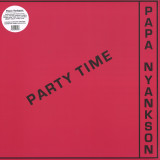
Kalita are proud to present the first ever reissue of Papa Yankson’s highly sought-after 1989 disco-infused highlife masterpiece 'Party Time'! Showcasing the late Ghanaian superstar at his very best, ‘Party Time’ encapsulates the blending of deep, rhythmic West African highlife with synthesizers and electronic styles that had exploded during the decade. Now, thirty-five years after initial release, and with original copies having reached grail status on the second-hand collector’s scene, Kalita brings this phenomenal record back to life, with extensive liner notes detailing Papa Yankson’s musical career.
A recipient of the Grand Medal of Ghana for his contribution to Ghanaian music, Papa Yankson was a key member of C.K. Mann’s Carousel Seven outfit during the 1970s, releasing joint albums together on the infamous Essiebons label to great success.
However, it was at the end of the following decade that Papa released ‘Party Time’, highlighting his forward-thinking musical style with its numerous hypnotic and driving up-tempo disco-soaked highlife cuts. Originally released in a small run on the short-lived Marriot Promotion label, the album features the standouts ‘Wonma Yenko Po’ and ‘Mumumde’, each showcasing deep highlife melodies, heavy drum patterns and phenomenal horn performances from the ingenious Sammy Lartey Jr on saxophone and Nana Asare on trumpet to boot.
With original copies selling for eye-watering amounts on the rare occasion that they come up for sale, the time is ripe for Kalita to celebrate this true Ghanaian 80’s grail, accompanied by liner notes and never-before-seen contemporary photos of Papa Yankson.