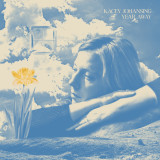
In March of 2020, after learning that a dear friend’s life was coming to an end, Johansing sat down and in one sitting wrote the song “Daffodils”. An elegiac tribute to someone facing death with grace and curiosity, the lyrics confront Johansing’s own mortality by observing the brief lifespan of a Hlower. Only a week later when the world came to an abrupt standstill, she soon found herself processing this recent loss while trying to make sense of a new global reality. Across the ensuing months, Johansing found herself increasingly untethered by a world of isolation and political upheaval.
Having been a frequent touring member of bands like Hand Habits and Fruit Bats, and often being called into the studio to lend her harmonies and multi-instrumental talents to records, Johansing’s phone no longer rang. Living in Los Angeles she feared her musical community was vanishing, as friends and collaborators continually announced they were leaving the city. It was in returning to her piano nightly that she found the greatest solace, feverishly writing the songs that would be collected on her next album. Resulting from this new sense of time and focus was a deepening of her songwriting. As Johansing recalls, “I felt like a metamorphosis happened during that time. There was a lot of personal growth and healing.”
Throughout Year Away Johansing traverses uncharted emotional landscapes brought upon by the changes occurring all around her. The forced self-reflection of the moment is aptly captured by “Old Friend”, featuring an aching melody and swooning production that recalls the best of Harry Nilsson. The epic piano and saxophone-driven “Smile with My Eyes” addresses the loss of community as friends became distant and political divides between family grew. On “Smile” Johansing pushes her vocals further than ever, expanding her range and using her peerless voice as the singular instrument it is. Facing the loss of a family home due to environmental destruction, “Shifting Sands” is marked by soaring Hlutes, Hield recordings and glassy synthesizers that nod to Japanese New Age.
“Daffodils”, the stunning album centerpiece, is built from a pastiche of looping samples, swirling Mellotron and dazzling vibraphone. “Keep your heart open wide, you never know your time / Keep your heart wild, true Hlower child”, Johansing sings as she says goodbye to an elder, while the band reaches a grief-stricken crescendo of woodwinds and chiming bells. On the title track, Johansing takes listeners on an eerily meditative journey of collective experiences. “I wanted to keep the progression simple and repetitive so that musically we could add new elements little by little, while the emotional tone of the lyrics becomes increasingly more strained and expressive”. The song grows to a fever pitch as Johansing sings higher than she thought possible; the tension of the repeating chords Hinally resolving into a hopeful coda as multiple soloists weave around each other.
Amidst heavier themes, Johansing still leaves room for her love of irresistible pop melodies and lush production. The driving “Last Drop” and mid-tempo “Valley Green” are two of her catchiest songs to date. On the former Johansing sings the anthemic chorus, “As if it were the last drop, and nothing ever lasts forever / As if it were the last stop, too far out to come back ever”, longing for a love that she’ll never take for granted, while also admitting that she doesn’t always know how good she has it. “Valley Green” features shimmering layers of 12- string guitars, stacked horns and an impeccable solo by co-producer and multi- instrumentalist Tim Ramsey (Vetiver, Fruit Bats), hinting at a love for bands like NRBQ.
Having been eager to capture the initial spark of songwriting, Johansing booked time at Highland Park’s 64 Sound Studio the week that it reopened. Over the course of three days, she and her band gathered basic tracks for 10 songs, before returning home to Hinish the record with Ramsey. Setting forth to make an album that paid homage to the music that kept them company during the months spent alone together, the duo pulled inspiration from a wide net including Burt Bacharach, John Carroll Kirby & Haruomi Hosono. Ramsey’s newfound love of early digital synthesizers dovetailed effortlessly with Johansing’s fondness for classic 70’s horn and string arrangements, creating a sound that is distinctly modern yet warm and familiar.
Once again Johansing called upon some of the Hinest players of Northeast Los Angeles’ vibrant music community to lend a hand with the record. The 70s R&B-folk of “Watch It Like a Show” features an electric guitar solo from Hand Habits’ Meg Duffy, while album closer “Endless Sound” boasts backing vocals from electronic musician Kaitlyn Aurelia Smith and swooping Indian-inspired violins from Amir Yaghmai (HAIM, The Voidz). The record shines brightly thanks to an ace mix from veteran producer Rob Schnapf (Beck, Elliott Smith, Cat Power), woodwinds from Logan Hone (John Carroll Kirby, Eddie Chacon), and a featured rhythm section of drummer Josh Adams (Jenny Lewis, Bedouine) and bassist Todd Dahlhoff (Feist, Devendra Banhart). Recorded across multiple studios including LA’s famed Sunset Sound, the album remains steadfastly buoyed by the adept engineering of Tyler Karmen (MGMT, Alvvays).
Though born of turbulent times, Year Away is ultimately interested in moving forward. The album ends with “Endless Sound,” where Johansing laments seismic global changes, (“The water is hotter, the mighty thaw / The current’s reversing, the last are lost”) but vows to keep going (“No storm can take me down / Endless light, endless sound”). It’s Year Away’s resilience that shines through despite the darkness. It’s a sound all her own and Johansing’s most cohesive set of songs yet.
Buscar:dr rhythm
- A1: Turn Ix 03:47
- A2: Super Freeloader 03:41
- A3: Turn X 07:57
- A4: Turn Xi 03:10 Site
- B1: Turn Xii 03:25
- B2: Zeit Ohne Harmonie Iii 05:45
- B3: Turn Xiii 01:57
- B4: Turn Xiv 02:12
- B5: Festival Mood Iii 00:56
- C1: Turn Xv 02:14
- C2: Turn Xvi 06:00
- C3: Turn Xvii 02:34
- C4: Turn Xviii 04:32
- D1: Turn Xix 04:41
- D2: Turn Xx 06:08
- D3: Turn Xxi 01:38
- D4: Festival Mood Iv 01:47
With the label MPS, post-war musical history was written in Germany: noble music productions with many international greats come from the Black Forest and are timelessly legendary. In this tradition, HGBSBlue releases selected projects on high-quality vinyl.
The DLW trio has been working together for twelve years now and is now setting the tone in the modern European music scene, as the trio has long since left the boundaries of jazz behind. DLW, that is the sound-painting vibraphonist Christopher Dell, the virtuoso Danish bassist Jonas Westergaard and the German star drummer Christian Lillinger.
Time and again, the three jazz musicians from Berlin play together with artists from classical or avant-garde music. "Supermodern"
is the project that brings the three DLW musicians together with US pianist Bob Degen. This music is also unikal. It is a reverence
to the legendary Modern Jazz Quartet (MJQ), which in the 1950s was the link between chamber jazz and European classical music.
With "Supermodern," this reference to the MJQ is illuminated from the perspective of European avant-garde music, rather than
its African-American roots, which nevertheless resonate respectfully throughout.
DLW has "developed a concept based on repetition and difference. The starting point for a piece is always a single bar, which is
rhythmically interlaced and repeated trance-like until the smallest irregularities occur, which are written down and creatively
processed further. From this "superimposed combinatorics" (Christopher Dell) a perpetuum-mobile-like sound movement
develops, which is further radicalized on record by sound alienations and cut-up techniques." Thus respectfully wrote the Neue
Züricher Zeitung in August 2023.
Word has long since spread outside the German jazz scene that the DLW projects are always musically new. This is also the case
with the double LP "Supermodern 2", with recordings made in 2021 in analog at the MPS studio in the Black Forest. Together
with US pianist Bob Degen, who has been one of the creative voices of the German jazz scene for about 50 years, they play highenergy music, with sparkling virtuosity and close communication. A musical treat, further enriched by the immensely present
analog sound of this recording.
Chicago-based producer/multi-instrumentalist Ben Billington makes music under the name Quicksails.
A pillar of the Chicago experimental scene and its branches across the midwest and national DIY circuits, Billington has enriched his communities through overlapping roles as a musician and curator /
promoter of freak sounds for more than two decades. In addition to his work as a solo artist, he has performed with bands such as ONO, ADT, Circuit Des Yeux, Tiger Hatchery, and Ryley Walker’s
band. Billington’s solo recordings as Quicksails encompass everything from free jazz-inspired electro-acoustic production to rhythmic synth-pulse tapestries to music focused on what could be
considered one primary instrument among the many he works with: the drum kit and auxiliary percussion. Surface, his fifth release to appear on Hausu Mountain, combines all of these idioms into
one diverse program while also expanding his palette to rope in his more recent experiments with touch-sensitive custom synthesizers and modular systems. Surface shimmers with a sense of tonal
sophistication and emotional resonance that sets a high-water mark for the Quicksails project.
The album’s mind-bending juxtapositions of electronic and acoustic sound sources of contrasting fidelities charge each composition with energies at once alien and familiar — rooted in free improvisation and
jazz traditions while streaking off into realms of lush synth arrangement, and textural abstraction.
Within Quicksails’s dense fields of sound, one voice stands out with particularly bold contrast: the saxophone of modern experimental stalwart Patrick Shiroishi (Fuubutsushi, The Armed, a multitude of
improvised collaborations on labels like Astral Spirits and Touch Records), who guests on three of the album’s ten tracks. Shiroishi’s sax performances alternately burst out in squalling atonal spirals and
glow with neo-noir melodicism as if glimpsed in the smoke under a streetlamp on a darkened city corner.
Takeo Moriyama, Japan’s leading jazz drummer, loved by many new and old fans. Since the late 1960s, he has swept the free jazz world with the Yosuke Yamashita trio. After leaving the group, the radiating heat was condensed into an ensemble, evolving and deepening the musicality in a more melodic and rhythmic direction. And that activity will reach a peak in this work “Smile”.
100 only
AhGeeBe is the stage name of Welsh songwriter, pedal-steel player and general all-round multi- instrumentalist, Rhodri Gwyn Brooks. Through the past decade performing and recording with various artists (Melin Melyn, Gia Margaret, Novo Amor, Georgia Ruth & Ivan Moult to name a few), Rhodri has drawn on inspiration from artists such as George Harrison, Wilco and Neil Young, to produce his distinct brand of country Americana.
Through Bubblewrap, Rhodri has released lo-fi home
recordings and a couple of EP’s under his own name, as well as a Welsh Music Prize nominated album ‘Pontvane’, alongside Eugene Capper. Now, a decade in the making, AhGeeBe’s debut album ‘Chin Up, Chief‘ drops on November 3rd, through Bubblewrap Collective.
Rhodri shares some of his thoughts and processes...
Over the years I’ve come to realise that I much prefer playing for other artists, and collaborating with people, more than writing and releasing my own music with all the ffaff and headspace it takes up. But here we are.
The name of the record comes from a line in TV show Fargo, where police officer Molly tries to cheer up the police Chief. It stuck with me and seemed all too fitting a title for the songs as a whole.
Musically I wanted to make an album with all the sounds and feel I really love from artists like George Harrison, Wilco, Neil Young etc with piano and acoustic guitar, interupted by spikey electric guitars or mad fuzz solos with a solid slight funk to the rhythm section - my attempt to sound like a David Axelrod record. I got a pedal steel guitar around 3 years ago so there’s a veriety of bottleneck slide, lapsteel, and pedal steel guitar on the record. And then on the flip side, have moments of calm and sparsity, with room to woozily meander around.
This fourth EP in the Time Crystals series sees Troy returning to the label with a low-key driver, carried by sharp percussion and filtered chords that keep the attention locked in before Ukrainian Svarog and Ma-gooch take over, delivering their signature sound - evolving pads, dreamy soundscapes - resulting in yet another beautiful early hours piece of music.
Wonderchild Luigi Tozzi proves once again that he is a master at blending ambient-influences with dubby atmospheres, resulting in music that fits both dancefloors and living rooms. For the EP's forth track Jonas Korbl, who you might remember from his debut album in 2017 on Dynamic Reflection LTD, combines energetic percussion patterns and synth rhythms.
His Primal Grade is a seemingly perfect successor to Tozzi's Haboob, as both artists obviously take pride in their carefully arranged and modestly performed pieces of techno.
Equilibrium is part of Dynamic Reflection's 15 year anniversary celebration: Time Crystals. This is the fourth of five EP's. Own all five and an all new, visual piece of art will appear.
Named for the rewind mechanism on the reel to reel tape machine on which the band tracked the album, Auto Locator coils up the chemical trails of ribbon binding old places and head spaces to our consciousness. Static and hiss leach between analog track layers, blurring the normal and paranormal to remind us that no memory is totally separate from a fiction - just like no drum track is totally separate from bass.
Over Auto Locator's ten songs, Del Paxton rip shit like a band entering their second decade of existence. On-the-nose opener "Freight Train Metaphor" throws listeners face first into the band's first album since 2017, with a syncopated pulse and arpeggiating guitar foreshadowing a record replete with punkish, serpentine composition. "Up With a Twist," the album's lead track, deals in Del Paxton's crashing punk vibrance, through which the band explores and laments the uninspired architecture of American sprawl.
Second single "Chart Reader", whose origins trace back to a psychedelic dream inspired by Wayfaring Strangers: Cosmic American Music, sees the trio dabbling in emo Americana, even featuring a nod to John Denver's "Take Me Home, Country Roads." Such unashamed references abound throughout Auto Locator, which takes further inspiration from bands like Mock Orange, Third Eye Blind, and Jimmy Eat World, all of whose influence can be heard on "Palpitations" and third single "Spiritual Gymnastics."
Das Debütalbum "A Dream or a Vision" von The Waning Moon wird sicherlich ältere Goths und junge Fledermäuse gleichermaßen zum Jubeln bringen! The Waning Moon ist eine reine, unverfrorene, gitarrenbasierte Gothic-Rock-Band, die an die Klänge der Gothic-Rock Szenen der 80er und 90er Jahre erinnert, mit ihrem eigenen modernen Ansatz des Genres. Die Band ist eine internationale Zusammenarbeit von Ariel Maniki (Costa Rica) von Ariel Maniki and the Black Halos und Zac Campbell (USA) von The Kentucky Vampires. Ariel übernimmt Gesang, Texte, zusätzliche Gitarren, Programmierung, Tasten und live Rhythmusgitarren; während Zac Gitarren, Schlagzeug, Programmierung, Tasten, Bassgitarre und live Gitarren beisteuert. Live-Shows beinhalten Unterstützung von Ian Joseph am Live-Bass und Maggie Campbell an den Live Keyboards. "A Dream or a Vision", das Debütalbum der Band, das über Danse Macabre Records veröffentlicht wurde, sind 10 Tracks reiner Gothic Rock von Anfang bis Ende.
Supported by Roger Gerressen, Andrey Pushkavev, E.Wan, Hermanez, youANDme, Philipp Priebe, Ohm, Jason Kendig, Barbara Preisinger
French Berlin-based producer and DJ Anthony Georges Patrice returns to his own Ausblick imprint this October with 5NRG accompanied by a remix from the much loved Playhouse artist LoSoul.
Throughout the past decade France's Anthony Georges Patrice has been steadily unveiling his productions on the likes of Berlin's Lossless, Ghetto Rhythms Records and of course his own Ausblick where he returns here, all the while honing his skills as a DJ through regular appearances on his adopted home turf of Berlin and further afield to Amsterdam, Paris and beyond.
Here, Anthony makes awelcome return to Ausblick with a new 12" release and leading the way is on the a-side is the original mix of ‘X5NRG’, a DJ tool like clubcut fuelled by trippy vocal loops, murky atmospherics, a throbbing bass groove and resonant synth sweeps all underpinned by a crisp4/4 rhythm.
On the flip-side Germany's groove maestro LoSoul flips the original with his own unique twist, laying down a near twelveminutes of subtly unfurlinghypnotisminhis signature fashion. Fragments of the originals atmospherics and vocals are dubbed out while LoSoul's raw, skippy rhythmic style and unfaltering drive keeps listeners locked in
throughout.
Mr. K’s series of edits on Most Excellent Unlimited is nothing if not eclectic, and utilitarian — as befits a veteran DJ of Danny Krivit’s stature. For our latest, Krivit pulls two disparate gems out of his bag of tricks and fits them neatly on a single 7-inch piece of vinyl.
In 1972 Ralph Bakshi’s landmark underground animated film Fritz the Cat was released, featuring a soundtrack performed by an all-star cast of San Francisco area musicians associated with the Berkeley-based Fantasy label. Perhaps Fantasy’s biggest artist was the vibes player Cal Tjader, who debuted in 1955 and was still going strong when songs were gathered for the movie’s soundtrack nearly twenty years later. Rather than simply using one of his older, already-recorded tunes, Tjader laid down a completely new version of his earlier hit record “Mamblues.” This time however, he swapped his standard latin percussion accompaniment for a can’t-miss rhythm section of Bernard Purdie, Chuck Rainey, and Arthur Adams. The result was a searing funk workout that took the latin jazz classic to new heights. Mr. K subtly warms this one up by adding a hint of reverb and bringing the tempo down a notch, pushing things from frenetic to funky, and firmly into friendly mixing territory for the DJs.
For our flip side, we turn to an unsung jewel amongst Philadelphia’s many contributions to disco music. Executive Suite released a series of singles in ’74 and ’75 that were recorded at the famed Sigma Sound Studios and had ties to a number of better known disco luminaries, among them the holy trinity of Baker-Harris-Young and, on “You Believed In Me,” the mighty Patrick Adams. Along with his longtime associate Stan Lucas, Adams garnished the vocal quartet’s composition with a driving arrangement and epic, soaring strings. The combined effect produced a vibrant, uplifting club cut that echoes the positive spirit of Curtis Mayfield’s “Move On Up” while being altogether its own thing. For our latest release Mr. K focuses solely on Adams’s instrumental section, returning repeatedly to that addictive string riff and creating a propulsive rhythm track that just doesn’t quit. And we don’t want it to!
As always, these connoisseur’s choice cuts have been remastered and pressed to Most Excellent Unlimited’s standards, and are primed and ready on 7-inch for DJs and home listeners alike.
Since 2014, Silas Schletterer has been part of the Bordello A Parigi family. Under his Machinegewehr guise, the Rotterdam artist released three show-stopping synth centred records.
2023 sees him put out his fourth, Life. Burbling arpeggios, a signature of his sound, are present for “Sans.” Clever inviting melodies, another feature of Schletterer’s style, mix beautifully with clean percussion and samples for a definite dancefloor favourite. The title work follows. Measured and meditative, “Life” employs a familiar sound palette with very different outcomes. The pulsations, the throb, of Machinegewehr is there, but there is a considered melancholy that brins a bittersweet balance to the piece. Steady kicks and vocal snippets introduce “Pills.” Shifting melodies, piano stabs, driving rhythms and spoken word come together to create a heady brew of sheer pleasure. Vocals are central in the closer. “Neurons” narrates a fantastical story of subdued sci-fi sorrows and wistful yearning, all to a silken synth-pop soundtrack.
A welcome return from a multifaceted musician.
Polish jazz rebels sneaky jesus are back with their second studio album For Chaching Taphed.The highly imaginative quartet out of Wroclaw comprising Maciej Forreiter (Guitar), Matylda Gerber (Saxophones), Ben Łasiewick i(Bass) and Filip Baczyński (Drums) have won fans around the world for their restless, quirky brand of jazz which takes in breakbeats, twisting chord progressions and improvisation as well as a wealth of musical influences.
The band have been touring their asses off ever since they surprised the world with their debut album For Joseph Riddle in 2021. From out of nowhere their debut LP of 500 copies sold out in a month and they quickly went on to sell close to 1,000 CDs of the album. Fast-forward to 2023 and the band are sharing stages with artists such as Ill Considered and Theon Cross.
For Chaching Taphed was created in complete isolation. The group locked itself in a barn at the Museum of Agricultural Technology in Piotrowice Świdnickie. It worked on its sophomore output surrounded by machinery, trucks and carriages. These new compositions mirror the abstract conversations which the group frequently has just for fun. Contrary to For Joseph Riddle, this album is simple and does not rely on ongoing grooves. This enabled the group to be much more experimental. The band was joined by friends Flautist Mariya Mavko on Piękno Niemożliwe (Impossible Beauty) and her playing is sampled in Hipotetyczny Taras (Hypothetical Terrace). Pięciu Pszczelarzy (Five Beekeepers) closes the album featuring EABS' Jakub Kurek on trumpet. His fiery solo is one of the most intense moments of the album.
Spacer Po Nadodrzu (A walk around Nadodrze) opens the album and is inspired by one of the districts of Wrocław. It is a sonic story depicting a walk through Nadodrze late at night. A steady bass rhythm imitates a careful pace and the responding sax line is a spooky theme that might pop to oneʼs head in a moment of uncertainty.
The album's first single Krztusiec (Whooping Cough) finds the group diving head first into their most recent influences. The trackstarts with drum improvisation, rolling into a solid hip-hop backbeat provided by Ben Łasiewicki on Bass and Drummer Filip Baczyński. Sax and Guitar weave steady but dissonant lines, written by Maciej Forreiter after many hours spent listening to the Ethiopian jazz greats. The track takes off right after that. Matylda Gerber delivers a fiery Sax solo, while the group picks up the tempo and quickens the groove. The essence is the middle section, a dubby collective improvisation. Forreiter, Gerber and Baczyński take turns playing both classic dub phrases and fierce avant grade lines. Łasiewicki keeps everybody in check with a steady bassline. The energy slows down until Baczyński's drum solo, which explores phrasing detached from the rest of the tune.
Second single Chiński Sprzedawca Smażonych Kasztanów (Chinese roasted chestnut seller) is a fusion of breakbeats, energized songo rhythms and motifs inspired by South African melodies. Presenting the group with spacious and rhythmic horn lines, guitarist Maciej Forreiter wrote a chord progression while Beniamin Łasiewicki and Filip Baczyński took care of the rhythm section. This first part of the track suddenly drops out and explodes into the dramatic main motif which includes double sax and fierce guitar playing in harmony, plus the rhythm section playing more and more jungle-esque. Powerful guitar and sax solos feature before we return to the main theme with a completely different rhythmic backdrop.
W Klatce z Bykiem (In a cage with a Bull), starts like a race. The music plays with an incredible nerve and when the theme is right on edge it suddenly stops. It is followed by an animalistic growl on the saxophone and a doom metal-esque bash of downtuned, distorted guitars and heavy drums. In this heavy fashion it slowly approaches the finishing line hitting one final metallic clang.
Piękno Niemożliwe (Impossible Beauty) features wonderful flute playing of Mariya Mavko (Kadabra Dyskety Kusaje). Her work in the opening motif evokes sounds of Polish and Ukrainian folklore. This brief mellow moment serves as a contrast to the usual frantic sounds of sneaky jesus. It is an appreciation of thepolish jazz music of the past, intrinsically-linked to folklore. The band took this idea and reworked it into their own unique style.
Hipotetyczny Taras (Hypothetical Terrace) is built on top of a lengthy vamp in an unusual 7/8 time-signature. The bass anchors the quartet in a simple line, while the rest of the quartet share an emotional conversation. This track is the most open of the whole project and it ends accordingly. The final burst is a call back to the basics ofspiritual jazzand the whole band shows every emotion simultaneously and gracefully fades out.
Pięciu Pszczelarzy (Five Beekeepers) is For Chaching Taphed's conclusion and is a non stop assault of heavy horn lines, punk rhythms and noise. The band is joined by the extraordinary trumpeter Jakub Kurek from EABS, who blends in perfectly with sax and guitar. His exchange of solos with Maciej Forreiter is a combination of classic jazz phrasing and discordant clatter. In the same fierce manner the whole group works within the motif, switching up accents and breaks.
In the short space of two years, sneaky jesus has gone from ambitious upstart looking to break out from its home city playing spit and sawdust venues, to touring Europe as well as prestigious Jazz clubs such as Jassmine in Warsaw. In the process, it has delivered two full-length albums that don't stay in lane or pander to established jazz sub-genres as so many groups do. Some artists make the same record twice or even more than that, but not sneaky jesus. For Chaching Taphed shows the band as restless, experimental, fun, irreverent but purposeful as never before.
“A lot of over-hyped improv / jazz projects out there at the moment and Sneaky Jesus are genuinely excellent and out on their own. Drawing on the expansive atmospherics of a barn as the recording's setting, the album immediately pulls you in with the unsettling 'Spacer Po Nadodrzu' and lifts off on 'Krztusiec', effortlessly moving from angular, abrasive jazz to trippy dub and cinematic intrigue. Tempos shift and intensities shift naturally. The whole set warrants a deep listen from start to finish and watch out for two great guest features from flautist Mariya Mavko and Jakub Kurek bringing some mad fuzz licks to the boisterous closer. Brilliant album.”
Quinton Scott — Strut Records
“Pumping, vibrant, and packed with energy”: Iconic duo Dam Swindle deliver once again with their ‘Minor fools’ EP.
Last year, Dam Swindle celebrated their 10 year anniversary with the ‘Keep on Swindling’ series. The hard-hitters ‘All I want’, ‘Good woman’, and ‘You’ showed various sides of that much loved Swindle sound as well as some steps into a more leftfield electronic area. Now, they’re back on Heist with a 3-track club EP full of that recognizable upbeat energy.
‘That’s Right’ has Dam Swindle in full live mode, not unlike their timeless classic “Call of the Wild feat. Jungle by Night”. Live keys, bass, percussion, and horns (the latter by the Jungle by Night’s trumpet guru Bo Floor) give you the feeling like you’re on stage with a full band, hearing them give their all to record this heartwarming piece of music. Over the course of its 7 minutes, the duo takes you on an electrifying feel-good trip through the Swindle sonic universe.
On The EP title track ‘Minor fools’, Dam Swindle go into classic US house mode. Shuffling hats, a bouncy bass and male vocal chops lay the foundation for some crunchy jazz chords (think Underground Resistance with a Swindle touch). The track builds tension with haunting organs, looped vocals and smart modulation in the keys. Add to that the bouncy synth section at the heart of the track and you’ve got a jam that slaps hard in the best way imaginable.
The EP ends with the dreamy & contemplative ‘Soul’s lament’; A slow burner that builds and builds on a relentless rhythm of bells and skipping hi-hats. Slowly, a massive string section takes control of the track, after which, an acid line takes over that gives the track its driving electronic touch. It’s a welcome deep note to an EP that shows you exactly why Dam Swindle are such well respected and versatile producers.
Grab this record while you can and dance, dance, dance!
Edinburgh (via Bristol) producer, DJ and balearic psychonaut takes us on a playful exploration through his cosmic arboretum on the Memory of Stolen Bush EP, with four of his own tracks and a very tasty remix from Berlin’s Glenn Astro. Café Lotito draws us into a world of atmospheric chug with dreamy whistles, rich, saturated pads and sneaky acid lines sitting atop a tasteful break and a steady, thudding kick. Gottlieb's Lament drops the tempo further, into a shimmering, melancholic lagoon of dubby psychedel ia, with marimbas and melodicas dancing amongst the mournful, lysergic synth work.
The B side steps straight into the dance with the EP’s namesake In The Shadow Of The Oleander, a pulsing, acidic drum machine workout, bustling with percs and bleeps and cru nchy rhythms, all set to a backdrop of soaring pads and drifting harmonics. Glenn Astro’s remix of Oleander pumps things up into an epic, maximalist realm with huge synth lines and a squarely pounding rhythm section turning the playful roller into a peak ti me thumper. Finally the digital bonus track Memories of Hare uses surrealist snippets of colour to pay tribute to a much missed former Bristol haunt, dropping the tempo back down and putting melody and atmosphere front and centre, with a ghostly marimba l eading the procession beside staccato guitars and shimmering synths unknown
2023 Repress!
A stunning follow-up to his late 2018 release. Mostly recorded live at the Apollo Hotel Amsterdam in 1991. This is a compilation of the ''Apollo Hotel CD box'', that Ronald made himself, for family and friends.. BIG tip!
Some words from the label:
From 1986 until 1992, Ronald had a residency in the lounge of Amsterdam’s Apollo Hotel. He would play there 5 days a week, for 5 hours a day. In 1991, throughout several sessions, he recorded himself on a cassette recorder. The recordings were ranging from re-interpreted cover versions to multiple own compositions.
The Apollo was particularly known for its sophisticated and elegant crowd. Guests would come to meet in the lounge to talk business, or end the day with a drink at the bar - dancing was never an option.
Listening to the album, one must wonder how some of this music would go hand in hand with a place like that. It seems Ronald gets lost in music and returns in unequally balanced patterns. Lounge sounds meet drum computer rhythms, punchy baselines, distorted space noises, reoccurring clarinet interludes and improvised piano solos.
Back then, just as now, Ronald never liked to be the center of attention. He simply tried to interact with the surrounding as a provider of the mood - as he explains himself.
Instruments
Live: Grand Piano, Yamaha QX1 Sequencer, 2x Yamaha TX7 Tone Generator, Drumtraks Sequential Circuits, Clarinet, Voice
Added at home: Yamaha DX7 Sounds, Roland R-8
Space Train: Kurzweil Piano, Yamaha DX7, Roland R-8, Soprano Sax, Voice
Recorded live at the Apollo Hotel Amsterdam in 1991, except 'Space train', which was recorded in Ronald’s living room.
All instruments played and arranged by Ronald Langestraat.
All tracks written an composed by Ronald Langestraat, except 'Lowdown' which was written by David Paich & Boz Scaggs, 'Give and take' which was written by Michael Shrieve, Tom Coster & Carlos Santana and 'Orpheus' which was written by David Sylvian.
Bacao Rhythm & Steel Band return with another set of covers bound to get you out of your seat and on your feet. The mysterious German steel pan outfit is working on their fourth studio album now and treat us to another must have two-sider to hold us over while they finish it. This one is sure to become another favorite among DJs worldwide. The A side finds BRSB taking on a huge hit with an eerie cover of Drake's "Hotline Bling". The intro melodica hints at the melody and when the beat drops and the top line plays on the pans all bets are off. The B side is something of a Big Crown family affair as Bacao covers "Murkit Gem" from El Michels Affair's Yeti Season album. The tune lends itself to the pans with its infectious melodies and the way BRSB plays it, it takes on a James Bond spy chase energy that works perfectly. Tracks: A Side. Hotline Bling B Side. Murkit Gem
12” black vinyl, standard sleeve, limited to 500 copies, download card included. The long sold-out ‘Random Acts of Total Control’ EP by French outfit Unschooling is now being reissued by London-based label and promoters Bad Vibrations. The five-track EP was originally released in 2021 and deals in an energetic, lo-fi post-punk that revels in calculated discord. Their chaotic ensemble of complex mathy guitar lines, dissatisfied vocals and twitchy rhythm sections have drawn comparisons to such contemporaries as Omni, Crack Cloud and Women, but all wrapped up in a Contortions-esque No Wave spontaneity. Unschooling emerged with their self-released nine-song ‘Defensive Designs’ cassette in 2019 which made a splash in the French indie scene (and is now also being reissued on vinyl for the first time by Bad Vibrations). Its follow-up, the ‘Random Acts of Total Control’ EP, solidified their reputation further afield and established them as one of the most exciting new acts in the current school of post-punk revivalists. The band have since toured heavily around UK and Europe and appeared at Great Escape, Green Man, Wide Awake, Le Printemps De Bourges, Levitation France, Dot to Dot and more. Tracklist: 1) More Is More 2) Boo Boo Dragon 3) Social Chameleon 4) No Shoes 5) NYE
The Titillators became a band in 2018 and emerge from a bold
compulsion: to sound completely unlike any other musical group in
existence
On their third album to date, That's The Night , it's clearer than ever that they've
been successful in this endeavour.
It's a tuneful, mainly instrumental batch of bent exotica played by a group of
some of Toronto's most inventive and highly regarded musicians. And while
listeners will catch aural whiffs of jazz, pop, soul, electronica, and free
improvisation there's something irrefutably singular about their output.
They're led by Ryan Driver, whom you may know from his solo recordings on Tin
Angel, from groups such as Eucalyptus, and from his frequent collaborations with
Eric Chenaux. Driver provides the compositions and plays street sweeper bristle
bass, an instrument of his own devising consisting of a small tine of metal
plucked on top of an amplifed cigar box.
The ubiquitous and multitalented Thom Gill's whistling often plays a
disconcerting lead role, while both he and acclaimed jazz pianist Tania Gill play
synths. Meanwhile the trifecta of percussionists Phil Melanson, D. Alex Meeks,
and Nick Fraser offer rhythmic interplay with one crucial caveat: none of them are
permitted to play any component of a standard drum kit.
PR will be dealt with in-house at Tin Angel.
Limited edition of 300 copies on 180gram Atlantic Pearl Blue Vinyl + OBI strip
'I heard about Seif Abu Bakr and The Scorpions maybe 3-4 years ago. Their album 'Jazz, Jazz Jazz' ended up on my radar because of an eBay auction with the bids eventually rising daily up to a staggering 1000$. The music is a unique combination of incredible horn arrangements powerfully performed, a vigorous drummer contributing a funky backbone and Seif's vocals uniting those elements. The results range from instrumental tracks awaking memories of 1970s crime thriller soundtracks to more Sudanese-rooted tracks, a lot of them modernized versions traditional rhythms of the diverse regions of Sudan and even an excursion into Colgolese Soukouss.
I went for my second trip to Sudan in December 2018 and after doing some research on the first trip my local colleagues Larissa and Yassir had managed to reach Amir, The Scorpions band leader and he was happy to meet. We got together with him in a Cafe right at the Nile in Omdurman. It was a happy occasion for everyone. He told us stories about him meeting Jimmy Cliff and Lewis Armstrong when they visited Sudan and how he and his band mates from The Scorpions played extensively in Kuwait, both in club residencies as well as for television. Amir brought tons of incredible photos illustrating not only the bands history but the vivid cultural live in the many music clubs in Khartoum of the 1970s. During this decade up until 1983 the capital was home to a huge number of clubs, bards and concert halls. This scene started to perish after president Nimeiry's turn away from his socialist policies, that he was widely associated with in the first decade of his rule, towards the implementation of Sharia law in 1983. During the first decade of his rule he had actively supported various artists of the Jazz scene, taking some of them on trips throughout Africa. The 1989 coup of Bashir and his generals then caused the final blow to a once thriving scene. Both of these political events within 6 years lead to significant drawbacks for the Sudanese jazz scene resulting into hardly no gig opportunities left and parties and concerts being critically observed. A number of musicians faced prosecution, most of the time for their political views; some left Sudan for good. Music never completely vanished from public life and even the regime kept selected artists close, but for a majority of those bands affiliated to the jazz scene life and making ends became a lot harder. The Scorpions dissolved as a group around the same time.
The re-release was produced with a clean copy of the vinyl version as a source. The original reel tape of the album stayed with Saif Abu Bakr along with another reel with other recordings that were never released. Unfortunately it was lost when Saif Abu Bakr had to flee to Kuwait temporarily during the second gulf war when Iraq raided Kuwait. Vinyl version comes with extensive booklets with photos, interviews, liner notes. The vinyl version also has a DLL code.
AN ABRASIVE POST-PUNK WITH A HINT OF PSYCHE GARAGE, PRODUCED BY SYD KEMP. After a short briefing on the steps of the Saint-Etienne Cathedral of Toulouse, the band chose the name Cathedrale. A simplicity that can also be found in their sound: sharp and abrasive guitars, nervous rhythm and a touch of pop in the vocals. Cathedrale draw their influences mostly from British punk and American power pop, bands such as the Buzzcocks, Wire, Parquet Courts or Protomartyr. To follow up their two previous EPs, recorded locally at Swamp Land Studios, the quartet chose to cross the channel to record their third album in London at Haha Sound Studios. Under the supervision of producer Syd Kemp, their sound gained both in clarity and scale, whithout losing any of the urgency that made their previous recordings so endearing. The 13 tracks of Houses Are Built The Same will undoubtedly confirm Cathedrale as one of the most exciting rock bands in the French indie scene.



