First Word Records are proud to present the debut single from Above The Clouds (aka kidkanevil & Magic Manfred) with their instrumental take on an MF DOOM classic, 'Arrow Root'
One of the original First Word roster, UK Producer/DJ and all-round laptop music geek kidkanevil has developed a distinctive and progressive sound over the years, gleefully exploring the beats and bleeps of the electronic music universe to international recognition. Leeds born, sound system bred and raised on a (un)healthy diet of video games and anime, his solo work inhabits the curious space between bass frequencies and otaku culture. But as a devoted teenage backpack rap nerd, somewhere in the back of kid's mind was a lingering desire to reconnect with his first love, hip hop.
Not long after moving to Berlin he joined a studio space in graffiti plastered Kreuzberg, where he met multi instrumentalist wizard Magic Manfred; a disciple of all things boogie, disco, funk and soul. Born and raised in Berlin, and currently a touring musician for many an act, Manfred's musical map joins the dots from piano lessons at four, to starting a band with his teenage friends, leading him to his true calling - the bass - via the club vibrations of his hometown, which introduced him to the world of DJing and production, and a stint studying in the explosive London jazz scene to finalise his Jedi training.
Bonding over their mutual love of '90s hip hop, a friendship and musical kinship developed, coupled with a desire to honour past eras but push things forward, Above The Clouds was born; named after their joint favourite DJ Premier beat, with a touch of irony regarding their basement based studio of a windowless variety.
kidkanevil explains "We did a number of covers to sort of get warmed up and in the pocket, of which 'Arrow Root' was one. I actually interviewed DOOM once, mask and all, and I always regretted I forgot to ask him about the original sample. It's been one of my favourite DOOM beats forever and it came up in conversation one day, then manifested pretty quickly into a session. It came together with relative ease and quickness, which is usually a good sign. Manfred worked out the chords and I remade the drums in about the same time frame. Mario is an exceptional saxophone player based in Berlin, so a few text messages later she came by the studio and nailed the entire thing on her first take. And that was that, our humble tribute to the supervillain!"
This one is backed up on the flip side with 'Tram Delay Beat'; a low slung neck-snapper teasing more of what's to come.
This is the first single from the duo, with a long player now in the works…
Above the crowds, above the clouds, where the sounds are original, infinite skills create miracles…
Suche:dr space
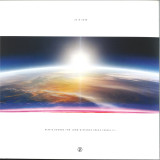
36 and Past Inside The Present label head Zake return to their Stasis Sounds For Long Distance Space Travel project which is music designed not for the distracted world we inhabit, but for the still moments we so often neglect. Crafted with intention and restraint, it is a universe that suspends the listener in time across glacial soundscapes in which the duo conjures a sense of cosmic awe. Soft, slow-moving drones and textural washes drift like solar winds through the vacuum, suggesting the boundless calm of deep space. The production is rich, gentle with tonal shifts and barely-there harmonics that evoke both distance and intimacy, wonder and melancholy. It feels like music beamed in from the edges of the known universe. If you fancy a contemplative journey from the edge of Earth's thermosphere into the unknowable beyond, tune into Stasis Sounds on your best headphones.
REPRESS
New Delhi-based Peter Cat Recording Co. will release their debut album, ‘Bismillah’ on June 14, 2019 via French independent label Panache Records. Debut UK live shows are soon also to be announced by the band.
Peter Cat Recording Co. could almost have a question mark on the end of its name. Not least as founder & frontman Suryakant Sawhney refuses to explain where that name really comes from or what it means (perhaps a reference to the Tokyo jazz club owned by Haruki Murakami), but also since the very existence of the band itself raises a raft of questions. When was the last time we fell for an indie rock band for the right reasons? Not because the band in question nostalgically imitate a perceived ‘golden age’ but because they innately embody the fundamentals of such music: fantasy, sincerity and the freedom to make music without rules or career aspi- rations. And when was the last time this kind of band sounded like Sinatra, Barry White, the sweetest doo-wop, humid fanfares and a psychedelic wedding band, all at once? And all of this coming from India?
In truth, the story of Peter Cat Recording Co. was written within the triangle of San Francisco, Delhi and Paris.
In the first of these cities, Sawhney (a native of Delhi) pitched up to study film-making. More distracted by the city’s peaking live scene of the early noughties, this is where he started to make music and to sketch out an idea for the band.“
The people I lived with supported my idea of writing music, they introduced me to great mu-
sic. There used to be a great garage scene in San Francisco, like The Oh Sees also Ty Seagall, Mikal Conin, all those bands. This is a world I had never seen in my entire life. A big inspiration from San Francisco was that you could record yourself. You don’t need to be in a studio and spend a lot of money to make an album. You can do it”.
At the end of the 2000s, Suryakant returned home to New Delhi, and started his band for real, more or less the same band that plays today. “I wasn’t so concerned about will we be performing, will we be the greatest band, will we be trendy. I just wanted to make something that was consequential and important for us, I think. Something which would last, something people could listen to and be like « this is life changing ». It was for the sake of beauty”.
For the first few years and in India alone, this is exactly what Peter Cat Recording Co. did, in total indifference to the rest of the world. This was until young Parisian label Panache stumbled across the band online via Vice’s THUMP subsidiary, stupefied by the band’s cosmic video for seven-minutes-and-counting track, ‘Love De- mons’. And so in spring of 2018, ‘Portrait Of A Time: 2010-2016’ was released on Panache - making the first international release from Peter Cat Recording Co., bizarrely enough, an anthology of re-mastered, hidden gems from the band’s ramshackle back catalogue, previously recorded in Suryakant’s own living room. With Peter Cat’s off-kilter charm hitherto unheard of beyond the fringes of India, the release provided a gateway op-
Whilst the title track found its way onto Tracks Of The Year lists at the Guardian & NME, it was tricky for new PCRC enthusiasts to get a firm grip on the startling push/pull between the immediate, uncanny music this release gathered, and the cultural backdrop of New Delhi at which it was so startlingly at odds.
Opportunity for a wider fanbase to fall in love with their cloud-like, drunken songs for the first time.
If discovering your favourite new band via a ‘Best Of’ feels a curious premise, then ‘Bismillah’ does more than hint towards the promise of Peter Cat Recording Co’s future. Blending gypsy jazz, psychedelic cabaret, space disco, bossa supernova, Bollywood and uneasy listening with kaleidoscopic ease, in many senses, the band’s knack hasn’t altered. Always different, paradoxical, unpredictable yet somehow familiar. The new album opens to the strains of bird chatter, the whisper of a city’s soundscape and the first few notes from an instrument which seem to be calling us to the departure lounge, a fore-shadow of the flight ‘Bismillah’ launches its listener
on. Suryakant sings with the detached, rueful elegance of Sinatra marooned on a desert island, whilst his band create small space-time capsules which navigate their way through genres and eras – including the future – and between nostalgia and eccentricity.
Peter Cat recently trailed ‘Bismillah’ with the release of ‘Floated By’, an appositely titled musing on failure & missed opportunities, punctuated by the fulsome brass section which weaves through so much of the album.
The languid, blue quality to the track is offset by the attendant music video, created with footage shot, implau- sibly enough, at Suryakant’s own marriage ceremony (needless to say, the wedding band hired for the day was of course, Peter Cat Recording Co.) Sawhney dryly notes; “Hopefully it’s not a many-a-times-in-a-lifetime event. You can’t fake that set, those people actually having a good time, being really emotional and intense.” ‘Bismillah’’s colour-drenched album cover also captures Suryakant’s father-in-law making his wedding toast on that same day - a nod back towards the cover of ‘Portrait Of A Time’, itself a black & white image taken at the wedding ceremony of Suryakant’s own father.
A stumbling but gracious collection of songs rooted in a kind of drunken soul music, the melancholy nature of some of the songs on ‘Bismillah’ renders them almost liquid, before they develop into more dance-like shapes. Suryakant’s rangy voice swoops from the falsetto glide of ‘I’m This’ to the beat-up baritone blown along by the warm breeze of ‘Soulless Friends’. The elliptical structure of album opener ‘Where The Money Flows’ also al-
lows for the use of brief bursts of autotune effect on his vocal without feeling incongruous, whilst the desultory lyrics of ‘Heera’ (a Hindi word for diamond) - sharing something with the Morricone school of grand storytelling - have an emotional weight that would impress even coming from a native English speaker. Perhaps the most gleefully unpredictable moment on ‘Bismillah’ comes with the illusory, vocal loops on the intro to ‘Memory Box’, errupting into 8 exhilarating minutes worth of unbridled, string-backed disco joy. A cat might have nine lives, but on ‘Bismillah’ and beyond, Peter Cat Recording Co. are hinting towards an un- knowable multitude of dimensions. Throw them all together, and it equates less to a listening experience and more to an out-of-body experience.
Peter Cat Recording Co. are: Suryakant Sawhney (vocals/guitar/organ), Dhruv Bhola (bass), Kartik S Pillai (organ/guitar/electronics), Rohit Gupta (horns), Karan Singh (drums)
One very handy 7" single and two monumental disco instrumental edits surely destined to get butts waggling on any given dancefloor. The A-side is swept along by a propulsive funk guitar line, neatly switching from classic 70s lushness to 21st century robotics and vocodered vocals and back again, while the flip goes for a more soul-driven vibe, the tight drums and bass pairing polished off by some delicately applied Rhodes piano, definitely the glitterball cherry on top. DJ weaponry so deadly it should probably be outlawed by some international treaty.
“Recorded at BBC Broadcasting House and partially aired on BBC Radio 3’s Late Junction, the first studio encounter between London-based duo Exotic Sin and Swiss percussionist Julian Sartorius is now published in full on this album from Sagome.
Winding through six distinct and interconnected paths, the trio effortlessly create a shared language in this expansive improvised session.
Listening back two years later — the session was recorded on March 24, 2023 — it’s evident how they build at a relaxed pace, offering space for the listener to enter into their evolving sound. Anchored by piano, delicate wood, metal, and air instruments, a fluid system of interactions develops: repeating, deepening, but not fixating. The direction of travel is not cyclical or linear and the pace insists on forward confidently, avoiding the trap or comfort of recurring motifs.
Percussion is not a timekeeper, but a key element, introducing new textures that even on the final track Path 6, trace out a horizon that feels more like a blurred beginning than a definitive end.
In Session, Exotic Sin moves into a lighter, perhaps more playful language for improvisation than on their debut album Customer’s Copy. This could be influenced by Sartorius’ tactile approach to sonic materials or the more stripped-back nature of the improvised session, with less emphasis on synthesised and electric sounds. While the emotional imprint from their debut album—murkier and insistent—remains, it has been aired out to dry. In Session, their sound-world is broad and moves with levity.”
Andrea Zarza Canova – April 2025
Music by
Kenichi Iwasa (electric and acoustic percussion, trumpet, horns, thumb piano, effects).
Naima Nefertari (piano, Yamaha keyboard, flute, bells, percussion).
Julian Sartorius (drums, percussion).
Recorded and mixed live for Late Junction at BBC Broadcasting House, London, on the 24th of March 2023 by Joe Yon and John Boland.
Mastered by Giuseppe Ielasi.
Produced by Silvia Malnati at Reduced Listening for BBC Radio 3.
Extracts from the session were played on Late Junction on the 14th of April 2023.
Artwork by Josef William Back.
Graphic design by Nicola Tirabasso.
- A1: Space Afro– Blessed
- A2: Dualbox & Aracy Carvalho– Feel (Afrobeats Mix)
- A3: Bellestar & Trippynova– A Different Path
- A4: Nikko Mad & Space Afro– On My Mind (Mona Lisa Mix)
- A5: Future Soundscapes & Françoise Sanders– Honestly
- A6: Dualbox & Sapce Afro– Used To Be
- A7: Motor City Squad– One Truth
- B1: Space Afro & Monsoon– Ready
- B2: General Soundbwoy & Nikko Mad– You Trap Me
- B3: Golden Smirk– Missing You (Afrobeats Mix)
- B4: Dual Sessions– Us Together
- B5: Urban Love– I Want You, Girl
- B6: Space Gang & Frederik Young– Can't Go On
- B7: Max Dubster & General Soundbwoy– Kenya (General Soundbwoy Mix)
- C1: Future Soundscapes– Body
- C2: Monsoon– Pretty Nature (Nikko Mad Mix)
- C3: Space Afro & Nikko Mad– Lights
- C4: Don & Gene– For My Love (Afrobeats Mix)
- C5: Dual Sessions– Bikini
- C6: Monsoon– I Think About You Every Day
- C7: Hypnomusic– Can't Stop
- D1: Space Afro– Liquor (Afrobeats Mix)
- D2: Space Afro– Sweet Gal
- D3: Monsoon– Scars (Afrobeat Mix)
- D4: Rhythmic Control– Burghalle
- D5: D G– Senegal Dreams
- D6: Gilbert Mota– Number One
- D7: Rhythmic Contro– One, Two, Three
The first and most independent of all independent producers, Joe Meek needs little introduction. He was the first to chart in both the UK and the USA with an independently produced song -which was actually recorded in his home’s kitchen- when The Tornados' Telstar took the world in 1962. Meek was, of course, one of the most in vogue producers of the first half of the 1960s, providing the soundtrack to the evolution of UK Rock’n'Roll to Swinging London, scoring hits with actors like John Leyton (Johnny Remember Me), showmen like Screaming Lord Sutch and bands like The Outlaws and The Tornados. He also produced a wide stream of R&B and freakbeat 45s that are nowadays hardly sought after by the collectors with the biggest bank accounts.
Joe Meek experimented with all kinds of recording techniques in his home studio, his tricks and gimmicks won his productions chart placement and critical and public acclaim, but none of his projects was so advanced and way out as the avantgarde experimentation showed in his I Hear a New World electronic symphony from 1960. Aided by The Blue Men formed by Rod Freeman (group leader, guitar, vocals), Ken Harvey (tenor sax, vocals), Roger Fiola (Hawaiian Guitar), Chris White (guitar), Doug Collins (bass), Dave Golding (drums) -also known as Rodd-Ken and The Cavaliers- who provided a tight base to his electronically produced sounds, Meek came up with what he envisioned as the soundtrack of the future, the sounds he envisioned were to be heard in outer space. It was too way out for its time, certainly. To the point that of all the opus, only four tracks saw the light of day on a 7" EP released on Triumph, Meeks very own label. It wouldn’t be until 1991 that the whole recordings from the I Hear a New World sessions would see the light of day on a CD issued by the RPM label.
Wah Wah offers a new reissue of this now classic early electronics masterpiece, housed in a beautiful front-laminated back-flapped sleeve and offered as a limited 400 copies only black vinyl version and an ultra-limited 100 copies only transparent purple vinyl. Get yours before they fly!
RIYL : Delia Derbyshire and The BBC Radiophonic Workshop, Louis and Bebe Barron’s soundtrack to Forbidden Planet, Raymond Scott, Tom Dissevelt & Kid Baltan, Morton Subotnick…
The first and most independent of all independent producers, Joe Meek needs little introduction. He was the first to chart in both the UK and the USA with an independently produced song -which was actually recorded in his home’s kitchen- when The Tornados' Telstar took the world in 1962. Meek was, of course, one of the most in vogue producers of the first half of the 1960s, providing the soundtrack to the evolution of UK Rock’n'Roll to Swinging London, scoring hits with actors like John Leyton (Johnny Remember Me), showmen like Screaming Lord Sutch and bands like The Outlaws and The Tornados. He also produced a wide stream of R&B and freakbeat 45s that are nowadays hardly sought after by the collectors with the biggest bank accounts.
Joe Meek experimented with all kinds of recording techniques in his home studio, his tricks and gimmicks won his productions chart placement and critical and public acclaim, but none of his projects was so advanced and way out as the avantgarde experimentation showed in his I Hear a New World electronic symphony from 1960. Aided by The Blue Men formed by Rod Freeman (group leader, guitar, vocals), Ken Harvey (tenor sax, vocals), Roger Fiola (Hawaiian Guitar), Chris White (guitar), Doug Collins (bass), Dave Golding (drums) -also known as Rodd-Ken and The Cavaliers- who provided a tight base to his electronically produced sounds, Meek came up with what he envisioned as the soundtrack of the future, the sounds he envisioned were to be heard in outer space. It was too way out for its time, certainly. To the point that of all the opus, only four tracks saw the light of day on a 7" EP released on Triumph, Meeks very own label. It wouldn’t be until 1991 that the whole recordings from the I Hear a New World sessions would see the light of day on a CD issued by the RPM label.
Wah Wah offers a new reissue of this now classic early electronics masterpiece, housed in a beautiful front-laminated back-flapped sleeve and offered as a limited 400 copies only black vinyl version and an ultra-limited 100 copies only transparent purple vinyl. Get yours before they fly!
RIYL : Delia Derbyshire and The BBC Radiophonic Workshop, Louis and Bebe Barron’s soundtrack to Forbidden Planet, Raymond Scott, Tom Dissevelt & Kid Baltan, Morton Subotnick…
Deadbeat's latest release is from Malta's own acid pilot - Acidulant. As you'd expect, DBR006 throbs, oozes and drips 303.
If Planet Jack's uncompromising acid baseline is all business (and we're talking Wolf of Wall Street shit here), Taken A Trip is here to play - mischievous, joyous and eventually bursting into a climax of pure acid house. No doubt, these tracks know their heritage - Taking Orders From Machines channeling the energy of electronic originators Kraftwerk via an East London basement at 0600am.
And when the breaks start to kick this EP truly ascends. The growling physicality of Coming Down To The Underground prowling the floor before Space For Crap's anthemic hook lifts us into ecstatic bliss.
Skinned' ( released digitally in 2020) - the debut album from Danish composer, producer and singer ML Buch.
Comes with lyrics printed the inner sleeve.
After releasing her debut EP Fleshy in 2017 - Skinned that takes her expansive guitar work and catchy melodies to another territory.
With her unique experimental pop and vocals that seem to slide into your ears as fluorescent liquid, ML Buch portrays the reality of intimacy in a digital era. Working primarily with synthetic midi sounds, the general love of songwriting and guitar music is ever present.
As if in search for something real, ML Buch takes the listener on the other side of the skin. Led by tender love songs like I’m A Girl You Can Hold IRL and Can’t Get Over You With You we journey through her throat and into her intestines, discovering a fascinating realm of shiny mucus and bile in flesh and yellowish colors. Panoramic images were captured by a small pill camera travelling through the body of ML Buch and act as extensions of the architecture of the music. This literal way of internalizing modern technology is symbolic of Skinned where eclectic instrumental compositions share the space with strong hooks and ML Buch’s spherical voice.
credits
All songs composed, arranged and produced by ML Buch
All lyrics by ML Buch
‘Touching Screens’, ‘O’ and ‘I Feel Like Giving You Things’ co-written by Oliver Nehammer
Bass on Can You Hear My Heart Leave, Touching Screens and Mw by Johan Polder
Drums on Touching Screens and Mw by Kristof Gasior
Viola on Stone Bridge by Astrid Sonne
Midi drums and keys on Touching Screens by Oliver Nehammer
Mix by ML Buch, Oliver Nehammer & Jacob Brøndlund
Mastered by ET Mastering
Cover photo by David Stjernholm
Artwork by Aske Zidore and ML Buch
Any15 - Anyines 2020
- A1: Pharoah Jones
- A2: Ghost Gospel
- A3: Ill Feeling
- A4: Capital Punishment
- A5: Do Not Adjust
- A6: Cool Green Trees
- A7: Chill Scratch
- A8: Poisonous Fumes
- A9: Welcome Aboard The Starship
- B1: Keep On Runnin
- B2: Sounds Impossible
- B3: Painted Faces
- B4: The Knew Style
- B5: Chicken Wing Blues Sauce
- B6: Kool Breeze
- B7: Sexx Bullets
- B8: Soul Child
- B9: Take Off Runnin
- B10: Centurian
- B11: Bozack
- B12: Church
- B13: Splash One
- B14: Hank
- B15: 73 Goatee
"Chasing the funky symphonies that filled my head and my dreams..."
December 25th, 2023 - an Instagram post. Stimulator Jones shared half a dozen FIRE tracks from his beat tape archive. We were immediately drawn to the rough hewn boom bap.
"I'd release that", Rob commented.
Hours of material was shared and the result is this: Cool Green Trees (1999-2005). A collection of beats and loops Stimulator Jones created between the ages of 14-20 at home in his basement, bedroom and computer room in Roanoke, Virginia.
You will not believe the profound soulful genius contained within these naive schoolboy melodies.
December 25th, 1998 - 25 years ago to the day and his much-coveted Yamaha SU10 sampler was finally bestowed upon young Stimmy AKA Sam Lunsford: "I immediately hooked up a CD Walkman to the input jack and looped the beginning two bars of Grover Washington Jr.'s "Mercy Mercy Me". I don't know what exactly was so thrilling about hearing two measures of music repeating over and over but it was so infectious and hypnotizing and enthralling to me. I'll never forget that ecstatic rush of making my first loop - an uncontrollable, gleeful smile plastered all over my face." When you hear the pocket breakbeat symphonies featured here on Cool Green Trees, you'll feel the same sense of frisson.
In the wake of his Stones Throw breakthrough - Exotic Worlds & Master Treasures - Stimulator Jones was pegged by many as a 90s throwback artist. However, he literally IS a 90s artist. He's been recording music most of his life and he's now 40. He created the bulk of Cool Green Trees as a teenager. Everything before 2004 was recorded when Sam was still in school. He was in 8th grade when he made the 1999 tracks - he didn't even have his learner's permit. This album is a snapshot of a young man in a simpler time. Things were still mysterious back then and he was flying blind, relying on his ears and having to figure things out for himself: "I had no road map for becoming a beatmaker. I have been collecting music since I was a kid, I am a lifelong digger and seeker of cool and interesting sounds. I was there in the golden age of Hip Hop, and while I may have been a suburban white kid in Roanoke, Virginia, I was tuned in and I bought so many classic albums when they came out. I was attracted to Hip Hop because of the musical and poetic quality. I was hypnotized by the rhythms, partially because I was a drummer. I didn't brag about collecting my breakbeat records or making beats - it was something I did in isolation. It wasn't something I generally wanted to bring attention to and it didn't really score me any cool points. I certainly wasn't flexing on social media about it."
Hell, he can do that now!
Opener "Pharoah Jones" was inspired by Yesterday's New Quintet and Madlib's ability to capture that classic 70s sound whilst playing all the instruments. Sam created this one stoned afternoon by laying down a 2 bar loop and a shaker loop on his Yamaha SU700 sampler. He hung a microphone from the ceiling and played his Yamaha Stage Custom drum kit over the top before adding ender Rhodes and playing his dad's Selmer tenor sax through an Electro Harmonix Memory Man echo pedal. Yes! Up next, "Ghost Gospel" utilises a dope loop from a gospel record and adds some soul-funk drums overtop, whilst working that filter knob. Says Sam: "The loop reminded me of something Ghostface would rap over. The sample was in 3/4 waltz time but I flipped it for a 4/4 groove, a technique I picked up from RZA. "Ill Feeling" uses sped-up pieces from a dusty old funk record and putting them over a classic NOLA drum loop; gain chopping up a slow, bluesy 3/4 time signature and bending it to a 4/4 groove. Classy shit. "Capital Punishment" features drums tapped in live, inspired by MF Doom's Special Herbs series. "Do Not Adjust" consists loops found on a compilation of 70s French music at Happy's Flea Market, a classic Roanoke digging spot.
The sublime, evocative title track, "Cool Green Trees" was created when Sam was still living at home. He dumped samples off his SU10 into the family desktop and arranged them in a demo version of Pro Tools: "This track was sort of my ode to the DJ Shadow style of sample based production. Super spacey, slow, and moody. The heavily filtered drums were inspired by Alec Empire's 'Low on Ice' album. I later added some scratches and sounds from a Spider Man storybook record." "Chill Scratch" snags the final bit of a bossanova record and pairs it with a drum loop before adding experimental scratching run through an Electro Harmonix Memory Man echo pedal. "Poisonous Fumes" was made using a sampler, mixer and a turntable; a kind of mixtape beat collage with added scratches and sounds from various records. Using dialogue from superhero records was a nod to Madlib. "Welcome Aboard The Starship" is dark, downtempo trip-hop with a spooky bent. Sam paired a slow, hard drum loop with a guitar sample grabbed off a psychedelic rock record. To finish, he added various backwards sounds and weird atmospheric effects and a little scratching. Swoon.
Side B opens with "Keep On Runnin", made on a borrowed Roland SP202 sampler. Having always loved the sound of the Lo-Fi filter on those machines, reminiscent of the Emu SP1200, Sam always imagined Del or another of the Hieroglyphics crew rapping over this beat. You can certainly hear why. "Sounds Impossible" sees Sam experimenting with layering multiple kick samples at different volumes to create patterns similar to those heard by Showbiz and Lord Finesse during their God-level 1995 period. "Painted Faces" was made by chopping up a REDACTED record which he had gotten from Happy's Flea Market and paired it with a REDACTED drum loop. By the time Sam recorded "The Knew Style", he had acquired a shitty old 1960s portable turntable off eBay. It didn't function properly when he bought it but his brother opened it up, cleaned it out and got it working: "I remember he told me that there was a bunch of sand inside of it when he opened it up, as if its previous owner had taken it to the beach. I would take that turntable on my Happy's Flea Market digs so I could preview records...that's how I found this loop."
"Chicken Wing Blues Sauce" loops up a classic blues joint and pairs it with some REDACTED drums. A bit of filtering and arranging et voilà! "Kool Breeze", from 1999, is one of Sam's oldest surviving beats, as is "Sexx Bullets". The Roots sampled the same record, leaving Sam frustrated yet vindicated. "Soul Child" was an early SU10 creation, looping a dusty old Soul Children 45 and pairing it with 70s rock drum loops to great effect. "Take Off Runnin" was another loop found digging with a portable turntable. Paired with some boom bap drums it makes for a hypnotic head-nod groove. "Centurian" was intended to be a little beat interlude a la Pete Rock. The sample is from a sun-dappled soft-psych record and it's paired with a Robin Trower drum loop that just happens to fit perfectly. Sometimes you slap things together kind of haphazardly and magic happens. "Bozack" was the first beat Sam made using Pro Tools, his first foray into using chopped sounds instead of loops, an exciting new world. "Church" is beat interlude using a Phil Upchurch loop with the "Long Red" drums - a favourite break of Dilla et al. Sam was really on a tear in late 2004, probably because he was unemployed and phoneless and able to just make beats all day. He made "Splash One" on a borrowed Yamaha SU700 and again was experimenting with tapping the drums in live with his fingers, instead of using a loop or sequenced pattern. Channeling 9th Wonder, Sam used a water splash sound effect from a Batman record as a percussive element, hence the title (also a 13th Floor Elevators reference). The main loop is a backwards portion of one of his favourite Roy Ayers songs.
"Hank" is another fun little beat interlude thing, created on a borrowed Roland SP202 sampler with the fantastic Lo-Fi effect that resembled the Emu SP1200 at a fraction of the price. "73 goatee", from 99, is another of his oldest surviving beats, created in his bedroom with his Yamaha SU10 and his brother's Vestax MR-300 4-track recorder: "This one will always feel special. I can remember having a feeling all the way back then on the night that I created it that this was a solid beat with a catchy loop. There was something in the Fender Rhodes melody that resonated with me emotionally, and I had never heard a producer sample that portion before. I felt like I had found my own unique sound, my own unique loop. It came from an Ahmad Jamal '73. I actually even recorded myself rapping and scratching over this beat way back then, I still have that version in all its imperfect sloppy glory."
Sam explains just how much these tracks mean to him: "They all have immense historical and sentimental value and I'm proud of them. These beats come from an innocent, simple time when I was just figuring out how to craft these sounds. They're something very personal to me. They are the initial part of a journey that I really was taking *alone*. There was no YouTube. I couldn't Google shit. I didn't even know any other beatmakers, producers or DJs in my town that could teach me anything. It was always just me, alone, in a room with some equipment - chasing the funky symphonies that filled my head and my dreams. What I was doing wasn't cool. Most of my peers thought I was a weirdo and couldn't care less. Creating these sounds was an anti-social endeavour. In a sense, I felt like it was me against the world, and all I had to instruct and assist me were the recordings produced by my heroes - RZA, DJ Premier, Erick Sermon, Beatminerz, Showbiz, Diamond D, Beatnuts, Prince Paul, The Bomb Squad, Pete Rock, Q-Tip, E-Swift, Mista Lawnge, DJ Shadow, Cut Chemist, Peanut Butter Wolf, El-P and so many more...I dedicate this collection to them, and to my older brother Joe who has always been a musical and technical guiding light for me.
This was a time before every kid was a self-described producer and beatmaker, before everyone had a DAW, before Kanye and "chipmunk soul", before Red Bull beat battles, before there was any social media beyond chat rooms and AOL Instant Messenger, before Soundcloud, before SP-404 mania, before lo-fi beats to study to, before Splice, before targeted ads for MIDI chord packs, etc. In 99 when I told people that I had a sampler and made beats I was mostly met with bewildered confusion and indifference. Kids and adults alike would wonder why I got this weird machine for Christmas instead of something worthwhile like a Playstation or a mountain bike or even a guitar for that matter because at least that could be used to make "real music". Back then, sampling was still not widely respected as an art form - it was seen as lazy, talentless and unoriginal at best and outright criminal theft at worst. I had gotten respect for playing drums and guitar and things of that nature but this was a step in the wrong direction in the eyes of many."
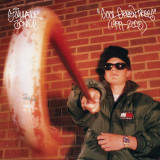
The cover photo is a picture of Sam standing on his back porch in the latter part of 1998, just before he got his first sampler. He was 13 years old, in 8th grade. His dad took the picture with his 35mm film camera: "I actually wanted to be pointing my dad's .22 pistol at the camera lens but he wouldn't let me. He gave me an old walking cane to use instead. The Tommy Hilfiger puffer jacket came from the lost and found at William Fleming High School where my mom worked as a secretary. I was thrilled when she brought it home because we never spent money on expensive name brand clothing like that - we were for the most part strictly a sale rack, bargain bin, thrift store, yard sale, flea market kind of family when it came to clothes. My watch is some cheap off-brand fake gold department store watch." Mastering for this vinyl edition was overseen by Be With regular Simon Francis and it was cut by the esteemed Cicely Balston at Abbey Road Studios to be pressed in the Netherlands by Record Industry.
- Caramelized Onions (You Bet!)
- Poor Guy Misunderstood
- Justice Complice
- Before And After
- Word On The Rink
- Bbq All-Dressed
- Hitler, Satan & Associates Llp
- Operating Thetan: Unknown
- Your Favourite Meal
- Word On The Swing
"Word on the Street" ist das amerikanische Debütalbum der kanadischen Avant-Pop-Singer-Songwriterin und Performance-Künstlerin Elle Barbara und geht auf das Konto von Elle Barbara's Black Space - einer Gruppe von Instrumentalisten aus Montreal, die Barbara zusammengerufen hat, um mit anderen schwarzen Musikern ins Gespräch zu kommen und dabei nicht den Erwartungen an den Klang schwarzer Musiker zu entsprechen. "Word on Street" wurde von Elle Barbara in enger Zusammenarbeit mit Renny Wilson geschrieben, komponiert, arrangiert und produziert. Renny Wilson hat das Album über einen Zeitraum von acht Jahren aufgenommen, bearbeitet und abgemischt, in denen Elle, eine schwarze Trans-Person, sich sozial und medizinisch neu orientieren musste, während sie von Sozialhilfe lebte und sich häufig von nur 11 CAD pro Woche ernährte. In diesem Sinne ist "Word on the Street" ein Sieg gegen Klassenkampf und Vetternwirtschaft und ein unverschämtes Zeugnis dafür, wie eine einkommensschwache, von der Sozialhilfe unterstützte, schwarze Mann-zu-Frau-Transsexuelle mittleren Alters es geschafft hat, alle Ressourcen zu nutzen, um die Musik zu machen, die ihr vorschwebt, und die Konventionen der Musikindustrie völlig zu ignorieren. "Word on the Street" ist auch vehement radikal und unabhängig; ein Meisterwerk der DIY-Prog-High-Production, inspiriert von der Art und Weise, wie das Konsumverhalten und die gegenwärtige technologische Zeit dazu führen, dass sich unser Leben verschlechtert und wir uns zunehmend voneinander entfremdet fühlen. Mit einer breiten Palette von Einflüssen, darunter Todd Rundgrens "A Wizard, a True Star", Prince and the Revolution mit "Purple Rain" und "Running Out of Time" von Rexy, beschwört jeder Track auf "Word on the Street", abgesehen davon, dass sie sehr melodisch sind, einzigartige Bilder herauf, die sich aus scheinbar unvereinbaren Bildern zusammensetzen, wie z. B. korrupte Justizsysteme, die Prophezeiungen von Nostradamus und das Eishockeyteam Montreal Canadiens. "Word on the Street" ist eine gemischte Tüte, deren verschwörerische Ästhetik eine antikonsumistische Haltung verbirgt, die zum Widerstand gegen den Aufstieg der künstlichen Intelligenz und anderer Werkzeuge der technologischen Unterdrückung aufruft und außerhalb der aktuellen Überwachungssysteme arbeitet, was wiederum mit Elle Barbaras Vorstoß für Low-Tech-Unterstützung wie Vinyl-Schallplatten übereinstimmt.
- Introit
- Sanctus
- Kyrie Eleison
- Pie Jesu
- Sequentia
- Agnus Dei
- Lux ?Terna
- In Paradisum
All Men Unto Me is a project led by Rylan Gleave, composer and vocalist (most notably in Ashenspire and various Paraorchestra projects). Today, All Men Unto Me announces their second album Requiem, an album which re-imagines an ancient mourning in a real, contemporary setting. Taking the broad emotional arcs of the Missa pro Defunctis, these structures pave way for new songs, ruminating on patriarchal power systems and the conditions of transmasculinity within these, through the haze of Queer reverence and forgiveness. In Rylan's words, the Missa pro Defunctis "translates to ‘Mass for the dead’, and refers to the Catholic text taken from the Roman Missal. When set to music, it is called a ‘Requiem’. Requiem masses are usually performed at funerals. I’ve sung in a few Requiems — Mozart, Fauré, Duruflé — when I’ve been in choirs, and felt those dramatic arcs of the structure in my own voice. Writing a Requiem felt like processing my own complex feelings about the Church, patriarchal power within it (and more broadly), and the death of a part of me in a framework that allowed for mourning. The contours of sorrow, light, forgiveness, and reverence made space for these songs to speak to my own identity as a survivor, and use that structure in a way that let me direct an ancient narrative myself." Marrying traditional Anglican soundworlds of electro-pneumatic church organ and stacked choral vocals with heavier sounds, closer to experimental/noise rock and doom metal, Requiem sits at times near Swans, Kayo Dot, Lingua Ignota, Greet Death, and Scott Walker.
[e] SEQUENTIA [video]
- A1: In The Time It Takes To Drown
- A2: John The Baptist Was A Creature Of Habit
- A3: Under The Mariana Trench
- A4: The Double Life Of A Seahorse
- B1: Lamenting The Colours Of Melting Ice
- B2: If A River Runs Through It
- B3: Clouds Over The Rain In Spain
- B4: Blind To The Last Of Its Kind
Further explorations into the deep space of the future/past by two master- improvisors who compose their wordless paintings out of thin air. Their collaborative powers are nowhere near their peak and this voyage takes them further into the Uncharted. These pieces unfold as revelatory mind blooms. Creating a canopy of sound forms inside which they speak the rarifi ed language of world creating. This isn’t just music, it’s a journey without maps, Inside.
This new LP takes Nelson & Kramer deep under the earth's seas, pulling the listener down beside them as they explore the uncharted currents that fuel the human imagination, fl uid, always moving, and always changing. It is an excursion into the lowest depths of Ambient Music, and a new beginning from the very place where life itself began. The fl oor of the ocean has a new sound, and it is breathtakingly beautiful.
- A1: Coro Del Amanecer (Feat. Vero´nica Valerio)
- A2: Corazon De Rubi (Feat. Minu¨k)
- A3: Tlacotlan
- A4: Juku (Feat. Rumbo Tumba)
- A5: Chucum
- A6: Complete (Feat. Feat. Dina El Wedidi)
- B1: Xica Xica (Feat. Uji & Barrio Lindo)
- B2: Brigantes
- B3: Papan (Feat. Citlaly Malpica & Pablo Emiliano)
- B4: Ynglingtal (Feat. Jhon Montoya)
- B5: Madre Tierra (Feat. Luzmila Carpio)
BLUE Vinyl[29,62 €]
Repress!
Wonderwheel recordings is proud to present the first full-length album from
producer Robin Perkins, aka El Buho. Balance represents a meeting of different currents that make up Buho's music: a fascination with the natural world, and its protection, a fascination with the rhythms, traditions and sounds of Latin America and a fascination with modern electronic music and production aesthetics. The album is peppered with Cumbia, Son Jarocho, Andean instrumentation & Afro-Colombian rhythms. Mixed with this, Robin integrates this idea of "nature music" - putting the sound of a misty forest, the songs of birds, of crunching leaves under foot or the rhythmic tapping of rain alongside synthesized sounds, electronic clicks or claps, deep basses. Trying at once to give them their own space but in a new, surprising perspective - it draws electronic music into something more soft, natural, different and appealing.
Balance is also an album that celebrates community and collaboration, showcasing collaborations with ten different artists form Latin America and beyond, both producers, instrumentalists and singers. Including more of a lyrical presence than his previous EPs, Perkins solicited the participation of talented singers like Dina al Wedidi from Cairo, Luzmila Carpio from Bolivia and the incredible decimas of Mexican poet Citlaly Malpica. The album also features the likes of harpist Veronica Valerio, Argentine multi-instrumentalist Rumo Tumba, jarana player Pablo Emiliano from Mexican Son Jarocho group Semilla and members of the Shika Shika family (the global collective he co-run's) Uji, Barrio Lindo, Kaleema, Minük and Jhon Montoya.
El Buho's music has an incredible power to convey feelings, atmospheres, memories or messages. The message that sits behind this music is to value on the one hand the power of community, of collaboration and of our modern, globally, connected world but also the remembrance, protection and celebration of the very earth we depend upon for our existence.
The Richard Sen remixes of John Grant were commissioned in 2016 but were never released. Since then, enquiries about release have continued to this day. Sen's remix of 'Disappointing' featured on Andrew Weatherall's Beats In Space mix in 2016 and was a staple in his DJ sets, especially at ALFOS. Charlie Bones, Ivan Smagghe and Optimo also supported it at the time. This release on Sen's DIYC label follows his much hyped album, India Man. In addition, Richard's compilation, Dream The Dream on Ransom Note (2023) was voted Best British Compilation by DJ Mag. These remixes have also been gaining much interest from the listeners of Sen's weekly show on Do!! You!!! Radio.
Brownswood Remix Editions 006 continues the label’s tradition of outstanding remixes, revisiting its archives with a spirit of exploration and reverence. This latest edition focuses on Como Como by Mala featuring Dreiser & Sexto Sentido—originally featured on Mala’s acclaimed 2012 album Mala in Cuba—and presents both the original track and a striking reinterpretation by Theo Parrish. Together, they offer two essential cuts that embody Brownswood’s dedication to pushing musical boundaries.
Theo Parrish, a key figure in Detroit’s house and techno scene, is renowned for his deeply soulful, genre-blurring productions and DJ sets. His remix of Como Como draws on his signature style, combining raw grooves, layered percussion, and an expansive sense of space that reframes Mala’s original with hypnotic intensity and depth.
Matching vivid world-building with a full house of kinetic rhythms, Polygonia delivers her latest album to Dekmantel as an invitation to experience 12 different dream scenarios.
As Polygonia, Munich-based Lindsey Wang has established herself as a constantly inventive, omnipresent operator within the modern electronic landscape, exploring varying shades of ambient and deep techno while increasingly spreading into downtempo and leftfield electronica with a playful yet mysterious spirit.
Dream Horizons is an instructive title — Wang approached her new album as a collection of different dream scenarios, with all the creative freedom the concept implies. From oceanic calm to artful propulsion, she was free to shift gears from track to track while relishing the strange and beautiful atmospheres her inspiration pointed towards. A multi-instrumentalist as well as a producer, Wang recorded her own voice, saxophone, flute, violin and percussion to inject organic, human vibrancy into the surreal spaces she was shaping out, capturing the uncanny sensation of alien and familiar that hangs over the places we visit when we sleep.
There are pointedly direct techno workouts on the album, from deft beatdown 'Soul Reflections' to shimmering ear worm 'Set Me Free', and 'Twisted Colours' relishes shifting blocks of flute around a sprightly, footwork-tickled framework. Elsewhere, there's space for softer expressions on pearlescent opus 'Crystal Valley' while elastic rhythms and tactile textures slither around at a lower tempo on 'Flakes Flying Upwards'. In between, Wang plays with fractured beat patterns and sharply sculpted sonic matter with a staggering level of detail and intention. 'Gate To Amygdala' is the perfect example of the bold scope of her expression — the midpoint track thrives on nervous tension and a dislocated sense of momentum without anything like a conventional techno trope. 'Mindfunk' equally pushes and pulls at sensory perception with an off-kilter, awkwardly looped synth phrase that relishes the opportunity to skew dance music conventions within the flexible rules of the dream world.
For all the smart production and knowingly experimental approaches that form the basis of the album's sound, it's also a record charged with the full range of emotions you might expect to experience on a break away from consciousness. Whether it's the melancholic impressions that smudge into incidental pauses on 'Metaphysical Scribbles' or the mantra-like breath and sax combination of 'Essential Breath' that closes the record, Polygonia's heart bursts out of the album's vibrant form as brilliantly as her exacting, studio-synced mind.
- A1: Trompe Le Monde
- A2: Planet Of Sound
- A3: Alec Eiffel
- A4: The Sad Punk
- A5: Head On; Written-By – Jim Reid, William Reid
- A6: U-Mass
- A7: Palace Of The Brine
- A8: Letter To Memphis
- B1: Bird Dream Of The Olympus Mons
- B2: Space (I Believe In)
- B3: Subbacultcha
- B4: Distance Equals Rate Times Time
- B5: Lovely Day
- B6: Motorway To Roswell
- B7: The Navajo Know