One of the most essential works from Nurse With Wound, coming in an extended luxury 3x picture LP and 2CD edition, with many unreleased, alternative versions and songs.
This album is the sister album to Current 93’s same titled album and it’s a crownjewel for collectors of avantgarde and experimental music.
The original release of Nurse with Wound’s gargantuan “Thunder Perfect Mind” in 1992 coincided with that of Current 93’s homonymous genre-defining album. Legend has it that the gnostic name initially appeared to Steven Stapleton in a dream as the title of Tibet’s then still nameless upcoming album. Both records feature contributions from David Tibet, Colin Potter, Rose McDowall, John Balance of Coil, Alan Trench of Orchis and Joolie Wood amongst others. The title and the partial overlap of the personnel on both albums isn’t quite where the similarities end, both albums have since become undisputed milestones in their respective artists’ oeuvre. At the core of the definitive 2023 Infinite Fog re-release fully overseen by Steven Stapleton are the two original tracks “Cold” – a classic unsettling rhythmic Nurse collage-fest, significantly closer to jittery psychelia than the oft-cited “industrial feel” and the epic “Colder Still”, easily one of the most mind-bending breathtaking NWW compositions up to this point and well beyond. The track soothes ghostly atmosphere and reveals new surprises with every listen, not least of which is a direct link to its sister release from c93 as well as the first appearance of the signature rhythm loop that would mutate and re-emerge on several later tracks. The album also is the first full-length collaboration with genius sound wizard Colin Potter who has since become a ubiquitous sidekick both on Nurse albums as well as in live performances. As a follow-up to what is widely acknowledged as one of the best-loved exercises in drone of the 20th century “Soliloquy for Lilith”, TPM is a much more varied but at least equally rewarding experience. Infinite Fog are beyond pleased to be able to offer a significantly enhanced, remastered and extended 3 LP version for old and new fans alike.
Поиск:dre infinite
Все
- A1: Sharkey - Someone Like Me
- A2: Lynne Ann Kingan - If You Love Me - Hate Me
- A3: James Thornbury - So Tan
- A4: Jim Huxley - Only A Song
- A5: Charlie Webster - Snodland
- B1: The Bob Hughes Band - You Broke My Heart
- B2: Goldrust - Going Yesterday
- B3: Jim Kennedy - You Are The Reason
- B4: Jon Betmead - Marie Elene
- C1: Charles Murphy - The Foot That's Holding Me Down
- C2: Remnant - I Will Set You Free
- C3: Fred Potts - Following Rainbows
- C4: The Superwomen - Lowlands
- D1: Robison Kaplan Ltd - Don't Say Goodbye
- D2: Gary Ramey - You Are His
- D3: John Agostino - Loss Of Love
- D4: Ritchie Tierney - Please Stop Breaking Me Down
A humanity-reminding suite of miracle moments, Someone Like Me unites a geographically unbound cast of real people in pursuit of a meaningful connection. Taping their lived experience in economic studios in quiet English counties, Pacific Northwest woodland retreats and the big city bustle of Sydney and Los Angeles, these kindred spirits rendered sheer beauty in the process. Custom pressed folk songs of love, loss and the lord saviour.
Illuminating minor works from seasoned players such as former Syndicate Of Sound chart-topper Sharkey and late-era Canned Heat lynchpin James Thornbury, the collection simultaneously honours the fleeting amateurism of hobby musicians. With their one shot at tangible vinyl, freshman Lynne Ann Kingan realised her loose bubblegum rocker on campus time, while U.S. Navy recruit Fred Potts cut his unconditionally serene ballad remotely stationed on a Spanish naval base. Spartan production continues to reign with Jon Betmead’s hair-raising gospel, howling into infinite space, and Goldrust’s stripped back garden hymn.
Throughout the hour-long reflection, faith has an intermittent yet revelatory presence, most overtly with the divine choral soul of Seventh-day Adventist quartet Remnant. More subtly, Gary Ramey and Jim Kennedy both turned to song in their spiritual quests, offering their all to a universal power. An irrefutable compilation cornerstone, the National Office For Black Catholics showcased Charles Murphy’s lionhearted account of the Black experience at a 1971 concert. Five years earlier, high school seniors The Superwomen would use their hauntingly angelic harmonies to address racial inequity with a breathless take on ‘Lowlands’.
Reaching the furthest corners, Someone Like Me secures the inaugural licence of three homespun masterpieces. Discovered by fluke in the digital haystacks of Youtube and Soundcloud, Jim Huxley’s bedroom pop earworm melds peacefully into Charlie Webster’s synthesized reverie. Meanwhile, Hollywood’s John Agostino introduces us to the bizarre world of tax scam records, with the artist only now learning that his tender psych-folk demos were leaked via a 1977 bootleg.
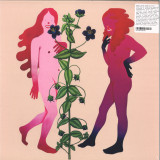
Compiled and lovingly restored by armchair digger Mikey Young (Eddy Current Suppression Ring/The Green Child), Someone Like Me pays due service to seventeen rarefied journals of truth and devotion. Adorned with visual artist Chris Fallon’s figure and flora dream extractions, the uniting songbook is further detailed by expansive track-by-track liner notes and a forward from San Franciscan poet Rod Roland.
About 20 years ago, Carlos Giffoni quickly made a name for himself both as a noise guitarist and a laptop noisician upon arriving in New York (via Florida and Venezuela). His expertly curated annual No Fun Festival, as well as his No Fun label, further solidified him as a key figure in the international noise scene. The festival's success proved the formula for experimental and improvised music fests could work with the noise underground as well, but it also capitalized on the faster rate of connections being made between geographically disparate artists as a result of the (still relatively nascent) internet. Back then Carlos would play his laptop like a pinball machine, in contrast to the static stage presence of most laptop performers, and his solo music, like many others' at that time, expressed a less dark and dour vision of the implications of harsh noise. By the close of the 2000s, he had stopped doing the festival, switched gears musically to playing the lighter No Fun Acid sets, and moved to LA. Now he has re-emerged in a big way with Dream Walker, his first full-length since 2018's Vain (and only his second since 2010). Inspired by the masterful performances and diffusions he heard at the February 2023 GRM electronic music festival in Paris, particularly sets by old friends Lasse Marhaug, Jim O'Rourke, and Eiko Ishibashi, he began conceptualizing new music of his own in response, turning to synthesizers and other hardware to produce a work more firmly in the tradition of European electronic music than anything else he's done. Intended as a late night listen that evokes the edge of consciousness, with Carlos getting as close as possible to a trance state during the actual recording and mixing, each of the eleven tracks transition into one another rather than being standalone discrete pieces, forming two side-long suites that proceed like stages of a dream. Unabashedly tonal and repetitive, the glistening opener "Now Dream," the droning "Sleep Walker," and the closing triptych of "Lost in Descanso," "Sunrise," and "The Hidden Path" occupy a power electronics-ambient nexus that feels spiritually close to the Mego label. Elsewhere, "Ticking Clock" is reminiscent of Stereolab's non-easy listening vintage electronic side, while the two-part arpeggiated "Euphoria" recalls early Oneohtrix Point Never (which Carlos released on No Fun). The contrast between "One Breath"'s crackling opening and its remarkably fluid and soaring sustained synthesized chords is a distillation of the album's lingering tension between electronics' ability to project mechanical rupture as well as the organic and the infinite _or "walking between dreams," as Carlos himself puts it. Produced by Lasse Marhaug (who also mastered Carlos' first solo album, Welcome Home, back in 2005), released by Stephen O'Malley (who I remember DJing at the No Fun fest), with cover art and photos by personal friends, Carlos considers the album a family affair. But Dream Walker most of all heralds a maturation of the artist, and stands as a record that exists out of pure desire, rather than obligation or force of habit; a statement of reconnecting with music not by merely revisiting it, but by building on what's come before, both in his own work and in the music he loves. -Alan Licht, New York, December 2023
"Nothing and no one can extinguish this flame within you," sings Emilie Simon from the opening title of Polaris, her first true album in ten years. An apparent long eclipse that the French singer, musician, and producer has nevertheless used to explore new territories, open uncharted paths, and reinvent her musical vocabulary and narrative threads. Like Ariane in a dreamlike world, she stretches these threads along her journey, inviting us to blindly follow.
After composing music for the film "The Jesus Roll" with John Turturro, and a musical journey between Earth and Mars through a series of singles, in 2023, Emilie Simon chose to revisit her debut album, both in the studio and on stage, to definitively close a chapter begun twenty years earlier. She also published "Phoenix," a gothic tale with a "vampiric" theme, sung and spoken in alexandrines. The central character, Lily Mercier, is the same one found at the heart of the Polaris adventure. Clearly, Lily is a projection of Emilie, on a quest for the North Star that symbolizes the never-extinguished desire to find her way. The dazzlement too, when one is a musician always eager to ignite again for the infinite mysteries of sound and to translate its shivers into songs.
This album, sung in both French and English, succeeds in combining the clarity of melodies with the demands of production. It immediately captivates (the irresistible burn of the Sun) and enchants over repeated listens, like a lasting iridescence of a thousand sonic fragments. Recorded in New York (where Emilie lived for a long time), Los Angeles, Montreal, Rome, and Paris (where she returned to settle), Polaris has its own cartography. Its universe is the standard scale, its pulsation inspired by cosmic rhythms, and its unique poetry both disturbs and captivates. A sign that nothing and no one can extinguish this flame within her.
The latest suite by composer (and Stars Of The Lid co-founder) Adam Wiltzie took shape following a move north from Brussels into the Flemish countryside, although it was initially inspired by a recurring dream wherein “if someone listened to the music I created, then they would die.”
The album uniquely evokes and evades the allure of oblivion, keening between beauty and ruin, forever unresolved. Wiltzie cites the barbiturate of the title as both muse and sacred escape: “When you are sitting face forward on the daily emotional meat grinder of life, I always wished I could have some, so I could just fall asleep automatically and the feeling would not be there anymore.”
Recorded at Wilzie’s home studio, with strings added in Budapest at the old Hungarian National radio facility (Magyar Radio), the tracks feel simultaneously intimate and infinite, unfolding vistas glimpsed in an inner space.
Robert Hampson of English drone rock icons Loop mixed the album, further lending the music a sense of cinematic expanse and oblique hypnosis.
These are fugue states as much as fugues in a literal classical music sense—smeared epiphanies of uncertain memory and spatial dislocation, coaxed from the unconscious and set aloft.
How do you follow up a work described in the Independent on Sunday as “the best debut album since Marquee Moon”? That’s the question facing singer-songwriter John Canning Yates, twenty years on from the critically acclaimed ‘The First Album’ by his band Ella Guru.
‘The Quiet Portraits’ will appeal to anyone who loves the beautiful melodic soundscapes woven by Brian Wilson, Burt Bacharach, and Tom Waits, while Yates’s unique vocals evoke the emotional fragility and compelling narrative of Neil Young, Paul Buchanan, Mark Linkous and Elliott Smith.
Mastered by Jason Mitchell (PJ Harvey, Robert Forster), and featuring guest contributions from pedal steel maestro BJ Cole and friend and multi-instrumentalist Andy Frizell (Kevin Ayers, Wizards of Twiddly), those dedicated followers of Ella Guru who stayed the path will find their patience very well rewarded. ‘The Quiet Portraits’ is a remarkable achievement from an unassuming, yet hugely talented artist.
It’s a welcome relief amid the rapidly changing musical landscape to find that all that has changed in John’s world is the number of musicians around him. The beautiful storytelling, the art of finding those magical musical moments that will remain with you for years to come: all of that has survived the passing of time intact.
Happiest with headphones on, working alone in the small hours from his Liverpool home, Yates has created another masterpiece.
He explains: “In the wee small hours, with loved ones safely asleep and the busy day done, there comes a hush. Within it, you can breathe and listen. Listen for the infinite possibilities. From those possibilities emerged these portraits. I have sought to find those precious moments: of love and peace in turbulent times, of truth and hope for calmer days ahead. I hope you find them too.”
Entitled ‘The Quiet Portraits,’ the new solo album from John Canning Yates tells tales of people and places, of time, family, history, belonging, forgetting and remembering.
Revision of new beats on the horizon
Every 20 years or so, certain musical movements come full circle. Young musicians are inspired by genres dating back two decades, channelling them through their modern sensibility. The legendary J Dilla’s Donuts album was released in 2006 and instantly marked a starting point for the work of musicians worldwide, laying the foundations especially for the beat scene in Los Angeles. A whole young generation of musicians brought up on the new, instrumental and abstract hip-hop has carried jazz into a new era. The four London-based musicians who make up Uniri have gone one step further by abandoning the idea of a jazz band and "bedroom production" in favour of collective composing, creating a new look at the new-beat aesthetics, framing it as a road novel set in an unspecified time and space.
Uniri translates as ‘one unified dream’ and is the key driving motto of the project conceived by Chiminyo (Cykada, Maisha), the band's founder and head honcho. The project materialised in his private studio, where he invited fellow jazz musicians Amane Tsuganami (Jorja Smith, Maisha), Al Macsween (Nubya Garcia, Gary Bartz, Kefaya) and Luke Wynter (Nubyan Twist, Golden Mean) to spontaneously compose together. Hence, despite this being the band's first album, it wouldn't be right to call them rookies. The result of Uniri's collaborative work is the psychedelic, rhythmic album Infinite Reflections, packed with cosmic and warm synths, which neatly balances hip-hop beat and jazz composition. It's safe to say this music is even more appealing when played live, although it's equally suited to the club dancefloor.
UK Jazz has become a permanent fixture in the London landscape, but also across Europe and the US. Today, the musicians who shape the new wave of jazz are drawing on more and more genres, reducing solo improvisation for the benefit of composition and increasingly drawing on influences from the beat scene. Among such formations are the British NOK Cultural Ensemble, the Polish Błoto, the Belgian ECHT!, and the Dutch Comité Hypnotisé. Uniri is part of this emerging yet already international trend, creating an entirely fresh aesthetic that echoes artists such as Flying Lotus, Samiyam, Dorian Concept, Ras G and Nosaj Things oriented around the Californian 'new beats generation' scene.
The title Infinite Reflections alludes to a phenomenon observable on the open sea or during intercontinental flights. Gazing at the horizon blurs the boundary between the ocean and the sky, forming an infinite palette of blue shades. This inspiration sparked an elusive musical narrative, navigating between a sea voyage and an astral journey, destination unknown.
Merge Now in Friendship is about death and impermanence. It is a wilting flower beheld from a passing vehicle. It is neither lament nor declaration. The three songs that comprise this EP share a kindred thread - All arising events and phenomena; people, dreams, songs, even worlds, are all transitory in nature. We are all going to die. Someday there will be no record of any of this. It is this very truth that allows for beauty. The impermanent nature of all that arises is the apparent aspect of the essence of being. It is this essence that lends infinite openness to our experience. It is ultimately all we are about. Music is the language of this inscrutable, sublime essence. This record is a joyful attempt at music. Vulture Feather is an unconventional three-piece from the mountains of Northern California, featuring members of the Baltimore band, Wilderness and the early post-hardcore group, Don Martin Three. Merge Now In Friendship follows up the 2023 debut album, Liminal Fields.
With remixes from three infinitely creative producers, “Flight 99” – a Ta-ku, matt mcwaters, and Masego fan favorite – is given new life. Sourced from the Hopes & Dreams Club, Your Cousin Avi, moirèsun, and Toru entirely reimagine the track, creating something brand new.
As a nod to the song title, the EP will be available as a 7” strictly limited to ONLY 99 copies, hand assembled and hand numbered with love by the Jakarta crew
Venturing yourself from the A(i)den garden to the depth of the Cosmic (g)round. Passing through the portable r(h)ythm machine and looking for the sonic Han(n)d of the trance goddess, you have no choice but to trust your natural instinc(t)s or fall into the infinite dream(s) oblivion losing all chances to find the missing letters of your spiritual crossword.
The delicious Hannd & Cosmic G partnership is starting the maxi 39PACK series with four tech-to-trance mixed cuts, including an Aiden Francis sexy and thic(k)y reshape of the EP’s eponymous track
- A1: Moon's Milk Or Under An Unquiet Skull (Part One)
- A2: Moon's Milk Or Under An Unquiet Skull (Part Two)
- B1: Bee Stings
- B2: Glowworms/Waveforms
- B3: Summer Substructures
- B4: A Warning From The Sun (For Fritz)
- C1: Regel
- C2: Rosa Decidua
- C3: Switches
- C4: The Auto-Asphyxiating Hierophant
- C5: Amethyst Deceivers
- D1: A White Rainbow
- D2: North
- D3: Magnetic North
- D4: Christmas Is Now Drawing Near * Featuring – Robert Lee, Rose Mcdowall
- E1: Copal
- E2: Bankside
- F1: The Coppice Meat
- F2: Ü Pel (Insense Offering)
Red in Clear Vinyl[57,35 €]
First compiled as a double CD in 2002, Moon's Milk (in Four Phases) is a suite of four EPs that Coil released seasonally via their in-house Eskaton imprint across 1998. The line-up for these sessions were John Balance, Peter "Sleazy" Christopherson, Drew McDowall, and William Breeze. Recorded primarily at their home studio in Chiswick, London on the eve of a permanent relocation to the small seaside town of Weston-Super-Mare, the collection has long loomed as a pivotal and pinnacle work in the group's discography, but has never been officially reissued, or repressed on vinyl. Time has only ripened its tapestry of regal strangeness. Arranged sequentially in tribute to the equinoxes and solstices, Moon's Milk captures Coil at a revelatory crossroads, leaning deeper into improvisation, spontaneity, and sound design. "Moon's Milk or Under an Unquiet Skull" initiates the proceedings on Spring Equinox, a two-part netherworld organ séance woven from vocal drones, cathedral keys, seasick strings, and opiated undertow. From there, Summer Solstice skews lighter but no less incantational, with Balance embracing his voice-as-instrument across lucid dream torch songs ("Bee Stings"), purgatorial spoken word ("Glowworms/Waveforms"), sultry chamber pieces ("Summer Substructures"), and falsetto ravings ("A Warning From The Sun (For Fritz)"). Autumn Equinox exudes more of a pensive and twilit mood, from the Rose McDowall-sung folk ballad "Rosa Decidua" ("I hear your voice sing near to me / I've put away the poisoned chalice (for now) / And lie down amongst the flowerbeds") to hall-of-lords hallucination "The Auto-Asphyxiating Hierophant" to the liminal string-plucked classic "Amethyst Deceivers," featuring excellent alien guitar by Breeze layered with Balance's oft-quoted couplet: "Pay your respects to the vultures / For they are your future." The album's final chapter, Winter Solstice, is its most swooning, remote, and ceremonial. Opener "A White Rainbow" stirs strings, layered choral vocals, and shivering rhythm into an imploding burial hymn. "North" oscillates bleakly, a ghost in the machine murmuring opaque prophecy ("This black dog has no owner / This black dog has no odour"), while "Magnetic North" is its inverse, a guided meditation of gently flickering software and surreal chakra poetics ("Red rose filling the skull / Yellow cube in the lower pelvis / Silver moon crescent below the navel"). The suite fades to grey with a traditional English carol ("Christmas Is Now Drawing Near"), rendered like an executioner's song by Rose McDowall's doomed, beautiful voice. The Dais box set includes the entirety of the rare Moon's Milk Bonus Disc CD-R / 2019 Threshold Archives Copal CD, which includes three collaborations with Thighpaulsandra. This material is as rich and intoxicating as the previous four phases, ranging from electro-acoustic singing bowl rituals ("Copal") to dissonant electronic recitations of visionary Angus MacLise poetry ("The Coppice Meat") to ominous classical melancholia ("Bankside"). Once again, Coil confirm the vastness of their confounding, infinite alchemy, explored and refined across decades of experimentation - both sonic and bodily. From postindustrial to post-everything, theirs is an art untethered, in the wilds of its own design.
Behold the timeless, elegant, sophisticated man that is Donny Benet.
More than a decade since the world first fell for his charms, Donny Benet is taking charge of his destiny like never before. His new album, number six, is called Infinite Desires, and it’s his most complete musical statement yet.
Across eight tracks, Donny sets out a vision that embraces a diversity of experience, from elation to introspection, from disquiet to unbridled ecstasy. Take the brash slapped bass of the opening track, Multiply; or American Dream, his meditation on warped dreams and distractions; or the self-empowerment at the heart of So Long, an ode to stepping away from toxic relationships; or Wait Until it Rains Tomorrow, a moving, cathartic tale of acceptance folded within Donny’s trademark sound, a smooth wave of harmonies and rhythm that makes you feel like everything is going to be ok.
2023 Repress
Frank Maston’s Tulips is a sample-ready film score to the best 70s movie never made. Originally a super-limited self-release on his Phonoscope label in late 2017, Tulips has already become incredibly sought-after. Be With were introduced to Maston by mutual friends Aquarium Drunkard and it didn’t take long before we decided this modern classic deserved a reissue.
Inspired by the deep-grooving soundtracks of Italian cinema - think Morricone, Umiliani and Alessandroni - Maston conceived the entire Tulips project as a continuation of these revered works. Frank designed the artwork and made two 16mm films to accompany the music: “It wasn’t just the LP… it was kind of a whole vibe I was trying to create. Not really trying to emulate the things that influenced me but more trying to make something that could sit alongside those records on a shelf. I’m still very proud of the project.”
There’s a distinct library music feel too, with wiry organ, spacey keyboards and loping 60s guitar hinting at KPM and DeWolfe. Like the best library music, Tulips creates a cinematic universe through sound alone, evoking moving images in the listener’s technicolour imagination. It turns out that was accidentally on purpose: “I was discovering a lot of library music for the first time… listening to a composer’s entire catalog or finding all this obscure stuff. I wasn’t entirely conscious of the influence until I started making this music and realized I was channeling the vibe. That’s when I began focusing more on weaving melodic themes throughout the record to make it function more like a soundtrack”.
Tulips was recorded between 2015 and 2017 in a small studio in a village called Zwaag in Holland, during downtime from Frank’s touring duties with Jacco Gardner’s band. “Tulips” comes from the title of the very first demo he made in Holland, it was the first thing that came to mind. Makes sense.
Recording in Europe with some very European influences in mind, Frank wanted to eschew any American influences. But we can still feel the studio wizardry of the likes of Brian Wilson and Harry Nilsson in there somewhere. A psychedelic bedroom-pop song-cycle, full of hypnotic hooks and dusty drums, Tulips manages to sound charmingly homemade yet wholly widescreen.
Dreamy opener “Swans” is an exquisite soul instrumental and recalls the soft-psych of Koushik, which Be With loves of course. Tropicalia influences abound in the cool and breezy “New Danger” and the KPM-references are loud and proud on the lush organ pop of “Old Habits”. Fast-paced “Chase Theme No. 1” manages to be both tense and laid back, decorated by acid-drenched spaghetti Western guitars. The glorious Gainsbourg-esque melancholia of “Infinite Bliss” is all gauzy flutes and happy-sad vocalizing and the title is almost perfect: it’s bliss, no question; *if only* it went on forever. Side A closes with “Evening”, a subtle bossa nova beat thing. Gorgeous.
Side B opens with the heat-shimmer guitars of “Rain Dance”, evoking an unreleased Byrds or Buffalo Springfield backing track. Yes, it’s that good. “Sure Thing” is music to accompany an elevator ride you never want to end, but in a good way! The ornate “Garçon Manqué” is as beautiful as the instrumentals on Pet Sounds (think “Let’s Go Away For A While”) and the wistful “Turning In” starts like a stroll in the park before Maston introduces a scorched-Earth guitar solo that would startle if it wasn’t so pitch-perfect. “Chase Theme No. 2” is a briefer, more keening counterpart to what we hear on side A. The head-nod bass-drums-keys funk of “Hues” rounds out this staggeringly assured set; still opening each phrase with a plaintive strum, but using vibrato and heavy reverb to accent the electric organ melody. Sublime.
All these top drawer musical references might sound like just more of the usual release notes hyperbole, but there’s a reason that this still-young LP already changes hands for big money. It really is that good. Of course that first pressing didn’t hang around for long and Frank’s regularly been asked about a re-press pretty much ever since.
Re-issuing Tulips on Be With made sense to Frank “because the record would fit in so well with the catalogue”. Having already delved into the archives of KPM and Themes, and beginning to do the same with Coloursound and Selected Sounds, the collaboration “just makes sense and seems inevitable”. We agree.
Frank wasn’t sure a record of instrumentals with obscure soundtrack references would be an easy sell when it was originally released, and was surprised when Tulips turned out to be exactly what some people wanted to hear. We reckon its timeless beauty ensures that it’ll *always* have an audience.
The record was originally cut to be played at 45rpm, a technical quirk that grants the home listener the opportunity to go deeper, for longer. Played at 33rpm, the more languid unfurling of the tracks proves just as wonderful a trip. As a psilocybin-soaked case study from Aquarium Drunkard back in January of 2019 describes, some of the songs sound as if they were intended to be heard that way. The slower speed allowing the listener to step inside and perhaps even “crack the code” of the music’s meaning.
Mastered for this vinyl reissue by Simon Francis and featuring alternative burnt orange artwork from Maston himself, this Be With pressing is limited to just 500 copies. Hypnagogic it may be, but please don’t sleep.
Danielle Boutet’s P »Pièces« is a mysterious artifact of Quebecois marginalia, self-released in 1985. Moving from languid ennui to high drama, »Pièces« is a dreamy gestalt, an album that borders Chanson, spoken-word, jazz noir, and minimalism, conjured from the chasm between acoustic and electronic realms. »Pièces« allows us a window into the highly intimate songcraft and compositional skill of an artist who longed to linger not in the public eye, but in relation with others and the world around her.
Born in Quebec City, Boutet studied music at the University of Montreal, where she focused on composition and percussion, before becoming involved in Montreal’s feminist and lesbian art scene. Primarily written, performed, and recorded by Boutet, with voice, guitar work, and technical assistance by Sylvie Gagnon, Pièces was created during a paradigm shift in home recording. Originally composed for the piano, Boutet and Gagnon utilized a consumer-friendly Tascam 4-track Portastudio and versatile Yamaha DX-7, alongside guitar, bass, marimba, and the human voice, to expand and contemporize the original composition’s scope.
Inspired by prog rock and British poet and musician Anne Clark, »Pièces« translates Boutet’s influence by moving between sunny, wistful fairytale and dark, wintry dirge. Filled with longing marimba, vertiginous, startling synth pads, and folk guitar, each track on Pièces offers a wholly unique proposition. Some are modal and rife with the ethereal psychological tension of a sci-fi soundtrack, while others are more like entering a smoke-laced lounge, the entertainer embodying seduction.
With the sprechgesang of artists like Serge Gainsbourg, there is an intense intimacy to Boutet’s delivery, sometimes as if she is performing for an audience of one. As one lyric goes, translated to English from French: “Like holograms/ Images from a world/ That inhales souls/ And exudes drama.” Another song contains an excerpt from The Tao of Physics: “The eastern sages specify clearly that they do not identify an ordinary void, but rather, a void having an infinite creative potential.”
To English-language audiences, the album’s title, »Pièces«, might seem to simply refer to the eleven different pieces. The title can also, of course, refer to parts of a larger whole, but Boutet is keen to point out that there is also another meaning: In French, a pièce is a room. On the cover of the original cassette, Boutet is seen sitting on a chair, alone in an empty apartment, a cable snaking at her feet. Listening to »Pièces« is like entering eleven different rooms: whether a study encased in shadow, a greenhouse left to wither in an eternal frost, or a divine nave.
Boutet sold a few dozen copies around Montreal, a scene mostly occupied by the new wave explosion de rigueur, but the inclusion of Pièces in the 1987 issue of Ladyslipper—the North Carolina-based mail order catalog that championed women musicians of all calibers and careers—led to more exposure throughout North America. “In the catalog,” Boutet says, “they included it in the New Age section, but I was, and still am, aware that this album is relatively unclassifiable.”
Boutet would release one more album, titled Musiques Urbaines, before getting pulled in the direction of interdisciplinary art and theory. “Although I never stopped making music, I lost all interest in public diffusion or performance,” Boutet says. Despite her departure from performance and publicly releasing music, she left behind a strange and enthralling document of Montreal’s 1980s feminist fringe, an aural document of the historic moment when self-recorded music and its practical potential became a prismatic reality.
Danielle Boutet’s Pièces arrives February 16, 2024 as part of uncommon¢ (“uncommon sense”), an open-ended, serialized endeavor from Freedom to Spend that provides new meaning for rarefied recordings from music’s outermost fringe.
- A1: Brian Bennett – Image 4 29
- A2: Neil Richardson – The Little Orphan 2 27
- A3: David Gold / Gordon Rees – Paradise Island 2 19
- A4: David Gold / Gordon Rees – Forbidden Fruit 2 19
- A5: David Gold / Gordon Rees – The Enchantress 2 56
- A6: David Gold – Phenomena 2 41
- B1: John Scott – Infinite Expanse 1 46
- B2: John Scott – Static Objects 2 31
- B3: John Fiddy – Metamorphosis 2 37
- B4: Neil Richardson – Cubist Pictures 2 12
- B5: Neil Richardson – Analysis 2 04
- B6: Neil Richardson – Crystal Ball 2 38
- B7: Steve Gray – Gliding Through Clouds 2 55
Impossible to find in the wild, KPM's Image is exactly that; this record paints extraordinary, hyper-vivid scenes with music, in the way only the library greats can. Originally released in 1974, Image is an absolutely stunning listen from start to finish, and arguably the most wanted KPM grail that's still not been reissued - until now! Just too good…
Worth the price of admission alone, and likely the reason you're all already drooling about this release, the mellow, dramatic beat of "Image", Brian Bennett's opener and title track, is a Jaylib-sampled firecracker. A reflective, scenic underscore which grows to full orchestra and ends as it begins - it's just beautiful. Next up, swoon to "The Little Orphan" by Neil Richardson featuring strings and harp. It's a deeply emotive, sweeping orchestral piece. Just straight gorgeous. It's followed by "Paradise Island", a lush, horizontal Balearic gem courtesy of Gordon Rees and David Gold; it'll send you into a blissful reverie with its elegant strings and gentle drums. From the same pair, "Forbidden Fruit" is, again, string-drenched but the strings are more insistent, stabbing even, and, with drums and Blaxploitation guitars high up in the mix, it's definitely a funkier proposition. "The Enchantress", again a Rees-Gold special, is a slower, groovy, synthy wonder. Closing out the A-Side, "Phenomena" is a mysterious gem, a Gold solo effort set at a breezier tempo with propulsive percussion and head nod, fast-paced breaks with ace keys.
Flip over for "Infinite Expanse", John Scott's dramatic panorama adorned with proud, triumphant horns. Scott's "Static Objects" paints patient, pastoral scenes; there's a serenity and stillness to the proceedings. Next up, Be With favourite John Fiddy delivers shifting shapes and patterns with his wonderful "Metamorphosis", all wah wah, harps, dramatic percussion and strings. It's by turns billowy and blasting. "Cubist Pictures" follows, Neil Richardson's brilliant nebulous, fragmentary piece. Better yet, Richardson's gorgeous, beatless "Analysis" follows, and it's an orchestral beauty featuring cello, harps and woodwind. It's no exaggeration to describe this as transcendental. His "Crystal Ball" presents more static scenes with cello, twinkling percussion and strings, before Steve Gray's fantastically-titled softly-ace "Gliding Through Clouds" closes out this remarkable set.
As with all of our KPM re-issues, the audio for Image comes from the original analogue tapes and has been remastered for vinyl by Be With regular Simon Francis. And as usual, the sleeve reproduction duties were handed over to Richard Robinson, the current custodian of KPM’s brand identity.
Keiji Haino/Jim O'rourke/Oren Ambarchi
With pats on the head, just one too few is evil one too many...
- My “Watashi Dake?” Is Definitely Not Included In This Unequal Treaty, Is It?
- Right Brain, Left Brain; Right, Left; Right Wing, Left Wing. Just How Many Combinations Can Be Made From These?
- “Critical Consciousness?” That’s Been Abandoned In Corner Of A Shower Room In A 53-Storey Apartment Building Inhabited By Extra-Terrestrial Lifeforms…
- I Thought I Had Pulverized It Summarily But There Are Just Too Many Who Lack Reality Or Who Are Cowards So I Cannot Change A Thing
- E1: Still Divided Into Pieces? Let’s Reconnect Them Recognise That You Are A Point And The Longest Line Let It Become Light
- I Can No Longer Sense That Sacred Feeling Of Expression Just The Loitering Of Vulgar Vibrations That Can Only Be Described As A Half-Hearted Class Reunion Will You Consent To This?
- There Are Always Things I Wish To Say But I Can Only Convey Them In This Language August 6 August 9
The heavyweight trio of Keiji Haino, Jim O’Rourke and Oren Ambarchi return with their 12th and most epic release to date, the triple LP With pats on the head, just one too few is evil one too many is good that's all it is. Documenting the entirety of their final performance at the dearly departed Roppongi home of Tokyo underground institution SuperDeluxe in November 2018, the music spread across these six sides splits the difference between the guitar-bass-drums power trio moves and experiments with novel instrumentation that have defined the trio’s decade of working together. Containing some of the most delicate music the three have committed to wax since the gorgeous 12-string acoustic guitar and dulcimer tones of Only wanting to melt beautifully away is it a lack of contentment that stirs affection for those things said to be as of yet unseen (BT011), this wide-ranging release also offers up some of their most blistering free rock performances yet.
The side-long opening piece finds Haino on a single snare drum in duet with O’Rourke on unamplified electric guitar, playing in the lovely post-Bailey vein heard on his classic 90s recordings with Henry Kaiser and Mats Gustafsson. Spiky dissonance and ringing harmonics interweave with flowing melodic fragments as Haino single-mindedly explores the resonance of the snare like an untutored Han Bennink. On ‘Right brain, left brain; right, left; right wing, left wing. Just how many combinations can be made from these?’, O’Rourke moves to synth and electronics, joined by Ambarchi on drums, who at first focuses on sizzle cymbals before hypnotic cycles of gentle tom rhythms combine with electronic burbles and flutters to suggest a dream collaboration between Masahiko Togashi and Jean Schwarz. Ambarchi’s percussion is then joined by Haino on wandering, overblown flute, before the man in black switches back to the snare for a bizarre, stuttering drum duet.
For the first trio performance, Haino makes another new addition to his seemingly infinite catalogue of instruments, this time a homemade contraption he refers to as ‘Strings of Dubious Reputation’. Joined by O’Rourke on increasingly spaced-out electric guitar and Ambarchi on skittering percussion, Haino’s wonky, slack strings adds a definite ‘musique brut’ edge to this side-long performance, certainly one of the most enchantingly odd in the trio’s discography. When the group reconvene for the second set, spread out across the final three sides, they seem ready to breathe fire from the first instant. O’Rourke slashes distorted chords on the six-string bass, Ambarchi breaks into his signature irregular caveman thump, and Haino squeals and squawks on heavily delayed oboe before unleashing an overpowering electrical storm when he first picks up the guitar. For over half an hour, the trio pound out one of their most relentless performances, a constantly rearranging kaleidoscope of tortured fuzz guitar, insanely busy bass riffing and propulsive, tumbling drums. A hushed atmosphere initially reigns on the final long piece, given the mournful title ‘There are always things I wish to say but I can only convey them in this language August 6 August 9’. Haino’s clean guitar strumming calls up the shimmering tones of his PSF classic Affection, gradually building to a surging wall of sound, bass and drums lumbering through a roar of jet-engine guitar. Arriving in a deluxe trifold package with photos by Lasse Marhaug alongside inner sleeves with extensive live images, this epic release is perhaps the most remarkable document yet of this unique trio’s stamina and continuing inventiveness.
A limited edition of 300 copies of this 1985 masterpiece, remastered and presented in a renewed artwork. Berlin School synth sequences, American minimalism vibes, new age and oriental influences, guitar-synthesizers, genius arrangements... A masterpiece exploring the emerging MIDI technology of the time. A transportive selection of calming ambient soundscapes punctuated by glassy synth work and meditative drum patterns.
Acclaimed by many, Steve Roach himself said: »I heard Traces on vinyl back in the early 80s. It is still one of my top 10 albums. There is just an elegant, efficient, and emotional quality about it that just holds up like it was created today. A truly timeless piece of beauty.«
Recalling the »Traces« times, Wøllo explained: »I quit all the bands I played in. I wanted to work on my own using the modern electronic studio as an instrument, like a painter with his oil canvasses. I wanted to make a music that had expansive synthesizer textures and sequencer patterns, layered together with expressive melodic electric guitars. Working with depth, time and space. In those years in the early eighties the studio technology was new and revolutionary, and I wanted to explore all the new possibilities. To be able to control the infinite variations of electronic sound, using an endless palette for creative expression«.
Finally, a YouTube comment about the record that we enjoyed: »This sounds like vaporwave before vaporwave had anything to be nostalgic over«.
TVAM announces ‘Costasol’, his new EP for Invada Records. The 10” EP is pressed on translucent blue vinyl, and housed in a reverse board, spined sleeve. TVAM returns to the sun lounger to deliver a horizontal view from the pool of self-reflection. Joe Oxley, aka TVAM, offers, “‘Costasol’ began life as two atmospheric interludes that I wrote for my last album, ‘High Art Lite’. Over time these ideas took on a life of their own and demanded that I take another look at them. I slowly began putting the pieces together and ended up with a track which became much more than the sum of its parts.” The resultant ‘Costasol’ is a song about longing, loss and regret wrapped-up in heatwave bass and shimmering guitars, all perfectly enhanced by Mona’s dreamlike vocal. TVAM self-released his much-acclaimed debut, ‘Psychic Data’, in the Autumn of 2018. Something of a cult-classic, the album joined the dots between Suicide’s deconstructed rock ’n’ roll, Boards of Canada’s irresistible nostalgia and My Bloody Valentine’s infinite noise. ‘High Art Lite’, released in October 2022, took a different tilt to its predecessor by emphasising the immediate and the personal. The colours were blown-out and the brightness was cranked up. It’s in this world where TVAM’s new ‘Costasol’ EP exists. Full of colour and noise, with a vibrant, distorted palette. Though the title track may find a home at some poolside retreat, the subsequent tracks return to TVAM’s claustrophobic realm. ‘Ephemerol’ evokes its own mutant groove, part ‘Midnite Vultures’ Beck, part ‘Pretty Hate Machine’ Nine Inch Nails, with ‘Heart Attack’ and ‘VHF’ rounding off this bold, bright, brief encounter. Radio - BBC 6 Music Lauren Laverne, New Music Fix, Emily Pilbeam, Amazing Radio B-List. Tourdates - October 22 SWN Festival Cardiff, November 11 Hebden Bridge Trades Club, 18 What Music? Liverpool.
I want to introduce this work ‘Halos of Perception’ to you in the way Lisa introduced me to it, through the sharing of experiences.
Lisa and I met for a walk near South Yarra station to talk about this work, when inclement weather made it too wet to visit the tunnels. Moving almost seamlessly from a world of leisurewear, infinite milk alternatives and blaring neons to stretches of green by the water that brimmed with sounds and life, we saw a few people climbing the Burnley bouldering wall, butterflies suspended in the hot wind and lots of plants I wish I knew the names of. Overhead the cars rumbled like a ceaseless animal as we talked about hidden ecosystems, imagined spaces and networks of care.
Stemming from a serendipitous encounter with an original Cave Clan member that led to many underground adventures, this work explores the worlds that exist outside of our perceptions. By the river, I leafed through a selection of tunnel photos Lisa had printed off at Officeworks, revealing alien textures, tunnels that stretch on into abysses of their own, underground flowing streams. Light is sparse and delicate, something reflected by the flickering and wavering in Lisa’s piano compositions.
As we walked, we noticed the ways in which infrastructure is often designed to keep people out—cut doors into fencing and clipped wires show an active and ongoing defiance of this. We spoke about how her Cave Clan friend used to go down to this painted room and read in solitude, using candles for light. The way sound exists underground, encased in these hollow cement tunnels, a painted room with its own deep hum. How people used to hold underground shows, how there were rules for safety (no exploring after rain, never alone) that was shared with each other. This warmth and absorption of other’s experiences is present in Lisa’s work—it’s immersive, like wading in water.
We paused on the walk to eat berries and talk about how The Caretaker creates transitory worlds with recorded sound, how this technology captures memory, and the exploratory pursuits of Pauline Oliveros’ Deep Listening Band. These citations of memory and deep listening inform Lisa’s use of analogue and classical instruments, playback artefacts and acoustic feedback in her own world-building. When speaking about ‘Halos of Perception’, she describes it as a fascination with timbre and acoustic artefacts.
Ideas of networks and enmeshment are felt deeply in Lisa’s compositions, motifs overlaid over each other evoking the image of many hands interlinking playfully, tenderly, softly. The way her compositions delve into refraction and echo makes me think about the tunnels and the way they splinter off into many possibilities. Manipulated textures reminiscent of the chalky, earthy, moss air that perfumes the tunnels’ subterranean air. Tactile details that gesture towards close attention, verging on obsession.
This work is also about imagining ecosystems of potential. Lisa shared with me that during this project, she has been reimagining subterranean networks in dreams, thinking about oral traditions, and the way water moves—from the sky to the earth, through the ground, connecting all these spheres. Realised in collaboration with hyperreal video artist Tristan Jalleh, Lisa’s dream landscape melds waterfalls, leaks, flower graffiti, and hidden messages lit up by imagined light sources with existing subterranean networks. There’s a real sense of wonder in this world she has built, how the city can reveal itself to you with some patience and care, how the city and its secrets can find its way into your dreams.
— Panda Wong
- Spassbremse - Freiheit
- Die Abstände - Horchet
- Polyzysten - Gehorchen
- Pimmelbett - Infinite Nature Of Dreams
- Die Supersymmetrischen Teilchen - Einsamkeit
- Leh Kokott - Un Bouton
- Betonmascha - Abbruch
- Fräuleinschein - Kartoffelpüree
- Bruchstück - Dietrich
- Unknown* - Kdr-Tango
- Omas Jukebox Für Andi - Selbstbefriedigung
- Puncikàk - Uiuiui
- Die Flöhe - Kaufrausch
- Drunken Sinkers - Raumschiffbruchrettungsdienst
Seit 18 Jahren führen sie Echtzeitgespräche, ohne sich dabei aufzuführen. 2-9 Berliner Ladies, die sich live durch Stile und Geschichten spielen und dabei schon an die 200 B a n d s f o r m i e r t e n . G e n r e : K o n z e p t - P e p . Jedes Konzert und damit jede Band sind textlich und namentlich unauflösbar mit allen Beteiligten, Spielort und Setup verknüpft, Wiederholungen waren nur in Ausnahmen erlaubt. Doch nun gibt es sie doch: Festplatte. Eine Compilation.
Auf Seite A sehnen sich Spassbremse mit Engelsstimme nach Freiheit, während die Abstände im dunkel treibenden Offbeat über den Kontrollstaat schmunzeln. Pimmelbett rappen und schwelgen episch in the „Infinite Nature of Dreams“. Und nachdem die supersymmetrischen Teilchen elegisch über Einsamkeit sinnieren, feiern Leh Kokott ihren Sommerhit 2015 „un Bouton“.
Four-to-the-floor sagen Fräuleinschein auf Seite B und denken dabei an „Kartoffelpüree“, worauf eine unbekannte Band in finnischer Tradition ihrer Stammkneipe hinterher weint. Die Kraft der Selbstbefriedigung wird im Blues zelebriert und balkanesk besingt Puncikák ein dringendes Bedürfnis in allen ihr zur Verfügung stehenden Registern. Die Flöhe und die Drunken Sinkers vollenden im Punk.
An den Vocals lernt man alle Musikerinnen kennen, begleitet von einer klassischen Bandbesetzung, eingestreuten Spielereien und diesem unwiderstehlichen Cello. Festplatte - ein Fest von Platte. Im Herzen der Punk, im Ohr ein Wurm.
I feel a deep sense of loss listening to this music, but at the same time the possibility of going beyond it through sound. It doesn't want to illustrate anything, but I would like it to be transformative, even of a feeling that sounds like death. It is an elegy." — Furtherset
The Infinite Hour is a shattered elegy synthesized in electronics. Furtherset's music does not explain, settle or justify, it rather simply manifests the grip of anguish. As a whole, the album's six compositions resemble the labored breathing of one who mourns a disappearance and fears oblivion. A feeling like having one's chest weighed down by a stone, while still being attentive to one's breath, and aware of what remains. From this dimension The Infinite Hour arises and transfigures loss into a space that is always extending: the hour is infinite, the melody is circular, and even stasis has its own measure that is exceeded into eternity.
The album was created between 2020 and 2022, in a slow process of writing and continuous refinement parallel to the previous EP, Auras. The compositions found their final form during the mixing process carried out together with composer & sound artist Bienoise (Mille Plateaux). They were later named based on references to authors who influenced and are dear to Furtherset: Amelia Rosselli, Vladimir Chlebnikov, Hubert Damisch, Dante Alighieri. Each track, composed with its live rendition in mind, manifests itself to the listener as a possible variant of a path that is never definitive. Their live performance, an increasingly distinctive moment within Furtherset's work, is a gesture of concentration and extension, where every composition is developed through meticulous variations of each singularity.
The Infinite Hour is one possible manifestation of an ever-changing musical landscape, a universe with unmistakable sounds but always on the verge of disintegrating, collapsing, and opening up spaces, times, infinities.
Furtherset is the musical project of artist and musician Tommaso Pandolfi (1995). His compositions' distinctive traits are stratifications and recursive shifting modulations, synthetic clusters and sampling, alongside rhythmic and embracing harmonies. The project is envisaged as formal research that follows a path towards saturation and layering, but is always capable of generating voids in which the listener can take their place and fill them according to their own focus.
- A1: Kaoru Inoue ‘Em Paz’
- A2: Gabby And Lopez ‘Drive From Miracles ‘ (Kaoru Inoue Remix)
- A3: Inner Science ‘Alight’
- B1: Aquarium ‘Rainy Night In Shibuya (外神田Deepspace Slow Down Mix)
- B2: Naohito Uchiyama ‘Shugetsu’
- B3: Keta Ra ‘Equals’
- C1: Yuu Udagawa ‘Infinite Possibility’
- C2: Noah ‘Gemini ― Mysterious Lot ‘
- C3: Sauce81 ‘Sign Of Secret Love’
- C4: Keita Sano ‘Tai + Dai’
- D1: Waltz ‘Folkesta’
- D2: Kuniyuki ‘ Free’
- D3: Ken Ishii Presents Metropolitan Harmonic Formulas
Vol. 2[29,20 €]
Still on and about after years of the most intense crate digging, gem mining, desperate head-scratching and avid schooling, thirsty as ever for the next musical thrill to wrap our ears and brains around, here comes the fruit of our life-long love story with Japanese electronics, Denshi Ongaku No Bigaku Vol. 1 and Vol.2. From the soul-fulfilling first crush felt upon hearing the iconic soundtrack of ‘Merry Christmas Mr. Lawrence’ by Ryuichi Sakamoto onto our release of Inner Science ‘Cosmo Tracks’, through the life-affirming sets of Laurent Garnier at Dijon’s seminal club, l’An-fer, which have at all times nurtured and expanded our taste for Easternmost delicacies, the influence of Japanese music on our vision and endeavours was paramount to the development of our catalogue, whether directly or indirectly.
This first volume gets the ball rolling with a fine assortment of mostly ambient, electronica and deep house-focussed joints. Draped in organic membranes and ASMR-like synth tapestries, K. Inoue’s nu-agey opener ‘Em Paz’ takes us on a ride across the most serene dreamscapes. Jazzing up these lush and oneiric coastal vibes, Gabby & Lopez ‘Drive form the Miracle’ merges a sense of Californian psychedelia with a straight out hard-bop swing. No stranger to our catalogue, Inner Science returns to serve up a crystalline slice of laid-back house on a mystique-imbued tip he holds the secret to. Flip it over and here comes Aquarium with the splendidly immersive ‘Rainy Night in Shibuya’, which very much feels like wandering amidst its neon-upholstered streets and swarming hallways in a bubble of your own.
Naohito Uchiyama treats us to a synth-drenched nocturnal ballad with the ‘80s-inflected vibes of ’Shugetsu’, whereas Keta Ra cuts a path of ethereal sublimation via the mischievously fun and bouncy balearic lounge of ‘equals’. Masterly crafted by Yuu Udagawa, ‘Infinite Possibility’ eases us in a realm where weightless pop and low-slung abstract hip-hop combine to further exhilarating effect. All in harp-driven brittleness and velveteen sub-bass stealth, Noah ‘Gemini - Mysterious Lot’ has us drifting to a lavishly orchestrated headspace, laying down an impressive work on textures and arrangements. All in on the sedated drip-tease flex, Sauce81 ’Sign of Secret Love’ is a blast of freaky hedonism, just as ready to cast its hypnotic spell down the sweatbox as it was upon its original release ten years ago.
Languid jacking house tune ’Tai+Dai’ from Keita Sano blows the winds of discoid luvin’ across the room with its impeccable balance of sharp, glimmering synthwork and driving bass onslaughts from the depths. An odd slice of reshuffled folk music, Waltz ‘Folkesta’ makes for some eerie invitation of sorts, enchanting and spookily haunting in equal measure. Back to a fevered, hip-swaying mindset, Kuniyuki hi-NRG jazz number ‘Free’ is an absolute wonder of piano and drums-driven boogie, cut from the same cloth as some of Blue Note’s finest Cuban jazz classics. Rounding off the package, Japanese legend Ken Ishii’s version of Larry Heard’s house Hall-of-Famer ‘Can You Feel It’ is pure bliss in a can, tailored to turn any crowd into a shapeless cloud of balmy euphoria and universal love, whatever the place or time.
- A1: Seiji Ono - Celebrate Your Life
- A2: Uyama Hiroto - Compass
- A3: J A.k.a.m - Pray
- B1: Yuu Udagawa - We Float
- B2: Jazztronik - Neon Forest (Vinyl Only)
- B3: Brisa - State Of Mind
- C1: Ryoma Takemasa - Deepn’(The Backwoods Remix)
- C2: The Backwoods - Cloud Nine
- D1: 909 State - Ratatatam (Hiroshi Watanabe Instrumental Remix)
- D2: Tomi Chair - Remorse (Satoshi Fumi Mix)
Vol. 1[28,53 €]
Still on and about after years of the most intense crate digging, gem mining, desperate head-scratching and avid schooling, thirsty as ever for the next musical thrill to wrap our ears and brains around, here comes the fruit of our life-long love story with Japanese electronics, Denshi Ongaku No Bigaku Vol. 1 and Vol.2. From the soul-fulfilling first crush felt upon hearing the iconic soundtrack of ‘Merry Christmas Mr. Lawrence’ by Ryuichi Sakamoto onto our release of Inner Science ‘Cosmo Tracks’, through the life-affirming sets of Laurent Garnier at Dijon’s seminal club, l’An-fer, which have at all times nurtured and expanded our taste for Easternmost delicacies, the influence of Japanese music on our vision and endeavours was paramount to the development of our catalogue, whether directly or indirectly.
This first volume gets the ball rolling with a fine assortment of mostly ambient, electronica and deep house-focussed joints. Draped in organic membranes and ASMR-like synth tapestries, K. Inoue’s nu-agey opener ‘Em Paz’ takes us on a ride across the most serene dreamscapes. Jazzing up these lush and oneiric coastal vibes, Gabby & Lopez ‘Drive form the Miracle’ merges a sense of Californian psychedelia with a straight out hard-bop swing. No stranger to our catalogue, Inner Science returns to serve up a crystalline slice of laid-back house on a mystique-imbued tip he holds the secret to. Flip it over and here comes Aquarium with the splendidly immersive ‘Rainy Night in Shibuya’, which very much feels like wandering amidst its neon-upholstered streets and swarming hallways in a bubble of your own.
Naohito Uchiyama treats us to a synth-drenched nocturnal ballad with the ‘80s-inflected vibes of ’Shugetsu’, whereas Keta Ra cuts a path of ethereal sublimation via the mischievously fun and bouncy balearic lounge of ‘equals’. Masterly crafted by Yuu Udagawa, ‘Infinite Possibility’ eases us in a realm where weightless pop and low-slung abstract hip-hop combine to further exhilarating effect. All in harp-driven brittleness and velveteen sub-bass stealth, Noah ‘Gemini - Mysterious Lot’ has us drifting to a lavishly orchestrated headspace, laying down an impressive work on textures and arrangements. All in on the sedated drip-tease flex, Sauce81 ’Sign of Secret Love’ is a blast of freaky hedonism, just as ready to cast its hypnotic spell down the sweatbox as it was upon its original release ten years ago.
Languid jacking house tune ’Tai+Dai’ from Keita Sano blows the winds of discoid luvin’ across the room with its impeccable balance of sharp, glimmering synthwork and driving bass onslaughts from the depths. An odd slice of reshuffled folk music, Waltz ‘Folkesta’ makes for some eerie invitation of sorts, enchanting and spookily haunting in equal measure. Back to a fevered, hip-swaying mindset, Kuniyuki hi-NRG jazz number ‘Free’ is an absolute wonder of piano and drums-driven boogie, cut from the same cloth as some of Blue Note’s finest Cuban jazz classics. Rounding off the package, Japanese legend Ken Ishii’s version of Larry Heard’s house Hall-of-Famer ‘Can You Feel It’ is pure bliss in a can, tailored to turn any crowd into a shapeless cloud of balmy euphoria and universal love, whatever the place or time.
Whitney K and band are back with an electric live album that captures the best from their classics ‘Two Years’ and ‘Hard To Be A God’, including a few nuggets from the back catalog and the unreleased tune aptly titled ‘Dire Straits’.
If ‘Two Years’ was the thunder, the rawness and the spirit, a combination of outsider folk, modern psych, grit, humor and everything in between, ‘Hard To Be A God’ was the sophistication, the dedication, the mind traveling far and beyond… ‘Vivi!’ is the hot sauce missing, the perfect setting, the inevitable gift, really putting the word ‘motion’ behind the poetry, the electricity carrying the rollicking combo, the road opening up literally wide and infinite and the wide-eyed dreams becoming a coliseum standing in front of the chaos.
Recorded live in Montreal upon returning from Whitney K’s first European month long tour, ‘Vivi!’ is a vivid, exuberant and jarring photograph of a band that’s lived to see the force of ‘togetherness’, a ritual, a communion of sorts where emotions run free and into the unknown.
- Shower
- Underwater
- Satellite
- Half Asleep
- Bad Dreams Feat. Sowut
- Half
- Shell Feat. Cudjiy Lja Karivuwan
- Lake
- Quilt Feat. Kento Nagatsuka (From Wonk)
- Walk
- Speechless
- Moonset Feat. Yeye
- Midway
On Underwater, Elephant Gym's latest release and second full-length,
there was no single composer overseeing the record - To the end of
unlocking new sounds for themselves, each member took turns leading
production and compositional roles during the creation of the album
The result is an expansive cohesion of diverse songs which flow in and out of one
another like water. Vocal cameos by international collaborators provide another
compelling dimension to the record, emboldening a group usually known for their
instrumental compositions.
The band explains that "Underwater is an idea about a kind of private, mysterious
space." It's a place where one may go to ponder or concentrate, to clear one's
head, or to just blow off some steam in solitude. So, too, is Underwater
fundamentally about immersion: immersion in the chaos of feeling, living in the
throes of being human-sized in the infinite expanse of existence.
m Midway [Rgry Remix]
Lost in the depths of space, AAKAARA takes listeners on a journey to the outer limits of the sonic universe with their latest album “Obsidian Promises”. Blending influences from punk and metal, EBM, architectural design and certain celestial objects, AAKAARA offers a fresh take on industrial techno.
This body of work is dark and brooding, full of haunting and thought-provoking soundscapes. Metallic and cold one moment, blisteringly hot the next. Pounding drums create searing rhythms, acid-drenched synths weave abrasive textures, and noise permeates the stereo field. Inspired by the mysterious and alluring world of black holes, the producer explores the beauty of extremes through sound. “If you know my work or me,” AAKAARA says, “it’s no secret that I have a spiritual connection to, and an obsession with, black holes.
It’s not about doom and gloom, but about beautiful extremes: infinite calmness, ultra-high energy, being deeply centered, and inevitable attraction.” “I try to sonify this in a naive sense. It isn’t an attempt at science; it’s a way for me to practice a makeshift spirituality about these entities through craft and functional dance music for people.”
Spirituality and stellar inspiration were essential to AAKAARA’s life during the three years they spent between Los Angeles and London, while writing this album. It provided a sonic home during a period of transition, when they didn’t feel at home and didn’t have access to a studio.
Everything was made “in the box” using only Ableton 10. After collecting guitar pedals and amplifiers for years, AAKAARA has shifted away from a hardware-focused mindset and is now more invested in the conceptual framework, narrative, and cultural implications of their work. Visuals also play an integral role in this maximalist experience.
The outer sleeve (front and back cover) conveys the “big ideas” visually, while the companion poster includes custom typography, detailed drawings, symbol design, and poetry. The poetry provides a textual counterpoint to the lyric-less music, written in parallel but later stages of the production process. The visual identity of this work is inseparable from the music, describing it in an integral way. It’s the other side of the coin, not simply an accompaniment. With its spiritual connection to the infinite and mysterious, “Obsidian Promises” harnesses the beauty and intensity of celestial entities as musical inspiration, transforming the science into mystical, narrative-driven sonic experience. Get ready for a ride through the unknown as AAKAARA’s latest offering takes you on a high-energy trip through the black hole’s playground.
Andrew Hargreaves’ Tape Loop Orchestra makes his first mark of the year with a post-rock deep dive that continues the themes of his ‘Liminal Live’ (2020) tape.
’Temporal In-Between’ is presented as a conceptual soundtrack to a metaphysical road trip, a journey through infinitely open space imbued with phantomatic energies”. Hand-in-hand with the cover art by collaborator Keith Ashcroft, the two-part record evokes its subject with a lesser- heard (as in, have we heard him do this before?) use of electric guitar and a patented grasp of liminal, hypnagogic atmosphere to summon sustained arcs of phased chords and an almost wind- played motorik momentum that makes it feel like gliding over unlit moors at night.
The spirits of Eno & Fripp colour proceedings as TLO’s elliptical tape loop system accretes and unfurls its information in slow motion from the shimmering keys and guitar strokes of ‘Upsurge’, and its gorgeous transition to heart-in-mouth sensations, and the soothing plangency of ’Situated Presence’, where signature choral motifs are found occluded by the atmosphere, parting thru the clouds occasionally, but more often pushed to the background, as though heard from a distance like phosphorescent city lights spied from its meridian. More simply; dream food for fans of Romance, The Caretaker, Eno.
In the label's own words:
"Kennedy returns to another musical dream state bringing nocturnal visions to life through the power of machines. Including three tracks of borderless Hi Tech Soul music, on this third 12" in the series he widens his sonic scope via elements of Jazz and African rhythms next to his own distinctive take on the original sounds of Detroit.
It's another musical offering that comes from deep within mind, body and soul. Side a sounds like a warm fusion of loose rhythms and glowing synths determined by machines, whereas the b-side is more explicitly human-made with flute recorded live by Amsterdam Jazz man Han Litz, bringing a lightness of touch that imbues the music with hope and optimism. Beneath that, a battery of drums is set free calling up acoustic sounds driving from deep inside in a dense forest.
This third translation of thoughts, sensations and sounds is another emotive coming together of man and machine that will find yourself invited to gaze off into an infinite sonic cosmos."
Infinite Machine is proving again it's a label that refuses to sonically sit still. Having released everything from code-based compositions to bass-heavy techno in 2022, the imprint is readying the release of the black metal-tinged Ehkta by BOLT RUIN later this month. A musician whose work has been described as 'apocalyptic' more than once, on this new mini-album, the Belgian producer blends field recordings, twisted samples and rave signifiers with an eerie tonality born out of his nocturnal production sessions and time spent absorbing the silence of his studio garden.
Bridging the gap from his previous record to this one, 'Sktone' is a cinematic opener that unfolds like a bad dream in slow motion. Warped samples of Bulgarian choirs glide over synths wired in closed-circuit loops which feed back on themselves, degrading for infinity. Texture and space is added via field recordings of waves crashing over the ruins of Brighton West Pier. This track exemplifies the unexpected influence BOLT RUIN took from the wildlife he witnessed in the garden of his urban studio when working on Ehkta. Adapting to the material at their disposal, weasels and blackbirds create nests from organic waste and human trash - an astute metaphor for the Belgian producer's compositional approach.
Next up, BOLT RUIN drives up the tempo with the rave-ready 'Nehng', where a frenzy of trance arpeggios and frantic drum programming builds and intensifies over its 5-minute duration. Inspired by Yves Klein's 'Leap Into a Void', 'Nehng' definitely evokes that bodily rush of freefalling into the unknown. 'Nehng''s driving rhythm is switched out for the brooding 'Tzarhk' - an ode to the soundtracks of B-movies composed on a vintage Roland SH-2 (a prominent character of the Stranger Things soundtrack). BOLT RUIN runs thick, syrupy synth slabs and punishing drum patterns through a rain-soaked limiter the producer found lying on the street by chance.
Another master-class in self-destructive arrangements comes in the form of 'Rfohmdrá' as delicate pianos and synth tones atrophy through daisy chained pedals which erode the signal. Valgeir Sigurðsson's mastering skills shines through here, taking BOLT RUIN's sci-fi-meets-metal sonics and amping them up to a scale on par with the Björk or Ben Frost records he's previously worked on.
Conceived of as the mirror reflection of the LP's opener, 'Maevr' pushes the approach of 'Sktone' to an even more nightmarish extreme. Embracing chance, the clattering layers of beats are sampled of a knocked mic on a window as BOLT RUIN attempted to capture a recording of rain from his studio. A happy and very effective accident for the foreboding mood of the track!
BOLT RUIN rounds off Ehkta with 'Ekztamnh'; an ode to that specific sensation of entering through a corridor to a rave and hearing the rumble of a soundsystem from afar. Snarling melodies are run through a reverse granular delay effect which fragments the signal, reverses it and plays them back in irregular order; much like the shattered memories of a late night in a warehouse.
A musical magpie who finds inspiration in the most unlikely of sources, Ehkta is a restless exploration of salvage-punk aesthetics where doom-laden black metal melodies, amen breaks and an experimental approach to sound design sit in an irregular and uneven musical apocalypse. For fans of Blanck Mass or Caterina Barbieri - this is a must-listen material from a fresh producer establishing himself with a singular musical voice.
"Infinite Echo" is a fresh suite of voyaging Balearica, tinged with ocean mist. Over the years, the incredible British duo Seahwaks have crafted an expansive catalogue of trippy and cosmically-influenced, ambient instrumentals, which has seen them collaborate with the likes of Badly Drawn Boy, Tim Burgess and Jon Goddard (of Hot Chip). Helmed by perennial co-captains Jon Tye (founder of Lo Recordings) and Pete Fowler (acclaimed Welsh visual artist), their latest collection emerged from a series of scraps and vignettes informed by a breadth of eclectic chillness (mid-80's digital new age in the Higher Octave vein, Michael McDonald remixed by Oneohtrix Point Never, etc.), then fleshed out with Lyra Pramuk's Siren Songs app and Holly Herndon's Holly+ software, rendering it choral, otherworldly, and "emotional in a new kind of way." The results sound elevated and ineffable, like music heard at the edge of dreams, hinting at worlds yet to come.
Ingredient is the elegant collaboration of Toronto poets, composers, producers and dear friends Ian Daniel Kehoe and Luka Kuplowsky. Their self-titled release is an enigmatic electronic avant-pop record attuned to the micro and macro perspectives of the natural world. Ingredient is an album whose lyrics are more poem than lyric, and whose songs exist in a merger of house music, philosophically-minded lyricism and contemporary R&B. One might recall electronic and art-pop luminaries such as Yukihiro Takahashi, The Blue Nile, and Arthur Russell, or connect it to contemporaries like Nite Jewel, Westerman and Blood Orange. A distinct world of dance, of questions, of secrecy and ultimate softness.
Eight years of friendship forges strange telepathy.
In the summer of 2020, Ian Daniel Kehoe was entrenched in a new feeling of heaviness; psychosomatic symptoms had started to proliferate; stress made new pores across the body, bending sensitivity into pain. His days were met with confusion, detachment, sleeplessness and pain without causation. Disfigured, he felt that what had been central and centering was blown out to the periphery of things. In a moment of self-preservation he reached out to his dear friend Luka Kuplowsky to make an album together. For Kehoe, it was an instinctual grasp for the anchoring truthfulness of deep friendship and the potential for a dedicated creative collaboration. Kuplowsky’s presence was light, supportful and curious, eager to explore musically the sounds they were mutually drawn to: house music, ambient pop, dub. The duality between Kuplowsky and Kehoe – between the Aflight and the Unmoored – is a portrait of a friendship whose exchanges came easy and produced an outpouring of song. Creation and therapy crisscross. In email correspondence that catalogs their process of collaboration, affection abounds: “feels bare without the Luka Licks”, or “Love you so much”, or “Kinda just overwhelmed with deadliness coming in at all angles.” When their voices first come in together on “Wolf,” that harmony arrives in a dramatic avant-pop sound that is bold and wondrous.
Kuplowsky and Kehoe both arrive at Ingredient as established artists whose works are committed to language’s propensity to provoke and mystify. Kuplowsky’s 2020 album Stardust is an idiosyncratic and otherworldly blend of pop and jazz romanticism grounded by Cohen-esque vocals and a stirring philosophical curiosity. Kehoe’s entrance into the new decade has hatched four records of pop experimentation, most recently 2022’s Yes Very So, a euphoric and bold album of poetic synth-pop and meditative ambient instrumentals. Kuplowsky and Kehoe’s union as Ingredient is a beautiful and unusual chemistry that integrates their distinct approaches while bringing forth a newness: a sound that alternates between cinematic technicolor and dubbed out fogginess; a lyricism that exchanges their lucid and clear poetics for a playful and obtuse verse. The album intuitively taps into the opposing emotional states of Kuplowsky and Kehoe during the conception of the record, contrasting the buoyancy of trumpeting keyboards (“Resurface”), angelic synthesized voices (“Come”), and rolling bass (“Photo”) with the record’s underlying darkness of whirring buzzsaw textures (“Transmission”), whooping sirens (“Wolf”) and murky ambience (“Illumination”). Lyrically, this duality arises in the record’s flux between openness (“Variation”, “Raindrop”) and existential dread (“Wolf”). “Illumination” most clearly crystalizes this opposition, reconciling the verses’ neurotic yearning for enlightenment with the chorus’ liberating doctrine of negation: “no more devotion… no more delusion”. Amidst the gradations of light and dark, Kuplowsky and Kehoe trade indelible, lush melodies as though their voices are made of a substance that melts easily one into the other. The harmony of poetry, sound, and texture cuts through your brain fog like a wet diamond.
Ingredient’s self-titled record was assembled by Kuplowsky and Kehoe over the course of six months in a home studio they frequented daily. Amidst synthesizers and drum machines they composed, re-composed, and workshopped a wide array of music, ultimately focusing on a set of eight songs that lived in a shared musical and philosophical world. Recording days often ended in basketball games at a local court or a rooftop commune over a pot of tulsi tea and a crossword puzzle. Kuplowsky brought in the Blue Cliff Record – the classic anthology of Chan Buddhism – whose inscrutable and sublime insights remained constant throughout the recording process as an activator of reorientation and reflection. While Kehoe was frequently rendered physically immobile by bouts of anxiety, a patience and mutual caring governed the pace of their creation; rest, stretching and meditation became equally important as the act of arrangement. Invited into their intimate circle of composition was Thom Gill, whose heavenly voice uplifts “Variation” and “Raindrop,” and Karen Ng, whose alto sax simmers and dances around the funky strut of “Raindrop.”
The lyrics on Ingredient reflect the persistence of change, the infinite variability of nature where randomness and divergence are no accidents. In Daoism, duality, in the form of Yin and Yang, is not contradictory as it is in Western idealist philosophy, but rather composes the eternal and lived paradox of our changeless-changing universe: changeless because all is change, and changing because the dynamism of the Dao makes each moment transformational. Kuplowsky and Kehoe refract this way of seeing the world, as in Variation: “Variation in the natural world / there it is.” Ingredient is an experience of the manifold ways of saying there it is of the transformational world, and there it is, unfolding. Elsewhere, change and ephemerality is addressed through the record’s preoccupation with non-human perspectives, reorienting the listener to the wolf, the mouse, the emerald frog, the centipede, the bird, the fly in the lamp. The album cover visualizes this fascination with the striking image of a reddish-orange frog atop a defamiliarized landscape of dark green leaves. Mirroring the exploratory process of the record’s collaboration, the frog also signals the amphibian’s natural inclination to leap into boundless potential. Kuplowsky and Kehoe’s lyrics manifest philosopher and ecologist Timothy Morton’s concept of “the mesh,” drawing attention to the “vast, entangled web” of interconnectedness that connects all life forms and interweaving the songwriters’ shared wonder into the Animal’s unknowability. As Luka narrates in the breakdown of the dance-floor ready “Photo,” “the closer we observe things, the further they retreat into abstraction.” In Ingredient’s ecosystem, perception is a reversible fractal where the world’s minutest details mirror the shape of the cosmos.
According to the Dao, the path to healing starts by reorienting perception away from the self and toward the self’s subsumption in Totality. For Kehoe, collaborating with Kuplowsky became the reorientation necessary for the self-preservation he was seeking, opening up a shared creative practice to navigate and soften the complexity of his psychological shattering. The album begins with Kuplowsky intoning “colossal faith” which bounces around the stereo field in a cloud of echo, and it is the enormity of “faith” that centers both Kuplowsky and Kehoe’s collaboration and their inquisitiveness in the vast mysteries of our very being. Truth in Ingredient is not an essential nugget, but a bending of the light – it is the equivocal entanglement of how we are in nature as nature, but with a plea or prayer under our breath that marks our felt distance from what we are a part of: “carry me towards the mountains of my birth / returning to the nest / the silence of the earth.”
Black & Opaque Silver vinyl. ZZK Records Presents Uji's TIMEBEING. A prehistoric tribe dances around the fire. Young revelers lose themselves on a packed dancefloor. Explorers fly a rocket toward another galaxy. In the TIMEBEING universe, these things are all connected. From the earliest days of humanity, people have strived to expand their reality beyond the limitations of the here and now and have used technology to make it happen. Their methods and machines may have changed across the centuries, but the drive remains constant, vibrating through history and occupying a space where time loses all meaning. "The art of making music is the art of manipulating time," says Uji. "I have had experiences where time shifts dramatically; sometimes it slows down to a halt, while moments seemingly become infinite. This is where the magic happens. This is when the fabric of what we call reality begins to show its seams." An Argentinian electronic producer and ethnomusicologist, Uji has been navigating those seams for more than two decades, initially as one half of the pioneering duo Lulacruza, but more recently with his own solo work. TIMEBEING continues that lineage, but also elevates it, taking shape as a interdisciplinary multimedia journey that includes a new album, an accompanying short film, an immersive live show and the birth of a new decentralized community of like-minded artists, creators, seekers, and dreamers. Mesmerizing and deeply psychedelic, the TIMEBEING LP certainly reflects the rich sound palette of Latin America and its intersection with various strains of electronic music but Uji taps into traditions both musical and spiritual that can't be hemmed in by borders and boundaries. Transcendence is the goal, and the album moves through fantastical spaces that may or may not exist: a metallic jungle, a Balkan spaceship, a cloud that morphs into a tumultuous whirlpool. All the while, Uji criss-crosses history, consulting elders and futurists alike as he throws open the doors of perception and pens a new mythology about what it means to be human. Some of that mythology takes shape in the TIMEBEING film. Written by Uji himself, the eight-part opus has been brought to life by Jazmin Calcarami, who makes her directorial debut following years of working as an experimental make-up artist with the likes of Björk and Cirque de Soleil. On stage, the transportive TIMEBEING live show is set to premiere at the Artlab Cultural Center in Buenos Aires, where it will be debuted as a part of a weekly residency this spring. More than just a concert, it's a dazzling theatrical experience, complete with dancers, costume changes, arresting visuals and even an on-stage "ship" (shaped like mollusk) where Uji himself will perform. "What we see on the surface, is only that the surface," says Uji. "There is so much more. Music is the bridge and the possibilities are limitless." Track listing: 1. Mito 2. Oropo 3. Truenatruena 4. QuemaQuema (feat. Nyaruach) 5. Kinto 6. Lunay (feat. Zola Dubnikova) 7. Flechas 8. Sirios (feat. Kristine Barrett)
A prehistoric tribe dances around the fire. Young revelers lose themselves on a packed dancefloor. Explorers fly a rocket toward another galaxy. In the TIMEBEING universe, these things are all connected. From the earliest days of humanity, people have strived to expand their reality beyond the limitations of the here and now_and have used technology to make it happen. Their methods and machines may have changed across the centuries, but the drive remains constant, vibrating through history and occupying a space where time loses all meaning. "The art of making music is the art of manipulating time," says Uji. "I have had experiences where time shifts dramatically; sometimes it slows down to a halt, while moments seemingly become infinite. This is where the magic happens. This is when the fabric of what we call reality begins to show its seams." An Argentintian electronic producer and ethnomusicologist, Uji has been navigating those seams for more than two decades, initially as one half of the pioneering duo Lulacruza, but more recently with his own solo work. TIMEBEING continues that lineage, but also elevates it, taking shape as a interdisciplinary multimedia journey that includes a new album, an accompanying short film, an immersive live show and the birth of a new decentralized community of like-minded artists, creators, seekers, and dreamers. Mesmerizing and deeply psychedelic, the TIMEBEING LP certainly reflects the rich sound palette of Latin America_and its intersection with various strains of electronic music_but Uji taps into traditions_both musical and spiritual_that can't be hemmed in by borders and boundaries. Transcendence is the goal, and the album moves through fantastical spaces that may or may not exist: a metallic jungle, a Balkan spaceship, a cloud that morphs into a tumultuous whirlpool. All the while, Uji criss-crosses history, consulting elders and futurists alike as he throws open the doors of perception and pens a new mythology about what it means to be human. FOR FANS OF: Floating Points, Four Tet, Oneohtrix Point Never, Actress, Nicola Cruz, Dengue Dengue Dengue, Nicolas Jaar, Mount Kimbie, Mucho Indio.
Somewhere between Simon & Garfunkel and the Kings of Convenience, Meaning of Tales bring benevolent and empathetic music in their own style.
Music that will evoke memories of youth for some, without any nostalgia but with infinite tenderness, and will teleport others to nature at sunset. Music that proves Aristotle right: so much will it soften our morals and delight our hearts.
- A1: Visioning Shared Tomorrows
- A2: Ant City
- A3: Whisper Fate
- A4: Onset (Escapism) (Escapism)
- B1: Scissors
- B2: Truth Flood
- B3: Reality Drift
- B4: Ascension Phase
- C1: Salt Lake Cuts
- C2: Seeing The Edges
- C3: Flight Path
- C4: Vectoral
- D1: As We Lie Promising
- D2: Work, Live & Sleep Incollapsing Space
- D3: Shutter Light Girl
- D4: Memory Rain
We are excited to reissue Kuedo's classic 2011 album 'Severant' on double vinyl for the first time, and with a bonus track 'Work, Live & Sleep In Collapsing Space'. The cover artwork has been redesigned by Raf Rennie (Who also designed Kuedo's recent album on Brainfeeder, Infinite Window). In terms of feeling, ‘Severant’ explores the space between the detached world of the imagination and the real-time world; that feeling of coming out of a daydream, on the edge of the drift from the day-to-day grind. Jamie says of this moment ”As reality shapes imagination and escapism affects your choices in the real world, there is a strange relational loop between the two and the space in between the two. There’s a bitter sweetness in that gap, it has a certain emotive quality, kind of in between being and non-being”. Again, musically ‘Severant’ is inspired by related themes. It sounds as if it’s in a sweet spot between the emotive, innately futurist synth soundtracks of Tangerine Dream and Vangelis, borne from a time when the very idea of futurism was more prevalent, in combination with musical ideas and inspiration from the emotionally ambivalent, materialist fantasies of ‘coke rap‘ such as The Clipse. Rhythmically the record is influenced by what Jamie calls ”the two ultra modernmusics of modern times”, footwork from Chicago, which Planet Mu has explored in depth on its recent releases, and again the drum machine grids of coke rap. Jamie says ”I wanted to capture a really futurist sentiment, kind of melancholy and grand luminescent, so I used the instrument that most evokes that for me - that sweeping Vangelis brass sound.” And on coke rap he talks about the emotional ‘half being’ of the music, the energetically charged, detached ambivalence of the MCs, and the admission that the MCs could be ”fantasising without admitting to doing so.”
The French neo big band celebrates its 10th anniversary with a live
concert broadcasted live on the French radio station France Musique.
The genesis of this one is an ode to the explorers who went to visit "the
ends of the world", the North and the South poles
Between icebergs, extreme cold, icy waters, infinite landscapes, clear skies and
current and crazy expeditions as led by Jean-Louis Etienne with Océan Polaire.
POLAR STAR embodies the visual and soundtrack of these crazy epics: a music
that is at the same time intimate, fragile and epic, and sometimes abyssal to
escape in a dreamlike exploration movie.
It is an "awareness" album, taking care of the extreme beauty of the world, but
also a message full of hope: to be amazed and to continue to be. POLAR STAR
reveals a new breath, at the same time powerful, sensitive and luminous. It is an
epic whirlwind that immerses us into the depths of a progressive jazz with rock,
electro, and sometimes pop fragments.
"We love what amazed us and we protect what we love" Jean-Yves Cousteau
Kuedo wird sein neues Album, „Infinite Window“, am 29. Juli 2022 auf Brainfeeder veröffentlichen. Das Ende Juli erscheinende neue Album ist das erste seit „Slow Knife“, das 2016 bei unseren Freund*innen von Planet Mu erschien.
Mit einer Mischung aus Synthesizer-geladenen Avantgarde-Kompositionen und donnerndem Drum-Programming, verdankt das Album modernen R&B-Ikonen wie Frank Ocean und The Weeknd ebenso viel wie legendären Komponist*innen wie David Axelrod, Tangerine Dream und dem jüngst verstorbenen Vangelis oder zeitgenössischen Breakbeat-Aficionados wie Sully und Jlin.
Kuedo (englisch ausgesprochen: Q-dough) ist bekannt für seine Kompositions- und Sounddesign-Arbeiten für Unternehmen wie u.a. Fendi, Bvlgari, Iris Van Herpen oder Nike. Die Veröffentlichung seines kommenden Albums folgt auf eine Zusammenarbeit mit Brainfeeder-Chef Flying Lotus im Jahr 2017 für den Soundtrack von „Blade Runner: Black Out 2022“ (unter der Regie von „Cowboy Bepbop“-Regisseur Shinichiro Watanabe), wobei Kuedo auch die Filme „Eurasia (Questions On Happiness)“ und „The Sprawl (Propaganda About Propaganda)“ von Metahaven vertonte. Die Vorstellung von „Zeit“ - der Blick nach vorn und zurück - zieht sich wie ein roter Faden durch das Album und den Aufnahmeprozess. Die Entstehung von „Infinite Window“ begann Anfang 2021, als Kuedo sich hinsetzte, um ein komplettes Album für Brainfeeder zu komponieren. Die fertige Platte ber ist eine akribisch zusammengestellte Collage aus neuen Kompositionen und verschiedenen Demos und Tonaufnahmen, von denen einige fast zehn Jahre zurückliegen.
Die limitierte Auflage der gelben Vinyl-LP enthält Artwork von den aufstrebenden visuellen Künstler*innen Monja & Vincent und ein Cover-Design von Raf Rennie (Acronym, Prada, Nike).
- A1: Careful What You Wish For
- A2: Ayor
- A3: Nature Is A Language
- B1: Fire Of The Green Dragon
- B2: Algerian Basses
- B3: Copacaballa
- C1: Paint Me As A Dead Soul
- C2: Backwards
- C3: Princess Margaret's Man In The D'jamalfna
- D1: Ayor (Live Pornmod)
- D2: Ambient Basses (Hijack Mix 1)
- D3: Wur Click Wur Ruff 1994
- E1: Backwards Dist Vox
- E2: Drone Geff Master
- E3: Carny Master
- F1: Drone Skellies
- F2: Choir Droney Skellies
- F3: Backwards (Live Wip)
"“The New Backwards” was conceived by Peter “Sleazy” Christopherson in 2007, revisiting stray tracks which hadn’t seemed to gel with the material he had chosen for the more somber “Ape of Naples” from 2005, COIL’s initial posthumous release, a sort of requiem and a kiss-goodbye to his then recently deceased partner John Balance.
Significantly different to its sister release, this album collects the brilliantly chaotic and outrageously rhythmic material from the original sessions for the album that was begun as early as 1993 and had originally been conceptualised as the follow-up to “Love’s Secret Domain”. These songs are as diverse and wild as the places they originated from, partly infamously spawned in Sharon Tate’s former home in the Hollywood Hills, the Nine Inch Nails home base in New Orleans and London’s Swanyard, remixed and restructured with the help of long-term friend Danny Hyde in Thailand, this collection has its own unique flow and an atmosphere not found on any other COIL release.
Both “AYOR” and “Backwards” had by the time the album was first released already become favourites in COIL’s manic live performances. Some of the other tracks had only leaked in demo versions and are here presented updated and polished as Christopherson and Hyde intended them to be heard. It is interesting to consider Balance’s vocal contributions, too. Whilst on the albums COIL did release at the time this material was first put aside (“Black Light District” and “ElpH”) his voice is all but absent, his vocal performances and his lyric writing here are arguably more closely indebted to the previous “Love’s Secret Domain” era, especially the epic “Copacaballa” is noteworthy in that respect.
The New Backwards” effectively became the final official COIL studio release of all new material whilst Peter was still alive and is here presented for the first time fully supervised by Danny Hyde, its co-creator.
The stunning cover uses a detail from artist Ian Johnstone’s “Cubic Raven” painting, licensed from the estate of IJ..
It is high time to rediscover this timeless album with the Infinite Fog release boasting eight further tracks of previously unheard material from the same sessions, rough working stages and surprising remixes which will surely delight the dedicated COIL archaeologists, as they shine yet another light on the creative process and on what could have been.
Recorded at Swanyard, London and at Nothing Studios, New Orleans, 1996.
Thanks to everyone there, especially Trent Reznor who made it all possible.
Written & Produced by Coil & Danny Hyde.
Remixed by Peter Christopherson & Danny Hyde, Bangkok 2007.
For that session Coil were: Peter Christopherson, Jhonn Balance & Drew McDowall.
Mastered by Jessica Thompson.
Front artwork by Ian Johnstone.
Artwork licensed from The Estate of Ian Johnstone.
Layout Cold Graves and Oleg Galay."
- A1: Careful What You Wish For
- A2: Ayor
- B1: Nature Is A Language
- B2: Fire Of The Green Dragon
- B3: Algerian Basses
- C1: Copacabbala
- C2: Paint Me As A Dead Soul
- C3: Backwards
- D1: Princess Margaret's Man In The D'jamalfna
- D2: Ayor Live Pornmod (It's In My Blood) (It's In My Blood)
- D3: Ambient Basses Hijack Mix 1
- E1: Backwards Dist Vox
- E2: Drone Geff Master
- E3: Carny Master
- F1: Drone Skellies
- F2: Choir Droney Skellies
- F3: Backwards Live Wip (Fixed Softer Backwards)
"“The New Backwards” was conceived by Peter “Sleazy” Christopherson in 2007, revisiting stray tracks which hadn’t seemed to gel with the material he had chosen for the more somber “Ape of Naples” from 2005, COIL’s initial posthumous release, a sort of requiem and a kiss-goodbye to his then recently deceased partner John Balance.
Significantly different to its sister release, this album collects the brilliantly chaotic and outrageously rhythmic material from the original sessions for the album that was begun as early as 1993 and had originally been conceptualised as the follow-up to “Love’s Secret Domain”. These songs are as diverse and wild as the places they originated from, partly infamously spawned in Sharon Tate’s former home in the Hollywood Hills, the Nine Inch Nails home base in New Orleans and London’s Swanyard, remixed and restructured with the help of long-term friend Danny Hyde in Thailand, this collection has its own unique flow and an atmosphere not found on any other COIL release.
Both “AYOR” and “Backwards” had by the time the album was first released already become favourites in COIL’s manic live performances. Some of the other tracks had only leaked in demo versions and are here presented updated and polished as Christopherson and Hyde intended them to be heard. It is interesting to consider Balance’s vocal contributions, too. Whilst on the albums COIL did release at the time this material was first put aside (“Black Light District” and “ElpH”) his voice is all but absent, his vocal performances and his lyric writing here are arguably more closely indebted to the previous “Love’s Secret Domain” era, especially the epic “Copacaballa” is noteworthy in that respect.
The New Backwards” effectively became the final official COIL studio release of all new material whilst Peter was still alive and is here presented for the first time fully supervised by Danny Hyde, its co-creator.
The stunning cover uses a detail from artist Ian Johnstone’s “Cubic Raven” painting, licensed from the estate of IJ..
It is high time to rediscover this timeless album with the Infinite Fog release boasting eight further tracks of previously unheard material from the same sessions, rough working stages and surprising remixes which will surely delight the dedicated COIL archaeologists, as they shine yet another light on the creative process and on what could have been.
Recorded at Swanyard, London and at Nothing Studios, New Orleans, 1996.
Thanks to everyone there, especially Trent Reznor who made it all possible.
Written & Produced by Coil & Danny Hyde.
Remixed by Peter Christopherson & Danny Hyde, Bangkok 2007.
For that session Coil were: Peter Christopherson, Jhonn Balance & Drew McDowall.
Mastered by Jessica Thompson.
Front artwork by Ian Johnstone.
Artwork licensed from The Estate of Ian Johnstone.
Layout Cold Graves and Oleg Galay."
"Kontakt Audio and Infinite Fog Productions proudly present the 25-th anniversary reissue of the one of most unique albums on avantgarde/neoclassic music – Ihor Tsymbrovsky – Come, Angel.
Recorded in 1995 in Ukraine and released in 1996 just as a small run on cassette on Polish label Koka Records, the album without any promotion little by little became legendary and madly wanted by many fans all around the world. And from the first seconds, you can hear why it is so. Pretty hard to explain what songs play Ihor, moreover that would be senseless. “Come, Angel” is one of those albums which are so unique that takes you in a vacuum of verbal forms in an attempt to describe the record. In a few words, this is definitely very intimate and deeply emotional music with an absolutely incredible voice. The first associations could forward you to Antony Hegarty from Antony And The Johnsons, Marc Almond, Arthur Russell, Baby Dee, Bjork. Experienced listener familiar with these great artist knows that all of them are inimitable and Ihor Tsymbrovsky is totally inimitable as well.
In 2016 well-known German label Offen Music published 3 tracks from the album “Come, Angel” which brought a lot of attention to Ihor’s music. This time we’re excited to announce the first full album reissue on CD, Double vinyl, and tapes. Beside the full version of the album, you’ll find an exclusive bonus song from the cult compilation “Music The World Does Not See” – Nefryt Records 2000.
~
“For me, music is a certain way of cultural survival. Here I do not set myself theoretical problems or experiments.
The connotations of life are important: rhythms, melodies, their connection with language, poetry, real life, virtual or imaginary space. It is very important to me how the recitation of work sounds, how consonant and vowel sounds dissolve in singing, how they combine musically. I understand sound space as a field of my interpretations, preferences, priorities, and I do not use direct imitation. If I hear a melody or a musical phrase, and it is fixed in my memory, later I extract it in my own interpretation, as already formed by this field. In art, the goal is in the work itself, not outside it. For me, the expression “To be is to create a new reality” is another winged reality.” – Ihor Tsymbrovsky
~~
“Tsymbrovsky – an architect, musician, a poet, an artist; one of the most underestimated musicians in Ukraine’s artistic world. Many critics pulled their hair out trying to get to the bottom of Tsymbrovsky’s music. It has been inspired by jazz, minimal, modern, ethnic, and meditation music. Tsymbrovsky is not a virtuoso, however, he creates whole worlds with his astonishing falsetto. Although Cymbrovsky’s music is simple it is made of many elements. Filled with magic and unusual sensitivity and warmth it can be therapeutic for the listener. This is that kind of music, which can be listened to many times – in a different way each time.” – Koka Records.
~~~
“Igor Tsymbrovsky’s only album “Come Angel” (1995) still remains perhaps the most bizarre phenomenon in Ukrainian music since independence. The story of its author is a vivid example of cultural amnesia. In the pre-Internet era, Tsymbrovsky was a prominent figure in the Ukrainian underground, performed on the “Red Route”, went on tour in Germany. However, he left a minimum of evidence of his activity and became a silent legend for a few. We talked to Igor to find out where he came from and where he was going.
The album “Come Angel” is eight compositions performed with a falsetto to the accompaniment of a piano. (Tsymbrovsky’s falsetto is a legacy of the Lviv Dudaryk choir, where he sang as a child.) It would seem that it could be easier. But, despite such ascetic tools, Tsymbrovsky managed to create a phenomenon unique to Ukrainian culture. Some people compare him to Benjamin Clementine and Anthony Hegarty, but no comparison will be exhaustive. The lyrics of the songs attract special attention: two of them were written by Tsymbrovsky himself, the others demonstrate his remarkable literary knowledge. Here and Guillaume Apollinaire, and Mikhaijl Semenko, and even less obvious poets, such as Mykola Vorobyov or Jozsef Attila.
The young performer’s first performance took place in 1987 in the club of the Forestry Institute. It is quite symbolic that this room used to be a Jesuit church because such a chamber environment suits his songs about angels much better than the noise of big festivals. However, there were also many festivals in Tsymbrovsky’s career: in 1989, Chorna Rada and Chervona Ruta, in 1991, Kharkiv’s Nova Scena and Ukrainian Nights in Gdansk, Alternativa in Lviv. Ihor calls his first performances musical performances and notes that they sounded completely different. Unfortunately, we will never know exactly how.” – Amnesia
~~~~
“The magicians at Dusseldorf’s Offen Music pluck a madly beguiling pearl of late-night songcraft by Ukraine’s Ihor Tsymbrovsky to follow their vital releases by Toresch and Rex Ilusivii. Come Angel was first recorded in Lviv, Ukraine, in 1995, and issued on cassette by Poland’s Koka Records in 1996. There appears to be no prior mention of the release or artist on the internet and quite how it came into of Offen Music possession is not disclosed, and that only ratchets the record’s enigma to astonishing degrees once you’ve heard the music. In a quivering, high register, androgynous trill, Ihor Tsymbrovsky beckons heavenly beings in the remarkable A-side Come, Angel against a swirling backdrop of phasing, subtly delayed organ. It was recorded in one take (this is the 2nd version), and, if we’re not mistaken, you can hear the keys being pressed rhythmically in the background, which seems to be the song’s only tangible connection to this mortal world as Ihor vaults octaves high and close-in-the-mix with the sort of alien, dreamlike vocal that requires pinching oneself to make sure you’re awake. Spellbinding is definitely the word. On the other side he (we’re assured it is a ‘he’ in the promo text) sets two poems by Mykola Vorobyov and Mykhal Semenko, respectively, to emphatic piano keys, this time more shy of FX save for some delay, placing that willowing, avian vocal at a dreamy arms reach in Roses for the Poet, and with a sort of liturgical dark jazz feel, sorta like Lewis repenting his sins as a castrato monk, in the spare atmosphere in By the Sea. This is gold-seal business, we tell ya. Clock the clips and clear some swooning room.” – Boomkat
credits:
Music By – Ihor Tsymbrovsky
Lyrics By: Ihor Tsymbrovsky (tracks: C2, D1)
Atilla Joszef (tracks: B1)
Mychajl Semenko (tracks: B2, C1,C3, D2)
Mykoła Worobjow (tracks: A1,A2)
Engineer – Edward Hryhorjew
Remastering – Ihor Tsymbrovsky"