Cerca:dream cycle part 2

Generi
Tutto
Dream Cycle - Part One Ep

2024 Repress

After 7 years and countless requests, Sneaker Social Club finally deliver a repress of Dream Cycle - Part One.

After a chance meeting at Gottwood in 2016 a bond was established between Dream Cycle (Robin Clarke) and label owner Jamie Russell over a shared love of 2 Bad Mice and Moving Shadow. It wasn't long before Clarke began channeling elements of that influence to produce his Dream Cycle Part.1 EP. Unfolding over 4 steppy tracks and an ambient closer, Clarke melds sharp snares, summery motifs, dense atmospheres and thick subs whilst keeping things suffused with a distinctly UK quality that marries his work perfectly with the Sneaker catalogue.

DJ Support: Ryan Elliott, DJ Die, The Blessed Madonna, Octo Octa, Bwana, Altered Natives, Noodles (Groove Chronicles), Liem (Lehult), Deejay Astral, LA4A, 2 Bad Mice, Fred P, Matt Karmil, Flori, Marco Zenker, J.Rocc (lol at comment!), Ajukaja, Gnork, William Djoko, Till Von Sein, Fold, ASOK, Gene Farris, DJ bwin, Seven Davis Jr, TRP, DJ Octopus, DJ Normal 4, Gerd, Dean Man s Chest, Poté, Doc Scott, Violet, James Welsh (Kamera), Konx-om-Pax, Etch, Raresh, Hrdvsion, Michael Serafini (Gramaphone), Frazer Ray, DJ Guy, Mak & Pasteman, Shenoda, Urulu, Mark Archer & James Zabiela, Zinc, Lehult, Jackie House, Mosca, Noodles (Groove Chronicles) & DJ Die.

In Stock

Disponibile in Stock e pronto per la spedizione

14,08
Brannten Schnüre - Geträumt hab ich vom Martinszug

Dich lieb ich, Erde! trauerst du doch mit mir! Und unsre Trauer wandelt wie Kinderschmerz In Schlummer sich und wie die Winde Flattern und flüstern im Saitenspiele

The third stanza of Friedrich Hölderlin’s poem ‘Dem sonnengott’ evokes a narrator who is tortured by Spleen until slumber makes his childlike gloom disappear with music. Although today’s readers might judge these nineteenth century musings of the Imagination as mere stylistic platitudes, they also still speak beyond the grave as universal truths. A mere two hundred years later similar anxieties and hopes are still channeled through various art forms, with changing success and reverberation. Brannten Schnüre are one of those neo-romantic music experimentalists who add to a long tradition of celebrating folk tale and exoticism. Their meticulously crafted loops, hesitant melodies and heavily nostalgic lyricism could easily be translated to what the late philosopher and music critic Mark Fisher called ‘hauntology’, a postmodern longing for a lost future. To describe the beauty of ‘Geträumt hab’ ich vom Martinszug’, however, the term seems somewhat dissatisfying. Romanticism is a hard nut to crack in the Anthropocene, and Brannten Schnüre’s realms of the cerebral are too deeply ingrained in a German tradition of story telling to define them within popular paradigm.

‘Geträumt hab’ ich vom Martinszug’ was recorded in 2014 in Würzburg and functions as the autumn part of the band’s seasonal cycle quadrilogy (the other segments being ‘Aprilnacht’ (SicSic), ‘Sommer im Pfirsichhain’ (Aguirre) and ‘Durch unser zugedecktes Tal’ (Youdonthavetocallitmusic)). It deals with the Saint Martin’s parade, a mostly European tradition to celebrate the medieval spirit of Saint Martin of Tours, friend of children and patron of the poor. Around 11 November children come out on the streets with lanterns and sing ancient songs in exchange for sweets. It’s a period of snugness and expectation, of yearning and dreaming, and therefore a consummate subject for the duo to scrutinize.

To the adult’s ear the dream of the Saint Martin’s parade isn’t all that consolatory. The dark and slow loops of Christian Schoppik rather sound like motifs for a welcome paralysis. Sometimes as a gentle backdrop for vocals by Katie Rich and Schoppik himself, the repetitive structures serve as tricksters that trade innocence for the uncanny. The dream becomes a fever dream which quickly absorbs the listener into a vacuum, an eternal post-panic attack semi-relief. Maybe that’s the amazing paradox of Brannten Schnüre. The space they occupy is never comforting – as if being locked up inside a Carl Grossberg painting – but it’s also a subliminal aural zone you do not want to leave. It’s music as being, as a stream, devoid of climax or catharsis. And because it is flux and being, and exists to be taken, it speaks in art’s purest form. ‘In place of a hermeneutics we need an erotics of art’ Susan Sontag famously concluded her essay ‘Against Interpretation’ with. Well, look no further …

pre-ordina ora12.06.2026

dovrebbe essere pubblicato su 12.06.2026

25,17
Function - Existenz 4x12"

Function

Existenz 4x12"

4x12inchTRESOR315
Tresor
03.07.2026

H- side is etched
The American cable-television industry exploded in the 1980s, pushing broadcasts of diverse programming and emissions of low-laying cultures into homes. Community stations piggybacked on the digital developments of the time, extending their existence through telephony and broadcast a iliates. For those growing up in this time, in locations such as New York City, the localized communications beamed into their homes exposed them to an impressionable array of disparate sounds and visions.
Move into the 1990s and New York was filled to the brim of emergent cultures drawing from this ebullition of communication. From Rammellzee’s shapeshifting to the late Judy Russell and Frank and Karen Mendez’s Nu Groove imprint fusing reggae, poetry and house, nascent ideas emanated from the city walls, from within stores such as Sonic Groove store and on VHS releases such as Stakker’s The Evil Acid Baron Show, a legendary technicolor psychedelic trip along the wildest frontiers of acid house. As scenes expanded and identities developed, such individuals weather the events of the visceral now, expressing themselves right into an unpredictable future.
Function’s long career has seen him uncover a vast range of sonic identities, a mainstay through house, techno and industrial with collaborations with the likes of Regis, Damon Wild alongside his highly influential Infrastructure imprint. With influences deeply tied to pop art, rave and gay scenes, and early memories of block-parties emitting Kraftwerk and Strafe, he found himself seeking out the undercover illegal nights of the 90s on a quest of sexual unearthing, mixing the ever-yearning escapology mission of disco with the influential DJ sets of Jeff Mills.
For his new album Existenz, he marks a clear step away from the corporeal techno of his recent releases. Pivoting around themes of religion, sexuality, trauma and healing, it is a work expansive and celebratory, a clear liberation from a deeply internalized past. Formed from a collection of recordings made in a period from late 2016 to mid 2019, Existenz takes the form of a creative outburst in reaction to a number of traumas - recent, childhood and throughout Function’s life. Life partner Stefanie Parnow assisted the production process in its entirety, providing inspiration, spiritual healing and featuring vocal contributions.
Cosmic synths soar and swoop in ‘Pleasure Discipline’ through towering stacks of rhythm that stutter and creak to a halt before rebooting, a firm robotic response to human intervention. ‘Zahlensender’ reflects a spatial tetris of urban life, as digitalization set within an XYZ matrix confronts the sprawling city. Constant arpeggiated meditations echo synaptic transmissions, e ecting a dissolution of boundaries. ’The Approach’ recalls the unification of the self, a state of delirium non-subjective and smooth, as all connections and functions give way to simple intensities of feeling, crossing the threshold into spirituality. ’Golden Dawn’, featuring Stefanie Parnow, marks a further elevation of dubbed-out euphoria, as once more positive rays emerge. His ode to the effortless short-trip urban navigation 'Kurzstrecke' finds Function in motion, upfront and bold, snapshots of conversation and flickers of light. 'Ertrinken' finds metallic bass jabs swamping snipped synthetic voices, with hidden stores of emotion set as a nod to the history of vocoders as a tool for encrypted military communication. House icon Robert Owens features on 'Growth Cycle' and 'Be', entrenching a celebratory atmosphere over Function's clubwise leanings. Closing track 'Downtown 161' reflects the unmistakeable filtered and squashed interjections of television, and sampled dance vocals - a sound for the curious, dreamers and dancers.
With Existenz, Function reveals an essential body of work, spread over 4LP - thought experiments on the role of identity and spirituality after a lifetime of upheaval and trauma. Leading up until the release date, Function will undertake an album promo tour with select dates - A/V shows at Berlin Atonal and Rural festival in Japan, and three dates as part of his Bassiani residency.

pre-ordina ora03.07.2026

dovrebbe essere pubblicato su 03.07.2026

27,69

Last In: 4 years ago
Joshua Idehen - I Know You're Hurting, Everyone Is Hurting, Everyone Is Trying... LP

Lately, it feels like the world is one endless bad news cycle. Joshua Idehen isn’t here to pretend otherwise – but on the spoken word artist’s new album, I Know You’re Hurting, Everyone Is Hurting, Everyone Is Trying, You Have Got To Try, he provides a phenomenal sonic, poetic space. Made with his creative partner, musician Ludvig Parment, the album (out 6 March 2026) is an urgent but transcendent collection that holds you through it all, filled with grief, euphoria and hope.

I Know You’re Hurting… comes after the virality of Idehen’s track Mum Does The Washing, a wry and whipsmart poem examining how the world works (which started life as a Twitter thread), set to Parment’s spacious beats. The song has seen the pair propelled beyond Idehen’s wildest dreams this past year.

Across the album, that means uplifting choirs, cozy samples and exuberant, sometimes house-tinged beats. “I am personally drawn to music that transports you to a place, or scene or mindset,” says Parment. This is topped with ruminative musings on morality and human connection; about the longer loves in life – like friendships, family – that sustain us. These come from Idehen and Parment, along with a host of friends and collaborators, including writers Leone Ross and Charlotte Manning, and vocalist Amanda Bergman, to help expand on the topics of the record without sounding preachy. Similarly, there are musical guests including saxophonist Pete Fraser and Shabaka Hutchings on flute, each helping to imbue the album with a rich warmth.

In Stock

Disponibile in Stock e pronto per la spedizione

28,99
Tony Morris & Isa Gordon - Wake Up Baby

Isa Gordon and Tony Morris were first brought together through their individual releases on Optimo Music, which established mutual respect within the label’s community. While they had not previously performed live together, they were invited to take part in a fundraiser hosted by Queen’s Park Arena in support of Glasgow NW Foodbank and later for JD Twitch’s end-of-life care. Tony asked Isa to contribute guitar and backing vocals to his set, including a track then called Last Night I Had a Dream. That performance became the seed for their collaboration.

The first phase of fleshing it out, recalls Tony: “Somebody said Isa sang like Shania Twain. That got me thinking about country music and call and response, prompting me to come up with alternative lyrics.” Isa remembers: “I cycled over to Tony’s house with my guitar, and we spoke about what the tune meant. It was about him being wrapped up in dreamland, luxuriating in his subconscious, while my character — impatient and trapped in her own routines — barely had time to remember her own dreams.” Tony continues: “Brilliantly I realised that I could never collaborate with anyone in situ and so I sat in the garden for two hours watching my wife tend to plants. Every now and again I would creep up the stairs and put my ear to the door. I could hear Isa warbling away and so would resume my garden watch. After two hours I went back upstairs to see how she was getting on, only to find that she had written one of the greatest songs I’d ever heard. I still think that.” Tony adds: “My overwhelming sentiment about Wake Up Baby is pride. I can honestly say that I’m more proud of it than anything else I have done. It ticks a whole load of boxes. Isa’s singing in various Scottish modes is unique. The way her electric guitar adorns the dance beat makes it a rock song as well as a dance and a C&W song — truly multi-genre.”

The B-side of the 12” release, Syringe Moustache, is a surreal, darkly playful counterpart to Wake Up Baby. The track was inspired by a dream Tony had: “I was in a shopping mall, in a two-level shoe shop, and my attention was taken by a little girl with a syringe taped beneath her nose like a moustache. She went about her business trying on shoes, confident and wise beyond her years. In the dream, I imagined her as the daughter of cultured, intelligent parents determined to raise her independently. I was struck by my own feelings of inadequacy — I knew I could never have coped with such a contraption myself.” Isa’s take on the meaning of this song somewhat differs: “Tony sent me the tune over Instagram months before I met him, and I was spooked — as far as I knew, he didn’t know anything about me, but the story felt like it was written about me as a little girl, growing up around heroin addiction. The syringe beneath the girl’s nose became a symbol of the inescapable constraints of that environment, literally written on her face, yet something you just have to carry on through. On a buzz from the serendipity, I added a full instrumental backing to this most bizarre of works.”

The result is absurd, unsettling, and strangely empowering, staking out its own surreal, cinematic space. The 12” dance single is a format Tony had long wanted to explore — a tangible artefact to leave for family, a medium that celebrates the physicality of sound and the ritual of listening. It allowed the artists to maximise the format’s potential: a strong, multi-genre A-side, a surreal B-side, and remixes that expanded the record’s sonic world. Glasgow music staples Auntie Flo and 100% Positive Feedback were invited to reinterpret the tracks, bringing their distinctive touch — Auntie Flo transforming the A-side into a luscious, dancefloor-ready meditation, and 100% Positive Feedback twisting Syringe Moustache into absurd, playful shapes with false-start drops and over-the-top vocal editing.

The cover photograph, taken at the University Café by Harrison Reid, captures Isa and Tony embodying the characters they brought to life in the songs — a visual reflection of the record’s narrative and emotional stakes. The Café also holds personal significance: it’s where all of Isa’s meetings with Keith McIvor took place, where she first remembers visiting Glasgow as a child, and a place Tony fondly likes to go to drip egg yolk down his tie and watch the world go by. Together, the 12” format, the remixes, and the artwork create a cohesive, tactile experience, amplifying the duality, theatricality, and emotional breadth of the collaboration.

In Stock

Disponibile in Stock e pronto per la spedizione

15,92
Biosphere - Cirque LP 3x12"

Biosphere

Cirque LP 3x12"

3x12inchBIO26LP
Biophon Records
14.10.2025

Repress!

Biosphere is the main recording name of Geir Jenssen (born 30 May 1962), a Norwegian musician who has released a notable catalogue of ambient electronic music. He is well known for his works on ambient techno and arctic themed pieces, his use of music loops, and peculiar samples from sci-fi sources. His 1997 album Substrata was voted by the users of the Hyperreal website in 2001 as the best all-time classic ambient album.


Cirque - originally released in 2000 - was Biosphere's first album for the UK label Touch. This new re-issue comes with a 6-track bonus album and new artwork.


Mojo (UK): Fourth full album from ambient pioneer. Coming to prominence with 1992's Microgravity - which along with the first couple of Aphex/Polygon Window CDs, defined the genre ambient - Geir Jenssen as Biosphere has made three of the '90s' best albums, culminating with last year's near beatless Substrata. The idea - as it always was thanks to Eno's On Land - is music as environment (reflecting, creating): working from his base in Tromso, Arctic Norway, Jenssen offers a polar, Apollonian exploration of the human psyche. Cirque is a perfectly constructed 47-minute sequence: cold clarity up against real depth of field, synth cycles dissolving into sudden moments of sonic revelation that sound like a waking dream - try the first 20 seconds of Black Lamb and Grey Falcon. (And if you think that's pretentious - your loss). Inspired by the story of a young American, Chris McCandless, who walked alone into the Alaskan wilderness and perished, Cirque balances the tightrope between warmth and unease, resolving into a moon melody that leaves you a peace. What a good record! Jon Savage.

In Stock

Disponibile in Stock e pronto per la spedizione

40,29
TROTH - An Unfinished Rose LP

Slowly yet firmly blooming into focus, An Unfinished Rose is the new album from Australian duo Troth.

This is their first since relocating to Hobart, Tasmania and their introduction to Night School Records. With a detailed web of past releases on labels A Colourful Storm, Mammas Mysteriska Jukebox, Knekelhuis and Bowman’s own Altered States Tapes imprint, An Unfinished Rose is the group’s most realised and composed work thus far. While still drawing on the improvisatory and DIY practices that informed Troth’s beginnings, it points to a new incarnation of the duo’s music; an intentional language emerging from the fog of obfuscation and mists of uncertainty.

Over these 9 meditations on change, acceptance, renewal and rebirth, An Unfinished Rose finds Amelia Besseny and Cooper Bowman peeling back some of the roughhewn architecture that defined their earlier releases to reveal a masterful - if auto-didactic - use of space and melody. Composition and improvisation compliment and feed each other throughout, with locked-loop earworms providing the springboard for lines of clarinet or synth melody, and the negative space between chord clusters giving ample room for Besseny’s most confident vocal performances to date. Shaving off a little of the defining dissonance and tape compression of old reveals Troth’s music in radiant daylight, humbly accepting of its place in the world while yearning for better, more sympathetic modes of living. Leaning more heavily on acoustic instrumentation and post-production processes than previously, the result is a transcendent body of work infused with an almost zen-like presence.

Troth’s music exists in the border between forming and becoming, its goal to project a kind of preternatural beauty, leaving interpretation open to the listener. Field recordings, happenstance and improvisation may provide seeds for the duo’s compositions, particularly on Side A, but there is a deft touch of songcraft on show. Loam Loom Leaf Litter opens An Unfinished Rose, directly referencing natural cycles of life, death and regeneration, before the blissed-out drum machine groove of Gold Plum continues a discussion concerning the totality of nature and one’s place in it. Besseny’s vocal, swelling like an ocean churn in duet with itself is adorned with synthesised harp and a revolving synth pattern, conjuring plumes of medieval smoke. Thistle’s rounded, bass-heavy drums, nodding to the vast echo of dub, is a relatively new terrain for Troth. It’s propulsive and thumping, pulsing with a meaning and symbolism consistent with Troth’s past work, referenced overtly in Bessey’s lyrics - “Say it too much and it loses its meaning…”. Similarly, the sprawling modern-classical suite, Tides Reflected In Her Eyes, is intentional in its lyrical themes while traversing new ground, revelling in layers of bowed cello and vocal intonations. Side B’s 4 tracks feel like Troth’s most thoroughly accessible and affecting music to date. Leaning into their own detoured version of Synth Pop, Cocoonist explores downtempoisms via a crunchy low frequency synth, and dream-like, fuzzy trip-hop modalities, not unlike Besseny and Bowman’s other group, Th Blisks. Following on, Myrtle Mystes is an open and searching DIY pop song, forged out of drum machine, bass guitar and cello. (An) Unfinished Rose’s title-track is a clear stand-out, built upon an evocative rhythm sample that appears to change emotional resonance with each undulating repetition. Its cascading waves of affect, interjected with a subtle breeze of synth, bowed instrumentation and soaring, densely-layered vocals.

An Unfinished Rose is enveloping, warm, forgiving. Difficult, yet retaining a unique beauty. Troth’s music aims to celebrate the duo;s shared experiences of being in the world, despite the complexity often surrounding us all. Theirs is a message of hope and perseverance, learning and patience.

In Stock

Disponibile in Stock e pronto per la spedizione

27,27
RAISA K - AFFECTIONATELY

Raisa K

AFFECTIONATELY

12inchFTL007
15 LOVE
16.06.2025

Featuring: Coby Sey, Mica Levi and Mark Pell (Good Sad Happy Bad / Micachu & The Shapes)

‘Affectionately’ is the debut album by London based songwriter and musician Raisa K. With self produced instrumentals supporting Raisa’s signature vocal performance, the record delves into the intricate emotional cycles of relationships with heartfelt sincerity. Melodies appear simple and direct, while the themes explored present a great level of complexity. Whether about trust, kindness, doubt, frustration, annoyance, regret, honesty, insecurity, loneliness or friendship, each of the album’s twelve songs lie somewhere in between a diary and a letter.‘Affectionately’ is almost entirely produced on Raisa’s laptop and written in her home in London, as well as finding small pockets of time on trains and buses, during breaks at work, during the kids' nap-times, at the playground, in the park. The production's backbone is formed by a synthesiser sample, weaving together a range of recordings and sonic textures.

This creates a consistent expression where diverse electronic styles merge with Raisa's crisp, candid vocals in unique and personal songwriting. Some listeners might recognise Raisa’s voice and musical language from records by the band Good Sad Happy Bad, which she is a part of. While ‘Affectionately’ certainly moves in its own space, a kinship with fellow London artists is also present, as the record includes a feature with Coby Sey as well as instrumental contributions from long-time collaborators Marc Pell and Mica Levi.

In Stock

Disponibile in Stock e pronto per la spedizione

22,48
Harvestman - Triptych : Part Two LP

Ruby Red - Transparent - Galaxy effect vinyl in dub style jacket (jacket sleeve with center hole cut out so label of LP shows through) a black paper inner sleeve and poly bag.

PART ONE’ METAL HAMMER - 8/10 review. FOR FANS OF : Lustmord, Om, Sunn O))) . “An exercise in freeform ambience, ritualistic repetition and the rapturous, womb-like power of bass…strange and affecting. We remain lucky to share in the great man’s vision.”


At its heart, music has always been a questioning of inheritance – a dialogue with predecessors and forebears, the forging of one’s own perspective in relation to what has come before, and for some, a plunge into the boundless realms between. For Steve Von Till, that process has always taken on an added dimension to become the most sacred of tasks. Whether through the apocalyptic uprising of Neurosis, the sonic deconstructions of their sister project, Tribes of Neurot, the invocatory intimacy of his eponymous solo albums or his instrumental psychedelic reveries in the guise of Harvestman, that dialogue has never just been with musical influences, but with what underpins them: the primordial, elemental forces now banished to the peripheries of our contemporary consciousness, yet still broadcasting a signal for all who will listen.
Drawn to the megaliths, ruins and ancient sites mapped out along the British and European mainland’s geographical and psychic landscapes, the folklore and apocrypha forever resurfacing as portals from a rational world, “Triptych” is a meditation forged from traces and residues, and an hallucinatory recollection of artists who have tapped into that enduring otherworldliness embedded within us all. It’s a dream diary narrating a passage through Summer Isle where Flying Saucer Attack are wafting out of a window, a distant Fairport Convention are being remixed by dub master Adrian Sherwood, celestial scanners Tangerine Dream are trying to drown out Bert Jansch and Hawkwind are playing Steeleye Span covers, all prised out of time yet bound to its singularity.
Woven together from home studio recordings that span two decades, this latest outing as Harvestman finds parallels with nature’s cycles not just in its release dates but in the repeated structure that binds each album, like an imprint refracted through three separate strata. As with April’s “Part One” and the forthcoming “Part Three”, “Part Two”, starts on a collaboration with Om bassist and long-term friend of Steve’s, Al Cisneros, with a dub take opening the B-Side. Here, the opening track, “The Hag Of Beara Vs The Poet”’s languid, tribal groove expands into a chromatic wash, like an endless drip of oil spreading out under a midsummer haze.
A filtering of the alpha-state travelogues of its predecessor, “Part Two” reaches even deeper into primal yet pristine states. It journeys from the undulating drone and slow-thawing wonder of “The Falconer”, as if the Myst soundtrack were being broadcast from outer space, through “Damascus”’s perpetual-motion, dreamtime bazaar and “Vapour Phase”s seismograph frequencies measuring supernatural tremors to “The Unjust Incarceration”s distorted bagpipes, sounding a noise-frayed lament
If “Triptych” is a multi- and extra-sensory experience, it extends to the remarkable glyph-style artwork of Henry Hablak, a map of correspondences from a long-forgotten ancient and advanced civilization. As with “Triptych” itself, it’s an echo from another time, an act of binding, a guide to be endlessly reinterpreted, and a signpost to the sacred that might not indicate where to look, but how.

In Stock

Disponibile in Stock e pronto per la spedizione

22,48
Flynn & Flora - Independent Dealers

At its best, Bristol's scene has been marked out by the artists with an independent spirit. Not just the self-reliant DIY approach to getting the music out there, but a unique, inventive slant on emergent sounds which feed into the city's storied reputation. Flynn & Flora embody that idea, having come up in the nascent Bristol jungle scene while offering something wholly different to their peers in fabled crews like Full Cycle and More Rockers.

The duo were absolutely connected to the wider community, but they followed their own path, and the records reflect that. They're not as widely name checked as the likes of Roni Size, Krust, or Smith & Mighty, but their legacy is just as rich with personality and flair, offering that indefinable twist which sets West Country rhythms apart from the sounds in London or elsewhere. City Road wanted to recognise that fact with a modest 12" which cherry picks four crucial early cuts from Flynn & Flora's archives, before they went on to produce three LPs and a series of 12"s up to the mid 00s.

"We knew as much as anyone else at that particular time," recalls Flynn. "Samples, hip-hop breaks, bass lines. You've got your synth, your drum machine. It's all you needed. So that's what we did."

In Stock

Disponibile in Stock e pronto per la spedizione

14,50
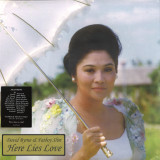
DAVID BYRNE & FATBOY SLIM - HERE LIES LOVE LP 2x12"
 
22

David Byrne & Fatboy Slim’s acclaimed 2010 album Here Lies Love receives its first-ever vinyl release to coincide with a new production opening on Broadway this summer. Here Lies Love is a double-disc song cycle – improbably poignant, decidedly surreal, surprisingly thought provoking – about the rise and fall of the Philippines' notorious Imelda Marcos. It was conceived by David Byrne; composed by Byrne and DJ/recording artist Fatboy Slim, AKA Norman Cook; and performed by a dream cast drawn from the worlds of indie rock, alt country, R&B and pop. Byrne's taste in collaborators is as imaginative as it is impeccable, including Cyndi Lauper (who recounts, to lighthearted disco beats, Imelda's courtship with Ferdinand Marcos), Steve Earle (as the power-hungry Ferdinand), Dap-Kings vocalist Sharon Jones (recalling Imelda's introduction into New York society) and Natalie Merchant (as spurned Imelda confidante Estrella, anticipating the onset of martial law). Along with vocals turns from such stars as Tori Amos and the B-52's Kate Pierson, Byrne works with rising indie rockers St. Vincent and My Brightest Diamond; New York chanteuses Nellie McKay and Martha Wainwright; and dance-music divas Róisín Murphy and Santigold. Byrne himself appears as the voice of imperialistic America on ‘American Troglodyte’, a send-up that wouldn't have seemed out of places in Talking Heads' True Stories.


Byrne originally envisioned this as a musical theatre piece, to be mounted in disco and nightclub settings, reflecting the globe-trotting Marcos' taste for such velvet-roped spots as Studio 54 and Regine's. In 2006, he performed work-in-progress versions to enthusiastic audiences at New York City's Carnegie Hall and the Adelaide Festival in Australia. While plans for a US theatrical production continued to evolve, he delivered this unique recording. The award-winning theatrical production eventually premiered at The Public Theater in New York in 2013, travelled to London’s National Theater for a sold-out run (2014–15), and was remounted at the Seattle Repertory Theater (2017).


Here Lies Love has an effervescent disco feel, redolent of Fatboy Slim's own dance-floor anthems, with warm undercurrents of the Latin rhythms that have percolated through Byrne's recent solo work. The sunny arrangements act in counterpoint to the reality of the Marcos' increasingly repressive regime, reflecting the imagined inner life of the glamour-obsessed Imelda. Explains Byrne, "For me, the darker side of the excesses are, for the most part, a matter of record. A lot of the audience is going to come with that knowledge already. What's more of a challenge is to get inside the head of the person who was behind all of that, and understand what made them tick." Byrne offers no judgment and avoids the obvious – there is no mention of Imelda's infamous shoe collection.


Many of Byrne's lyrics are, astonishingly enough, constructed from actual Imelda quotes, including the project's title, the words that Imelda, now returned to the Philippines from US-assisted exile in Hawaii, would like to have inscribed on her gravestone. In addition to his new liner note, Byrne illustrates the story with archival photos. In a detailed preface, he reveals what drew him to this subject and the bumpy route he took to launch the project and, ultimately, record this album. The booklet is indeed a page-turner, just as Here Lies Love is a wonderfully old-school album that rewards start-to-finish listening. Once again, Byrne – beloved as musician, thinker and bicyclist-about-town – reveals the breadth and singularity of his vision.


The new production of Here Lies Love will premiere at the Broadway Theatre in New York City. Performances begin June 17, ahead of an official opening night on July 20. Tony Award winner Alex Timbers (direction) and Olivier Award nominee Annie-B Parson (choreography) reunite with Byrne (concept, music, and lyrics) and Fatboy Slim (music) to bring Here Lies Love to Broadway, continuing a ten-plus year collaboration on the project. Tom Gandey and J Pardo contribute additional music. Here Lies Love is produced on Broadway by Hal Luftig, Patrick Catullo, Diana DiMenna for Plate Spinner Productions, Clint Ramos, and Jose Antonio Vargas. The staging at the Broadway Theatre will transform the venue’s traditional proscenium floor space into a dance club environment, where audiences will stand and move with the actors. A wide variety of standing and seating options will be available throughout the theatre’s reconstructed space. The producers of Here Lies Love said, “As a team of binational American producers – Filipinos among us – we are thrilled to bring Here Lies Love to Broadway! We welcome everyone to experience this singularly exuberant piece of theatre. The history of the Philippines is inseparable from the history of the United States, and as both evolve, we cannot think of a more appropriate time to stage this show. See you on the dance floor!”


David Byrne’s recent works include the launch of Reasons to be Cheerful, an online magazine focused on solutions-oriented stories about problems being solved all over the world (2019); Joan of Arc: Into the Fire, a theatrical exploration of the historical heroine that premiered at the Public Theater in New York (2017); The Institute Presents: NEUROSOCIETY, a series of interactive environments created in conjunction with PACE Arts + Technology that question human perception and bias (2016); Contemporary Color, an event inspired by the American folk tradition of color guard and performed at Brooklyn’s Barclays Center and Toronto’s Air Canada Centre (2015); Here Lies Love; Love This Giant, a studio album and worldwide tour created with St. Vincent (2012); and How Music Works, a book about the history, experience, and social aspects of music (2012).


Byrne curated Southbank Centre’s annual Meltdown festival in London in 2015. A co-founder of the group Talking Heads (1976–88), he has released eight studio albums as a solo artist and worked on multiple other projects, including collaborations with Brian Eno, Twyla Tharp, Robert Wilson, and Jonathan Demme, among others. He also founded the highly respected record label Luaka Bop. Recognition of Byrne’s various works include Obies, Drama Desk, Lortel, and Evening Standard awards for Here Lies Love; an Oscar, Grammy, and Golden Globe for the soundtrack to Bernardo Bertolucci’s The Last Emperor; and induction into the Rock and Roll Hall of Fame with Talking Heads. Byrne’s work as a visual artist has been published and exhibited since his college days, including photography, filmmaking, and writing. He lives in New York City. In addition to 2019’s cast album for American Utopia on Broadway, Nonesuch has released eight other David Byrne records since 2003, including 2018’s American Utopia studio album and two versions of his musical Here Lies Love.


q C6. Please Don't feat. Santi White Santigold

In Stock

Disponibile in Stock e pronto per la spedizione

46,18
Jolanda Moletta - Oceanine

Jolanda Moletta

Oceanine

12inchBNSD098
Beacon Sound
01.05.2026

Oceanine, Jolanda Moletta’s third album and her first for Beacon Sound, is a powerful and ethereal statement of artistic community. Expanding on her previous work, each track represents a collaboration with a different female vocalist, with the foundational elements being generated entirely by her own voice. By turns haunting, enchanting, and inspiring, you won’t want to come up for air once you’ve been pulled under. Representing a
musical practice that is distinctly feminist, this is an album with a longer view in mind, to an age when the altars were to goddesses and women were centered as powerful beings representing the earth’s cycles of regeneration and renewal. Oceanine then, in all its beauty, can be viewed as an album of survival. It is deeply transportive, accessing something that lies within all of us. As the late, great Lithuanian folklorist and archaeologist Marija Gimbutas noted, “We must refocus our collective memory. The necessity for this has never been greater as we discover that the path of 'progress' is extinguishing the very conditions for life on earth.”

Jolanda Moletta is a multimedia artist and one-woman electronic choir. She creates wordless compositions through extended vocal techniques, integrating wearable-controlled live processing, alongside symbolic visuals. Moletta considers her performances to be a collective ritual and creates her Sonic & Visual Spells following the cycles of nature and the moon. Jolanda's 2022 critically acclaimed album Nine Spells was released on the Ambientologist label, followed by Night Caves on Whitelabrecs in 2025. Moletta’s artistic practice is a radical and spiritual journey through sound art, ritual, and the symbolic archaeology of the feminine.

Oceanine is inspired by sirens, water nymphs, and the timeless call of the sea. At its core lies Jolanda’s deep, lifelong connection to the Mediterranean Sea and to the ancient and modern myths and folklore that have emerged from its waters. Growing up by the Mar Ligure, Jolanda was surrounded by stories carried by salt, wind, and waves: legends of sirens, echoes of ancient voices, and the sea as both origin and oracle. This intimate relationship with the Mediterranean is not merely a backdrop, but a living source that shapes Oceanine’s emotional, symbolic, and sonic world.

Each track features a different female vocalist, creating a rich tapestry of voices, styles, and perspectives. This artistic choice not only broadens the album’s sonic palette, but also deepens its narrative core: celebrating the power, beauty, and mystique of feminine energy through myth, history, and sound.

The entire album is built exclusively from the human voice, processed and layered, yet always remaining voice, and nothing else. For each piece, Jolanda invited every vocalist involved to contribute a raw stem: a short, unedited melodic fragment of just a few seconds, inspired by the album’s themes. These intimate vocal seeds became the foundation of each track: the guest artists’ voices appear as brief, melodic stems, while the entire surrounding “orchestral” fabric is created solely from Jolanda’s own layered and processed voice. In this way, Jolanda’s voice becomes the Ocean itself, embracing, absorbing, and carrying the sirens’ calls within a vast, immersive soundscape. Every song is a unique expression of the feminine experience, revealing its depth, complexity, and emotional range, echoing the call of the sea and the many faces of the siren archetype.

The figure of the siren has transformed across centuries. In myths of Ancient Greece and Rome, sirens were hybrid beings, part woman, part bird, whose irresistible songs lured sailors to their doom. During the Middle Ages, the image shifted toward the half-woman, half-fish figure, often associated with temptation and danger. Historically, the voice of women has often been feared. Sirens were considered harbingers of misfortune not simply because they seduced or destroyed, but because they were powerful liminal beings.

In Ancient Greek, sirens functioned as psychopomps: figures who existed between worlds and guided souls, especially between life and death. Their songs were believed to carry forbidden knowledge, including prophetic insight and the ability to reveal truths about fate and the future. The danger of the sirens lay in what they revealed: knowledge that humans were not meant, or ready, to hear.

Oceanine confronts this legacy head-on. The voices heard throughout the album are not merely beautiful: they are dark and luminous, wild and enchanting, magical, soothing, dreamy, and at times fractured or distorted. They whisper, lament, beckon, and enchant. Like sirens, they skim the surface of the water and sink into its depths, hovering on the edge between tenderness and danger, vulnerability and power. They rise toward the sky, dissolve into mist, and return as echoes charged with raw, elemental emotion: voices that seduce, warn, mourn, and remember. They refuse to be reduced to decoration.

Alongside the album’s release in May, Oceanine will also unfold as a visual and performative work through a short art film. The film includes a live session recorded inside a sea cave facing the Mar Ligure, the very coastline where Jolanda spent her childhood, dreaming of sirens and listening to the sea as if it were speaking directly to her. This site-specific performance reconnects the music to its place of origin, allowing the voice to resonate within stone, water, and air, and transforming the cave into both a sanctuary and a threshold between myth and reality.

What if the sirens’ songs were considered dangerous because they carried another truth, an ancient truth long forgotten?

Oceanine embraces the idea that we are still deeply woven into myth. Though we may see ourselves as rational and modern beings, our world is saturated with ancient symbols and archetypes, often distorted, simplified, or stripped of their original meaning. And if those symbols are allowed to shift, if the mirror once held by the siren becomes an invitation to look beyond appearances and into what has been obscured, then we may finally uncover a deeper truth and reclaim the voice that was always ours.

Oceanine is not just an album. It is a reclamation, a spell, and a call from the depths.

pre-ordina ora01.05.2026

dovrebbe essere pubblicato su 01.05.2026

23,95
Nytt Land - Havamal LP
  • Opnun
  • Gattir Allar
  • Bu Er Betra
  • Ar Skal Risa
  • Frysta
  • Pagalt Og Hugalt
  • Veit-A Hinn
  • Pat Er Pa Reynt
  • Fyrsta Vindur
  • Ravnfjord

For the first time, this landmark album of ritualistic dark folk and shamanic soundscapes is pressed into Double LP, and the result is a breathtaking artifact that transcends the boundary between music and mysticism. Presented in a deluxe edition LP with a lavish 30x30 insert, brought to life by Rune Serpent Europa, this release is a kind of talisman. The packaging itself feels like a gateway: ornate, otherworldly, and perfectly attuned to the spirit of Havamal , where Nordic tradition, animistic ritual, and primal sound converge in a timeless invocation. Spinning Havamal on vinyl unleashes the full incantatory power of NYTT LAND 's music. The analog warmth deepens the resonance of the throat-sung mantras and the droning instrumentation, pulling the listener into a world that is equal parts ancient ritual, frozen landscape, and whispered prophecy.

Every track becomes a rune carved in sound, vibrating with hidden meaning, echoing the eternal cycles of life, death, and rebirth. There is a romance in this edition that goes beyond mere presentation. The act of lowering the needle becomes an invocation, a summoning of ancestral voices and forgotten gods. The record itself feels alive, as though the spirits of the sagas reside within its grooves. Each listen is a ritual, each flip of the vinyl a turning of the cosmic wheel. With Havamal now available on LP, collectors and devotees of dark folk finally hold in their hands a relic worthy of the album's mythic aura. This is music to be inhabited, to be carried into dreams and into shadows, to be used as a key that unlocks the hidden chambers of the soul. A triumph of art, craft, and spirit, this vinyl edition is destined to become a coveted treasure.

pre-ordina ora01.05.2026

dovrebbe essere pubblicato su 01.05.2026

35,25
DOODSESKADER - THE CHANGE IS ME
  • 01: Glass Mask On
  • 02: Celebrity Culture Simp Farm
  • 03: Please Just Make It Stop
  • 04: No Laughter Left In Me
  • 05: Weaponizing My Failures
  • 06: Unthinking My Every Thought
  • 07: Insignificant Other
  • 08: It Keeps On Stinging
  • 09: I Took A Pill In Vilvoorde
  • 10: Suffering In Technicolor

DOODSESKADER clearly haven’t had enough of redefining boundaries – they’ve only just gotten started. Tim De Gieter and Sigfried Burroughs return on April 3rd, 2026 with their third full-length album, The Change Is Me, a rollercoaster that can only be described as the unstable lovechild between witch house, hip-hop, industrial dream pop, and stadium rock that can’t decide if it wants to watch the world burn or shout from the rooftops that we need to save it. Their combination of grungy 90s melodies with distorted synths, sludgy bass, hard tuned vocals, rapping, singing, and explosions of undiluted rage at the current state of the world leave you wondering just exactly what it was you smoked last night, and if it was too much or not enough. The Change Is Me is an album that grabs you by the arm and asks if you’re ready to go on a grand adventure, then pulls you into its chaos before you can say “yes” or “no.”

Tim and Sigfried aren’t just breaking the boundaries between genres; they’re breaking out of their own Year cycle, a path they had laid out for themselves at the band’s inception in 2020. Up until now, the duo had set out to document their “journey to getting better” through writing one album each year: Year Zero (2020), Year One (2022), and most recently Year Two (2024). After spending eight months throughout 2024 and 2025 writing, recording, producing and mixing Year Three, the band scrapped the finished record entirely. Playing shows while simultaneously navigating the process of mixing Year Three created a sort of disconnect – the people that they were when they wrote that record and the people that playing shows made them become were no longer one and the same. “We’re people with faults and strengths, and we realized we needed to accept it. That’s equal parts bleak and liberating. If you’re so focused on self-improvement, you can’t even applaud yourself for how far you’ve come,” the band explains. “This project is meant to be a document of us and of the human condition, not a self-improvement handbook designed to keep us all stuck on what may or may not have happened to us or because of us in the past.”

DOODSESKADER chose instead to embark anew on a week-long creative journey in Tim’s own Much Luv Studio with one goal in mind: to make an album that captures who they are right now. Finally writing everything together in the same room for the first time in years, the process of bringing "The Change Is Me" to life was captured by Diana Lungu in their latest documentary, "Now I Know You See Me", out December 2nd, 2025.

"The Change Is Me" marks the beginning of DOODSESKADER’s shift into a more positive era, both musically and conceptually. Over the course of the 40-minute record we hear the two friends unite in a fight against a world that grows more and more disappointing, a concept made crystal clear in tracks like “Celebrity Culture Simp Farm,” “It Keeps On Stinging,” and of course the album’s epic closer “Suffering In Technicolor.” While their previous albums saw them trying to outrun their pasts and arrive at a better version of themselves, here the search for some external or internal revelation that will “make them better” is no more. It’s been replaced by the realization that change isn’t something we force: it’s gradual, and more importantly, it’s something that’s already there – we just need to reach out and accept it.

The band’s live appearances over the last several years have been instrumental in shaping their ideology. On stage is where the duo find connection; not only with the audience, but also with each other. Their sold-out release shows at Ancienne Belgique (2022) and VierNulVier (2024) have proven that they are one of Belgium’s must-see acts. Abroad, their energy has translated into a month-long EU/UK tour with French band Alcest in 2024, as well as appearances at festivals such as Roadburn Festival (NL), Eurosonic (NL), Hellfest (FR), Mystic Fest (PL), Jera On Air (NL), ArcTanGent (UK), Fluff Fest (CZ) and more.

"The Change Is Me" is out April 3rd, 2026 on DOODSESKADER’s own label, 45 Records.

pre-ordina ora03.04.2026

dovrebbe essere pubblicato su 03.04.2026

25,17
PICTISH TRAIL - ISLAND FAMILY

PICTISH TRAIL

ISLAND FAMILY

12inchFIRELPG656
Fire Records
13.03.2026
  • 1: Island Family
  • 2: Natural Successor
  • 3: The River It Runs Inside Of Me
  • 4: In The Land Of The Dead
  • 5: It Came Back
  • 6: Thistle
  • 7: Melody Something
  • 8: Nuclear Sunflower Swamp
  • 9: Green Mountain
  • 10: Remote Control

Limited Green LP is for Indies only. all LPs include a DL card. Island Family is the fifth album from Isle-of-Eigg dwelling electro-acoustic psych-pop wonder Pictish Trail, AKA Johnny Lynch. A strange, unpredictable, sardonic and yet deeply personal record inspired by all from Fever Ray to The Flaming Lips, Liars, Mercury Rev and Beck, Island Family is Pictish Trail's contrarian view of arcadia; a search for the euphoric in the bucolic, bound up in sometimes conflicting ideas and feelings around nature and environment, sincerity and artifice, escapism and belonging. It's an album about how no man can remain an island, however hard he might try. Released by Fire Records, with support from Johnny's own label Lost Map, and produced by long-term collaborator Rob Jones (The Voluntary Butler Scheme, The Gene Dudley Group), 'Island Family' opens with its title track, a song of death, ghosts and the ties that bind, fusing abrasive electronic beats with a tongue-in-cheek fireside folk refrain and the haunted ice cream van melody of a digitally reincarnated traditional Scottish jig. A purgative surrender to nature's whim driven by a clattering machine drumbeat rolled in a puddle of filthy dirty fuzz, 'Natural Successor' is five-and-a-half-minutes of cathartic churning bass. 'In The Land of The Dead' is an eight-bit glitch-core reflection on island party excesses spasming into existential dread and regret, suitably accompanied by a funereal mariachi band. It's followed by the epic 'It Came Back', the understated verses and arms-aloft falsetto chorus of which are accompanied by a tense, foreboding bass-driven electro hip hop instrumental with (spoiler) a brain-shattering industrial-metal meltdown. 'Melody Something' is the album's purest moment, a cautiously uplifting solar-powered-ballad about losing track of time in the cycle of the seasons, and the gap between memory and reality. Shapeshifting closer 'Remote Control' is a channel hopping cabin-fever-dream flipping from warped boyband ballad to deep-fried fuzz pop. "One of my favourite artists" Lauren Laverne, BBC 6 Music

pre-ordina ora13.03.2026

dovrebbe essere pubblicato su 13.03.2026

23,49
Matryoshka - Blasé Saint

Matryoshka

Blasé Saint

12inchSFERIC20
sferic
06.03.2026

Matryoshka has already built a reputation as a producer for DJ Loser's Magdalena's Apathy imprint as well as work for the Nostalgians, an under-the-radar ambient rap collective featuring Yungwebster, Mdb, tnotsobad, Nopaprr and ogpra1. Her musical roots – dubstep, trance and hard dance – tell some of the story here, but she transmogrifies those influences into haunted, Basinski-esque memories like the gaseous traces and decelerated remnants of the club.

On album opener »Lifelover«, Burial's hazed interludes spring to mind, or perhaps the 4am cityscapes of Space Afrika's now mythical »Somewhere Decent to Live«. Background ambiance simmers below Lawson's pensive FM pads, but once she establishes the mood, things take an unexpected turn with a pitch-bent bassline that might have been lifted straight from a 6LACK loosie, and a rhythmic pulse that traces the thin red line of Shinichi Atobe. If it's dub techno, it's a strand that hasn't been codified quite yet.

»Surface Tension« uses deep, Maybach Music-coded bass womps to twist through her skittering slow rhythms and sadcore pads. But it’s Matryoshka’s harmonic instinct that stands out; if you heard the airy »otr« or »fantasize« from Yungwebster's '»II' you'll know exactly what we mean«, and she takes it even further here, weaving cinematic, languid harmonies that bridge the gap between Steve Roach and Future.

Check »Where the Dancers are Spinning« with its levitational, almost orchestral sweeps that Lawson counterbalances with thudding subs, or the brief title track, an Akira Yamaoka-style save room loop that dissipates into a dreamy, dissociated fog, for further proof. Then there's the second side's centrepiece »Parted by the Sea«, where a ratcheting Chain Reaction-style rhythm builds to a tense crescendo only to get splintered unrecognisably in the second half, its broken pieces pillowed by Lawson's billowing time-stretched chords.

non in magazzino

Ordina ora e ordineremo l'articolo per te presso il nostro fornitore.

26,85

Last In: 3 months ago
Jas Shaw - Between The Seed And The Timber

Between The Seed And The Timber is a cycle of six songs exploring ritual and mystical aspects of the modern era. At times both noir and psychedelic, they evoke a strong sense of nostalgia for a disappearing age. In contrast to industrial music’s dystopian semiotics, Jas Shaw challenges us to hear sounds inspired by machinery, electricity and mechanisation in a new light.

“I made the synth parts for a Swans gig,” says Shaw. “As SMD we’d supported Swans. James was away doing some production but I didn’t want to pass it up, so I offered to open solo. It turned out the gig was sooner than expected so I made all these synth things to do live.”

Shaw put the tracks to one side and forgot about them, only returning to them years later. “You know when you’ve changed as a person and you listen back to something from a different angle? I suddenly could hear what I had been after. It reminded me of experiences I’d had at Swans gigs. I wanted to achieve that energy and charge.”

Dubbing techniques are crucial to the sound of the record. “I set up a few synths on a table and had my mixer running loads of auxes back into the desk so it was all on the edge of feeding back. Then I realised that if I put a mic into the desk I’d have an extra feedback route. I found a setting where I could get it to build when I pointed the mic at the monitors but then turning it away you could put the brakes on the regen.”

Between The Seed And The Timber is Jas Shaw’s inaugural release for the London based, Kindred-affiliated TEETH label. TEETH is rooted in a reverence for texture, space, and sonic decay - amplifying experimental sounds that blend dreamlike melodies with weathered landscapes. Each release informs the next, with every track as vital as the last to complete the whole set.

Orchestrated by Jojo Mathiszig-Lee, founder of London’s Kindred, the label celebrates like-minded talent from the community, providing a platform for transgressing music.

Artworks are made by Scarlet Griffiths.

pre-ordina ora25.07.2025

dovrebbe essere pubblicato su 25.07.2025

20,59
Celestial - I Can Hear The Grass Grow

Ecstatic’s dreamiest cadets bliss out on a new album of acoustic and electric guitar, harmonium and synth tapestries, notably nestling a Romance cameo within a genteel toggle of atmospheric pressure.

Back on (side) road after releasing quietly acclaimed kosmische gem ‘I Had too Much to Dream Last Night’ back in 2021 and the lysergic lushness of ‘Listen to the Sky’ a couple of years later, Celestial suggest a more sublime return to earth with the shine-eyed wonders of ‘I Can Hear the Grass Grow’, an album that soothes to the supine in eight shimmering parts of pearlescent melodic motifs marbling harmonious backdrops intended to tenderly comb nerves straight.

The duo take their role as seductive sandmen with a curious melodic wit that leaves something to the imagination whilst nudging it along the album’s narrative thread. A courtly flamenco lick flickers in opener ‘The Endless Stair’, one of the most restrained recordings we've heard from the childhood friends; blessed with just a little reverb and echo, as if a mic's been lowered into some dimly lit basement while Celestial puzzle out mystifying, interlocking harmonies. It hits a mid-point between John Fahey's raga-inspired Americana and Vini Reilly's rain-soaked Northern blues - the emotion throbs from every note.

Celestial's music is never too polished, giving it the fuzzy, uninhibited flair of a long-lost mail order private press and instilling it with a level of humanity that's rare to discover in the new-new age. Even when mysterious labelmate Romance turns up to ornament 'Mermaid Boulevard' with backmasked electronics, it's their low-slung Ry Cooder-esque guitar/bass that provides the narrative anchor, while the title track and spongiform analog textures of ‘Song For The rainy Season’ dial it right down to a Harmonia-via-BoC pastoral sublime. Vini Reilly and Eno’s influence is most surely felt on the swaying elegance of ‘Sweet Sleep, Angel Mild’, with a central motif that lingers on the mind long after it’s stopped playing, whilst their closing couplet perfectly resolves the cycle with a melancholic kiss-off for the ages.

pre-ordina ora23.05.2025

dovrebbe essere pubblicato su 23.05.2025

30,21
Thought Leadership - III Of Pentacles LP

Every so often an album of such deceptive genius, of such aesthetic clarity, comes across our desk and transfixes us. Thought Leadership's III Of Pentacles is one such work of art. It's an instant classic and glides into the pantheon of timeless guitar-soul totems. Originally out on cassette only, we present the first ever vinyl issue. It's a hideously limited pressing of 300 for the world, so don't sleep on this.

Thought Leadership has already garnered big support from such tastemakers as Ruf Dug, Jason Boardman, Nathan Gregory Wilkins, J Walk, Evan Woodward, Justin Robertson and Heavenly's Jeff Barrett. The first time we heard III Of Pentacles, we nearly wept at the thought that something so beautiful, so bursting with real hope, could even exist in this brutal world. To quote the Quietus, "imagine if Stockport was situated somewhere along the Pacific Coast Highway rather than the M60, and you’ll have some idea of the coordinates to the post-industrial, sunburnt dream space opened up here."

So, who is Thought Leadership? What do we know about them? They reside in Stockport and are obsessed with ethereal guitar records. That’s about it. That and these X ideas shared with you, the listener.

Captured on a multitrack recorder in a terraced house in Stockport, this is as DIY as it gets. Glaringly obvious is a love for classic Factory and early 4AD. Perhaps it is the proximity to the River Mersey where the ideas arrived, and there being but three miles between where this and the Durutti Column’s classic “LC” was recorded, as the two operate across a familiar aural plain. Be it geographic or otherwise, limited by a true economy of means, namely guitar, pedals and drum machine, the fruit borne from these humble tools has been indelibly shaped by the perma-gloom that hangs low over the Manchester and Stockport environs.

Ushered in on 808 kicks, “I” opens the record as a beautiful Sketch for Stockport; a chiming maj7 chord dripping in chorus and delay sets us on our way. The Vini Reilly comparisons are unavoidable. “II” is all John McGeoch, with its trippy goth-psyche arpeggiated pattern cascading across the stereo image. Do those drums swing? But goths don’t swing?! They do here. We’re treated to a bit of crunch on the lead guitar part and some really lush reverb. We even step forth into shoegaze territory, albeit briefly, for the middle eight. “III”, a firm Be With favourite, continues the dreamy psyche leanings of the previous track, with an even bigger melody this time. We’re hearing The Teardrop Explodes on quaaludes here. A proto-dream pop cut soaked in melancholy. But watch out! The coda finds Johnny Marr has gotten into the ‘ludes and gatecrashed the final bars with some incredibly ignorant B minor pentatonic noodling.

“IV” ditches the drum machine for the first in a suite of three beatless electric guitar duets. The first of these semi-improvised rubato ideas is a striking departure from the earlier playful pieces, coming over emo and moody. Greyscale sulking for Stratocaster. Sign us up. “V” contains some really lyrical phrasing; a gorgeous conversation between two guitars. Real Stopfordian Primitive; meditative, crude, rain-soaked. We cycle through the same feels, then end on an alluring chord that breaks the pattern. Sometimes thoughts are like this. “VI” creeps in all plaintive, then a huge reverberating descending guitar line comes tumbling in like something off those classic Dif Juz 12”s. There’s some Maurice Deebank in there too, for sure, and the coda nods to early Meat Puppets.

“VII” rounds out the A Side, and succinctly presents a summary of all ideas explored thus far on our journey. The drum machine is back, this time with some wispy delay, before both guitars enter together playing interlocking lines. As we start, we end, with the delayed 808 guiding us out.

Opening Side B, “VIII” sees us embark on the other side of our journey as we slow down and space out. The drum machine is here, but the guitars are different now. Think Sensations Fix or Göttsching at his most peeled out. Drones, ambient drifts of broken chords and distorted lead lines all swirl round the mix. Side B is one for headphones for sure. “IX” is almost too exquisite for words. A New Age Mixolydian voyage through the cosmos. If you’re unmoved by the end you’ve probably got no pulse. We were left blunted ineffable by this one, such is the smudged elegance radiating from this idea. All hail the Thought Leader.

“X” is a full circle moment, and a fitting end. If you’ve not already elsewhere across the platter, you will be getting heavy Robin Guthrie vibes from this piece. Like the rest of Side B, this improvised jam sticks within a framework of related chords but the celestial energies channelled might invite us to wander “outside”, especially when the Tubescreamer is engaged.

RIYL Durutti Coulmn, Cocteau Twins, Dif Juz, Sensations Fix, Spike and adjacent guitar musicks – but, ultimately, this is just its own thing; such is the strength of ideas presented. "It’s good music to chill out to." (??)

Be With is honoured to present the first ever vinyl release of III Of Pentacles, carefully remastered by Be With's engineer Simon Francisco to ensure it sounds better than ever after its initial tape release. Cicely Balston's expert skills have made sure nothing is lost in the cut whilst the records have been pressed to the highest possible standard at Record Industry, in Holland. The original tape cover artwork, so crucial to Thought Leadership's striking visual aesthetic, has been rejigged for vinyl issue here at Be With. Its stark presentation befits the music contained within. They inform us that they shuffled their tarot deck to ask what the album should be called and the card you see on the cover popped out. The III Of Pentacles tarot card represents teamwork, shared vision and the ability to achieve goals through collaboration. We like to think Thought Leadership and Be With have nailed this one.

non in magazzino

Ordina ora e ordineremo l'articolo per te presso il nostro fornitore.

26,85

Last In: 14 months ago
Various - ECHOES OF ITALY – THE BIRDS OF PARADISE – EARLY 90S HOUSE VIBES VOL.2 (2x12")

Googling “paradise house”, the first results to pop up are an endless list of European b&b’s with whitewashed lime façades, all of them promising “…an unmatched travel experience a few steps from the sea”. Next, a little further down, are the institutional websites of a few select semi-luxury retirement homes (no photos shown, but lots of stock images of smiling nurses with reassuring looks). To find the “paradise house” we’re after, we have to scroll even further down. Much further down.

It feels like yesterday, and at the same time it seems like a million years ago. The Eighties had just ended, and it was still unclear what to expect from the Nineties. Mobile phones that were not the size of a briefcase and did not cost as much as a car? A frightening economic crisis? The guitar-rock revival?! Certainly, the best place to observe that moment of transition was the dancefloor. Truly epochal transformations were happening there. From America, within a short distance one from the other, two revolutionary new musical styles had arrived: the first one sounded a bit like an “on a budget” version of the best Seventies disco-music – Philly sound made with a set of piano-bar keyboards! – the other was even more sparse, futuristic and extraterrestrial. It was a music with a quite distinct “physical” component, which at the same time, to be fully grasped, seemed to call for the knotty theories of certain French post-modern philosophers: Gilles Deleuze, Félix Guattari, Paul Virilio... Both those genres – we would learn shortly after – were born in the black communities of Chicago and Detroit, although listening to those vinyl 12” (often wrapped in generic white covers, and with little indication in the label) you could not easily guess whether behind them there was a black boy from somewhere in the Usa, or a girl from Berlin, or a pale kid from a Cornish coastal town.

Quickly, similar sounds began to show up from all corners of Europe. A thousand variations of the same intuition: leaner, less lean, happier, slightly less intoxicated, more broken, slower, faster, much faster... Boom! From the dancefloors – the London ones at least, whose chronicles we eagerly read every month in the pages of The Face and i-D – came tales of a new generation of clubbers who had completely stopped “dressing up” to go dancing; of hot tempered hooligans bursting into tears and hugging everyone under the strobe lights as the notes of Strings of Life rose up through the fumes of dry ice (certain “smiling” pills were also involved, sure). At this point, however, we must move on to Switzerland.

In Switzerland, in the quiet and diligent town of Lugano, between the 1980s and 1990s there was a club called “Morandi”. Its hot night was on Wednesdays, when the audience also came from Milan, Como, Varese and Zurich. Legend goes that, one night, none less than Prince and Sheila E were spotted hiding among the sofas, on a day-off of the Italian dates of the Nude Tour… The Wednesday resident and superstar was an Italian dj with an exotic name: Don Carlos. The soundtrack he devised was a mixture of Chicago, Detroit, the most progressive R&B and certain forgotten classics of old disco music: practically, what the Paradise Garage in New York might have sounded like had it not closed in 1987. In between, Don Carlos also managed to squeeze in some tracks he had worked on in his studio on Lago Maggiore. One in particular: a track that was rather slow compared to the BPM in fashion at the time, but which was a perfect bridge between house and R&B. The title was Alone: Don Carlos would explain years later that it had to be intended both in the English meaning of “by itself” and like the Italian word meaning “halo”. That wasn’t the only double entendre about the song, anyway. Its own very deep nature was, indeed, double. On the one hand, Alone was built around an angelic keyboard pattern and a romantic piano riff that took you straight to heaven; on the other, it showcased enough electronic squelches (plus a sax part that sounded like it had been dissolved by acid rain) to pigeonhole the tune into the “junk modernity” section, aka the hallmark of all the most innovative sounds of the time: music that sounded like it was hand-crafted from the scraps of glittering overground pop.

No one knows who was the first to call it “paradise house”, nor when it happened. Alternative definitions on the same topic one happened to hear included “ambient house”, “dream house”, “Mediterranean progressive”… but of course none were as good (and alluring) as “paradise house”. What is certain is that such inclination for sounds that were in equal measure angelic and neurotic, romantic and unaffective, quickly became the trademark of the second generation of Italian house. Music that seemed shyly equidistant from all the rhythmic and electronic revolutions that had happened up to that moment (“Music perfectly adept at going nowhere slowly” as noted by English journalist Craig McLean in a legendary field report for Blah Blah Blah magazine). Music that to a inattentive ear might have sounded as anonymous as a snapshot of a random group of passers-by at 10AM in the centre of any major city, but perfectly described the (slow) awakening in the real world after the universal love binge of the so-called Second Summer of Love.

For a brief but unforgettable season, in Italy “paradise house” was the official soundtrack of interminable weekends spent inside the car, darting from one club to another, cutting the peninsula from North to centre, from East to West coast in pursuit of the latest after-hours disco, trading kilometres per hour with beats per minute: practically, a new New Year’s Eve every Friday and Saturday night. This too was no small transformation, as well as a shock for an adult Italy that was encountering for the first time – thanks to its sons and daughters – the wild side of industrial modernity. The clubbers of the so-called “fuoriorario” scene were the balls gone mad in the pinball machine most feared by newspapers, magazines and TV pundits. What they did each and every weekend, apart from going crazy to the sound of the current white labels, was linking distant geographical points and non-places (thank you Marc Augé!) – old dance halls, farmhouses and business centres – transformed for one night into house music heaven. As Marco D’Eramo wrote in his 1995 essay on Chicago, Il maiale e il grattacielo: “Four-wheeled capitalism distorts our age-old image of the city, it allows the suburbs to be connected to each other, whereas before they were connected only by the centre (…) It makes possible a metropolitan area without a metropolis, without a city centre, without downtown. The periphery is no longer a periphery of any centre, but is self-centred”.

“Paradise house” perfectly understood all of this and turned it into a sort of cyber-blues that didn’t even need words, and unexpectedly brought back a drop of melancholic (post?)-humanity within a world that by then – as we would wholly realise in the decades to come – was fully inhuman and heartless. A world where we were all alone, and surrounded by a sinister yellowish halo, like a neon at the end of its life cycle. But, for one night at least, happy."

non in magazzino

Ordina ora e ordineremo l'articolo per te presso il nostro fornitore.

28,99

Last In: 36 days ago
Articoli per pagina:
N/ABPM
Vinyl