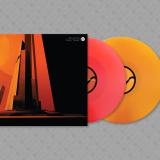
Detroit’s DJ Minx debuts on Rekids with the ‘Energy’ EP. The First Lady of Wax completed 2025 with a remix for Radio Slave and Kameelah Waheed following her appearance at Rekids’ Panorama Bar takeover. Release Date: 13th February 2026.
Legendary Detroit House and Techno pioneer and Women on Wax founder, DJ Minx, drops her debut ‘Energy’ EP for Rekids 13th February 2026. She follows her 2025 appearance on the House of Rekids mix series, and at the label’s Panorama Bar showcase in Berlin, before closing the year remixing Radio Slave & Kameelah Waheed’s ‘All Rize’. Known for championing women in the music industry, particularly Detroit DJs and producers, Minx recruits Florida-native, two-time Grammy Award-winning singer-songwriter Kendra Foster for a larger-than-life, jacking title cut. Robust drums, bright synth stabs, and Foster’s uplifting vocal bring the energy before Minx’s ‘You Can’ features an inspirational spoken word vocal, while low-slung rhythm and a deep, crawling bassline drive the track forward.
DJ Minx has been a central figure in Detroit’s musical history since the 90s. Minx has hosted radio shows on WGPR and CJAM, held a residency at Club Motor, and performed at every edition of Movement since 2000. Her contributions have been recognized with the Spirit of Detroit Award and honors from Mixmag and Time Out. Recent highlights include her ‘Queendom’ EP on HE.SHE.THEY., a BBC Radio 1 Essential Mix, releases on Planet E and Rules Don’t Apply, collaborations with Kevin and Dantiez Saunderson as e-Dancer, and continued headline performances worldwide.
Buscar:dro
Techno pioneer Robert Hood debuts on Rekids with a blistering release entitled ‘Nothing Stops Detroit’ ahead of an album this winter.
Over the last three decades the Underground Resistance alum has continually been at the forefront of the techno genre whilst releasing on many of electronic music’s finest labels to boot. In recent years his solo outings have appeared on a select few labels such as Dekmantel, Music Man Records, not to mention his very own M-Plant. Having made appearances on Rekids in the past remixing label boss Radio Slave - both as Robert Hood (‘Don’t Stop No Sleep’) and Floorplan (‘Feel The Same’) - the Detroit originator now drops a four track release in his official debut on the label.
With its machine aesthetic, ‘Nothing Stops Detroit’ is unmistakably Hood from start to finish. Precision kick drums propel the title track forward as stuttering effects and deep stabs work alongside a march band rhythm. ‘7 Mile Dog’ is next with its grainy synths and scintillating pads, making way for the meandering bassline, rattling atmospherics and trippy, oscillating top line of ‘Ignite A War’. Finally, ‘The Cure’ is a cacophony of twisted percussion and rumbling low-end that energetically concludes matters.
- 01: La Supériorité Du Nombre
- 02: Magnitude 6.3
- 03: Manivelles
- 04: Rentrer À La Maison
- 05: Henri
- 06: Les Histoires Véritables De Gözen Et Marie
- 07: Une Grande Tragédie Polonaise
- 08: Sans Toi
- 09: Symposium
Following their 2024 debut „La Grande Accumulation“ Anadol (Gözen Atila) and Marie Klock return with „Manivelles“.
Hailed by The Quietus as a duo that pushes each other to "greater heights of oddness" the pair produces an undefinable mix of folk, kraut, and pop nested inside expansive organ-based arrangements. The album‘s nine tracks emerged from intensive improvisations in Paris and Istanbul, brought to life with an odd mix of tools: from Prophet-5 and Jupiter-6 synths to mechanical Pianet clatter and even a salad spinner repurposed as a drone.
Klock‘s French lyrics navigate the miniature and the cosmic, exploring the small tragedies of everyday life - botched holiday gatherings, lingering heartbreak or the absence of a loved one.
Born from a moment of catharsis during an Istanbul earthquake that ended a period of writer‘s block, the record draws its material from lived experience and a lasting friendship.
Its title „Manivelles“ - meaning "cranks" - hints at the musical partners creative penchant for generating songs through friction and playful contradictions. From the shouted pastiche of "Symposium" to the sparse synth pulses of "Une Grande Tragédie Polonaise", it‘s an album with a wonderfully wonky heart that sounds like faint signals from a beautifully failing transmitter.
- A1: Veillands
- A2: Eolasfalas
- A3: Sonnenallee
- A4: Somnisvela
- B1: Nothing Under Heaven
- B2: Turadh
- B3: Caoimal
- B4: Saorla
Nothing Under Heaven is the third full-length album from Scottish ambient and drone multi-instrumentalist Yulyseus.
It follows 2022’s In the Dark Palaces of Both Our Hearts, an introspective and immersive work shaped by travel, displacement, and unfamiliar surroundings. Where that release explored darker and more inward-looking terrain, Nothing Under Heaven opens outward into broader, more expansive soundscapes. Drawing on years spent moving between Glasgow, Berlin, Mexico City and Valencia, Niall Gahagan’s compositions here feel patient and quietly luminous, built from layered electronics, bowed strings and subtle field recordings.
Rather than seeking dramatic gestures, the album unfolds slowly, allowing atmosphere and emotion to emerge over time. Working within a crowded and ever-evolving ambient landscape, Yulyseus continues to focus on texture, weight and gradual movement.
Across eight carefully shaped pieces, Nothing Under Heaven explores how sound can hold both stillness and momentum, inviting attentive listening rather than functioning as simple background music. The opening track, Veillands, sets the tone with a quiet intensity that gently draws the listener inward. From there, the album develops as a continuous, immersive experience, rich in detail and emotional nuance. Nothing Under Heaven reflects an artist still in motion, responding to change, uncertainty and new surroundings with humility and care. It stands as a thoughtful and deeply considered addition to Yulyseus’s growing body of work which is rooted in patience, deep listening, and a continuing search for meaning through sound.
Visionary producer Ibrahim Alfa Jr, who's been traversing the rave's farthest fringes since the late '90s, returns with his most focused and concise set to date, an anthology of undulating, bass-heavy experiments that surveys techno and its distorted history, printing fractured pulses and cybernetic synths over vanishing snapshots of jazz, funk, trip-hop, broken beat, dub and ambient music. It's a body of work that coalesced during a difficult time for Alfa.
After returning to Brighton and sobriety in 2022, he was diagnosed with a pulmonary embolism, subsequently suffering two debilitating heart attacks. With his immune system compromised, isolation was the only option, so for months on end Alfa devoted each waking hour to his art, recording samples, building digital synths and effects and meticulously sequencing some of his waviest, most experimental material to date. Over this period he finished over 500 tracks, writing impulsively and constantly challenging himself. "There was nothing to hold me back," he explains. "I just had music, I didn't know if I would see the next day."
Now recovered from his ordeal, Alfa looks back at this prolific period with optimism and fondness. It was a chance for him to reconnect with his art holistically, writing purely for himself without any outside influence. Because, at this stage in his life, Alfa has already been through a series of artistic evolutions. When he was still just a teenager, he penned a slew of grinding, jacking techno 12"s (under a variety of mysterious monikers) in the late '90s before re-emerging a decade ago with the acclaimed 'Hidden By The Leaves', an album made up of deeply personal archival tracks that were thought to have been lost. A few years later, Alfa returned wholeheartedly with a series of records for Mille Plateaux that redrew the boundaries of his "Black political music without words." And on 'Infinite Black Inside', those different strands are muddled with Alfa's profound life experiences and he expresses himself free of any self-imposed boundaries, writing quickly on a hybrid analog-digital setup to document as many ideas as possible.
There's a palpable sense of liberation that drives the album's opening track, 'Subutrax', lubricating polyrhythms that isolate the connective tissue between footwork and Detroit techno as they slip between looped electric piano vamps and vaporous synths. On 'Naked Lunchbreak' meanwhile, the beat generation's excesses are illustrated by mesmeric fast-paced acoustic drums that Alfa balances out with brassy drones and euphoric keys. He captures rubbery hits from a Ghanaian djembe on 'Drum Slinger', re-sequencing them into seismic waves that rumble underneath live woodwind blasts. And on 'Capture', decelerated breaks and garbled voices tumble into humid pads, suspending the album somewhere between the chill-out room and the night sky. It's a record of new beginnings and fresh narratives that collapses the hardcore continuum, revealing a sonic signature that's Alfa's alone.
Originally released in 1999 on the Duet imprint, Robert Hood's "Sophisticcato" stands as a concise but potent example of his late-'90s minimal techno philosophy. Built around four tracks, including the title cut, "The First Night" and two versions of "Cobra Seed", the record features his signature approach with stripped-back drum patterns and hypnotic loops that prioritise rhythm over unnecessary embellishment.
Throughout the year M-Plant's Perpetual Masters series has been releasing one track per week from Robert Hood's extensive music archive, remastered by legendary German producer, Thomas Heckmann. Alongside those weekly digital transmissions are accompanying vinyl drops, so following April's "Psychic / Pole Position" 12" is the "Sophisticcato" EP in May.
- A1: Eighteen Days
- A2: Sir Casey Jones
- A3: The Highest Tree
- A4: Deed I Do
- A5: Hide And Seek
- B1: Twig Folly Close
- B2: Lady Margaret
- B3: Cold Early Morning
- B4: Monday Morning’s No Good Coming Down
- B5: The Waterman’s Song To His Daughter
- C1: Seven Dials
- C2: Up The Hill
- C3: Quiet Joys
- C4: Would Be King
- C5: Stone Cold
- D1: Tell Me Tomorrow
- D2: Mary Anne
- D3: Dawn
- D4: Cod’ine
- D5: Flowers Of The Forest
“Released on Joe Boyd’s Hannibal label here was a band rooted in Thompson/Swarbrick Fairport but also a snatch of the Velvet Underground and a sprig of The Byrds. The Eighteenth Day Of May evoked a legendary era, and now they are a justifiably legendary band too.” – KLOF Mag
Beginning life as a trio in London, 2003, the original line-up consisted of Allison Brice (vocals, flute), Richard Olson (acoustic guitar) and Ben Phillipson (guitar, mandolin) before expanding the following year to include the rhythm section of Mark Nicholas (bass) and Karl Sabino (drums, autoharp) and finally Alison Cotton (viola).
This being the mid zeros, the independent music scene in the UK was reluctant to embrace a sun-dazed folk band but this, their sole album, has gradually feathered a bed of affection amongst international folk fans. Twenty years on, the album is now rightfully seen as a trailblazer for the myriad alternative/psych folk bands that emerged in its wake.
Andy Childs who signed the band originally takes up the story. “I first heard their music on a cover mounted CD with the much missed Comes With A Smile magazine and as far as I could tell no-one was making music like this anymore, certainly not with such panache and confidence. To my jaded ears it all sounded so uninhibited - old weird folk songs, Americana, original psych-folk, minimalist drones. Great melodies and all six of them could sing! A joyous, unfettered sound that could in one moment conjure up flashes of The Byrds and then effortlessly the spirit of Velvet Underground would drift through. They even covered a Spacemen 3 song. I loved the fact that they had the aplomb to tackle traditional folk songs like Lady Margaret and Flowers In The Forest and not be afraid to stamp their own identity on them.
Signing them to the Hannibal label was straightforward. If anything the album somehow sounds fresh and undated, even better than it did in the day when perhaps eclecticism was out of synch with the times; its subtleties have become more apparent.”
“Their rendition of Lady Margaret builds to a headswirling crescendo that challenges anyone who claims Shirley Collins, Buffy Sainte-Marie or Trees have recorded the definitive version and the hallucinatory The Waterman’s Song To His Daughter raises an already brilliant album to an unholy level” - IT’S PSYCHEDELIC, BABY Magazine
- A1: Archangel (Feat. Sølv)
- A2: Split In Two Minds (Feat. Seantommy)
- A3: Yosemite (Feat. Interplanetary Criminal)
- A4: Take Me
- B1: Fade Away (It’s A Feeling)
- B2: Man With A Second Face
- B3: If U Want My Heart (Feat. Dj Heartstring)
- B4: Do Not Go Gentle
- C1: 11Th Of January
- C2: Air Maxes (Feat. Shady Nasty & Fred Again..)
- C3: Gotta Have It
- D4: I Believe (Feat. Prospa)
- D1: It Gets Better
- D2: Air Maxes (Kettama Mix)
- D3: Sort It Out (Feat. Clouds)
One of electronic music’s most sought-after names, producer and DJ KETTAMA today announces the release of his long-awaited debut album, Archangel, out 3rd of October. The announcement arrives in tandem with new single “Sort It Out” featuring Clouds, and a landmark moment in his career: his biggest ever London headline show, taking over Brixton Academy on Saturday, October 4th, followed by an expansive tour across Europe, North America, and Australia.
A decade in the making, Archangel is the definitive statement from KETTAMA (Evan Cambell), the Galway-born, London-based artist. The 15-track project is a powerful blend of hard-house energy, trance-inflected euphoria, hip-hop sample-based attitude, and unmistakable emotional depth—sonic signatures that have placed KETTAMA at the cutting edge of contemporary dance music.
The album showcases a curated roster of collaborators who reflect KETTAMA’s reach and relevance across today’s underground and mainstream scenes, including Interplanetary Criminal, Fred again.., Clouds, Prospa, DJ HEARTSTRING, Shady Nasty, SØLV and seantommy. Their contributions amplify the project's scope, offering a multi-sided view into KETTAMA’s musical universe.
Among its early singles, the Interplanetary Criminal collaboration “Yosemite” is a high-velocity anthem marrying speed-garage grit with ecstatic rave melodies, while his track “Air Maxes” with Fred again.. And Shady Nasty blends introspective vocal sampling with wide-eyed club emotion. On “If U Want My Heart” with DJ HEARTSTRING featuring KLP, the ensemble channels high-energy trance, breakbeats, and vocal euphoria into a soaring anthem that fuses emotional intensity with peak-time club energy. Meanwhile, his collaboration with Clouds, released today, “Sort It Out” dives headfirst into industrial-techno territory, conjuring a dark, cathartic energy destined for warehouse euphoria. And reigning as one of the undeniable anthems of the summer so far, “It Get’s Better (Forever Mix)” delivers euphoric waves of uplifting synths and relentless rhythm, bringing an irresistible surge of energy that’s become synonymous with this summer’s club moments.
Archangel has already found a home on the world’s biggest stages and radio airwaves, with early support from key tastemakers including Jack Saunders, Danny Howard, Sarah Story, and Tim Sweeney. Simultaneously, a grassroots groundswell continues to bloom across social platforms—where viral snippets and show footage capture the visceral reaction of a fast-growing, global fanbase.
This year, KETTAMA has elevated his status to a full-blown festival phenomenon, performing at major stages including Coachella, Glastonbury, Creamfields, Portola, Seismic, and ARC Festival, to name a few. In June, he played to 20,000 people in Belfast for a b2b with Chris Stussy—one of the UK’s largest DJ events in recent memory—and is currently mid-way through a 16-week Ibiza residency at Amnesia, playing every Monday night throughout summer. Full list of upcoming live dates can be found below.
Perhaps the clearest signal of his surging popularity is the jaw-dropping response to his upcoming Boiler Room live set, with over 15,000 fans signing up to attend— the set’s release is now highly anticipated as a time capsule moment in a breakout year for the artist.
KETTAMA’s rise to prominence has been anything but conventional. Eschewing the traditional gatekeepers of the industry, KETTAMA cultivated an underground following through the likes of SoundCloud and TikTok, where raw uploads, bootlegs, and viral edits generated a tidal wave of grassroots momentum. Over the years, these platforms became launching pads for a fiercely loyal global community, drawn to his unfiltered energy and boundary-pushing sound. This subversive path to recognition has made him not just a fixture of the scene but a symbol of how new-generation artists can forge success on their own terms.
From his humble roots in the Irish underground to the world stage KETTAMA is now pushing the limits of what a next-gen DJ-producer can achieve. With Archangel, he fuses the sound of his native ‘G-Town’ with a futuristic vision that’s unapologetically global—marking a creative milestone that cements his place among electronic music’s most compelling voices.
Straight from the backseat of a tinted SUV and into the headphones of every die-hard fan from the West Side to the coast, LUCKI returns with Dr*gs R Bad—a title that’s half-ironic, half-exhausted, and 100% Tune. This isn't a PSA; it’s a high-speed, low-pass filtered look at a life where the designer denim is heavy and the heart is even heavier. Drowning in those signature ethereal, space-trap melodies that sound like a 4:00 AM fever dream, LUCKI trades his usual nonchalance for a raw, "out of luck" transparency that reminds his cult following why he’s the undisputed king of the heartbreak flex. It’s the soundtrack for the late-night drives and the "everything’s a movie" lifestyle where the credits are starting to blur, proving once again that nobody captures the beautiful, nihilistic chaos of the climb quite like Neptune.
The Drowning In Your Love EP features longtime collaborator and magnetic vocalist Shaun J. Wright (Hercules & Love Affair / Classic / Midnight Magic), whose heartfelt delivery and lyrical poise ensure the title track sticks in your head long after the needle has left the record. The trio have created a timeless club track evoking the spirit of the tripped-out sounds of golden-era west coast house — dubby FX, a hint of breaks, soulful vocals, and that unmistakable Soul Clap swing — all put together with a flair that will move any dancefloor worth it’s salt.
Are You Alien's first vinyl missive, a compilation style affair showcasing the work of four label affiliated artists, is genuinely packed to the rafters with cuts designed to be played loud on "deep dancefloors and late-night transmissions". HearThuG kicks things off with 'Relax', a post-punk/dark disco inspired slab of early morning hedonism inspired by DFX's 'Relax Your Body' (which itself borrowed heavily from the KLF's 'What Time Is Love'), before Light Blue File charges towards darkened warehouses on the tactile tech-house/stab-happy rave fusion of 'Guante El En Mic'. Over on side B, Briki opts for squelchy acid bass, trippy vocal snippets and spacey sounds on 'Droppin The Pressure', before Ahmet Mecnun adds spoken word vocals and French Touch flourishes to a deep tech-house groove.
Mikkel Metal makes a welcome return to Echocord with his new ‘Rebuild’ EP, accompanying remixes from Luke Hess and Frenk Dublin.
Copenhagen’s Mikkel Metal is a pioneering figure in dub-techno and minimal house, known for his atmospheric soundscapes and textured production. With acclaimed releases on Kompakt and Echocord, including Close Selections, Victimizer, and Peaks and Troughs he’s cemented his place as one of Denmark’s most distinctive electronic artists. Here he continues to dispay this further diving into new sonic realms with a new EP for Echocord.
Title-track ‘Rebuild’ opens, a hazy excursion through metallic, reverberations, expansive atmospherics and crisp drums before Detroit’s own Luke Hess steps in to offer his interpretation, delivering his signature groove-driven style, extracting the essence of the original and stirring it in amongst robust drums and spiralling dub echoes. ‘Bend’ is up next and displaying Mikkel’s production prowess as he blends murky bass flutters and analogue rhythms with psychedelic guitar melodies and dynamic space echoes, resulting in something that sounds uniquely his own. ‘Steam’ continues this theme with further psychedelia infused guitar tones flowing alongside breathy vocal stylings and fluttering atmospherics tucked into the depths. Rotterdam, Netherlands based artist Frenk Dublin delivers his ‘Deep Space Rework’ of ‘Stream next, reshaping the original into something entirely different with a dropped-tempo roots dub aesthetic, weaving fragments of the original into the composition alongside swaying dub drums and heavy doses of sub. ‘Midnite’ then concludes the release, another experimental sonic foray into unique effect processing, glitched out percussion, haunting vocals, plucked bass notes and expansive atmospherics
Nacho Marco drops Colors in Dub Vol.1—deep house soaked in warm analog dub. From the hypnotic “Midnight Blue” and its Satoshi Tomiie remix to the raw pulse of “Bumblebee Yellow” and “Electric Green,” this wax rides late-night frequencies straight from Valencia to Paris.
DJ Feedbacks :
Francois Kevorkian (Wave) : Love the Satoshi mix
Eddie Fowlkes (Detroit Wax, Rekids, Classic Music Company) : thanks
Travis Kirschbaum (Warehouse Preservation Society) : Loving this. Especially Midnight Blue!
Sascha Dive : Midnight Blue for me!!
Brothers' Vibe (Luv4Wax) : Super ep, great works!!
Radio Slave (Rekids) : Another superb ep from Phonogramme and Satoshi's mix is great.
Giles Smith : "midnight blue" is nice
Alexkid (Rawax / FUSE / NG Trax) : Totally my vibe. <3
Aleqs Notal : Yes !!
Italojohnson (Italojohnson) : Track 1 for me!
Ben Sims : Now downloading... will check asap!
Okain (Talman / Infuse / Pleasure Zone) : Electric Green is dope!
Satoshi Tomiie (Abstract Architecture) : Receiving great feedback from the dance floor!
Steffi (Dolly) : lovely release!!
Laurent Garnier : Cool tracks
DJ Bone (FURTHER) : Electric Green and Satoshi Tomiie remix work for me.
Harri (Sub Club) : lovely stuff, will play and support
Rob Pearson (Evasive Records / Sine 102.6fm) : lovely - right up my street, cheers ;-)
Felix Dickinson (Futureboogie, Rush Hour, Cynic) : Solid E.P. current fave Electric Green
Jorkes (Freeride Millenium) : lovely, thanks so much. xo
Kassian (Phonica White / Heist Recordings) : wicked
Jaye Ward (Dalston Super Store / Netil Radio) : massive quality as ever!! super deep and pulsing gear, electric green is ace! thx
Tim Sweeney (Beats In Space) : Sounds great
Chloe Caillet (Smile Records) : love this!
Stevie Cox (Sub Club) : really lush, thank you !
Raresh (ar:pi:ar) : thanks
Ame (Innervisions) : thanks
Geir Aspenes (G-Ha (Sunkissed)) : Thank u
Saoirse (Body Movements) : Super nice dubby vibes
Amotik : Very nice :)
Kai Alce (Real Soon) : Satoshi remix is hot!
Domenic Cappello (Subclub) : nice dubby house
Cee ElAssaad (ENSOULED) : Just the way I like it! dubby and groovy.
Mike Shannon (Cynosure) : Excellent work here from Valencia's finest!
The third release on Re-United Records, Interzone brings together four unique visions of electronic music, in one solid, groove-driven vinyl.
Luigi Gori kicks things off with a track full of early ’90s vibes — a deep, energetic trip that instantly sets the tone.
Alberto Bof follows up with a cut to play from start to finish — a late ’80s journey blending acid 303 lines and his signature lush harmonies.
On the flip, Andrea Fiorito drops a slick minimal-funk groove, packed with character and classy textures.
Closing it out, Paolo Driver delivers a straight-up dancefloor weapon, full of twists, surprises, and unstoppable rhythm.
A record infused with ’80s and ’90s influences, made for true heads and real floors — pure Re-United Records spirit.
With this new chapter, Blackwater Label presents an EP exploring the frontier between ethereal, electronics and sonic horror. Two tracks move like ambiguous presences, evoking atmospheres suspended between dream and nightmare, body and shadow. "Hypnoptera" is a journey through dense textures, oblique frequencies and subtle pulsations that seep into the listener, keeping alive the tension typical of the label's most radical productions. A work that does not seek comfort, but disorientation: a sonic ritual digging into the dark matter of imagination.
The A-side opens with "Gomma", a sonic mass that deforms, viscous and elusive. Gomma moves through dry hits and elastic reverbs, a living organism mutating at each beat. The atmosphere oscillates between tribal and industrial, like a ritual dance seen through distorted lenses. A track that fascinates with its physicality and hypnotic nature, suspended between attraction and unease. "Dulcis in Fungus" descends into a humid and cavernous sonic landscape where sweetness and decay coexist. It layers ethereal drones and underground pulses, creating an environment that feels both organic and alien. The piece develops like the growth of a fungus-silent yet unstoppable, seductive and corrosive at the same time.
LIMITED QUANTITIES TO 100
Haino sings. Hasunuma plays. It’s a minimal framework, but what emerges is a boundary-blurring sonic exploration. Across the album, Haino’s voice threads through Hasunuma’s layered soundscapes built from analog synths, electric guitar, piano, field recordings, and more. Haino entered the studio with only lyrics in hand, improvising melodies in response to Hasunuma’s evolving arrangements. The result is a work of deep trust, intuition, and sonic tension.
Keiji Haino and Shuta Hasunuma’’s creative connection began in 2017 with an impromptu performance in Shibuya—Hasunuma on a Buchla modular synthesizer, Haino responding with the Japanese national anthem, “Kimigayo.” That moment sparked their unlikely collaboration.
In 2018 Haino appeared at the Hasunuma-organized event “MUSIC TODAY IN KYOTO” at Rohm Theater, alongside Nobukazu Takemura, Manami Kakudo, Elena Tutatchikova, Kukangendai among others. In September 2021 during the pandemic, the two performed "U TA" for the first time at in Shibuya. They began planning the album soon afterwards.
For the recording of U TA, Haino entered the studio with only the lyrics in hand, with no knowledge of what sounds Hasunuma would produce. Responding to Hasunuma’s music in real time, Haino composed the melodies and layered in his voice on the spot. With additional sessions at Hasunuma’s private studio and Haino’s preferred studio, the album was completed.
All melody and vocals by Keiji Haino
All instrument, written, played, arranged, mixed and produced by Shuta Hasunuma
Recorded by zak at st-robo studio, Shuta Hasunuma at Studio i.M.O and windandwindows
Mastered by Rashad Becker at clunk
Production Management: Eishin Yoshida, Kento Ono (windandwindows)
For Temporal Drift: Yosuke Kitazawa, Patrick McCarthy
Art Direction: Aiko Koike
Special Thanks to Toshihiko Kasai, Ryoichi Kiyomiya, zAk, Yumiko Ohno
license
Mike Shannon drops the ‘Off World Synthetics’ EP on Rekids. The Cynosure label boss follows up his ‘Shadow Moves’ EP on sister imprint RSPX on January 16th, 2026
Canadian DJ and producer Mike Shannon kicks off the year on Radio Slave’s Rekids with the ‘Off World Synthetics’ EP, landing 16th January 2026 and marking his first appearance on the label since 2023’s ‘Shadow Moves’ for sub-label RSPX. A long-standing force in Minimal and House with a discography stretching two decades, collaborations on Richie Hawtin’s Plus 8, and his own Cynosure and Haunt Recordings labels, Shannon has carved out a reputation as a respected staple in the booth and the studio.
Inspired by Alejandro Jodorowsky and Möbius’ INCAL graphic novels, Mike Shannon’s ‘Off World Synthetics’ EP opens with ‘Synthetic Salsateca’, where a static groove drives a playful, squelching synthline. ‘Back To The Hood’ follows with rattling, mechanical energy before the fl ip reveals ‘Off World Sparkle’, its wonky sequences bending around rubbery low-end. Closing cut ‘Only Noodles’ pushes deeper into warped clicks, scratches, and subtly shifting textures, rounding off an EP that’s raw, restrained, and devastating in the right hands and on the right system.
Flying into the new year with the return of The Southside Surgeons - the production team of WeeG & Si Cheeba on the “Echo-Labs” sub label (for collaborations in the Echo Chamber) - with another double header of clubwise 45 action
The A Side “Calling All Dancers” drops a Cosmic-Afro-Boogie sound laced with funky breaks - coming on like Dexter Wansel -vs- Manu Dibango - with a mid 1970s club feel and subtle up to date production.
It certainly lives up to its name, as a rallying call for people to hit the dancefloor, when it’s recently been aired on Test Press up and down the country !
The flipside “Follow Me…” takes you to a late 1970s Brasilian Block Party with a variation on a familiar bass line, cut up with brass stabs and old school rap vocals. It’s proving to be a great party starter with its head-nodding groove and funky chants.
Original Gravity Records announces a deadly new 7" from Boss Foundation, the fresh alias of producer and multi-instrumentalist Neil Anderson. Previously known as Woodfield Rd Allstars for his vintage Jamaican (predominantly instrumental) output, Anderson now moves forward under the sharper, more genre-focused name Boss Foundation—a banner that reflects the heavy, stripped-down, late-’60s Boss Reggae style at the core of his sound.
Side A: The Henchman
A tough, propulsive Boss Reggae instrumental driven by a fierce groove, The Henchman comes armed with vintage-style pistol-shot effects and a pair of unmistakable Dennis Alcapone vocal drops, giving the cut the swagger and tension of a lost 1969 sound-system special. Heavy, atmospheric, and tailor-made for selectors who favour harder-edged instrumentals.
Side B: Pressure Version
An organ-led version built on the riddim Anderson created for The Pioneers’ 2025 recording of “I Feel So Bad” (the Jackie Edwards classic). Featuring Abramo Riti on Hammond organ, Pressure Version offers a warm, melodic excursion that highlights the depth and movement of the rhythm—spacious, soulful, and crafted with the sensibilities of a classic late-’60s version cut.
Pressed in a strictly limited edition, this double-sided killer marks the official debut of Boss Foundation, signalling a powerful new chapter in Original Gravity’s ongoing commitment to era-authentic Jamaican sounds.
- A1: Design - Premonition
- A2: Vision - Lucifer’s Friend
- A3: Richard Bone - Alien Girl
- A4: John Howard - I Tune Into You
- A5: Ian North - We’re Not Lonely
- A6: Selwin Image - The Unknown
- B1: Harry Kakoulli - I’m On A Rocket
- B2: Rich Wilde - The Lady Wants To Be Alone
- B3: Billy London - Woman
- B4: Alan Burnham - Science Fiction
- B5: The Microbes - Computer
- B6: The Goo-Q - I’m A Computer
- C1: Gerry & The Holograms - Gerry & The Holograms
- C2: The Warlord - The Ultimate Warlord
- C3: Die Marinas - Fred From Jupiter
- C4: Dee Jay Bert & Eagle - I Am Your Master
- C5: Peta Lily & Michael Process - I Am A Time Bomb
- C6: Sole Sister - It’s Not What You Are But How
- D1: Alasdair Riddell - Do You Read Me?
- D2: Karel Fialka - Armband (The Mystery Song)
- D3: John Springate - My Life
- D4: Idncandescent Luminaire - Famous Names
- D5: Disco Volante - No Motion
- D6: Dream Unit - A Drop In The Ocean
2025 REPRESS ON TRANSPARENT GREEN VINYL
Compiled by Philip King “And then came the rise of synth pop : blokes with dodgy haircuts hunched over keyboard-operated machines stuffed with wires and do-it-yourself tone oscillators making sounds like a brood of geese passing gas in a wind tunnel. Whoopee! This is the way the ‘70s ended : not with a blood-curdling bang bang but with a cheap, synthesized, emasculating whimper.” NICK KENT, NME. All The Young Droids: Junkshop Synth Pop 1978-1985 is a new compilation that charts the underbelly of the epoch-defining sound of the synthesiser in 80s popular music. Compiled by Philip King (previously seen compiling All The Young Droogs, Glitterbest and Boobs - The Junkshop Glam Discotheque), the music here connects the dots between DIY synth enthusiasts grappling with new, cheap synthesisers at the tail-end of punk and wannabe, jobbing songwriters enthral to the new music pioneered by Gary Numan, Depeche Mode and Daniel Miller’s Mute Records. Featuring rare tracks of auto-didactic progressive pop music, proto-techno punk, shoot-for-the-stars-land-in-the-gutter chart flops and heralded, underground synth classics, School Daze paints a picture of beautiful failure. Complete with extensive sleeve notes written by King and never before seen imagery, all 24 tracks were remastered by RPM in-house engineer Simon Murphy, many from vinyl copies due to lost master tapes. The story told on All The Young Droids is one of the dawning opportunity presented by both the emergence to the market of cheaper analog synthesisers and the distribution networks plus indie labels that exploded with the advent of punk music in 1976. While the music that sprouted out all over the globe in the wake of these factors was decried as fake, plastic, a refutation of punk’s guitar-led revolution, it’s telling that much of the music on All The Young Droids.. was created in bedrooms, ramshackle studios and home-made set ups with often borrowed equipment. In the era of record labels jumping to capitalise on the success of The Sex Pistols, The Clash (both on major labels, of course) these artists struggled to stand out from a new gold-rush with next to no budget or PR team. With radio and labels desperate for the new Yazoo, what resulted was a testament to necessity being the mother of invention. At the time, the synthesiser was the music of the future, a shiny new machine that could paint like an orchestra with a single finger and a 4-track. In the hands of Manchester avant-pranksters Gerry & The Holograms it’s a pulsing, sardonic weapon.. the only instrument on the Messthetics classic lampooning of New Wave fashion. In Hamburg, a 16 year old Andreas Dorau used it to write and record (with his female classmates on vocals) a global smash in Fred Vom Jupiter (later licensed to Mute Records). The hard-to-find English version (Fred From Jupiter, natch) is included here. Many artists with alreadystoried careers caught the bug and recorded synthesiser-fuelled peons to space, computers, the future and, of course, love-interests. Harry Kakoulli, late of Squeeze, recorded a solo album in 1979 that included the incredible power-synth-pop smash-that-never-smashed I’m On A Rocket. Similarly, Ian North of Neo and American Power Pop stalwarts Milk ’n’ Cookies bought a Korg MS20 and used a tape machine to record We’re Not Lonely, an absolute lost-classic of minimal synth pop. We’re Not Lonely also features on the Junkshop Synth Pop sampler 7” twinned with John Howard unreleased track You Will See, released April 12th 2025. There are plenty of compilation debuts in evidence. Sole Sister were a mysterious trio who were featured on the Scaling Triangles compilation of female-fronted, queer-adjacent post-punk / underground music that also featured The Petticoats. Selwin Image were from San Francisco and featured members of the recently defunct power pop/punk group The Pushups. Their stupidly catchy The Unknown fizzes with New Wave energy - think XTC to Sparks but remains unreleased until now. Dream Unit’s A Drop In The Ocean is an early synth wave cut, positively teaming with Joy Division instrumentation, previously only released on a long-forgotten and super rare, self-released EP. Incandescent Luminaire’s Famous Names belies an archetypal struggle of a small-town trying to make it in a cruel industry but is a thrilling New Romantic-Synth Wave cross over with a OMD gloominess that’s a joy to hear. Feminist Minimal Wave track I Am A Time Bomb by performance artist Peta Lilly and Michael Chance is a revelation destined for new found cult status. It was released on 7” and lost until now. The flipside to the subterranean, never-made-it synth pop mentioned above are the ambitious, even fruity attempts at success that have a perennial elegance to their confidence. New Jersey-ite Billy London (real name Ed Barth) tried to cash in on the synth boom with Woman, released by a major label, a lurching new wave track built on the Louie Louie rhythm and a wonderfully camp Lou Reedstyle sleazy vocal before exploding in the synthesised chorus. The song bombed but with a chorus like this, you have to wonder why? Ex-Glitter Band member John Springate’s My Life is truly epic, with doomed chord progressions and massive sounding drums turning into at least 3 different songs in the course of the track. Before you wonder what’s going on the song resolves with a glorious return to the main refrain. The dry-ice-dressed dance floor is well catered for too. Design’s Premonition and Vision’s Lucifer’s Friend are stone-cold minimal synth bangers, well loved but given a new lease of life here. The Warlord’s The Ultimate Warlord was released in 1978, a homespun proto Hi NRG banger that was later re-recorded by The Immortals in Canada who had a club hit with it. One-man- band Disco Volante’s No Motion was re-issued by Synth wave label Medical in 2012 but makes its first vinyl compilation appearance here. Close your eyes and you can imagine what Lawrence of Felt would have sounded like with some cheap Korgs a little earlier in his career. Gibraltar-based trio The Microbes imagined a computer programming people to dance - how prescient - and ended up with a propulsive, robo-funk track with splendid rubbery bass playing over a tectonic drum machine. Previously picked up by Belgian label Stroom TV, Dee Jay Bert & Eagle’s heavily Euro-accented I Am Your Master demands the listener to “come to paradise!” In a frankly terrifying manner. All The Young Droids is the first compilation to peel away from the narrative that dour, Minimal Synth and Cold Wave were the only musical children of the first rush of synth pop. Philip King and School Daze Records describe a much more complicated world: along with the austere, Brutalist children of Daniel Miller (who produced Alan Burnham’s Bowie-Low-influenced Science Fiction here) was a plethora of desperate cash-ins, accidental mainstream hits, ambitious pop dramas and major label punts that went nowhere. Crucially, the compilation blurs the line between junk and treasure. What if the two things are interchangeable. What if it’s all science fiction?
Outer Heaven Sound is a brand new label from Outer Heaven that makes a big impression from the off with Coventry artist going big. His A-side offering 'Badboy Sound' is just that - it has a muscular, rugged low end and freewheeling siren-like sounds with devastating sub bass and rude vocal musings. It taps into jungle roots with unrelenting bass pressure that demands to be played loud. On the flip, 'Droideka' gets even more dark with a minimal take and crushing breaks that are atmospheric and dystopian with real low end broodiness and plenty of smoky atmosphere. A superb first outing.
American jazz keyboardist Hilton Felton, who also recorded a superb album as The Three of Us which is also being reissued right now, dropped his most classic full length A Man For All Reasons in 1980. It came on his own label and the reason it is so well thought of is that it has become a real staple of the rare groove scene thanks to how much of it get splayed by DJs and how many key collectors have it on their racks. This reissue, with an all new remastering, arrives via P-Vine with gems like the standout jazz funk gem 'Bee Bop Boogie' one of many of its tunes that are still rare groove classics.
Summer might be over in a literal sense, but there is no finer way to keep its vibes alive than with another scorching drop from Scruniversal, especially when it is focused on Brazilian sounds. This latest comes from a trip of talents and first up is 'Inspetores De Umidade,' a lithe and funky break that rolls on fat drums with organic percussion and Portuguese raps turning up the sunshine. On the flipside is 'Acido Brasil', another ass-wiggling delight with big horns, wiggly 303 details and a funk to spare. Pure heat on a very tasty 7".
- A1: E-Control - The Mind Of Robots
- A2: Konerytmi - Vaniljamunkki
- A3: Soft Pioneer - Dystopia
- B1: Basement Space - Massive
- B2: Alphone & Sween - Downfall (Dub Version)
- C1: Skywave Transmission Vs. Xotr - Existence
- C2: Kostas G - Calamity
- D1: Dawl - Time Phase
- D2: Zots - 314
- D3: Electrodefender - Electric Sunset
Childhood Drop Out’z - compiled by Childhood Intelligence (Tokyo/Berlin) & Tone Drop Out (London, UK). Timeless 2x12 featuring traxx by E-Control, Konerytmi, Soft Pioneer, Basement Space, Alphonse & Sween, Skywave Transmission vs. XOTR, Kostas G, DAWL, ZOTS and Electrodefender. A solid time travel into the early ages of Uk Bleep, Acid, Breakbeat, Techno and House - born in 2022.
Imagine it’s 1987.
The neon is glowing, the lasers are cutting through the smoke, and space synth is ruling the dancefloors. Laserdance just dropped their groundbreaking album “Future Generation.” Tracks like “Power Run” and “Humanoid Invasion” are setting clubs on fire, and every bedroom producer dreams of reaching that cosmic perfection.
And in this athmosphere Spacehawk appears shining like an alien spaceship.
Behind the name Spacehawk stands Swedish producer Anton Eriksson, a modern-day craftsman of analog dreams. In his vast studio, packed with vintage synths and drum machines, Anton creates electronic masterpieces so authentic, so rich in melody and power, that even Michiel van der Kuy himself, the godfather of the genre, decided to collaborate with him.
The result? “Space Patrol” – a landmark single that bridges generations of synth lovers.
On the A-side, you’ll find Anton’s stunning original version, pulsating, melodic, and bursting with energy. Flip it over, and you get a remix by Michiel van der Kuy that feels like a time warp straight back to the golden age of Italo-space glory.
“Space Patrol” has it all: soaring melodies, driving basslines, hypnotic rhythm, and that unmistakable intergalactic energy that makes you feel like you’re racing through the stars.
Fans of Laserdance, Rygar, Koto, Syntech, and all things van der Kuy will instantly recognize the DNA of true space synth excellence here.
To top it all off the single comes on a bright yellow vinyl, housed in a stunning retro-futuristic sleeve that looks like it beamed in straight from 1980s sci-fi.
It’s not just a release. It’s a revival.
And if space synth runs through your veins, this is one you simply can’t ignore.
- A1: Hurts And Noises
- A2: Wake Up
- A3: I Don't Wanna Be A Rich
- A4: Terrorist Bad Heart
- A5: Provocate
- A6: Lucifer Sam (Pink Floyd)
- B1: Happy!?
- B2: So Lazy
- B3: I Feel Down
- B4: Stupido
- B5: Guilty
- B6: Caroline Says (Loo Reed)
UILTY RAZORS, BONA FIDE PUNKS.
Writings on the topic that go off in all directions, mind-numbing lectures given by academics, and testimonies, most of them heavily doctored, from those who “lived through that era”: so many people today fantasize about the early days of punk in our country… This blessed moment when no one had yet thought of flaunting a ridiculous green mohawk, taking Sid Vicious as a hero, or – even worse – making the so-called alternative scene both festive and boorish. There was no such thing in 1976 or 1977, when it wasn’t easy to get hold of the first 45s by the Pistols or the Clash. Few people were aware of what was happening on the fringes of the fringes at the time. Malcolm McLaren was virtually unknown, and having short hair made you seem strange. Who knew then that rock music, which had taken a very bad turn since the early 1970s, would once again become an essential element of liberation? That, thanks to short and fast songs, it would once again rediscover that primitive, social side that was so hated by older generations? Who knew that, besides a few loners who read the music press (it was even better if they read it in English) and frequented the right record stores? Many of these formed bands, because it was impossible to do otherwise. We quickly went from listening to the Velvet Underground to trying to play the Stooges’ intros. It’s a somewhat collective story, even though there weren’t many people to start it.
The Guilty Razors were among those who took part in this initial upheaval in Paris. They were far from being the worst. They had something special and even released a single that was well above the national average. They also had enough songs to fill an album, the one you’re holding. In everyone’s opinion, they were definitely not among the punk impostors that followed in their wake. They were, at least, genuine and credible.
Guilty Razors, Parisian punk band (1975-1978). To understand something about their somewhat linear but very energetic sound, we might need to talk about the context in which it was born and, more broadly, recall the boredom (a theme that would become capital in punk songs) coupled with the desire to blow everything off, which were the basis for the formation of bands playing a rejuvenated rock music ; about the passion for a few records by the Kinks or the early Who, by the Stooges, by the Velvet mostly, which set you apart from the crowd.
And of course, we should remember this new wave, which was promoted by a few articles in the specialized press and some cutting-edge record stores, coming from New York or London, whose small but powerful influence could be felt in Paris and in a handful of isolated places in the provinces, lulled to sleep by so many appalling things, from Tangerine Dream to President Giscard d’Estaing...
In 1975-76, French music was, as almost always, in a sorry state ; it was still dominated by Johnny Hallyday and Sylvie Vartan. Local rock music was also rather bleak, apart from Bijou and Little Bob who tried to revive this small scene with poorly sound-engineered gigs played to almost no one.
In the working class suburbs at the time, it was mainly hard rock music played to 11 that helped people forget about their gruelling shifts at the factory. Here and there, on the outskirts of major cities, you still could find a few rockers with sideburns wearing black armbands since the death of Gene Vincent, but it wasn’t a proper mass movement, just a source of real danger to anyone they came across who wasn't like them. In August 1976, a festival unlike any other took place in Mont-de-Marsan – the First European Punk Festival as the poster said – with almost as many people on stage as in the audience. Yet, on that day, a quasi historical event happened, when, under the blazing afternoon sun, a band of unknowns called The Damned made an unprecedented noise in the arena, reminiscent of the chaotic Stooges in their early adolescence. They were the first genuine punk band to perform in our country: from then on, anything was possible, almost anything seemed permissible.
It makes sense that the four+1 members of Guilty Razors, who initially amplified acoustic guitars with crappy tape recorder microphones, would adopt punk music (pronounced paink in French) naturally and instinctively, since it combines liberating noise with speed of execution and – crucially – a very healthy sense of rebellion (the protesters of May 1968 proclaimed, and it was even a slogan, that they weren’t against old people, but against what had made them grow old. In the mid-1970s, it seemed normal and obvious that old people should now ALSO be targeted!!!).
At the time, the desire to fight back, and break down authority and apathy, was either red or black, often taking the form of leafleting, tumultuous general assemblies in the schoolyard, and massive or shabby demonstrations, most of the time overflowing with an exciting vitality that sometimes turned into fights with the riot police. Indeed, soon after the end of the Vietnam War and following Pinochet’s coup in Chile, all over France, Trotskyist and anarcho-libertarian fervour was firmly entrenched among parts of the educated youth population, who were equally rebellious and troublemakers whenever they had the chance. It should also be noted that when the single "Anarchy in the UK" was first heard, even though not many of us had access to it, both the title and its explosive sound immediately resonated with some of those troublemakers crying out for ANARCHY!!! Meanwhile, the left-wing majority still equated punks with reckless young neo-Nazis. Of course, the widely circulated photos in the mainstream press of Siouxsie Sioux with her swastikas didn’t necessarily help to win over the theorists of the Great Revolution. It took Joe Strummer to introduce The Clash as an anti-racist, anti-fascist and anti-ignorance band for the rejection of old-school revolutionaries to fade a little.
The Lycée Jean-Baptiste Say at Porte d’Auteuil, despite being located in the very posh and very exclusive 16th arrondissement of Paris, didn’t escape these "committed" upheavals, which doubled as the perfect outlet for the less timid members of this generation.
“Back then, politics were fun,” says Tristam Nada, who studied there and went on to become Guilty Razors’ frontman. “Jean-Baptiste was the leftist high-school in the neighbourhood. When the far right guys from the GUD came down there, the Communist League guys from elsewhere helped us fight them off.”
Anything that could challenge authority was fair game and of course, strikes for just about any reason would lead to increasingly frequent truancy (with a definitive farewell to education that would soon follow). Tristam Nada spent his 10th and 11th unfinished grades with José Perez, who had come from Spain, where his father, a janitor, had been sentenced to death by Franco. “José steered my tastes towards solid acts such as The Who. Like most teenagers, I had previously absorbed just about everything that came my way, from Yes to Led Zeppelin to Genesis. I was exploring… And then one day, he told me that he and his brother Carlos wanted to start a rock band.” The Perez brothers already played guitar. “Of course, they were Spanish!”, jokes their singer. “Then, somewhat reluctantly, José took up the bass and we were soon joined by Jano – who called himself Jano Homicid – who took up the rhythm guitar.” Several drummers would later join this core of not easily intimidated young guys who didn’t let adversity get the better of them.
The first rehearsals of the newly named Guilty Razors took place in the bedroom of a Perez aunt. There, the three rookies tried to cover a few standards, songs that often were an integral part of their lives. During a first, short gig, in front of a bewildered audience of tough old-school rockers, they launched into a clunky version of the Velvet Underground's “Heroin”. Challenge or recklessness? A bit of both, probably… And then, step by step, their limited repertoire expanded as they decided to write their own songs, sung in a not always very accurate or academic English, but who cared about proper grammar or the right vocabulary, since what truly mattered was to make the words sound as good as possible while playing very, very fast music? And spitting out those words in a language that left no doubt as to what it conveyed mattered as well.
Trying their hand a the kind of rock music disliked by most of the neighbourhood, making noise, being fiercely provocative: they still belonged to a tiny clique who, at this very moment, had chosen to impose this difference. And there were very few places in France or elsewhere, where one could witness the first stirrings of something that wasn’t a trend yet, let alone a movement.
In the provinces, in late 1976 or early 1977, there couldn’t be more than thirty record stores that were a bit more discerning than average, where you could hear this new kind of short-haired rock music called “punk”. The old clientele, who previously had no problem coming in to buy the latest McCartney or Aerosmith LP, now felt a little less comfortable there…
In Paris, these enlightened places were quite rare and often located nex to what would become the Forum des Halles, a big shopping mall. Between three aging sex workers, a couple of second-hand clothes shops, sellers of hippie paraphernalia and small fashion designers, the good word was loudly spread in two pioneering places – propagators of what was still only a new underground movement. Historically, the first one was the Open Market, a kind of poorly, but tastefully stocked cave. Speakers blasted out the sound of sixties garage bands from the Nuggets compilation (a crucial reference for José Perez) or the badly dressed English kids of Eddie and the Hot Rods. This black-painted den was opened a few years earlier by Marc Zermati, a character who wasn’t always in a sunny disposition, but always quite radical in his (good) choices and his opinions. He founded the independent label Skydog and was one of the promoters of the Mont-de-Marsan punk festivals. Not far from there was Harry Cover, another store more in tune with the new New York scene, which was amply covered in the house fanzine, Rock News (even though it was in it that the photos of the Sex Pistols were first published in France).
It was a favorite hang-out of the Perez brothers and Tristam Nada, as the latter explained. “It’s at Harry Cover’s that we first heard the Pistols and Clash’s 45s, and after that, we decided to start writing our first songs. If they could do it, so could we!”
The sonic shocks that were “Anarchy in the UK”, “White Riot” or the Buzzcocks’s EP, “Spiral Scratch” – which Guilty Razors' sound is reminiscent of – were soon to be amplified by an unparalleled visual shock. In April 1977, right after the release of their first LP, The Clash performed at the Palais des Glaces in Paris, during a punk night organised by Marc Zermati. For many who were there, it was the gig of a lifetime…
Of course, Guilty Razors and Tristam were in the audience: “That concert was fabulous… We Parisian punks were almost all dressed in black and white, with white shirts, skinny leather ties, bikers jackets or light jackets, etc. The Clash, on the other hand, wore colourful clothes. Well, the next day, at the Gibus, you’d spot everyone who had been at this concert, but they weren’t wearing anything black, they were all wearing colours.”
It makes sense to mention the Gibus club, as Guilty Razors often played there (sometimes in front of a hostile audience). It was also the only place in Paris that regularly scheduled new Parisian or Anglo-Saxon acts, such as Generation X, Siouxsie and the Banshees, the Slits, and Johnny Thunders who would become a kind of messed-up mascot for the venue. A little later, in 1978, the Rose Bonbon – formerly the Nashville – also attracted nightly owls in search of electric thrills… In 1977, the iconic but not necessarily excellent Asphalt Jungle often played at the Gibus, sometimes sharing the bill with Metal Urbain, the only band whose aura would later transcend the French borders (“I saw them as the French Sex Pistols,” said Geoff Travis, head of their British label Rough Trade). Already established in this small scene, Metal Urbain helped the young and restless Guilty Razors who had just arrived. Guitarist for Metal Urbain Hermann Schwartz remembers it: “They were younger than us, we were a bit like their mentors even if it’s too strong a word… At least they were credible. We thought they were good, and they had good songs which reminded of the Buzzcocks that I liked a lot. But at some point, they started hanging out with the Hells Angels. That’s when we stopped following them.”
The break-up was mutual, since, Guilty Razors, for their part, were shocked when they saw a fringe element of the audience at Metal Urbain concerts who repeatedly shouted “Sieg Heil” and gave Nazi salutes. These provocations, even still minor (the bulk of the skinhead crowd would later make their presence felt during concerts), weren’t really to the liking of the Perez brothers, whose anti-fascist convictions were firmly rooted. Some things are non-negotiable.
A few months earlier (in July 1978), Guilty Razors had nevertheless opened very successfully for Metal Urbain at the Bus Palladium, a more traditonally old-school rock night-club. But, as was sometimes the case back then, the night turned into a mass brawl when suburban rockers came to “beat up punks”.
Back then, Parisian nights weren’t always sweet and serene.
So, after opening as best as they could for The Jam (their sound having been ruined by the PA system), our local heroes were – once again – met outside by a horde of greasers out to get them. “Thankfully,” says Tristam, “we were with our roadies, motorless bikers who acted as a protective barrier. We were chased in the neighbouring streets and the whole thing ended in front of a bar, with the owner coming out with a rifle…”
Although Tristam and the Perez brothers narrowly escaped various, potentially bloody, incidents, they weren’t completely innocent of wrongdoing either. They still find amusing their mugging of two strangers in the street for example (“We were broke and we simply wanted to buy tickets for the Heartbreakers concert that night,” says Tristam). It so happened that their victims were two key figures in the rock business at the time: radio presenter Alain Manneval and music publisher Philippe Constantin. They filed a complaint and sought monetary compensation, but somehow the band’s manager, the skilful but very controversial Alexis, managed to get the complaint withdrawn and Guilty Razors ended up signing with Constantin with a substantial advance.
They also signed with Polydor and the label released in 1978 their only three-track 45, featuring “I Don't Wanna be A Rich”, “Hurts and Noises” and “Provocate” (songs that exuded perpetual rebellion and an unquenchable desire for “class” confrontation). It was a very good record, but due to a lack of promotion (radio stations didn’t play French artists singing in English), it didn’t sell very well. Only 800 copies were allegedly sold and the rest of the stock was pulped… Initially, the three tracks were to be included on a LP that never came to be, since they were dropped by Polydor (“Let’s say we sometimes caused a ruckus in their offices!” laughs Tristam.) In order to perfect the long-awaited LP, the band recorded demos of other tracks. There was a cover of Pink Floyd's “Lucifer Sam” from the Syd Barrett era – proof of an enduring love for the sixties’ greats –, “Wake Up” a hangover tale and “Bad Heart” about the Baader-Meinhof gang, whose actions had a profound impact on the era and on a generation seeking extreme dissent... On the album you’re now discovering, you can also hear five previously unreleased tracks recorded a bit later during an extended and freezing stay in Madrid, in a makeshift studio with the invaluable help of a drummer also acting as sound engineer. He was both an enthusiastic old hippie and a proper whizz at sound engineering. Here too, certain influences from the fifties and sixties (Link Wray, the Troggs) are more than obvious in the band’s music.
Shortly after a final stormy and rather barbaric (on the audience’s side) “Punk night” at the Olympia in June 1978, Tristam left the band ; his bandmates continued without him for a short while.
But like most pioneering punk bands of the era, Guilty Razors eventually split up for good after three years (besides once in Spain, they’d only played in Paris). The reason for ceasing business activities were more or less the same for everyone: there were no venues outside one’s small circuit to play this kind of rock music, which was still frightening, unknown, or of little interest to most people. The chances of recording an LP were virtually null, since major labels were only signing unoriginal but reassuring sub-Téléphone clones, and the smaller ones were only interested in progressive rock or French chanson for youth clubs. And what about self-production? No one in our small safety-pinned world had thought about it yet. There wasn’t enough money to embark on that sort of venture anyway.
So yes, the early days of punk in France were truly No Future!
- A1: Kuniyuki Takahashi - Asia
- A2: Brian Eno, Moebius, Roedelius - The Belldog
- A3: Anchorsong - Windmills
- A4: Monde Ufo - Vallee
- B1: Mariah - Sokokara
- B2: Mytron, Zongamin - 08932168
- B3: Liquid Liquid - Scraper
- B4: Five Green Moons - Spider Dub
- C1: Fun Boy Three - Faith, Hope & Charity
- C2: Meat Beat Manifesto - Drop
- C3: African Head Charge - Orderliness, Godliness, Discipline And Dignity
- C4: Cristina - You Rented A Space
- C5: The Cramps - Garbageman
- D1: The Durutti Column - Sketches For Summer
- D2: The Third Bardo - I’m Five Years Ahead Of My Time
- D3: Sordid Sound System - Inanna
- D4: Daniel Avery - Drone Logic
- D5: Spectrum - True Love Will Find You In The End
Two Piers proudly announces the upcoming release of Bridges Towards Open Spaces: Circadian Rhythms 1967–2025.
This new collection brings together a wide range of artists and styles, weaving immersive sonic landscapes that explore a connection between natural cycles and the rhythms within.
Featuring artists such as Brian Eno, Moebius, Roedelius, Meat Beat Manifesto, Fun Boy Three, Daniel Avery, and Spectrum, the compilation moves fluidly between shimmering ambient textures and raw, straight-ahead garage rock.
Bridges Towards Open Spaces: Circadian Rhythms 1967–2025 follows in the footsteps of Two Piers acclaimed previous releases, Night Train: Transcontinental Landscapes 1968–2019 and Music for the Stars: Celestial Music 1960–1979, continuing the label’s exploration of expansive, time-spanning musical journeys.
“I wanted once again to shape a compilation around a time period, this collection is a nod to my days behind the counter of a record shop, the people I met and the styles of music that was played and I was introduced to. Some are from that time, some are of the style/feeling, that I can associate & with the friends I met there; from the early shift to the late shifts as the tempo rose throughout the day and the neons of London started to buzz”
The album will be available on Limited Vinyl and CD in May, arriving just in time for the longer, warmer days and the shifting light of the Seasons Sun.
- A1: Kuniyuki Takahashi - Asia
- A2: Brian Eno, Moebius, Roedelius - The Belldog
- A3: Anchorsong - Windmills
- A4: Monde Ufo - Vallee
- B1: Mariah - Sokokara
- B2: Mytron, Zongamin - 08932168
- B3: Liquid Liquid - Scraper
- B4: Five Green Moons - Spider Dub
- C1: Fun Boy Three - Faith, Hope & Charity
- C2: Meat Beat Manifesto - Drop
- C3: African Head Charge - Orderliness, Godliness, Discipline And Dignity
- C4: Cristina - You Rented A Space
- C5: The Cramps - Garbageman
- D1: The Durutti Column - Sketches For Summer
- D2: The Third Bardo - I’m Five Years Ahead Of My Time
- D3: Sordid Sound System - Inanna
- D4: Daniel Avery - Drone Logic
- D5: Spectrum - True Love Will Find You In The End
Limited Glacier Green[42,23 €]
Two Piers proudly announces the upcoming release of Bridges Towards Open Spaces: Circadian Rhythms 1967–2025.
This new collection brings together a wide range of artists and styles, weaving immersive sonic landscapes that explore a connection between natural cycles and the rhythms within.
Featuring artists such as Brian Eno, Moebius, Roedelius, Meat Beat Manifesto, Fun Boy Three, Daniel Avery, and Spectrum, the compilation moves fluidly between shimmering ambient textures and raw, straight-ahead garage rock.
Bridges Towards Open Spaces: Circadian Rhythms 1967–2025 follows in the footsteps of Two Piers acclaimed previous releases, Night Train: Transcontinental Landscapes 1968–2019 and Music for the Stars: Celestial Music 1960–1979, continuing the label’s exploration of expansive, time-spanning musical journeys.
“I wanted once again to shape a compilation around a time period, this collection is a nod to my days behind the counter of a record shop, the people I met and the styles of music that was played and I was introduced to. Some are from that time, some are of the style/feeling, that I can associate & with the friends I met there; from the early shift to the late shifts as the tempo rose throughout the day and the neons of London started to buzz”
The album will be available on Limited Vinyl and CD in May, arriving just in time for the longer, warmer days and the shifting light of the Seasons Sun.
Legendary Amsterdam club RADION celebrates ten years with the launch of a record label on 23rd
January 2026, tapping up an entirely Dutch and Netherlands-based cast of talent in Flits, Laura van Hal,
Beau Didier & Isaiah, MYRA, Beste Hira, Hashashin, Delano Legito, SHE/HER, and DJ Europarking for its debut, ten-track, double vinyl drop with 'Decennial Revelry'.
The return of Jonne Lydén aka 53X is an exhilarating welcome for Emotional Especial with 4 more seismic analogue psychedelic jams that are becoming recognisably a unique and hypnotic statement.
Lydén’s studio time is distillation for personal contemplation and perfection just 3 releases in 5 years that are worth the wait. The heady demand for his debut ‘Synapse’ and the following ‘Zen ‘23’ on Especial (limited repress incoming!) show constant development a sound of widescreen technoscope where dub beats trance pyrotechnics and 303 mind-melt swirling in a cosmic matter.
His return takes this further his music heritage in Finland’s hardcore punk scene to finding the techno of Detroit and Berlin before submerging in synths and drum programming jamming recording and mixing these trip-out electronic journeys live.
This heavy 4/4 jack is apparent on opening Sanctuary. Like his recent outings ‘Radar’ found on the Especial 50th “sampler” release ‘Gracias Especial’ (EES050) and also ‘Simulaato’ hidden away on blink and you miss it cult label Avidya (AVI003) this is a pure undiluted bang. Straight forward heavy bass kicking charged with acid 303 and monotonic vocal insights the track is a flourishing temple a call of embrace.
The eponymous Cyan Haze showcases 53X’s cinematic finest panoramic audio and sound design creating expansive phonics. BPMs drop samples flourish around break drops and rolling bass – breathing looping shouting lifting.
Owls enlightens. Hardware rumbles cerebral a temporal universe awakening. The collage of found sound successive sequential all encased by hypnotic broken chords rolling bass and melancholic piano refrain. Meta worming braindance ecstatic tribal industrial gliding by Shiva into the night.
Dust closes apt its basement collage pounds Lydén to techno genesis. Proto-zeitgeist steppa dark room incantation pulling and expanding the fantasy to strange dreamscapes. Reincarnation and hope in 2026.
UK Balearic boss Pete Herbert has been dropping sounds inspired by his worldly travels for years and now gems from the last 20 years all make it on to this essential long player. These are all sounds for sunny spots, watery retreats and beach bliss-outs with Pete's signature touch everywhere. 'Back To Bahia' is a bubbly and loose house sound, 'Later That Night' has an edge that makes is suited to sundown dancing and 'South Seas' is a horizontal escape, while 'Legzira Sunrise' is dubby downtempo with tender chords that sink you in deep. This is the sort of record that elevates your collection with magical tunes for many different moments.
UFC is proud to present its tenth release, “Music For A Dreaming Generation”, by R.I.P. Bestia, featuring remixes by Rabbit In The Moon, a mini-album produced between 2022 and 2024, where Analog Hardware and Sampling collide to form “Everything.”
'E.X.P.A.N.S.I.V.E (Ancestral Technologies Mix)' a fusion of Electro and Nu-Skool Breaks under a choral mantle of shamanic psychedelia. 'Music For A Dreaming Generation (Dub Botanical Reaction Mix)' the original version is brutalized and reactivated with the acids of the beloved TD-3, a colliding immersion of frequencies, dreamy pads, and hypnotic melodies filtered through the cherished JP-8080. 'Law 7/2023, of March 28' a humble, reivindicative sonic tribute to animal rights, compressed breaks and charming vocals are guided by a psychedelic melody up to a “Drop” where a monstrous Bassline takes the helm, steering you into an emotionally gravitational State of Dance.
About the remixes, Rabbit in the Moon delivers this legendary Techno-Trance gem 'Music For A Dreaming Generation (Nightowl Mix)' a remix we envision as “a crushing technoid mass” that lifts you up to an epic drop before bringing you back down to the earthly realm.'(Daydream Mix)' in this version, Rabbit in the Moon reimagines the original into a “2-Step Garage” interpretation, a pure Braindance journey, with graceful arrangements fused with epic vocals and mysterious Basslines.
Ploughing a different furrow, Alone in a World of Wounds is an album of sweeping gothic tinged Americana, tripped out drones, beautiful world weary vocal melodies and slowly unfurling cello arrangements. Initially inspired by the harmonic resonance of piano and synths and his long standing love of ambient music, Alone in a World of Wounds follows 2021’s No Wilderness Deep Enough in reflective ambience. Opening up his voice in ways he has never done before, the album's genesis came via intuitive improvisations.
The search for deeper connection, living with the sorrow of our separation from the natural world, and relying on gut level intuition to get closer to the primal creative state are all key to Von Till’s creative process.
Recorded mostly at his barn studio at home in Idaho and mixed at Circular Ruin in Brooklyn, NY, with storied producer Randall Dunn (Jóhann Jóhannsson, Sunn O))), Earth, Jim Jarmusch), Alone in a World of Wounds also boasts cover artwork from Spokane, WA based alternative process photographer Brian Deemy - who works with colloidal wet plate ‘tintype’ aesthetics, which compliment Von Till’s uniquely ancient yet grounded aesthetic, and one that perfectly matches his desire to reimagine the connection between the human and the more than human world.
"Drop That Beat," the cult classic by Ixxel that became a staple in clubs and at festivals in the late '90s, is making its return. The iconic track receives a contemporary interpretation by Mosimann, plus a high-energy club remix from NightFunk. Together marking a rebirth that sounds both timeless and hyper-modern.
Mosimann, the French-Swiss DJ-producer, singer and showman, is a leading figure in the French electronic scene, known for his bold, modern and versatile sound. A six-time DJ Mag Top 100 DJ artist, he stands out with explosive live performances in which he not only mixes, but also sings, plays drums, and commands keyboards, a technical virtuosity that makes him a unique live phenomenon, comparable to showmasters like James Hype. His rework of "Drop That Beat" injects the track with that same hybrid energy and performance-driven power.
Mosimann: "This track is very important to me. Fred Rister was much more than an influence: he was the first to truly get me into music production when I was 20 years old. Before he left us, he handed me the stems of Drop That Beat and told me: 'If one day you feel like it, work on a version.' It took me years of reflection, doubts, and memories before I found the strength to do it. Today, with the blessing of the two original composers, I'm finally releasing this version. It's both a tribute to Fred, a nod to Jacky Core and the Captain where I played so many times, and a way to carry on the legacy of that '90s Belgian techno which, to me, still feels very present today."
Belgian house star NightFunk complements this perfectly with a tight, club-ready remix that pushes the track straight onto today's peak-time dancefloors.
With this dual reboot, the essence of "Drop That Beat" remains intact, while both artists inject the track with their own signature touch. The result is an energetic release that resonates with nostalgic fans and a new generation of ravers alike.
This special edition will be released on vinyl via Serious Beats Classics, once again spotlighting the track's timeless character. A must-have for collectors and DJs eager to weave a piece of dance history into their sets.
- A1: Drawdown
- A2: Hold (Feat Ale Hop & Sara Persico)
- A3: 20230704_102400 Jpg Feat. Valerio Tricoli, Anthony Pateras & Ale Hop)
- A4: Strial
- A5: Calco (Feat Ale Hop, Antonina Nowacka & Anthony Pateras)
- B1: The Lower Primate In Us 2 (Feat Ale Hop & Renato Grieco)
- B2: Prima (Feat Ale Hop)
- B3: Xhakers (Feat Aleksandra Słyż)
- B4: Kwesch(Ə)Nˌmärk
- B5: Angelica Chirurgia (Feat Ale Hop & Antonina Nowacka)
- B6: Eyecontact (Nereo`s)
After spending much of the last years focusing on the evolution of his own instrument, the drummophone, the release of ZERO,999… reveals a new paradigm in La Foresta's work and career.
In this album he collects fragments of live performances and site-specific installations conducted over the last decade, with and without the drummophone — reimagining and repurposing them as compositional elements that he has interwoven with recent studio recordings and collaborations to form eleven viscerally powerful pieces of overwhelming rhythmic and textural density.
La Foresta weaves together these captured moments in time, while employing combinatory strategies inspired by Italo Calvino's tarot stories in "Il castello dei destini incrociati," forging relationships and connections between recordings from the collaborators and his own. In approaching accompanying and augmenting these recordings, Riccardo, in the role of percussionist and composer explores the tension between his personal and academic focus on rhythmic structures and his fascination with repurposing the drum as a durational instrument.
Contributions from collaborators include the synthetic textures of Valerio Tricoli, Anthony Pateras, Aleksandra Słiż, and Renato Grieco, the vocalizations of Antonina Nowacka and Sara Persico, and the guitar experimentations of Ale Hop and Stefano Pilia, bringing together a distributed ensemble of musicians pulling apart the orthodoxies of their own instruments and techniques. Through the interaction of these elements, La Foresta imagines a causal network that binds, integrates and informs fragmented contexts, performers and performances, exploiting new possibilities of the drummophone.
ZERO,999… is conceived as a suite where sound and time are communicated simultaneously at different orders of scale, a single strike of a drum is a drone if slowed down one thousand times, an hour-long drone is a brief tick in the clock of geological time. A seemingly static object, such as the number 1, can both be defined by its fixedness, and as a process in which eternally approaching (0,999...) is the same as arriving.
k 11: EyeContact (Nereo`s) feat. Stefano Pilia
A future classic - a project resurrected from a collaborative effort of the minds of late and great tastemaker and creator Mike Huckaby & Echospace's, Stephen Hitchell. Coming up on over 15 years since this project was conceived while working together on the Model 500 "Starlight" remix project back in 2008, this project truly captures a beautiful moment in time. During this period there was something magical in the air, a creative synergy and understanding of all things deep! The original mix (2008) results from a few sequences and patterns developed out of Wavetable ideas Mike was creating for a sample library he was curating at the time. The sweeps and transients found in these lofi wavetables truly add to the Detroit sound Mike's legacy was built upon, always staying true to his roots. After a few projects together (and more forthcoming) another collaboration was born with SF based (via Glasgow) producer, Federsen who simply put gives us a deeper than deep tribal stomper we're certain Huck would be dropping at peak hour! On the flip, cv313 + federsen reunite to surf Mike's wavetables once more, creating an addictive hook with a sick DETROIT saw bass deeper than the ocean floor! Intrusion's Dub closes out the EP and sends the listener deeper into the abyss, offering sonic designs from another planet, dubbed out into eternal bliss! We truly hope this project resonates and captures some of Mike's creative spirit and sound design. This 12" is a tribute to a true Detroit hero who's contributions to music and the culture are few and far between, a true legend.
R.I.P. HUCK
2026 Repress
A notoriously jaw-dropping folk-funk classic, long treasured by the Balearic fraternity, the self-titled LP from the brothers Batteau nevertheless remains a criminally underheard gem. Appealing to fans stuck on Ned Doheny's scorching blue-eyed soul as well as Gene Clark's rich country-rock, it's an honour to present the first officially licensed vinyl reissue of this undoubted masterpiece of proto-Yacht-Rock.
Like a forgotten piece of baroque folk caught in 1973, Batteaux's eponymous album somehow sounds magically timeless. A full 45 years after the fact, it remains a mystery as to why they weren't better known. The lush production and virtuoso playing conforms with the ruling aesthetic of the time - well-crafted, melodic songs performed with precision and balance - whilst the shimmering AOR atmosphere and sun-dappled vocal washes align neatly with the best Crosby, Stills & Nash records.
Throughout, the beautifully penned tracks hold traces of Jimmie Spheeris, America and Seals & Crofts. The immaculately orchestrated percussion and additional instrumentation (electric piano and fiddle to name a few) are performed by perennially celebrated West-Coast cats including Tom Scott, John Guerin and Andy Newmark.
It's no surprise that the heavenly "High Tide" is such a Balearic touchstone. A free soul aqua-space groover, its sophisticated rhythms predict the swing of CSN's canonical "Dark Star" by a full four years. An alternative measure of its enduring magnificence can be gauged by MF Doom sampling Paul Horn's wonderful version, subsequently used by Ghostface Killah.
The highlights are many and memorable. Gorgeous opener "Tell Her She's Lovely" is the perfect example of the addictive, melody-driven songwriting which really should have earned them stardom. Moody ballad "Living's Worth Loving" is nothing short of heartbreaking whilst the chugging elegance of "Wake Me In The Morning" showcases their bewitching harmonies. The hypnotic yearning of "Lady Of The Lake" is an exquisitely string-drenched, piano-laced favourite that achieves a peculiar strutting-funk. It's that good.
This lovingly curated reissue enables a long overdue reappraisal of the hitherto buried genius of Batteaux. The serene aqua artwork which adorned the original jacket - their father worked on a dolphin-human communication project in Hawaii, hence the infamous design - and sumptuous inner sleeve have been faithfully restored. Whilst, with access to the original tapes, Simon Francis' sensitive mastering elevates the sound throughout and, as ever, it has been pressed at a reassuringly weighty 180g.
Justin K Broadrick (GODFLESH) and Mick Harris (Napalm Death) drop militant, hard techno on split LP.
New album doubles the track count (and runtime) of the duo's last collab.
Stalwart Birmingham, UK innovators Justin K Broadrick and Mick Harris have connected again as JK FLESH and MONRELLA to deliver the warehouse-destroying hard techno LP SHOUTING THE ODDS, five years after their last EP, SEE RED.
Featuring four tracks from each artist, SHOUTING THE ODDS invokes both the feeling of listening to late night pirate radio and sweating in a darkened warehouse as the rafters shake, complete with the perfect amount of analog wow and flutter. Brimming with gnarled, unrelenting kicks hovering between 130–140bpm, the split format deftly showcases both artist's individual strengths, while displaying undeniable commonality.
Broadrick's side leans traditional hard techno, filled with mesmerizing, minimal synth arpeggios and contrasting toplines, all aligned and maligned by shrewd transitions. Harris' section presents more experimental and house influences, using bright, distorted synth hits and a touch of forlorn melody. The tracks take on a life of their own through expert use of filters and just the right amount of delay, stutter, and glitch.
Never before has an album filled with such shining, shimmering synths been so black and threatening. JK FLESH and MONRELLA have hard techno down to a science.
“No-nonsense old school flavoured techno bangers. We're flying the flag for outsider techno." - Justin K Broadrick
- 1: Soul Steady Situation
- 1: 2Guess That's Just Loving You
- 1: 3There Must Be Something
- 1: 4Don't Let Go
- 1: 5In My Arms
- 1: 6For You
- 1: 7Driftin
- 1: 8Don't Be Late
- 1: 9Bolsita
- 1: 0One More Night
- 1: Situation 2
OPAQUE ORANGE VINYL[23,49 €]
Wenn Sie Joey Quiñones fragen würden, woher er die Inspiration für seine Musik bezieht, müssten Sie nicht weit von dem Ort suchen, an dem der Sohn aus East LA aufgewachsen ist. Wenn man seine Werke hört, fühlt man sich in einen Umkreis von zwei Blocks seines Viertels versetzt - vom Spirituosengeschäft zum Plattenladen ,Sign of Music" am Whittier Boulevard und zurück zum Haus eines Freundes. In diesen zwei Blocks hört man Cumbia aus den Geschäften dröhnen, Punk-Proben aus einer Garage, Oldies aus dem Garten eines Nachbarn - eine Reizüberflutung, die Sie bis nach Hause begleitet, all diese Genres, die gleichzeitig in Ihrem Kopf erklingen. Für langjährige Fans von Quiñones' Musik ist das keine Überraschung. Er hat sich als einer der führenden Interpreten seiner Generation etabliert und seine Karriere der Vermittlung seiner einzigartigen Perspektive auf das Chicano-Soul-Songbook gewidmet. Doch vor Thee Sinseers, vor den üppigen Orchestrierungen und den perfekten Harmonien, die zu seinem Markenzeichen wurden, sammelte Quiñones erste Erfahrungen als Leiter verschiedener Begleitbands für jamaikanische Ska- und Dancehall-Acts, die durch Südkalifornien tourten. Er beschreibt diese Jahre als Reggae-College, in dem er von jedem jamaikanischen Künstler, der eine Platte herausgebracht hatte, angeschrien wurde. Diese Jahre der Ausbildung in Rocksteady und Roots-Reggae prägten alles, was danach kam - und auf seinem neuen Soloalbum ,Inna Soul Steady Situation" stellt Quiñones diese Einflüsse endlich in den Vordergrund.