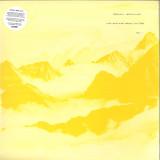
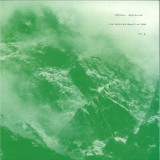
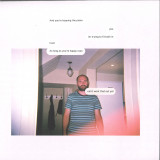
'No Beauty In The World' is a reflection of how in a world so cruel we can find beauty, with its music bouncing between beautiful ambience and piano loops, modular synth melodies to darker textural and feedback driven drones. Unlike other wounds records where the fluidity of the entire album tells a story, 'No Beauty In The World' explore various sonic possibilities and territories. This is a culmination of over 2 years of writing and recording, constantly driven by the uncertainty and darkness in the world that we live in. Despite it all, the sonic arc of the album gives us something to hope for, maybe there is beauty in the end. The record was engineered and mixed by Diogo Strausz (Far Out Recordings) in France and mastered (digital and vinyl) by Lawrence English (Room40). The record features collaborations from guitarist Carlos Ferreira and drummer / synthesist Phillip Stosberg.
Cerca:dron
'No Beauty In The World' is a reflection of how in a world so cruel we can find beauty, with its music bouncing between beautiful ambience and piano loops, modular synth melodies to darker textural and feedback driven drones. Unlike other wounds records where the fluidity of the entire album tells a story, 'No Beauty In The World' explore various sonic possibilities and territories. This is a culmination of over 2 years of writing and recording, constantly driven by the uncertainty and darkness in the world that we live in. Despite it all, the sonic arc of the album gives us something to hope for, maybe there is beauty in the end. The record was engineered and mixed by Diogo Strausz (Far Out Recordings) in France and mastered (digital and vinyl) by Lawrence English (Room40). The record features collaborations from guitarist Carlos Ferreira and drummer / synthesist Phillip Stosberg.
ACCIDENT IN HEAVEN was originally released in 1987 as a hand-made micro-edition of about 40 cassette tapes. It was only the third ever release on the short-lived now near legendary SDV label which had been established that same year by Konrad Kraft, Bernd Sevens and Dino Oon in Düsseldorf.
Finally finding a more substantial and appreciative audience on vinyl over 30 years after its original limited release, ACCIDENT IN HEAVEN is a strong testament to the explorative experiments of Detlef Funder a.k.a. Konrad Kraft, whose homebuilt studio sound attempted to bridge the clinical roughness of Severed Heads and the psychedelia of Coil with the density and force of industrial, post-punk and prototechno. Concurrent with his ever-expanding production skills, KONRAD KRAFT's sound work in the second half of the 80s stayed firmly rooted within a highly stylised underground spirit. Both his music and also the freshly launched SDV label first and foremost served as a medium for communication. The vital urgency of ACCIDENT IN HEAVEN underlines the record's core narrative which arguably sounds even more futuristic today than it did 30 years ago.
Hallmarks of ACCIDENT IN HEAVEN are an 8-track tape recorder, a Yamaha DX7 synth and a Roland 707 drum computer and the late 80s’ internationally ubiquitous shift from analogue to digital music production. Whilst its predecessor ARCTICA (another cassette-only release from 1986/87, previously reissued on TAL in 2018) was significantly more experimental and almost an in-between-states affair, ACCIDENT IN HEAVEN was the point at which Konrad Kraft really began to experiment with beat structures, sequenced synth pads and the framework of 'dance' music. However, the rhythmic elements are submerged so far beneath his expertly crafted drones it's almost impossible to label these sounds as “dancefloor oriented” work at all, as the tracks on the album joyfully disrespect the rules and boundaries of that or indeed any other genre.
ACCIDENT IN HEAVEN also epitomizes the decade's ending energy and sharp momentum with its successful merging of highly individual production and irresistible rhythm tracks.
The rich wealth of references is mirrored within the silhouettes and the graphics of the album’s unique artwork, which was created by Dino Oon. The new mastering has all sounds on ACCIDENT IN HEAVEN emerge in fresh shades and three dimensional plasticity, inviting the listener not to merely revisit the full palette of KONRAD KRAFT’s creation but offering an entirely new sound experience.
"Three years on from Lucky Shiner and following his DJ-Kicks set, the new EP from Gold Panda finds him refining his approach and exploring familiar themes, mixing bell-like textures, slow-mo house, and foggy drone." - PITCHFORK Gold Panda is the moniker of English electronic record producer and songwriter Derwin Schlecker. He released several small-issue 7" records and singles in 2009, and in 2010 he signed with Ghostly International to release his debut full-length Lucky Shiner. In 2013, Gold Panda started the year releasing the EP Trust. His second album, Half of Where You Live, followed six months later.
Cardinal Fuzz / Acid Test are proud to present to you the debut LP from Black Holes Are Cannibals – ‘Surfacer’.
Formed around the uber talent of Chris Jude Watson (founder of ‘Snakes Don’t Belong In Alaska’) who in BHAC found a band to take his vision to the outer most limits. BHAC are a collective with a varying line and each time they record all the music is improvised as they let their collective and innate abilities guide them, but what does bind them are the touchstones of Drone and Minimalism that runs through the music they create or just plain HEAVY. Call them Drone Metal or Psychedelic it matters not as the music created is an immersive, all consuming and thought-provoking transcendental listening experience that awaits those brave enough to take the ride with BHAC.
‘Surfacer’ was recorded at First Avenue Studios in Newcastle by the band using a TASCAM DR40 and is the embodiment of pent-up emotions gathered and endured during lockdown as they zap out every ounce of feeling and anguish into this recording.
‘Surfacer’ is not an album for the faint of heart with 2 long tracks of transcendence that will challenge and push you to lose yourself in the sonic experience of the timbre / vibrations of droning instruments and throat vocalisations as BHAC weave together mesmerizing waves of sonic texture.
‘Surfacer’ draws influence from bands like Neptunian Maximalism, Qujaku, Neurosis and the visual work of Andrei Tarkovsky, Kenneth Anger and Larisa Shepitko which influence the energy and darker sounds of the music while still taking influence from more traditional psychedelic sounds and experimental places like Taj Mahal Travellers, Suzuki Junzo, Pauline Oliveros, Vahvistusharha, and Tōru Takemitsu aurally and visual energies from occult works like Jodorowsky's 'Holy Mountain', Helena Blavatsky and Hilma Af Klint's Alterpieces 1-3.
As Terence McKenna might have said – BHAC are best experienced when listened to in complete solitude in a dark room while you are doing nothing else. To experience this album to the fullest, you must not have any distractions. Just sit down, relax, plug in, and let this album take you up into outer space.
‘Surfacer’ is pressed on Heavy Black Vinyl and presented in a 350gsm Outer Sleeve with artwork that perfectly matches the music drawn by James Watts (Inspiration coming to James from an article on beaked whales being "more surfacer than diver" before we had that jam and thats what inspired his drawing of an abstract beaked whale skull for the cover).
Aagyr Ferboden, a newborn noise project led by New Zealand songwriter Charlie Ryder. As a member of the band Yumi Zouma, Ryder’s typical work veers towards the pop-leaning side of alternative music - however Aagyr Ferboden finds the guitarist foregoing traditional structures to dive into more distortion and drone-filled soundscapes. With a debut album scheduled for release in late 2021.
“Like most things in life, our normal workflow can sometimes need a counterbalance, and over the years I’ve found that becoming part of a current helps to recalibrate from time to time. I’m thankful to the rest of the gang and our manager Phil for encouraging me to share these works, and I hope they can be helpful to others like they’ve been for
Cardinal Fuzz are pleased to announce the new LP from Mienakunaru – ‘Blood Sun’. After Mienakunaru's debut brain crusher 'Lost Bones Of The Holy Butterfly' that came via esteemed label Drone Rock Records (and reissued in the USA via Echodelick) - Cardinal Fuzz and Feeding Tube Records bring you 'Blood Sun' - A ferocious throb of of 3 people losing themselves in the beauty of fuzz, sizzle and noise.
Mienakunaru are a throbbing face melting power trio made up of Mike Vest, Junzo Suzuki and Dave Sneddon and if we were to write up the list of bands these artists have been involved with there would be no room to write more – Just believe me when I say that the list reads like a who’s who of cult underground hardcore and psychedelic bands. For those that may not have been listening to anything associated with these leviathans of heady, psychedelic noise – What we have here is fuzz drenched, waster infused and pounding like jack hammer freak-outs. Over four tracks of which the title track takes up the whole of one side you are treated to forty minutes of heavy cosmic amplifier worship, where the hypnotic nature of the music created within, unfolds and time and space begins to distort. Prepare to have your body shaken as Mienakunaru lay waste.
What is techno if not a powerful conduit for energy? The movement of a sequence, the surge of an effects rush, the respondent reaction in every individual dancer and the moving mass of the crowd as a whole. Whether the frequencies transmit directly into the brain through the intimacy of a headphone reverie, reverberate through the architecture of a space or fill the formless void of the open air, techno’s potency to initiate and stimulate energetic events is profound. This is something Pfirter understands intimately, having spent more than 15 years exploring ways of manipulating the energy on a dancefloor.
Of course, energy is not just about volume and aggression. Tonality, spatial processing and composition can have just as profound an effect as the thump of the kick drum. On his new album Altered States, Pfirter proves that point by zeroing in on the cerebral, psychedelic elements of his craft across 10 incisive tracks. The Argentine producer consciously approached his second album (following 2019’s The Empty Space) with a minimal mindset, using a very focused set of drum machines and synths to achieve a consistency across the record. Captured over a short burst of creativity, it’s the sound of an artist pushing a limited array of tools as far as possible. Despite this concise palette, it’s not an album that repeats itself, but rather an extended trip that flows from one detailed, textured immersion to the next.
The dense, febrile waves of hard-oscillating ripples in ‘A Future In Chaos’ and the sparkling, off-key chimes adorning ‘Yearn’ all speak to Pfirter’s gift for extravagant, surrealist expression within his tracks. ‘Altered States’, by way of contrast, succeeds in its absolute immediacy – a piledriving statement of bleep-driven intent. ‘Boiler’ and ‘Convergence’ land somewhere in between, coiling around kinked rhythmic incantations which still push forwards with precision while offering a different angle from which to approach the dancefloor. Cementing the idea of the whole album as a listening experience, Altered States is bookended by ‘Venus’ and ‘Dissolution’, two minimal exercises in drone-oriented mood setting.
Pfirter understands the role of his music, and his own instincts as a performing artist. It’s crafted to be captivating for DJs as much as the attentive listener. Spanning linear rhythms and broken beats, moments of calm and writhing intensity, Altered States offers a multitude of energetic possibilities in the mix or as a standalone piece of music. Ultimately, it’s a masterful return from a leading light of the contemporary techno scene.
This is MindTrip!
Back In Stock!
The debut collaboration between techno alchemists Ben Klock and Lucy will probably provoke quivers of anticipation before a single note has been heard. After all, both producers have carved out names for themselves as scene innovators at what they do, and both have already proven that they can more than capably work in a duo format without sacrificing an iota of their unique aesthetics: in Lucy's case, there has already been the sublime Zeitgeber pairing with Speedy J., and Klock has joined forces with the likes of Marcel Dettmann to craft some of the more memorable output from the Ostgut Ton label. This new release makes good on each producer's talent for working with epically unfolding tracks, maintaining a strong command of both 'drone' and melodicism, and envisioning sound as a kind of inter-dimensional mass transit. As the record indicates, things can get very interesting when the two working methods superimpose perfectly, but can be just as interesting when the two fall slightly out of phase with one another.
Listeners familiar with the classic kosmische feel will be taken immediately by the opening gambit "Bliss," whose feeling of floating through the coldness of space is accompanied here by nicely warm production values. The bassline that introduces the subsequent track ("War Lullaby") is close to being a continuation of the opener's leitmotif sequence, although with a change in atmosphere that will keep curious ears from turning away too soon: an FX-shrouded voice delivers a monologue at once seductive and foreboding, followed by a confident kick thump with ephemeral trailing clatters in tow. This affective orientation pulses through the whole record well, building up to the second rhythmic track ("Santeria") which is the busiest and most engaging of the bunch. Here a variety of sonic flavorings are ritually thrown into the pot and allowed to simmer - fleeting snatches of conga, phasing zaps and rhythmic ricochets all make for a rich concoction that epitomizes the progress that has been made in techno music within this decade. The closing "A Ghost Love story," like the opener, is a non-'dance' piece, but is no less compelling for that fact: as a foam of white noise pans between the listener's ears, a slurred / pitch-bent refrain conjures the feeling of either entering or exiting from some erotically tinged hypnagogic state.
Speaking of which, the overall impression given off by this record is that of a special kind of reciprocity: that is, of dreams influencing reality and reality feeding back into dreams. The rhythmic intensity of these tracks, at once an indicator of a hard and immediate reality, is regularly complemented by oneiric flourishes that make the partitioning line between these two realms of consciousness less distinct. As the next chapter in the Stroboscopic Artefacts saga, and in the personal journeys of both Ben Klock and Lucy, it will contribute to the ongoing mission of all these parties: giving longtime fans what they want while expanding their consciousness and inquisitiveness.
Hot on the heels of his preliminary EP on Stroboscopic Artefacts, Embryo, which paved the way to the present album, and two years after the landing of his 2016-released inaugural LP, Montagne Trasparenti, Mannequin helmsman Alessandro Adriani returns with his highly anticipated full-length debut for SA, Morphic Dreams. Throughout eleven cuts painstakingly executed but lacking not an iota of the fresh, spontaneous oomph that made his sound stand out of the crowd of techno producers to have emerged over the past decade, Adriani lays the foundations to a suspended sound imaginarium, governed by its own rules and principles of gravity. Revolving around the notions of sublimation and quest for inner balance, Morphic Dreams is comprised of four distinct sequences, conceived and designed as reflections of four mental states, each of them linked to the four alchemical elements i.e. Water, Earth, Air and Fire here represented by the A, B, C and D-sides. Fluid and enveloping, the A-side bathes the listener in some zero-G uterine vortex, pitching and rolling from the slo-burning exotic sensuality and tribal spell of The Tropical Year to the trunk-bending, arpeggiated fast-track pulse of Storm Trees, through Raindances feverish electro swing. Entering a further abrasive, minerally rich phase, the B-side unleashes Adrianis dark side with optimum conviction. Deeply anchored in earthly materiality, this new evolution stage starts off to the frantic Italo bass of Dissolving Images, rushing headlong into a kaleidoscopic maelstrom of fractured reflections and nasty Giallo-like ambience. The delirious body stretch sequence then rather abruptly swerves onto a calmer flux with Dust/Mist, a much enticingly hip-swaying collaboration with Simon Crab, ex-member of the seminal 80s UK industrial-experimental band Bourbonese Qualk, before Casting The Runes engulfs us into a tormented world of swollen eeriness and disquieting esoterism. Back to a widescreen showcase of droney distortions, nasty acid swashes and other quirky drum programming, Hors De Combat opens a new chapter, shortly followed by the playful bass intricacies and modular jeu-de-piste of Invisible Seekers, featuring Avian affiliate and longtime friend Shawn OSullivan. A further mind-expanding piece, C-side closer Crow deploys its blackened wings wide and high as a chaos of martial percussions and liquefying synths slivers crash past the red-hot skyline. A fluttering melodic interlude, Things About To Disappear blazes a clean trail for Make Words Split And Crack to flourish, slowly but surely blooming into a nonstop grandiose twelve minute-shy finale geared up with the stirring cacophonic force of a Ligetian symphony and something of an epic-scale Kubrickian soundtrack.
* 180 gram audiophile vinyl
* Inclusief insert met songteksten
* 20-Jarig jubileum uitgave
* Voor het eerst verkrijgbaar op vinyl
* Gelimiteerde editie van 1.000 individueel genummerde stuks op transparant vinyl
Het Nederlands muziekduo bestaande uit Thomas Acda en Paul de Munnik heeft met hun popliedjes een grote schare fans opgebouwd. Het tweede studioalbum genaamd Naar Huis heeft daar zeker aan bijgedragen. Met de pakkende teksten van nummer als "Het Regent Zonnestralen" en "Niet of Nooit Geweest" drongen ze in 1998 de hitlijsten binnen. De harmonieën en begeleidende arrangementen vormen ook op dit album weer een geslaagde mix van emotionele verhalende nummers en slimme grappige passages. Zelfs een bluesy gitaarsolo gaan ze niet uit de weg, zo blijkt uit het aanstekelijke "Zitten voor de Blues". Alle nummers tezamen maken het tweede album ook weer tot een evenwichtige en fascinerende muzikale rit.
Acda en de Munnik is een van de succesvolste duo's van Nederlandse bodem. Met een muzikale diversiteit en teksten die ingaan op de het strand, de jeugd en het leven weten ze de luisteraar te raken.
Naar Huis is verkrijgbaar als gelimiteerde editie van 1.000 individueel genummerde stuks op transparant vinyl.
'My first deep exposure to LEONARD COHEN was the "Bird on a Wire" documentary by Tony Palmer, which was, against the odds, broadcast on public television in New Zealand around 1974 or 1975. At age 15 or 16 I thought it was too dark. A few years later, in the late '70s, I wanted things darker. The first Cohen LP was very clever but a little too "up." The second was too public and political for me. Songs of Love and Hate seemed more honest, more about personal failure. I liked it, although Cohen tended to disown it, especially 'Dress Rehearsal Rag' and 'Last Year's Man', neither of which he performed live later on. I like 'Last Year's Man' for the same reason I like Nick Drake's 'Poor Boy'. It wallows and parodies at the same time. I came across the Suzuki OMNICHORD OM-27 because it was mentioned in relation to another Canadian, Joni Mitchell. It looked like a mystery box of potentially very good or very bad sounds, like a Bontempi chord organ customized for space travel in a Stanley Kubrick film. Irresistible... I was fortunate to meet JESSICA MOSS because of the 12 hour Drone event at Le Guess Who Festival in Utrecht in November 2017. I thought it would be cool to jam with some of the other people scheduled to play their own pieces so I asked the organisers, Bob Helleur and Jacob Hagelaars, to sound out the other droners a few weeks before the festival. Jessica replied, I sent a sample piece, and we talked, more than rehearsed, a day before the performance. We did our piece live and then some months later I sent her a recorded piece to which she added her magical playing.'
Roy Montgomery
‘Feelings’ took shape amidst the months of anxious tension that 2020 laid upon us, written and produced by Turkish artist Ekin Fil, it took around 1 year for the album to manifest in its final form.
Yet underneath the opaque veneer of swooning drones, timeworn chords and verbal lamentations, glimpses of sanguinity and optimism flicker through the fabric of the work, mirroring the perpetual state of uncertainty and isolation we collectively faced in 2020; suspended between minute, optimistic spur and months of dissolute ambivalence.
Richard Fearless follows his critically acclaimed psycho-geographical techno masterpiece ‘Deep Rave Memory’ with its companion album ‘Future Rave Memory’.
Across titanium kosmische, industrial ambience, weightless acid and dark drone, this new record is an instrument of evocative wonder and heavy emotion.
A dystopian ambient album and work of modernist meditation set firmly in an era when humanity is reckoning with its outsized place in the natural world, a process which may evoke humility, defiance, denial or despair.
Finding a rich seam in stark minimalism, soundsystem pressure and fractalised rhythm, Cassius Select is at the vanguard of contemporary broken beats and punishing low end.
This new Select transmission comes correct on Bruk, prodding at the same bold dance futurism already laid down by Siete Catorce and FFT, whilst sounding nothing like either of them. 'Dread Percent's swelling pads and dislocated MC shards are a foil for the ruff angles of 'Fish Tek'. 'Mess Mutual' teases and stalks at a lower tempo and then twists up another set of bars over a bed of alien drone, laying the groundwork for the massive, grime-licked hooks of 'Shake Like Me'.
Hinting at the anthemic while remaining steadfastly cool and deadly, Cassius Select's mutant brand of club has the space and versatility to slip between scenes, doing damage wherever it lands.
2021 repress of Tupperwear’s 2017’s sophomore album, Mokele Mbembe.
Rising from the ashes of legendary underground Tenerife outfit Colectivo Drone are Tupperwear - an organic electronic duo formed by Daniel García (Salétile) and Mladen Kurajica (Gaf) in 1999, Tenerife. Since then, and for the most of 20+ years they have been unleashing electronic waves of sound from the Atlantic island by way of intense live and a series of uncompromising and unclassifiable albums and EPs.
Taking cues from a wide spectrum of electronic music classics, mostly the more pastoral and frantic electronica of Aphex Twin et all circa the late 90’s, whilst at the same time adding their own mischievous and tongue in cheek approach to composition and performance, Tupperwear have for the last 20 years been responsible for some of the most intense live performances the island has seen whilst also taking their anything goes, improvisation first approach all over the world, tis includes virtually all of Europe (east or west), Japan, China, Peru, Colombia, Equador or Mexico, you name it!
In 2017 the local festival and label Keroxen published ‘Mokele Mbembe’, their 2nd LP of twisted electronica which is here repressed to a wider public after the success of their collaboration with São Paulo Underground and Chicago legend Rob Mazurek. (Saturno Mágico, 2021, Keroxen).
The 7th edition in the Exit Planet Earth vinyl series features another serving of electronic cuts designed for space travel with 20/20 Vision debuts from The Exaltics & Paris The Black Fu, Alex Jann, Lost Souls of Saturn and Kim Cosmik.
Opening with an interstellar serving of classic electro funk from the pivotal figurehead of Germany's electro-tipped underground 'The Exaltics' of 'SolarOneMusic' and 'Paris The Black Fu' from the mighty 'Detroit Grand Puhbas'.
This heavy weight collaboration comes in the form of 'wea poni zedin form ation' a masterclass in acid-influenced and undoubtably charismatic electro, complete with distinctive Kraftwerk-esque vocals. Alex Jann follows up on the A side with 'Android Memory' combining bleep techno elements with futuristic electro in an expertly crafted high paced does of sci-fi funk peppered with chaotic glitches, driving grooves and punchy kicks.
On the flip side we're joined by Seth Troxler and Phil Moffa under their inter dimensional moniker 'Lost Souls Of Saturn'. L.S.O.F offer up a mind altering hybrid of sci-fi inspired electronica, techno, electro, acid, free-jazz and more, blurring genre lines and pushing boundaries deep into the cosmos. Under-pinned by a predominately break beat groove 'Rave is Back' incorporates a plethora of un expected elements, from orchestral drones and harmonic melodies to unidentifiable machine glitches.
Wrapping up the 7th outing in the Exit Planet Earth vinyl series, we're joined by long-time purveyor of UK Electro -
Cybersoul's 'Kim Cosmik', firing on all cylinders with a tripped out assault on the senses. Her track 'Moonrise' hammers home with a fast paced, glitch heavy groove, serving up complex patterns across an ominous soundscape littered with ghost like echoes.
Intercepts is a brand new sub-label from London's Frequency Domain.
Frequency Domain has soundtracked late-night astral travelling since 2015, releasing drone, ambient and offbeat electronics from the likes of Forest Drive West, Plant43, Datassette, Matt Whitehead, Anthony Child, Jo Johnson and Ali Wade.
Intercepts indulges the parent label's more unruly and percussive leanings with a series of EPs drawn up from an anonymous pool of Frequency Domain artists and newcomers. Intercepts releases are served two at a time, with two separate strands - X and Y - each exploring their own sonic trajectory.
The first 'Y' series EP delivers three tracks of urgent machine funk; a spannered slab of 170bpm Braindance hogs the A side, while two peak-time sci-fi electro cuts play out on the flip.
repressed !
Biogen's a different kind of musician, always travelling the road less trodden. All law's broken - no chords, no build-ups and no traditional drum patterns. Instead Biogen offers listener's fragmented shredding's, constant irritations, glitches, imbalance—and enough creative ideas to supply a whole battalion of electronic musicians. His works are full of contrast. Occasionally soft and mellow - like a cloud in trousers - Biogen would call that 'sofa-trance'. Other times the music's harsh and uncompromising with uncomfortable, irrational beats and glitches - 'Weird-core' - a vast uncharted territory. Some might be tempted to connect the contrast and contradictions in his music to his long battle with manic-depressive disorder. But the disparity in his music is its strength, confounding and delighting the listener.
It's five years since Biogen passed away, but his influence is keenly felt among Icelandic electronic musicians. In the early '90s, Sigurbjörn 'Bjössi' .orgrímsson was a pioneer of the modern electronic scene as a member of the old skool hardcore band Ajax, who for a short time counted Goldie as vocalist, and cemented his reputation for pushing the limits under his Biogen pseudonym. His musical creations weren't made to serve the past or the present, but the future.
Each release and concert offered something different. Concerts were supposed to be challenging and engaging. His releases were not easy to come by and often he'd sell his music on Laugavegur - to unsuspecting tourists intrigued by his Viking-like appearance or mesmerised by his big blue eyes. He was a friend and a mentor to many; in 1995 he was a founding member of Thule Records, and in 2007 one of the leading forces in the Weird-core movement, a group of artists focusing on the unconventional. He'd encourage young artists to release their music into the cosmos - to make mistakes and learn from them - and that wouldn't be done while sitting in a basement. Many have memories of their first gig, watching a tall and comforting figure hovering above everyone else in the crowd. That was him, and it happened rarely that he wasn't there.
A fair amount of tracks on 'Halogen Continues' are previously unreleased, or self-released in very small amounts. The music moves from 'Irrelevant Information' where Biogen illuminates on 'Stabastab" a mysterious international institute he dreamt up, originally on the 'Mutilyn' LP that he handmade and sold himself. It was an anti-LP, a non-linear album of drones, crackles and weirdness. 'Bliss' is from the 1996 double CD compilation entitled "Icelandic Dance Sampler' that he helped compile. '303 Ambient' one of the recent works of the "Weird-core" era - also a regular event showcasing abstract electronica. He was the front man of the movement; regularly performing in Reykjavik with shows included lots of break-beats and 303's.
His creativity and freedom from tradition have seen Biogen gathering appreciation as an artist with the passing of time, and are hand in hand with the concept of . The artwork by Tombo is inspired by the idea of eternity and reverence after death. Nina compiled the tracks much like other album journeys on - 'I was in the car driving in the middle of nowhere in Iceland when I heard Biogen's music for the first time. Dramatic weather conditions outside probably influenced that instant emotional connection that I had with his music. Later navigating through a large archive of his recordings it took me some time until the album took form. I picked the most idiosyncratic cuts that show his creative approach most brightly. Some of them are short cuts ending obnoxiously with a lot of temper and others gorgeous atmospheric narratives - so deep and haunting that it feels like they are not familiar with a notion of time and dissolve slowly into the eternity. It's been an honour and felt exciting to have complied his work, a responsibility I feel keenly, and I hope he would like his music together in this album.'
Biogen's friend the Icelandic musician Ruxpin (Jonas Gudmundsson) who has worked to collect together Biogen's musical legacy through his DAT recordings and hard drives, and kindly granted Nina access to the files, provided much of the text for the press release. Following the album release of 'Halogen Continues', a further album of Biogen's ambient and experimental works will be released on GALAXIID later this year.
black vinyl repress
Our next release, and now long-awaited, is a collaboration between IMOGEN and Ben Pest. This follows IMOGEN's earlier appearance on Earwiggle which was a highlight of the Eel Behaviour series. We're big fans of Ben Pest and are very pleased to have the pair debuting their first full release together on the label.
From the hyperactive opener "Volts", that effortlessly juggles raw analogue techno with UK hardcore and all manner of rude bass wobbles, they soon delve into further chaos through the squawks and clatters of broken industrial cut "Gramalkin". "Shibooty" is a perky take on Chi-town techno, upping the funk levels through bustling shuffled 909s, humming bass and cartoonish vocal sequences. With the brooding acid electro of "Misjudgement Day", IMOGEN and Ben pile on some extra modular drones for the road, finishing off the EP in killer fashion.
The original Soundtrack to Greek-German director Nikias Chrssos’ new feature, ‘A Pure Place’, scored by John Gürtler (Eigenlicht, COUNTER019), with his studio partner Jan Miserre, and featuring a track by chameleonic British artist Shackleton.
The script for A Pure Place had a dizzying effect on John Gürtler & Jan Miserre; their minds reeling with the possibilities.
From Persian sheep bells, Chinese sheng, prepared trombone, quarter-tone piano, a beaten-up cembalo, hand percussion, and a room full of synthesizers, embryonic compositions and experiments came to life early on in the project.
An electro-acoustic extravaganza, the soundtrack for A Pure Place takes a deep bow towards the many magnificent composers and scores from the late 60s and 70s where orchestral arrangements met with tape loops, psychedelia, and instruments from across the globe. Listening to that era of film music, anything seems possible.
The minimalist tones of ‘Ritual Bells’ set the dial to weird in the opening sequence of the movie, whilst ‘The Island’ makes use of ambient vocals recorded through an oil drum, gently introducing one of the score’s main themes with a distant quarter-tone cembalo.
Acclaimed British artist Shackleton’s eerie original version of ‘Fust’s Song’ (also included) was a tonal keystone for the entire soundtrack. Gürtler and Miserre translated his psychedelic electronic blueprint, layering acoustic instruments and bottom-heavy percussion in their ‘Paradox Paradise’ production style. The vocals, written by Chryssos, and sung by the cast on set, capture the sonics of the actual crypt-like space where cult leader Fust addresses with his following.
‘A Glimpse of the Other Side’ speaks of love and death in a 70s-indebted composition reflecting John and Jan’s shared love for melancholic and suspenseful chord progressions. Meanwhile, the sparkling synths of ‘Athens’ - the children discovering neon-lit civilisation after years confined on the island - transplant us to an entirely different era.
Greek artist Maroulita del Kol features heavily throughout - her choir of vocals on ‘Erotica’ were recorded late at night in the studio foyer, capturing its unique tiled reflections and concrete reverb.
On ‘Purification’ Maroulita’s voice guides us alongside a Moog bass drone, building to an ecstatic climax, whilst she also features in the film’s disco-centric ending credits on ‘Gatoula Mou Mikri’.
A unique live performance at Issue Project Room gathered the former Sonic Youth member and artist Kim Gordon and the legendary minimal blues master and artist Loren Connors in 2014.
In December 2014, the Issue Project Room venue in New York City offered the first-time duo with the legendary Brooklyn- based guitarist Loren Connors and the rock icon Kim Gordon. From this almost 1 1⁄2 hour set, Kim and Loren decided to archive their favourite movement on a physical record which is a 12” vinyl now available from the french label Alara.
Through this long improvised session, Kim and Loren do dialogue and browse between installations of deep soundscapes at the limit of drone, and distorted, abrasive sonic attacks wrapped in reverberated harmonics. In this unprecedented exchange between two legends, the languages are as borrowed from one to the other: Kim Gordon plays on the land of the first inventions of Loren in rumbling / growling “unaccompanying” strings pinch, when Loren Connors envelops the entire hall of distorted harmonics that Kim would not have denied in her loudest attacks within her solo or group experiences from decades.
Just through the story of each of the protagonists and thanks to the quality of the recording and the mastering that bring the intensity of this meeting to life as if we were physically attending to the show, this album is a unique opportunity to witness the exceptional meeting between two legends of sonic and experimental music.
‘Eighteen Movements’ is a collection of recordings captured at live performances between 2017 – 2019. The record’s rich textures combine ambient, tribal rhythms, field recordings, ritualistic vibes, and a meditative feeling that runs through the entire LP. Đ.K. is in full flight mode, illustrating the project’s aptitude for deep transcendence.
Đ.K. is a DJ, composer & producer based in Paris, France. A versatile and prolific artist, D.K. has cultivated an eclectic body of work in recent years, with acclaimed output on renowned labels including Antinote, Melody As Truth, 12th Isle, Good Morning Tapes, Music From Memory’s Second Circle imprint, and L.I.E.S. (as 45 ACP).
Luminous and mesmeric, D.K.’s work combines finetuned traces of house, synth pop, ambient, balearic, minimalism, and fourth world music, creating energies and soundscapes which aim to invoke elevated forms of consciousness.
Prismatic tones exchange space with devotional drums on ‘Clarity’ and ‘Echo Chamber’, as Đ.K. hits a hypnotic stride somewhere between Jon Hassell, HTRK & a Folkways percussion ensemble. With ‘Full Consciousness’ meditation bells ring out across a progression of gleaming new age emanations, conjuring an entrancing spell. Movements of pulse and ether.
On ‘Mirror’, sonorous, elaborate percussive phrases are interwoven with drifting ambient vapours, while ‘The Other Side’ veers into broad, rolling blasts of dub and Antipodean drone, a cavernous trance evoking the early roots of Ras Michael and Yabby You, pared back to resolute drum sequences and infused with esoteric chimes and sultry synthesis.
The finale of ‘Eighteen Movements’ represents one of Đ.K..’s most ambitious recordings. ‘Awakening’ is an epic tone poem of aqueous, outer planetary resonance that completes this mercurial cycle with a poignant, euphoric fadeout. Chronicled in the moment, alternating between rhythm and repose, momentum and aviation, 'Eighteen Movements' sees Đ.K. voyaging further, into vast, uncharted outskirts of sound. A collection of movements for heightened states and new diversions.
Mastered by Jose Guerrero at Plataforma Continental. Graphic Design by Javi Tortosa.
- 01: Dronepilot (Feat. Drone Operatør &Amp; Ian Bruner)
- 02: Contrailsnake (Feat. Drone Operatør &Amp; Ian Bruner)
- 03: Dronegød (Feat. Drone Operatør &Amp; Ian Bruner)
- 04: Icaruscomplex_ (Feat. Gajek &Amp; Ian Bruner)
- 05: Tvdream (Feat. Drone Operatør &Amp; Ian Bruner)
- 06: Fallingasleepwiththedrones (Feat. Drone Operatør &Amp; Ian Bruner)
- 07: Asegmentøfsky (Feat. Gajek &Amp; Ian Bruner)
- 08: Sleepparalysis (Feat. Drone Operatør &Amp; Ian Bruner)
- 09: Boneless (Feat. Gajek, Drone Operatør &Amp; Ian Bruner)
- 10: Virtualcopulation (Feat. Drone Operatør &Amp; Ian Bruner)
- 11: Alone_ (Rendered Altitude)
SIM CARD HØLDER is not a band. It is the hybrid child of Ian Bruner, Drone Operatør and Gajek. It's procreation date is hard to pin down, but it started 2020 with an Insta chat and one of Ian's piano improvisations recorded in his Colorado living room. From there the album grew in separated covid lockdown wombs at three different locations in Germany. Ian's shadowy instrumentation of light piano and heavily layered and long believed to be dead soundscapes were digested, replanted and grown-over by Drone Operatør's and Gajek's uncompromising and individual sense for song structures and sounds. When finally all body parts were assembled in early 2021 the baby was already fluent in different languages.
Sim Card Hølder grows slowly while meandering through dense and open fields. It switches from calm and dreamy moods to wild fractured outbursts without fragmenting into the arbitrary. A raw spiritual power keeps every part connected and in perfect motion. Each song is a portal into multiple universes that suck you in on thick piano carpets, sharp saxophone spikes and buzzing quadcopter wings, warming insect intestines, blasting raw drums and slow healing winds, screeching synth rhymes, dissonant orchestral tales and floating blue melodies. It's a demanding ride but thoroughly deeply relaxing. The perfect soundtrack to rewind your mind.
k 11: Alone_ (rendered altitude) [feat. Drone Operatør & Ian Bruner]
There are records with empathy, records which are your friends and then there's the others... There might be little difference between them, a certain "je ne sais quoi", an "almost nothing but still something" which makes the difference between almost pointless and vital records. Despite, or rather thanks to his cynical despair, Matt Elliott's music never holds up a moralizing mirror to us - on the contrary, it creates a compassionate dialogue with listeners like the rhythm of two steps that synchronize to become as one. In 2016, Matt Elliot brought out his seventh solo album The Calm Before whose obscure title is neither exactly threatening nor comforting... the calm before what? Before the storm for sure but maybe also before the great record, the immediate classic we felt might be coming for a long time in the dual discography of the Bristol-born artist working under his own name and his electronic alias Third Eye Foundation. The elegant details and perspectives of Little Lost Soul (2000) already hinted at the upcoming masterpiece from the English singer-songwriter. The Mess We Made (2003) was Matt Elliott's first solo album and portrayed a universe in a kind of flight towards Balkan horizons made up of visceral despair. With the Songs trilogy, he put aside the electronic side of his work to continue working with a minimalist, stark and lucid style of writing. The Broken Man (2012) was full of tears and long laments sometimes carried by Katia Labèque's piano on a record which painted new shades of grey. On this record Matt began working with the producer, arranger and multi-instrumentalist David Chalmin (La Terre Invisible) who has kept on collaborating with the Bristol-born singer since then. Their partnership continued on Only Myocardial Infection Can Break Your Heart (2013) and The Calm Before (2016). Stéphane Grégoire is the head of the Ici D'Ailleurs label which has accompanied Matt Elliott since 2005 and perhaps he describes this album the best: "This new record by Matt is without a doubt his best album to date, a record that takes him into another dimension where he fully asserts himself as a songwriter and singer of the calibre of artists like Bill Callahan, Leonard Cohen or Johnny Cash." Matt Elliott's other records all seemed like empathic links between each other. Farewell To All We Know is an instant classic based on the sensitive piano and superb arrangements of David Chalmin, the sensitive cello of Gaspar Claus, the subtle bass of Jeff Hallam (who has also played with Dominique A and John Parish). There is a clear form of alchemy in all of this and still we find Matt Elliott's usual atmospheres and scenery, the same Eastern European folk music, long songs that take time to settle over time. Everything is the same but also is transfigured. By making his music stark and purifying and redefining the subject matter, Matt Elliott's work became so much more delicate. However this work is never frail nor really turned in on himself and thus becomes like a vital tune that vibrates and unfolds. The opening song Farewell To All We Know seems torn between the fear of what tomorrow may bring, inevitability and hope for the future in a permanent and progressive dramatic tension expressed by his Spanish guitar, the impressionist style piano and Matt's voice teetering on the edge of whispers. A funereal tribute to endless twilights and the dawns we all dream of seeing. There are touches of Leonard Cohen from Songs from a Room or Thanks For The Dance in The Day After That with Gaspar Claus's counterpoint cello. There is no spirit of resignation in Matt Elliott's work - life's path has to be followed against all odds. We have to follow the river's flow to reach the immense ocean and its infinite freedom. The haunted instrumental Guidance Is Internal harks back to the atmospheres of Howling Songs (2008) with its guitar parts full of scansions and muted threats. The music is transcendental but never seems afraid of the risk of falling. This is also what Bye Now tells us with its quasi-obsolete simplicity and sunburst melancholy reminiscent of the work of Luiz Bonfá, Bill Evans on Peace Piece or laidback crooners of the 50s. In Farewell To All We Know, Matt Elliott incessantly alternates between the dual desires to face up to the world or to protect himself from it. Hating The Player, Hating The Game is a lucid statement about the dullness of our daily lives sometimes, our right to get out of the game and no longer want to be part of it. Matt Elliott is tender but spares no one, particularly himself. Aboulia speaks of the tiredness of living and of looming death while Crisis Apparition says that there is always a time for reconstruction after chaos. This is like initially wearying wandering in the ruins of Aleppo with the slow dilution of the melody into a hallucinated drone. However the smell of great fires always fades and the earth always regenerates. Matt Elliott seems to suggest that the survival instinct is stronger than any cold winds could ever be. Matt Elliott never sings of certainties and prefers possibilities. Possibly the worst is over? Maybe... Maybe the storm has passed and devastated everything, now we just have to rebuild and live again. Farewell To All We Know shows us the distance that still needs to be walked and he walks next to you - right next to you, he is the friend who doesn't spare you the truth like all true friends really do.
We used to enjoy presenting Chapelier Fou's work using the idea of music in the form of a treasure hunt. However, while the phrase in itself it still just as relevant today, we would never have imagined that it would become such an integral part of one of his albums. Or two of his albums to be perfectly exact - Méridiens and Parallèles. Two records with twelve songs each which answer each other back in the form of anagrams. They are like the two sides of the same planet - similar but simultaneously so different. They need to be discovered one after the other taking the time necessary to travel through the sound territories produced by his imagination. The starting point is a sombre night in Uqbar… Chapelier Fou's opening reference to Borgès was obviously not made by chance. He subsequently confided in us the objective of his diptych, namely to combine reality with fiction to question certainties and our relationships with the imaginary sphere. He has continued with his traditional classical-contemporary electronic approach which, although now known to a wide audience, has the advantage of opening up a whole range of possibilities right up to the infinite scale. Moving away from an "État Nain" (Dwarf State) to take refuge on an asteroid...Throughout Méridiens, each composition can be seen as a universe in itself or a specific landscape with its own temporality. Proof of this is the introduction to the chamber music format composed for and performed by only strings which can only be given the date we want to give it. This is "État Nain" in which violins are played like guitars. In some parts we find the spirit of the Penguin Cafe Orchestra and the idea of cheering up classical instruments and not taking everything too seriously. In other parts, we find something close to a mischievous and childish unplugged grunge anthem that could be from the French series Les Shadoks. This mischievous view of things is shown to full effect in Am Scharchtensee. The introduction shows Chapelier Fou's whole classical universe and mastery of orchestration in which "modular" electronics provide a subtle and discreet backdrop. Then, the record suddenly switches to a surrealist dialogue between these classical sounds and modular synthesizers with the flavour of the German pioneers Kluster/Harmonia to name but one example. Timelessness and imaginary places. La vie de cocagne confirms this choice of total freedom. It's traditional music with old sounds, a kind of forgotten bourrée (old French dance) in which electronic sounds disturb the established order and thus reach another musical dimension. Le méridien du Péricarde followed by Désert de Sonora push this idea of a trompe l'oreille and a hall of mirrors even further. The latter track ends almost like a catchy 80s melody and we can no longer find any logical meaning. We let ourselves be carried away by this profusion of madness and are a little amazed by this mastery of sound, composition and space. It sometimes all seems like a succession of conjuring tricks. Chapelier Fou takes not being serious very seriously indeed. The end song Everest trail is the perfect conclusion, a deadpan track in which the primary aspect of a totally classical melody in all its straightness is underpinned by a permanent exchange of electronic tweets which mocks the main musical posture. This impertinence harks back to Pierre Schaeffer who directed the ORTF's very serious experimental department in another era and allowed the development of Jacques Rouxel's series Les Shadoks thus introducing the general public to the notion of concrete music. This is also perhaps why Louis Warynski's stage name is French – because he has opted to use his French musical heritage. Thus the first singles selected from this album, Constantinople with its groovy and jazzy allure and Le Triangle des Bermudes evoke composers like Michel Magne or Michel Colombier both of whom have totally open minds and consider all music to have the same importance, namely that of sound. In absolutely all the tracks that make up Méridiens, you will find at least one detail - a pattern, melody, sometimes a simple sound - that will draw you back to explore it a little more. And the words are carefully weighed for sure. It's quite simple. This is undoubtedly his most hypnotizing and catchy album. Chapelier Fou has become a complete master of his own universe. He draws the start and finish lines himself and no one can follow him in a field that now belongs to him alone. Composed imaginary spheres, illustrated territories...Music is just as meaningful as the more visual arts. Therefore the artwork of Méridiens had to project each of the twelve tracks considered individually and not just the whole album as such. Chapelier Fou therefore asked his old friend the contemporary artist Corentin Grossman to create twelve windows to represent glimpses of the twelve worlds composed for the record. Windows or mirrors when it comes to that? You can never be sure of anything...Space OK. But what about time? The years go by and sometimes we forget that fact. But a simple glance back is often enough to gently touch the time that has passed. It is over 10 years since his first official record and he has been composing, recording and sharing his music for almost 20 years. 20 years is a long time. It makes some people look old while others fall into reassuring but sterile nostalgia. Chapelier Fou, on the other hand, has released his most ambitious project and tried to take a higher view of his discography that was itself nevertheless irreproachable. Although the journey is over we can see Parallèles universes on the horizon. Chapelier Fou has announced 12 additional tracks which are like echoes of the compositions on Méridiens' and will be released on the album Parallèles next spring. They are neither twins nor opposites – they are instead totally original new compositions which go further in exploring a universe which is already richly abundant.
The album is his first for Oakland-based emotive experimental label n5MD, and it finds Ohadi taking inspiration from Adam Curtis' Oh Dearism shorts reflecting on the globes' modern-day state of turmoil.
As of late, n5MD has focused more on harboring artists with a more visceral take on ambient, eschewing background music or music for concentration or respite for ambient that requires deep listening.
COLDSTREAM is another such fibrous collection. Ohadi utilizes dark ambient, drone, glitch, and even industrial motifs to aid Idlefon's grainy ideology. COLDSTREAM is boundless, with moments of tension that swirl in and out of view, making it a perfectly ascending aural view of our ever declining society.
Cult American ambient label Past Inside The Present looks to New York City-based composer Christina Giannone for her new full length Glazed Vision, which is pressed to nice heavy 160 gram transparent clear vinyl. This is her third full length following 202's The Faint and a collaborative work also last year, and it is another development of her dark, heavy, drone fulled ambient landscapes. These are lo-fi, foggy tracks that hang in mid air and make you feel like you're doing the same as only the most subtle of shapeshifting chords brings a sense of motion. It is bleak yet beautiful and never less than hugely absorbing.
- A1: Blank Gloss - Coiling
- A2: Yui Onodera - Cromo 6
- A3: Markus Guentner / Joachim Spieth - Kari
- A4: Reich & Würden - Grainscan
- A5: Triola - Mutterkorn
- B1: Thomas Fehlmann - Rosen Fliegen
- B2: Morgen Wurde Feat Maria Estrella - Weiht
- B3: Thore Pfeiffer - Isola
- B4: Max Würden / Pepo Galán - Seis Minutos Mas
- B5: Andrew Thomas - Kiss The Horizon
IMPORTANT NOTE: UNFORTUNATELY THE SIDES ARE REVERSED ON THE VINYL, I.E. THE A-SIDE IS THE B-SIDE AND VICE VERSA. WITH THE PURCHASE OF THE VINYL OR THE CD YOU WILL GET THE SINGLE MP3 FILES AS WELL AS A CONTINOUS MIX VIA E-MAIL.
With the cover artwork for Pop Ambient 2022, longtime KOMPAKT graphic artist Veronika Unland has once again outdone herself. Following the almost baroque, blood-red and jet-black, extremely physical sculptures of Pop Ambient 2021, which emerged from a dark, floral sea like bodies erect for dancing, the front of 2022 is adorned with a pastel-white form, intertwined, folded many times and crisscrossed with delicate shading, which seems to float on a pale pink background; soft, gentle waves woven from Venetian colors that leave the viewer puzzled: Is it a flower, a coral, a mollusk?
Again, the current edition of the tradition-steeped compilation series curated by Wolfgang Voigt is about the persistent and ever-necessary definition of beauty, of reduction, of electronic music of heavy lightness and light heaviness, of ambient's eternal promise of a state of physical and acoustic weightlessness and Pop's of redemption. And about the question why a never arbitrary combination of soundscape, drones, samples and loops, put together in a certain way, can create this feeling of warmth, depth and space, - something three-dimensional, where the imagination feels at home as a fish in the water or a bird in the sky. A key aesthetic stimulus that sends all the senses into a slow glide and drift, after which your synapses feel like they've been bathed in essential oil. Next to Soul, Ambient is probably the most effective musical healing plant of mankind.
Behind the aural test tubes, the who's who of Pop Ambient is once again at work, led for the first time by the highly trafficked Californian duo Blank Gloss, whose debut album "Melt" this year was certified by The Guardian as nothing less than "heartaching beauty". Yui Onodera's "Chrome" as well as "Kari", a cooperation of Markus Guentner and Joachim Spieth, could also be imagined in the score of Denis Villeneuve's new film version of DUNE - however, colleague Hans Zimmer managed that quite well without the three. After such wonderful and stylish contributions by Reich & Würden, Triola and Thomas Fehlmann, the ear then lingers a bit longer on the ghostly "Weiht" by Morgen Wurde feat. Maria Estrella, a track like a temple of sound, a deep electronic immersion in a Japanese onsen. In this sea of unnameable time you could sink forever, but with the tracks of Andrew Thomas, Thore Pfeiffer and Max Würden & Pepo Galán the journey slowly comes to an end.
Mit dem Cover-Artwork für Pop Ambient 2022 hat sich die langjährige KOMPAKT-Grafikerin Veronika Unland einmal mehr selbst übertroffen. Nach den geradezu barocken, in blutrot und tiefschwarz gehaltenen, äußerst physischen Formationen von Pop Ambient 2021, die wie zum Tanz aufgerichtete Körper aus einem dunklen, floralen Meer auftauchten, ziert die Vorderseite von 2022 eine pastell-weiße Skulptur, in sich verschlungen, vielfach gefaltet und von zarten Schattierungen durchzogen, die auf einem blass-rosa Hintergrund zu schweben scheint; weiche, sanfte Wellen aus venezianischen Farben gewebt, die dem Betrachter Rätsel aufgeben: Ist es eine Blüte, eine Koralle, eine Molluske?
Natürlich geht es auch in der aktuellen Ausgabe der traditionsreichen, von Wolfgang Voigt kuratierten Compilation-Reihe um die beharrliche und immer wieder notwendige Definition von Schönheit, von Reduktion, um elektronische Musik von schwerer Leichtigkeit und leichter Schwere, vom ewigen Versprechen des Ambient auf einen Zustand körperlicher und akustischer Schwerelosigkeit und dem von Pop auf Erlösung. Und um die Frage, warum eine nie beliebige Kombination aus Klangfläche, Drones, Samples und Loops, auf eine bestimmte Art zusammengefügt, dieses Gefühl von Wärme, Tiefe und Raum entstehen lassen kann, - etwas dreidimensionales, in dem die Fantasie sich so zuhause fühlt wie ein Fisch im Wasser oder ein Vogel in der Luft. Ein ästhetischer Schlüsselreiz, der alle Sinne in ein langsames Gleiten und Driften versetzt, wonach sich deine Synapsen wieder anfühlen, als habe man sie in ätherischem Öl gebadet. Neben Soul ist Ambient die wahrscheinlich wirksamste musikalische Heilpflanze der Menschheit.
Hinter den auralen Reagenzgläsern hantiert einmal mehr das Who-is-Who der kompaktschen Pop Ambient-Riege, erstmals angeführt vom hoch gehandelten kalifornischen Duo Blank Gloss, deren diesjähriges Debüt-Album “Melt” der englische Guardian nichts weniger als “herzergreifende Schönheit” bescheinigte. Yui Onodera’s “Chrome” sowie “Kari”, eine Kooperation von Markus Guentner und Joachim Spieth, könnte man sich auch gut im Score von Denis Villeneuve’s Neuverfilmung von DUNE vorstellen, - das hat der Kollege Hans Zimmer allerdings auch ohne die drei ganz gut hinbekommen. Nach so wundervollen wie stilsicheren Beiträgen von Reich & Würden, Triola und Thomas Fehlmann verharrt das Ohr dann etwas länger beim geisterhaften “Weiht” von Morgen Wurde feat. Maria Estrella-Weiht, ein Track wie ein Tempel aus Klang, ein tiefes elektronisches Eintauchen in einen japanischen Onsen. In diesem Meer aus unnennbarer Zeit könnte man ewig versinken, doch mit den Tracks von Andrew Thomas, Thore Pfeiffer und Max Würden & Pepo Galán geht die Reise langsam zu Ende.
- A1: Bell
- A2: Fanfare (Bohlen/Pierce)
- A3: Latin 2
- A4: Perc Grm
- A5: Glocken
- A6: Stakkator
- A7: Titan 09
- A8: Titan Ircam (31-Tet)
- A9: Photon
- A10: The Invention Of E-Flat Major
- A11: Digital Basics
- A12: Jesus Christus
- A13: Phase One
- A14: Basilica
- A15: Bells 2 Gran
- A19: Plate Glass (17-Tet)
- B1: Sukh Plasma
- B2: Rausch & Piep
- B3: Amulet
- B4: Flummi
- B5: Krunch
- B6: Singing Stone (Pythagorean)Bwinds Of The Deep
- B7: Large Glasses (31-Tet)
- B8: Bells Minus Drone
- B9: Bells Rev
- B10: Quiet Nights Susanne
- B11: Travelizer
- B12: Hypno Traffic
- B13: Wind
- B14: Karun
- B15: Bowl
Robert Sotelo is a mercurial melodist building a resplendent world of pristine DIY pop from the ground up. The Glasgow-based artist’s songs are meticulously crafted, patchworked together with eclectic arrangements and ardent vocal performances. Each of his albums to date has been accompanied by a growth-spurt, 2017’s debut ‘Cusp’ was packed with miniature psych overtures, whilst 2018’s 'Botanical' was more keyboard-minded and playful with a near-absurdist palette of sound. ‘Infinite Sprawling’ came out towards the end of 2019 and surprised with songs pulled together like a wakeful stretch, brisk with a lightness of touch. This was neatly followed by ‘Leap & Bounce’ melding a sparse synth-pop minimalism to an emotional undertow.
This November Upset The Rhythm will release Robert Sotelo’s vivid new album ‘Celebrant’. ‘Celebrant’ was intended to be and still is to some extent a joyous wedding album (Sotelo is recently married), but in his own words “the pandemic and the death of my aunt Carmen intersected with the original concept so the album is darker than intended in places.” More cinematic and measured than prior albums, Sotelo expounds that “it is purposefully a bigger sounding attempt at my keyboard songs and I felt more ambitious about it in general.” That’s certainly reflected in these twelve sophisticated loops of song, all curiously affecting and catchy, sprinkled with Sotelo’s offbeat musings and keenly accurate observations. Guitars are rarely employed on this record with Sotelo recruiting Iain Mccall, Ross Blake, Celia Morgan and David Maxwell to contribute brass, woodwind, spoken word and acoustic drums respectively. All of these additions blend well with the album’s synthetic core, softening and subtly shaping its pop-first nature into something more nuanced, vulnerable and human.
‘Celebrant’ is a plucky synth-centric collection of unbridled songs at times surefooted at others threatened by disconnect, skilfully steered by Sotelo with typical classy touch. ‘Dear Resident’ is divinely metronomic, ‘Behaviour’ luxuriates in pitching a silken saxophone into a frenzied drum-off. ‘The Currency Is Love’ swaggers with 80s vibes aplenty: “all the globe is listening as a system of concern” sings Sotelo in clipped manner, enjoying the placement of each word in each song precisely, however seemingly stumbled upon and surreal their selection might seem. Other highlights include title track ‘The Celebrant’ with its lush environ of droning keys, swooning woodwind and baroque reverie, and ‘This Is My House’ a woozy, maze-like triumph of melody. ‘Influencer’ is similarly masterful with melancholic strains of synth, sax and voice: “extract the data from the fruit straight off the tree, conducive testing proves it’s not reality, create a substitute to simulate the tide, with rich efficiency the differences can hide.” The song itself a cipher for an ill-imagined future we might be living in already.
With ‘Celebrant’ Robert Sotelo has made an album that sounds as big as its heart and imagination, true depth of feeling, true depth of connection. It’s an ornate album, complex and thoughtful, a fitting tribute to a wedding in unsettled times. What a treat that we’ve all been invited to the reception.
Empty surrounds all of me. It’s a poignant line from the third album by Blackwater Holylight that encapsulates the search for self when suddenly everything has changed. There’s a theme of processing vast personal trauma throughout Silence/Motion that eloquently — both lyrically and musically — and simultaneously embodies the crushing emptiness, sorrow, strength and rebuilding of recovering from personal devastation.
“There was so much grief both in the world and interpersonally during the process of creating Silence/Motion,” says vocalist/bassist Allison “Sunny” Faris. “The four of us gave one another more space to be ourselves, to experiment with each other’s ideas and to be gentle with one another more than we ever have before. So, we knew this tenderness would manifest in extremely honest arrangements, and I think that you can hear that throughout the record.”
Curiously, considering the dark times in which it was created, this is the band’s most melodic and catchy music so far. Blackwater Holylight, as the name suggests, is all about contrasts: It’s a fluid convergence of sound that’s heavy, psychedelic, melodic, terrifying and beautiful all at once. And, Silence/Motion finds the band honing those contrasts, letting ideas and moods fully develop from song to song, rather than filling every song with a full range of their capabilities. It allows the band to go fully prog-rock here, and simply stay hushed and intimate there. There’s a new confidence to the band in how seamlessly they wield their stylistic amalgam.
“Writing this album was extraordinarily difficult emotionally, however it did come to fruition fairly quickly,” Faris says. “In the past, the theme of vulnerability has always been a big player and it definitely showed up full force while writing this album.”
Blackwater Holylight recorded the album as a four piece: Faris on vocals and guitar (on “Silence/Motion”, “MDIII”, “Around You” and “Every Corner”) and bass for the remainder, Sarah McKenna on synths, Mikayla Mayhew on guitar (and bass when Faris plays guitar) and drummer Eliese Dorsay. New second guitarist Erika Osterhout will perform the songs with them live. For Silence/Motion the band chose to work with a producer for the first time, bringing in A.L.N. (of Mizmor, Hell) to produce, along with recording engineer Dylan White — who also helmed their previous album Veils of Winter (2019) — at Odessa Recording Studio in Portland, OR. Guest vocals on album opener “Delusional” are by Bryan Funck (Thou.) Mike Paparo (Inter Arma) and A.LN. (Mizmor, Hell) lend guest vocals to album closer “Every Corner.”
Silence/Motion opens softly with interwoven folky single note guitars over an ominous sounding drone for the first minute, akin to moments from Pink Floyd’s Echoes. Suddenly an irresistibly head-nodding, groovy droptuned riff kicks in with the drums and it’s a full on blackened rocker with soaring synths and Funck’s witchy whispers over the top. “Who The Hell,” the track quoted above, takes proceedings into a Krautrock direction, centered around McKenna’s arpeggiated synth loop and Dorsay’s tom-tom triplets, while 16-note guitar strums add tension as Faris wearily sings, “So tell me who the hell would want to live this way — so afraid/ To feel this void, to dwell in it… I can’t describe this pain I wear/ It suffocates and you left it here.” It’s an incredibly powerful 6 minutes. The title track delivers the 1-2-3 punch of the album’s brilliant opening trilogy. It starts with lightly plucked acoustic guitar, plaintive piano chords and Faris’ voice gliding so softly it sounds more like a Mellotron. The song builds slowly toward crescendo, led by a swinging tom pattern, that abruptly switches back to a heavier version of the opening melody.“Silence/Motion” is about digesting and healing from sexual assault. As Faris explains, “It is an ode to the juxtaposition of feeling paralyzingly blank and and like your entire life is moving through you simultaneously.” Elsewhere, Black Metal guitars collide with dreamlike melodies. “Around You” brandishes a hopeful, hummable synth melody and shimmering shoegaze guitars like throwing down a gauntlet. In the end, it becomes undeniably clear just how completely into their own Blackwater Holylight has come.
“The analogy is that with our first record (Blackwater Holylight, 2018) we were getting into to the car and buckling up,” Faris says. “The second (Veils of Winter, 2019) we were turning the car on, and with this third we have kicked into drive toward our destination. Our destination is a bit mysterious and has the ability to change from day to day, but we’re on our way.”
Empty surrounds all of me. It’s a poignant line from the third album by Blackwater Holylight that encapsulates the search for self when suddenly everything has changed. There’s a theme of processing vast personal trauma throughout Silence/Motion that eloquently — both lyrically and musically — and simultaneously embodies the crushing emptiness, sorrow, strength and rebuilding of recovering from personal devastation.
“There was so much grief both in the world and interpersonally during the process of creating Silence/Motion,” says vocalist/bassist Allison “Sunny” Faris. “The four of us gave one another more space to be ourselves, to experiment with each other’s ideas and to be gentle with one another more than we ever have before. So, we knew this tenderness would manifest in extremely honest arrangements, and I think that you can hear that throughout the record.”
Curiously, considering the dark times in which it was created, this is the band’s most melodic and catchy music so far. Blackwater Holylight, as the name suggests, is all about contrasts: It’s a fluid convergence of sound that’s heavy, psychedelic, melodic, terrifying and beautiful all at once. And, Silence/Motion finds the band honing those contrasts, letting ideas and moods fully develop from song to song, rather than filling every song with a full range of their capabilities. It allows the band to go fully prog-rock here, and simply stay hushed and intimate there. There’s a new confidence to the band in how seamlessly they wield their stylistic amalgam.
“Writing this album was extraordinarily difficult emotionally, however it did come to fruition fairly quickly,” Faris says. “In the past, the theme of vulnerability has always been a big player and it definitely showed up full force while writing this album.”
Blackwater Holylight recorded the album as a four piece: Faris on vocals and guitar (on “Silence/Motion”, “MDIII”, “Around You” and “Every Corner”) and bass for the remainder, Sarah McKenna on synths, Mikayla Mayhew on guitar (and bass when Faris plays guitar) and drummer Eliese Dorsay. New second guitarist Erika Osterhout will perform the songs with them live. For Silence/Motion the band chose to work with a producer for the first time, bringing in A.L.N. (of Mizmor, Hell) to produce, along with recording engineer Dylan White — who also helmed their previous album Veils of Winter (2019) — at Odessa Recording Studio in Portland, OR. Guest vocals on album opener “Delusional” are by Bryan Funck (Thou.) Mike Paparo (Inter Arma) and A.LN. (Mizmor, Hell) lend guest vocals to album closer “Every Corner.”
Silence/Motion opens softly with interwoven folky single note guitars over an ominous sounding drone for the first minute, akin to moments from Pink Floyd’s Echoes. Suddenly an irresistibly head-nodding, groovy droptuned riff kicks in with the drums and it’s a full on blackened rocker with soaring synths and Funck’s witchy whispers over the top. “Who The Hell,” the track quoted above, takes proceedings into a Krautrock direction, centered around McKenna’s arpeggiated synth loop and Dorsay’s tom-tom triplets, while 16-note guitar strums add tension as Faris wearily sings, “So tell me who the hell would want to live this way — so afraid/ To feel this void, to dwell in it… I can’t describe this pain I wear/ It suffocates and you left it here.” It’s an incredibly powerful 6 minutes. The title track delivers the 1-2-3 punch of the album’s brilliant opening trilogy. It starts with lightly plucked acoustic guitar, plaintive piano chords and Faris’ voice gliding so softly it sounds more like a Mellotron. The song builds slowly toward crescendo, led by a swinging tom pattern, that abruptly switches back to a heavier version of the opening melody.“Silence/Motion” is about digesting and healing from sexual assault. As Faris explains, “It is an ode to the juxtaposition of feeling paralyzingly blank and and like your entire life is moving through you simultaneously.” Elsewhere, Black Metal guitars collide with dreamlike melodies. “Around You” brandishes a hopeful, hummable synth melody and shimmering shoegaze guitars like throwing down a gauntlet. In the end, it becomes undeniably clear just how completely into their own Blackwater Holylight has come.
“The analogy is that with our first record (Blackwater Holylight, 2018) we were getting into to the car and buckling up,” Faris says. “The second (Veils of Winter, 2019) we were turning the car on, and with this third we have kicked into drive toward our destination. Our destination is a bit mysterious and has the ability to change from day to day, but we’re on our way.”
Color of Time is a long distance, ambient and drone project featuring Kevin Sery (From Overseas) and Nick Turner (Tyresta). Created with guitar, synthesizers, Mellotron and effects, their music focuses on themes of impermanence, loss and the impact that humans have on each other and the planet.
anthéne, one of ambient drone’s most recognised names, presents ‘maritime’. A shift from his usual expansive, time-stretching soundscapes, maritime is something altogether more grounded, more present. It signals the call of the open ocean, of its vast possibilities and terrors, as a similitude for the night.
In both, one faces the peace, the limitlessness, the reverence, and the promise, while at the same time the uncertain, the uncontrollable, the danger and the fear of the unknown. In such a way, maritime is presented in two parts: Side A demonstrates the beauty and inspiration of ocean views and night time explorations, while Side B addresses the vulnerable nature of vast, boundless experience.
An artist with an astounding workrate, Brad Deschamps has worked with such artists as Ian Hawgood, James McDermid, Andrew Tasselmyer and Fossil Hunting Collective (as Still Harbours), and releases the likes of Hakobune, Moss Covered Technology and Forest Management on his own Polar Seas Recordings.
His patient style is clear throughout the album, shimmering guitar tones overlaying with warmth and stability, yet the addition of more troubled melodies and subtle vocal parts make for something far more poignant. The duality of awe and terror, of the two primary elements of the sublime, channel through as one in one of anthéne’s most thoughtful offerings to date.
Color of Time is a long distance, ambient and drone project featuring Kevin Sery (From Overseas) and Nick Turner (Tyresta). Created with guitar, synthesizers, Mellotron and effects, their music focuses on themes of impermanence, loss and the impact that humans have on each other and the planet.
"Circuit" is a recorded document of improvised music and the inaugural release on Pattern Dissection — an independent record label, radio show and concert organiser from Berlin. Dag Magnus’s down-tuned drum set builds the ground for relentless legwork and hectic wrestling, shaking the floor when confronted with Farida’s high string slaps on the bass guitar, which they occasionally swap for droning vibrations and scorching fingerpicking, neither shying away from a heavy riff nor stripped back momentum. Liz’s synth is an idiosyncratic creature of its own, birthing sounds rarely graspable but utterly fascinating, swift in taking turns and always one step ahead of any expectation.
Recorded on July 28th 2020 in Berlin at their second meeting as a band, that was initiated by a live gig six months earlier. All music was improvised and performed in a room with six microphones.
Mixed by Christoph Berg & mastered by Stephan Mathieu. Lacquer cut by Mike Grinser. Pressed at Pallas on 140g vinyl, wrapped in a 350g reverse-printed cardboard sleeve with A6 photo-card inside, including a download code. Artwork by Talita Santos & design by Espacioblanco. Photography by Stefan Lingg.
For those only familiar with her previous releases, aya sinclair’s ‘im hole’ will be a dramatic revelation. Under the LOFT pseudonym, she attracted global acclaim for her fwd-thinking club inversions that juxtaposed the British addiction to breaks 'n bass with critical, self-sluicing logic and untethered abstraction, tearing down dance music's hallowed pillars of respectability while winking knowingly to voyeuristic onlookers. On ‘im hole’ this routine has evolved; aya has distilled the incisive sonic experimentation of her earlier releases, the tongue-in-cheek giggles of her DJ sets and edits, and the identity-fluxing lyricism of her live shows. Contorting language, dialect, gender and sexuality between intermittently controlled bursts of rhythm, noise and aural goop, she has sculpted a set of autobiographical vignettes that challenge established norms, question supposed truths and affirm a spectrum of interlocking experiences. But while it's wide open and personal, ‘im hole’ also challenges queer art's tendency to veer towards repetitive solipsism, the music fragmenting familiar sounds and twinning them with familiar words, assembled in unfamiliar ways. Stories are muddled with phonetics just as dubstep is macrodosed with microtonal drone.The anxious, explorative personality that made aya’s past releases so magnetic is magnified here, and her sense of humour is completely naked. It's a Gregg Araki animated biopic of Burial. It's Shakespeare with hoop earrings and a busted skateboard. ‘im hole’ will physically manifest as a hardback cloth-bound book of lyrics, poems and photographs, designed in collaboration with Oliver Van Der Lugt, with single-use download code included.01. somewhere between the 8th and 9th floor 02. what if i should fall asleep and slipp under 03. once wen’t west 04. dis yacky 05. OoBrosThesis 06. the only solution i have found is to simply jump higher 07. still i taste the air 08. Emley lights us moor (ft Iceboy Violet) 09. Tailwind 10. If redacted Thinks He's Having This As A Remix He Can Frankly Do One 11. Backsliding
Zvrra debuts on Avian. The multifaceted artist and video game developer arrives on the label with a brace of glistening ambient Techno and Noise derivatives. The versatile producer, whose auteur approach to recorded output has yielded a wealth of dense and considered material over the years, marries melodic synthesis with glassy, effervescent sound design and considered polyrhythms to arrive at a cohesive but undeniably idiosyncratic nine track offering. Cinematic opener Bizzaroland combines vocal manipulations with phasing, noisy drones that stand in pleasing contrast to a mournful lead that delicately emerges at the midpoint. Follow up Society, offers a meditative take on stepping ambient Techno before Bizzaroland II treats the listener to a heady, stripped back slice of tripping beatless machine music. Tribal cut Figurine closes the A side and sees the material segue into more ominous territory with pulsing low end, percussive flourishes and harsh bursts of white noise. On the flip, B1 Inside sees the artist roll out another stripped back Techno experiment - this time dry and saturated and propelled by a single lead sequence that shifts about the high mids. Oracle returns to a more esoteric, undefined sonic palette - a cacophonous blend of heavily panning drones in line with the artist’s more experimental work. In the same vein Prohibited is a powerful noise cut that finds its contrast in subdued moments towards the end of its run time. As the record approaches its close, Tired Beetle settles the mood somewhat - an introspective, atmospheric ambient recording tethered with admirable low end, before off kilter invocation Untitled draws the collection to its logical end point.
- A1: Soul Machine
- A2: Distant Memories
- A3: Black Butterfly
- A4: Atomic Heart
- A5: Eternal Time Machine
- A6: Quantum Mysticism
- A7: Reflections
- A8: Trees Speak
- B1: Nothing Remains
- B2: Everlasting
- B3: Spirit Oscillator
- B4: Waiting
- B5: Unconscious Though Control
- B6: Ghost We Know
- B7: Silance In The Sky
- C1: Shadow Circuit (Part I)
- D1: Shadow Circuit (Part Ii)
Trees Speak is an experimental rock band that transcend mainstream influences by incorporating elements of Avant-garde, Neo-psychedelic, Minimalism, art and electronic - along with violin-bowed guitar, Theremin and a glut of effects pedals, and it's an ear-bending rush of lush soundscapes.
Trees Speak - as much a sound laboratory as a rock and roll band - is the musical venture of acclaimed visual artist and musician Daniel Martin Diaz (formerly of Blind Divine and Crystal Radio). For the debut double-LP Trees Speak is joined by Michael Glidewell (Black Sun Ensemble), Gabriel Sullivan (XIXA, Giant Sand), Connor Gallaher (Myrrors & Cobra Family Picnic), Damian Diaz (Human Error), and Julius Schlosburg (Jeron White Acoustic Trio). The studio itself should also take top billing, because in the tradition of krautrockers Can and Bitches Brew-era Miles Davis, the band takes its winding, incandescent motoric rock and roll improvisations and edits them into coherent compositions using the mixing desk after recording. And that's where the sound lab half of the equation appears. The end result is flowing and droning ambient proto-punk reminiscent of fellow travelers NEU!, Stereolab,
Our intention is to create music with an unrehearsed minimalist approach performing simple beats, riffs, and sequences that take one inward. We attempt to create a sonic environment to set one's mind free and to become aware of the nuances of tone, melody, and structure. We organize our recording equipment with the same approach, in a transparent manner. Our recorded performances are never rehearsed. Our belief is that a brilliant rehearsal is a lost opportunity to capture a magical moment. We are chasing the mystery of music and tone. We let the musical performance sculpt its own destiny and create imperfect perfection. Our tool of creation is the anxiety one feels when they are unrehearsed or prepared for a performance. We believe this approach brings us closer to the authentic self. The result is genuine music without an agenda that captures the unfiltered spirit.
- Trees Speak
The music was recorded live in one room with no overdubs or repairs, only using edits to create arrangements. All tracks were written over a 5 day period at Sacred Machine Studio and Dust & Stone Studio.
Mystery Jets announce that their sixth studio album ‘A Billion Heartbeats’ will be released on 27th September on Caroline International. The band also release ‘Screwdriver’, the first single to be taken from the album.
Screwdriver is an uncompromising look at the rise of the rebranded alt-right in the UK, built around a powerfully positive message: "Fight them with love / then the world will be ours".
Lead singer Blaine Harrison says of the song, “Screwdriver is about the mechanics of intolerance. Looking back at times of economic instability in history, we see how easily deep chasms grow in society and the population seeks change wherever it is most convincingly promised. Conflict arises as cultures and belief systems clash, unwilling to accept one another’s place in society, because we are fed the rhetoric that our neighbours are those responsible for our problems: then inevitably nationalism once more raises its ugly head above the parapet. But whereas political agendas fuel divisiveness, music unites and reminds us of all that we have in common. The message of Screwdriver is not a pessimistic one - because perhaps faced with confrontation we can find understanding, and even maybe learn how to listen to, and love one another.”
Each room of the house in the video is a metaphor for the different sections of society in the UK. It wraps around the narrative of the song, that in order to overcome adversity, you have to “Fight Them With Love”. The visual showcases the song’s inherent message, clashing aggressiveness with tenderness, and culminates in showing after anger, we can always come together through love.
All great albums start from a unique perspective. But try a window on the Strand, in an abandoned office block, overlooking the kind of political upheaval London hasn’t seen in a generation. Blaine Harrison was living as a property guardian right around the corner from Trafalgar Square when he found himself witness to an entire year of protests. Every weekend from January 2017 on, people were marching for a different cause: "In the space of six months it was Black Lives Matter, the huge ‘Our NHS’ march, Unite for Europe," he recalls. "Then the solidarity sleep-out organised by Help Refugees, where we slept in Whitehall for the night... The protestors would wake me up in the morning. I’d just walk down and join in.”
Over the course of that year, Mystery Jets' sixth long-player, A Billion Heartbeats, was born. "This album wasn’t about making pointed opinions,” says Blaine. “It was about being a mirror for what’s going on, reflecting back the way people are feeling.” By turns tender and fierce, abstract and full of classic rock energy, A Billion Heartbeats achieves a balance of passion, fear and hope. Amid the colourful cavalcade of rich harmonies, heavy guitars and rallying cries, the album’s essential message - about personal responsibility, and the power in becoming engaged. In a sense, it's not just their "state of the nation” record but their “state of a generation” record too.
We increasingly hear from musicians that music should be an escape these days - that there’s enough suffering in the world, enough misery on the news, without writings songs about it too. A Billion Heartbeats makes all that sound like a bit of a cop-out. These are songs of protest that get the heart racing in joy; high on hope, and serious in their message. Proof, basically, that music speaks louder than words.
Wasted Cathedral is the solo project of Saskatoon-based musician Christopher Laramee (Shooting Guns, The Switching Yard, and The Radiation Flowers). This new album is the latest in an impressive line of releases that have explored a variety of sounds, from ambient drone and electronic disco to experimental chaos and downtempo electronica. I'm Gonna Love You 'Til The End Of Time is made up of seven songs and is undoubtedly influenced by the starkness of the Canadian Prairie and long Saskatchewanian nights. It serves well as a soundtrack to the setting of any number of listening experiences, particularly when experienced with headphones. No matter the direction Laramee has chosen to guide Wasted Cathedral, the result has always been intriguing and captivating. I'm Gonna Love You 'Til The End Of Time is certainly no exception.
Laramee describes Wasted Cathedral as incidental music, improvised soundscapes created in passing moments, like musical snapshots. This makes perfect sense, considering the likes of Sarah Davachi, Peter Kember, Terry Riley, and Augustus Pablo inform Laramee's approach to composition, as well as tone-setting and mood. According to Laramee, this collection of songs is a continuation of his previous work, albeit in a more stripped down fashion.
Wasted Cathedral is recommended for listeners of Flying Saucer Attack, DJ Shadow, Spectrum/Sonic Boom, Spiritualized, and Portishead.
In the afterglow of her acclaimed 2020 album Silver Ladders, Los Angeles-based harpist Mary Lattimore returns with a culminating counterpart release, Collected Pieces: 2015- 2020. The limited-edition LP features new and previously unreleased material, Bandcamp-only singles, and other obscurities alongside standouts from her 2017 tape Collected Pieces. Beyond the vinyl compendium, an expanded tracklist on the cassette/digital version brings more of Lattimore's archives together for the first time. Lattimore has described the process of arranging these releases as akin to "opening a box filled with memories," and here that box continues to populate, accessible for both the artist and fans. Evocative material separated by years, framed as a portrait of an instrumental storyteller who rarely pauses, recording and often sharing music as soon as it strikes her. Seemingly in constant forward motion for the last five years since her Ghostly debut, Lattimore glances back for a breath, inviting new chances to live in these fleeting moments and emotions; all the beauty, sorrow, sunshine, and darkness housed within. Opening the cassette version is "Mary, You Were Wrong," which mirrors an author's bout with a broken heart. "It's about how you have to keep on going even if you make some mistakes," she says. The bittersweet refrain cycles throughout, a little brighter every time, slowly, like the way time tends to heal. Unreleased track "Sleeping Deer" came together during Lattimore's artist residency on a cattle ranch in Wyoming. She remembers, "a small deer whose mother I think had been run over by a car would hang out in the yard. I called him Lollipop and would leave vegetable scraps out." Lollipop returned daily to eat, rest, and wait for more. The music this vision inspired is patient and droning, with light plucks giving way to deeper, vibrating tones, permeating with a sense of anticipation. Next is a newer single, "We Wave From Our Boats," which she improvised after walking her neighborhood during the early days of lockdown in 2020, and shared on her Bandcamp. "I would just wave at neighbors I didn't know in a gesture of solidarity and it reminded me of how you're compelled to wave at people on the other boat when you're on a boat yourself, or on a bridge or something. The pull to wave feels very innate and natural." The heart of the track is a somber loop, over top which Lattimore's synth notes ruminate, each a gentle shimmer of optimism in the most anxious and absurd of days. Also recorded in 2020, "What The Living Do" is inspired by Marie Howe's poem of the same name, which reflects on loss through an appreciation for the mundane messiness of being human. The echoed, slow-marching track has a distant feel to it, as if the listener is outside of it, watching life play out as a film. "Princess Nicotine (1909)" scores actual footage, a dream sequence Lattimore imagined for J. Stuart Blackton's surreal silent film Princess Nicotine; or, the Smoke Fairy. She adopted the same approach for "Polly of the Circus," explaining it was the name of one of the old silent films discovered in permafrost in the Yukon featured in the documentary Dawson City: Frozen Time, "the only copy that survived and it kind of warped in the aging process." A trove of pieces are collected here, most recorded in the moment, just Lattimore and her Lyon and Healy Concert Grand Harp, contact mics, and pedals. Like her most affecting work, these songs showcase Lattimore's gifts as an observer, able to shape her craft around emotional frequencies and scenes. Her power as a musician is rooted in how she sees the world: in vivid detail, profoundly empathic, with deep gratitude for nature and nuance.
Einen schönen Fang hat das Chicagoer Label Trouble In Mind vor Kurzem mit DUMMY gemacht: Das Quintett aus Los Angeles verblüfft auf seinem Debüt ,Mandatory Enjoyment" mit einem derart ausgereiften Noise-Pop-Entwurf, das man kaum glauben mag, dass es sich hier um ein Erstlingswerk handelt. Nach gerade einmal zwei veröffentlichten EPs aus dem letzten Jahr, haben DUMMY ihren mit einem wundervollen Groove ausgestatteten Sound auf ,Mandatory Enjoyment" sichtlich gefunden und bis zur Perfektion destilliert. Das spielfreudige Debüt kombiniert geschickt Einflüsse aus Krautrock, Dream-Pop, Ambient, Psychedelic und Shoegaze zu einem Soundgebräu, das sowohl avantgardistisch als auch immer noch genug im Pop verwurzelt ist. Songs wie "Daffodils" und "Fissured Ceramics" zeichnen sich durch unerbittlich treibende Energie und reichlich psychedelischen Lärm aus. An anderer Stelle gleicht Dummy die Aggression mit meditativen Synthesizerlandschaften aus, die sich auf Sounddesign und Studioexperimente konzentrieren, wie bei dem motorischen "X-Static Blanket". Das Herzstück "H.V.A.C." und der letzte Track des Albums, "Atonal Poem", versuchen schließlich, diese beiden Pole miteinander zu verbinden und bieten mehrteilige Reisen durch unbekanntes Klangterritorium. Im Gegensatz zu der glückseligen Instrumentierung untersuchen Dummys sardonische Texte die Last des modernen Lebens, den Konsumismus, den Zusammenbruch der Umwelt, die Entfremdung und andere Ängste, die aus dem Leben in diesem absurden Moment der Geschichte entstehen. Innenarchitektur, Meeresverschmutzung, die Psychologie kommerzieller Architektur und Atomtests sind Themen, die aufgegriffen werden. Die rastlose Kreativität von Dummy treibt die Band immer weiter voran, sie fordern sich selbst ständig heraus und treiben ihren Sound in aufregende und erheiternde Bereiche. Dies ist - wie der Albumtitel schon sagt - "Mandatory Enjoyment". ENG Los Angeles band Dummy refuses to slow down. After releasing two cassette EP's in 2020 (on Popwig and Born Yesterday respectively), Dummy's debut full-length album arrives via Chicago's Trouble in Mind Records. Employing pummeling guitars and celestial ambience within the same breath, the band folds a myriad of reference points into their drone-pop style. Influence from '60s melodicism and '90s UK noise pop can be found woven in with inspiration from spiritual jazz, Japanese new age, and Italian minimalism. Dummy dodges the brooding, dark, dramatic tropes of contemporary "artistic" music often found in punk, experimental, and electronic, instead insisting on joyous and euphoric sonic palettes. They refuse to be artistically stagnant, continuously shifting their approach to writing across 12 tracks. Shaped by performances around Los Angeles in 2019, songs like "Daffodils" and "Fissured Ceramics" feature relentless driving energy and ample psychedelic noise. Elsewhere, Dummy counterbalances the aggression with meditative synthscapes focused on sound design and studio experimentation, like on the motorik "X-Static Blanket". Finally, centerpiece "H.V.A.C." and the album's final track, "Atonal Poem", seek to synthesize these two poles, offering multi-part journeys through uncharted sonic territory. In contrast to blissed-out instrumentation, Dummy's sardonic lyricism examines "the burden of modern life, consumerism, environmental collapse, alienation, and other anxieties born out of living in this absurd moment in history". Interior design, marine pollution, the psychology of commercial architecture, and nuclear testing are all featured subjects. Dummy's restless creativity keeps them moving ever-forward, continuously challenging themselves and pushing their sound into exciting and exhilarating places. This is - as the album title suggests - "Mandatory Enjoyment".
Nanocluster Vol 1. is an album with some serious pedigree. It sees Immersion (aka Malka Spigel and Colin Newman of influential groups Minimal Compact and Wire respectively) collaborating with some of the finest left field artists of our era: Tarwater, Laetitia Sadier, Ulrich Schnauss and Scanner. The project was born out of a Brighton based club night, also called Nanocluster, run by Spigel and Newman alongside writer, broadcaster and DJ Graham Duff, and promoter Andy Rossiter. The club features a range of influential and cutting edge music acts. But the unique aspect of the evenings is that each show climaxes with a one off collaboration between Immersion and the headliners. The songs having been written and recorded in the studio in just three days prior to the performance - or one day in the case of Schnauss. "It could have just been a series of performances." Says Newman.? "But the fact that we had built the tracks in the studio for the performances means we had these recordings." Says Spigel. The recordings have since been developed with Immersion heading up pro- duction duties. The result is a beautiful and unique album.? "I think the really interesting thing is how different everybody is," says Spigel. "Both as people and creatively." - Immersion and Tarwater: The German duo of Ronald Lippok and Bernd Jestram have created an impressive body of work. Yet their involvement with Immersion has opened out their sound, creating a more panoramic soundscape. The opening instrumental 'Ripples' is a gentle breathe of optimism, all purring tones and sun dazzled synths. Meanwhile, 'Mrs. Wood' is a dubby psychedelic shuffle, Lippok's vocal cool and assured over a fat bass line and skybound eastern melodics. It feels like a more spacious take on the Tarwater of albums such as 'Suns, Animals and Atoms'. The four musicians' 3rd collaboration is Nanocluster's most pop moment: with a heartfelt yet unsentimental lyric unfurling over feline rhythms, 'All You Cat Lovers' is a feel-good anthem for cat lovers everywhere. - Immersion and Laetitia Sadier: An original and distinctive presence in contemporary music, Sadier made her name with the inimitable Stereolab, but she's also created several impressive solo works. The instrumental 'Unclustered' sees Sadier's spidery guitar weaving through Immersion's lush web of synths drones. The following 'Uncensored' has a subtle melodic tug with a classic Spigel guitar line underpinning Sadier's sweet yet worldly wise vocal. 'Riding the Wave' is another feel good song, swapping between Newman's plaintive vocal, and Spigel's vocal and Sadier's backing vocals. With its uplifting chorus: 'Things have a way of working out' 'Riding The Wave' feels like it might be the sound of the summer we've all been waiting for. - Immersion & Ulrich Schnauss: A highly respected solo artist, as well as being a member of Tangerine Dream, Schnauss' skill with electronics is legendary. The opening 'Remember Those Days On The Road' skips along on a rimshot rhythm with Spigel's honeyed vocal telling a tale of life on tour. Yet it is far removed from such usual fare. This feels vulnerable and flecked with melancholy. 'Skylarks' opens with a lattice of arpeggios before a gently nag- ging guitar enters and everything takes a turn for the sublime. 'So Much Green' is everything you'd hope a collaboration between Newman, Spigel and Schnauss could be. A constantly spiralling urban-kosmisch, with Spigel's plangent bass anchoring the celestial sounds. The addition of her wordless backing vocals and recordings of real birdsong only serve to elevate the mood further. - Immersion & Scanner: Scanner - aka Robin Rimbaud - is one of the most prolific and diverse artists currently working in contemporary music. Spigel and Newman have of course collaborated extensively with Rimbaud before: alongside Max Franken in the art-pop group Githead. But this is something very different. Their opening piece together: 'Cataliz' is the album's moodiest moment. With its serpentine synth drones it sounds like the soundtrack to a mysterious thriller. The rich pulsing 'Metrosphere' recalls Immersion's early work whilst adding another layer of grainy uncertainty. The closing 'The Mundane and the Profound' opens with a "Rimbaud scanned" recording of an irritated flight attendant but this is eventually subsumed by a simple yet emotive piano figure: a gentle and touching end to a unique collection of songs. Nanocluster Vol.1 is a testament to a remarkable synergy between a diverse assembly of strongly individual talents. The fact that it not only succeeds, but excels should be cause for celebration.
Love Wash opens with “Across the Flats” and closes with its title track, both upbeat ballads that build from scorched drones into momentous sprawling pop songs that help ease in and out of the album, which features contributions from co-PC Worship collaborators (LEYA’s Adam Markiewicz on violin and NYC drum shredder Greg Fox).
The second and third tracks “Drive” and “Saints” carry the subtle intensity that opens the album, with unpredictable instrumentation, chord changes and arrangements. This vibe is revisited later in the album on “Dune House” and “Hidden Away”, all of which are sonically rich, unraveling, dark, introspective and powerfully optimistic.
The rest of Love Wash is comprised of catchy, borderline alt-country hits with a twisted Nashville tele vibe (“December Sun”, “New Thing” & “East Side Walk”), featuring pedal steel and vocal contributions from fellow Dougie Poole band members Tristan Shepherd and Francesca Caruso. Love Wash has a natural flow throughout, however the one real outlier is the well placed and hyper paced middle child of the album “Dredging Up Old Blues,” a schitzo-synth-pop Mountain Dew Rock jam that feels like buying trucker speed at a digital gas station in Middle-America.
Love Wash has echoes of a post-Beatles solo record, recorded in the Northwest in the mid-90s; transient in its influences yet tied together with the aesthetic of its approach. Sequenced like the best, most damaged early K / Kill Rock Stars records and driven by fingerpicked acoustic guitar, sweeping drones, euphoric synths, lush vocals and soaring Dead Man leads, Love Wash is a beautifully rich pop record at its core and an ambitious journey of an album that started as bedroom demos and evolved into a layered studio exploration.
-- Justin Frye (PC Worship
Keeping his carbon footprint at a minimum, Santilli sails from Sydney to Hamburg via ten textured vignettes delicately drawn with guitar, bass and organic percussion. Relaxing, reflective and endlessly
beautiful, ‘Tidal’ explores elemental inspiration through a humanistic gaze.
Whether you know Max Santilli through Ken Oath duo Angophora, previous releases ‘Surface’ and ‘In Circles’, or this is your first time making his acquaintance, you’ll agree he’s right at home on the
Growing Bin. The multi-instrumentalist crafts exquisite acoustic music in tune with the finer moments of Windham Hill and ECM; a perfect fusion of talent, balance and the emotion shared by each release on the Hamburg label.
As befits its inspiration ‘Tidal’ is an organic affair, related through bright acoustic guitar, hazy chimes and hand played percussion. Where the Australian draws you in with hypnotic repetition, the subtlety, warmth and tonal variation serve as a welcome reminder we’re living off grid. Though expert fretwork
often takes centre stage, especially on the delicate B1 ‘Warm You Give’, it’s the blend of kalimba, woodblock, hand drums and shaker which truly transport the listener through open waters; a rhythmic
breeze carrying us through the maritime drones and bowed squall. At times the salt air is spiced with cardamom and cloves (‘Sea’) or lemongrass and galangal (‘Valleys’), as we skirt the Indian Ocean or
the Java Sea. ‘Lapse’ provides subtle hints of fourth world jazz as mallets take the lead, leaving the guitar to provide its own shimmering texture.
Clear your mind, clear your schedule and make some time for ‘Tidal’, an opportunity to breathe in time with the planet
Cult American ambient label Past Inside The Present looks to New York City-based composer Christina Giannone for her new full length Glazed Vision, which is pressed to nice heavy 160 gram pink vinyl. This is her third full length following 202's The Faint and a collaborative work also last year, and it is another development of her dark, heavy, drone fulled ambient landscapes. These are lo-fi, foggy tracks that hang in mid air and make you feel like you're doing the same as only the most subtle of shapeshifting chords brings a sense of motion. It is bleak yet beautiful and never less than hugely absorbing.
Gazelle Twin’s incredible electronic score to horror
film ‘Nocturne’, released as part of Amazon’s
‘Welcome To The Blumhouse’ series.
The score is pressed on clear vinyl and housed in
a deluxe spined sleeve with digital download card
included.
“The director wanted there to be a strong
appearance of feminine rage featuring heavily in
the score, building around the classical pieces,”
says Gazelle Twin. “She wanted to use some of
my existing tracks, ‘Unflesh’ and ‘Belly Of The
Beast’, in a couple of scenes, so I took leave from
the vocal style of ‘Unflesh’, which has a lot of
strong chest singing inspired by Bulgarian
Folksong.
“It became a motif that the music editor, Shie
Rozow, weaved throughout the film for those
especially fierce moments. Then there’s the ‘dread
drones’ that haunt the whole score, getting more
and more intense.”
Summer was conceived as an entry point for Sonae to access and wrestle with difficult themes, to engage with them authentically, artfully, personally. It was also the starting point for a collaborative audio-visual project with video artist Jennifer Trees (the confronting multimedia installation that premiers in September 2021 at Stadtgarten, Cologne).
Summer articulates these ideas using the unique musical and sonic language that Sonae has been developing across previous releases. The expressive textures and tender melodics of 2015’s Far Away is Right Around the Corner; the atmospheric noise and brute unease of 2018’s I Started Wearing Black; the vicious edges of her 2019 remix-tape Music For People Who Shave Their Heads. Summer is haunted by blistered cellos and spectral string drones, the elegant and emotive movement around diatonic harmonies that echo the classicism and bucolic themes of Vivaldi’s The Four Seasons (1775). Like Vivaldi, Sonae’s work is programmatic, presenting a progressive, intensifying narrative and suggesting aural phenomena of the natural world - buzzing insects, breaking rocks, waves crashing, dust and heat rising - and characterising the seasonal spirit as capricious, volatile and punishing. In these ways, Summer is related to pastoral traditions of European classicism, evoking the aura of doomed and dust-blown gothic grandiosity. It also has feet firmly planted within the lean, sound worlds of underground techno - pulsating four-on-the-floor beats with deep, vibrational sine-wave sub kicks; elegantly bleak, distorted atmospherics that straddle the uncanny space between corrosion and euphoria. The result is a visceral and poetic listening experience. Original, highly affecting, fully engaging body, mind and soul. (…)
Sonae’s music evokes imagination, provokes emotion, and disrupts and defies expectations. She explores the edges and intensities of experience, creating audible and embodied sensations that suggest the physical, atmospheric, and psychological effects of global warming on a living organism. We feel the fatigue, the slowness, sweatiness, dizziness, the sensations of uncomfortable warmth and burning; the atmospheres are hazy, dark and heavy, articulations are brutish and tactile, crunchy and sharp; there is restlessness and resignation, desolation and awe.
Summer is not a warning. It is not an explanation or an argument. It offers no answers. Summer simply holds up a mirror and asks us to experience and behold both the beauty and the brutality of our present reality. It is a work of protest, grief and hope, and it functions as a space for the listener to reckon with these truths and sensations for themselves. (Leah Kardos, London, June 2021)
Sonae (Sonia Güttler) is a German electronic producer and DJ, based in Cologne. Her acclaimed debut album was released in 2015 with Monika Enterprise (Berlin) followed on the same label with her second album in 2018 : ‘’I Started Wearing Black’’. Her Third album ‘’Music For People Who Shave Their Heads’’ has been released in 2019 with bit-phalanx (London).
Sonae plays live solo and with the label collective Monika Werkstatt at places like Institut Für Zukunft (Leipzig), Meakusma Festival (Eupen), Ausland (Berlin), Pop Kultur Festival (Berlin), Fusion Festival (Germany), Uh-Fest (Budapest), Cafe Oto (London), 23rpm Festival (London) The Cube (Bristol) and more on the same bill with Squarepusher, Plaid, Darkstar, Kyoka, Frank Bretschneider, Tim Exile.
- A1: Yyyyyy2222
- A10: B£E (Feat Blackhaine)
- A2: Indigo Grit (Feat Guest)
- A3: Lose You Beau
- A4: Solemn
- A5: Lv
- A6: Preparing The Perfect Response
- A7: Ny (Interlude)
- A8: Rings (Feat Guest)
- A9: Noise Sweet
- B1: Like Orchids
- B2: Meet Me At Sachas
- B3: U (Feat Kinseylloyd)
- B4: Track 14
- B5: Girl Scout Cookies (Feat Bianca Scout)
- B6: Ladybird Drone
- B7: With Your Touch
- B8: Strength (Feat La Timpa)
- B9: Honest Labour (Feat Hforspirit)
Cahill//Costello's Offworld is the debut collaborative album between two Scottish artists, drummer Graham Costello and classical guitarist Kevin Cahill. Recorded at a studio in Sanna, Scotland, the most Westerly point of mainland Britain, the music sees the pair exploring ambient soundscapes through drone-like, atmospheric guitar and drum counterpoint, with added tape loop effects.
“CONTEMPLATIVE DUBSPACE, AMBIENT AND POST-ROCK SHIMMER THAT STEPS GLORIOUSLY OUT OF TIME” – Backseat Mafia
Matière Mémoire present the new work of Phill Niblock: EXPLORATORY. One of the most beautiful and powerful works that Phill Niblock has ever offered. Phill reinvents and probes the oceans of drone music possibilities deeper than ever. This piece has been performed and recorded for over a year by many great musicians around the world, under the supervision and direction of Phill: Arditti String Quartet, David Watson, Lucy Railton, Phoenix Ensemble Basel, David Maranha, Ben Richter, David First, Andre Goncalves, and many more.
Matière Mémoire is now releasing the first two volumes by Arditti String Quartet, David Watson (Vol. 1) & Phoenix Ensemble Basel (Vol. 2).
Matière Mémoire present the new work of Phill Niblock: EXPLORATORY. One of the most beautiful and powerful works that Phill Niblock has ever offered. Phill reinvents and probes the oceans of drone music possibilities deeper than ever. This piece has been performed and recorded for over a year by many great musicians around the world, under the supervision and direction of Phill: Arditti String Quartet, David Watson, Lucy Railton, Phoenix Ensemble Basel, David Maranha, Ben Richter, David First, Andre Goncalves, and many more.
Matière Mémoire is now releasing the first two volumes by Arditti String Quartet, David Watson (Vol. 1) & Phoenix Ensemble Basel (Vol. 2).
Contemporary and historical Porest recordings channelled from behind the somnambulistic event horizon. The now sound... The bleak oblique. The minimal and the maximal. Filmic chamber drones, meditative radio massage and forged spiritual violence bury pop ephemera into the swirling murk of de facto instrumental nihilism and orchestral context-free drama.
Side A: A harmful journey into sickness and despair. You get sick and die.
Side B: You are healed. You stand erect and live forever.
Layered field and radio recordings back electro-acoustic experiments via electric saz, strings, balypso, reeds & synths. Big drones, small ensembles and mood-anthems recorded by Porest and friends between 1995 and 2020 in West Oakland, Germany, Sumatra, Syria, Hanoi and London.
LIMITED BLUE WITH BLACK SPLATTER VINYL +DL CODE
Gestural Abstractions is the third full-length album from post-shoegaze duo Winterlight. After an admittedly difficult gestation for their second album The Longest Sleep Through the Darkest Days, this new album developed organically and somewhat swiftly from the moment the pandemic lock-down was initiated.
This mandatory seclusion allowed Tim Ingham to sit with his guitar or at the piano and play uninhibited. With daughter and bassist Bel returning home from university, her presence galvanized the creative process, which resulted in the duo writing their first song together: In Solitude. It is a song in which there is very much an equal display of Tim and Bel's influences and songwriting styles.
Gestural Abstractions is a focused dynamic collection of works teeming with expressive confi- dence; An upliftingly shimmering shoegaze leaning post-rock gem.
Introducing USA based artist Jon Linskey aka ‘Sectra’ to Tectonic! With a truly unique sound, Sectra’s music sits among the crushing, claustrophobic weight of Shapednoise drone spaces, the percussive dexterity of a Detroit techno wizard and summoning the power of DMZ with sub bass sonics designed to hug your ankles.
‘A Demon In My View’ runs at a dangerous 90bpm, a total night stalker of a beat riddled with menace and the deep stench of fear. You will be scared, but that’s OK, we’ll get through this. ‘Counter Culture’ runs at 126bpm and projects us far out into distance space for a Sci-Fi adventure to a distant galaxy with a techno shaped rocket to propel us out there (well, there’s a 4/4 kick in there at least..).
Flip for ‘Ashes’ where we get a hint of dubstep influence melded with mangling technology and more perfectly placed sounds. Lastly we turn to ‘Bedlam’ which takes the pace down a few notches and we find ourselves hypnotized in a half-step, rocking gently, wrapped in a blanket, slowly shaking off the trauma.
Clear Vinyl
Superb transparent record with transparent serygraphy.
Music by praised Tzii : experimental cinematic ambient, deep distortions of oriental soundscapes.
Noises surprises !
recorded from 2010 to 2012 at Venetie studio and erasmus studio by tzii himself, this record is perfectly situated in his own discography between HUMANS (TZII 2008/ARN008) and A SHOT IN DARK (TZII 2018/TS004) passing by the first TZII on NIGHT ON EARTH in 2001 or even SAND HEART RAGE (TZII 2013/TUT031 & 2nd F52) and THE GREEDY RAVEN AND THE FOUR BRANCHES (SOLAR SKELETONS 2015/ZZR054).
the central tool of this record is an electronic tabla, an MS20, voices, a shenaï, many effects and increasing the use of various samples of voices, violon etc.
mixing in side a two hits between muslimgauze and third type tapes, buddha bar as an introduction of a piece with tendency harsh surgical ethnic-breakcore noise well severe all that in frank cuts, brutal with a good toast of noise. at the end of side a we also find an enigmatic mental ketamine hole more calm and intimist sprinkled with ultra sounds.
side b as for her, is opened by an ultra violent white noise but very quickly caught up by two long ambient tracks to intensely lose the balance, very close to the door between the conscious and the unconscious with drones of shenaï and delay.
mastering & cut by angstrom mastering in 2020 kali yuga.
visual by ssm.
published during summer 2021 kali yuga in 33rpm 12" by kali nada.
223copy.
It’s one thing to take the drone rock of your debut album in an entirely new direction but quite another when the result is an ambitious 30 track three-part album.
But that’s what London collective Moderate Rebels have done on their biggest project to date, the opus ‘If You See Something That Doesn’t Look Right’. Fearless in their refusal to be pigeonholed, they touch on everything from driving rhythmic repetition, discordant guitar fuzz and hazy psychedelia, to late 60s-indebted folk and lilting melodic hooks, via twinkling piano ballads, drum machine rigidity and playful synth pop.
‘If You See Something That Doesn’t Look Right’ will be released in three ten track parts in 2021.
The album touches on the progressive works of Phil Spector, Fripp & Eno and Syd Barrett, the transcendental pop of Spiritualized, St Etienne and Stereolab, and the wry humour of 80s Pet Shop Boys. But it comes stamped with the group’s own inimitable identity.
When The Night Ends’ is the first collaborative release from Jens Pauly and Stijin Hüwels. The entire album was produced across two countries, Germany and the Belgium, as Jens and Stijn completed the work via a series of online exchanges.
Regardless of the distance between the two collaborators, Jens and Stijn seem to share a very intricate and natural bond, one that gave rise to a set of composition that seamlessly intertwine the sonic spectrum of both artists. Guitar strings, drones and field recordings effortlessly emerge, grow and disperse, as each composition introduces a new scenery of equally somber and rosy elements. This emotive interplay is a central thematic to the work and carries the album throughout its 4 longform works, resounding quietly they become the fabric of our thoughts, leaving us to ponder aimlessly, yet blissfully, amid nightfall and daybreak.
Exceptional recordings by this New age maestro. Only recently re-discovered by his friend JD emmanuel & the band Sun Araw. Originally released on cassette in 1983 and now for the first time vailable on 180g Vinyl. For fans of Joanna Brouk, JD Emmanuel and Pauline-Anna Strom.
Randall McClellan was a founding member of the electronic music studio at the Eastman School of Music in 1967 where he later received a Ph.D. in Composition, Theory and Musicology. A growing interest in North Indian music and vocal technique prompted him to develop his personal compositional practice into an active platform for inducing altered states of mind. He constructed his concerts to be spaces for harmonization of mind and body through a musical practice informed by his esoteric studies of ancient mystery schools and sacred geometry, believing these to be primarily teachings on intentional resonance.
These performances were given between 1977 and 1983 in semi-darkened spaces that allowed listeners to relax on carpeting while being enveloped by sound. Each improvisation lasts from twenty-five to forty-five minutes. An entire performance is up to three hours and is designed to provide an environment of meditative sound. They gained in popularity and were soon attended by larger audiences. His final live performance took place at New York City's Alternative Museum in October, 1983.
The “Music of Rana” Enviromental Series uses synthesizers, drone box, tamboura, voice and tape delay to create an environment of continuously evolving multi-layered melody. Described as subtle, graceful and of other worlds. The name RANA, meaning “Sunbreath”, has its origin in ancient philosophical concepts that recognized vibration as the fundamental creative force and central principle of the many esoteric mystery schools of the ancient world. It is now evident that the use of music for its ability to alter mind states and for its effectiveness as a therapeutic aid was music’s original purpose and an important concept of these mystery schools. In the broadest sense, the practice of music for its healing ability may well stand as our oldest continuous musical tradition.
This album is the first volume in the series, previously issued as a cassette in 1983, and part of the cassette box set published by Sun Ark in 2013. This music is based on principles outlined in Randall’s book, The Healing Forces of Music: History, Theory and Practice. These compositions are selected for their meditational and healing abilities. EQ settings of treble and bass levels determine the music's effect upon you. Please explore until the most comfortable settings are found.
FACT MAG: "These deeply meditative pieces are an expert take on how subtleties and concentrated listening go hand-in-hand. There is inherent beauty here, but it’s the deeper aspects that make the biggest impact."
Exceptional recordings by this New age maestro. Only recently re-discovered by his friend JD emmanuel & the band Sun Araw. Originally released on cassette in 1983 and now for the first time vailable on 180g Vinyl. For fans of Joanna Brouk, JD Emmanuel and Pauline-Anna Strom.
Randall McClellan was a founding member of the electronic music studio at the Eastman School of Music in 1967 where he later received a Ph.D. in Composition, Theory and Musicology. A growing interest in North Indian music and vocal technique prompted him to develop his personal compositional practice into an active platform for inducing altered states of mind. He constructed his concerts to be spaces for harmonization of mind and body through a musical practice informed by his esoteric studies of ancient mystery schools and sacred geometry, believing these to be primarily teachings on intentional resonance.
These performances were given between 1977 and 1983 in semi-darkened spaces that allowed listeners to relax on carpeting while being enveloped by sound. Each improvisation lasts from twenty-five to forty-five minutes. An entire performance is up to three hours and is designed to provide an environment of meditative sound. They gained in popularity and were soon attended by larger audiences. His final live performance took place at New York City's Alternative Museum in October, 1983.
The “Music of Rana” Enviromental Series uses synthesizers, drone box, tamboura, voice and tape delay to create an environment of continuously evolving multi-layered melody. Described as subtle, graceful and of other worlds. The name RANA, meaning “Sunbreath”, has its origin in ancient philosophical concepts that recognized vibration as the fundamental creative force and central principle of the many esoteric mystery schools of the ancient world. It is now evident that the use of music for its ability to alter mind states and for its effectiveness as a therapeutic aid was music’s original purpose and an important concept of these mystery schools. In the broadest sense, the practice of music for its healing ability may well stand as our oldest continuous musical tradition.
This album is the first volume in the series, previously issued as a cassette in 1983, and part of the cassette box set published by Sun Ark in 2013. This music is based on principles outlined in Randall’s book, The Healing Forces of Music: History, Theory and Practice. These compositions are selected for their meditational and healing abilities. EQ settings of treble and bass levels determine the music's effect upon you. Please explore until the most comfortable settings are found.
FACT MAG: "These deeply meditative pieces are an expert take on how subtleties and concentrated listening go hand-in-hand. There is inherent beauty here, but it’s the deeper aspects that make the biggest impact."
Penny Records presents the vinyl version of the soundtrack from the TV Series "Anna" written and directed by Niccolò Ammaniti. Fueled by Niccolò Ammaniti's passionate and immersive creative style, the score for 'Anna' was approached almost as a character study. 'Anna' exposes a world of extreme conditions where the essentials of human existence flourish in a wide range of emotions and sentiments tainted through the eyes of children. Striking brutality and primal savagery go hand in hand with the beauty of innocence and hope. Rauelsson's musical language for 'Anna' includes tense and spare textures that blend seamlessly with intimate ambient minimalism; classical elements that coexist with electronic drone experimentation and tribal rhythms, candid piano melodies buried in tape loops and otherworldly rituals of wordless voices. To arrive at this music landscape, Rauelsson enlisted an international cast of collaborators including Finnish percussionist Tatu Rönkkö, German cellist Anne Müller, American multi-instrumentalist Peter Broderick and Oslo-based vocalist Simin Tander. With this ensemble, Rauelsson's music documents a journey of survival that highlights the power of imagination and love.
Credits:
Music by Raúl Pastor Medall except A3 (Salvatore Cardillo, lyrics by Riccardo Cordiferro), A5 (Raúl Pastor Medall, Peter Broderick and Anne Müller), B3 (Raúl Pastor Medall and Anne Müller) and A2, B1, B2 (Raúl Pastor Medall and Tatu Rönkkö)
Played by Peter Broderick (Violin), Anne Müller (Cello), Raúl Pastor Medall (Piano, Electric Piano, Synthesizers, Electronics), Tatu Rönkkö (Drums, Percussion) and Simin Tander (Voice) with additional contributions from Christoph Berg (Violin), Aisha Burns (Violin) and Giulia Dragotto (Voice)
Recorded in 2020 at Rockaway Studios (Castelló, Spain; engineered by Raúl Artana), Niu (Benicàssim, Spain; engineered by Raúl Pastor Medall), Old House at Galgeberg (Oslo, Norway; engineered by Olav Torget), Tanum Church (Bærum, Norway; engineered by Olav Torget) and Indigo Studios (Palermo, Italy; engineered by Fabio Rizzo)
Additional recordings by Peter Broderick (Co. Galway, Ireland), Anne Müller (Berlin, Germany) and Tatu Rönkkö (Helsinki, Finland)
Produced by Raúl Pastor Medall and Niccolò Ammaniti. Mixed by Raúl Pastor Medall and Adam Selzer at Niu and Type Foundry (Portland, OR). Mastered by Adam Gonsalves and Adam Selzer at Telegraph Audio Mastering (Portland, OR). Lacquer mastercut by Andreas LUPO Lubich at Loop-O (Berlin, Germany). Artwork by Emiliano "Stand" Cataldo.
More obscurities from Jerusalem's underbelly, raash records.
Debut release of Ido Mandil's solo project/counterpart - Rasham.
Five tracks naturally blending noisey, indstruial oriented patterns with folkish outsider work songs.Opening with a chilling apathetic drone, quickly pivoting to a brutal grinding of machines, strings ,gritty vocals and tired limbs.
Or, simply a memoir of a man being digested by a city.
Good for lovers of Spk, the Bugger, Test Dept and Esplendor Geometrico
Belgium's Milo Spykers pays homage to his homeland with "Belgian Bass" EP, featuring four old school rave cuts set for release on his resident label,Lenske Records.
Part of the Lenske family since its inception, DJ/Producer Milo Spykers returns to Lenske Records for his fourth EP on the Belgian label. Packed with four explosive tracks, the EP marks another stand-out release for Spykers following his "Accelerator" EP last summer.
Kicking off with authority is the thunderous opening track "Stainless Steel", armed with a marching kickdrum and whompy bass. The track breaks down midwa yto give way to a weighted synth melody and flared hi hats that conjoin with a triad of melodic themes, creating an intoxicating blend of rhythm and sound. Next up and packed with explosive pairings is "Blood Hound". Taunting synths and a punching kick create a propulsive rhythm. More chaotic than its predecessor, an array of drums are used to raise the intensity. Sinister synth notes blend seamlessly with the dramatic percussion that feels custom built for dark, thumping techno basements.
On the flip is title track "Belgian Bass", a high voltage stomper with a powerful kick, jackin' rhythm and metallic textures. Siren like synths sound out amongst powerful snares and cymbals. Creating an almost cinematic feeling, the track is brilliantly hectic, broken up by a solitary clap before the chaos resumes. Lastly is "Cjax", a raucous roller that feels like a perfect peak time energy spike, ending the record on a triumphant high note. Gurgling vocal samples stir beneath a driving kick drum and syncopated hi hats,while stabbing chords cut across the soundscape, intertwined with elongated droning synth notes that echo in the distance.
- A1: Rehearsing Heat (Feat Galina Juritz &Amp; Kevin Cahill)
- A2: Puffin&Apos;S Choice (Feat Mr Beatnick)
- A3: Topple A River (Feat Best Available Technology)
- A4: If I Am Dizzy I Will Call It Rapture (Feat Cara Stacey &Amp; Beat Keller)
- B1: Roméo Wept (Feat Galina Juritz)
- B2: Atoll (Feat Kevin Cahill &Amp; Yaaard)
- B3: Rude Stone
Kit Records founder and NTS resident host Richard Greenan returns with his first solo record in six years. "Rehearsing Heat" paints layers of ornamental pop, rumblingly playful hip-hop, widescreen swathes of drone and beyond - with a wide cast of friends and collaborators taken along for the ride.
Recommended if you like Rachel's, Susumu Yokota, Colleen.
From the depths of an ancient dark underworld, Nigh/T\mare has conjured a powerful offering of burning emotions that light the fires of one's demons and invite the beginning of an epic journey through the unknown. Via Threnes Records from Switzerland, this offering is on point with their consistent releasing of top quality industrial/experimental techno. Entitled "Katharsis", this artistically crafted set of tracks in the form a debut album twists and turns its way over tribal rhythms with dynamic feels and beating drums that break down anything standing in the way. A powerful offering from the depths of the soul.
"Impure" is a powerful opener, like an army banging its drums and marching towards the fight, this track sets the stage from the drama to come. Like a speeding train through dystopia the injection of adrenaline comes in the form of "Self Immolation" which makes the heart beat with the force of a 100 pounding drums. Tribal percussion keeps banging its way through "Anti Balaka" before slowing into a deep melancholic track by the name of "Unarmed". Slowly building out of the calm "Unavoidable Unveiling" creates tension with droning notes and broken industrial percussion laying the soundscapes. "Doomed to Struggle" Feat. Prophan is a dramatic pushing and pulling of the hard hitting sounds and ritualistic chanting before diving into the galvanic rhythms of "The Summoning" Feat. LAIR. "The Path of Moans" brings the mood to a sombre place where the whispers from the demons below can be heard alongside the chiming of distant bells. Pact Infernal's remix of "Impure" demands attention as it offers chaos into the fold along with viciously delicious synths. Torn Relics remix of "The Summoning" builds into an onslaught of relentless percussion and deep howls from the underworld which leave you with chills running down your spine. A fitting ending to an impressive array of dynamic tracks, this is an experience never to be forgotten.
Following the critically acclaimed Vinyan cassette, Kāthā is Siamese Twins’ second curated pan-Asian compilation selected to form a continuous and coherent whole, whose strong transcendental ambience comes tinged with Eastern psychedelia. Kāthā is the Khmer and Thai name used for chanted sacred mantras and magical incantations that offer protection, charm, or certain influence in life. Its origins stem from "Gāthā", a Sanskrit term referring to any poetic metre commonly used in legends - verses recited (usually mentally) in rhythm with the breath as part of mindfulness practice or meditation. A hypnotic sound bath in which tribally-rooted ambient morphs into one entity. Drones, live instruments and esoteric textures are transformed into a contemporary Kāthā interpretation.
Produced by Benny Yurco (Michael Nau, Grace Potter & the Nocturnals), mixed by Dan Molad (Lucius, Emily King) and recorded live at Little Jamaica Recordings in Burlington, VT, Liz Cooper’s highly anticipated sophomore album Hot Sass marks multiple departures—from her nine-year home of Nashville, from her band addendum of the Stampede, and from the genre-based expectations she’s accumulated throughout her career. With these twelve new songs, Cooper comes into her own—both musically and as a person—embracing a newfound sense of independence, honesty, maturity and creativity. In addition to Cooper and Yurco, Hot Sass also features Cooper’s longtime bandmates and collaborators Joe Bisirri (bass), Ryan Usher (drums, percussion) and Michael Libramento (guitar, synthesizer). Reflecting on the album, Cooper shares, “It’s me learning about what kind of woman I am and it’s not pretty all the time…I’m still processing these songs. Still reflecting. And I think that’s the thing—Hot Sass is just a stamp in time of what was happening in my life. I just want to continue making art that displays myself, the moments, and the people around me.” The new record follows Cooper’s 2018 full-length debut album, Window Flowers, which was released to widespread critical acclaim. Of the album, NPR Music praised, “a gorgeously arranged and performed bouquet of psychedelia-tinged folk-rock,” while Rolling Stone hailed, “Cooper pushes her strand of folk rock deep into psychedelic territory by merging her idiosyncratic vocal style with swirling, droning guitar effects and lacerating solos that feel dusted with otherworldly magic,” and Paste declared, “If we’re lucky, we are going to hear a lot more artists in the future like Liz Cooper.” Originally from Baltimore and now based in Brooklyn, Cooper has continued to tour consistently since her debut, performing alongside artists such as Dr. Dog, Shakey Graves, Bermuda Triangle, Lord Huron and Phosphorescent as well as special festival performances at Austin City Limits, Newport Folk Festival, BottleRock Music Festival, Lockn’ and more.
Mannequin Records is elated to present for the first time on vinyl the reissue of Giovanotti Mondani Meccanici’s first video soundtrack, originally released in 1984 as an audiotape in less than one hundred copies. Giovanotti Mondani Meccanici (literally Mundane Mechanical Youth) or GMM was one of the most unclassifiable audiovisual experiences to emerge from Italy in the 1980s. Maurizio Dami a.k.a. Alexander Robotnick, a pivotal member of GMM, was responsible for the group’s music output.
Founded in 1984 by Antonio Glessi and Andrea Zingoni in Florence, GMM was an art collective whose production represents the quintessential expression of postmodern transmedia hybridity. GMM pioneered the genre of computer comics, created video installations, developed “multiple identity” performances, and was involved in fashion, media, and music productions, and later on produced cyberdelic environments, artificial reality projects, and proto-memes.
Alexander Robotnick’s first contribution to GMM was this soundtrack for the group’s eponymous first video, the animated version of a computer comics they coincidentally published on legendary Frigidaire magazine. Restored by Dami and reissued here for the first time by Mannequin Records, the composition was also split into two “suites” and released as an audiotape distributed by Materiali Sonori, also responsible for other releases by both Robotnick and GMM.
Determining in this work is Dami’s adoption of the alphaSyntauri, also known as the first affordable digital synth (priced less than $2000 when it was released in 1980), which was playable through its own software, “alphaPlus,” on the Apple II computer. The same computer was used by Glessi to “draw” the 3-bit strips scripted by Zingoni recounting the joyrides of the Giovanotti Mondani Meccanici, three merciless cyborgs in black suit and sunglasses dividing their time between nightclubs, rapes and murders.
As Robotnick, Dami developed an innovative formula of Italo disco that was attractive to the dance floor yet at the same time highlighted the expressive properties of the instruments he used, notably Roland drum machines and Korg synthesizers. For the soundtrack of GMM’s videos and installations, he left aside the danceable synth rhythmics in favor of ambient sounds that produced rarefied atmospheres, psychological tensions, and enhanced states of consciousness.
Dami’s scores for GMM’s artworks could be associated with Italian avant-garde music of the 1970s and 1980s, ranging from composers who adopted electronics flirting with pop and songwriting to minimalist musicians exploring seriality and drones, including Franco Battiato, Roberto Cacciapaglia, Francesco Messina, and Riccardo Sinigaglia. Analogies could also be traced with the playful and humanizing approach to personal computers that characterizes the music output of Marcello Giombini and Doris Norton.
The futuristic escapism of minimal synth and ambient music’s psychological nature is infiltrated by drifting harmonics typical of new age, as if in search of a spiritual dimension of technology. Characteristic of the postmodern ethos of GMM Suite, in line with the humanizing approach to technology that is at the base of GMM’s computer comics, is the melancholic take at speculative dystopias in which human beings would find themselves increasingly trapped into identity crises: a true cyborg’s melodrama.
According to the artist himself, zake's first solo album of 2020 was recorded and produced during "a four-day excursion in several secluded areas" in South Carolina. As a result, listeners can expect to hear babbling brooks, birdsong and the gentle rustling of leaves beneath Zake's alluring mixture of enveloping ambient chords, unearthly drone tones, opaque electronics and slowly-shifting, heavily processed neo-classical movements. The results are hugely immersive and undeniably enjoyable, with each of the four tracks delivering a head-in-the-clouds journey that ripples with becalmed, atmospheric intent. In other words, it's the kind of ambient music you can get lost in. More please!
Black Truffle is pleased to announce Parampara Festival 13.3.1992, a stunning performance by Amelia Cuni captured live in Berlin almost thirty years ago. Milanese by birth and resident in Berlin for many years, Cuni lived in India for over a decade, studying the classical vocal style of dhrupad under masters of the form. Though perhaps known to many listeners primarily through her performances of the vocal music of John Cage and collaborations with Werner Durand and Terry Riley, she is recognised internationally as one of the great contemporary proponents of traditional dhrupad singing. These recordings document her performance at the 1992 Parampara Festival at the Haus der Kulturen der Welt, a landmark event celebrating the global spread of Indian classical music, bringing together Indian teachers with their international students.
Accompanied by Gianni Ricchizzi on vichitra vina (a plucked zither played with a glass ball slide) and her own tanpura, Cuni stretches out for a languorous side-long performance of the late night Raag Bageshri, the limpid tones of her vocal improvisations illuminating the droning strings like flashes of the moon revealed by rushing clouds. Initially working patiently through a series of subtle dialogues between Cuni’s melodic extemporisations and phrases in response from Richizzi’s vichitra vina, the performance builds to a series of strikingly beautiful, virtuosic held notes from Cuni at the beginning of its second half, before picking up some brisker rhythmic articulation on the way to its conclusion.
On Devino Amor, Cuni presents her own composition, a setting of mystical texts by the 13th century Franciscan friar Jacopone da Todi, elaborated through various traditional raags. Like the words used for most dhrupad compositions, the text Cuni has selected from da Todi praises divine love, thus linking her otherwise unorthodox use of Italian text to the dhrupad tradition. The result is a performance of a yearning intensity that communicates across any language barrier. On the final performance, Cuni and Ricchizzi are joined by Helmut Waibl on the two-headed pakhawaj drum for a piece using a 14 beat rhythmic pattern that sets in motion a cycle of tension and release, metrical dissolution and resolution, possessing a subtle grandeur.
Illustrated with archival images of the performance and accompanied by new liner notes from Peter Pannke and Lars-Christian Koch, Parampara Festival 13.3.1992 invites listeners to lose themselves in Amelia Cuni’s unique approach to ancient tradition.
Two powerduos in charge for SPT005: Norwegian artist Filip Storsveen alias Oprofessionell teamed up with local buddy Mikkel Rev - as Omformer - and Vienna based producer Alpha Tracks - as Kineta - to deliver four cosmic Trance tunes for intense dancefloor moments.
The trackname B2 Kineta - Clone Drone has been changed to Carbon Based - Cyclone (Kineta Remix) for copyright reasons.
Burning Saviours doom-monger spreads his wings into the northern darkness with his new project Heathen Rites. Heaving earthy Doom, inspired by nordic folklore and ancient landscapes, Heritage is an epic and melodic hymn to northern nature and history. Formed in Sweden in 2018 by Mikael Monks, Heathen Rites create A-level, brooding, lingering, godless doom perfection, that swells from ornamental euphony to rousing, up-tempo doom rock with a Scandinavian flair. Lovers of nostalgic proto-metal, funeral doom and blues Americana will revel in the dark folk setting of Heritage, where tone-full riffs echo across the hoof-thundering wilderness. Beautiful droning passages and punishing sermons to please fans of classics like Candlemass and Pentagram but with a decidedly modern nordic folk-horror flavour. Dig into Heritage and discover your dark and gloomy roots.
Guitarists Marisa Anderson and William Tyler distil deeply
rooted and varied traditions into distinctive voices all their own.
Anderson and Tyler are each unyielding in their desire to extend
through those traditions and the confines of ‘guitar music’ to
craft music at once intimate and expansive, conversational and
transcendent.
The duo’s debut collaborative album tethers together their
singular voices into unified narratives that glisten, drive and
sway. On ‘Lost Futures’, Anderson and Tyler’s guitars dance
through lush arrangements and pastoral duets serpentine and
reverent.
‘Lost Futures’ takes its name from writer Mark Fisher’s cultural
theory of the loss of potential futures, the hopes and ideals
which once felt inevitable but have since been interrupted.
Anderson and Tyler’s use of textural drones, rhythmic repetition
and harmonic shifts embody the building tensions of uncertainty
created by profound loss: loss of life, experience,
companionship, compassion. Across ‘Lost Futures’, Anderson
and Tyler mold their instruments into breathtaking panoramas of
blight and bliss. Each movement contains a dense biome of
transportive sound.
The duo’s music together reckons with mounting pressures as
well as the joy of newfound friendship and gratitude for being
able to play together. In tandem, Marisa Anderson and William
Tyler have composed a work of remarkable breadth, brimming
with resplendent odes of solace.
Marisa Anderson and William Tyler are both prolific solo artists.
Tyler has also toured with groups including Lambchop and
Silver Jews and Marisa has contributed to recordings by Beth
Ditto, Sharon Van Etten and Circuit Des Yeux among others.
‘Lost Futures’ features guests Gisela Rodriguez Fernandez on
violin and Patricia Vázquez Gómez playing quijada.
Package features artwork by Sam Smith. LPs include artworked
inner-sleeve featuring photography by Marisa Anderson.
- A1: Yyyyyy2222
- A2: Indigo Grit (Feat Guest)
- A3: Lose You Beau
- A4: Solemn
- A5: Lv
- A6: Preparing The Perfect Response
- A7: Ny (Interlude)
- A8: Rings (Feat Guest)
- A9: Noise Sweet
- B1: Like Orchids
- B2: Meet Me At Sachas
- B3: U (Feat Kinseylloyd)
- B4: Track 14
- B5: Girl Scout Cookies (Feat Bianca Scout)
- B6: Ladybird Drone
- B7: With Your Touch
- B8: Strength (Feat La Timpa)
- B9: Honest Labour (Feat Hforspirit)
- A10: B£E (Feat Blackhaine)
Manchester UK's Space Afrika make music of what they term "overlapping moments" - oblique mosaics of dialogue, rhythm, texture, and shadow, half-heard through a bus window on a rainy night. Honest Labour, the group's first full-length since 2020's landmark hybtwibt? (have you been through what i've been through?) mixtape, expands the project's palette with classical strings, shimmering guitar, and visionary vocal cameos, leaning further into their enigmatic fusion of ambient unrest and cosmic downtempo. It's a sound both fogged and fragmented, at the axis of song craft and sound design, born from and for the yearning solitudes of life under lockdown. The album title is tiered, alluding to a legendary patriarch from co-founder Joshua Inyang's Nigerian family tree (who was lovingly called "Honest Labour" for his loyalty and resilience) as well as the nature of self-designated work, such as Space Afrika's music - a "labor of love" in its truest sense. With fellow co-founder Joshua Reid recently relocated to Berlin, the pair began sharing files last fall, piecing together poetic vignettes of looping haze and found sound, inspired by the notion of "records that leave an impression, and help the listener deal with their life." As the isolation of Covid compounded with the worsening winter, the songs skewed increasingly introspective and emotive, reflecting a mood of dissipating futures and the infinite nocturnal unknown. The artists cite two core motivations for Honest Labour: to transcend the sum of their influences, and "to show what we're capable of." Both ambitions are entirely realized. The collection's 19 tracks flow with a synergy and sophistication as rare as they are radical, untethered to the dusty dub-techno templates of Space Afrika's early years. These are interstitial anthems, expressionistic and open-ended, delirious but deliberate, attuned to the drift and dreamstate of the present moment: "Ultimately this is an homage to U.K. energy, and an album about love and loss."
- A1: Yyyyyy2222
- A2: Indigo Grit (Ft Guest)
- A3: Lose You Beu
- A4: Solemn
- A5: Lv
- A6: Prepring The Perfect Response ~
- A7: Ny Interlude
- A8: Rings (Ft Guest)
- A9: Noise Sweet
- A10: B£E (Ft Blckhine)
- A11: Like Orchids
- A12: Meet Me T Schs
- A13: U (Ft Kinseylloyd)
- A14: <>
- A15: Girl Scout Cookies Ft Binc Scout
- A16: Ldybird Drone
- A17: With Your Touch
- A18: Strength (Ft L Timp)
- A19: Honest Lbour (Ft Hforspirit)
Manchester UK's Space Afrika make music of what they term "overlapping moments" - oblique mosaics of dialogue, rhythm, texture, and shadow, half-heard through a bus window on a rainy night. Honest Labour, the group's first full-length since 2020's landmark hybtwibt? (have you been through what i've been through?) mixtape, expands the project's palette with classical strings, shimmering guitar, and visionary vocal cameos, leaning further into their enigmatic fusion of ambient unrest and cosmic downtempo. It's a sound both fogged and fragmented, at the axis of song craft and sound design, born from and for the yearning solitudes of life under lockdown. The album title is tiered, alluding to a legendary patriarch from co-founder Joshua Inyang's Nigerian family tree (who was lovingly called "Honest Labour" for his loyalty and resilience) as well as the nature of self-designated work, such as Space Afrika's music - a "labor of love" in its truest sense. With fellow co-founder Joshua Reid recently relocated to Berlin, the pair began sharing files last fall, piecing together poetic vignettes of looping haze and found sound, inspired by the notion of "records that leave an impression, and help the listener deal with their life." As the isolation of Covid compounded with the worsening winter, the songs skewed increasingly introspective and emotive, reflecting a mood of dissipating futures and the infinite nocturnal unknown. The artists cite two core motivations for Honest Labour: to transcend the sum of their influences, and "to show what we're capable of." Both ambitions are entirely realized. The collection's 19 tracks flow with a synergy and sophistication as rare as they are radical, untethered to the dusty dub-techno templates of Space Afrika's early years. These are interstitial anthems, expressionistic and open-ended, delirious but deliberate, attuned to the drift and dreamstate of the present moment: "Ultimately this is an homage to U.K. energy, and an album about love and loss."
For this release Ellende was a core of three original members plus a guest musician. The album was recorded between May to August 2020 in Cape Town, Johannesburg, Tokyo, and London. The release contains a twelve page booklet with artwork by Richard Hart. The autobiographical text in English and Afrikaans is of a trip taken to Cape Town in the mid 1970’s where two teenage cousins are confronted with the consequences of their shared family history.
The music can be described as ambient; the sounds are multilayered, often a bit dusty and slow moving. Some of the tracks sound like they have been recorded on old tapes giving the whole album a nostalgic atmosphere. Often a piano acts as the leitmotif, there is plenty of droning and throughout the tracks bits of texts from old French movies float in and out. Most of the music is made with vintage analogue synthesisers such as the Arp Solina, Prophet 5, ARP Solus, Juno 6. Most of the piano’s, Rhodes and Wurlizters are from the late 70’s as well. All the tracks have been recorded on tape, often played back on half speed. Mastering again was done by Rafael Irissari, whose own ambient work we greatly admire.
Unintentional Consequences is the second part of a trilogy of which Ellende’s previous release the double 10” album Odyssey, A Sentimental Journey from 2019 was part one.
In September of 2019, Deliluh took flight with sights set on new horizons.
A long plotted scheme to uproot the group from their Toronto home and
airlift them into the touring bastion of Europe seemed like a pot worth
gambling their stack on.
Their future in the old world was read with wide-eyed optimism, emboldened
by two albums newly waxed and tour dates rolling in. Greener pastures with
foreign allure, a promised land chalk full of experimental art and sound, and a
plethora of unconventional venues ripe for the picking... it’s open season, what
could possibly go wrong?
Well, the best laid plans... ‘Amulet’ is the first release since Deliluh’s departure
from Toronto, an opening document of the group’s transition to Europe. Mirrored images of the same composition occupy each side; ‘A’ performed by their
previous four-piece lineup (Kyle Knapp, Julius Pederson, Erika Wharton, Erik
Jude) and ‘B’ by the current active two-piece (Knapp and Pederson). ‘Amulet’
is set to be released July 30th on 10” via Tin Angel Records.
The lyrics depict a jewel thief committing crimes with the conviction of a merciless zealot, and justifying them with a spite for the status quo. The protagonist
amuses with the threat of being “caught”, a fate seemingly imminent and yet
laughable in the crooked context of societal greed. Knapp delivers sharp criticisms with a swagger liberated of fear, imploring us all to root for the anti-hero
in a time when danger is craved en masse.
The tonal contrasts between both versions testify to the group’s versatility.
The A side pulls tension by way of minimalism, leaning into a sinister synth
sequence that navigates a pitch dark sonic terrain. Swooning guitar, plucking
violin, whispering synths and darting tape effects peek in and out of the periphery, circling with unsettled starkness around Jude’s gloomy bass drone, through
until Wharton-Shukster’s string soaring climax.
Flip to the B side, and the immediate motorik groove turns the sequence on its
head, snapping to a gritty dance track for nights long yearned for. Pedersen’s
modular synth takes on a fresh persona of dusted drums and otherworldly high
hats, cracking on the beat while guitar scratches, processed sax, and string
synths build with harmonic euphoria, all until the tape slips and pulls the rug
from under the DIY dance floor.
‘Amulet’ demonstrates Deliluh’s potential growing fearlessly in the face of a
tight game. They promise a plentiful stash of recordings soon to be unearthed,
giving the sense that their recently tested process of creation has been far from
hindered. What comes next is anyone’s guess, though Amulet at the very least
reassures that we’re still, as always, in trusted hands.
Knapp: “It’s ‘adapt or parish’ these days.. We’re fortunate to be safe and
healthy, and thankfully, we’re not afraid of taking risks or evolving.”
Pedersen: “It isn’t the end goal that matters, but what you learn while exploring the paths that lead into unexplored terrain.”
Super Rhythm Trax's sister label Bleeper welcomes Snuff Crew for 3 tough cuts of jacking Techno fit for dark warehouses with smoke and strobes. Off kilter gurn-drones and the wonderfully suggestive 'Where's the Bad' sample take over the A side while the ear-worm strings and bounce of 'Naughty' meet the pacey yet tongue in cheek 'Warehouse Boy' on the flip.
"Medieval Femme", Fatima Al Qadiris neue zehn Stücke umfassende Suite, die von den klassischen Gedichten arabischer Frauen inspiriert ist, beschwört durch die Metapher eines islamischen Gartens einen Tagtraum herauf, an der Grenze zwischen Depression und Sehnsucht, wo sich die Gegenwart vorübergehend auflöst und nur Vergangenheit und Zukunft übrig bleiben. Mit einer Mischung aus Neon-Drones und den schwachen Umrissen einer arabesken Melodie offenbart "Medieval Femme" eine vollendete, traumhafte Szenerie, schattiert mit Farben und subtilen Reibungen. Fatima versucht, den Hörer in einen Zustand melancholischer Sehnsucht zu versetzen und ihn an einen Ort der Träumerei und Trostlosigkeit zu entführen, um die Grenze zwischen zwei scheinbar gegensätzlichen Zuständen zu hinterfragen und sich an himmlischer Trauer zu erfreuen. "Medieval Femme" verwendet Instrumente aus der Musik des Mittelalters, die in einer futuristischen Umgebung neu arrangiert wurden; sanfte Synthesizer-Laute, Orgeln und Pfeifen hallen im Raum, während hauchdünne Pulse als Antwort kräuseln. Fatimas Gesang aus wiederholten, mantraähnlichen Phrasen wird manchmal gepitcht und verändert, um immer intensivere Spitzen, engelsgleiche Refrains und sehnsüchtige Beschwörungen hervorzubringen. Bei "Tasakuba", Kaltham Jassims Rezitation eines Verspaares des Dichters Al-Khansa aus dem 7. Jahrhundert, erhält die Trauer ihrer Worte einen turbulenten, halluzinatorischen Rahmen, bevor sich das Album im letzten Song, dem klaren, luftigen "Zandaq", auflöst.
Introducing a brand new label of mutant, fusioneering styles from the pulsating brain that rules from the centre of the Firecracker constellation.
The maiden voyage by Healing Force Project traverses further and deeper into the wormhole that was first explored in his Gravitational Lensing EP on Firecracker.
A full panoply of bubbling, semi-submerged, electro-acoustic abstraction, lysergic drones and oblique, polymetric time signatures recalling the work of Italian avant-jazz outfit Gruppo d’Improvvisazione while simultaneously picking up distant echoes from 'Pangaea' era Miles Davis, 23 Skidoo, Source Direct, Squarepusher, The Heliocentrics, This Heat and Mosquitoes.
'Fizz-cracking drum machines and sparring breakbeats knitted with eyes-shut chord progressions and a seemingly mystic sampler that spits pure magick vibes'.
This is electrified, psychozoic jazz fusion for tomorrow's unlocked vortices!
“Distinct arrangements of silky, swaying pedal steel chords echo through smoke-filled rooms as booming bass guitar drones and cacophonous percussion occasionally shifts into fleeting moments of steadily swinging rhythms - grasping onto form amidst abstraction.”
Originally self-released in 2020 by New Orleans based Kelby Clark, ‘Casino’ is a self-reflective, acoustic journey, exhibiting the tender charisma of a bygone age filled with optimism and high stakes, while subsequently revealing a modern sense of sullen tension and ambiguity.
We believe this vital piece of southern storytelling should be available to the wider public, and thus we are elated to present the expanded re-issue of ‘Casino’, containing 2 additional pieces completed around the same time of the original work, as well as featuring new accompanying artwork.
LP on white vinyl! What if a song was not a culmination but a singe, an imprint, or a crater left in the wake of creative process? On her new record "Jade", Pan Daijing composes at a different scale than that we've come to know. Since the release of her groundbreaking LP "Lack" in 2017, Daijing has expanded her operatic vision into a series of major commissioned exhibition-performances at institutions including the Tate Modern, Martin Gropius Bau, and the Haus der Kulturen der Welt. Developed for full casts of opera singers and dancers, and reaching for an all-encompassing durational experience of intensity for both performer and audience, the development of these works was for Daijing as emotionally disarming as it was thrilling. In order to continue accessing her own limits, Daijing had to develop a place of sanctuary within her own practice. Its nine tracks written and recorded over the last three years, "Jade" is the sound of solitary release and refuge, of creative self-sustenance. Written without the imperatives of direct address to performers or audience, "Jade" speaks inward, while inviting a kind of rhetorical listening. The artist draws on materials familiar from her previous work: namely, ascetic electronic textures that rumble and pierce, and voice bent in irreverent directions. In place of catharsis, however, her arrangements here linger in tension, extending curiosity towards the delicate void that nourishes extremes. They toy with the minor capacities of song: repetition, chant, observations that conclude without resolving. "Jade" comes from a vulnerable place, tender as in an undressed wound caught in the midst of healing over. Vocals, mostly Daijing's own, arrive as wordless sequences of notes soaring alongside a drone, or plain laughter, or in a few places spoken word. What is said or sung provides fragments of experience and reflection. In the process of piecing together these fragments, the listener is confronted with the tender parts of her own. "Solitude is like an immense lake you're swimming through," says Daijing of these songs. "Sometimes you dip your head in and sometimes you lift it above. On album centerpiece "Let," she speaks to us over the sound of rippling water, returning between anxious scenes to a refrain: "I take my bath in the ocean." We are not just consuming Daijing's story; we are being invited to join her in the water. The album is mixed and mastered by Rashad Becker, featuring artwork by Pan Daijing, cinematography by Dzhovani Gospodinov & design by NMR.
Unveiled Nuance is the newly founded imprint by Manchester’s Means&3rd, a platform solely for his own productions. The Eastern Bloc Records staff member inaugurates his debut vinyl release with 3
tracks covering a balance between hypnotic and driving techno, in keeping with his adopted style of recent years.
‘Thought contortion’ opens the EP with a thunderous low end, propulsive rhythms and immersive sweeps of sound design, teamed with modulated synth patterns that assist the unfolding of its persistent structure. ‘Fragility of perception’ follows with its elastic 3 step synth groove and reverb rich textures which provide the bed while the percussion provides an airy dynamic. ‘Aural Dissociative’ closes the EP with an all together headier affair, a dynamic drone providing the backdrop while flickers of rhythm supplement its evolution and heavily modulated lead lines take the focus.
Pressed on 140g Black Vinyl, reverse board full colour print sleeve with poly-lined inner sleeve
- Ride Your Horse (P.e. Remix)
- Inner Reaches Iii (Zaliva-D Remix)
- Notes Underground (Mong Tong Remix)
- Moonshadows (Simon Frank Remix)
- The Last Note (Angel Wei Remix)
- Sound Of Love (Knopha Remix)
- Gong Gong Gong Blues (Howie Lee Remix)
- Some Kind Of Demon (Yu Su Remix)
- Hotpot (Chongqing)
- (Scattered Purgatory Remix)
- Wei Wei Wei (Wu Zhuoling Remix)
On ‘Phantom Rhythm’, Gong Gong Gong’s raucous debut, the
minimalist Beijing duo created a drummer-less sound that was
more than the sum of its parts, inspired by back-porch blues,
Sahelian guitar music, New York no-wave, Cantonese lion
dance percussion and, seemingly most incongruously, techno.
With ‘Phantom Rhythm Remixed’, Gong Gong Gong bring to life
a concept they’ve planned since the release of their acclaimed
first album, curating their favourite China-connected electronic
music producers to remix ‘Phantom Rhythm’ in its entirety.
The globe-spanning collaboration features Yu Su (Vancouver /
Kaifeng), Zaliva-D, Simon Frank, Howie Lee (Beijing), Mong
Tong, Scattered Purgatory (Taipei), Knopha (Xiamen), Wu
Zhuoling (Chengdu), Angel Wei (Copenhagen) and P.E.
(Brooklyn).
The album traces a common thread, organically expanding the
palette of Gong Gong Gong into ambient club tracks, thumping
dance music, cinematic soundscapes and doomy, bit-crushed
psych.
Gong Gong Gong are the duo of Tom Ng and Joshua Frank.
Formed in 2015 in Beijing, China, they make music from the
sparest of means: one guitar and one bass, interweaving riffs to
create forward-charging, drumerless grooves. Their inspirations
extend from Bo Diddley to African and Southeast Asian folk
music, psychedelic drone and the structures of electronic music.
“A couple of misfits and a brash bouquet of sound” - Pitchfork
“Spare and savage” - The New Yorker
“String-focused, hypnotic, spitfire tracks” - Stereogum
“A rare kind of intimacy you don’t often find with driving,
ramshackle funk” - Loud And Quiet
“Depending on your ear, the Beijing-based guitar-and-bass duo
could sound like The Feelies’ stuttering post-punk, Bo Diddley’s
rock and roll boogie or Tinariwen’s droning desert blues” - NPR
Cindytalk is the mercurial, expressionist outlet of Scottish artist Cinder. An evolution of her early 1980's Edinburgh-based punk band The Freeze, she launched the project upon moving to London, inspired by the crossroads of exploratory UK post-punk and early European industrial. Her work thrives on chance and transformation, collaging elements of noise, balladry, soundtrack, catharsis, and improvisation. After a series of celebrated albums for the Midnight Music label as well as collaborations with This Mortal Coil and Cocteau Twins, Cinder migrated to the United States, becoming involved with various underground techno collectives around the Midwest and West Coast. Subsequent relocations to Hong Kong and Japan further expanded Cindytalk's horizons, resulting in a fruitful partnership with Viennese experimental institution Editions Mego, for whom she released five albums of swooning, granular atmosphere. 2021 finds her as engaged as ever, at the precipice of long-awaited back catalog reissues alongside multiple new works, guided by her lasting love of discovery and deviation: “new pathways always being uncovered.”
Across decades of activity Cinder’s body of work has forever followed its own elusive muse but nowhere is this restless spirit more apparent and ambitious than the 4th Cindytalk LP, Wappinschaw. Conceived as “a call to arms” inspired by Scotland and its struggle for independence, the title refers to an archaic Scottish battle inspection during which clan chieftains surveyed their group's weapons to ensure they were combat ready. A mindset of reflective preparation threads throughout the record, manifested in forms both naked and noisy, ancient and anguished.
Opening with an aching solo vocal rendition of the British folk standard “The First Time Ever (I Saw Your Face),” the album then surges into the Cindytalk classic, “A Song Of Changes,” sparkling and spiraling in strange waves of sorrow and joy. From there the mood fragments, tracing asymmetrical paths of feverish dirge, pensive spirituals, noir abstraction, spoken word (landmark Glaswegian writer Alasdair Gray guests on “Wheesht”), bagpipe drone, and apocalyptic post-punk. Given its aggressive eclecticism, it's not surprising that Cinder describes the creation of Wappinschaw as a “precarious” process, composed from “scraps” with abruptly shifting personnel – a situation only compounded by the impending dissolution of their label at the time, Midnight Music.
Cindytalk is the mercurial, expressionist outlet of Scottish artist Cinder. An evolution of her early 1980's Edinburgh-based punk band The Freeze, she launched the project upon moving to London, inspired by the crossroads of exploratory UK post-punk and early European industrial. Her work thrives on chance and transformation, collaging elements of noise, balladry, soundtrack, catharsis, and improvisation. After a series of celebrated albums for the Midnight Music label as well as collaborations with This Mortal Coil and Cocteau Twins, Cinder migrated to the United States, becoming involved with various underground techno collectives around the Midwest and West Coast. Subsequent relocations to Hong Kong and Japan further expanded Cindytalk's horizons, resulting in a fruitful partnership with Viennese experimental institution Editions Mego, for whom she released five albums of swooning, granular atmosphere. 2021 finds her as engaged as ever, at the precipice of long-awaited back catalog reissues alongside multiple new works, guided by her lasting love of discovery and deviation: “new pathways always being uncovered.”
Across decades of activity Cinder’s body of work has forever followed its own elusive muse but nowhere is this restless spirit more apparent and ambitious than the 4th Cindytalk LP, Wappinschaw. Conceived as “a call to arms” inspired by Scotland and its struggle for independence, the title refers to an archaic Scottish battle inspection during which clan chieftains surveyed their group's weapons to ensure they were combat ready. A mindset of reflective preparation threads throughout the record, manifested in forms both naked and noisy, ancient and anguished.
Opening with an aching solo vocal rendition of the British folk standard “The First Time Ever (I Saw Your Face),” the album then surges into the Cindytalk classic, “A Song Of Changes,” sparkling and spiraling in strange waves of sorrow and joy. From there the mood fragments, tracing asymmetrical paths of feverish dirge, pensive spirituals, noir abstraction, spoken word (landmark Glaswegian writer Alasdair Gray guests on “Wheesht”), bagpipe drone, and apocalyptic post-punk. Given its aggressive eclecticism, it's not surprising that Cinder describes the creation of Wappinschaw as a “precarious” process, composed from “scraps” with abruptly shifting personnel – a situation only compounded by the impending dissolution of their label at the time, Midnight Music.
»Dog Mountain« is the second release by the Zurich-based producer and composer Laurin Huber on Hallow Ground. After last year’s »Juncture« saw the Edipo Re co-founder work mostly with synthesizers and programmed rhythms, the four tracks are much more restrained, drawing on tape loops and feedback, recordings of acoustic guitar and synthesizers such as the Korg MS-10 as well as field recordings that relate to the overarching topic that informed the making of the record. While »Juncture« had previously aimed at deconstructing the binaries and dualities that shape our lives and thinking, »Dog Mountain« is dedicated to geographical divisions that result from political processes and social constructions. »›Here‹ means one nation, ›there‹ another,« writes Huber in a literary piece that accompanies the record. »Being in sound, such a separation seems odd.«
While treating the metaphor of the border as a »membrane, registering and translating the vibrations of its surroundings« and thus as something that is constantly (re-)defined, maintained and defended however, the artist also takes into consideration that »one cannot escape one’s standpoint,« as he puts it. The music on »Dog Mountain« may transcend and overcome certain borders, but it does not deny the realities that they impose on each and every one of us – whether in our political lives or in the realm of sound. This is mirrored in Huber’s engaging in the structural and sonic interplay of repetition and difference. Working with slowly evolving and modulating elements that are exposed to slight shifts, »Dog Mountain« puts a focus on the interaction between small elements that together form a bigger whole which is marked by constant evolution and change.
Opener »Raja« (»border« in Northern Sami and Finnish) starts off with a two-note melody played on an out-of-tune guitar. Different field recordings and synthesizer sounds drop in and out of the mix until the dynamic shifts and Huber starts playing more notes on his instrument, thus increasing the tension. It’s a meditation on minimalism, but also a piece that mediates between notions of what constitutes the difference between noise and music or referentiality and abstraction in sound. After »Nickel« (named after a Russian monotown near the border to Norway) dedicates itself to explore the friction between hissing white noise and melancholic tape loops, »A Town Is Not a Town« (a phrase taken from the documentary »Kiruna – Rymdvägen«) structurally mirrors the experiment of »Raja« with very different sonic means.
Closing the record, »Storskog-Borisoglebsk« (the title refers to the northernmost land border between Schengen-Europe and Russia) is the longest and most challenging piece, working with both long-form drones and musique concrète elements. It proposes a synthesis of the opposites that are explored patiently and with much attention to detail throughout this record.
Singer, guitarist, flautist (and practitioner of the double tin whistle), John is
also a member of celebrated traditional group Skipper’s Alley and is joined
here by bandmate Ultan O’Brien (also of Slow Moving Clouds).
Also contributing to the record are singer Consuelo Breschi of the duo Varo,
sean n s singer Saileog N Ceannabh in, Phil Christie (O Emperor / The Bonk) on
keyboards, and drummer & composer Ross Chaney who created many of the
Tascam tape-loop drones that bind the album together.
The record was produced, engineered and mixed by Brendan Jenkinson (Villagers / Cloud Castle Lake) who also joins in on a host of instruments for the record. It was recorded and mixed at Oxford Lane and Sonic Studios, Dublin. The
material John Francis Flynn has chosen to record includes songs learned from
recordings of Shirley Collins, Frank Harte and settled Traveller Paddy Quilligan,
two songs written by activist and folk revivalist Ewan MacColl, and a West Indies halyard shanty published by “Last Working Shantyman” Stan Hugill, alongside in-studio improvisations and tunes picked up by John along the way
‘Medieval Femme’, Fatima Al Qadiri’s new ten track suite inspired by the classical poems of Arab women, invokes a daydream through the metaphor of an Islamic garden, at the border between depression and desire, where the present temporarily dissolves, leaving only past and future. Mixing neon drones and the faint outlines of Arabesque melody, ‘Medieval Femme’ reveals a fully-realised, dreamlike setting, shaded with colour and subtle friction. Conveying a thematic state of melancholic longing, Fatima seeks to transport the listener to a place of reverie and desolation, to question the line between two seemingly opposite states and rejoice in celestial sorrow. ‘Medieval Femme’ takes instrumentation from music of the Middle Ages, recast in a futuristic setting; soft-synth lutes, organs and pipes reverberate in space while gauzy pulses ripple in response. Fatima's vocals of repeated, mantra-like phrases are sometimes pitched and altered, drawing out increasingly intense peaks, angelic choruses and yearning incantations. On ‘Tasakuba’, Kaltham Jassim’s recitation of a couplet from the 7th century poet Al-Khansa', the sorrow of her words are given a turbulent, hallucinatory setting, before the album resolves on the final song, the limpid, airy ‘Zandaq’.
In January 2019, at the invitation of fiddler Hans Kjorstad, Alasdair
Roberts travelled from his home in Glasgow, Scotland to Oslo,
Norway, where the two men convened with five additional
Scandinavian musicians at Riksscenen, Oslo’s centre for
Norwegian traditional arts and music. Thus newly-formed, the
group worked on arrangements of songs - self-written and
traditional - from Alasdair’s back catalogue, in preparation for
performances at Riksscenen as well as at ALICE in Copenhagen,
Denmark and the bucolic western Danish island of Fanø. The
group was named Völvur (The Seeresses), a reference to the
ancient Icelandic apocalyptic text Völuspa (The Prophecy of the
Seeress).
In January 2020, Völvur visited England and Scotland, to perform
with Alasdair Roberts at Cecil Sharp House, London and at
Platform, Glasgow, the latter as part of Celtic Connections festival.
The group had new material - freshly written songs by Alasdair
and several traditional Norwegian songs sung by Marthe Lea - and
over a couple days at Sam and Rachel’s Studio in Hackney, laid
down the music which now flows forth as ‘The Old Fabled River’.
The musicians who make up Völvur - Marthe Lea, saxophone,
clarinet and voice, Fredrik Rasten, guitars and voice, Andreas
Hoem Røysum, clarinet, Egil Kalman, bass and electronics, Jan
Martin Gismervik, drums, percussion and the aforementioned
initiator of the project, Hans Kjorstad on fiddle - are a busy and
artistically inquisitive group, involved in a diverse range of projects
with a wide variety of musical interests, from folk and jazz to free
music, modular synthesis, microtonality and beyond. They make
an ideal pairing for such voyages in the alchemical world as
Alasdair pursues in his own music.
On ‘The Old Fabled River’, Alasdair Roberts og Völvur meld their
worlds: fiddle and vocal styles formed in the Norwegian valleys
blending now with exploratory clarinet, saxophone and metallic
bowed guitar drones, now fashioned into baroque folk
arrangements. In one case, instrumental accompaniment is laid
aside, as three voices locate a questing fullness harmonizing
together.
Having already unearthed three collections of archival ‘70s recordings by Catherine Christer Hennix, Blank Forms continues their annual illumination of the visionary Swedish composer’s music by turning to more recent work with this first-time vinyl edition of Hennix’s “Blues Alif Lam Mim in the Mode of Rag Infinity/Rag Cosmosis,” a 2014 piece first released as a CD in 2016 (Important Records).
The double album captures the April 22, 2014 premiere of Hennix’s composition by by the Chora(s)san Time-Court Mirage, her expanded just intonation ensemble, featuring a brass section of Amir ElSaffar, Paul Schwingenschlögl, Hilary Jeffery, Elena Kakaliagou, and Robin Hayward; live electronics by Stefan Tiedje and Marcus Pal; and voice by Amirtha Kidambi, Imam Ahmet Muhsin Tüzer, and Hennix herself. Intended to reveal the blues’ origins in the eastern musical traditions of raga and makam, “Blues Alif Lam Mim in the Mode of Rag Infinity/Rag Cosmosis” has its roots in Hennix’s 2013 realization of an “Illuminatory Sound Environment,” a concept developed in 1978 by anti-artist Henry Flynt on the basis of Hennix’s own “The Electric Harpsichord.”
As Hennix explains in Other Matters, Blank Forms’ 2019 collection of her writings:
“Rag Infinity/Rag Cosmosis presents fragments of ‘raga-like’ frequency constellations following distinct cycles and permuting their order, creating a simultaneity of ‘multi-universes.’ When two such ‘universes’ come in proximity of each other and begin unfolding simultaneously along distinct cycles, there is a kaleidoscopic exfoliation of frequencies as one universe is becoming two, but not separated—the effect of cosmosis is entrained, binding two or more frequency universes into proximity where their modal properties interact and blend, creating in the process entirely new microtonal constellations in an omnidirectional simultaneous cosmic order with phenomenologically ‘transfinite’ Poincaré cycles (cyclic returns to initial conditions).”
As with Hennix’s best work, the organic unfolding of this quivering drone belies a precision that opens onto the infinitesimal. Upon its mesmerizing ebb and flow, the vocalists incant a devotional poem written in Arabic by Hennix and featuring quotations from the Quran. Also reproduced on the album’s gatefold jacket, Hennix’s reduction of the sacred text to its most elegant formulation invites the contemplator to bring their inner knowledge to the composition for use as a prompt for meditation. Yet the piece offers depth to even the most secular listener willing to immerse themselves in music brimming with such serene intensity.
Catherine Christer Hennix (b. 1948) started her creative life playing drums with her older brother Peter, growing up in Sweden where she heard jazz luminaries, such as John Coltrane, Eric Dolphy, Dexter Gordon, Archie Shepp, and Cecil Taylor perform from 1960 to 1967. Directly after high school, Hennix went to work at Stockholm’s pioneering Elektronmusikstudion (EMS), where she developed early tape music, incorporating computer generated speech done at the Royal Technological University (KTH), where she was an undergraduate student. After traveling to New York In 1968, she met artists Dick Higgins and Alison Knowles who invited her to stay at the Something Else Press Town House where she had the opportunity to meet, among others, composers John Cage, James Tenney, and Phil Corner. During the following years she developed fruitful collaborative relationships with many composers in the burgeoning American avant-garde, including, most significantly, Henry Flynt and La Monte Young. Young introduced Hennix to Hindustani raga master Pandit Pran Nath and she would later study intensively under him as his first European disciple. While Hennix continued to make music performing alongside Arthur Russell, Marc Johnson, Henry Flynt, and Arthur Rhames, she also served as a professor of Mathematics and Computer Science at SUNY New Paltz and as a visiting Professor of Logic (at Marvin Minsky’s invitation) at MIT’s Artificial Intelligence Laboratory. In recent years Hennix has led the just-intonation ensemble the Chora(s)san Time-Court Mirage, which has featured musicians Amelia Cuni, Amirtha Kidambi, Chiyoku Szlavnics, Hilary Jeffrey, Amir El-Saffar, Benjamin Duboc and Rozemarie Heggen. She currently resides in Istanbul, Turkey pursuing studies in classical Arabic and Turkish makam.
Lesley Rankine (Silverfish) and Mark Walk (Skinny Puppy) formed Ruby in 1995. Ruby’s first album, Salt Peter, was released in 1995. The album would produce three singles, all of which would chart in the UK. It was made almost entirely using computers and without a band. Salt Peter’s first single was “Paraffin”, released in November 1995. The compilation New Voices vol. 3 from Rolling Stone featured this song as its second track. It was followed up with what is perhaps Ruby’s best known song, “Tiny Meat”, which was also released in 1995. It would be the only song by the band to chart in the United States, reaching at #22 on the Modern Rock Tracks list. This song was also included in the compilation MTV Fresh 2. Another single, “Hoops” came out in early 1996. Later in that year the promotion-only single for the track “Swallow Baby” was put out for radio play. Additionally, the song “This Is” was used on the soundtrack to the popular 1996 film The Cable Guy.
Salt Peter is a dark, eerie fusion of trip-hop and industrial, with quietly menacing beats and droning synths. Provocative, as well as well- written. Salt Peter remains a promising debut. It is released as a limited edition of 500 individually numbered copies on “Tiny Meat” (transparent red & black mixed) coloured vinyl.
Synth legend Suzanne Ciani, Demdike Stare’s Sean Canty & Finders Keepers’ Andy Votel come together on this killer hour-long 2014 synapse popper of a collaboration pooling the occasional group’s esoteric collage-based approach into a remarkably foreboding session pregnant with a dread that’s never quite resolved. Think Vladimir Ussachevsky, Todd Dockstader, Spectre and Company Flow melted thru the Deutsch-Italo industrial DIY tape era and funneled thru an almost impenetrable fog of Ann Arbor basement noizze.
Hustling some of Neotantrik’s most amorphous gestures, ’241014’ is a four-segment movement of reduced Buchla treatments, destroyed vinyl loops and scraping foley suspense; like a cosmic dream diary layered into a collage of drones and clatters. Little in Ciani’s extensive catalogue has hinted at what’s on display here; the joyful lullaby-pop of “Seven Waves” or metallic alien soundscraping of “Flowers of Evil” are only hinted at. She instead paints new sonic vistas, allowing space for her collaborators to make themselves known; Votel’s chiming toy autoharp and Bubul Tarang (a Punjab string instrument) add a distinctive flavor, while Canty’s grimy drones and noise-soaked textures drizzle pitch-black molasses into the cracks and crevices. Together, the effect is a bit like hearing Philip Jeck improvising over Popol Vuh’s peerless Moog-led debut “Affenstunde” or Demdike Stare knocking out impromptu reworks of Tangerine Dream’s abstrakt early run.
Perhaps unusually, the trio have still never set foot in a studio together, exclusively maintaining their practice in-the-moment and on stage when schedules intersect. So it’s all the more remarkable that their improvisations naturally find a democracy of role and such a heightened level of intuition, beautifully converging their thoughts to mutual, open-ended conclusions that leaves billowing room for interpretation. In a most classic sense, it’s like the sensation of sleep paralysis or dream/nightmare ambiguity, with a level of suggestiveness that’s disorienting from end to end.
For the first time the recordings are now available in high fidelity (there was a tape version a couple of years back) - now remastered by Rashad Becker to better represent the otherworldly scope of their actions on stage, from the NWW-like queues and drone of ‘Scanned Accents’ and keening silhouette of ‘Second Action,’ to new sections of subaquatic Porter Ricks-like murk in ‘Anti-Contraction’ and the levitating webs of synth and tactile, sampled textures in ‘Last Canción.’ Tape music and synth music have long shared a passionate embrace, and here turntablism coolly slides in on the action. Canty and Votel’s background in beat tape assembly and crate digging pays off: they’re keenly experimental creators but bring an unfussy sense of rhythm and performance that’s miles beyond any facile repetition of a nostalgia for vintage glory. Combined with Ciani’s delicate Buchla work - it’s a unique proposition.
Released in 2020, Rheinzand’s self-titled debut LP heralded an authentic vibe of retro-futuristic disco-pop, distinguishing themselves in the current climate of dance music. The album was met with acclaim, picked by Piccadilly Records as their nr. 1 album of the year.
Since, the material on that album have proven fertile ground for practitioners in the art of the remix. On this EP, we release a selection of those efforts.
On the first slot, we have Running Back label owner and longstanding DJ heavyweight Gerd Janson polishing off his house music fluency with a gleaming take on ‘Blind’. The swerving vocals of Charlotte Caluwaerts’ reverberate through space ray arpeggiators and burnished drum gates. Belgian compatriot Blitzzega, the neon-drenched moniker of composer Bjorn Eriksson, features with a dizzyingly switched-on version of ‘Mi Mundo’, sporting gnawing synths and hijacked funk licks.
Next, dub-pop wizards Peaking Lights serve up a heady brew of plugged-up melodies braided around Reinhard and Charlotte’s shuffling vocals. This remix blends the magenta glow of synthwave with the deep grooves of maybe late Theo Parrish.
We round off the EP with a treat form Dennis ‘Citizen’ Kane, the iconic dance music figure who emerged in mid-90s NYC downtown scene. A veteran DJ and disco-head, Kane applies a luminous hand to Rheinzand’s ’14 Again’, deepening the vibe of kittenish mystery through carefully layered work of phasing drones, wandering synths, and mushrooming rhythm section (think T-Connection).
Tkać means ’to weave’ in Polish. On this album, Swedish–Polish composer and musician Marta Forsberg delivers two compositions that capture her unique ability to transmit visions of light into glimmering sonic landscapes. To weave: crossing threads of dreams and light under and over each other.
LED AND LOVE SOUNDS is a live recording of a piece based on frozen and processed violin sounds. Weave and Dream was composed on an OP-1 synthesizer, and Forsberg’s use of LED light strips played a crucial role in the composition process.
This is tactile drone music, enriched by Nikos Veliotis' mixing work (MMMΔ) and the mastering by Mell Dettmer (collaborator of Eyvind Kang, SunnO))), Earth, Tim Hecker).
"The composer and sound artist now lives in Berlin, but is closely associated with the so-called Stockholm Drone Society around artists such as Kali Malone, Mats Erlandsson and Ellen Arkbro.
Having recently presented a composition for an installation with LED lights with her album New Love Music, now combines older material from very similar contexts: »LED AND LOVE SOUNDS« was performed in an art gallery and consists of processed violin sounds that Forsberg layers into haunting drones in front of the clearly audible soundscape of the room. »Weave and Dream« has been written for synthesiser and was part of an installation style that combined LED lights and fabrics with music.
More insistent in style and more intense in sound, the effect of »Weave and Dream« is similar to that of the first piece: Forsberg’s music enters into a dialogue with space and time that unfolds its full power even without the originally associated visual and physical experiences – very slowly and carefully, of course." (field notes)
Dublin's Splitradix delivers an EP of intense and melancholic acid / braindance with plenty of ''light in darkness'' to quote Yellow Magic Orchestra. Opener Laplace Formal is a moody, hyper melodic piece for a dreamy dance floor. The oddly titled second track, The Dry Canal, is the centerpiece of the EP. Dry, deep and stomping acid taking you through a tunnel of sound - the two dark droney melody lines slowly but surely turn the piece into something truly epic and unforgettable... Opening the flipside, Empty Sea 1000 is a slow, lazy acid cut from another dimension, very nice! Lucan 303 Distribution Service is heavy on the kick. Basic at first, it later turns into a wonderfully melodic Rephlex-like cut. Last one, Laplace Formal (Navs' No Jacket Required Remix) is a laidback and more euphoric version of the EP's opening track.
Yen Tech’s second album is fully eye-popping cyber-theatrical medieval deconstructed nu-metal. Like Amnesia Scanner banging out Slipknot covers with Siri and Arvo Pärt in a distant space prison.
‘Assembler’ is a bizarre record, even for SVBKVLT. Yen Tech’s debut “Mobis” was a future-facing hi-tech part rap deconstruction, all blitzed trap and vaporwave shimmer. “Assembler” is completely different proposal, addressing the post-COVID world with growling anxiety and lavish, multidimensional digital fireworks.
Hoarse semi-human vocals are meticulously painted over hydraulic, machine-gun kicks, drunken synth drones and simulated choirs. Techpilled harpsichord chimes burp and resonate over swirling, supernatural soundscapes, while alien chatter butts heads with disembodied artificial voices. “Herd immunity,” a voice echoes on ‘Leech’, as unsettling drones build through clouds of white noise.
Yen Tech takes Amnesia Scanner’s dystopian deconstructed airlock club template and debones it to fit the actual dystopia of 2021. Jarring, fanged and packed with sneering nu-metal adjacent attitude, “Assembler” sounds as awkward and genre-allergic as an algorithmic playlist. It’s an uneasy listening experience that’s both familiar (‘Extinction Game’ is almost chart-ready future pop) and defiant all at once.
Ex-Voto is the first page in a new story, where French techno artist Nao Nhil looks inwards to find pools of sonic hypnosis. Taking inspiration from both techno and ambient music, Nao Nhil explores the outer reaches of contemporary, dancefloor expression, striking a delicate balance between body and mind. Contrasts between percussive roughness and slick execution, or between brooding darkness and beams of radiance, colour the sound and hold your gaze. The pristine techno construction of "Ex-Voto" tunnels deep into Nao Nhil's core, unearthing the roots from which the laser-cut drone of "Primal Atom" and the stepping kaleidoscope of "Psylle" were born.
Clear Vinyl
DDS catch enduringly absorbing sonic alchemist Jim O’Rourke at his knottiest and most ingenious in a wormholing suite of amorphous rhythm and psychedelic electronics - a massive RIYL Autechre, Roland Kayn, Bernard Parmegiani, NYZ, Keith Fullerton Whitman.
Playing up to and into DDS’ freeform aesthetics, O’Rourke renders 40 minutes shearing hyaline synth tones and ruptured rhythm generated at his Steamroom facilities in Tokyo, a modular outzone trawling that harks back to his iconic Mego releases and some of the more recent Steamroom experiments. It’s an ideal addition to the ever expanding DDS cosmos, following Demdike’s recent ‘Drum Machine’ expo with a slice of purist and screwed modular magick that transcends early
electronics and modern styles in pursuit of musical sensations that defy stylistic brackets.
‘Too Compliment’ was assembled using a bespoke Hordijk modular system, a rare West Coast-style setup hand made by Dutch engineer Rob Hordijk. O’Rourke focuses on the frequency shifter here, using it to coax out fluxing tone thickets, haphazard frequencies and elongated drone corridors.
It’s transportive stuff, harking back to the early days of private press academic synth music but also sitting on edge alongside Autechre’s recent long-form work, as well as O’Rourke’s classic “I’m Happy, And I’m Singing, And A 1, 2, 3, 4” In O’Rourke’s hands, the mass of electronics takes on throbbing, organic dimensions, congealing
grey matter and purplish veins of fluid in viscous transitions that glisten and spark with invention as they form new tissue. What comes out is as unearthly as the earliest electronic music, but also
blessed with a psychedelc spirit in a way that’s long kept O’Rourke right out on his own, teetering between paradigms yet never settling into any single style. If you’ve always been keen on finding a way into that sprawling soundworld, ‘Too Compliment’ is a perfect entry point into a highly rewarding creative macrocosm.
Kryptox records was born to show what's happening in the new scene in germany. And David Nesselhauf is the next upcoming artist. Kryptox will release his 6 track EP.?Nesselhauf is a multi-talented artists: bass player, composer, bandleader and man of very original ideas. He was already featured on the Kryptox' Kraut Jazz Futurism compilation vol 1 (2019) and now delivers his first solo EP for the label.
This EP is a follow up in a longer musical evolution that the Hamburg born talent has been making over the past years. A journey that's basically a style he is building that he calls afro-kraut. Before joining Kryptox he already released 2 albums under the Afrokraut title on his own (Bandcamp) before meeting Mathias Modica (head of Kryptox) and they decided to work together.
So on the "Rituals EP“ Nesselhauf salutes his personal pantheon of musical gods once again, leading the listener through his musical Jungle encompassing Krautrock, Downbeat, Drone, Electronica, Afrobeat, Lo-Fi, Shoegaze, Funk and Ambient textures in the blink of an eye.?The 6 new tracks share a common feel, but are colorful individuals at the same time. Some more organic, others with electronic elements.
About Nesselhaufs workflow: Four of these composition are based on quick, playful, raw jams recorded live within hours by a group of Nesselhauf's inner circle musicians. Great grooves played by a heavy rhythm section that he uses also for his live gigs. Just on a few songs Nesselhauf exchanged the human musicians with a legendary Vermona Drum Synthesizer as the main rhythm ingredient.
Guests: One more track was recorded with Julian Gutjahr, Drummer for The Drawbars. Some tracks feature guest appearances by Dennis Rux (he also mixed the EP) and Graeme Currie on guitar. Soulamadou made his way to one of the tracks just by incidentally leaving a very groovy voice message on David ´s phone ("Zeit").
The material was later bewitched into deep, organic swirls: Trippy, psychedelic somnambulistical. The rather mystical, nocturnal reworking process of the recording added even more dimension and depth, leaving the 6 Tracks ready for home listen, but also for an open minded dancefloor and an otherworldly listening experience at the same time.
The next generations of jazz are just waking up. And Davd Nesselhauf and his bunch are one of these new interesting phenomena. Working in the underground since few years, now hopefully there will be more spotlight on these great new innovators.
Over the past decade, Egyptian-born, Barcelona-based DJ and techno producer Raxon, known to friends and family as Ahmed Raxon, has popped out a steady stream of twelve-inch singles, precision-tooled, for labels like Cocoon, Drumcode, Diynamic, Truesoul, and Ellum Audio. An alumni of Kompakt’s Speicher series – check the insistent, vibrating pulses of “The Ancient” and “Dark Light” on 2019’s Speicher 107 – with Sound Of Mind, Raxon has produced a long-awaited debut album that’s ready and aching both for the dancefloor and the boudoir, traversing the heat of the club and the warmth of the home.
“The idea of an album has always floated around in my head for the past few years,” Raxon confirms, “but it was never the right moment in my mind.” Instead, he’s been insistently pursuing his vision of deep, elegant techno, taking him from early DJ gigs in Dubai, including the legendary audio tonic night, then relocating to Europe on the recommendation of Herman Cattaneo, all the while allowing his experiences to inform and transmute his producer’s thumbprint. He’s an architect by training (though he gave architecture up for electronic music), which might explain why Raxon productions are so sturdy and well-designed; but remember also that architecture is a field filled with brave experimentation, something Raxon definitely draws on throughout Sound Of Mind.
Like many albums from the past twelve months, Raxon’s debut developed partly thanks to the unique social situation the planet has found itself caught within. “In the beginning of 2020 I started working on a few tracks with the album in mind,” he recalls, “with no idea of what’s to come in the next few months. As catastrophic as the situation was/is, I found myself in the studio; in a way the lockdown gave me that creative freedom in the studio, to try to tell my story through sound.” And indeed, there is something in the way of ‘life writing’ about Sound Of Mind, particularly in the way Raxon’s productions pay subtle homage, perhaps, to his formative listening experiences in the late nineties.
It’s no retro trip, but there’s plenty of variety here, and a few moments that’ll tickle the collective memory – see the prowling pulsations of the opening “Majestic”, the alien breakbeat action of “Vice” and “Journey Mode”, where the interstellar tones feel like Foul Play or Steve Gurley, the leaking gas and woozy keys that make “Droid Solo” so subtly destabilising, or the strobelight drones that sputter and flare throughout “El Multiverse”, where dappled organ tones fight it out with interdimensional transmissions, all sucked into the vortex of a late-night techno mantra. Beautifully sculpted, Sound Of Mind feels consummate, an elegant set that pulls Raxon’s vision into its sharpest focus. Alive with possibilities, it’s a fever dream of creativity.
In den letzten zehn Jahren hat der in Ägypten geborene und in Barcelona lebende DJ und Techno-Produzent Raxon, der Freunden und Familie auch als Ahmed Raxon bekannt ist, eine ganze Reihe von 12inch-Singles auf Labels wie Cocoon, Drumcode, Diynamic, Truesoul und Ellum Audio veröffentlicht. Wir kennen Raxon außerdem durch seinen Beitrag zur Kompakt Extra/Speicher-Reihe – man höre sich nur mal "The Ancient" und "Dark Light" auf dem 2019 erschienenen Speicher 107 an. Nun hat Raxon mit “Sound Of Mind“ sein lang erwartetes Debütalbum produziert, das sowohl für den Dancefloor als auch für die eigenen vier Wände geeignet ist und dabei sowohl die Hitze des Clubs als auch die Wärme des eigenen Zuhauses durchmisst.
"Die Idee eines Albums schwebte in den letzten Jahren immer in meinem Kopf herum", bestätigt Raxon, "aber es gab nie den richtige Moment." Stattdessen verfolgte er leidenschaftlich seine Vision von tiefem, elegantem Techno, die ihn von frühen DJ-Gigs in Dubai, einschließlich der legendären Audio-Tonic-Nacht, dann auf Empfehlung von Hernan Cattaneo nach Europa führte. Im Laufe dieser Zeit sammelte er unzählige Erfahrungen, die es ihm erlaubten, seinen Stil als Produzent mehr und mehr zu transformieren. Raxon ist gelernter Architekt (obwohl er die Architektur für die elektronische Musik aufgegeben hat), was vielleicht erklärt, warum seine Produktionen so robust und gut durchdacht sind; aber man sollte auch nicht vergessen, dass Architektur bestenfalls immer ein Feld mutiger Experimente ist, etwas, worauf Raxon in “Sound Of Mind“ definitiv zurückgreift.
Wie viele andere Alben der letzten zwölf Monate auch wurde Raxon’s Debüt von der einzigartigen gesellschaftlichen Situation, in der sich der Planet momentan befindet, beeinflusst. "Anfang 2020 habe ich angefangen, an ein paar Tracks für das Album zu arbeiten", erinnert er sich, "ohne zu wissen, was in den nächsten Monaten auf uns zukommen würde. So katastrophal die Situation auch war/ist, ich fand mich im Studio wieder; in gewisser Weise gab mir der Lockdown auch eine kreative Freiheit im Studio, um zu versuchen, eine Geschichte durch meinen Sound zu erzählen." Und in der Tat gibt es auf “Sound Of Mind“ so etwas wie eine "Lebensgeschichte", besonders in der Art und Weise, wie Raxon’s Produktionen eine subtile Hommage an seine prägenden musikalischen Erfahrungen in den späten Neunzigern darstellen.
Es ist fürwahr kein Retro-Trip, aber es gibt hier viel Abwechslung und ein paar Momente, die das kollektive Gedächtnis kitzeln werden - zum Beispiel der sich langsam heran pirschende Pulsschlag im Eröffnungstrack "Majestic", oder die außerirdischen Breakbeats von "Vice" und "Journey Mode", in denen sich die interstellaren Sounds ein wenig wie Foul Play oder Steve Gurley anfühlen. Dann das ausströmende Gas und die wummernden Tasten, die "Droid Solo" subtil destabilisieren, oder die Strobo-Drones, die in "El Multiverse" herum sprudeln und flackern, wo einzelne Töne einer Orgel mit interdimensionalen Transmittern um die Wette strahlen und schließlich in den Strudel eines nächtlichen Techno-Mantras gesogen werden. “Sound Of Mind“ fühlt sich formvollendet an, wie ein elegantes Set, das Raxon’s Vision verstärkt in den Fokus rückt. Ein Fiebertraum voller Kreativität und Möglichkeiten.
For Bajram Bili, every new record is the kick off for reinventing himself in a series of explorations and experimentations.
After venturing through techno, Adrien Gachet opens a new page bursting with artistic possibilities and sonic freedom. His new research is founded on two cornerstones : his reassuming of the piano, the historic medium he’s left aside those past years, and the deconstruction of contemporary electronic music. The result is a flush yet tight affair condensing the broad spectrum of its ambitions in just six tracks.
A true mine for textures and melodies, Detuning Euphoria feels like a blinding mirage. The music conjugates cinematic composition and borrowings of the 2020’s club music, where laser synths and skeletal beats melt one another in bare and frontal feelings. It’s a total work, an exhilarating and untamed piece opening a new chapter in a maniac and turbulent discography. We’re very proud to be associated to this new stage of Bajram Bili’s fascinating research for new horizons.
It’s been ten years since Adrian Gachet first ventured into electronic soundscapes under his Bajram Bili moniker. On wax, the project started with the romantic label Another Record with the Sequenced Fog EP and his dance-kraut manifest of a debut album Saturdays With No Memory.
The affair became more muscular with the acquaintance of the Neo Punks from Le Turc Mecanique. After a first warning with the break-heavy Distant Drone (with the banger ‘Roger and Stan’) and the blasting Need Meditation, the Remembered Waves LP is released, oscillating between ecstatic urgency and foggy electric landscapes.
The following Spin / Consequence was dedicated to the drills of seminal techno giving way to the quieter Reshaped Distortion EP on Chloe’s label Lumière Noire.
Those years of intense creation, massive live sets and federating DJ sets come together in today’s new research, mixing the experience of his epic machinery with the deviation of the acoustic piano, following the aesthetic of his new record Detuning Euphoria.
Heavy music’s evolution has always been a murky swamp of sub-genres. So, combining Thin Lizzy’s glistening twin guitar harmonies with Melvins- grade sludge and a hearty dose of proto-metal psych probably shouldn’t sound so revolutionary as it does in the hands of L.A. quartet Deathchant. But theirs is a special, transcendent sound.
Waste, the band’s sophomore album and first for RidingEasy Records, is anything but. The 33-minute, 7-song blast flows seamlessly from song to song, aided by droning segues, while simultaneously slithering between genres and moods. Rumbling noise, chiming guitar melodies, bluesy boogie, NWOBHM thrash, COC grunge and punk fury all rear their head at times, sometimes all at once.
Though you wouldn’t be able to tell by the concise structures and well- crafted songs, a lot of Deathchant’s music is improvised, both in the studio and live. That’s not to suggest their songs are jammy — they’re very tightly organized compositions. But the four musicians have that special musical telepathy that allows them to keep the song structures open-ended.
“Improv is a huge things for us and always has been,” singer/guitarist T.J. Lemieux says. “The musical freedom to look at the other dudes in the band and be able to take things wherever we want to go is magical. I like the feel of flying off the hinges.”
Likewise, the band itself is similarly amorphous in its membership. “We run the band with an open door. No lineup is definitive,” Lemieux explains. On Waste, the lineup is: Lemieux, George Camacho on bass, Colin Fahrner on drums, and John Belino on second guitar.
Waste was recorded live in a rented cabin in the mountains of Big Bear, CA. “We packed a big-ass van and set up in the living room and kitchen,” Lemieux says. “Tracked it live, with overdubs after.” The whole album was recorded over two separate weekends, engineered by Steve Schroeder, who also recorded the band’s 2019 self-titled debut album.
“I’d say it has sort of a DIY LA punk aesthetic,” he adds. “Very ironically going hand in hand with a classic metal vibe: Thin Lizzy, Judas Priest, classic Deep Purple, Uriah Heep and other melodic heavy rock bands.”
Heavy music’s evolution has always been a murky swamp of sub-genres. So, combining Thin Lizzy’s glistening twin guitar harmonies with Melvins- grade sludge and a hearty dose of proto-metal psych probably shouldn’t sound so revolutionary as it does in the hands of L.A. quartet Deathchant. But theirs is a special, transcendent sound.
Waste, the band’s sophomore album and first for RidingEasy Records, is anything but. The 33-minute, 7-song blast flows seamlessly from song to song, aided by droning segues, while simultaneously slithering between genres and moods. Rumbling noise, chiming guitar melodies, bluesy boogie, NWOBHM thrash, COC grunge and punk fury all rear their head at times, sometimes all at once.
Though you wouldn’t be able to tell by the concise structures and well- crafted songs, a lot of Deathchant’s music is improvised, both in the studio and live. That’s not to suggest their songs are jammy — they’re very tightly organized compositions. But the four musicians have that special musical telepathy that allows them to keep the song structures open-ended.
“Improv is a huge things for us and always has been,” singer/guitarist T.J. Lemieux says. “The musical freedom to look at the other dudes in the band and be able to take things wherever we want to go is magical. I like the feel of flying off the hinges.”
Likewise, the band itself is similarly amorphous in its membership. “We run the band with an open door. No lineup is definitive,” Lemieux explains. On Waste, the lineup is: Lemieux, George Camacho on bass, Colin Fahrner on drums, and John Belino on second guitar.
Waste was recorded live in a rented cabin in the mountains of Big Bear, CA. “We packed a big-ass van and set up in the living room and kitchen,” Lemieux says. “Tracked it live, with overdubs after.” The whole album was recorded over two separate weekends, engineered by Steve Schroeder, who also recorded the band’s 2019 self-titled debut album.
“I’d say it has sort of a DIY LA punk aesthetic,” he adds. “Very ironically going hand in hand with a classic metal vibe: Thin Lizzy, Judas Priest, classic Deep Purple, Uriah Heep and other melodic heavy rock bands.”
Death Waltz Recording Co., in partnership with Milan Records, A24, and Stage 6 Films, is proud to present the soundtrack to Saint Maud.
The score by Adam Janota Bzowski is a stand-alone work of genius, it’s minimal, restrained, claustrophobic, and unrelenting. Its minimalist approach allows Bzowski to fully explore sound design and ambient drones while still creating a mesmerizing soundtrack album full of gorgeous themes. A masterpiece.
A24’s SAINT MAUD, by director Rose Glass, is an absolute tour de force. One of the best horror films of the last ten years, it’s genuinely chilling and scary. It deserves your time, continuing the winning streak from A24 started with The Lighthouse, Midsommar, and Hereditary.
Bring Me The Head of Kyle Bobby Dunn is a full length triple vinyl reissue of the original 2012 double compact disc album from Canadian composer Kyle Bobby Dunn. It was recorded at Bunce Cake studios in Brooklyn and remote parts of Ontario. The compositions are mostly long, slowly evolving minimal ambient and drone based works created from electric guitar processing. Perhaps more cinematic than previous albums, some pieces have since appeared in BBC documentaries and independent films over the years since its release. The original recordings on this Diggers Factory vinyl edition, however, have been remastered and practically rebuilt from the fog of their initial masters which have often been considered the composer's most quiet and even translucent works. Iranian composers and engineers, Milad Bagheri and Maryam Sirvan have brought out a certain clarity and freshness to the music and Dunn has considered it an almost completely different listening experience from the originals.
The album was critically praised and became a favourite of most fans and even after several subsequent albums later it remains a favourite and of the composer's as well.
JP Harris has a secret: his name is actually “Squash.” Long before Harris
became a well regarded honky-tonker, he used his childhood nickname
while playing archaic “old-time” American tunes at underground fiddlers’
gatherings, engrossed in this punkish folk music world.
‘Don’t You Marry No Railroad Man’, his debut recording of traditional music
under the moniker JP Harris’ Dreadful Wind and Rain, features ten tracks spanning the breadth of American old-time repertoire. Harris wades between ancient ballads that traveled from the British Isles to Appalachia like “Barbry Ellen,” to droning banjo ditties such as Hobart Smith’s entrancing “Last Chance,”
here played on one of Harris’ coveted homemade banjos. Harris also works as a
serious carpenter which adds a unique authenticity to his versions of the classic
“House Carpenter” and lesser known “The Little Carpenter.”
Alongside Harris’ haunting vocals, the album prominently features the lowtuned fiddle and harmony singing of his longtime friend and Old Crow Medicine Show member Chance McCoy, who produced the record at his West Virginia studio in an old barn. On this sparse and arresting recording, Harris isn’t
mining his roots as a marketing pitch, he has the chops to back it up. In fact,
this collection of songs made him who he is today. Welcome home “Squash.”
- A1: Short Wave Memories
- A2: Propylenglycol
- A3: Patching Shadows
- B1: Carters Final Transmission
- B2: In My Family
- B3: Decay Of A Ballblazer
- B4: Walking On Wheels
- C1: The Romance Of Ascending Echoes
- C2: Voltage Controlled Organisms
- C3: Sailing Everest (Ah Remix)
- C4: The Little Wave & The Sea
- D1: All Around The Lake
- D2: Divisions Of Pi
- D3: Cloudwalker
Cloudwalker was entirely written and produced between March and November 2020. The album is a welcome return of Martin Haidinger's more notable style after the floating tranquility of the ambient/drone series of albums like Entre Les Chambres and Deux Nouvelles. What's contained within Cloudwalker mirrors its name. Haidinger takes Gimmik on a somewhat weightless journey above the clouds floating between the electronic music he nurtured in the Toytronic years.
These new tracks represent a production concept where Martin saw himself more like a witness of a moving organism than a planning architect. This approach gave the music the space to evolve more freely, like clouds. It broadened the emotional sound pallet of Gimmik's style without denying its heritage. The same philosophy was implemented when choosing the produc- tion tools, representing technology from 1958 to 2019, including field recording and manipulated real instruments.
The emphasis is clearly on songwriting rather than nano edits and ball bearings down stairs beats. The result is clean melodic electronica, bouncy Electro, engaging maternal downtempo, and expertly crafted modular synthesis. Every detail has the technical Haidinger approach with a strong focus on telling a story, leaving a lot of emotional space for the imagination of the listener. Cloudwalker is a confident and warm return to form from an artist that was sorely missed in his time away.
Macro will be out on May 28th on transparent orange vinyl, meticulously mastered by Rafael Anton Irisarri at Black Knoll Studios.
Macro is the sophomore album from Milan-based ambient trio PCM. Francesco Perra, plus Matteo(s) Cantaluppi and Milea, have returned with a shimmering majestic offering that sidesteps their previous album Attraveso's use of drone and more crystal clear classic ambient motifs to display something more texturally visceral.
From the lush widescreen ambient of the title track to the more experimental detail of the album closer Zoom, Macro billows with gratifyingly detailed fibrous ambient punctuated by collaborations with Eraldo Bernocchi and Calibro 35's Massimo Martellotta.
- 1: Bonjour Klaus - Jeff Özdemir & Daniel Raymond Gahn 03:58
- 2: He's A Woman - Jeff Özdemir With Knarf Rellöm & Dj Patex 03:51
- 3: I Follow My Heartbeat - F.s.blumm & Jeff Özdemir 0:25
- 4: Saatler, Dakikalar Ve Saniyeler Gelip Geçiyor - Jeff Özdemir & Ertan Doğancı 02:29
- 5: Kleistpark - Vackrow 04:22
- 6: Love Letters - Jeff Özdemir & Joanna Gemma Auguri 03:31
- 7 52: Nd Street Und Dann Die Erste Rechts - Jeff Özdemir 05:14
- 8: Campagne (Band Version) - Désolé Léo 04:46
- 9: Disco - Beige Gt 03:40
- 10: Losin' - Jeff Özdemir & Zap 04
- 11: Complètement Perdu - Jeff Özdemir & Alexandre Thiercelin 02:18
- 12: Zu Viele Erinnerungen - Otto Von Bismarck 08:23
- 13: That's Not What Friends Are For - Jeff Özdemir's New Hard Drive 02:58
- 14: Bremerhaven, Das Kann Ich Dir Nicht Antun - Jeff Özdemir 03:26
- 15: The Day - Eng°N Featuring Jeff Özdemir 05:43
- 16: Güneș - Jeff Özdemir & Treetop 01:51
- 17: Bored - Elke Brauweiler & Jeff Özdemir 04
- 18: Die Quelle Von Hermidas - Jeff Özdemir With Elmer Kussiac 02:19
In the past years, the multi-instrumentalist, composer, producer and music enthusiast Jeff Özdemir had been focusing on organising the Live-Mixtape series in Berlin, inviting numerous artists to join him on stage for every single event. However, the year 2020 put an end to this for all the painfully obvious and obviously painful reasons. Undeterred, he instead put together the third instalment of the »Jeff Özdemir & Friends« series, working with singers, musicians and groups such as Knarf Rellöm & DJ Patex, F.S. Blumm, Joanna Gemma Auguri, Elke Brauweiler and Elmer Kussiac for an 18-track … Now, is this a compilation or an artist album? Well, why just either this or that when it can just be both at once? This is »Jeff Özdemir & Friends Vol. 3« after all, emphasis on »&«.
Released on Karaoke Kalk like its two predecessors from the years 2015 and 2017, respectively, »Jeff Özdemir & Friends Vol. 3« sees the man behind Kreuzberg’s 33rpm record store and the 33rpm Records label showcase his qualities as a people remixer, songwriter and versatile musician. He put together a collection of groovy tunes picking up on funk and afrobeat rhythms, introspective ballads, a musically channeled punk attitude, shoegaze sentiments, spoken word passages, drones, glockenspiel sounds, seriously fun experimentation and much more. Just like on the cover artwork - courtesy of Marion Eichmann, Özdemir’s favourite visual artist - everything here seems to discreetly exist for itself while being tightly connected to everything else at same time.
While artists like Ertan Doğancı, Désolé Léo, eng°n, F.S. Blumm and Zap have been long-term collaborators of Özdemir and were featured on previous instalments of the »Jeff Özdemir & Friends« series, new faces and forces also enter the mix. The melancholic »Love Letters« for example marks the first (though hopefully not last) collaboration with singer Joanna Gemm Auguri, while Knarf Rellöm & DJ Patex’s appearance has been dreamt of collectively but hasn’t been fully realised until now.
Whether it’s Désolé Léo’s French crooner soul, the lo-fi synth pop song »Bored« featuring former Commercial Breakup singer Elke Brauweiler or the many different sounds and styles presented under the name Jeff Özdemir: no decision is ever made between either that or this musical direction, but all are being joyfully enjoyed together. Thus, throughout its 70 minutes, the stylistic diversity of »Jeff Özdemir & Friends Vol. 3« does not once border on randomness. Instead, these sometimes very different songs are marked by a shared atmosphere - a direct result of these very different musicians approaching their studio time together less as a chance to make music but more of a chance to carefully listen to and interact with each other.
Just like you’d expect it from someone deeply connected with the local music community who also happens to run a record store, Özdemir is also the kind of person who’ll hand you the worn copy of a record he has just fished out from the bargain bin because he knows about its potential to change your life. The contributions by Vackrow (»Kleistpark«), Gebrüder Teichmann’s old band BeigeGT (»Disco«), and Otto von Bismarck (»Zu viele Erinnerungen«, produced by The Whitest Boy Alive’s Daniel Nentwig) do not even feature Özdemir, but are simply musical pearls that were (almost) lost in the shuffle of music history and unearthed for this very special occasion. That’s just what friends do, don’t they?
Blue Vinyl
We continue our sonic adventure with Blovk, producer and sound designer from Madrid, he has refined his musical idea with his peculiar way of understanding techno and electronic music in general.
Releasing on labels such as Awry, Subosc, Postdynamic, Subsist, Doppt Zykkler, MainConcept… and his own imprint, Outside Noises.
In our XL series we want to showcase every corner of our artists’ sound spectrum. We are not just commited to raw and direct dancefloor weapons, we are also aiming the mind of the listener.
To make attemporal electronic music is one of our objectives and this record in particular deserves a place in the list of music to be played loud when all this nightmare finishes.
First cut on wax is Of sleep and tears, an emotional title that describes a dronney atmospheric introduction. Beatless, textured, full of resonant details and space wind.
Pouring Flesh brings the beat to the scene with a clear bass drum and a shuffled bassline setting the patch to martian synth noises and stereo details, all enclosed in an intelligent structure full of subtle twists and hypnosis. The thinking hand combines synthetic details with precise beats on a progressive arrangement.Elements come into action wisely, pulsating electronic grooves fighting with floaty elements make the recipe. Fluids above the skin open the B side in a darker mood. Heavy sub bass action and profound synthesizer lines setting the mood for what comes next.
Shedding machines acts as an ambient interlude in similar coordinates as the first cut in this mini LP.
Closing the release Fluent Gods, an electrified mental dance workout using a similar sound palette as the previous ones. Detailed and precise sound design ranging from sharp asymmetrical sequences, ethereal textures and profuse bass frequencies.
Music by Blovk, text by Hd Substance
This journey, this slowly drifting sonic meditation, is an 'inner soundscape', a dialogue between the senses, the conscience and the world, inside / outside, interconnected. Like waking up from a long dream, and being stuck into its echo. The April Sessions immerges the listener into a drone-ish universe, full of random acousmatic events, inner monologues and a vast and unwritten subjective map to be drawn.
The April Sessions has been living in a seedy hotel in Brussels for a few months. She listens to the sparse traffic outside her window, locked in and locked down. 'Everything is constructed', she says to herself, 'even the sound of a solitary aircraft at 25,000 feet traverses the sky no further out than the inside of my skull'. Other weird sonic phenomena criss-cross the inner cosmos of her brain and streak across her private sky like comets. And then there is the unshakeable presence of that inner monologue, known to her variously as the Tacit Dictator, the Subvocaliser and, nightmarishly enough, the voice of the Merlucid Hake. (Anthony Moore, St Leonards, 10th of March 2021)
Anthony Moore, Dirk Specht and Tobias Grewenig have known each other and worked together since the early 2000s. They have collectively participated in a number of projects including live performances and recordings. In 2016, as part of The Missing Present Band, they released the live LP 'The Present Is Missing' on A-Musik. The following year they released 'Ore Talks', a double LP, realised in collaboration with Therapeutische Hörgruppe Köln.
Anthony Moore was born in 1948, founded the band Slapp Happy (circa 1972) with Peter Blegvad and Dagmar Krause, then worked alongside a.o. Fred Frith and Tim Hodgkinson in the unclassifiable band Henry Cow. He released several solo albums, composed soundtracks for experimental movies. His path also crossed Kevin Ayers's, Pink Floyd's, Richard Wright's. He was appointed professor for research into sound and music in the context of new media at the Academy of Media Arts in Cologne, Germany. He still continues to write and perform.
Dirk Specht is a sound artist, musician and curator. He studied architecture and media art and is active in the fields of sound works for choreography, radio drama, sound art, film and video art soundtracks. He published releases with several bands and projects. He has been an assistant for research into sound from 2011 to 2016 at the Academy of Media Arts in Cologne, and is a founding member of Therapeutische Hörgruppe Köln.
Tobias Grewenig studied at the Academy of Media Arts in Cologne. He primarily deals with non-linearity in his audiovisual installative works and performances, including projects with the artist group 'Therapeutische Hörgruppe Köln', the ensemble 'The Knob, The Finger & The It' and the improvisation collective "Frequenzwechsel". The conception and development of electronic instruments and code is a key component of his artistic work. He lives and works in Cologne.
Ian McDonnell is an Irish producer living in Wicklow near Dublin. Alongside his solo releases as Eomac he's also one half of the duos Lakker, noeverything and Lena Andersson. 'Cracks' represents a change of scenery and a change of practice from his previous two albums which were both conceptualised from the outset and recorded while living in Berlin. In contrast 'Cracks' was made in a beautiful rural part of Ireland without any outside pressure. These circumstances allowed Ian to wipe the slate clean and make an album guided by his mood on any particular day, connecting into the subtle power of his new environment and reflecting it, rather than working to please the suffocating demands of clublife. The title 'Cracks' comes from the idea that, to quote Leonard Cohen, a crack is "how the light gets in", but also of course it's a title that bears witness to the cracks fomenting in the world right now. The music comes across with depth and passion, sounding deep and mossy with Eomac's penchant for punchy, shuffling drums underpinning the emotive tracks. From the off, the furious 'Mandate For Murder' flips and repeats Akala's protest about systemic racism, rushing deep into the panicked sirens of 'Portuguese Man O' War'. The album settles into a sense of mystery, wildness and dark otherworldliness with the foggy drone and timber kick of 'Ancient Self' reflecting the awe and spiritual connections to his new environment, much like the gorgeous strings and aqueous bleeps of 'Seashells' or the pitch-shifted shoegaze of 'Prophetess'. At other points it responds to the human condition, for instance the cathartic 'Falling Through the Cracks' where a broken scream is pitted against clattering drums. At other moments it simply reaches out; 'Reasons to Live's' whispered mantra of "I know you are loved by somebody" is gently insistent. It ends with a reference to a place he's left behind, seen through the lens of nature. 'All the Rabbits in the Tiergarten' could be a missing track from Aphex's Ambient Works, albeit with cut-up scissoring drums. The album is a fruitful move, inwards and forwards.
It’s not easy to summarize any band whose career has stretched over two decades. In the case of Growing, though, it’s all in the name: since 2001, the core duo of Kevin Doria and Joe DeNardo have been making vibrating, explorative experimental music that is in a forever state of evolution. In that time, they have amassed a hard-to-define and influential body of work, and Diptych sees the band operating at the height of their “big amp ambient” powers.
Diptych is a masterclass in slowly undulating ambient drift, and quite possibly the definitive headphone album of the year. Guitars that sound like organs pointed at the heavens are cut with subtly damaged electronic moves, the end result being a record that is at once ecstatic, transportive and gritty.
Ambient and new age music have become part of the larger indie vocabulary. Things were different over twenty years ago in the Olympia, Washington punk community where Doria and DeNardo got their start. Both veterans of aggressive music by the time the band began, Growing emerged like a rainbow at the other end of the heavy music tunnel: loud as ever, but with a sonic and aesthetic position that ran counter to punk rock norms.
Created over the past year and a half, Diptych extrapolates on Growing’s formative drone-based work, showing a unit in full control of a language that they have built and reconfigured over time. The music here continues to be an intuitive outgrowth of a friendship that started in late-90s Olympia and still bears fruit today—even as each member lives in a different city.
180g, black Vinyl. 1974. the Cosmic Jokers were basically Klaus Schulze, Manuel Göttsching, various Ash Ra Tempel and Wallenstein members doing late night jamming. Galactic Supermarket is one of them, and is more rock-oriented than many others. It's no surprise the music bears more than a passing resemblance to Ash Ra Tempel, because of Manuel Göttsching and his guitar playing. Also Jürgen Dollase gives some nice keyboard work, particularly the piano, Farfisa electric piano, synths, and even a little Mellotron. Klaus Schulze were more responsible for the more droning organ and synth end of things, it's pretty obvious when he plays it. The legendary producer Dieter Dierks plays Bass on these nearly never ending improvisation. The recording was transferred from the original analog tapes at the Dierks Studios in Germany. And carefully remastered for an incredible result. Released on the label "Kosmische Kuriere" (Cosmic Couriers)
Sub Rosa presents in their Early Electronic series, the final chapter of music by Beglian key composer of early electronic experiments, André Stordeur (1941-2020). Side A features a previously unreleased, stark and poignant composition from 1979; while the B side is vibrant and almost playful of pieces from the 2000s.
André Stordeur His musical career started in 1973 with a tape composition for the soundtrack to a film on Gordon Matta-Clark titled Office Baroque. Later in the 1970s, he participated to avantgarde music ensemble Studio voor Experimentele Muziek, founded in Antwerp, Flanders, by Joris De Laet. Since 1980, Stordeur composes exclusively on Serge synthesizer, either a Serge series 79 and a Serge prototype 1980, which was especially built for him by Serge Tcherepnin himself. In 1981, Stordeur composed the music of Belgian film director Christian Mesnil's documentary Du Zaïre au Congo. He studied at IRCAM in 1981 with David Wessel and then flew to the US to study with Morton Subotnick. Stordeur became an influential sound synthesis teacher and, in 1997, completed his Art of Analog Modular Synthesis by Voltage Control,4 a guide to everything modular.
Oberheim While 'Oberheim' is the centerpiece of this LP, we pressed for the first time on vinyl three pieces from the session André called 'Synthesis Studies,' previously featuring on Complete Analog and Digital Electronic Music, 1978-2000. 'I was helped in my studies by a must-have book: The Techniques of Electronic Music, by Thomas Wells and Eric Vogel (University Stores, 1974). That book aside, I learned synthesis on my own. After a trip to India in 1968, I discovered Indian music and took tabla and sitar classes in New Delhi; my teachers were students of Chatur Lal and Ravi Shankar. Later, in the 2000s, while living in the US, I tried to recreate through synthesis all the Indian musical instruments I loved so much.' 'Drone' is one of his most spectacular works.
HIDE are an electronic duo based in Chicago. The pair create dark and heavy sample - based compositions using a combination of self - sourced field recordings and various pop culture and media references. Their music is textured, minimal, and powerful, giving raw vulnerability an opportunity to unfurl. Their work is honest, confrontational, powerful and thought - provoking.
HIDE's third album, Interior Terror further abandons traditional concepts of song structure in favor of splintered rhythms and fevered, immediate release. Expanding on previous themes of autonomy and empowerment, Interior Terror addresses and questions the corporeal and immaterial body in a physical and metaphysical sense. Turning to the dread inside, reflecting on the world around us,
HIDE gives voice to the power of destruction as a c atalyst for hope, and to the collective experiences of those who've come before us as a wellspring of our own power. Raw vocal delivery of mantra - like prose issued forth yields a raging, plaintive wail that lulls, mocks, questions, proclaims and decries. A dearth of collected field recordings give way to more fluid arrangements while retaining a scathing urgency. The result is minimal, spacious, and jarring; a distant knocking grown into the pulse of a hypnotic dirge, drones emerge from shards of decomposed sound, bending, seething their way through your body.
"Do Not Bow down" is a self - directed spell for fire and regeneration. “Nightmare” explodes, unrelenting; conflating time and space to the beat of repeated blows to the head. A reflection on perpetual suffering, generational traumas and the transformative action of release. Title track “Interior Terror” belies a new brand of body horror informed by the systemic enforcement of a contemporary Western gender binary, touching on experiences of dysphoria and disassociation . “Fear” answers the question 'Where do cops come from
HIDE are an electronic duo based in Chicago. The pair create dark and heavy sample - based compositions using a combination of self - sourced field recordings and various pop culture and media references. Their music is textured, minimal, and powerful, giving raw vulnerability an opportunity to unfurl. Their work is honest, confrontational, powerful and thought - provoking.
HIDE's third album, Interior Terror further abandons traditional concepts of song structure in favor of splintered rhythms and fevered, immediate release. Expanding on previous themes of autonomy and empowerment, Interior Terror addresses and questions the corporeal and immaterial body in a physical and metaphysical sense. Turning to the dread inside, reflecting on the world around us,
HIDE gives voice to the power of destruction as a c atalyst for hope, and to the collective experiences of those who've come before us as a wellspring of our own power. Raw vocal delivery of mantra - like prose issued forth yields a raging, plaintive wail that lulls, mocks, questions, proclaims and decries. A dearth of collected field recordings give way to more fluid arrangements while retaining a scathing urgency. The result is minimal, spacious, and jarring; a distant knocking grown into the pulse of a hypnotic dirge, drones emerge from shards of decomposed sound, bending, seething their way through your body.
"Do Not Bow down" is a self - directed spell for fire and regeneration. “Nightmare” explodes, unrelenting; conflating time and space to the beat of repeated blows to the head. A reflection on perpetual suffering, generational traumas and the transformative action of release. Title track “Interior Terror” belies a new brand of body horror informed by the systemic enforcement of a contemporary Western gender binary, touching on experiences of dysphoria and disassociation . “Fear” answers the question 'Where do cops come from
Excelsior! It’s the hail of yore that one should go ever onward and upward. And so, fittingly Onwards and Downwards is the occultist Swedish band Alastor’s clever call to arms... and also a reflection of our collective dark state of mind these days.
“If our last album Slave to the Grave were about death, this record is more about madness,” says guitarist Hampus Sandell. “You can look at the whole record as one person’s gradual slip into insanity. An ongoing nightmare without end. It also sums up the state of the world around us as this year has clearly shown.”
Alastor is heavy doom rock for the wicked and depraved. Drenched in heavy, distorted darkness and steeped in occult horror that will make your skin crawl and ears cry sweet tears of blood, the band is revitalized in 2021 with meticulously crafted songs and new drummer Jim Nordström bringing a hard-hitting and precise energy.
“It’s a more focused record but at the same time it’s more personal and naked. More raw emotion and pain,” Hampus says. The band recorded the album with the help of Joona Hassinen of Studio Underjord, who has helped with mixing since their ”Blood on Satan’s Claw” EP in 2017. Christoffer Karlsson of The Dahmers also assisted with overdubs and encouraged the band to demo the material early on, aiding in the album’s more deliberate and tighter feel.
From the first note of opener “The Killer In My Skull” the guitars are far thicker and out front than ever, and Nordström pummels the snare and kick like a young Dave Grohl. Bassist/vocalist Robin Arnryd’s chorus-drenched voice soars above it all like a one-man choir, at times harmonizing beautifully with shimmering Hammond organ notes. Nary a moment is wasted on the droning navel-gazing of lesser bands. Particularly, the driving anthem “Death Cult” which sounds like it would fit comfortably on QOTSA’s Songs For The Deaf, though there’s considerably more heft here. The title track pays its due to the Devil’s tritone in a marvelously woven framework of intertwining melodies befitting the album’s theme of descent into madness.
The quartet released its epic 3-song debut album Black Magic in early 2017 via Twin Earth Records, followed by the 2-track “Blood On Satan’s Claw” EP on Halloween the same year. Joining forces with RidingEasy Records in 2018, Alastor summoned the 7-track hateful gospel Slave To The Grave, which was packed with dynamic twists and turns, and funereal girth. It was met with considerable praise, setting the stage for the band’s greatest step onward (and upward... or downward, depending on your preferences.)
Excelsior! It’s the hail of yore that one should go ever onward and upward. And so, fittingly Onwards and Downwards is the occultist Swedish band Alastor’s clever call to arms... and also a reflection of our collective dark state of mind these days.
“If our last album Slave to the Grave were about death, this record is more about madness,” says guitarist Hampus Sandell. “You can look at the whole record as one person’s gradual slip into insanity. An ongoing nightmare without end. It also sums up the state of the world around us as this year has clearly shown.”
Alastor is heavy doom rock for the wicked and depraved. Drenched in heavy, distorted darkness and steeped in occult horror that will make your skin crawl and ears cry sweet tears of blood, the band is revitalized in 2021 with meticulously crafted songs and new drummer Jim Nordström bringing a hard-hitting and precise energy.
“It’s a more focused record but at the same time it’s more personal and naked. More raw emotion and pain,” Hampus says. The band recorded the album with the help of Joona Hassinen of Studio Underjord, who has helped with mixing since their ”Blood on Satan’s Claw” EP in 2017. Christoffer Karlsson of The Dahmers also assisted with overdubs and encouraged the band to demo the material early on, aiding in the album’s more deliberate and tighter feel.
From the first note of opener “The Killer In My Skull” the guitars are far thicker and out front than ever, and Nordström pummels the snare and kick like a young Dave Grohl. Bassist/vocalist Robin Arnryd’s chorus-drenched voice soars above it all like a one-man choir, at times harmonizing beautifully with shimmering Hammond organ notes. Nary a moment is wasted on the droning navel-gazing of lesser bands. Particularly, the driving anthem “Death Cult” which sounds like it would fit comfortably on QOTSA’s Songs For The Deaf, though there’s considerably more heft here. The title track pays its due to the Devil’s tritone in a marvelously woven framework of intertwining melodies befitting the album’s theme of descent into madness.
The quartet released its epic 3-song debut album Black Magic in early 2017 via Twin Earth Records, followed by the 2-track “Blood On Satan’s Claw” EP on Halloween the same year. Joining forces with RidingEasy Records in 2018, Alastor summoned the 7-track hateful gospel Slave To The Grave, which was packed with dynamic twists and turns, and funereal girth. It was met with considerable praise, setting the stage for the band’s greatest step onward (and upward... or downward, depending on your preferences.)
Aparde’s new album, Alliance sees the German
musician retreat from his recent experimentations
with avant-gard pop music back into the world of
deep, and oftentimes dark, electronica. For his
previous album, Hands Rest, Aparde ventured
outside Berlin’s club scene through the use of his
voice, which gave his music a softer and more
intimate edge. Alliance is no less intimate, except
this time the musician’s vulnerability seeps through
the cracks rather than taking center stage.
As impressive sonically as it is technically, Aparde
used a mixture of electronic sounds, analogue
equipment and his own voice either as a sound
element or lyrical component to explore this duality
of sound. “This album was about focusing on
something that calmed me down and brought me
away from reality,” says Aparde. When the musician
says ‘away from reality’, he doesn’t mean into
dreamy, ethereal soundscapes, but rather a deep
dive into dystopian atmospheres of drone sounds
and chewed-up drum machines. Alliance’s second
track, Allies has a dire beginning and one might
even be tempted in skipping it if it weren’t for
Aparde’s hushed voice shining through the
shadows, melancholic yes, but also warm. Despite
the album’s focus on electronic gear the music isn’t
exactly dance-able, tracks have a ruminative pace,brooding even, “I wanted to make the tracks with
more breathing space between the atmosphere
and silence. There are fewer elements but more
impact, I think,” says Aparde.
Things change gears toward the middle of
Alliance, with both Lined and The Shift representing
the colder, club-ier tracks of the album. For
both of these tunes, any emotionality gets
converted into a dense and thumping energy that
is released in a cathartic fashion. It is, as Aparde
describes, music “for you to move to when you
have a good moment or a mental crisis”. But
Aparde doesn’t leave it at that frequency; he closes
off the album courageously by letting listeners in,
once again, to his own world and emotions. While
still a driving electronic track, Hole is framed
around melancholic piano keys that bring the
mood down, and prepare listeners for Know you,
the album’s most intimate, and vulnerable piece. “I
never felt alright,” Aparde admits open-heartedly
on the track.
With Alliance, Aparde brings listeners deep into
his soul, a soul that is at times conflicted and
agitated and at times low-key and solemn. And as
he does so, the listener’s own mood is muted and
lifted in a journey of quest, dance and healing.
BLK JKS are a seminal force in the South African underground.
After an extended hiatus the Johannesburg foursome, championed by The Mars
Volta and TV On The Radio (amongst many others), return with a groundbreaking
new album.
Monster grooves meet guitar and brass driven afro-rock. Echoes of spiritual jazz, postapocalyptic funk, renegade dub and kwaito.
Features Malian guitarist Vieux Farka Tour and Beastie Boys accomplice Money Mark
on the track “Maiga.”
”This South African art-rock band traffics in complexity, cross-hatching not only rhythms
and textures but also the signifiers of genre”- The New York Times
“A prequel to 2009’s amazing After Robots … What occurs when you listen to Abantu is
that it is an Old Testament support to After Robots – where that album prophesied Afropunk, this album suggests the roots to that moment, an engrossing journey of Afrobeat,
fuzzy yet hugely suggestive drone and psych textures, and a bristling sense of both pride
and critique that sings through.” The Wire
“A dark and brooding number that simmers and smoulders as it goes, fueled by a driving
rhythm section and mournful horns.” - Brooklyn Vegan about single “Human Hearts”
“BLK JKS, an awe-inspiring exemplar of modern Africa’s indigenous sound, make a victorious return after an extended hiatus … They create something unique on this album.”
***** Morning Star
Every Dunbarrow album has a hauntingly classic sound of, in the band’s own
words, “an eerie rawness.” But their third album feels like you’ve discovered a
mysterious half-century old recording tucked away in a decrepit abandoned
mansion. Perhaps there’s a note attached, begging its courier to beware. Alas,
whoever possessed the tape apparently never survived. ...that is to say, it feels like there’s a solemn
story to this album, not just in the
lyrics, but in the sound itself. Much like
the eponymous debut of Black Sabbath,
the band uses subtle sound effects to
dramatically set the scene for its mostly
clean tones and masterful use of open
space for which the band has become
known. But unlike their first two albums,
this one does see the band branching
out just a bit into heavier, more distorted
guitars. The result is a much more
in-your-face sound, while retaining the
Haugesund, Norway quintet’s masterful
proto-metal sound.
The album opens with the sound of falling
rain as Lønning and Eirik Øvregård’s
guitars seep into the speakers like
funereal bells and haunted drones on
“Death That Never Dies.” Drummer Pål
Gunnar Dale slams down three snare
beats as bassist Sondre Berge Engedal
slinks in harmony over it all. Andersen’s
crisp vocals paint a bleak picture of
dark perdition until the band slips into
a swaggering piano-led coda reminiscent
of “Sabbra Cadabra.” The 7-minute
psychedelic folk masterpiece “Turn In
Your Grave” is the album centerpiece,
replete with mournfully shimmering
Mellotron and bleak folkloric lyrics. Its
hypnotically spinning guitar notes and
old European parlando-rubato singing
hearken to dark early Steeleye Span with
a sinister edge. “In My Heart” perfectly
showcases the band’s penchant for folk
based, yet head-banging riffs that break
with tradition that has stilted modern
heavy music.
“I think with this record, we have managed
to create our own unique sound
with its own Dunbarrow tag,” says the
band. With that sound comes the perfect
artwork: A cover illustration from the
early 1900’s by artist Harry Clarke from
his work for Edgar Allen Poe’s Tales of
Mystery and Imagination.
One third of the drone trio France and part of the La Novia collective, Yann Gourdon's practice focuses on acoustic phenomena and dynamic relationships with the environment. Having learned to play traditional music from Auvergne by listening to field recordings, Gourdon re-orientates tradition via minimalism, honing in on a place or location's unique vibratory fields, volumes and surfaces.
First solo album from Budapest producer "Norwell", includes 2 collaborations with Farbwechsel Label head honcho "Alpar". Analogue synthwave, kraut, kosmiche, drone... A real journey! Illuzio was inspired by the book "Mr. Vertigo" and especially by this part: "Deep down, I don't believe it takes any special talent for a person to lift himself off the ground and hover in the air. We all have it in us--every man, woman, and child--and with enough hard work and concentration, every human being is capable of...the feat....You must learn to stop being yourself. That's where it begins, and everything else follows from that. You must let yourself evaporate. Let your muscles go limp, breathe until you feel your soul pouring out of you, and then shut your eyes. That's how it's done. The emptiness inside your body grows lighter than the air around you. Little by little, you begin to weigh less than nothing. You shut your eyes; you spread your arms; you let yourself evaporate. And then, little by little, you lift yourself off the ground. Like so."
The idea for Suemori's new alias arose in conversation with Osàre! Editions label boss, Elena Colombi. An inheritance from his grandfather, the name sets the tone of the album that synthesises traditional Japanese instruments into an electronic format. Dub and drone’s eerie resonance collides with staccato electro and fizzling acid on ‘Yakkosan.’ Driven by a meditative beat, flutes and choral voices glide through 'Senpai Kouhai' while ‘Hankumoi’ shudders with lucid synth. The cultural iconography of Japan emerges from this dark, textual landscape, haunted both by the ghosts of the past and spectral sound of the future.
Words by Hannah Pezzack
Concrete presents old archives from Francesco Baudazzi (Violet Poison). Music he did between 2013 and 2014, influenced by his previous releases like "Non Sequitur" (Haunted Air) and "Awakening Messiah" (Bed Of Nails). Four experimental tracks with dark and strong rhythm, Raw and early proto-techno with a cyberpunk attitude. From the droney psichedelia of "Psychic Totem" to the cyberpunk proto-body-music of "Disarticolazione Cranica", from the obsessive monotonia of "LSD Take One" to the ultradark Techno of "Ultrakinesis". Enjoy this Industrial/Proto-Techno journey.
“My vision was big,” says Brighton-based singer Macve of the road to her second album. “I knew I wanted to do something more expansive than my first record.” With reach, feeling, storytelling power and a stop-you-dead voice, Macve sizes up to that mission boldly on Not The Girl. Following on from the rootsy saloon-noir conviction of her 2017 debut, Golden Eagle, Holly sets out for
deeper, often darker territory with a firm, unhurried sense of direction on her second record: on all fronts, it’s an album that looks its upscaled ambitions in the eye fearlessly.
For Macve, the combination of influences such as Nancy & Lee with time spent touring helped widen her horizons. “I wasn’t afraid of trying new things, and I wanted to explore sounds and develop my skills in production, composing and engineering. When I wrote the songs on Golden Eagle I had never toured, it was just me in my bedroom playing acoustic guitar. I then got the chance to tour the world with a band and sing with a symphony orchestra with Mercury Rev in 2017. My little world grew and I realised there was so much for me to learn about how I can use my skills as a singer and writer. I didn’t want to limit myself – I wanted to push my boundaries.”
At every turn, Macve’s powers of evocation are matched by the depth and strength in her voice. Witness the meeting of a plangent pedal-steel with her elastic vocal on the atmospheric “Be My Friend”, or the sultry verses and soaring chorus of “You Can Do Better”, which bring to mind a prairie-sized Mazzy Star. Guest guitarist Bill Ryder-Jones’ spacious contributions help enhance its sense of space. “Bill was an important part of the story of this record,” says Holly. “I love his playing – it helped create that kind of heavy, lazy, dreamy sound I’m such a fan of.”
Elsewhere, rich seams of contrast and counterpoint emerge. The Velvet Underground-ish “Sweet Marie” is epic drone-country, “Little, Lonely Heart” a symphonic waltz around the rootsy stuff of bad love, jealousy, and guilt. “Who Am I” merges a Phil Spector-ish wall of sound with a grunge-y melodic insouciance, while “Daddy’s Gone” finds Macve reflecting on the death of her father over Memphis soul-style backing, rendering complex emotions with controlled reserves of detail and drama before a roistering climax.
“My vision was big,” says Brighton-based singer Macve of the road to her second album. “I knew I wanted to do something more expansive than my first record.” With reach, feeling, storytelling power and a stop-you-dead voice, Macve sizes up to that mission boldly on Not The Girl. Following on from the rootsy saloon-noir conviction of her 2017 debut, Golden Eagle, Holly sets out for
deeper, often darker territory with a firm, unhurried sense of direction on her second record: on all fronts, it’s an album that looks its upscaled ambitions in the eye fearlessly.
For Macve, the combination of influences such as Nancy & Lee with time spent touring helped widen her horizons. “I wasn’t afraid of trying new things, and I wanted to explore sounds and develop my skills in production, composing and engineering. When I wrote the songs on Golden Eagle I had never toured, it was just me in my bedroom playing acoustic guitar. I then got the chance to tour the world with a band and sing with a symphony orchestra with Mercury Rev in 2017. My little world grew and I realised there was so much for me to learn about how I can use my skills as a singer and writer. I didn’t want to limit myself – I wanted to push my boundaries.”
At every turn, Macve’s powers of evocation are matched by the depth and strength in her voice. Witness the meeting of a plangent pedal-steel with her elastic vocal on the atmospheric “Be My Friend”, or the sultry verses and soaring chorus of “You Can Do Better”, which bring to mind a prairie-sized Mazzy Star. Guest guitarist Bill Ryder-Jones’ spacious contributions help enhance its sense of space. “Bill was an important part of the story of this record,” says Holly. “I love his playing – it helped create that kind of heavy, lazy, dreamy sound I’m such a fan of.”
Elsewhere, rich seams of contrast and counterpoint emerge. The Velvet Underground-ish “Sweet Marie” is epic drone-country, “Little, Lonely Heart” a symphonic waltz around the rootsy stuff of bad love, jealousy, and guilt. “Who Am I” merges a Phil Spector-ish wall of sound with a grunge-y melodic insouciance, while “Daddy’s Gone” finds Macve reflecting on the death of her father over Memphis soul-style backing, rendering complex emotions with controlled reserves of detail and drama before a roistering climax.
Cuernavaca / Stateville / Frankincense And Myrrh / Apsara / Ancestral / Spin / Zincali
Approaching his eighty-fifth birthday, sharp and lean, Phil Cohran lives a couple of blocks from the lake on the north side of Chicago. His modest apartment is filled with a palpable richness. His cornet and trumpets, zithers, French horn, harp and frankiphones (an electric kalimba of his own invention); his beloved telescope; African art; a mural of the Chinese monastery where Muslim monks bestowed on him the name Kelan ('holy scripture'); hand-printed posters from the culture wars of 1960s Chicago; all reflect a life dedicated not just to music, but also to science and astronomy, to history and activism. In its range of subject matter the track-list of Kelan Philip Cohran & The Hypnotic Brass Ensemble embodies this invigorating and all-embracing curiosity: a Mexican hill-town filled with perfume and flowers... an Illinois state prison where Cohran taught inmates in the 1960s... heavenly dancers in the temples of Cambodia... a tribute to a sixteenth-century Venetian musicologist. Welcome to the musical world of Kelan Philip Cohran.
Cohran was born in Mississippi and grew up in St Louis. In the immediate post-war years St Louis was a jazz heartland, home of stalwarts like Clark Terry and Oliver Nelson (both of whom he played with), not to mention a genius called Miles Davis. In 1950 Cohran moved to another heartland, Kansas City, where he played trumpet in one of the hardest swinging swing-groups, led by Jay McShann (who famously had given Charlie Parker his first job). With McShann he spent 'the best year of my life', touring as far as Mexico and playing proto-rock'n'roll in Texas with the likes of Big Mama Thornton on vocals. Back in St Louis Cohran led his own group, the Rajas Of Swing, whose show involved wearing red jackets, grey slacks, blue suede shoes and turbans.
Then in the mid-50s he moved to Chicago. He had a small group with a friend, the legendary tenor saxophonist John Gilmore, whose regular gig was to play at Sarah Vaughan's weekly 'birthday' parties, an excuse for the Sassy One to splash the cash and have some fun. ('What, Sarah Vaughan would sing with you and John Gilmore' 'No way, Sarah didn't sing, she was too busy partying.') And in 1959, through Gilmore, he was invited to join Sun Ra's Arkestra, at a crucial period in the evolution of that extraordinary group. Effortlessly wrapping traditions as divergent as boogie-woogie and electronica in an Afro-centric, intergalactic mythology of his own making, Sun Ra casts a huge shadow across conventional narratives of jazz history. 'With Sunny', Cohran simply says, 'I found my own voice'.
You can hear the emergence of this voice on the LP Angels And Demons At Play, recorded in 1960 - Sun Ra's masterpiece from the period. On the track Music From The World Tomorrow, against the urgent whipped and chopped percussion of the Arkestra, it is Cohran's zither, initially bowed and then plucked and strummed, which is the track's magic ingredient. More profoundly it was Sun Ra's example - his defiant self-confidence and sense of purpose - that set Cohran on his own (to quote another Ra composition) 'pathway to unknown worlds'. Indeed this spirit of self-belief led Cohran to turn down the invitation to accompany the Arkestra when Sun Ra moved east in 1961.
Staying in Chicago, Cohran founded the Affro-Arts Theater and performed with the Artistic Heritage Ensemble, recording the group for his own Zulu Records imprint. (Co-members went on to become Earth Wind & Fire; Cohran taught the group's leader Maurice White the mysteries of the frankiphone). The AACM, a musicians' collective of immense influence and importance, had its first meeting in Cohran's front room. With Oscar Brown Jr and Gene Page he wrote and performed in a show celebrating the nineteenth-century Afro-American poet Paul Lawrence Dunbar. He taught music tirelessly in schools and prisons. His studies into music theory and history led him to the discovery of a key book in his life, Gioseffo Zarlino's treatise on harmony, published in Venice in1558. Astronomy is another passion and another area of expertise. One of the gems of the Cohran discography is African Skies, with its lovely harp playing, commissioned by the Chicago Planetarium in 1993.
In Chicago he also raised a large family. Many of his children have gone on to become professional musicians; eight of them are the Hypnotic Brass Ensemble. For each of them, their first teacher was their father, who famously insisted on giving them music lessons not just for several hours after school, but for several hours before school as well. Their father's music was all around them as children; they all vividly remember lying in bed at night not being able to sleep because their father was rehearsing with the Jazz Workshop downstairs.
For the Hypnotic Brass Ensemble, the voyage to where they are now - whether tearing up festivals from Glastonbury to Melbourne, or touring with Gorillaz, or recording their first album on Honest Jon's - has involved a necessary stepping away from their father's shadow. Phil Cohran is the first to recognise this, happily allowing their sound - heavy on the funk, with the urgency of hip hop never far away - to blossom.
But likewise this album is for all of them a natural step. Recorded in Chicago in June 2011, the idea was beautifully simple - 'my music and their band' as Phil puts it, 'we don't have to rattle on more than that'. Only to point out perhaps that here - in the majestic surge of Zincali, for instance, or in the sheer verve and bounce of Cuernevaca - is music not just filled with the warmth of home. This is music that plumbs the depths and rings with joy.
'Cuernevaca is a town in the mountains south of Mexico City. I was there in 1950 when I was on the road with Jay McShann's band. It's a place close to paradise, a city filled with the fragrance of flowers. I always wanted to go back... In 1974 I taught workshops at the prison in Stateville, the Big House where Al Capone spent time. There's a huge wall around the prison, and once I took Hypnotic there - ha - to see what the future holds for them... Makeda, the Queen of Sheba, sent a caravan of gifts to King Solomon - a caravan that took more than a day to pass one point - and the main gifts were Frankincense And Myrrh... I wrote Apsara in 1967, when Jackie Kennedy was in the news with her visit to the temple of Angkor Wat in Cambodia. Apsara were celestial beings, dancers who brought forth the civilization of ancient Cambodia, by dancing in the holy nectar called Amrita... Ancestral is a meditation drone written for my Friday-night residence at the Ethiopian Diamond Restaurant in Chicago's Rogers Park... Spin is the latest of these compositions. Everything in the cosmos spins, from the smallest objects we can see in a microscope to the largest galaxies. Spin is the motion of all things whether it looks like it or not... Zincali is a name Spanish gypsies call themselves. 'Zin', East Africa; 'cali', the people. One of the offshoots in my research into Moorish Spain has led me to Gioseffo Zarlino, the sixteenth-century master of music at St Mark's in Venice. It's said that Bach lost his sight reading Zarlino's treatise on counterpoint. His greatest composition is his setting of the Song of Songs - 'Nigra Sum', 'I am black'. This is my tribute to Zarlino and to the zincali.'
Clear Vinyl
Post-minimalist American composer Rafael Anton Irisarri makes his Umor Rex debut with his new album, The Shameless Years. Inspired by a troubled socio-political climate, buried melodies punch their way through a bleak cover of noisy drones, periodically veering into some of Irisarri's most eerily pertinent music to date.
One of Rafael Anton Irisarri's most thematically and sonically cohesive records to date The Shameless Years came together in a relatively short burst of creativity starting at the end of 2016. Rediscovering some relatively older tools - namely Native Instruments' Reaktor, Absynth, and Kontakt software - Irisarri combined them with his collection of guitars, pedals, amps, and analogue processing gear, turning his Black Knoll Studio north of NYC into a powerful writing tool. Completed quickly by Irisarri's standards, let alone during a period of social upheaval in American society, the record faces down several key personal themes. The title, suggests Irisarri, could in fact be seen as a reflection of the era of shamelessness we're currently living in, a time of fake news and alternative facts.
Two tracks were completely remotely between Irisarri in New York and Umor Rex veteran Siavash Amini from his home in Tehran, Iran. This music came together at the peak of all the anti-Muslim and anti-immigrant rhetoric happening in the USA, not to mention the banning of Iranians from entering the country, explains Irisarri. The diptych with Amini, 'Karma Krama' and 'The Faithless', seems bathed in additional waves of sorrow and dread. The wash of symphonic stormclouds of synth drones and processed notes on the latter gradually appears and disappears over the course of thirteen mournful minutes.
'Rh Negative' marches gigantic guitars through towering valleys of scarred ambient noise dealing with Irisarri's own heritage, many of his ancestors having come to America to escape poverty and oppression. The refusal of modern America to extend similar sanctuary to refugees escaping turmoil weighs heavily on the composer. Elsewhere an emotional onslaught of notes buried in mounds of greyscale noise on 'Sky Burial' aims to deal with Irisarri's very own mortality - something he was recently confronted with following health scares, an accident, and a near-death experience in 2016. Pushing 40 as this album was being made, the composer is constantly aware that he's already outlived his own father, who died at the age of 32. Facing down both intolerance and the void, the epic soundscapes of The Shameless Years are a vast cry of emotion from Irisarri. The clock is ticking - gotta make the most out of it while you still can.
All songs written and performed by Rafael Anton Irisarri, except #5 & #6 written and performed with Siavash Amini. Design by Daniel Castrejón, photos by Camilo Christen. Mastered by James Plotkin.
- 01: Transcievers
- 02: A Mould Beyond Perception
- 03: False Fusion
- 04: The Bird Of Paradise
- 05: Everything Is Bleeding
- 06: Self-Mutilation
- 07: Phantasies From The Schema
- 08: Scope
- 09: Hallucinatory Violence
- 10: Grotesque. Empty. Spaces
- 11: Open As A Glade Unfolding
- 12: Emersion
- 13: Intramuscular Administration
- 14: Locked Within Herself
Dalhous end the 5-year silence with the long awaited follow up to 2016's House Number 44, presenting the second volume of The Composite Moods Collection. "Point Blank Range" reinterprets the established narrative with an inverse look at the proceedings. Taking the “point of view of the disease", the perspective is now turned inside out, revealing an alternate account from the eyes of the photographed subject of House Number 44. If Vol.1 was a documented presentation of another person's condition, Vol.2 takes the listener behind the facade.
From the outset, the album offers a narratively uncooperative stance, weaving together layers of anxiety and painful specificity that often overtly manifests the psychotic protagonist's stormy interior state. A clearly subjective assault, which is made evident right from opening track 'Transceivers' through to the imploding nature of 'Intramuscular Administration’, to the vulnerable, psychedelic mania of 'Open As A Glade Unfolding'. Continuing to work within the framework of a soundtrack-like structure, Dalhous ramps things up to provide the aural equivalent of sound and picture, manifesting an almost quasi-visual experience.
The entire record can be listened to as a continuous piece, each track seamlessly linked together as though part of an interconnecting nervous system. Where House Number 44 offered airy, widescreen soundscapes of detached detail, Point Blank Range presents an altogether different form. Creating airtight vacuums of agitated twitching feeling, tracks are pulled to the forefront of the stereo field, continually mutating their densely painted neurochemical hallucinations with a breadth of sound previously unheard on previous releases.
Listeners will be able to decipher nods to long standing soundtrack influences from composers such as Fabio Frizzi, with his use of strikingly bold and haunting melodies, to Tangerine Dream’s distinctively foggy atmospheres of The Keep. There are moments that evoke the nihilistic drones of Brian Gascoigne’s soundtrack to Phase IV, and the more horrific passages of metal clanging ambience from the likes of Chu Ishikawa with his scores for Shinya Tsukamoto.
After their former record label Blackest Ever Black disbanded, Dalhous found themselves out on a limb. It took 5 years to find a new home with Denovali. Given the unusually extended period between records, Dalhous had the time to dive deeper into the material, rendering a level of experimentation previously unavailable to them. Over 4 hours of material was created, a total of 1TB of data. Countless revisions to the track listing ensued with some of the unused material being reutilised in the making of the final chapter in the trilogy to form a direct companion piece.
Kleistwahr is the solo project of Gary Mundy, the legendary power electronic and noise-rock musician who is a founding member of Ramleh and runs the highly influential Broken Flag label. Solemn drones and elegiac long-form passages gird Kleistwahr’s Winter, which often chimes, glistens, and glows through a unhurried constructs for organ, synth, guitar, and electronics. Yet Mundy pivots throughout with triumphant explosions of shrill noise, redlined overload, and harrowingly anguished vocals from the great unknown. Quintessential Kleistwahr.
Winter was originally published as part of the instantly out of print On Corrosion - a 10 cassette anthology from 2019 that was housed in a handcrafted wooden box and featuring full albums from Kleistwahr, Neutral, Pinkcourtesyphone, Alice Kemp, She Spread Sorrow, G*Park, Relay For Death, Francisco Meirino, Fossil Aerosol Mining Project, and Himukalt. The collection also stood as the 50th release for The Helen Scarsdale Agency, an imprint founded in 2003 and dedicated to post-industrial research, recombinant noise, surrealist demolition, existential vacancy and then some.
With the necessary reissue of Winter, The Helen Scarsdale Agency will embark upon the reissue of much of that material from On Corrosion.
*Repress*
Robert Rental is an artist as influential as he is overlooked. An anchor of the early British DIY and post-punk scene, his name is most frequently uttered alongside illustrious collaborators such as Thomas Leer and Daniel Miller. Dark Entries and Optimo ally to illuminate some of Rental’s early solo works with an expanded reissue of his debut 7” Paralysis /A.C.C.. Both labels have previously excavated Rental’s catalog; we reissued the collaborative LP with Glenn Wallis in 2017, and Optimo released a collection of demos in 2018.
The double A-side Paralysis /A.C.C. 7” was self-released on Regular Records in 1978, around the same time as Leer’s Private Plane/International 7”. The record is a perfect document of the DIY ethos. It was recorded with the assistance of Leer in the council flat that Robert lived in, using an assortment of budget electronics: a Roland drum machine, a Stylophone, an Electroharmonix DrQ, and a TEAC A3440 4-track recorder. The record’s sleeves were surreptitiously photocopied after hours at the offices of Virgin Records by Robert's partner Hilary Farrow, and the labels were hand-stamped The initial print run was a scant 650 copies. With its prominent notes of Krautrock, prog, dub, and ambient, Paralysis /A.C.C. points to a then-emergent musical form. “Paralysis” makes its four and a half minute runtime feel like an eon, an endless morass of processed vocals and mournful melodies underpinned by the static whirrings of synthesizers. “A.C.C.” is an angular pop song that is at once both fractured and droning, like a skipping record that sounds incrementally more warped with each iteration. The original 7” material is joined here by three previously unreleased tracks. Instrumentals “G.B.D.” and “Ugly Talk” evidence Rental’s outre-prog and melodic electronic sides, respectively. Sitting between the instrumentals is “Untitled”, a sparse gem that layers Rental’s gently processed vox with guitar and drum machine, beautiful in its simplicity.
The Paralysis EP has been remastered for vinyl by George Horn at Fantasy studios. The record comes in a sleeve with the original xeroxed 7” artwork. Also included is a four page booklet with lyrics, photos, and archival press material.
It’s one thing to take the drone rock of your debut album in an entirely new direction but quite another when the result is an ambitious 30 track three-part album.
But that’s what London collective Moderate Rebels have done on their biggest project to date, the opus ‘If You See Something That Doesn’t Look Right’. Fearless in their refusal to be pigeonholed, they touch on everything from driving rhythmic repetition, discordant guitar fuzz and hazy psychedelia, to late 60s-indebted folk and lilting melodic hooks, via twinkling piano ballads, drum machine rigidity and playful synth pop.
‘If You See Something That Doesn’t Look Right’ will be released in three ten track parts in 2021, part one being released on Moshi Moshi on 30th April 2021.
Rock band Ego Kill Talent—Jonathan Dörr vocals, Jean Dolabella [drums, guitar], Raphael Miranda [drums, bass], Niper Boaventura [guitar, bass], and Theo Van Der Loo [bass, guitar] —had been pivoting for most of 2020. The band was confirmed for a spring tour of South America with Metallica and Greta Van Fleet, set to perform at the majority of the Danny Wimmer Presents Festivals in the U.S., to tour with System of a Down in Europe, and to perform at many key European festivals. All told, EKT had booked 35 shows and 21 key festivals across three continents. They have supported Foo Fighters, (having been hand selected by Dave Grohl) and Queens Of The Stone Age
They are known for switching instruments amongst members while playing and were eager to show off their live prowess to audiences worldwide. However, due to the COVID-19 pandemic and the subsequent global shutdown, Ego Kill Talent, like so many others, were forced to get creative —revamping and revising tour and album release plans.
EKT elected to split their full-length The Dance Between Extremes into three EPs due to the pandemic. The Dance EP landed on June 27 and The Dance Between EP dropped Dec 4. The third, final, and full release The Dance Between Extremes arrives on March 19, 2021.
Veteran NYC based Scottish electronic musician Drew McDowall's latest work is his loftiest, most liturgical, and least industrial outing to date —and potentially the apex of his recent discography.Named after an ancient Greek word for votive offering, Agalmaexudes a hooded, devotional aura, creaking and keeling under vast rafters of stone, stained glass, and shredded wires. It's a music of majesty and mystery but also modernity, McDowall's refined modular system shape-shifting strings, piano, pipe organ, and choral masses into disorienting synthetic mirages of the sacred. He cites the intersection of “joy, terror, and the elegiac” as a centering inspiration –or, phrased more bluntly, “that 'what the fuck is going on' feeling.”
As a career collaborator himself, with stints in Coil, Psychic TV, and countless other shorter-lived partnerships, it's telling that McDowall chose this project to gather such an impressive spectrum of peers. Italian synthesist Caterina Barbieri, American drone organist Kali Malone, prolific multi-instrumentalistRobert Aiki Aubrey Lowe, operatic Humanbeast vocalist Maralie Armstrong-Rial, Saudi producer MSYLMA, and warped futurist beat-makers Bashar Suleiman and Elvin Brandhi cameo across the album's 42 minutes, contouring McDowall's nuanced negative spaces with shudders, shadows, and shivering flickers of serenity. Each of them shines in their spotlight, elevating these elusive alchemical states into surreal revelations of texture and transcendence.
McDowall's original working title for the record is revealing: Ritual Music.He speaks of his creative practice in ceremonial terms, negating binaries by seeking the middle path to anuminousequilibrium that erases the distinction between the inner and outer worlds.These compositions feel similarly processional and intuitive, at the crossroads of holiness and hallucination, the sacred vertigo of yawning naves rising into untouchable night skies. It's a vision of industrial music as enigma and invocation, cryptic hymnals of shroudedbeautysummoned in catacombs and crumbling cathedrals.
Despite its depths, Agalmais also an album of immediacy and emotion. Celestial laments of and for times of unrest and suffering. McDowall characterizes his initial intention for this music as an to attempt to convey experiences he felt incapable of putting into words: “To try and approach sublimity, or at least acknowledge it in some way.”Agalmamore than acknowledges the ineffable –it embodies it.
The Besnard Lakes have passed through death and they’r e here to tell the tale. Nearly five years after their last lightning-tinted volley, the magisterial Montreal psych-rock band have sworn off compromise, split with their long-standing label, and completed a searing, 72-minute suite about the darkness of dying and the light on the other side. The Besnard Lakes Are The Last of the Great Thunderstorm Warnings is the group's sixth album and the first in more than 15 years to be released away from a certain midwestern American indie record company. After 2016's A Coliseum Complex Museum - which saw Jace Lasek and Olga Goreas attempting shorter, less sprawling songs - the Besnards and their label decided it was time to go their separate ways; with that decision came a question of whether to even continue the project at all. What use is a band with an instinct for long, tectonic tunes - rock songs with chthonic heft and ethereal grace, five or 10 or 18 minutes long? How do you sell that in an age of bite-sized streaming? How do you make it relevant? "Who gives a shit!" the Besnard Lakes realized. Ignited by their love for each other, for playing music together, the sextet found themselves unspooling the most uncompromising recording of their career. Despite all its grandeur, ...The Last of the Great Thunderstorm Warnings honours the very essence of punk rock: the notion that a band need only be relevant to itself. At last the Besnard Lakes have crafted a continuous long-form suite: nine tracks that could be listened together as one, like Spiritualized's Lazer Guided Melodies or even Dark Side of the Moon, overflowing with melody and harmony, drone and dazzle, the group's own unique weather. Here now, the Besnard Lakes finally dispensed with the two/three-year album cycle, taking all the time they needed to conceive, compose, record and mix their opus. Some of its songs were old, resurrected from demos cast aside years ago. Others were literally woodshedded in the cabanon behind Lasek and Goreas's "Rigaud Ranch" - invented and reinvented, relishing this rougher sound.
Elusive UK producer Kilig brings a six-track EP spanning the British sound palette - forward, complex, with inflections of jungle and garage - to the new Shall Not Fade Classic Cuts imprint. Off the back of releases for Scuffed and Origins in 2020, kilig pairs their intimate knowledge of London's rave scene with more minimalist tinges for What My Mind Needs EP, a simmering club record soaked deep in ambience.
Taking sombre organic vocal samples and delicately placing them over a sharp two-step rhythm, opening track "Closer" is intangible, fantasy-like - the memory of music in your ears after you've left the club. There are echoes of Burial's seminal Untrue across the EP. Kilig aptly reflects the certain melancholy of British club music in the gritty "Overthinking" and mournful "Without You", an ensemble of distorted vocals and dramatic droning synth.
The rest of the record pushes into a more euphoric atmosphere - the title track is a soaring rave number while "Clocking In", a wild beast of a track, glitches and confuses. "I Wanted To Call & Tell You" swells in waves of breakbeat, bringing together the emotional core of the record, fading to gentle keys, the dream of raves to come in 2021.
- 1: Jfet
- 2: Dor
- 3: Xem W/ Gazelle Twin
- 4: Oct W/ Simon Fisher Turner
- 5: Uvu
- 6: Iln W/ Nik Void
- 7: Abii W/ Astrud Steehouder
- 8: Veq
Coloured[19,54 €]
MICROCORPS is the new project by artist and musician Alex Tucker (Grumbling Fur, Alexander Tucker, Imbogodom) exploring electronics, cello and voice. The debut release XMIT, an eight-track album featuring collaborations with Gazelle Twin, Nik Void, Simon Fisher Turner and Astrud Steehouder, is out on 16 April 2021. Tucker's ever-evolving soundworld continues to unfold with this collection of harsh realms centred around processed electronic systems, strings and vocal manipulations. On the new album, MICROCORPS employs altered voices, sound synthesis and atomised beat constructions. In a move away from previous projects XMIT investigates erasing the self, removing obvious traits of the hand and voice, and allowing a focus on the humanoid rather than the human. Instead of recognisable lyrics and coherent imagery, MICROCORPS evolved synthesised voices to generate alternate characters. He expands, "I was investigating how language brings our world into being and how manipulating the actual grain of the voice could open up momentary shifts in perception." Each track is born from a balance between composition and improvisation within set parameters. At each stage audio is heavily processed and then reconfigured. Setting up systems that are non-repeatable, where decisions can be premeditated and intuitive but never the same with each performance, using hardware and instruments outside of the computer to make live stereo takes that have limited room for editing and mixing. "I'd been looking into combining dream music with machine rhythms, but there are so many great examples out there of both music forms, so I started to cut up the drones and really filter the drum patterns to create a hybrid space." The album artwork features manipulated ink drawings by Tucker that originally featured in his recent comic ENTITY REUNION 2. XMIT refers to a time in which information both physical and nonphysical transfers at an alarming rate beyond human comprehension into an age which is at once banal and terrifyingly alien.

Master craftsman James Welburn’s new LP, Sleeper in the Void, marks the 50th Miasmah release.The six years after his monumental debut have bred six tracks Welburn brings to fruition with the help of past co-conspirators from the Norwegian underground scene - Tomas Järmyr (Motorpsycho, Zu, Barchan), Hilde Marie Holsen (Hubro Records), and vocal artist Juliana Venter (W/V, Phil Winter).
On Sleeper in the Void, Welburn expands the domain of his sound, unveiling surprises until the very end of the album’s 36 minute playtime. While the character of the record is unmistakably his own, the tracks veer into many different territories, including a banging foray to the dancefloor.
The LP begins slowly with Raze, where Järmyr’s ritualistic cymbals introduce layers of Welburn’s signature sculpted bass drones and noise, building into a heart-wrenching epic of a track. This is perhaps the closest we ever get to Hold - Welburn’s previous LP. Falling from Time immediately surprises with it’s subdued mechanical techno beat, stark and cold as a glacier. Welburn’s texture-work is the star of the show, creating curious nooks and crannies of drone adorned with eerie melodies straight out of oblivion. This sense of wonder shines through to the album’s title track as well, where Welburn and Järmyr build another patient, echoing, and deeply cinematic piece, the drum patterns slowly shifting around a metallic hum that evokes the vision of church bells, ringing out under tonnes of seawater.
Sleeper in the Void feels like a story in two parts, rising lethargically, but with gargantuan power. The second begins with the momentous In and out of Blue, where Juliana Venter’s disembodied, spectral dirge takes center stage among the furious drums and bassy riffs, reaching a full crescendo with seconds to go. Parallel marks a release - Hilde Marie Holsen’s nostalgic soundscapes, pristine as glass, meeting the distant thunder of Welburn’s strings on the horizon. And finally, Fast Moon ends the record in a most surprising way - a tribal industrialized banger, complete with vile distorted beats and every other spice in demand on a blackened dancefloor.
Welburn’s Sleeper in the Void is a generous shapeshifter. Every inch of its soundwave breathes emotion and imagery - an invitation to take a dive and linger.
Cabaret Voltaire is Richard H. Kirk and ‘Shadow of
Fear’ was the band’s first studio album in 26 years,
released in 2020 to critical acclaim.
‘Dekadrone’ delves deeper into Cabaret Voltaire’s
arsenal of “harsh rhythms and threatening
detonations” (Classic Pop).
A brand-new drone album on CD packaged in a
gatefold card pack and white double vinyl in a
gatefold sleeve with full colour inner bags and high
definition audio download. (‘Dekadrone’ is
presented across the double LP as four ‘Phases’.)
“‘Shadow of Fear’ is a brash and confident
rebirth… Richard H. Kirk has chosen a good time to
revive the Cabs’ ominous industrial funk” - Uncut
(8*)
“Masterclass in shapeshifting disco… clinches these
industrial shadow-dwellers’ influence” - Mojo (4/5)
“Kirk is intent on pushing forward, ensuring that
the hints of familiarity never come with an
accompanying tang of comforting nostalgia.” - The
Guardian (4/5)
“A lot has changed in the past 26 years, but what
hasn’t altered is Cabaret Voltaire’s knack for eerie
but danceable post-punk.” - NME
For Böser Herbst, Thomas Fehlmann returns to the sediment of ages, drawing from a similar lexicon of sounds to that used on 2018’s ‘1929 – Das Jahr Babylon’. Like that album, Böser Herbst was produced as the soundtrack to a documentary made by Volker Heise, ‘Herbst 1929, Schatten Über Babylon’, which offers historical insight to the third season of the television series Babylon Berlin. It adds yet another string to the bow of this most forward-thinking and creative artist, whose history takes in NDW (Palais Schaumburg), techno (3MB) and psychedelic ambience (The Orb), plus a clutch of gorgeous solo albums that explore wide terrain, from the dancefloor through supine home listening to compelling soundtrack work. Fehlmann’s approach here was to ‘capture’ samples of contemporaneous music, “picking up the dirt and dust of original 1920s archive sound and music excerpts and shaping the essence into this selection of tunes,” he recalls. After delivering the material to the editing room, Fehlmann “threw all the pieces up in the air, deliberately lost the overview in consequence, researched the atmospheric thread and assembled it for this album.” That explains the singular nature of the material here, and its ability to sit together so neatly and discretely, as its own entity. For Böser Herbst is a music box of possibilities, shadowed by its historical provenance, but never crudely beholden to it, rather “keeping the references only as a distant nod, a scent.”
It’s certainly an evocative listen, a cornucopia of textural pleasure and sensual, tactile assemblage. The spiralling, psychedelic cycle of “Karnickel” winds its way between the ears like thread to the needle; “Mit Ausblick” immerses the listener in deep, gaseous tones, only to be lifted into the air by the glassy drones of “Umarmt”. “Wunschwechsler” crackles with the unpredictability of weather systems while a guitar-like loop unspools across the horizon. Throughout, you can catch tiny tastes of the source material, but they’re pressed into greater service, Fehlmann using these sources for their evocative capacity and then saturating them with grain and rumble, abstracting outwards. It’s a music of temporal disjuncture and clairvoyant resonance, “speaking with the past – alert, distant and quixotic.”
Für “Böser Herbst“ schürft Thomas Fehlmann tief in den Sedimenten der Zeit und schöpft dabei aus ganz ähnlichen Klangquellen wie auf dem 2018 erschienenen Album “1929 - Das Jahr Babylon“. Auch “Böser Herbst“ wurde als Soundtrack zu der von Volker Heise gedrehten Dokumentation “Herbst 1929, Schatten über Babylon“ produziert, die den historischen Background der dritte Staffel der deutschen Fernsehserie “Babylon Berlin“ beleuchtet und dabei Archivmaterial mit Stimmen unterschiedlichster Zeitzeugen verknüpft. Das neue Album fügt eine weitere Saite zum Bogen dieses überaus voraus denkenden und kreativen Künstlers hinzu, dessen Geschichte NDW (Palais Schaumburg), Techno (3MB) und psychedelischen Ambient (The Orb) umfasst, plus eine Reihe von großartigen Soloalben, die ein weites Terrain erkunden, von der Tanzfläche über entspanntes Hören bis hin zu Soundtracks.
Fehlmanns Herangehensweise auf diesem Album war es, Samples aus jener Zeit "einzufangen", "den Schmutz und Staub der originalen 1920er Archiv-, Sound- und Musikaufnahmen zu sammeln und als Essenz in die einzelnen Tracks einfließen zu lassen", erinnert er sich. Nachdem Fehlmann das Material im Schnittraum abgegeben hatte, "warf er alle Teile in die Luft, verlor dabei absichtlich den Überblick, suchte sich dann einen atmosphärischen roten Faden und setzte alles wieder zusammen." Das erklärt die Einzigartigkeit des vorliegenden Materials und dessen Eigenschaft, sich fein säuberlich und gänzlich unangestrengt zu einer Einheit zusammenzufügen. “Böser Herbst“ ist eine Spieldose voll unbegrenzter musikalischer Möglichkeiten, umspielt von düsteren historischen Quellen ohne darin zu ertrinken – Fehlmann ging es stattdessen darum, "die Referenzen nur wie eine flüchtige Geste, wie eine Ahnung von etwas zu behandeln."
“Böser Herbst“ löst eine Vielzahl an unterschiedlichen Vorstellungen beim Hörer aus, es ist ein wahres Füllhorn an lustvollen Texturen und sinnlicher, taktiler Assemblage. Der spiralförmige, psychedelische Kreisel von "Karnickel" dreht sich in die Ohren wie ein Faden ins Nadelöhr; "Mit Ausblick" lässt den Hörer in tiefe, gasförmige Töne eintauchen, um anschließend von den transparenten Drones von "Umarmt" in die Luft gehoben zu werden. "Wunschwechsler" knistert mit der Unberechenbarkeit eines aufziehenden Unwetters, während sich ein gitarrenartiger Loop am Horizont abzeichnet. Überall kann man winzige Spurenelemente des Ausgangsmaterials erhaschen, aber sie werden in einen größeren Kontext gesetzt; Fehlmann benutzt seine Quellen nur als Mittel zum Zweck, um eine bestimmte Wirkung hervorzurufen, die einzelnen Teilchen werden angereichert mit Struktur und Körper und schließlich abstrahiert wieder ins Außen gesendet. Es ist Musik, an der die Zeit sich bricht und in die Zukunft schaut wie in einen Resonanzraum: Musik, "die mit der Vergangenheit spricht - hellwach, mit aller gebotenen Distanz und voller Rätsel".
- 1: Just Imagine (Remix) :06
- 2: On A Summer's Day (Remix) 05:58
- 3: Tick Tock (Remix) 04:21
- 4: Things Like This (A Little Bit Deeper) (Remix) 0:58
- 5: I Can See Light Bend (Remix) 0:12
- 6: Tawkin Tekno (Remix) 04:59
- 7: Almost Nothing Is Nearly Enough (Remix) 0:58
- 8: Make It About (The Way That You Live) (Remix) 06:51
neon candy vinyl incl. 24"x12" poster
To Sonic Boom’s Pete Kember, re-imagining the past can lead to ways forward on life’s natural, interconnected path. In April of 2020, he released his first album in over 20 years called All Things Being Equal, a lush and psychedelic record full of interwoven synthesizers and droning vocal melodies, concerned with the state of humanity and the natural world. An entire year later, Kember has re-imagined his last release and created an album of self-remixed tracks called Almost Nothing Is Nearly Enough, inspired by the spirit of late 70s, early 80s records by artists like Kraftwerk, Blondie and Eddy Grant. His new album is hypnotic and moody, holding onto the existential framework of the original, but exposes a fresh, beating realm of possibility.
In his last album, All Things Being Equal, Kember told regenerative stories backwards and forwards as he explored dichotomies zen and fearsome, reverential of his analog toolkit and protective of the plants and trees that support our lives. His work is always complex, both in its instrumentation built using modular synthesizers, and with his attempts to observe the many variables that exist in the universe that are intrinsically connected. Kember takes his existential and musical curiosity even further in Almost Nothing Is Nearly Enough, explaining “how we interact now is especially critical.” Written while the world endures many environmental and human crises, the album is both a balm and a reminder to nurture our own relationships, both natural and personal.
Almost Nothing Is Nearly Enough includes remixes of six tracks from All Things Being Equaland two tracks previously released exclusively in Japan. The album opens just like the original, with “Just Imagine”in its remixed form. The modular synthesizer at its foundation sounds familiar, but as the song progresses it branches out into various veins of sparkling embellishments and deep humming to truly expand the world that the song attempts to envision. On the albums’title track “Almost Nothing Is Nearly Enough,” Kember’s instrumentation mirrors the interactions he wishes to inspire; synthesizers responding and building on one another, a conversation of sorts that the human world currently seems to avoid.
Almost Nothing Is Nearly Enough sets itself up to be a grooving, night-time record, while carrying on Sonic Boom’s sense of urgency to assess our relationship with the world. As Sonic Boom revisits his last album, he exposes the arteries and bones of his past work and shares its raw, exciting potential. The result is a re-textured and re-colored new set of songs, emphasizing Sonic Boom’s ability to make a sonically expansive album feel distinctly impactful for anyone who listens closely.
Bill MacKay and Nathan Bowles’ debut is well titled: keys are what they play
and keys unlock things too. Their trad bonafides are balanced with
inquisitive playing that adds surprise as a formal songwriting and arranging
tool. Spirited 21st Century folk music made of equal parts bluegrass,
classical, country, gospel and improv.
‘Keys’ is, on first blush, a collection of guitar and banjo duets - but from the
opening moment, it is clear that Bill and Nathan’s agreed-upon duo is a
living organism, growing as it goes. Behind the stately figures of ‘Idumea’, a
19th Century southern hymnal played out on their stringed instruments, a
low organ drone hums persistently, signalling that this music, while coming
from traditional places, is asking more of itself, seeking sparks of inspiration
to light the path forward.
Bill and Nathan met a few years back, if time has any meaning. It didn’t
seem to at the time - after the first night they hung out, it seemed as if
they’d known each other for a while already. A year later, in 2018, they
were booked as a duo at Cropped Out. Preparing for the show involved a
correspondence exchanging lots of provisional ideas, thoughts and music
back and forth from Chicago to Durham NC, then dashing through the ideas
again on the festival grounds an hour before the show. From this seemingly
hectic preparation, their playing that night was remarkably serene, a
spiritual treatise clothed in the casual and natural manner of the proverbial
porch, or in this case, riverside-jam, as the stage literally straddled the edge
of the Ohio River. It was a stellar, simpatico first moment that asked for
more moments like it.
After several more sets the following year, they felt ready to roll tape (as the
saying goes) and chose to do so in Chicago, with Nick Broste at The Shape
Shoppe. Again, an easy rapport prevailed, allowing them to work through
their collected ideas quickly and freely, with the moments of spontaneous
decision that can come only with comfort and trust in each other’s presence.
Throughout ‘Keys’, Bill and Nathan propel their power-folk engine with intent
and feeling, joy and solemnity, as images of wariness, wonder, anger,
deliberation, forgiveness, trust and devotion rise up from the music and roll
it forward into the unknown, a place we can sense both players are happy
to go.
Eight of the ten songs featured are originals, with the other two coming
from different centuries to this one. The diversity of song is matched by the
instrumentation: in addition to Bill’s guitar and Nathan’s banjo, they add
voice, piano, percussion, pump organ, requinto and electric organ to the
richness and rusticity, the traditionalism and open space of the
compositions.
Following their debut compilation last year, Accidental Meetings are back with their first album by Vancouver-based artist, wzrdryAV aka Kelly Nairn.
The tape is a tale of two sides, one beats, one beatless. Using field recordings, audio collage, sound object manipulation, synths & samples, Nairn explores his extensive repertoire.
"`To take two of my worlds and put them in one place as an experiment in contrast"
Side A explores the groovier, rhythmic side of Nairn. While deliberate melodies are uncommon, repeating fragments of chords and foggy loops combine in a pulsating way. Touching on Detroit techno & Jamaican dub throughout, Nairn creates trance-inducing mini jams from start to finish. Side B leans more on Nairn's granular synthesis side. With fragments of field recordings scattered over drones & layered tones that manifest themselves in the most unexpected ways.
“I'm putting together and playing back sounds for the audience that I find evocative for my own escapism”
There’s something new under the sun. If you look at it closely,
something new is only (and always) created at crossroads –
when different and signi¦cant traditions are connected and
combined. On their own, these traditions have often existed
for a while. However, in this new form they have never
appeared together. The latest manifestation of something
new can now be found on the album “No Future Dubs”, the
interpretations of “No Future Days” – the most recent album
by German band Messer – by Finnish producer and old
friend of the group Kimmo Saastamoinen aka Toto Belmont.
The intentional traditions that merge on this grand and
digni¦ed album are post-punk, dub and techno. A new
chapter in the culturally constant narrative of dub is written
here. Through their past and parallel activities in hardcore
and post-punk bands, Messer drummer Philipp Wulf met and
befriended Kimmo, originally a drummer too. In their
continuous dialogue discussing their musical journey, Philipp
and Kimmo over the years more and more immersed
themselves in the aesthetic possibilities of dub and reggae.
Indeed, lots of musicians do not listen to the type of music at
home that they write and play in their respective projects
(Take me as an example: House is the music that I produce
and put on as a DJ. On my own, I listen to various stuff,
music by Monk and Messer for example). The same applies
to the protagonists involved here. By discussing dub und
through Toto Belmont’s steadily increasing producingexpertise, the idea of creating dub versions of selected
Messer tracks was born. The Messer album “No Future
Days”, released in 2020, proved to contain the perfect raw
material as the songs on this album are already produced in
a much more transparent way than on previous LPs – and
are hence more suitable for dub. Still, it’s a giant leap from
the originals to the dubs. These add a third dimension to the
described character of the post-punk/dub amalgam: techno.
The result is a sound that hasn’t existed before, especially
not with German lyrics (which scarcely, however, carry
meaning or messages here. Hendrik Otremba’s voice is used
more like an instrument, as if he was the ghostly ¦gure which
he often sings about and which now §oats and screams
through the sound space). The history of mutual contact and
in§uence of (post-)punk and dub (reggae), which Messer
have kept on writing, is glorious and reaches back far in
musical history. Still, it has always been a rather marginal
chapter not only in punk but also in dub history. But already
in the beginnings of punk (the British version, less the
American one), the presence and in§uence of reggae was
obvious in many places as both are united in their resolute
attitude as rebel music. This is how the two genres
recognized each other – especially the punks regarded
reggae as rebellious. As is known, already Johnny Rotten
mainly listened to dub in private. By using the name John
Lydon, he then – together with bass player Jah Wobble –
established the group PiL as one of the most exemplary
bands at the crossroads of dub and punk. The Slits, Pop
Group, Killing Joke, The Ruts and last but not least The Clash
along with the Mick Jones offshoot Big Audio Dynamite –
the thriving British music scene in the early 80s was full of
dub-in§uenced acts. The echoes meandered everywhere. In
the USA, it took longer until the in§uence of dub became
noticeable and it has never been as distinctive as in the UK.
The history of US hardcore, however, cannot be told without
bands like Bad Brains from Washington D.C. who on their
albums occasionally inserted conscious reggae and dub
tracks between breakneck hardcore tracks. Another
important group is Blind Idiot God who similarly included
dub tracks on their LPs – the contrast between densely
droning rock tunes and widely breathing dub versions can be
experienced very vividly here. In the 90s, dub’s in§uence on
post-punk decreased while turning up even more distinctively
somewhere else: Techno was in many respects susceptible
to dub, to say nothing of the music from the so-called British
hardcore continuum (jungle, drum & bass etc.), which directlydeveloped from dub and reggae. But also “pure” techno –
meaning techno without breakbeats – discovered its a¨nity
for the possibilities of dub at an early stage, in England for
instance in projects like Left¦eld or The Orb. In addition, the
project Rhythm & Sound was established in Berlin with close
ties to the Hardwax record store. With regard to this project,
you can’t really say where dub ends and where techno begins
(or vice versa) because of the interconnection of the two
genres here – everything is based on the steppers pulse
which links the two styles like a common DNA. With dub
techno a new genre was created. Until the present day, there
are producers who don’t produce anything else and DJs who
don’t put on any other music. The Messer dubs are
characterized by a grand majestic manner and force that
presumably someone like Mad Professor is able to produce
and that is also inherent in many Scandinavian productions
of the last 15 years; a crystal-clear aesthetic which locates
itself far away from Kingston or Brixton, but features a pulse
referring clearly to Berlin and Helsinki. The songs appear in a
completely new and deconstructed form, the instruments are
exclusively used as particles and raw material, not as riffs;
merely glaring guitar textures ¦ll the wide dub space. There
are many new elements that were added by Toto Belmont,
especially synthesizer sounds and drums. The ¦nal result
creates an enormous aesthetic power and dignity, and an
atmosphere you don’t want to leave anymore. “No Future” is
a well-chosen title as a reference to the protagonists’ punk
association; as a main thrust of the album, however, a
comma between these two words is imaginable as well.
cello player and electronic artist martina bertoni's new album "music for empty flats" delivers masterfully crafted experimental ambient / drone for fans of hildur guðnadóttir, giulio aldinucci or lawrence english.
martina bertoni is a berlin based cellist and composer. she started playing the cello at a very young age. classically trained, bertoni's career soon developed around experimental and film music where her cello has been featured in numerous records, soundtracks for awarded movies and tv series and collaborations, among others with blixa bargeld and teho teardo with whom she recorded several albums and performed at many prestigious festivals all around the globe.
the core of her solo work is based on deconstructing the relationship with her own instrument by combining acoustic sound, repetition, analog and digital synthesis. after the eps "in a paradise you would be happy" (2018) and "the green ep" (2019) she released her critically acclaimed full length album "all the ghosts are gone" with the reykjavík based label falk in january 2020.
on her new album she continues to explore the sonic possibilities of her instrument which she uses as sound source - sounds which are then processed, adding reverb, feedback and sub-bass frequencies and thus crafting sonic sculptures, rich of atmospheres and frictions.
"the inspiration for the title "music for empty flats" comes from a fraction of time during last winter, while i was visiting iceland. i had the strange opportunity to spend lots of time listening to music, alone in a brand new but unoccupied - therefore completely naked - empty flat in the suburbs of reykjavík. it was christmas, it was constantly dark, outside there was snow, inside there was this strange dystopian empty space in which i could listen to my favourite pieces of music in complete solitude. this is when i started sketching the new record." says bertoni.
the resulting seven new tracks deliver masterfully crafted experimental ambient / drone, dense and intense but fragile and sensitive at the same time. A more than impressive new artistic statement by martina bertoni, recommended not only for fans of hildur guðnadóttir, giulio aldinucci or lawrence english!
First-ever official re-issue of the Ecuadorian composer's stunning electroacoustic composition "Oeldorf 8" on vinyl and CD. Remastered by KASSIAN TROYER at D&M, Berlin.
MESÍAS MAIGUASHCA (b. December 24th, 1938 in Quito / Ecuador) is a composer of Neue Musik, especially electroacoustic music, who studied at the Conservatorio Nacional de Quito, at the Eastman School of Music in Rochester, NY (1958–65), with ALBERTO GINASTERA at the Instituto di Tella in Buenos Aires, at the Hochschule für Musik in Cologne and, after a short return to Ecuador, attended the Internationale Ferienkurse für Neue Musik in Darmstadt and the Fourth Cologne Courses for New Music in 1966–67 where he studied with KARLHEINZ STOCKHAUSEN. From 1968 to 1972, MAIGUASHCA worked closely with STOCKHAUSEN in the Electronic Music Studio of the Westdeutscher Rundfunk in Cologne and joined STOCKHAUSEN's ensemble for performances at the German Pavilion at the Expo '70 in Osaka. In 1971 he became a founding member of the OELDORF GROUP of composers and performers, and began work at the Centre Européen pour la Recherche Musicale in Metz, at IRCAM in Paris, and at the ZKM in Karlsruhe. From 1990 – 2004 MAIGUASHCA was Professor of Electronic Music at the Musikhochschule of Freiburg im Breisgau where he still lives today.
The OELDORF GROUP, named after the small village 40 km away from Cologne where they lived and worked in a rented farmhouse where they set up their own studio for electronic music and studio productions, was a musicians' collective active during the 1970s. In the adjacent barn, the group held concerts for audiences up to 300 people with an emphasis on live-electronic music and other kinds of new and avant-garde music. Thanks to a long-standing contact with the Westdeutscher Rundfund, the core members of the OELDORF GROUP (PETER EÖTVÖS - electronics and keyboards, the violinist/violist and composer JOACHIM KRIST, electronics specialist and composer MESÍAS MAIGUASHCA, who also played keyboards, and his wife GABY SCHUMACHER – cello) received commissions for compositions, invitations to perform in the Musik der Zeit concert series, as well as having many of their summer concerts recorded for the late-night broadcasts of WDR3.
One of these commissioned compositions is "Oeldorf 8": a retrospective portrait of the OELDORF GROUP consisting of a series of ten short pieces for four instrumentalists (clarinet, violin, cello, electric organ/synthesizer) and tape which may be played either simultaneously or continuously without a break. It premiered in 1974 at the Darmstädter Ferienkurse and was released on LP two years later and turned into a sought-after, but not very well-known rarity achieving collector's prices., and was later unofficially reissued on KEITH FULLERTON-WHITMAN's Creep Pone CDr label.
Conceived as a sonic diary with an edge to encompass radical electronic synthesis, the 48 minute composition proves " … a thing of wonder; from the outset, MAIGUASHCA's spoken introduction of the players & concept gets slowly eroded by errant, pointillist electronic sound … which then lets loose for a good 10 minutes before a swarm of slowly rising held tones c/o the players acoustic arsenal slowly comes to the fore. On the second side, the acoustic sounds - patiently, elegantly state their cases across a good half of the segment until a rising pulse-wave drone essentially annihilates the more nuanced phrasing & slowly builds to an almost ROLAND KAYN-esque climax of raw oscillator gristle" (Soundohm).
44 years after its original release, MAIGUASHCA's stunning album finally sees its deserved and overdue re-release on CD and LP, carefully remastered by KASSIAN TROYER at D&M, Berlin.
"Maiguashca … is part of the first generation of South American maverick sound explorers that in the 1960s paved the way for a tradition of innovation that persists in the present noise and psychedelic scenes of the continent. Along with Edgar Valcárcel, César Bolaños, Beatriz Ferreyra, Mauricio Kagel or José Vicente Asuar, he contributed to expand the possibilities of musical language beyond the dominant Western canon …"
David Jarrin / Kraak Festival
Superb Gatefold delux editioon of a magic ambient to ambient-core sound... Ritch and conceptual music... Out from the fields and upper than any montaign... this is This tale is written inside the gatefold : The Bandiagara Escarpement unravels for more than 400.000 hectares, multitude of sandstone cliffs and plateaus, ravines and caverns. A West African area of unique and exceptional beauty also known as the Land of Dogon.
Summer night is fading away when the Hogon Kalapodis stands up abruptly after days completely motionless staring at the stars through the openings of the Kukulu Kommo Cave. Time has come. The heliacal rising of Sirius is getting nearer. Aware of the power of the word to bring everything into existence by naming, the Hogon reaches with a resolute pace the Polio Kommo Plain where his ancestors wrote in stone the past and future of mankind. There he finds the Awa fully deployed in two lines, the oldest standing and the others sitting before them. Dressed with braids of dyed fibers and embroidered with cowry shells, figures of mythological beings, humans, animals hold the painted wooden masks tightly between their teeth. Behind them, the whole tribe stood around the rock ark in the kanaga position : legs well planted in the sandstone, arms waving to the lightening sky.
Just a nod and Nogod, the most skilled percussionist, starts a solo on his Gom Boy. First he keeps on repeating over and over the same obsessive pattern and then, squeezing the leather chords of the talking drum with arm and body, he modulates the frequency produced with the beats originating from the rest of the tribe. The last Dama has just begun.
The end of the mourning ritual is now looming over the cliff. Hundreds of Boy Na and Boy Tolo and Gom Boys jam together with bells and bullroarers and all the singers. The masked crews jump and dance quickly in sonic belligerence and the faster they cross one another, the more the rhythm accelerates.
Drumming gets supersonic. No longer possible to detect a percussive sound, only a single powerful Black Drone. Super fast music becomes super slow.
In the light of dawn, looking at the horizon, Sigui Sirius A Tolo is now rising. Also its dark companion Po Sirius B Tolo is over there and far away a new New form is taking shape. Nogod standing right at the middle of the vibing tribe, whispers sweetly something but somehow in all that rumble everybody hears clearly the name : S………I………R………I………U………S………C
- A1: Height/Dismay - Mother's Footsteps
- A2: The Frenzied Bricks - Vicious Circle
- A3: Modern Jazz - Zoom Dub
- A4: Mr Knott - Poor Galileo (He Has Gone Mad)
- A5: Aeroplane Footsteps - Arabia
- B1: Shanghai Au Go-Go - I Cried All Winter
- B2: Matt Mawson - Open The Goddam Door
- B3: The Horse He's Sick - Terminal Rebound
- B4: Wrong Kind Of Stone Age - Ravi Dubbi
- B5: Les Trois Etrangers - Luna
Oz Echoes peels away another layer of Australia's '80s DIY hive mind. The Oz Waves successor exposes a deeper circuit of micro-run cassettes, community radio archives and irrationally abandoned studio sessions, as Steele Bonus sequences a 10-track compendium of drone pop, psyche-electronics and agitated tape cut-ups.
From the Sydney cassette network, The Horse He's Sick returns with an industrial car crash, alongside Wrong Kind of Stone Age's pagan cacophony and primal riddims. M Squared dynamo Patrick Gibson appears in both Height/Dismay and Mr Knott, his respective studio-as-an-instrument collaborations with Dru Jones (Scattered Order) and ex-Slugfucker Gordon Renouf - the former's worn out apparition hails from an instantly deleted 1981 7", while Mr Knott entrust one of the compilation's five previously unreleased tracks.
Matt Mawson represents Brisbane music media-printed matter collective ZIP, as Adelaide's Three D Radio grants access to their vaults of live-to-air recordings and aspiring demo submissions, rescuing the slap-happy punk-funk of The Frenzied Bricks and Jandy Rainbow's prodigious beginnings in Les Trois Etrangers and Aeroplane Footsteps. Synchronously in Melbourne, Ash Wednesday (Karen Marks, The Metronomes) leads Modern Jazz' improvised proto-techno and EBM pioneers Shanghai Au Go-Go home record their sardonic synth-wave.
A cherry-picked cast of unusual suspects, Oz Echoes' unfamed artist and non-band narratives are detailed by track-by-track liner notes with rarely published archival visions and artwork from Video Synth, prompting further rabbit hole ventures into this golden era of creative risk-taking and instant action.
La Morte Viene Dallo Spazio (Death Comes From Space)’s name is taken from an a late 50s Italian sci-fi b-movie, and this ensemble’s cinematic odyssey of sound is like Argento, Fulci and Bava taking acid with Magma and Jodorowsky. A solid departure from anything you will be listening to right now, La Morte Viene Dallo Spazio’s free-form journeys leave you in unknown astral territory and bake your brain. Composed of an open gathering of players, the Italian quintet combines flavours of Middle Eastern scales, droning theremin and guitars. Their flute-player’s frantic, progressive and abstract elements tear open the cosmic gates like Jethro Tull in a Giallo nightmare. The first album, ‘Sky Over Giza’, released in 2018, was a synth laden soundscape full of ancient mysticism and alien apparitions which gained them a rabid following in their home country of Italy and beyond. La Morte Viene Dallo Spazio’s second album on Svart Records; ‘Trivial Visions’, is a wholly unique experience. An enthralling listen in a confluence of sound and ritual atmospheres that craft a both vibrant and hypnotic effect with nods to black metal and extreme ends of the sound spectrum. This vivid, dreamy and cosmic material will transfer the listener to vast sonic dimensions where one could easily lose the way back to reality. Is this Jazz, Stoner-Rock, Psych-Rock or Progressive Rock? This is La Morte DalloS pazio and they’re in a universe of their own. Start receiving your deathly visions when the new album drops via Svart Records on the 26th of March 2021.