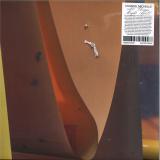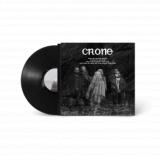
Leviathan Whispers is an album of longings, laments, deliriums and drones, savage and sublime. Within are breaths, hums and bone songs for shadows and fl ames to dance to. Tim Hill is an inspirational fi gure within the UK arts, jazz, noise and improv world. A shapeshifting maverick exploring Britain's diverse musical traditions, from rough music to industrial folk, free jazz to dub, post-punk to avant-rock, incorporating ambient electronics, hymns and noise. Having worked with pioneering arts company Welfare State International, Tim’s performed inside Stonehenge, on the back of trucks at Notting Hill Carnival, leading giants through the streets of London, Dublin and Galway, at Olympic Torch events, celebratory feasts and leading humanist funerals. Tim is also festival director for The Sound of the Streets, a charity promoting outdoor music and musical director of the Wye Valley River Festival where he helps street bands across the country including The Big Noise in Taunton and Horns of Plenty in Oxford.
Leviathan Whispers is a spectral, contemplative selection of Tim's recorded work, including material created for art installations, outdoor projects, solo performances and personal meditations. Inspired by landscape and the eternal pull of Blake's Albion, baritone, alto and soprano saxophones are mixed with tape loops, old synths, recycled live recordings, woodwinds and reeds. Other sounds are processed by Colin Potter (Nurse With Wound) and drone artist Jonathan Coleclough. The album artwork and accompanying videos feature sound sculptures by Michael Fairfax (Royal Society of Sculptors) alongside unsettling visuals by fi lm-maker and junk-alchemist David Young. "an amazing player - there's a weight to his music with a wonderfully dark edge" Corey Mwamba / BBC Radio 3 Fans of Colin Stetson, John Surman, Anna Von Hausswolff , William Basinski and La Monte Young will fi nd much to savour on this new 12" LP. LAUNCH PARTY: we're holding a special launch event with a live performance and talk by Tim Hill on Saturday, 15th November inside a beautiful Victorian chapel beneath Royal Berks Hospital, Reading.
quête:drone
DarkSonicTales is a project by Rolf Gisler and his eponymous album his first for Hallow Ground. Having been granted an artist residency by the label in a 300 year-old farm house in the Swiss countryside in autumn 2019, the Lucerne-based musician and sound artist explored the peculiar sonic environment of the building and its surroundings through the use of field recordings, modular synthesizers, guitar, bass, kalimbas, a singing saw as well as self-built instruments. "DarkSonicTales" starts with kalimba sounds and field recordings, setting the stage for "Sonic Darkness"- a self-referential spoken word piece whose sinister jazz-like sound calls to mind Bohren & der Club of Gore. The following "Spring Feelings" contrasts insect sounds with harsh noise elements, elegiac drones and a throbbing rhythm. It's not quite what you'd expect from a piece with such a title, but the stories that Gisler tells throughout the record are more concerned with uncovering the hidden histories underneath what meets the eyes than (re-)creating idylls. The nine minute-long "I Still Believe" further underlines that by bringing together glistening synthesizer notes with industrial-like drones and field recordings that give it a palpable effect before Gisler unexpectedly changes course and quite literally bursts into song. Towards the end of "DarkSonicTales," the music becomes notably more minimalistic. Gisler experiments with the dynamics of modular drones on "Kind of Restless," juxtaposing birdsong and ominous electronic noises on "Best Buddies" before a mid-tempo beat emerges, making the record close on a decidedly hopeful note. These dark sonic tales, they have a happy ending. "DarkSonicTales" is an organic album in more than one sense of the word. Reacting to and reflecting the world around him as well as expressing his inner one, Gisler gives the sounds at the core of his multifaceted compositions space and lets them breathe. Working along stark contrasts and with surprising twists, he also shines a light on the atmospheric and emotional ambiguity of the world he encountered during his solitary artist residency-unearthing the hidden layers underneath what is perceivable.
CAF? is really happy to welcome a new member in their family. Active in various projects since 1993(!), Héloïse is the latest solo project of Zurich-based singer and musician Sabina Leone. With her second EP “Rubbish Rubbish”, she explores endless musical possibilities with healthy greed. Her music builds on multiple layers, combining loops to merge voices and drums into hypnotic rhythms. Genuine, generous, gritty, Rubbish Rubbish is an adventurous journey through different genres: expect weird dub, Casio pop anthem, droney laments, and drums extravaganzas.
- Washing Machine
- One, Now
- No One
- No Where
- No One Is Free
- Until All Are Free
Unfolding ist Jessica Moss' meditativstes und klagendstes Soloalbum und vielleicht das erste in der jahrzehntelangen Diskografie der Violinistin und Komponistin aus Montreal, das man zu Recht als Ambient bezeichnen kann. Die ehemalige Mitglied von Silver Mt Zion und Black Ox Orkestar schöpft aus Postklassik, Drone, Minimalismus, Industrial/Metal, Power Electronics, Klezmer und anderen Folk-Traditionen. Es handelt sich hierbei nicht um abstrakte Ambient-Musik; vielschichtige Violinenmelodien, elektroakustische Bearbeitungen, intermittierende Stimmen und Percussion von Tony Buck, dem Schlagzeuger von The Necks, bringen zutiefst emotionale, genreübergreifende Kompositionen hervor, die von einem Geist der Suche und Beschwörung geleitet sind und sich in einer vorherrschenden Atmosphäre von Beschwörung und trauernder Zurückhaltung entfalten. Die Untrennbarkeit von Persönlichem und Politischem hat sich für Moss in den letzten zwei Jahren immer stärker herauskristallisiert. Als Kernmitglied der Montrealer Sektion von Musicians For Palestine hat sie mehrere Benefizkonzerte mitorganisiert und gespielt und im Frühjahr 2024 das Soloalbum For UNRWA veröffentlicht (das über 800 Unterstützer fand und Tausende von Dollar einbrachte). Später im selben Jahr zerbrach ihre langjährige Fernbeziehung aufgrund politischer Differenzen. In enger Zusammenarbeit mit dem Produzenten Radwan Ghazi Moumneh (Jerusalem In My Heart) entstanden ,Unfolding" in den letzten zwölf Monaten, dem zweiten Jahr des Völkermords in Palästina, als direkte Reaktion auf unser kollektives Miterleben, unsere kollektive Trauer, als Portal zur kollektiven Trauer, als Suchscheinwerfer durch unsere inneren Wettersysteme, auf der Suche nach einander in der Dunkelheit. Moss bewegte sich bereits in Richtung einer erhöhten Fragilität und einem tiefen Zuhören, ihre Musik wurde zunehmend langatmig und zeremoniell. Trotz der stark gesunkenen finanziellen Rentabilität von Tourneen wurde ihre Hingabe, Raum zu schaffen, Verflechtungen herzustellen und eine Verbindung zu einem intimen Live-Publikum aufzubauen, zu ihrem kreativen Leitstern, ihre Solo-Praxis wurde durch ihr Engagement und die Kommunikation in diesen Räumen geprägt. Die jüngsten politischen und persönlichen Umwälzungen haben diese ritualisierten, reparativen musikalischen Prozesse nur noch verstärkt. Die beiden langen Stücke auf der ersten Seite von Unfolding verkörpern diese Sensibilität. ,Washing Machine" verwebt Schichten von Streicherdrones und Filigranarbeit, sanft verzerrt durch Verzerrerpedale und Verstärkung, wobei unentzifferbare, ausgeblasene Sprechstimmen den Mix zeitweise als fragmentarische Palimpseste verhüllter Rezitationen und unbeschreiblicher Gefühle umhüllen. Der Ursprung des Stücks liegt in einer Telefonaufnahme einer europäischen Waschmaschine, die Moss aufnahm, als sie neben ihr saß, mit gebrochenem Herzen auf dem Badezimmerboden, und Trost fand, indem sie eine Melodie zu den mechanischen Obertönen der Waschmaschine summte, die ihren Zyklus durchlief. Das Herzstück des Albums, ,One, Now", beginnt als zarte Anrufung mit Basspuls, Glockenspiel und Glocken, gezupften Saiten und traurigen Lead-Violinenlinien, die von jüdischen und arabischen Modi beeinflusst sind. Umgebungsgeräusche, Feldaufnahmen und wortlose Gesänge werden hinzugefügt, während sich Violinenmelodien überlagern und zu einer hypnotisierenden Drone-Landschaft verschmelzen: eine halb improvisierte, lebendige Komposition, die durch Tony Bucks pinselstrichartiges Schlagzeugspiel und Moumnehs ,Schrei in die Leere" am Ende noch weiter belebt wird. Die zweite Seite ist ein vierteiliges Werk mit dem Titel ,no one / no where / no one is free / until all are free", das sich durch Umgebungsgeräusche, elegische postklassische Streicher und verzerrte harmonische Drones zu einem Höhepunkt aus liturgischer Orgel, rituellen Glocken und schimmernden elektronischen Spuren entwickelt, der die Bühne bereitet für den letzten Song des Albums: die erschütternde Chor-Komposition ,until all are free", eine weltliche Hymne, die aus Jessicas mehrspurigen Gesangsaufnahmen besteht (die sie aber gerne mit anderen im Konzert singen würde). Unfolding ist ,einem freien Palästina in unserer Lebenszeit" gewidmet. Danke fürs Zuhören.
- A1: Greenteeth
- A2: Fen Creatures
- A3: War Ditches
- B1: The Promise
- B2: Fable Of Beauty
- B3: Another Eden
- B4: Descent
Cambridge’s acclaimed psych-folk quintet Fuzzy Lights return with their fifth album ‘Fen Creatures’. Following on from 2021’s critically lauded ‘Burials’ the band have created their most conceptually focussed work to date – a mediation on environmental crises that uses the folklore and history of East Anglia as a lens to examine humanity’s fractured relationship with the natural world.
The album operates across multiple historical timelines, from Iron Age hill forts to medieval plague houses, from Byron's Romantic-era environmental warnings to the immediate threat of rising sea levels, creating a temporal tapestry that weaves ancient stories with contemporary concerns.
Musically, the quintet, Rachel Watkins (vocals/violin), Xavier Watkins (guitar/electronics), Chris Rogers (guitar), Daniel Carney (bass), and Mark Blay (drums), have pushed deeper into experimental drone territories while maintaining the crystalline folk sensibilities that have become their signature.
Lead track ‘Greenteeth transforms the traditional cautionary tale of Jenny Greenteeth, the water spirit who lures children to their deaths. "When I read this story to my daughter, she was instantly drawn into it," Watkins notes. "There's something timeless about these tales and the way they speak to fundamental fears and connections that span generations."
Elsewhere, 'War Ditches' imagines the Iron Age dead of a Cambridge hill fort keeping watch over the land, their vigil ending as modern people lose connection with the earth. 'The Promise' creates an imaginary encounter with the ghosts of Landbeach village across multiple eras, connecting the 1665 plague with our recent pandemic experience through shared narratives of community resilience and loss.
Critics praised ‘Burials’ as "way beyond folk and folk in essence all at once" (Backseat Mafia) and "folk-rock looking back squarely at the early 1970s" (Financial Times), and 'Fen Creatures' promises to cement Fuzzy Lights' reputation as one of Britain's most vital contemporary folk acts. The album positions them firmly within the lineage of artists like Fairport Convention, Trees, and Comus who understood that engaging with tradition isn't nostalgic escapism, but a way of accessing older wisdoms about how to live in the world.
‘Burials’ press:
“...the musical battle between the fuzzy and the light makes Fuzzy Lights special.” MOJO ★★★★
“...a simmering, sinister undercurrent which often explodes with apocalyptic fervour.” SHINDIG ★★★★
“...subverting genre expectations and folk melodies.” FINANCIAL TIMES ★★★★
“Way beyond folk and folk in essence all at once, it's a record that’ll bring you much reward.” BACKSEATMAFIA - 8.3/10
“a genuine delight....a stirring and unsettling listen, goosebumps adding to the pleasure of timeless music played well, with perfect precision. Don’t leave it another eight years, eh?” FOLK RADIO
“...re-inventing the folk-rock playbook and dragging it screaming through an array of influences...Fuzzy Lights’ most unique, reflective and ambitious record to date” FOR THE RABBITS
As trans-Atlantic alchemists pulling from a shared dialectic that somehow encompassed both postmodern deconstructionist tendencies and a delightfully subversive sense of poptimism, it’s easy to see how David Cunningham and Peter Gordon immediately hit it off upon initially meeting each other back in the late-1970s at the height of their youthful transgressions. Having initially worked together on the second Flying Lizards’ LP fourth wall, with its ingenious fusion of dismantled rhythms and rearranged melodies juxtaposed against the slyly sultry singing of Snatch’s Patti Palladin— with Gordon adding a few sprinkles of mischievous sax in the mix— it’s no wonder the collaboration would lead to further musical adventures.
Which leads us directly to the genesis of The Yellow Box. Embarking on a collaborative exercise in the structural repurposing of music as untethered puzzle pieces in need of rearrangement with no predetermined outcomes, the duo gave birth to a project that would see them move through both time and recording studios across Europe, taking nearly two years from 1981-1983 to complete. Enlisting the great Anton Fier on drums from The Feelies/Lounge Lizards nexus and John Greaves on bass from Henry Cow/Soft Heap lore to round out their dueling creative counterparts, the album would be something of a lost treasure until its eventual release on Cunningham’s Piano imprint in 1996.
Cinematic in scope, and filled with drifting drones, beautiful counter-melodies, eery minimalism, Kraftwerkian synthesizers, looped voices, skronky interludes, and other shifting undercurrents of sound, it was an album that utilized both a diverse array of expressive languages, as well as early sampling techniques and prepared instruments, well before most people were thinking in such expansive, integrated terms at the dawn of the 80’s. But such is life at the vanguard of new music. And one of the reasons that it likely sat on the shelf for so long before finally being released well over a decade later. Like a sparser, less groove-oriented version of My Life in the Bush of Ghosts, or a more radical take on the experimental work of Can’s Holger Czukay, The Yellow Box stands at the crossroads of time and technology, fusing multiple strands of musical thought and compositional techniques into a disjointed whole that somehow still comes off as a conceptually complete record.
Now, here it is again, over 40 years later, with perhaps even more historical resonance than it had before, remade and remodeled just waiting to be rediscovered again.
Soft Centre is the new album by Iko Chérie, the solo project of French-born, London-based multiinstrumentalist Marie Merlet. She blends dub-inflected textures, pop tinged vocals, reverbdrenched guitars, Casio drones, and warm experimental noises - creating her own intimate, fragile sound. Self-produced and largely performed by Merlet, the album grew from an introspective process, with many sketches recorded in transit between tours. The result is a deeply personal work, balancing light and dark in a Lynchian dream-pop haze. Songs such as We Smoke That Peace Pipe and Bilbao shimmer between vulnerability and resilience, while the single Ghosted Ghosters of the Holy G captures the immediacy of a one-take dub bass. Some pieces retain the quality of improvised snapshots (Intelligent Women, Half a Metaphor) while others reveal her meticulous production process and songwriting craft (Tears in the Sea, Luciférine). Merlet defines Soft Centre as alive in radical tenderness, unguarded, open, and vivid. Influenced by Clarice Lispector"s prose, Diane di Prima"s poetry and Rachel Carson"s environmentalist writing, as well as Marie"s fascination with a vintage Roland Space Echo, the album is an invitation to connection that she describes as "... hopefully a meditation into healing." A versatile musician trained in classical piano, jazz, and electroacoustic composition, Merlet has long moved between different worlds of sound. She has worked with Laetitia Sadier in Monade, performs with Gina Birch (The Raincoats), Malphino, Yama Warashi, and several other groups. She recently appeared as guest singer on the latest Stereolab album. Her debut solo LP, Dreaming On (Elefant Records, 2015), revealed her singular melodic instincts; with Soft Centre she ventures further inward, shaping her own distinctive voice in experimental pop.
Léo Dupleix return to Black Truffle with Round Sky, following the enchanting Resonant Trees (BT119). The composer here performs on analogue synthesizer, harpsichord and spinet as one member of Asterales, a group that brings together four important figures in the international community of musicians working with just intonation: Dupleix, Jon Heilbron (double bass), Rebecca Lane (quarter-tone flute) and Frederik Rasten (guitars). The quartet perform three recent pieces by Dupleix, each of which is like a different view on the same landscape of unruffled calm, where the unique harmonic events made possible by just intonation flicker across melodies and harmonies like light on the surface of water.
The first side is dedicated to ‘Poème d’air’, composed while Dupleix was immersed in the music of 14thcentury ars nova composer-poet Guillaume de Machaut. A sustained study of the ‘sonic possibilities of low-pitched sounds in just intonation’, it begins with a long, rumbling pitch from Heilbron’s bass, soon joined by the organ-like tones of the composer on synthesizer. The piece is made up of cycling sequences of chords, each of which is repeated for several minutes before the music either freezes on a single harmony or silently pauses before the next episode begins. These structures are initially dominated by the bass and synthesizer, with Lane’s pure vibrato-less flute tone and Rasten picked harmonics adding flashes of colour. As the piece develops, flute and guitar become more prominent and the bass climbs to higher registers. The development culminates in a stunning episode around fifteen minutes in where the texture thins out, casting a spotlight on a melodic figure exploiting the uncanny sound of Lane’s quarter-tone flute.
On the second side we are treated to two briefer pieces, closer to the sound of Resonant Trees as they return harpsichord and spinet to the foreground. ‘Ghosts’ centres on a harpsichord melody that slowly expands as it repeats, growing from a haunting six-note cell to a flowing succession of notes whose shape become increasingly difficult to perceive. Alongside this melodic development, an increasingly lush accompaniment grows, with long tones from bass, flute, e-bowed guitar and synthesizer holding notes picked out the harpsichord melody in a swaying harmonic cloud. Dupleix notes that the concluding ‘Round Sky’ was written in the countryside in spring, a circumstance that seems far from irrelevant to the impression the piece makes when its euphonous spinet arpeggios emerge from a gentle synthesizer drone like a flower from a bud. Performed as a duo with Rasten, with both instrumentalists also singing, this title piece exemplifies what makes Dupleix’s music so unique: grounded in a rigorous application of just intonation principles yet as open as Harold Budd or Andrew Chalk to an uncomplicated, intuitive experience of beauty.
Anushka Chkheidze + Robert Lippok’s »Uncontrollable Thoughts« on Morr Music is the duo’s debut joint release. The Netherlands-based Georgian composer and the German sound artist from Berlin first met in 2019 in the context of a workshop programme that took place in Tbilisi, and later worked with Eto Gelashvili, Hayk Karoyi, and Lillevan on the massive »Glacier Music II« music and book project, released in 2021. This led them to engage in a less conceptually driven form of musicking and real-time composition that corresponds with their respective environments. They draw on traditions such as minimal music or late 1990s and early 2000s electronica to integrate subtle beats with elegiac organ drones, playful melodies with lush textures. The first document of an ever-shifting intergenerational dialogue, »Uncontrollable Thoughts« is a product of mutual listening outside time.
Though Chkheidze and Lippok had access to professional studios, they chose to rent a simple rehearsal space, equipped with only the bare essentials—bass and guitar amps as well as a small PA—to maintain immediacy in their working process. The music they made together corresponded to and drew on the respective possibilities and shortcomings of this studio, much like their collaboration in general is characterised by the care with which they approach each other's talents and ideas. While both had loosely defined roles—Chkheidze was responsible for the free-flowing beat programming and the evocative distortion came courtesy of Lippok, for example—they individually contributed in different ways to their joint process, which is as free of hierarchies as it is limitless. Hence, the duo’s focus on spontaneity and out-of-the-moment emergence makes them organically move beyond tried and tested conventions, resulting in music that seems to suspend time altogether.
When the first chimes on »Bird Song« announce a piece that sets rattling kickdrums against a backdrop of layered drones and rhizomatically entangled melodic elements, it becomes clear why »Uncontrollable Thoughts« carries this title: The album follows the constant detours of the subconscious of its makers, letting them explore moments of ecstasy such as on »Rainbow,« melancholy with »Field,« and the interplay of suspense and release through the ten-minute-long title track. But the different pieces also tie into one aother in various ways. The dirge-like organ drones on which »Rainbow Road« ends reappear in the beginning of »Uncontrollable Thoughts,« much like Chkheidze’s gentle yet emphatic piano chords on »Field« seem to provide the starting point from which the artist develops the striking motifs of the final piece »Opening«, whose title itself suggests that the record as a whole can and should be enjoyed as a loop. All this creates a unique, idiosyncratic temporal logic.
While there is much that sets Chkheidze and Lippok apart as solo artists, the major shared leitmotif in their respective bodies of work is the sonic engagement with space. »Uncontrollable Thoughts« is hence best understood as an extension of this practice; as an album that maps the geographies of their minds in motion, tracing musical movements as they melt into each other.
Downwards present Alexander Tucker in metamorphosis from psych folk to techgnostic bard, aided by notable guests – Justin K Broadrick, Regis, Phew, Karl D’Silva, JJOWDY, and Elvin Brandhi – in a quest for disordered convention and new thrills. One up to Tucker’s outings for Alter and The Tapeworm, and spiritual successor to his »Nonexistant« trio on Downwards, »Clear Vortex Chamber« is an enigmatic take on the brownfield edgelands where the eldritch intersects electronic heck. Decades of work spread between hardcore punk, psych rock, folk, and drone — including work with Stephen O’Malley (Ginnungap) and Neil Campbell (Astral Social Club, ESP Kinetic) — feed forward into this album’s unsteady machine rhythms and cranky junkyard atonalities, where Tucker panel-beats aspects of his previous sound with a newfound industrial thrust and cyber-punky lust that suits him dead well.
A crafty example of how to mutate without losing sight of yourself, the album’s eight parts feel like a cyborg patching itself into modernity. On opener »Udug« Tucker’s signature falsetto peals from a A Scanner Darkly-style scramble suit of stereo-strobing electronics, setting a melodramatic, neo-gothic tension that riddles the album thru the knotted, fractured industrial dancehall bullishness of »Mallets« with Yeah You’s feral gob Elvin Brandhi, via a pair of standout »Fedbck« parts with Tucker’s personal idol, Justin K Broadrick (Godflesh, Jesu, and the rest), featuring the Brum deity’s claw-handed riffs and howl on the first, and smeared with Karl D’Silva’s brass in its noctilucent second part.
Regis also proves a staunch foil for the album’s most robust, club-ready cut »Zona«, hammered out from buzzing metallic drums and monotone bass drones, and pitting his severed vox against Tucker’s own androgynous harmonies to recall aspects of The Ephemeron Loop via British Murder Boys, whilst scene legend, Can and Ryuichi Sakamoto spar Phew (aka Aunt Sally) ideally tempers the flow in a relatively soothing »Sansu«, sharing more cyber-romantic, recombinant sentiments with the channelling of Robert Wyatt gone Funk Bruxaria on »Folded«.
In between the folds of ceremony and commonality lies a perennial spring of musical expression.
A statement along the time continuum, or a testament to the resilient resourcefulness embedded in that truth, forms the philosophical approach of this album – the first outing of Dídac.
Studying an extensive archive of instruments, artifacts, and field recordings at the Musée d’ethnographie de Genève—a space steeped in folkloric gesture – Dídac encountered a cosmos of liturgical music and folk song. Anchored in reverance for tradition and transformation alike, this album navigates the old-world Mediterranean lore through a post-modern ambient lens, threading drone, gentle rhythm, electroacoustic textures and the crude tactility of archival material into one woven tapestry.
Under the guidance of Dr. Madeleine Leclair, Dídac was invited to work within one of the world’s most extensive ethno- musicological archives—L’AIMP. In the saturated basements and tape-lined backrooms of the museum, he submerged himself in the sounds of ritual and rural life: wax cylinders from the Eastern Mediterranean, tapes of liturgical hymn, the worn edges of communal song.
In a makeshift studio on the fourth floor of the museum, he sifted through the hours of material he collected, gradually discovering that the archive was no static source – It did not dictate; rather, it served as a companion—offering not answers, but questions. Not a beaten track, but a cluster of sonic clues and riddles. Samples do appear occasionally, tenderly interwoven into the dialogue of the songs. In Dídac’s self-titled debut, the past is not worn as ornament or kitsch; it is listened to and responded to. The museum, its archives, and the visit to Geneva became a foundational culisse of sorts, igniting a myriad of rough cuts and improvisational outtakes.
Dídac, or Diego Ocejo Muñoz, was born in Madrid in 1994 to a family of both Catalan and Castilian origin.
Brought up in a religious household, the influence of the Catholic Church innately shaped the social fabric, schooling and daily life. This lingering dominance led the adolescent Diego into a path of rejection of everything sacramental, promptly resorting to subversion in the shape of grafitti, skateboarding and underground music. Only later in life, after a rigorous venture as an acid and electro producer, the Church re-emerged before him in new light, invoking a deep fascination for its mysticism, iconography and choral tradition.
Spain in general and Catalonia in particular, has long served as a crossroads of the eastern–western Mediterranean continuum, with many of its cultures sharing aspects of way of life and ceremony. At the MEG, Diego found himself puzzled with this realization, resulting in a sonic amalgamation that reaches farther away from the rugged mountains of Catalonia than you might perceive at first encounter.
The deeply embedded memory of rite and public ceremony, religious hymn and landscape—sieved through the undercurrent of personal re-emergence, forms the emotional topography of this album. The record does not trace this landscape; it inhabits it. Its repetitive mysticism and ambient, wide-eyed gaze could possibly evoke (perhaps redundant) comparisons to artists such as Dimitris Petsetakis, or Popol Vuh’s late 70’s cinema scores.
The delicate lines between the sacred and the secular – between memory and re-invention – serve as a cipher to understanding this album in its entirety. Titles like Malpàs Mines or Pantocrator’s Portal Outro nudge toward a folkloric and devotional bedrock—places where labor and spirituality coexist, where names preserve both dust and veneration.
Nevertheless, this is far from mere nostalgia. It is a reclamation — singing alongside the spirits of the past, nurturing what still hums beneath the soil. It is an intimate reflection on tradition, rebellion, adolescence, ceremony and fantasy – a pastoral contemplation on what once was and what is to be.
- A1: Neon Pulse
- A2: Rapture In Blue W/ Cecile Believe
- A3: Haze W/ Ellie
- A4: A Silent Shadow W/ Bdrmm
- B1: New Life W/ Yunè Pinku
- B2: Greasy Off The Racing Line W/ Alison Mosshart
- B3: Until The Moon Starts Shaking
- C1: The Ghost Of Her Smile W/ Julie Dawson
- C2: Disturb Me W/ Yeule
- C3: In Keeping (Soon We'll Be Dust) W/ Walter Schreifels
- C4: Tremor
- D1: A Memory Wrapped In Paper And Smoke
- D2: I Feel You W/ Art School Girlfriend
Black Vinyl[27,94 €]
Tremor erscheint zu einem Zeitpunkt, an dem Averys Arbeitspensum für Außenstehende kolossal erscheint. Als Produzent, DJ, Musiker und Remixer, der ständig mit anderen zusammenarbeitet, hat er kürzlich DRONE:NODRONE von The Cure neu interpretiert, wofür er allgemeine Anerkennung erhielt. Seine Arbeit als eines von drei Mitgliedern von Demise of Love (eine Gruppe, die gemeinsam mit Ghost Culture und Working Men’s Club gegründet wurde) liefert derzeit den Soundtrack für die verschwommenen, undurchsichtigen Ränder der Tanzflächen auf der ganzen Welt. Das Album ist Averys erste Veröffentlichung bei Domino.
Die Platte ist voller unerwarteter Kollaborationen, darunter: Yeule, Art School Girlfriend, Ryan von bdrmm, Yune Pinku, Cécile Believe, Walter Schreifels von Rival Schools, Julie von New Dad und Alison Mosshart. „Tremor” wurde teilweise von David Wrench und teilweise vom legendären Alan Moulder gemischt. Es ist ein Breitwand-Album, auf dem sich Daniel mehr denn je auf Instrumentierung stützt und diese Klänge mit seiner charakteristischen, dunklen, techno-ähnlichen Produktion ergänzt. Es gibt wunderschöne melodische Parts, große elektronische Hits, härtere Grunge-Parts und wunderschöne Ambient-Momente, die einen wieder zur Ruhe kommen lassen.
- Dyret" 23 Bud
- Schizopen
- Disiplin
- Rosemalt
- Dissonsans
- Så Nært
- Påfugl & Psykopat
- Uvf
- For Min Skyld
- Ave
Dissonans marks a new chapter in a longer story and is the second album in an announced trilogy, following last year's Norwegian Grammy-nominated Resonans. For those who have been following Seigmen, the first thing they might notice about Dissonans is the album cover. Where their earlier covers have been simple, symmetrical, and minimalist, Dissonans instead offers a stripped-down, almost punk-like aesthetic. And, as the title suggests, this album is not what you might usually expect - even though the sound is still unmistakably Seigmen to the avid listener. The album's ten tracks range from majestic, drone-like sounds made on homemade equipment to high-tempo songs with drum riffs borrowed from a 35-year-old demo. It even leads the band into uncharted territory with the airy ballad Så Nært, which also serves as the third and final single ahead of the album release. All in all, Dissonans is a new album from a band that has, in a remarkable way, rediscovered fresh energy, creativity, and playfulness many years after once being Norway's leading rock band.
For more than thirty years, Arnaud Fournier has been shaping the landscape of the French expe-rimental scene. First within the duo HINT, a singular fusion of experimental, noise and indie music, he released three studio albums in the late 1990s and has continued to perform regularly ever since, including a live album with EZ3kiel in 2009. With La Phaze (1999), Dead Hippies (2013) and later Atonalist (2017), he has always instinctively sought to cross genres and stage dialogues bet-ween extremes. In 2025, with 100% Black Puzzle, he delivers his very first album under his own name, a work where saturated guitars, saxophones, trumpet, hypnotic loops and vast layers of drone meet. Mixed and mastered by Olivier "Cali" Fournier at Studioscope in Angers, 100% Black Puzzle gathers familiar faces around it. Its title resonates as an intentional echo, directly referencing 100% White Puzzle, HINT's debut album. Thirty years on, Arnaud Fournier rediscovers the same spirit of absolute freedom across these five tracks: no format constraints, no compromise on length. The title track, an eight-minute instrumental, sets the tone - a raw, urgent gesture, cap-tured in the moment. In his own words, it was about "finding myself once more in that first-song state of mind, without any confinement." With 100% Black Puzzle, Arnaud Fournier fully embraces signing the work under his own name. No pseudonym, no mask, but an unveiling: a profoundly intimate record, steeped in family and friendship, where noise and beauty constantly collide and entwine. Thirty years after shaking up the French indie scene with HINT, he delivers a body of work that is at once retrospective and forward-looking - a black puzzle that resounds like a rebirth. And what better way to "close the circle" than by heading back on tour?
Amsterdam label Spectral Bounce recruits French club stalwart Chris Carrier for SPEC06 — Perfect Encounter. Active since 1994, the Parisian artist has released a wellspring of records on Robsoul, Slapfunk and his own Sound Carrier recordings, parallel to his longtime career as a DJ. Characterised by swirling delays and progressive arrangements, Perfect Encounter shows the producer exploring the mesmeric corners of tech house, ideally fitted to the Spectral Bounce aesthetic.
Opener “XLR8” starts with rolling toms that make way for fluid, modulated tones; each bar ebbs and flows to the sweeping synths set in motion by Carrier. Processed with a multitude of delays, rhythmic FX boldly swish above the drums, making for an immersive soundstage. Second track “Light Side” retains the billowing echoes but moves more nimbly, cutting things back to make for a spacious and breezy number. Its croaking synths hop around the stereo field, accompanied by tight percussion and a walking bassline.
The hallucinogenic “Third Moon” sees Carrier step further into trance-inducing territory. The track’s pulsing, syncopated bass note thrums underneath an arpeggio that evolves into a heady prismatic drone. While the chugging beat is ever-present, melodic refrains rise up and evaporate like wisps of vapour, alongside a vocal that fades away as quickly as it appears. The EP’s eponymous “Perfect Encounter” dials up the tension and closes the record with a mysterious touch. Speedy 16th note patterns propel the beat, creating shifty rhythms that rattle and hiss. A rasping, gelatinous synth and squeaky detuned tones resemble extraterrestrial signals — alien morse code for an enraptured dancefloor.
Credits:
The Sator Arepo, or Sator Square, is an ancient word puzzle comprising five palindromes that's etched on various historical sites throughout the Western world. Its origins are unknown, but the square has long been thought to hold magical properties, used as a charm against illness and evil, to cure insanity or to determine whether someone was guilty of witchcraft. Self-styled "punk ethnomusicologist", acoustician and musician Julien Hairon uses this mystical symbol as the starting point for his debut Judgitzu album in an attempt to reconnect with his Celtic heritage, exploring how its hallowed messages might harmonize with contemporary Tanzanian dance music.Hairon has been traveling across the world for over a decade, collecting field recordings from countries such as Indonesia, Australia, Cambodia, China and Bangladesh, and presenting them on his Les Cartes Postales Sonores label, re-issuing any curious cassettes and CDs he came across on the PetPets' TAPES imprint. It was during this time that he became fascinated by rituals that involved spirits, prompting him to examine his own ancestry when he returned to Brittany. "Many artifacts in the landscape remain," Hairon explains, "and the power of spirits is still palpable." He represents this Celtic mysticism on 'Sator Arepo' with murky drones and magickal synth tones, using xenharmonic scales (tuning outside of standard 12-tone equal temperament) that reach back to the ancient world. These sounds are augmented with fast-paced, sci-fi rhythms informed by his time in Tanzania; "Singeli has contaminated me," admits the producer.The most astonishing example of this is 'Miracle', a thrusting soundsystem experiment that layers serpentine, bagpipe-esque electronic wails over extravagant clusters of blocky percussion. Driven by the frenetic 175BPM pulse that echoes through the streets of Dar Es Salaam - popularized globally by forward-thinking producers like Sisso, Duke and Jay Mitta - Hairon opens up a rare conversation, seeking to draw parallels between today's most urgent dance forms and the archaic rituals of antiquity. On 'Vitalimetre', Hairon drives his sonic palette into the red, harmonizing with Dutch hardstyle and gabber, and splaying distorted drones over maddeningly blown-out kicks and ratcheting percussion. 'L'or Des Fous' takes a more meditative route, prioritizing Hairon's eccentric tonality with expressive sheets of pitch-warped sound that ghost walk across energized, rattling beats.If you heard Hairon's last Judgitzu release 'Umeme / Kelele', described by Boomkat as "one of 2019's deadliest dancefloor sessions," then you'll know how mindboggling this material can be. And with 'Sator Arepo', the French producer deepens his reach, grasping a world that we've almost forgotten and juxtaposing it with a landscape most of us barely comprehend.
An’archives presents Kagome Kagome, the first collaboration between France’s Delphine Dora and Japan’s Ayami Suzuki. Curious listeners might know Dora from the string of lovely, idiosyncratic albums she’s released over the past two decades, most recently for labels like Modern Love, Morc and Recital; she’s also worked with the likes of Michel Henritzi and Sophie Cooper. Suzuki’s performances, predominantly for voice, place her within a tradition of Japanese improvised music – see the music she’s made with artists such as Takashi Masubuchi, TOMO and Leo Okagawa – but her approach also takes in folk song, ambience and claustrophobic drone.
On Kagome Kagome, Dora and Suzuki play to their many strengths: a gentle, free-willed folksiness; long, aerated drone constructs; ghostly, time-warping explorations for voice. They met on Dora’s May 2024 tour of Japan, though they’d been in touch beforehand, with Dora proposing the collaboration to Suzuki, developed around “concepts of ‘otherworldliness’ and ‘impermanence’,” the latter says, “and explored the relationship between ‘the invisible’ and sound in Japanese culture – a common interest we share.”
They recorded across several days that month, with the sessions for Kagome Kagome taking place in Kanumi, in Tochigi prefecture, at a space named Center. “I was particularly looking forward to seeing Delphine encounter the vintage 104-year-old harmonium from Nippon Gakki Seizo Co. that had just been repaired at Center,” Suzuki recalls. “It was as if the harmonium had been waiting for Delphine to draw sound from it. I felt it was a beautiful relationship where they could guide each other.”
Indeed, there’s something channelled about the music that Dora and Suzuki made together in the session that constitutes Kagome Kagome. Dora’s harmonium might be the spine of the album, but Suzuki’s free- floating voice, and gaseous, muddied banks of electronics, wrap around the wheezing, ancient tonality of the harmonium beautifully – they, too, sound as though they were just waiting to be willed out of the daytime air. Their voices nestle together beautifully – “when we sang together in a tunnel,” Suzuki says, “there were times when we sang the exact same melody without planning. It happened so naturally that the boundaries between us became blurred.”
And that title? It’s drawn from a Japanese children’s song, and the song titles themselves constitute the song’s lyrics, in alternating Japanese (Romanized) and French language. Urban legend connects the song “Kagome Kagome” to the Nikko Toshogu Shrine, nearby Center, that Suzuki and Dora visited while they were in Kanumi. “The mysterious lyrics of ‘Kagome Kagome’ and its puzzle-like connection to Nikko Toshogu were a perfect fit for this mysterious album,” Suzuki reflects, “which I think has its own kind of puzzle-like elements.”
A deep album of prayer and magic, of divination and ritual, Kagome Kagome’s sense of serious play, its rich beauty, feels somehow dislocated from our time. If you’ve ever enjoyed the music of Nico, Kendra Smith, Charalambides, or other channelers of ghostly mystery, its eerie otherness will, somehow, feel oddly familiar.
Skin/Glove is the second LP by Belgian musician Mathieu Serruys, following the release of his B.A.A.D.M. debut On Germaine Dulac back in 2014. Compiled over the course of a fortnight, the record features material recorded over the past five years: creaks of ice buckling under heat, thick hums like nauseating headaches, plumes of evaporated organ hymns, frostbitten crackles of dying tape loops. These disparate sources are unified by the pervasive corrosion of pain and time, which presses into the surface of every sonic object. Melodies splinter under the strain of being pulled apart; drones tremble under the gathering gravity of fatigue; dissonances flicker like candles on the brink of extinguishment. Yet despite the emotional density of the material itself, the process of composition provides a route toward comprehending how these sounds and experiences are connected. Skin/Glove reads as a constellatory map of adversity and grief, beautifully coalesced through the cathartic distance of retrospect, haunted by the sibilant whispers of distinct memories in dialogue, latticed by lesions that fatefully and poignantly intersect.
- A1: Displacement (Kmru Rework) Feat Kmru
- A2: Reprisal (Penelope Trappes Rework) Feat Penelope Trappes
- A3: Empire Systems (Kevin Richard Martin Rework - Iced Mix) Feat Kevin Richard Martin
- B1: Ausencia (Mabe Fratti Hiatus Rework) Mabe Fratti
- B2: Persistence (Abul Mogard Rework)Feat Abul Mogard
- B3: Secretly Wishing For Rain (William Basinski & Gary Thomas Wright Rework)
A decade after its release, A Fragile Geography returns transformed. This limited edition cassette accompanies the AFG10 anniversary reissue, offering an inspired re-envisioning of Rafael Anton Irisarri’s landmark compositions. Reworks presents distinctive readings of these pieces, with each artist leaving their personal mark on the material. The titles remain unchanged, with the sole exception of “Hiatus,” reborn here as “Ausencia.” Together, these reimaginings extend the emotional cartography of the album into new terrains.
KMRU reframes “Displacement” with expansive, glimmering layers that open into meditative ambient landscapes. Nairobi born and Berlin based, he is known for morphing field recordings into vivid aural experiences, often capturing the texture of footsteps, foliage, and distant city life and weaving them into contemplative soundscapes. In this version he introduces subtle new sounds, including stringlike synths that trace and heighten the piece’s emotional arc. The result invites close listening, offering enveloping tones where the organic and the synthetic gently collide and flow.
Penelope Trappes renders “Reprisal” as a voice-led invocation of the delicate and the intimate. Her wistful vocals bloom with fragile sorrow, rising over shimmering strands of strings to create a sound world at once sacred and shadowed. She is adept at channeling inherited grief into music that is transcendent and otherworldly. The interplay of her voice, the strings, and her use of space and depth draws those qualities into Irisarri’s orbit, imbuing “Reprisal” with the same spiritual weight and clarity that define her most powerful work.
Kevin Richard Martin (a.k.a. The Bug) transforms “Empire Systems” into a cavernous “Iced Mix,” driven by polyrhythmic double bass motifs and sculpted from subterranean pressure and negative space. Known for pushing sound to its physical limits, Martin brings the stark intensity of his dub and noise infused practice into Irisarri’s architecture. The track seethes with harmonic distortion and erupts in white noise rhythms, its brooding low end depth and icy reverberant textures amplifying the tension. Vulnerability and force are set in stark relief, as silences feel as heavy as the bursts of sound themselves. The result is a stark study in atmosphere, restraint and impact, reframed through Martin’s singular lens of sonic mass and low end intensity.
On Side B, Mabe Fratti opens with a cinematic, dreamlike, Lynchian reimagining of “Hiatus” in her native Spanish (“Ausencia”). She threads cello and voice so wondrously that her rendering feels at once hauntingly beautiful and disquieting. Emotionally charged melodies shift in unexpected directions, while her soft, intimate vocals hover above Irisarri’s brooding synth textures. Fratti’s gift for blending experimental and avant pop sensibilities with visceral, emotionally powerful expression shines resplendently here. She gives voice to Irisarri’s reflections on the passage of time and his growing desire to reconnect with his familial roots.
Abul Mogard stretches “Persistence” into a vast drone elegy. A master of patient sound sculpting, Mogard layers evolving waves of analog synths into a dense shroud that radiates its own internal light. Gradual surges of tone and subtle harmonic shifts emphasize the piece’s endurance and inevitability. Irisarri’s original composition, in Mogard's hands, becomes a rumination on time’s unrelenting flow. Melancholy and transcendence coexist in equal measure in this engulfing, cathartic rework.
William Basinski and Gary Thomas Wright close the cycle with a spectral version of “Secretly Wishing for Rain.” Basinski’s field recordings of Reseda rainfall and birdsong, which open and close the rework, add a personal touch and evoke the imagined sound of a grainy film reel flickering to life. The piece suspends Irisarri’s yearning for the Pacific Northwest, lodging it hazily between memory, place and an unreachable dream. It feels like a fading recollection, half forgotten and half felt. A final gesture that dissolves the album into vapor, leaving the listener adrift in its lingering afterglow.
Mastered with great care by Stephan Mathieu and featuring a remixed version of the original artwork by Daniel Castrejón, this edition refracts the language of the original through new prisms. Less a return than a passage, across time, across interpretation, into uncharted emotional realms.
Milky Clear Splatter Vinyl[48,11 €]
- A1: Sunset - Sonic Boom Remix (Ft/ Cian Ciaran)
- A2: There Is No Tomorrow - Resurrection Machine Remix
- A3: Fires In The Still Sea - Timothy J. Fairplay Remix
- B1: Blood - Hardway Bros Remix
- B2: No Place To Hide - Sonic Boom Remix
- B3: Sunset - Phil Kieran Remix
Following the reissue of their acclaimed debut album in July - Rocket Girl Records is proud to announce the second transmission in the triptych of releases from Welsh sonic alchemists, White Noise Sound (WNS): an exultant, transmutational remix album celebrating the band’s admired self-titled inaugural LP featuring Pete Kember/Sonic Boom, Cian Ciaran (Super Furry Animals), Phil Kieran (techno producer/DJ), Sean Johnson (Hardway Bros) and Timothy J Fairplay (Andrew Weatherall’s Scrutton Street Circle).
WNS’s cult 2010 self-titled debut saw the band channelling their own chimeric wall-of-sound - an incantation in layers of feedback, kosmische rhythms and celestial distortion. Now, that spell is rewritten.
Fold In Time - WNS1 Remixed sees an extraordinary line-up of artists from across the psychedelic and electronic spectrums dive deep into the band’s original recordings, dynamically reimagining the sonic architecture - unearthing new forms, hidden frequencies and arcane resonances.
Furthering the mythology of an album revered in underground circles - by peers and critics alike - these remixes push the band’s hypnotic, feedback-soaked sound into entirely new dimensions. Expect deep psych, repetitive beats, acid purity, expansive dubbed-out landscapes and spectral ambient drones. Tracks collapse and re-emerge, shimmering with new light.
“We wanted to honour the spirit of the original album while inviting some of our favourite artists to completely destroy it,” says White Noise Sound’s Adam Tovey.
- Swietenia Macrophylla
- Ceiba Pentandra
Die erste Zusammenarbeit zwischen dem japanischen Noise-Titan Masami Akita, alias Merzbow, dem legendären brasilianischen Schlagzeuger und Produzenten Iggor Cavalera und dem zukunftsorientierten italienischen Gitarristen und Sounddesigner Eraldo Bernocchi, ,Nocturnal Rainforest", schafft eine Klanglandschaft, die fast überwältigend dicht und verwirrend ist, aber niemals aggressiv oder chaotisch. Es ist ein vollständig immersives Erlebnis, das die jahrelange Arbeit des Trios im Bereich der extremen experimentellen Musik neu kontextualisiert, indem es sich auf Textur, Atmosphäre und sensorische Überlastung konzentriert. Der Noise selbst wird verwendet, um ein raffiniertes Maß an Konzentration zu provozieren; ,Nocturnal Rainforest" ist auf seine eigene Weise meditativ und umhüllt die Zuhörer mit Wellen von Verzerrungen, phantasmatischen, ungemessenen Rhythmen und verwirrenden, bearbeiteten Feldaufnahmen, aber es ist nicht für passives Hören gedacht. Entstanden durch eine Fusion von maßgeschneiderten Techniken, die das Trio seit Jahrzehnten entwickelt, existiert es in einer rohen und mystifizierenden Grenzzone zwischen dem organischen Bereich und der digitalen Welt - einem Ort, der zu vertraut ist, um ignoriert zu werden. Als einer der bekanntesten und produktivsten Noise-Künstler der Welt hat Akita vielbeachtete, genreprägende Alben auf so unterschiedlichen Labels wie Relapse, Important Records, Tzadik, Cold Spring und Soleilmoon veröffentlicht und mit einer Vielzahl von Künstlern zusammengearbeitet, von Keiji Haino und Mika Patton bis hin zu Melt-Banana und Boris. Seit 1979 hat er über 500 Merzbow-Alben veröffentlicht, darunter das Tape-Experiment ,Pornoise/1kg Vol.1" von 1984, das bahnbrechende Noise-Wall-Album ,Pulse Demon" von 1996 und das dubartige ,Merzbuddha" von 2005. Cavalera ist vor allem als Mitbegründer der brasilianischen Metal-Band Sepultura bekannt. Seit er die Band 2006 verlassen hat, beschäftigt er sich intensiv mit experimenteller Underground-Musik und arbeitet mit Künstlern wie Laima Leyton, Ninos Du Brasil, Raven Chacon, Linekraft, Petbrick, Pig Destroyer, Soulwax, Dwid Hellion, Shane Embury und anderen zusammen. Bernocchi begann seine Karriere in den 70er Jahren in verschiedenen Punkbands und wurde in den 80er Jahren bekannt, als er das postindustrielle Kollektiv Sigillum S mitbegründete und Kontakte knüpfte, die sich über die gesamte globale Underground-Szene erstreckten. Als aktives Mitglied der einflussreichen Illbient-Bewegung arbeitete er mit einigen der wichtigsten Persönlichkeiten des Genres wie Spectre, Bill Laswell und DJ Olive zusammen und nahm für WordSound sowie das Kult-Hip-Hop-Label Rawkus auf. Bernocchi hat seine innovativen Aktivitäten fortgesetzt, indem er als SIMM mit dem Grammy-Gewinner Grime MC Flowdan zusammengearbeitet und mit Harold Budd, Robin Guthrie von den Cocteau Twins, Gaudi Nils Petter Molvaer, Hoshiko Yamane und vielen anderen aufgenommen hat. ,Nocturnal Rainforest" ist das Ergebnis der kontinuierlichen musikalischen Entwicklung jedes einzelnen Künstlers, angetrieben von extremer Musik, aber gemildert durch Deep-Listening-Techniken, die Präsenz statt Distanzierung erwarten. Auf ,Swietnenia Macrophylla" vermitteln suggestive, feuchte Klanglandschaften zunächst ein prekäres Gefühl der Sicherheit, das an den Rändern durch schnurrende Schwingungen, die die Fauna des Dschungels imitieren, verschwimmt. Und diese Ruhe wird schnell durch perkussive, nebelhornartige Verzerrungen unterbrochen, die das Ausmaß der Vision des Trios verdeutlichen. Es handelt sich nicht nur um rohen Lärm, die raueren Elemente werden durch subtile Wellen wogender Atmosphäre und schwüle Low-End-Drones unterbrochen, bevor der Track in eine Symphonie computergenerierter Stottergeräusche übergeht. Es gibt ein ständiges Hin und Her zwischen organischen und künstlichen Klängen - bevor man sich an den DAW-verfälschten Lärm gewöhnt hat, trüben collagierte Bandübersteuerungen und zerschnittene Verstärkerbrummen die Atmosphäre, verwirren gezielt die Sinne und verschleiern die Quellen. Dieser Gedanke wird in ,Ceiba Pentandra" fortgesetzt, wenn das Trio den wimmelnden Klängen des Dschungels mit knurrenden, surrenden Elektronikklängen und dichten Interferenzen folgt. Was als Vogelgesang und Insektenchor beginnt, verwandelt sich in eine Wand aus ohrenbetäubender, transzendenter Vollspektrum-Textur, die sich wie ein langsam voranschreitender Sturm über einer schattigen Wildnis auftut.
Gun Metal Grey Marble Vinyl[36,35 €]
Perfect Location Records in partnership with the one and only Ear Candy Music is proud to announce 00-04, a compilation of early works by Bevan Smith aka Signer, New Zealand’s most prominent name in ambient electronica and dub techno.
Smith has been producing emotive chords, pop ambience, and thick dub-ospheres since before the turn of the century. His output is prolific, ranging from various solo monikers (Aspen, Introverted Dancefloor) and collaborations (Skallander, Feeling Flying) to unique projects (Touching the Void soundtrack, Isolated Dreams’ 24 EPs and counting). A rare artist with indie crossover appeal thanks to the 2004 Signer album The New Face of Smiling released on Carpark Records (Toro Y Moi, Beach House, Dan Deacon, Montag), Smith has played as a member of bands such as The Ruby Suns (Sub Pop), Over the Atlantic (Involve), and Glass Vaults (JUKBOXR).
Encompassing field recordings and evoking a cloudy coastal sky, 00-04 is a collection of mostly unheard material written in the early 2000s as Smith navigated the chaos and stress of living in London just after 9/11. A portion of this release may be recognisable to those familiar with the Involve catalog––“Drone Early,” for example, is an alternative version to the dub giant “1201A”––and to those acquainted with Signer’s 2002 Low Light Dreams (Carpark/Involve), an iconic album composed of processed guitar, dub-influenced bass, and synth drones; as if that doesn’t sound appealing enough, Low Light Dreams is home to “Building Memories Without You,” an unforgettably engulfing track featured on Fact Magazine’s 25 Best Dub Techno Tracks of All Time.
00-04 is a (re)issue both nostalgic and new, familiar yet unknown, fresh out of the archive. It possesses the Low Light Dreams aural palette while offering a carefully curated array of never before heard icy-cold moods, soothing minimalism, and shyly optimistic melodies, all glazed with recently finalized additions.
- A1: Cadux Plectere I
- A2: Lacinia Off Axis
- A3: Maris Stella Plectere Ii
- A4: Ere
- B1: Arborea Plectere Iii
- B2: Eve
- B3: Sidereus Plectere Iv
- B4: Lacinia In Axis
- C1: Veris Plectere V
- C2: Nova Pt I
- C3: Eve For String Orchestra
- C4: Nova Pt Ii
- D1: Matrix Plectere Vi
- D2: Maris Stella Plectere Vii
- D3: Lacinia Off Axis
- D4: Cycle Plectere Viii
Returning to Die Schachtel with his fourth full-length with the label, the Genoa born, Bologna based, guitarist and electroacoustic composer, Stefano Pilia, delivers “Lacinia”, a new, immersive cycle of compositions, delving deeper into the realm of metaphysical, spiritual, and divine meaning, weaving astounding arrangements of sonority from a palette of synths, strings, brass, organ, various electroacoustic instruments, and percussion. Resting at a refined intersection of the acoustic and electroacoustic, drone, and chamber music - overwhelmingly beautiful, delicate, and bold, - “Lacinia” stands as a high-water mark in Pilia’s already remarkable and forward-looking career.
Since its founding in Milan during the early years of the new millennium, Die Schachtel has occupied a singular place in the landscape of experimental music, issuing a carefully curated body of reissues and archival releases by historically significant figures and projects like Christina Kubisch, Luciano Cilio, Marino Zuccheri, Prima Materia, Claudio Rocchi, Lino Capra Vaccina, Gruppo di Improvvisazione Nuova Consonanza, Roland Kayn, and numerous others, balanced against bristling contemporary counterparts by the likes of Jim O'Rourke, Giovanni Di Domenico, Nicola Ratti, Luigi ArchettI, Valerio Tricoli, etc. Running like a spine through the label’s output is a deep dedication to the work of the Italian guitarist and electroacoustic composer Stefano Pilia. Now Die Schachtel returns with “Lacinia”, Pilia’s forth full-length with the label and their first release of 2024. Building on the ground of deeply personal engagement with metaphysical, spiritual, and divine meaning, explored within his previous LP with Die Schachtel, 2022’s “Spiralis Aurea”, “Lacinia” encounters the composer working in close calibration with various ensembles, including the Bologna based Ensemble Concordanze and Comunale di Bologna String Orchestra, weaving synths, strings, brass, organ, various electroacoustic instruments, and percussion into an astounding reconfiguration of immersive, contemporary minimalism that stands among Pilia’s most noteworthy releases to date. Issued by Die Schachtel in two special double vinyl editions and a CD edition, “Lacinia” features artwork by Bruno Stucchi/Dinamomilano, and is an absolute marvel that draws you in and doesn’t let go.
First emerging during the early 2000s, over the past two decades – via solo releases and numerous collations with artists like Oren Ambarchi, Valerio Tricoli, Alessandra Novaga, Z'EV, Andrea Belfi, David Grubbs, and numerous others - the Genoa born, Bologna based, guitarist and electroacoustic composer, Stefano Pilia has presented a singular voice within Italian experimental music, harnessing visceral energy and hands-on immediacy within delicately woven tapestries of sonority, each investigating the sculptural properties of sound and illuminating its relationship to space, memory, and the suspension of time. “Lacinia”, Pilia’s forth solo venture with Die Schachtel, encounters the composer reentering his longstanding practice of collaboration with various ensemble forms, including the Bologna based Ensemble Concordanze, for the albums central piece, “Lacinia Off Axis”, spinning stunning string confirmations by Pietro David Carami and Elena Maury on violin, Alessandro Savio on viola, and Mattia Cipolli on cello.
A new, important cycle of compositions by Pilia, “Lacinia” (meaning "lace" in Latin) builds upon the exploration of the metaphysical, spiritual, and divine dimensions through numbers, geometry, and the creation of tonal forms explored by 2022’s “Spiralis Aurea”, mirroring archetypal, immutable forms at the juncture of the abstract realm of mathematics and architectural structures in the physical world, expands the poetics and compositional ideas featured in its predecessor. Regraded by Pilia as both a series of individual compositions and a single work, “Lacinia” was conceived to “define a circular path (a sort of "rhizomatic lace") where the beginning and end touch, suggesting the concept of time not only as linear but also cyclical and ritualistic—an eternal return, a process of transformation where matter changes, its state changes, but without altering the invisible internal principle of mutation”, embarking upon a a series of “steps, degrees, and energetic quanta in a progression of archetypal whole numbers and transcendent creation.”
The resulting 16 tracks unfold as a series of complex sonic meditations. While deeply resonant with the minimalism of composers like Arvo Pärt, LaMonte Young, Pauline Oliveros, and Eliane Radigue, Pilia digs deep and moves far beyond the predictable tonal relationships and structures of that idiom, echoing the ancient liturgical and devotional music of composers like Gesualdo da Venosa, Monteverdi, and John Dowland, at a refined intersection of the acoustic and electroacoustic, drone, and chamber music.
Fascinatingly structured as a whole to include a number of motif returns, across which we encounter works like “Lacinia Off Axis” appearing in slightly different rendering, states, or evolutions three times, and compositions like “Eve” appearing twice in subtly different forms and arrangements - first for four oscillators, guitar and voice and then for string orchestra - as well “Maris Stella”, which similarly makes two appearances, first for horn trio, organ and percussion, and then for string orchestra, with “Lacinia” Pilia delves further into the world of chamber music than ever before, creating a deeply inward, mediative body of work the totality of which, guided by its rich string arrangements of arching, sorrowful tone, feels almost like a mass for some unproclaimed loss; simultaneously locked in the nuances of a moment, while managing to suspend time.
Perhaps most remarkable is Pilia's ability to create a remarkable sense of sonic cohesion while using such a varied number of ensembles and instrumentation. From the sprawling string arrangements delivered by Comunale di Bologna String Orchestra, under the direction of Paolo Mancini, and Ensemble Concordanze, and a flute trio (Cadux / Plectere) brilliantly played by Manuel Zurria, to pieces for sax, organ and percussion, violin duo and percussion, organ and percussion, Pilia manages to create a sense of singular, encompassing world that flows forward like a shifting stream.
Overwhelmingly beautiful, delicate, and bold, “Lacinia” is unquestionably a high-water mark in Stefano Pilia’s already remarkable, forward-looking career. Nothing short of a marvel of contemporary Minimalism that, through its shifting arrangements of harmonics, tonality, and texture draws flickering images of ancient forms of music into the present day, “Lacinia” is Issued by Die Schachtel in two special editions on double vinyl and a CD edition, featuring artwork by Bruno Stucchi/Dinamomilano. This is an immersive all-consuming listen that can’t be missed.
“Is all that we see or seem but a dream within a dream?” This quote from a poem by Edgar Allan Poe sums up the lamenting, primal work that is "All That We See or Seem"; a project conceived between Finland, England and Brazil. The self-titled album consists of two long-form pieces of droning mysticism hailing from the trio of Gruth (concept, production, electronics), Ellen Southern (vocals, field recordings, percussion) and Johanna Puuperä (violin, modular synthesizer, additional vocals).
The album opens straight into a thousand yard stare with “Myrskymielellä", adapted from a 1891 poem by the Finnish national poet, Eino Leino, who wrote it at the tender age of 13. Here a blank distant droning of synths and the sounds of flowing water hover underneath like a dark river observed from the air. This is a sound and feeling that will stay constant for the entirety of the piece´s thirty minute duration. It is a trance-inducing composition that slowly unfolds elements of pagan ancestry into its own life. At first, faint female vocals are introduced as distant spatial elements, which gradually advance into waves of cries and anguish as the piece progresses and moves further into the storm. The tranquility of the first half is slowly morphed into a full blown ceremony as driving ritualistic percussion and a foreboding witch-like presence shifts the piece into a Dead Can Dance-like territory. Here a constant enveloping mixture of violins, modular synths, field recordings and vocal screams creates the feeling of a grande finale. It is an astounding piece of music that develops like a drone symphony for the beginning of time.
With the second piece, “A Dream Within A Dream”, from Edgar Allan Poe´s 1849 poem, you are transported to the shores of an undisclosed island; a place where it´s only you, your thoughts and the endless emptiness. The continual sound of waves is soon brought together with a cloud of synths and mourning violins that will keep a steady dreamlike state during most of the piece´s duration. This time the wordless vocals feel almost angelic in their pageantry. The composition flows like a slow caress of the soul and feels like the spirit twin of Gavin Bryars' “The Sinking of the Titanic” with its lamenting slow movements towards the unknown.
Truly a ghost of a record, “All That We See or Seem” is an experience hard to shake and feels like entering sacred ground. We are in a place surrounded by earth, both ancient and present. "Let loose, Vanha, the rage of an earthly storm! Detach the elements, completely open the sky! In the Earth, let an incessant storm prevail, so that in my chest I would not feel the miserable pain” - Eino Leino
The Pitch is a quartet made up of Boris Baltschun, Koen Nutters, Michael Thieke and Morten Joh. Founded in Berlin in 2009, they play a hypnotic form of structured improvisation full of acoustic exploration and electronic intervention. On Neutral Star, The Pitch are joined by Australian guitarist/composer extraordinaire Julia Reidy for a record of star gazing electro-acoustic jazz.
Reidy's playing and compositional technique between Takoma-style fingerpicking and Glenn Branca'esque microtonality, perfectly complements the loose improvisational framework The Pitch is providing. Endless ≠ Limitless, a recent piece by Reidy and Joh, is transformed from a washed-out/obscured tape delay composition into a colorful, meandering ensemble piece with a swarming character - blooming with intrigue for the patient ear. The B-side strikes a more gentle tone: the 24-minute Neutral Star begins with a siren-like overtone whose drone-like flowing slowly morphs into a deterritorial modality with jazzy undertone. Accompanied by constant eruptions of vibraphone, clarinet, electronics and double bass punctuation – while permanently questioned by Reidy's drippingly pearly steel guitar work. Slowly evolving into new territories through the expansive instrumentation and keen listening between the players.
The fact that Neutral Star was recorded in one take (by Rabih Beaini in his Morphine Raum studio/venue) in front of a live audience and without overdubs is hard to believe, even for the trained ear. The recording appears to be too multilayered for a single snapshot, with its compositional structures constantly shifting and moving against themselves, counterintuitively and anti-cyclically. Reidy´s playing has been described as "unstable harmonic territory, and the collaboration with The Pitch interprets this concept brilliantly - adding further non-places to the territory. And the listener, however, is never left alone in the process of tectonic shifts - at least as long as their listening is attentive and contemplative at once.
- 1: Break A Leg
- 2: Burn
- 3: Under The Waves
- 4: Pestilence
- 5: Yeah, Right
- 6: Tomtom
The instrumentation returns to Cough’s two drums, bass, guitar and sax lineup, but adds some fresh elements. Live multichannel dubbing, now a standard of their shows, has been integrated into the performances, as have electronic drum triggers and samples as well as the occasional bass clarinet passage.
In the years since their initial dissolution, each member has pursued their own creative paths, including drone rock, avant techno, ambient, sonic collage, visual art, video work and more. In coming back together, the breadth of their collective practices are all integrated into the music.
- Manasi Devi
- Ghunghru
- Veil Of Illusion
- Vighnaharta
- Jamuniya
- Bound
- Shankara
- Fading Light
RED VINYL[23,11 €]
Litania is a doom/hindustan psych band from Italy and Serbia. The sound is based on drones, heavy riffing and inspired by ancient hindustan singing and playing (with instruments such as Sitar, Dilruba and Harmonium). Litania is also the title of our first album, eight tracks of evocative, hypnotic doom, where the raw power of guitars merges with the spiritual depth of Indian classical music. The songs, intense and dark, are interspersed with instrumental passages featuring sitar, dilruba, harmonium, and tanpura. The vocals, deep and ritualistic, draw inspiration from ancient Indian Ragas, evoking a sonic journey suspended between abyss and transcendence.
Black Vinyl[21,81 €]
Red vinyl. Litania is a doom/hindustan psych band from Italy and Serbia. The sound is based on drones, heavy riffing and inspired by ancient hindustan singing and playing (with instruments such as Sitar, Dilruba and Harmonium). Litania is also the title of our first album, eight tracks of evocative, hypnotic doom, where the raw power of guitars merges with the spiritual depth of Indian classical music. The songs, intense and dark, are interspersed with instrumental passages featuring sitar, dilruba, harmonium, and tanpura. The vocals, deep and ritualistic, draw inspiration from ancient Indian Ragas, evoking a sonic journey suspended between abyss and transcendence.
- Skyfall (Reg+Fast)
- Sk Web Web Sk Feat Nofuturesk
- Disheveled
- Pleading
- Goin Pro
- Txts Red On Imessage (Reg+Fast)
- Crochet - I Swear Feat Tnotsobad
- Offwrld
- Playboy (Reg+Fast)
- Enough
- Is That Watchu See In Mysele (Reg+Slowed)
- Vip (Reg+Slowed)
- Otr Feat Tnotsobad
- Fantasize (Reg+Fast)
- Crazy Keepyaclose (Fast+Reg)
- Whattitdo
- 007: (Reg+Slowed)
- Yw Sa
- Phone
In syrupy slow pursuit of a strong 2023 debut, Yungwebster's somnolent sequel is bolstered by pitch-perfect production from Space Afrika and Nathan Melja, who vaporise the rapper's auto-tuned post-Future drawl with euphoric orchestral drones, brittle micro-trap beats and weightless pads.
Over a decade ago at this point, Future released 'Codeine Crazy', the decelerated finale of 'Monster', one of his best-loved mixtapes. The track neatly summarised themes the Atlanta rapper had been circling for years at that point, layering his slurred, lean-dizzy rhymes over producer TM88's rubbery, melancholy synths. "Take all my problems and drink out the bottle," he moaned robotically, using the track's minor key bounce to represent the crushing delirium that followed fame and its tasting menu of intoxicants. It's still Future's high water mark creatively, and its traces can be observed in a full spectrum of contemporary sounds, from 6LACK's downtrodden, self-aware R&B to Lil Uzi Vert's feverish trap. But it's Yungwebster who's taken the haze to its logical conclusion, reimagining the Magic City-sculpted bumps as hypnagogic Actavis- 'n Xanax-hued ambient music. You could argue it was bound to happen - the more you sip, the slower it gets - and plays as a cracked mirror to cloud rap's long-smoked hybrid of Southern psychedelia and post-OutKast eccentricity.
Webster's opiated POV is clearer than ever before on 'II'. Just peep the cracks in his voice on the Space Afrika-produced opener 'Skyfall' as he coughs and splutters over watery samples, booming subs and SA's patented collage of soundtrack-ready strings and sirens. Presented at regular speed and in chipmunked form, it sets the pace for an album that, like its predecessor, constantly fucks with the timeline, pitching the whole master into doubletime or slowing it down to a crawl to present a curved, inebriated narrative rather than a straight line. Even without the tempo switches, Webster singles out beats that accent his warbled rhymes that sound as if they'll fall apart at any moment. French DJ and producer Nathan Melja backs 'Disheveled' with Black Ark-styled oscillations and airlock'd echoes, filtering the bassline until it almost disappears entirely; with room to breathe, Webster's able to take the lead - you might not be able to pick out the words, not entirely at least, but you get the message.
In fact it's Webster's voice that's the revelation on 'II' - with a coherent mix from producer tnotsobad, the nuances and fluttering tonalities emerge more vividly than they have before. It makes the flip between the regular speed and fast on 'Txts Red on iMessage' a textural decision, the different pace shifting the warbled cadences so Webster's voice becomes far more important than the additional elements. And on the album's Space Afrika-produced eight-minute centerpiece 'Crochet / I Swear', Webster's mumbled bio-mechanical whines create a much-needed foil for the decelerated boom-clack and suspended save room ambience. We get to encounter a personality here, not just an aesthetic, so as the album moves into its twilit fourth side, the beatless, voice-led somniferousness of 'YA SA' and ululating 'Phone' come off like a descent into tranquillised sedation. Rap has rarely sounded so chimeric.
"Ensomheden Vi Deler" ("The Loneliness We Share") is the result of a dialogue between the collages and the music of øjeRum, initiated by IIKKI, between December 2024 and July 2025.
øjeRum is Copenhagen based musician and collage artist Paw Grabowski.
With his collages, the distinctive feature of øjeRum's works is their ability to combine different historical and artistic periods, such as ancient sculpture, medieval frescoes, classical painting and photography, and to make them interact with one another. øjeRum is also renowned for his work as a musician, where he stands out for his surreal, mysterious and poetic universe. His music and art are closely linked. These two sides of the artist's work are constantly intertwined.
In his øjeRum guise, he plucks and strums his treated acoustic instruments, sounding at times like church bells, at times like angelic harp, at time like drones, and suspends the listener in the magic of his melodies. With a deep back-catalogue of releases since 2014 - spanning labels such as eilean rec., Room40, Line, Opal Tapes and many more - he continues exploring his minimal, textural and deeply personal style of ambient music.
The collage and music project "Ensomheden Vi Deler" ("The Loneliness We Share") is an exploration of loneliness, closeness and distance. A meditation on the fragile architectures and hidden shapes of human connection. This is his second release on IIKKI.
Fine Art Book, Ltd. to 500 copies:
Hand numbered & hand stamped / first edition and only edition (no re-print) / hardcover book (15 cm x 21 cm) on Wibalin Natural Cotton White / 80 pages, 35 collages printed on Freelife Vellum 120g/m2 / Swiss Binding / Coloured edges with neon green pantone / Neon Green pantone on front and back cover (logo, slot and circle) / Sticker on front cover.
Ostinato as resistance: Rafael Anton Irisarri’s landmark work reimagined. Marking the tenth anniversary of the American composer’s critically acclaimed album 'A Fragile Geography', this new edition arrives renewed, both sonically and visually.
First released in 2015 (Room40) during a period of personal upheaval and creative reinvention, it endures as a testament to resilience, transformation, and the connection we hold with the places that shape us.
Written in the aftermath of a devastating theft, A Fragile Geography was born out of loss. Just days before a cross-country move to New York, Irisarri’s entire Seattle-based studio was wiped out. Instruments. Recordings. Archives. Gone without a trace. He arrived on the East Coast to an empty room and the daunting task of starting over.
“This album wasn’t just a record; it was a lifeline,” Irisarri reflects. “It became a way to process the emotional chaos that followed: uprooting, instability, and ultimately, the slow, intuitive rebuilding of a life.”
Composed and recorded in the rural woods of the Hudson Valley, the album took shape in seclusion, surrounded by nature, and through a process guided by improvisation. Embracing limitations, Irisarri wove textural layers of field recordings with half-remembered melodies from his Seattle years, piecing them together like fragments of memory. Tracks like “Displacement,” “Hiatus,” and “Persistence” juxtaposed haunting stillness with restless momentum, mapping an inner terrain of grief, catharsis, and rebirth.
Among its defining sounds is “Empire Systems,” a monumental centerpiece built around a simple four-chord progression, organ textures, and guitar drones. Gradually, the track expands into layers of immersive loops and thick, enveloping distortion that wash over the listener like a rolling wave. Often cited as the album’s most majestic passage, it captures Irisarri at his most sonically ambitious. With a harmonically saturated structure crafted from restraint and repetition, it remains one of his most recognizable compositions: an exercise in the art of maximal minimalism.
From the outset, “Reprisal” received praise from BBC’s Mary Anne Hobbs, who championed the track on her radio show. Her support played a key role in introducing Irisarri’s work to wider audiences and solidifying his place within the lineage of electronic, drone, and experimental sound artists. A slow-burning elegy, the piece emerges from a haze of distortion and sub-bass, with dense, unrelenting drones carrying a sense of mounting tension. Just as it seems to collapse under its own weight, flickers of guitar emerge like distant light through fog. It’s a meditation on dissonance, resolve, and the elusive possibility of release.
The closing track, “Secretly Wishing for Rain,” is steeped in saudade: a longing for Seattle’s dour grey skies, lush green landscapes, and desaturated sunsets. Through it, Irisarri mourns a vanished chapter of life bound to the city, a time documented in scattered mementos and cherished collections, now permanently gone. A reflection on what could never be recovered: an era lost to time. Julia Kent’s looped cello motifs added a melancholic warmth to the track, marking the first collaboration between the two artists and sparking a musical dialogue that would keep growing in the years that followed.
More than a career highlight, A Fragile Geography has laid the foundation for Black Knoll studio, which Irisarri rebuilt from the ground up. The studio has since grown into a creative hub for countless projects, with Irisarri engineering records for iconic music figures like Terry Riley, Ryuichi Sakamoto, William Basinski, MONO, Devendra Banhart, Grouper, Emeralds, Steve Hauschildt, Julianna Barwick, and many others. Carried by its lasting influence, the album has quietly captured the ear of a younger generation, its sound and emotional arc finding new listeners in unexpected corners.
The album’s new visual language was reimagined in collaboration with Mexico City–based designer Daniel Castrejón. Irisarri captured ghostly images at Gaztelugatxeko Doniene, a historic coastal site in Bermeo, Euskal Herria. Castrejón then treated the photographs with distressed textures and spectral overlays. The final artwork channels the rugged, elemental forces that shaped both the music and Irisarri’s aesthetic, renewing his ties to ancestral ground inspired by the Basque homeland of his bloodline.
Mastered by Stephan Mathieu with exceptional attention to detail, this anniversary edition uncovers every nuance in the sound design, enhancing clarity and presence. With each listen, new elements emerge, inviting discovery and reconnection.
“I don’t experience this album as a document of grief anymore,” says Irisarri. “I hear adaptation and I'm reminded that when everything falls apart, something meaningful, maybe even beautiful, can emerge.”
Ostinato as resistance: Rafael Anton Irisarri’s landmark work reimagined. Marking the tenth anniversary of the American composer’s critically acclaimed album 'A Fragile Geography', this new edition arrives renewed, both sonically and visually.
First released in 2015 (Room40) during a period of personal upheaval and creative reinvention, it endures as a testament to resilience, transformation, and the connection we hold with the places that shape us.
Written in the aftermath of a devastating theft, A Fragile Geography was born out of loss. Just days before a cross-country move to New York, Irisarri’s entire Seattle-based studio was wiped out. Instruments. Recordings. Archives. Gone without a trace. He arrived on the East Coast to an empty room and the daunting task of starting over.
“This album wasn’t just a record; it was a lifeline,” Irisarri reflects. “It became a way to process the emotional chaos that followed: uprooting, instability, and ultimately, the slow, intuitive rebuilding of a life.”
Composed and recorded in the rural woods of the Hudson Valley, the album took shape in seclusion, surrounded by nature, and through a process guided by improvisation. Embracing limitations, Irisarri wove textural layers of field recordings with half-remembered melodies from his Seattle years, piecing them together like fragments of memory. Tracks like “Displacement,” “Hiatus,” and “Persistence” juxtaposed haunting stillness with restless momentum, mapping an inner terrain of grief, catharsis, and rebirth.
Among its defining sounds is “Empire Systems,” a monumental centerpiece built around a simple four-chord progression, organ textures, and guitar drones. Gradually, the track expands into layers of immersive loops and thick, enveloping distortion that wash over the listener like a rolling wave. Often cited as the album’s most majestic passage, it captures Irisarri at his most sonically ambitious. With a harmonically saturated structure crafted from restraint and repetition, it remains one of his most recognizable compositions: an exercise in the art of maximal minimalism.
From the outset, “Reprisal” received praise from BBC’s Mary Anne Hobbs, who championed the track on her radio show. Her support played a key role in introducing Irisarri’s work to wider audiences and solidifying his place within the lineage of electronic, drone, and experimental sound artists. A slow-burning elegy, the piece emerges from a haze of distortion and sub-bass, with dense, unrelenting drones carrying a sense of mounting tension. Just as it seems to collapse under its own weight, flickers of guitar emerge like distant light through fog. It’s a meditation on dissonance, resolve, and the elusive possibility of release.
The closing track, “Secretly Wishing for Rain,” is steeped in saudade: a longing for Seattle’s dour grey skies, lush green landscapes, and desaturated sunsets. Through it, Irisarri mourns a vanished chapter of life bound to the city, a time documented in scattered mementos and cherished collections, now permanently gone. A reflection on what could never be recovered: an era lost to time. Julia Kent’s looped cello motifs added a melancholic warmth to the track, marking the first collaboration between the two artists and sparking a musical dialogue that would keep growing in the years that followed.
More than a career highlight, A Fragile Geography has laid the foundation for Black Knoll studio, which Irisarri rebuilt from the ground up. The studio has since grown into a creative hub for countless projects, with Irisarri engineering records for iconic music figures like Terry Riley, Ryuichi Sakamoto, William Basinski, MONO, Devendra Banhart, Grouper, Emeralds, Steve Hauschildt, Julianna Barwick, and many others. Carried by its lasting influence, the album has quietly captured the ear of a younger generation, its sound and emotional arc finding new listeners in unexpected corners.
The album’s new visual language was reimagined in collaboration with Mexico City–based designer Daniel Castrejón. Irisarri captured ghostly images at Gaztelugatxeko Doniene, a historic coastal site in Bermeo, Euskal Herria. Castrejón then treated the photographs with distressed textures and spectral overlays. The final artwork channels the rugged, elemental forces that shaped both the music and Irisarri’s aesthetic, renewing his ties to ancestral ground inspired by the Basque homeland of his bloodline.
Mastered by Stephan Mathieu with exceptional attention to detail, this anniversary edition uncovers every nuance in the sound design, enhancing clarity and presence. With each listen, new elements emerge, inviting discovery and reconnection.
“I don’t experience this album as a document of grief anymore,” says Irisarri. “I hear adaptation and I'm reminded that when everything falls apart, something meaningful, maybe even beautiful, can emerge.”
Born from a chance encounter in a Villejuif squat over a decade ago, Ciccio & 2mo have cultivated a singular musical language through spontaneous and genre-defying collaborations — notably around cult French band Cheveu.
The duo brings together two key figures from the fringes of the European underground: Olivier Demeaux (aka 2mo), a pioneer of France’s electronic avant-garde, leading projects like Heimat and Accident du Travail (Teenage Menopause, Bruit Direct), known for his explorations across lo-fi synthwave, spectral post-punk, and drone-infused textures; and Francesco Pastacaldi (Ciccio), a jazz-punk drummer and member of the explosive trio Jean-Louis and the angular groove unit Abacaxi (Carton Records), also a longtime collaborator of the maverick performer Fantazio.
Their debut album 24 96 (The Trilogy Tapes, 2021), born from a series of abrasive studio improvisations, was followed by a sold-out show at London’s Café OTO. That performance, released as Maremoto, captured the duo’s raw, physical energy in its purest form.
Since then, Ciccio & 2mo have brought their visceral live act to stages across Europe — from Sonic Protest in France to the Meakusma Festival in Belgium, where their live set was released as Live at Meakusma Festival 2024.
Now, the duo returns with Bouc & Rouages, a bold and hallucinatory second album commissioned by Hublotone. This new opus introduces three singular voices into the mix: operatic singers Léa Trommenschlager and Bianca Iannuzzi, and genre- blurring rapper Pauline Sampler (aka Frizzy P, known for her work with M. Cole). The result is a soundscape in constant tension — pulsing drum machines, organic percussion, saturated synth layers, and hypnotic, looping riffs.
Equal parts physical and disenchanted, the music of Ciccio & 2mo traces a thrilling, unstable path through noise psychedelia, industrial memory, and experimental pop.
Imagine Cosey Fanni Tutti rubbing up against pop, with Charles Hayward (This Heat) on drums — and you’re getting close.
- A1: Hosanna (Meridian)
- A2: First Born (Redeemed)
- A3: When Angels Speak Of Love
- A4: Doubleupptown (Larocque)
- A5: W-I-S (Above Every Other)
- A6: Pistol Poem (Leadbelly)
- A7: Whip Appeal (Pipn8Ez)
- A8: Seven Trumpets
- A9: Giz'aard ($Uckets)
- A10: Helpmeet (Iyadunni)
- B1: Flir2A
- B2: U&Me (Decemberseventeen)
- B3: Illbethere, 4Everandever
- B4: Alàáfía (Cita's World)
ALTERNATE COVER[27,52 €]
Honour's debut album is a ligament stretching from Lagos to London and to New York, curling across the diaspora and brushing the darker hues of blues, hip-hop, free jazz, ambient, gospel with Christian mythology and Yoruba folklore. As cinematic as it is painterly, Alàáfíà is a meditation on themes of life, death and love that pulls inspiration from the unexpected poetic profundity of casual conversations, field recordings, literature, ephemera, or personal archives. The result is an impressionistic vision in Black and Blur that both exhausts and implicates language_substantiating a mythos proposed by Fred Moten that sublimates boundaries between everywhere and nowhere; history and the present; the individual and the universal. Alàáfíà delineates a gothic landscape cut by overdriven beats, swooping orchestral blasts, choral bursts and ear- splitting fuzz, where the fleshly and spiritual realms commune. Dedicated to Honour's late grandmother, the title track began to take form after their last embrace and remains steeped in her influence and spirit_a tape-saturated composition that starts in Lagos and ends in London's smoke-stained cityscape, the song's dream-like quality developed out of the artist's grief and PTSD coping with this loss. Beneath the stretched guitar drones and stuttering loops, their grandmother's shared faith bubbles to the surface. "When Angels Speak of Love," borrows its title from two works by Sun Ra and bell hooks, respectively. Sculpting echoes of praise music into disorienting spirals perforated with syrupy DJ Screw-inspired breaks and sharp splinters of melancholic guitar, "When Angels Speak of Love" engages a conceptual dialogue with the spirits of both late thinkers, folding them into Honour's pantheon of ancestral guides. The album's ninth track, "Giz Aard ($uckets)," is a dirge of regimented drums which anchor this somber melody as it whirls into a blizzard of heartache, uncertain if its consequence will be death or eternal joy. The album's sole lyrical offering, "Pistol Poem (Lead Belly)," begins with a darkly humorous bar, "He went thru hell and back/ came back/ 2 get the strap," that swells into a haunting allegory based on the life of Philip "Hot Sauce" Champion. A modern take on the Blues, Honour's lyrics reify the artist's status as a student of both literature and popular culture, crossbreeding the artist's clever wordplay with additional references to Richard Pryor, Robert Johnson, Kelly Rowland & Bryon Gysin. Setting core principles of hip-hop, R&B, jazz and gospel music to atemporal soundscapes and compositions, Honour crafts a record that marinates in its own knotty contradictions. The ghosts that sit on the artist's shoulders have never been more tangible than with this emotive debut.
Ostinato as resistance: Rafael Anton Irisarri’s landmark work reimagined. Marking the tenth anniversary of the American composer’s critically acclaimed album 'A Fragile Geography', this new edition arrives renewed, both sonically and visually.
First released in 2015 (Room40) during a period of personal upheaval and creative reinvention, it endures as a testament to resilience, transformation, and the connection we hold with the places that shape us.
Written in the aftermath of a devastating theft, A Fragile Geography was born out of loss. Just days before a cross-country move to New York, Irisarri’s entire Seattle-based studio was wiped out. Instruments. Recordings. Archives. Gone without a trace. He arrived on the East Coast to an empty room and the daunting task of starting over.
“This album wasn’t just a record; it was a lifeline,” Irisarri reflects. “It became a way to process the emotional chaos that followed: uprooting, instability, and ultimately, the slow, intuitive rebuilding of a life.”
Composed and recorded in the rural woods of the Hudson Valley, the album took shape in seclusion, surrounded by nature, and through a process guided by improvisation. Embracing limitations, Irisarri wove textural layers of field recordings with half-remembered melodies from his Seattle years, piecing them together like fragments of memory. Tracks like “Displacement,” “Hiatus,” and “Persistence” juxtaposed haunting stillness with restless momentum, mapping an inner terrain of grief, catharsis, and rebirth.
Among its defining sounds is “Empire Systems,” a monumental centerpiece built around a simple four-chord progression, organ textures, and guitar drones. Gradually, the track expands into layers of immersive loops and thick, enveloping distortion that wash over the listener like a rolling wave. Often cited as the album’s most majestic passage, it captures Irisarri at his most sonically ambitious. With a harmonically saturated structure crafted from restraint and repetition, it remains one of his most recognizable compositions: an exercise in the art of maximal minimalism.
From the outset, “Reprisal” received praise from BBC’s Mary Anne Hobbs, who championed the track on her radio show. Her support played a key role in introducing Irisarri’s work to wider audiences and solidifying his place within the lineage of electronic, drone, and experimental sound artists. A slow-burning elegy, the piece emerges from a haze of distortion and sub-bass, with dense, unrelenting drones carrying a sense of mounting tension. Just as it seems to collapse under its own weight, flickers of guitar emerge like distant light through fog. It’s a meditation on dissonance, resolve, and the elusive possibility of release.
The closing track, “Secretly Wishing for Rain,” is steeped in saudade: a longing for Seattle’s dour grey skies, lush green landscapes, and desaturated sunsets. Through it, Irisarri mourns a vanished chapter of life bound to the city, a time documented in scattered mementos and cherished collections, now permanently gone. A reflection on what could never be recovered: an era lost to time. Julia Kent’s looped cello motifs added a melancholic warmth to the track, marking the first collaboration between the two artists and sparking a musical dialogue that would keep growing in the years that followed.
More than a career highlight, A Fragile Geography has laid the foundation for Black Knoll studio, which Irisarri rebuilt from the ground up. The studio has since grown into a creative hub for countless projects, with Irisarri engineering records for iconic music figures like Terry Riley, Ryuichi Sakamoto, William Basinski, MONO, Devendra Banhart, Grouper, Emeralds, Steve Hauschildt, Julianna Barwick, and many others. Carried by its lasting influence, the album has quietly captured the ear of a younger generation, its sound and emotional arc finding new listeners in unexpected corners.
The album’s new visual language was reimagined in collaboration with Mexico City–based designer Daniel Castrejón. Irisarri captured ghostly images at Gaztelugatxeko Doniene, a historic coastal site in Bermeo, Euskal Herria. Castrejón then treated the photographs with distressed textures and spectral overlays. The final artwork channels the rugged, elemental forces that shaped both the music and Irisarri’s aesthetic, renewing his ties to ancestral ground inspired by the Basque homeland of his bloodline.
Mastered by Stephan Mathieu with exceptional attention to detail, this anniversary edition uncovers every nuance in the sound design, enhancing clarity and presence. With each listen, new elements emerge, inviting discovery and reconnection.
“I don’t experience this album as a document of grief anymore,” says Irisarri. “I hear adaptation and I'm reminded that when everything falls apart, something meaningful, maybe even beautiful, can emerge.”
- Asshole
- Baby
- Caddy
- Daley
- Effortless Feat. Evidence
- Furthermore
- Grateful
- Heavy Lifting Feat. Haphduzn
- Instrument
- Jester
- Kilowatts Feat. Kurious
- Locusts
- Mash Feat. Mike The Martyr, Musab, And Muja Messiah
- Neptune
- Phidiophobia
- Past
- Quicksand
- Really
- Sean
- Trying
- Used To
- Velour
- Westbound
- Xxx
- Yearning Feat. Yoni Wolf Of Why?
- Zorro Feat. Zoodeville
Cassette[20,59 €]
Auf Jestures, dem weitläufigen neuen Album von Atmosphere, taucht Slug tief in die Komplexität des Lebens ein und konfrontiert uns mit den unerwarteten Reibungspunkten des häuslichen Alltags und der Stabilität im mittleren Lebensalter. Längst hat er den Glauben hinter sich gelassen, dass große Kunst großen Schmerz erfordert, und stellt die Vorstellung in Frage, dass Kreativität aus Traumata entstehen muss. Stattdessen erkundet ihr fünftes Album der 2020er Jahre eine andere Art von Spannung - eine, die in Reflexion, Verantwortung und den stillen Offenbarungen des Alltags verwurzelt ist. Das Ergebnis ist ein Album, das persönliche Entwicklung einfängt, ohne die Vergangenheit zu romantisieren oder die Zukunft zu fürchten. Das Format des Albums ist ebenso ambitioniert wie seine Themen: 26 Songs, die jeweils mit einem anderen Buchstaben des Alphabets beginnen und in der Reihenfolge von A bis Z angeordnet sind. Selbst die Gastbeiträge folgen diesem Muster - Evidence ist auf ,Effortless" zu hören, Kurious auf ,Kilowatts" und Musab, Muja Messiah und Mike the Martyr alle auf ,Mash". Die Trackliste mag zwar umfangreich erscheinen, doch viele dieser Songs sind überraschend kurz - oft nur ein oder zwei Strophen - und vermitteln ihre Kernaussagen mit chirurgischer Präzision. Der Effekt ist ein kuratiertes, fließendes Mosaik, das einen vollständigen emotionalen und kreativen Bogen spannt, ohne sich in die Länge zu ziehen. Jestures ist mehr als eine Retrospektive, es ist eine Meditation über Bewegung und Bedeutung - darüber, wie die Zeit uns prägt und wie selbst Alltägliches transformativ sein kann. Slug verbindet Vergangenheit und Gegenwart mit Leichtigkeit und verweist auf ikonische Atmosphere-Sounds, während er sich mit sich entwickelnden Beziehungen, Erinnerungen und Selbstbewusstsein auseinandersetzt. Ants reichhaltige Produktion bietet den perfekten Hintergrund und wechselt zwischen Electro-Glitch, düsteren Drones und verspieltem Twang. Im Kern ist Jestures eine Geschichte des Fortschritts, die auf eine Zukunft hinarbeitet, die von Widerstandsfähigkeit und kreativer Klarheit geprägt ist.
- Asshole
- Baby
- Caddy
- Daley
- Effortless Feat. Evidence
- Furthermore
- Grateful
- Heavy Lifting Feat. Haphduzn
- Instrument
- Jester
- Kilowatts Feat. Kurious
- Locusts
- Mash Feat. Mike The Martyr, Musab, And Muja Messiah
- Neptune
- Phidiophobia
- Past
- Quicksand
- Really
- Sean
- Trying
- Used To
- Velour
- Westbound
- Xxx
- Yearning Feat. Yoni Wolf Of Why?
- Zorro Feat. Zoodeville
Vinyl[32,35 €]
Auf Jestures, dem weitläufigen neuen Album von Atmosphere, taucht Slug tief in die Komplexität des Lebens ein und konfrontiert uns mit den unerwarteten Reibungspunkten des häuslichen Alltags und der Stabilität im mittleren Lebensalter. Längst hat er den Glauben hinter sich gelassen, dass große Kunst großen Schmerz erfordert, und stellt die Vorstellung in Frage, dass Kreativität aus Traumata entstehen muss. Stattdessen erkundet ihr fünftes Album der 2020er Jahre eine andere Art von Spannung - eine, die in Reflexion, Verantwortung und den stillen Offenbarungen des Alltags verwurzelt ist. Das Ergebnis ist ein Album, das persönliche Entwicklung einfängt, ohne die Vergangenheit zu romantisieren oder die Zukunft zu fürchten. Das Format des Albums ist ebenso ambitioniert wie seine Themen: 26 Songs, die jeweils mit einem anderen Buchstaben des Alphabets beginnen und in der Reihenfolge von A bis Z angeordnet sind. Selbst die Gastbeiträge folgen diesem Muster - Evidence ist auf ,Effortless" zu hören, Kurious auf ,Kilowatts" und Musab, Muja Messiah und Mike the Martyr alle auf ,Mash". Die Trackliste mag zwar umfangreich erscheinen, doch viele dieser Songs sind überraschend kurz - oft nur ein oder zwei Strophen - und vermitteln ihre Kernaussagen mit chirurgischer Präzision. Der Effekt ist ein kuratiertes, fließendes Mosaik, das einen vollständigen emotionalen und kreativen Bogen spannt, ohne sich in die Länge zu ziehen. Jestures ist mehr als eine Retrospektive, es ist eine Meditation über Bewegung und Bedeutung - darüber, wie die Zeit uns prägt und wie selbst Alltägliches transformativ sein kann. Slug verbindet Vergangenheit und Gegenwart mit Leichtigkeit und verweist auf ikonische Atmosphere-Sounds, während er sich mit sich entwickelnden Beziehungen, Erinnerungen und Selbstbewusstsein auseinandersetzt. Ants reichhaltige Produktion bietet den perfekten Hintergrund und wechselt zwischen Electro-Glitch, düsteren Drones und verspieltem Twang. Im Kern ist Jestures eine Geschichte des Fortschritts, die auf eine Zukunft hinarbeitet, die von Widerstandsfähigkeit und kreativer Klarheit geprägt ist.