Marcellus Pittman is one of the Motor City's finest. The long-time house explorer has a singular sound that is built around brittle drum loops, hissing and dusty hi-hats and loose-limbed arrangements that are stark and dehumanised but somehow full of intriguing machine warmth and soul. Take this EP, 'Loneliness Leave Me Alone,' first dropped back in 2010: the title cut has bouncing, bulbous bass and jacked up drums that sound both menacing yet playful, which the fizzy, sugary chords spray across the mix like a mist of pixelated water. 'Razz 09' has that Omar-S style melancholy and trudging rhythm that's heightened by the curious melodies which unfurl with a mind of their own in the background. Superb.
Cerca:drop
2025 repress
Wilson Tanner come to shore with a new album of floating melodies, lightly salted. Throwing electroacoustic conventions overboard, Andrew Wilson (Andras) and John Tanner (Eleventeen Eston) recorded this new work aboard a 1950s riverboat with a resourceful array of weatherproof electronic instruments and a long extension lead. These eight compositions pull in a by-catch of maritime folklore; of Siren and Selkie, Seagull and engine oil slick. A change of course from their debut album 69 (Growing Bin Records, 2016), the ambient temperature drops as II casts out to sea in uncertain weather and returns to the safe harbours of Port Phillip Bay.
The seafarers head out to My Gull's poised optimism. The birds watch but do they listen? By the arrival of Loch and Key, the shoreline has dissolved completely, the boat floating in serene infinity as the rest of the world spins. Conditions soon take a treacherous turn on Killcord Pts I-III - a 12 minute odyssey that battens down the hatches as these sailors eye merciless waves and blinding ocean spray, jointly channelling Berlin-school electronics and sea legs. In the aftermath, the waterlogged bleeps of Idle survey the damage as our parched crew sound the distress signal and ultimately descend into delirium.
Known for navigating individual courses as solo musicians, Wilson and Tanner's collective storytelling is saturated in detail, buoying between tension and harmony. II modestly stands as some of both artists' most accomplished material.
- 1: Copycat League
- 2: 6/9
- 3: Poetry From Pain (Feat. Nothing, Nowhere.)
- 4: Mascot
- 5: Roses (Feat. Mike "Truck" Ryan)
- 6: Army Of None
- 7: Talk Real
- 8: Best Served Cold
- 9: Tombstone
- 10: Paydirt
- 11: Still Playin' For Keeps (Big Umbrella Remix)
- 12: Heavy Metal Money (Seen It All Before)
Magenta-Canary Yellow-Black A Side/B Side Colourway
Pushing every boundary to a breaking point, GRIDIRON will go to any extreme and then some. They follow quite possibly the most unpredictable playbook in the game. The band might flood the zone with a corpsepaint-smearing death metal barrage only to double back around for a victory lap narrated by blinged-out and braggadocios bars. Their hybridization of metal, hardcore, and hip-hop wouldn’t be out of place at either OZZfest 1997 or Rolling Loud 2027. It’s why the quintet—Matthew Karll vocals, Will Kaelin [guitar, vocals], Xavier Wilson [guitar], Lennon Livesay [bass], and Tyler Mullen [drums]—have bulldozed their own path as a phenomenon with millions of streams and acclaim from Stereogum, Brooklyn Vegan, NO ECHO, and more. GRIDIRON was born out of a series of COVID-era marathon Call of Duty sessions, which led to writing and recording together. Their musical pedigree spoke for itself with Will also in Never Ending Game, Xavier in Simulakra, and Tyler and Lennon in Scarab. Given their individual experiences, the guys instantly locked into a creative groove. Following the Loyalty At All Costs EP [2020] and Worldwide Brotherhood EP [2021], they dropped their first full-length, No Good At Goodbyes [2022]. The title track reeled in over 851K Spotify streams followed by “25-8” with 560K Spotify streams. Along the way, they also shared stages with everyone from Missing Link to Trapped Under Ice. Now, GRIDIRON continue to smash through walls on their second full-length offering and Blue Grape Music debut, Poetry From Pain.
[k] 11. Still Playin' For Keeps (Big Umbrella Remix) [feat. Daniel Son, Pro Dillinger, Jay Royale]
[l] 12. Heavy Metal Money (Seen It All Before) [feat. Big Body Bes]
- 1: Welcome To The Family
- 2: Drop Me In The Water
- 3: Everyday's Saturday
- 4: Shine
- 5: Be Who You Are
- 6: Sex And Drugs And Rock & Roll
- 7: Sunny Lemonade
- 8: Love 'Em For Life
- 9: Break Up With Everything
- 10: Hella Good
- 11: Rise Up
- 12: I Hope I Come Back As A Song
- 13: Heaven With You
Every one of us has a family of origin—the one we’re born into—and a family we’re raised in, which, for some, like myself, may not be the same. Then there’s our chosen family—friends and community—the people we gather around us, love, and trust. We also have a musical family, and when you put all of those together, they form the world family. Right now, the world is in a time of upheaval, change, and uncertainty, leading to anxiety and fear for so many. This album is about channeling those emotions—what I experience every day—and translating them into songs that others can connect with. The first single, “Break Up With Everything,” is an example of that—taking these feelings and putting them into music that resonates and brings people together. Welcome to the Family is a record about finding connection in the midst of uncertainty, leaning into the love that surrounds us, and remembering that, no matter where we come from, we are all part of something bigger.
- Apartment Life
- The Machinist
- The Men Are Fighting
- Lakeland
- Seven And Seven
- Over & Over, Pt. 1
- Bells And Bells
Fit for Consequences: Original Recordings, 1984–1987 is the first ever archival release from Repetition Repetition, the “two-man electric minimalist band” consisting of Ruben Garcia and Steve Caton hailing from Los Angeles in the mid 1980’s. Repetition Repetition’s unique blend of cosmic art-rock minimalism / maximalism was self-released across a series of cassettes produced in micro editions, and while garnering the attention and participation of luminaries such as Harold Budd, remained under the radar during the band’s existence. Fit for Consequences: Original Recordings, 1984–1987 collects select material from across the duo’s catalog.
It was over a plate of Mexican breakfast food when Ruben Garcia and Steve Caton first told Harold Budd of Repetition Repetition and the worlds they intended to explore by respective way of synthesizers and guitars --- a rendezvous instigated by the former’s fan mail to the legendary composer. If the upstarts entered this restaurant from a one-way street of admiration, they would leave with not only Budd’s interest but, sometime later, a blessing in the wake of many hours shared by the three in Garcia’s Los Angeles home recording studio: “This is going to be difficult, but God help them, I think they’re great,” noted Budd in a USC lecture in 1985. Now several degrees removed from prior rock music aspirations, the real game was afoot.
Between 1984 and 1988, Repetition Repetition operated within something akin to the underground of the experimental underground, although even that designation perhaps overstates the case. The duo’s sparse output consisted of three cassettes self-released on Garcia’s Third Stone Music label: Repetition Repetition (1985), Lakeland (1987), and The Machinist (1987). Their songs would also be included during this period on Trance Port Tapes’ vital scene-scanning compilations assembled by A Produce. Live performances occurred with similar infrequency, but Garcia and Caton counted converts in quality over quantity, numbering among them the aforementioned Budd, a Chambers Brother, and, judging by a memorably drop-jawed reaction following a rare Repetition Repetition gig, Jackson Browne.
Likewise, critical support materialized in the form of KCRW deejays Brent Wilcox and Dean Suzuki, whose steady airplay positioned Repetition Repetition’s music amidst fearless company like Jon Hassell, Hiroshi Yoshimura, and Richard Horowitz. Yet, to hear fellow Trance Port featured players like Tom Recchion and Bruce Licher of Savage Republic tell it, Garcia and Caton moved as ghosts --- a notion more vexingly endorsed by the silence of record companies that failed to come knocking --- and therein lies an overarching truth to the work itself.
Journey to the heart of Repetition Repetition and one discovers a collective ear impossibly attuned to the hypnotic possibilities of stylistic convergence, the resulting music possessed of seamless multimodalities which beckon to a glimmering plane of the disembodied. Where Caton sought his artistic fixes at an intersection of popular genres, Garcia zoned in on the sonically spare, drawing from the same wellspring as the Enos and Rileys of his personal avant-garde pantheon, and in their coming together the two tapped into a deeper cosmic source. Synthetic walls of keyboard sound in forever states of reprise met waves of shimmering --- and at times even punishing --- guitar in reply, their soundscapes hovering convincingly between, as suggested in fittingly dualistic fashion in a press kit assembled by Garcia, such disparate sensations as bird flight in one song and oil drilling in the next.
But don’t call it a push-pull dynamic, as this was a creative partnership founded upon fluidity and organicism by way of, naturally, repetition. In contrast to, say, the Bressonian ideal of repetitive motion as a great stripping away, the concept in the hands of Garcia and Caton equated to ascendancy via continuous unfolding, a maximal route to minimalism. To be sure, their recording philosophy morphed over the course of the act’s short history, and what started as a process defined by consistent in-person interplay developed into a more isolated method formulated by Garcia, who eventually took to his own one-man bedroom-studio sessions in order to fully chart any and all potential ostinato-loaded paths which he could travel down, the Tascam-captured resonances subsequently provided to Caton as blueprints from which to take flight himself, adding layer upon layer of steel to the proceedings.
If the practice and execution changed, however, the evidence certainly didn’t rest in the results: The seamlessness remained, and, despite the brevity of their time together, so has Repetition Repetition. With this finely calibrated collection of songs in Fit for Consequences: Original Recordings, 1984–1987, Freedom To Spend sees to it that the private worlds of Garcia and Caton can now be visited by all rather than just the count-‘em-on-both-hands lucky few whose musical endeavors or collector vocations carried them into this once-distant dimension.
Repetition Repetition’s Fit for Consequences: Original Recordings, 1984–1987 will be released on Freedom To Spend in vinyl and digital editions on May 30, 2025. The collection includes extensive liner notes from Bill Perrine, and wil be offered alongside Over & Over, a supplemental collection of music available exclusively as a mail order cassette from Freedom To Spend and RVNG Intl.
Spectral Bounce’s fifth instalment comes courtesy of L.A.’s rave archivist and dancefloor operative Dreams, A.K.A. Jesse Pimenta. Throughout his decade-long career the California native has inspected, dissected and concocted all manner of dance musics, leaving his mark with drops on Apron Records, Pinkman, BANK NYC and his own imprint Dance Data. On SPEC05 — Dangerous When Wet — he hijacks the synapses with 4 accomplished productions, plotting a high BPM course through manifold styles using the raw aesthetic that characterises his output.
“Losing Control” is a frenetic dancefloor invitation, immediately locking into a pacing groove. Beneath wild hand drums, Dreams plays with an insistent 303 bassline alternating between rasping buzz and oily squelch, while stern vocals are layered on top of breaks that have been processed to a viscerally satisfying end.
Taking things from delirious dance circle to underwater biosphere, the EP’s eponymous track explores a submerged 1980s Miami. Weighty & enveloping, “Dangerous When Wet” is pure aquatic pop-n-lock — hydraulic electro for a drowned world. Ocean floor caustics are transmuted into auditory form: arpeggios bubble up; drones shimmer mystically; hi-hats hiss like air from an open valve. Amongst the sonar bleeps, a barrage of pummeling low-end is sure to give subwoofers a workout.
“XTC Messenger” delivers an infectious paranoid dispatch, astutely balancing the sensual with the deranged. A slow-mo dial tone unfolds languidly, running counter to nervously twitching high frequencies. Its punchy percussion is tuned for maximum dopamine release; the track’s abrupt vocal chops and mechanical kick-snare pulsation evoke the leather jackets and jagged edges of 1980s industrial discotheque.
“Pressure Points” closes the EP on a heady and mesmerising polymetric trip. The parting track is a lithe yet spacious number, propelled by a rattling break. Here Dreams follows from track 2, creating an immersive environment in which sounds tightly twist and twirl. Shifting oscillators call out like tiny creatures as the bass throbs and wriggles further into your brain, long after the needle hits the runout groove.
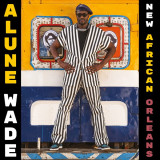
In his sixth and latest album “New African Orleans”, released by ENJA and Yellow Bird, bass guitarist and composer Alune Wade explores the multiple junctions between his native West African rhythms, the Afrobeat and juju rhythms from Lagos and the brass band repertoire immortalized in New Orleans. “I’m exploring a world that goes from my roots to the lost branches on the other side of the Atlantic,” explains the musician from Senegal. He has whittled down around 50 compositions – both original and standards - to a dozen which Alune recorded in Paris, Dakar, Lagos and New Orleans. “The idea first came to me during the Jazz à Gorée festival I organized back in 2014,” he explains. “It had me reflect on the notion of reversing the musical trip most people take from the United States to the African continent. I wanted to set out westward and begin a musical conversation with the best artists, both in Nigeria and the US.”
To achieve this, Wade has invited top artists from both sides of the Atlantic, including the Nigerian talking drummer Olaore Muyiwa Ayandeji, the percussionist Weedie Braimah and the jazz drummer Herlin Riley from New Orleans. The musical inspirations are equally transatlantic, ranging from Dr. John to Manu Dibango and Charlie Parker. But the 45-year-old also pays homage to his father who was a brass band star in his native Senegal back in the Sixties.
BACKGROUND
We only have a partial idea of the birth and remarkable development of the music born of the transatlantic slave trade. From Malinke ballads to Cuban son, from call-and-response patterns to field hollers and hip-hop, Yoruba rhythms to Argentinian tango, from Angolan percussions to the New Orleans brass band sounds… all have roots in Africa and a shackled migration that lasted four centuries. No more so than Congo Square in the Louisiana capital. In 2024, we mark the 300th anniversary of the implementation of the Code Noir which “gave enslaved Africans Sundays off to dance”. A drop in the ocean, but one which shows the importance of culture as a lifebuoy against this barbaric trade. As the Guadeloupian writer Daniel Maximin once claimed: “Our music guided us from the scream to the song, from dragging our chains to dancing.”
- 1: My Goddess
- 2: Nuits Paisibles
- 3: 00/700
- 4: Refuge
- 5: Four Walls
- 6: My God
- 7: Papillon
- 8: Reprise
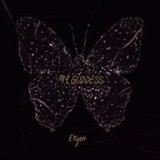
A deeply intimate and cinematic body of work, My Goddess unfolds as a self-contained emotional universe; an album about grief, depression, healing, and the enduring human urge to find beauty in a world that often feels unrelenting.
Composed against the backdrop of Lebanon’s ongoing political and economic collapse, My Goddess captures what it means to process personal heartbreak and collective trauma simultaneously. Across nine emotionally charged tracks, Etyen draws from profound loss, existential reflection, and the tragic death of his beloved cat Lucy to craft a record that is as fragile as it is resilient; both a personal reckoning and a universal portrait of survival through art. “This album is a conversation with myself. It’s about loss and grief, about finding beauty and trying to hold on to it,” says Etyen. “It’s about confronting the painful parts of life while still believing there’s something gentle and divine to hold onto.”
Blending cinematic textures, Etyen's unique and inspired electronics, and minimally sculpted yet immersive melodies, My Goddess pushes further into the raw introspection first glimpsed on Etyen’s 2022 debut album Untitled. But this time, the sonic architecture is more distilled, the emotional stakes more immediate. The result is a record that gently lingers in the spaces between memory, absence, and hope.
The album’s first single, the title track “My Goddess,” drops May 5 with a self-directed music video, one of three cinematic visuals accompanying the album. The trilogy further expands the emotional world of the record and affirms Etyen’s role not only as a musical artist, but as a multidimensional storyteller.
With over a decade of work that spans Netflix scores (Jinn), international festivals (Sonar Barcelona, Mutek), and critical acclaim and editorial support from Bandcamp Daily, BBC Radio and much more, Etyen has carved out a singular voice in electronic music—bridging personal, cultural and political resonance through sound. As the founder of Thawra Records, he also continues to champion independent artists from the region, building a vital platform for forward-thinking music in and beyond the Arab world.
Brooklyn’s Broad Channel drops its first-ever collaborative release, “Intercity Relations Guide – Volume 1”. This special 4-track EP bridges vibrant underground scenes from NYC, Chicago, Detroit, and Japan, featuring tracks from Mark Grusane, Deon Jamar, DJ Monchan & Aota, and Derek Russo & Thomas Xu. Born out of a moment of inspiration in the fall of 2024 after returning from Japan, label founder Derek Russo envisioned this release as a bridge – linking the warm relationships built at home & abroad that were nurtured over years of DJing, producing, and hosting underground parties like Xoloft in
Brooklyn. The EP flows across a chugging tempo range, between 113 and 120 BPM, It’s a reflection of the label’s core ethos and catalog to date: genre-blurring and always rooted in the dancefloor.
- Idag
- Drömmar Av Is
- Drömmen Om Död Och Förruttnelse
- Om Du Vill
- Gläntan
- Burning Cross
- Irreligious Flamboyant Flame
- Christmas
- Spirit
- Om Du Vill (Slight Return)
More than 20 years after their debut, Witchcraft's seventh album, 'IDAG,' is an awaited full accounting of who they are as a band. Those who have clamored for the return to an earlier sound rooted in '70s classic progressive and heavy rock will delight to the strut of "Irreligious Flamboyant Flame" while the eight-minute opening title-track is the heaviest the band have ever sounded, and a succession of interspersed acoustic-based pieces helps create a vision of a new, soulfully folkish doom taking shape as they continue to move inexorably forward. Founding guitarist/vocalist, Magnus Pelander, says of 'IDAG': "This album will reap souls and destroy wicked minds. And perhaps mend a couple of broken ones." These enigmatic few words from the Swedish band's main songwriter give clues as to the songs' intentions; a reference dropped to Coven's 1969 album, 'Witchcraft Destroys Minds and Reaps Souls.' Coven also had a folkish, proto-doomed take at that point in their history, and that multifaceted nature has been a part of Witchcraft all along. On one level, Magnus is winkingly telling you it's a Witchcraft record. The actual meaning of that becomes clear when you hear the album and find out just how much 'a Witchcraft record' can encompass. The storyline of Witchcraft's growth, from Pelander's starting the band in Örebro in 2000 in the wake of his prior outfit Norrsken's disbanding. A generational landmark of a 2004 self-titled debut helped spark a retroist movement that has become its own subgenre, but Witchcraft never stopped growing. 2005's 'Firewood' and 2007's 'The Alchemist' introduced more progressive sounds, and five years later, the pointedly modern 'Legend' established in 2012 that they had moved beyond the analog worship they had been a part of pioneering within the contemporary heavy rock and doom scene. In 2016, the 2LP 'Nucleus' introduced fuller-toned doom, and 2020's 'Black Metal' diverged into moody acoustic minimalism familiar to some fans from Pelander's early solo work, but different from anything Witchcraft had done prior. 'IDAG,' then, is the tie that draws all of this - more than two decades of exploring and growth - together. Whatever they've done in the past and whatever they'll do in the future, 'IDAG' feels like a nexus for defining who and what Witchcraft are. Even crazier, that might be the point of the thing. JJ Koczan
Purple Vinyl, limited to 450 copies. More than 20 years after their debut, Witchcraft's seventh album, 'IDAG,' is an awaited full accounting of who they are as a band. Those who have clamored for the return to an earlier sound rooted in '70s classic progressive and heavy rock will delight to the strut of "Irreligious Flamboyant Flame" while the eight-minute opening title-track is the heaviest the band have ever sounded, and a succession of interspersed acoustic-based pieces helps create a vision of a new, soulfully folkish doom taking shape as they continue to move inexorably forward. Founding guitarist/vocalist, Magnus Pelander, says of 'IDAG': "This album will reap souls and destroy wicked minds. And perhaps mend a couple of broken ones." These enigmatic few words from the Swedish band's main songwriter give clues as to the songs' intentions; a reference dropped to Coven's 1969 album, 'Witchcraft Destroys Minds and Reaps Souls.' Coven also had a folkish, proto-doomed take at that point in their history, and that multifaceted nature has been a part of Witchcraft all along. On one level, Magnus is winkingly telling you it's a Witchcraft record. The actual meaning of that becomes clear when you hear the album and find out just how much 'a Witchcraft record' can encompass. The storyline of Witchcraft's growth, from Pelander's starting the band in Örebro in 2000 in the wake of his prior outfit Norrsken's disbanding. A generational landmark of a 2004 self-titled debut helped spark a retroist movement that has become its own subgenre, but Witchcraft never stopped growing. 2005's 'Firewood' and 2007's 'The Alchemist' introduced more progressive sounds, and five years later, the pointedly modern 'Legend' established in 2012 that they had moved beyond the analog worship they had been a part of pioneering within the contemporary heavy rock and doom scene. In 2016, the 2LP 'Nucleus' introduced fuller-toned doom, and 2020's 'Black Metal' diverged into moody acoustic minimalism familiar to some fans from Pelander's early solo work, but different from anything Witchcraft had done prior. 'IDAG,' then, is the tie that draws all of this - more than two decades of exploring and growth - together. Whatever they've done in the past and whatever they'll do in the future, 'IDAG' feels like a nexus for defining who and what Witchcraft are. Even crazier, that might be the point of the thing. JJ Koczan
Polish producer Newborn Jr. joins forces with the incredible vocalist Annjet for their highly anticipated debut full-length vinyl LP under the collective name Krush Klubb, set to be released through the renowned Bristol-based independent label, Shall Not Fade.
The Zone Out LP seamlessly blends the best of modern dance music, effortlessly merging the smooth, hypnotic rhythms of deep house with the frenetic energy of breaksy jungle cuts, all while showcasing the rich, captivating vocals of the talented Annjet. This dynamic collaboration not only highlights Newborn Jr.'s unparalleled production abilities but also elevates the musical landscape with Annjet's signature vocal style, which adds an emotive, immersive layer to each track.
With its intricate soundscapes and genre-defying approach, Zone Out stands as a testament to Krush Klubb's versatility and vision, offering a unique listening experience that crosses boundaries and defies expectations. The LP promises to be a perfect soundtrack for those who love to lose themselves in the rhythm of dance music, whether you're winding down or getting lost in the groove.
The Zone Out LP drops on Friday, 23rd May via Shall Not Fade, ready to leave an indelible mark on the dance music scene and introduce Krush Klubb as one of the most exciting new acts in the genre.
WOW. Daniel O'Sullivan's transcendent new album, Eros, is one of the greatest things we've ever heard. A simply stunning song cycle of hypnotic, experimental contemporary chamber music composed for a 14-piece ensemble. Combining minimalism, complex syncopation, detailed acoustic textures, weird intervals and samurai precision, this record will elegantly blow your mind. When Daniel first sent us this, he pitched it as “Liquid Swords meets Michael Nyman”. Trust us, he wasn't wrong. A "unique hybrid orchestral music", it presents a confluence of Daniel's longstanding fixations; indeed, there's elements of Nyman, Antonio Carlos Jobim, Magma, Aaron Copland and RZA. But this is wholly O'Sullivan's. Originally commissioned for the Sonoton Music Library in Munich, Eros now receives a deluxe vinyl release courtesy of Be With Records, bringing this meticulously crafted work to a wider audience. Limited to just 500 copies for the world, these are gonna fly.
An English composer and multi-instrumentalist, Daniel O'Sullivan’s career has been marked by versatility and innovation. In addition to his work with Sonoton, he has composed extensively for the legendary KPM music library, contributing to its storied legacy of production music. As a deep virtuoso and collaborator, O'Sullivan has also played in a number of influential projects, including Ulver, Sunn O))), This Is Not This Heat, Grumbling Fur and Miracle (with Steve Moore), leaving an indelible mark on the contemporary experimental music landscape.
O’Sullivan’s first foray into classically informed chamber music, Eros is a culmination of his long-standing fixations and expansive musical influences. The album features arrangements that are as detailed as they are emotionally resonant, showcasing his unparalleled ear for intervals and mastery of counterpoint. The music brims with complex rhythmic syncopation and a sensitivity to texture and space, resulting in a soundscape that is both intoxicating and dauntingly precise.
Recorded June 2023 and February 2024, in Brussels, London and Carmarthenshire, Wales, Eros features members of Echo Collective (Neil Leiter and Margaret Hermant), Thighpaulsandra (from seminal post-industrial band Coil), and jazz pioneer Oren Marshall. Daniel's sonic weapons of choice, in his own inimitable words, were "Big Bad Drum, Pee Anne Oh, Low End Brass, Willowy Winds & Samurai Strings." You get the picture. As a cyclical suite, this is a record that really needs to be heard in its entitreity, from start to finish, to truly appreciate the genius at work here.
A jaw-dropping statement of intent, the minimalist "Golden Verses" sets the tone with its complex cue which has your neck snapping right when it feels like it needs to. Listen and you'll understand. A syncopated tangle of sharp strings, crunchy bass, drums percussion and bright piano and mallets vie for position with French horn and woodwind melody in the most compelling and unexpected ways. Quite simply, it's one of the finest album openers I've ever heard. It's followed by the atmospheric rippling minimalism of "Lyre Lyre", a gorgeous gem with shimmering chimes, bright melody, human percussion and syncopated pizzicato strings. It kinda comes on like a less-abstract Boards Of Canada, bursting with typical wonderment. The piano and string-drenched "Dolorous Stroke" effortlessly builds its warm, pastoral orchestration with flowing piano arpeggio, steadfast drums, expressive string quartet, rich low brass, woodwind and lyrical flute. Just sublime.
The insistent frenetic propulsion of "Plain Paper" is utterly beguiling, featuring a determined string motif, urgent drums and percussion, driving low brass and breathless, energetic flute. The haunting, interweaving string arpeggios that propel "Grapes Draped" presents a claustrophobic minimalism for chaos and darkness, with growling low woodwind and brass, spiky harpsichord, skittering flutes and tight drums. Up next, "Xanix Annum" is a stately minimalist waltz with expressive lyrical string quartet and delicate woodwind, anchored by drums and percussion. "Painting Rose" is a bouncy stop-start track with angular syncopated strings and a piano pulse underneath bright harpsichord and flutes. "Rotunda Garden" presents ethereal textural minimalism for landscapes and reflection with flowing string arpeggios, warm, low woodwind drones, floating choir and cymbal swells. Closing out this extraordinary side of music, the glowing, flowing minimalism of "Flowry Orb" features urgent organ, piano and woodwind arpeggios, half-time drums with shimmering cymbals, a soaring, beautiful violin solo and hypnotic vocal chant.
Side 2 opens with "Theia Mania" a determinedly off-kilter, angular track featuring low wind, brass and drum stomp in dialogue with lively string trio, woodwind and solo horn. The light, airy minimalism of "Painting Percy" is built around an interplay of rhythmic motifs for piano, low brass, bassoon, fluttering flutes, urgent strings, drums and percussion whilst "For Archetypes" is a delicate, gently syncopated chamber cue for nostalgia, nature, reflection and moments of calm, with steady piano motif, intimate woodwind and French horn, and warm, graceful strings. The urgent Ars Memoriae is a propulsive march for progress, processes and industry, underpinned by driving tuba, with determined strings, resolute drums, and vivid, expressive flute, clarinet and French horn.
The syncopated energetic minimalism of "Mirrored Seven" presents layers of melodic and cyclical piano, drums, low brass, harp, flute and strings. "Pure Ornament" follows, a slowly evolving chamber cue with flowing clarinet, string and harp arpeggio, plodding tuba and percussion, fluttering flute and graceful, lyrical solos. Stunning! Up next, "Brave Boy" moves from its tender, warm, lullaby-like intro with lyrical flute, clarinet and strings before opening into a playful backend driven by a bouncy tuba riff and syncopated piano, woodwind, string trio, and drums and percussion. Rounding out this astonishing piece, "Waxen Waned" is a warm, pastoral chamber cue with light lyrical woodwind, tender French horn and subtly pulsing string trio.
The album's title is a reference to Plato’s conception of Eros, which is more than romantic or physical desire. It is a dynamic and creative force that drives individuals to seek perfection whether in art, relationships, philosophy or the pursuit of truth. Wholly appropriate, here, we think. When asked what his influences were in making this astounding record, he answered thusly: "Non-musical: Householding, Pythagoras, Goethe, Grail romances, Hermeticism, Doctrine of Signatures (Parcelsus, Bohme, Pliny), Eric Rohmer, John Stezaker, Yasujiro Ozu. Musical: Duke Ellington (late suites), Smile-era Brian, early RZA, Wagner (Parsifal Overture), Magma, Mancini, Axelrod, YMO, Hildegard, Nyman, Penguin Cafe Orchestra, Jobim (Stone Flower), Alessandro Alessandroni, Tavener, Moondog, Orthodox Music, Secular Music." That's some pretty deep shit. Makes you want to dive in, no?
Mastering for this vinyl edition was overseen by Be With regular Simon Francis, and it was cut by the esteemed Cicely Balston at Abbey Road Studios to be pressed in the Netherlands by Record Industry. Truly, Eros is a work of extraordinary depth and sophistication. It invites listeners to immerse themselves in its intricate layers, to lose themselves in its hypnotic rhythms, and to marvel at the precision of its execution. With this release, O’Sullivan reaffirms his position as one of the most inventive and uncompromising voices in contemporary music. Do. Not. Sleep.
- First It Was A Movie, Then It Was A Book
- Waiting Around To Provide
- Hey Baby
- Sexy
- Truck Flipped Over '19
- Big Something
- Dip Myself In Like An Ice Cream Cone
- Say Your Prayers Rock
- Pretty Eyes Lorraine
- You Don't Know
Cassette[14,08 €]
The promise of a Florry show, a now familiar caravan that has been honed over ambitiously trekked zig zags across America and Europe since the release of Dear Life Records debut The Holey Bible, is the redemptive promise and prodigal joy of rock and roll guitar music. Bred in the crackling warmth of the Philadelphia DIY scene, and forged with the alloys of community action, queer liberation and bedroom poetry, bandleader Francie Medosch and her absolute unit of collaborators have put in the work of sharpening their homespun tools to take up the mantle of the great lip-puckering rock and roll tradition pioneered by the likes of The Band and the Rolling Stones, but with proudly displayed Aimee Mann and Yo La Tengo bumper stickers on the rusty frame of the truck. At any second, the wheels could come off but they are steering just fine. For 'Sounds Like' Florry's sophomore effort as a fully realized band, Medosch and co. decamped to Drop of Sun studios in the nest of the Blue Ridge Mountains to record with Asheville wunderkind Colin Miller, a critical voice behind the records of MJ Lenderman, Wednesday and Merce Lemon and a powerful songwriter in his own right. Three powerhouse days in late 2023 solidified writing work done by the band earlier that summer in the now defunct Haw Creek compound under Miller's guiding suggestion. The result is a portrait of a ripping band cresting towards the height of their powers, uniquely equipped to capture a wildly loving, barn-burning camcorder clip of a turbulent trip with your best friends, without dipping into nostalgia bait. Lyrically, Medosch's utterances are both careful and excessive, the product of sifting through the rubble of classic good-time media, and finding what works for both her and her community to reach the heights of abandon. "The Jackass theme song was actually a really big influence on the new album" The expansive personnel and continent spanning footprint of Florry casts a wide net for this community. Florry the band rolls deep in the heard of North American DIY, featuring Jon Cox (Sadurn, Son of Barb) on pedal steel, John Murray on electric guitar, Collin Dennen on bass, Will Henriksen on fiddle, Katya Malison (Doll Spirit Vessel) on Vox, and Joey Sullivan (Bark Culture) on drums. Medosch's recent move to Burlington Vermont entrenches the Philly born project firmly within the ranks of fellow alt-country upstarts Lily Seabird and Greg Freeman, and gives them a vantage just outside of Pennsylvania at the thresholds of New England and the Midwest. There is a new life breathed into this music that confirms Florry as equally rooted in place work, and at home on the vast roads of America. For listeners who fell in love with Florry's infectious charm on sweeping tours with the likes of Kurt Vile, Real Estate, MJ Lenderman, Greg Freeman and Fust, 'Sounds Like', provides a refreshing memento of the band that surely left them smiling. If the support behind 'The Holey Bible' provided validation for the insistent vision of these young artists, 'Sounds Like' finds them reveling in and honing their vocabulary. Praise from outlets like Pitchfork, Stereogum, Paste, and Brooklyn Vegan touched on the potential of their wild idiosyncrasies, and accurately predicted that their next steps would see them continuing to write their own story, like a 10 car pileup that you can't take your eyes off if you tried. Florry proves that they can let the car spin just out of control whenever they want, and you are welcome to ride shotgun while Medosch does donuts in the WaWa parking lot. The ceiling, it turns out, is truly the roof.
A SIDE: "Smooth Co-Operator" 124 BPM
Deep within the Co-op laboratory, a timeless classic was lifted from the ether and reborn under the alchemists’ touch. "Smooth Co-Operator"
takes the silk and smoke of Sade’s iconic Smooth Operator and fuses it with the pulse of an uptempo soulful house rhythm. Sprinkled with the
magic dust of hip-hop and funk samples, the track moves effortlessly—grooving on a smooth, rolling bassline, locked into a four-to-the-floor
heartbeat. The result? A dance where elegance meets momentum, where the past is reimagined for the now. Let yourself be carried away—
this is RnB soul jazz, remixed for the future.
B SIDE: "Dream Alchemy" 120BPM
Summoned from the realm of dreams, "Dream Alchemy" is a hypnotic, Kubrickian voyage through sound and shadow. Co-op bends time,
doubling the original tempo into a driving force of tech-house vibes. J Diggns layers ethereal, cascading keys—melodies that flicker like lucid
visions—while Whiskey Drop layers in A$AP Rocky and grounds the experience with a deep, rolling bassline that pulses from the underground.
The groove is relentless, the atmosphere cinematic. Step inside—The dream and the Sandman await.
Side-A features Alex Désert and Deston Berry of Hepcat, in addition to Malik Moore of The Lions. Side-B features Asdru Sierra, vocalist of Ozomatli. Produced, Mixed, and Recorded by Dan Ubick (The Lions, Connie Price and the Keystones). Previous steady radio play on BBC Radio 6, KCRW, SoHo Radio, etc... Very popular among DJ’s and collectors worldwide. To round out their second wave of 7" singles, Night Owls bring the heat once again with their signature sound and vision.
Re-imagining two Aaron Neville classics, “Hercules” feat. Alex Désert and The Lions b/w “Tell It Like It Is” feat. Asdru Sierra from Ozomatli, Night Owls up the ante by bringing in some heavy hitters for both sides of this 45. Side A's "Hercules" features long-time collaborators and bandmates from The Lions (Stones Throw, Ubiquity, NYCT) - the soulful tenor of Alex Désert (also Hepcat) on lead blending seamlessly with the familiar voices of Deston Berry (Hepcat) and Malik Moore (Ocean 11) on backing harmonies. The Lions front line locks in tight from the many years performing together on top of a darker and grittier interpretation of Allen Toussaint’s masterpiece complete with fuzzed-out guitar, Space Echoes and rhythm drops. On the flip, "Tell It Like It Is" keeps the momentum going and hips swaying with added Colombian percussion elements and California lowrider vibes. Featuring L.A. family and multi-talented vocalist of Ozomatli, Asdru Sierra, on lead and Night Owl Dan Ubick on backing vocals Side B creates a unique blend of reggae and Cumbia into a very fresh take on this multi-generational hit
- A1: Overgrown
- A2: Waterfall
- A3: Want It W/ Iyamah
- A4: How It Was W/ Charli Brix + Monrroe
- B1: The One I Needw/ Kelli-Leigh
- B2: Aurora
- B3: Stampede W/ Jelani Blackman
- C1: Twilight W/ Cimone
- C2: Magic
- C3: Phoneline W/ Emily Makis
- C4: Falling 4 U W/ Mph
- D1: Listen W/ Goddard
- D2: Temple Stomp
- D3: This Chance W/ Break + Cimone
- D4: Insomnia
The most pivotal moment yet in the journey of one of dance music's most in-demand duos, Shogun Audio are proud to present 'Overgrown', the highly-anticipated fourth studio album from Pola & Bryson.
Having always strived to encapsulate the experience of euphoria they felt in their early raving days, ‘Overgrown’ is Pola & Bryson’s way of paying homage to music that’s shaped their lives. Across all fifteen tracks, the UK-based duo showcase their stunning approach to electronic music production like never before. Innovative, unique, and just as addictive on the hundredth listen as the first, the UK-based duo continue to cement their position as some of the best in the business.
Featuring one of drum and bass' most notable recent singles, the scene-shattering 'Phoneline w/ Emily Makis', an incredible slice of euphoric drum and bass in the form of 'The One I Need w/ Kelli-Leigh', the massive crossover hit 'Want It w/ IYAMAH', and the sound-system destroying sounds of ‘This Chance w/ Break & Cimone’, the singles released before the full album drop have already accumulated over 75M streams, mass DSP editorial support, consistent UK specialist and playlist radio support, and 100s of millions of views online.
Fresh cuts, including ‘Listen w/ goddard.’, ‘How It Was w/ Monroe & Charli Brix’, ‘Falling 4 U w/ MPH’, as well as superb solo offerings like ‘Insomnia’, ‘Temple Stomp’, and ‘Aurora’, all flawlessly gel together under the umbrella of big synths and pure euphoria to create what is sure to be one of the most talked about and repeatedly listened to moments in electronic dance music this year.
“This album is the evolution of us branching off to a more euphoric and club-orientated sound, which heavily influenced the album title. ‘Overgrown’ as a title also represents the relationship between the digital and organic sounds in our music, which in turn, also represents the contrasting factors of nature and urban environments that we both grew up in, both of which have influenced our sound massively.” - Pola & Bryson
A coming-of-age moment for some of the most talented artists the scene has to offer, the act that Sub Focus once claimed was "leading the new wave of liquid drum and bass" has now taken centre stage.