Parisian label Chuwanaga is thrilled to announce the upcoming release of "The Milky Way", the first EP from the dynamic Milk & Honey duo, comprised of producers Saint-James and Tour-Maubourg. Known for their raw sound reminiscent of the late nineties house sound, Milk & Honey bring a fresh yet nostalgic energy to the scene, blending vintage hardware with modern sensibilities. Available as Limited Vinyl 12" (300ex) and Digital.
This EP, is a testament to their musical chemistry and shared passion for the classic deep house. Composed in just two days at Tour-Maubourg's studio in Ixelles, Belgium, "The Milky Way" captures the essence of their creative synergy.
From peak-time club heaters like "Back in the Hood", "Lost and Found" and "Sour" — the latter tinged with a darker UK sound - to deeper, more introspective cuts like "Deeper and Deeper","Venus Effect" and "City Stabs" the EP is a rich and textured journey. It's also a testament to friendship: a story told through syncopated rhythms, hypnotic melodies, and intricate drum programming.
Milk & Honey have previously challenged the deep house scene with releases on Groovence Records, drawing inspiration from legends like Glenn Underground.
Suche:drum club
- A1: Intro
- A2: For Your Hand
- A3: I Don't Wanna
- A4: Lisboa
- B1: Long Roads
- B2: Summer Song
- B3: Chicken Wire
- C1: Hazel Eyes
- C2: Lunga (Interlude)
- D1: A Million Flowers
- D2: How It Once Was
- D3: New Day
Black Vinyl[25,17 €]
Ltd Edition!
Das beeindruckende Solo-Debütalbum von Sydney Minsky-Sargeant, dem Kopf der Alt-Electro-Band Working Men's Club.
"Lunga" ist das beeindruckende Solo-Debütalbum von Sydney Minsky-Sargeant, dem Kopf der Alt-Electro-Band Working Men's Club. Während der Katalog von Working Men's Club Industrial-Post-Punk für den Indie-Dancefloor neu interpretiert, ist "Lunga" eine introspektive Platte, auf der Minsky Sargeant über das Erwachsenwerden und die Zeit zwischen Kindheit und Erwachsensein reflektiert. Die Tracks von "Lunga" wurden über mehrere Jahre hinweg in den Pausen zwischen den WMC-Verpflichtungen geschrieben und dann mit Alex Greaves im "The Nave" in Leeds aufgenommen. Die Lieder sind nachdenklich und suchend, mit einfachen Refrains, die oft über spärlichen Gitarrenlinien wiederholt werden. Minsky Sargeant spielt den Großteil der Instrumente selbst und erschafft mit zarten Drum Fills, unheimlichem Cello und dezenten Synthies eine bezaubernde Welt. Minsky Sargeant dachte, er hätte ein neues Wort kreiert, als er die Platte betitelte - etwas, das die selbsthinterfragende Stimmung der Platte und die Erforschung der Beziehung des Menschen zur Natur zusammenfasst. Dass sich "Lunga" dann als der Name einer unbewohnten schottischen Insel herausstellte - zerklüftet, isoliert und in ständiger Bewegung - ist der Beweis für eine einzigartige künstlerische Vision.
- A1: Intro
- A2: For Your Hand
- A3: I Don't Wanna
- A4: Lisboa
- B1: Long Roads
- B2: Summer Song
- B3: Chicken Wire
- C1: Hazel Eyes
- C2: Lunga (Interlude)
- D1: A Million Flowers
- D2: How It Once Was
- D3: New Day
Oxblood Vinyl[27,69 €]
Das beeindruckende Solo-Debütalbum von Sydney Minsky-Sargeant, dem Kopf der Alt-Electro-Band Working Men's Club.
"Lunga" ist das beeindruckende Solo-Debütalbum von Sydney Minsky-Sargeant, dem Kopf der Alt-Electro-Band Working Men's Club. Während der Katalog von Working Men's Club Industrial-Post-Punk für den Indie-Dancefloor neu interpretiert, ist "Lunga" eine introspektive Platte, auf der Minsky Sargeant über das Erwachsenwerden und die Zeit zwischen Kindheit und Erwachsensein reflektiert. Die Tracks von "Lunga" wurden über mehrere Jahre hinweg in den Pausen zwischen den WMC-Verpflichtungen geschrieben und dann mit Alex Greaves im "The Nave" in Leeds aufgenommen. Die Lieder sind nachdenklich und suchend, mit einfachen Refrains, die oft über spärlichen Gitarrenlinien wiederholt werden. Minsky Sargeant spielt den Großteil der Instrumente selbst und erschafft mit zarten Drum Fills, unheimlichem Cello und dezenten Synthies eine bezaubernde Welt. Minsky Sargeant dachte, er hätte ein neues Wort kreiert, als er die Platte betitelte - etwas, das die selbsthinterfragende Stimmung der Platte und die Erforschung der Beziehung des Menschen zur Natur zusammenfasst. Dass sich "Lunga" dann als der Name einer unbewohnten schottischen Insel herausstellte - zerklüftet, isoliert und in ständiger Bewegung - ist der Beweis für eine einzigartige künstlerische Vision.
- A1: Floodbound
- A2: Cure Your Ills
- A3: ? | I'm No Good Without You
- A4: For A While
- A5: Golden Vanity
- A6: Rainmaker, Sunseeker
- B1: The House On The Hill
- B2: Ruby Red
- B3: She Never Sleeps
- B4: The Hanging Stars
- B5: Hang Me High
- B6: Crippled Shining Blues
- B7: Running Waters Wide
*Long overdue reissue of the first album by The Hanging Stars to coincide with their tour support slot with Edwyn Collins – initial 300 copies come with 12 x 12 print*
“In late-Sixties California, the Byrds and Flying Burrito Brothers combined traditional country music with hippy rock to great success. The influence lingered and whatever cultural relevance it has this is a delightful, transporting listen” – The Times 4/5
London-based psych-folk outfit The Hanging Stars re-release their much-loved debut album Over the Silvery Lake on Crimson Crow. Blending folk pastoralism with swampy 60s Americana, they sound like the missing link between the California desert sun and the grey skies of London Town. The album was recorded between LA, Nashville and Walthamstow, with each of these vastly different places leaving an indelible mark on the songs.
Now signed to the Loose Records label and fronted by London-based songwriter, singer and guitarist Richard Olson (The See See, Eighteenth Day of May), The Hanging Stars are essentially a loose collective of people who weave together a blissed-out psychedelic tapestry. The rest of the core band is made up of Sam Ferman on bass and Paulie Cobra on drums, Horse on pedal steel and Patrick Ralla on banjo, guitar. They jam rather than write and hang out rather than rehearse, harnessing a kind of tipsy euphoria resplendent with luscious arrangements and glorious vocal harmonies.
During 2015, prior to this album’s original release the band released two critically acclaimed singles via The Great Pop Supplement (both of which also appear on the album). “Golden Vanity” was premiered by The Line of Best Fit who said; “you'd be forgiven for thinking you'd just unearthed a rare deep cut from the late 60s/early 70s boom of psychedelia infused Americana” and “The House on The Hill” was described by The Guardian as; "a hazy, desert-dream of a song, nicely sharpened with steely-eyed guitars, Mersey-laced harmonies and just a whiff of the Gun Club”.
There are a number of allusions to nature and the weather on the album, borne in part out of the contrasting surroundings in which it was produced. The band’s fascination with Americana led them to record some of the material Stateside, laying down some of the parts at Battle Tapes Studios in Nashville (Lambchop, Paperhead), as well as at Vision Quest Studios in Los Angeles with Rob Campanella. His work with The Quarter After, The Brian Jonestown Massacre, Beachwood Sparks The Tyde, and GospelbeacH was a perfect match to capture their sound and they even had San Franciscan legend Chrystof Certik step in on lead guitar for a couple of tracks.
Following the LA recordings, a trip to the Californian desert provided the core notion of what they wanted to produce - a shard of light that they clung on to whilst recording the rest of the album in the significantly more rain-soaked atmosphere of Walthamstow, London, under the watchful eye of Brian O'Shaughnessy at Bark Studios (The Clientele, Comet Gain). As the band explained at the time: “Ultimately we hope you can hear both the sand and the rain in this record.”
The Hanging Stars place themselves firmly as part of a long folk tradition encompassing European and North American influences – as a continuation rather than a pastiche of these styles. This is the sound of a band really coming in to their own, fully formed and in no doubt of their vision. With Over the Silvery Lake they succeeded in producing a record, which has the country, blues and folk traditions at its heart.
Unmistakable are the sonic experiments of Spanish alchemist ORBE; with this fresh release on Token. ORBE's iconically viscous textures and impactful percussion weasel their way into 'Ascender' for a deeper release on Kr!z's label. Thick, brooding atmospheres drive these tracks into stories of pursuit and escape throughout its four tracks.
A slick, pulsating low end in 'Flashback' stands out as a first impression for an imposing EP. Electric leads zip by for maximum psychosis; he's known for his uncompromising dissonance and drive. A staple of the Spanish scene, ORBE bites down hard on deep and hypnotic techno to resonate through concrete warehouses. This jagged edge to club music continues through 'W9Y' - a more drum-forward cut with noisy transitions and breathable synthwork. Sharper stabs occupy this space as opposed to the track's predecessor and tension is maintained with a lingering pad in the background. A meditative conclusion for the A side, ORBE quickly shifts his attention in the titletrack 'Ascender'. Emphasizing tone and tune on the kick, the lead comes with confrontation. Rolling through shifting hats, the producer brings boiling tension through minimal arrangement and the weight of his sound design - a skillset only the most seasoned artists can claim. To close things out, 'Break Nation' does just that - cutting off the traditional four/four rhythm and instead presenting itself as a bass stepper. With ORBE's classic unison packed synths, this dweller presents a whole other perspective on 'Ascender'. A hybrid of influences and yet still destined for the techno dancefloor, this breath of fresh air serves as deep dive into the subconscious for an eyes-closed experience.
Das erste Live-Album der coolen Fachleute für heiße Musik!
Mit ihrem Studio-Debütalbum haben LA LOM aus Los Angeles die Messlatte für groovende Latin- und
Soul-Instrumentals mit Retro-Touch sehr hoch gehängt. Zac Sokolow (Guitar), Jake Faulkner (Bass) und
Nicholas Baker (Drums/Percussion) sind seitdem fleißig durch die USA und Europa getourt und haben sich
mit heißen Konzerten in packend vollen Clubs viele Fans erspielt.
Deshalb wurde es jetzt höchste Zeit für ihr erstes Live-Album. “Live At Thalia Hall” wurde in der bekannten Konzerthalle in Chicago mitgeschnitten, in der LA LOM eine kreisrunde Bühne mitten im ekstatisch
mitgehenden Publikum bespielten.
The song sets the tone of this album. A simple structure, over which a web of rhythm is woven using an instrumentation of old drum machines in dialogue with live drums and percussion. Lots of sax, tenor and baritone! A pumping bass. A frisky pizzicato violin. And some classic keyboards: the Fender Rhodes, the Hohner Clavinette D6, the L-100 Hammond organ. And lots of analogue synthesisers: a rippling Juno-106 marks the path to follow, which is crossed with phrases from other museum pieces: Crumar's Stratus, Farfisa's Synthorchestra, Sequential's Prophet-10. Or still the Casio Club M-100, which is basically a toy, but has been subtly colouring SKC's songs for years!
SKC has often dived deep into the repertoire of artists he holds in high esteem, looking for pearls, forgotten or not, to work on. Likewise on this album with versions of songs by Prince, Dez Mona, Alain Bashung…
- A1: Victoria
- A2: Much A Do About Nothing
- A3: Stand Up And Fight
- A4: Out Of The Blue
- A5: No Place To Go
- B1: Give Me A Gun
- B2: Slow Motion
- B3: Desire
- B4: Home Is Where The Heart Is
- B5: Le Cafard
- B6: U And Me
- C1: Victoria (2014 Buscemi Remix)
- C2: Telepatia (12” Version)
- C3: No Place To Go (Live At The Werf)
- C4: Give Me A Gun (Live At The Werf)
- D1: Full Moon
- D2: Social Life
- D3: On The Telephone
- D4: The Sound Of Her Voice
- D5: Suffering
Lavvi Ebbel was without a doubt one of the most talked-about bands of the Belgian new wave scene. In the early eighties, the band achieved considerable success with singles such as “Give Me a Gun” and “Victoria.” This ten-piece band had a solid live reputation thanks to the original sound of the two guitarists (Marc de Wit and Chris Van Ransbeeck), pianist (Bea Van Ransbeeck), and the steady Eric de Wit on drums. Singer Luckas Vander Taelen and backing vocalist Kristien D’Haeger provided a strong stage presence, supported by the swinging horn section with Jan Weuts and Eric Sleichim, who was the driving force behind Maximalist and Bl!ndman some time later.
Lavvi Ebbel played about 200 times in Belgium and the Netherlands, both in small clubs and at prestigious festivals such as Seaside. On the compilation LP “Get Sprouts,” which is a true sample chart of the music of this period, we find Lavvi Ebbel's “No Place To Go,” a high point in their versatile collaboration with producer Jean-Marie Aerts. “Albü Meth” is arguably the best-known mini-LP, featuring the cult song “Le Cafard.” After the release of the album “Kiss Me Kate,” produced by the American producer David Avidor, the band called it a day in 1983. Following a couple of very successful performances in 2013, Lavvi Ebbel, 12 years later, is making a comeback with the original band members.
- A1: Something In My Eye – The Acid Jazz Orchestra Featuring Sherine
- A2: Samba De Flora (Original Full Length Version) – Romero Bros
- A3: Tambores Da Vida (Drums Of Life) – Chris Bangs
- A4: Coconut Rock – Soul Revivers Featuring Sheila Maurice-Grey And Anoushka
- A5: Rocksteady – Brand New Heavies
- B1: Crucifix Lane – Matt Berry
- B2: Thinkin’ About You – Carmy Love
- B3: Beggin’ – Bdq
- B4: This Is Day One – Earth-O-Naut
- B5: That’s About The Time (I Fell In Love With You) – Quiet Fire
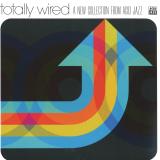
We are excited to announce the return of the iconic Totally Wired series with a brand new collection on LP and CD. The first 50 orders will include a special art print of the artwork. We are also doing a limited edition T-shirt to celebrate this milestone!
In 1988 Acid Jazz released its first compilation album ‘Totally Wired: A Collection From Acid Jazz Records’. Compiled by Eddie Piller and Gilles Peterson it collated 11 tracks that summed up the early days of our scene, mixing new label signings, cool new records being played in our clubs and a couple of oldies. It sold well to the then small scene and set the template for a series, that in the wake of the international success of The Brand New Heavies, Jamiroquai, The James Taylor Quartet and others exploded. By the time that Volume 5 appeared, we were selling tens of thousands of copies, with major label artists vying for inclusion.
By that point ‘Totally Wired’ was a phenomenon, that sign-posted changes in both the directions of new music, but of the oldies that were played on the scene. It gave DJs new tunes to play and soundtracked 1000s of Cafés and bars the world over in the age of the CD. It was largely retired at the end of the 90s and as times changed.
Over the years we have been asked to return to the scene of the crime, but it has never quite felt right, until now. With vinyl back, and the need for easy to digest compilations becoming neccessary in the chaos of streaming’s ‘I can listen to anything I want, but can’t think what that might be’ is evident, but also we are feeling excited about where Acid Jazz is right now. New artists on the label are making great records, Matt Berry has a Top thirty album, and The Brand New Heavies are headlining the Royal Albert Hall. It’s easy to make an exciting album when that is happening.
So we are releasing “Totally Wired: A New Collection From Acid Jazz” and treating it like the important milestone that it is. From the Acid Jazz sid we have new and exclusive recordings by Matt Berry, Chris Bangs and new signings Earth-o-Naut and Quiet Fire, there is also a recent white label only 45 cut by the Soul Revivers – released ahead of their new album due this Autumn and featuring Kokoroko’s Shiela Maurice-Grey and Anoushka Nanguy. For the oldies we have dug deep into our own archives to bring you the Acid Jazz Orchestra’s version of Corduroy’s ‘Something In My Eye’ and The Brand New Heavies astounding funk take of Aretha Franklin’s ‘Rock Steady’. These are all joined by recent scene records by Carmy Love – one of the greatest voices in the UK – The Romero Brothers, and BDQ, carrying the series onwards at last.
Hilit Kolet and The Illustrious Blacks team up for the ‘Transatlantic Kiki’ EP. Dropping on Rekids late August, the package is remixed by Floorplan.
London-based artist Hilit Kolet returns to Rekids, collaborating with New York’s The Illustrous Blacks, the project formed by Manchildblack and Monstah Black, for the ‘Transatlantic Kiki’ EP, landing 29th August 2025 via Radio Slave’s Rekids. Legendary father-daughter duo Floorplan remix the single, with the release following up Kolet’s 2024 ‘Snap Talk’ EP, which won support from artists like Dam Swindle, Chloé Caillet, Bradley Zero, and more.
With lyrics that connect London and New York, ‘Transatlantic Kiki’ is a tough, funk-fueled roller true to Hilit Kolet’s signature production style, infused with an unmatchable personality via The Illustrous Blacks’ playful, vogue-like vocals. It’s hypnotic, bold, and irresistible, with the pair supplying a loopy ‘First Class’ mix that introduces vocal elements not featured in the original, amplifying the track’s qualities to hit even harder, and works the dancefloor into a sweat.
Robert and Lyric Hood, known together as Floorplan, remix Hilit Kolet & The Illustrous Blacks’ ‘Transatlantic Kiki’. Equally infectious as the original, they transform its rhythm into a drummy late-night cut. Stabs and vocal chops ride the groove, culminating in a proper lose-yourself-in-the-dance House cut that also comes with an instrumental version.
London’s Hilit Kolet came up through the former Soho Black Market Records shop, and has since become synonymous with the city’s House scene via releases on Defected, Snatch!, Domino, and Rekids, with a #1 debut on Music Week’s Upfront Club Chart and support from BBC Radio 1, Jamie Jones, HAAi, Skream, and more. NYC duo The Illustrious Blacks, comprising Manchildblack and Monstah Black, blend Afro-Electro, Funk, Disco, and House across releases on Soul Clap, Classic Music Company, and Defected, as well as collaborations with artists such as Osunlade, DJ Minx, Seven Davis Jr., and David Morales.
- A1: Malavoi - Te Traigo Guajira
- A2: Los Caraibes - Donde
- A3: Tropicana - Amor En Chachacha
- A4: Ryco Jazz - Wachi Wara
- A5: Eugene Balthazar - Dap Pignan
- A6: Roger Jaffort - Oye Mi Consejo
- A7: Les Kings - Oriza
- B1: Les Supers Jaguars - Tatalibaba
- B2: Super Combo De Pointe A Pitre - Serrana
- B3: L'ensemble Abricot - Se Quedo Boogaloo
- B4: Henri Guedon - Bilonga
- B5: Les Aiglons - Pensando En Ti
- B6: Los Martiniquenos - Caterate
In Guadeloupe, many people think that jazz and ka music are like a ring and a finger. To some extent, the same could be said about so called Latin music and the music played in the French West Indies.
Both aesthetics were born in the Caribbean and bear so many connections that they can easily be considered cousins. In constant dialogue, there are lots of examples of their fruitful alliance and have been for a while. The English country dance that used to be practiced in European lounges came to be called kadrille in Martinique and contradanza in Cuba. They both featured additional percussion instruments inherited from the transatlantic deportation. Drawing from shared feelings about the same traumatized identity – later to be creolized – it would be hard not to assume that they were meant to inspire each other. The golden age of the orchestras that graced the Pigalle nights during the interwar period further proves the point. As soon as the 1930s, Havana-born Don Barreto naturally mixed danzón and biguine music in a combo based at Melody's Bar. In the following decade, Félix Valvert, a conductor who was born and raised in Basse-Terre in Guadelupe, also worked wonders in Montparnasse with La Coupole, which was an orchestra made up of eclectic musicians. Afro- Caribbean performers of various origins were often hired on rhythm and brass sections in jazz bands, which used to enliven the typical French balls of the capital. In the 1930s and onwards, Rico’s Creole Band was one of them.
Martinican violinist-clarinettist Ernest Léardée, who would become the king of biguine music as well as the main figure of French Uncle Ben's TV commercials (a dark stigma of post-colonial stereotypes), had musicians from the whole Caribbean sphere play at his Bal Blomet – and they all enchanted "ces Zazous-là" (according the words of Léardée's biguine-calypso piece). In les Antilles (French for French West Indies), music history started to speed up in the 1950s, when trade expanded and radio stations grew bigger. The Guadelupean and Martiniquais youth tuned in their old galena radio sets to South American and Caribbean music. As for the women traders, les pacotilleuses, they bought and sold goods across different islands (the "passing of items through various hands" was thought to be most pleasurable) and brought back countless sounds in their luggage. Such was the case of Madame Balthazar, who once returned from Puerto Rico with the first 45rpm and 33rpm to ever enter Martinique.
Out of this adventure was created the famous Martinican label La Maison des Merengues, a music business she opened and undertook with her husband and which proved to be a major landmark. At the end of the 1950s, in Puerto Rico, Marius Cultier competed in the Piano International Contest playing a version of Monk's Round 'Midnight. He won the first prize and this distinction foreshadowed everything that was to come. Cultier, the heretic Monk of jazz, was quickly praised for writing superb melodies, always tinged with a twist that conferred a unique sound to his music. It didn't take long for the gifted self-taught musician to get to play with Los Cubanos, making a name for himself thanks to his impressive maestria on merengues.
The rest is history. Besides, in the late 1950s, Frantz Charles-Denis, born into the upper middle class in Saint-Pierre and better known by his first name Francisco, went back home after working at La Cabane Cubaine – a club located rue Fontaine where he had caught the Latin fever. Francisco's music was therefore heavily marked by his Cuban cousins' influence, which gave the combos he led a specific style and also led to renewal. Things were swinging hard in La Savane, located in the main square in Fort-de-France. He set up the Shango club close by and tested out the biguine lélé there, a new music formula spiced up with Latin rhythms. Soon afterwards, fate had him fly to Puerto Rico and Venezuela.
As for percussionist Henri Guédon (percussions were only a part of his many talents), he was born in Fort-de-France in May 22nd 1944, the day marking the celebration of the abolition of slavery. As an old man, he could remember that in " his father's Teppaz, a lot of hectic 6/8 music was constantly playing...". In the opening lines of his Lettre à Dizzy, a small illustrated collection of writings published by Del Arco, he highlighted the huge impact that cubop had on him as a teenage boy, around 1960. He eventually turned out to be the lider maximo in La Contesta, a big band steeped in Latin jazz. He was also the one who originated the word zouk to describe music which brought the sound of the New York barrio to Paris. It was the culmination of a journey that started in Sainte-Marie: "a mythical place for bélé, the equivalent of Cuban guaguancó". In the early 1960s, the tertiary economy developed to the detriment of agriculture. Yet rural life was where roots music emerged in Martinique and in Guadeloupe.
Record companies played a major part in the process of Latin versions sweeping across the islands – before reaching everywhere else. Producer Célini, boss of the great Aux Ondes label, and Marcel Mavounzy, both the head of Émeraude records - a firm which was founded in 1953 - as well as the brother of famous saxophonist Robert Mavounzy, were big names to bear in mind. Although there were many of them - all of whom are featured on this record - Henri Debs was definitely the major figure in the recording adventure. He proved to be so influential that he even got compared to Berry Gordy. In the mid 1950s, when he acquired his first Teppaz, he worked on his first compositions: a bolero and a chachacha. Then, he became the one man who made people discover Caribbean music, from calypso to merengue. He was among the first ones to rush out to San Juan, Puerto Rico, to buy records and distribute them through a store run by one of his brothers in Fort-de-France. He had members of the Fania All Star come and perform there, which he was madly proud about. He was also the first one to pay attention to Haitian music, such as compas direct and various other rhythms which would soon flood the market. As a result, many of the combos hitting his legendary studio would end up boosted by widespread "Afro-Latin" rhythms. However, he never denied his identity: gwo ka drums were given a major role, although they were instruments which had long been banned from the "official" music spheres. The present selection bears witness to such a creative swarming. Here are fourteen tracks of untimely yet unprecedented cross-fertilization: all types of music rooted in the Creole archipelago have found their way, whatsoever, to the tracklisting. Whether originating from the city or being more rural, they all go back to what Edouard Glissant, in an interview about the place of West Indian music in the Afro-American scope, called "the trace of singing, the one which got erased by slavery." "It is so in jazz, but also in reggae, calypso, biguine, salsa... This trace also manifests through the drums, whether Guadelupean, Dominican, Jamaican or Cuban... None of them being quite the same. They all point to the idea of a trace, seeking it out and connecting to each other through it. This is the hallmark of the African diaspora: its ability to create something new, in relation to itself, out of a trace. It may be the memory of a rhythm, the crafting of a drum, a means of expression which doesn't resort to an old language but to the modalities of it." The opening track features one of the emblematic orchestras of this aesthetic identity, criscrossing many music types from the archipelago. The 1974 Ray Barretto guajira – Ray Barretto was a major New York drummer influenced by Charlie Parker and Chano Pozzo – is magnificently performed by Malavoi, a legendary Fayolais group (i.e from Fort-de-France). Additionally, the compilation ends on a piece by Los Martiniqueños de Francisco. It symbolically closes the circle as it is a genuine potomitan of Martinique culture which also functions as a tireless campaigner for Afro-Caribbean music. Practicing the danmyé rounds (a kind of capoeiria) to the rhythm of the bèlè drum, it delivers a terrific Caterete, a kind of champeta of Afro- Colombian obedience which was originally composed by Colombian Fabián Ramón Veloz Fernández for the group Wgenda Kenya. The icing on the cake is Brazilian Marku Ribas, who found refuge in Martinique in the early 1970s, bringing his singing to the last trance-inducing track. These two "versions" convey the whole tone of a selection composed of rarities and classics of the tropicalized genre, swarming with tonic accents and convoluted rhythms. It is the sort of cocktail that the West Indians never failed to spice up with their own ingredients. For instance, the Los Caraïbes cover of Dónde, a famous Cuban theme composed by producer Ernesto Duarte Brito, has a typical violin and features renowned Martinique singer Joby Valente and his piquant voice.
The track used to be – or so we think – their only existing 45rpm. The meaningful Amor en chachachá by L'Ensemble Tropicana, a band which included Haitian musicians among whom was composer and leader Michel Desgrotte, also recalls how Latin music was pervasive in the tropics in the mid-1960s. They were the ones keeping people dancing at Le Cocoteraie in Guadelupe and La Bananeraie in Martinique. Around the same time, another "foreign" band, Congolese Freddy Mars N'Kounkou's Ryco Jazz, achieved some success on both islands by covering Latin jazz classics – such as their adaptation of Wachi Wara, a "soul sauce" by Dizzy Gillespie and Chano Pozo whose interweaving of strings and percussions can have anyone hit the dancefloor. How can you resist Dap Pinian indeed, a powerful guaguancó by Eugene Balthazar, performed by the Tropicana Orchestra and published by the Martinique-founded La Maison des Merengues? It also acts as a symbol of the maelstrom at work. Going by the name Paco et L'orchestre Cachunga, Roger Jaffory used to play guaguancó too: his Fania-inspired Oye mi consejo is one example of his style. Baila!!!!! Dancing was also one of the Kings' focus points. Oriza is a Puerto Rican bomba and a "classic" originally composed by Nuevayorquino trumpeter Ernie Agosto, which reserves major space for brasses, giving it a special sheen.
Emerging from the New York barrios crucible was also La Perfecta, a Martinique group originating from Trinidad, whose name directly references the totemic Eddie Palmieri figure as well as his own band, also called La Perfecta. Here they borrow Toumbadora from Colombian producer and composer Efraín Lancheros and interpret it by emphasizing percussions, which set fire to the track even more than the wind instruments. The same goes for Martinique's Super Jaguars, who use Tatalibaba – a composition by Cuban guitarist Florencio "Picolo" Santana which was made famous by Celia Cruz & La Sonora Matencera – as a pretext for sending their cadences into a frenzy. In a more typically salsa vein, the Super Combo, a famous Guadelupean orchestra from Pointe-Noire that was formed around the Desplan family and had Roger Plonquitte and Elie Bianay on board, adapt Serana, a theme by Roberto Angleró Pepín, a Puerto Rican composer, singer and musician also known for his song Soy Boricua. Here again, their vision comes close to surpassing the original. In the 1970s, L'Ensemble Abricot provided a handful of tracks of different syles, hence reaching the pinnacle of the art of achieving variety and giving pleasure. They played boleros, biguines, compas direct, guaguancó and even a good old boogaloo - the type they wanted to keep close to their hearts for ever, "pour toujours", as they sang along together in one of their songs. Léon Bertide's Martinican ensemble excelled at the boogaloo which had been composed by Puerto Rican saxophonist Hector Santos for the legendary El Gran Combo.
Three years later, in 1972, Henri Guédon, with the help of Paul Rosine on the vibraphone, tackled the Bilongo made famous by Eddie Palmieri. Such a classic!!!!! And so were the Aiglons, the band from Guadelupe: choosing to execute Pensando en tí, a composition by Dominican Aniceto Batista, on a cooler tempo than the original, they noticeably used a wonderfully (un)tuned keyboard in place of the accordion. On the high-value collectible single – the first one released by Les Aiglons under the Duli Disc label – there is a sticker classifying the track under the generic name "Afro". Now that is what we call a symbol. Jacques Denis
fabric, the iconic hub of electronic music culture, proudly announces its latest addition to the fabric mix series: "FABRICLIVE. presents Pola & Bryson". This mix will be a dynamic exploration of contemporary drum & bass, fluid in genre, rich in emotion, and sharp in sound design. It navigates the space between soulful reflection and controlled chaos, painting a vivid picture of contrast and transformation.
Showcasing a unique blend of melancholy, emotion, and euphoria that elegantly yet purposefully harnesses the immense power of electronic music, UK-based duo Pola & Bryson have solidified themselves as one of the most talented production duos flying the flag for the genre today.
Throughout the mix, you’ll hear liquid textures layered with depth and warmth, tracks that breathe with shimmering pads, smooth rolling drums and emotionally resonant melodies. These moments evoke late night introspection and spacious clarity, tapping into the more human, melodic side of drum & bass.
But the mix doesn’t stay in one mood for long. It periodically plunges into darker, more technical territory, where the basslines twist, the rhythms fracture and tighten and the atmosphere becomes tense and futuristic. Here, the emotional gives way to the mechanical, driving energy through razor-sharp precision and relentless force.
Experimental soundscapes weave throughout, blurring genre lines and adding moments of unpredictability. At times ambient and abstract, other times intensely rhythmic, the mix balances structure with freedom, always pushing forward without losing emotional weight.
For 25 years, fabric has stood as a cornerstone of the UK’s drum and bass movement, a place where the genre has not only thrived but evolved. More than just a club, fabric has been a vital incubator for underground sounds, consistently championing drum and bass alongside a wide spectrum of electronic music. From early pioneers to cutting-edge innovators, its legendary room two has become hallowed ground for DJs and ravers alike. As a bastion of innovation and inclusion, fabric has shaped the soundscape of UK nightlife, influencing global trends while staying fiercely true to its roots.
In addition to the mix album, fabric and Pola & Bryson unveil the brand new original single "Worlds Apart" an emotional vocal lead anthem featuring the incredible vocals of Emily Makis. The track balances Emily’s heartfelt lyricism with Pola & Bryson’s signature crisp liquid drums and deep and intoxicating basslines. The 2 acts first combined on the track "Complete" alongside Monrroe and followed it up with the certified hit, "Phoneline", dubbed by Radio 1 as the D&B Anthem of 2023. With a history of making pure magic happen when they join together in the studio, "Worlds Apart" certainly delivers on those high expectations.
Club Squisito is an electronic band formed in 2005 by Valerio Semplici, who dominated the scene for a decade as a member of Black Box. Here he joins up with Marina Santelli for a blissful new house groove, 'Come Into My Life,' which has a striking falsetto vocal and mournful horns unfurling over soulful drums. The From P60 pairs it back to late night depths for intimate clubs and an Infradisco remixes it into a downtempo and dubbed out delight. The Rudi'Kasti remix is awash with sultry synth work and jazz romance to close out a wonderful, heartfelt EP.
This Collaboration Between Skatebård, Philipp Lauer & Dj Sotofett Dives Deep Into Flux Borders Of Italo, New Beat And The Melodic Sides Of Industrial. A-side Is Contoured By A Synthetic Bassline Riff On Trigged Drums & Percussions For A Full Club Version. B-side's Two Tracks Are Both Differently Bass Driven, One With Live Piano Solo And The Other With Airy Whistles. All Tracks Cleverly Composed With A Richness Of Melody, Rhythm & Engaging Arrangements.
- A1: Close To The Edge 6’58
- A2: Too Much Fun 3’58
- A3: Love Me Like A Vegetable 5’11
- A4: Baby Don’t You Worry That Much 6’19
- B1: It Just Won’t Stop 6’39
- B2: No Elevator In Your Mind 5’29
- B3: Get Yourself Together 2’43
- B4: Back In The City Again 7’13
- B5:
- C1: We Need Assistance – God Is Nowhere 4’49
- C2: Just Like You 6’29
- C3: The House By The River 7’00
- C4: The Right Way 3’48
- D1: You Fucked Up & So Did I 5’35
- D2: Like A Storm 5’12
- D3: In Dreams 7’34
- D4: Sick Of Words, Sick Of Language 3’55
I H8 Camera is the improvisation collective of ‘Master of Ceremonies’ Rudy Trouvé who, for more than 15 years now, has been leading an ever-changing line-up of absolute top-notch musicians through an insane adventure across rock, jazz, folk, krautrock, no wave, post-punk...boundless improvisation starting from a few brief pointers...innovative, contrary, abrasive and often very brilliant.
This double album was recorded during a 5 day residency at the famous club L’Archiduc in Brussels with a killer line up of Rudy Trouvé (Guitar, vocals) Stef Kamil Carlens (Bass, vocals), the late and dearly missed Matt Watts (Vocals), Teun Verbruggen (Drums), Teuk Henri (Guitar) and Jef Mercelis (Korg MS 10). Guest appearances by a.o. Roland Van Campenhout (Guitar) and Catherine Graindorge (Violin).
An intense and adventurous album, super hot CBGB’s vibes in Brussels!
- Beauty Of The Beast
- Wait For The Blackout
- Absinthe
- History Of The World
- Life Goes On
- Smash It Up
- I Just Can't Be Happy Today
- Shadow Of Love
- Limit Club
- The Dog
- Disco Man
- Nature's Dark Passion
12-song PINOT NOIR RED VINYL LP, limited to 500 Copies! Not many people realise that The Damned have produced a fine array of songs with melodic, harmonic and rhythmic sophistication; with a depth of imagination and atmosphere. They spearheaded British punk, and yet diverse musical influences went into the crucible: UK and US psychedelia, Canterbury prog rock, and even classical and filmic musical influences abound. Now, with the return of drummer Rat Scabies the line-up is the same as that which produced many of these songs - with Monty on keys. Monty Oxymoron has played keyboards with The Damned since 1996, has written songs for the band, and played with Captain Sensible and Dr Space Toad before that. He is a retired psychiatric nurse and trained in art psychotherapy. Monty is keen on "free improvisation" and plays in and around Brighton where he lives. Monty has an almost impossibly eclectic collation of his music on Bandcamp, his YouTube channel, and shares ideas on various subjects on his Substack page (under his "real" name: Laurence Burrow.)
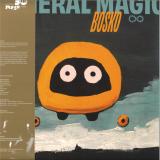
Editions Mego presents Bosko, landing exactly 30 years after the initial General Magic flights into the fantastic; the legendary first Mego release, a collaboration with Pita whereby all sounds were harnessed from the buzzing, drinking, humming sounds of fridges MEGO 001 General Magic & Pita and a 12” with Elin called Die Mondlandung (The Moon Landing) MEGO 002 which embarked on a minimal techno template so austere and strange it was one of the historic progenitors of austere and wonky rhythms alongside Sakho and other European explorers.
The initial return of the playful and mystical Austrian outfit General Magic came with the 20th year anniversary vinyl reissue of their classic debut Frantz eMEGO 010. A record so audacious and playful it still baffles as much as it entertains. At some point whilst working on this reissue GM’s Ramon Bauer and Andi Pieper were spurred on to rummage around with ideas and tools once more and after more than two decades of inactivity sonic sorcery was conjured once again. Live shows in honour of Peter Rehberg were performed in Vienna and London. Softbop, a limited risograph collaboration with Tina Frank came with the first new recordings as a digital download came out discreetly online. The first full length album following Rechenkönig in 2000 MEGO 032 “Nein Aber Ja” released in 2023 on Finlay Shakespeare’s GOTO Records on CD and cassette. An ongoing series of mix tapes online further highlights their interests encapsulating a new found angle on electronic mayhem. All of these elements retain the wildly eclectic and ecstatic glow that only they can harness and hand out to an unprepared world.
Now, we have General Magic’s second official full length comeback recording, Bosko. The new album is initially notable prior to the needle hitting the wax or the cursor identifying a track due to the artwork. Made by long term collaborator Tina Frank, this is Frank’s first analogue artwork, with a painting of a happy/nervous machine thing hovering in a landscape of no discernible identity. It’s quasi science fiction hovering amongst the potential for fun. Suited to the music? Natürlich.
Bosko sees Bauer and Pieper update and reframe their original investigations with a fresh supply of head scratching, heart racing tunes that hit the inexplicable with a wild mesh of drums, pianos, synthetic voices and all manner of immaterial sonic play. Startling sonics shock the ears on Club Duchamp which sounds like a conversation between synthetic adult ants in an environment still in development. Elfer features vocals supplied by a female-ish voice who, whilst grappling melody, has trouble executing a firm identity. Noorenhalt catapults along a mainframe of syncopation so unwieldy it feels like the voice, which is utterly alien, provides the only comfort. Seite 5 inhabits a fuzzy zone where a synthetic Horn of Jericho type ambience competes with rhythms never quite sure of who they are. Rise of the Ombré raises the spectral dread. Is this Science Fact? Absolutely nothing within Bosko is predictable.
The amount of change in the miasma of existence and the things we touch in order to make things has shifted so exponentially we are at the point where minds are starting to glaze over. All of this makes the return of the always original, always surprising, always fresh and exciting General Magic totally in tune with the artificial intelligent apocalyptic age we currently inhabit. The tools may have changed but the wonderfully warped gaze of Bosko offers a fresh new vision of perplexing funk and robotic punk.
Crafted for the depths of the club, the album pulses with raw analog energy - warm, gritty, and immersive. Each track is designed to resonate through concrete walls, blurring time and space, guiding listeners through dark corners and waves of bass.
But Lost Echoes goes beyond the dancefloor. It's a journey into the invisible - a sonic excavation of forgotten memories and buried emotions. Some echoes are loud and shaping, others faint whispers lost in the flow of time. This album revives them, layer by layer, melody by melody.
A deeply personal and physical experience, Lost Echoes invites you to dive into sound, movement, and memory - to lose yourself and perhaps find something long forgotten.
For their inaugural release, London-based Vysyon presents Mercuri: an enchanting EP of enigmatic techno featuring work by Swiss artists Varuna & Mateo Hurtado. Having developed their brand of abyssal club music through releases on Amenthia Recordings & their own imprint A Walking Contradiction, Varuna dive into the void on 'Remote Pulsar'. Driven by a disorientating polyrhythm cloaked in opaque atmospherics, the trio's otherworldly approach to sound design is on full display. By contrast, the pounding 4/4 kick & propulsive acid bass of 'Uvez Echos' entrance the listener into a state of dancefloor reverie. Mateo Hurtado casts his own unique magic over the flip, showcasing his archetypal mystic sound established via an album on Annulled music & remixes for Space Drum Meditation. The mesmerising flute melody of 'An Invisible Fire, Working In Secret' casts a spell of hypnosis, while the flowing, amorphous pads & twisted bass of 'The Eternal Mirror' conjure visions of worlds unknown.
Dennis Quin is a Dutch talent who does it all from thumping tech to deep house on labels like Defected, Madhouse Records and PIV. He now steps up to the Slabs label run by Dungen Meat duo Brawther and Tristan Da Cunha with a swinging garage two-tracker. 'Farmette' has nice sleazy bass and drum combinations with razor-sharp hi-hats and rolling bass that never quits. 'Ode To Todd' has a more skippy rhythm but still keeps you locked with a fat low end. Some vocal chops and percolating synths bring further energy to this irresistible club cut. Another fine outing from Quin.