Cerca:drum nation

Generi
Tutto
Gigi - Illuminated Audio (2x12")

180g Heavy double vinyl LP with liner notes by Tyran Grillo. Limited Japanese Obi for the first pressing. Original artwork by Russell Mills and photography by Jean-Baptiste Mondino.

The third Time Capsule is a body of dub reinterpretations by celebrated producer Bill Laswell of Ethiopian singer Gigi. Curated by Tokyo record collector, music researcher and seasoned reissue supervisor Ken Hidaka, it is the first time Illuminated Audio is pressed to vinyl after its CD release in 2003.

Ejigayehu Shibabaw was born in 1974 in Chagni, northwestern Ethiopia and by pursuing a career as a singer, went against her father’s strict, traditional gender roles. As Gigi, she embraced the same musical freedom she had strived for in her personal life, incorporating the Ethiopian church, funk, hip-hop, West and South African music into her work. She first settled in Nairobi, then Addis Ababa, where she quickly established herself as one of the city’s leading singers. A move to San Francisco in 1998 led to a long and fruitful creative partnership with bassist and producer Bill Laswell.

Around the same time, Chris Blackwell had stepped away from Island Records to start the art house film company and label Palm Pictures. He took an interest in Gigi and together with Laswell, pulled together an all-star cast of musicians for her self-titled US debut album, including Herbie Hancock, Pharoah Sanders and Wayne Shorter. It won international critical acclaim, not just for its musicianship but for making Gigi a “defining voice for the Ethiopian expatriate community”, as journalist Tyran Grillo praises in his Time Capsule liner notes. From the nation-defining 1896 victory over Italian invaders to the quiet revolutionaries who wear simple shemma garments, Grillo believes the themes in Gigi make it “a shower of sunlight on her homeland for those ignorant of its struggles.”

After its success, Blackwell encouraged them to go back into the studio to rethink the album and Illuminated Audio was born. “Anyone can make a voice sound worldly”, Grillo remarks, “but rare are those who can make one sound inner-worldly.” Gigi was clear with Laswell to give her vocals a minor role “because it’s already been done.” Instead her Amharic verse is fleeting, exhaling through the textures like ghostly fragments; soaring yet muted. Yet the album is still titled under her name, an assertion by Laswell of her central role in the album’s creation. Not only was it a fully endorsed project by Gigi, but she would be present throughout its development, giving feedback on half-finished ideas as Laswell played them back in the studio. “It works perfectly”, she reflected after the album’s release. “We wanted to capture the whole spirit of each track, and Bill’s remixes create a different music language that really puts you in a pleasant place”.

This new vocabulary takes its lead from a technical approach that Laswell had been perfecting during a furtive creative period at the turn of the millennium. Much like his ambient interpretations of Miles Davis (Panthalassa, 1998), Bob Marley (Dreams of Freedom, 1997), and Carlos Santana (Divine Light, 2001), Laswell approached Illuminated Audio by returning to the original multitrack masters. Gigi wasn’t just reworked, but recomposed into an expansive lattice of instruments, submerged in a watery ambience of dub and trance undercurrents.

Sonically, this new language that Gigi refers to, is manifested by the original album’s more understated parts being pushed to the fore. Explaining his contrasting methods, Laswell saw Gigi as being “put together in a way that fits”. Contrastingly, in Illuminated Audio, “a lot of things that I featured in the remix weren’t as audible in the original.” Instrumentation laying near-dormant, deep in the mix, are brought to the fore: the acid rock guitar and Wayne Shorter’s saxophone on ‘Tew Ante Sew’, Graham Haynes’ flugelhorn on ‘Nafekeñ’, Laswell’s bass on ‘Kahn’, the melodica in Mengedegna or the floating synths and talking drums in ‘Gud Fella’.

Brought to his attention by mentor DJ Nori, Hidaka describes Illuminated Audio as a “masterful sonic exploration into ethereal ambience and dub” and made sure this reissue also contained a full remaster to give its “deep musicality” much better dynamics and density in the overall sound. Hidaka admits that Laswell's music “is sometimes so out-there, it is often misunderstood” and, indeed, to dub album non-believers this might seem like a prolific producer imposing himself on another artist’s work; eternally developing rearrangements that never quite get to its destination. But that’s missing its true power and triumph. This is more than the reissue of a remix, but “a wholly unique musical entity”, as Hidaka describes. Illuminated Audio refers to the illuminated manuscripts that comprise the major part of Ethiopian art and its new compositions stand in proud solitude as a rare body of reworks that both informs and enhances their originals.

pre-ordina ora24.04.2026

dovrebbe essere pubblicato su 24.04.2026

18,07
Dr K. Gyasi & His Noble Kings - Sikyi Highlife LP
  • A1: Yede Aba
  • A2: Mene Menua Mienu
  • A3: Sabarima
  • A4: Ebia Nie
  • A5: Amintiminim
  • A6: Siakwaa
  • A7: Nana Agyei
  • B1: Efie Ne Fie
  • B2: Nyankonton Nko Nyaa
  • B3: Kwankwaasem Nti
  • B4: Egya Ananse Yi Wonan Baako
  • B5: Kwaadede Meyare Merewu
  • B6: Eda A Mewu

Strut proudly presents the first-ever reissue of a landmark 1974 Ghanaian highlife classic Sikyi Highlife by Dr K. Gyasi & His Noble Kings, originally released on Essiebons.

A defining recording of the era, Sikyi Highlife bridges tradition and innovation at a pivotal moment in Ghanaian music. Deeply rooted in the classic 1950s–’60s highlife sound, K. Gyasi drew inspiration from the ancient sikyi drum-dance of the Akan people of southern Ghana, shaping the album’s rhythms around its distinctive pulse.

The vocal arrangements echo the traditional Akan modal style, grounding the music firmly in Ghana’s cultural heritage. Yet Sikyi Highlife is equally forward-thinking. As electric guitars became standard in highlife during the 1960s, the 1970s ushered in further experimentation. The Noble Kings broke new ground as the first highlife guitar band to incorporate keyboards and a full horn section into their sound, expanding the genre’s sonic possibilities while retaining its rootsy spirit.

Gyasi’s approach was part of a broader indigenisation movement among Ghana’s electric highlife bands in the post-independence era. Inspired by the nation’s ‘African Personality’ ethos and reinforced by Afrocentric messages arriving from American soul and funk, artists began reclaiming traditional forms within modern arrangements. Contemporaries included Koo Nimo, who revived the older palmwine style, and drummer Nii Ashitey, whose Wulomei band pioneered a folklorised Ga highlife sound from 1973.

Like many musicians of his generation, Gyasi was a passionate supporter of Ghana’s independence movement. In 1963, he travelled as a musical ambassador alongside Ghana’s first president, Kwame Nkrumah, performing across North Africa and the USSR and carrying Ghanaian culture onto the world stage.

The Noble Kings’ mid-’70s line-up featured some of the country’s finest musicians, including guitarist Eric Agyeman (who led the band at the time), Thomas Frimpong on drums and vocals, Ernest Honny on organ, and bassist Ralph Karikari - who was renowned for his innovative technique of translating the rhythms and tonal language of the traditional talking drum onto electric bass.

Upon its original release, Sikyi Highlife became one of the biggest-selling albums of the 1970s for Essiebons, earning Gyasi the affectionate honorary title of “Dr” from his devoted fans. Today, the album remains an evergreen classic, still cherished across Ghana and beyond.

pre-ordina ora15.05.2026

dovrebbe essere pubblicato su 15.05.2026

22,27
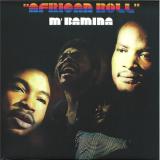
M’BAMINA - AFRICAN ROLL

Gatefold Sleeve

M’Bamina – African Roll (1975)
The story of an album born between Africa, Italy, and the nightclub culture of the 1970s
In the heart of 1970s Italy — a country undergoing profound social change and a music scene just beginning to open itself to distant sounds and cultures — an extraordinary, almost improbable story took shape. It is the story of a group of young African musicians who found their way to Europe, of a Turin nightclub that became a crossroads for communities and experimenters, and of an album which, released in small numbers and largely unnoticed at the time, is now considered a rare jewel of Afro-fusion.
The band called themselves M’Bamina — an ensemble of musicians from Congo, Cameroon, and Benin, who arrived in Italy in the early Seventies. Settling between northern Italy and the Pavia area, they began performing in small clubs and community events, bringing with them a vibrant rhythmic heritage: African polyrhythms, call-and-response vocals, funk-infused bass lines, and Caribbean or Afro-Latin colours absorbed along their musical journeys. Their raw, contagious energy on stage quickly drew attention.
Meanwhile, in Turin, another story was unfolding. There was a venue becoming almost legendary: Voom Voom, one of the city’s liveliest nightclubs, run by Ivo Lunardi. The club attracted an eclectic crowd — students, artists, foreigners, night owls — and Lunardi quickly understood that the dancefloor wasn’t just a place for music, but a melting pot for a new kind of cultural energy. Out of this vibrant atmosphere came his idea: to turn the club’s name into a small independent record label, Voom Voom Music, capable of capturing the spirit of those years and giving voice to unconventional projects.

When Lunardi heard M’Bamina, he immediately sensed that this was the sound he had been searching for: fresh, different from anything circulating in Italy at the time, and capable of blending African tradition with funk and European sensibility. He brought them into the studio.
Production was handled by Lunardi along with Christian Carbaza Michel, while the engineering was entrusted to Danilo Pennone, a young sound technician with a sharp, intuitive ear.
The recording sessions — held in Turin in 1975 — produced a remarkably warm and direct sound. The music feels almost live: grooves rooted in African tradition, but open to funk-rock structures and modern arrangements. It is a natural fusion, never forced. Tracks move between tribal rhythms, funk basslines, light electric guitars, congas and Afro-Latin percussion, with call-and-response vocals and melodies that echo both Congolese tradition and the lineage of Latin jazz. Not by chance, one of the album’s most striking tracks, Watchiwara, reinterprets a Latin standard through M’Bamina’s own rhythmic language.

The album was titled African Roll — a name that was already a statement of intention. It is African music that “rolls,” that moves, adapts, transforms within a new geographic and cultural setting. It is not strictly Afrobeat, nor Congolese rumba, nor Western funk: it is a spontaneous, hybrid blend, shaped more by lived experience than by any calculated aesthetic program.
When African Roll was released, the world around it barely noticed. Distribution was limited, and 1970s Italy had yet to develop a cultural framework for receiving such music. The national music press rarely paid attention to African or “world” productions. The album slipped into silence — though the band’s own story did not.

M’Bamina continued performing across Europe and Africa, even sharing a stage in Cameroon with none other than Manu Dibango. By the late Seventies, they moved to Paris, signed with Fiesta/Decca, and recorded a second LP, Experimental (1978). Meanwhile, the peculiar record they had made in Turin began to resurface quietly among vinyl collectors, Afro-funk enthusiasts, and DJs hunting for forgotten grooves.
That is when the album’s fate began to shift.

Over the decades, African Roll emerged as an almost unique document: a snapshot of an intercultural Italy before the word “intercultural” even existed, a fragment of migrant history, a spontaneous experiment in musical fusion born far from major industry circuits but rich in authenticity. Original copies began commanding high prices on the collector’s market, and the album became recognized as one of the hidden classics of European Afro-fusion from the 1970s.
Today, more than fifty years later, this reissue finally restores visibility and dignity to a project that deserves to be heard, studied, and celebrated. It is not simply an album: it is the testimony of a rare cultural encounter, born in an Italy unaware of how fertile such exchanges would one day become.

It is the story of a visionary producer, an extraordinary band, and a fleeting moment in which music, migration, and nightlife came together to create something genuinely new.
African Roll is — now more than ever — the sound of a bridge: between continents, between eras, between cultures. A record that, after rolling far and wide, has finally come home.

In Stock

Disponibile in Stock e pronto per la spedizione

23,49
Ribé & Roll Dann - Virtus Occulta

Ribé & Roll Dann

Virtus Occulta

12inchMR-043
Mutual Rytm
13.03.2026

Ribe & Roll Dann serve up potent techno on Mutual Rytm with 'Virtus Occulta'.

Built around concepts of unacknowledged work and enduring merit, the release marks their first EP on SHDW's widely
respected label.

Based in Toledo and Madrid, Ribe & Roll Dann are exciting residents at Laster Madrid and Lanna Club, two of Spain's leading venues. Emerging as driving forces in their national techno scene, they have also made an impact on the global landscape, making wider moves through collaborative releases on Klockworks, and individual outings on a number of other influential labels. Having previously featured in the label's Federation of Rytm IV compilation, the pair make their full EP label on SHDW's Mutual Rytm imprint to open March with a deep dive into their expansive sound.

Opener 'Sub Terra' is a pure club tool that is direct, physical and rooted in the underground with a seriously heavy low end. 'Extra Lumen' is more restrained but still built on a steady, forceful rhythm with controlled energy that prefers to operate in the shadows. 'Ars Non Placens' stays true to the idea that music is not made to please, but to exist on its own terms with hunched drums and dubby undercurrents. Next, 'Meritum Negatum' fizzes with static electrical charge and minimal drum funk and is a direct reflection on overlooked skill and unacknowledged work, before closer 'Virtus Persistens' delivers a continuity and a steady pulse rather than an explosive ending, keeping you locked throughout.

In addition, three digital bonus cuts come alongside the vinyl package. 'Labor Inauditus' speaks to hours of technique, production and booth experience that remain invisible. Next come the taught, rubbery rhythms and unrelenting atmosphere of 'Silentium Testium', while 'Sine Aplausu' - which means without applause - brings a ghostly late night vibe that you will never want to end.

In Stock

Disponibile in Stock e pronto per la spedizione

14,92
Ruf Dug - DB12 019

Ruf Dug

DB12 019

12inchDB12019
Duca Bianco
12.03.2026

Ruf Dug flies to Duca with 4 edits showcasing his Ruf Kutz have never been far from the mind.

Rhythm Section, International Feel, Pinchy & Friends, Wolf Music, Music For Dreams and Klasse Wrecks all released the Dug, it’s super honouary to board.

Manchester to Guadalope to Ibiza, his reputation as a DJ, producer and toker is example to all. Here we go. Dug dives in, drum machines ready, mutated across scenes. Street Soul, si! Industriale, buono! Beatdown, no problemo !

Ruffy’s Big Decision is UK Disco meets back alley Boogie, love pains galore over driving funk bass. You Are The One !

Ruffy’s TV Channel is metalica. Heavy beats, unrelenting. Funk to 11. Sherwood. Ciao. Pursuit of trivia. Television, The Drug Of The Nations !

Ruffy Electric Bill. Now we move. Cowbell chiunque? New York ‘81. Smoke stacks. Cars bouncing Downtown. Nobody gets to meet the Duke. Set. It. Off !

In Stock

Disponibile in Stock e pronto per la spedizione

17,86
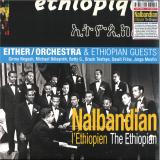
NALBANDIAN THE ETHIOPIAN & EITHER/ORCHESTRA - NALBANDIAN THE ETHIOPIAN (ETHIOPIQUES)

The Éthiopiques series returns! Essential archive recordings from an extremely fruitful period in Ethiopian music.

Before “Swinging Addis” took over the world, there was Moussié Nerses Nalbandian — the Armenian-born composer who shaped modern Ethiopian music. Mentor, arranger, and pioneer, he laid the foundations of Ethio-jazz.

This Éthiopiques volume revives his forgotten legacy, recorded live by Either/ Orchestra First issue ever with new exclusive photos and in depth liner 8-page insert.

“Ethiopian jazzmen are the best musicians that we have seen so far in Africa.
They really are promising handlers of jazz instruments.”

Wilbur De Paris
(1959, after a concert in Addis Ababa)

አዲስ፡ዘመን። *Addis zèmèn* **A new era.**
The time is the mid-1950s and early 1960s, just before "Swinging Addis" bloomed – or rather boomed – onto the scene. Brass instruments are still dominant, but the advent of the electric guitar, and the very first electronic organs, are just around the corner. Rock’n'Roll, R’n’B, Soul and the Twist have not yet barged their way in. Addis Ababa is steeped in the big band atmosphere of the post-war era, with Glenn Miller's *In the* *Mood* as its world-wide theme song, neck and neck with the Latin craze that was in vogue at the same period. Life has become enjoyable once again, with the return of peace after the terrible Italian Fascist invasion of Ethiopia (1935-1941). The redeployment of modern music is part and parcel of the postwar reconstruction. *Addis zèmèn* – a new era – is the watchword of the postwar period, just as it was all across war-torn Europe.
The generation who were the young parents of baby boomers** were the first to enjoy this musical renaissance, before the baby boomers themselves took over and forever super-charged the soundtrack of the final days of imperial reign. Music is Ethiopia's most popular art form, and very often serves as the best barometer for the upsurge of energy that is critical for reconstruction. Whether it be jazz in Saint-Germain-des-Prés or the *zazous* who revolutionised both jazz and French *chanson* after the *Libération*, be it Madrid's post-Franco Movida, or Dada, the Surrealists and *les années folles* that followed World War I, the periods just after mourning and hardship always give rise to brighter and more tuneful tomorrows. Addis Ababa, as the country's capital, and the epicentre of change, was no exception to this vital rule.

**Two generations of Nalbandian musicians**
Nersès Nalbandian belonged to a family of Armenian exiles, who had moved to Ethiopia in the mid-1920s. The uncle Kevork arrived along with the fabled "*Arba Lidjotch*", the** "*40 Kids*", young Armenian orphans and musicians that the Ras Tafari had recruited when he visited Jerusalem in 1924, intending to turn their brass band into the official imperial band. If Kevork Nalbandian was the one who first opened the way of modernism, pushing innovation so far as to invent musical theatre, it was his nephew Nersès who would go on to become, from the 1940s and until his death in 1977, a pivotal figure of modern Ethiopian music and of the heights it. Going all the way back to the 1950s. Nothing less. And it is Nersès who is largely to thank for the brassy colours that so greatly contributed to the international renown of Ethiopian groove. While the younger generations today venture timidly into the genealogy of their country's modern music, often losing their way amidst a distinctly xenophobic historiographical complacency, many survivors of the imperial period are still around to bear witness and pay tribute to the essential role that "Moussié Nersès" played in the rise of Abyssinia's musical modernity.
Given the year of his birth (15 March 1915), no one knows for sure if Nersès Nalbandian was born in Aintab, today Gaziantep (Turkiye/former Ottoman Empire) or on the other side of the border in Alep, Syria... What is certain is that his family, like the entire Armenian community, was amongst the victims of the genocide perpetrated by the Turks. Alep, the place of safety – today in ruins.
Before Nersès then, there was uncle Kevork (1887-1963). For a quarter of a century, he was a whirlwind of activity in music teaching and theatrical innovation. *Guèbrè Mariam le Gondaré* (የጎንደሬ ገብረ ማርያም አጥቶ ማግኘት, 1926 EC=1934) is his most famous creation. This play included "ten Ethiopian songs" — a totally innovative approach. According to his autobiographical notes, preserved by the Nalbandian family, Kevork indicates that he composed some 50 such pieces over the course of his career. This shows just how much he understood, very early on, the critical importance of song as Ethiopia's crowning artistic form. Indeed, for Ethiopian listeners, the most important thing is the lyrics, with all their multifarious mischief, far more than a strong melody, sophisticated arrangements or even an exceptional voice. (This is also why Ethiopians by and large, and beginning with the artists and producers themselves, believed for a long time — and wrongly — that their music could not possibly be exported, and could never win over audiences abroad, who did not speak the country's languages).

Last but not least, one of Kevork's major contributions remains composing Ethiopia's first national anthem – with lyrics by Yoftahé Negussié.
Nersès Nalbandian moved to Ethiopia at the end of the 1930s, at the behest of his ground-breaking uncle. Proficient in many instruments (pretty much everything but the drums), conductor, choir director, composer, arranger, adapter, creator, piano tuner, purveyor of rented pianos,... he was above all an energetic and influential teacher. From 1946 onwards, thanks to Kevork's connexion, Nersès was appointed musical director of the Addis Ababa Municipality Band. In just a few years, Nersès transformed it into the first truly modern ensemble, thanks to the quality of his teaching, his choice of repertoire, and the sophistication of his arrangements. It was this group that would go on to become the orchestra of the Haile Selassie Theatre shortly after its inauguration in 1955, which was a major celebration of the Emperor's jubilee, marking the 25th anniversary of his on-again-off-again reign.

At some point or other in his long career, Nersès Nalbandian had a hand in the creation of just about every institutional band (Municipality Band, Police Orchestra, Imperial Bodyguard Band, Army Band, Yared Music School…), but it was with the Haile Selassie Theatre – today the National Theatre – that his abilities were most on display, up until his death in 1977. To this must be added the development of choral singing in Ethiopia, hitherto unknown, and a sort of secret garden dedicated to the memory of Armenian sacred music, and brought together in two thick, unpublished volumes. Shortly before his death (November 13, 1977), he was appointed to lead the impressive Ethiopian delegation at Festac in Lagos, Nigeria (January-February 1977).

His status as a stateless foreigner regularly excluded him from the most senior positions, in spite of the respect he commanded (and commands to this day) from the musicians of his era. Naturally gifted and largely self-taught, Nerses was tirelessly curious about new musical developments, drawing inspiration from the very first imported records, and especially from listening intensely to the musical programmes broadcast over short-wave radio – BBC *First*. A prolific composer and arranger, he was constantly mindful of formalising and integrating Ethiopian parameters (specific “musical modes”, pentatonic scale, and the dominance of ternary rhythms) into his “modernisation” of the musical culture, rather than trying to over-westernise it. It even seems very probable that *Moussié* Nerses made a decisive contribution to the development of tighter music-teaching methods, in order to revitalise musical education during this period of prodigious cultural ferment. Flying in the face of all the historiographical and musicological evidence, it is taken as sacrosanct dogma that the four musical modes or chords officially recognised today, the *qǝñǝt* or *qiñit* (ቅኝት), are every bit as millennial as Ethiopia itself. It would appear however that some streamlining of these chords actually took place in around 1960. It was only from this time onward that music teaching was structured around these four fundamental musical modes and chords: *Ambassel*, *Bati*, *Tezeta* and *Antchi Hoyé*. A historical and musical “details” that is, apparently, difficult to swallow, especially if that should honour a *foreigner*. Modern Ethiopian music has Nersès to thank for many of its standards and, to this day, it is not unusual for the National Radio to broadcast thunderous oldies that bear unmistakable traces of his outrageously groovy touch.

In Stock

Disponibile in Stock e pronto per la spedizione

22,06
Aladdin - The Aquatic Genie

Aladdin

The Aquatic Genie

12inchPAGER016
Pager Records
17.12.2025

Pager Records returns with catalog number sixteen, dropping another essential slab of wax: The Aquatic Genie — a 5-track journey that blends house, disco, funk and a wink of humor — this time from Aladdin, a French DJ and Producer based in Lyon, coming in HOT with his unique approach to house music, influenced by jazz, funk and reggae. Drawing from these influences his sound feels fresh yet rooted in the DNA of Pager’s signature aesthetic.

Intro (Flying Carpet Airlines) – hazy lift-off joint, saturated samples and dubbed-out FX pulling you into a low-slung groove. Cosmic Lounge Energy…

Forever – breaky house with elastic low-end and vocoder shimmer that sneaks into your head. Pure sunrise material…

You Smell Like Fish – house on a g-funk trip! Funk-driven bass, warm keys, and talkbox heat bringing a modern boogie twist — guaranteed eyebrow-raiser.

Doyoulike2dance – straight-up party trigger with a smile. Funk-loaded drums and a hook that says it all. Pure body music.

Rock The House – stripped-down, Detroit-tinged funk workout to shut it down raw and sexy…

Playful and funky — The Aquatic Genie keeps one foot in the house nation and taps the other into the disco world. Full of character, bounce, and club weight — another Sureshot from Pager for both DJs and Listeners <3

Limited Vinyl Pressing. Don’t sleep on it.

In Stock

Disponibile in Stock e pronto per la spedizione

12,82
Ralph Weeks - Let Me Do My Thing (7")

Esteemed soul man of Panama Mr. Ralph Weeks has in recent years been enjoying a much overdue retrospective of his remarkable six decades-long musical journey with the help of Names You Can Trust. Now onto their fifth record release together since 2019, the label has covered both Weeks' original holy grail material as well as re-cuts and reimagining of some of his rarefied and unreleased songs.

One of Mr. Weeks' two iconic 45 releases on Panamanian label Sally Ruth was a funky soul side called "Let Me Do My Thing," originally recorded in 1971 as Weeks' answer to Charles Wright's big tune "Express Yourself," which had just hit the airwaves in 1970. Weeks' musical response would help define his legacy. He was gonna express himself, he was gonna Do His Thing. This golden age ultimatum recorded with the Dynamic Exciters of Panama as the backing band was a simple, straight ahead number with a defining message that would be carried on throughout Weeks' independent career. The funkified air and creative freedom of the original tune is a prime example of the crossover Combos Nationales sound that flourished in the prolific Panama recording industry of the era, and in the ensuing decades Weeks' tune would live on as a cherished rare groove for souleros, funk fans, and bootleggers alike.

Fast forward to 2023, when Ralph Weeks and Names You Can Trust prepared for a Bay Area appearance at the wonderful Latinos Con Soul weekender put on by San Francisco's Discodelic record shop, the groundwork was laid in the studio for a revival, a reawakening of Weeks' funky fan favorite. A spectacular ensemble of NYCT's All-Star artists and alumni was convened in the studio, including Caito Sánchez on drums, Victor Axelrod (Daptone Records) on clavinet and Sam Day Harmet (La Banda Chuska) on guitar. Anant Pradhan (The Skatalites), Eric Biondo (The Budos Band) and Alex Asher (Los Cumpleaños) occupied the brass section, and Ralph Weeks even lent his still formidable chops on electric bass and keyboards, a little OG flare to back up his silky voice with a deft musical touch. What came out of the sessions was a chance for NYCT to pay homage to Weeks' iconic original, without replacing it, and build a brand new version from the ground up with the maestro and composer himself!

In Stock

Disponibile in Stock e pronto per la spedizione

18,07
Boogie Times Tribe - The Dark Stranger (Remixes) (2x12")

SUBURBAN BASE RECORDS PRESENTS BOOGIE TIMES TRIBE – ‘THE DARK STRANGER’ – REMIXES

The Dark Stranger by Boogie Times Tribes is one of the most iconic anthems from the evolution of Drum & Bass. The Dark Stranger now returns for Halloween 2025, with an incredible new double-vinyl package featuring brand new remixes alongside long-lost classics. Pressed on a stunning glow-in-the-dark vinyl and housed in a specially illustrated sleeve depicting the mysterious Dark Stranger character, this release is as collectible as it is powerful.

The package contains eight mixes of this legendary track, cut loud for maximum DJ impact with just two tracks per side to ensure the heaviest playback. Brand new 2025 remixes come courtesy of Crissy Criss (mixed and mastered by TC), Marvellous Cain & DJ Choppah, Metrodome & Sl8r, Exile & Mark XTC, AKAS, and Freeze UK, all reimagining the anthem for today’s dancefloors.

To complete the set, the original 1993 remixes from QBass and the classic Origin Unknown Part 2 Remix are included, both made available here for the very first time since their original release in 1993, having never been repressed or released digitally until now.

This release is already generating massive buzz across the scene. At the recent D&B All Stars event, Andy C dropped the Crissy Criss remix, sparking the only rewind of his epic set. Other versions are already receiving huge support on Kool FM, Rinse, Pure FM, and across clubs and festivals nationwide.

A true piece of legendary Drum & Bass history reborn, The Dark Stranger returns this Halloween 2025! A must-have for DJs, collectors, and D&B fans worldwide.

In Stock

Disponibile in Stock e pronto per la spedizione

26,01
various - Forgotten Relic EP

dxrvo, hailing from Hannover, Germany, has made a name for himself in the electronic music scene by creating hypnotic, minimalist, and atmospheric techno sets. His music takes the dance floor on a captivating journey, characterized by driving beats, rhythmic basslines and repetitive sounds. With performances at renowned venues such as Tresor Berlin, PAL Hamburg, Doka Amsterdam, Watergate Berlin, and Terminal Lyon, he showcases his presence in theinternational techno landscape. As a founder of the Kollektiv Synergie, dxrvo is committed to inclusive events and the promotion of diverse artists. His production skills are evidenced by successful releases on labels like SYXT, Room Trax, Modern Minimal, and NYXII. More than just a DJ, dxrvo is an architect of sonic experiences, continuously redefining the boundaries of electronic music.


Linear Phase
With a two-decade career in music production, Carlos, better known as Linear Phase, has become an established artist in the global techno scene. His eclectic sound proposal, ranging from ambient / drone, through minimal / deep / hypnotic, to raw techno, has earned him the recognition of both critics and the public. His prolific career is reflected in the more than 50 releases under his belt in the last 5 years on several internationally renowned labels such as Molecular, Planet Rhythm, Newrhytmic, Drumcode LTD or Edit Select, to name a few, thus consolidating his presence in the global scene. His 5 years of experience in the world of modular eurorack has allowed him to develop a unique and personal sound, characterized by its depth, textures and enveloping atmospheres. In addition to his role as a producer, Linear Phase is co-creator of the Barcelona Modular Society, a space dedicated to the exploration and dissemination of experimental electronic music. Linear Phase is currently developing the creation of both its own label and its new studio, which will become a creative hub oriented to host all kinds of activities related to techno production. This space will feature the participation of renowned national and international producers, consolidating his commitment to the scene and his vision for the future.

Innmenal
Innmenal is a DJ and producer from Pinamar, Argentina. Resident from FAS Producciones he focuses into hypnotic sounds and chaotic rhythms. He has been playing across the Argentinian coastline spreading his sounds characteristics. With continous work and dedication Innmenal's tracks can be found in labels such as Concepto Hipnotico, Apical Records and Diffuse Reality. His first album called Metatron's Cube was released this year on the Diffuse Reality's Label. Another album is planned over this year along other releases on other labels. His last track Winds Of change was released on the label Modern Minimal with some support coming from Rødhad, Svreca, Developer, Richie Hawtin, Slam, Justine Perry, Arnaud Le Texier, Distant Echoes, Dax J, Hugo Rolan and more. He has shared the decks with Mariano DC doing warm up during last year. With more than 10 years behind the decks he's still digging into the deep hypnotic sounds with some agressive percussions to give the listener a journey through his cosmic sounds. So far Innmenal has been active in various labels like Diffuse Reality, Modern Minimal, KPLR, Space Travel, Rowan Underground and Habitat Musical.

Qaypz
Qaypz is a DJ and producer hailing from Arlon, Belgium. As a child of the 90s dance music era, his journey into electronic music began in 2000, ignited by his first I Love Techno Festival experience in Belgium and the underground rave scene that was thriving in his hometown Liège, where Jungle and D'n'B from UK were dominating. This era made Qaypz start mixing on turntables and embracing vinyl culture in 2003. Today, he's versatile, seamlessly transitioning between turntables, CDJs and DAW-based setups, incorporating hardware and controllers for a hybrid mix performance style. In his early years, he organized local rave parties and later moved to Eupen, the capital of East Belgium, where he founded the collective Krank'm'Haus. Qaypz's passion for underground sounds is evident in his productions. He crafts dark, industrial tracks characterized by powerful kicks, somber melodies and a driving rhythm. His performances have graced notable locations such as The Ground Club in Luxembourg, The Liquid Club in Malta and The Kulturzentrum Alterschlachthof in Eupen as well as underground events like La Nature, Eupen Musik Marathon Festivals in East Belgium and the Rummelstilzchen’s illegal rave party in Berlin-Rummelsburg just before the building demolition the day after. Qaypz is currently focusing on his label development and continue producing and mainly releasing his music on Krank'm'Haus Records.

In Stock

Disponibile in Stock e pronto per la spedizione

12,19
REDNILO - REDNILO

Rednilo

REDNILO

12inchIRM2534
Irma Records
17.09.2025

RedNilo is an Italian-Moroccan duo composed of Reda Zine and Danilo Mineo, two musicians based in Bologna linked by a deep passion
for world music, particularly African music. Their ongoing and tireless musical exploration has led them to collaborate for over a decade
on numerous artistic and recording projects. Their new album, eponymously titled RedNilo, features six tracks characterized by a sound
reminiscent of Gnawa, Hassani, Tuareg, and experimental rock. The psychedelic, raspy riffs of the electric guitar, the repetitive rhythms
of the percussion, and the rhythmic-melodic lines of the guembri represent and evoke their journey. The resulting sound material is the
culmination of their journey and their encounters with masters, artists, griots, artisans, and instrument makers in the Draa Valley in
southeastern Morocco, bringing together the two musicians' urban and experimental backgrounds and souls. The album's artwork was
designed by Moroccan artist Aali Wica, initiator and mentor of their spiritual and artistic journey to the southern African continent,
across the long black snake.
Réda Zine, a musician and documentary filmmaker born in 1977 in Casablanca, launched his musical career in the 1990s, contributing
to L'Boulevard, Africa's largest independent festival. Raised in the Casablanca medina, he was introduced to Gnawa music by various
Maallems. After studying at the Paris 3 Sorbonne University, he founded Café Mira, a project that has performed at several international
events.
From 2011 to 2014, Zine was artistic director for Creative Commons (Middle East and North Africa), where he won the #CC10 Korea
award in 2012 with the project "It will be Wonderful," which brought together musicians from over 12 countries. He has also been
involved in exhibitions on music and censorship, participating in events in major cities such as Paris, Buenos Aires, and Seoul. In Italy,
he continued his musical research with the Hardonik project and was part of the Afrobeat group Voodoo Sound Club, recording the
album Mamy Wata. Zine collaborates with artists such as Seun Kuti and has initiated educational activities related to Gnawa music,
contributing to initiatives such as the African Symphony Laboratory for improvisers. He is the co-founder of Fawda, a Gnawa-based
project, and is part of the Gnawa Rumi collective, which explores the music of the Moroccan diaspora in Italy. He directed the documentary "The Long Road to the Hall of Fame" about Public Enemy, which won an award at the Pan African Film Festival in 2015.
Danilo Mineo graduated as a national educator from the AMMnationalscholl music academy in Milan, with a thesis entitled "Afro-Cuban
Music and the Rhythm Section." Over the years, he has attended workshops and masterclasses with international artists and masters
of percussion and drums, including Horacio El Negro Hernandez, Airto Moreira, Trilok Gurtu, Luis Agudo, Arto Tuncboyaciyan, Dudu
Tucci, Dom Famularo, Karl Potter, Rodney Barreto, and Eno Zangoun, exploring the rhythmic language of various musical genres and
styles.
In addition to publishing several educational manuals for percussionists, music critics consider him a versatile percussionist, active in
various musical productions and recordings: Mop Mop, Fawda, Guglielmo Pagnozzi "Voodoo Sound Club," Fabrizio Puglisi "Guantanamo," Panaemiliana, The Mixtapers, and many others, with whom he has performed at numerous national and international music festivals (in Europe and Africa). As a percussionist and side man he has recorded numerous albums and collaborated with Italian and
international artists including: Giancarlo Schiaffini, Gianluca Petrella, Roy Paci, Roberto Freak Antoni, Famoudou Konate, Melaku Belay, Baba Sissoko, Kalifa Kone, Jamal Ouassini, Deda, Dj Lugi, Bioshi.

In Stock

Disponibile in Stock e pronto per la spedizione

21,64
Life Moves Pretty Fast - The John Hughes Mixtapes (6x12")
 
43
disponibile anche

2LP Edition[87,35 €]


Demon Music group in conjunction with the Hughes family are proud to present the first official compilation of music
from the movies of legendary filmmaker John Hughes, covering the classic eighties period 1983 – 1989.
For anyone growing up in the 1980s, the films of John Hughes are some of the most iconic of the decade and have
created a lasting cultural impact still felt and referenced across TV, film and music. As well as the characters and
stories created in these iconic movies, what made John Hughes’ movies different from the rest was the symbiotic
relationship between scene and music. Whether Cameron Frye staring at the painting in Ferris Bueller’s Day Off set to
The Dream Academy’s “Please, Please, Please Let Me Get What I Want (Instrumental)”, Duckie and Andie from Pretty
In Pink at prom set to Orchestral Manoeuvres In The Dark’s “If You Leave”, or even Neal and Del’s classic “Those aren’t
pillows” scene from Planes, Trains and Automobiles set to Emmylou Harris’ “Back In Baby’s Arms”.
“Music was a huge part of filmmaking for him, it was a thing he seemed to like the most.” Matthew Broderick
Curated by John Hughes’ music supervisor Tarquin Gotch, this 6LP vinyl boxset includes 73 tracks from the movies
National Lampoon’s Vacation, Sixteen Candles, The Breakfast Club, Weird Science, Pretty In Pink, Ferris Bueller’s Day
Off, Some Kind Of Wonderful, Planes, Trains And Automobiles, She’s Having A Baby, The Great Outdoors and Uncle
Buck.
“Back when we were working on these movie soundtracks, the best way to send music around the world was the
cassette, by Fedex. We sent John cassettes of newly released music, of demos, of just finished mixes (and in return he
would send VHS videos of the scenes that needed music).” Tarquin Gotch
The films of John Hughes spawned many classic tracks, some licensed for the films, some commission specifically, and
many going on to become huge international hits from acts such as Simple Minds, Kate Bush, Furniture, Yello, and
The Psychedelic Furs.
“It serves as a reminder not just to the musicians he championed in the 1980s, but to how intensely his search for
music expanded beyond this era. Until his final days, he was still collecting outrageous amounts of music from around
the world, galaxies removed from the New Romantic and new wave sounds that, to many, still define him.” James
Hughes
Also includes an extensive 24-page booklet including memories from Matthew Broderick, James Hughes, Tarquin
Gotch, Ron Payne, plus track-by-track sleeve notes.
“John said he only made movies so he could choose what music to put in them, so as his success at the Box Office
grew, and thus his power with the studios, the number of tracks in his films, by up and coming UK bands, steadily
grew.” Tarquin Gotch


Billy Idol - "Catch My Fall" (From The 1987 Movie 'Some Kind Of Wonderful')
The Association - "Cherish" (From The 1986 Movie 'Pretty In Pink')
Penguin Cafe Orchestra - "Music For A Found Harmonium" (From The 1988 Movie 'She's Having A Baby')
Zapp - "Radio People" (From The 1986 Movie 'Ferris Bueller's Day Off')
Blue Room - "Cry Like This" (From The 1987 Movie 'Some Kind Of Wonderful')
Ray Charles - "Mess Around" (From The 1987 Movie 'Planes, Trains & Automobiles')
Joe Turner - "Lipstick, Powder & Paint" (From The 1989 Movie 'Uncle Buck')
Darlene Love - " (Today I Met) The Boy I'm Gonna Marry" (From The 1984 Movie 'Sixteen Candles')
Marvin Gaye - "How Sweet It Is (To Be Loved By You)" (From The 1988 Movie 'She's Having A Baby')
Perry Como/Mitchell Ayres & His Orchestra/The Ray Charles Singers - "Juke Box Baby" (From The 1989 Movie 'Uncle Buck')
The Chordettes - "Mr Sandman" (From The 1989 Movie 'Uncle Buck')
Ray Anthony & His Orchestra - "The Peter Gunn Theme" (From The 1984 Movie 'Sixteen Candles')
Lindsey Buckingham - "Holiday Road" (From The 1983 Movie 'National Lampoon's Vacation')
Emmylou Harris - "Back In Baby's Arms" (From The 1987 Movie 'Planes, Trains & Automobiles')
Hugh Harris - "Rhythm Of Life" (From The 1989 Movie 'Uncle Buck')
Spandau Ballet - "True" (From The 1984 Movie 'Sixteen Candles')
Propaganda - "Abuse" (From The 1987 Movie 'Some Kind Of Wonderful')
The Dream Academy - "The Edge Of Forever" (From The 1986 Movie 'Ferris Bueller's Day Off')
Yello - "Lost Again" (From The 1987 Movie 'Planes, Trains & Automobiles')
Bryan Ferry - "Crazy Love" (From The 1988 Movie 'She's Having A Baby')
The Rave-Ups - "Positively Lost Me" (From The 1986 Movie 'Pretty In Pink')
Los Lobos - "Don't Worry Baby" (From The 1985 Movie 'Weird Science')
Steve Earle - "Continental Trailways Blues" (From The 1987 Movie 'Planes, Trains & Automobiles')
The Revillos - "Rev Up" (From The 1984 Movie 'Sixteen Candles')
Boston - "More Than A Feeling" (From The 1988 Movie 'She's Having A Baby')
Balaam & The Angel - "I'll Show You Something Special" (From The 1987 Movie 'Planes, Trains & Automobiles')
The Rave-Ups - "Rave Up/Shut Up" (From The 1986 Movie 'Pretty In Pink')
Pop Will Eat Itself - "Beaver Patrol" (From The 1988 Movie 'The Great Outdoors')
The Vapors - "Turning Japanese" (From The 1984 Movie 'Sixteen Candles')
Silicon Teens - "Red River Rock" (From The 1987 Movie 'Planes, Trains & Automobiles')
out

In Stock

Disponibile in Stock e pronto per la spedizione

79,79
The Rebel - Atom's Dance

The Rebel

Atom's Dance

7"-VinylLGF718
Legofunk Records
07.08.2025

The Rebel returns on Legofunk with the first two tracks of his new album World of No Nation out this summer. Ethnic influences, a jazz touch and a clubby perspective in these completely original songs also thanks to the collaborations of excellent musicians from the roman scene and beyond.
Atom's Dance - produced by Tommaso Taroni, keys David Assuntino, flute Livio Ricci, drums Federico Balestra,percussion Nené Vasquez, double bass Luca Lauria.
Jungle Jazz - produced by Tommaso Taroni, Congas Massimiliano Troiani, sax Matteo Acclavio, Keys David Assuntino.

In Stock

Disponibile in Stock e pronto per la spedizione

11,56
Life Moves Pretty Fast - The John Hughes Mixtapes (6x12")
 
43
disponibile anche

6LP Edition[79,79 €]


Demon Music group in conjunction with the Hughes family are proud to present the first official compilation of music
from the movies of legendary filmmaker John Hughes, covering the classic eighties period 1983 – 1989.
For anyone growing up in the 1980s, the films of John Hughes are some of the most iconic of the decade and have
created a lasting cultural impact still felt and referenced across TV, film and music. As well as the characters and
stories created in these iconic movies, what made John Hughes’ movies different from the rest was the symbiotic
relationship between scene and music. Whether Cameron Frye staring at the painting in Ferris Bueller’s Day Off set to
The Dream Academy’s “Please, Please, Please Let Me Get What I Want (Instrumental)”, Duckie and Andie from Pretty
In Pink at prom set to Orchestral Manoeuvres In The Dark’s “If You Leave”, or even Neal and Del’s classic “Those aren’t
pillows” scene from Planes, Trains and Automobiles set to Emmylou Harris’ “Back In Baby’s Arms”.
“Music was a huge part of filmmaking for him, it was a thing he seemed to like the most.” Matthew Broderick
Curated by John Hughes’ music supervisor Tarquin Gotch, this 6LP vinyl boxset includes 73 tracks from the movies
National Lampoon’s Vacation, Sixteen Candles, The Breakfast Club, Weird Science, Pretty In Pink, Ferris Bueller’s Day
Off, Some Kind Of Wonderful, Planes, Trains And Automobiles, She’s Having A Baby, The Great Outdoors and Uncle
Buck.
“Back when we were working on these movie soundtracks, the best way to send music around the world was the
cassette, by Fedex. We sent John cassettes of newly released music, of demos, of just finished mixes (and in return he
would send VHS videos of the scenes that needed music).” Tarquin Gotch
The films of John Hughes spawned many classic tracks, some licensed for the films, some commission specifically, and
many going on to become huge international hits from acts such as Simple Minds, Kate Bush, Furniture, Yello, and
The Psychedelic Furs.
“It serves as a reminder not just to the musicians he championed in the 1980s, but to how intensely his search for
music expanded beyond this era. Until his final days, he was still collecting outrageous amounts of music from around
the world, galaxies removed from the New Romantic and new wave sounds that, to many, still define him.” James
Hughes
Also includes an extensive 24-page booklet including memories from Matthew Broderick, James Hughes, Tarquin
Gotch, Ron Payne, plus track-by-track sleeve notes.
“John said he only made movies so he could choose what music to put in them, so as his success at the Box Office
grew, and thus his power with the studios, the number of tracks in his films, by up and coming UK bands, steadily
grew.” Tarquin Gotch

In Stock

Disponibile in Stock e pronto per la spedizione

87,35
HARRINGTON - DANCIN' BETTER EP

HARRINGTON

DANCIN' BETTER EP

12inchSLMXR004
Soulmeex
18.06.2025

SOULMEEX record label returns this summer with a heatwave of nostalgia-infused grooves, welcoming French producer Harrington for his debut release on the label. Known for his raw, emotive take on electronica, Harrington blends italo, dream house, and vintage synth textures with a distinct nod to the golden era of Chicago and New York club culture. The result: two original cuts that pulse with timeless energy.

On the A side, Dancin’ Better channels a bittersweet euphoria, driven by retro drum machines, silky basslines, and melancholic melodies that feel both familiar and fresh. The remix comes courtesy of Prom Night, one of Copenhagen’s most vital dancefloor architects. His version reimagines the track turning it into a peak-time heater for dreamy dancefloors.

Flip to the B side for System Nation, a darker, more propulsive journey through late-night zones, with Harrington crafting a groove that’s both hypnotic and emotionally charged. Stepping up on remix duty is Berlin’s own Maltitz. His italo remix injects System Nation with shimmering synths nodding to the genre’s roots while pushing the vibe forward.

In Stock

Disponibile in Stock e pronto per la spedizione

13,40
Neba Solo - Tuma Duma

Neba Solo

Tuma Duma

12inchBM046
Blanc Manioc
22.05.2025

Neba Solo, whose real name is Souleymane Traoré, is a true living legend of Malian music. His voice and balafon playing are unique, instantly recognizable, and deeply cherished throughout Mali.

He gained international recognition with his iconic track CAN 2002, composed for the famous African Cup of Nations. This success opened doors to global stages, leading to tours in the United States, Asia, and Europe. Prestigious labels such as Cobalt and Secousse supported this exceptional period in the artistic journey of this musical genius.

For many years, Neba Solo has closely collaborated with Yaya Diarra, the sound engineer of the legendary Bogolan studio in Bamako. Diarra played a key role in preserving and recording the works of the balafon master from Sikasso. He was also the one who invited Dom Peter to work on a bold and resolutely modern project: an album with more electronic sounds, enriched with drum machines, offering a new artistic direction to Neba Solo’s compositions.

Dom Peter and Yaya Diarra immersed themselves in the studio to conceive and produce this album, titled TUMA DUMA. The result is a perfect alchemy, where electronic rhythms blend seamlessly with traditional percussion, redefining the richness of Malian musical heritage.

These nine tracks explore classic themes of the Mandingue repertoire while showcasing Neba Solo’s unique way of narrating both everyday life and universal stories

In Stock

Disponibile in Stock e pronto per la spedizione

22,65
Various - Nigeria Special Vol.3 : Electronic Innovation Meets Culture And Tradition 1978-93 (3x12")

Soundway Records presents a collection of Nigerian music chronicling a time when drum machines, synthesisers, imported pop, reggae, disco and soul collided with highlife, juju and cultural music. The late 70s saw a period of political turbulence and prompted change across the country. Following suit, musicians and producers entered a period of experimentation, adaptation, modification and innovation, using new technology to renew and refresh cultural traditions.

Nigerians formed their own unique approach to the limitless creativity these new instruments offered, to reveal a distinct sound which would dominate local airwaves for the decade to come. Nigeria Special Volume 3 celebrates the rich diversity of culture and musical styles of the nation, showcasing eighteen tracks across various genres which laid foundations for the innovation of Afrobeats artists of today. Triple Vinyl gatefold LP compiled by Miles Cleret and Jeremy Spellacey, includes a large 8 page booklet with detailed liner notes, record scans and never-seen-before photos.

In Stock

Disponibile in Stock e pronto per la spedizione

26,68
Johnny Burgos - Hit Me Like / Get Back

Singer, songwriter and producer Johnny Burgos returns with veteran producer Jeremy Page (Kendra Morris, Czarface, MF Doom) for "Hit Me Like," the
instrumental is dripping with retro soul nostalgia, serving up the drums and bass-forward and funky, under
a blanket of buttery guitar chords. The production carries Burgos' silky smooth and heartfelt delivery
effortlessly, offering a brilliant take on a timeless-sounding, soul-inspired love song.

Singer, songwriter, and producer Johnny Burgos returns with

veteran soul producer, Jeremy Page, (Kendra Morris, Czarface, MF Doom, That Handsome

Devil) for "Get Back." The fourth single off of the duo's upcoming album titled, 'All I Ever Wonder,' is a vulnerable retrospective of a love gone cold, with hopes of rekindling the

magic that once kept its flame alive. In true Neo Soul form, the song is driven heavily by the

drum and bass groove, distinctly reminiscent of an early 2000's J Dilla beat. Page's signature

colorful chords evoke the struggle in Burgos' story, as he confronts his inability to accept the fate

of his relationship and let go of the magic it once embodied.

Johnny Burgos is a Brooklyn - born singer, songwriter, producer & engineer. His brand of retro-soul embodies a

raw uncompromising sound revealing beauty from pain, hope from despair, and the will to keep fighting.

Influenced by his uncle and world-class percussionist, Andre Martinez, growing up Johnny developed a

fascination with the percussive rhythms of salsa and soul music, eventually manifesting into a devoted passion

for hip-hop production using an Akai MPC. With influences from Michael Jackson, OutKast, J Dilla, Lauryn Hill

and D'Angelo, Johnny's music draws upon the core principles of R&B, while encompassing elements of

hip-hop, funk, pop, salsa, and reggae. Collaborations include artists such as DJ Skizz, Mobb Deep & M.O.P.,

Marco Polo, Frans Mernick, and Liza Colby (The Gold Setting) and his band Bridge City Hustle, with whom he

toured nationally.

As a solo artist Johnny debuted with back-to-back brand endorsements from French's Mustard and Samsung

US, using them as a platform to launch his 2018 EP Love Through it All. In March 2021 his debut album Gone

Into The Grey received critical acclaim and has since been added to multiple editorial playlists by Spotify, Apple

Music and Tidal, resulting in an ever-growing listening fan base. In 2022, Burgos' song "Wild About You" was

then used as the soundtrack for Neiman Marcus' It's Your Moment global streaming campaign.

In Stock

Disponibile in Stock e pronto per la spedizione

17,23
Various - Art Boi Sin

Various

Art Boi Sin

12inchLAP002
LAP
16.04.2024

LAP records is proud to present a new split EP, available on 12inch vinyl, featuring two very promising combos. The A-side kicks off with “Art Boi Sin<”by Click Click & Najeh, a hard-hitting club gem that pays tribute to the New York gay scene. With its catchy vocal samples and driving acid bassline, this track will make you feel like you are in the middle of a wild night out. The B-side starts with “Tabu Subject” by aitch & Brut, a groovy techno tool that samples alluring phrases. This track is a playful and seductive affair that mixes crisp drums, bouncy bass, and cheeky vocals. This EP is a showcase of a timeless sound and a testament to the talent and passion of LAP records. LAP records is a division of PAL Hamburg.

In Stock

Disponibile in Stock e pronto per la spedizione

13,40
Alain Goraguer - Rare Soundtracks & Lost Tapes LP

Transversales Disques proudly presents Alain Goraguer Rare Soundtracks & Lost Tapes.
French composer Alain Goraguer who first made a name for himself as a sideman and arranger for Serge Gainsbourg wrote very few soundtracks, but amongst them, the legendary La Planète Sauvage (1973) is an absolute staple of France’s essential music.

During that same period of time, Goraguer wrote two rare and beautiful scores using the same masterclass arrangements. On L’Affaire Dominici (1975), Alain Goraguer creates a theme of great melodic clarity from a palette of breathy flutes, clavinet D6 baroque textures, wah-wah guitars and slow-paced drums that clearly reminds La Planete Sauvage’s atmosphere. The same can be said about the score of Au delà de la peur (1975) with its descending clavinet melody, twanging bass riff, funky drums and flashes of bended electric guitars. This record also includes never before released tracks found in the vaults of French national radio: beautiful and timeless orchestral compositions recorded at Studio 105, Maison de la radio.

REMASTERED FROM THE ORIGINAL MASTER TAPES

In Stock

Disponibile in Stock e pronto per la spedizione

22,65
Articoli per pagina:
N/ABPM
Vinyl