Classic jazz-funk fusion from the late, great Japanese guitarist Ryo Kawasaki. Recorded in New York, and originally released in 1976, 'Juice' presents Ryo at the height of his powers.
Born in Japan in 1947, Ryo had a long and stellar career recording and releasing music up until his passing on 13 April 2020, in Tallinn, Estonia. Ryo is one of the pioneers of the jazz fusion genre, with the Japanese jazz fusion / funk sound becoming extremely influential within the 80s UK club scene and amongst its DJs. His track 'Trinkets & Things' became a bonafide underground classic. In the US he worked with some of the greats of jazz, such as Elvin Jones, Chico Hamilton and Bobbi Humphrey, to name but a few. A forward-thinking and ever-evolving musician, Ryo collaborated with the Roland Corporation and Korg on the 'guitar synthesizer' and later wrote music software for computers. Later in life he relocated to Estonia and worked there, as well as Finland, Sweden, and the Baltic states.
'Juice' has become a much-loved album for crate diggers and jazz-funk enthusiasts, with its tracks frequently being sampled and re-imagined in hip-hop. The smokey, beat-down, spiritual funk jam 'Bamboo Child' has been flipped by Diamond D, Puff Daddy, and Kool G Rap. The album was released in 1976 on RCA Records and features the musicians' drummer Jimmy Young, rhythm guitarist Hugh McCracken, and bassist Stu Woods amongst other luminaries. A solid album throughout that incorporates a heavy dose of tripped-out synths alongside the emerging disco sound of the time. Tracks such as the opener ‘Raisins’, with its drum beat intro and bubbling bass-line, rivals The Headhunters at their finest. A superb album from an underground legend.
Search:drummer b
Helsinki quartet OK:KO releases their third album "Liesu" with We Jazz Records on 15 April. The band, led by drummer/composer Okko Saastamoinen and including saxophonist Jarno Tikka, pianist Toomas Keski-Säntti and bassist Mikael Saastamoinen (of Superpostion & Linda Fredriksson "Juniper") is a scene favourite in Finland and has recently garnered some international attention with their melodic, dynamic and original approach. The OK:KO sound is adventurous yet accessible, and contemporary yet rooted in the lineage of acoustic small group jazz.
When listening to OK:KO, you can feel that their influences also come from out of the musical realm. After all, isn't this just how it should be? Making music from your own life. Here, you can tell that the landscape of rural Finland, its poetic, at times even melancholy beauty, is ever present. It's folk song country. But don't be fooled, these guys form a real flesh and blood jazz band. That means that the music just starts when the first note hits, and onwards from there, we're in for a wild ride.
Whether punchy like on "Anima", solemn like on "Arvo", or just trekking out there a skiing lane of their own like on "Vanhatie", what you'll get is pure OK:KO. Melodic, interactive, honest and forward-reaching contemporary jazz music. That is something we appreciate – a lot!
Vinyl editions available on opaque white / black vinyl, with inside-out 3mm spine sleeve and a polylined black inner sleeve.
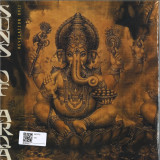
Suns of Arqa is a sonic mission created by luminary Michael Wadada, who began in 1979 after receiving higher guidance in Jamaica while working with roots reggae chanter Prince Far-I. It is a prolific traveling music collective that has seen over 200 collaborators, meant to connect people from all cultures and walks of life through a “deeply spiritual vibration that merges cultures, faiths and musical genres”. Wadada combines ancient Hindustani raga systems with Piobaireachd and Nyabinghi roots drumming, creating ritualistic world music infused with dub and reggae.
The lyrics combine both mystical and sensory elements, often including prayer and referencing a higher power but finding root in experiences common to all people- memory, sight, and physical sensation.
Their first album, Revenge of the Mozabites, was a collaboration between Wadada and On-U Sound creator Adrian Sherwood. Following its 1980 release,Peter Gabriel invited them to perform at the first WOMAD festival. Today, the record is regarded by some as a cult classic. Over the years they have played at many major music festivals including Glastonbury, Big Chill, Telerama Dub Festival, and Transmusicales, and released over 40 albums on Virgin, EMI, Interchill Records, Antler Subway, Red Rhino, and their own label, Arka Sound.
Suns of Arqa has had a seminal influence on the World Beat sound, and continued to make appearances at seasonal festivals and sacred ritual spaces all over the world until 2021. Michael Wadada passed away in the midst of planning their U.S. tour for this release. The record is a compilation of some of Wadada’s and Sleepers Record’s favorite old Sun of Arqa tracks, mixed by Youth and Adrian Sherwood, and mastered by Eroc (drummer of Grobshnitt).
Notable collaborating artists include: Guy Called Gerald, UK producers Youth and John Leckie, Greg Hunter, 808 State's Graham Massey, Finley Quaye, Sounds From the Ground, Bryn Jones aka MuslimGauze, Adrian Sherwood, John Cooper-Clarke, The late great Professor Stanley Unwin, Eric Random, New age guru Tim Wheater, Astralasia, Prince Far-I, The Orb's Alex Patterson, Zion Train, and Gaudi.
"And although the Great Spiritual being Michael Wadada has returned to source and his body to earth at our time, his music is alive and will continue to be a great force for higher spiritual realms and raising vibration through occult frequencies...Suns of Arqa will continue to raise the vibration of the hearts and minds of humanity" – Angela aka Angel-Eye (Wadada's wife and bandmate)
Lee Burridges’ All Day I Dream Presents Jim Rider’s Fantastic New EP, The Final Straw
The UK-Producer Revives the Labels’ Heavier Melodic Sensibilities Across 4-Originals
The title track opens an EP led by intention, accenting a time in the producer’s life where he was disillusioned with his day job and intent on pursuing music full time once again. “The Final Straw'' includes a romantic, husky narrative delivered by Namibian vocalist “Black Soda” (AKA Annely Ickua). Here we find him pulling from his musical upbringing - melodic elements afforded to him by his Mother, a folk musician and singer, and his focus on percussion fueled by his background as a drummer.
“Rascals” is a follow up to “Fools” from Jim’s 2021 Beatport category #1 EP “Popcorn & Politics”. It pays homage to the classic 1950s American TV show “Little Rascals” with eccentric keys and playful percussion alongside dazzling, eccentric elements from keys to tropical-inspired marimbas. “Los Que Caen,” as the name suggests, is inspired by Rider’s love of latin music and percussion and includes a heavy bass guitar riff, bouncy synths and a harp-led rhythm section. EP closer “The Cypriot” blends lead flute lines with plucky synths and a driving bassline while sporadic haunting vocal ad-libs and delayed keys add decoration to the track.
Baby Buddha is David Javelosa and musical partner Charles Hornaday playing instruments and providing their own whacked-out vocals. Baby Buddha really was less of a band than a project; a side project in fact, for some members of another group, Los Microwaves. Baby Buddha would eventually record and release an album, 1981's provocatively-titled Music for Teenage Sex on Robbie Fields' L.A.-based Posh Boy label.
Happily, the project's guiding creative light, David Javelosa has recently seen to a vinyl reissue of the now-40-year-old record, mystifyingly retitled Music for Teenage Sects. Definitely among the stranger releases of the new wave era, Music for Teenage Sex/Sects could perhaps only have been created when and where it was made. But on the occasion of its 40th anniversary, the music sounds as weirdly wonderful as ever. "We Are Not" sounds like Human League stuck in a car with The Residents. And their cover of "All Shook Up" sounds like a musical kin to those inscrutable eyeball guys too; it wouldn't be out of place on Meet the Residents. "Little Things" is a house-of-mirrors, scary track, with spoken-word vocals by Los Microwaves' Meg Brazill and label head Fields.
The album cover is slightly different as well: it displays a bedroom scene like the original LP, but with the young female model absent. The new release (on Javelosa's own Hyperspace Communications label) is pressed on beautiful translucent blue vinyl and comes in a gatefold sleeve with a lively collage of photos, buttons, gig posters. Limited to 500 copies.This playfully titled release features David Javelosa (on synth and vocals) along with Meg Brazill (on bass and vocals) plus drummer Todd "Rosa" Rosencrans. Side One features five studio tracks, none of which were included on the band's 1981 Posh Boy LP, Life After Breakfast. Three of these tracks were recorded in '82; there's no information regarding the provenance of the other two songs. The records' second side collects five live recordings, capturing Los Microwaves onstage in New York City (The Peppermint Lounge) and Boston as well as at San Francisco's own I-Beam, a venue that often played host to the band. Those tracks date form roughly the same ear, 1980-83. Sonically the songs variously recall Blondie, Flying Lizards, Gang of Four and a far less dour Human League. Importantly, the band rocks, even when it's employing a spare drum kit, solid but elemental bass, and monophonic analog synthesizers. The stripped down aesthetics of the group – necessitated by its minimalist instrumental approach – are nonetheless thrilling. Even if you weren't there in 1980, this'll take you back.
Reissue of Elizio De Buzios's "Tamanquiro". Remastered and pressed on 45 RPM!
Sitting a good 90-minute drive away from Rio de Janeiro’s crowded beaches and packed tourist hot-spots, Campo Grande is not a neighbourhood that attracts travellers from around the World. Traditionally it is home to the city’s lower middle-class, whose aspirations of moving up the social ladder were played out in a suburb that has always been solidly working-class.
Campo Grande is home to Elizio De Buzios, a Brazilian musician who started playing music in the late 1970s and early 1980s. De Buzios began as a drummer, before learning to play guitar and starting to compose and sing his own music. When he turned 18, De Buzios joined a local band formed by some of his friends and other like-minded local musicians: Sol da Terra. The band mostly played samba in neighbourhood bars and small venues around Camp Grande, but De Buzios was interested in more than just samba. While he naturally admired great samba composers such as Cartola and Beth Carvalho, his musical pass went far beyond Brazil’s national music. He also loved MPB and bossa-nova and at home he listed to Joäo Bosco, Milton Nascimento, Luis Melodia, Tom Jobim, and many bossa-nova singers.
In 1980 De Buzios was noticed by a local representative of international major label Polygram, who gave him the opportunity to record two songs. He was excited, so started searching for inspiration for the songs he would eventually lay down. He found that inspiration close to home while passing a neighbourhood shop which made and sold clogs. After noticing a display of then fashionable Portuguese clogs outside the store, De Buzios popped inside to talk to the owner. It turned out that he was a tamanqueiro – as clog-makers are traditionally called in his native Portugal – and was as passionate about music as he was about the footwear he made. Thus inspired, De Buzios returned home to work more on the lyrics and music.
The next day, he headed into the studio to record the song, with Vale Ribeiro, who later went on to produce tracks for Marcos Valle, behind the desk. With Ribeiro’s assistance, De Buzios managed to record two songs in one day: ‘Tamanqueiro’ and ‘Sou Um Louco’, a ballad with English lyrics blended into the mostly Portuguese text. From the start, it was clear that ‘Tamanqueiro’ would be the single’s A-side. Incredibly catchy and funky, with some subtle disco elements, the song remained distinctively Brazilian thanks to the use of the cuíca. Listening back all these years on, De Buzios’ lyrics seem almost spontaneous, carry the track forward, and make it almost impossible not to sing along. Its infectiousness and funkiness made it an instant hit with the first few people to hear it.
When it was released, responses to the song were enthusiastic, even if it never became the Brazil-wide smash it should have been. It resonated well in the local clubs and on the radio, but unfortunately the marketing was handled by an inexperienced Polygram employee who failed to adequately promote the track. As a result, the record sank without trace and De Buzios’ dreams of stardom evaporated. Having just started a family, he realized he could not live off the uncertainty of being a musician. Instead, he got a job at city hall as a civil servant, a role he continued until his retirement a few years ago. ‘Tamanqueiro’ and ‘Sou Um Louco’ remain the only two songs he ever recorded.
In the early 2000s, with the rise of diggers’ culture, ‘Tamanqueiro’ slowly surfaced again. It became a sought after, hard to find seven-inch single, finding its way onto the airwaves once more and into the ears of a new generation of listeners. Some started appreciating the song so much that it was referred to as the “best-Jorge-Ben-song-Jorge-Ben-never-recorded”. And they are right: ‘Tamanqueiro’ does have that Jorge Ben-straight-forwardness. It’s a completely honest song that’s almost impossible not to fall in love with. Thanks to this remastered reissue on Rush Hour, De Buzios may now get the props his sole record so richly deserves.
Now for the good news: De Buzios is still singing in local bars and clubs in and around Campo Grande. He is surprised, but also incredibly proud, that the record he had almost forgotten about is appreciated so much by a group of music lovers he didn’t even know existed. But above all, he is happy that more than 40 years after the recording session, the record lives on – not only on this re-release, but also in his weekend sets in the bars of Campo Grande.
The new batch from the bottomless edit archives of Danny Krivit is an uptempo, guitar-heavy excursion into two cuts of danceable rock from opposite sides of a decade.
“Marbles” originally came out late in 1970, the result of a collaboration between the fiery British guitarist John McLaughlin and drummer Buddy Miles. Miles was hot off his time with Jimi Hendrix, and producer Alan Douglas, who’d been instrumental in putting together the Band of Gypsys group, attempted another crossover combination with a brand new, blazing guitar god. Also on the date was Larry Young, an organ player best known for his expansive jazzy albums on Blue Note, and several veterans of Buddy Miles’ funk-rock combos. The resulting mixture produced in “Marbles” a powerful, driving rhythm anchoring an addictive riff that steamrolls through the cut in a fashion not unlike the motorik sound of Velvet Underground or Can. Mr. K’s edit leans heavily on the drums, naturally, with a long, tailor-made intro and a mesmerizing focus on the main riff, extending things well past the seven-minute mark.
Ten years later, the world of music was in an entirely different place but a good guitar riff coupled with a driving beat was still powerful currency on the dancefloor. This time, the group was Scottish new wave-punk group APB, whose single “Shoot You Down” had garnered unexpected peak time play in cutting edge NYC hotspots Danceteria, the Peppermint Lounge, the Ritz and the Mudd Club. “Shoot You Down” combines the urgency of the Clash with the free for all vibe that characterized the downtown scene (and throws in a chant borrowed from P-Funk for good measure). Mr. K has created a long instrumental opening that leads into the vocals, giving the tightly-wound 7-inch single a proper extended 12-inch treatment it deserved but never had before.
The sound is crisply remastered for club play, and stretched over the breadth of a 12-inch single. Both of these tracks are appearing on the long-format player for the first time.
2023 Repress
This latest limited 7" from Mr. K features two incomparable baroque soul masterworks, one from a Chicago-based band that defied categorization and the other a deep cut from a living legend songwriter and performer.
The psychedelic soul of Rotary Connection’s “I Am the Black Gold of the Sun” still sounds revolutionary and unlike anything else, a full fifty years after it was originally released in 1971. Swathed in ethereal ripples of strings (courtesy the Chicago Symphony Orchestra) innovatively arranged by unsung genius Charles Stepney, and rooted in a rock solid foundation provided by the cream of Chicago’s cutting edge session musicians (among them guitarist Phil Upchurch and drummer Morris Jennings, veterans of countless soul jazz cuts), “Black Gold” sits in uncharted territory somewhere between soul, rock, jazz and classical chamber music. It’s a gorgeous territory, a fantasy land where Minnie Riperton and Sidney Barnes’s vocals transmit mystical, uplifting vibes, the entire affair anchored throughout by an addictive piano riff—a mixture that proved irresistible to Masters at Work, who covered it for their Nuyorican Soul project in 1997. Mr. K’s edit doesn’t try to force anything fancy on this masterpiece, simply tightening it up and taking advantage of the lush remastering to present this progressive classic on 45 for the first time.
In keeping with the orchestral soul mood, Mr. K turns to Stevie Wonder’s “Pastime Paradise” for the flip. Whereas “Black Gold” paints a portrait of a magical land, Stevie’s lyrics on “Pastime Paradise,” originally issued in 1976, are a penetrating look at the very earthbound concerns of modern society and its follies, an urgent message to look ahead rather than languish in dreams of the past. The sensitive string accompaniment provides just the right amount of gravitas and emphasis to Stevie’s voice without overwhelming it, while the hare krishna-inspired tambourine keeps the rhythm effectively. Mr. K’s edit again keeps things true to the original, simply providing a subtle intro that uses the tambourine rhythm to lead into the body of the song.
Repress
Dakar, Senegal. From this hostile land Midnight Menace is the latest KAOS assigned and one of its kind. You all with your support to the label via bandcamp fixed his computer so he can deliver this first one as an introduction. His Schranz/hard techno beat dives into a trance-mission direct to your brain in order to make your body shake.
Moving on to France JKS is half of Jawbreakers his techno rave music is really influenced by iconic figures from the 90's rave culture (Dave the Drummer/ Stay up Forever) name track is a retrotesque beat with a powerful bass-line moving between trance, body music and electro clash. With a ton of class.
Next one on the list delivering one of those weirdo tracks that from time to time we love to showcase on our compilations. DJDJ debuts with a darkroom alike anthem. Job Sifre and DJ Dorien punishing with a high intensity Body music song, taste their Bloody Mary.
Closing this record P.E.A.R.L goes pure HEARTCORE, with his already known Spanish primitivism, a gabber kick and a dismounted amen break dissolves into a mood melody to chill a floor at the peak ready for the next explosion.
This are HEARTCORE ESSENTIALS pls use them responsibly.
#oftenplusneverminus8
KOOL KEITH is the most legendary trailblazer of hip hop music. With characters spanning from Dr. Octagon to Tashan Dorsett to Black Elvis to Dr. Dooom, Keith is always delivering realness, spectacles in word and sound, and creating new worlds with his many auras. SCORN is the electronic beat project of acclaimed exNapalm Death drummer Mick Harris, the Dark Lord of ambient dub. Mick Harris' prolific ventures across numerous projects include Painkiller (with John Zorn and Bill Laswell), Quoit, Lull, Monrella, and many more. SUBMERGED is the King of Underground Drum n Bass DJs, having pioneered the scene for the hard sound from Astana to Sao Paulo to Kiev to Brooklyn. He is the founder of Galactic Enterprise that is Ohm Resistance. DISTORTION is a collaborative single with some of the 100% certified dopest Kool Keith verses. He is tuned into his co-authors, dropping lines about "Power sources, Mediterranean bosses", going "52 states, European, Worldwide", discussing "more power to explore", and knowing how to "stick my hand out the speaker and reach y'all". A massive energy liftoff occurs as Keith joins his multiverse with that of the Ohm Resistance artists. Mick Harris' instantly recognizable bludgeoning beat carries the weight, as he trades off bass blast duties with the organic overdriven bassline of Submerged. A warning shot fired in advance of Scorn's album, "The Only Place", this single adds the missing element to Scorn that brings out the richness and flavor of Mick Harris behind the mixing desk. "I'm so happy to be working with a great voice - I could do more of, it adds another dynamic to Scorn." says Harris. Submerged explains his usual streak of unusual luck - "I had a bassline I had written and wanted to send to Mick Harris for Scorn. When the opportunity came to work with Kool Keith, Mick made his beat, and my riff fit exactly - so we coordinated the forces to put this record together". With Kool Keith being one of the most-named influences by many of the Ohm Resistance artists, his arrival to the label couldn't have come at a better time - a integrated circuit across 4 dimensions, connecting 3 legendary musicians around the globe. Mixed by MJ Harris in the Lad's Old Room B14; Vocals by Kool Keith Recorded at Studio G Brooklyn; Engineered by Tony Maimone, Assisted by Ross Colombo; Bass Guitar by Submerged at Blue Site I, Saaremaa; Mastered by Daniele Antezza for Dadub Mastering Studio; Artwork by Sagana Squale, Layout by MachineÖ
Bringing a combination of two conceptual artists Ultrastretch 11 moves away from dance music to present this comtemporary off kilter.
On the A side, Montreal based producer Ohm Hourani, known for minimalistic jazz influenced works on his own imprint ANOMA and beyond, with compositions showcasing infusions of organic sounds combined with modular synthestisers, drum machines and vocalists such as his collaboration with award winning Jazz singer and Vocalist Diminique Fils Aime.
On this release he presents a 14 minute stripped down, intrinsically and subtly arranged combination of elements Initiale by a minimalistic kick drum joined by a synth driven, quirky / hypnotic mind drilling element paired with the finest straight hihats delicately placed on the background as the Constant. The subtle movement of the track is introduced by percussive drumming, vocals and piano keys forming the most beautiful atmospheric melody. The last element of surprise brings shuffling hihats bringing amazing swing to the overall elegantly slick piece.
The B side brings the highly sought-after drummer Samuel Rohrer. Ranging from ECM sideman to member of KAVE, a quartet alongside techno pioneer Max Loderbauer, Stian Westerhus and Tobias Freund as well as collaborative works with Ricardo Villalobos and Laurie Anderson, he is known for his unique sound aesthetics on advanced musical cross-pollination, developments of improvisation in acoustic jazz and wider horizons of live electronics.
Rohrer also brings a hypnotic reinterpretation but in a very different manner / mood than the A side. Initiated by strings combined with Rohrer’s tight drumming patterns at the forefront and bass line underneath as the constant, combination by which forms a tense yet peaceful core pattern to this track. To compliment this, synths create movement by adding cosmic and quirky sounds forming an atmospheric soundscape with the whispering vocal “shake it” on top. Overall, the paradoxical relationship between tight (rhythm) and lose (soundscape) is presented in perfect harmony with each other.
green vinyl / full colour sleeve / incl dl. code
Klute, a.k.a. Tom Withers is no stranger to the LP format, Whatever It Takes is his 9th solo album. It was recorded over a period of 18 months in his own PBJ Studio, located in Suffolk.
Whatever It Takes contains Klute's signature blend of Drum & Bass, Hardcore, Jungle, House, Techno, Electro & Ambient stitched together with Klute' typical disregard for the rules of each genre.
Split into two halves, the album begins in high gear with 8 tracks of Drum & Bass. A rich pallet of D&B styles delicately layered with hidden depths and melancholic harmony. The album then shifts into Klute's own brand of House Techno & Electro, fully revealing his vivid tapestry of musical influences. The end result is highly original, individual and unique. Nobody sounds like Klute.
Klute on the album: "...with so much going on in the world and all the noise created by a growing instant culture I felt compelled to retreat into my own imagination and write individual chapters in melody and rhythm as a form of distraction and personal remedy. Early on in the process I made a conscious decision to make a wholly solo and instrumental record - the first time since my debut album CASUAL BODIES in 1998".
"There's something powerful in the mystique and imagination of music, closing your eyes and letting your mind and body loose to create its own visions. I feel that there is a lot of "surface" music around at the moment that physically dictates what you are supposed to feel. The music I love the most, the music that stays with me the longest is always the stuff that enters my subconscious state."
"Whatever It Takes" is an album for the long haul, to stand the test of time. Take your time, switch off your phone and listen and keep coming back for more.
Facts on Klute: Over the past 25 years Klute has established himself as a leader not just in the world of Drum & Bass but the entire Electronic music spectrum, counting a diverse range of luminaries amongst his fans, including the likes of Goldie, Laurent Garnier, Sasha, Mary Ann Hobbs, Doc Scott, Lee Burridge, Zane Lowe, Nastia, Andrew Weatherall, BT, and the sadly passed Marcus Intalex, David Bowie and late great John Peel.
Klute continues to tour the world as both an in demand DJ and drummer and singer in his hardcore band The Stupids.
It was in 1973, on the 14 of October, late in the afternoon; on a pretty Sunday under the Big Top in the heart of the “Parc de la Pépinière”, in Nancy; it was the “premiere”, the world
first hearing, and it has so far remained the only one commissioned by composer and trumpet player lvan Jullien, for the first international Nancy Jazz Pulsations festival. In order to complete this work of composition and orchestration, Ivan asked the great Eddie Louiss on organ, and chose to do without a double bassist who would have been drowned in a telluric outburst, for the best drummers in Europe and beyond had accepted out of sympathy to offer their contribution to such a festival. The only melodist with Louiss was the English John Surman (born in 1944) here on soprano saxophone, discharging torrents of incandescent lava.
Conversing with drums, cymbals, xylophones, kettledrums, vibraphones, tumbas, djembes and all other percussive things that you’ll like to imagine – a bunch of talents such as those
of the French André Ceccarelli, Daniel Humair or Bernard Lubat, the New Yorker Stu Martin, who reminds of Paul Motian in his “breaks”, South African Louis Mo-Holo, young Lamont Hampton, the great trombonist “Slide” Hampton’s son and the Malagasy Franck
Raholison, the Senegalese Lamine Konte. And we will scrupulously refrain from omitting the four musketeers, here representing
percussion in classical music, namely the Percussion Quartet of Paris under the leadership of Mr. Lucien Lemaire.
Polaroid were an Italian post-punk/new wave band, formed in Turin in 1981. This vinyl re-issue of 'Senza Respiro' contains all 6 original songs with 4 bonus tracks from the band's later period.
.
Polaroid made their debut with the cassette 6-track EP 'Senza Respiro', self-released in 1984. Influenced by Bauhaus, Joy Division, The Cure, Pere Ubu as well as Chic and Talking Heads. The music was dark and cold, but also melodic especially with regards to guitars and voices. At the end of 1984 the band added vocalist Michele Cantoblundo while drummer Marco left and was replaced by a Roland TR-909. With Michele began a period of very dark and poetic music, influenced also by bands like Red Lorry Yellow Lorry and The Sisters of Mercy. The band peacefully broke-up in 1987.
All songs have been remastered by George Horn at Fantasy Studios. The record is housed in custom jacket designed by Eloise Leigh and includes 4 polaroid sized postcards with photos notes and lyrics.
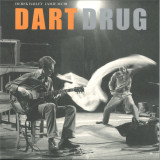
Percussionist Jamie Muir was a member of King Crimson during the recording of Larks' Tongues In Aspic, in 1973. Staying less than a year with Robert Fripp, the Scot had already cut his teeth with another master guitarist, Derek Bailey, as part of the Music Improvisation Company, along with Evan Parker, Hugh Davies and Christine Jeffrey, whose eponymous 1970 album was one of the first releases on ECM. Muir and Bailey recorded Dart Drug eleven years later, in 1981.There's no shortage of great percussionists in the brief history of free improvised music but on the strength of Dart Drug alone Jamie Muir deserves a place at High Table. Unlike for example Han Bennink and John Stevens, though, you can't hear echoes of any particular jazz drummer in Muir's playing, even if he has expressed appreciation for Milford Graves (who himself sounded like nobody else who'd come before him).What on earth did Muir's kit consist of Some instruments are clearly identifiable (bells, gongs, chimes, woodblocks); others could be... well, anything. Old suitcases thwacked with rolled up newspapers Tin cans and hubcaps inside a washing machine Who cares It sounds terrific - but if you're the kind of person who faints at the sound of nails scraping a blackboard, you might want to nip out and put the kettle on towards the end of the title track.Dart Drug is consistently thrilling, and often very amusing - but it's certainly not easy listening. In music we talk about playing with other musicians, whereas in sport you play against another opponent (or with your team against another team). Why not play against in music, too That's precisely what happens very often in improvised music, and Bailey was particularly good at it. How can a humble acoustic guitar hope to compete with a Muir in full flight Sometimes Bailey's content to sit on those open strings, teasing out yet another exquisite Webernian constellation of ringing harmonics and wait for the dust to settle in Muir's junkyard, but elsewhere he sets off into uncharted territory himself.'The way to discover the undiscovered in performing terms is to immediately reject all situations as you identify them (the cloud of unknowing) - which is to give music a future.' Bailey evidently concurred with this spoken statement by Muir, including it in his book Improvisation.Derek Bailey is no longer with us, of course, and Muir gave up performing music back in 1989. All the more reason for seeking out this magnificent, wild album.
To the beat of the drum! Contrary to its predecessor, the second volume of Rhythm Trainx only features only one drummer and one drummer only. Said drum is by courtesy of Ketiov (the brain child of Catz ‚n Dogz' Voitek Taranczuk) and what was initially expected to be just a contribution to a various artist compilation, mushroomed into a six-track exercise in bonus beats and rhythm tools, with propelling percussions, murky bass lines and tribal thrills. Channeling the heroes of the past with the means of today, Ketiov balances functionality with interestingness. Impressively crafted, brilliantly executed and perfectly pounding. Even deaf DJs could spice up their sorry lives with two copies of this. Blow your whistle!
Back in the day, French pianist, composer and all-round jazz superstar Jean-François Quiévreux, a.k.a. Jef Gilson, was up there alongside the likes of peers John Coltrane, Oscar Peterson, and Sun Ra. In a fitting homage to the decades worth of sublime music, and his sad passing away in 2012, French quarter Palm Unit have released a lively, honest tribute, upbeat and contemporary re-interpretative vision of his legacy.
.
Gilson has been noted for changing the face of bebop with free-jazz and afro. Along the way his big band featured the likes of Lloyd Miler, Bill Coleman, Michel Portal, and others. With his own recording studio and label Palm Records, Gilson released music from greats including Byard Lancaster, David S. Ware, François Jeanneau, and more. He also helped embed a more entho style to the world of jazz, inspired by his visits to Madagascar, which resulted in the famous Malagasy jazz albums.
Palm Unit are a wildly eclectic super-group of jazz greats includes uKanDanZ's saxophonist Lionel Martin, keyboardist Fred Escoffier from Le Sacre du Tympan, drummer Philippe 'Pipon' Garcia whose mostly known from his worth with the Erik Truffaz Quartet, and special guest Del Rabenja -- who played alongside Gilson in Malagasy -- on the Magascan valiha harp. Palm Unit plays Gilson's repertoire without any a priori, in a totally complex-free manner, reinventing it whilst preserving its original essence. The keyboards sound almost psychedelic (and often not that far from the style of Eddy Louiss on Jef Gilson's 60's albums), the sax scratches, mews and wails, whilst the drums make the whole thing swing. Even Del Rabenja was surprised to rediscover the songs still sounding so modern, decades after they were created.
After more than 30 years Early Sounds and Halfway Ritmo are finally releasing unpublished recordings (1982-1989) from former Tangerine Dream and Iggy Pop's drummer Klaus Krüger.
Advanced Dance combines a sweeping mix of Krüger's handcrafted acoustic drums and distinctive electronic sounds of the late Berlin-School years, creating a unique blend of advanced polyrhythms.
Krüger achieved a balance between creativity and classic drum patterns giving birth to an unconventional and avant-garde type of music that could be easily defined as a precursor of techno.
His progressive mentality led him to delve further into the tape collage technique and unique ways of triggering his drums. It was a whole new world of music - sustained by his artistic surroundings, which included collaborations as well as friendships with other influential artists such as David Bowie, Martin Kippenberger and Helmut Newton.
In the time of German division, the pulsating West Berlin became a melting pot of creativity and international encounters. Advanced Dance is the result of the blazing heat feeding the unstoppable thirst of discovery which characterized that generation, creating tunes that transform the listener's experience into one blissful moment amidst beautiful confusion.
After dropping several tracks and performing at select festivals throughout the years, Ólafur Arnalds and Janus Rasmussen dedicated the year 2014 to explore the area in-between Ólafur's more acoustic, piano-based solo work and Janus's synth-heavy electro pop, with their collaborative electronic project Kiasmos.
By focusing solely on their self-titled debut album, Ólafur and Janus have been able to combine and further develop their unique sound aesthetics to complete an album driven by their mutual love for electronic music. Made in Ólafur's newly build studio in Reykjavík, Iceland, a majority of the album was recorded using acoustic instruments next to a variety of synthesisers, drum machines and tape delays. It features a live drummer, string quartet and Ólafur performing on the grand piano, producing an ambient, textured sound, which makes it a perfect home listen and equally danceable record. If you listen closely, you can spot them record the thumb piano, finger snapping and even the sound of the metal grinder of a lighter slowly to replace the usual electronic hi-hat sounds, giving the album a far more intimate and unique atmosphere.
We decided to start almost completely over with this record, so most of the material is written this year with the idea of making a record that can stand as one piece rather than a collection of songs. I am very excited to get a proper record out exploring a different territory than I am used to. I touch a lot on electronic genres in my own music but never have the opportunity to go full out electronic like we do here.' - Ólafur Arnalds
The Kiasmos project has been around since 2007, but because of all our other projects we never really got the time to sit down and write all the tracks we always wanted to. So when we early this year finally found the time to sit down and make a full length album there was so much we wanted to try out. The result surprised us a bit, it's deeper and more emotional than we imagined it to be, but that's the beauty of being able to make an album.' - Janus Rasmussen
Long-term Erased Tapes graphics collaborator Torsten Posselt at Feld Studios in Berlin created the cover artwork. Feld Studios was a natural choice for Kiasmos, seeing he also designed the cover for their Thrown EP, released previously.
Kiasmos is made up of Icelandic BAFTA-winning composer Ólafur Arnalds, known for his unique blend of minimal piano and string compositions with electronic sounds, and Janus Rasmussen from the Faroe Islands, known as the mastermind of the electro-pop outfit Bloodgroup. Based in Reykjavík, Arnalds used to work as a sound engineer, often for Rasmussen's other projects, where the two musicians discovered their common love for minimal, experimental music. They eventually became best friends, often hanging out in their studio, exploring electronic sounds.
DC175 comes courtesy of Alias, a new project comprising of Harvey & Ryan McKay, who are two acts who have previously released solo material on the label. Harvey McKay's last appearance was in late 2016 when he dropped 'The Mad Drummer' on A-Sides Vol. 4 whereas Ryan McKay's last outing was in 2015 when he appeared on A-Sides Vol.3 under the name Skiver. This is the first collaborative project between the Scottish duo under their new moniker Alias.The EP opens with 'Pentatonic'; A tough sounding track that has been designed for the forward-thinkers. 'The Truth' follows up sharply, with vintage piano stabs and a vocal that gives the track abounding energy. The on-point percussion leads you on a trip of pure rapture. The release closes with the apocalyptic 'Dream Taker', which is teeming with sinister vocal action and hostile synth work and a sublime way to sign off.
After their stunning 2012 debut single "Wish" (FM X / Wish 001) and last year's "Diggin' On You" (D.O.C. 001), the incredibly gifted ELEKFANTZ return to the fore with what can only called a brilliant full-length premiere. The duo of Daniel and Leo first met 20 years ago, when they played together in a blues band. Leo continued his carreer as a professional musician while Daniel started to discover a new musical path.
The latter was born and bred at the electronic music temple in South America, later becoming a resident DJ and local hero, known as the right guy to prepare the dance floor and set up the right mood. He's one of the finest DJs of the Brazilian new wave of electronic aficionados. Leo is a professional drummer, singer and composer since the age of 15. He played and recorded with some of the greatest artists in Brazil.
Their debut album DARK TALES AND LOVE SONGS sports all the intimate melodies, lush harmonies and organic undertones that the duo has become know for and then some: from pop-infused songwriter house to highly emotive prime time anthems, you'll find lots to love about this expertly crafted collection of melodic gems. Engineered to perfection by label head GUI BORATTO, it's an exciting step for the imprint and the project alike - we can't wait hearing where they'll go next.
After the great success of 'Der Himmel uber Berlin', the second release on 'Envlp imprint' is signed by another South Italy's talent: Drum Communicate is a project of drummer and composer Francesco Varchetta.
The EP take the name from the first track, 'The Fast Line', which show all his talents as a musician, producing an 'Ambient' track with Detroit's influences.
Tuner is the second track, which has a marked groove and much more dancefloor, also remixed by Brendon Moeller in two versions, goes to conclude a release for true connoisseurs of the genre.
2LP 180gm heavyweight 45 RPM Audiophile Edition, Featuring a half speed remaster by Miles Showell at Abbey Road Studios, Housed in polylined inners, Printed insert with sleevenote. The Alan Parsons Project"s multi-million selling album The Turn of a Friendly Card (1980), their celebrated prog pop tour de force, is reissued in a variety of formats, including this 2LP heavyweight, 45 RPM Audiophile edition. Expertly cut by Miles Showell at Abbey Road Studios on a customised Neumann VMS 80 lathe at half speed using high-resolution archive transfers taken from Eric Woolfson"s rarely played, mint condition duplicate masters run at the time of the original sessions in 1980. Like other Alan Parsons Project albums, there were a variety of different lead vocalists employed including Chris Rainbow, Lenny Zakatek, Elmer Gantry as well as Eric Woolfson himself. Plus, a selection of session musicians such as guitarists Ian Bairnson and David Paton and drummer Stuart Elliott with arrangements by Andrew Powell.
2LP 180gm heavyweight 45 RPM Audiophile Edition, Featuring a half speed remaster by Miles Showell at Abbey Road Studios, Housed in polylined inners, Printed insert with sleevenote. The Alan Parsons Project"s million selling album Ammonia Avenue (1984), is re-issued in a variety of formats including this 2LP heavyweight, 45 RPM Audiophile edition. Expertly cut by Miles Showell at Abbey Road Studios on a customised Neumann VMS 80 lathe at half speed using a 1:1 archive transfer from the original SONY 1610 format digital mastertape recorded in 1984. Like other Alan Parsons Project albums, there were a variety of different lead vocalists employed including Chris Rainbow, Colin Blunstone, Lenny Zakatek as well as Eric Woolfson himself. Plus, a selection of session musicians such as guitarists Ian Bairnson and David Paton and drummer Stuart Elliott with arrangements by Andrew Powell.
2LP 180gm heavyweight 45 RPM Audiophile Edition, Featuring a half speed remaster by Miles Showell at Abbey Road Studios, Housed in polylined inners, Printed insert with sleevenote. The Alan Parsons Project"s multi-million selling critically acclaimed album Eye In The Sky (1982) is re-issued in a variety of formats, including including this 2LP heavyweight, 45 RPM Audiophile edition. Like other Alan Parsons Project albums, there were a variety of different lead vocalists employed including Chris Rainbow, Colin Blunstone, Lenny Zakatek, Elmer Gantry as well as Eric Woolfson himself. Plus, a selection of session musicians such as guitarists Ian Bairnson and David Paton and drummer Stuart Elliott with arrangements by Andrew Powell.
“Tectonic” is a concise portrait of SIMON BERZ’s geological sound explorations across continents over the last 15 years: drums, electronics, and a set of electronically manipulated basalt stones from Iceland.
SIMON BERZ is a transdisciplinary drummer, sound artist, and music educator based in Switzerland and Berlin. Working at the intersection of improvised music, sound art, and performance, and deliberately crossing boundaries between disciplines, his aesthetics are shaped by a sustained engagement with natural materials, particularly stone, and their sonic transformation through electronic manipulation. Beyond his performance work, BERZ founded BADABUM as an art label and a music school.
For the last 30 years, BERZ has been performing in Japan, China, Russia, the USA, Cuba, Iceland, Turkey, and across Europe. He has collaborated with artists including BILL LASWELL,BABY SOMMER, DAMO SUZUKI (CAN), JAMES TURRELL, JIMI TENOR, JOHN SINGLAIR, JOJO MAYER (NERVE), KONDO TOSHINORI, KIDD JORDAN, LAUREN NEWTON, LEE “SCRATCH“ PERRY, MAURO PAWLOWSKI (dEUS), NILS PETTER MOLVÆR, NIKI GLASPIE, NORBERT MÖSLANG, PAUL LOWENS, PFADFINDEREI, ROB MAZUREK, SKÚLI SVERRISSON, and he was the live drummer for APPARAT. As BERZ understands artistic practice as energy emerging from nature and through dialogue with people, his recorded output is intentionally selective, with one highlight being “Beats versus Breath” with KONDO and LASWELL (2023). Alongside a regular drumkit and electronics, he has developed his own instruments such as the “Lithophon” in which resonating stones are turned into amplified sound through water drops, and “Tectonic”, a set of Icelandic basalt stones shaped through electronic manipulation. These self- built instruments form the material basis for his performances, installations, and sound recordings.
“Tectonic” is also the title of BERZ’s latest work: a summary of his geological sound explorations across continents. From Iceland to Indonesia and Bali, from New Orleans to China, in caves and at shores, BERZ carried his millions-of-years-old basalt stones as both instrument and collaborator. On Java, he met Baron, a builder of stone gamelan instruments. At the Pacitan Tabuhan Cave (Indonesia) he performed with MISBACH BILOK and WUKIR SURYADI (SENYAWA) who work with corals as instruments. BERZ brought these encounters and “field recordings” to the Stöðvarfjörður studio in Iceland, where he recorded with his “Tectonic” set-up, drums, and electronics. The music was later mixed in Berlin by DIRK DRESSELHAUS (SCHNEIDER TM). The resulting album moves from club-driven tracks to ambient passages, from gamelan-inspired textures to HipHop-like beat patterns. It resists easy categorization while staying direct and physical in its impact.
Die Allstar-Band UNIVERSUM25, bestehend aus Sänger Michael Robert Rhein (In Extremo), Pat Prziwara
(Fiddlers Green / Gitarre), Gunnar Schroeder (Dritte Wahl / Gitarre), Rupert Keplinger (Eisbrecher, Antitype / Bass) und Drummer Alex Schwers (Slime) setzt mit ihrem zweiten Album „Die Maschinen wollen
leben“ ihren Weg konsequent fort und veröffentlicht hier 10 neue Songs voller Energie und Spielfreude.
Thematisch geht es auf „Die Maschinen wollen leben“ wieder postapokalyptisch und dystopisch zur Sache,
wobei der Fokus diesmal auf dem angespannten Verhältnis zwischen Menschen und Maschinen, und wachsenden der Macht der Künstlicher Intelligenz liegt. Als Ergänzung dazu deckt die Band mit sozialkritischen
Momentaufnahmen und pointierten Texten genau auf, welche Missstände und Auswüchse der Gegenwart
den Grundstein für das Hightech-Armageddon bilden
Heavyweight psychedelic improvisers EarthBall are back with their third and most monstrous record to date: ‘Outside Over There’, released on Upset The Rhythm (Nov 7th). Born from the haunted basements of Nanaimo, Canada, the quintet thrives on spontaneity, shaping improvisation into jagged hallucinations and ecstatic eruptions.
Recorded live-off-the-floor in 2024 in Jeremy, Izzy, and Kellen’s basement, and mixed by drummer John Brennan, ‘Outside Over There’ is an album that feels both summoned and inevitable. Each track lands with uncanny purpose, as if uncovered rather than written.
The opener, 100%, features a cameo from comedian and English icon Stewart Lee, who lent his blessing for the band to use a fragment of his stand-up. The album was mastered by John Dieterich (Deerhoof), with liner text contributed by longtime comrade John Olson (Wolf Eyes). Olson describes the album in his unmistakable style:
“This eight-track odyssey unfolds like a dreamscape, where whispered incantations brush against the shadowy fringes of the cosmos, and wild, Cézanne-inspired rock anthems erupt like geysers of color in the midst of a western warm and wet rain storm… culminating in the sprawling eleven minute masterpiece, ‘And The Music Shall Untune The Sky,’ aptly dubbed the Earth Crusher. A creation so utterly deconstructed and intertwined with the pulse of nature itself that if AI was called upon to conceive ‘Outside Over There’ anew, it would just spit back, “F.U. in Tree Font”. An enchanting invitation for even the flat-earthers to join the circle, if only just a little.”
EarthBall’s trajectory has been relentless. Their 2024 album ‘It’s Yours’ was praised by The Quietus as “fully aggressive and fully life-affirming,” and by The Wire as "a boisterous mind-melting album”. The band’s live double set LP ‘Actual Earth Music Vol. 1 & 2’ (2025) captured blistering performances: a performance opening for Wolf Eyes at the Fox Cabaret, and a Café OTO improvised throw-down featuring Chris Corsano and Steve Beresford. These releases on their own confirm them as one of Canada’s most vital experimental exports, not to mention the impressive self-released discography on their Bandcamp. The band’s reach has stretched far beyond their west coast roots with a UK tour May 2024, plus this past June, EarthBall closed Montreal’s Suoni Per Il Popolo Festival alongside Pulitzer Prize-winning composer Raven Chacon. This November they will perform at Le Guess Who? Festival in Utrecht, with a European tour to follow (tour dates below). Outside of EarthBall, each member carries their own torch. Jeremy Van Wyck, founding member of the legendary Shearing Pinx, has toured extensively, released over 100 records, and has been a vital force in the Vancouver and West Coast underground for the past 25 years. He and Isabel Ford (Izzy) play together not only in EarthBall, but also in Psychedelic Dirt, Shearing Pinx, Behaviours, and Crotch.
John Brennan collaborates widely, including recently with Endlings (Raven Chacon and John Dieterich), Evichen (Victoria Shen), Francesco Fonassi, Plan Your Future (with Greg Saunier of Deerhoof), Brennan/Corsano duo and Physics with John Dieterich. Kellen Maclaughlin performs with KVMP and Ora Corgan, while saxophonist Liam Murphy is a west coast staple, playing with the best across Vancouver Island and the mainland. On three of the tracks of ‘Outside Over There’, the band is joined by their comrade Justin Patterson, who also plays with Brennan in the duo Modale. This cross-pollination fuels EarthBall’s sound - a collective improvisation, psychically overdriven, and grinding into bloom.
Outside Over There’ is more than an album though, it is a ritual, a gathering of sound at the forest’s edge; where feedback, saxophone screams, and ecstatic vocals dissolve the boundary between chaos and clarity. EarthBall invite you into their circle, to share in the joyful terror of spontaneous creation. ‘Outside Over There’ will be released on November 7th through Upset The Rhythm digitally and as a limited blue-in-black vinyl LP.
- 1: Carrion Crawler
- 2: Contraption / Soul Desert
- 3: Robber Barons
- 4: Chem-Farmer
- 5: Opposition
- 6: The Dream
- 7: Wrong Idea
- 8: Crushed Grass
- 9: Crack In Your Eye
- 10: Heavy Doctor
What's the first thing you think of when someone mentions Thee Oh Sees? Probably their riot-sparking live show, right? Visions of a guitar-chewing, melody-maiming John Dwyer careening across your cranium, rounded out by a wild-eyed wrecking crew that drives every last hook home like it's a nail in the coffin of what you thought it meant to make 21st-century rock 'n' roll? Yeah, that sounds about right. But it misses a more important point-how impossible Thee Oh Sees have been to pin down since Dwyer launched the project in the late '90s as a solo break from such sorely missed underground bands as Pink and Brown and Coachwhips. (While Dwyer still records songs on his own, Thee Oh Sees is now a five-piece featuring keyboardist / singer Brigid Dawson, guitarist Petey Dammit, drummer Mike Shoun and multi-instrumentalist / singer Lars Finberg.) That restlessness extends to everything from the towering, thirteen-minute title track of 2010's Warm Smile LP to the mercurial moods of 2008's The Master's Bedroom Is Worth Spending a Night In. Now, Thee Oh Sees chase the home-brewed symphonies of Castlemania with the scrappy, high-wire hooks of Carrion Crawler / The Dream. Originally envisioned as two EPs, it was cut live to tape in less than a week at Chris Woodhouse's Sacramento studio in June, reflecting the battering-ram bent of the band's live show better than any bootleg ever could. "As I'm sure most would agree," explains Dwyer, "Castlemania was more of a vocal tirade. This one's meant to pummel and throb." That it does, whether one blasts the slow, speaker-bruising build of "The Dream," the sunburnt organs and dovetailing guitars of "Crack in Your Eye" or the interstellar instrumental "Chem-Farmer," a perfect example of what happens when one takes a well-oiled machine-a gang of rabid road warriors, really-and adds a second, groove-locked drum set to the mix. To listen is to realize that Dwyer's music is as manic as the underground comic inclinations of his artwork; colorful and confusing in a way that's more than welcome. It's downright refreshing, like a slap in the face at 5:00 in the morning. Or, as Dwyer puts it, "You have to leave a mark somehow."
- 1: Spirit Salient
- 2: The Rebel Duke
- 3: Wrecked
- 4: Valiant Heart
- 5: Prince Of This World
- 6: Time Is Out Of
- 7: Joint
- 8: My Throbbing Heart Shall Rock Thee
- 9: Ours Is The Fall
- 10: Sweet Remembrencer
- 11: I Am Thine
It's hard to fathom Martin Bramah's trajectory from his beginnings as a guitarist/writer behind two crazily influential postpunk albums - The Fall's Live At The Witch Trials and Blue Orchids' The Greatest Hit (Money Mountain) (vocalist on the latter too, of course) - then nearly three decades of sporadic-at-best activity, offering releases just frequently enough to remind fans of his peculiar brilliance . . . before another stay in the void. Chalk it up to what you want - Mark E. Smith's utter usurpation of The Fall, his split from partner Una Baines after Blue Orchids' debut, the vague collapse of rash experimentation in `underground' music as early `80s nu-pop and American college rock diluted any real spirit, a few failed attempts at working with with Mark again . . . and maybe just life getting in the way. A sense of lost opportunities isn't tough to justify. Inasmuch as Martin was originally the singer for The Fall - Mark began as guitarist but couldn't play! - and given that the group's mythology was born in an era before that gang of Mancunian misfits had even thought of playing, it's high irony that 49 years after The Fall began, Martin has both become wildly prolific and the leader of a band with more rights of inheritance to The Fall's credibility than any other living person could justify . . .yet the band isn't remarkable for that as it is for the range and wealth extent of their collective powers and talent: two great and original guitarists, three of the UK's most daringly-skilled drummers, a genuine bass legend, and a brilliant spare Blue Orchid guitarist. Four albums in, the HOUSE Of ALL is getting ambitious, with each album a subtle improvement on the last, forging a path away from their pasts without denying a thing. Inklings differs from the first three for not having being largely improvised at first, with sounds, rhythm, groove and melody later forged into songs. They rehearsed! They had fun doing it! They're going on an extended tour! There were even extra tracks! We'll leave it to fans and critics to sit down and analyse the specifics of it all, but Steve, Si, Pete, Phil, Karl and Martin have made a bold and powerful album unlike any other you'll hear in 2026 . . . stately, majestic, bold and worthy of a group of real survivors. In perverse form, the album will be officially announced and preceded by a song not on the album!
Black Vinyl[26,68 €]
Multi-coloured vinyl LP or CD. For fans of Nektar, Van Der Graaf Generator and Progressive Rock! Formed in Germany in 1969, Nektar favoured extended compositions and concept albums over the constraints of pop. They were among the progenitors of the progressive rock movement of the 1970s as well as the jam-band scene that arose in the late 1990s. Their sound travelled well to the States, where they enjoyed Top 40 success with "A Tab in the Ocean" (1972) and "Remember the Future" (1973). Nearly 20 albums and a half-century later, the band's artistic and personal charisma has earned them masses of devoted fans. Now Nektar is broadening their horizons with the first in the "Mission To Mars" trilogy. Their first to feature new drummer Jay Dittamo, alongside longtime members Ryche Chlanda (guitars),Kendall Scott(keyboards), and original members Derek "Mo" Moore(bass) and Mick Brockett (visual environment).From the rocking title track "Mission To Mars" to the beautiful "I'll Let You In", Nektar covers all of the prog rock bases while venturing into some new melodic territories. Track listing: Mission To Mars; Long Lost Sunday; One Day Hi One Day Lo; I'll Let You In
- A1: ) Colour Chant
- A2: ) Still & Moving
- A3: ) The Reader’s Lamp
- A4: ) Sun In My Room
- A5: ) Carry A River In Your Mouth
- B1: ) Catch Up, Isobel
- B2: ) A Ship In The Sky
- B3: ) Some Circling
- B4: ) There Was Always A Golden Age
London quartet The Leaf Library return with their bold new album After The Rain, Strange Seeds. A luminous collection of pastoral indiepop, drawing inspiration from suburban isolation, unreliable memories and the surreality of the weather. Their most immediate and melodic work to date, the richly evocative songs brim with chiming guitars, buzzing organs and warm, dulcet strings, evoking Yo La Tengo’s more contemplative moments, The Clientele’s autumnal jangle pop and early Stereolab’s motorik melodicism. The sound of the album is defined by mixer John McEntire, whose work with Stereolab and Yo La Tengo (as well as a member of Tortoise/The Sea And Cake) have been major inspirations to the band.
The album explores themes of memory and place, albeit through an abstract haze – returning again and again to specific moments frozen in time: midsummer bright hot days in the Chilterns (“Sun In My Room”), meteorology and the strange movement of the weather (“Colour Chant”), red kites circling over suburban motorways (“Some Circling”), and the uncanny feeling of dusk and nighttime creatures on “The Reader’s Lamp” (titled by celebrated film director Peter Strickland). The lyrics are vivid yet elliptical, strung with abstract ideas and imagery, conjuring a gently unsettling, though never unwelcoming atmosphere. Not quite trusting your own recollection of things, while marvelling at the oddness of the natural world, the album’s title a good summation of the mix of strangeness and hope contained within.
As on past albums the band - founded by singer Kate Gibson and ex-Saloon guitarist Matt Ashton in the mid 2000s, and now completed by drummer Lewis Young and bassist Gareth Jones - have involved their extended musical family, including guitarist Mike Cranny (of fellow drone pop travellers Firestations) and keyboardist Irina Shtreis, both members of the Leaf Library live band. The album also sees the return of James Underwood’s Iskra Strings, a quartet that features on 4 tracks, with sumptuous arrangements by Daniel Fordham, as well as regular contributor Melinda Bronstein on vocals and Will Twynham (Dimorphodons) on harpsichord. They also welcomed Paddy Milner (on Hammond organ) and Scott McKeon (guitar) – both current members of Tom Jones’ band – for a startlingly delicate rolling crescendo to closing track “There Was Always A Golden Age”.
After The Rain, Strange Seeds is their 4th studio album. The result is The Leaf Library’s most accomplished and affecting work, John McEntire’s mix bringing a bold clarity to the band’s meticulous arrangements – closer to how they sound live than anything they’ve done before.
- The Organ Grinder
- In Your Own Sweet Way
- Just A Ballad For Woody
- Sippin' At Bells
- Estate
- The Dragon
- Joshua C
Remastered from the original recordings and now presented on a 45rpm 2 LP deluxe audiophile edition, this is first time the complete 7-track album has been available on vinyl. 'In My Own Sweet Way', recorded during a month- long European tour in 1987, captures Woody Shaw in peak form playing with a spirit and a sense of adventure that identify him as a jazz giant. Woody calls the trumpet "the prince of all the horns". Woody is the king of all the trumpet players.
Nobody around plays with such a big, round, ravishing sound - a sound which could easily fool you into thinking that you are listening to a flugelhorn. Woody's musical asociates on this album are Alex Deutsch, a young drummer from Austria who has worked in Europe with many American jazz stars; Neil Swainson, a highly gifted bassist from Toronto who has worked with Pat La Barbera and Peter Leitch but is perhaps best known for his superb collaboration with George Shearing; and Fred Henke , a pianist from Montreal whose credits include backing Clifford Jordan, Steve Grossman and Junior Cook
Brendan Eder follows up minimalist 70s-jazz concept with new ambient-classical album, THERAPY. Brendan Eder is a Los Angeles composer and drummer best-known for his eponymous genre-bending ensemble of woodwinds, drumset, and bass; as well as his film scoring work, most notably on four short films for director Ari Aster. On March 3, 2023 Eder released his third album, THERAPY, a collection of meditative woodwind arrangements recorded primarily at Church of the Good Shepherd in Arcadia, California.
The quest for THERAPY came during a period of deep spiritual curiosity. Eder was avidly watching testimonies of near death experience survivors (NDEs), pouring over books of Theosophical artwork and philosophy, and
processing experiences of grief, uncertainty and spirituality.
Eder wanted to explore the threshold between the spiritual and physical dimensions, and create music that could evoke its shape and texture — a theme further illustrated in the original album artwork and single covers by Adam Rabinowitz. Eder felt he must be on to something when, on a whim, he looked up the tempo of a piece he was calling “137 Riddle.” Turned out to be “the most important number in the world” in theoretical physics, as well as a provocative number in Jewish mysticism.
Since 2020, Eder's cover of Aphex Twin's “#20 (Lichen)” has garnered over two million streams. Appropriately, THERAPY delivers two new Aphex Twin arrangements alongside eight original pieces.
Maintaining his track record of recording the best musicians Eder can find, THERAPY features special guests Nailah Hunter (harp), Henry Solomon (saxophone), and Ethan Haman on The Newberry Memorial Organ at Yale University.
Strut Records presents a fresh look at Oblivion Express, the 1971 album that marked Brian Auger’s shift into a new musical frontier. After years spent shaping the sound of British jazz-soul with the Trinity, Auger stepped into the new decade with a leaner, electrified ensemble and a renewed sense of purpose. This record captures the moment that transformation took shape.
Oblivion Express introduced a sound that was distinctly Auger’s own. Rather than echoing the fusion emerging in the United States, Auger developed a language rooted in the UK’s jazz underground, culminating in a spaced out jazz- rock / prog-fusion album awash with larger than life drum fills and Auger’s virtuosic organ playing. Between bassist Barry Dean and drummer Robbie McIntosh the album moves effortlessly between tight, articulated phrases and broader, improvisational passages. The trio’s interplay forms the backbone of the album and sets the tone for the sound that would define the early years of the Express.
Album opener “Dragon Song” launches with a restless drive that immediately signals Auger’s new direction. Auger chose to record this version of John McLaughlin’s piece (his friend and former bandmate in 'The Niddy Griddys') after hearing McLaughlin’s album Devotion during its mix at New York’s Record Plant Studios. Auger was blown away, recalling, “Oh my god, this is amazing. I wanted to record that myself - and I did!”. Pieces like “Total Eclipse” demonstrate the Oblivion Express’ command of dynamic contrast, and title track “Oblivion Express” explores the cinematic and compositional prowess of the group through stripped back, building moments vs. explosive melodic breakdowns. Riff-heavy “The Sword” later became known through Madlib’s usage in 2014 tracks “Yeti Movie” and “Parodies”.
In retrospect, Oblivion Express stands as a jazz leaning, prog-rock masterpiece and foundational moment in Auger’s catalogue. It captures the starting point of a new sound that is more focused, more urgent, and fully committed to the possibilities of jazz-rock at the dawn of the seventies. The album remains a vivid document of a band discovering its identity and setting the stage for the further array of influential releases that would follow.
Fresh for 2026, Something System Records returns with its second four-track EP, showcasing a carefully curated selection of forward-thinking underground sounds from across the DnB and jungle spectrum.
A1 – Creativity
Oxford-based producer SR makes his label debut with Creativity. Having already built a strong reputation through multiple vinyl releases and production collaborations with JEMONE on Metalheadz, SR delivers a powerful opener defined by tense atmospheres, razor-sharp drum programming, and weighty sub-bass. Designed to move both dancefloors and minds, this is a standout introduction.
A2 – 3 Times Around The Sun
Duburban & Peeb return to Something System Records for their second appearance following a prolific period of releases on some of the scene’s most respected labels. This track channels lush, uplifting pads reminiscent of the golden era of Good Looking Records, underpinned by warm sub frequencies and expertly edited drumfunk breaks that evolve beautifully throughout. A deeply musical and rewarding listen.
B1 – Fresh Outlook
Bristol-based producer Loma returns to the imprint with Fresh Outlook, a finely crafted 140 BPM jungle roller. Featuring intricately layered breaks, precisely placed subs, and an immersive atmospheric backdrop, the track takes the listener on a dynamic journey. With previous releases on John B’s BETA Recordings, Loma continues to demonstrate a bright and promising trajectory.
B2 – Tell Em Purdie
Closing the EP, Something System Records proudly welcomes Pixl to the label for the first time, collaborating alongside Duburban & Peeb. A seasoned producer with releases on numerous highly respected DnB labels and founder of Loop Progression Records, Pixl brings depth and experience to this jazz-infused finale. Smoky club atmospheres, textured breaks, deep subs, saxophone lines, and a spoken-word sample referencing a legendary drummer combine to deliver a rich, soulful conclusion to the EP.
Mammal Hands are pleased to announce the release of their highly anticipated fourth album 'Captured Spirits', released 11thSeptember via Manchester tastemaker record label, Gondwana Records.
Consisting of saxophonist Jordan Smart, pianist Nick Smart and drummer and tabla player Jesse Barrett, the trio have forged a growing reputation for their hypnotic fusion of jazz and electronica and have recieved glowing recommendations from the likes of The Guardian and Gilles Peterson. Drawing on their love of electronic, contemporary classical, world, folk and jazz music, Mammal Hands take in influences including Pharoah Sanders,Gétachèw Mekurya, Terry Riley, Steve Reich and Sirishkumar Manji.
Forming in Norwich in 2012, brothers Nick and Jordan along with Jesse, developed their distinctive and polished sound with their meteoric live shows and release of three critically acclaimed albums: 'Animalia' (2014), 'Floa' (2016) and 'Shadow Work (2017). Landmark live performances have included shows at The Roundhouse London, the main stage at Field Day Festival, La Cigale Paris, Montreal Jazz Festival, Hamburg Elb Jazz, Athens Technopolis and Unit Tokyo.
Repress!
Recorded live at The Village Vanguard in New York on June 25, 1961, this was the fourth album by the Bill Evans Trio, composed of pianist Bill Evans, bassist Scott LaFaro, and drummer Paul Motian. Scott LaFaro was one of the supreme jazz bassists, a virtuoso player whose playing changed the very conception of his instrument. This album unfortunately also represents one of LaFaro's last performances, recorded just days before his tragic death at the age of 25 by automobile accident. Interestingly the album also contains tracks that Evans had recorded prior to working with LaFaro, so that this recording provides a very accurate index of the bassist's great contribution to the trio.
Numbered first pressing limited to 500 copies.
Limited to 300 copies. Yellow Vinyl. Approaching Doom is the third album by Monsternaut, a darker and heavier representation of the band's established devotion to groovy riffs and to the point compositions. The songs took shape over several years, during which the arrival of a new drummer opened the door to more adventurous rhythms and riff ideas, pushing the band into new territory while staying true to their roots. Sonically, the album leans toward the grit and weight of early 90s metal rather than polished modern production, giving it a raw and immediate edge. Its lyrics and atmosphere follow a naturally darker direction as well, adding an extra layer of tension beneath the grooves. Recorded entirely the old fashioned way, straight to analog tape with no digital editing, it captures the band playing as they are, relying on performance, chemistry, and feel rather than correction. The result is a record that hits harder, feels more focused, and marks a confident new chapter in Monsternaut's evolution.