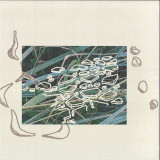
Zaumne's new album titled Élévation is a multifaceted yet subtle work, an abstract collage that is equally entrancing and immersive. Quoting passages from Baudelaire’s “Flowers of Evil”, the Polish musician promises to elevate the soul and consciousness “Beyond the sun / Beyond the ether”. Yet simultaneously, the artist wants us to stay where we are and focus on the immediate surroundings in search of our personal attachment to the world.
Initially recorded for the WET (Weird Erotic Tension) online community the four pieces are an exploration of erotic aspects of the environment and uncanny intimacy with other beings and objects that dwell in our nearest proximity. Just like on previous releases for labels like Czaszka Rec. or Perfect Aesthetics, on Élévation Zaumne maintains his interest in emotional aspects of sound and internet culture – he builds his compositions from fragments of ASMR-whispered poetry, samples of natural phenomena and field recordings from his family home and its environ.
What starts as an escapist exercise driven by uneasiness and ennui becomes an individual healing process, in which the subject rediscovers the strangely intimate relationship with the world and opens up to almost magical methods of communicating with other beings. ASMR samples and sounds of the artist touching, playing with and exciting different objects are an experiment in establishing contact with the non-human realm and a method of attuning the body and the mind to the reality in which everything is interconnected.
Zaumne tests Einstein’s “spooky action at a distance” through radical, sensual intimacy with what’s near, finding a glimpse of the absolute in his own room, again quoting Baudelaire: “To a child who is fond of maps and engravings / The universe is the size of his immense hunger”.
Zaumne is the moniker of Polish musician Mateusz Olszewski. In the past few years, he has released music on labels like Magia, Perfect Aesthetics, BAS or Czaszka Rec. Élévation, released by Mondoj and initially commissioned by WET, is his first vinyl release. Blending elements of genres like ambient, dub, minimalism and tape music with ASMR samples, field recordings and spoken word, he creates work with deep emotional focus and impact.
Buscar:dub elements
After making a name for itself through acclaimed reissues of forgotten gems, Lyon’s Tunnel Vision Records is back, this time with a previously unreleased cult EP from the Serbian underground: InnVision’s Lake produced by Welljam aka Velja Mijanović, one of the pioneers of electronic music in Serbia and host of the legendary “Liquid” show on Yu Radio.
While it is fairly common these days for tracks to reach cult status after being uploaded to Youtube and picked up by its recommendation algorithm, the story of the Lake EP is truly unique.
Picture this: it’s the summer of 94 in Serbia and despite US sanctions, something was going on in the country’s musical underground with open-air parties on lakesides and other natural locations, fuelled by a feeling of freedom and creativity. At the time, InnVision was a 26-year-old producer inspired by the likes of The Orb, Brian Eno, Underworld, and Spooky. Unconcerned with adhering to trends or finding ways to make commercially-viable music, he created the tracks on this EP with Cubase running on an Atari computer and several synths fairly common at the time.
But the result was beyond anything common or ordinary. Described by its creator as “organic (ambient) house, but you can call it trance”, LAKE is rapture in its highest form. Pure enthusiasm seems to be driving this uplifting track, with an abundance of heavenly arpeggios and positive energy, along with masterful arrangements that make it even more grandiose, while retaining a light and dreamy quality (perhaps it is no coincidence that Lake in Serbian evokes weightlessness). It is one of those rare tracks that have a deep impact on body, mind, and soul and for which the repeat button was created. While adhering to a central theme, it never feels stale and this is explained by the fact that it was arranged live, with InnVision muting and tweaking everything in one go, which makes this track a “deskmix”, to use dub terminology. In fact, the producer remembers jumping around and shedding occasional tears while he recorded the final take.
On the flipside is another previously unreleased track, the forward-thinking NIGHTY. By no means filler, this is a timeless track with a subaquatic feel. With lush pads and elements doused in delay and reverb, you’d think this is a purely ambient cut, but it’s much more than that. Subtle melodic and rhythmic elements are engaged in a dialogue, and distant breakbeat samples can be detected in the background, enough to induce movement but never overtaking the vibe carefully created by InnVision. The result is a track that is at the same time featherlight and impossible to listen to without some sort of movement. Once again, truly unique music that transcends time and place.
I met SUGAI KEN a few years ago in Tokyo, outside the Dommune radio studios. His personality and music, a very special brand, touched me. His music is a coded vision of a dream world. A trade that is progressive yet traditional - in the most positive sense of the word.
Recently out of the blue, Sugai San sent me a collection of personal field recordings he made of folklore groups and public performances in Tokyo, Toyama, Kanagawa, Kyoto, Tottori, … The close listener already knows that Sugai San’s aesthetics speak of a great knowledge of these performing arts.
An open invitation: “the traditional local performing arts in the 21st century intrinsically conceive “fragility” as they are vulnerable to extinction. The Japanese local performing arts that appear in this recording is no exception, endangered by the declining birth rate and aging population which are typical to the country. (SUGAI KEN)”
I bring the original recordings into conversation with new elements like a ‘monomane’ - tr. imitating – sound game. But when i throw these old and new figurines together on the podium, the objects immediately disappear in the cracks of the stage wood. Thus only the understament of the suggestion remains. And relentlessly the significance of every movement now becomes a question.
Furthermore, what’s in focus? The manipulation? Or the content? Or are we zooming in on the aspect of archiving ~ preserving? Dubious.
In KAGIROI – tr. heat haze - people coexist for a moment severely carved in time like a high contrast still of dancing flames. When you bring this composition home, it will never boil yet merely evaporate. And when you gaze at the clouds of condensed droplets inside your own darkness, on a soft volume, You complete our puzzle."
There’s something new under the sun. If you look at it closely,
something new is only (and always) created at crossroads –
when different and signi¦cant traditions are connected and
combined. On their own, these traditions have often existed
for a while. However, in this new form they have never
appeared together. The latest manifestation of something
new can now be found on the album “No Future Dubs”, the
interpretations of “No Future Days” – the most recent album
by German band Messer – by Finnish producer and old
friend of the group Kimmo Saastamoinen aka Toto Belmont.
The intentional traditions that merge on this grand and
digni¦ed album are post-punk, dub and techno. A new
chapter in the culturally constant narrative of dub is written
here. Through their past and parallel activities in hardcore
and post-punk bands, Messer drummer Philipp Wulf met and
befriended Kimmo, originally a drummer too. In their
continuous dialogue discussing their musical journey, Philipp
and Kimmo over the years more and more immersed
themselves in the aesthetic possibilities of dub and reggae.
Indeed, lots of musicians do not listen to the type of music at
home that they write and play in their respective projects
(Take me as an example: House is the music that I produce
and put on as a DJ. On my own, I listen to various stuff,
music by Monk and Messer for example). The same applies
to the protagonists involved here. By discussing dub und
through Toto Belmont’s steadily increasing producingexpertise, the idea of creating dub versions of selected
Messer tracks was born. The Messer album “No Future
Days”, released in 2020, proved to contain the perfect raw
material as the songs on this album are already produced in
a much more transparent way than on previous LPs – and
are hence more suitable for dub. Still, it’s a giant leap from
the originals to the dubs. These add a third dimension to the
described character of the post-punk/dub amalgam: techno.
The result is a sound that hasn’t existed before, especially
not with German lyrics (which scarcely, however, carry
meaning or messages here. Hendrik Otremba’s voice is used
more like an instrument, as if he was the ghostly ¦gure which
he often sings about and which now §oats and screams
through the sound space). The history of mutual contact and
in§uence of (post-)punk and dub (reggae), which Messer
have kept on writing, is glorious and reaches back far in
musical history. Still, it has always been a rather marginal
chapter not only in punk but also in dub history. But already
in the beginnings of punk (the British version, less the
American one), the presence and in§uence of reggae was
obvious in many places as both are united in their resolute
attitude as rebel music. This is how the two genres
recognized each other – especially the punks regarded
reggae as rebellious. As is known, already Johnny Rotten
mainly listened to dub in private. By using the name John
Lydon, he then – together with bass player Jah Wobble –
established the group PiL as one of the most exemplary
bands at the crossroads of dub and punk. The Slits, Pop
Group, Killing Joke, The Ruts and last but not least The Clash
along with the Mick Jones offshoot Big Audio Dynamite –
the thriving British music scene in the early 80s was full of
dub-in§uenced acts. The echoes meandered everywhere. In
the USA, it took longer until the in§uence of dub became
noticeable and it has never been as distinctive as in the UK.
The history of US hardcore, however, cannot be told without
bands like Bad Brains from Washington D.C. who on their
albums occasionally inserted conscious reggae and dub
tracks between breakneck hardcore tracks. Another
important group is Blind Idiot God who similarly included
dub tracks on their LPs – the contrast between densely
droning rock tunes and widely breathing dub versions can be
experienced very vividly here. In the 90s, dub’s in§uence on
post-punk decreased while turning up even more distinctively
somewhere else: Techno was in many respects susceptible
to dub, to say nothing of the music from the so-called British
hardcore continuum (jungle, drum & bass etc.), which directlydeveloped from dub and reggae. But also “pure” techno –
meaning techno without breakbeats – discovered its a¨nity
for the possibilities of dub at an early stage, in England for
instance in projects like Left¦eld or The Orb. In addition, the
project Rhythm & Sound was established in Berlin with close
ties to the Hardwax record store. With regard to this project,
you can’t really say where dub ends and where techno begins
(or vice versa) because of the interconnection of the two
genres here – everything is based on the steppers pulse
which links the two styles like a common DNA. With dub
techno a new genre was created. Until the present day, there
are producers who don’t produce anything else and DJs who
don’t put on any other music. The Messer dubs are
characterized by a grand majestic manner and force that
presumably someone like Mad Professor is able to produce
and that is also inherent in many Scandinavian productions
of the last 15 years; a crystal-clear aesthetic which locates
itself far away from Kingston or Brixton, but features a pulse
referring clearly to Berlin and Helsinki. The songs appear in a
completely new and deconstructed form, the instruments are
exclusively used as particles and raw material, not as riffs;
merely glaring guitar textures ¦ll the wide dub space. There
are many new elements that were added by Toto Belmont,
especially synthesizer sounds and drums. The ¦nal result
creates an enormous aesthetic power and dignity, and an
atmosphere you don’t want to leave anymore. “No Future” is
a well-chosen title as a reference to the protagonists’ punk
association; as a main thrust of the album, however, a
comma between these two words is imaginable as well.
Rhythm Syndicate Records, Conspire, and Soul Connection, are proud to announce the upcoming release of the "Deep Beats EP". The Second release on the new label will feature four lush Liquid gems that will be a welcome addition to anyone's prized collection. Conspire, a Shrewsbury native, has been a valuable contributor to Soul Deep and Smooth N Groove over the years, and now his productions are being enshrined on an RSR imprint vinyl release. His first track, "Deep Beat," is a smooth rolling tune that boasts snappy drums, lush atmospherics, and slapping percussion, that create the perfect backdrop for the soaring melodies. The song has received heavy play from LTJ Bukem and others in the scene. Conspire"s second offering is a track called, "Late Night," which ditches the smooth rolling sound and attacks the dancefloor with an all out Liquid-Jungle tune, that will heat up the clubs during prime time.
The B-Side of the vinyl release features 2 undeniable cuts from Serbia's Liquid master, Soul Connection. Over the years, soul Connection has released his timeless songs on Soul Deep, Smooth N Groove, and was featured on Big Bud's classic label, Sound Trax Records. "Dub Music," leads off his offerings with its punchy drums, smooth pads, and ticking percussion. The song lives up to its name and pays homage to the Dub music genre, with its washed out reverbs and echoing efx, that softly drift off into the distance, as the lead sounds surge the composition forward. His second offering entitled, "Keep Me High," takes a more Atmospheric approach, but encompasses the critical elements to work in any setting. The ethereal pads lead things off, and when the drop hits the Amen drums are introduced, which help elevate the tune to another level of greatness. The lead sounds fade in and out of the song, creating more interest and allowing the listener to feel the heart and soul of the tune. Overall, Conspire and Soul Connection have crafted 4 masterpieces worthy of vinyl immortality. The vinyl release is set for pre-order in early 2021, so make sure to reserve your copy before it's too late!
File Under: Jazz / Contemporary Jazz - For fans of Ryuichi Sakamoto, Boards of Canada, Linda May Han Oh, Supersilent, Nels Cline, Makaya McCraven, and Haruka Nakamura! Born in Pinsk, Belarus in 1984 and immigrating to Canada in 1992 with the collapse of the USSR; Alexei Orechin has been actively shaping musical environments with his current projects No Seas, a solo project for guitar and tape, and leading his own ensemble incorporating jazz, chamber, and experimental elements into his compositional work. A diverse talent that is reflected in the company he has shared the stage with: Nas, Akae Beka, Rana Mansour, Shad, Yaadcore, and Sina Bathaie. He has played in USA, Mexico, Europe, and Russia. Performances include the TD and Montreal Jazz Festivals, Caribana, Irie Music Festival, Tirgan Festival, and Pride Toronto. His music for film has been featured at TIFF, CFC, NFB and the Warsaw Jewish Film Festival. He has been featured on CBC, Noisey, Global News, The Star, Dub Rockers, Huffpost, Afropunk, and Relix magazine. 2020 saw the premier of '1992 Ambient', a 45-minute long composition that is a 'therapeutic experiment in slowly melting sound and colour; representing the acculturation and restructuring oneself through emigrating from Russia to Canada in 1992'. 2021 will also see the release of his debut full length album Mirages; an album that showcases his diverse and ever evolving style of composition, ranging from moments of melodic solitude to fractal experimentalism.
With his new album, Year Of The Living Dead, Vienna-born and LA-based producer John Tejada finds a blissful extended moment of balance between the new and the familiar. Anyone who’s followed his career to date, which has included four previous albums for Kompakt, outings for storied labels like Plug Research, Playhouse and Cocoon, and numerous remixes and collaborations – most recently, his Wajatta duo with actor and musician Reggie Watts – will immediately sense the warmth and eloquence that Tejada brings to his gilded, pliant techno and electro hybrids. But there’s more here, too; an explorer’s glimmer in the producer’s eye, as he gets to grips with new ways of working and being, while offering a reflective opening for the listener, something echoed in artwork by graphic designer and ‘contemplative artist’ David Grey.
“The album was started using tools I was unfamiliar with, which became an interesting exploratory process,” Tejada says. “Staying away from the obvious and having to re-learn simple things was a fun challenge.” You can hear these new creative pulsions pushing the eight tracks on Year Of The Living Dead ever-forward; the album has an unique cast, and though there are trace elements of the genres Tejada has indulged previously, he’s never quite put them together this way before. There’s the dubwise glitter sprinkled across the moody opener “The Haunting Of Earth”, the kind caresses found amongst the deftly woven textures of “Sheltered”, and the churchy melancholy, all hymnal and golden, of “Echoes Of Life”.
Year Of The Living Dead also speaks obliquely to its moment, though Tejada works this implicitly, allowing the strange circumstances of 2020 to cast their inevitable shadow without being obvious or didactic. “The production process began right before lockdown and continued through what felt like a very serious time for all of us,” he recalls. “Not being able to see or touch our loved ones made me feel we are all like ghosts. We can observe from a distance but cannot really be there. We are isolated and alone.” And yet, Year Of The Living Dead’s tenderness offers an out for that anxiety and loneliness, its intimate immensities gifting the album a redemptive and compassionate core. Compact and glistening, Year Of The Living Dead sculpts unassuming beauty.
Mit seinem neuen Album “Year Of The Living Dead“ findet der in Wien geborene und in Los Angeles lebende Produzent John Tejada die richtige Balance zwischen Neuem und Vertrautem. Wer seine bisherige Karriere verfolgt hat, seine vier Alben für Kompakt, Beiträge für Labels wie Plug Research, Playhouse und Cocoon, zahlreiche Remixe und Kollaborationen wie zuletzt das Projekt Wajatta zusammen mit dem Schauspieler und Musiker Reggie Watts, spürt sofort wieder die Wärme und Eloquenz, die Tejada in seine geschmeidigen Techno-Elektro-Hybride einbringt. Doch es geht auch noch einen Schritt weiter. Da ist dieses Aufblitzen des Entdeckers im Auge eines Produzenten, der sich mit neuen Arbeits- und Seinsweisen auseinandersetzt und dem Zuhörer gleichzeitig etwas sehr Offenes und Nachdenkliches anbietet, etwas, das im Artwork des Grafikdesigners und "kontemplativen Künstlers" David Grey nachklingt.
"Ich hatte angefangen, das Album mit mir noch unbekannten Tools zu produzieren, was sich zu einem interessanten Forschungsprozess für mich entwickelte", sagt Tejada. "Sich vom allzu Offensichtlichen zu trennen und einfache mal Dinge neu lernen zu müssen, war eine recht spaßige Herausforderung.“ Man kann diese neuen kreativen Impulse hören, die “Year Of The Living Dead“ auf einer Länge von 8 Tracks nach vorne treiben; das Album hat einen einzigartigen Ansatz, denn obwohl es Elemente der Genres gibt, denen Tejada zuvor gefrönt hat, hatte er sie doch noch nie zuvor so zusammengefügt wie hier. Da ist dieses dubbige Glitzern im atmosphärischen Opener "The Haunting Of Earth", die freundlichen Zärtlichkeiten, die man in den Texturen von "Sheltered" findet, und schließlich die heilige Melancholie im hymnischen "Echoes Of Life".
Auch “Year Of The Living Dead“ enthält Andeutungen auf die momentane Situation und erlaubt es, den seltsamen Umständen des Jahres 2020, ihren unvermeidlichen Schatten zu werfen, ohne dabei zu offensichtlich oder gar belehrend zu sein. "Der Produktionsprozess begann kurz vor dem (ersten) Lockdown und setzte sich in einer Zeit fort, die sich für uns alle als eine sehr ernste Zeit anfühlte", erinnert er sich. "Da wir nicht in der Lage waren, unsere Lieben zu sehen oder zu berühren, hatte ich das Gefühl, dass wir alle wie Geister sind. Wir können nur distanzierte Beobachter sein, aber wir können nicht wirklich anwesend sein. Wir sind isoliert und allein." Und doch scheint die Zärtlichkeit von "Year Of The Living Dead" einen Ausweg aus dieser Angst und Einsamkeit anzubieten, die grenzenlose Intimität des Albums enthält einen erlösenden und mitfühlenden Kern. Derart konsistent und schillernd formt "Year Of The Living Dead" eine unprätentiöse Schönheit.
- A1: A Shell Immerse In The Dark
- A2: Back To Chambi Lake
- A3: Sepik Dream
- A4: The Frogs Of Darana
- A5: Virgin Of The Dawn
- A6: Dance Of Heinghene
- B1: Kaluli Crayfish Song
- B2: Voices Of The Spirits
- B3: Vaihiti
- B4: Wahnui, The Guardian Of The Yam
- B5: Incantation Chant
- B6: Kaluli Storm Song
- B7: Twilight In The Low Tide
A journey back in time, maybe thousands of years ago, somewhere in the isolated islands of Melanesia. Here, just like a sound alchemist, Roberto Musci transforms organic nature elements into a unique sound performance of self-estrangement.
In the artists’ laboratory, we will discover a melting pot of ancestral ceremonial sounds collided with contemporary chamber music and experimental-electronic methods based on music research. Among these, ethnical music of the populations of Kanaki, Itamul, Kaluli, Niugini, Abelam, Huli, Enga unconventionally search for an intrinsic connection between humankind and music, part of our lives since the dawn of times. Several studies have highlighted in the DNA of the people of Melanesia genetic traits that trace their origins back to the man of Neanderthal and Denisova (about 70,000 years ago). Their isolation has preserved primitive culture and, perhaps, music.
Roberto Musci composed “Melanesia” based on the Plunderphonics technique mixing traditional ethnic music with contemporary chamber music and concrete music. Mastered by Kassian Troyer at Dubplates & Mastering, “Melanesia” is released in a limited edition 12", 180g vinyl, with a cover artwork created by Giuseppe Lo Schiavo.
Roberto Musci is an Italian music composer, performer, saxophonist and guitar player, born in 1956 in Milan, Italy. From 1974 to 1985 he traveled around the world to research African, Indian, Near East, and Far East music. During his travels, he recorded on-field music, studied and collected ethnic music instruments from across many countries and cultures.
His LP “Water messages on desert sand” composed and performed with Giovanni Venosta was Grammy-nominated in the UK in 1987. Roberto Musci released LPs and CDs with many European labels, including Raw Material, Island Records, Music from Memory, and Recommended Records. He collaborated with musicians and researchers from all over the world, composed and performed music for films, live soundtracks for silent movies, audio-video installations, poems, dance, and theatre.
His latest project, "Melanesia", is composed based on the Plunderphonics technique mixing traditional ethnic music with contemporary chamber music and concrete music. The artist puts together live recordings of tribal ethnic music of indigenous people from the Pacific islands of Melanesia, performed with the body and with archaic instruments. Along with these, contemporary chamber music collides with the sea, wind, rain, thunderstorms of the Melanesian islands, modified according to the techniques of Concrete Music, in homage to Pierre Schaeffer and Pierre Henry, two of the artists who shaped his way of experiencing sound.
Repress
When you find DJ Sotofett and Telephones on remix duties for the mighty Joan Bibiloni it's sure to be a treat. For the 22nd installment in the Saft series, two of Bibiloni's greatest numbers from "Born" (1989), are re-imagined for the occasion.
Sotofett opens up the A-side with an extended version of Bibiloni's "El Sur". Clocking in just under twelve minutes, the so-called "mastermix" is a version in the vein of the extended disco singles from the era of the original. Sotofett's supernatural dancefloor touch centers around Bibiloni's guitar-licks that gently slide along and communicate with the other elements of the original. This is a version to close a night with - or better yet - to close a summer set just before sundown.
The B-side contains a reworked version of "Sa Fosca" by another Norwegian artist: Telephones. "Telephones Coastal Dub", is another lengthy endeavor. The ten (and something) minutes long venture keeps in line with the Mallorcan character of the Bibiloni sound, while giving it a subtle touch of dancefloor, complete with the signature lead of the original as the focal point. The extensive intro and the balance between breeziness and firmness is sharply done and will make sure that the version can find its way into numerous settings.
Arguably the Netherlands’ most prominent grime artist, JLSXND7RS’ name is synonymous with some of the most iconic productions around, with a vast back catalogue including collaborations with Wiley, Footsie, Rocks FOE and Discarda. For the debut vinyl release on his fledgling label, Dark Knight, he’s brought out a long-awaited fan favourite alongside two gargantuan reimaginations.
From its brassy opening notes, “ Marching” is instantly recognisable – a minimal, yet menacing instrumental which has enjoyed countless plays from esteemed DJs including Slimzee and Sir Spyro since it first surfaced on the airwaves in 2016. It also comes with Mala’s seal of approval; the Digital Mystikz legend has cut the track to dubplate for use in his sets.
On side B1, dubstep royalty Caspa pares back the original to its base elements, instead introducing gritty basslines, mesmerising percussion and a grimy harmony to bridge the gap between the two genres.
The release concludes with a remix from Brighton innovator and Sector 7 signee J ook, which Outlook festival-goers will recognise. His melodic interpretation of the song includes swelling reversed synths, shuffling drums and cinematic breakdowns.
Nick Beringer debuts on INFUSE to open the label’s 2021 schedule, offering up his stellar ‘Blue Blood’ EP.
A rising DJ and producer at the heart of Berlin’s minimal house scene, Rubisco boss Nick Beringer has formed a growing reputation as a ‘go-to’ artist for quality productions across the genre in recent years, with his diverse
discography welcoming material via the likes of Raum…Musik, Taverna Tracks, Mulen Records and Berg Audio to name just a few. With a sound fusing classic Detroit house and techno with more modern shades, ranging from electro-tinged elements through to more dubby textures, the German talent kickstarts 2021 with an impressive debut outing on FUSE sister imprint INFUSE as he delivers his four-track ‘Blue Blood’ EP.
Lead cut ‘Concave’ is a perfect example of Beringer’s ability to fuse genres and nuances with ease and fluidity as skipping percussion licks guide skittering sci-fi electronics and sweeping atmospherics throughout an up-front EP opener, whilst vinyl only cut ‘Aint Got Nobody’ delves into deeper realms as squelching basslines merge with icy hats and infectious vocal iterations. The lively title cut ‘Blue Blood’ opens the B-Side in style as warping synths weave amongst aquatic melodies and deep sub-bass, before closing out proceedings via the dynamic, off-kilter tones of final production ‘Second Hand Emotion’.
You could think of the collection of tracks here as a library record of sorts, and each track inhabits its own universe. Tropical fits various moods and situations, and it could soundtrack any number of activities at home or on a dancefloor - whether real, imaginary, or hallucinated. Strangely enough, it sounds like it could have been constructed from obscure Italian library breaks, when instead every instrument has been played and panned, several times over, across magnetic tape.
The genesis of many of these tracks began when CV Vision moved to Berlin in 2014. His flat had a small chamber where he could fit a drum set, so he treated the walls with foam, and in true DIY style, dived headfirst into recording these tracks. It was the natural next step on an audio adventure that first began when CV Vision picked up the guitar in his teens, and a couple years later started recording with friends in his home town of Bayreuth. Fast forward ten years and here is his debut - a culmination of practising chops and learning instruments, mastering recording techniques and fine-tuning the CV Vision sound.
It’s a sound that condenses elements of acid rock, psych soul, library funk and new wave oddities into a movie soundtrack for your mind. It’s a journey from ‘60s west coast LSD-drenched excursions to ‘80s synth and post-punk mutations. Tropical is a plunge into another time, another music you can simply swim around in and explore.
Side A opens up with Tropical Tune In, which rides in on a clave and a warm wind, blowing a distinctly herbal aroma and recalling exotica dons like Les Baxter and Martin Denny. Following on with the aural equivalent of a sea breeze through your mind, Spaziergang am Meer blows away the cobwebs and conjures some nice library moments like Stringtronics or F eelings . Next, Ba_c_k(Lava) bounces out of a cold wave post-punk melting pot and crashes through the speakers like a blazed Zebedee, with some sweet eastern synths for added flavour, before the rolling bass licks of Der Böse Schamane take us into another dimension, landing somewhere between a psych rock freak out and a Black Ark dub session. Mr Maze channels the arpeggiators of synth outsiders like Mort Garson and Bruce Haack, creating a glorious interlock of robotic electronics and freakbeat vocals. The side comes to a close with the guitars of Der Strand (außer Rand und Band) letting loose like syrupy springs, and setting a languid mood like the bedroom scene in Bedazzled (1967 version). Side B kicks off with Parallel Universum, which comes through like a woozy krautrock workout, all ducking synths with big chord shifts to create an epic deranged beehive of a soundtrack. Im Land der Ameisen evokes the spirit if not the sound of White Rabbit, when logic and proportion have fallen sloppy dead, before waking up and wandering through the side alleys of Marrakech with the West Coast Pop Art Ensemble and the Electric Prunes, as Ritual (No. 4) blares out the speakers of passing tuk tuks. Ein Wasserfall plumbs the deep synth depths, like Raymond Scott in scuba gear, modular rack strapped to his back delivering oxygen as he swims between connector cables and seaweed forests through a watery underworld. Banana King sounds like a lost soundtrack to Donkey Kong or Mario Cart, if the cart radio was tuned into a synth
documentary hosted by James Pants, while Das Kloster am Berg takes the baton from Brenda Ray and her Naffi cohorts, all dubbed-out niceness and post punk swagger. The LP closes out with Tropical Drop Out, a dreamscape rather than a wake up call, coaxing you deeper into the trek across the desert of your mind.
And that’s Tropical in its essence: capsules from another time, snapshots of another sound, messages from another mind - all in the service of inducing the visions in your head.
written by Max Cole
Hot on the heels of our tentacular project "The Most Famous Unknown", Planet Phuture is proud to welcome rising French talent Cuften to the fold. A most fitting match for PP's phuture-facing vision, Damien Peltier has been pushing some of the finest techno around over the last couple of years, landing a handful memorable cuts via the likes of Parisian label Tripalium and his own imprint, Purusu. Cloaked in dim-lit atmospheres and open-ended post-apocalyptic narratives, his debut solo 12" blends in all of the elements that made his sound stand out from the crowd of releases coming up these days - traversed by dogged primitive rhythms and reassessed 303-infused Detroit'isms, but also stamped with his signature no-frills rave elegance.
Speeding up the cosmic highway like Deckard roams San Fran's neon-splattered alleys on the hunt for replicants, Cuften takes us on a full-immersion journey into dystopian electronic soundscapes. Full-beam on, "Solar Ashes" has us drifting amidst ruins of a devastated city - its lysergic bass languidly threading its way across brutalist concrete facades and cold ember set for reignition. A more martial affair, "The Black Rain Order" pulls out the rattling drums, slo-boiling arpeggios and moebius-strips of wistful acid to score a supremely tense crescendo, both optimally tasted on and off the dance floor.
Moving up closer to the free-spirited vibe of the '90s open-air raves, "Rise Of The Neo-Humans" unleashes a baroque firestorm of sucker-punchy toms and hyperventilating shuffle, woven against an endlessly expanding corolla of hallucinogenic shapes and fluttering harmonics. Sinking further deep into all-dark dubby grounds, "Lasttt Batttle" extrudes its obsessive melody out a thick gangue of squelchy chords and bleepin' engineering to form the kind of brain-washing hybrid pumper that'll roast your last remaining neurones. Trouble-brewing isn't over though and the droney "Kjhfskjoize" shall take you to places unknown through eleven minutes of envelope-shifting shamanism, thinking noise bake-off and gravity-defying arrangements. Bend your mind.
South London-based band Soothsayers are set to release their ninth studio album 'We Are Many'. Held together by heavy basslines, solid grooves, and socially and politically charged lyrics; the album takes the listener into different sonic spaces with elements of dub, Afrobeat, improvisational jazz and electronica.
The initial steps in recording 'We Are Many' came in January 2019 when the band's founders - saxophonist Idris Rahman and trumpeter Robin Hopcraft - set out on a journey to Brazil. With executive production in the Sao Paulo studio by renowned music journalist and author David Katz, they hooked up with bass player and producer Victor Rice who they'd met sharing the bill at Freedom Sounds festival in Cologne, Germany a year earlier. Victor organised a session in Studio Traquitana, home of acclaimed Brazilian band Bixiga 70, and invited a selection of local musicians. Percussionist and singer Ligia Kamara contributed lyrics and melodies written in the studio, and drummer Bruno Buarque, guitarist Joao Erbetta and bassist Victor provided some solid, personality-driven input. Fresh and vital, what came out was a fascinating blend of Soothsayers' dub and Afrobeat mixed with distinctly Brazilian inflections.
After arriving back in the UK, Idris and Robin set about creating the remainder of the album in a different, yet complimentary way, and called on the services of Wu-Lu and Kwake at their The Room studio in South London. Things started to take shape very quickly, Wu-Lu and Kwake combining Soothsayers' music with electronic elements, while also referencing elements of the current UK jazz scene.
When lockdown hit in March 2020, there was still a lot of work to do in order to complete a full album and Robin and Idris set about working on tracks with their musicians remotely. Having time to consider the album as a whole, they found strong connections between the music recorded in Brazil and the tracks recorded in London and they set about fusing and combining these elements further into a satisfying whole.
UK based Sengalese singer Modou Toure was enlisted to guest on one track while percussionists Satin Singh and Maurizio Ravalico were engaged to help affirm a sound-world where Brazilian flavours, such as the low-end Surdo drum, were combined with sounds more readily associated with reggae and Afrobeat.
Soothsayers' three part vocal harmony is a defining factor in this album. With strong references to the vocal styles of reggae legends such as The Gladiators, Mighty Diamonds, Heptones, and Abyssinnians; it has benefited from the long-standing friendship between Robin, Idris and Julia Biel. Lyrics, melodies and harmonies were presented, discussed, explored and recorded at Idris' and Julia's home studio in Streatham in a relaxed and positive way, with concepts from social and political commentary turned into powerful songs.
Themes cover political observations of Trump and beyond alongside Brazil's president Bolsanaro (Rat Race), speaking out against increasing levels of violence from the Brazilian government towards its native and indigenous people (Love And Unity) and keeping hopeful despite the impending horrors of a no-deal Brexit (We Won't Lose Hope).
Elsewhere they discuss striving to create space for meditation and reflection against the background noise of 24/7 news and social media (Move In Silence), the daily grind (No Sacrifice) and workers' rights (Slave), while highlighting those that fall through the cracks in society and end up without a permanent address, what led to this and how close we all are from this happening (One Step Away).
'We Are Many' represents a positive and uplifting statement in the face of challenging times - the overriding force, power and positivity of the music to continue forward, pushing the boundaries of musical concepts into the future.
"Whilst heavy questions of life and death and the future of our species surround us all, music is a guide that can help us perceive the challenges in a different way - a guide that can help us towards a deep inner peace. If we listen, music can help light the way. We hope you will listen, and we hope you will experience the joy, meditative power and beauty in the connection of different musical cultures that was experienced in the creation of this album."
South London-based band Soothsayers are set to release their ninth studio album 'We Are Many'. Held together by heavy basslines, solid grooves, and socially and politically charged lyrics; the album takes the listener into different sonic spaces with elements of dub, Afrobeat, improvisational jazz and electronica.
The initial steps in recording 'We Are Many' came in January 2019 when the band's founders - saxophonist Idris Rahman and trumpeter Robin Hopcraft - set out on a journey to Brazil. With executive production in the Sao Paulo studio by renowned music journalist and author David Katz, they hooked up with bass player and producer Victor Rice who they'd met sharing the bill at Freedom Sounds festival in Cologne, Germany a year earlier. Victor organised a session in Studio Traquitana, home of acclaimed Brazilian band Bixiga 70, and invited a selection of local musicians. Percussionist and singer Ligia Kamara contributed lyrics and melodies written in the studio, and drummer Bruno Buarque, guitarist Joao Erbetta and bassist Victor provided some solid, personality-driven input. Fresh and vital, what came out was a fascinating blend of Soothsayers' dub and Afrobeat mixed with distinctly Brazilian inflections.
After arriving back in the UK, Idris and Robin set about creating the remainder of the album in a different, yet complimentary way, and called on the services of Wu-Lu and Kwake at their The Room studio in South London. Things started to take shape very quickly, Wu-Lu and Kwake combining Soothsayers' music with electronic elements, while also referencing elements of the current UK jazz scene.
When lockdown hit in March 2020, there was still a lot of work to do in order to complete a full album and Robin and Idris set about working on tracks with their musicians remotely. Having time to consider the album as a whole, they found strong connections between the music recorded in Brazil and the tracks recorded in London and they set about fusing and combining these elements further into a satisfying whole.
UK based Sengalese singer Modou Toure was enlisted to guest on one track while percussionists Satin Singh and Maurizio Ravalico were engaged to help affirm a sound-world where Brazilian flavours, such as the low-end Surdo drum, were combined with sounds more readily associated with reggae and Afrobeat.
Soothsayers' three part vocal harmony is a defining factor in this album. With strong references to the vocal styles of reggae legends such as The Gladiators, Mighty Diamonds, Heptones, and Abyssinnians; it has benefited from the long-standing friendship between Robin, Idris and Julia Biel. Lyrics, melodies and harmonies were presented, discussed, explored and recorded at Idris' and Julia's home studio in Streatham in a relaxed and positive way, with concepts from social and political commentary turned into powerful songs.
Themes cover political observations of Trump and beyond alongside Brazil's president Bolsanaro (Rat Race), speaking out against increasing levels of violence from the Brazilian government towards its native and indigenous people (Love And Unity) and keeping hopeful despite the impending horrors of a no-deal Brexit (We Won't Lose Hope).
Elsewhere they discuss striving to create space for meditation and reflection against the background noise of 24/7 news and social media (Move In Silence), the daily grind (No Sacrifice) and workers' rights (Slave), while highlighting those that fall through the cracks in society and end up without a permanent address, what led to this and how close we all are from this happening (One Step Away).
'We Are Many' represents a positive and uplifting statement in the face of challenging times - the overriding force, power and positivity of the music to continue forward, pushing the boundaries of musical concepts into the future.
"Whilst heavy questions of life and death and the future of our species surround us all, music is a guide that can help us perceive the challenges in a different way - a guide that can help us towards a deep inner peace. If we listen, music can help light the way. We hope you will listen, and we hope you will experience the joy, meditative power and beauty in the connection of different musical cultures that was experienced in the creation of this album."
- Idris Rahman and Robin Hopcraft
Wretched Cuts is the new solo EP by gender-nonconforming techno artist, Projekt Gestalten. The release comes via the New York’s Mild Fantasy imprint run by DJ Elle Dee and features three original themes focusing on introspective techno plus a remix by veteran, The Lady Machine.
The project reflects an array of themes using as the starting point the story of Estamira and the Brazilian documentary of the same name, telling her life story. Estamira was an incredibly enlightened older woman who scattered one of the largest landfills of Rio de Janeiro for food. Not because she had to, but because she loved that place as she loved “her own children” and enjoyed making a living out of other people’s disposable goods. Simultaneously, while dealing with schizophrenia and abuse, she believed she was a superior spiritual being whose magical powers could control time, space, and other elements of nature.
The tracks are inspired by some of her most memorable quotes and moments that made an impact on Projekt Gestalten. “Wise People In Reverse” goes into a darker approach and samples Estamira’s voice talking in a mysterious unknown language with an unrevealed force, using only a broken piece of a telephone that she had just found it in the trash. “Morte Macaca” takes a rhythmic approach towards dub techno, and “Holographic Principle” gets trippier and hallucinogenic with Projekt Gestalten’s signature acid lines. The Lady Machine’s “Wise People In Reverse” remix takes the original theme to a driving, peak hour approach and transforms it into an effective DJ tool.
“There are no more innocent people on Earth, only wise people in reverse”.
Born out of a love for extended live performance and late night studio jams, Adam Collins' and Marky Star's much revered Omni A.M. collaboration released their debut LP 'Key' 23 years ago, also launching their label Euphoria Records. A very limited amount of CDs were pressed and sold exclusively at Euphoria events throughout Chicago at the time, and with Omni A.M. and Euphoria's stock rising over the following decades, this timeless classic has become a Holy Grail amongst music heads and collectors alike, as the eye watering discogs prices will attest.
Although heavily influenced by the Chicago house scene and it's luminaries Derrick Carter, Gemini, DJ Heather and Tyree Cooper, the pair embarked on a remarkable mission to record an album that owes much to their love of The Orb and KLF, the experimentalism of Psychic TV and Cabaret Voltaire, industrial favourites Skinny Puppy and the mind bending dub of Lee Scratch Perry, through to San Fran's West Coast house scene and the Tech-House sounds emanating from South London in the late '90s.
LP opener 'space horse' rolls out the breaks before swathes of synths and sonic trickery abound, 'wo ist meine bier?' is characterised by haunting IDM-esque melodies, underpinned by the chug of a 4/4 beat. Over onto the flip where Villalobos favourite 'naked groove' unleashes an infectious rhythm, bass riff, synths and vocal, before 'splendid idea' moves into a more tripped out acidic territory, keeping the musical elements and energy to the fore. On disc 2, the aptly titled 'fusion' turns up the breakbeat heat, adds a hypnotic dub-funk b-line, building into an inspirational lead line. 'v.23's other-worldly throb neatly segues into the moody burning breaks of 'bitch', and closing track 'ready to know' is playful and confident in it's execution, without ever losing any depth or substance.
What comes across is an unwavering dedication to creativity and pushing the boundaries of what's sonically possible, whilst defying the genres through a unique and essential collection of musical moments and psychedelic jams underpinned by beats that deliver the funk. These tracks have stood the test of time and have remained exciting and relevant throughout, this is the first time they have ever been released on vinyl.
This double LP features exclusive edits and never heard before versions, lovingly remastered by Lawrie Curve Pusher from the original DATs and artwork recreated from, and inspired by the original release.
Theo Nasa makes his debut on Rekids this December with ‘Worldwide Ravers EP’.
The Alien Sound Trax boss, who has previously appeared on the likes of World Unknown, Suara, and UNCAGE, makes his mark on Radio Slave’s imprint with the hard-hitting and distinct ‘Worldwide Ravers EP’.
Deeply infused with the unmistakable sound of the UK, Nasa draws from his broad range of influences for his EP, distilling elements of Jungle, Rave, and Hardcore into his own brand of meticulously crafted, difficult-to-pigeonhole techno. Opener ‘Dubska’, clocking in at over ten minutes long, is a relentless and fast-paced affair, bubbling along at breakneck speed with the help of classic vocal samples, while ‘World Dance (Rinse Out Mix)’ fuses breakbeats and droning bass to create a high energy track that twists and turns at 140bpm. Field recordings of birds in ‘Summertime Raving In London’ sit alongside classic drum kits and emotive chords while living up to its titular character.
Lontano Da Dove? by DsorDNE is a four-track LP written and recorded between 1996 and 1999 - at Acqualuce studio in Alpignano, Torino - by the mind of Marco Milanesio and Luciano Gelormino. Additional guitars were provided by Danilo Beltrame on piano zeroquattro (extended) and vocals by Snowdonia founder Cinzia La Fauci.
It was conceived to be released at the time but only a few promo copies were distributed. After about 20 years, the original recordings, which were considered lost, were found by Marco, who remastered them in his O.F.F studio and brought it back to life.
The all album is an organic work, who mash spoken ethereal voices and dubby basslines with tr-909 beats, borrowing elements from trip hop, techno and industrial.
Conjunto Papa Upa returns with “Todo Parao” (“Total Shutdown”), another boundary pushing tropical smasher. Bringing you the ultimate (humourous) hymn to the pandemic over an exquisite blend of highly danceable Caribbean rhythms (zouk, cadence, kompás, guaracha) and classic synths. Backed by a deep sea dub on the flip, complete with resplendent cowbell(!), timbales and Wurlitzer solos. Another stepping stone that showcases yet another angle of the unique and radical production style of Alex Figueira. Drop this 45 at your next virtual party and watch everybody leave their computers in a desperate search of a dancing partner.
Conjunto Papa Upa is the Afro Caribbean centered solo project of Figueira, backed live bysome of the best musicians from Amsterdam’s Latin and free jazz scenes. Their debut LP was recently released on legendary American indie label Names You Can Trust. Figueira is also known for his percussive work on tropical psych power trio Fumaça Preta or his regular live incursions with Amsterdam’s turkish psych folk powerhouse, Altin Gun.
Having spent the whole night working on the melodic structure of the song, Figueira took a break to take advantage of the different time zones and check on his dad in Venezuela, and ask how the pandemic was unfolding there. His answer: “Todo Parao” (“Total Shutdown”). The same two words he had used multiple times before, this time pronounced in a hilarious Rum-infused way, giving Alex an unexpected flush of inspiration in the form of an instant infectious chorus. He excused himself and immediately got locked back in the studio. The result is this incredibly catchy tune, displaying the optimistic approach of a boyfriend to the chaos, uncertainty and worrying of his girlfriend about the pandemic, presenting her with his own lascivious lockdown plan for the two, declaring at a certain moment: “while everyone is lamenting, you and I are going to enjoy”.
In the musical side, rhythms from Haiti, Guadaloupe, Martinique, Puerto Rico and Cuba are unscrupulously mixed with the most diverse and strikking elements: strident cowbells that evoke the toughest salsa of 70's New York, harmonized guitars evidencing the inconfesable influence of 80’s heavy metal, a delicate Wurlitzer piano reminiscent of Black America’s greatest Soul ballads, Casio keyboards rescued from a child’s toy cabinet and a whole plethora of half-broken classic Synths, to create an equally irresistible and unclassifiable hybrid.
On the flip side, Part 2 opens with a prominent dose of the lead guitar that appeared briefly on the A side, working as a preamble to an instrumentalist frenzy that is not concerned about displaying technique. Its mere intention is to tell you the rest of the story without using words. A few bars into the song, the first gear shifts with a monumental solo given by the least probable of all “soloist” instruments: the cowbell (!). After it, a crispy Timbal crashes the party, making a statement out of its only appearance in the entire recording. Finally, the longed-for turn of the melodious Wurlitzer, who left everybody craving for more on the other side of the record, giving the modest keyboard skills of Figueira an imposing pentatonic virtue.