Sound Migration proudly brings forth one of the contributions of UVX (Ultra Violet Explorer) to Magick Eye Records that was initially released in 1993. This release serves a touchstone for the quality that emerges when the gap between Ambient and early Trance is thoughtfully bridged.
The 15 minute aural odyssey that is the 13 Floor Spectrum version of the A-side begins mired in a beatless fog of atmosphere that slowly crystallises into a grid of percussive elements before evaporating entirely, leaving only voices leaking through the primordial aether as a precursor to the grand finale of vibration raising rhythmic frequencies.
The appropriately titled Dancefloor Sub Bassment and Trancefloor Transporter versions on the B-side transmute these sonic strands into musical talismans that can be unitised to intensify ecstatic dance practices & extend the boundaries of astral excursions.
Search:dub unit
Disrupt Records presents DJ Chromz - Love & Unity EP, featuring DJ Stretch & Double O!
Following the blueprint established in the first two releases by again providing the platform for the debut EP of one of the hottest new producers around, DJ Chromz!
DJ Chromz brings us four tracks of sublime 94 influenced jungle that take you on a nostalgic journey via the dancefloor to the scene's golden era whilst keeping the sound fresh and dynamic.
Featuring a colab with AKO Beatz General DJ Stretch, plus a remix from Rupture's very own Double-O!
Lush pads, crisp drums, dubbed out sounds that reflect a love of soundsystem influences, analogue sampling and drum programming, big vocals and slamming amens all wrapped up across 4 huge dancefloor tracks.
The mighty Lempuyang label returns with its annual compilation series, again this year split over two superb 12"s. Both of them feature a remastered track from the vaults and in the case of this EP that is the hotly in-demand 'Dubby Plug' by W Moon which is a potent, kicking dub techno cut freshly remastered for 2024. ElsewhereHydergine's 'Ultraviolet' is soulful Detroit-inspired machine music and Dubrovnik UK's 'Waves' fizzes with static electricity. Merv's 'Unity' is the vast, cavernous opener and might be the best of the lot
"Long sought-after by those in know, this essential Irish jazz album finally gets a vinyl reissue on Outernational Sounds! Fully licensed from producer John D’Ardis, remastered at Abbey Road from the original tapes, and with lacquers cut at Dubplates and Mastering, the Noel Kelehan Quintet’s stunning 1979 Ozone is presented with unseen photographs of the band and commentary from original band members.
Featuring moody, modal jazz of the first order, subtle and original composing and world- class playing, Ozone was the creation of Ireland’s most respected jazz composer and musician, pianist Noel Kelehan (1935-2012). The only small-group album under his name, and arguably the first ever Irish jazz LP, Ozone was a landmark recording, but it was far from Kelehan’s only achievement. Born in Dublin, Kelehan had studied music from an early age. From the mid-1950s he worked at state-broadcaster Radio Éireann (RÉ, later RTÉ – Radio Telefis Éireann), and from the early 1960s he fronted Dublin’s first be-bop unit, the Jazz Heralds. A busy professional career saw him compose for numerous Irish pop stars, arrange and conduct many of Ireland’s Eurovision entries, and even contribute string arrangements to U2’s Unforgettable Fire LP.
But jazz was Kelehan’s first passion, and he never stopped playing in both small modernist units and composing for his own big band. The late 1970s saw him fronting the Noel Kelehan Quintet, alongside drummer John Wadham, saxophonist Keith Donald, bassist Frank Hess and trumpeter Mick Nolan. Playing weekly in Dublin for several years, they opened for visiting stars including Dollar Brand and the Ronnie Scott Orchestra, and eventually played a two-week residency at Ronnie Scotts in London. Though Kelehan had recorded a big-band LP of traditional Irish songs arranged as easy jazz in 1970, Ozone was his first album of modern jazz. Released on John D’Ardis’s independent Cargo imprint and press on blue vinyl, it featured original compositions such as the deep collectors cut ‘Spon Song’, subtle Latin flavours on ‘Spacer’s Delight’ and a beautiful modal arrangement of the traditional Irish air ‘Castle of Dromore’. A legendary recording in Ireland, Ozone reflected Kelehan’s keen appreciation of classic quintet-era Miles, with touches of the cerebral fusion of Ian Carr and the arranging genius of Neil Ardley. Not just a landmark Irish jazz set, Ozone is a lost classic of European jazz more widely."
Formed in 2019, Lawne is the result of a meeting of minds between old friends and self confessed music nerds Joe Nicklin and Joe Martin. Their sound draws upon myriad influences with dub, electronics, hip hop, psych, jazz, post-punk and Afrobeat all somehow ingrained within the mix.
It's something that evolved during at a time of change for both of them, as Joe Nicklin explains:
"The start of this project coincided with me moving onto a canal boat, which was a hugely rewarding time of my life but not without its challenges. You can hear some of my boating vents coming through in the lyrics of Beta Pan and Ame Tova.
Another challenge during this time was trying to figure out a way of still playing and recording drums that wasn't going to break the bank. I decided to start renting a tiny storage space near Caledonian Road in North London, that I would convert into a makeshift studio and soon learned that corrugated iron sheets aren't the best walls for a drum booth. My friend cut me some curtains and a few egg boxes later we were able to insulate the thing, sort of.
These limitations meant that we had to keep recordings pretty simple and I feel like this set the tone for the whole record. Whether it was digging out my childhood bass guitar for Joe to play, squeezing every last drop out of Logic presets or mumbling into a SM57 for the first time, we made do with what we had and I'm proud of the charming thing we were able to create. I felt like I was learning on the job at times for this album and I'm grateful for what it has taught me, whilst being excited for what we can do next. As I was moving off the water and out of my lockup, the album masters were also starting to trickle through. A fitting close to that chapter of my life and the making of our first album."
Joe Martin reflects more on how their unique sound came about:
"It's interesting thinking back to the sound we were exploring when we first started writing together, and how different much of the record is to that original sound. We didn't set out a clear musical direction and that meant we were rarely constrained stylistically, we could shift between genres and feels and grooves, take inspiration from the new and the old and it still sat comfortably with what we were trying to do. I think the eight tracks we landed on illustrates that nicely.
The record's named after the self storage unit we used as a studio for many years, there's something quite poetic about parting ways with the space within weeks of the album coming out; a final homage to the place it all started."
Comic relief serves as a refreshing element that lightens up a tense or tragic situation. It creates a moment of contrast and distraction from the seriousness of the scene. This pattern can also be found in literature and film, in humorous characters like Chandler from the sitcom Friends. Especially in difficult times like these, we all occasionally long for comic relief. With his new EP, David Bay tries to create exactly such a moment of escape.
The songs on the EP unite an organic yet modern approach to indie, disco, and house music. David combines the two worlds he is rooted in: growing up in an indie band and, at the same time, running a disco-house label. After two edit EPs and a collection of singles with classic instrumentation and songwriting, this release brings everything together – music that sounds distinctly indie, but with a pulsating house beat.
Next to the four originals on the A-side, each track was remixed and is to be heard on the B-side of this vinyl: 80ies-influenced and well-known producer Lauer contributed his version of disco-gem „1999“, up and coming Dj- and producer Marie Lung flipped the indie-disco track „strangers“ into a deep and housy groover - Electro-legends Digitalism turned the dance-floor-ballad „<3 beat“ into a French-House belter and Dylan C. Greene hailing all the way from San Francisco remixed „dancing on the edge“. Out now on vinyl, only on Zissou Records.
- A1: All Nations Dub
- A2: Guide And Protect Dub
- A3: The Right To Dub
- A4: African Queen
- A5: Security Council
- B1: Cry Freedom Dub
- B2: Climate Action Dub
- B3: Ceasefire Dub
- B4: General Assembly Of Dub
- B5: Winds Of Change
So viel Ärger in der Welt...Aber - die Reggae Legende King Jammy kehrt in sein Dub-Labor zurück, um eine neue Klangbotschaft mit positiven Vibrationen im Dub zu schmieden. Jammys handverlesene Friedenstruppe von Kingston 11 Stalwarts lässt 10 frische Boomshots zur Heilung der Nationen fallen, um die Welt mit Hilfe von Dub zu vereinen - wenn diese Dubs einschlagen, fühlst du keinen Schmerz! Frisch aufgenommene 2024 Dub Attack von King Jammy, Versionen in Hülle und Fülle von Jammys 21st Century A Team, Musikern Andre Dennis, I Sax, Brandon Harris plus eine Anspielung auf seine illustre Vergangenheit Jammy zieht Vintage Parts von Sly & Robbie und High Times Band heraus, um sie auf zwei Deep Dives (Climate Action Dub und Ceasefire Dub) zu mixen. Alle Tracks wurden von King Jammy, Romeo 'Shemmo' Facey und John John fachmännisch aufgenommen und abgemischt.
Now on our sixth release & going strong, Brooklyn Sway returns with a heady combination of local producers, further-afield figures and scene-setting interludes to get that real Bucktown mood, accompanied by bold new artwork from NYC "Grafstract" muralist Fumero.
After words of wisdom from originator David Morales, St. Xose, patron saint of afterhours, re-rubs his own entry from BKS-01 into an electro flip with a forceful but smooth strut, Nathan Nothing's ephemeral vocals vanishing in spaces between steady bass pulses and broken beats. Those looking for late-night addresses check Noha's 'Madison Street 932', where the PanickPanick! label head proves his local cred with a funky, vocal sample-driven house jam equally at home on its eponymous street corner or somewhere later, darker, and preferably inside.
Label regulars DeWinter & Emma return with 'Unity', the spoken word Spanish vocals interweaving with choppy snare patterns and a room-filling reverberating bass roar that hits paydirt when English vox and a kick hit late in its second half. C&K are local legends Connie & Karina, and while that may not be some punters' first guess for their moniker's meaning, the track is an exercise in restraint and class, jaunty house swathed in dub echoes and hand drums that positively sways when the trombone lead swings in to carry the tune.
With his Premise EP, Felix Fleer unites long-held ideas into a cohesive and deeply personal collection, offering a unique blend of intricate textures and fragile harmonies that reward attentive listeners with its meticulous attention to detail. The title track “Premise“ opens the A- side with an infectious garage groove and Fleer’s signature brand of detuned vintage polysynths, building up to a bright crescendo that reveals a rhythmically captivating vocal hook. “Know U” features a piercing drum groove, occasionally interrupted by abstract Buchla glitches and a reduced RnB vocal chop paired with ethereal, almost organ-like layers of pads to culminate in a stripped-down moment for the bass line to take center stage. The main theme of “Thinkage” is a classic break paired with a layered pattern of abstract, percussive vocal chops. This rhythmic pulse is accompanied by a wild harmony of constantly warping and evolving pads and drawn-out bass sounds. Opening the B-side, “Real Love” is the darkest tune on the EP. Its unstable chords and intricate, unpredictable textures induce a constant sense of unease, held together by a subtle techno groove. “Rush” contrasts this with a euphoric chord progression reminiscent of early post-dubstep anthems. The EP closes with “Drift,” a final climax that revisits previous themes, offering a powerful and uplifting resolution.
- A1: Dub Takeover
- A2: Nobodies Dub
- A3: A Dub Tribulation
- A4: Liquidator Dub
- A5: African Dub Child ( Part 1)
- A6: None Shall Escape The House Of Dub
- B1: Legalise The Dub
- B2: Satta Massa Dub
- B3: A Bad Way To Dub
- B4: Dub To The Roots
- B5: Zion Gates Of Dub
Sly Dunbar and Robbie Shakespeare or Sly and Robbie as they are affectionately known are the drum and bass backbone of Reggae Music, they have played on, produced, invented, reinvented more records then many of their contemporaries put together.
Sly Dunbar born Lowell Charles Dunbar on 10 May 1952, Kingston, Jamaica, drummed his first session for Mr Lee Perry which included a Jamaican hit ,a track called 'Night Doctor', before moving on to the group Skin, Flesh & Bones who had a residency at Kingston's famous 'Tit for Tat' club. This band would evolve into the Channel One house band The Revolutionaries where Sly named after his fondness of the band Sly and the Family Stone would begin to play alongside a bass player who would become his long standing partner in music, namely one Robbie Shakespeare.
Robbie Shakespeare born 27 September 1953, Kingston, Jamaica, had worked his way through session bands including the legendary Aggrovators before uniting with Sly Dunbar in The Revolutionaries. Both musicians had worked with other respective bass / drum players including such figures as Lloyd Parks bass, Carlton 'Santa' Davis drums, but everything seemed to fall into place when they worked together.
They also both had a quest to push the boundaries of reggae music, which they would do throughout their careers, over many sessions to numerous to mention. But highlights would include the groundbreaking Mighty Diamonds 1976 set 'Right Time' with its fresh rockers rhythms which lead the way in the 1970's. Also their work with the bands Culture and Black Uhuru the later of which they toured extensively with, spreading the reggae vibes across Europe and America. Not to forget to mention their Taxi label / productions which are always inventitive whether its in the reggae field or outside where their playing / production skills are much in demand.
The third piece of this jigsaw is the mighty Mr Bunny 'Striker' Lee who brought these legends together. Born Edward O'Sullivan Lee 23 August 1941, he must be one of reggae's most underrated producers. Leading the way in the 1970's especially in the dub field and being one of the early exponents of a King Tubby remix ,which would see nearly all his 7'' releases carrying a Tubby reworking on its flip side. Bunny started his musical career in 1962 working for Duke Reid's Treasure Isle label and soon moved into the world of production gaining his first hit in 1967 with 'Musical Field' by Roy Shirley for the WIRL label. The 1970's was a very productive time for Bunny Lee and saw the launch of his LEE'S label which was producing hits in Jamaica. Not having a studio of his own and renting studio time from the existing establishments like Randy's Studio 17 and Channel One he had to have a crack team of session players to carry out this task, fast and efficiently. This happened firstly under the guise of THE AGGROVATORS see The Aggrovators dubbing it studio 1 style JRCD005 and then with the group of musicians THE REVOLUTIONARIES[ see The Revolutionaries at Channel 1 dub plate specials JRCDOO3]. It’s here in the latter of these groups that Bunny matched Sly and Robbie together for the first time and it’s this match made in heaven that these tracks on this release are culled from. Sessions that Bunny Lee produced with Sly and Robbie during this magical 70's period. These rare dubs are taken from the original master tapes, you may have heard the tune before but not these versions. So sit back and enjoy Reggae Musical History in the making....
PIFF Records welcome 4 in - demand artists to the label on their latest release, also available as a limited 500 press vinyl release. Home to forward-thinking house, trance, and techno, PIFF Records boasts a diverse yet united musical output. Cosmic, dub - driven techno, atmospheric house beats, and everything in between coalesces under the imprint’s distinctive output of thoughtful, club - ready sounds. All aspects of PIFF Records come together on this release as the featured artists balance the cerebral and visceral in their productions.
Cybernet kicks off the release with Resonant Shifter. Pumping kicks lay the foundation for captivating synth arpeggios and warped call and response basses in this ‘90s - inspired cut of contemporary progressive trance. The perfect soundtrack for any location from sunset on the Ibiza seafront to sunrise as the shutters open at a warehouse rave.
Goa elements are out in full force on Hoe Down, courtesy of Glen S. Squelchy 303s, low textures, and metallic arpeggios resonate above a pulsating bassline and weighty kicks, relentlessly pushing forward and ascending to a new sonic dimension - taking you along for the ride.
Body Clinic substitutes the progressive trance for progressive house on Love X, bringing down the tempo but keeping intensity intact. An infectious, syncopated plucked bassline dances around groove - rich drums, psychedelic effects and leads indebted to early ‘90s releases. A masterful blend of the past, present, and future together on one track.
Closing the EP with Empty Clip, Tom Jarmey disrupts the 4x4 rhythms of the preceding tracks w ith a genre - bending cut of electro - infused breaks. Two-step drums are matched with clinical sound design, deep basses, and mystical arpeggios. Sure to add depth to any set and turn heads in the process.
Diving deeper into the story of Japanese reggae pop, Tokyo Riddim Vol. 2 explores an electronic, new wave and often experimental sound unlike anything Japan or Jamaica had ever heard before.
The first time Ryuichi Sakamoto left Japan, he did not go to the United States or Europe - he went to Jamaica. It was 1978, YMO were about to release their debut album, but Sakamoto was in Kingston, invited to play synths for Japanese idol singer Teresa Noda at Dynamic Sound Studios in a band alongside Neville Hinds and none other than Rita Marley. It’s not a story many know, but one which would spark Sakamoto’s fascination with dub and mark a new chapter in the ongoing Japanese love affair with reggae.
The Teresa Noda tracks they cut - ‘Tropical Love’ and ‘Yellow Moon’ - bookend this second volume of Time Capsule’s Tokyo Riddim compilation, which tells the wider story of how a fascination with Jamrock swept Japan, adding a dash of lime to that sweet city pop sound, embracing a globalised musical palette and creating a whole new genre in the process.
For some, like Sakamoto, a diversion into reggae was part of broader fascination with new sounds and styles, tipped into the global disco of homage and appropriation that made Japanese music of the late ‘70s and early ‘80s some of the most creative and undefinable in the world.
You had iconic shape-shifter Yosui Inoue, who toyed with reggae, afro-beat and electro-Balearic, (and whose For Life Records released several tracks on this comp), and Kay Ishiguro, who enlisted J-reggae originator Pecker on the ambitious Stevie Wonder-esque ‘Red Drip’.
Then there were the Compass Point devotees - producers and musicians alike who were enthralled by the sound of the Bahamas studio and drew on the detached cool of Grace Jones - as heard in the music of Juicy Fruits, and the disco noir of Casablanca-signed femme fatale Yuki Nakayamate. Sometimes, as was the case with Risa Minami, the J-reggae influence said more about Japan than it did about Jamaica.
But where Tokyo Riddim Vol. 1 focused on the city pop sound, this compilation goes further, digging out the more experimental collaborations and hybrids exemplified by Tomoko Aran, who in working with Yusuaki Shimizu and Mariah emphasised just how far reggae had travelled to be recast into something entirely new on the other side of the world.
Perhaps more than anything, in connecting the dots between Tokyo and Kingston, between Jamaica and Japan, the Japanese reggae was building a musical language that existed outside of the paradigms of US and European cultural hegemony - an encounter shaped by commerce, capital and creativity that is now being recognised more broadly for the first time.
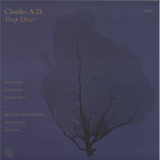
The sea has long been central to Japanese culture, symbolizing both sustenance and spiritual depth. Charles A.D.'s Deep Diver draws inspiration from this, channeling the ancient traditions of diving and fishing into his music. Historically, the sea has influenced everything from Shinto rituals to the livelihoods of coastal communities. In Deep Diver, this reverence flows through aquatic soundscapes, where rhythmic waves of 90s house and Detroit techno meet Japanese minimal production techniques, New Age and Pacific Jazz. Like the tides, the album ebbs and flows, creating a serene yet dynamic homage to the timeless connection between Japan and the sea.
The opening track 'Deep Diver' plunges into the depths, its abstract sound design capturing the sensation of deep-sea propulsion. Rhythmic bubbles pulse gently alongside slow-moving chords, creating an otherworldly atmosphere. The textures are lush yet restrained, setting a tranquil stage that pulls the listener into a submerged world. 'Underwater Ruins' builds on this aquatic theme, introducing rhythmic layers and bass-heavy notes reminiscent of mid-90s Japanese ambient techno. The smooth, melodic flow nods to pioneers like Mr.YT and Susumu Yokota, while subtly incorporating the Detroit techno influence through soulful, deep basslines.
The track feels like a fusion of ambient and techno, balancing serene tones with a rolling groove, emblematic of Japanese techno soul. As the album progresses into 'Bubble Ring', it becomes clear that Charles A.D. is a master of minimalism. The production is timeless, leaning
on analog techniques where echo-drenched chords and carefully layered soundscapes take on an addictive, hypnotic quality. The simplicity of the composition is deceptive, as each element carries weight, drawing the listener deeper into the rhythm and space between the notes.
'Merperson' is where organic rhythms truly come into play. Charles A.D. gently evolves the patterns, allowing each percussive hit to flow naturally into the next. Soothing melodies emerge from within the track’s structure, eventually reaching an emotional peak without ever feeling forced. The organic nature of the arrangement creates an effortless progression that feels deeply connected to the natural movement of water.Starting the second half with 'Deep Exploration', the theme of underwater excursions becomes even more pronounced. Light, steady drumming anchors the track, allowing the melodic layers
to develop gradually. It unfolds with a calm, measured pace, before ending softly, almost as if the sounds are drifting off into the oceanic depths. 'Diffuse Reflection' stands out as the most dub house-influenced on the album, with rolling rhythms and hypnotic elements reminiscent of Maurizio's deep, pulsing sound. Yet here, the production feels submerged, with aquatic effects swirling around the rhythmic core, blending dub house with a fluid, oceanic touch. 'Traitors' delves even deeper into dub-inspired territory. Deep, resonant bass hits combine with wooden drums, while static-like sounds evoke the image of a radio tuning through static to find clarity.
Chords shimmer briefly before fading back into the liquid depths, evoking the ebb and flow of the tide. The final track on Deep Diver 'Levitation', is a fitting conclusion, as the rhythms merge and overlap like waves gently lapping the shore. The minimalistic arrangement allows each element to blend effortlessly into the next, creating a sense of unity and closure. The sounds move with the gentle grace of water, ending the album in a way that feels both complete and
open-ended, like the infinite motion of the sea.
THE DYNAMICS • DRAG’N'FLY
by VINCENT HELLO.
Jamaica, 1960s. Ska artists, rock steady and reggae take back some soul songs of the United States, thus giving their versions that will in turn become future classics. The hits of the moment are also seasoned with Jamaican sauce, no matter where it comes from Original, pop, country, jazz... The rhythms of the island permanently transform the tracks of origin. In 2024, with their third album called Dragn'fly and decorated with a beautiful dragonfly (a "dragonfly" so in the language of King Tubby) the Dynamics honour Jamaican tradition and dynamite 10 versions of hits from yesterday and today. The Dragonfly spread his wings reggae, soul, funk to land in all headsets at the heart of good stereos and on spicy dancefloors. Because this dragonfly is a true superfly that speaks to the heart... and legs.
After two albums whose success led them to walk the globe of Glastonbury in Tokyo, honoured by the large elders (the first part of Lee Perry here, a regular dj support of Don Letts over there) the Dynamics are alive so their 'soul reggae vocal sound system” in front of audiences specializing in Jamaican or to those who are who were lucky enough to meet them by chance in Chemical Brothers... or Lady Gaga.
The Dynamics have forgotten the weight of ancestors to make their own recipe. They proclaim it, they are Sound System! The voices of Mounam, Steve Levi and Mr Day are in the front row, so making lovers, preachers, crooners and crooners to Turns of Duty, while Fab Master Flab all in one of the roots and futuristic echos. But if the mind is a sound system, the dynamics sounds also as a group through instruments live performances that plunge the tracks into a fervor unique. And then there are the hits, so, from all times and of all styles.
The low rider becomes toaster and leaves the road a American carried by these vocal harmonies Sky to take the exit Kingston. On the roadside, the joker delivers his lovers soft rock after a small detour to Muscle Shoal, The time to borrow a guitar from Duane Allman. In the south again, Mounam “Mrs Dynamics” meets the spirit of «Mr Dynamite» and tells him his radical, soul version. “ man’s world...” inna digital style! The spiritual anthem “you got to have freedom” by Master Pharoah Sanders becomes a universal skank, pop and dub who sends resounding high its universal message Dance! The dynamics are mutating the classic of ESG into a small, minimal pop bomb that is not without resemblance to the Neptunes of Mr Pharell Williams. On the edge of the track, Peter Gabriel sees his “Sledgehammer” groover as he does could imagine it and dissolve into sublime soul scrolls. Later, “After laughter...” soul classic celebrated and sampled Born into a rock steady air promised also to eternity. JJ Cale’s "cocaine," leaves its on the dancefloor for a reggae disco version, necessarily! And then, we must conclude. So it’s time to send an original title. It will be "Rubba Sub", to the aromas of sleng teng, which proves that far from the hits, the Dynamics deploys same layouts to deliver fresh and authentic sounds. And when the dub echoes evaporated, that the riddims have been silent, only remains an album majestic, in turn a future classic, full of unique Dynamics sound that mixes with instinct the echoes of yesterday to its own voices today.
After the highly anticipated debut album “Sugar Honey Iced Tea!,” the dynamic NYC duo strikes once more with a double pack of alternate versions and remixes. Craig Handfield and Brandon Weems, better known as musclecars, have unveiled a dance music masterpiece, now graced by the touch of house music legends Louie Vega and Maurice Fulton.
This double pack showcases multiple versions of “Tonight,” remixed by dance music maestro Louie Vega, who momentarily stepped away from his Masters At Work ventures to infuse this project with his magic. The main remix unfolds like an epic journey adorned with orchestral elegance, while the dub versions range from festival anthems (NV South Jersey Mix) to tracks that echo the early Masters At Work essence (Louie Vega’s Bronx Dub).
Additionally, we are gifted a new version of “Hello?” reimagined by Maurice Fulton. In this version, Maurice’s signature live bass lines intertwine with exuberant, hard-hitting percussion, casting a whimsical light on the deep, introspective original.
Complementing the remixes from musclecars’ esteemed inspirations, we encounter two new versions of “Ha Ya! (Eternal Life)” and “Water,” both stripped of percussion to reveal the stunning arrangements, textures, and harmonies. These renditions are accompanied by a full side of musclecars’ dance odyssey “I Don’t Remember The Last Time I Saw Stars.”
The Double Honey Pack is a tour de force. It’s a rarity to witness two legends unite to elevate an already stellar project, yet Vega and Fulton achieve just that. Meanwhile, Weems and Handfield meticulously peel back the layers, allowing the intricate details to shine. This promises to be the release of the summer!
Lovers of Italo disco music will consider Cyber People as one of the most important acts in its scene. The Space-synth sound Cyber people brought in the mid 80’s, was highlighted by their 1985 ‘Void Vision’ release, which became a hit both in Europe, as well as in South America. On top of that, Cyber People paved the road for acts like Koto, Laserdance and Hipnosis, just to name a few. Cyber People were disbanded though in 1988, but left behind a series of most important Italo Disco records.
Now, build on the ashes of the former and legendary ‘Memory Records label from Parma – Italy, Memix International is pleased to announce its return, and the return of Cyber People. In its original form, headed again by the Maestro Giorgio “Theo” Spagna himself, as leader of the pack, with a tribute to Anfrando Maiola, the founding father of Mamory Records’ most important act, Koto, who left us in 2023.
As a tribute, Anfrando’s “Dragon’s Legend” get’s a complete new overhaul by Cyber People, respecting its original structure, concept and spirit, bringing it however into the 21st century.
Besides the almost 8-and-a-half-minute tribute of Dragon’s legend on the MEM-side, on the MIX-side you will find the DJ friendly ‘DJ DUB’, bringing you the compact essential of ‘Dragon’s Legend’ for any up-to-date Italian Disco set. (And if you want to call it Italo Disco, that’s perfectly fine with us too!)
With this release, Memix International continues where it’s predecessor stopped in 1989. Paves the road into a new era, and pays with this rerelease it’s respect to Anfrando Maiola and his Koto releases , such with full support from his heir.
With this release Memix International also brings a tribute to Alessandro Porta, the great Italian designer and visual artist, whose heirs were as kind to participate also, and made one of Alessandro’s drawings available for the sleeve of this unique release. It was Porta who was, on many occasions, responsible for the characteristic artwork of various Koto releases and, all together it will for sure make this release a well sought item which comes in a strictly limited edition of 500 units, so distributed on a ‘first to come, first to serve’ basis. Expected release and shipment: end of September/begin of October 2024.
Comes with insert and download coupon.
Imagine a Latin remake of Back to the Future. The mad scientist is Arsenio Rodriguez (the godfather of salsa) and the young student who travels through time with him is Eblis Alvarez (Meridian Brothers). This album can only be described as the perfect soundtrack for that movie that never was.
After the massive buzz generated by his first solo album, Mentallogenic, Alex Figueira got back in the studio to work in a more collective fashion this time, carefully assembling the second album of his largest project to date, Conjunto Papa Upa; a team of 6 musicians, spanning 3 generations of some of the best talent in the Latin and avant-garde scenes.
In an era where tropical music is dominated by purely electronic and rhythmically uniform sounds, the ten songs encompassed in “Fruta Madura” (“Ripe Fruit”) wander through the most diverse tempos, rhythms, and motifs effortlessly. A real breath of fresh air that gracefully incorporates soul, funk, jazz, psychedelia, and electronics into a solid tropical, irresistibly polyrhythmic foundation, without ever succumbing to the many genre clichés.
The distinctive production and catchy songwriting of Figueira shine in a very distinctive light on this second full-length. Living up to his reputation (Miles Cleret, founder of Soundway Records, called him “one of the scene's truly authentic and eccentric producers”), he takes the opportunity to show he’s not afraid to keep walking his own path.
Taking the band for a wild ride through the traditions of Africa, America, and the Caribbean; contrasting them with a ridiculously wide plethora of vintage, contemporary, and futuristic sounds, and pivoting on the exuberant musicality displayed by his musicians; the result leaves no doubt: this album is destined to be considered a future classic of the exciting tropical psychedelic music of the 21st century.
Addressing the most diverse themes in this new collection of songs, things take on a much more mature tone, as the title clearly suggests.
The opening track “El segundo es más sabroso” (“The second one is tastier”) sets the tone in the most assertive way imaginable, with the band boldly declaring, through multiple metaphorical references (laid upon a crazy mix of Dominican merengue, Detroit techno, classic and free jazz, dub, and electro), that the bar will be set higher with this second album.
The remaining compositions touch upon the most diverse subjects, with a fair dose of humor, sarcasm, and postmodern “magic realism”. “El Algoritmo” (The Algorithm) is a parranda-cumbia hybrid (for lack of a specific term) about the omnipresence of technology in our lives. The sophisticated Latin soul of the titling track “Fruta Madura” makes a case for the beauty of the maturity process. Some key philosophical teachings of Marcus Aurelius (the role of causality, the impositions of “the logos” and the importance of self-control) get a twisted cumbia treatment on “Reos del Deseo” (Prisoners of Desire). “No le pongas Coca-Cola” (“Don’t put Coca Cola in it”) shows us the most satirical side of the band, accusing those who mix Coca Cola with Rum of committing "sacrilege", on a powerful base of Dem Bow (the grandfather of Reggaeton), intertwined with touches of soul, salsa, and Cuban comparsa.
"Háblame Claro" (“Talk to me clearly”) is a story of heartbreak that evokes in its first part the spirit of the erotic salsa of the 80s (a subgenre deeply despised by purists), and after an unexpected samba interlude, leads to the hardest salsa of the 70s (a subgenre adored by purists), to end up in the surprising form of pure Afro-Cuban ceremonial music.
“Tu mamá tenía razón” ("Your Mom Was Right") is an attempt to exalt the spirit of the Latin American soap opera in the key of “acid bachata”, to recount a real-life case, witnessed by the band on countless occasions: the partying woman who arrives at the show accompanied by her bitter husband, who obviously does not like to dance. A very cheeky song to talk about the very serious and pertinent topic of female empowerment.
“La misma vaina” (“The same thing”) with its indescribable blend of bantú, candomblé, and Mozambique rhythms with abstract synthesizers, is an ode to adventure in favor of the aversion to taking risks and seeking predictability.
“Amigas picadas” (“Salty friends”) is another humorous song recounting another real-life case witnessed by the band on countless occasions: a love encounter sabotaged by the girlfriend's friends, who all happen to fancy the same guy. A jazzy take on the ancient Dominican rhythm of pambiche (grandfather of merengue), with generous psychedelic touches, resembling the classy late 60s releases of Guadeloupe's legendary producer / label owner Henri Debs.
“Vinimos a hablar” (“We came to talk”) takes sarcasm to the highest level, to ridicule the absurdity (also experienced by the band firsthand) seen in live music venues where people pay a ticket to go and have conversations that could be carried out much better on any bar, where no band is playing. The music alternates between a delicate melody with loose, sparse percussion and a full-on, pumping Angolan semba, with a techno kick drum included; bringing things to an apotheotic grooving finale, where the peculiar swing of Venezuelan calypso from the Callao region is thrown on top of all the precedent elements; closing the album in the most uplifting, “end of the carnival parade” feel.
The artwork is a delicate and impactful oil painting by Colombian artist Kevin Simón Mancera, who has collaborated many times with the label before (“Maracas, tambourines and other hellish things” tape and the Lola’s Dice LP).
What the experts are saying:
“Alex (Figueira) dove into this work with a brutal cohesion between lyrics and synths. Timbre poetry, sound poetry (you name it). And that, superimposed on his always impeccable percussive base, confirms the title of “avant-garde visionary of our beautiful Latin music”".
EBLIS ALVAREZ (MERIDIAN BROTHERS)
“Papa Upa's infectious quirkiness is a balm against boredom. A mature album, but without an expiration date”.
GLADYS PALMERA
“Here there is a lot of strength, drum, cadence and psychedelia, lost dance rhythms, united in an intercontinental Latin/African/and Caribbean journey, a unique winning combination that we could consider the new “Ritmo Figueira”.
DISCODELIC
Conjunto Papa Upa are:
Alex Figueira - Timbales, percussion, vocals.
Gerardo Rosales - Congas, percussion, vocals.
Ramón Mendeville - Bongos, percussion, vocals.
Randy Winterdal - Bass.
Andrew Moreno - Guitar.
Nico Chientarolli - Organ, piano, synths.
All songs written by Alex Figueira.
Arranged and performed by Conjunto Papa Upa.
Recorded, produced, mixed and mastered by Alex Figueira at Heat Too Hot, Amsterdam.
Filipovich is one of a kind. The Belarus-born, Paris-based artist works in a multitude of media - found footage films, painting, silkscreening and performance to name a few. It's her musical output that has caught the attention of late, though, with Filipovich dropping a run of releases in recent years which began with 2021's Magnificat on Time Released Sound. Filipovich takes as much of a novel approach to her music-making as she does with her other artistic endeavours - Magnificat was centred around treated samples of Sergei Rachmaninov's All-Night Vigil, and she's also combined classical composition with contemporary electronic techniques on her subsequent drops.
For Idealized, Filipovich's debut on Sheffield's Central Processing Unit, she maintains the gothic air which characterised her previous releases and applies it to a record of widescreen contemporary techno joints. These tracks represent something of a gear shift for CPU, a label which has long made its name by delivering top-quality electro and machine-funk jams, but such is the quality of Idealized that these superbly-executed techno productions are sure to win over label fans both old and new.
Idealized is very much schooled in the German tradition of minimal/dub techno. Tracks like 'Physical', 'Wave' and 'Dance Minor' all anchor themselves on single, steady drum pulses and delay-drenched single-chord loops. Filipovich generally lets the central idea of these tracks play out across several minutes while introducing increasingly disorientating elements into the rest of the mix - wiccan atmospherics, clashing chords, spiralling delays and so forth. It's an approach at once respectful of Filipovich's predecessors - Basic Channel, Deepchord, Ellen Allien and so on - but also full of idiosyncrasies and individuality.
Many of the club cuts here hardwire us into the moody, murky environs of the darkest Berlin Basements. 'Ultra Red' rides forward on a crisp drum machine snap, a menacing burble of bassline and an eerie single-note synth whistle in the upper end of the mix; 'Dance Minor' shows off a bit of KiNK in the brain-bending modular loop that waxes and wanes at its centre; the second-half run from 'Wave' to closer 'Small Cave' travels ever-further out into deep space - the kick drums remain insistent, yet the textural elements are delivered with an edge and flair that evidences Filipovich's ability to think outside the box.
Filipovich's unusual methods, and the influence of sound art and electroacoustic composition on her music, are drawn out further when Idealized steps away from the dancefloor. 'Hydra' comes off like a more gothic version of Pole - its central pulse draws from dub techno but never quite settles into a danceable groove, and this beat is combined with the kind of unnerving keyboard work that would make John Carpenter proud. Although closer 'Small Cave' eventually locks into another dark-room techno roller, the opening section of the track delivers a weightless soundscape of bright, tinny chords and a scene-setting field recording.
Idealized, the first drop on Central Processing Unit from Paris-based Belarusian Lina Filpovich, broadens the label's horizons with a selection of finely crafted minimal/dub techno joints.
RIYL: Andy Stott, Deepchord, Ellen Allien, Moritz von Oswald
Vessel Recordings Group is a new label from the United States and kicks off with Natural Rhythm aka the duo of Thomas White and Pete Williams. They have been working since the 90s on their own brand of house and as this EP shows it is stylish, rooted in tradition but full of contemporary designs. 'Jillybean' is raw, stripped back and perfect for backrooms. 'The Chase' is a slamming cut that pushes on with classic vocal samples twisted into something new, and great swing. 'Son Of Orange' is another lo-fi, high-class house sound with real weight and machine soul and 'Pocket Ops' closes out with dubby techno energy. A fantastic, no-frills EP to get this label underway.
First aired by Ratpack on Centreforce , this first collaboration by Col Trixta &Dubble Dunk has already become a classic in-the-making
Much like the hugely popular 'Dubble Dunk Vol 1', both tracks bridge genreshouse, breaks and old skool - with slammin' old skool pianos, stabs and familiarvocals.
Colin and Duncan have been plying their trade on the UK rave DJ circuit since theearly 90's and both held residencies at Slammin' Vinyl, United Dance, Freedom@Bagley's and now Strawberry Sundae together.