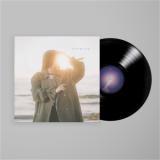
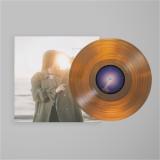
Eco Edizioni debuts in 2025 as an Italian publishing and recording project dedicated to mapping radical sound aesthetics. The label explores the territories of unconventional electronic music, giving space to forgotten productions that outline complex soundscapes through the experience of expert synthesis producers. The first vinyl release embodies this philosophy through a dialogue between different generations of the European industrial and electronic scene. The dark atmospheres of Okиho meet the analytical and methodic techno of Andrew Lagowski, taken from his 1995 album Prismatic.
The album Malnovnova is the culminating synthesis of this synergy, presenting itself as a manifesto of avant-garde sound engineering. The work pushes the Okиho duo’s research towards a totalising and hyper-technical electronic abstraction, where granular signal processing is mitigated by Lagowski’s atmospheric industrial layers.
Suche:duo j
RIPIT is back with a new LP after 3 years spent mostly on the mesmerizing collaboration between THE ÅNGSTRÖMERS- his duo with FRÉDÉRIC ALSTADT -and the Haitian voodoo ensemble CHOUK BWA.
While Ripit is better known for his radical noisy breakbeat work, "A Church or a Factory" explores a more industrial, power electronic and noise ambient side of his synthesizer lust. The instruments abused on this record are: Serge modular, Knifonium and various eurorack modular. The A-side comes with 5 powerful synthetic industrial songs which feature each one a different guest vocalist. The B-side is a long ambient noise piece that will plunge the listener in an anxious meditation.
Ripit is the project of the French NICOLAS ESTERLE for almost 25 years. He explores electronic instruments thru distortion , ranging from industrial hardcore to breakcore, from doom hiphop to dusty dub. Beside his solo project, he's involved in various bands like SOLAR SKELETONS (with TZII), FUJAKO (with HHY) and more recently The Ångströmers.
On the guest side, there's a wild bunch of Nicolas' friends:
- PAUL-TERGEIST is the galactic moniker of PAUL BEAUCHAMP in his band SPACE ALIENS FROM OUTER SPACE;
- ANDREA EV is the lead member of 1997EV;
- ROBERT IMHUMAN and DIVTECH are members of the REALICIDE COLLECTIVE;
- TZII is a long-time road comrade of Nicolas and a touring freak spreading his music all over the world;
- ANDRÉ COELHO is known as METADEVICE and is the founder of the now-defunct SEKTOR 304.
The title "A Church or A Factory" refers to the Belgian countryside, wherever you are, you are at least surrounded by a church or a factory. As he just left the urban life of Brussels to escape to the French countryside, he is now lost enough not to have neither a factory nor a church in sight.
"What if, alongside the mainstream history of music, with careers and discographies spanning ten or fifty years from album to album, there was an underground, minority history, that of artists and projects with only one record? A flash, a burst of brilliance, a gem, but no follow-up, no repetitions, no decline.
"This will most likely be the case for this album by Amarante-Cerisier, a duo formed by Mauricio Amarante (RadikalSatan, Équipage, travelling companion of Canan Domurcakli and Austin Townsend) and Marine Debilly Cerisier (dancer, performer, writer, co-founder of alternative cultural venues in Marseille and Brussels), with these eight poetic songs in French having more in common with the visionary essence of certain songs from the early 1970s (Brigitte Fontaine-Areski, for example) than with the post-modernism of the ‘nouvelle chanson française’ of the1990s and 2000s.
"But – and this is undoubtedly no coincidence – this is also the case for two unique albums, which had no immediate follow-ups but which, 50 and 20 years after their release, inspired Mauricio and Marine's album and discreetly found their way into it:
"At the very end of the 1960s, Tchékov Minosa (Marine's grandfather) embarked on a journey to the East with his partner Brigitte de Saint-Preux, during which they were married ten times, in ten different traditions (in Kurdistan, among the Kuchi people of northern Afghanistan, among the Kalash people of north-eastern Pakistan, in Rajasthan,etc.). This three-year journey was documented in numerous articles in the European press, in documentaries, in a book... and on a double LP of traditional music recordings released in 1973 by Le Chant du Monde. And sampled today by Mauricio Amarante at the end of the track ‘Parfois’.
"In the early 2000s, Austin Townsend, a tall, bony figure, washed up on the banks of the Garonne River near Bordeaux, arriving from New Zealand. With a voice that was sometimes very Bob Dylan-esque, at other times buried in the gravelly depths of the low frequencies, he strung together contemporary blues songs on his only album, Introvenus (Potagers natures, 2007), beautifully accompanied in subtle tones on banjo and double bass by Mauricio and Cesar Amarante (alias Radikal Satan). Beyond this unique record, Mauricio played extensively with Austin in concert. And when his friend died in the spring of 2024, he received his guitar, used the instrument for some of the tracks on the upcoming Okraïna record, and decided to dedicate the album to him.
"In our conception of music, fleeting appearances, unexpected reunions, and timeless records outside the dictates of current musical trends thrill us more than overly well-planned career paths."
- A1: Red Axes & Man Parrish Ft. Roy Garrett - Hot Rod To Hell And Back
- A2: James Infiltrate - Chaos
- B1: Queen Atom - Tributemaki
- B2: The New Black - Androids Are Sexy
- C1: Red Axes - Clear Beats
- C2: 100Hz - Whisper
- D1: Red Axes - Time To Take It
- D2: Sluts`n Strings & 909 - Past The Gates
- (10") | A Redrago - Spikes
- (10") | B Redrago - Frequency
Red Axes step into the fabric presents series with a release that feels both inevitable and deeply personal. Known for their hypnotic, psychedelic approach to club music, the Tel Aviv–based duo bring a narrative-driven sensibility that aligns seamlessly with fabric’s legacy of long-form storytelling and forward-thinking curation.
Across years of performances at fabric and other key global institutions, Red Axes have developed a reputation for sets that unfold patiently and unpredictably, drawing dancers into a world where groove, tension, and atmosphere take precedence over genre or trend. Their contribution to the fabric presents series reflects this ethos: a carefully sculpted journey that prioritises mood, momentum, and emotional depth, while remaining firmly rooted in the physical language of the dancefloor.
Formed by Dori Sadovnik and Niv Arzi, Red Axes emerged from Tel Aviv’s underground with a sound shaped by post-punk, acid, krautrock, and cosmic disco influences. Over the past decade, they have built a catalogue defined by raw textures, twisted melodies, and a distinctly human looseness, qualities that translate as powerfully in the club as they do on record. Their releases and remixes for labels such as Phantasy, Correspondant, Running Back, Dark Entries, and Permanent Vacation have established them as artists who consistently operate just outside the expected.
As DJs, Red Axes are celebrated for their ability to stretch time on the dancefloor, weaving obscure selections, unreleased material, and leftfield classics into slow-burning, trance-inducing narratives. This approach has seen them invited to venues and festivals including Panorama Bar, De School, Bassiani, Dekmantel, Sonar, and Primavera Sound, where their sets are defined not by peaks alone, but by the tension built between them.
With the forthcoming fabric presents Red Axes release, the duo deliver a statement that captures years of shared musical intuition and a deep respect for the club as a communal, transformative space. It is a mix that rewards close listening as much as physical immersion, a snapshot of Red Axes at their most focused, expressive, and uncompromising.
To mark the launch of their forthcoming fabric presents album, the duo unveil the lead single, “Hot Rod To Hell”, a bold reworking of Man Parrish and Roy Garrett’s 14-minute spoken-word electro epic, reimagined through Red Axes’ signature psychedelic lens.
Stripped back and refocused, the original’s narrative tension is transformed into a hypnotic, downtempo house track built for late-night immersion. A rolling, elastic groove anchors the track, while pulsing low-end, subtly warped synth lines, and tightly controlled percussion create a sense of slow, smouldering momentum. The spoken vocal elements drift through the mix like fragments of memory, lending the track a ritualistic, cinematic quality without overwhelming the dancefloor.
Masayoshi Fujita & Jan Jelinek, live in Kyoto, 29th June 2025 at Shimei-Kaikan, Kyoto
The concert took place as part of a Japan tour by the duo in June/July 2025. The show in Kyoto was organised by Tatsuya Shimada (night cruising). After a solo concert by Masayoshi Fujita and Jan Jelinek, the two performed as a duo.
faitiche edition is a series of concerts on tape cassette. The recordings are not available digitally. Buyers/owners of the tape can send a photo of their cassette by email to info@faitiche.de (Subject: »das digitale Konzert«) to receive a Bandcamp download code free of charge.
Sound recording: Kunihito Kizuka
Mastering: Jan Jelinek
Drawings: Vincent Klingelhöfer
Photo: Yoshikazu Inoue
Design: Tim Tetzner
Antônio Carlos & Jocafi, das legendäre Duo aus Bahia, dessen Musik seit über fünf Jahrzehnten den Soul Brasiliens verkörpert, kehrt mit einer kühnen neuen Zusammenarbeit zurück: Jazz Is Dead 026. Beto Barreto von Baiana System stellte Adrian Younge und Ali Shaheed Muhammad vor, und die Begegnung war sofort von Magie geprägt. ,Als wir uns zum ersten Mal trafen, war es wie bei einer Familie", erinnern sie sich. Diese Verbundenheit veranlasste Younge und Muhammad, das Duo nach Los Angeles einzuladen, wo sie eine Handvoll Ideen mitbrachten und vor Ort neue Songs schufen - ein intuitiver, improvisatorischer Prozess, der die Philosophie von Jazz Is Dead ausmacht. Mit dieser Veröffentlichung bekräftigen Antônio Carlos & Jocafi ihre kreative Vitalität und bringen gleichzeitig einer neuen Generation ihren zeitlosen bahianischen Geist näher. ,Adrians Liebe zu Brasilien ist größer als die vieler Brasilianer", sagen sie und betonen, wie aufmerksam er zuhört, studiert und die Rhythmen, Geschichten und Gefühle ihrer Kultur vermittelt. Das Ergebnis ist ein Album, das eine Brücke zwischen dem Mercado Modelo in Salvador und der globalen Bühne schlägt und die folkloristischen Traditionen Bahias mit der analogen Seele von Jazz Is Dead verwebt.
Schatterau’s third album, »Wir gingen durch leere Stunden« (We went through empty hours), sees the German duo blossoms with beauty and sophistication through a broad creative language.
This opus, presented in the form of vivid auditory tableaux vivants, explores the topography of memory as a landscape in constant motion – full of loops, feedbacks, and mirage-like distortions. Sounds climbing like vines over old walls, concealing details only to reveal new ones. Some pieces feel like fragments of a dream whose origin has vanished, others like displaced echoes of a day long gone.
Memories create paths that only become visible in retrospect – detours that somehow always lead back to oneself. Each track draws the listener into a different recollection, as if opening an old door. Inside, time behaves strangely: it jumps, stretches, and repeats.
»Wir gingen durch leere Stunden« ultimately presents Schatterau at their most experimental, complex and measured extremes, channelling ambiguous human emotional resonance ranging from melancholy to pure ecstasy.
- A1: Risk It All
- A2: Cha Cha Cha
- A3: I Just Might
- A4: God Was Showing Off
- B1: Why You Wanna Fight?
- B2: On My Soul
- B3: Something Serious
- B4: Nothing Left
- B5: Dance With Me
Tape Cassette[19,12 €]
The Romantic, the new album from Bruno Mars. The fourth studio album from the global superstar and 16 time GRAMMY® Award-winning artist marks Mars' first solo album release since 2017's 24k Magic and follows chart topping collaborations with Anderson .Paak as Silk Sonic, as well as smash hits with Lady Gaga and ROSÉ.
Available for pre-order on the 9th January at 5AM GMT and set for release on the 27th February 2026.
Sixteen-time GRAMMY® Award winner and thirty-three-time GRAMMY® Award nominee Bruno Mars is a celebrated singer, songwriter, producer, and musician who is one of the best-selling artists of all time and now continuously the number-one most listened-to artist on Spotify. With recent hits like “APT.” with ROSÉ and “Die With A Smile” with Lady Gaga—the latter earning him two nominations for “Song Of The Year” and “Best Pop Duo/Group Performance” at the 67th Annual GRAMMY® Awards—Mars has celebrated another extraordinary year in music. Among his robust list of accolades, some of which include “Album of the Year” for 24K Magic at the 60th Annual GRAMMY® Awards and “Record of The Year” for Silk Sonic’s “Leave The Door Open” at the 64th Annual GRAMMY® Awards, Mars has held the number one global song for more weeks than any artist in 2024 with both “APT.” and “Die With A Smile.”
Deaf Center travel through quiet pathways and grand boulevards in their fourth studio album “Through Time”.
Since their last full-length LP, “Low Distance” (2019), the duo has gradually shifted towards a more long-form electroacoustic sound which perhaps makes for their most immersive listening experience so far. Otto A Totland’s piano travels in less frequent rhythms than before, yet is felt even more as a relief in the quieter moments that contrast with Erik K Skodvin’s deep atmospheric worlds. There’s a searching quality within the record which feels like slow movements on the way towards something meaningful, capturing a sense of both peace and awe.
The latter part of the album takes a different turn: fluctuating electronic rhythms over deep strings create an ecstatic yet haunting duality. It is the first time a guest musician appears on a Deaf Center record: British composer and musician Simon Goff joins with violin and viola in the finale, “Further”, a hypnotising piece submerged in layers of strings and drones.
The subject of time is an ambitious one, yet Deaf Center manage to balance the humble with the grand in great warmth as seconds become minutes, hours become days and time seemingly freezes as a still-life moment.
Deaf Center travel through quiet pathways and grand boulevards in their fourth studio album “Through Time”.
Since their last full-length LP, “Low Distance” (2019), the duo has gradually shifted towards a more long-form electroacoustic sound which perhaps makes for their most immersive listening experience so far. Otto A Totland’s piano travels in less frequent rhythms than before, yet is felt even more as a relief in the quieter moments that contrast with Erik K Skodvin’s deep atmospheric worlds. There’s a searching quality within the record which feels like slow movements on the way towards something meaningful, capturing a sense of both peace and awe.
The latter part of the album takes a different turn: fluctuating electronic rhythms over deep strings create an ecstatic yet haunting duality. It is the first time a guest musician appears on a Deaf Center record: British composer and musician Simon Goff joins with violin and viola in the finale, “Further”, a hypnotising piece submerged in layers of strings and drones.
The subject of time is an ambitious one, yet Deaf Center manage to balance the humble with the grand in great warmth as seconds become minutes, hours become days and time seemingly freezes as a still-life moment.
- A1: Can I Have You For Myself?
- A2: Dead Weigh
- A3: Zig Zag
- A4: Grapefruit
- A5: In My T Own
- B1: Best Interest (Ft. Billy Woods)
- B2: Double Trio 2
- B3: And I Dance
- B4: Ggg
Cloud Management return to Altin Village & Mine for a unique collaboration with New York writer and creative polymath Vivien Goldman.
A pairing spanning generations and geography, but with a musical overlap that is quite fitting in both process and result. Cloud Management’s jammy, improvisational approach to their dubby electronics blends well with Goldman’s idiosyncratic vocal style, which has its origins in the early days of post–punk and UK dub experimentalism. Cloud Management blend many historical aspects of German electronic music into something distinctly their own, while retaining a view well beyond those borders or any particular era. This approach fits well with Goldman’s deep multidisciplinary career, not easily defined because of its eclectic abundance across disciplines, yet always orbiting around music as its foundation.
When it comes down to it, these are great tracks created in the same way they sound: loose but refined, circling and turning inwards and outwards, back onto themselves. A dub of a dub of a dub, but never falling too far from the source — the minimalism necessary to deliver a direct, steady resolve and a gripping listen.
The B–Side of the record features three remixes by artists from across the globe, all with strong connections to the front line of dancehall, dub, and electronic music experimentalism. Longtime Equiknoxx member Time Cow from Kingston (Jamaica), delivers a version of »Quick Cover Up« that represents a major overhaul of the original. This remix strips away much of the looseness of the source material and leans into a lush yet slightly darker atmosphere, created by layered synths and a masterful use of underlying percussion and melodic stabs.
Up next are Twin Cities, Minnesota–based Feel Free Hi Fi, who take on »Judge Judge.« The duo tighten things up, overlaying weighty vintage string synths and digi–flute melodies. This version feels designed for smoky, late–night dub sound system sessions, harkening back to dub’s foundations.
Last but not least is London’s Pat Orburn. Stripped way down, the remix rides an interplay between alternating minimalism and a more lo-fi but lush exuberance, somewhat reminiscent of a bossa nova–esque minimal synth sound. This version’s lo–fi pop sensibility provides a fitting contrast and completes an eclectic yet copacetic trio of remixes for the record.
- 1: First Light
- 2: Cantata
- 3: Hands N Feet (Feat. Estee Nack)
- 4: Make Me Wise
- 5: Coonspeak
- 6: Equiano (Feat. Shabaka Hutchings)
- 7: The Lorax (Feat. Billy Woods)
- 8: Fainting Goats (Feat. Breeze Brewin)
- 9: I Say Self
- 10: Visitation Place
- 11: Alive Herbals
- 12: Parental Advisory
Two turntables and a microphone. There is a truth in the clarity of that simple coda, a truth that also belies the breadth of what is possible within its confines. Sometimes you gotta get reminded. I Guess U Had To Be There, the new album from NYC rapper ELUCID and veteran producer Sebb Bash, is one of those ones. So fresh it sounds like it was made tomorrow, but bet money you could put this on in ’89 and get heads bopping.
There are moments in music when masters of their craft cross paths at the height of their respective powers—records like Madvillainy, Liquid Swords, Dr. Octagonecologyst, and Hell Hath No Fury—where the result is more than the sum of its parts. ELUCID and Sebb Bash find themselves in this heady, seemingly effortless ephemera on I Guess U Had To Be There. Everything is both familiar and groundbreaking. The beats shift and flip under ELUCID’s feet but he tightropes it all, delivery nimble as a mountain goat, producer and rapper moving in perfect synchronization. Some shining stars make memorable appearances: billy woods, Breezly Brewin, Estee Nack, Shabaka Hutchings. But this is a two-man show, and the duo keep the spotlight where it belongs. I Guess U Had To Be There is a captivating, convention-defying listen and a high-water mark for two of the best artists in the genre.
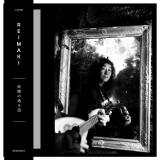
妖精の通る道 (The Path Where Fairies Pass) is the debut vinyl release by Reimaki, the duo of Rei Yokoyama (Triggers Flowers, Stakaidan, Lapiz Trio, 新井薬師自警団, and Fujio, Chiko Hige and Rei), and Maki Miura (Tsubamegami, Les Rallizes Dénudés, Shizuka, Fushitsusha, Ohkami No Jikan and Katsurei). The duo has been an understated presence in Tokyo, playing occasional under-the-radar shows and self- releasing a few CD-Rs, but they’ve recently started to break cover, with a recent cassette on UFO Creations, released in support of a late 2024 tour of China. It’s also a welcome reappearance on the scene for both musicians; Miura’s musical history, in particular, is being reevaluated thanks to a recent string of welcome Shizuka reissues.
But the music Reimaki make together is a different thing entirely, much as it shares some psychological and aesthetic interests with both Miura’s and Nokoyama’s other projects. Their sound is split between two main interests – an extension of glacial, deoxygenating psychedelic improvisations, and a deep interest in medieval European music. They’ve also been known to cover compositions by English prog/improv musician Fred Frith. These various elements of the Reimaki aesthetic are all present through 妖精の通る道, from the fragility of the opening “Novel Amor” through to the smeared, hazy textures of the three extended pieces that comprise the album’s flipside.
There’s a beautiful sympathy in these performances, and a generous simplicity, too; you can sense that this music is informed by decades of finding just the right way to say the right thing in the clearest manner possible. Yokoyama and Miura never overstate things; make the statement, play the song, let it hang in the air for a while, and then move on to the next essential expression. The music is unburdened by self- consciousness. Their take on medieval music cuts to the core of melody and melancholy; their psych- improv side is blurred and drifting without ever lapsing into rote generic gestures.
There’s some shared space with other artists who suspend the timeless within the kaleidoscopic possibilities of the psychedelic – Kendra Smith & The Guild of Temporal Adventurers; Emmanuelle Parrenin; Rosina de Peira – and a tangled folksiness that might put listeners in mind of Jan Dukes De Grey, Comus, Current 93, and Tower Recordings. Accompanied by beautiful photography from street photographer Takehiko Nakafuji, who was also personally chosen by Mizutani to document Les Rallizes Dénudés, 妖精の通る道 is a most unique and necessary trip.
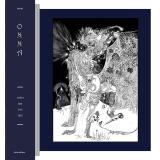
Onna Last Live 1983 includes the final performance by the original line-up of Onna, the psych-rock project of revered Japanese manga artist, Keizo Miyanishi. Onna’s legend has largely rested, until now, on one self-released and self-titled seven-inch from 1983. Reissued by Holy Mountain in 2009, its rediscovery, along with several archival live and studio sets that leaked out across the 2000s, signalled to a wider audience the power of Miyanishi’s strikingly hypnotic songwriting. With Onna Last Live 1983, though, we hear the group’s perfect line-up performing at its peak.
While Miyanishi was the core member and conceptualist of Onna, the other members of the group would also go on to make significant contributions to the Japanese underground. Guitarist Michio Kurihara would eventually be known for his membership of YBO2, Ghost and White Heaven, and collaborations with the likes of Boris and Damon & Naomi. Drummer Ken Matsutani formed Marble Sheep & The Run-Down Sun’s Children and The Mickey Guitar Band, while also running the Captain Trip label. Joined by the late bass player Yasui Yutaka, to whom the album is dedicated, this quartet only performed live in 1983; the live set here was recorded at Silver Elephant.
It’s a different line-up to the Onna duo that’s documented on their single. After Miyanishi and fellow manga artist Mafuyu Hiroki recorded that material, Miyanishi decided he wanted to start playing gigs; Hiroki left, and Kurihara, Matsutani and Yutaka joined soon after. This line-up allowed Miyanishi to significantly expand Onna’s powers, leading to a sound that Kurihara once described to Ptolemaic Terrascope magazine as “repetitive and heavy, yet quite orthodox.”
The songs here are simple yet deeply effective in their repetitive power, generally revolving around two or three simply strummed chords for guitar. Bass and drums repeatedly lock into mantra-like grooves as Kurihara’s guitar scales the walls, with Miyanishi’s consumptive moans and sighs sent torquing through FX. The cumulative effect of the seven songs here is very heavy indeed; if the prologue “Always…” drifts beautifully through five minutes of placid, beseeching melancholy, the epilogue, “Never Seen A Light Like This”, spirals out into sixteen minutes of glazed-over psych-rock, completely monomaniacal and thrilling in its slow-motion tumult.
Throughout, you can hear Miyanishi and co. reaching for something ineffable, something beyond and between the notes. It’s a phenomenal performance; it’s also no surprise that the group disintegrated after this show, given its intensity. Matsutani and Yutaka left after the Silver Elephant show, with Miyanishi and Kurihara continuing through the first half of 1984 firstly as a duo, and then a trio with new drummer Yoshiki Ueonyama. Kurihara left soon after. But Onna Last Live 1983 is proof plenty of the powers of the original Onna quartet, sending their Rallizes/Velvets dream-mantras off into darkened, stormy skies.
- Everyone Around
- Me Dancing
- Cellular Reverse
- Alive Inside
- Moon Not Mine
- Rotten
- Rotten Outro
- Good Friend
- Phenomenon
- Ambient Peace
- Phone Screen
- Guitar Duo
- E-Motion
SUNSHINE VINYL[22,27 €]
Jeder Künstler muss seine eigene Stimme finden. Gia Margaret fand sich selbst erst, als sie ihre Stimme verlor. Aufgrund einer Stimmbandverletzung, die sie jahrelang am Singen hinderte, entwickelte sie andere musikalische Ausdrucksformen und meisterte die Grammatik einer komplexen, heimeligen Form der Ambient-Musik, die von Ernest Hood begründet und von The Books perfektioniert wurde. Angeführt von sanften Klaviermelodien, die wie Atem auf Glas hauchen, jetzt, da ihre physische Stimme geheilt und ihre künstlerische Stimme geschliffen ist, schließt sich der Kreis mit Singing, ihrem ersten Gesangsalbum seit There's Always Glimmer aus dem Jahr 2018. Die Musik auf Singing zeugt von derselben Sensibilität für Details, die sie in ihrer Stille entwickelt hat. ,Es gab eine Zeit, in der ich wirklich nicht wusste, ob ich jemals wieder singen würde. Als ich dann geheilt war, stand ich unter großem innerem Druck, stark zurückzukommen", sagt Margaret. ,Ich wusste nicht mehr, wer ich war. Es fühlte sich an, als würde ich neu anfangen und mich wieder mit diesen sehr alten, alten Teilen meiner selbst verbinden." Dieses Gefühl der Vermischung von Entfremdung und Wiederentdeckung ist auf dem gesamten Album spürbar. Im Opener ,Everyone Around Me Dancing" beobachtet sie eine Party von den Seitenlinien aus und ist sich bewusst, wie ihr Körper sie von gemeinschaftlicher Freude abhält, ihr aber gleichzeitig neue Wege der Selbsterkenntnis eröffnet. Ausgeschlossen von der Szene ist sie ,näher am Boden, am Planeten". In ,Alive Inside" ist sie so weit entfernt von der Quelle, dass sie zu jedem betet, der sie hören könnte (,ein Gott, ein verstorbener Freund, ein Geist"). Wenn ihre Stimme anschwillt, scheint sie in einem Netz aus Verzerrungen gefangen zu sein; es ist, als würde sie in ihrem Streben die Grenzen des Sagbaren ausloten. Der Entstehungsprozess von ,Singing" war ein Prozess des Lernens, jedem dieser Gefühle zu vertrauen. Das Album wurde teilweise in London mit Guy Sigsworth von Frou Frou aufgenommen, der Margaret dabei half, die Vielzahl ihrer Ideen für ,Good Friend" zu vereinen, einem Highlight des Albums, das unter anderem gregorianische Gesänge von ILA und Turntable-Scratches enthält . David Bazan und Amy Millan sind ebenfalls zu hören, ebenso wie Kurt Vile und Sean Carey, während Margarets langjähriger Kollaborateur Doug Saltzman einen Großteil des Albums spielt und co-produziert. Deb Talan, ehemals Mitglied von The Weepies, steuert ihre Stimme, ihr Klavier und ihre Gitarre zum abschließenden und definitiven Statement des Albums ,E-Motion" bei. Gia Margaret singt stets. Jede Note dieses Albums singt ein warmes Requiem für ihr vergangenes Ich; jede Ebene singt ihr zukünftiges Ich ins Leben. Auf dem gesamten Album wendet sie die Lektionen der Sprachlosigkeit an - die quasi-rationalen Wege, auf denen wir kommunizieren, ohne zu kommunizieren, die Art und Weise, wie formlose Klänge wie ein Skalpell zum Kern der Dinge vordringen können - auf ihre eigene künstlerische Stimme.
After their recent LP Mirages (Kraak Records, 2025) with French turntablist Guilhem’All, the group continues to explore collaborations with artists and instruments from diverse musical traditions. Building on decades of uncompromising acoustic exploration, Razen delves deeper into their practice with five improvisational pieces that unfold slowly in time and space. The duo’s radical core - Brecht Ameel and Kim Delcour - finds in Van der Harst a longtime kindred spirit, united by the impact of sound, intonation, and the sheer joy of playing.
To be released on April 24 via VIERNULVIER Records, the artwork for Stained Glass Starling was created by American visual artist Robert Beatty (Oneohtrix Point Never, Christina Vantzou, The Weeknd, Tame Impala). The physical release comes with a 16-page booklet including artwork and an interview.
A long-standing artistic kinship lies at the heart of this project, with first encounters dating back to the early 2000s in Belgian musical improv theatre. Van der Harst’s lifelong experience in improvised music and music theatre, spanning back to the 1980s, combined with a vast arsenal of rare and historical instruments, opens new tonal territories within the Razen universe.
These explorations are not incidental: his family roots in the former Dutch East Indies — through his great-grandfather — provide a quiet backdrop to his enduring affinity for Asian musical traditions. Instruments such as erhu, Javanese kacapi, and others introduce timbres
that bring the music its most pronounced Asian inflections to date.
Yet despite this shift in colour, the underlying ethos remains unmistakably Razen. Working from sound rather than form, the ensemble approaches music as painters approach a canvas: adding layers, contrasts and shades with care. There is no soloist’s ego here; all voices are equal, echoing principles found in gamelan traditions.
Over the decades, Razen and Dick Van der Harst have crossed paths repeatedly, notably through cult theatre productions by Belgian theatre maker Eric De Volder, including Zwarte vogels in de bomen (2002) and Huis der Verborgen Muziekjes I–II (2000–2006). Recording an albumtogether had long been a shared aspiration — a wish that crystallised after a 2024 concert at Concertzaal Miry in Ghent, part of the Ruiskamer series by VIERNULVIER Art Centre.
long content, you may need to expand row to see all... Das Warten hat ein Ende: 18 Jahre nach ihrem letzten gemeinsamen Projekt haben Gnarls Barkley mit ihrem neuen Album Atlanta ihr finales musikalisches Kapitel vorgelegt. Das mit Spannung erwartete Werk von CeeLo Green und Danger Mouse markiert den krönenden Abschluss einer der einflussreichsten Kollaborationen der modernen Musikgeschichte. Mit der Single-Auskopplung „Pictures“ bewies das Duo bereits pünktlich zum Release, dass ihre Chemie aus souligen Gospel-Vocals und vielschichtiger Produktion nichts von ihrer Magie verloren hat. Atlanta ist dabei weit mehr als eine nostalgische Reunion; es ist die Vollendung einer Geschichte, die 2006 mit dem Welthit „Crazy“ begann. Die beiden gebürtigen New Yorker kehren mit diesem Album zu ihren Wurzeln zurück und vereinen erneut Soul, Hip-Hop und Psychedelia zu einem einzigartigen Sound. Für Fans markiert diese Veröffentlichung einen „Full Circle Moment“, der den Geist der Selbsterfahrung und künstlerischen Freiheit feiert, für den Gnarls Barkley seit jeher stehen.