Marillion steht für gefühlvolle, kraftvolle und zutiefst bewegende Musik und sind seit den 80er Jahren bekannt für ihre beeindruckenden Live-Shows und eine imposante, treue und loyale globale Fangemeinde. "This Strange Engine" ist ein bemerkenswertes Album, das sich durch akustische Finesse und Intimität auszeichnet und gleichzeitig eine atmosphärische Klanglandschaft mit tiefgründigen Texten und sanften Melodien bietet. Das Album zeigt Marillions Vielseitigkeit und Offenheit für verschiedene Einflüsse.
Erhältlich als hochwertige Deluxe Editionen mit reichlich Bonusmaterial, ist diese Neuaufl age ein Muss für alle Fans von anspruchsvoller Rockmusik.
Suche:dur
- Poder
- Danaçao
- Liminha
- Eu Nao Consigo Mais Dormir
- Nada De
- Ouço Passos
- Do Deserto
- Lucidez
- Crime Incontido
- Ontem
- Trashland
- Meu Pais
- Policia
- Santa Igreja
- Inimigo
- Honra
- Me Perco
- Ha Dez Anos Passados
- Imagem
- Açao Na Cidade
Mercenárias is an iconic band in the history of Brazilian punk and post-punk. They gained global recognition after being included in several compilations outside Brazil. Born in the vibrant alternative scene of 1980s Sao Paulo, Mercenárias is an iconic band in the history of Brazilian punk and post-punk. Formed in 1982 by Sandra Coutinho (bass and vocals), Rosália Munhoz (vocals), Ana Machado (guitar), and Edgard Scandurra (drums), the group stood out for their rebellious attitude, incisive lyrics, and raw sound that blended punk, post-punk, no wave and experimental elements. Their debut album, "Cadê as Armas?" (1986), is considered one of the most important records in Brazilian music history. Recommended for fans of The Slits, DNA, Malaria!, Kleenex, and Minutemen, the group stood out for their rebellious attitude, incisive lyrics, and raw sound that blended punk, post-punk, no wave and experimental elements. This is a compilation of rare tracks from 1983 to 1987. On the A side, there are 10 amazing songs that didn't make it onto their two albums. On the B side, there is a great live recording at the legendary Sesc Pompéia during their early days, as well as a "lost" studio session featuring some of their classic songs recorded for the cult film Vera. It has been remastered from the original tapes and includes an insert with previously unseen photos and a short text by Edgard Scandurra. .
Yannis Philippakis von Foals veröffentlicht sein erstes Solowerk, eine Kollaboration mit dem verstorbenen legendären Schlagzeuger Tony Allen. Yannis & The Yaw" präsentieren die EP 'Lagos Paris London', die nach den Orten benannt ist, an denen sie geschrieben und aufgenommen wurde und an denen sie beide gelebt haben. Das fünf Tracks umfassende Werk wird am 30. August auf Transgressive veröffentlicht.
Im Jahr 2016 bot sich Yannis die Chance seines Lebens: eine zweitägige Session mit dem großen Schlagzeuger Tony Allen, den er für seine einflussreiche, genreübergreifende Arbeit mit Künstlern wie Fela Kuti, Sébastien Tellier und Jeff Mills sehr bewundert.
Als Yannis sich in ein verrauchtes 70er-Jahre-Studio in Paris begab, erwartete er, dass sie eine nostalgische Afrobeat-Platte aufnehmen würden. Doch es kam etwas ganz anderes dabei heraus. Die beiden entwickelten schnell eine intuitive Telepathie, die Musik entstand aus Jams und Loops, und die verschiedenen Berührungspunkte - Rock, Funk, Jazz, Dub und mehr - wurden durch die einzigartige Atmosphäre des Aufeinandertreffens zweier Kulturen und kreativer Köpfe ergänzt, deren Ausdruck durch das Musizieren im und für den Moment selbst befreit wurde.
Zusammen mit Tonys regelmäßigen Mitstreitern Vincent Taeger (Schlagzeug), Vincent Turrell (Tasten, Marimba) und Ludovic Bruni (Bass, Gitarre) entstand bei diesem ersten Treffen eine Handvoll fast fertiger Songs, die in einigen nachfolgenden Sessions weiter entwickelt wurden. Aufgrund von Terminproblemen und Corona-Einschränkungen wurden die Aufnahmen jedoch nie abgeschlossen, bevor Tony im April 2020 im Alter von 79 Jahren verstarb.
Yannis fühlte sich zutiefst verpflichtet, das Projekt zu vollenden, nicht nur als bittersüße Art, seinen alten Freund zu ehren und zu feiern, sondern auch, weil Tony so begierig darauf gewesen war, diese Songs mit der Welt zu teilen. Das Ergebnis ist die kommende Fünf-Track-EP 'Lagos Paris London' unter dem Dach von Yannis & The Yaw - ein Projekt, zu dem er in Zukunft zurückkehren möchte, um weitere Kollaborationen mit inspirierenden Musikern aus der ganzen Welt einzugehen.
- Ltd. 12" EP
Tanzform Classic Tote Bag in Green. Made with 100% upcycled fabric.
Sustainable & Stylish: Made from 100% upcycled cotton fabric
Eco-Friendly Fashion: Reusable, durable, and perfect for everyday use
Minimalist Design: Features the Tanzform logo in elegant grey
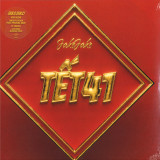
T?t 41 is the latest record by modular synthesist and Berghain resident JakoJako (Sibel Koçer), marking her album debut for Mute.
Recorded during a trip to Vietnam and bookended by field recordings from T?t Lunar New Year celebrations, the album is illuminated by references to Koçer's heritage. The melodic palette breaks away from traditional Western scales, drawing instead from the tonal intricacies of the Vietnamese language, inspired by overheard conversations. The album and track titles further honour the vibrant T?t festivities, shrines, and landmarks she encountered during her travels.
This album is, in many ways, a distillation of ideas she has been exploring for years. Tapping into a deep understanding of machine-based music, crafted with a minimalist setup consisting of a Eurorack and Waldorf Iridium Core, T?t 41 reflects on notions of rebirth, and the pursuit of a sonic core. From this simplicity emerge some of her most expansive, unworldly compositions to date.
T?t 41 is available on vinyl in a limited run of just 500 copies worldwide.
The Ibex Band, with Giovanni Rico and Selam Woldemariam at the creative helm, provided the musical backbone for legends like Aster Aweke, Girma Beyene, Tilahun Gessesse, Mulatu Astatke, and Mahmoud Ahmed, including the iconic album Ere Mela Mela, shaping modern Ethiopian music as we know it today. This 1976 album (Ge’ez Year 1968) played a pivotal role in that legacy and has now resurfaced to set the record straight.
There’s a tendency to talk about the seventies as a golden age of Ethiopian music. There are good reasons for that, and just as good reasons against it. However, the notion of a golden past privileges the role of Western explorers and suggests that the pinnacle of Ethiopia’s musical culture is something only a foreigner can appreciate and unearth. It downplays the complexities of Ethiopia’s culture and history, creating an artificial divide between then and now. And it underestimates the constantly evolving sound that has followed.
The legendary musical outfit The Ibex Band, later metamorphosed into The Roha Band, has played a central role in defining the sound of many of the greatest stars on the music scene of Ethiopia from the mid-seventies onwards–but their golden output has never really waned. The story of the origins of the band that provided the musical backbone for greats such as Aster Aweke, Girma Beyene, Tilahun Gessesse, backing the solo career of group member Mahmoud Ahmed as well as backing Mulatu Astatke and many others has yet to be properly told.
Two misconceptions plague the image of Ethiopian music, one is that the music is pure because it is, by some notion, unexploited, the other is that it is all traditional. To begin with, a combination of political changes between the late sixties and the mid-nineties created an environment where only the most dedicated and skilled musicians struggled on and pursued a musical career against fierce odds. The whole Ibex Band, with Giovanni Rico and Selam “Selamino” Seyoum Woldermarian at the creative helm, are arguably the origo of the vibrant scene in the mid-seventies, and the said pair are foremost responsible for not only navigating the band through troubled times, but also modernizing the 6/8 chickchicka rhythm to a contemporary form. Giovanni laid the rhythmic foundation with heavy looped basslines that reinvented traditional melodies as dance music, and with Selamino’s innovative guitar work they influenced scores of musicians from Abegaz Kibrework Shiota to Henock Temesgen. Even Giovanni’s Fender bass and Selamino’s Gibson guitar inspired younger musicians in their choice of instruments. Not only in choice of instruments but also in sound–even as the digital revolution hit Ethiopian music, a lot of popular music still took its cue from the masters from Ibex and Roha.
Ibex emerged out of the ashes of the sixties group the Soul Echos band, adding Giovanni and Selamino to their ranks and taking their cues from a slew of influences, such as Motown and The Beatles, fused with traditional music. A tighter-knit unit than most bands at the time – Ibex has remained six to seven members throughout their whole career, compared to many bands that were as large as fifteen or sixteen men strong when Ibex set out. Their playing has been viciously focused, economical yet heavy. Just a year before the recording sessions of the album in your hands, Giovanni and Selamino made a contribution to the popular musical lexicon of Ethiopia that was simply defining the popular sound: their arrangement and recording of bandmate Mahmoud Ahmed’s solo effort and real commercial breakthrough tune and eponymous album, Ere Mela Mela, from 1975.
Selamino has never limited himself to being an adroit lead guitarist, but has always been a scholar of history, and as such he has probably contributed as much to modern Ethiopian music with his guitar playing and compositions as with a deepened understanding of modern or contemporary – Zemenawi – Ethiopian music. Selamino’s contributions serve as a metaphor for those of the whole band, at one and the same time creating and defining a new, danceable and updated sound anchored in Giovanni’s bass, whilst also elevating the broader scene through their support for others on the scene and on top of that, increasing the understanding of the music.
There is an understandable desire to romanticize the musical heyday Ibex and Roha were at the forefront of, because so much of the output is sorrowfully hard to come by. Ibex creativity was nothing short of ridiculously fierce compared to many of their Western contemporaries. Based on their sheer recorded output alone they could have usurped the title “hardest working in show business” from James Brown, recording more than 250 albums or 2500 songs in the seventies and eighties. Some only surface as cassettes today, others were never given full LP release, and some are simply impossible to find today. In the light of that, it’s nothing short of a miracle that the recording Stereo Instrumental Music from 1976 (Ge’ez Year 1968) has resurfaced. Unearthed in perfect condition on a chrome cassette, this is musical history comes alive–to set the future straight. Stereo Instrumental Music was recorded in collaboration with Karl-Gustav Lundgren, a Swedish national working for the Radio Voice of the Gospel. It took two sessions at the Ras Hotel ballroom in Addis Ababa. The Ibex Band was the first band in Ethiopia to employ a four-track recorder for their recording (the first available in the country, lent by Karl-Gustav). Later the same week, Giovanni and Selamino realized that, lengthwise, the recorded material fell short of what they wished for, so they recorded four more tracks in one more session on a single-track recorder. The Ras Hotel and Ghion Hotel, where the Ibex Band held musical residencies were to Ethiopia in general and Addis Ababa in particular what Motown was to the USA and Detroit a few years earlier – a hotbed of musical creativity and showmanship.
The most astonishing thing about Ethiopian music of the last half century is how tradition and modernity are intertwined. Because of this feature, it’s kind of hard to tell when there ever was or when we are in a “golden age”. So much of music from the past has been criminally neglected, but because of the hardships in the past, it would be an oversimplification to say that said past was a golden age. Probably, the golden age is what we are approaching, because for the first time both the past and future are accessible, and the monumental contributions from before can lay a firm foundation for a thriving music scene today. The Ibex Band stands firmly in the past, present and the future. That, if anything, is golden.
The detailed history of Stereo Instrumental Music is in many ways unique. To begin with, it couldn’t have been recorded earlier (there were no four-track recorders available) and it really couldn’t have been recorded afterwards either, at least not in the years directly following, because of the toll the musical scene took from the unfavorable political climate that followed when the nascent Derg regime and rival groups tried to assert themselves, the musical equipment lent from The Voice of Gospel Radio simply disappeared from Ethiopia when the radio station folded in 1977. Karl-Gustav Lundgren,
the Swedish foreign national who assisted during the recording, worked with the Ethiopian Evangelical Church Mekane Yesus at the time, recalls how they only had about fifteen minutes to get the microphones in place for the recording as to not alert neither the management at Ras Hotel nor the authorities and most importantly, to complete the recording before the curfew came into effect at midnight. In leaping to the opportunity to use previously unavailable equipment to push their sound forward and improvising to meet the logistical challenges, the Ibex Band displayed the very avant-gardism and adaptability that explains their longevity as a band through the years. The recording of Stereo Instrumental Music is from a given time in history, but it sounds as beyond time.
Much of the energy that burst out of the scene that Stereo Instrumental Music came out of dissipated or got sidetracked during the societal changes Ethiopia went through in the 1970s and 80s. Whilst leaders might have professed to be revolutionary, the work ethic of the Ibex Band can truly be described as that. They never called it quits, but adapted, toured extensively abroad in Africa, Europe, and the Middle East, and found ways to work even in the face of the curfew that curtailed a lot of musical life. They even played major arenas in the nineteen eighties, despite said curfew and restrictions. The whole extent of their legacy has never been told, but their music speaks louder than words, so therefore… tune in to the Ibex Band’s Stereo Instrumental Music.
“Trustworthy”. is the meaning of “danama”, this Bambara word from Mali. Believing in oneself, in others, in the word given, in desirable futures. Advocating optimism, momentum towards the future, collective strength and the wise magic of cultural blending… especially during these troubled times of endless wars, of nationalist withdrawals or the abundance of naturals disasters, all encouraged by a carnivorous capitalism?
So confidence, we need tons of it. Maintained by the flame, the phlegm and the stratagem of these afro-groove scientists, without ignoring their sorrows nor the scandals of History. This is the athletic art of Arat Kilo, who remain without question the best ethio-jazz orchestra in France, on the trail of this fifth album recorded in the Spring of 2024. Confidence was also needed to change the way things worked. For all the previous albums, the band came together in the studio to play each track together, all in the same room, in the romantic idea of a warm, lively, organic gesture, in the manner of the great Ethiopian masters of the 60s and 70s.
For Danama, the music was initially collected in tandem: guitar/bass, drums/percussion, saxophone/trumpet, and the two voices. A few new instruments were added along the way : dark synthesizers, a bass clarinet, a tiny guitalélé (similar to the ukulele) and a Malian n'goni (sometimes described as ‘the griot's lute’). Then, and above all, there was the question of experimenting with real sound production, using sound design, multi-track exploration and effects applied to the textures collected over eight days at the Gong studios in Montreuil and OneTwoPassIt in Bagnolet just outside Paris.
In this way the band, all growing up influenced by the hip French Radio Nova's ‘Grand Mix’, were completely free to express their natural taste for fusion between genres. Borrowing from the frantic rhythms of Newark's jersey club, English 2-step or New Orleans brass bands, grafted onto Arat Kilo's musical base: tezeta, the famous minor pentatonic scale typical of Ethiopian jazz, melancholic to perfection. The result is layers of sound, collages of emotions, like the album cover, created by artist Clément Laurentin from multicoloured fragments of posters torn up in the street.
So Arat Kilo are back: The same band, the same collective strength, the same fight for values, their new album “Danama” carries the demand for a better world even further, with words of hope from singer Mamani Keita and the social critique of American MC and poet Mike Ladd ! The result is this luminous voyage down the Danama canal. In all, eleven songs and an instrumental, mixed by Mathieu ‘Gib’ Gibert - one of French band La Fine Équipe's beatmakers - set to drive the crowds wild and remind us how to stick together again.
Nach den beiden limitierten 12inches erscheint das neue Album des britischen DJ/Produzenten Pangaea (aka Kevin McAuley), sein erstes seit der gefeierten Debüt-LP In Drum Play (2016), nun als kompakte Doppel-LP, inklusive dem aktuellen Clubit 'Installation' als Opener. Pangaeas neue Tracks sind galoppierend, ansteckend und hypnotisch und fangen seine Fähigkeit ein, Banger mit einer experimentellen Neigung zu konstruieren, ohne auf Wirkung zu verzichten. Ihr Fokus auf den Dancefloor ist dringend, nachdrücklich und von einer unbestreitbaren Präzision. Die beeindruckenden, unaufhaltsamen Grooves glänzen wie Marmor auf Beton: glatt und doch rau, attraktiv und doch aggressiv. Wie ein Zwielicht mitten in der Nacht, mit mysteriösen Elementen, die sich nicht als Bedrohung anfühlen, versprüht die Musik eine Wärme, die die Dunkelheit durchdringt.
- Thee Black Boltz
- Magnetic
- Ate The Moon
- Pinstack
- Drop
- Ily
- The Most
- God Knows
- Blue
- Somebody New
- Streetlight Nuevo
In den letzten 24 Jahren war Tunde Adebimpe vor allem als Mitbegründer, Co-Sänger und Hauptkomponist von TV On The Radio bekannt. Die mehrheitlich schwarze Art-Rock-Band überstand zwei Jahrzehnte des unbeständigen kulturellen Wandels und wurde zu einer der beliebtesten, beständigsten und einflussreichsten Gruppen der New Yorker Rockszene der frühen 2000er Jahre. Obwohl Tundes poetisches Songwriting und seine überragende Stimme im Mittelpunkt von TV On The Radio stehen, wird die Band immer eine Zusammenarbeit zwischen einer Gruppe von Musikern sein. Tundes persönliche Geschichte verläuft parallel dazu, er ist eine Art kreativer Polymath. Er ist Musiker, aber auch Illustrator und Maler. Er ist ein ehemaliger Animator und Stop-Motion-Filmemacher (Celebrity Deathmatch). Er ist ein Fernseh- und Filmschauspieler, mit Rollen in Jump Tomorrow (2001), Rachel Getting Married (2008), Spider-Man: Homecoming (2017), Twisters (2024) und Star Wars: Skeleton Crew (2024). Und jetzt ist er auch ein Solokünstler, mit seinem allerersten Soloalbum, "Thee Black Boltz". Das Album wurde von Tunde Abebimpe & Wilder Zoby produziert, mit Zoby als ausführender Produzent, mit zusätzlicher Produktion und Beiträgen von Jaleel Bunton & Jahphet Landis (von TV On The Radio) und anderen. Tunde hatte die Idee zu diesem Album im Jahr 2019, als TV On The Radio eine Pause einlegten. Zwei Jahre später, als sich die Welt von der Covid-Pandemie erholte, begann er ein Notizbuch mit Worten, Illustrationen und Ideen zu erstellen, das er als "Mixtape der Emotionen, die die Musik hervorrufen könnte. Eine Art Gefühlskarte" bezeichnet. Auf diese Weise beginnt Tunde die meisten seiner Projekte, und 2021 begann er, diese Ideen mit Hilfe des Multiinstrumentalisten Wilder Zoby (Run The Jewels), mit dem er sich in Los Angeles ein Studio teilt, in Musik umzusetzen. "Thee Black Boltz" ist kein TV On The Radio-Album. Aber die Aufregung, etwas alleine zu machen, entfachte in Tunde einen ähnlichen Funken wie in den frühen TV On The Radio-Tagen. Der Songwriting-Prozess ist derselbe, aber ohne seine TVOTR-Bandkollegen hatte Tunde "nicht dieses Gerüst, an dem er sich festhalten konnte. Das war sowohl beängstigend als auch aufregend". Das Herzstück des Albums ist sein Titel, eine Anspielung auf Tundes Neigung, über den Zustand des Menschen zu schreiben und zu singen, in all seinen Formen, unter all seinen großen und kleinen Stressfaktoren. Es ist seine Antwort auf das makroökonomische Unbehagen einer Welt nach der Pandemie, die sich auf einen gewalttätigen Autoritarismus zubewegt, und auf die persönliche Trauer, die durch den Verlust der letzten Jahre entstanden ist, insbesondere durch den plötzlichen Tod seiner jüngeren Schwester während der Aufnahmen zu diesem Album. "Thee Black Boltz" ist Tunde's verzweifeltes Festhalten an kleinen Momenten der Freude inmitten der Dissonanz und Traurigkeit, auf jede erdenkliche Weise. "Es war meine Art, mir einen Felsen oder eine Plattform inmitten dieses verdammten Ozeans zu bauen." Tunde schreibt in sein Notizbuch: "Die Funken der Inspiration/Motivation/Hoffnung, die inmitten von (und manchmal als Ergebnis von) tiefem Kummer, Depression oder Verzweiflung aufblitzen. Wie Elektronen, die sich in Gewitterwolken ansammeln und zusammenstoßen, bis sie einen Blitz abfeuern und einen Ausweg erhellen, wenn auch nur für eine Sekunde." Er fügt hinzu: "Außerdem ist es ein guter Name für eine coole Metal-Band, und ich denke, dass die meisten Leute mich als eine sehr coole Metal-Band bezeichnen würden."
- A1: Mamehy - Je Mitsiko Ro Mokotse (“Those Who Talk Dirty Behind Your Back Tire Themselves Out For Nothing”)
- A2: Drick - Sinjake Panambola (“Dance Of The Rich”)
- A3: Befila - Eka Ndao (“Let's Go”)
- A4: Behaja - Marolinta (Name Of A Village On The South-Western Tip Of Madagascar)
- B1: Mahafaly Mihisa - Fanoigna (“Heated Debate“
- B2: Meny & Ando - Ka Tseriky Iha (“Don't Be Surprised”)
- B3: Rebona - Zana-Konko
- B4: Mirasoa & Mahapoteke - Bleu Bleu (“Blue Blue“)
Wild ecstatic vocals, distorted electric guitars, rocket bass, and the amphetamine beat! // Unlike anything else, this is THE high life music you've always wanted // Ceremonial music played with abandon and extreme intent, honoring the living and dead alike // Recorded on location in SW Madagascar by Maxime Bobo // “Tsapiky music from Southwest Madagascar features wild ecstatic vocals, distorted electric guitars, rocket bass, and the amphetamine beat! Unlike anything else, this is THE high life music you've always wanted - ceremonial music played with abandon and extreme intent, honoring the living and dead alike. In Toliara and its surrounding region, funerals, weddings, circumcisions and other rites of passage have been celebrated for decades in ceremonies called mandriampototse. During these celebrations – which last between three and seven days – cigarettes, beer and toaky gasy (artisanal rum) are passed around while electric orchestras play on the same dirt floor as the dancing crowds and zebus. The music, tsapiky, defies any classification. This compilation showcases the diversity of contemporary tsapiky music. Locally and even nationally renowned bands played their own songs on makeshift instruments, blaring through patched-up amps and horn speakers hung in tamarind trees, projecting the music kilometers away. Lead guitarists and female lead singers are the central figures of tsapiky. Driven as much by their creative impulses as by the need to stand out in a competitive market, the artists distinguish themselves stylistically through their lyrics, rhythms or guitar riffs. They must also master a wide repertoire of current tsapiky hits, which the families that attend inevitably request before parading in front of the orchestra with their offerings. This work, a constant push and pull between distinction and imitation, is nourished by fertile exchanges between various groups: acoustic and electric, rural and urban, coastal or inland. What results during these ceremonies is a music of astonishing intensity and creativity, played by artists carving out their own path, indifferent to the standards of any other music industry: Malagasy, African or global. Recorded live on location by Maxime Bobo, this vinyl LP includes a 4-page full-color insert with detailed liner notes plus photos of the musicians and surroundings.”
KZ1 originally came from Fair Oak, Southampton and during the early 90’s he worked for Fantazia as their event photographer whilst also employed as a writer and record review for Mixmag, Blaze, Wax and Hit The Decks. Known locally as a solid DJ, his decks were used by the DJ Format and by Brent from Aquasky to practise on before they could afford their own.
He only released one record back in the day for Madison’s resident DJ Stu J’s label Adrenalin Records (Drop The Bass/I Know I Can Make It – repressed by Vinyl Fanatiks in 2022) and remixed a couple of tracks for 3rd Rail on Delirious Recordings (repressed by Vinyl Fanatiks in 2019). Then he vanished, work taking him away from the rave scene and to pastures new in Swindon.
Enjoying being back in the scene again via the represses, he decided he would hunt long and hard for some tracks that he wrote in 1993 but never released… and finally he found them. Using the mastering skills of Dapz at Compound Audio, the tracks were brought back to life and pressed on this beautiful bubblegum pink vinyl.
Own a slice of the nice… 4 tracks from an era of music that was made for partying… and partying hard!
Take me away!
Defiant Life – die zweite Duo-Aufnahme von Vijay Iyer und Wadada Leo Smith für ECM – ist eine tiefgründige Meditation über den Menschen in der Gesellschaft und das damit verbundene Leid, aber auch die
Resilienz. Zwischen Leo Smiths unverwechselbaren Trompetenflügen und Vijays feinfühligen Erkundungen
an Klavier und Fender Rhodes schimmert ein ätherisches Funkeln durch mehrdimensionale Räume hindurch,
die Platz für nachdenkliche musikalische Konversationen schaffen. ”Wir arbeiten mit unseren individuellen
Sprachen und Materien”, schreibt Vijay in seinem ausführlichen Begleittext, „aber auch mit unseren Methoden der akustischen Einstimmung und mit dem, was ich als eine gemeinsame Ästhetik der Notwendigkeit
bezeichnen würde”. Eine Notwendigkeit, die sowohl von Dringlichkeit als auch Frieden gezeichnet ist, sich
im ersten langen Stück „Sumud” unheilvoll äußert, dann mit bluesigen Untertönen auf „Floating River
Requiem” wieder auftaucht, immer noch zweifelhaft, aber mit Silberstreifen auf „Elegy: The Pilgrimage”
zu hören ist und schließlich auf dem abschließenden ”Procession: Defiant Life” schrecklich schön zum
Ausdruck gebracht wird. Defiant Life wurde innerhalb von zwei Tagen im Auditorio Stelio Molo in Lugano
aufgenommen und von Manfred Eicher produziert.
- Incarnadine
- A Wound Unhealing
- Angel Of Mercy
- The Sword Of The Slain
- Ruin
- The Penitent
- Armoured In Shadow
- And The Thorn-Choked Flowers Grow
- Between The Sea And Stars
Neon Violet/Mint Green Merge Vinyl[26,01 €]
Tribunal kehren mit ihrem zweiten Album "In Pentinence and Ruin" zurück, einer Elegie voller Trauer und Verlorenheit, die immer tiefer in den feierlichen Abgrund des Kummers hinabsteigt. Das Debüt "The Weight of Remembrance" von 2023 legte die Messlatte für die Kanadier hoch und wurde zu einer der bemerkenswertesten und am meisten gelobten Doom-Veröffentlichungen des Jahres, was Decibel Mag dazu veranlasste, das neue Album der Band in ihre jährliche Liste der am meisten erwarteten Veröffentlichungen aufzunehmen. Tribunal haben sich Zeit genommen und ein Werk von enormer Tragweite geschaffen, das in längst verlassenen Hallen noch lange nachhallen wird.
In Penitence and Ruin" hat sich zu einer vollwertigen fünfköpfigen Band und Live-Einheit entwickelt und bietet einen größeren Zusammenhalt und eine größere Reife, die das Wehklagen der Witwe mit düsteren Streichern, schaurigen Tasten und Schlagzeug, das wie die eiserne Glocke des Schicksals läutet, miteinander verwebt. Diese Elemente schmücken das monolithische Fundament aus erdrückenden Klageliedern und funeralen Melodien, die aus dem Mark der Trauer selbst gehauen sind. Die Dualität zwischen dem wehmütigen, leidenschaftlichen Gesang des Sängers/Cellisten Soren Morne und den gequälten Knurrlauten des Gitarristen/Sängers Etinne Flinn verbindet sich mit entschlossenem Schritt und schreitet voran in die Dunkelheit, auf einem Pfad, der nur durch das fahle Glühen einer fernen Klage erhellt wird.
Tribunal hath wrought a requiem most dire where beauty and ruin become one and in doing have forged a second album beyond expectations, progressive in its embrace of the penitent and eminently listenable as a scripture of loss. Like ivy upon the tombstone, 'In Penitence And Ruin' winds slowly but inexorably towards spectral grandeur and eternal oblivion.
Tribunal kehren mit ihrem zweiten Album "In Pentinence and Ruin" zurück, einer Elegie voller Trauer und Verlorenheit, die immer tiefer in den feierlichen Abgrund des Kummers hinabsteigt. Das Debüt "The Weight of Remembrance" von 2023 legte die Messlatte für die Kanadier hoch und wurde zu einer der bemerkenswertesten und am meisten gelobten Doom-Veröffentlichungen des Jahres, was Decibel Mag dazu veranlasste, das neue Album der Band in ihre jährliche Liste der am meisten erwarteten Veröffentlichungen aufzunehmen. Tribunal haben sich Zeit genommen und ein Werk von enormer Tragweite geschaffen, das in längst verlassenen Hallen noch lange nachhallen wird.
In Penitence and Ruin" hat sich zu einer vollwertigen fünfköpfigen Band und Live-Einheit entwickelt und bietet einen größeren Zusammenhalt und eine größere Reife, die das Wehklagen der Witwe mit düsteren Streichern, schaurigen Tasten und Schlagzeug, das wie die eiserne Glocke des Schicksals läutet, miteinander verwebt. Diese Elemente schmücken das monolithische Fundament aus erdrückenden Klageliedern und funeralen Melodien, die aus dem Mark der Trauer selbst gehauen sind. Die Dualität zwischen dem wehmütigen, leidenschaftlichen Gesang des Sängers/Cellisten Soren Morne und den gequälten Knurrlauten des Gitarristen/Sängers Etinne Flinn verbindet sich mit entschlossenem Schritt und schreitet voran in die Dunkelheit, auf einem Pfad, der nur durch das fahle Glühen einer fernen Klage erhellt wird.
Tribunal hath wrought a requiem most dire where beauty and ruin become one and in doing have forged a second album beyond expectations, progressive in its embrace of the penitent and eminently listenable as a scripture of loss. Like ivy upon the tombstone, 'In Penitence And Ruin' winds slowly but inexorably towards spectral grandeur and eternal oblivion.
- Little Deer
- Always
- Turning Wheel
- The Future
- Awaken
- Emperor With An Egg
- Boys At School
- Legacy
- Queen Of Wands
- Magic Act
- Revolution
- Sweet Talk
Silver Vinyl. SPELLLING, das Projekt der in der Bay Area lebenden kalifornischen Künstlerin Chrystia Cabral, veröffentlicht mit "The Turning Wheel" den Nachfolger von "Mazy Fly" aus dem Jahr 2019. Das neue Album dreht sich um Themen wie menschliche Einheit, die Zukunft, göttliche Liebe und die rätselhaften Höhen und Tiefen des Karnevals namens Leben. Auf "The Turning Wheel" stellt sich SPELLLING der ehrgeizigen Aufgabe, ein Album mit einem 31-köpfigen Ensemble aus Musikern zu orchestrieren und selbst zu produzieren. Das Ergebnis begeistert mit einer großen Bandbreite an akustischen Klängen, die ihre Arbeit in eine neue, lebendige Dimension überführen. Das Album ist in zwei Hälften, Above und Below, aufgeteilt. Der Above-Teil wird von opulenten Streichern, warmen Banjoklängen und dem Fagott dominiert. Im Verlauf kippt die eher jubilierende, verträumte Stimmung ins Schaurige und Gothic-hafte. Diese Entwicklung wird durch SPELLLINGs Gesangsstil verankert, der das theatralische und folkloristische Herz ihres Songwritings betont. Eröffnet wird der Above-Reigen von der Klavier untermalten Lead-Single "Little Deer", die mit bezaubernden Vocals und 17 verschiedenen Akustikinstrumenten aufwartet. Verzerrte Synthesizerklänge geben dem Track eine skurrile Note, der von dem Frida Kahlo-Gemälde Wounded Deer inspiriert wurde, auf dem sich die Künstlerin selbst als Mischwesen aus Tier und Mensch darstellt.