Mella Dee Presents RYAN, a new project from one of the UK’s most prolific electronic producers. Exploring a darker, experimental side of the mastermind behind ‘Techno Disco Tool’, the new project sees RYAN take things underground with new track ‘Static Movement’. Alongside the track, RYAN has announced his forthcoming EP Connected Experiences, a 4-track collection of essential club tools due for release on August 11 via DJ and Body Movements co-founder Saoirse’s imprint trUst. The landmark release will be the first time the label head has featured another artist's music and is testament to the direction of Mella Dee’s new musical project, RYAN.
Already doing damage in the club circuit with support from the likes of Ben UFO, Shanti Celeste, Midland and more, ‘Static Movement’ sees RYAN. go back to basics with a drum machine and analog synths, ending with an infinite groove. Speaking on the track, RYAN. explains: “Trust the process. My name is RYAN. This is a collection of music I wrote for the purpose of dancing. Those moments we can all get lost together and connect through experience. trUst is a label built on love and connection. I just want to thank Saoirse for the trust she has shown and the love she gives.”
Label boss Saoirse adds: “This is the first time I've invited another artist to release on trUst and I'm so delighted it's from my close friend the absolute don from Doncaster - Mella Dee. Tracks I've been playing in every set over the past year with Static Movement being one of my most ID'd tunes ever. Once I heard it I knew this had to be the first track released on the label from someone else. Ryan is one of the best producers I know, completely and wholly committed to the dancefloor and I'm thrilled I will be releasing the first of his new project under 'Ryan'. I had complete trust in him to deliver a solid EP.”
Real name Ryan Aitchison, Mella Dee reached international notoriety with his anthemic 2017 single ‘Techno Disco Tool’, reaching number 1 in BBC Radio 1’s Dance Music Chart as well as one of Annie Mac’s ‘Tracks of the Decade’ (and was even played during her final show on Radio 1). A year later, the Warehouse Music label head won ‘Best Breakthrough Label’ at the DJ Mag ‘Best of British’ awards and he was also named one of Mixmag’s ‘Stars of the Year’, cementing himself as one of the most sought after names in dance music. Since then Mella Dee has delivered his debut Essential Mix for the legendary BBC Radio 1 series, curated a mix for Resident Advisor’s prestigious Podcast series, performed a debut Boiler Room set to rapturous acclaim, toured North America multiple times and joined the elusive Circoloco family for a summer of shows at DC10 and their momentous festival in Thailand. Ryan has also curated tours for his own Warehouse Music label, taking over illustrious venues all over Europe including his hometown at the infamous Doncaster Warehouse.
Cerca:dur
Die thüringischen Meister des Morbiden bieten mit ihrer neuen Single "Heckenschütze" einen Hit, der all ihre Trademarks vereint: Einen Text aus der Sicht eines psychisch gestörten Amokschützen, der durch das soziale Netzwerk gefallen ist, eindringlich dargeboten von Bandchef M. Roth und musikalisch in tiefschwarze Melodien gebettet, die sofort im Ohr hängen bleiben.
Die B-Seite ziert eine Neueinspielung des allerersten EISREGEN-Liedes "Zeitenwende", das bislang nur auf dem legendären "Promo 96" vorzufinden war.
Die Single "Heckenschütze" bietet also das bislang neueste Lied der Band und als Kontrast den allerersten Song, den EISREGEN jemals geschaffen haben.
Veröffentlicht wird die Single als besondere 7" Vinyl Edition in verschiedenen Farben mit jeweils beiliegender CD, welche ebenfalls die beiden Songs enthält.
Für den gewohnt brachialen Soundteppich sorgten Yantit als Produzent sowie Markus Stock, der für den Mix und das Mastering zuständig war.
Sept duos pour guitar acoustique et piano préparé is the second duo recording from Stephen O'Malley and Anthony Pateras. Their first together, Rêve Noir (2018), took an electro-acoustic scalpel to a 2011 duo concert for electric guitar and piano, using Revox and digital treatments to twist and smear gig documentation into ghostly echoes and fractured drones. Here, in contrast, the music is entirely acoustic and presented as it was performed, without overdubs. Both players’ choices of instruments are notable: this is O'Malley’s most extensive recording on steel string acoustic guitar (playing an instrument whose previous owners include Marissa Nadler and Glenn Jones) and Pateras return to the prepared piano, which he has rarely employed in recent years, after spending much of the first decade of the 21st century exploring its possibilities.
Recorded during O'Malley’s residency at La Becque on Lake Geneva in the summer of 2021, from the first moments of the opening ‘déjà revé’ the music immediately establishes the distinctive landscape of chiming tones and hovering clouds of resonance explored throughout its one-hour running time. Pateras’ preparations create tolling bell-like tones alive with complex overtones, alongside which O'Malley’s open strings and natural harmonics add a sparkling clarity. While Pateras’ music often uses a densely chromatic harmonic language, these duos are remarkable for their modal simplicity. However, the interaction between the pure intervals of O'Malley’s just-intoned strings and the unstable harmonies created by the piano preparations suspends the music in an oneiric state of hazy ambiguity. Without obvious reference to tempo or meter, the music floats in what the composer Ernstalbrecht Stiebler has called a ‘bottomless sound space’, the temporal placement of events determined by bodily rhythms and the performers’ own listening to (and enjoyment of) the sounds being made.
Heard one way, this music can seem striking in its consistency, almost environmental. Attending more carefully, the listener hears the pitch sets and tunings changing throughout the album’s length. Each piece has its own character, subtly distinguished from the others through mood, pacing, and timbre. On ‘déjà voulu’, for instance, O'Malley makes prominent use of slide, the woozy, bending pitches weaving through a series of lush arpeggiated chords from the piano. ‘Déjà senti’, on the other hand, is particularly spare, the gestures spaced out to the extent that they often float in isolation against the background of fading resonance. Much of ‘déjà su’ is built around a slowly pulsing single prepared piano tone, creating an almost ominous tension, whereas the sparkling guitar harmonics and arpeggios of the closing ‘déjà raconté’ have a gently triumphal air. While the music’s calm, rippling surface is immediately entrancing, these seven duos – in the tradition of the best improvised music – also reward close listening, which reveals sonic details and focuses the listener’s attention on how the music unfolds spontaneously from decision to decision, from gesture to gesture.
Recorded during a period when O'Malley and Pateras were grieving the loss of recently departed friends and collaborators, these seven duos possess a reflective, at times almost mournful quality. More importantly, though, they are imbued with other qualities that can arise from personal loss: a clarity that allows one to clear away the inessential, to begin again, to renew one’s faith in friendship and music.
PIV serves up the fourth edition of their highly sought-after Amsterdam Dance Event Sampler - collecting tracks from fresh new talent, as well as artists that have been affiliated with the label since the very beginning. 15 tracks, in total, with eight of them appearing on this vinyl edition, that will be sold in Amsterdam during the PIV events and in all good record stores.
Showcasing the true sound of PIV, this is a must-have package of dancefloor weapons.
DJ support:
Chris Stussy, Enzo Siragusa, Sidney Charles, Fabe, Lauren Lo Sung, Hector Couto, Artmann, M-High, Prunk, Darius Syrossian, George Smeddles, Kellie Allen, Dennis Quin, DeMarzo, Archie Hamilton, and more.
South London Soul Band Trambeat, influenced by the floor shaking sound of 1960's Motor City. With brand new single, "Don't Hold Back"
Trambeat were formed in 2012 by guitarist Graham Potter and drummer Des" Jammy" James. Graham and Des had played together in several bands previously and already had a good musical understanding. Trambeat's manifesto; to write original songs influenced by a love of Northern Soul, Motown, Rocksteady and RnB. But also to look forward and include elements of more contemporary genres. Bass player Nipper Smith, Saxophonists Robin Ogleby and Nadia Barbosa, and organist Emer O'Hanlon were recruited to form the core band and Trambeat set about recording and gigging with various vocalists until, in 2016, Aimee Grinter became Trambeat's permanent lead singer.
Written by Graham Potter and Des James, "Don't Hold Back" is in some ways a comeback single for Trambeat. The pandemic years took their toll on many bands and Trambeat in particular, with the loss of founding member Robin Ogleby being a very hard blow. Following a tribute single in 2021 to raise money for Robin's charities, and a couple of festival gigs in the summer of 2022, theyndidn't have much appetite for writing new material, and were unsure whether to continue as a band without Robin. It was during a jam between Graham and Des in late 2022 that the bones of "Don't Hold Back" came together. The drums and rhythm guitar clicked into an infectious dance groove with echoes of vintage Motown. The band members came together in the studio with renewed enthusiasm and laid down the track in just a day. The band, who remained close,even during this hiatus, realised how great it was to be back in the studio together again. Graham's lyrics, as well as the euphoric feel of the track, reflected this new optimism within the band. "Don't Hold Back" is a celebration of life, of deep friendships and most of all, of love!
Plays on Gary Crowley's show on BBC London.
Regularly played by Button Down Radio, Heavy Soul (Cambridge), The Influential Factor show on Solid Front Radio (album of the week for TTN), Mod Radio UK (various shows), The Edward B'stard Radio Show, several stations in Germany and Edge Radio and couple of others in Australia
Changing Channels ist das neue, zweiteilige Album des britischen DJ/Produzenten Pangaea (aka Kevin McAuley), sein erstes seit der gefeierten Debüt-LP In Drum Play (2016). Die Tracks sind galoppierend, ansteckend und hypnotisch und fangen Pangaeas Fähigkeit ein, Banger mit einer experimentellen Neigung zu konstruieren, ohne auf Wirkung zu verzichten. Ihr Fokus auf den Dancefloor ist dringend, nachdrücklich und von einer unbestreitbaren Präzision. Die beeindruckenden, unaufhaltsamen Grooves glänzen wie Marmor auf Beton: glatt und doch rau, attraktiv und doch aggressiv. Wie ein Zwielicht mitten in der Nacht, mit mysteriösen Elementen, die sich nicht als Bedrohung anfühlen, versprüht die Musik eine Wärme, die die Dunkelheit durchdringt.
Halbert kicks off "OUR STORY“ EP with no fear and no compromises to his sound legacy. It has been produced during the last year in the neighborhood of Santa Catalina - where everything is happening - under the experience and influence of local parties such as private villas and small sweaty clubs.
A1 "OLEEVA" features a weird half-tempo break, grooving along a 4x4 kick and Bmore loop style. The "Spanish" trumpets act as an irresistible hook, leaving a long lasting impression. A fusion of folklore and timeless sounds, "Oleeva" is a true party anthem that defies genres. Continuing the journey, A2 "WHAT IS IT?" is a playful cocktail-Molotov made of fat FM rolling bassline, slap bass guitar, arabic strings, and other mind-bending surprises. Get ready to let loose and immerse yourself in this freaky gem.
On the flip, B1 "SECRET PATH" delivers a functional old catchy house jam with a non-directional arrangement where organic meets dark electronic synth sound. An ideal companion for a pool party or daytime vibes. Wrapping up the EP, B2 ”POWER UP!" shines as a high energy breakbeat tune influenced by Plank Records sound. Featuring an evolving big guitar synth stab, lively percussion, uplifting trancy synths and robust old school bass.
Mixed by Halbert and Hamid at MariaDiaz Studio. Mastered by Marco Pellegrino at AnalogCutMastering Berlin.
John Ghost (Ghent, Belgium) is the sextet led by guitarist/composer Jo De Geest. As a group, they draw influences from jazz, rock, and contemporary classical music. Minimalism, electronics, and an overall cinematic quality characterize their instrumental sound. The ensemble's sound can be described as a symbiosis of Hidden Orchestra, Portico Quartet, and James Holden.
After the critically acclaimed “Airships Are Organisms” (4-star reviews in The Guardian and Financial Times, as well as airplay on BBC 6 and Worldwide FM) John Ghost is back with “Thin Air . Mirror Land”, to be released on October 6 via Sdban Ultra, the label of ECHT!, Black Flower, Glass Museum, STUFF. and more.
For this album, they continued their fruitful collaboration with legendary producer Jørgen Træen, known for his work with Jaga Jazzist, Electric Eye, Kaizers Orchestra, and numerous projects on the Hubro Record Label. The result is an album with a slightly more somber tone, focussing on a broader range of instruments and an emphasis on percussive elements."Thin Air . Mirror Land" unfolds as an aesthetic refuge in stormy times. It is a musical urge for introspection in a chaotic reality, and a longing to reconnect with a natural environment.
During the creative process, Jo drew inspiration from the music of artists such as Hans Zimmer, György Ligeti, Magma, The Residents, Disasterpeace, James Holden & The Animal Spirits, Do Make Say Think, William Basinski, and Jóhann Jóhannsson. The album title "Thin Air . Mirror Land" and the song titles are driven by a fascination with the artwork of Edvard Munch. Jo found inspiration in Munch's painting "The Storm" (1893) as a catalyst for the writing process, exploring a dystopian backdrop and the intriguing interplay between comfort and unrest. Heavily inspired by the music, Jaak De Digitale created the gloomy artwork for the album.
Members of the band are Jo De Geest (Endlingr), Rob Banken (Rapidman, HAST), Wim Segers (Compro Oro, PAARD.), Karel Ceulenaere (Black Flower), Lieven Van Pée (Echoes of Zoo, De Beren Gieren) and Elias Devoldere (Nordmann, Elias) who went through a thoughtful studio process, with the result being a conceptual and slightly dystopian atmosphere.
Kenn-Eerik is an Estonian versatile sound artist and musician working in Tallinn. His passion for music began in early childhood when he witnessed accordion playing as a six-year-old boy. Encouraged by this musical experience, he learned various instruments over the years, engaged in choir singing, and participated in the activities of several bands. Even today, he is part of a band called Käsi which was created with friends from teenage times.
Kenn-Eerik became interested in electronic music during high school when he composed the first songs – inspired by dubstep and dub. Wanting to cultivate his technical music skills, he went to study sound technology at the Viljandi Academy of Culture. Along with his studies in Viljandi, he acquired his first drum machines and synthesizers, which, in addition to his personal creative activities, were also used to compose music for dance performances.
While his first DJ sets consisted mainly of dubstep, with minor detours into the areas of techno and house, by now this relationship has become the opposite – techno and house beats have become more concrete and present, but the influences of dub and dubstep are still there.
Over the years, Kenn-Eerik has played in several Tallinn clubs such as Ulme, Ups, Asum, Uni, Hall, etc. His live debut took place at the festival Kuru Plirr (2015). In addition to DJ and live sets, cooperation with several theaters operating in Estonia has deepened over time, where he has composed soundscapes based on original music.
Kenn-Eerik’s music can be characterized as a search for a certain state. His sound language is centered on organically flowing synth lines and minimalistic rhythms, which combine the deeper areas of techno, house, ambient and experimental music. Kenn-Eerik does not directly set genre restrictions for himself, nor does he limit himself in the choice of choosing instruments – anything that inspires and drives will be used, starting from analog synthesizers and ending with recorded sewer pipe sounds.
Charles D unveils his debut Drumcode EP, following three excellent releases on the label.
Ever since the New Yorker shared his remix of ‘Your Mind’ with Adam Beyer, which would go on to become only the second officially released remixes of the legendary track, we knew we were onto a special talent. A strong single on A-Sides Vol.11 ‘Traction’ was to follow, proceeded by another superb remix, this time of Mike Macaluso’s ‘Final Chapter’, reinforcing his skilled studio touch.
Now a year on from his first appearance on Beyer’s label, he steps up for a richly deserved debut EP, ‘Don’t Stop’, which encapsulates all the stylistic facets of his productions. The title track is fun and driving, brimming with ‘90s rave stabs and peak-time fizz. ‘No Escape’ is a pulsating stomper fusing together percussive techno and melodic elements to form a track that will work in a variety of environments. ‘Choir’s Palace’ is a dreamy tool and perfect for shifting the momentum during a peak-time set.
At times where technology inexorably infuses into humankind, Ammar808’s next adventures lays within the realms of Stambeli’s invisible creatures, an old genuine Tunisian tradition that has roots spreading out within the depths of the African continent.
Stambeli is a Tunisian musical therapeutic ritual that was implanted by afro-descendant communities. During the ceremonies, music, dance and chants are blended so as for some participants to reach the alternate state of trance while they are possessed by super natural entities. It is a syncretism between Islam and animist Yorisha religion’s voodoo beliefs, that has been disseminated during slave trade by Yoruba populations originating from current Benin’s gulf. Stambeli is a precious legacy the symbolizes the outstanding diversity and complexity of the North-African identity.
Using drum machines and analog synthesizers, he summons super natural creatures to visit our material world and taste human incarnations, form the audience’s collective experience. The album features vocals and gumbri from Bellassan Mihoub, who inherited his father’s knowledge and mastery, and currently embodies the avant-guarde of Stambeli’s revival. Two additional choristers round off the stage band, also playing the krekebs: these are pairs of large castagnet-like instruments oscillating in the limbo between binary and ternary rhythmic patterns. They breathe life and motion into this pagan communion, blessed by VJ Sia original visuals synchronized to the thundering music.
Super Stambeli is a contemporary interpretation of the Stambeli traditional repertoire, processed through a time-travel washing-machine, a parallel-dimension earthquake portal, that aims to echoes ancestral ceremonies through sub-harmonic speakers. It’s a dialogue between the wailing of the gombri, known to call for the spirits to descend into the bodies of the participants, but this time AMMAR808 directs them straight into the digital circuits of his clockwork-crafted machineries.
Subtropic Cosmos is the international debut album by Japanese artist Hitomi Moriwaki.
Composed and recorded at her Fukuoka home during the worldwide pandemic between 2020-2022, the album was produced by Hideki Urawa, who has also worked with Kikagaku Moyo and other musical acts on Guruguru Brain.
Hitomi Moriwaki is a multidisciplinary artist working with a wide range of mediums besides music, including: magazines, ceramics, digital art, and animation.
"Subtropic Cosmos" in particular is a wonderful work that conveys the "joy of making things" to listeners, as it is filled with various influences from her diverse activities.
As suggested by the album title, most of the songs were created under the unprecedented conditions of corona--and as a result, were inspired by the consciousness of traveling through imaginary foreign lands and nature. As if adventuring through the universe inside of her own mind, Moriwaki's versatility is best experienced through her fearless fusion of hip-hop, pop and experimental music. Through a lens of psychedelic production by Hideki Urawa, this album is a truly special, one-of-a-kind space experience for listeners to enjoy and embark upon.
Soom T aka “The Raggamuffin Queen” will release her sixth studio album “The Louder The Better” on October 13, 2023. A combination of live band studio recordings and digital compositions, it took only 3 years to fully realize from the very first live band recordings in Brazil during the 2020 pandemic to its release this year. Entirely self-produced with her own music label Renegade Masters with Kunta as executive producer, Soom T called on her most trusted collaborators to produce this new Reggae/Dub gem, and it’s sunnier than ever.
“Path of the Wanderer” with its poignant and deeply emotive vocal, irresistible rolling bass line and driving rhythm was composed by French production maestro Tom Fire with “Ezekiel’s Vision” and “Michael” being the fruits of live band recordings at Pangea Studios in Sao Paolo Brazil under the skilled direction of Mauro Rabello.
“Fly My Bird” and sunny pop anthem “Good Will Come” are original compositions by Terry Vibes out of the USA while “Bad Road”,“Emergency” and “Normal People” were stylised digital productions by France’s own Dr Bud reminiscing on Soom T’s first love of digital. Additional synths were added by executive producer Kunta and studio partner Green Teddy of Highly Seen.
“Prophets”, “Free the Man”, “There is love”, “No worries” and “Don’t Make Me” composed and curated by Christian Cowlin who is the live sound engineer for The Wailers USA, takes the journey into a more roots direction with some solid harmonies and flashbacks to a bygone era. Many of the instruments on these songs were performed by Mr Cowlin himself among other seasoned musicians and recorded at his studio in the UK. Led by her great respect for activists whose aims and efforts are rooted in making society movw forward with dignity and honour, Soom T denounces the incarceration of businessman/politician Schaeffer Cox, unjust in her eyes and tens of thousands of others globally, in a call to “Free the Man”.
If “The Louder The Better” has definite roots influences, “Like a Dog” composed by French label and music production studio Irie Ites and “Walk the Earth” performed by legendary British drum & bass duo Mafia & Fluxy, added some more digital delight alongside a sweet roots trip for the listener to indulge in a medley soup of varying influences throughout this album, mixed by Mista Maff and mastered by Simon Capony at Basalte Studio.
« Hail to the Watchman », an easy favourite for more traditional reggae lovers was composed by Kunta in conjunction with Green Teddy, both of whom contributed to the production of the 2017 ‘Arch’ LP.
Finally, with this new reggae album, Soom T sticks to what is closest to her heart covering a multitude of topics from the corrupt state of the world, to the emptiness of politics and the urgent need to awaken to the reality of the condition of society.
Behind the need to inform and urge society moving forward, « The Louder The Better » delivers a positive and inspiring message, led by melodies and vocals at the crossroads of genres, that fans will love to listen to at any time.
See you on October 13, 2023 to discover this new opus by Soom T.
Tiella Sound is a project born in 2019 from the mind of Italian DJ Luca Bigote that started as a radio show currently airing on French LYL Radio, and now debuting in the record label ecosystem with its first official release, pressed in a limited edition of only 200 copies.
The vision and mission of the entire project are quite clear and based on the principle of musical eclecticism. Luca Bigote, in fact, from the very beginning has never wanted to set boundaries to his creature, which, following an open-minded approach, flirts with the most disparate sounds, not exclusively club-oriented ones, focusing on the quality and research that have always distinguished his path.
For its first release, Tiella Sound has chosen Perugia-born DJ and producer Daniele Tomassini, already known for his records under the Feel Fly moniker, who presents us with the first LP from his alter ego VAISA.
This work consists of unreleased tracks composed between 2014 and 2016, during the intense creative period that saw him involved in more experimental and alternative projects such as Palenque Pacal trio and Wunder Camera duo. This material finally sees the light, a few years after the inspiring live performance during the second edition of Esperimenti (January 2017), the music festival curated by Luca himself together with his friend and colleague Matteo Lieto in Gaeta, Italy.
“VAISA is a dense, raw, evocative project. A lo-fi maelstrom of field recordings, sound collage, mysterious vocal samples from ancient cultures, obscure rhythms and layered tribal percussions, ambient clouds, dub echoes, with the martial tolling of the kick drum beating out the slow electronic ritual” (Caveargento): a deep and timeless journey, ready to drive all the lovers of the most abstract and primitive sounds into ecstasy.
- A1: Dj Efx (Beta Test) - Star Trax
- A2: Wechselspannung - 220V (Extract)
- A3: Jupiter 6 - A8
- B1: The Ultraviolet Catastrophe - The Trip (Trip Harder)
- B2: Electroliners - Loose Caboose
- C1: High Lonesome Soundsystem - Champion Sound
- C2: Single Cell Orchestra - I Hear The Dj’s Here
- C3: Jim Hopkins - C’mon Now
- D1: Central Fire - Kamba (The Lost Mix)
- D2: Dj Emma - The Duster (Fuck Off And Dance Mix)
Vol.003[28,53 €]
In the late 1980s, Disco was taking a backseat to the burgeoning psychedelic scene in San Francisco, marking a pivotal shift in musical culture. A dynamic transformation was underway as the younger generation sought a fresh auditory adventure, all while the devastating AIDS epidemic cast a somber pall over the city's nightlife. Amidst this evolving backdrop, a subtle yet distinct sonic movement quietly emerged within the confines of San Francisco’s vibrant club scene, often referred to as "The Beat." Although Hip-Hop, New Wave, Gothic, Punk, and the burgeoning Modern Rock genre held considerable sway, the pre-RAVE clubs in SF witnessed the fusion of these genres into a unique amalgam of sound that insiders dubbed “The Beat.” This musical tapestry encompassed everything from Hip-Hop and Freestyle to Industrial, New Wave, Boogie, Miami Bass, and Techno – the unifying thread being the distinctive vibe that characterised this eclectic mix.
As House, Techno, and Raving gradually gained prominence along the West Coast, a distinctive interpretation of these evolving sounds took root. Drawing inspiration from influential hubs like New York, Chicago, Detroit, Europe, and notably the UK, which saw a wave of talented young DJs migrate to California, San Francisco became the backdrop for its own version of the second Summer of Love. While the exact chronology might spark debate – some recalling '92, while others leaning towards '93 – what remains indisputable is the era spanning from 1990 to 1994, an unparalleled epoch of exuberant dancefloor revelry on the western shores.
In the face of limited backing from major labels or established independent dance music entities of the time, a grassroots movement of labels and producers emerged organically, ardently championing this distinct sound and catapulting it onto the global stage. This sonic identity was deeply influenced by “the Beat,” acting as a creative wellspring that informed the musical landscape. While the tracks compiled in these volumes might not encompass the entirety of this transformative musical epoch, they offer a vivid snapshot of the melodious tapestry that coloured San Francisco and the broader West Coast during that era. Each track featured stands as a 100% Sure Shot that was played heavily by DJ Spun back in those very heady days.
The second installment of this remarkable journey into the underground scene maintains the same profound level of depth and significance as its precursor. Showcasing tracks from Electroliners, High Lonesome Soundsystem, Single Cell Orchestra, DJ Emma, and Spun's own Central Fire project, all harmoniously enclosed within the captivating and arresting artwork by Villain Standard, this release stands shoulder to shoulder with its forerunner. Beyond a mere compilation, it's an indispensable extension of the narrative that has indelibly shaped the culture of underground American dance music within the region, embodying the era and the individuals involved. This is the authentic underground sound that reverberated across San Francisco and its surrounding environs, a truly distinctive and exceptional moment in time and space.
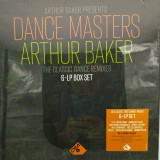
- A1: David Holmes & Raven Violet - It’s Over If We Run Out Of Love (Hardway Bros Live At The Ssl Dub)
- A2: Unloved - Mother’s Been A Bad Girl (Horse Meat Disco Remix)
- A3: Pip Blom - Keep It Together (Ludwig A F. Under Pressure Mix)
- B1: Confidence Man - Holiday (Erol Alkan Ooo Remix)
- B2: Toy - You Won’t Be The Same (Dan Carey Dub)
- C1: Audiobooks - The Doll (Bruise Remix)
- C2: The Orielles - The Room (Shy One Remix)
- C3: Eyes Of Others - Once Twice Thrice (The Orielles Remix)
- D1: Fever The Ghost - Source (Leo Zero Dub)
- D2: Working Men’s Club - The Last One (Forgemasters Remix)
Heavenly Recordings release the next two volumes in their series of remixed classics and unreleased versions. ‘Heavenly Remixes 7 & 8’ sees the label going back into the archive, as well as picking off some more recent remixes, and both albums primarily feature either previously unreleased versions or re-workings available for the first time on vinyl and CD.
Heavenly have always seen immense value in the remix, a value way beyond what it might bring commercially. Since their first release in 1990 (where Andrew Weatherall overhauled a one-off single by club kids Sly and Lovechild) Heavenly remixes have been carefully curated and treated as a key part of the A&R process. It’s an opportunity to view an artist through a different prism, to play out a musical ‘what if’ scenario. It’s the kind of exploration that’s happened consistently through the thirty plus years the label has released music.
The ‘Heavenly remixes’ series continues to showcase the very best remixes, versions, meditations, re-rubs and dubs from all around the world of artists right across the roster of the country’s most exciting record label. In most cases, the albums offer the first physical release for a remix, elevating them from streaming playlists to their rightful, spiritual home on super heavy vinyl (or shiny, super-packed compact disc).
‘Heavenly remixes 7’ heads to Belfast, where David Holmes - a producer who first appeared on Heavenly in 1994 amping up the acid on Saint Etienne’s ‘Like A Motorway’ - appears as solo artist and as one third of Unloved, who get a lift right to the heart of a Vauxhall sweatbox by Horse Meat Disco. It draws a line between Amsterdam and Frankfurt as Ludwig A.F. amps up the electronics on Pip Blom’s ‘Keep It Together’. It stops off in a south London studio where super producer Dan Carey plays the desk with Toy, then relocates LA psych rock band Fever The Ghost to an Ibizan shoreline as the sun sets on the horizon. It cements Sheffield’s reputation as the home of modern British techno with the return of true originators Forgemasters. And it pitches up in front of a renegade soundsystem late night at Glastonbury as Erol Alkan’s mighty rework of Con Man gets its third rewind of the night.
‘Heavenly remixes 8’ opens with Space Afrika’s lush, ambient reimagining of the Orielles’ ‘BEAM/S’ before Justin Robertson stretches Amber Arcades’ ‘Turning Light’ into eight minutes of electronic dub. Elsewhere, Baxter Dury’s peerless ‘Miami’ becomes a string-laden electro skank in the hands of French producer Pilooski; Edinburgh’s bedroom techno genius Eyes of Others’ ‘Safehouse’ turns into an East End bathhouse courtesy of disco deviants Decius; Ashley Beedle’s Black Science Orchestra turns Unloved’s heartworn torch song into seven minutes of glimmering dreamlike percussive house and Katy J. Pearson’s freak flag is flown high thanks to The Umlauts’ throbbing filtered electro mix. It ends similarly to how it began as TONE takes
Fran Lobo’s ‘All I Want’ on a gorgeous slow motion spacewalk.
"Multila" was the third album by Finnish producer Sasu Ripatti under the moniker Vladislav Delay. It compiles the "Huone" and "Ranta" 12"EPs Ripatti released on Basic Channel's Chain Reaction label in 1999 and 2000. The album features six hauntingly murky dub ambient tracks and the impressive 22-minute techno odyssey "Huone."
More than 20 years after its original release as a full-length CD album (Chain Reaction), these iconic recordings of modern electronic music are now available again as a double vinyl edition, featuring a revised artwork by Marc Hohmann that matches the new design of the "Whisteblower" and "Entain" reissues.
"Life films us exactly. Our experience of it, though, lies beyond images and descriptions. Emotions, coming in irrational flashes, are non-figurable. We lose our little connection to them very quickly. We look for forms which promise to take us to our own experience. We construct forms with this in mind: that they can take us to meet the subconscious. Multila's construction is principled this way. Fragments of experience, moments without definition or localisation are captured within tiny fragments of time and then within one's mindspace. We can look into it and see that experience has left some of its data to us. As we receive it, again and again, we are connected and reconnected to certain indefinable moments. Both during and after its recording, Multila is a tool to learn about the unintentional states of us. It is a way to see our own emotional loops. Multila is a soundtrack for vision." - Vladislav Delay in the year 2000
Pauline Hogstrand's music – and Áhkká, in particular – is deeply inspired by both inner and outer influences, by the mystical as well as the rock-solid, by fictitious conversations and the queen mountain of Lappland (Áhkká).
Meaning "the old lady" in Lule Sámi, Áhkká is a barren, wild, exciting, beautiful, and sometimes grumpy mountain regardless of the season. Over the years, the mountain peaks, moss, birch forests, paths, streams, birds and people have shaped the surroundings, and the massif changed them in return - a reflection of a constantly ongoing development and emerging into greatness, surrounding and within. Speaking about why this mountain is so dear to her, the Denmark-based musician shares: "The nature there is harsh and raw and you can easily feel how it's so much bigger than you. Some people might feel overwhelmed or intimidated, but I feel that when acknowledging the greatness and the power nature consists, I can feel one with it. We come from the same source: I am a part of universe, and universe a part of me."
The music appearing on Áhkká (the album) simulates the dualities of ascent and descent, tension and release, inhale and exhale. Through implementing extended structures for analog and digital synthesis and processed acoustic instrumentations – strings, recorder, pipes and field recordings – Hogstrand expertly navigates these dual motions across two side-long pieces.
The opening "Herein" is slow, difficult, at times jagged and unwelcoming; just like climbing up a mountain early in the morning. Hogstrand shares that this piece is "about surrendering and letting go of control", especially during the last 10 minutes of the track which consist almost solely of an insistent and pulsating drone leading you to no man's land. "Magnitude" offers a release, glimpses of beauty, a softer, easier presence; descending, you're able to see beauty where previously you saw obstacles, perhaps the sun is up, breathtaking views in every direction... This piece is "about all that becomes available after letting go. Suddenly sight clears up in front of your eyes," shares the Swedish composer.
The magic ultimately lies in Hogstrand's perception and portrayal of contrasts – she does not view the two as opposites, but as one reality. "One greatness is not compromised by another greatness." In fact, the opposite is true – one without the other loses meaning, depth and context.
Italian producer NND returns after release on Exarde with different vibes:
A1 elegance track produced during the pandemic has nostalgic vibes, a touch of acid, and techno beats. A2 influenced by the 80s of the italo disco mixed with house rhythms, a journey to be enjoyed from start to finish. Side B is the most dancefloor part of the record characterized by darker sounds, techno and electro sounds mark the time of this side.
Between 2009 and 2013 Kim recorded a bunch of music; in the old tramtransfer at the Kinkerstraat in Amsterdam (now de Foodhallen), in Berlin living in a biodynamic living community in Lichtenberg & in an apartment on the Hoofdweg in Amsterdam, that doubled as a grow-house.
The title ‘Oostwestkruisbest’ is a combination of the sayings ‘oost west thuis best’ and ‘ieder huisje heeft zijn kruistje’. The first translates as ‘home sweet home’, where the second means every home has its own troubles.
‘Infinity hours remaining’ was made during a prolonged period of sleepless nights. ‘Kopievankopie’ features, amongst other things, a guitar Kim borrowed from his sister. It directly translates as ‘copy of copy’. ‘Die Trommel, der Trum’ was made using a Casiotone 701 with a drummer boy in mind. The title is German for ‘the drum, the dream’. ‘Ongecontroleerde Dagrestanten’ was made with an elastic band (a broad one, that in the Netherlands were used by mailmen) and a clarinet without a mouthpiece. ‘Oostwestkruisbest’ features pots and pans from Kim’s kitchen.