Celebrating 31 years of Dread, we’re proud to present a reissue and remaster of these two classics on limited edition gold-coloured vinyl.
On the A-side, Dark Soldier Ghost stands as an Amen bassline classic with vibrant vocal. This is a slice of the classic Dread that helped shape the labels legacy into what it is today. It rips in with some thundering Amens – think 1994 vibes. One for the dancefloor and the bass-face crew.
Flipping to the AA-side, Dark Soldier VIP takes the original dark stepper into VIP territory - a Reese-fuelled tear-out roller. Its melodic, hypnotic bass draws you in before the reverse breaks section sends the energy into overdrive, unleashing that unforgettable 90s bassline from jungle’s golden era.
This strictly limited edition comes on a gold splatter effect vinyl disc - Dread stylee.
The Dark Soldier - say no more.
Поиск:émel
Все
My Dear Melancholy (stylized as My Dear Melancholy,) is the first extended play by Canadian singer the Weeknd. It was released on March 30, 2018, through XO and Republic Records. Primarily produced by Frank Dukes, who serves as an executive producer alongside the Weeknd, it features contributions from Gesaffelstein, as well as Mike Will Made It, DaHeala, Skrillex and Daft Punk's Guy-Manuel de Homem-Christo, among others.
My Dear Melancholy has been described as a return to the darker style of the Weeknd's earlier work, such as Trilogy (2012) and Kiss Land (2013). The EP was supported by the lead single, "Call Out My Name". It received generally favourable reviews and debuted at number one on the US Billboard 200.
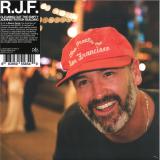
R.J.F. (ROSS J. FARRAR)
CLEANING OUT THE EMPTY ADMINISTRATION BUILDING
Cleaning Out The Empty Administration Building ist Ross Farrars neuestes Werk aus rohem, gesprochenem Wort und experimentellem Sounddesign, hier präsentiert unter dem Namen R.J.F.. Der Frontmann der amerikanischen Bands Ceremony und SPICE begann dieses Soloprojekt zunächst als persönliche Herausforderung: Songs von Grund auf selbst zu schreiben, sich mit Instrumenten vertraut zu machen und dabei zugleich sein Unterbewusstsein freizulegen. Dabei ging es weniger um musikalische Virtuosität als um Verletzlichkeit - darum, etwas Ehrliches aus einem ungeschützten, unbearbeiteten, unpolierten Moment zu ziehen, kompromisslos amateurhaft und rein.Diese Sammlung zeigt Farrar im offenen, poetischen Dialog: mit Drumloops und gefundenen Klängen, durchbrochen von Gitarren, Bass und Tasteninstrumenten. Nach über zwanzig Jahren in der vertrauten wie chaotischen Welt von Band-Kollaborationen, legt Farrar all das ab - als Experiment. Das Ergebnis ist unverwechselbar und bewegend.Farrars Punk-Pathos ist in Spuren vorhanden, doch seine deutlichsten Einflüsse stammen von repetitiven Musikformen: Drone, No-Wave, Avant-Jazz und darüber hinaus. Seine nüchternen Texte erinnern an Lou Reed, Rowland S. Howard und andere große Exzentriker. Farrars Texte kreisen um Liebe, Sucht, Vaterschaft und das Leben in der heutigen Welt. ,Ich wollte Bilder schaffen, die die Menschen klar vor sich sehen können", sagt er. Farrar unterrichtete früher Schreiben und Literatur - und wendet hier ein einfaches Prinzip an, das er auch seinen Schülern mitgab: Nicht zu viel nachdenken. ,Ich habe mir einfach gesagt: Diese Songs sollen Spaß machen. Sie sollen nicht stressig sein. Zwei, drei Takes aufnehmen und dann gut ist. Nicht über jedes Geräusch den Kopf zerbrechen. Mach einfach das, was natürlich aus dir herauskommt - und wenn es sich gut anfühlt, dann nimm es."Aus hunderten freier Songs, die Farrar in den letzten Jahren mit geliehenem Equipment aufgenommen hat, kristallisierte sich dieses Album langsam heraus. ,Es kam einfach immer wieder."Der Ton von Cleaning scheint die Zeit zu verbiegen, versetzt die Hörer in eine Art Gang voller Songs, bei denen jede Tür in einen neuen Raum führt - Räume, die oft auf unheimliche Weise vertraut wirken. Der gurgelnde Bass des Openers ,Advance" taucht auch in anderen Stücken wieder auf, etwa im gespenstischen ,Ovidian", benannt nach Ovids Metamorphosen, in dem Farrar über das Wunder der Veränderung sinniert - begleitet von fernen Glockenklängen. Instrumentalstücke wie ,Gravity Hill" - ein Flattern aus Synth-Brummen und statischem Rauschen - oder ,Frogs", mit Saiteninstrumenten und perkussivem Topfschlagen, wirken wie tranceartige Zwischenspiele und verstärken die Wirkung der Texte drumherum.,Exile" blickt zurück auf Verluste, die sich nicht mehr reparieren lassen: ,So much of your heart caught in my exile", singt Farrar mit sanfter Resignation - über einer einsamen Klaviermelodie und schlingernden Gitarrenakkorden. Es ist das strukturierteste Stück der Sammlung und erinnert daran, dass Farrar ein Gespür für melodische Linien besitzt.Das Album endet mit ,Traveling Light From Afar", deutlich schneller als alle vorherigen Songs. Hier, über einem stoischen Motorik-Beat, spricht Farrar das zentrale Thema des Projekts direkt an:,I've been so young in my old age / Selfish & self-pitying / But that's just narcissism - man."Genau dieser Balanceakt - zwischen schonungsloser Selbstbefragung und der Klarheit, die mit dem Älterwerden kommt - schafft Raum für Entwicklung. Farrar leert das Gebäude - Zeile für Zeile.
Gladstone Deluxe is one of the most exciting musicians in the US right now. They make futuristic, deep, percussive yet smooth techno, deep house and electro. They also play timbales in NYC queer and trans salsa band Las Mariquitas, and are a frequent collaborator with fellow East Coast sonic trailblazers Kiernan Laveaux, Johnny Zoloft, and Mira Mira. They have released on Black Techno Matters, Data Disk, Misc, Innocent Music, How Things Are Made, and now Fixed Rhythms is excited to add to the Gladstone lore with their new offering, “No Haterade EP”.
A1 “Cleanse” is zippy tech-y house…think groovy, up-beat, sexy, like something you’d hear in a Titonton Duvante set. A2 is a remix, “Teakup – Where’s My Snare (Gladstone Deluxe Remix)”. Now the EP takes a turn towards psychedelic electro. Spacey trippy vocal manipulations, swelling deep space gravitational waves swelling and resolving. The B side opens with the “No Haterade” track. Arpeggiated electro that slaps with swagger. The final track is a longer, 9 minute driving deep housey techno tune. A bass line that you never want to stop, luscious pads, brain-tingling pings, melodic percussive synth runs, and a touch of acid.
If Gladstone is not already on your radar, take heed! Big tunes here!
Das Debütalbum des enigmatischen Kollektivs Danzón El Gato stellt einen faszinierenden Dialog zwischen Jazz, Funk und Roots-Musik her. Gegründet im Untergrund der Madrider Experimentalszene, gehen die Mitglieder vom Groove aus, um Traditionen zu erkunden. "El Sonido Bastardo" ist ein Kaleidoskop aus Rhythmen, Landschaften und Echos aus Nordafrika, den Tropen und Lateinamerika, verflochten mit einer rockigen Rhythmussektion, die gleichermaßen von 1970er Library Music wie dem Hip-Hop inspiriert ist. "El Sonido Bastardo" fängt die Essenz eines kulturellen Schmeltiegels im ständigen Wandel ein, dessen Musik in der Tradition verankert ist, aber gleichzeitig einen kosmopolitischen und überschwänglichen Look aufweist. Die beiden Kernmitglieder Javier Adán und Santiago Rapallo schrieben in der Vergangenheit experimentelle Stücke fürs Kino und das Prado-Museum.
Planning For Burial is the solo project of Thom Wasluck, emerging from Wilkes-Barre, Pennsylvania. It’s Closeness, It’s Easy is the long-awaited follow-up to 2017’s Below The House. If Below The House was about returning home, following in the footsteps of one’s father and joining a union, and leaving behind youth’s wild days, It’s Closeness, It’s Easy embraces what comes next—the weight of all years, the quiet shifts, the reckoning with what remains. This record is many things. It captures the slow drift of time, the unnoticed shifts in a loved one—the creeping changes in mental health, the quiet pull of addiction, the kind of grief that settles in the bones rather than announces itself.
At its core, It’s Closeness, It’s Easy is about stepping into middle age and taking stock. It confronts the reality of living with the hand that’s been dealt and searching for meaning in what remains. It speaks to loss—the crushing weight of saying goodbye to a beloved 17-year old cat, the slow-motion grief of watching friends self-destruct, the inescapable passage of time as it bears down on aging parents and the self. But it also reflects the warmth of reconnection, the kind of love that never burns out but instead deepens. The feeling of picking up where things left off, untouched by the years in between.
While written over the course of two years, the recording process reflects a sense of immediacy. Rather than assembling songs piece by piece over time, the album took shape in singular, immersive sessions—less an act of construction, more an unveiling of something already waiting to take shape.
Rooted in a staunch DIY ethos, Wasluck handles every aspect of Planning For Burial project himself—recording the music, designing the artwork, and performing live as a one-man band. He books his own tours, ever and independent creative. This hands-on approach has led Planning For Burial to play hundreds of shows solidifying his place in the underground music scene. A defining moment came in 2018 when he performed at the Meltdown Festival in London, curated by Robert Smith of The Cure.
- A1: Reise Der Schatten (Titles)
- A2: Sans Visages #1
- A3: The Wind Comes From The East #1
- A4: U?Berwacht #1
- A5: Pyrapulse
- A6: The Silver Tree #1
- A7: Tod Und Der Affe #1
- A8: The Wind Comes From The East #2
- A9: U?Berwacht #2
- A10: Candle With Wings #1
- A11: Tage Ohne Stunden #1
- A12: City Symphony
- B1: Candle With Wings #2
- B2: A Friend From The Deep #1
- B3: The Silver Tree #2
- B4: Paper Moon
- B5: Mechanocrab #1
- B6: Tage Ohne Stunden #2
- B7: Mechanocrab #2
- B8: Island Interlude
- B9: Mechanocrab #3
- B10: U?Berwacht #3
- B11: A Friend From The Deep #2
- B12: Mechanocrab #4
- B17: Tod Und Der Affe #2
- B13: Sans Visages #2
- B14: U?Berwacht #4
- B15: Assimilation
- B16: Sans Visages #3 (Credits)
»Reise der Schatten« (»Journey of Shadows«) is the soundtrack to the eponymous debut feature-length animation film by Swiss artist Yves Netzhammer. Composed by Anthony Pateras and released as a stand- alone album through Hallow Ground, the 29 pieces are based on »weird folk melodies ornamented with electro-acoustics to give the film a more fantastical, fairy-tale feeling,« as the composer puts it. His extensive international recording sessions with a slew of guest musicians results in a record imbued with a sense of mystical surrealism, otherworldly and haunting.
»Reise der Schatten« tells the abstracted story of a genderless being coming to terms with its identity and place in a world full of conflicts and systems of control. »The film was made with old animation software that only works on Mac OS 9. So already, we are in a very hermetic, unique space,« says Pateras. Having tried (and failed) to compose something »typically experimental,« he went for long walks in the Australian bushlands and came home with something else: the idea to create a soundtrack that would create »a kind of distance, or perceptual shift, but also a narrative drive and emotional context which is not always clear.«
While recording the album, the tētēma co-founder did not use digitally generated sound, instead workingwith live instrumentation whose sound palette was enriched by the use of feedback, tape delay, analogue synthesizers, and samples from vinyl records. Wanting to work primarily with acoustic instruments suchas the clarinet made Pateras embark on a complicated journey of his own. The initial recording sessions took place in Basel on metallophones that were designed by Domenico Melchiorre’s Lunason company and laid the foundation for everything that came after.
Pateras recorded with musicians such as guitarist Alexander Garsden, viola player Erkki Veltheim, clarinetist Aviva Endean, multi-instrumentalist Justin Marshall and Lizzy Welsh on the viola d’amore among other instruments. He recorded percussion and recorders with Rohan Rebeiro and Natasha Anderson in his hometown of Castlemaine, double bass with Benjamin Ward in Sydney, bass and flutes with Jon Heilbron and Rebecca Lane in Berlin, and electronics in Zürich with Netzhammer. »Reise der Schatten« was thus a literal journey, made with a »big, international electro-acoustic ensemble.«
As a stand-alone album, »Reise der Schatten« opens up a space of its own. Its stylistic diversity makes it atmospherically and emotionally multi-faceted. As its composer notes, »music for screen can be very virtuosic, sophisticated, and variegated!« His own work is a testament to that claim.
ele
Seoul-based producer and DJ Yetsuby conjures immersive, layered soundscapes that glide between breakbeat, jungle, and leftfield bass. As one half of the duo Salamanda and co-founder of Computer Music Club, she has released music on labels like Wisdom Teeth, all my thoughts, Human Pitch, and Métron. And her boundary pushing sets on Seoul Community Radio, Boiler Room, and NTS Radio have brought her experimental Seoul roots to a global audience.
Her new album, 4EVA, invites listeners to wander through strange musical landscapes. Blending digital, analog, and acoustic sounds, Yetsuby explores the magnetic pull between people and music—an experience that feels both cosmic and deeply personal. Effortlessly weaving through genres such as bass, breakbeat, ambient, footwork, contemporary club, and IDM, she creates maximalist compositions that remain cohesive and refined.
The inspiration behind 4EVA is equally surreal. A childhood doodle from her sister, calling her a “brain-ful human,” sparked reflections on loneliness, togetherness, and the joy of navigating both. The album channels these themes of connection, introspection, and the transformative power of music, delivering catchy melodies and restless harmonies that invite listeners to lose themselves in its nuanced rhythms.
Out on Pink Oyster Records in LP and digital formats, 4EVA marks a bold new chapter for Yetsuby. With this release, she emerges as one of electronic music’s most original and exciting voices, defining the sound of Seoul’s underground—and beyond.
Pink Oyster is a new label from Jess Goodchild and Jack Hardwicke (Métron Records)
Having carved out a place in the contemporary club scene with releases on Glitterbox/Defected, Boogie Angst & Lovemonk Records amongst others, Madrid's Casbah 73 recently shed his skin and is now ready to introduce The Jade, a live ensemble that prioritises emotion, excitement and the art of the song. Led by Oli Stewart (Casbah 73), the project brings together a remarkable group of players. At its core, this is about people: musicians in dialogue, shaping rhythms and melody, singing songs from the heart, that shared pulse based on a timeless musical vocabulary.
Opening with the exuberant 'Let The Light In', this is sizzling hi-jazz and sunny soul, shot through with a dose of funky Afro-Latin rhythms for good measure. Josh Hoyer leads the charge, delivering a powerhouse vocal performance, while Nia Martin and Deborah Ayo bring that gospel glow. As, indeed, they continue to do so throughout, especially on the deep, soulful standout 'When Love Left' or the shimmering, street soul meets Brit-funk feel of 'Change!' Experience the spontaneity and playful nature of tracks like 'Si No Me Quieres Esperar' (with Cuban maestro Ale Gutiérrez on vocals) infused with funky Latin and Brazilian rhythms, as well as sparkling, alien disco dub in the form of 'Space Lines'. There's no-holds, hands-in-the-air, fluid disco club grooves on 'What It Takes' and driving, riotous soul-jazz on 'Being Seen'. Just when you think you've got it figured out, the band change it up and stretch out with beautiful jazz-funk instrumentals like 'At The Queensboro' or lush sonic gem 'On That Strange', a track that feels like a long, blissful afternoon fading into evening, with things left unspoken in the air and mystery in its kinky grooves.
The Jade's sound is post-pout, studs up, raw soul, free from modern dancefloor tyranny.It's intimate disco, dead-selfie freedom, Afro-Latin jazz-dance and Iberian funk all rolled into one, rooted in emotion and shot through with a healthy dose of funky bad ass groovism. Genres that blend and bleed into each other following one simple idea: songs and the expressive power of live instrumentation.
Acclaimed musician, producer, and multi-instrumentalist Kutiman returns with 'Dreams In Aspamia' - a stunning new 6-track EP of dreamy, instrumental cinematic funk, rich with trip-hop, jazz, and global music textures. Best known for his visionary fusion of groove, psychedelia, and visual art - Kutiman crafts a hypnotic journey here: jazzy guitars, double bass, analogue keys, and otherworldly manipulated vocals flow through lush, panoramic arrangements that recall Khruangbin, El Michels Affair, SAULT, and BADBADNOTGOOD.
This strictly limited one-off pressing comes on deep purple coloured vinyl with a hallucinogenic full-colour sleeve designed by Berlin-based artist Philipp Carbotta. Meticulously mixed by longtime collaborator Obas Nenor, it's a bold yet meditative listen - equally suited for audiophile immersion or chilled late-night sessions.
The dons from Down Under have only gone and done it again. Demonstrating the breadth of the Sleep D sound, the ever-prolific duo dish out a 3-track invocation of mesmeric techno and trance.
Following a remix cameo on Alfred Czital and Ayu’s recent ‘Talk To Me’ EP, this is the fully fledged label debut. A truly engrossing triple-pronged attack from two intrepid explorers of the “rave unconscious”.
Celebrated for live hardware sets and in-the-moment improvisation, that same freeform NRG courses throughout. Synapses firing on all cylinders as we’re caught somewhere between the warped, direct and emosh.
Pivoting from cybernetic meltdown to sci-fi dystopia before finally settling on some full-blown trance ascension. Proper techno freak-out into the levitational and sublime, all primed for the big room.
The third release on the B.I.T. Productions ALTERNATIVE label features another 4 Track E.P. with 4 different artists, K69 Dream Frequency, Stu Chapman, Matty D & Avit & A.PLUS.
The K69 Dream Frequency track is a new 2024 version of the K69 release from 2021, itself a cover of the Elevation track from1992, and it's much more energetic but still keeps the catchy vocals and the hands in the air pianos.
Matty D & Avit "Africa" is the Stu Chapman Remix with plenty of pianos, throbbing bass, strong breakbeat and catchy vocals.
Stu Chapman "Just Can't Get Enough" is a banging breakbeat track with a big piano riff, dirty synths and catchy vocal.
A.PLUS is a piano driven breakbeat track with catchy vocals &nice synth melodies that is even better than the A.PLUS track from COLLECTIVE E.P.1.
A great 4 track E.P.
The writer Max Sebald often pondered over the nature of human memory, specifically, how our thoughts and desires - and their results - overlap and mutate over time. In A Place in the Country, he writes of the significance of what see as “similarities, overlaps and coincidences”. Are they the “delusions” of the self and senses, or manifestations of “an order underlying the chaos of human relationships, ... which lies beyond our comprehension”?
Song of the Night Mists, the new album by post-classical composer Stefan Wesołowski, often feels it draws on Sebald’s premise.
On a simpler plane, the one where the market dictates the neatly ordered information we consume, Song of the Night Mists can be described thus: recorded in the main by Stefan Wesołowski in Gdańsk, both in his studio and in Saint Nicholas' Basilica, the album incorporates acoustic instruments - piano, violin, double bass - and classic synthesizers such as the Roland Jupiter-8, the Soviet Polivoks. A Roland Space Echo RE-150 tape delay was also pressed into service as an instrument. We also hear the basillica’s organ and field recordings from the Tatra Mountains. Other musicians were Maja Miro, who played the flute parts on ‘Glacial Troughs’ and brother Piotr Wesołowski, who played the organ on ‘Wilhelm Tombeau’. Sound engineer was Marcin Nenko, who was also on hand to record the basilica organ parts. The album was mixed in New York by Al Carlson (Oneohtrix Point Never, Jessica Pratt, Zola Jesus, Lady Gaga, and Liturgy) and Rafael Anton Irisarri handled the mastering.
Ostensibly, Song of the Night Mists is the last in a trilogy, following on from albums Liebestod (2013) and Rite of the End (2017). All three deal with existential matters such as love, death, decay and “an ultimate end”; apocalyptic and Promethean in spirit, and betraying very human conceits. The Sebaldian nature of the new record starts to make itself felt when Wesołowski talks of how he used sampling. One element is unexpected, that of sampling himself: “I go back to dozens of my own unused sketches and recordings, treating them as raw material to cut, slow down, reverse, and transform in every possible way.” Memory as sound, to be reemployed by the listener through their own imaginings.
Another set of samples made by Wesołowski plays another role. These are field recordings, originally created for an audio illustration of the formation of the Tatra Mountains, and used in a film by sound designer Michał Fojcik. Wesołowski: “You can hear cracking ice, streams, footsteps in the snow and the wind, and a real avalanche, recorded from the inside.” The “Tatra connection” on the album is also found in samples referencing composer Karol Szymanowski. The album’s title alludes to a poem about the mountains by Polish poet, Kazimierz Przerwa-Tetmajer.
Wesołowski’s Tatra recordings are “about a world without humans - about the fact that the world existed, was beautiful, and had meaning long before people arrived, and for the vast majority of its history, it was a place without us.” Wesołowski, using one iteration of the natural world, plays out in sound Sebald’s idea of another order, underlying the chaos of human relationships lying beyond human comprehension.
These feelings play themselves out on the five album tracks. Sonorous and rich, they illustrate tectonic shifts we have no control over. Wesołowski hints that the overall sound is a “meditation on the metaphysics of the non-human set against the spirituality that human presence has brought into it.” In that light, the opening number, ‘Core’, with its slow build, and crackling and straining sound effects, create an effect of the earth groaning into life in a creation myth. Once the piano part raps out a simple melody and modulated tonguing trumpet samples add to the overall atmosphere, the listener can certainly find a cue in the “spiritual”, or “human” side of the story. Human versus nature: from the strains and harmonic muscle stretches of the second number, ‘Glacial Troughs’, through to the powerful and filmic ‘Stalagmite’ and heart-on-sleeve romance expressed in closer, ‘Wilhelm Tombeau’, we listeners are cast as Friedrich’s wanderer, looking out over a landscape that will appear only if we engage with it.
Formations of melody appear incrementally, almost appearing by chance - like hidden footings in the rock shelves to give us something to grasp onto. Rhythms are used sparsely: the prolonged percussive taps on ‘Glacial Troughs’ are an anomaly and maybe there to give pace to the album to come; essentially to keep the listener strapped in. Elsewhere, percussion is used as an aid to mood, the two thudding, timpani-style passages on ‘Peak’ there to offset the short, beautiful, kosmische passage that splits them.
Elements of the borderline religious spirit that drove German electronic music in the late 1960s and 1970s also find a place on Song of the Night Mists. The swells and recessions of the organ find their emotional climax on ‘Wilhelm Tombeau’, a track which summons up echoes of the “mountain magic” vistas created by Popol Vuh or Tangerine Dream, especially with the slightly atonal wobble of the Mellotron that counters it.
This is a dramatic album, but it does feel a strangely short, or curtailed listen on ending, evoking the feeling one gets when waking from a dream, and, for all its incipient grandeur, a track like ‘Stalagmite’, for instance, ends on a minor note. Wesołowski admits that Song of the Night Mists is born of the all too human process of temptation, doubt and recalibration - Sebaldian overlaps and coincidences forming something that must live another life, away from its creator. In Wesołowski’s words, the album is “a newborn foal must stand up and walk right after birth.” Now it is yours to ponder.
- A1: Differences (Ginuwine)
- A2: Anywhere (Feat Meshell Ndegeocello) (112)
- A3: Are You That Somebody (Aaliyah)
- A4: I Swear (All-4-One)
- A5: Candy Rain (Soul 4 Real)
- A6: In Those Jeans (Ginuwine)
- B1: Crazy In Love (Beyonce)
- B2: I Wanna Know (Joe)
- B3: Didn't Cha Know (Erykah Badu)
- B4: Let Me Love You (Mario)
- B5: Swv Medley (Swv)
- B6: Water Runs Dry (Boyz Ii Men)
Auf COOKUP interpretiert Sam Gendel R&B-, Rap- und Soul-Hits, die ursprünglich zwischen 1992 und 2004 veröffentlicht wurden.
Wie schon sein Nonesuch-Debüt SATIN DOLL aus dem Jahr 2020 entstand COOKUP in Gendels Heimat Kalifornien, aufgenommen zusammen mit seinen Freunden und musikalischen Partnern Gabe Noel und Philippe Melanson.
Das Trio hat das Ausgangsmaterial erneut größtenteils live im Studio dekonstruiert und neu zusammengesetzt. Diesmal sind es Songs von Meshell Ndegeocello, Ginuwine, 112, Aaliyah, All-4-One, Soul 4
Real, Beyoncé, Joe, Erykah Badu, Mario, SWV und Boyz II Men.
"Saxophonist und Produzent Sam Gendel bewegt sich in einer völlig anderen Welt - einer schrägen Galaxie voller Loops und flirrendem Saxophon." - New York Times
"Ein raffiniert virtuoser Künstler. Pickt man sich zufällig einen Brocken aus Gendels Diskografie heraus, kann man abgefahrenen Free Jazz genauso erwischen wie schwülen R&B." - Pitchfork
This 1998 album compiles unreleased sessions from the late 70s featuring Weldon Irvine, Don Blackman and a young Marcus Miller. Known for his rare groove classics like Spirit Man in 1975 and Sinbad in 1976, Irvin's work shines here and highlights come thick and fast. They include the soulful 'Morning Sunrise' which was famously sampled by Jay-Z and Drake, the jazzy funk of 'The Sisters' with Miller's bass and Tom Brown's trumpet and the smooth 'Heard It All Before' which mixes urban sophistication with mellow fusion. Toni Smith's dynamic vocals on the funky 'Think I'll Stay A While' is another doozy which makes this masterpiece rich with jazz, soul and funk goodness.
Waves Within is a genre-blending triumph from Mexican producers Luca Ferrand and Selva in which they serve up sounds that evolve through deep house, broken beat, jazz, nu-disco and hip-hop. Opener 'Bona Fide' pairs dusty jazz and disco-house with a slick hip-hop switch and some superbly sunny melodies. 'Zarapes (After the Rain)' marries Mexican folk and broken beat, then 'Back To That Thang' twists jazz guitar into a genre-fluid ride and the title track evokes tropical 90s house. Closer 'Lynx' is a shapeshifting house cut with bulbous bass and sophisticated sound design that really brings it to life.
DJ Support: Support by Kenneth Bager, Colleen "Cosmo" Murphy, Phil Mison, Chris Coco, Erki Pruul, Steve Cobby, Max Essa, DJ Gripper, Phil Cooper, La Guardia De La Luz, Johan Blende, Bill Brewster, Mike Salta, Pete Herbert, DJ Dribbler / For Mankind and many more.
Greek duo Bonnie & Klein serve up an Aegean musical escape with their new Glam Pulse EP on Hell Yeah.
George Fountzoulas and Thanasis Skouzis are lifelong Balearic brothers who offer up their own soul-stirring take on the sound on labels like Music For Dreams and NuNorthern Soul. They are inspired by the sunsets and seas of their homeland and bring great imagination to their melodies as this new outing proves.
'Glam Pulse' sets a gorgeous tone from the off with wavy grooves and a peppering of percussion. As well as some singing guitar riffs, sundown synths and shimmering chords make this a steamy and seductive gem. 'Haleakala' is another perfect soundtrack to lazing on the beach and watching the sun sink into the sea while new age motifs wash over you and carry away your woes. Proggy guitars speak to the soul on 'Horizon Avenue' as woody xylophones and wispy leads ride on dubby bass and 'Sunion' closes with hints of melancholy - a lament for the final dance of a long hot summer with lingering trumpets lodging deep in your heart.
Bonnie & Klein tap into real Balearic magic on this EP and effortlessly transport you to a sandy paradise.
- A1: Kuniyuki Takahashi - People
- A2: Kuniyuki Takahashi - Moonlight
- A3: Kuniyuki Takahashi - North Line
- B1: Kuniyuki Takahashi - Kids Breath (Original)
- B2: Kuniyuki Takahashi - Birds (Original Mix)
- C1: Kuniyuki Takahashi - Into The Melody (Original Mix)
- C2: Kuniyuki Takahashi - Back In The Day
- C3: Kuniyuki Takahashi - Think Of You Piano (Edit)
- D1: Kuniyuki Takahashi - Sunshine
- D2: Kuniyuki Takahashi - The Guitar Song (Ambient Mix)
- D3: Ananda Project / Gaelle - Cascades Of Colour (Kuniyuki’s Sugar Love Mix)
2025 Repress
kuniyuki takahashi—one of japan’s leading, if not the world’s most remarkable producers—originally released his debut album we are together on cd in 2006. nearly two decades later, the album is finally seeing a vinyl release to commemorate the 300th title from mule musiq.
“kuni is a true artist an artist that i love and respect.
his music displays true emotion and life and when i listen to his music
i can feel his soul but most importantly it’s his own music.
kuni thank you for giving our planet your music,spirit and heart peace,
love and respect”
joaquin joe claussell
Jason Velo hails from Wisconsin and has been DJing for years, mostly in the rams of Chicago and Detroit house., He has recently decided to branch out into production and this latest outing comes on Noonish and is deep, groovy and minimal house for afterparties in cosy basements. Opener 'Dream Wheel' has diffuse, humid chords radiating out of a gentry bumping deep house groove, while 'Slow Burn' is just that with its horizontal vibes and gentle patter of drums over a nice rolling bassline. 'Lost Remote' is far less anxious than the situation it describes, though it does have a more eerie and cosmic feel than the others with its deft melodies and larger sense of scales. Tasteful stuff.