Manchester-based original soul collective The 7:45s release their debut single.
Named after 7-inch 45-rpm vinyl, The 7:45s write short and snappy soul singles. Their debut is a double A-side, giving you two bops for the price of one. Inspired by Charles Bradley, 'The Way that I Love You' is full of contrasts: the piano chimes and horns respond, a man calls and a woman answers. It's laidback then intense, major then minor, nostalgic then heartbroken. On the flip-side, 'Too Little Too Late' is an upbeat northern soul stomper, featuring an earworm of a vocal hook over an infectious bassline that's sure to ruffle tail feathers.
Recorded with vintage equipment at EVE Studios in Stockport, both songs feature the captivating vocals of collaborator Martin Connor. On 'The Way that I Love You', Connor's vocal rises from a crooning baritone to a fever pitch, culminating in spine-tingling ad libs. Magic moments like this are heightened by songwriter and bassist Sam Flynn's perfectionist arrangements, which feature dozens of musicians: spotlighting vocal harmonies, horns, and even strings on 'Too Little... more
credits
releases March 7, 2025
Been in UK soul chart and played on all the indie soul stations , Starpoint , solar etc
Too little Too Late was Played on BBC radio six Craig Charles Funk and soul show twice and the Way That I Love You was played on BBC radio six Craig Charles day time show
Track of the week on Simon Phillips Jazz FM
Featured in Blues and Soul and Echoes Mag
Search:e craig
- A1: Montego Bay - Everything (Paradise Mix) 04 59
- A2: Atelier - Got To Live Together (Club Mix) 06 06
- A3: Golem - Music Sensations 04 56
- B1: The True Underground Sound Of Rome Feat. Stefano Di Carlo - Gladiators 05 26
- B2: Eagle Parade - I Believe 04 26
- C1: Dj Le Roi - Bocachica (Detroit Version) 05 28
- C2: Green Baize - Synthetic Rhythm 01 41
- C3: M.c.j. Feat. Sima - Sexitivity (Deep Mix) 05 30
- D1: Kwanzaa Posse Feat. Funk Master Sweat - Wicked Funk (Afro Ambient Mix) 06 31
- D2: Progetto Tribale - The Bird Of Paradise 06 29
- D3: Mbg - The Quite 06 59
Vol 1[28,99 €]
Googling “paradise house”, the first results to pop up are an endless list of European b&b’s with whitewashed lime façades, all of them promising “…an unmatched travel experience a few steps from the sea”. Next, a little further down, are the institutional websites of a few select semi-luxury retirement homes (no photos shown, but lots of stock images of smiling nurses with reassuring looks). To find the “paradise house” we’re after, we have to scroll even further down. Much further down.
It feels like yesterday, and at the same time it seems like a million years ago. The Eighties had just ended, and it was still unclear what to expect from the Nineties. Mobile phones that were not the size of a briefcase and did not cost as much as a car? A frightening economic crisis? The guitar-rock revival?! Certainly, the best place to observe that moment of transition was the dancefloor. Truly epochal transformations were happening there. From America, within a short distance one from the other, two revolutionary new musical styles had arrived: the first one sounded a bit like an “on a budget” version of the best Seventies disco-music – Philly sound made with a set of piano-bar keyboards! – the other was even more sparse, futuristic and extraterrestrial. It was a music with a quite distinct “physical” component, which at the same time, to be fully grasped, seemed to call for the knotty theories of certain French post-modern philosophers: Gilles Deleuze, Félix Guattari, Paul Virilio... Both those genres – we would learn shortly after – were born in the black communities of Chicago and Detroit, although listening to those vinyl 12” (often wrapped in generic white covers, and with little indication in the label) you could not easily guess whether behind them there was a black boy from somewhere in the Usa, or a girl from Berlin, or a pale kid from a Cornish coastal town.
Quickly, similar sounds began to show up from all corners of Europe. A thousand variations of the same intuition: leaner, less lean, happier, slightly less intoxicated, more broken, slower, faster, much faster... Boom! From the dancefloors – the London ones at least, whose chronicles we eagerly read every month in the pages of The Face and i-D – came tales of a new generation of clubbers who had completely stopped “dressing up” to go dancing; of hot tempered hooligans bursting into tears and hugging everyone under the strobe lights as the notes of Strings of Life rose up through the fumes of dry ice (certain “smiling” pills were also involved, sure). At this point, however, we must move on to Switzerland.
In Switzerland, in the quiet and diligent town of Lugano, between the 1980s and 1990s there was a club called “Morandi”. Its hot night was on Wednesdays, when the audience also came from Milan, Como, Varese and Zurich. Legend goes that, one night, none less than Prince and Sheila E were spotted hiding among the sofas, on a day-off of the Italian dates of the Nude Tour… The Wednesday resident and superstar was an Italian dj with an exotic name: Don Carlos. The soundtrack he devised was a mixture of Chicago, Detroit, the most progressive R&B and certain forgotten classics of old disco music: practically, what the Paradise Garage in New York might have sounded like had it not closed in 1987. In between, Don Carlos also managed to squeeze in some tracks he had worked on in his studio on Lago Maggiore. One in particular: a track that was rather slow compared to the BPM in fashion at the time, but which was a perfect bridge between house and R&B. The title was Alone: Don Carlos would explain years later that it had to be intended both in the English meaning of “by itself” and like the Italian word meaning “halo”. That wasn’t the only double entendre about the song, anyway. Its own very deep nature was, indeed, double. On the one hand, Alone was built around an angelic keyboard pattern and a romantic piano riff that took you straight to heaven; on the other, it showcased enough electronic squelches (plus a sax part that sounded like it had been dissolved by acid rain) to pigeonhole the tune into the “junk modernity” section, aka the hallmark of all the most innovative sounds of the time: music that sounded like it was hand-crafted from the scraps of glittering overground pop.
No one knows who was the first to call it “paradise house”, nor when it happened. Alternative definitions on the same topic one happened to hear included “ambient house”, “dream house”, “Mediterranean progressive”… but of course none were as good (and alluring) as “paradise house”. What is certain is that such inclination for sounds that were in equal measure angelic and neurotic, romantic and unaffective, quickly became the trademark of the second generation of Italian house. Music that seemed shyly equidistant from all the rhythmic and electronic revolutions that had happened up to that moment (“Music perfectly adept at going nowhere slowly” as noted by English journalist Craig McLean in a legendary field report for Blah Blah Blah magazine). Music that to a inattentive ear might have sounded as anonymous as a snapshot of a random group of passers-by at 10AM in the centre of any major city, but perfectly described the (slow) awakening in the real world after the universal love binge of the so-called Second Summer of Love.
For a brief but unforgettable season, in Italy “paradise house” was the official soundtrack of interminable weekends spent inside the car, darting from one club to another, cutting the peninsula from North to centre, from East to West coast in pursuit of the latest after-hours disco, trading kilometres per hour with beats per minute: practically, a new New Year’s Eve every Friday and Saturday night. This too was no small transformation, as well as a shock for an adult Italy that was encountering for the first time – thanks to its sons and daughters – the wild side of industrial modernity. The clubbers of the so-called “fuoriorario” scene were the balls gone mad in the pinball machine most feared by newspapers, magazines and TV pundits. What they did each and every weekend, apart from going crazy to the sound of the current white labels, was linking distant geographical points and non-places (thank you Marc Augé!) – old dance halls, farmhouses and business centres – transformed for one night into house music heaven. As Marco D’Eramo wrote in his 1995 essay on Chicago, Il maiale e il grattacielo: “Four-wheeled capitalism distorts our age-old image of the city, it allows the suburbs to be connected to each other, whereas before they were connected only by the centre (…) It makes possible a metropolitan area without a metropolis, without a city centre, without downtown. The periphery is no longer a periphery of any centre, but is self-centred”.
“Paradise house” perfectly understood all of this and turned it into a sort of cyber-blues that didn’t even need words, and unexpectedly brought back a drop of melancholic (post?)-humanity within a world that by then – as we would wholly realise in the decades to come – was fully inhuman and heartless. A world where we were all alone, and surrounded by a sinister yellowish halo, like a neon at the end of its life cycle. But, for one night at least, happy."
Laurin Rinder & W. Michael Lewis's Seven Deadly Sins is a hugely influential, synth-powered, atmospheric space-disco masterpiece. It's arguably the best American Disco LP ever made. It's certainly one of the most important albums in the history of dance music. And, like its innovative producers, it's absolute genius.
During the mid to late seventies the production team of Laurin Rinder and W. Michael Lewis helped to define the Disco sound that was coming out of Los Angeles with studio projects such as El Coco, Saint Tropez, Le Pamplemousse (with vocals from The Jones Girls), In Search Of Orchestra and many others.
Like all of their work, Seven Deadly Sins comprises beautifully arranged and incredibly well produced deep disco that is revered by aficionados. A seven track, largely instrumental concept album covering each of the sins, it was recorded for AVI in 1977. It's a brilliantly conceived, groove-fuelled album that layers moogy keys and druggy synths over club-ready rhythms. The idea that this record is celebrating rather than condemning the sins is said to be another factor that made the record a big one in the underground clubs.
Opening sin “Lust” is an intense, swelling, seven minute blockbuster synth journey. An ethereal Loft/Garage classic, it's a sprawling, brooding slice of epic dancefloor dynamite that remains a firm favourite of discerning disco heads like Harvey. So ahead of its time, it still sounds ridiculously fresh today, drifting through a multitude of melodies over a smooth, lightly percussive mid-tempo beat. A slow-mo sexy killer.
Up next, the sprightly-manic “Sloth” is nothing like its title. A driving, swaggering instrumental incorporating the same Euro-disco elements as our Daft Parisian friends did a few decades on, it's certainly not for the faint-hearted.
A clear highlight, the cosmic, throbbing proto-techno of “Gluttony” gets things firmly back on track. Pure industrial vibes with dark synth bass punctuated by uplifting melodic sequences that brilliantly utilise guitar and horns, is this the sound of Wax! Trax being born? You won't be able to get enough of this.
Opening up the B-Side, “Pride” is a breezy slice of classic late seventies jazz/funk with deft Hammond and clavinet grooves and expansive horn sections. It's absolutely fantastic. The wicked leftfield vocal cut “Envy” provides more disco pump with squelchy acid synth flourishes, funky guitar and neck-snapping percussive breaks.
The dark proto-techno/house cut “Anger” is a fully on top tour de force of drums. With heavy African percussion throughout and a short Afrobeat section towards the end, it was sampled by Carl Craig and Laurent Garnier for their Tres Demented project and was also a massive Ron Hardy / Music Box favourite. The album is rounded out by the hard-grooving “Covetousness”, another driving jazz-funk workout par excellence with liberal use of the syndrum.
As Laurin Rinder recalled in an interview with Dream Chimney, the duo essentially lived in the studio: “we really had cots, beds and the whole thing, we were just pumpin’ them out. 7 days a week, 3 different projects at the same time. I played drums on everything but had to play a little differently. I had to ask the engineer ‘What’s the name of this group?‘”.
Evidently, their prolific output was the result of a crazy cocaine-fuelled production schedule: “The amount of coke we did, to do all this, you can’t even imagine. $300 a day. I had to have plastic inserts in my nose so I could do more.” Looking at the frankly terrifying cover, you'd have never known!
Be With is beyond delighted to present the first ever legit vinyl reissue of Seven Deadly Sins, carefully remastered by Be With's engineer Simon Francisco to ensure it sounds better than ever. Cicely Balston's expert skills have made sure nothing is lost in the cut whilst the records have been pressed to the highest possible standard at Record Industry in Holland. The unforgettable cover artwork has been reproduced here at Be With - dare you stare back at it for too long?
Bristol-based singer, songwriter and bandleader, who has powered her way to the-forefront of the British blues and roots scene in recent years, releases 'Shining In The Half Light on "Tidal Wave Splatter" colored vinyl. Crammed with vibrant originals brought to life with her A-list touring band, 'Shining in the Half Light' is Bailey's first full length album recorded in the UK & feature's Joe Wilkins on Guitar, Jonny Henderson on Ivories, Matthew Waer on Bass duties and Matthew Jones on drums. It was recorded in deepest Devon in December 2020 at Middle Farm Studios and produced by Dan Weller. An exciting team of co-writers feature with three credits for Ashton Tucker & Will Edmunds, who both wrote with Elles for 'Road I Call Home', plus she teamed up with longtime guitarist Joe Wilkins to write the slow-flowing, philosophical 'Riding Out The Storm'. Other kindred spirits include guitar maestro Martin Harley, for the gentle and romantic 'Different Kind Of Love' and Matt Owens, co-founder of the hugely successful indie-folk outfit Noah and the Whale, on the aforementioned 'Sunshine City'. The album comes to a striking conclusion with its title track, co-written with Nashville's Craig Lackey, written over Zoom in May 2020.
Quiet Village announces new label, The Quiet Village, and new single, ‘Reunion'. Matt 'Radio Slave' Edwards and Joel Martin's critically acclaimed project's first official single under the Quiet Village name in seventeen years!
Beginning life as a 'heady 6/8-time urban jazz odyssey, 'Reunion is a stunning piece of modern, Hi-Tech Jazz that draws influences from Pat Metheny, Timeline, Innerzone Orchestra, and Clyde Stubbelfield's drumming.
While previous Quiet Village material was hewn from a myriad of samples extracted from Edwards' and Martin's notorious digging, 'Reunion' and its follow-ups are drawn from a tight-knit crew of session musicians, including the likes of Jon Hester and Thomas Gandey, adding further depth and feel to the QV sound. Already a firm favourite with Gilles Peterson and Luke Una, the latter of which leaked a clip of the release via his inimitable Instagram presence and called it 'something so fucking beautiful. Tony Allen, Sun Ra meets Carl Craig, Underground Resistance, house, tech, funk, everything rolled into one'.
'Reunion’ is the first single on The Quiet Village, Quiet Village's new imprint. Despite continually producing new music and a slew of remixes, most recently for Running Back and Isle of Jura, the long-term friends and collaborators have been unable to release under their Quiet Village moniker since their LP 'Silent Movie' in 2008. While a few releases under QV and their sometime DJ aliases of Maxxi (Edwards) and Zeus (Martin) have emerged, 'Reunion' is the beginning of a new and re-energised Quiet Village that will see more original material and remixes, DJ and live touring that began in Japan in May and curated compilations of treasures, old and new, in the coming months and years.
- A1: Champagne Socialist
- A2: Closer
- A3: On Broadway
- A4: Flowers
- A5: The Jacaranda
- A6: Underground
- B1: Paris In Summer
- B2: Go Easy
- B3: Bonnie & Clive
- B4: Night People
- B5: Some Kind Of Sweden
- B6: Kingdom
- B7: Northern Baby
"Black & White Movie" ist das bemerkenswert souveräne Debütalbum von Gustaffson, produziert von Craig Potter (Elbow). Die Platte enthält mitreissende Streicharrangements des preisgekrönten Filmkomponisten Bear McCreary (Outlander, The Walking Dead) und einen Cameo-Auftritt des legendären Schauspielers Sir Ben Kingsley. Die 13 Albumsongs sind individuelle Kinoerlebnisse. Die ergreifenden Texte des Leadsängers und Songwriters Andrew Gower, die er in 15 Jahren als Schauspieler perfektioniert hat, werfen Licht und Schatten auf die Dualität der menschlichen Existenz und erzählen aussergewöhnliche Geschichten aus gewöhnlichen Leben. Das Album vermischt nahtlos die klassischen Klänge der Musik- und Filmwelt und lädt die Zuhörer auf eine Reise ein, bei der jeder Titel ein Film für sich ist.
"Mein Leben als Teenager hat sich für immer verändert, als ich das 'White Album' der Beatles entdeckte. Es war die erste Platte, die es mir als Zuhörer ermöglichte, nuancierte Texte und Musik in ihrer besten Form zu entdecken", erklärt Gower. "Im Studio konzentrierten wir uns alle auf die Bedeutung und Verantwortung, die wir haben, die Geschichten zu erzählen, ohne das Publikum mit dem Löffel zu füttern."
- Poor Man Cry
- Children Under The Sun
- Racial Discrimination
- Soldiers Of Jah Army
- Reggae On The River
- False Pretense
- Be Carefull
- Live In Jah Love
- Red Eyes
- Poor Man Dub
- Dubbin In The Sunshine
- Discriminatory Dub
Reissue of Israel Vibration’s 1991 album ‘Forever’.
Israel Vibration are a legendary Jamaican reggae band, formed in the 1970s and renowned for their influence on the international reggae scene. Originally made up of Cecil Skelly Spence, Albert ‘’Apple Gabriel‘’ Craig and Lascelle ‘’Wiss‘’ Bulgin, the group is known for its unique vocal harmonies and conscious lyrics addressing social, spiritual and political themes.
One the most prolific talents in the last forty years of house music, the ever-innovative Jerome Sydenham goes toe-to-toe against the emerging talents of Berlin's mysterious Cosmic Soldier, working together to deliver a potent two-tracker as the weighty first release of 2024 on Planet E.
Showcasing a new angle of the eternal, quintessential blend of house and techno on Carl Craig’s legendary imprint, ‘Deeplight’ soars on impressive layers of psychedelic texture and raw percussion as a querying, prophetic vocal leads towards a valley of urgent chords.
Mixed with the same undeniable weight and power, the hammering, insistent ‘Black Dog’ skirts with darkness before upending it with vintage Detroit keys, waves of euphoria rolling out of the gloom to move the dance.
Following his contribution to FUSE’s Various Artist release last summer with the standout ‘Life’s A Bleep’, Melbourne-born, Berlin-based DJ/producer Reflex Blue returns to Enzo Siragusa’s renowned imprint with his first full EP on the label, ‘Fragments’.
His fusion of deep, sub-heavy house, heavily influenced by turn-of-the-90s UK tech house and forward-thinking electronic spheres, has welcomed releases on labels such as Limousine Dream, Kalahari Oyster Cult, and Craigie Knowes, while making appearances at the likes of Slapfunk, S.A.S.H. and more.
Now, with ‘Fragments’, he takes his sonic explorations to FUSE once more, delivering a high-energy selection primed for dancefloor impact. ‘Ruff City Dub’ brings heavyweight low-ends, shimmering textures, and UKG touches to kick things off , setting the tone for the EP’s dynamic and versatile feel. ‘Tightening The Screw’ follows with crisp drum programming and hypnotic, off-kilter synth work, offering a clever balance of wonk and precision. On the B-side, ‘Love 2 Rhythm’ oozes funk and fluidity with its rolling percussion, soulful vocals and rubbery bass licks, while ‘Freakin’ In The Neighbourhood’ merges influences from rave, electro and more with a modern, high-energy twist for a no-nonsense, late hours hitter.
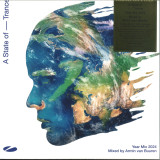
- A1: Armin Van Buuren - "The Road To Your Destination" (A State Of Trance Year Mix 2024 Outro) (1 02)
- A2: Armin Van Buuren & Moby - "Extreme Ways" (1 10)
- A3: Jerome Isma-Ae - "Hold That Sucker Down" (Hel Slowed Remix) (1:10)
- A4: Hel Slowed & Amber Revival - "Wildfire" (1:10)
- A5: Estiva - "Fine Day" (1 10)
- A6: Armin Van Buure - "Love Is A Drug" (Feat Anne Gudrun - Agents Of Time Remix) (1 10)
- A7: 7 Skies X Antheros - "Finish My Life" (1 10)
- A8: Elysian - "Now We Are Free" (1 10)
- A9: Rivo - "In & Out Of Love" (Vs Armin Van Buuren) (1 10)
- A10: Armin Van Buuren - "Pulstar" (1 10)
- A11: Nilsix - "Old's Cool" (1 10)
- A12: Giuseppe Ottaviani - "Something About You" (Feat Adriana Stone) (1 10)
- A13: Above & Beyond - "Heart Of Stone" (Feat Richard Bedford) (1 10)
- A14: Marlo & Mila Josef - "You Are Not Alone" (Tech Energy Mix) (1 10)
- A15: Gabry Ponte X Giuseppe Ottavinai - "In My Mind" (Feat Malou) (1 10)
- A16: David Forbes - "Alcazar" (1 10)
- A17: Layton Giordani X Tiga X Audion - "Let's Go Dancing" (0 43)
- B1: Armin Van Buuren - "Es Vedra" (1 10)
- B2: Above & Beyond - "Crazy Love" (Feat Zoe Johnston) (1 13)
- B3: Armin Van Buuren & Agents Of Time - "Love Is Eternity" (Feat Orkid) (1 13)
- B4: Semblance Smile - "Just Let Go" (1 13)
- B5: Camisra & Armin Van Buuren - "Let Me Show You" (1 13)
- B6: David Guetta & Mason - "Perfect (Exceeder)" (Vs Princess Superstar) (1 13)
- B7: Armin Van Buuren - "High On Love" (Feat Anne Gudrun) (1 13)
- B10: Laura Van Dam & Ginchy - "Save Me" (1 13)
- B11: Paul Van Dyk - "For An Angel" (Kolonie Remix) (1 13)
- B12: Armin Van Buuren - "Forever (Stay Like This)" (Feat Goodboys - Club Mix) (0 36)
- B13: Oliver Heldens & Armin Van Buuren - "Freedom" (Feat Sam Harper) (0 47)
- B14: Armin Van Buuren, Ferry Corsten, Rank 1 & Ruben De Ronde - "Destination" (A State Of Trance 2024 Anthem) (0 34)
- B15: Giuseppe Ottaviani & Lasada - "Leave You There" (0 39)
- B16: Cosmic Gate & Christian Burns - "Brave" (Sean Tyas Remix) (0 47)
- B17: Daxson - "Elysium" (Transmission Theme 2024) (1 05)
- B18: Ilan Bluestone - "Echoes Of Courage" (0 38)
- B19: Giuseppe Ottaviani X Lea Key - "In The Silence" (0 51)
- B20: Armin Van Buuren - "Part Of Me" (Feat Louis Iii) (0 34)
- C1: Joris Voorn & Avira - "The Orange Theme" (1 00)
- C2: Avira - "Hot Tub Time Machine" (1 12)
- C3: Armin Van Buuren & Ahmed Helmy - "Racing Spirit" (1 21)
- C4: Protoculture - "Starfield" (1 21)
- C5: Artbat & Armin Van Buuren - "Take Off" (1 21)
- C6: Matt Fax - "Raven" (1 21)
- C7: Ferry Corsten X Marsh - "Fulfillment" (1 21)
- C8: Ahmed Helmy - "R4Ve 301" (1 21)
- C9: Andrew Rayel Presents Aether - "Memoria Eterna" (1 21)
- C10: Krevix & Hadriani - "Your Life" (0 54)
- C11: Sharam - "Patt (Party All The Time)" (Adam Beyer, Layton Giordani & Green Velvet Remix) (0 47)
- C12: Mauro Picotto - "Lizard" (Dan Cooper Remix) (0 46)
- C13: Ferry Corsten & Superstrings - "Remember" (0 47)
- C14: Craig Connelly & Nicholas Gunn - "Miss You" (Feat Alina Renae) (0 44)
- C15: Aly & Fila, Philippe El Sisi, Omar Sherif - "Count On Me" (With Jaren) (0 42)
- B8: Orjan Nilsen - "Ashore" (1 13)
- C16: Ben Gold & Bo Bruce - "Half Light" (0 52)
- C17: Ferry Corsten - "Just Breathe" (0 45)
- C18: Eddie Makabi - "Ecstasy" (Feat Einat - Allen Watts Remix) (1 06)
- C19: Factor B - "The Girl With Her Head In The Clouds" (Ellie Song) (0 48)
- D1: Ben Hemsley - "Tidal" (Feat Rose Gray - The Euphoric Mix) (1 03)
- D2: Armin Van Buuren - "Bed Of Rain" (Feat Mila Josef) (1 10)
- D3: Paul Van Dyk & Sue Mclaren - "Love Is Enough" (Shine Mix) (1 10)
- D4: Armin Van Buuren & Hardwell - "Follow The Light" (1 10)
- D5: Allen Watts Presents Awaken - "Fragments" (1 10)
- D6: Maarten De Jong - "Kanua" (1 10)
- D7: Ram & Richard Durand Presents Digital Culture - "Follow Me 2024" (Vs Space Frog & Derb) (1 10)
- D8: Matty Ralph - "Dreaming" (1 10)
- D9: Armin Van Buuren & Gryffin - "What Took You So Long" (1 10)
- D10: Aly & Fila X Lostly - "The Unknown" (1 10)
- D11: Daxson & Nation Of One - "Now Or Never" (Craig Connelly Remix) (0 45)
- D12: C-Systems - "Voyager" (0 47)
- D13: Andrew Rayel - "The Abyss" (0 51)
- D14: Aly & Fila With Ferry Tayle - "Concorde" (Cris Grey Remix) (0 52)
- D15: Armin Van Buuren X Hi-Lo - "Now Love Will Begin" (0 49)
- D16: Armin Van Buuren & Ben Hemsley - "Is It Beautiful" (Feat Lucy Pullin - A State Of Trance 2025 Anthem) (0 47)
- D17: Xijaro & Pitch - "The Path" (0 48)
- D18: Alex Morph - "Ava Mariae" (0 55)
- D19: Richard Durand & Nicholas Gunn - "About A Love" (Feat Jordan Grace) (1 00)
- D20: John O'callaghan, Paul Skelton & Ren Faye - "May The Road Rise" (1 08)
- E1: Cold Blue - "The Great Awakening" (1 03)
- E2: Trance Wax - "Ascend" (Sneijder Remix) (1 07)
- B9: Hel Slowed X Jnsn - "Want Me" (1:13)
- E3: Sneijder Remix - "Don't Stop" (Drums & Acid Mix) (1 07)
- E4: Allen Watts - "Elevate" (1 07)
- E5: John O'callaghan & Alex Holmes - "Devotion" (1 07)
- E6: Miyuki & Jennifer Rene - "Our Song" (1 07)
- E7: River - "I Can't Sleep" (1 07)
- E8: Will Atkinson - "High On The Low" (1 07)
- E9: Craig Connelly & Cari - "Breathe Again" (1 07)
- E10: Aly & Fila & Richard Durand - "Nebula" (1 07)
- E11: Armin Van Buuren & David Guetta - "In The Dark" (Feat Aldae) (1 07)
- E12: Bryan Kearney - "You Will Never Be Forgotten" (Lostly Remix) (1 07)
- E13: Armin Van Buuren X Vize X Leony - "City Lights" (1 07)
- E14: Talla 2Xlc & Fragma - "Toca's Miracle" (1 07)
- E15: Factor B - "A Gift To The Earth" (1 07)
- E16: Alexander De Roy & Hidden Tigress - "Intention" (Eximinds Remix) (1 07)
- E17: Lange - "Drifting Away" (Feat Skye - Drifting Away) (1 07)
- E18: Drifting Away - "Viva L'opera" (0 57)
- F1: Armin Van Buuren & W&W - "Late Checkout" (1 06)
- F2: Ben Gold - "Diving Faces" (1 08)
- F3: Felix - "Don't You Want Me" (Ki/Ki Remix) (1 08)
- F4: Elley Duhe & Whethan - "Money On The Dash" (Armin Van Buuren Remix) (1 08)
- F5: Ben Gold & Scott Mac - "Damager 24" (1 08)
- F6: Gabry Ponte & Le Shuuk - "Psychotek" (1 08)
- F7: Hi-Lo & Maddix - "My Fantasy" (1 08)
- F8: Ben Nicky, Hannah Laing & Paul Findlay X Signum - "Coming On Strong" (Feat Scott Mac - Trance Mix) (1 08)
- F9: Bryan Kearney - "Angel Child" (1 08)
- F10: 0Gravity - "Take My Breath" (1 08)
f11 FLRNTN, Benjamin Duchenne - "Last Man Standing" (feat Sivan) (1:08)
f12 Nicholas Gunn & Harshil Kamdar - "Here I Am" (feat Alina Renae - Richard Durand remix) (1:08)
f13 DJ TH X TH3 ONE X Sue McLaren - "Everything To Me" (1:08)
f14 Matty Ralph - "Te Adoro" (1:08)
f15 Armin Van Buuren & Vini Vici - "Sarabande" (feat Anna Timofei) (1:08)
f16 Lilly Palmer - "Hare Ram" (1:08)
f17 David Forbes - "Techno Is My Only Drug" (1:08)
f18 Armin Van Buuren - "Blah Blah Blah" (Lilly Palmer remix) (1:08)
f19 Armin Van Buuren - "The Road To Your Destination" (A State Of Trance Year mix 2024 outro) (1:14)
“SEPARATE THE SKIN FROM BONE / IN DISMAY WE’LL CALL THIS HOME” – Craig Johns Jr, The Dark, “Chemicals”.
Aus der verschmutzten, korrupten und moralisch bankrotten Metropole Los Angeles kommt eine weitere unglaubliche Rockband. Dies ist: The Dark. Craig Johns Jr tat sich mit Alan Ashby zusammen (besser bekannt als der Saitenvirtuose der RIAA-goldzertifi zierten kalifornischen Metal-Band Of Mice & Men), um ein Projekt zu starten, das das moderne Leben in LA wirklich widerspiegelt. Zusammen mit Drummer Derek Vautrinot und Bassist
Nick Goins sind The Dark bereit, ihre Debüt-EP "The Dark" über Arising Empire zu veröffentlichen.
"Live Mind, is the first live album from rock supergroup, The Third Mind. With over an hour of performances, Live Mind was overseen and curated by Don Boles, Will Golden and Brett Brock from shows in February and March 2024 at the Troubadour in Los Angeles, Ventura Music Hall in Ventura, CA, and The Kessler Theater in Dallas, TX. Produced by Dave Alvin and Victor Krummenacher, the album was mixed and mastered by Craig Parker Adams at Winslow Court, Los Angeles, CA.
What started four years ago as a wishful music fantasy, the supergroup of “Californian Psychedelic Rockers” (Doom Charts) is now a reality. The brainchild of GRAMMY award-winning guitarist Dave Alvin and veteran alternative music bassist Victor Krummenacher (Camper Van Beethoven, Monks of Doom, Eyelids), The Third Mind’s two studio albums–The Third Mind (2020) and The Third Mind 2 (2023)–feature guitarist David Immerglück (Counting Crows, Monks of Doom, Camper Van Beethoven), drummer Michael Jerome (Richard Thompson, Better Than Ezra, John Cale) and vocalist Jesse Sykes from her critically acclaimed group, Jesse Sykes and The Sweeter Hereafter. The Third Mind live psychedelic improv performances include the addition of guest guitarist Mark Karan (Bob Weir's Ratdog, Phil Lesh, Delaney Bramlett) subbing for Immerglück."
- Tout Tremblant De Fièvre (1969, Single "Tout Tremblant De Fièvre")
- Fac,On De Parler (1971, Album "Acte Ii")
- Annie, Christine Ou Patricia (1972, Single "Il Faut Rêver")
- A Bas Tous Les Privilèges (1973, Compilation "La Révolution Française")
- Les Indiens Du Dernier Matin (1974, Album "Acte Iii")
- Mon Premier Hold-Up (1975,Album "N°1 Usa Hits Of The 60'S")
- Disco Circus (François K Edit) (1978, 12" Single)
- Bains Douches (1980, Album "De Sang Froid")
- J't'ai Vu Dans Le Canoe' (1983, Single "Solange")
- Pourquoi Tu M'la^ches Pas? (1985, Single "Trop Sentimental")
As soon as Martin Circus was born in 1969, the band laid foundations for the French "Pop Musique" genre, deliberately turning its back on both French yéyés and rock'n'roll to better embrace psychedelia and the French language. In 1971, they were a pioneering, innovative group moving as fast as a speeding train, building upon everything they found on the way. However, faced with band members changing often, management issues and music evolution, Martin Circus ended up trying to fit in every style: soul, R&B, glam rock, disco, new wave, 80s mainstream music. To follow their journey is to listen to the world shifting along music charts. Behind the scenes, since the very first days of the band, one man had been pulling all the strings. Manager and artistic director Gérard Hugé used to work for both the band and the label - this has never been good news. What he cared about the most was getting records out, no matter who played on them. In the mid-70s, he registered the Martin Circus name, granting himself full power over the band. Deciding that it no longer had either a lyricist or a composer, he made the remaining musicians embark on a series of American 60s hits adaptations. As a result, they made tons of money : "Marylène" was a huge hit and gave them a new impulse. The Martins adopted a new look by wearing shiny Courrèges-style suits and platform boots, and on stage they performed dance moves choreographed by the eccentric Amadeo. They completely fit into the disco craze which was about to take over. Still, their music blended doo-wop and rockabilly with glam rock and funk music. They eventually hit disco with a soundtrack in the mannerof French disco groups such as Space and Voyage. Effortlessly, they released the epic 14- minute "Disco Circus", a track which was to become a real underground gem. DJ and remixer François Kevorkian then released it on the American Prelude label in a self-edited version, shortened to 7 minutes while retaining all the dazzling passages of the original track. It came to be a hit in the clubs of New York and Chicago, making a lasting impression on everyone who heard it. It got sampled on at least 40 tracks over the following decades and featured in dozens of bootlegs and prestigious compilations - by Laurent Garnier, Carl Craig, Juan Atkins, Joey Negro, The Beatnuts, The Rapture, and by Danny Krivit in the DJ culture film Maestro. As the 80s arrived, Martin Circus once again changed the way they looked and their style. Inspired by Devo and their cold dance music, by Buggles' synthpop and Plastic Bertand's postpunk. Throughout their career full of ups and downs, Martin Circus nonetheless managed to keep up with one stable element: contrary to what they seemed, the musicians never took the easy way out. Their playing and arrangements were consistently flawless and polished, they relentlessly dedicated themselves to playing quality music and this can only compel admiration. As Coco Chanel once said, "Fashion goes out of fashion, style never does."
- A1: Progetto Tribale - The Sweep
- A2: Onirico - Echo Giomini
- A3: Open Spaces - Artist In Wonderland
- B1: Alex Neri – The Wizard (Hot Funky Version)
- B2: M C.j. Feat. Sima - To Yourself Be Free - Instrumental Mix Energy Prod
- B3: Mato Grosso - Titanic Expande
- C1: Dreamatic - I Can Feel It (Part 1)
- C2: Carol Bailey - Understand Me Free Your Mind (Dream Piano Remix)
- C3: The True Underground Sound Of Rome - Secret Doctrine
- D1: Don Carlos - Boy
- D2: Lazy Bird – Jazzy Doll (Odyssey Dub)
Vol 2[28,99 €]
Volume 1 of this expertly curated project of 90s Italian House - put together by Don Carlos.
If Paradise was half as nice… by Fabio De Luca.
Googling “paradise house”, the first results to pop up are an endless list of European b&b’s with whitewashed lime façades, all of them promising “…an unmatched travel experience a few steps from the sea”. Next, a little further down, are the institutional websites of a few select semi-luxury retirement homes (no photos shown, but lots of stock images of smiling nurses with reassuring looks). To find the “paradise house” we’re after, we have to scroll even further down. Much further down.
It feels like yesterday, and at the same time it seems like a million years ago. The Eighties had just ended, and it was still unclear what to expect from the Nineties. Mobile phones that were not the size of a briefcase and did not cost as much as a car? A frightening economic crisis? The guitar-rock revival?! Certainly, the best place to observe that moment of transition was the dancefloor. Truly epochal transformations were happening there. From America, within a short distance one from the other, two revolutionary new musical styles had arrived: the first one sounded a bit like an “on a budget” version of the best Seventies disco-music – Philly sound made with a set of piano-bar keyboards! – the other was even more sparse, futuristic and extraterrestrial. It was a music with a quite distinct “physical” component, which at the same time, to be fully grasped, seemed to call for the knotty theories of certain French post-modern philosophers: Gilles Deleuze, Félix Guattari, Paul Virilio... Both those genres – we would learn shortly after – were born in the black communities of Chicago and Detroit, although listening to those vinyl 12” (often wrapped in generic white covers, and with little indication in the label) you could not easily guess whether behind them there was a black boy from somewhere in the Usa, or a girl from Berlin, or a pale kid from a Cornish coastal town.
Quickly, similar sounds began to show up from all corners of Europe. A thousand variations of the same intuition: leaner, less lean, happier, slightly less intoxicated, more broken, slower, faster, much faster... Boom! From the dancefloors – the London ones at least, whose chronicles we eagerly read every month in the pages of The Face and i-D – came tales of a new generation of clubbers who had completely stopped “dressing up” to go dancing; of hot tempered hooligans bursting into tears and hugging everyone under the strobe lights as the notes of Strings of Life rose up through the fumes of dry ice (certain “smiling” pills were also involved, sure). At this point, however, we must move on to Switzerland.
In Switzerland, in the quiet and diligent town of Lugano, between the 1980s and 1990s there was a club called “Morandi”. Its hot night was on Wednesdays, when the audience also came from Milan, Como, Varese and Zurich. Legend goes that, one night, none less than Prince and Sheila E were spotted hiding among the sofas, on a day-off of the Italian dates of the Nude Tour… The Wednesday resident and superstar was an Italian dj with an exotic name: Don Carlos. The soundtrack he devised was a mixture of Chicago, Detroit, the most progressive R&B and certain forgotten classics of old disco music: practically, what the Paradise Garage in New York might have sounded like had it not closed in 1987. In between, Don Carlos also managed to squeeze in some tracks he had worked on in his studio on Lago Maggiore. One in particular: a track that was rather slow compared to the BPM in fashion at the time, but which was a perfect bridge between house and R&B. The title was Alone: Don Carlos would explain years later that it had to be intended both in the English meaning of “by itself” and like the Italian word meaning “halo”. That wasn’t the only double entendre about the song, anyway. Its own very deep nature was, indeed, double. On the one hand, Alone was built around an angelic keyboard pattern and a romantic piano riff that took you straight to heaven; on the other, it showcased enough electronic squelches (plus a sax part that sounded like it had been dissolved by acid rain) to pigeonhole the tune into the “junk modernity” section, aka the hallmark of all the most innovative sounds of the time: music that sounded like it was hand-crafted from the scraps of glittering overground pop.
No one knows who was the first to call it “paradise house”, nor when it happened. Alternative definitions on the same topic one happened to hear included “ambient house”, “dream house”, “Mediterranean progressive”… but of course none were as good (and alluring) as “paradise house”. What is certain is that such inclination for sounds that were in equal measure angelic and neurotic, romantic and unaffective, quickly became the trademark of the second generation of Italian house. Music that seemed shyly equidistant from all the rhythmic and electronic revolutions that had happened up to that moment (“Music perfectly adept at going nowhere slowly” as noted by English journalist Craig McLean in a legendary field report for Blah Blah Blah magazine). Music that to a inattentive ear might have sounded as anonymous as a snapshot of a random group of passers-by at 10AM in the centre of any major city, but perfectly described the (slow) awakening in the real world after the universal love binge of the so-called Second Summer of Love.
For a brief but unforgettable season, in Italy “paradise house” was the official soundtrack of interminable weekends spent inside the car, darting from one club to another, cutting the peninsula from North to centre, from East to West coast in pursuit of the latest after-hours disco, trading kilometres per hour with beats per minute: practically, a new New Year’s Eve every Friday and Saturday night. This too was no small transformation, as well as a shock for an adult Italy that was encountering for the first time – thanks to its sons and daughters – the wild side of industrial modernity. The clubbers of the so-called “fuoriorario” scene were the balls gone mad in the pinball machine most feared by newspapers, magazines and TV pundits. What they did each and every weekend, apart from going crazy to the sound of the current white labels, was linking distant geographical points and non-places (thank you Marc Augé!) – old dance halls, farmhouses and business centres – transformed for one night into house music heaven. As Marco D’Eramo wrote in his 1995 essay on Chicago, Il maiale e il grattacielo: “Four-wheeled capitalism distorts our age-old image of the city, it allows the suburbs to be connected to each other, whereas before they were connected only by the centre (…) It makes possible a metropolitan area without a metropolis, without a city centre, without downtown. The periphery is no longer a periphery of any centre, but is self-centred”.
“Paradise house” perfectly understood all of this and turned it into a sort of cyber-blues that didn’t even need words, and unexpectedly brought back a drop of melancholic (post?)-humanity within a world that by then – as we would wholly realise in the decades to come – was fully inhuman and heartless. A world where we were all alone, and surrounded by a sinister yellowish halo, like a neon at the end of its life cycle. But, for one night at least, happy.
2024 was a big year for Regulate Recordings and their sister club night “Shake Your Rump”. DJ Deviant’s “The Rhythm” & “Make Em Bounce” burned up dance floors in spring, “Summer Jam” saw Atomphunk & Deviant team up with Seattle MCs Mugs and Pockets to devastating effect. “Summer Jam” lit up the second half of the year with support from the Allergies, Boca45 and 6 Music and was included in Craig Charles’s “Funkiest Tracks of 2024”.
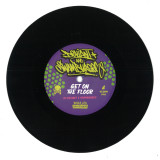
Regulate move into the new year by setting off two certified bangers. Master of the decks DJ Deviant is back on production duties; lead track “Get On The Floor” sees him once again collaborating with Swamburger (Mugs and Pockets) for a full force party starter. The production pulls influences from the earliest days when hip hop and disco were joined at the hip, with nods to The Sugar Hill Gang and The Furious Five, as well as the Golden Age and artists like Chubb Rock and Big Daddy Kane. Swamburger’s machine gun delivery and Deviant’s sharp cuts pull the track right into 2025 for maximum impact.
Flip side “Where’s The Party Clap” is a big trunk of cut and paste funk with a popping bass line, horns, claps, cuts and a groove that just doesn’t quit.
Domenic Cappello joins Craigie Knowes with his ‘Sceptical Soul’ EP – a trip into the sounds he has mastered through decades spent behind the decks in the world’s best nightclubs. Take an auditory journey into the mist and red light of Glasgow’s legendary Sub Club and a lifelong love affair with the sounds pioneered out of Detroit.
- A1: Yekermo Sew - Ft Don Fe, Craig Crofton & Piotr Zabrodzki
- A2: Ethiopian Rhythym - Ft Piotr Zabrodzki, Kubix & Alex Hazas
- A3: Snake Charmer
- A4: Double Trouble
- A5: Dub Forged In Metal
- B1: Wailing Dub
- B2: Bun Dem Dub (Brass Mix) - Ft Alex Hazas
- B3: Pharaohæs Revenge - Ft Craig Crofton
- B4: Hibisco - Ft Don Fe
- B5: Caravan - Ft Piotr Zabrodzki
Turquoise Vinyl[29,83 €]
Good and smoked out rasta vibes from the new album by Dreadsquad and friends !
Jah vibes with a pinch of Ska feels, nice one guys !
- A. Untitled (22:05)
- B. Untitled (15:26)
Who are they?
Craig Clouse (Shit And Shine, Todd)
King Coffey (Butthole Surfers)
Nate Cross (Marriage, Water Damage)
Limited edition 300 only white vinyl LP housed in full colour outer sleeve with hype sticker, and polylined inner bag. Non-Returnable.
In the Spring of 2024, Texas trio USA/Mexico crossed the pond for only the second time, playing just three shows in three days, taking in Geneva, Paris and London. This album is the result.
A brutal, dirge fest recorded live in Paris.
No song titles, just slabs of hellish noise.
Co release with US label 12XU who will be handling the release over in North America (different pressing plant/different colour vinyl)
Matt Jam Lamont & Scott Diaz first joined forces more than a decade and a half ago and have been at it ever since, remixing Raze, Craig David, All Saints, Adina Howard, Rosie Gaines and more, as well as making waves with DJ appearances like their iconic B2B Glastonbury appearance. Having formed their Undagrnd Freqz label in 2020, serving up a brace of floor-slaying classics including a collaboration with US garage pioneer Todd Edwards, and 'Haribo' with Smokey 'Bubblin' B, clocking up more than a million streams and 36 million views as part of Fred Again's now legendary Boiler Room session. Their latest, 'The Best of Both Worlds', nods at their skill for fusing the best elements of both house and garage across four tracks of razor-sharp vocal chops, bumpin' beats and classy production flavours. Absolutely essential.