Recorded Live in Italy in October 1985 and mastered directly from the old dusty cassette, here's a previously unheard Steve Lacy recording from a rare duo appearance with pianist Martin Joseph, a little known yet fascinating British musician who had worked with Harry Beckett, John Surman, Ian Carr, Tubby Hayes among others, and who later became a regular presence on the Rome mid 70's creative Jazz scene. This recording gives us an opportunity to listen to the soprano sax giant in a repertoire not frequently found on his other duo recordings with pianists. The set list includes some of Lacy's finest compositions like "Prospectus", "Flakes" and "Coastline", plus Thelonious Monk’s classic "Bemsha Swing" a tribute to Monk's visionary mastery where Joseph’s contrapuntal response to Lacy's angular lines leads the music towards a multidimensional space, a quality to be found throughout the whole album, This is a wonderful discovery! and a significant addition to Lacy's discography and legacy.
Contains printed inner sleeve with archival photos and extensive liner notes by two Italian soprano saxophone specialists Roberto Ottaviano and Eugenio Colombo, and pianist Martin Joseph himself.
Поиск:e freq
Все
HERTZ marks a change in perspective for Geneve, informed by major life changes and intense growth brought to life with her signature brutally honest lyricism The release of the singer/songwriter's debut album, the AMP-nominated Learn To Like It, coincided with the pandemic resulting in the quiet months that followed spent conceptualising and writing her second LP. "My experience had broadened - I'd been touring and working so hard for so long and then I finally had a chance to do not much at all. I was also diagnosed with bipolar at that time. Understanding the implications of that diagnosis is a big part of this album," she explains. As a result this new release is very much a concept album, an incredibly vulnerable documentation of Geneve processing her experience with bipolar disorder. She plotted the progress of songs to reflect the ups and downs of a mood cycle forming a frequency, hence the album title HERTZ. Geneve is a record-breaking seven-time winner of WAM Song of the Year, and has honed her live chops on the stages of Falls Festival, Laneway, Party in the Paddock alongside bills supporting Cat Power, Kurt Vile, Julia Jacklin, Belle & Sebastian, Fred Armisen, Gareth Liddiard and more. Her debut North America tour was supporting San Cisco in 2019, and she was invited to showcase at 2020s SXSW and The Great Escape.
Nu Groove spotlights the artists that made the legendary NYC label a firm favourite of crate diggers then and now with a series of their vital tracks re-edited by leading industry figures and choice selectors of today. ‘Nu Groove Edits, Vol. 3’ continues to celebrate Rheji Burrell’s output, who was instrumental in defining the sound of Nu Groove alongside his brother Rhano under a slew of monikers.
Up first, Metro’s ‘Turnstyle Turbulance’ gets a fresh edit from respected remixers, the Italian duo NiCe7. What follows is another take on the celebrated house track ‘APT. 2B’ by Rheji’s N.Y. House’n Authority alias, this time by Mark Broom. Tracer’s ‘Love Fantasy’, the collaboration by Luie Rivera and one of the original Paradise Garage DJs, Joey Llanos, is given an edit by Dirty Channels, another established Italian duo and frequent collaborators of NiCe7.
Completing the collection is another edit from the unstoppable production duo Honey Dijon & Luke Solomon as they take on ‘Guitarz’ by Rheji Burrell as Asylum.
Vecchio's Afro-Rock is one big horn-heavy, bass-blasting, Latin groove funk-rock party. Only now, you're all invited because this, ladies and gentleman, is officially...a grail no more. With copies currently starting at 400 Euros for an original, this beautifully presented reissue, part of Be With's fresh campaign with Music De Wolfe, is well overdue. A magnificent and somewhat obscure library set that's just a total, cohesive joy from start to finish, this here is the soundtrack to all your smokin' summer BBQs and communal cookouts.
Afro-Rock is the debut album by Argentine keyboardist Luis Vecchio. Recorded for the sound library label De Wolfe, the album is frequently mentioned in hushed reverence among the beat digger DJ collecting crowd. It features fiery brass charts, funky bass lines, fluttering flute, choppy organ and additional hand tribal percussion. The band let loose too and jam hard; yet there's a certain thread of solidity that runs throughout, the tracks just belong together, not disparate sound and rhythm experiments like some library records; this is just straight up, no messin', consistent funk-rock FIRE! Hips will sway, heads will nod to the steady vibes. It's insanely good.
The humid, building funk of the appropriately titled "Megaton" is a dramatic explosion of swirling, dazzling organ lines, ferocious beats and heavy horns throughout. It just don't stop. The tempo slows slightly for the deep and deeply addictive "Renegade". It's all heavy jazz horn refrains, always triumphant, coupled with devastating percussive breakdowns and killer guitar riffing. It's an insistent organ-led juggernaut. The frenetic "Facade", up next, is no less driving, horns high up in the mix over rattling percussion and brilliant organs lines. Just sensational. The bright "Chabati" is another glorious extension of the optimistic Vecchio sound, the organs wilder than ever before. The moody "Green Hell" is a real highlight and closes out the A-Side with some outrageously funky refrains - be it horns, organ or guitars - and is complimented by gorgeous flute work that galvanises the piece, elevating it to downright heavenly status.
Knowing full well that he's on to a surefire thing, Vecchio opens the flipside in much the same vein. Indeed, "Boss" is yet another uptempo highlight, a sensual orgy of proud horns, hand percussion and melodic flute playing over driving organ and guitars. It's followed by "Nsambei", which is rightly adored for its briefly open drum break, fantastically propulsive percussion breakdowns throughout and the jazzy, loose organ and guitar shreds. The bright "Waboco" ups the tempo and the pressure, hanging on one hell of a guitar hook and infectious horn refrain. Perhaps foreseeing how this album would come to be viewed, the aptly-titled "Cult" is possibly the finest song on the record. Which is saying something, because this record is insanely good. Riding a steady, confident organ groove straight out the gate, the kinda melancholic flute line over the top serves as a beautiful counterpoint which the horns often come in and imitate/riff off. Goddamn this is so so good, it needs to be played everywhere. The overwhelmingly mighty 7-minute jam "Ngoma-ku" rounds out this quite staggering record brilliantly in its heavy, mid-tempo blues with countless extended solos.
The audio for Afro Rock has been meticulously remastered by Be With regular Simon Francis, ensuring this release sounds better than ever. Cicely Balston's expert skills have made sure nothing is lost in the cut whilst the records have been pressed to the highest possible standard at Record Industry in Holland. The original, iconic sleeve has been restored here at Be With HQ as the finishing touch to this long overdue re-issue.
Following on from the psychoacoustic concrète of Outside Ludlow / Desert Disco LP (BT075), Sam Dunscombe returns to Black Truffle with Two Forests / Oceanic. Dunscombe has been active in recent years on multiple fronts, including as a key member of the Berlin community of Just Intonation researchers and practitioners; working with composers like Taku Sugimoto, Mary Jane Leach, and Anthony Pateras; and the release of Horatiu Radulescu - Plasmatic Music vol. 1 (the result of many years performance research into the thought and music of this seminal Romanian spectralist). In parallel with these activities, Dunscombe has been deeply involved in research on the role of music in psychedelic-assisted psychotherapy, prompting these two side long pieces, composed using field recordings and digital synthesis. As Dunscombe explains in the accompanying liner notes, music plays a key role in psychedelic-assisted therapy, yet it is often restricted to stock forms of New Age, ambient and electronica. Taking seriously the potential for spatio-environmental sonic experiences to add to the therapeutic process, these two pieces are intended to suggest how ‘a music-as-environment approach may help to add options to the therapist’s toolbox’. ‘Two Forests’ begins in a central Californian sequoia grove. Bird songs and buzzing insect life are treated with a variety of time-based processing methods (slicing and recombination, primitive granular synthesis, delay, and so on), which strip the field recordings of their linear, documentary character, reframing them in an enchanted web of traces and echoes. Analysing the pitches found in the original recordings, Dunscombe used them to generate a large Just Intonation pitch set. These tones are woven slowly into the field recordings, gradually building in density and complexity until the forest has been transformed into an unreal space of infinite proportions. Emerging from this cosmic expanse in the final minutes of the piece, we find ourselves in the Amazon rainforest outside Manaus, Brazil. As Dunscombe writes, the piece creates ‘a sense of place-gone-strange, of space and time simultaneously expanding and contracting across octaves, miles, and minutes’. On ‘Oceanic’, several recordings of different beaches fade in and out to create a texture both homogenous and constantly shifting in both the rhythm of the waves and each recording's sense of depth and distance. Tones relating in simple ratios to the average rhythm of each beach float over each other, colouring the white noise texture of the field recordings with shifting hues. In both pieces, Dunscombe forgoes the easy consonance that bogs down much contemporary ambient music for a richer harmonic array informed by extended tuning practices and spectralism. The end results suggest a hitherto undreamt-of meeting of Radulescu’s undulating sonic masses and the discreetly processed location recordings of Irv Teibel’s ‘psychologically ultimate’ Environments. Looking beyond the insularity that can afflict experimental music culture, Dunscombe’s work is a moving argument for the healing power of expanded approaches to sound and music. Even outside of a psychedelics-assisted therapy, frequent immersion in Two Forests / Oceanic is almost guaranteed to produce beneficial psychological results.
- A1: Chasing Shadows - Deep Purple
- A2: One Way Glass - Manfred Mann Chapter Three
- A3: Hold Onto Your Mind - Andwella
- A4: Hot Pants - Alan Parker & Alan Hawkshaw
- A5: Do It - Pink Fairies
- B1: Tomorrow Night - Atomic Rooster
- B2: Taken All The Good Things - Stray
- B3: Out Demons Out - Edgar Broughton Band
- B4: For Mad Men Only - May Blitz
- B5: Back Street Luv - Curved Air
- C1: Ejection - Hawkwind
- C2: Meat Pies ’Ave Come But Band's Not ’Ere Yet - Stackwaddy
- C3: Lovely Lady Rock - James Hogg
- C4: Third World - Paladin
- C5: Taking Some Time On – Barclay James Harvest
- D1: Ricochet - Jonesy
- D2: Led Balloon - Steve Gray
- D3: Big Boobs Boogie - Slowload
- D4: Freelance Fiend - Leaf Hound
- D5: Confunktion - Dave Richmond
“Incident At a Free Festival” is a tribute to the mid-afternoon slots at Deeply Vale, Bickershaw, Krumlin, Weeley, and Plumpton – early 70s festivals that don’t get the column inches afforded the Isle of Wight or Glastonbury Fayre, but which would have been rites of passage for thousands of kids. Bands lower down the bill would have been charged with waking up the gentle hippies and appealing to both the greasy bikers and the girls in knee-high boots who wanted to wiggle their hips. And the best way to do that was with volume, riffs and percussion.
Compiled by the venerated Bob Stanley and Pete Wiggs of Saint Etienne, this is the heavier side of the early 70s they summarised on the acclaimed “English Weather” collection. There’s an air of menace and illicit thrills among tracks by Andwella, Stack Waddy and Leaf Hound (whose “Growers of Mushroom” album is worth well over £1,000). Bigger names include the rabble-rousing Edgar Broughton Band and kings of the festival freakout, Hawkwind. They are represented by their rare version of ‘Ejection’
For every mystical Tyrannosaurus Rex performance there was something like Atomic Rooster’s Tomorrow Night or Curved Air’s Back Street Luv to capture the spirit of the day and stir the loins of festival goers; the tracks on “Incident At a Free Festival” were inspired by both Chicago’s percussive wig-outs and the Pink Fairies’ anarchic spirit. The sounds were heavy and frequently funky, with a definite scent of danger. Their message was clear and simple: clap your hands, stamp your feet, hold on to your mind.
So, put on your wellies in your living room, drop the needle and enjoy...
Tenor saxophonist Ben Webster (born Kansas City, 1909) needs little introduction, Webster is regarded as one of the three foremost swing era tenor saxophonists - the two others being Coleman Hawkins and Lester Young. His ballad playing and sound inspired such later fellow saxophonists as Archie Shepp, Sonny Rollins and John Coltrane. Webster became famous for his unique sound, quick tempos, his solos that contained great virile rhythmic momentum, a rasping timbre and an almost brutal aggressiveness filled with growl, while his ballad playing was breathy, tender and sensual. The list of his collaborations is long, Ben Webster worked, recorded and played with legends from the likes of Art Tatum, Count Basie, Cab Calloway, Roy Eldridge and Dexter Gordon_but a dream came true when he was offered a permanent job in Duke Ellington's orchestra where his personal style matured. Webster stayed with Ellington until 1943, after which he formed his own groups and played with other small ensembles. From 1952 on he spent his time between Los Angeles and New York playing, freelancing and recording with a variety of soloists, among them high-profile singers like Billie Holiday, Ella Fitzgerald, Carmen McRae and Frank Sinatra. Despite excellent reviews of his albums, it was difficult for Webster to find steady work in the US during the early 1960's, and when in 1964 he got offered to play for a month in London he accepted and sailed to England. Webster never returned to the United States. In Europe he found plenty of work, playing residences in Scandinavia, settled in Amsterdam (1966-69) and then in Copenhagen (where he even has a street named after him). He toured frequently, playing in clubs and at big festivals with local bands or with visiting American musicians. Ben Webster suffered a stroke in Amsterdam in September 1973 following a performance in Leiden and died on September 20. Even when his health started to decline during his last years, his playing never did. To the last day Webster played with passion and intensity, delivering weight on every note. Webster is the subject of two renowned documentaries and two extensive biographies have been published about his legacy. Responsible for a plethora of excellent recordings he remains THE best-selling tenor saxophonist in jazz. Ben Webster was one of those unique jazz musicians whose presence came through on every recording (He recorded for prestigious labels including Verve, Impulse!, Prestige, Reprise, Blue Note_and countless others. On the album we are proudly presenting you today (Wayfaring Stranger recorded in 1970 by the NPS Radio network in The Netherlands) you will find mind-blowing high-quality Dutch sessions that were left dormant on a shelf and weren't commercially released for over 30 years! On 'Wayfaring Stranger' the listener is treated to no less than nine sublime tracks that document Webster's trademark relaxed-swinging but imaginative playing style that never gets boring. The album features an all-star line-up from the likes of Rob Langereis (Toots Thielemans), John Engels (Chet Baker, Dizzy Gillespie) and Cees Slinger (Dexter Gordon, Slide Hampton). Expect a 61-year-old Ben Webster in excellent form giving a warm, dusky, gritty yet funky performance where he delivers everything from up-tempo material, 12-bar blues jams to soulful expressive ballads. Webster's quartet is in constant musical dialog with each other, creating a unique back and forth between musicians at the top of their game. Tidal Waves Music now proudly presents the FIRST EVER vinyl release of this fantastic album (originally released as a limited Compact Disc edition back in 2000). This unique record comes as a deluxe 180g DOUBLE vinyl edition (strictly limited to 1000 copies) with obi strip.
Valerie from the Galerie steps back into the low-key, light-dark with another long-playing release for What About Never. An ode to the lost FM waves of talk radio, late-night Quiet Storm jams and WBLS mastermixes, Long Time Listener First Time Caller scans the frequencies between dream house music and midnight blue ambient moods.
Cycles is a concept which is deeply intertwined with everyday life, both on a micro and macro level. They manifest in various natural, biological and societal processes, influencing our daily routines, behaviours and the world around us. Unconventional rhythms and time signatures, complex patterns, evolving modulations and shifting textures were created and used to present it (Cycles) as an integral part of our existence, shaping how we navigate to the world, make decisions and experience the passage of time..." Kostas Giazlas (Onepointwo). Kostas hails from Thessaloniki, Greece, and describes himself as a keen record collector, who is "always trying to emulate a musical journey into space, time, memories and frequencies". With Influences ranging from late 50s electronic experimental sounds, motorik krautrock bands, lush shoegaze melodies and modern electronica, Onepointwo seeks to crystallise this musical backdrop via judicious use of minimal arrangements, abstract and distorted shortwave radio signals, dystopian soundscapes made up of both digital and analogue sources, all punctuated with heavily affected percussive sounds. The listener is drawn in by the psychedelic impact achieved through repetition. Onepointwo's previous discography ably demonstrates his consummate skill in this field. Keene (Poeta Negra) / SANS (Lotus RecordShop Editions), plus various appearances / remixes in domestic label compilations. He has also clocked up an number of releases on UK labels, including Miracle Pond, Woodford Halse, Werra Foxma and Subexotic Records across various formats; plus several live performances/dj sets and a host of rave reviews including Electronic Sound Magazine.
Clear Marbled Vinyl[23,74 €]
To celebrate the 10th Anniversary of Major Arcana, Speedy Ortiz will release a remastered edition, on Carpark Records.
On their debut full-length, Western Massachusetts' Speedy Ortiz manages a bit of magic by conjuring the spirits of classic American indie rock, while twisting those ghosts into new shapes. It's easy to hear the influences of Helium, Jawbox, and Chavez on this album, as well as nods to their contemporaries including Grass is Green, Pile, and Roomrunner. Sweet vocal harmonies run up against gnarly distortion, aided by basic, chunky bass parts and heavy, fill-laden drums.
The album was recorded in a few days in November at Justin Pizzoferrato's (Dinosaur Jr., Chelsea Light Moving) studio, Sonelab, a huge space in an old factory in Easthampton, Mass. The sessions went from very early in the day until very late at night, with the band taking its time to experiment. Pizzoferrato's collection of old distortion pedals were utilized on both the record's guitars and vocals.
The theme of the occult and the supernatural runs deep through Major Arcana, inspired by singer-guitarist Sadie Dupuis' reading on black magic. Dupuis' sometimes knotty and abstract lyrics bring to mind fellow wordsmith Stephen Malkmus, while referencing horror film tropes, chemistry, and neuroscience. Major Arcana's literal translation is 'major mysteries,' a phrase from tarot cards. 'I don't write in a narrative way and am more concerned with use of language than meaning,' Dupuis says, 'so I like the open-endedness of the title and the way it invites interpretation.'
After too much time freelance writing and watching re-runs in a windowless Brooklyn basement, guitarist and songwriter Sadie Dupuis left New York City for the wilds of Northampton, MA in order to pursue a master's degree in poetry. In doing so, she began Speedy Ortiz, a self-recorded lo-fi project named after a minor character from the Love and Rockets comic series. Speedy Ortiz soon became something else entirely as bassist Darl Ferm, guitarist Matt Robidoux, and drummer Mike Falcone teamed up to form a full band, balancing abrasive noise with infectious earworms. The newly minted Speedy Ortiz quickly found an audience in the Boston DIY scene, playing frequently with their friends Pile, Grass is Green, Fat History Month, Sneeze, Krill, and Arvid Noe.
Almost immediately, the band recorded a two-song single, 'Taylor Swift' and 'Swim Fan,' with Paul Q. Kolderie (Pixies, Hole) and Justin Pizzoferrato (Chelsea Light Moving, Dinosaur Jr.), and self-released it in March of 2012. Shortly thereafter they spent a few weekends at the dingy yet atmospheric Sex Dungeon Studios in Philadelphia recording the Sports EP, a five-track, loosely conceptual 10' released that June on Exploding in Sound Records.
The creation of Major Arcana, their full-length debut, marks the evolution of Speedy Ortiz into a wholly collaborative effort. Darl leans toward basic, chunky parts, while Mike, a talented songwriter in his own right, helped arrange while also providing aggressive, boisterous drums. And Matt is a classically trained guitarist, but his experience in noise and experimental music comes through in his anti-melodic guitar solos, which counterbalance Sadie's angular, scalar guitar riffs and poppy vocals.
The end result is a band able to distill their influences and creative impulses into something at once dissonant and melodic, noisy yet undeniably pop.
Brueder Selke, a polyinstrumental composer duo originally from East Berlin, consistently enriches the repertoire of their two primary instruments: cello and piano. Their independent curator role shines through as they frequently host boutique concerts and happenings, featuring both established and emerging artists during their yearly Q3Ambientfest.
'Go East' marks a significant milestone in the long-term collaboration of Brueder Selke, two brothers who grew up on the socialist side of the Berlin Wall. The tracks are driven by the essential components of a restored Piano-Strings machine, along with two electronic organs named Sandy and the ET6-1, and a E-Piano, all manufactured by Vermona in the late 1970s and early 1980s.
Their innate sense of interplay, developed during their upbringing in GDR times, stems from a deep-rooted longing for connection and exchange with like-minded musicians and individuals. Through their music, they convey ideas that embrace a universal duality, showcasing how diverse elements harmoniously complement each other. The album encompasses a wide range of atmospheric moods, from intimate classical chamber music to expansive textural landscapes created by these now rarely intact socialist synthesizers, with their parameters mimicking strings and keyboard instruments. In this ironic and thoughtful manner, Sebastian and Daniel once again skilfully let their main instruments, cello and piano, merge into one another.
'Go East' aptly reflects the artist's profoundly experimental yet accessible approach, making it their 8th duo album. The 2x2 recordings were produced in their Klingenthal Studio in Potsdam in February 2022.
- A1: Viers - The Club Is My House (Hardspace Mix)
- B1: Resist 101 - Impulse 101 (Hardspace Mix)
- B2: Viers - Some Weird Drum Shit (Hardspace Mix)
- C1: Perry & Rhodan - The Beat Just Goes Straight On And On (Hardspace Mix)
- D1: Helena Hauff - Rupture (Hardspace Mix)
- D2: Ectomorph - The Haunting (Hardspace Mix)
Len Faki recently put out his mammoth LP Fusion, but his new moniker Hardspace finds him harking back to his signature style of specifically editing tracks for his personal club usage.
Working on the album may have helped open him up creatively, but this new project has him investing countless hours and a lot of passion into building the most efficient club tracks imaginable.
Long-time fans of Faki know that he's always edited all of his sets' tracks to uniquely suit his personal mixing style, making his sets sound as tight and cohesive in a way that stands out from the rest. Decades of experience as a producer and DJ for the dancefloor have gone into these edits, re-arranging and re-mixing sometimes forgotten tracks for a new audience. Incorporating his singular understanding of frequencies and floor dynamics, Hardspace is meant to express this side of his musical personality, while Len Faki will continue to explore a more varied approach to producing.
Swapping a lot of weekends away busily touring for much more studio time, the result marks both a technical and also personal achievement for Faki. Improved production skills, tears and emotions all have been poured into Hardspace, which will see a slew of releases in the forthcoming months.
The first volume includes a total of six reworks, both previously unreleased tools of colleague Viers or Helena Hauff's modern acid chug, as well as some 90's classics from Perry & Rhodan, Resist 101 and Ectomorph. All of these tunes have been meticulously pieced together to keep the originals' flavor and ideas, but infuse them with the undeniable power and presence that all Faki produtions have come to hold.
Violet and Black Vinyl[21,43 €]
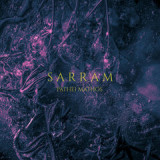
S A R R A M, the ambient and post-rock vessel of Sardinian solo artist Valerio Marras, announces the release of his fifth album "Pathei Mathos" on Subsound Records, and presents the captivating title track featuring revered multi-faceted artist Lili Refrain on vocals. S A R R A M is a dark ceremony inspired by the wild, ancient landscape of Sardinia A crushing but yet graceful composition where drone, electronica, doom, postrock blend to invite the listener to an intense sound journey. Dealing with learning through suffering as a central theme,"Pathei Mathos" -- which features appearances from renowned experimentalists Lili Refrain, Dalila Kayros, Tobias Vethake (Sicker Man) -- is a deep trip in the darkness surrounded by pulsating soundwaves, crushing droning layers, ethereal voices and floating cellos. About the album, S A R R A M says: "As every record, it describes a part of my living, my existence through sound and frequencies. It's something deep and authentic, something that can be felt, something real. The experience of my last two records "Silenzio" and "Albero" brought me to "Pathei Mathos": I needed to go further once again, pushing my borders even more and doing something I've never done before: composing. Nevertheless: sometimes it's just about floating together into huge waves of sound.
The earth rotates, seasons change_there is but one long day_ Time is a beguiling, indistinct entity_sometimes standing still, sometimes bending back upon itself with premonitions or memories of the future. Growing out of a pen pal style correspondence that took place over the course of a year, separated by the Atlantic Ocean, Gloria de Oliveira and Dean Hurley passed thoughts and music back and forth that would eventually form their collaborative album, Oceans of Time. The result is an aural tapestry of that exchange: woven from conceptual threads of the celestial within, mortality and the realm beyond stars. The duo's partnership is an effortless merge, yet it's the steady presence of de Oliveira's vocals that endows the record with its sense of potency. Throughout the album, there is an innate understanding of how a lyric across a chordal color can sharpen an emotional truth. Much like a sunbeam that pierces a spiderweb to reveal its intricacy, her lyric and melody are purposely aimed in order to illuminate the truths deep within oneself_a process that ties us all to the universal. The Danish philosopher Soren Kierkegaard, a professed influence, wrote about the truth as something that was inherently subjective, less about the concrete reality of what is believed and more about how it is experienced by the believer. Frequent David Lynch collaborator Dean Hurley sets the tonal and sonic landscape of each track on the album, lending a layered ether that envelops, frames and holds de Oliveira's vocals. With its impressionistic synths, shimmering guitars, and ethereal sonics, Oceans of Time at moments recalls the foundational dreampop of 4AD acts like Cocteau Twins and Lush. The album feels especially attuned to the connections between the physical and transcendental realms, and the best dreampop has a way of making the veil between two worlds feel just a little bit thinner. Oceans of Time is a key that has the power to release its listener from the handcuffs of reality, however briefly_
- A1: Zak Abel - No Limit
- A2: All Stand - Together
- A3: Tom Gregory - Dive
- B1: Elley Duhé, X Ambassadors - Back To You
- B2: The Feeling
- B3: Leave You In The Past
- C1: Declan J Donovan - Just Wanna Know
- C2: Calum Scott - Where Are You Now
- C3: James Arthur - Questions
- D1: Alexander Stewart - Gone
- D2: Fall At Your Feet
Nach einem monumentalen Jahr macht sich der belgische Superstar-Produzent, DJ und Live-Performer Lost Frequencies bereit, das Jahr 2023 mit einem großen Finale abzuschließen: mit seinem dritten Album 'All Stand Together', das am 10. November über Sony Music erscheint! Auf "All Stand Together" nehmen Lost Frequencies und eine Reihe von alten und neuen Kollaborateuren die Zuhörer mit auf eine Reise voller Wohlfühl-Elektronik. Vom internationalen Nr. Hit 'Where Are You Now' mit Calum Scott, über die aktuelle Soloveröffentlichung 'The Feeling' und einem Titeltrack, der die Szene zum Kochen bringen wird. Featurings mit Netsky, James Arthur, Tom Gregory und vielen anderen. Von House- und Tropical-Sounds über Einflüsse von Folk, akustischen Instrumentals und starken Gesangsdarbietungen bis hin zu tanzbaren Hymnen - "All Stand Together" wird das bisher charakteristischste Album von Lost Frequencies.
blue repress !
It's been nearly 15 years since this originally hit the shelves, which literally took the immersive atmospheric sound of Echospace and brought it right to the floor. With cv313's "Sailingstars" the spirit continues as they go on to preach the gospel of deep with a rippling exercise in space and bass.
A sort of slow motion movement in tone and 38 hz sub frequency which nearly verges on the disturbing, a sonic threshold quite hard to achieve in a vinyl cut. The power of repetition and subtle atmosphere are clearly demonstrated here by bringing the listener to an almost hypnotic state within its melodic spatial grooves.
The B side offers two immense reductions, equally effective providing a low end throb, analog spirit and organic textures captured in zero gravity, it's like truly sailing among the stars. Lovingly remastered and mixed down from the original analog 1/4" reel to reel tape, strictly limited to 300 copies for the world.
repress!
Back by popular demand, the same unique spirits that brought forth the sound of Detroit streets and turned it into the futuristic soundscape known as "Techno-Bass", The Original members have collaborated to re-issue their catalog 25+ years later. Starting with their 1st double pack LP, "Bass Magnetic" (considered to be a mesh of influences between Miami bass and Detroit techno), AUX88 established themselves in an effort to stay true to their roots in the streets and the clubs creating their own genre into a global dance culture. After the release and production of their own documentary ("AUX88-Portrait of an Electronic Band"), the group celebrates its now classic recordings. Harkening back to its first days on cassette tape to revive a future generation of vinyl aficionados.
Did you know there are horses on the cover of Earth 2: Special Low Frequency Version? There are at least three in the right hand corner, gathered inexplicably near a white canvas tent, a human possibly perched among its folds. As widescreen and vast as the cover may seem, those little details-the horses, the possible human, the faint wisp of white clouds-give it depth and wonder, something to which the imagination can return. Did you know that the music on Earth 2-repressed now for its 30th anniversary, back in its original artwork, and accompanied by a riveting set of remixes that demonstrate the reach of what Dylan Carlson long ago called "ambient metal"-works much the same way? The surface is massive and obvious, the meatpaw riffs of Carlson and bassist Dave Harwell pounding and swiping and pawing at the speakers, a true bludgeon in three-dimensional sound. Listen, though, for the details in the corners, for the finesse beneath the force, and Earth 2 reveals new levels of depth and wonder. The widespread impact of Earth 2 suggests that others have indeed been leaning in, listening to these minutiae and making something new of them. A masterpiece without many genre precedents, Earth 2 surely helped send doom metal down its more modern drone, ambient, and avant-garde avenues. Those descendants are obvious. Perhaps more surprising and gratifying are the ways it has influenced electronic music, modern composition, and even hip-hop by realigning our senses of tempo, time, and texture. Earth 2 engendered a rearrangement of expectations, regardless of preferred form.
In this accompanying remix set, "Earth 2.23: Special Lower Frequency Mix", the Bug has taken a bit of "Seven Angels" and laced it with feedback and big bass, allowing grime luminary Flowdan to climb atop it with his dark, staccato visions. Responsible for many transformational records himself, Justin K. Broadrick of Jesu and Godflesh crawls inside "Teeth" to lash at it with punishing drum machines and sordid layers of new distortion, building it into some brokedown palace of industrial mayhem. Loop's Robert Hampson makes good on the premise of ambient metal with his 30-minute hypnotic beauty, while longtime Earth cohort and longtime Built to Spill multi-instrumentalist Brett Netson seems to float the sound through a benighted graveyard on his clever "Teeth" revamp. These are not obvious directions for Earth's impact. Again, Earth 2 was never an obvious record. 30 years on, have we yet to grasp the enormity of Earth 2, an album that has continued its slow cycle of influence, uninterrupted? Probably not. Hell, most of us don't even know there are horses on the cover. VERY limited indies only LOSER copies pressed on lovely CURACAO BLUE vinyl!