UK Techno heavyweight Mark Broom and Berlin's Discrete Circuit have teamed up before - but this is their first fully-fledged collaboration aimed squarely at conveying just how well this combination works. A heavy hitting merger from both sides of the channel, boldly stating that form follows function. This collaboration is to the point.
MBDC The A side opens with a superbly engineered kick and counterpoint texture that allows for an otherworldly synth to slowly worm it's way out of the abyss. Frequencies open and shut to allow for the exact exchange of energy welcome in the mix. With no trickery, and at just the right moment, a pulsating binary hook reveals itself in the track and guarantees the desired effect. The A2 tilts the hat toward a stripped back motor city influence. Groovy, tooly, slightly dissonant. Blips, claps, punctuation where it works. Just the right shade of reverb and modulation, push and pull in the arrangement, reveal the versatility of the track and round out the opening side with punch. The flip side, and third track from the collab is also direct, firing up with the ubiquitous clap on the one. Looping acid and a purist minor stab alongside sizzling hats and rides force the energy ever upward. The break is needed as the expertly air drenched acid line opens up the whole space before driving back down into the intensity for the remainder of the cut. The final track of the EP features a remix of the B1 by Astray's other in-house producer, H4L. Back with a frenetic, broken, idm influenced belter of a remix with scattered and distorted 808's - all reigned in cohesively with some stellar beat science and gnarly touches. These 4 numbers are built for impact.
Buscar:e freq
With MEL013, Melodies International are extremely proud to bring you at last, a disco anthem from Detroit that was originally recorded in 1980 and dedicated to the 'King Of The Champion Fighters': Le Stim - A Tribute to Muhammad Ali (We Crown The King).
Le Stim was a band formed by lead vocalist Donald Jennings in the late 70s. Now an ordained deacon back in Detroit, Jennings was brought up in a gospel environment and was said to be born to sing. Growing up picking up songs from the likes of Nat King Cole, Ella Fitzgerald or Sam Cooke, Jennings frequently performed for family and friends and went on to sing for audiences in New York, St. Louis and all around Detroit.
We Crown The King is a song written in the mid 70s by the late Herbert Andrei Duncan, also from Detroit. Duncan approached Jennings with the song who was initially reluctant to sing it because it took him out of his usual vocal range. However, Duncan finally (thankfully!) managed to persuade Jennings after five years to record a tune that would prove to become a party anthem decades later.
Remembering Duncan, Jennings says: 'Andrei was positive..inquisitive.... and determined. I was only 18 or 19 years old at the time and remember Andrei coming over to my house.... He had a cellphone in his car!.. I remember going to Andrei's house, and he said he wanted to do the track. Andrei did not take no for an answer! The answer had to be yes! However Andrei didn't have any money to record the song with. So we made a deal. In exchange for the use of his P.A., Loc (the drummer) provided the seventeen musicians for Le Stim to record 'We Crown The King'. The session itself was recorded at a studio in Southfield, Michigan.
According to Jennings, Muhammad Ali did hear the track back then and liked it! Le Stim were in touch with Ali's management and were about to meet him on a number of occasions which unfortunately didn't work out.
Licensing this record has proven to be Melodies' biggest research effort as of yet and has involved visiting it's author, Duncan's former house in Detroit only to discover it had burned down and that his family had moved years ago. It wouldn't have been possible without the invaluable help of Jeremy from Rain&Shine records (NZ) who then managed to track down the family back in Texas!
Officially licensed, remastered and cut to half-speed lacquers at 45rpm (instead of it's original 33rpm format) to bring the shine out of the top end - MEL013 comes forth in it's original 12' vinyl format with exclusive Melodies stickers and digitally too.
The new album from Danish electronic trio System is a special kind of collaborative effort with piano magician Nils Frahm. His purpose-built improvisations on synth, organ and piano served as source material for the members of System (Thomas Knak, Anders Remmer & Jesper Skaaning), who merged his warm acoustic tones with their minimalist digitalism and set out to translate their distinctive clicks 'n' cuts electronics into vivid soundscapes. Over two years in the making, the resulting nine tracks are as sonically intriguing as they are touching. Ranging from the mellow bliss of the title track to echoes of 90's and 2000's electronica and ambient sequences frequented by mesmerizing movements and sounds. The blending of piano and digital tones and noises into emotive pieces might instantly recall the work of Alva Noto and Ryuichi Sakamoto, though System and Frahm come to quite different results.
Thomas Knak met Nils Frahm at one of his concerts in Copenhagen. They stayed in touch, exchanging thoughts and ideas. Two years later, Anders Remmer was also introduced to Nils. From then serious ideas for a collaboration formed. As Nils was a fan of System's self-titled debut album (released in 2002 via Pole's Scape label) their talks centred around Dub and minimalism, elements that constitute most of System's music as well as their side and solo projects. This in mind, System began producing sketches and brought them to Nils´ Durton Studio in Berlin in December 2015, where they recorded ten hours of him playing keys and effects to their drafts. Back in Copenhagen, they decided to change direction. - As Nils had told us about his fascination with our debut album, we tried to rediscover this minimal clicks 'n' cuts era. But hearing Nils playing to our rhythmic beds, we felt the need to scrap those beats and instead head in a more cinematic direction.'
So they started building new pieces from the Durton recordings, maintaining some of the minimal and static quality while new layers of synth sounds and noises created a richer and more organic quality compared to older System albums. The solo projects of Thomas (Opiate), Anders (Dub Tractor) and Jesper (Acustic) always relied on steady beats or rhythmic material, so the productions of 'Plus' with their focus on acoustic and melodic elements, ambient layers and cinematic moods, sees them pushing forward into new areas.
This way, the trio avoided copying what they had already done years ago, when they built a reputation as Denmark's prime originators within electronic music in the 90's and 2000's. 'Plus' is a triumphant example of collaborative experimentation and may be the dawn of a new era for System: - For us it was really satisfying to focus more on actual sound rather than rhythmic aspects. There is a lot of potential in this field, so it would only be natural for us to pursue this, maybe as a series of collaborations with other people who's music we admire.'
- A1: Wildstyle Crew - Intro (Edit)
- A2: Bryozone - Juicy Quiddity
- A3: Ratti Nielsen Nikolaienko - M2
- A4: Mark Templeton - Soft Education
- A5: Andrew Pekler - Underwater Nocturne
- B1: Native Instrument - Thud
- B2: Nisantashi Primary School - Flaneur
- B3: Aem Rhythm Cascade - Biruza
- B4: Ol - Nutmeg
- B5: Vakula - Afromadness
Ukrainian label Muscut celebrates its anniversary - Muscut X (10) Test Pressign II - is the tenth record in a row. The first release was published in 2012 on 7 inches and was called simply Test Pressing. Like six years ago, the current vinyl is a compilation of Muscut's 'residents', as well as new friends of the label. Test Pressing II is 12 inches on which there are exactly ten tracks. Both sides are significantly different in color of mood. Party A starts with dub-drone sketches of key figures of the Odessa underground - Wildstyle Crew and Bryozone. Then we hear the mantra-like M2 - the work of the creative union of Nicola Ratti, Mads Emil Nielsen together with Nikolaenko. The Canadian sound-artist Mark Templeton continues the line of rhythmic textures crowned with unhurried percussion - it is in all senses of Soft Education at number four. The first part is completed by an exquisite curtsy from the Andrew Pekler label frequenter called Underwater Nocturne as a soundtrack for the perfect tea ceremony.
The second side confidently sets a completely different compilation rhythm from the very start - the tribal tribal dance from the Berlin project Native Instrument instantly introduces into a trance. It is followed by a warm, enveloping minimal synth track from the Ukrainian trio Nisantashi Primary School. The middle of the second side is decorated with the pensive house-ballad of St. Petersburg producer Fadeev known as AEM Rhythm Cascade. Another Russian settled next to him - Muscovite Oleg Buyanov, aka OL, with a massive broken dub Nutmeg. The final composition consists of burning afrosint motifs from luminary Odessan Vakula.
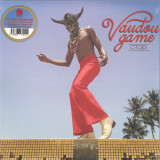
No one had been through those doors in years. Unchanged, seemingly untouched, just a Guard watching over it, one wondered whether the place would ever see the light of day again. Built in the 70s by Scotch, there were only twenty such places in the entire world. Twenty studios, all identical. Most had undergone a digital makeover in the 80s, but not this one; situated in Lomé, this studio had stayed true to its original form. Silent and uninhabited but waiting for one thing, and one thing only: for the sacred fire to be lit once again. That of the Togolese Recording Office, is studio OTODI for those in the know. Through thick layers of dust, the console was vibrating still, impatient to be turned on and spurt out the sound so unique to analog. That sound is what Peter Solo and his band Vaudou Game came to seek out.
The original vibrations of Lomé's sound, resonating within the studio space, an undercurrent pulsing within the walls, the floor, and the entire atmosphere. A presence at once electrical and mystical sourced through the amps that had never really gone cold, despite the deep sleep that they had been forced into. In taking over the studio's 3000 square feet, enough to house a full orchestra, Vaudou Game had the space necessary to conjure the spirits of voodoo, those very spirits who watch over men and nature, and with whom Peter converses every day.
For the most authentic of frequencies to fully imbibe this third album, Peter Solo entrusted the rhythmic section to a Togolese bass and drum duo, putting the groove in the expert hands of those versed in feeling and a type of musicianship that you can't learn in any school. This was also a way to put OTODI on the path of a more heavily hued funk sound, the backbone of which maintains flexibility and agility when moving over to highlife, straightens out when enhanced with frequent guest Roger Damawuzan's James Brown type screams, and softens when making the way for strings. Snaking and undulating when a chorus of Togolese women takes over, guiding it towards a slow, hypnotic trance. Up until now, Vaudou Game had maintained their connection to Togo from their base in France. This time, recording the entire album in Lomé at OTODI with local musicians, Peter Solo drew the voodoo fluid directly from the source, once again using only Togolese scales to make his guitar sing, his strings acting as channels between listeners and deities...
Footshooter is the moniker of London based producer, DJ and musician Barney Whittaker. His style blends skippy, broken beat production with live instrumentation to create an organic, rich sound and he frequently collaborates with emcees, poets and vocalists exploring different tones and moods.
His last record, Strange Days EP (released on Famous Friends), gained regular plays on NTS, Balamii, WorldWide FM and, most recently, by Bonobo in a DJ set at his NYC Boiler Room.
'Technicolour Nights', due out on YAM Records later this year, is a meditation on long evenings & nights out and how they vary in atmosphere, mood and colour. Opening with the aptly named and ethereal 'Intro', the EP quickly jumps into sunshine territory with 'Juan's Stairwell' before 'On Telegraph Hill' brings the heads down for a meditative two-step groover to close up the A-side.
On the flip, Footshooter flexes his 160bpm muscles on 'Mars' with the help of London based vocalist and MC And Is Phi, before dropping the tempo just a touch on 'Rotations', a steppy, Rhodes-laden journey through London nightlife. 'Our Love' lowers the tempo even further to bring the EP to a close on a bittersweet note.
Composer, multi-instrumentalist and mixed-media artist, Takehisa Kosugi has stood on the forefront of the Japanese avant-garde for over six decades. In the 1960s, he was part of Japan's first improvisational music collective, Group Ongaku, and contributed to Fluxus in New York. In 1969, he founded the influential, experimental ensemble The Taj Mahal Travellers, and in 1975 he would release his first solo album, Catch-Wave.
"Mano-Dharma '74" features improvised violin drones and voice with various oscillators, echo delays and layered tape experiments that the artist made in New York in 1967. While Kosugi's continuously changing spectrum of sound shifts gradually (almost imperceptibly), photocell synthesizers create ultra-low frequencies to disturb the crestless sound waves. The brighter the light is, the harsher the noise becomes.
'Breathe The Machine' is the first installment of Dojostudio and presents a musical world rich in harmonics, low frequency and melodic impact, yet with enough space in between to allow that perfect breathing room essential for powerful dance cuts. 'Breathe The Machine' portrays a world that initially feels robotic, yet instills an organic fluidity known only to come from humanoid beings, breathing life into a system littered with code and coldness. Billy Dalessandro presents 3 original cuts, plus a rendition of the title track by Mike Shannon.
Both for 'Breathe The Machine' and 'Tractor Beam' the Waldorf Microwave XT 2 and the Jomox 888 were the primary sound sources. For 'Breathe The Machine' the 888 was processed through a Jomox T-Resonator, which added harmonic distortion, and also spread the stereo spectrum out a bit offering the drums a more washed-out feel. The XT was layered track by track by performing patterns live into an editor until the desired ideas were properly recorded. Mike Shannon was brought on board to offer a contrasting expression of 'Breathe The Machine' and when asked how the process went he stated:
"I took the source sounds, edited them and processed them to work with a groove I had written for this remix. I mainly used the pad, lead synth and synth effects from the original. The rest of the gold I engineered."
On 'Tractor Beam', subtle use shows that ample space in between ideas make things seem larger than life. By allowing a more minimal approach in the production process the sounds can easily co-exist, allowing for that 'big room' sound without overwhelming the overall experience.
The digital exclusive 'Deliverance' was created using NI's Maschine for the drums, and FM8 and Reaktor were the sources of the synths. Drum patterns were created in Maschine and then recorded in realtime back into the DAW as it played, with real-time tweaking of the hi-hat to create the desired impact, especially at the break. The synth and pad patterns were recorded as MIDI into the editor, and then automation of the synths' VCF rounded out the expression needed to complete the emotional process.
All in all, DOJ001 is mostly an all-hardware showdown, with 'Deliverance' being the only 'virtual' attempt. Life is in nature, not in machines, yet the culmination of the two worlds can be beautiful, if only properly tamed and understood. Lest we beware! Stay tuned... and thanks for listening!
London duo Damian Daley & Danny Dixon aka OdD return to FUSE sister label Infuse to follow up their breakthrough Cold Fusion EP with a four-track EP titled 'Tones Of The 90s'.
Lead track 'Tones Of The 90's' brings together the core elements of the London underground scene. Snappy hi-hats combine with subtle tones and garage-like vocal samples and plenty of bass. A2 'Phone Home' starts with the famous ET sample. Once again it's the snappy hi-hats that take centre stage, working alongside a well-programmed loop that bubbles throughout underneath the surface.
On the flip, loopy drum patterns dominate B1 'Yes Yes' before the EP comes to an end with the pick of the bunch 'Pressure'. Low-end frequencies combine with a dreamy synth line, signing off the release in typical Infuse style.
In a time when Jazz music is entering a contemporary renaissance and exciting the ears and minds of new audiences, Zombie Zombie's Étienne Jaumet offers us his unique, idiosyncratic take on the sound with the sprawling '8 Regards Obliques', his 3rd solo album with the Versatile label.
Jazz requires a certain freedom of technique, interpretation and improvisation that already matches Jaumet's own production style and sonic aesthetic as well as his playful approach towards music. The eight pieces that make up the new LP were very quickly recorded; Jaumet let himself be carried away by the atmosphere without focusing too much on fine details or the laborious aspects of the composition process. The finished article is a spontaneous collection that stands out, a true mirror image of the creative process adopted by the artist. Not surprisingly, spontaneity is one of the characteristics already present in his music, in both his recorded output and his live happenings, where he leaves much room for freedom and improvisation.
'8 Regards Obliques' was recorded at the Versatile studio in less than 3 weeks with quite a basic set up: TR 808, selected synthesizers, vocals and of course the saxophone, which is a constant presence also in his previous albums. For the mix Etienne has again appealed to the maestro I:Cube, a central figure of the Versatile story and a prdigious engineer and artist in his own right. He immediately understood that it was necessary to keep the spontaneous side alive and to not over-produce the pieces or over-edit them, being constantly mindful to retain the power in the sound and in the frequencies. From Sun Ra with 'Nuclear war', Miles Davis in 'Shhh / Peaceful' or 'Theme from a symphony' by Ornette Coleman to 'Caravan' (already quoted by many jazzmen), Etienne enjoyed revisiting classic masterpieces and paying tribute to his inspirations. He allowed himself only one personal and original composition, 'Ma révélation mystique'.
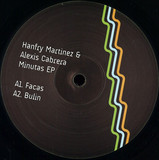
Moss Co., sister label to Archie Hamilton's Moscow imprint, returns with its 10th release, a four tracker from Hanfry Martinez & Alexis Cabrera that is both club ready and forward thinking in equal measure. A cross-continent collaboration, the 'Minutas' EP plays perfectly to the strengths of Tenerife's Hanfry and Argentina's Alexis, emanating the precise sound that Moss Co. loves to champion.
'Facas' leads the way with an unabashed breakbeat and zephyr-like hook, leaving space for playful midbass tones and experimental keys, behaving in a purposefully erratic manner. 'Buli´n' follows with driving, dissonant synths that maintain momentum as a weighty and funk-laden bassline enters the fray.
On the flip is title track 'Minutas', rich in sparkling frequencies, snappy percussive programming and the kind of lazy bass motif that is primed for the beaches of Mamaia. 'Copeti´n' closes the EP with a hazy bassline and gentle, rolling subs complimented via crystalline drum patterns and tripped out FX processing.
- Spectral Decay' is a collection of musical reflections about the paradoxical contemporary state of humankind, whereas its own technological, social, cultural and economical development seems to entrench the possible points of a structura downfall. The narrative of - Spectral Decay' starts with heavy, mesmerizing industrial vibes. Due to the notable sound design techniques of Japanese artist Tetsumasa, his hefty piece - Nex' evolves into a harsh but still amazingly cinematical music sculpture.
Subsequent mid-tempo composition - Onzour Shayatini' by Meer dynamically follows the dark, experimental path of drone and noisy structures. Violent accents smoothly lead to the deconstruction of drum & bass patterns and turn into strident 90s metal riffs. The track progressively penetrates obscure subterranean abysses and becomes a perfect introduction to the next theme by Yuji Kondo - - Hades'. In Greek mythology Hades was the ancient god of the underground kingdoms, darkness, death and metals. Therefore, Kondo's music piece turns into an infernal portrayal of the underworld where tenebrous layers of bass frequencies, raw textures and Drexciyan sounds build up an enormous and lasting tension.
Side B begins with the track - Anthropocene' produced by Arboretum co-founder - Mogano. The whole composition refers to the present geological epoch we live in, characterized by environmental pollutions, depletion of fossil fuels and accelerated urbaniza- tion of the world. It is a deeply conceptual soundscape of a powerful system, that incorporates both - the destructive forces of technology and the infinite energy of the whole universe, that interweave in a devilish dance of post-techno, breakbeat and dub tones.
Thereafter, ~Raw in his piece - Poly Bios' pictures the interference of human structures in the nature. Creating a mosaic from indus- trial and tribal, organic sounds, he tells a mystical story of fear, hope, escape and primeval instincts.
The narration concludes with an atmospheric composition of NWRMNTC - solo project of Ana Quiroga from experimental ambient duet LCC. - Beyond' is a boundless, spectral reflection on collective human consciousness, where haunting vocals evoke a recon- dite, ineffable pain, leaving the listeners in a profoundly meditative state.
Laura Polan´ska
Feldermelder's "The Sound Of" is a collection of tracks created in hotel rooms around the world. These little anthems tell stories about places filled with a sense of purpose, a particular emptiness, or a feeling of transit. Places that have fallen out of snyc with the rest of the world. "The Sound Of" is a homage to personal moments worth keeping alive in one's memory.
The flexi disc features the track "Harmony" and was an insert in Zweikommasieben Magazine #14. The screen-printed inlay by Mathias Forbach / Fichtre features an index of sounds and frequencies used in the composition. The flexi disc comes with a download code for four additional tracks.Feldermelder's influences range from the decomposed structure works of old pioneers of Electronic Music to classical Jazz, electronic and analog music from the now, before and tomorrow. The diversity of the music that inspires him, finds reflection in his own sonic adventures, forming his ever evolving sound, combining as map and compass to guide his artistic outbursts. Feldermelder is co-founder of -OUS records and member of the art collective encor.studio. He has been performing internationally with his recent audiovisual live show "Erratic" and the AI-driven installation "Initiation", among others.
Edizioni Mondo as a label, has the goal to produce music that is descriptive of concepts, images and environments. Inspired by library music, a genre frequently used as theme or background music in radio, film and television in that very same period, the name MONDO has its roots in 'MONDO MOVIES", an Italian movie genre born in the 60's. Mondo movies are characterized by documentary-like content that addresses several topics from around the world ("mondo"). Numero nove comes courtesy of ROTLA. Also known as Mario Pierro and Raiders of the Lost Arp, 'Waves' is his third contribution to Edizioni Mondo. Downtempo, trippy, playful and pardon us, balearic, it's the soundtrack to the fading summer or the one starting somewhere else in this universe. Accompanied by remix works from label head L.U.C.A. and balearic (again!) mastermind Mark Barrott with his Sketches form an Island Healing Hands, it's the most balearic (three's a charm) record you will hear this side of the summer (wherever you are).
- A1: Acid Funk (Original Gavin Hardkiss Mix)
- A1: Acid Funk (Original Scott Hardkiss Mix)
- B1: Acid Funk (Heavenly Gates Mix)
- C1: Acid Funk (Next School Acid Funkadelic Mix)
- C2: Acid Funk (Ravers Reprise)
- D1: Acid Funk (Dramaboy's Punk Funk Mix)
- D2: Acid Funk (Acid Funkapella)
In 1996, Gavin and Scott Hardkiss entered the San Francisco Tenderloin studio frequented by the Grateful Dead and Fleetwood Mac and made Acid Funk and various remixes. It's a funny song that references Frankie Bones' This Is Techno and Maurices' This Is Acid and says a lot about a couple of guys drunk on funk who wanted to flip their own sounds. Raw house featuring 808s, 303s and Space Echo churned easy in a whimsical psychedelic cauldron.
Unavailable for 20 years, these remaining copies of the original pressing feature various versions by bothe Hardkiss brothers and an acapella.
An Invitation To Disappear is the debut LP by British electronic musician Inland aka Ed Davenport - and his first release for A-TON. Based on his soundtrack for a video installation by conceptual artist Julian Charrière, Davenport has recast the material and field recordings into eight tracks of rhythmically intricate electronics and spectral, ambient techno, inspired by Charrière's visually striking, 76-minute tracking shot through a palm plantation toward a totemic soundsystem on full blast.
Both the album and original soundtrack were created in response to the 200th anniversary of the eruption of Indonesia's Tambora volcano in 1815, which plunged the world into darkness and caused a series of extreme weather conditions. At the time, the natural climate change crisis resulted in numerous global famines and is known throughout the northern hemisphere as 'The Year Without Summer', with global communities forced to adapt to sudden radical changes in temperature and weather.
An Invitation To Disappear offers a contemporary parallel, leading viewers - and listeners - down a seemingly endless direct path of gridded palms from dawn to dusk; a bio-commercial monoculture where ancient jungle once flourished. Light flickers between rows of fruit-laden trees and a distant fire burns in the undergrowth where the border between natural image and computer simulation breaks down. At the same time, formerly incoherent rumblings of sub-frequencies begin to transform into the contours of rhythm. This is reflected sonically in eight perspectives on the lush, synthetic jungle, made of myriad buzzing fauna, morphing melody and colossal bassweight. All paths lead toward an apocalyptic dancefloor, though speeds vary widely; rhythms dissolve from straight to broken, synth tempos operate by their own internal clocks (and logic). Juxtaposing industrial agriculture with rave culture, the album explores the industrialization and refinement of nature, and the new strange forms emerging from the synthetic grids of both.
As Inland, Davenport has previously contributed soundtracks to other installations by the Swiss-born Charrière, whose artistic practice focuses on bridging environmental science and cultural history, often taking place in remote geophysical locations, including ice fields, volcanos and radioactive sites.
Julian Charrière is a French-Swiss artist based in Berlin. A former student of Olafur Eliasson at the Institut für Raumexperimente, Charrière's art explores post-romantic constructions of nature, staging tensions between deep or geological timescales and those relating to mankind. His work has previously been shown across the globe, including at the main exhibition of the Venice Biennale in 2017, a solo show at Kunsthalle Mainz this past Spring and an upcoming solo show at the Berlinische Galerie opening September 26.
Inland (real name Ed Davenport) is a British producer, DJ and founder of Counterchange Records based in Berlin. Known for his detailed and explorative house and techno releases on his own label, Infrastructure, Naïf and more, Davenport has recently gravitated toward the contemporary art world, finding inspiration in the cross-pollination between Berlin's art and music scenes. Previous sound design collaborations with Charrière have been exhibited in institutions such as the Musée des Beaux-Arts de Lausanne in 2014 and Thyssen- Bornemisza Contemporary in Vienna in 2017.
The gallery version of An Invitation To Disappear premiered this past April at the Kunsthalle Mainz and will be on display at the Berlinische Galerie as part of Charrière's solo exhibition As We Used to Float, opening September 26, 2018. The LP will premier live together with the video installation during a special presentation in Berghain the same day for Berlin Art Week.
For Our Number 013 We Have Label Boss And Founder On Command. Kessell Delivers Four Slices Of Precise, Expertly Crafted Modern Techno. The Minimum For The Maximum Motto Works Perfectly To Describe This Ep, Nothing Is Left Over, All The Components Are Carefully Chosen To Convey Sensations And Say Something.
Linear Synth Sequences Constantly Evolving, Profound Kicks And Sharp Hi Frequencies, Continuous Arrangements And Solid Components, No Drones, No Breakdowns, No Big Reverbs. Functional Tools For The Real Players Out There.
Rough sounds burning down slowly, clashing like uncontrolled bodies in a turmoil of deviated thoughts. Lux Rec releases the first EP from Lausanne born, Zurich based musician, 808Hz. The record consists of three original tracks and one rework by Savage Grounds.