
quête:e live
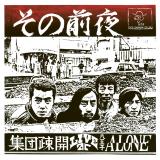
First time reissue of JP free jazz rarity, pre-Seikatsu Kōjyō Iinkai group.
The single album self-released by the quartet Shūdan Sokai in 1977 is one of the most vital documents of mid-seventies Japanese free jazz, documenting Tokyo’s free scene at the precise moment when it began to shift to a handful of tiny venues on the western fringes of the city. In Free Jazz in Japan, Teruto Soejima identifies the extant venue Aketa no Mise in Nishi-Ogikubo as the pioneer of this decamping from the centre: a cramped basement beneath a rice shop, seating just 20 people. Musician-run, operated on a shoestring, these spaces offered a vital site for community, creativity, and a small measure of financial independence — “even though it was in a basement, in spirit it was a loft.”
Among the most active of the new venues was Alone in Hachiōji, nearly an hour from Shinjuku, in a district shaped by universities, lower rents, and a thriving counterculture. Originally opened in 1973 as a jazu kissa, Alone was unusually spacious and equipped with a stage, grand piano, and drum kit. Around 1974, Junji Mori and Yasuhiro Sakakibara began working there, booking free jazz players on weekends and establishing the venue as a crucial hub. Mori recalls early appearances by figures including Kazutoki Umezu, Toshinori Kondo, and others who would define the scene.
In early 1976, Umezu and pianist Yoriyuki Harada — recently returned from New York’s loft jazz environment, where they had played with musicians such as David Murray and William Parker — formed Shūdan Sokai with Mori and drummer Takashi Kikuchi. The name, meaning “mass evacuation,” pointed to their self-chosen exile in Hachiōji. With Alone as their home base, the quartet developed a music characterized by an infectious sense of enjoyment and a willingness to integrate free jazz with elements of song structure. Harada switched between piano and bass; the group experimented with rap-like vocal pieces, jabbering nursery rhymes over bass rhythms.
They returned to Alone on December 24 to record Sono zen’ya (Eve), releasing it on their own Des Chonboo Records, partially funded by advertisements from local businesses printed on the rear cover. The closing “Ballad for Seshiru,” dedicated to Harada’s newborn son, unfolds over a delicate piano melody that moves into emphatic chords as intertwining alto lines rise and spiral.
Alone closed in September 1977, and Shūdan Sokai soon dissolved, later morphing into the expanded Seikatsu Kōjyō Iinkai Orchestra. What remains is a recording rooted in a specific place and moment: a fiercely independent scene sustained by small rooms, close listening, and collective commitment.
Miles Davis & Quincy Jones - Live At Montreux Rhino Reserve
The Grammy* Award winning collaboration of Miles & Quincy revisiting the classic Gil Evansarrangements that Miles originally recorded decades before with Gil. It's rare for Miles to lookback and these performances are superb. Recorded live at the Montreux Jazz Festival on July8, 1991, these are some of Miles' final recordings.Cut by Matthew Lutthans at The Mastering Lab and pressed on 180g black vinyl at FidelityRecord Pressing
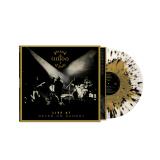

Blademasters is a new Melbourne instrumental project formed by Patrick Ryan (Cantrips) and Lachlan Stuckey (Surprise Chef). Built around the central conceit of "duelling" acoustic guitars - Ryan on steel-string and Stuckey on nylon-string - the project draws on 1960s and 1970s live studio recording traditions, foregrounding ensemble interplay, room sound, and performance-led arrangements. The wider lineup features musicians associated with Melbourne's instrumental soul and funk scene, including members of Surprise Chef, Cantrips, Karate Boogaloo and Ella Thompson's band.
Recorded live over a single day, Kings Knight / Live by the Blade was tracked with two acoustic guitars performing together in the room alongside bass and drums, with piano and vibraphone overdubs added sparingly. The release is influenced by David Axelrod's Pride (1970), particularly its fusion of cinematic orchestration, Latin and folk inflections, and deep rhythmic foundations. Both tracks share related harmonic material, presenting two contrasting but connected movements: the A-side's dramatic, tension-building opener and a more restrained, groove-led B-side. The release is presented on 7-inch vinyl with digital distribution.

- A1: All The Young Dudes
- A2: Sweet Jane
- A3: Ready For Love
- A4: Midnight Lady
- B1: The Moon Upstairs
- B2: Walkin’ With A Mountain
- B3: Rock’n’roll Queen
- B4: Keep A-Knockin’
- B5: Thunderbuck Ram
5
The title comes from a previously unreleased version of All The Young Dudes (track one, side one) specially recorded for the BBC. Elsewhere we have two further studio tracks aired by Sounds Of The Seventies, live versions of Midnight Lady and Thunderbuck Ram recorded for FM radio and a ferocious set of four live tracks originally broadcast on French TV in 1971.
Full recording details and extensive sleevenotes are included.

- A1: Personality Crisis
- A2: Trash
- A3: Stranded In The Jungle
- A4: Pills
- A5: Give Her A Great Big Kiss
- A6: Hoochie Coochie Man
- B1: Looking For A Kiss
- B2: Jet Boy
- B3: Vietnamese Baby
- B4: Subway Train
- B5: Who Are The Mystery Girls?
- B6: Private World
4
Twelve tracks from the New York Dolls recorded live for TV and radio in 1973, showcasing a raucous rock’n’roll band in their prime. Two cover versions – Hoochie Coochie Man and Give Her A Great Big Kiss – were never included on either of the band’s two original studio LPs. Comes with full recording details and extensive sleeve notes.


long content, you may need to expand row to see all... • Warren Zevon’s final concert, recorded August 9, 2002 at the Edmonton Folk Music Festival, available for the first time
• Features “Werewolves Of London,” “Poor Poor Pitiful Me,” “Lawyers, Guns & Money,” “Play It All Night Long,” and more
• Double LP with etched 4th side and liner notes fromlongtime Zevon band member and friend Matt Cartsonis, who accompanied Warren during this performance
• Available for on opaque metallic silver vinyl
One of my favorite repeatable moments in our sets was looking over when he was singing that line from “Don’t Let Us Get Sick”: “I’m lucky to be here with someone I like . . .” to find him looking at me. That’s some pure and precious stuff, and I’m immensely grateful for the memory.
—Matt Cartsonis from his liner notes
Luckily, 2025 Rock & Roll Hall of Fame inductee, Warren Zevon left us with a treasure trove of nearly four decades of incredible songs and performances. Neither Warren, nor his long-time band member, accompanist, and friend Matt Cartsonis, nor the 14,000 people in attendance at the Edmonton Folk Music Festival knew this would be Warren’s final concert—it was just another great performance from an exceptional songwriter and artist. Epilogue: Live At The Edmonton Folk Music Festival offers you the chance to experience it for the first time, or relive it if you were there.
Featuring Warren on guitar, harmonica, and piano, with Cartsonis adding guitar, dulcimer, fiddle, harmonies and more, the pair run through classics like “Werewolves Of London,” “Poor Poor Pitiful Me,” Lawyers, Guns And Money,” and “Play It All Night Long.” The set also features a performance of the song “Dirty Life And Times,” only ever played twice! The pair found room in the set to pay tribute to Canada with a cover of Joni Mitchell’s “A Case Of You” and the traditional, “Canadee-i-o.”
Available on double metallic silver Vinyl (with etched fourth side), Epilogue: Live At The Edmonton Folk Music Festival has been mastered and restored by multiple Grammy-winning engineer Michael Graves and Jordan McLeod of Osiris Studio with Matt Cartsonis. Cartsonis also adds poignant liner notes about the performance, and insight into his musical relationship and friendship with Zevon.
Epilogue: Live At The Edmonton Folk Music Festival is a gift from a truly legendary singer and songwriter. Play it all night long, indeed.

4


Nach eineinhalb Dekaden, in denen Musiker und Produzent Christopher van Deylen alias Schiller das Publikum mit seiner ganz besonderen Mischung aus Pop, Ambient und Electro verzaubert, erschien mit Zeitreise
– Das Beste von Schiller die allererste Werkschau des deutschen Ausnahmekünstlers, welcher seine Fans
regelmäßig zu aufregenden Kurztrips in seinen ganz eigenen Soundkosmos einlädt. Ein Universum von
unbeschreiblicher Klangvielfalt, in dem Deutschlands wohl faszinierendster Elektronik-Artist in regelmäßigen Abständen von hochkarätigen musikalischen Gästen wie Owl City, Mike Oldfield, Unheilig oder dem
chinesischen Starpianisten Lang Lang besucht wird.
Mit Zeitreise – Das Beste von Schiller erschien im Dezember 2016 der allererste Querschnitt durch sein
bisheriges Schaffen, angefangen bei Auskopplungen aus Schillers Anfängen, bis hin zu Tracks der letzten drei #1-Alben Atemlos, Sonne und Future. Die Essenz von Schiller und der ideale Soundtrack zum
Träumen und Entspannen. Parallel zu Zeitreise – Das Beste von Schiller veröffentlichte Schiller das auf
der sensationellen Arena-Tour aufgenommene Live-Album Zeitreise – Live: Ein unglaublicher Rausch aus
atmosphärisch-tanzbaren Sounds, die Schiller stimmungsvoll in Live-Albumformat einfangen konnte.
Beide Versionen von Zeitreise erscheinen nun einzeln als farbige Vinyl Neuauflagen. Die Best Of Studioversion als cremeweiße 2LP, die Live-Version von Zeitreise ebenfalls als 2LP, auf transparentem Blau.


également disponible
Black Vinyl[23,49 €]
