OH! is the powerhouse production duo of Massimo Paramour and Gianluca Pighi. Their
debut album, We Come In Peace (Huldigung Records), is a 19-track odyssey that fuses
the grit of post-punk with the neon hooks of classic Synth-Pop. Recorded entirely on
analog hardware at Italy’s Elfo Studio, the record features a global cast of vocalists
including Local Suicide, Sarah P, and iDA fLO. It is a love letter to the era of Tangerine
Dream and The Human League, reimagined for the modern dancefloor.
We Come In Peace is a masterclass in analog synthesis. Eschewing VSTs and samples for
the tactile power of the Moog Subharmonicon and Sequential Prophet Rev 2, OH! has
crafted a record that is musically audacious yet undeniably radio-friendly. From the dark
disco pulse of "Crush" to the shimmering pop of "Falling," this is a project built on
production flair and collaborative magic.
This curated compilation brings together the finest Brazilian bossa nova artists and international interpreters, creating the
perfect soundtrack for sophisticated cocktail moments. Featuring super classic compositions, performed by both legendary
Brazilian artists and international musicians who helped spread bossa nova worldwide, this release captures the essence of Brazilian atmosphere of 1960s cocktail lounges.
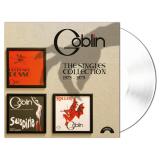
FOLLOWING THE SUCCESS OF “THE OTHER HELL”, GOBLIN ARE BACK FOR RECORD STORE DAY 2026 WITH AN EXCLUSIVE COMPILATION OF SINGLES RELEASED BETWEEN 1975 AND 1979!
For the very first time on vinyl, this compilation gathers together all the singles released by Goblin during their golden era between 1975 and 1979, a journey that begins with the explosive, legendary debut Profondo Rosso, a true chart phenomenon of its time, and reaches the rare Amo Non Amo, passing through unforgettable milestones of Italian film music and progressive rock.
The collection opens with Profondo Rosso and Death Dies, taken from the soundtrack of Dario Argento’s masterpiece that catapulted Goblin to fame, blending dark atmospheres, virtuosity, and a unique sense of cinematic tension. It continues with Roller and Snip Snap, drawn from the instrumental album Roller (1976), a record not tied to any film, yet considered a cult cornerstone of Italian progressive music for its intricate structures and expressive power.
Chi? and Chi? - Parte Seconda follow; two tracks originally composed as the theme for a 1976 RAI television show, which saw Goblin bring their unmistakable sound to a different medium, experimenting within a shorter, punchier format.
Next comes Suspiria with its haunting counterpart Blind Concert, from the soundtrack of Argento’s 1977 horror classic. This remains one of Goblin’s most iconic and unsettling works, where music becomes an active narrative force: hypnotic, percussive, and filled with eerie vocal layers that made it a cornerstone of horror soundtracks worldwide.
From Il Fantastico Viaggio del Bagarozzo Mark (1978) come Un Ragazzo d’Argento and Opera Magnifica, two tracks that highlight the band’s more conceptual and visionary side, a move away from cinema toward a self-contained narrative and progressive experimentation.
The single Yell stands as another late-decade gem. Originally composed as the opening theme for the RAI television series “Sette storie per non dormire” (1978), it captures Goblin’s ability to merge rock energy with electronic pulse, proving their versatility far beyond the horror realm.
The compilation closes with Amo Non Amo and Funky Top, taken from the soundtrack of the 1979 film Amo Non Amo, one of the group’s lesser-known but fascinating cinematic works.
Far more than a simple anthology, The Singles Collection 1975–1979 maps the evolution of Goblin’s sound, from the worldwide success of Profondo Rosso to their most mature and experimental phase. It finally restores to vinyl a body of work that had long been scattered across rare 45 rpm releases, offering fans and collectors a complete, vivid portrait of one of Italy’s most inventive and influential musical ensembles.
Amore Libero – Free Love marks the first film score composed by Fabio Frizzi, written in 1974 for the movie of the same name directed by Pier Ludovico Pavoni. Set against the exotic backdrop of the Seychelles, the film tells the story of Simo, a free-spirited young woman played by Laura Gemser in her cinematic debut, blending sensuality and the spirit of liberation so typical of the 1970s.
Frizzi’s score perfectly captures the film’s atmosphere, weaving together evocative melodies, funky grooves, and progressive textures — an elegant, psychedelic soundscape that reflects both the tropical setting and the film’s themes of freedom and desire. The recording features the Goblin in their classic line-up: Fabio Pignatelli (bass), Massimo Morante (guitar), Walter Martino (drums), and Claudio Simonetti (keyboards), with Vince Tempera handling arrangements and orchestral direction.
Long regarded as a true holy grail for collectors, now, for the first time ever, it is officially reissued on vinyl, bringing back to light a fundamental chapter in Italian film music and progressive sound. An essential record that merges Frizzi’s melodic genius with the visionary energy of the Goblin, Amore Libero – Free Love stands as a timeless document of an extraordinary era in Italian cinema and its music.
A Record Store Day 2026 exclusive / Pearly light blue vinyl edition / 30x30cm insert with extensive liner notes
Intense and intensely personal, The Dead Ones marks The Last Ten Seconds of Life’s Metal Blade label debut. 10 original tracks of pulverizing deathcore produced by Carson Slovak and Grant McFarland of Pennsylvania’s Atrium Audio. In creating The Dead Ones, “everyone took what we learned from the past two releases and assembled what we thought would bring out the best of us from song structure, tonality of instruments, the mix/master, and the lyrical themes,” furthers McLaughlin.
The end result reflects a more personal and human experience rather than the philosophical and fictional approach used on earlier releases. The Dead Ones follows 2024’s acclaimed No Name Graves in the theme of death and rebirth, but in contrast, is directly focused on the human experience and the band members’ own struggles.
Writings on the topic that go off in all directions, mind-numbing lectures given by academics, and testimonies, most of them heavily doctored, from those who “lived through that era”: so many people today fantasize about the early days of punk in our country… This blessed moment when no one had yet thought of flaunting a ridiculous green mohawk, taking Sid Vicious as a hero, or – even worse – making the so-called alternative scene both festive and boorish. There was no such thing in 1976 or 1977, when it wasn’t easy to get hold of the first 45s by the Pistols or the Clash. Few people were aware of what was happening on the fringes of the fringes at the time. Malcolm McLaren was virtually unknown, and having short hair made you seem strange. Who knew then that rock music, which had taken a very bad turn since the early 1970s, would once again become an essential element of liberation? That, thanks to short and fast songs, it would once again rediscover that primitive, social side that was so hated by older generations? Who knew that, besides a few loners who read the music press (it was even better if they read it in English) and frequented the right record stores? Many of these formed bands, because it was impossible to do otherwise. We quickly went from listening to the Velvet Underground to trying to play the Stooges’ intros. It’s a somewhat collective story, even though there weren’t many people to start it.
The Guilty Razors were among those who took part in this initial upheaval in Paris. They were far from being the worst. They had something special and even released a single that was well above the national average. They also had enough songs to fill an album, the one you’re holding. In everyone’s opinion, they were definitely not among the punk impostors that followed in their wake. They were, at least, genuine and credible.
Guilty Razors, Parisian punk band (1975-1978). To understand something about their somewhat linear but very energetic sound, we might need to talk about the context in which it was born and, more broadly, recall the boredom (a theme that would become capital in punk songs) coupled with the desire to blow everything off, which were the basis for the formation of bands playing a rejuvenated rock music ; about the passion for a few records by the Kinks or the early Who, by the Stooges, by the Velvet mostly, which set you apart from the crowd.
And of course, we should remember this new wave, which was promoted by a few articles in the specialized press and some cutting-edge record stores, coming from New York or London, whose small but powerful influence could be felt in Paris and in a handful of isolated places in the provinces, lulled to sleep by so many appalling things, from Tangerine Dream to President Giscard d’Estaing...
In 1975-76, French music was, as almost always, in a sorry state ; it was still dominated by Johnny Hallyday and Sylvie Vartan. Local rock music was also rather bleak, apart from Bijou and Little Bob who tried to revive this small scene with poorly sound-engineered gigs played to almost no one.
In the working class suburbs at the time, it was mainly hard rock music played to 11 that helped people forget about their gruelling shifts at the factory. Here and there, on the outskirts of major cities, you still could find a few rockers with sideburns wearing black armbands since the death of Gene Vincent, but it wasn’t a proper mass movement, just a source of real danger to anyone they came across who wasn't like them. In August 1976, a festival unlike any other took place in Mont-de-Marsan – the First European Punk Festival as the poster said – with almost as many people on stage as in the audience. Yet, on that day, a quasi historical event happened, when, under the blazing afternoon sun, a band of unknowns called The Damned made an unprecedented noise in the arena, reminiscent of the chaotic Stooges in their early adolescence. They were the first genuine punk band to perform in our country: from then on, anything was possible, almost anything seemed permissible.
It makes sense that the four+1 members of Guilty Razors, who initially amplified acoustic guitars with crappy tape recorder microphones, would adopt punk music (pronounced paink in French) naturally and instinctively, since it combines liberating noise with speed of execution and – crucially – a very healthy sense of rebellion (the protesters of May 1968 proclaimed, and it was even a slogan, that they weren’t against old people, but against what had made them grow old. In the mid-1970s, it seemed normal and obvious that old people should now ALSO be targeted!!!).
At the time, the desire to fight back, and break down authority and apathy, was either red or black, often taking the form of leafleting, tumultuous general assemblies in the schoolyard, and massive or shabby demonstrations, most of the time overflowing with an exciting vitality that sometimes turned into fights with the riot police. Indeed, soon after the end of the Vietnam War and following Pinochet’s coup in Chile, all over France, Trotskyist and anarcho-libertarian fervour was firmly entrenched among parts of the educated youth population, who were equally rebellious and troublemakers whenever they had the chance. It should also be noted that when the single "Anarchy in the UK" was first heard, even though not many of us had access to it, both the title and its explosive sound immediately resonated with some of those troublemakers crying out for ANARCHY!!! Meanwhile, the left-wing majority still equated punks with reckless young neo-Nazis. Of course, the widely circulated photos in the mainstream press of Siouxsie Sioux with her swastikas didn’t necessarily help to win over the theorists of the Great Revolution. It took Joe Strummer to introduce The Clash as an anti-racist, anti-fascist and anti-ignorance band for the rejection of old-school revolutionaries to fade a little.
The Lycée Jean-Baptiste Say at Porte d’Auteuil, despite being located in the very posh and very exclusive 16th arrondissement of Paris, didn’t escape these "committed" upheavals, which doubled as the perfect outlet for the less timid members of this generation.
“Back then, politics were fun,” says Tristam Nada, who studied there and went on to become Guilty Razors’ frontman. “Jean-Baptiste was the leftist high-school in the neighbourhood. When the far right guys from the GUD came down there, the Communist League guys from elsewhere helped us fight them off.”
Anything that could challenge authority was fair game and of course, strikes for just about any reason would lead to increasingly frequent truancy (with a definitive farewell to education that would soon follow). Tristam Nada spent his 10th and 11th unfinished grades with José Perez, who had come from Spain, where his father, a janitor, had been sentenced to death by Franco. “José steered my tastes towards solid acts such as The Who. Like most teenagers, I had previously absorbed just about everything that came my way, from Yes to Led Zeppelin to Genesis. I was exploring… And then one day, he told me that he and his brother Carlos wanted to start a rock band.” The Perez brothers already played guitar. “Of course, they were Spanish!”, jokes their singer. “Then, somewhat reluctantly, José took up the bass and we were soon joined by Jano – who called himself Jano Homicid – who took up the rhythm guitar.” Several drummers would later join this core of not easily intimidated young guys who didn’t let adversity get the better of them.
The first rehearsals of the newly named Guilty Razors took place in the bedroom of a Perez aunt. There, the three rookies tried to cover a few standards, songs that often were an integral part of their lives. During a first, short gig, in front of a bewildered audience of tough old-school rockers, they launched into a clunky version of the Velvet Underground's “Heroin”. Challenge or recklessness? A bit of both, probably… And then, step by step, their limited repertoire expanded as they decided to write their own songs, sung in a not always very accurate or academic English, but who cared about proper grammar or the right vocabulary, since what truly mattered was to make the words sound as good as possible while playing very, very fast music? And spitting out those words in a language that left no doubt as to what it conveyed mattered as well.
Trying their hand a the kind of rock music disliked by most of the neighbourhood, making noise, being fiercely provocative: they still belonged to a tiny clique who, at this very moment, had chosen to impose this difference. And there were very few places in France or elsewhere, where one could witness the first stirrings of something that wasn’t a trend yet, let alone a movement.
In the provinces, in late 1976 or early 1977, there couldn’t be more than thirty record stores that were a bit more discerning than average, where you could hear this new kind of short-haired rock music called “punk”. The old clientele, who previously had no problem coming in to buy the latest McCartney or Aerosmith LP, now felt a little less comfortable there…
In Paris, these enlightened places were quite rare and often located nex to what would become the Forum des Halles, a big shopping mall. Between three aging sex workers, a couple of second-hand clothes shops, sellers of hippie paraphernalia and small fashion designers, the good word was loudly spread in two pioneering places – propagators of what was still only a new underground movement. Historically, the first one was the Open Market, a kind of poorly, but tastefully stocked cave. Speakers blasted out the sound of sixties garage bands from the Nuggets compilation (a crucial reference for José Perez) or the badly dressed English kids of Eddie and the Hot Rods. This black-painted den was opened a few years earlier by Marc Zermati, a character who wasn’t always in a sunny disposition, but always quite radical in his (good) choices and his opinions. He founded the independent label Skydog and was one of the promoters of the Mont-de-Marsan punk festivals. Not far from there was Harry Cover, another store more in tune with the new New York scene, which was amply covered in the house fanzine, Rock News (even though it was in it that the photos of the Sex Pistols were first published in France).
It was a favorite hang-out of the Perez brothers and Tristam Nada, as the latter explained. “It’s at Harry Cover’s that we first heard the Pistols and Clash’s 45s, and after that, we decided to start writing our first songs. If they could do it, so could we!”
The sonic shocks that were “Anarchy in the UK”, “White Riot” or the Buzzcocks’s EP, “Spiral Scratch” – which Guilty Razors' sound is reminiscent of – were soon to be amplified by an unparalleled visual shock. In April 1977, right after the release of their first LP, The Clash performed at the Palais des Glaces in Paris, during a punk night organised by Marc Zermati. For many who were there, it was the gig of a lifetime…
Of course, Guilty Razors and Tristam were in the audience: “That concert was fabulous… We Parisian punks were almost all dressed in black and white, with white shirts, skinny leather ties, bikers jackets or light jackets, etc. The Clash, on the other hand, wore colourful clothes. Well, the next day, at the Gibus, you’d spot everyone who had been at this concert, but they weren’t wearing anything black, they were all wearing colours.”
It makes sense to mention the Gibus club, as Guilty Razors often played there (sometimes in front of a hostile audience). It was also the only place in Paris that regularly scheduled new Parisian or Anglo-Saxon acts, such as Generation X, Siouxsie and the Banshees, the Slits, and Johnny Thunders who would become a kind of messed-up mascot for the venue. A little later, in 1978, the Rose Bonbon – formerly the Nashville – also attracted nightly owls in search of electric thrills… In 1977, the iconic but not necessarily excellent Asphalt Jungle often played at the Gibus, sometimes sharing the bill with Metal Urbain, the only band whose aura would later transcend the French borders (“I saw them as the French Sex Pistols,” said Geoff Travis, head of their British label Rough Trade). Already established in this small scene, Metal Urbain helped the young and restless Guilty Razors who had just arrived. Guitarist for Metal Urbain Hermann Schwartz remembers it: “They were younger than us, we were a bit like their mentors even if it’s too strong a word… At least they were credible. We thought they were good, and they had good songs which reminded of the Buzzcocks that I liked a lot. But at some point, they started hanging out with the Hells Angels. That’s when we stopped following them.”
The break-up was mutual, since, Guilty Razors, for their part, were shocked when they saw a fringe element of the audience at Metal Urbain concerts who repeatedly shouted “Sieg Heil” and gave Nazi salutes. These provocations, even still minor (the bulk of the skinhead crowd would later make their presence felt during concerts), weren’t really to the liking of the Perez brothers, whose anti-fascist convictions were firmly rooted. Some things are non-negotiable.
A few months earlier (in July 1978), Guilty Razors had nevertheless opened very successfully for Metal Urbain at the Bus Palladium, a more traditonally old-school rock night-club. But, as was sometimes the case back then, the night turned into a mass brawl when suburban rockers came to “beat up punks”.
Back then, Parisian nights weren’t always sweet and serene.
So, after opening as best as they could for The Jam (their sound having been ruined by the PA system), our local heroes were – once again – met outside by a horde of greasers out to get them. “Thankfully,” says Tristam, “we were with our roadies, motorless bikers who acted as a protective barrier. We were chased in the neighbouring streets and the whole thing ended in front of a bar, with the owner coming out with a rifle…”
Although Tristam and the Perez brothers narrowly escaped various, potentially bloody, incidents, they weren’t completely innocent of wrongdoing either. They still find amusing their mugging of two strangers in the street for example (“We were broke and we simply wanted to buy tickets for the Heartbreakers concert that night,” says Tristam). It so happened that their victims were two key figures in the rock business at the time: radio presenter Alain Manneval and music publisher Philippe Constantin. They filed a complaint and sought monetary compensation, but somehow the band’s manager, the skilful but very controversial Alexis, managed to get the complaint withdrawn and Guilty Razors ended up signing with Constantin with a substantial advance.
They also signed with Polydor and the label released in 1978 their only three-track 45, featuring “I Don't Wanna be A Rich”, “Hurts and Noises” and “Provocate” (songs that exuded perpetual rebellion and an unquenchable desire for “class” confrontation). It was a very good record, but due to a lack of promotion (radio stations didn’t play French artists singing in English), it didn’t sell very well. Only 800 copies were allegedly sold and the rest of the stock was pulped… Initially, the three tracks were to be included on a LP that never came to be, since they were dropped by Polydor (“Let’s say we sometimes caused a ruckus in their offices!” laughs Tristam.) In order to perfect the long-awaited LP, the band recorded demos of other tracks. There was a cover of Pink Floyd's “Lucifer Sam” from the Syd Barrett era – proof of an enduring love for the sixties’ greats –, “Wake Up” a hangover tale and “Bad Heart” about the Baader-Meinhof gang, whose actions had a profound impact on the era and on a generation seeking extreme dissent... On the album you’re now discovering, you can also hear five previously unreleased tracks recorded a bit later during an extended and freezing stay in Madrid, in a makeshift studio with the invaluable help of a drummer also acting as sound engineer. He was both an enthusiastic old hippie and a proper whizz at sound engineering. Here too, certain influences from the fifties and sixties (Link Wray, the Troggs) are more than obvious in the band’s music.
Shortly after a final stormy and rather barbaric (on the audience’s side) “Punk night” at the Olympia in June 1978, Tristam left the band ; his bandmates continued without him for a short while.
But like most pioneering punk bands of the era, Guilty Razors eventually split up for good after three years (besides once in Spain, they’d only played in Paris). The reason for ceasing business activities were more or less the same for everyone: there were no venues outside one’s small circuit to play this kind of rock music, which was still frightening, unknown, or of little interest to most people. The chances of recording an LP were virtually null, since major labels were only signing unoriginal but reassuring sub-Téléphone clones, and the smaller ones were only interested in progressive rock or French chanson for youth clubs. And what about self-production? No one in our small safety-pinned world had thought about it yet. There wasn’t enough money to embark on that sort of venture anyway.
So yes, the early days of punk in France were truly No Future!
out of Stock
Last delivered 6 months ago available to reorder, subject to availability
Decca Classics präsentiert Lise Davidsen: Live at the Met - aufgenommen während des bahnbrechenden
Soloauftritts der Sopranistin an der Metropolitan Opera im September 2023.
„Es kommt selten vor, dass die Met einen Künstler zu einem Solokonzert in ihrem Auditorium mit 3.800
Plätzen einlädt. Und noch seltener ist es, dass diese Sängerin ihr Debüt in New York City gibt. Aber
Davidsen ist etwas ganz Besonderes: eine echte dramatische Sopranistin.“ (The New York Times). „Keine
Kulissen, keine Kostüme, kein Orchester: Aber die ganze Oper war da.“ so die Zeitung weiter.
Davidsen hat eine enge Beziehung zur Met, wo sie seit ihrem Debüt 2019 regelmäßig in Hauptrollen von
Tschaikowski, Wagner, Strauss, Verdi, Puccini und Beethoven auftritt. „Ich betrachte die Met als mein
zweites Zuhause“, sagt Davidsen. „Aber um so etwas gebeten zu werden, war etwas ganz Besonderes.“
Zu den Höhepunkten zählen Wagners „Dich, teure Halle“ aus Tannhäuser, Amelias Arie aus dem dritten Akt von Verdis ”Un ballo in maschera” und Puccinis „Vissi d’arte“. Dazu kommen Lieder von Schubert
sowie Musik von Grieg und Sibelius als Hommage an Davidsens skandinavische Herkunft.
Die Veröffentlichung folgt auf Davidsens gefeiertes Wagner-Album ”Der fliegende Holländer”, welches den
Gramophone Award 2025 für die beste Opernaufnahme gewann und von Kritikern weltweit hoch gelobt
wurde.
Another Thought was the first collection of Arthur Russell’s music to be released after his death in 1992. Released in 1993 on Point Music it marked the beginning of nearly 30 years of work to let the world hear the enormous archive of unreleased recordings Arthur left behind. Be With revisits this first compilation for a new gatefold double vinyl version and a triple-fold digipak CD reissue.
Both versions of Be With’s 2021 reissue of Another Thought have been mastered by Simon Francis and the vinyl cut by Pete Norman. The original artwork has been restored and tweaked at Be With HQ for the gatefold sleeve and the triple-fold digipak, with the essential help of Janette Beckman. Each version comes with an insert reproducing the liner notes and lyrics from the original CD release.
Together with Calling Out Of Context, Soul Jazz’s World of Arthur Russell, and much of the ongoing work of Audika, Another Thought is absolutely essential for even the most casual Arthur Russell collection. In fact we’d argue it’s essential for any fan of non-obvious pop music. This is the only place where you can hear some of Arthur’s most recognisable tunes and it’s an album that absolutely deserves to be kept in press.
We’ll assume that by now you’re all at least a little familiar with the story of Arthur Russell, the farm boy from Iowa who moved to 1970s New York. Arthur Russell the genuine musical genius who died just 40 years old, leaving behind a wealth of music that dwarfed the few 12"s and LPs that were released during his short life.
Although Arthur had been working on an album for Rough Trade during his last years, with the label no-longer operating it was Point Music (Philip Glass and Michael Riesman’s label set up together with Philips) who stepped in to help Arthur’s partner Tom Lee start working out exactly what Arthur had left behind.
Tom suggested that Arthur’s friend Mikel Rouse was the right person to make the first catalogue. Working in Tom and Arthur’s apartment he had only two weeks to go through what turned out to be around 800 tapes.
As Tom explained “at the end of each day he would generally wait for me to come home and I would, to the best of my knowledge, name and identify pieces in question from that day’s work. As he worked Mikel compiled about a dozen cassettes that he thought would present the most finished sounding songs for Don/Point to use. As Don listened he would then suggest and ask me and thus we collaborated on the choices.”
Don is Don Christensen, Another Thought’s producer. With a final selection of songs from recordings made between 1982 and 1990, including sessions with some of Arthur’s regular collaborators Peter Zummo, Steven Hall, Mustafa Ahmed, Elodie Lauten, Julius Eastman, Jennifer Warnes and Joyce Bowden, it was then Don’s job to turn these into a finished album.
Another Thought is a little different from the compilations of Arthur’s music that came out since. In our conversations with Steve Knutson (who founded Audika Records and who manages Arthur’s estate together with Tom), he explained that “more than any project released by Arthur during his lifetime or posthumously by Audika, ‘Another Thought’ is the most worked over. The material was significantly edited and rearranged from the original source tapes”.
If the aim was to release a comprehensive exploration of every facet of Arthur’s music, from the most avant-garde of his avant-garde compositions through to the most disco-not-disco of his disco-not-disco tunes then the project was a spectacular failure. But as a coherent album of non-obvious pop music Another Thought is wonderful.
Starting with the sparse voice-and-cello of the title track, A Little Lost adds some guitar along with the sneaking suspicion that we’re listening to something nowhere near as simple as it first sounds. By the time we get to This Is How We Walk On The Moon - it could be the moment you notice the congas, or the percussion that’s been building behind them, or maybe it’s that blast of trumpet and trombone - we realise we’ve gone from splashing around to being completely submerged in the musical world of Arthur Russell.
From here the album heads off on its journey around the sounds of the left-field contemporary classical music of the time, re-directed towards pop ears, with minor detours through the swirling woozy disco of the half-remembered night before on In The Light Of The Miracle and My Tiger, My Timing. Whether it’s just Arthur, his cello and some bleeps on Just A Blip, or whether he has some vocal help as he does on the bounding Keeping Up, this is difficult music made so, so easy. And through it all is Arthur’s voice and cello. Sometimes drowned in distortion and sometimes clear as a bell, but always there somewhere.
A Sudden Chill finally returns us to the calmer waters we started in and this last track closes the album with a melancholy that’s not surprising given how soon after Arthur’s death the album was put together.
Whilst Another Thought holds together with the consistency of a proper album, there’s still no getting away from the fact that this was put together from audio recorded in different ways, in different places, with different people at different times. Those with keen ears will hear traces of tape hiss, the occasional blown-out note and some digital fuzz, all fingerprints of those original recordings as well as of the 1990s digital equipment that was used to piece Another Thought together.
Add to this Arthur’s obvious pleasure in making music from the sort of sounds that can make microphones, speakers and ears uncomfortable, it’s no surprise that Another Thought isn’t glossy and pristine. Don Christensen’s productions have been careful to not scrub up those original recordings so much that they lose their original vibe, understandable given that Arthur wasn’t around as a guide. We’ve applied a similarly light touch with the mastering for these Be With versions, just working to make sure they sound like they should on both the vinyl and the CD.
Despite the Discogs rumours, Another Thought was never originally released as an LP. So when it came to the sleeve for this Be With vinyl version we took the original CD artwork as a starting point to come up with something that looks like it could have been in the record racks back in 1993.
We have to thank Janette Beckman for helping us reproduce her iconic photograph of Arthur in his newspaper boat hat. One of many photographs she took of Arthur, Janette shot this in her New York studio back in 1986 for a short article in the January ’87 issue of The Face Magazine. Those with eagle-eyes will notice we’ve used an ever-so-slightly different shot from the one that appeared in The Face and then again on the original cover of Another Thought. The original has long since been lost so we’ve worked with what is left in Janette’s archives. And we also have to thank Tom Lee for giving us permission to reproduce his liner notes from the original CD booklet, together with Arthur’s lyrics.
out of Stock
Last delivered 4 years ago available to reorder, subject to availability
Splatter Vinyl, limitiert auf 800 Exemplare. Das Schweizer Quartett Lone Assembly präsentiert mit "Knots & Chains" ein Debütalbum voller in Schmerz, Entfremdung und Trauer getränkter Hymnen, die dennoch Hoffnung, Stärke und Mut entfalten. Im dunklen Goth-Gewand gehüllt, ist das Album eine Wave/Synth-Pop-Erkundung von Kontrolle in all ihren Facetten: sei es durch andere, uns selbst oder die Umstände und Orte, die uns prägen. Bereits mit ihrer EP "That Never Happened" (2024), einer Hommage an eine verlorene geliebte Person, reifte die Band zu weit mehr als einem musikalischen Projekt. Lone Assembly wurden zu einem Raum der Heilung, der Nähe und der Notwendigkeit. Diese existenzielle Dringlichkeit, die die Band zusammenschweisst, durchzieht auch das Debütalbum - noch intensiver und deutlicher als zuvor. "Knots & Chains" ist ein Spiel mit chiaroscuro und wirft Licht auf Songs, die aus tiefer Dunkelheit hervorgehen. Jede Komposition untersucht eine Form von Kontrolle: die Macht anderer, wie in "You're Pulling at the Same Strings", wo der Protagonist das Unheil im Gegenüber zu begreifen versucht, das in diesem schlummert; die Herrschaft über das eigene Ich, eindrucksvoll dargestellt in "The Pain Keeper" und "My Life's Solid"; die Macht von Orten, die über uns bestimmen, etwa in "The City Works Like This", wo die Stadt zum atmenden Organismus mutiert - absorbierend, verzerrend, abstossend. Trotz der düsteren Themen blitzen immer wieder Hoffnungsmomente auf, am stärksten im unbändigen "In the Open". "Das Album formt sich zum Zyklus zwischen Erstickung und Aufatmen, wandert von erdrückender Enge zu befreiender Weite", so Sänger Raphaël Bressler.
This is more than just a book, it’s a hugely evocative celebration of indie, house, acid and remix culture. Across more than 300 pages photos, flyers and stories take us on a rave through every scene that Norm’s been a big part of since he was fifteen.
Boasting more than 800 images, this is a truly dazzling, almost intoxicating visual party of a book. Inside are original art works, flyers and posters which Norm has saved since his first band (formed when he was 15 years old). There are scores of photos tracing his passage from boyhood to pop star with The Housemartins, through clubland infamy to world superstar DJ status, many of them previously unseen.
The smell of damp tarmac rising up through open windows, a smell which is uniquely evocative for us all depending on our individual histories: a suburban pavement, a school playground, a basketball court.
The rain cut through a band of low pressure that had been lying over the city for days, pinging rhythmically off metal, causing rolling tyres to hiss and spit.
The music that soundtracked this meteorological shift was the debut full length from Rain Text (Giuseppe Ielasi & Giovanni Civitenga), simply titled III. Scattered throughout the nameless eight tracks there are moments of low-end pressure relieved by the fizz and clatter of metallic rhythms; there is static, there is discord, there is release.
The individuals comprising Rain Text have a long history of manipulating sounds for evocative ends, Giuseppe Ielasi has been making music as one half of Bellows for many years, each album stretching and destroying their sound in beautiful increments. He has also released reliably inspirational music either solo or in collaboration for the likes of Editions Mego, Shelter Press and Faitiche. His sensitive ears are also in high demand as a mastering engineer. It is worth perusing the 800+ releases he has technical credits for on Discogs: from classics of the avant-garde to the freshest faces of the Swedish underground, the chances are some of your favourite albums are included.
Giovanni Civitenga helms the SKYAPNEA long-running NTS show. Joining him, you can enjoy the fruits of a lifetime of deep listening through shows that flit between the industrial and the devotional, a space that is fully explored on III.
The album was recorded quickly over three fertile days in Ielasi’s studio in Monza, but of course results like this can only be achieved at such a pace by spending a lifetime obsessing over the mechanics and possibilities of sound.
Those who are enamoured by the rain—who are returned by it to the surfaces, smells and sounds of a lost and idealised youth; who feel themselves restored—are known as ‘pluviophiles’. Their response to rain may well have a biological explanation: when rain hits tarmac negative ions are released into the air, which are thought to result in feelings of wellbeing and positivity. All the more reason, then, to return to the vivid ecosystem that Rain Text has so carefully cultivated for III."
Words by The Dengie Hundred – August 2024
out of Stock
Last delivered 8 months ago available to reorder, subject to availability
The album long sought after by Mountain Goats fans is finally back in print and features new liner notes by John Darnielle. Released on the precipice of the Mountain Goats' breakout albums All Hail West Texas and Tallahassee, The Coroner's Gambit is an introspective epic that stands as one of Darnielle's best outings in any era.Darnielle on The Coroner's Gambit:There are few records in the Mountain Goats catalog that are closer to my heart than The Coroner's Gambit. It bears a sonic thumbprint shared by none of its brethren (Panasonic RX-FT500, Marantz PMD-222, and sessions in Omaha probably recorded to a Tascam Porta-One) and while two of those sources appear on several later releases, none of the other records really sound like it. Although it contains exactly no autobiographical songs, it feels personal to me_intimate, diaristic. I have vivid memories of the songs I wrote and recorded in Colo, and foggy memories of the Greyhound trip to and from Omaha. I was taking Greyhounds across Midwestern state lines to record songs with friends when I made The Coroner's Gambit, is what I'm saying. You can maybe hear the exhaust of the Greyhound in the songs if you listen close.
Es ist alles überlebensgroß, düsterer als der Tod und das beste Album, das die Horror-Punks von Creeper je aufgenommen haben.
Das Album "SANGUIVORE" hat Creepers ohnehin schon überlebensgroße Ambitionen auf neue Höhen geführt, was zu den positivsten Kritiken ihrer Karriere führte und in ihrem ersten Headliner-Konzert in der OVO Wembley Arena in London gipfelte. Historisch gesehen schließt die Band am Ende einer Creeper-Ära den Sargdeckel, um sich erneut neu zu erfinden. Doch dieses Mal trotzt die fünfköpfige Band den Erwartungen, indem sie das kreative Universum des Vorgängeralbums erweitert und am 31. Oktober mit "Sanguivore II: Mistress Of Death" aufs Neue ins Vampir-Universum eintaucht.
"Sanguivore II: Misstress Of Death" ist eher eine thematische Fortsetzung als eine direkte Weiterführung der ursprünglichen Geschichte. Wie eine klassische Horror-Anthologie spinnt es eine neue Geschichte aus derselben Blutlinie wie das Original, diesmal mit dem blutigen Vampirherz als roter Faden, um eine brandneue Erzählung einzuführen.
Die Geschichte führt uns zurück in die moralische Hysterie der Satanic Panic und ihre Auswirkungen auf die Welt des Hardrock und Heavy Metal der 80er Jahre. Es war eine Zeit, in der der verstorbene Prince of Darkness, Ozzy Osbourne und Judas Priest von Gerichtsverfahren verfolgt wurden. Iron Maiden spielte tief im Herzen Amerikas, während W.A.S.P. und Mötley Crüe mit ihrer skandalösen Theatralik und Dekadenz die Gemüter der Konservativen erhitzten.
Wie schon das Original wurde auch "Sanguivore II" von Tom Dalgety (Ghost, Rammstein, Royal Blood) produziert.
To celebrate the 50th anniversary of Profondo Rosso, Dario Argento’s masterpiece with its iconic Goblin soundtrack, comes a once-in-a-lifetime collector’s box set.
This box set, limited to 450 copies, includes:
GOBLIN - PROFONDO ROSSO / 2LP SET
Special double vinyl reissue with gatefold cover and brand new artwork including the original soundtrack, plus a bonus disc that contains a collection of tracks with the actual music used in the movie.
CALIBRO 35 - CANZONCINE PER BAMBINI / 12” LP
Exclusive 6-track LP featuring brand-new compositions by cinematic jazz-funk masters Calibro 35, blending their trademark sound with nursery rhymes sung by a real children’s choir.
The project is inspired by one of the film’s key scenes — a sort of MacGuffin around which the music playfully revolves — transforming that cinematic idea into a standalone concept full of irony, tension, and imagination.
FABIO CAPUZZO - NEL ROSSO PIÙ PROFONDO
LP-sized book, in English, containing one of the most detailed and thorough analysis on both “Profondo Rosso” movie and soundtrack ever written, courtesy of Fabio Capuzzo,one of the greatest Italian experts on the matter.
LENTICULAR IMAGE, revealing the film’s key scene, turning this edition into a true display piece.
A celebratory release of extraordinary cultural and collector’s value, blending cinema, music, and memorabilia into a total experience. An unmissable tribute to Profondo Rosso, fifty years on.
Our Autumn/Winter ‘25/’26 issue includes huge deep dive cover features on 90s legends The KLF, Belgium’s most famous rock/rave DJ/producer duo/band SOULWAX and the relentlessly creative HAAi.
Plus 1-800 GIRLS, WAH WAH 45s, Ghost Assembly, Electroclash, Daniel Vangarde, Happy Mondays, Japanese Ambient/Environmental Music, Wu-Tang Clan, Saint Etienne, Carl Craig, Colleen Murphy, Basement Jaxx, Crooked Man and Luke Una, Jesus Loves The Acid, Shanti Celeste, Arthur Baker and much more.
204 pages (yes we’ve increased the pagination again) of quality music journalism by the world’s best music writers plus beautiful photography and design in a glossy print magazine.
Diggers Society Records announces its fourth release by Giuseppe Angeloro. Giuseppe has quickly made his mark for his ability to move effortlessly between house and techno, enriching each track with trance-tinged textures, complemented by subtle minimalist and hermetic influences. Created entirely on analog machines — with no computers or digital sound — the EP emerged from spontaneous jam sessions, allowing him to follow the flow and draw inspiration directly from his synthesizers. The mix was also carried out on an analog console, a deliberate choice to preserve the pure, raw character of the machines’ sound. Using a Yamaha DX7, Yamaha TG500, Jomox Xbase 999, Alesis SR16, Roland JU06A, Behringer Crave, and Behringer TD-3, along with a Mackie 32.8 mixer, Alesis 3630 compressor, Lexicon MX200 effects unit, and RME Fireface 800 interface, Giuseppe shaped a sonic palette that feels both timeless and forward-thinking.
out of Stock
Last delivered 72 days ago available to reorder, subject to availability
For the first time since its 1980 release, Loredana Bertè's timeless anthem "In Alto Mare" receives an official remix courtesy of Disco maestro Dimitri From Paris. The renowned french producer known for his remixes of Jamiroquai, Chic, and Cerrone delivers a sophisticated nu-disco treatment, masterfully blending the track's original funk with his signature elegant touch, and propelling Bertè's powerful vocals to the contemporary disco scene.
out of Stock
Last delivered 4 months ago available to reorder, subject to availability
Cold Steel's patented brand of aggressive, hardcore thrash metal takes no prisoners on 'Discipline & Punish'. To bring the album to life, the group decamped to Philadelphia and teamed with producer Arthur Rizk (Blood Incantation, Power Trip, Cavalera). In the studio, they drew on influences like Metallica, Machine Head, and Slipknot while sharpening and solidifying their own signature sound.
After completing his nationwide run with Ice Nine kills, the rocker has been hard at work prepping Cruel World. The collection of songs includes several notable features, including the likes of From First To Last, as well as Ice Nine Kills. The 9-song minialbum is chock full of TX2's well-known hard-hitting sinister sound, and he's bringing an added dose of heavy with these new songs as well. Fan-favorite track "MAD," which has seen 10,000+ video creates on TikTok and has created an unstoppable buzz around the project. Rising out of the shadows of a small town known for music, Fort Collins; TX2 brings an unmatchable intensity in his music through the form of powerful raw lyrics and explosive performances. After struggling for so many years as an artist, TX2 used his pain as fuel and finally found his sound. As a result, his music went viral on TikTok and he now has ~800K followers on the platform. TX2 has since begun a movement known among his fans known as the "X Movement", which is all about bringing awareness to mental health and creating a safe space for those in need to talk. The rules are simple, any member can vent and share how they are feeling, while other members are encouraged to push other members' self-esteem up. The movement is currently growing every day, providing a platform to speak about mental health, vent, and support one another. TX2 wants everyone to know they are not alone in their struggles. The nine rack minialbum is available on CD & LP!
Unfolding ist Jessica Moss' meditativstes und klagendstes Soloalbum und vielleicht das erste in der jahrzehntelangen Diskografie der Violinistin und Komponistin aus Montreal, das man zu Recht als Ambient bezeichnen kann. Die ehemalige Mitglied von Silver Mt Zion und Black Ox Orkestar schöpft aus Postklassik, Drone, Minimalismus, Industrial/Metal, Power Electronics, Klezmer und anderen Folk-Traditionen. Es handelt sich hierbei nicht um abstrakte Ambient-Musik; vielschichtige Violinenmelodien, elektroakustische Bearbeitungen, intermittierende Stimmen und Percussion von Tony Buck, dem Schlagzeuger von The Necks, bringen zutiefst emotionale, genreübergreifende Kompositionen hervor, die von einem Geist der Suche und Beschwörung geleitet sind und sich in einer vorherrschenden Atmosphäre von Beschwörung und trauernder Zurückhaltung entfalten. Die Untrennbarkeit von Persönlichem und Politischem hat sich für Moss in den letzten zwei Jahren immer stärker herauskristallisiert. Als Kernmitglied der Montrealer Sektion von Musicians For Palestine hat sie mehrere Benefizkonzerte mitorganisiert und gespielt und im Frühjahr 2024 das Soloalbum For UNRWA veröffentlicht (das über 800 Unterstützer fand und Tausende von Dollar einbrachte). Später im selben Jahr zerbrach ihre langjährige Fernbeziehung aufgrund politischer Differenzen. In enger Zusammenarbeit mit dem Produzenten Radwan Ghazi Moumneh (Jerusalem In My Heart) entstanden ,Unfolding" in den letzten zwölf Monaten, dem zweiten Jahr des Völkermords in Palästina, als direkte Reaktion auf unser kollektives Miterleben, unsere kollektive Trauer, als Portal zur kollektiven Trauer, als Suchscheinwerfer durch unsere inneren Wettersysteme, auf der Suche nach einander in der Dunkelheit. Moss bewegte sich bereits in Richtung einer erhöhten Fragilität und einem tiefen Zuhören, ihre Musik wurde zunehmend langatmig und zeremoniell. Trotz der stark gesunkenen finanziellen Rentabilität von Tourneen wurde ihre Hingabe, Raum zu schaffen, Verflechtungen herzustellen und eine Verbindung zu einem intimen Live-Publikum aufzubauen, zu ihrem kreativen Leitstern, ihre Solo-Praxis wurde durch ihr Engagement und die Kommunikation in diesen Räumen geprägt. Die jüngsten politischen und persönlichen Umwälzungen haben diese ritualisierten, reparativen musikalischen Prozesse nur noch verstärkt. Die beiden langen Stücke auf der ersten Seite von Unfolding verkörpern diese Sensibilität. ,Washing Machine" verwebt Schichten von Streicherdrones und Filigranarbeit, sanft verzerrt durch Verzerrerpedale und Verstärkung, wobei unentzifferbare, ausgeblasene Sprechstimmen den Mix zeitweise als fragmentarische Palimpseste verhüllter Rezitationen und unbeschreiblicher Gefühle umhüllen. Der Ursprung des Stücks liegt in einer Telefonaufnahme einer europäischen Waschmaschine, die Moss aufnahm, als sie neben ihr saß, mit gebrochenem Herzen auf dem Badezimmerboden, und Trost fand, indem sie eine Melodie zu den mechanischen Obertönen der Waschmaschine summte, die ihren Zyklus durchlief. Das Herzstück des Albums, ,One, Now", beginnt als zarte Anrufung mit Basspuls, Glockenspiel und Glocken, gezupften Saiten und traurigen Lead-Violinenlinien, die von jüdischen und arabischen Modi beeinflusst sind. Umgebungsgeräusche, Feldaufnahmen und wortlose Gesänge werden hinzugefügt, während sich Violinenmelodien überlagern und zu einer hypnotisierenden Drone-Landschaft verschmelzen: eine halb improvisierte, lebendige Komposition, die durch Tony Bucks pinselstrichartiges Schlagzeugspiel und Moumnehs ,Schrei in die Leere" am Ende noch weiter belebt wird. Die zweite Seite ist ein vierteiliges Werk mit dem Titel ,no one / no where / no one is free / until all are free", das sich durch Umgebungsgeräusche, elegische postklassische Streicher und verzerrte harmonische Drones zu einem Höhepunkt aus liturgischer Orgel, rituellen Glocken und schimmernden elektronischen Spuren entwickelt, der die Bühne bereitet für den letzten Song des Albums: die erschütternde Chor-Komposition ,until all are free", eine weltliche Hymne, die aus Jessicas mehrspurigen Gesangsaufnahmen besteht (die sie aber gerne mit anderen im Konzert singen würde). Unfolding ist ,einem freien Palästina in unserer Lebenszeit" gewidmet. Danke fürs Zuhören.
Es ist alles überlebensgroß, düsterer als der Tod und das beste Album, das die Horror-Punks von Creeper je aufgenommen haben.
Das Album "SANGUIVORE" hat Creepers ohnehin schon überlebensgroße Ambitionen auf neue Höhen geführt, was zu den positivsten Kritiken ihrer Karriere führte und in ihrem ersten Headliner-Konzert in der OVO Wembley Arena in London gipfelte. Historisch gesehen schließt die Band am Ende einer Creeper-Ära den Sargdeckel, um sich erneut neu zu erfinden. Doch dieses Mal trotzt die fünfköpfige Band den Erwartungen, indem sie das kreative Universum des Vorgängeralbums erweitert und am 31. Oktober mit "Sanguivore II: Mistress Of Death" aufs Neue ins Vampir-Universum eintaucht.
"Sanguivore II: Misstress Of Death" ist eher eine thematische Fortsetzung als eine direkte Weiterführung der ursprünglichen Geschichte. Wie eine klassische Horror-Anthologie spinnt es eine neue Geschichte aus derselben Blutlinie wie das Original, diesmal mit dem blutigen Vampirherz als roter Faden, um eine brandneue Erzählung einzuführen.
Die Geschichte führt uns zurück in die moralische Hysterie der Satanic Panic und ihre Auswirkungen auf die Welt des Hardrock und Heavy Metal der 80er Jahre. Es war eine Zeit, in der der verstorbene Prince of Darkness, Ozzy Osbourne und Judas Priest von Gerichtsverfahren verfolgt wurden. Iron Maiden spielte tief im Herzen Amerikas, während W.A.S.P. und Mötley Crüe mit ihrer skandalösen Theatralik und Dekadenz die Gemüter der Konservativen erhitzten.
Wie schon das Original wurde auch "Sanguivore II" von Tom Dalgety (Ghost, Rammstein, Royal Blood) produziert.
Es ist alles überlebensgroß, düsterer als der Tod und das beste Album, das die Horror-Punks von Creeper je aufgenommen haben.
Das Album "SANGUIVORE" hat Creepers ohnehin schon überlebensgroße Ambitionen auf neue Höhen geführt, was zu den positivsten Kritiken ihrer Karriere führte und in ihrem ersten Headliner-Konzert in der OVO Wembley Arena in London gipfelte. Historisch gesehen schließt die Band am Ende einer Creeper-Ära den Sargdeckel, um sich erneut neu zu erfinden. Doch dieses Mal trotzt die fünfköpfige Band den Erwartungen, indem sie das kreative Universum des Vorgängeralbums erweitert und am 31. Oktober mit "Sanguivore II: Mistress Of Death" aufs Neue ins Vampir-Universum eintaucht.
"Sanguivore II: Misstress Of Death" ist eher eine thematische Fortsetzung als eine direkte Weiterführung der ursprünglichen Geschichte. Wie eine klassische Horror-Anthologie spinnt es eine neue Geschichte aus derselben Blutlinie wie das Original, diesmal mit dem blutigen Vampirherz als roter Faden, um eine brandneue Erzählung einzuführen.
Die Geschichte führt uns zurück in die moralische Hysterie der Satanic Panic und ihre Auswirkungen auf die Welt des Hardrock und Heavy Metal der 80er Jahre. Es war eine Zeit, in der der verstorbene Prince of Darkness, Ozzy Osbourne und Judas Priest von Gerichtsverfahren verfolgt wurden. Iron Maiden spielte tief im Herzen Amerikas, während W.A.S.P. und Mötley Crüe mit ihrer skandalösen Theatralik und Dekadenz die Gemüter der Konservativen erhitzten.
Wie schon das Original wurde auch "Sanguivore II" von Tom Dalgety (Ghost, Rammstein, Royal Blood) produziert.
Heavyweight Dub album by Alien Trackers, a new project by cosmic trumpet specialist Pablo Volt (STA) and Jahtari space ship mechanic disrupt, landing right in the sweet spot between soulful Black Ark-warmth, digital Firehouse dancehall hitters and Jahtarian Dub psychedelics.
A lazy day at a beach, in a galaxy far, far away... Feel the sand between your tentacles and splash in the emerald acid sea. Snorkel with plasma squids and shock eels. Marvel at the double suns during the magic twilight cycle and bask in their glorious gamma rays. Gaze into the depths of the local Vortex...
Coming on alien-green vinyl, with hand drawn art by David 8000 Farris, additional bass & guitars from Dubsworth, and an all four thumbs up-rating, 'Dubs from Vortex Beach' is landing in your orbit right now!
--------------
out of Stock
Last delivered 11 months ago available to reorder, subject to availability
Dayseeker wurden in Südkalifornien gegründet und haben sich von Post-Hardcore-Urgesteinen zu einer der emotionalsten und stilistisch beweglichsten Bands der heutigen Heavy-Musik entwickelt. Ihre Songs verarbeiten nicht nur Trauer, Herzschmerz und Traumata - sie verwandeln sie in etwas Magnetisches, Kraftvolles und letztlich Ermächtigendes.
Die Band, bestehend aus Sänger Rory Rodriguez, Gitarrist Gino Sgambelluri, Bassist Ramone Valerio (seit 2017) und Schlagzeuger Zac Mayfield (seit 2022), stellt emotionale Wahrheit über Trends und verbindet authentische Leidenschaft, klangliche Innovation mit lyrischer Verletzlichkeit.
Die tiefe Resonanz, die die Musik der Band bei anderen Außenseitern auf der ganzen Welt hervorruft, zeigt sich in ihren über 600 Millionen Streams. Und sie ist bei jeder Show spürbar, von ausverkauften Headline-Terminen bis hin zu Touren mit Pierce The Veil, Bad Omens oder Ice Nine Kills.
Dieses Gefühl der kreativen Träumerei pulsiert durch Dayseekers sechstes Album, Creature in the Black Night. Produziert von Daniel Braunstein (Spiritbox, Silent Planet) und gemischt von Zakk Cervini (Blink-182, Bring Me The Horizon, Lorna Shore), ist das Album Dayseekers bisher eindringlichstes und ambitioniertetes Album - gewaltig, cineastisch und durchzogen von einer dunklen, emotionalen und sexy Strömung.
Fans, die einen traurigen Abstieg in die Depression erwarten, werden überrascht sein - "Creature in the Black Night" hat schärfere Kanten, härtere Riffs und einen neu entdeckten Sinn für Klarheit. Dayseeker haben sich nicht nur weiterentwickelt. Sie haben einen gewaltigen Schritt auf eine neue Ebene gemacht.
Dayseeker wurden in Südkalifornien gegründet und haben sich von Post-Hardcore-Urgesteinen zu einer der emotionalsten und stilistisch beweglichsten Bands der heutigen Heavy-Musik entwickelt. Ihre Songs verarbeiten nicht nur Trauer, Herzschmerz und Traumata - sie verwandeln sie in etwas Magnetisches, Kraftvolles und letztlich Ermächtigendes.
Die Band, bestehend aus Sänger Rory Rodriguez, Gitarrist Gino Sgambelluri, Bassist Ramone Valerio (seit 2017) und Schlagzeuger Zac Mayfield (seit 2022), stellt emotionale Wahrheit über Trends und verbindet authentische Leidenschaft, klangliche Innovation mit lyrischer Verletzlichkeit.
Die tiefe Resonanz, die die Musik der Band bei anderen Außenseitern auf der ganzen Welt hervorruft, zeigt sich in ihren über 600 Millionen Streams. Und sie ist bei jeder Show spürbar, von ausverkauften Headline-Terminen bis hin zu Touren mit Pierce The Veil, Bad Omens oder Ice Nine Kills.
Dieses Gefühl der kreativen Träumerei pulsiert durch Dayseekers sechstes Album, Creature in the Black Night. Produziert von Daniel Braunstein (Spiritbox, Silent Planet) und gemischt von Zakk Cervini (Blink-182, Bring Me The Horizon, Lorna Shore), ist das Album Dayseekers bisher eindringlichstes und ambitioniertetes Album - gewaltig, cineastisch und durchzogen von einer dunklen, emotionalen und sexy Strömung.
Fans, die einen traurigen Abstieg in die Depression erwarten, werden überrascht sein - "Creature in the Black Night" hat schärfere Kanten, härtere Riffs und einen neu entdeckten Sinn für Klarheit. Dayseeker haben sich nicht nur weiterentwickelt. Sie haben einen gewaltigen Schritt auf eine neue Ebene gemacht.
Dayseeker wurden in Südkalifornien gegründet und haben sich von Post-Hardcore-Urgesteinen zu einer der emotionalsten und stilistisch beweglichsten Bands der heutigen Heavy-Musik entwickelt. Ihre Songs verarbeiten nicht nur Trauer, Herzschmerz und Traumata - sie verwandeln sie in etwas Magnetisches, Kraftvolles und letztlich Ermächtigendes.
Die Band, bestehend aus Sänger Rory Rodriguez, Gitarrist Gino Sgambelluri, Bassist Ramone Valerio (seit 2017) und Schlagzeuger Zac Mayfield (seit 2022), stellt emotionale Wahrheit über Trends und verbindet authentische Leidenschaft, klangliche Innovation mit lyrischer Verletzlichkeit.
Die tiefe Resonanz, die die Musik der Band bei anderen Außenseitern auf der ganzen Welt hervorruft, zeigt sich in ihren über 600 Millionen Streams. Und sie ist bei jeder Show spürbar, von ausverkauften Headline-Terminen bis hin zu Touren mit Pierce The Veil, Bad Omens oder Ice Nine Kills.
Dieses Gefühl der kreativen Träumerei pulsiert durch Dayseekers sechstes Album, Creature in the Black Night. Produziert von Daniel Braunstein (Spiritbox, Silent Planet) und gemischt von Zakk Cervini (Blink-182, Bring Me The Horizon, Lorna Shore), ist das Album Dayseekers bisher eindringlichstes und ambitioniertetes Album - gewaltig, cineastisch und durchzogen von einer dunklen, emotionalen und sexy Strömung.
Fans, die einen traurigen Abstieg in die Depression erwarten, werden überrascht sein - "Creature in the Black Night" hat schärfere Kanten, härtere Riffs und einen neu entdeckten Sinn für Klarheit. Dayseeker haben sich nicht nur weiterentwickelt. Sie haben einen gewaltigen Schritt auf eine neue Ebene gemacht.
The Scunthorpian partners-in-crime Rupert and Henry Stansall, mythologized in wanted posters as Ruen Brothers, are back in the saddle with their fourth studio album: Awooo. Titled after the lycanthropic howling chorus of their melancholic track “Sitting at the Station,” Awooo finds the duo on the road again, full of ruminative wanderlust and exploring sprawling, dark deserts, carrying with only their songbook of western-inspired folklore. The meditative, building desire of “The Cabin on the Hill,” the pensive yearning etched inside “Poison Down the Wire,“ and a tasteful reimagining of the tried-and-true traditional “Mama Don’t” that could easily pass as an original, all exhibit the creative growth that these young troubadours have established over their decade-long career. This limited first edition pressing of Awooo is pressed on frosted shadow color vinyl and is limited to 800 copies worldwide.
Ramsay Midwoods Debütalbum "Shoot Out At The OK Chinese Restaurant" erscheint erstmals auf Vinyl - über 25 Jahre nach der ursprünglichen CD-Veröffentlichung bei Glitterhouse Records im Jahr 1999. Labelchef Reinhard Holstein beschreibt das Werk als seinen persönlichen Favoriten unter rund 800 Veröffentlichungen. Midwoods Musik verbindet traditionelle amerikanische Klänge mit einer eigenwilligen, lakonischen Erzählweise. Sein Gesang erinnert an Woody Guthrie und Levon Helm, seine Texte an die poetische Schrulligkeit eines Leon Redbone. Die Songs sind geprägt von Banjo, alten Klavieren und weiteren klanglichen Relikten, die eine Atmosphäre zwischen Folk, Blues und Americana schaffen. Inhaltlich bewegt sich das Album zwischen romantischen Rückblicken ("Feed My Monkey"), aphoristischen Lebensweisheiten ("Grass"ll Grow") und skurrilen Beobachtungen ("Alligator"s Lament"). Besonders hervorzuheben ist "Spinnin" on a Rock", ein Song über die Fantasie eines entlassenen Hafenarbeiters, erzählt in kindlich anmutenden Versen. Die limitierte Vinylauflage richtet sich an Fachhändler mit einem Faible für Außenseiterkunst und musikalische Unikate. Midwoods Werk ist kein Mainstreamprodukt, sondern ein eigenständiges, zeitloses Album mit Tiefgang und Charakter.
Takafumi Noda aka Mystica Tribe and Legowelt with their second Noda & Wolfers album on Nightwind Records
Once more, Japanese digital dub legend Takafumi Noda, aka Mystica Tribe, and Dutch synth wizard Danny Wolfers aka Legowelt reunite for their highly anticipated second album under the Noda & Wolfers project on Nightwind Records. EVIL FADES IN ECHO offers a unique concoction of digital dub, raw lo-fi electro and acid hall influences, creating a deviant captivating sound. Wild untamed synths clash with raw sloppy rhythm boxes. Seductive spring reverbs dissolve into clouds of space echo. Heavy intense bass crumbles on decaying fuzzy tapes while Noda's haunting melodica melodies elevate this LP to new heights!
out of Stock
Last delivered 12 months ago available to reorder, subject to availability