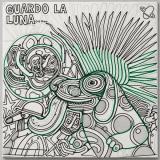
Manchester dub techno explorer Andrew Hargreaves has just dropped his new album, Objects, on Lempuyang, and now some choice cuts from it get some tasty rework action. Deadbeat's Nephilim version of 'Notions' kicks things off with underlapping kicks that cuddle and comfort. 'Ruptures' (Federsen remix) taps into the stripped-back and sparse Basic Channel template, while 'Perspectives' (Merv remix) brings more light to the EP with subtle beams piercing the surface and energising as they do so. 'Assertions' gets an Ohm & Octal Industries remix that is more heady with widescreen synth layers constantly in flux.
Cerca:e t explore me
Solid Red Vinyl Edition - 10@ Mini album. Originally release in 2025 in a painfully limited 2x7" + Book edition.
"Dream of the Egg" is the debut solo album by Tomo Katsurada, known for his work with the Japanese psychedelic band Kikagaku Moyo. This project is a unique fusion of music and visual art, inspired by the Japanese 1920s children's book “Yume No Tamago (Dream of the Egg)”. It reveals a deeply personal journey, reflecting Tomo's dreams and the numerous rebirths experienced in 2024—a year marked by profound new beginnings in every facet of his life.
This mini album was driven by a passion for raw and immediate expression. Every song was crafted and recorded with only the materials available to him at the time, embracing an organic and handmade atmosphere. By eschewing rhythm clicks and standard instrumental tunings, a spontaneous sound emerged, capturing the essence of both uncertainty and immediacy. Adding to this distinctive sonic landscape, guest musician Jonny Nash (UK) contributed ethereal guitar sounds on the first and final tracks, enriching the record's dream-like quality.
The journey begins with the opening track, "Moshimo," which means "If..." in Japanese. Here, Jonny's guitar weaves seamlessly with the vocal melody, creating a harmonious dialogue. The first half of the album concludes with "Zen Bungalow" a cover of Gabriel Yared's “Bungalow Zen” from the soundtrack of the film “Betty Blue 37°2 Le Matin”. This particular track is his partner’s favourite song to listen to every morning and left a profound impression on him. One day, he heard a song in his dream that combined both of these tracks and loved how they blended together. This experience inspired him to create a new arrangement, "Zen Bungalow," which has become a central piece of the “Dream of the Egg” album.
The third track serves as an interlude, printed on a flexi disk attached to the middle of a picture book. This interlude transitions the listener into"Inner Garden," a bittersweet folk song that explores themes of love. The EP's narrative spans 20 minutes, culminating in the final title track “Dream of the Egg”. This piece features a delicate session between Tomo & Jonny, combining cello and guitar to create a spectrum of tones that evoke the imagery of a rainbow. The focus on smooth dynamics and meticulous play reflects an intent to convey a sense of physical trembling. This track sounds like the beginning of a new dream; as if the egg of one’s dream is about to hatch, bringing a sense of anticipation and wonder to the listener. Throughout the album, a variety of instruments come into play, drifting between notes and embracing the beauty of imperfection. By incorporating free-form sounds in a highly technological age, the record aims to reconnect listeners with the tangible, human-made quality of sound.
Special Thanks
Jonny Nash – Guitar
Glaskin is the alias of two brothers, Jonathan and Ferdinand, based in Munich. The pair have emerged as key figures in the citys electronic music scene as longtime residents of the renowned Blitz Club, standing out a homegrown talents amongst its vibrant electronic landscape. Bringing a unique, forward-thinking techno style, as evidenced by their contributions to Mutual Rytms Federation Of Rytm II and III compilations in previous years, they now mark a new chapter and open 2025 in style with their debut 12 on the label, Inertia Of Motion. Each cut on the EP has been handcrafted with analogue gear, reflecting their distinctive artistic and sonic vision. The release is a direct outcome of the creative process behind their live set, which has become an integral part of the duos identity and shows a natural evolution of their singular sound.
Hush Up kicks things off with deep, rubbery and rolling techno rhythms. The drums are stripped back and laced with pulsing synth patterns and spoken word snippets that add a freaky edge. Double Tap ups the anti with classic, pumping deep techno with smart filters adding movement to the track as urgent leads hurry onwards. Inertia bring a more anxious atmosphere with tightly coiled drums and perc and eerie bell sounds ring out over the fat, twisted bassline. The brilliant Tank brings mind-melting loopy techno with dubby chords and textured leads warming their way between the beats to great effect, while Motion is suspenseful techno that locks you into a high speed groove peppered with thumping hits and kicks. Last of all, digital bonus Blushed Blue explores a moody, minimal, late night techno sound that is warm, stylish and hypnotic to close the show
2026 Repress
since his first ep tips' on luciano's label cadenza in 2007 producer and dj petre inspirescu emerged into one of the key figures of the romanian electronic music scene.
so far he released music on labels such as vinyl club, lick my deck or amphia. together with his buddies rhadoo and raresh he also launched in 2007 the label (a:rpia:r) - a platform where he, his two friends and many producers from romania and abroad released detailed grooving house and techno, that stands out with delicate structures and one-of-a-kind grooves.
both of his more dance floor oriented solo albums intr-o seara organica...' and gradina onirica for (a:rpia:r) are enlarged with melodies, sounds and harmonies that go beyond the usual characteristics of a dance album.
furthermore his love for classic musicians like mily alexejewitsch balakirev, alexander porfiryevich borodin or or nicolai andrejewitsch rimsky-korsakow can be felt in the album padurea de aur (opus 2 in re major) and two more eps that he released under the alias pensemble on the romanian label yojik concon in order to unite classical spheres with analogue electronic music production.
in february 2013 he also released his highly acclaimed fabric mix cd that only features dance floor leaning music produced by himself. with talking waters' he published in late 2014 his first 12inch on mule musiq that is now followed by the full-length album vin ploile' which he produced without the intention to entertain with easy to hook up rhythms, melodies and harmonies.
even tough he established himself as a internationally playing house dj that regularly performs at all major clubs, festivals and other party destinations around the globe: as a musician petre inspirescu always tries to enter new territories to explore with a heartfelt human touch the infinite space of sound.
for his latest album the man that originally comes from the eastern romanian town braila stepped away from his former experiments of melting classical spheres with electronic music. instead the 36-years old man from bucharest only used some piano, string and wind instrument elements and analogue electronics to arrange a gracefully deep ocean of sound.
all slow grooving tracks spread the atmosphere of live improvised sessions that are edited, tweaked and mixed to perfection. in-the-moment moods of strange and unusual analogue synth sounds groove in a fluid quality with subliminal bass shapes, latinate percussions, jazz rhythms and acoustic melodies.
together they create a gaseous kinetic atmosphere full of tangible rhythm patterns, delicate chords and ghostly modular synth pads - all mixed subtle to create space for the tones between the tones.
you can call it a hypnotic after hour album for after hours that are dedicated to a deep listening experience. you can tag his arrangements as brilliantly textured and musically super-charged ambient, which goes beyond the usual definition of the genre.
all nine suspenseful compositions seduce with a deep melodic sensibility, harmonic adventures and an overall rhythmic ambiance of freshness and laidback enthusiasm. together they represent a challenging auditory experience that will resonate in your mind long after the music has finished.
180 GR Records is proud to present a new release by N-Zino, reimagining two tracks previously released by Four Flies Records: Mo... and Living Disco Club, offering two distinct yet complementary interpretations. Mo... (180 GR Disco Mix) takes its cue from the original Banda Maje version, itself a contemporary homage to Peppino Di Capri, already given a club reinterpretation. N-Zino elevates the track with a nu disco approach, emphasizing its elegant groove and sunnier, funkier side, blending disco influences with pulsing basslines, shimmering percussion, and warm synth textures, all infused with contemporary sensibilities while keeping the original melody alive. The result is a bright, danceable reinterpretation designed for both listening and the dancefloor. In a different yet perfectly complementary direction, Living Disco Club (Don Ciccio Tribute Mix) explores a deep house dimension, turning Banda Maje's disco-inspired original into a hypnotic, late-night groove. Deep bass, soft drum machines, essential rhythms, and atmospheric pads create a rich, warm, immersive vibe, ideal for after-hours or more refined, introspective club moments. Together, these remixes highlight N-Zino and 180 GR Records' vision: celebrating strong musical roots, connecting Italy's musical past with contemporary club culture, offering tracks that honor the tradition and the originals released by Four Flies, while speaking directly to modern dancefloors.
*Kissa* is an immersive ambient electronic project crafted by Mathias, drawing inspiration from the serene and evocative atmosphere of Japanese jazz kissa cafés. These intimate spaces, known for their deep reverence for music, serve as the foundation for *Kissa’s* sonic landscape—where warm nostalgia and futuristic minimalism intertwine. Consisting of eight expansive compositions, *Kissa* abandons traditional rhythmic structures, allowing sound itself to guide the listener. Ethereal textures, evolving drones, and subtle harmonic shifts create a meditative experience that blurs the lines between memory and imagination. Each track is a portal—an invitation to lose oneself in sound, to explore the spaces between notes, and to embrace stillness as a form of movement. With *Kissa*, Mathias redefines the boundaries of electronic music, crafting an experience that is at once deeply personal and universally resonant. Whether serving as a soundtrack for introspection or a companion for late-night contemplation, *Kissa* embodies the essence of timeless listening—where music is felt, not just heard.
With »News from Planet Zombie«, The Notwist return to view after years of exploration and experiment with an album rich in both melancholy and positivity, sketched across a suite of thrilling, fiercely committed pop songs. It’s an album reflecting a chaotic world, but responding with warmth and generosity, to achieve creative and spiritual consolidation. Recorded in their home base of Munich, it reconnects with the security of the local to explore the troubles of the global: a guiding impulse writ large across this album’s eleven songs. It’s also the first studio album since 1995’s »12« that the entire band recorded together in the studio in its expanded live formation.
A new album by The Notwist is always a curious endeavour; their musical language is as consistent and resilient as the contexts for creativity are unpredictable and ever shifting. For »News from Planet Zombie«, the core trio of Markus and Micha Acher and Cico Beck embraced the plural possibilities of writing together, bringing songs to the collective and then arranging, rehearsing and recording that material live, in the studio.
The result is an album that’s energised, fully in ›the now‹, with spectacular moments where you can hear the magic bubbling up in the dynamic between the Achers, Beck, and fellow members Theresa Loibl, Max Punktezahl, Karl Ivar Refseth, and Andi Haberl. If »Teeth« begins »News from Planet Zombie« quietly and reflectively, by »X-Ray« everyone’s supercharged, blasting out future anthems with the collective energy cranked up high. The chiming keys of »Propeller« skim the instrumental’s surface like stones across burbling water; »The Turning« clangs its way into one of the album’s most heartwarming melodies.
»News from Planet Zombie« was recorded over one week at Import Export, a non-profit space for arts and music. You can tell, too; there are some pleasingly rough edges here, as though The Notwist’s striving for hazy perfection means they’re also confident enough to let the songs breathe and mutate between our ears. That openness to chance also takes in guest turns from friends both local and international, reflective of a cosmopolitan Munich: Enid Valu joins in on vocals, while Haruka Yoshizawa guests on taishōgoto and harmonium, Tianping Christoph Xiao on clarinet, and Mathias Götz on trombone.
The Notwist aren’t best known for cover versions, but »News from Planet Zombie« features two: a gorgeous version of Neil Young’s »Red Sun« (from 2000’s »Silver & Gold«), which the group originally developed for a theatre play directed by Jette Steckel, and a take on Athens, Georgia folk-pop gang Lovers’ »How the Story Ends«. They slot into the album’s narrative perfectly, nestling in like old friends, revealing The Notwist as poetic interpreters. Played well, the cover version is both acknowledgement of fellow travellers and act of generosity, and The Notwist nail both aspects here.
And that narrative, the way the album plays out? »News from Planet Zombie« acknowledges the distress of our current geopolitical impasse, while reminding us there are collective ways forward. Fed through the figure of the zombie, Markus Acher explores our anxieties: »In the title and some lyrics I reference B- and horror-movies, which is a reference to the crazy world at the moment, which seems to be like a really bad and unrealistic B-movie.« But there’s a reminder here not to lose the thread entirely, that these things, too, will pass.
»The river here in Munich I often go to has been there forever and will be there long after us,« Acher reflects, pinpointing an important source of succour for him, »always the same but always changing. Very calming, but also always reminding me that like this river time only flows into one direction and you can’t go back. Every moment is very precious.«
Artwork by Marie Vermont
The Notwist:
Markus Acher: vocals, guitar
Micha Acher: bass, sousaphone, euphonium, trumpet
Cico Beck: electronics, keyboards, guitar, recorder, percussion
Theresa Loibl: bassclarinet, clarinet, piano, harmonium, organ
Max Punktezahl: guitar
Karl Ivar Refseth: marimbaphone, vibraphone, glockenspiel, congas, percussion
Andi Haberl: drums, dulcimer
+
Enid Valu: vocals on 1, 2, 3, 4, 5, 7, 9, 10, 11
Haruka Yoshizawa: taishōgoto on 6, harmonium on 9, 10, 11
Tianping Christoph Xiao: clarinet on 4, 10, 11
Mathias Götz: trombone on 4, 10, 11
Oinimod Records proudly presents its first-ever vinyl release, Gravity EP, a statement of intent rooted in deep grooves, timeless house aesthetics, and club-driven energy.
Written and produced by Duccio Lopresto, Gravity EP delivers two original cuts that explore different shades of House music, complemented by a powerful remix from Gearmaster, one of Estonia's most respected House talents.
“Gravity” opens the EP with a deep and groovy House journey inspired by the classic Detroit House legacy. A strong rhythmic foundation drives hypnotic acid lines and rich, expressive synths, creating a track that is both raw and elegant, built for the dancefloor yet deeply musical.
“Mirage” reveals a more dreamy and introspective atmosphere. This Deep House track flows with a timeless rhythm, warm grooves, and relaxing yet melodic elements, offering a soulful and immersive listening experience that transcends trends.
Closing the EP, Gearmaster delivers a pure Club House banger remix of Gravity, reinterpreting the original material with precision and power. Tight rhythms, infectious groove, and a modern club sensibility turn the remix into a peak-time weapon, showcasing Gearmaster’s unmistakable touch and deep understanding of the dancefloor.
Gravity EP marks the beginning of Oinimod Records’ vinyl journey — a release that bridges classic influences and contemporary House music, crafted for DJs, collectors, and true House music lovers.
- A1: Return Of The Knödler Show 2 52
- A2: The Frogs Of Miwa - Cho (1) 4 52
- A3: Waiting (I) 5 38
- A4: An Old Friend Passes By 3 46
- A5: Coco Bolo Strip (1) 5 25
- B1: Peace And Pipe Utopia 3 14
- B2: Unidentified Dancing Object 1 44
- B3: The Call (I) 2 41
- B4: Wenn Das Rohr Dommelt 4 03
- B5: Mariahilf (Live Version) 3 36
- B6: Watching The Shades (I) 2 59
- B7: Playing The Table Music (Ii) 2 43
- C1: Could Be Nice Too 5 29
- C2: Ox Of Inner Depth 4 51
- C3: Ymir Shows Up 3 58
- C4: Could Be Nice 5 24
- C5: Playing The Table Music (I) 4 23
- D1: Coco Bolo Strip (Ii) 4 52
- D2: Locusts Looking Like Men 5 55
- D3: Waiting (Ii) ︎ 3 36
- D4: No Stove 2 29
- D5: An Old Friend Passes By Again 3 00
- D6: Heimkehr Der Holzböcke 3 16
Black Truffle is thrilled to announce Dalbergia Retusa, an extensive double LP selection of the solo guitar music of Hans Reichel, compiled by Oren Ambarchi. Last heard on Black Truffle as one quarter of the joyously anarchic Bergisch-Brandenburgisches Quartett, Hans Reichel (1949-2011) is one of the great figures of experimental guitar music. Though perhaps lesser known than peers like Derek Bailey, Fred Frith and Keith Rowe, Reichel’s rethinking of the instrument was in some ways the most radical of all. Early on, he dispensed with existing guitars to build a series of his own that explored the use of additional strings and fretboards, moveable pickups, extra bridges, special capos, and other innovations documented in the extensive booklet accompanying this release.
Reichel was a long-term resident of Wuppertal, the small Western Germany city that became an unlikely centre of European free jazz in the late 1960s, also home to Peter Brötzmann and Peter Kowald. His solo debut Wichlinghauser Blues was an early entry into the FMP discography and began a relationship with the label that stretched into the 1990s; all the solo performances heard here were first released on FMP. As Reichel says in the charming archival interview with Markus Müller included here, he was ‘always a cuckoo’s egg at FMP’, a label that began as an outlet for roaring European free jazz. What strikes the listener right from the opening selection on Dalbergia Retusa—‘Return of the Knödler show’, from 1987’s The Dawn of Dachsman—is the extraordinary beauty of Reichel’s music, at once alien in the shimmering sonorities and unconventional pitch relationships made possible by his invented instruments, and deeply lyrical, even romantic in its harmonic content. Growing up in West Germany in the 1960s, Reichel’s formative influences were mainly British and American rock bands, a background that shines through in many of the pieces included here: ‘An old friend passes by’ is haunted by the ghost of Hendrix’s rhythm guitar, and the wild closer ‘Heimkehr der Holzböcke’, taken from a rare 1975 7” and the only piece to use overdubbing, layers errant hammer-on and slide tones over a Canned Heat boogie chug.
Reichel was an important source for the development of Oren Ambarchi’s own extended approach to the electric guitar. Appropriately enough, his selection opens with the very first piece by Reichel he ever heard, on a flexidisc included with a 1989 issue of Guitar Player magazine. Though Reichel collaborated with others extensively in many settings and also performed on violin and his other major contribution to instrument invention, the daxophone, his music for solo guitar remains at the core of his oeuvre. Focusing exclusively on solo pieces recorded between 1973 and 1988, the 23 pieces on Dalbergia Retusa showcase the range and consistency of Reichel’s work, allowing the listener to see how his performances developed hand-in-hand with his instrumental inventions. On a piece from his very first LP, played on an 11-string instrument (partly strung with piano strings and using a schnapps glass a slide), we hear his intensive exploration of fret-hammering to create zither-like, chiming tone, which Reichel would hone further in later years with a double fretboard guitar specifically designed to be hammered rather than fretted and picked. On a piece from 1979’s Death of the Rare Bird Ymir, Reichel uses two steel-string acoustic guitars at once, with beautiful results: ‘some even say too beautiful’, he jokes in the interview included here. Many of the pieces from the 1980s make use of varieties of the ‘pick behind the bridge guitar’, instruments of uncanny harmonic richness primarily designed to be played on the ‘wrong’ side of the bridge. At times the unexpected behaviour of attacks, resonance, and decay can almost seem electronic, conjuring up the technology-assisted work of Henry Kaiser or even Fennesz, but realised solely through Reichel’s unorthodox techniques on his invented instruments. Extensively illustrated with photos and Reichel’s own plans and drawings of his instruments, Dalbergia Retusa is an essential introduction to the unique world of Hans Reichel. Rarely has music been at once so strange and so beautiful.
Spectral Bounce’s latest offering comes direct from Norway, courtesy of Anders Hajem — co-founder of Boring Crew Records. To date, the Oslo producer’s previous releases have been vessels for the exploration of myriad dance musics, seeing the artist fluently turn his hand to soulful house, dub techno and 2-step.
SPEC07 — the Myr EP — is a much more focused affair, finding Hajem in techno mode across 4 potent cuts typified by undulating drums and swelling echoes. Despite its emphasis on percussion, atmosphere has not been sacrificed for rhythm: vivid FX and meticulous attention to detail bring these tracks to life beyond the context of the dancefloor. This is music that can be stepped into and explored, productions that reward repeat listens.
Opening at full throttle, “Myr” is a jackin’ percussive workout, harnessing punchy drums for maximum effect. Its pulsating low-end runs in tandem with trembling synths that perpetually reflect and refract in the stereo field. Atop its rolling drums, hardgroove-inflected “Sprett” utilizes timestretched vocals, cavernous reverb and ecstatically quivering tones, elevating this 2000s-era framework to new heights. “Existence” brings things to a deeper and more hypnotic place: delays are turned up, siren calls reverberate and timbres ebb and flow. Hajem goes more chasmic still on “Concussion”, hitting the brakes for a much slower cadence and allowing space for a truly expansive listening experience. Heady and mystical, entrancing and otherworldly — listen close enough; beneath the dizzyingly shifting pulses and rattling drums you’ll hear incantations, while bass tones pulse in the depths.
SPEC07 — immerse yourself!
Credits:
Art by Susanne Janssen
Mastering & Cut by Marco Pellegrino @Analogcut
Words by Cameron Leaf
The breakout underground star of the past year, the deservedly hyped Thought Leadership returns with another X ideas: the deck this time chooses the suit of Cups. This new collection is closer to the Post-Punk tonality of Pentacles, than the breezy Balearic Jazz of Swords. Gone are the brushed drum samples and airy synths and in their place are BIG guitars, 808 thumps and a decidedly more prominent use of bass as a melodic device.
As the suit of Cups reflects the emotional heart of the Tarot, presented within are a further X pieces, this time displaying the full range and fervour of Thought Leadership.
You know the drill by now. Originally out on cassette only, we present the first ever vinyl issue. It's a hideously limited pressing of 300 for the world, so don't sleep on this.
Side A explores the emotional levels of consciousness; angst, joy, love, sorrow, relief, regret – they are all represented across the first seven tracks, and often within the same piece. XXI kicks us off with a huge tumbling D minor passage, layers and layers of guitar front and centre, whilst the drums pound away in the distance. Release is provided with a gorgeous G Dorian section, where we hear the bass take flight with a high melodic line.
We’re still in familiar Durutti Column meets Dif Juz territory here, but things switch up with XXII. This piece showcases a darker, more angular palette of guitars; think Alan Rankine (The Associates), or Deb Demure (Drab Majesty) in the unexpected harmonic shifts, knotty arpeggiated patterns and heavy, goth-adjacent modulation. A real love letter to 45+ years of darkly inclined guitar heritage.
XXIII enters the fray with tight, thumping 808s and Marr-esque guitar figures; and again, the bass providing heavy melodic counterpoint to the guitars. Enter chiming, lyrical lead phrasing, reminiscent of the eternal opening to "Everybody Wants To Rule The World". Another accidental perfect pop moment from the Thought Leader. Whilst on the topic of Tears For Fears, XXIV comes swinging out of the gate with some serious Sophisti-chug; we’re reminded of "Shout" in the A section, before being beautifully juxtaposed in the B section with more Vini-eqsue patterns, reminiscent of his timeless classic, Another Setting.
XXV gives us welcome pause to take stock midway through the A side. No drums this time, but instead a heartbreaking conversation between two guitars; think Kevin McCormick and David Horridge’s masterful Light Patterns, or perhaps even the early solo-Bill Connors mid-70s cuts for ECM. The moment of quiet reflection passes, and is quickly shattered by the thudding march of XXVI – this piece comes across like The Associates playing "Wicked Game"; heavy, moody, and utterly compelling. XXVII ends our journey across Side A with more Marr-inspired playing; one for the heads and already featured on mixes, this one is real testament to the vision of Thought Leadership.
Side B again takes us on a trip through three long-form semi-improvised pieces. XXVIII is like those classic Jonny Nash, early Melody As Truth releases, slowly unfurling, additional details introduced deliberately piece by piece, this idea builds across 7+ minutes culminating in some utterly joyous ebow fireworks at the end – well Balearic.
XXIX again, like XXV before it, dispatches the drums with a focus purely on melody and mood. The piece feels like a lost Save Room Theme from the Resident Evil series, pure golden age Capcom Sound Team vibes. Unadulterated aural nostalgia for hours spent with a PS1 in haze of hash.
XXX completes this majestic voyage with another Modal exercise; this time the Thought Leader has opted for the Lydian Mode. Beautifully dreamy, undeniably Soundtrack-y, and arguably the most concise distillation so far of everything this project stands for; drum machines, guitars, pedals, one-take improvised solos – XXX has the lot, and is surely destined for greatness.
So, another X epic statements for guitar, homespun with the humblest of means, for all the dreamers out there. The first ever vinyl release of IV Of Cups has been carefully remastered by Be With's engineer Simon Francis to ensure it sounds better than ever after its initial tape release. Cicely Balston's expert skills have made sure nothing is lost in the cut at Abbey Road Studios whilst the records have been pressed to the highest possible standard at Record Industry, in Holland. The original tape cover artwork, so crucial to Thought Leadership's striking visual aesthetic, has been rejigged for vinyl issue here at Be With.
The last 2 LPs flew. You have been warned.
We are pleased to present a new E.P. of carefully selected, previously unreleased tracks from the vaults of Megaton, aka Roberto Cagnoli.
Produced between ‘97 and ‘99 during one of the artist’s most prolific periods, the record explores multiple facets of Roberto’s creative omniverse: from acid-infused, dubby techno on the A-side to more trance-leaning, progressive territory on the B-side. Remastered by Manmade Mastering.
- 1-: Fire Graphics
- 2: Secret Speech
- 3: Ex-Human Shield
- 4: History's Biggest T-Shirts
- 5: Not A Sound In Heaven
- 6: Company Town
- 7: You Can't Say Dallas Doesn't Love You
Bristol experimental band SUGAR HORSE are delighted to announce that their third album, Not A Sound In Heaven, will be released on 10th April 2026 via Fat Dracula Records.
To celebrate the news, the band are sharing the bruising lead single ‘Secret Speech’, available to stream on all good digital service providers from 12th February 2026.
Also announced today are a run of April 2026 UK album headline tour dates and an appearance at StrangeForms Festival 2026, with tickets on sale now (see below for full listings).
“We are fortunate enough to live in what is generally known as ‘The West’,” says front man Ash Tubb of the lyrical themes behind the new track. “I say fortunate with gritted teeth, because I know—as I’m sure the reader knows—that living in the West isn’t always rosy. The vast majority of people struggle everyday to feed, clothe and house themselves. Let alone receive adequate healthcare, schooling and workers’ rights.”
“We are, however, where all the world’s wealth is hoarded. We are at the centre of Empire. The people outside of this empire—those of the Global South—have had their resources extracted and their populations exploited by our own governments, with very little given back in return. This won’t go on forever. It will inevitably end, as all great empires do.”
“We in The West have a choice to make in the meantime; either help create a new, fairer world, or let the greed of our ruling classes become the undoing of all of us.”
The first glimpse of new material from the quartet, ‘Secret Speech’ starts as Not A Sound In Heaven means to go on—a politically-charged wrecking ball of a song that smashes its way through the often unbelievable chaos and brutality of the 21st century with vitriolic malice.
How do you capture the machinations of the geo-political industrial war machine—and all the horrors that go with it—in the studio, without seeming trite or crass? That’s the question that Sugar Horse have posed themselves on their forthcoming third album Not A Sound In Heaven, and they must surely be one of the only bands in existence capable of delivering on just that premise with both musical substance and cutting philosophical insight.
“Ever since I was born I can remember visions of war, famine, and death being beamed directly into my living room via the magic of television,” says Tubb of the record. “These visions were accompanied by newsreader narratives designed to either humanise or dehumanise the people involved. We humanise our government’s allies and dehumanise their enemies. This is taken as common sense, or even wisdom to some degree. People watch the news and accept it as fact, simple and true.”
“As a person gets older they move in one of three different directions with this acceptance of reality; They embrace what they’re being told, they fall into a kind of trust free nihilism or they learn that there are deeper narratives at play.”
“Not A Sound In Heaven is an aged acceptance of the latter. An acceptance of sitting at the centre of a global empire of both military and economic dimensions. An acceptance that the stories we’re told as a nation, or what’s generally in the zeitgeist, isn’t necessarily reality itself.”
“How does a person cope with the weight—and, frankly, the guilt—of a society that perpetuates such distinct inequalities? A society that thinks a bit of killing abroad is fine, as long as it improves the lives of people at home. You can see why so many choose to embrace it. Hell, nihilism seems pretty sensible. Once a person decides upon pursuing a degree of truth however, things get a bit depressing. Beyond depressing...maddening.”
“This album explores this kind of breezy, frivolous subject matter in a manner that will no doubt be uplifting to the listener and massively financially rewarding for the artist.”
The new album follows on from their standalone AA single ‘What’s Your ETA? Let’s Have A Tear Up’/‘Would You Like Me To Be The Cat?’ which was released late last year as a surprise double drop.
- 01: Feel Like Dancing
- 02: Thicker Than Water
- 03: A Message From The Meters
- 04: Catch This
- 05: Fussy Girl
- 06: Cool And Deadly
- 07: The Life
- 08: Keep Your Step
- 09: Make It Reggay
- 10: Behind My Shoulders
- 11: Stormy Weather
- 12: We Shall Overcome
Killer Groove Records proudly presents "Keep Your Step", the explosive comeback by Italian rock steady & early reggae ambassadors The Appetizers, a soulful celebration of reggae's timeless spirit.
"Keep Your Step" marks the band's much-awaited return, landing April 10th on limited edition LP, CD digipack and digital format featuring two exclusive bonus tracks.
The Appetizers deliver a masterclass in roots reggae music with their highly anticipated second studio album, bridging Jamaica's golden age with contemporary relevance. "Keep Your Step" is a heartfelt sonic journey where the band blends rocksteady and early reggae with funk and soul influences to create a sound that's both genuine and refreshingly modern.
The fourteen tracks move fluidly between infectious dancefloor fillers and socially conscious lyrics. From the laid-back swing of "Feel Like Dancing" to the hypnotic rhythm of "Thicker Than Water", the band demonstrates their versatility while remaining true to the roots of Jamaican sound. "A Message from The Meters" pays tribute to the legendary funk pioneers, while the instrumental "Catch This" and "Make It Reggay" highlight the band's musical prowess and the deep connections between reggae and funk.
Meanwhile, tracks like "Fussy Girl" and "Behind My Shoulders" explore love's complexities with humor and soul. The album's heart lies in its social consciousness. "Cool and Deadly", "The Life", "Stormy Weather" and the album title track "Keep Your Step" tell stories of perseverance through life's struggles.
With the hopeful anthem "We Shall Overcome," The Appetizers deliver a timely message about genuine human connection in a social media-dominated era. The digital edition closes with "Get Some Rollin'" and "Swing and Sway," rounding out the journey with two additional gems.
"Keep Your Step" pays homage to Jamaican music legends, from Jackie Mittoo and Tommy McCook to Toots & the Maytals, while carving out The Appetizers' own distinctive sound. This is a groove made for both the dance floor and the soul, proving that reggae's power to inspire, unite, and uplift remains as vital as ever.
The production stays true to The Appetizers' signature sound: organic tones, deep groove, and that live-room vibe you only get when real musicians are locked in together. Luca Monza and Claudio Mambrini, the band's core members, handled the artistic production. Mastering came courtesy of the great JJ Golden (Black Pumas, Sharon Jones & The Dap-Kings, Jr. Thomas & The Volcanos, The Frightnrs) at Golden Mastering in Ventura, California. JJ is one of the most trusted engineers working in this sound, ensuring every ounce of warmth and authenticity came through.
The Appetizers are a rocksteady and early reggae band formed in Milan in 2020 by musicians deeply embedded in the Italian and international reggae scene. Musicians from different paths united by a shared vision: recreating that vintage Caribbean and American sound with authenticity, respect and a forward-thinking edge.
Drawing inspiration from Jamaica's golden era and channeling the soul of Delroy Wilson, Alton Ellis, the early Wailers, and The Upsetters, The Appetizers carry forward the essence of bass culture with a pure, fully organic approach.
Their debut album Listen Up! (2022), released via Belgian imprint Badasonic Records (home to The Slackers, The Aggrolites, David Hillyard & Victor Rice), featured ten original tracks and a dub cut by Victor Rice. Distributed across Europe, the UK, the US, and Japan, it quickly earned international recognition among reggae connoisseurs and selectors worldwide.
Following extensive touring, including shows with The Slackers, Black Uhuru, Skip Marley, and more, the band returned to the studio to record "Keep Your Step", their second album produced by Killer Groove Records. Here the band expands its musical language, weaving together the spirit of historic Jamaican labels like Studio One and Treasure Isle with '60s funk, arriving at a warm, organic, and timeless sound: soul, Jamaican roots, and modern sensibility in perfect balance. Their lyrics explore heartbreak, social issues, and reflections on life and music, performed with dedication and respect for tradition while always pushing forward.
If you're into The Skatalites, The Ethiopians, and those classic Caribbean rhythms, this one's for you.
Building a temple of sound from reduced elements, Decoder's Alchemy EP on T3R allows selected components to generate a strong and steady drive. Using a distinctly organic sound palette, the tone of the release is wordly, sometimes almost wooden with space taking the role of an active element. When melodies or chords appear, they introduce a subtle sense of melancholy, adding emotional weight without pulling the music away from its physicality. In its unfolding storyline, the EP suggests a broader narrative. While each piece explores a slightly different soundscaping approach, a consistent DNA runs through the release - reinforced by Sanskrit and Hindu references as an underlying conceptual thread. Percussion is handled with precision and imagination: Grooves shift, evolve, and reconfigure. Dark, driving sequences are softened by airy pads and atmospheric layers, creating a dual feeling of intensity and serenity. Filters and reverbs are applied with restraint, giving the music a sense of movement and breath. Alchemy showcases an emerging artistic voice driven by aspiration and exploration. Through confident craftsmanship, genuineness and self-reflection translate into a perfectly balanced, inspiring release. ? 2026 The Third Room Written and Produced by Gautham Gaug Mixdown and Mastering by Ahmet Sisman (The Third Room Studios) Artwork by Daniel Bornmann & Lennard Makosch (STUEDIO.XYZ) Distribution by Clone Pressing by Matter Of Fact

- 1: Reichpop
- 2: Lady Blue
- 3: A Woman's Wisdom
- 4: Japanese Alice
- 5: Life Of Pause
- 6: Alien
- 7: To Know You
- 8: Adore
- 9: Tv Queen
- 10: Whenever I
- 11: Love Underneath My Thumb
White vinyl. Signed Print Edition. When Jack Tatum began work on Life of Pause, his third full-length to date, he had lofty ambitions: Don't just write another album; create another world. One with enough detail and texture and dimension that a listener could step inside, explore, and inhabit it as they see fit. "I desperately wanted for this to be the kind of record that would displace me," he says. "I'm terrified by the idea of being any one thing, or being of any one genre. And whether or not I accomplish that, I know that my only hope of getting there is to constantly reinvent. That reinvention doesn't need to be drastic, but every new record has to have its own identity, and it has to have a separate set of goals from what came before." What came before: a rightfully acclaimed, much beloved display of singular pop craftsmanship. Tatum's dreamy, unexpected 2010 debut, Gemini, was written while he was still a student at Virginia Tech University. Its equally disarming follow-up, 2012's Nocturne, marked the first time he'd been able to bring his bedroom recordings into a studio, to be performed and fully realized with the help of other musicians. There has been a set of wonderfully expansive EPs in between_each hinting at new directions and punctuating previous ideas_but with Life of Pause, Tatum delivers what he describes as his most "honest" and "mature" work yet, an exquisitely arranged and beautifully recorded collection of songs that marry the immediate with the indefinable. "I allowed myself to go down every route I could imagine even if it ended up not working for me," he says. "I owe it to myself to take as many risks as possible. Songs are songs and you have to allow yourself to be open to everything." After a prolonged period of writing and experimentation, recording took place over several weeks in both Los Angeles and Stockholm, with producer Thom Monahan (Devendra Banhart, Beachwood Sparks) helping Tatum in his search for a more natural and organically textured sound. In Sweden, in a studio once owned by ABBA, they enlisted Peter, Bjorn and John drummer John Ericsson and fellow Swedish Radio Symphony Orchestra veteran Pelle Jacobsson, to contribute drums and marimba. In California, at Monahan's home, Tatum collaborated with Medicine guitarist Brad Laner and a crew of saxophonists. From the hypnotic polyrhythms of "Reichpop" to the sugary howl of "Japanese Alice" to the hallucinogenic R&B of "A Woman's Wisdom," the result is a complete, fully immersive listening environment. "I just kept things really simple, writing as ideas came to me," he says. "There's definitely a different kind of `self' in the picture this time around. There's no real love lost, it's much more a record of coming to terms and defining what it is that you have_your place, your relationships. I view every record as an opportunity to write better songs. At the end of the day it still sounds like me, just new."
Oliver Koletzki Releases Twelfth Studio Album 12
The beautifully crafted twelve-track opus is out now via Stil vor Talent.
Berlin-based artist, DJ, producer and Stil vor Talent co-founder Oliver Koletzki today releases his twelfth studio album, “12” — a deeply considered, emotionally rich long-player that marks the next chapter in a career spanning more than two decades at the forefront of electronic music. The album is out now on Stil vor Talent in digital formats and as a 2x12” gatefold vinyl.
Serving as both a milestone and a manifesto, “12” distils Koletzki’s evolving sound into its most refined form yet. Across twelve tracks, the album explores atmosphere, restraint and emotional clarity, balancing slow-burning club energy with introspective storytelling. It’s a record shaped by experience, patience and an unwavering attention to detail; qualities that have long defined Koletzki’s output as both an artist and a label curator.
The journey begins with album opener “Petrichor”, a quietly powerful introduction built around wistful organ chords that gradually unfold into a warm, hypnotic groove. Acting as the album’s emotional threshold, the track sets the tone for what follows: music that rewards immersion, thrives on nuance and unfolds with deliberate pace. From there, 12 moves seamlessly between introspective moments and more direct dance floor statements, always guided by Koletzki’s unmistakable melodic sensibility.
Singles released in the lead-up to the album offered carefully sequenced glimpses into its breadth. December’s “Trip With Me”, a collaboration with Frida Darko, brought playful energy and sharp modern club dynamics, while January’s “I Don’t Need Your Love” delivered a confident, emotionally charged statement rooted in Koletzki’s introspective yet club-ready DNA. February’s “Petrichor” revealed the album’s cinematic depth, followed by “Schnapsidee” in March — a track that leans into groove, character and subtle eccentricity.
Elsewhere on the album, tracks like “Logic”, “It’s All Gone” and “Tick Tick” showcase Koletzki’s ability to create tension and release through finely balanced arrangements, while “La Hora de Mosquitos” and “Calle Sur” hint at the global influences that continue to shape his sound. The closing stretch — from “About the Fox and a Tiger” through “What Remains” to “Voice or Noise” (with Frida Darko) — brings the album to a reflective, yet characteristically playful conclusion.
As a whole, “12” feels purposeful and cohesive, guided by a clear narrative arc rather than fleeting trends. It reflects the maturity of an artist with nothing left to prove, yet still driven by curiosity and a desire to evolve. Much like Koletzki’s previous albums, “12” stands as a self-contained world, inviting listeners to step inside and stay.
Released on Stil vor Talent, the album also reinforces the label’s ethos of artistic freedom, quality and long-term vision. Now over 20 years strong, the imprint continues to shape contemporary electronic music while remaining deeply rooted in underground culture: a balance Koletzki himself has embodied throughout his career.
- 1: Wayang
- 3: After A Day Of Silence
- 4: Song Of The Forgotten
- 5: Shadows Of The Limits
- 6: Keris
- 7: Blue Krait
- 8: Colossus
- 9: After The Cyclone
- 10: Contradiction
- 11: Thousand Cycle
Returning to Peak Oil for a second expedition, veteran Russian producer Kirill Vasin, aka Hoavi, explores an untrodden path on 'architectonics', drawing from his lifelong appreciation of Indonesian gamelan musics to mastermind a rhythmelodic hybrid sound that's sinuous, subtle and remarkably dubby. Over the last three and a half years, Vasin has used the music's methodologies and rhythmic forms to evolve his existing processes and signatures and transform his musical philosophy. To start the exercise, he knew he needed percussion, so used his phone and a contact microphone to pick up nearby sounds, drumming on various tables, railings, empty glasses and other objects to create a library of textured, tonally complex percussive sounds. But the work wasn't done yet - in fact, it was just the beginning of a long process of trial and error: Vasin created two full versions of the album before 'architectonics' was finished.
There are still echoes of the chrome-plated sci-fi atmospheres and complex, stuttering beatscapes that underpinned 2021's 'Invariant', but 'architectonics' asks very different questions, prompting fresher, more innovative responses. Leaning on his bank of organic percussive sounds, Vasin is able to concoct a tactile aura that he fills with eerie fluctuating repetitions that shift subtly, sometimes imperceptibly. The cavernous reverb and booming bass that supported his last few albums is still present, now employed as scaffolding for different architectures: skittering sequences and ornamented overlapping phrases that owe as much to Steve Reich's hallowed minimalist compositions as they do to Indonesian traditional forms. Lulling, almost hypnotic tessellations appear like fractals on the polished surfaces, morphing from jazz to techno and dub while retaining gamelan's haunting xenharmonic resonances and Vasin's concept becomes crystal clear. 'architectonics' isn't an attempt to make a gamelan album, it's Vasin's way of developing his own artistic process by looking far beyond the traditional boundaries of electronic music.
- It Comes To An End
- Superimposed
- Hyperlocalize
- Thickness Of Signs
- Every Cell Thought Of Every Thinkable Thing
- Mementoes
- Collide
- Some Unimaginable World
A cocktail of rebellious queer vocal fragments, deceptive percussive granules and swaying hammered vibrations, upsammy and Valentina Magaletti's first collaboration trembles with suspense. The seeds of 'Seismo' were sown following a commission from Amsterdam's Rijksmuseum to soundtrack an exhibition of work from the Museum Boijmans van Beuningen in Rotterdam and the duo didn't want to approach their collaboration flippantly. So, wandering the museum's maze of rooms, they recorded various improvised percussive sounds with their arsenal of microphones, using the space to inform various rhythms and textures that were sculpted later into electroacoustic vignettes. This was just the starting point, though; as Magaletti and upsammy began performing together, the project evolved and 'Seismo' began to take shape. The duo had struck on a salient aesthetic concept, using mostly digital and acoustic mallet instruments to blur the boundary between their roles and create friction between the synthetic and the authentic. And the finished record is a phantasmagoric push-and-pull between its various conflicting elements: harmony and dissonance, randomness and predictability, openness and constraint. 'Seismo' isn't the first time that upsammy has studied her environment in search of revelation. On her acclaimed second album, 2024's 'Germ in a Population of Buildings', the Amsterdam-based DJ, producer and multidisciplinary artist erected her complex, unorthodox rhythms and eerie melodies around a modernist frame of field recordings collected in various cityscapes, countering heavyweight basslines with subtle, microscopic sounds. London-based Italian vanguard Magaletti, meanwhile, has applied her unique logic to innumerable projects at this point, working with everyone from batida icon Nídia and hardcore-dub outfit Moin to French writer Fanny Chiarello and British bass scientist Shackleton. For years she's approached the drums with criticism, attempting to challenge any preconceptions, something that's most visible on 2020's 'A Queer Anthology of Drums'. And both artists' thoughtful perspectives are welded together seamlessly on 'Seismo', a dizzying suite of eight eccentric statements that's fragile but never insecure, gauzy but not indistinct. An unnerving sense of space characterizes 'It Comes to an End' as Magaletti's in situ improvisations herald for upsammy's microscopic glitches and chiming pitch-bent melodies. It's almost unbalancing to witness the track's impossible dimensionality, the interplay between reverberant marimba hits and bone-dry synths, or percussion that's been recorded and processed in consciously different settings. A new architecture emerges in the sound itself that the two artists scan and explore meticulously, testing its boundaries with undulating hybridized rhythms on the invigorating 'Superimposed' and offsetting the powdery drums with liquified smacks and alien voices. The duo's vibrations are knotted with piano flourishes on 'Hyperlocalize', balanced with artificial clanks and clangs that disappear into the track's sonorous atmosphere, replaced by whispers and half-hallucinated insectoid chirps. 'Seismo' is an album that feeds off the energy generated by its juxtapositions: the tension and anticipation that's melted by rapid, hyperactive movement and the finely drawn rhythms disrupted by a layer of indistinct, barely perceptible microsounds. It's a collaboration that sounds like two minds challenging each other but not wrestling, each peering from their own distinct vantage point and imagining a third landscape shaped by optimistic, queer vibrations.
A central figure in Belgian techno, Border One's work has also been an international reference for consistency and direction since his early releases. An artist for artists with true commitment to his sound, Steven Petit's impact in the studio and behind the decks is admired by anyone who has done their homework. His music describes tight pressure under curious, modular-like sequences that stretch through the timeline of each track. The scale of minimalism remains key here, and the Belgian wastes no time when tunneling through his erratic tracks. Jazz-like dissonance drives his tension and although each element is carefully measured, the records truly command dancefloors. 'Inner Radiance' is no different. The Fuse resident takes his game one step further, pushing harmony to hysteria at every turn.
The EP skips foreplay and dives straight into the extremities of Border One's sound. In 'Reducing Valve', sustain is the key ingredient to this chaos. Slowly ripping the synth sequence into chords, Border one maintains a firm hold on the track's tension while remaining playful with the main theme. 'Sensory Reset' is more of a lurker with its shifting pad that spreads across the stereo image. This track is characterized by a grim urgency as opposed to its predecessor's progressive spiral. Keeping things low to the groove, the A2 swings about satisfyingly while Border One tinkers at his 909 constructions. Continuing his work on resonance, 'Transfigured' balances obscurity and surrealism. With a sequencer on the loose and a drum machine to emphasize it, the Fuse resident guides his audience into twists and turns at a constant pace. Here, we explore the dichotomy between the warmth and cold of a modular sound in techno, something frequently done but rarely mastered. Border One puts his years of experience to work to provide a combination of flair and balance to his tracks, something that is clearly translated in this EP. Of course, the final track - the title track - 'Inner Radiance' brings something very special to the table. The power of simplicity can never be underestimated and Petit knows just how to use it. With a strong core to an already sturdy track, the conclusion is spectacular. Emphasizing the electrifying nature of the record, Border One adds vintage chord stabs that fit right in with the sharp lead to create a powerful and memorable dancefloor experience. Not as much of a wind-down more than it is a gripping cliff hanger for his future releases, Border One provides once more an EP that underlines the true ethos of techno music.
- A1: Tout Est Bizarre (Feat Agnès Hélène)
- A2: Abanije (Feat Nayel Hóxò)
- A3: Soy Dos (Feat Agnès Hélène)
- A4: Viv Li (Feat Olivya)
- A5: Laissez Passer (Feat Agnès Hélène)
- B1: Ta Logbe Jongo (Feat Nayel Hóxò)
- B2: Soulshine (Feat Nayel Hóxò)
- B3: En Synchro (Feat Agnès Hélène)
- B4: Aïshododo (Feat Nayel Hóxò)
- B5: L’or & Le Sang (Feat Agnès Hélène)
Ayô Dele — which means "joy comes to me" in Yoruba — is neither a slogan nor a promised miracle. It is a breath of fresh air. That of an album born in the interstices, where the word find their way between shadow and light, between the disorder of the worldand the impulse to be .
At the heart of the project, Julien Gervaix and Damien Tesson, multi-instrumentalist beatmakers, share a groove language that is both dense and airy, where every detail breathes and finds its place.
With background in Afrobeat, Dub, Funk, Soul, Roots Reggae, and Electronic Music, they treat the studio to be their playground. Their music is a hybrid groove that speaks to the body: round or bouncing basslines, brass oscillating between melodic warmth and funk energy, textured guitars, arpeggios, enveloping Rhodes, clavinet that slides, presses, and embraces. Everything comes together with precision and flexibility, in an inventive and warm composition. The meeting of their experiences and sensibilities gives rise to open, generous music, made for dancing and vibration.
With Ayô Dele , Ireke is embarking on a new chapter: the duo is refining its style,allowing the voices to breathe. The groove remains the driving force but opens up to intimacy. This intimacy is carried by two unique female voices: Nayel Hoxo, a Beninese-Nigerian singer/rapper, and Agnès Hélène, who has already made a name for herself on Tropikadelic with "Petit a Petit". They don't sing side-by-side; they coexist, respond to each other, and sometimes intersect. But each follows her own path: Nayel, with the power of her words in Yoruba, offers songs of elevation, healing, and resistance — a light born in the cracks Agnès explores these cracks themselves: what wavers within us, what reinvents itself in bonds, glances, and gestures.
For one track, Olivya (Dowdelin) joins this dialogue in Martinican Creole. Her sunny soul sketches the contours of gentle resistance and celebrates rediscovered light.
Ayô Dele embodies a quiet yet radical determination: to smooth nothing over, to let plurality, contradictory emotions, and mixed heritage live. An album that moves forward through vibrations, that speaks of emancipation without slogans, love without clichés, anger without uproar.
Two women, two inner worlds: a sensitive complicity, a shared breath. Music that seeks not effect, but echo, weaving a living soundscape between reinvented traditions and contemporary textures. An alchemy faithful to the spirit of Underdog Records, where music unites and brings people together. Ayô Dele : "joy comes to me." A lucid joy, crossed by shadows, patiently regained. Music that welcomes, releases, gives, and in doing so, makes us feel good.
In a saturated world, Ayô Dele chooses nuance: transmission without emphasis, joy without naivety. An album that vibrates more than it demonstrates, that connects more than it imposes, and which, in its quiet clarity, resonates with a deep desire to be fully alive.
DISPLACES represents Fabris' most personal musical journey to date, inspired by the concept of hyperobjects and cartographic practices. The album sculpts a high-dimensional phased time-space composed of concrete materials and digital archetypes in a state of constant displacement. It delves into the symbolic and philosophical realms of mapping as one of the greatest sense-making mechanisms for life, in dialogue with object-oriented environments, superimposition and non-locality applied to cosmic, temporal, and emotional memory.
The sonic ecosystem expands on the image of navigating a path through a set of places, from the microcosm of quanta to the macro force of dark matter, from underwater depths to overland terrains, encapsulating the cyclical flow between birth and death, both in ecological and anthropological sense. The intersection of these shifting states is explored through the extensive processing of the langspil, Iceland's only traditional instrument, intertwined with manipulated field recordings of biophonies and geophonies captured across Icelandic and Venetian territories. These recordings form the backdrop for a meditative process that relocate familiar objects into unfamiliar realms, reflecting on the transformative power of self-reflection while encapsulating the fragmentation and entanglement found in nature and the human state. The record plunges the listener into a disconcerting and physical soundscape, as a “ghostly spectrality that comes in and out of phase with normalized human spacetime,” evoking sensations of suffocation and release as each layer continuously unfolds the palimpsest of the enclosed labyrinth.
“Extraction of the I” embodies a subatomic reaction—erupting as a molecular force that rises, only to re-submerge with a solitary exhale underwater. In this mutated dark space, beluga whales breathe into "Xanadu Phasing," creating a pulsating tension that releases only to unveil a frozen landscape.
In “Barricading the Ice Sheets” the glacial material morphs into a liquid tunnel of digital artifacts, building a wall of noise that shatters into scattered fragments of ice, resembling bird calls from another world.
A moment of stasis is offered with the appearance of an asymmetrical loop in Monolith I, evoking a primitive rite before an unknown force emerges.
The physical intensity of subsonic material in "A Quake in Being" interrupts the hieratic tone, detuning into polluted sonic matter sourced from relics of the First World War in the Venetian Prealps. The geography of this place reconciles with the original homeland in "The Map is the Territory," blending negative space with anthropogenic elements and exploited sounds of the langspil.
The burning density of "Wolf-Rayet" projects into the void, echoing the residual sounds of a local church as relics of fossilized religions. Wolf tones are the remains in Monolith II, introducing the final track, "Topography of Extinction," where evolving psilocin textures invite the listener to uncover deeper layers of meaning and dislocation.
- 1: Dig!
- 2: Food For The Flames
- 3: Living On Mercy
- 4: Wings
- 5: First Time (In A Long Time)
- 6: Hardest Yards
- 7: The Proof
- 8: Had Me At Goodbye
- 9: Rooftops
- 10: Phantom Love
- 11: Joy
DIG! is the 6th studio album by UK 5-piece band Mamas Gun, a rare creative brotherhood of passionate musicians making soul music that sounds and feels timeless. Recorded by engineer Neil Innes straight to 16-track analogue tape at All Things Analogue Studios in Leeds, the album captures the sound of five musicians at the very top of their game, coming together to bring 11 lovingly crafted songs to life. The result is intimate performances that put you in the room with the band as the music unfolds.
Andy Platts’ golden falsetto leads songs that explore universal themes of love, family, hope, and redemption, finding uplift in times of downturn. Drummer Chris Boot provides grooves with jazz-like lightness, Cameron Dawson’s melodic bass echoes the spirit of James Jamerson, Terry Lewis brings warm, old-school guitar authenticity, and Dave Oliver connects jazz, gospel, and soul with piano, Wurlitzer, and Hammond organ.
The album features a standout collaboration with legendary Brian Jackson on the jazz-funk title track “DIG!”, as well as fan favourites like “Food For The Flames”, “The Proof”, and “Joy.” Deeply soulful and authentic, DIG! is Mamas Gun at their most accomplished.
- 01: Cottongrass
- 02: Tundra
- 03: Cold Blow
- 04: Desolation
- 05: Ascending
- 06: Voices
- 07: Metamorphosis
- 08: First Light
- 09: Kaleidoscope
- 10: Adrift
- 11: White Fields
- 12: Last Light
London-based musician, composer, and NTS resident Kit Grill presents his extraordinary new album 'Andøya', inspired by a solo residency on the eponymous Norwegian island, a profoundly dramatic territory situated in the Vesterålen archipelago, inside the Arctic circle.
With evocative, sonorous ambient, drone, minimalism, experimentalism, and modern classical music, Grill captures the environmental essence of a remarkable region; an isolated Nordic landscape of small coastline villages, raw peatlands and sublime mountain ranges, surrounded by wide, open views of the Arctic ocean.
Drawn from his experience on solitary excursions around the island - hiking, exploring, and encountering the locals - 'Andøya' is a beautifully stark, stirring exploration of acoustic phenomena, seclusion in nature, and the expressive power of unique landscapes. For Grill, the trip entailed a surreal day-night cycle, and his experience has had far-reaching, existential implications, both for his practice and his perspective:
"On the 8th January 2025 I travelled to the Norwegian island of Andøya, in the Arctic Circle for a three week solo residency. Surrounded by sea, snow, and mountains, I lived in isolation and travelled around the island each day documenting the landscape. At 10am, the background light of the sun beneath the horizon would light the day and in the 4 hour window of light, I would hike into the mountains and explore the wilderness. It was a profound experience that changed the way I thought about sound, solitude, and what it means to be alone in nature."
"Since returning, I created a body of music informed by that time to try and capture the vastness and unpredictability of the Arctic landscape. The album moves through the sensory extremes: ice cracking, storms forming and fading, the rumble of tectonic plates, waves crashing, harsh winds, trudging through snow, and the sharpness of freezing air. The album aims to reflect both the landscape itself and the shifting emotions that came with living in isolation and the Arctic environment. The music and photography serve as a recorded diary of my time there, documenting the experience."
L. Jacobs releases his second album, Behind the Great Curve, on the Belgian label Blickwinkel. Featuring contributions from Milan W., Sarah Yu Zeebroek, and Joachim Badenhorst, the follow-up to the surprising debut Enthusiasm was initially composed and recorded in Jacobs’ small attic room and later refined at Milan W.’s Van den Nest Studio, where W. also handled production and mixing.
A line or outline which gradually deviates from being straight for some or all of its length.
Behind the Great Curve explores and celebrates the beauty and universality of the abstract notion above and what we commonly refer to as the curve. Its presence, allegedly, is everywhere. It is a form that appears visually, mathematically, and symbolically — a line that suggests motion, time, expectation, and impermanence.
This album aims to listen to all of this — the poetry, the irony, and the faint background hum of modern life — with quiet curiosity. Within a gently meandering, synthesized landscape, a collection of dreamlike compositions unfolds: delicate melodies, sparse percussion, warm buzzing synths, and fragments of field recordings coexist in carefully measured imperfection. Colorful yet minimal in aesthetic, the album does not seek to explain the curve, but to follow it.
Laputa, a title taken from the fantastical floating island of Gulliver's Travels is aptly named as 'The album that never landed' for, apart from a limited touchdown in Japan, Laputa was never released. This mystical world is a summation of Yokota's journey so far, a complex and at times challenging work but immeasurably rewarding. Beguiling and bewitching in equal measure.
Over fifteen undulating sonic fugue states, he guides listeners round a liminal world, made up of familiar materials but formed in a way defying all laws of perspective and physics. Background murmurings give way to almost uncomfortably foregrounded chattering, and one perceived soundstage segues into another impossible tableau of sonic apparitions, some recognisable in form, but all boldly decontextualised and arranged in expertly cluttered amalgams.
Laputa's obscurity was a prime reason Lo Recordings decided on the Skintone retrospective. Falling as it did between The Boy and the Tree on The Leaf Label and our own debut of Symbol. It was something of an audio crime that the album had never been properly explored and discovered. Lo Recordings hope Laputa can now ascend to its rightful place... hovering above us.
- 1: The Maker
- 2: Writhe And Coil
- 3: Plague Of Flies
- 4: May Your Memory Rot
- 5: Violent Obsession
- 6: No Savior
- 7: Blade Between The Teeth
- 8: Two Empty Caskets
- 9: Survive Or Die
- 10: Hell Is Home
Florida deathcore heavyweights Bodysnatcher return with their most punishing and purposeful statement to date. ‘Hell Is Here, Hell Is Home’, out April 10, is not an escape record, it is a confrontation. Brutal, unrelenting, and emotionally unfiltered, the album captures a band fully locked into its identity while sharpening every weapon in its arsenal. True to their roots, Bodysnatcher deliver a sound steeped in suffocating grooves, bone-crushing breakdowns, and feral intensity. ‘Hell Is Here, Hell Is Home’ pushes beyond pure aggression. The record explores cycles of trauma, self-destruction, survival, and the uncomfortable truth that for many, suffering is not a phase, it is a place.
This is deathcore grounded in lived experience, written from inside the fire rather than in hindsight. Across the album, Bodysnatcher balance sonic violence with a disciplined sense of control. Downtuned riffs grind with oppressive weight, drums hit with mechanical precision, and vocals swing between outright hostility and grim reflection. Each track feels deliberate, built not just to hit hard, but to linger. With this release, Bodysnatcher continue to cement their position as one of modern deathcore’s most uncompromising voices. ‘Hell Is Here, Hell Is Home’ is a record built for the pit, rooted in truth, unflinching and heavy in every sense, delivered with absolute conviction.
Nicaraguan-American artist Dagmar Zuniga makes music that feels both intimate and expansive: songs drift like disrupted signals, carried by harmony, tape hiss, and a strong sense of touch. Her debut solo album in filth your mystery is kingdom / far smile peasant in yellow music — written and recorded in New York, Norway, and Athens, Georgia over a period of five years on her longtime companion, the Tascam 424 — was uploaded to Bandcamp and YouTube in January 2025, quickly garnering over two hundred thousand views and the attention of artists such as Mount Eerie, who invited her to tour with them that summer. This year, what was once a jewel of tapped-in algorithms and message boards will meet the world at large, with in filth arriving digitally on March 4, and physically on April 10, via AD 93.
in filth is an atmospheric, devotional collage where one voice multiplies into a chorus of selves, sometimes delicate, sometimes severe; an effect created by Zuniga’s masterful layering of texture and complex harmonies. Synths glitter out like spears of sunlight from beneath clouds of moody, time-distorted guitars, and songs spin about themselves like tightly-wound music boxes, making use of a kind of hypnotic repetition, before melting apart into their components or slipping into the following track.
Zuniga began recording to tape as a teenager, drawn to the physicality of the medium — how a tape recording is fragile, mutable, and alive. Though her ethereal sound may draw easy comparisons to other female pioneers of psychedelic folk, she is influenced just as much by the darker sounds of Syd Barrett and The Fall. Like Barrett, Zuniga is a painter, and she is interested not only in recording music but in creating a full, self-contained artistic universe: she creates her own artwork, merchandise, music videos, and bootleg tapes of new and unfinished music that she exclusively sells at live shows (“If something is not material, it does not exist,” she insists). Her world has not gone unvisited, garnering her a monthly show on NTS Radio ‘World of Pain’, as well as a forthcoming appearance at Rewire Festival in April 2026.
Though Zuniga’s work explores themes of solitude and suffering, the suffering in her songs is not borrowed or displayed; it is held, then opened outward through empathy — an exacting practice of attention that insists on shared ground. Solitude, in her work, is not withdrawal but a starting point for connection. Likewise, over time, her recording process has become increasingly communal, with in filth featuring musicians Hayes Hoey, Austyn Wohlers (Tomato Flower), and Zach Phillips (Fievel Is Glauque). Newer recordings widen the circle even more. For Zuniga, collaboration is a way to “find a place between worlds,” echoing Badiou’s idea of love as a vision refracted through the prism of difference. Meaning emerges there — in the space between voices, between artist and listener. “I hope my music helps people work through difficult experiences,” she says. “The same way it helps me.”
Dreamweavers II sees Mark de Clive-Lowe reunited with Italian rhythm masters Andrea Lombardini and Tommaso Cappellato for the next chapter in their electro-acoustic trio journey.
Recorded at Sotto il Mare Recording Studios in Verona, Italy in summer 2024, the album builds on the cosmic, hypnotic language established on Dreamweavers (2020) while pushing deeper into groove-driven terrain, dancefloor jazz and textural improvisation. Across eight tracks, the trio explore the elastic space between jazz tradition, beat culture, and club-influenced momentum – without samples or looping – relying purely on live interaction, feel and shared intuition.Opening with the Azymuth-inspired “Terra de Luz,” the album immediately signals its global outlook. “Kaze no Michi” follows with late-night Tokyo energy – dancefloor jazz that feels equally at home in jazz clubs or after-hours rooms. Two intentional reinterpretations bridge jazz and beat culture: J Dilla’s “Raise It Up” (from Slum Village – Fantastic Vol. 2) is reimagined with its original groove and bass line as the launch pad, while “The Bass That Don’t Stop” becomes a lush house-jazz tribute to the late Phil Asher, originally co-created by Asher and de Clive-Lowe in 2002 under the moniker musiclovelife.Bassist Andrea Lombardini’s “Pam” brings the album inward – introspective, spacious, and deeply melodic; while “Lucid Dreams” draws on the trio’s shared love of jungle, drum’n’bass and the exploratory spirit of greats like Chick Corea, amplifying the journey with forward motion and harmonic curiosity.Dreamweavers II is a concisely intentional sound narrative: a trio record rooted in jazz lineage, shaped by beat culture and guided by a collective curiosity for texture, rhythm, and movement.
The Illegal Disco Limited series never misses. It's all about the king of cheeky edits adding his own spin to a carefully curated mix of disco and funk nuggets and, once again, here Monsieur Van Pratt is back with the goods. Though he always nods to the past with these reworks, he beefs them up with grooves designed for loud systems and to move floors. This one opens with the funk licks and disco stylings of 'Watcha Gonna Do' then gets celebratory with the feel good hands in the air vibes of 'The Contest'. Last but not least, 'Dance With Me' explores a more lavish sound with big vocals and lavish string stabs for good times only. Another doozy from Mr Pratt.
For the ninth installment of his Hardspace series, Len Faki once again dives into his personal vault to present four reworks that bridge the gap between raw funk and modern, high-impact club dynamics. True to the project's ethos, Faki has selected tracks that have been reshaped through his specific sonic signature to maximize their energy on today's dancefloors.
A1. DJ Assault - U Can't See Me (Hardspace Mix) The release opens with a relentless edit of Detroit legend DJ Assault. Faki takes the raw Ghetto-tech energy of the original and embeds it into a massive, modern framework. While the iconic vocal hook retains its street-level grit, the Hardspace update provides a significantly tighter groove and a powerful low-end presence, propelling the track from the warehouse straight into the present.
A2. Myles Sergé - Trans Milenio (Hardspace Mix) With Myles Sergé, Faki explores more hypnotic territory. He extracts the driving, repetitive elements of the original and sharpens the rhythmic angles. The result is a prime example of the Hardspace sound: a deep, almost meditative loop that gains entirely new spatial depth through subtle filter movements and a crystal-clear percussion layer.
B1. Jad & The - Deep Dark Grimey Dancefloor Moment (Hardspace Mix) On the flip side, Faki leans into the brooding atmosphere of Jad & The. As the name suggests, this mix is crafted for the "wee hours". Faki amplifies the "grimey" textures and contrasts them with a stoic, forceful beat. The trippy, almost menacing synth elements are rearranged within the stereo field, creating an immersive pull that is impossible to escape.
B2. Deepchild - Baller (Hardspace Mix) To close out the EP, Faki brings the jacking spirit of Deepchild's "Baller" back into the ring. Through meticulous re-arrangement and quantization, he gives the track the "tightness" essential for a modern DJ set. The playful, bouncing synths remain, but are now grounded by a heavy-duty beat foundation.
H009 is a hand-picked collection that demonstrates how Len Faki unites diverse musical personalities and eras under the Hardspace umbrella. Whether it's raw ghetto vibes or hypnotic deepness, every track has been transformed with technical precision and deep respect for the original to meet the demands of global dancefloors.
For this Voices edition we unite producers across the techno panorama with different backgrounds in producing and playing music.
The theme of this series is to find your voice, to express your voice as well as listening to others.
Menous opening track "Meguri" carries an atmospheric, floating feeling, followed by an joyful and playful approach by Mary Yuzovskaya with "Late AM". Then there is the spoken words (vinyl only), in the mothertongue of each Artist, on the A and B side to be explored.
The B side opens with "Oya", a track by Sarah Wreath exploring soundscapes and hypnotizing elements. The final track "Ash" by Laima Adelaide unfolds a colder atmosphere and groove.
The artwork by Yeliz Kilicaslan encapsulates this vinyl in a textured envelope.
DJ support – Jamie Jones, Seth Troxler Damian Lazarus, Marco Corola, Joseph Capriati, The Martinez Brothers and Rey Colino
S.A.M. returns to Up The Stuss this summer with the third release in the UTSOFF series, delivering a potent double-header that’s been rattling dancefl oors for months. Titled ‘Hit You With My Phone’, the release arrives on 4th July and features two dynamic cuts that further cement the Danish talent’s place in the label’s core family.
A mainstay in Chris Stussy’s recent sets and one of the most talked-about IDs in recent months, title track ‘Hit You With My Phone’ is pure dancefloor dynamite — a helter-skelter ride through organised chaos, laced with warped vocals, frenetic percussion and a relentless groove that grabs you and doesn’t let go. It’s bold, it’s unpredictable, and it’s quickly become one of the most commanding tracks in the Dutch label boss’s arsenal.
On the flip, ‘Got Me Down’ offers a skippy contrast — a low-slung groover that channels tension and release with tightly wound drums and rolling bass, keeping things locked for deeper moments on the floor.
Marking S.A.M.’s third outing on Up The Stuss following their collaborative ‘Get Together’ project with Stussy and the solo ‘Check It Out’ EP, ‘Hit You With My Phone’ sees them explore new ground while staying true to the raw, club-focused ethos of the label. As the UTSOFF series continues to shine a light on uncompromising, forward-facing club music, this latest instalment delivers two cuts built for impact and ready to cause damage.
- A1: Intro + Dreams Feat Liv East
- A2: Fruits Of The Universe Feat Douniah
- A3: Define Us Feat 30/70 & Dreamcastmoe
- A4: High Feat Cor.ece
- B1: Vibin Feat Ben Westbeech & Sanity
- B2: Without The Sun Feat Oliver Night
- B3: Bells
- C1: Rearrange Yourself Feat Ben Westbeech & Obi Franky
- C2: Downstream With Life On Planets
- C3: Be Real Feat Life On Planets
- D1: Looks Like It (Space Talk)
- D2: Illusions (Midnight Dub) Feat Ava Lavá & Life On Planets
- D3: Simulate Feat Goya Gumbani & Javonntte
DJ Support: Laurent Garnier, Dennis Cruz, Girls Of The Internet, Horse Meat Disco, Stacey Pullen, Elliot Schooling, Solomun,Marco Carola, Joseph Capriati, The Martinez Brothers, Dam Swindle, Soul Clap, Luke Solomon, Riva Starr, Franky Rizardo, Archie Hamilton, Silvie Loto, Fouk, Austin Ato, Salomé Le Chat, Blackchild, Jean Pierre, Black Loops, Kassian, Seamus Haji, Melvo Baptiste, Rimarkable, Sophie Lloyd
In-demand Amsterdam-based duo Makèz step into new ground with the release of their album ‘Arriving Home Elsewhere’, via ANOTR’s No Art label. A kaleidoscopic project that moves between deep house, cosmic jazz, R&B, broken beat, and club-ready energy, the record is both a declaration of identity and a dissolution of boundaries - proof of the duo’s rare ability to merge worlds without diluting or compromising their true essence.
Where most albums that span electronic realms lean on functionality, ‘Arriving Home Elsewhere’ reaches for something much more expansive. The project is a true hybrid: half shaped for the intimacy of a headphone listen, half designed for the electricity of the dancefloor. together forming a seamless continuum between reflection and release. Tracks like ‘REARRANGE YOURSELF’, ‘BE REAL’, and ‘LOOKS LIKE IT (SPACE TALK)’ are stripped to the core of house music’s driving pulse, made for bigger systems and peak-time release. In contrast, ‘Dreams’, ‘Fruits of the Universe’ (with douniah), and ‘Without The Sun’ (with Oliver Night) explore lush, textured arrangements where live instrumentation and improvisation carry equal weight to rhythm and groove.
Collaboration is at the heart of the LP, with Makèz inviting a constellation of voices who each expand the project’s palette. Ben Westbeech, Liv East, and SANITY bring soulful intensity; 30/70 and dreamcastmoe connect Amsterdam to Melbourne and DC; Cor.Ece and Oliver Night weave delicate threads of emotion; Goya Gumbani and Javonntte guide the production with their vibey, groove-led performances; while Life on Planets reprises his role as a core creative partner, appearing across the album on tracks including the standout ‘BE REAL’ and the previously released ‘ILLUSIONS’ alongside rising Amsterdam talent AVA LAVÁ. Together, these contributions shape an album that feels less like a singular statement and more like a living, breathing ecosystem.
For Makèz, ‘Arriving Home Elsewhere’ is as much about philosophy as it is about music. The title encapsulates a tension central to their art: the feeling of belonging to multiple worlds without ever being confined to one. Jazz, house, soul, and experimental club sounds are not separate influences but parallel languages, and in merging them, the duo has created a record that mirrors the fluidity of contemporary identity and expression. And while it may speak in many voices, the LP tells one clear story - that of Makèz, arriving, again and again, home elsewhere.
- A1: Cantoma - Way To The Sun (Calm’s Mellow Mellow Acid Dub)
- A2: Aura Safari - Sur Mon Balconnet (Calm’s Mellow Mellow Acid Remix)
- B1: Dream Baby Dream - Banana Trance (Calm’s Mellow Mellow Acid Remix)
- B2: Michele Mininni - Vertigo (Calm Remix)
- C1: Meitei Mahi - Dounika Kounika (Calm's Mellow Mellow Acid Remix)
- C2: Gallo - Abysso (Calm’s Beatless Dub)
- D1: Seahawks - Blue Surround (Calm's Mellow Mellow Acid Remix)
- D2: Yuichiro Kato - Kiss Of Life (Calm Remix)
To honour the enduring appeal of a great musical rework, Hell Yeah is launching The Art of Remix. This essential new series collects the best remixes from a range of label favourites. First up is Japanese downtempo master Calm with exclusive, never-before-on-vinyl versions of originals by Cantoma, Aura Safari, DJ Sofa’s Dream Baby Dream, Seahawks, Gallo, Yuichiro Kato and more. The release comes with rich liner notes by the authoritative Dr Rob from Ban Ban Ton Ton, and a second volume from Is It Balearic's Coyote will follow soon.
Remixes have always been at the heart of Hell Yeah's output as a way of reworking classic sounds into different contexts, allowing artists to explore outside their usual remit and also to introduce new talents. Clam has long perfected the art with his famously laidback takes on all sorts of Balearic, house, dub and acid under the Mellow Mellow Acid subtitle. He's remixed many a Japanese legend but also a wealth of artists from across the world, and eight of those reimagined gems balance euphoria with solitude on this first volume.
First, his take on Cantoma's 'Way To The Sun' infuses drones and chimes with bubbly acid. 'Sur Mon Balconett' shimmers with Spanish guitar and sultry sax, ghosts of yesterday still shuffling. 'Banana Trance' jolts with breakbeats while taking a Balearic leap into hedonism. Mininn’s 'Vertigo' drifts dubwise, from monastic chants to operatic bursts. Maho’s 'Bakuhatsu' growls dark and sleazy as acid and riffs collide, 'Abysso' floats with strings and sirens in symphony, 'Blue Surround' lulls before exploding with jazz fire and Kato’s 'Kiss of Life' closes with a cosmic, romantic serenade. Calm's The Art of Remix sets a high standard for a series which will soon turn to Coyote and Scandi-house great Bjorn Torske.
"Music, like love, surprises you, makes your heart race, gives you new eyes with which to look at yourself in the mirror..." (Gigi Masin)
With an exclusive presentation by GIGI MASIN, UP TO 23 release their second album, now with an expanded three-member lineup following the permanent addition of ENRICO CONIGLIO over the founder members MARCO BUFFETTI and FRANCESCO FINCATO. The album draws inspiration from the 1980s, evoking atmospheres reminiscent of sci-fi soundtracks. Partly romantic, partly doom ambient, the work unfolds as a requiem for our planet. Liquid and enveloping atmospheres drift between melodic ambient territories — explored through processed guitars and synthesizers — and soberly electronic paths traveled to the rhythm of sequencer-driven patterns and programmed structures.
Dramatic and evocative moments emerge throughout this succession of varied yet perfectly integrated and fluid soundscapes, where sounds and progressions combine with ever-shifting solutions, following a descriptive thread that remains consistent as it continuously unravels through encompassing and emotionally engaging textures. AN APPLE A DAY YOU DIE ANYWAY is the perfect soundtrack to these dark times that UP TO 23 want to color in order to continue to hope, to live without having to survive.
Addict Records is a French label with a retro-futuristic aesthetic, inspired by Detroit and its pioneers.
Founded by David Ferret, aka DFXRADIO, it blends House and Deep Techno with influences from Northern Soul, Jazz Funk, and Disco, in a human and analog approach. Its first EP, “Midnight Echo”, explores the connection between mechanics and emotion, between machines and groove, celebrating an authentic sound inspired by the 90s and the roots of Afro-American music.
Ola Tunji is a young French quintet based in Brussels. Together, they explore the boundaries between spiritual jazz and free jazz, following in the footsteps of their great heroes John Coltrane, Pharoah Sanders, and Albert Ayler. At the forefront is the still only 24-year-old Ornella Noulet, whose saxophone playing can both rasp and soothe with the authority of a seasoned jazz veteran.
The band describes their music as collective meditations, in which they express love, compassion, joy, and serenity through improvisation. By making music together, they search for a deeper sense of humanity.
Their self-titled EP was initially released only digitally on Bandcamp, but it was immediately met with enthusiastic international acclaim, including praise from the American platform All About Jazz. Bandcamp itself also highlighted the release as a jazz standout. While awaiting their first full-length album, W.E.R.F. records is releasing this outstanding EP on vinyl for the first time.
KITCHEN. LABEL is proud to present AGATE, the latest album by Japanese artist MEITEI, marking a deepening of the world he first shaped through his Kofū trilogy released between 2020 - 2023.
Named after the mineral agate, a stone formed through slow accumulation, pressure, and time, the album reflects MEITEI’s patient approach to sound. AGATE brings together extended and newly rearranged works from across the Kofū cycle alongside new compositions and passages, refining material developed through years of performance and sustained practice.
The album presents seven tracks:
HAŌ (Previously unreleased track)
SHIN-OIRAN (Remodeled from Oiran I, Kofū 2020)
SHIN-SADAYAKKO (Remodeled from Sadayakko, Kofū 2020)
SHIN-WAROSOKU (Remodeled from Wa-rōsoku, Kofū III 2023)
KYŪGEKI (Remodeled from Shinobi and Akira Kurosawa, Kofū II 2021)
SHIN-OIRAN II (Remodeled from Oiran II, Kofū 2020)
SHIN-EDOGAWARANPO (Remodeled from Edogawa Ranpo, Kofū III 2023)
Across these works, MEITEI expands the musical vocabulary first introduced in Kofū, a sound he once described as “lost Japanese mood.” While Kofū drew from fragments of folklore, theatre, ghost stories, and forgotten urban memory, it was never an act of historical reconstruction. Rather, it reflected a sensibility of the past observed from the present. With AGATE, this worldview is clarified as Shinpu, a process of discovery in which historical awareness becomes a foundation for contemporary creation rather than a constraint.
During five years of Kofū tours across Japan, Europe, and Asia, MEITEI performed this material in a wide range of spaces, from underground live houses and listening rooms to culturally significant sites. These environments influenced pacing, dynamics, and structure, shaping how the material evolved over time. AGATE is therefore not only a studio album, but the result of material refined through repeated performance.
If the Kofū albums were windows into forgotten eras, AGATE explores what lies beneath, sediment and strata formed through time and pressure. MEITEI’s approach to sound mirrors the nature of agate itself. Grains become texture. Texture becomes narrative. Voices drift through decaying layers of sound, while ancient instruments are used in non-traditional ways, forming distinctive percussive rhythms and melodies that appear and vanish without fixed resolution.
The album’s visual materials were developed under MEITEI’s direction through physical art-making processes. The cover artwork originates from a letterpress print created by Kamisoe, a Karakami atelier in Nishijin, Kyoto, using Kyo-karakami paper. The original artwork, produced through traditional woodblock techniques on handmade washi, was subsequently reproduced on print for the album edition. Kamisoe continues to reinterpret this historical Kyoto craft with a contemporary sensibility.
The title calligraphy was created by Bio Xie, whom MEITEI personally invited to participate in the project. During his performances abroad, MEITEI encountered in Taiwan a lingering atmosphere reminiscent of “Shitsunihon” — a sense of old Japanese memory that quietly endures beyond time. He was deeply drawn to Bio Xie’s distinctive use of Chinese characters, which resonated with this experience, and asked him to contribute to the visual expression of AGATE.
In parallel, MEITEI continues to reinterpret Japanese sensibility through his concept of “Shitsunihon,” presenting it as a contemporary musical language. The refined Kyoto motifs envisioned by Kamisoe and the distinctive calligraphic expression by Bio Xie intersect with MEITEI’s singular artistic direction, weaving together a newly articulated worldview.
The accompanying visual imagery, including the liner photographs, was created by photographer Hiroshi Okamoto, who was also responsible for the visual direction of MEITEI’s previous work, “Sen'nyū.” It draws from MEITEI’s lived experiences of winter seas, solitary cliffs, and breaking waves. These scenes symbolize the inner conflicts of the ten years he spent living in Hiroshima, and his confrontation with solitude and the sounds he creates.
AGATE will be released on 17 April 2025 via KITCHEN. LABEL on 180g vinyl, CD, and digital formats. The album is mastered by Kelly Hibbert, known for his work with Flying Lotus, Madlib, and J Dilla.
With AGATE, MEITEI returns to the material of Kofū with greater focus and discipline, continuing an ongoing process of working forward with inherited material.
With Dispersion, Loom & Thread return to the volatile architecture of the expanded piano trio - and quietly fracture it from within.
Daniel Klein (drums), Tobias Fröhlich (double bass) and Tom Schneider (keys, sampler) remain the sole agents on stage and in the final recording. The triangle holds. And yet, the field has expanded. For their second studio album, the trio fed their improvisations with the timbral signatures of guest saxophone and vibraphone players - not just as additional voices to be featured, but also as material to be absorbed, atomized and redistributed. The result is not augmentation but thorough refraction.
Where the debut album explored the recursive labyrinth of Schneider's live sampling of his own piano, Dispersion introduces an external grain into the feedback system. Breath and metal. Reed turbulence and struck resonance. The trio sampled extended improvisations by saxophone and vibes players: Victor Fox, Asger Nissen, Volker Heuken, and L&T's own Daniel Klein; dissected their attacks, overtones and decay curves, and integrated these fragments into the trio's internal circuitry. What emerges is a play of presences without bodies - instrumental ghosts circulating through the dense weave of rhythm and keys.
At first, one might hear the familiar relational tension: Klein's polyrhythmic elasticity interlocking with Fröhlich's tensile double bass figurations, Schneider poised at the hinge between tonal field and percussive impulse. But soon, the surface splinters - again. A vibraphone shimmer appears, yet no mallets are visible. A reed multiphonic surges through the texture, bending space between bass and drums. These events are neither quotations nor overlays; they are redistributed energies, dispersed across the trio's grammar. A digital multidimensional interplay ensues.
If the first album unfolded as a two-tiered game - live phrase and sampled reflection - Dispersion adds a further axis. The sampled materials from other improvisers are stripped of their erstwhile two-way interaction and reconstituted as malleable particles. Signifier detached from origin, resonance detached from gesture. The trio navigates a constantly shifting topology in which acoustic memory and electronic manipulation are indistinguishable.
Crucially, the album never abandons the physical urgency of three musicians reacting in real time. The additional timbral layers do not thicken the texture into opacity; rather, they introduce stark points and arrows of diffraction. Density opens into prismatic clarity. Lines splinter and regroup. What seems like a quartet or quintet collapses back into three bodies negotiating an expanded field.
Dispersion is not about addition but about distribution - of agency, of timbre, of temporal perspective. It is an album in which the trio setting becomes a site of multiplicity without surrendering its immediacy. A dissolution not only of the divide between present experience and memory, but between inside and outside, self and other.
Three musicians. Countless vectors. A music that fractures in order to cohere.
CREDITS:
Tom Schneider: piano & sampler
Tobi Fröhlich: double bass
Daniel Klein: drums & percussion
sample sources:
Victor Fox: tenor saxophone
Asger Nissen: alto saxophone
Volker Heuken: vibes
Daniel Klein: vibes
Recorded by Martin Dressler at Bauer Studios, Ludwigsburg.
Mixed & mastered by Martin Ruch.
Artwork by Viet Hoa Le.


![WILD NOTHING - LIFE OF PAUSE (LENTICULAR SLEEVE) [SIGNED PRINT ED]](https://www.deejay.de/images/l/9/4/1227394.jpg)