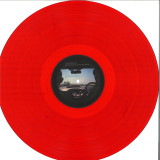
Sol Power Sound is back in a big way with a reissue and remix EP from the legendary Nigerian Ju-Ju king, Chief Commander Ebenezer Obey. The double A-side EP features 'Eyi Yato' a tune from 1981 that captures Chief Commander and his band at their absolute funkiest, with a driving drum and bass groove, wah-wah guitar, and signature call-and-response vocals. Remixers include the legendary dub producer Mad Professor, the disco don Eddie C, and the Sol Power All-Stars themselves.
The Sol Power All-Stars keep things organic with chugging drums, heavy analog synth bass and sequences, as well as Daniel Meinecke’s additional keys and solos. The Canadian disco don Eddie C goes a little electro and a little acid with his analog bass-heavy flip.
Like a good dub should, Mad Professor’s version accentuates the drum and bass groove and drenches everything in vintage sounding Mad Professor delay, reverb, and filtered dub-sauce, live and direct from his classic mixing desk. Alongside an extended edit of the original, the Eyi Yato EP is sure to find a permanent spot in DJ record bags around the world.
Cerca:e v sound
Lucinee debuts on Brvtalist S.R. with a striking new 12″ EP of future forward techno. “Pacemaker” contains 3 original tracks of the artist’s razor sharp sound and one big collab track with Lifka and New Frames.
Artwork & Layout: Luca Hinrichs
Mastering: Conor Dalton at Glowcast Audio
All tracks written, produced and mixed by Lucinee
B2 written, produced and mixed by Lucinee, Lifka, New Frames
Another EP from the vaults of West Coast rave scene specialists, Michael Kandel and Tom Chasteen. A side has two versions of a fast passed dancefloor oriented production tactfully presenting woven layers of rhythmic elements underneath dubbed out effects, “Crazy Jane” possibly channeling moments of Debbie Harris' “Heart of Glass” on LSD. B side gets more aggressive on many levels with a bit of a downtempo Gabber feel to it, raging synths and generous cymbal action all around, 3 versions, one of them featuring samples from Jimmy Stewart's 1946 monologue in “It's A Wonderful Life”, another one with very non-western elements mixed in, and finally Juan Ramos bringing a very dancefloor friendly version with a slight Euro-Dance late Hi-NRG edge to it.
"Recorded in Heaven".
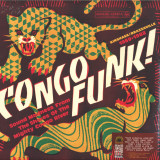
- A1: Sungu Lubuka - Petelo Vicka Et Son Nzazi
- A2: Mfuur Ma - Groupe Minzoto Ya Zaïre
- A3: M.b.t's Sound - M.b.t's
- A4: Musique Tshiluba - Abeti Et Les Redoutables
- B1: Lalia - Trio Bydoli
- B2: Adeito - Tabu Ley Et L'orchestre Afrisa
- B3: Ngantsie Soul - Les Bantous De La Capitale
- C1: Nganga - Les Frères Soki Et L'orchestre Bella-Bella
- C2: Tembe Na Tembe Ya Nini - Orchestre Celi Bitshou
- C3: Lolo Soulfire - Lolo Et L'orchestre O.k. Jazz
- D1: Femme Ne Pleure Pas - Zaiko Langa Langa
- D2: Kiwita Kumunani - Orchestre O.k. Jazz
- D3: Fiancée Laya - G.o. Malebo
- D4: Ah! Congo - Orchestre National Du Congo
The making of Congo Funk!, our long-awaited journey to the musical heart of the African continent, took the Analog Africa Team on two journeys to Kinshasa and one to Brazzaville. Selected meticulously from around 2000 songs and boiled down to 14, this compilation aims to showcase the many facets of the funky, hypnotic and schizophrenic tunes emanating from the two Congolese capitals nestled on the banks of the Congo River.
On its south shore, the city of Kinshasa – capital of Democratic Republic of the Congo, the country formerly known as Zaïre – is often seen as Africa’s musical Mecca, the city that spawned such immortal bands as African Jazz, O.K. Jazz and African Fiesta, and the place to which aspiring musicians from throughout the continent would go to make a name for themselves.
But the city of Brazzaville on the north shore of the river – capital of the Congo Republic – played an equally important role in spreading Congolese sounds continentally. In addition to producing legendary bands such as Les Bantous de la Capital, it was the powerful transmitters of Radio Brazzaville that allowed the unmistakable groove of Congolese Rumba to be heard as far away as Nairobi, Yaoundé, Luanda and Lusaka thus turning the electric guitar into the continent’s most important instrument!
Although the musical landscape of these cities had been defined by a core group of bands in the late 1950s, the modernisation of Congolese music has been steadily evolving until the events surrounding the Muhammad Ali vs George Foreman boxing match marked a turning point. The promoter of that event known as “Rumble In The Jungle” was none other than the notorious Don King who needed 10 millions dollars to get Ali and Foreman into a boxing ring. The only candidate willing to put this kind of cash on the table was Mobutu Sese Seko, President of the Democratic Republic of the Congo.
Mobutu - the megalomaniac dictator who got to power with the support of the United States and Belgium in exchange for unlimited and affordable access to the riches of the country - had a soft spot for music and it doesn’t come as a surprise that he agreed to a three-day live music festival being organised prior to the “Rumble”. Zaïre 74 - as the festival was dubbed - was meant to hype the boxing match and many stars were invited.
Although a myriads of artists flocked in for the occasion, it was the performance of James Brown on Zairian soil that caused havoc among the younger generation, inspiring hundreds of would-be musicians to take up their electric guitars and reverbs cranked to the max in search of a new sound in which hyperactive Rumba was blended with elements of psych and funk. While the results were very different from the popular music of the three Musketeers - as Tabu Ley, Franco and Verckys were known - they weren’t a complete break with tradition.
These new sounds emerged at a time when the Congolese record industry – previously dominated by European major labels – was experiencing a period of decline due to rising production costs and needed a radical change. The void was filled by dozens of entrepreneurs willing to take chances on smaller scale releases. It was the beginning of a golden age for Congolese independent record labels, and the best of them – Cover N°1, Mondenge, Editions Moninga, Super Contact – preserved the work of some of the region’s finest artists, while launching a generation of younger musicians into the spotlight.
The movement was greatly helped by legendary radio shows but it was the dynamic productions of Télé-Zaïre that set the dynamite on fire. Legend has it that TV shows were so huge that president Mobutu himself ordered RTV du Zaïre to put on daily concerts since it halted criminal activities for the duration of the evening.
Congo Funk! is the story of these sounds and labels, but most of all it is the story of two cities, separated by water but united by an indestructible groove. The fourteen songs on this double LP showcase the many facets of the Congolese capitals, and highlight the bands and artists, famous and obscure, who pushed Rumba to new heights and ultimately influenced the musical landscape of the entire continent and beyond.
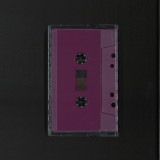
New tape from Gabber Eleganza's Never Sleep imprint.
This time its a live recording of Drum & Bass legend / Critical Sound boss Kasra at Fabric with MC's GQ and Mantmast.
The tape is in honour of Shaun Roberts, the sadly departed Fabric booker who was a pivotal figure in the UK's electronic scene. All proceeds go to Bowel Cancer UK
"Fabric played a huge role in shaping me as a music fan and years later became the London home for me and my label. This wouldn’t have happened without the help and support of Shaun Roberts, who left us far to soon in Dec of 2022 after an 18 month battle with colon cancer.
When the Never Sleep crew asked me to contribute to their mix series I knew id like to honour Shaun and help raise some money for Bowel Cancer UK.
Without Shaun and people like him taking chances on people like me the music landscape would look very different.
This is mix is taken from the Critical Sound 15th birthday event in 2017.
Garçon EP - an enthralling vinyl release from the talented musical explorers Kondo & Mhrrmv. The album demands the attention of minimalist enthusiasts, offering a unique immersion into a hypnotic and groove atmosphere.
"Garçon" and "Gettin' Naughty" transports the listener on a captivating journey through the nuances of housy minimal sound, creating rich and dense sonic textures that feel electrifying.
Two unique remixes of album tracks complement the vinyl experience. Remixes from ckb and lo:za provide a fresh perspective on the already captivating material, adding new layers of sonic depth and emphasizing the deep character of the album.
The vinyl cover, designed in a mandala style, reflects the album's aesthetic, where each detail holds significance. High-quality sound, a meticulously curated tracklist, and the vinyl atmosphere make "Garçon EP" a must-have for collectors and enthusiasts of deep minimal sound.
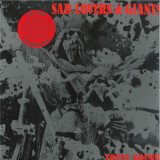
One of the most respected British bands in the mid 80's post punk era, Sad Lovers & Giants played highly atmospheric music made of melancholic melodies and epic guitar riffs. Originally recorded for a radio broadcast in Holland in 1983 in front of a very selected audience (10 in all) »Total Sound« represents a great snapshot of SLAG live on stage. Here, the band delivers an outstanding performance based on a fine selection of songs from their first two now classic albums. Recordings caught just before the split.
Morpheus, the god of sleep is here to give you a quick chance of getting dream records that are nearly impossible to find.
Why is it that thousands of clubbing tourists land at Berlin Schönefeld airport every weekend? Why have clubs like Berghain become the stuff of legend the world over? Why have some of the best-known producers and techno DJs like Richie Hawtin and DJ Hell moved with their labels to this city? These are the kind of questions explored in Lost and Sound by Tobias Rapp, a German music journalist who has been living, working and partying in Berlin since the beginning of the nineties. He has spoken with DJs, clubbers, label bosses, hostel managers and urban planners; he has looked and listened carefully; and most important of all, he has been part of the dance floor himself. Every day of the week – from Wednesday night (in Watergate) right through to Wednesday night (back in Watergate).
Lost and Sound is not one of those books that try to grasp techno from a desk-bound position. Rapp zooms in to relate intimate moments in front of the DJ booth and at the bar, and then cuts to historical tangents and theoretical reflections. Detailed research is interspersed with accounts from a first-person perspective. An excellent portrait of Ricardo Villalobos, the biggest star of the Berlin minimal techno and after-party scene, stands alongside a precise sociological portrayal of the queue for Berghain. Through this interplay of music, architecture, infrastructure and drug-induced explorations of personal limits, Rapp is able to capture what makes Berlin such a unique place for electronic music and how this music is experienced.
Following its publication in Germany in February 2009, Lost and Sound made an impact not
seen from a book about popular music for a long time. This was undoubtedly due in part to the
term coined for its subtitle: the ‘Easyjet set’ is a new group of music fans who – thanks to the
deregulation of the European air travel market – now regard the aeroplane as a taxi service for
parties, effectively making Barcelona, London and Paris suburbs of Berlin.
Sound Metaphors Records continues to explore the Italian early 90's techno scene with another re-issue of D.A.T.A.'s precious catalogue. Already 3 decades ago, 4 Italians got together in northern Italy to elaborate this sound, and it's only fair to say it's still timelessly effective, possibly a mixture of pure naivety and/or premeditated distilled club essence, bold and minimal in its use of rhythmic patterns generated by drum machines and samplers of the time. To imagine this music was being made in a time where only petrol company CEO's had cell phones, emails weren't even a thing, let alone social media, a time capsule into a special epoch where "progressive" or "trance" weren't quite established keywords yet. Re-issued with a new remastered face and 2 new remixes from studio guru Anatolian Weapons beautifully adding to this powerful exploration of club oriented electronics.
Tiella Sound launched in 2023 with a self-titled LP from Perugian artist VAISA, setting the scene perfectly with its lo-fi maelstrom of field recordings, obscure rhythms and tribal textures.
Neapolitan artist Livio Improta follows suit with ‘Fondamentalismi’, a 10-track exploration of broken, slow-motion rhythms coated in vinyl crackle and layers of atmospheric dust. Another superb album that announces Tiella Sound as a vital new label.
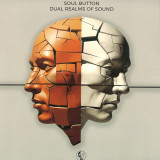
“Dual Realms of Sounds” emerges as the latest vinyl masterpiece from the enigmatic Soul Button, an audio diptych that distills the essence of his sonic signature. This meticulously curated double-vinyl collection showcases the dualistic nature of Soul Button's artistry, encapsulating the dynamic range of his most compelling works across two distinct auditory domains.
The first vinyl pays homage to the night - a pulsating journey through Soul Button's most successful, club-oriented anthems. Here, the beats intensify and the rhythms beckon you to the dance floor, with tracks like the fiery "Incendiary" and the enigmatic "Qabila" poised to ignite the crowd.
Vinyl 2 presents a shift in narrative to a more introspective realm, featuring the most melodious and soul-stirring hits from Soul Button.
The ethereal "Utopia" and the haunting "Wraith”, stand as cornerstones of this auditory expedition, channeling the essence of deep house with a dreamlike introspection, steering away from the dance floor and into the vast landscapes of the mind.
“Dual Realms of Sounds” is more than a mere collection of tracks; it is a portal to contrasting universes where rhythm and emotion converge. This release invites you to secure your passage and delve into the duality of rhythm and melody that defines Soul Button's unique sound.
Noise pollution results when man does not listen carefully. Noises are the sounds we have learned to ignore. Which sounds do we want to preserve, encourage, multiply?
When we know this, the boring or destructive sounds will be conspicuous enough and we will know why we must eliminate them. Only a total appreciation of the acoustic environmentcan give us the resources for improving the orchestration of the world soundscape.
Quoth is proud to present its second EP of spectral dance music, following Coralie’s 'Barney’s Maze'.
Coming from the third mind of Pearl River Sound and The Horn, two artists with illustrious solo back catalogues, the 'Top Shelf Material EP' is a kaleidoscopic trip into the timeless psychedelia of UK rave music. Highly referential, but never pastiche, the sound world draws from IDM, mutant hardcore stylings, grime, 80s fantasy, and pulp cinema.
‘What the fuck?’ moments of full throttle breakbeat pressure are counter-poised with the liminal robot romanticism of heart-rendingly detuned electronica. Eschewing refinement and polish for raw sensibility, the 'Top Shelf Material EP' is emotive and propulsive, playful and tragic, wistful and optimistic. We couldn't recommend it more.