Bold, delicious and full-bodied, it’s no wonder Rube Goldberg Series Wines have such a loyal following. Volume nine is certainly a top spot for exceptional tunes. Here, cool fogs help to keep temperatures down, giving the beats time to ripen slowly and develop intense, complex flavours. Oliver.R, B.Love, Two Opposites and Let's Talk bring out the best of this prized fruit, crafting a bright, silky record that’s a real step up from the norm. Discover vibrant notes of house, funk and sweet rhubarb, with touches of baking spice and earthy forest dancefloor. The tunes are aged for up to 12 months, giving it soft tannins and a smooth texture.
Buscar:ea
Strictly limited 12"-Edition in clear Vinyl mit rot-grün-blauem Splatter.
Nico Motte returns to Antinote with his second album ‘The Missing Person’ after his 2015 introductory EP ‘Rheologia’, 2016’s ‘Life Goes On If You Are Lucky’ LP, and 2017’s ‘18 Rays’ EP collaboration with Zaltan and Raphaël Top-Secret. Truly though, Motte never really left, having been the aesthetic eye for each Antinote artwork since day dot. His visual style would prove pivotal to the labels decade long success in the leftfield music underground. But here Motte shows us once again that his skills don’t solely lie in graphic art.
A bandcamp review of Motte’s first LP reads ‘French late seventies synth-laden electronics of avant garde film soundtracks with a touch of early house, minimalism and Balearic…’
‘The Missing Person’ holds true to that balearic core while adding flavours of lollipop dub, sugary synth and Martin Denny-esque Exotica. Synth-Pop from a tropical island. Perhaps The Missing Person here is the album’s protagonist themself, having sailed away from the trivialities of urban life to lay on a white sand beach somewhere warm, drinking fresh coconut water and not giving a shit. A laissez-faire attitude.
Underneath the cool sonic facade of ‘The Missing Person’ Motte effortlessly meanders through pastel sounds drawn from an extensive collection of vintage synthesisers, drum machines and effects units at Synth City. The result: a smooth textured continuous listen of an ear off to somewhere far… island life perhaps? perhaps urban life in need of reprieve.
Brains is the first full length by Anton Pieete in 5 years, and the first release under his given name since 2016. A gentle gorgeous journey of an LP on Wake Dream (ran by Orpheu The Wizard). TIP!
Born into a family of sound designers and making his own initial steps into a life of music in the late nineties in trash and hardcore metal bands and via an inherited drumcomputer into techno and minimal in the early 2000’s, Anton switched to the Darling moniker in 2016 with a series of kaleidoscopic retro-futurist releases on Voyage Direct and Safe Trip.
With Brains, Anton Pieete comes full circle and takes the next step, putting a lifetime of musicality, recording experience into a highly musical album, having given himself room for exploration, not being fixed on an end goa. The 11 songs on Brains are filled with emotion, some sweet and hopeful, some gloomy and restless.
Cover illustration by Jorge Velez
- A1: Om Mani Padme Hum
- A2: Bohemia After Dark
- A3: Companionship
- A4: Stoned Ghosts
- A5: Jay-Jay
- B1: Dijar
- B2: Con Alma
- B3: Ct & Cb
- B4: The Turk's Bolero
- B5: Talk Some Yak-Ee-Dak
- C1: Calypso Blues
- C2: Balafon
- C5: I'm A Fool To Want You
- C4: Insensatez
- C5: Invitation
- D1: Yah-Yah Blues
- D2: Serenata
- D3: Just Give Me Time
- D4: Birn To Be Blue
- D5: Sconsolato
Jazz music has more than its fair share of overshadowed figures that whilst contributing much to the music have little presence in its collective conscious. One such musician is the talented multi-reedist, Sahib Shihab. Born Edmond Gregory, as he was known before he adopted the Muslim faith in 1946, Sahib Shihab's music background shows a deep and significant evolution, influenced by Thelonious Monk, Dizzie Gillespie (his experience in Dizzie's band marked Sahib's switch to Baritone, the instrument he became most readily associated with), and above all by Charlie Parker's Bop. Had it not been for the post-war migration of many top American jazz musicians to Europe, it is quite likely that the legendary Clarke-Boland Big Band might never come into existence. Sahib, one of this musicians disillusioned with the politics and racism of the United States, accepted to join the band of Quincy Jones for an European tour in 1959. When the tour ended, Shihab he remained in Europe where he joined, in 1961, the Clarke-Boland Big Band. The collection 'Companionship', whose line up consists of seven elements which derives from this original band, spotlights the consummate musicianship and individuality of Sahib Shihab and is testimony to his special musical gifts - not only as a top-rank flautist and baritone saxophone but also as a composer. Furthermore, it provides a welcome reminder of the high quality of the Clarke-Boland Big Band's rhythm section, the lively style of vibraphonist Fats Sadi and the power and personality of two of the C-BBB's horn-playing stalwarts, Benny Bailey and Ake Persson. Here's a real rarity, surely a desert island disc. This double album has it all from frantic banging percussive workouts to modal numbers to beautiful ballads. It's a staggeringly good piece of music and worth every penny of the price tag it commands. Let's have a look to the most significant pieces. Francy Boland's "Om Mani Padme Hum", taken from a Tibetan prayer, shows Shihab in exuberant mood, playing against a vigorous percussion background and making dramatic use of his special technique of combining voice and flute. Boland contributes an incisive, effervescent solo. "Bohemia After Dark", a classic original by bassist Oscar Pettiford which he first recorded back in August 1955, finds Shihab in exultant form on baritone. "Companionship" has a Bossa Nova beat and features Bailey on flugelhorn and Shihab on flute, playing with a limpid, floating sound. Bailey's minor-key original, "Stoned Ghosts" was, he says, inspired by listening to some music written by Bela Bartok before he emigrated to the United States. The piece has an infectious back-beat pulse and showcases the superb walking technique of Jimmy Woode. In "Con Alma" Shihab's mellow flute set against a churning 12/8 beat in this stylish Boland arrangement. Woode's performance of the superb Mei Torme ballad, "Born To Be Blue", reveals his great affection for the song. "lt is the perfect combination," he says, "a beautiful melody married to a great lyric. I really love that tune." It is a song of rueful resignation, putting a brave face on the blues. "Balafon" is an up-tempo Francy Boland original written for the French mime artist, Marcel Marceau. The rhythm section really cooks on this track with Kenny Clarke's cymbal work outstanding. Boland's solo here is notable for its neat, left hand punctuations. "Calypso Blues" has been written by Nat King Cole and Don George. lt tells the wry and wistful tale of a Trinidadian in New York desperately homesick for the land where everything 5 so much cheaper (in New York "a dollar buy, a cup of coffee and a ham on rye") and the girls more natural than the artificial, painted beauties of New York. Woode's composition, "Sconsolato" is a haunting theme in A minor and it brings to a close a truly fascinating album. This is dynamic music played with vigour, verve and vitality - and it is an enormous pleasure to rediscover it. A shadowy fugitive from his home in the land of jazz, Sahib Shihab remains a true unsung figure, worthy of more attention. With his equally expert technique on Baritone, Flute, Alto and Soprano saxophones and his capacity to adapt easily to a variety of musical settings. His warm, individual, singsong sound in improvisation and his unusual and interesting compositions mark him out as a hidden treasure in the dusty corners of jazz archive.
After the successful 7-inch release of Agip, Roman producer and composer Azzurro 80 is back on Four Flies with another triple-single that continues his love affair with dreamy synth-pop and Italian Eighties culture and society.
"Notte Inchiesta", on side A, could be the title music to an imaginary '80s investigative/true-crime program broadcast on late-night television. Clearly reminiscent in mood and texture of the soundtracks of late-70s/early-80s Italian detective-action films, it brings back the jazz-funk, post-prog and fusion overtones that characterized the music of those films. In short: a contemporary-retro sound nestled somewhere between Goblin's funk-oriented recordings, Azymuth's "Jazz Carnival", and electronic disco with a sprinkle of new wave.
Side B opens with "Equilibrio", which could serve as additional, more dynamic music for the same TV program mentioned above. The style is once againelectronic jazz-funk, but here we have abreak built upon a trail of notes chasing each other.
In contrast, "Sambuca", the single's closer, is deliberately nostalgic and melancholy. Perfectly suitable for visual narratives of an Italy that no longer exists, it sounds like one of those great Italian soundtrack themes that are able to convey tension and calm at the same time. The track is titled after the anise-flavoured liqueur that Italians often drink after their espresso, because "making references in my music to things that are part of our national popular culture is really important to me", as the artist has explained.
Dishwasher_ are the latest disciples of yet another new wave of talent in the fertile Belgian groove and jazz scene. It would, however, be a shame to limit them to the constraints of any given musical style. Ever since their formation in 2019, the Ghent-based trio have been experimenting with all possible genres to create a contemporary sound they can now rightfully call their own. With their self-titled debut album, to be released in April 2023 via Sdban Ultra, they are closing off an impressive first chapter, delivering a unique and diverse yet coherent collection of groove-driven cuts.
While labeling Diswasher_ as a jazz band wouldn’t do them enough justice, it is a fact that improvisation and a certain free approach turn out to be key in the creation and performance process of the album’s tracks. Werend, Louise and Arno specifically aim to capture their live energy and synergy on the album by experimenting with structures and textures, playing with song lengths and implementing influences from various other styles — electronic music in the first place, but as well traces from (Middle-)Eastern and Balkan music, next to dance, hip-hop and even metal.
As a result, the record tends to be a pure and honest representation of Diswasher_’s musical identity and artistic quest over the past years — both as individual musicians and as a band. Saxophones drenched in effects, diverse layers of synthesizers, a bass guitar hopping from fingerpicking licks to deep and drone-like bass tones, drums can sometimes sound like drum computers, and sometimes as subtle rhythmic chords: it’s pretty clear how deep this trio have dived to search and find something totally fresh and new.
Members of the band are Arno Grootaers, Werend Van Den Bossche and Louise van den Heuvel. Their debut album is coming out on Sdban Ultra, the innovative label of Black Flower, ECHT! and Compro Oro (among others). In 2023 they will fully focus on new talent, by signing Dishwasher_, but also KAU (formerly KAU trio) and Schroothoop. Apart from that, you can expect debut albums or EPs by LũpḁGangGang, Bandler Ching, KVR trio and Adja coming out this year. Stay tuned.
MOOD CHILD is the new artistic platform of DJ/Producers, SIRUS HOOD & MANDA MOOR.
Evolving from a collective idea during our difficult pandemic period, MOOD CHILD is, at its centre, about community, collaboration, friends and family. Working together, feeding each others creativity and forging fresh and exciting new sounds and projects.
MOOD CHILD is an invitation to a journey that blends different feelings, emotions and desires. To activate your inner child. Reinvigorate the wild, primitive and unfiltered state of being and create an almost divine sense of unity. All through the power of music and art.
Their collective sensibility is nurtured upon the dancefloor and last summer they were blessed to have presented a first MOOD CHILD experience in collaboration with Hï and Café Mambo in Ibiza. The mood then took them to Bagatelle in Zürich and Lovefest in Serbia and they now prepare to launch their 2023 campaign alongside the elrow family for a sold out event in Andorra 1st of April.
However, what is a party without its soundtrack? Their first release, as its title suggests, brilliantly displays the labels primal perception… ‘Homo Sapiens’ is the mood child of Sirus Hood and Malikk. Four carnal creations, all guaranteed to ignite a rabid dancefloor response.
‘Booty Side’ uses its compass to expertly navigate its way through bubbling acid and rolling snares as we go in search of Jack, while the title track will have us going ape to its chest-beating bump and knuckle-dragging groove.
Silverback beats swing low on the flip too as ‘King MTF Kong’ bites hard with its heavy Chicago hustle and detuned synth, while the feral Juke-infused finale, ‘Gorilla Walk’, is a break-neck bass-driven and bruising encounter that is more Jersey club than Empire State building.
The ‘Home Sapiens’ EP is released on the 14th April and will be available on vinyl and digital formats, alongside a series of exclusive NFTs.
MOOD CHILD’s official online store will launch soon and feature not only the music and digital art projects, but also an official clothing brand, sample packs and exclusive content from their artists.
It’s time to connect with your MOOD CHILD.
12" + 7" !
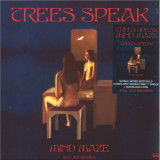
Mind Maze is, amazingly, Trees Speak’s fifth album to be released on Soul Jazz Records in the space of little over two years– an output matched only by the intensity of their music created during this short time.
The first pressing only of the album comes with a bonus seven-inch single containing two tracks that are not available on vinyl anywhere else.
As with all their previous releases, ‘Mind Maze’ is a mind-boggling tightrope walk across an array of musical influences that seamlessly create the unique present-day world of Trees Speak.
The band’s sound is characterized by a combination of German krautrock motoric-beat rhythms, angular New York post-punk attitude, 60s spy soundtracks, psych, rock, jazz, and 70s synthesizers and vocoders. There is also a cosmic spatial awareness to their sound; both personal inner space and galactic outer space, as well as a wilful pushing of sonic boundaries.
Trees Speak are a musical duo based in Tucson, Arizona, composed of Daniel Martin Diaz and Damian Diaz. Their music is heavily influenced by the cosmic magic of the natural desert landscapes of Arizona, creating a unique and captivating sound that is both experimental and innovative.
Here you will find the myriad sounds of 1970s German electronic music (everything from Can to Cluster, Popul Vuh to Tangerine Dream); 1980s New York post-punk and synthcore (from No Wave to Suicide); John Barry’s 1960s movies, John Carpenter’s 1970s horror. You will also hear the influences of French and Italian progressive rock (Magma, Goblin) as well as cosmic, new age and experimental space soundscapes …. an almost endless list of diverse influences that ebb and flow like an ocean of sound, in the process creating a truly unique soundscape that Trees Speak have made wholly their own.
The name Trees Speak reflects their interest in the concept of using future technologies to store information and data in trees and plants, with the idea that trees communicate collectively. This interest in nature and technology, combined with their passion for experimentation, has led Trees Speak to create a truly one-of-a-kind listening experience that is both unique and engaging.
If you ever wanted to hear Can, Neu!, Destroy All Monsters, Pere Ubu, electric eels, John Cage, Liquid Liquid, Tangerine Dream, Suicide, Laurie Spiegel, Art Ensemble of Chicago, John Barry, Mother Mallard’s Portable Masterpiece Company, Sun Ra, Stockhausen, John Carpenter, Electro-Acoustic and Musique Concrete and Mars in one band - then this is it! Trees Speak are a band that defies categorization and offer an eclectic listening experience, both exciting and memorable.
The two bonus tracks (‘Seraphim’ and ‘Orpheus’) included with the album give us a further window into the complex mind maze of the group - two stunning acoustic tracks that explore a distinct early 70s sound of Yes, Argent and other progressive rock accolytes.
- A1: Dreams (Feat Xênia França&Zé Leônidas)
- A2: Kismeti (Feat Matthias Schriefl)
- A3: Asase (Feat Eric Owusu)
- A4: Sábado (Feat Zé Leônidas)
- A5: Carrossel (Feat Zé Leônidas)
- B1: Caio & Eric (Feat Eduardo Camargo)
- B2: Ndiyakhangela (Feat Bongani Givethanks &Amp; Mpho Nkuzo)
- B3: Agôra (Feat Matthias Schriefl)
- B4: Oblique Sunshine (Feat Rebekka Ziegler)
Global pointing Brazilian jazz trio releases their new album Agôra, that sparkles with electric funk and Herbie-esque eclecticism. It features a myriad of guest vocalists and musicians including Brazilians Xênia França and Zé Leônidas, Jembaa Groove's Ghanaian singer Eric Owusu and South African artists Bongani Givethanks & Mpho Nkuzo
Re-wiring the concept of 'fusion' for 2023, Agôra is Brazilian trio Caixa Cubo's resurgent new record with the title referring to 'now', based upon the intuitive and fluid nature of the trio's method, and this inspired recording. With shoots to black music culture, from Brazil to Brooklyn, Ghana and South Africa, Agôra is the group's ninth album yet is their first where they've invited guests, mainly singers, onto each track and follows their last, Angela from 2020, released on Heavenly Records, which won a BBC 6 Music Album of the Year (Huey Morgan's selection) granting them much deserved international recognition.
The core musical elements of Caixa Cubo are Henrique Gomide (keys), João Fideles (drums) and Noa Stroeter (bass), all from São Paulo, Brazil and where they met as teenagers and would continue their friendship and musical bond at the Royal Conservatory in The Hague, Netherlands. Now all in their mid thirties, João and Noa live back in the city where it all started but Henrique has settled in Cologne, Germany where the recording of Agôra took place, over the course of 3 days, at the home cum studio of Chris 'Dusty' Doepke, their friend and owner of the label they signed to, Jazz & Milk.
In line with all their creations where flow and energy provide the magic, allowing what the moment provides, the album shines not only for its virtuosity but for its minimalism, the depth of space, and for the first time, the ability to figure in and outside of the jazz fold, as the trio decided, for the first time, to bring in singers and add a new aesthetic to their sound.
"Agôra is a wake-up call to reality, a reminder that the infinite possibilities of technological progress should not disconnect us from the earth, from eye-to-eye relationships, and from moments lived in person" the band are keen to point out. "And that we must not be consumed by greed, for all we truly possess.... is the NOW."
Turning hope and metaphor into music, the debut single Sábado, an electrified future- jazz-fizz reflects perfectly the spontaneity that permeated the entire recording of the album. "When we got to the studio, we had no idea what we were going to record. We started playing a groove, kind of inspired by Gilberto Gil's 80s albums, and our drummer João started singing this funny song 'Sábado Barrigudão' (Big Belly Saturday) alongside the bass groove and that was that". Inspired by their city of birth, São Paulo, it features long time collaborator and vocalist Zé Leônidas, with cuicas, tamborim, agogo and shakers providing the most obvious Brazilian affect from the album.
Dreams is the band's first foray into R'n'B melding the group's simple and sporadic instrumentation of drums, keys and bass into a Jill Scott inspired song that could have been born in Brooklyn yet sung by Brazilian singer and Grammy nominated Xênia França and Zé Leônidas in both English and Portuguese. Xênia recently performed online for hip-to-it website Colors and it's her latest collaboration with Caixa Cubo, having first met in 2009 for a series of live performances.
South African artists Bongani Givethanks & Mpho Nkuzo come to the record with a wholly different approach on Ndiyakhangela, providing spoken word and vocal refrains on top of an Afro-Brazilian percussion jam with a delivery and verse in Xhosa, Zula and Ndebele. Asase is the album opener and features vocals of Eric Owusu who is part of highlife pioneer Pat Thomas's live band and most recently, co-leader of Jembaa Groove, an Afro-soul band from Berlin. It's a synth wig out with djembe grooves and offers a brand new take on Afro-soul-jazz.
Other contributions come from Cologne based jazz singer Rebekka Ziegler (Oblique Sunshine), São Paulo based guitarist Eduardo Camargo (Caio & Eric) and trumpet player Matthias Schriefl on Kismeti, a gorgeous and rolling number that ebbs and flows, exemplifying the group's effortless ability to craft a sound energised by a belief in one-self and the idea of having faith without the need to look at each other for verification.
As drummer and percussionist João Fideles perfectly surmised upon arriving for the recording session, "What drums do you have? Whatever you have, I'll use it". Agôra is testament to nearly 20 years of camaraderie, friendship and most importantly, trust.
To many crowds the world over PBR Streetgang are known and loved for their talents behind the turntables, selecting at most major festivals and clubs of note but to others they are producers and remixers whose eclectic taste and evolving style has seen them enjoy longevity and critical acclaim. This album is a rare selection of originals and remixes that shows the breadth of their work.
Featuring early original hits that propelled them into the limelight, like ‘Downstroke’ and ‘J2Thab’, and more recently their stand out disco tinged nugget from their debut album ‘Late Night Party Line’.
Previously un-pressed remixes like the cult classic rework of Romathony’s – 'Bring You Up' and the slow chuggy sleaze of Bryan Ferry – One Night Stand and the teary eyed euphoria of their remix Hot Chip’s - 'Melody Of Love'.
This compilation represents an honest retrospective of the production and remix talents of PBR - always keeping true to their sound and themselves.
Limited Vinyl Press.
DJ Support from a very broad base.. from Paul Woolford and Bicep to Jennifer Cardini and Daniel Baldelli.
2023 Repress
London's 4am Kru & Bristol grime royalty Sir Hiss unite on EARSHOTS - a forward facing jungle banger with Sir Hiss on sample duties and 4am Kru at the production helm. Already an underground anthem following it's digital release in 2022, EARSHOTS receives it's first vinyl pressing here, courtesy of No More Mailouts & Embrace The Real Records. Do not miss!
No doubt, Komakino´s „Outface“ has co-written the history of rave, trance and techno in the early 90s. Originally released in 1993 and produced by Detleff Hastik and Ralph Fritsch this tune was played by any DJ at any festival like Mayday, Love Parade and Tribal Gathering big time.
After 30 years it´s for sure time for a re-release and this package comes along with the remastered original G60-Mix plus next versions by the "creme de la creme" of techno universe, saying Egbert (Cocoon), Petar Dundov (Music Man) and Robert Babicz (Systematic Recordings). Enter the time machine and enjoy the good old days and futuristic sounds at the same time.
"A Place For Love" is a captivating electronic house music endeavor, expertly crafted by the synergistic partnership of San Proper and Figi, hailing from the vibrant city of Amsterdam. The project boasts an impressive roster of guest contributors, including Tom Trago, Seth Troxler, and the esteemed label heads of Guti & David Gtronic, each imbuing the compositions with their signature style. The project exudes a funky, charming, and inviting energy, inviting listeners to fully embrace their individuality and lose themselves in the hypnotic beats. Whether it be the electrifying dubby techno, the shimmering and ethereal twists, or the razor-sharp edges injected into the club-ready tracks, "A Place For Love" offers a diverse array of auditory delights. It is truly a sanctuary for those seeking to indulge in the boundless beauty of electronic music and the euphoria of self-expression.
Angelo is an LP, named after a car, featuring nine songs Brijean have crafted and carried with them through a period of profound change, loss, and relocation. It finds percussionist/singer Brijean Murphy and multi-instrumentalist/producer Doug Stuart processing the impossible the only way they know how: through rhythm and movement. The months surrounding the acclaimed release of Feelings, their full-length Ghostly International debut in 2021 which celebrated tender self-reflection and new possibilities, rang bittersweet with the absence of touring and the sudden passing of Murphy’s father and both of Stuart’s parents. In a haze of heartache, the duo left the
Bay Area to be near family, resetting in four cities in under two years. Their to-go rig became their traveling studio and these tracks, along with Angelo, became their few constants. Whereas Feelings formed over collaborative jams with friends, Angelo’s sessions presented Murphy and Stuart a chance to record at their most intimate, “to get us out of our grief and into our bodies,” says Murphy. They explored new moods and styles, reaching for effervescent dance tempos and technicolor backdrops, vibrant hues in contrast to their more somber human experiences. Angelo beams with positivity and creative renewal — a resourceful, collective answer to “what happens now?”
Angelo the car is a 1981 Toyota Celica they got off Craigslist during their first stint in Los Angeles, where Murphy and Stuart have since settled. “Such a bro-y, ‘80s dude car, it’s been super fun to drive around in a new town,” Murphy says. “He’s older than us, he’s a classic, he’s got a story.” It is a spiritual vehicle with a cinematic appeal, first dropping them off in an alleyway for the scene-setting intro, “Which Way To The Club.” The question is quickly resolved by “Take A Trip” as a cruising bassline mingles with crowd sounds, hand-claps, cuíca hiccups, whip-cracks, even a horse neigh. Brijean have found some club on this cross-dimensional trip — the kind of
imagined space or chamber within one’s self capable of “shifting a fraction of who you are,” says Murphy. They wrote the track with the simple intention to be “as free as we could be,” adds Stuart, likening the flip on the B section to a realm unlocked: ”What if the world changed completely? You open the door to a new room.”
Next is “Shy Guy,” a motivational anthem for the wallflowers among us. Murphy sets up the daydream: “We are in junior high, we’re on the dance floor, what’s going down, who is dancing, who is not, how are we gonna make them dance?” The narrator, the MC, hypes up the room as conga-driven rhythms bounce between languid synth and guitar lines. “Show me how to move...I feel something...I know you feel it too,” Murphy sings sweetly, calling back to the opening lines of Feelings, and this time the audience chants it back. It is easy to picture Brijean performing this one — something they only got to do a handful of times until more recently, opening shows for Khruangbin and Washed Out, an experience they found informative. Murphy explains, “It was inspiring to be out there and let loose more. To see how people can expand their expression on stage gave me more liberty with how I viewed my musicianship. My role for so long was to be a backup percussionist, so why would I ever leave the drums, you know? But then after playing all these runs, you see these artists and realize you can, you have permission.”
“Angelo” and “Ooo La La” deliver the danciest stretch in Brijean’s catalog to date. The title track adopts a deep house pulse replete with strings, hi-hats, and kicks. The latter opts for a funkier groove that foregoes verses in favor of warbled hums and extended breakdowns. What follows is perhaps the duo’s dreamiest run, a comedown initiated with the honey-hued interlude “Colors” drifting into “Where Do We Go?”, a tropicália reverie where Murphy contemplates the passage of time and space.
It all culminates in “Caldwell’s Way,” a fond farewell to their Bay Area community — “a part of my life that I knew couldn’t come back,” says Murphy. Above shimmering organ sounds, lush strings, and the birdcall of their former neighborhood, she wistfully articulates the uncertainty of moving on by remembering the characters dear to them. There’s the wisdom of their neighbor, Santos, who refused payment when helping them move out: “I’d rather have 100 friends than 100 dollars.” And the song’s namesake, Benjamin Caldwell Brown, a friend and club night cohort for many years. “I’m only miles away, maybe I’m just feeling lonely,” the line resigns to warm nostalgia, and “Nostalgia” runs the closing credits to this healing and transportive collection.
A royal refugee turned Soul survivor. On his debut album Free Me, Burundian-born JP Bimeni astonishes with a voice that recalls Otis Redding in his prime whilst resonating with the soul of Africa. A refugee who's been living in London since the early 2000s, Bimeni sings songs of love and loss, hope and fear, with a conviction that comes from the extraordinary experiences life has thrown at him.
A descendant of the Burundian royal family, Bimeni fled Burundi aged 15 during the 1993 civil war. Following three attempts on his life - at school he watched as his schoolmates were murdered, he was then chased by motorcycle militia-men and finally poisoned by doctors in hospital - he was given refugee status and fled to the UK where he's remained ever since. Music has provided the solace that Bimeni has needed to move forward with his life: 'If I didn't have music I don´t know how I would have survived everything', he says. With it's classic 60s-sounding Motown and Stax-inspired grooves the album was written by musical director Eduardo Martiìnez and songwriter Marc Ibarz and Bimeni imbues these tales of love and loss with his tragic experiences making 'Free Me' a deep soul soundtrack to his pained life: 'When I sing I feel like I'm cleansing myself: music is a way for me to forget'.
On April 7th electronic luminary Nathan Fake presents the new longplayer ‘Crystal Vision’ on his own Cambria Instruments imprint, which features collaborations with Clark and Wizard Apprentice.
This is music for music’s sake – recorded without angles, agendas and themes – so Fake was free to simply continue honing his craft and express himself non-literally. Aptly titled, there’s a clarity of execution and ambition, and a peak effectiveness to the record that just sounds right.
Continuing to set a personal bar higher and topping his own best, the mark of master craftsperson is everywhere, but that doesn’t mean it’s polished; There’s plenty of rawness evident, with spiky sonics keeping ears on high alert – full of endorphin-flooded rave energy.
Following a short, scene-setting ‘Arrival’ – a simple major chord arpeggio played on a Jupiter 6 which sounds like curtains opening at dawn, things begin apace with ‘The Grass’, which hurtles like a precision-tuned bullet train through Arctic tundra. The undulating effect of compression is emphasised by the classic techno trope where 2 rhythms jar yet interlock, creating an exquisitely disorientating strobe-like flutter. On the track’s guest, Fake comments, “I fell in love with Wizard Apprentice's ‘I Am Invisible’ and felt our musical styles were similar. Their vocals are smooth and clear and sharp at the same time. They’re like a calm within the storm.”
Inspired by Italo disco but sounding wholly alien and futuristic, ‘Vimana’’s fizzing buzzsaw arpeggiated bassline, popping snares and bright whirling melody are equally an electro trance melange, with an effervescent major chord Arp that kicks in midway.
Reminiscent of what used to be called ‘funky techno’ but with sparklier sounds, ‘Boss Core’ blinds like sunshine bouncing off ice. Using his trusty Boss DR550 drum machine, and inspired by Autechre's ‘Vose In’, the track peaks by reaching that melancholic/euphoric axis for which he is loved.
With chugging slow breakbeats not a million miles from Board Of Canada or trip hop, ‘Crystal Vision’ rolls along, with the melody opening up, revealing more hidden notes as it progresses, building into a fractal, kaleidoscopic mosaic.
An emotional outpouring with serotonin surging through the circuitry, classic breakbeats and layers of lazers, ‘Bibled’ has all the hallmarks of a classic. This is a bonafide festival-set closing, hugging-your-mates, moment – or, with its guitar solo, “a power ballad” – as Nathan calls it.
A minimalistic moment of calm midway through the album, ‘CMD’’s gently comforting dreamscape is conjured with FM stacked and detuned sine waves which are left to breathe, whilst the chunky Chicagoan house jack of ‘Hawk’ brings to mind classic Relief records, but even more detuned and wibbly, and laden with synths.
As the title suggests, ‘Amen 96’ is in Fake’s own words, “me having a go at jungle. I grew up listening to it, and I remember as a teenager it sounded like the most intense and otherworldly music ever. It still does. This track is an experiment to see how my melodic style works against amen breaks”. Closer to the braindance end of the spectrum than ‘proper’ jungle (and all the more interesting for it), Fake channels the spirit of Squarepusher but makes it his own, brimming with melodious twinkle.
A collaboration with Nathan’s close friend and genuine musical hero Clark. ‘Outsider’ finds this dream team alchemising pure gold that’s bigger than the sum of their parts. Skittering, intense, far-reaching end epic, the pair close proceedings on a grandly dramatic note. In 2020 Nathan released the album ‘Blizzards’, which was described by The Quietus as “his best work”, and “his best LP yet” yet by Resident Advisor. The equally well received ‘Blizzards Remixes’ EP which featured Afrodeutsche and Irene Dresel followed in 2021, as did a nationwide UK tour.
An in-demand remixer, Fake has added his magic to tracks by Radiohead, Clark, Perc, Jon Hopkins, GoGo Penguin, Dominik Eulberg, Christian Löffler and Damian Lazarus, working for labels including Ninja Tune, Domino, Warp, Blue Note and Kompakt.
DJ Eddie Fowlkes created the techno genre alongside Derrick May, Juan Atkins and Kevin Saunderson. Now the 'Godfather of Techno Soul' uses his extensive knowledge and experience to create a dynamic wax release drenched in Motor City inspiration - this four-track vinyl package is both a love letter to his musical roots and an inspired representation of the left-of-centre house that Classic is known for. For the lead track, 'AHYEE', Eddie carves out his own sound in a low growl as distorted percussion whirs over a four-on-the-floor beat. 'Blow' goes tougher, with an undulating bass that adds a wonky unease to the rhythmic kick and syncopated decoration. On the B-side, ‘Talking To Me’ makes use of a distinctive spoken-word vocal over an expansive and rhythmically intricate accompaniment, celebrating the culture through expert sampling and production techniques, whilst ‘Complex’ is more beat-focused with driving synth rhythms. Coming from producing some of the first techno records nearly 40 years ago, unique releases like this continue to prove Fowlkes' status as a constant innovator, and his ear for house music is undeniable.
A lost MPB gem from rural Finland! We Jazz presents the first ever reissue of this rare 1990 local release by Brazilian duo Rosanna & Zelia. 7" EP with inside out 3mm spine sleeve. RIYL: Gilberto Gil, Joyce, Musica Popular Brasileira, bossa nova, bossa jazz
Liner notes by Mikko Mattlar:
"Rosanna & Zélia were a Brazilian duo of singers and musicians Rosanna Guimarães Tavares and Zélia Nogueira da Fonseca. They moved from Minas Gerais, Brazil to Europe in 1988, released five albums in Germany between 1993–2004 and featured vocals on an Ian Pooley house track Coração Tambor before Rosanna died of cancer in 2006. Zélia still continues her career in Germany, touring actively and releasing new music.
The duo's journey from Brazil to Germany also included two brief visits to Finland. In the years 1989–1990, they spent time in the small town of Seinäjoki in Ostrobothnia. Rosanna & Zélia performed Brazilian music in Finnish clubs and festivals and recorded a 7" EP for local label Maumau Music. The record was distributed mostly in the Seinäjoki area, but the three songs are well-performed and authentic Brazilian MPB, so the largely unknown record now gets its first reissue for a wider audience on We Jazz Records.
But how did two Brazilian women find their way to a small Finnish town to record an EP? The main reason for this was music journalist and promoter Risto Vuorinen, who was on a holiday in Albufeira, Portugal, where a friend of his lived. The streets were almost empty that evening, but Vuorinen and his friend heard fine guitar playing and singing from a bar. There were Rosanna and Zélia performing on a small stage, and the two Finnish men happened to be the only customers. When the artists ended their performance, Vuorinen's friend, who spoke Portuguese, went to talk to them. Rosanna and Zélia told him they had recently come from Brazil and are trying to gain ground in Europe with their music.
Because Rosanna and Zélia didn't know where they would head next, and because Vuorinen liked their music, he thought of bringing the duo to his hometown, Seinäjoki. They immediately liked the idea, and in the autumn of 1989 they arrived in Finland. The national Finnish jazz festival was held in Seinäjoki, and Vuorinen thought Rosanna & Zélia's Brazilian music would fit right in. They performed at the festival and in November 1989, also made recordings in a local studio with backing musicians from Seinäjoki.
Music enthusiast Pertti Hakala had a record shop and label Maumau Music in Seinäjoki releasing music from local artists. He released a three-track EP from the sessions. with two tracks written by Rosanna & Zelia themselves and their cover version of Extra (Brazilian Reggae), written and originally performed by Gilberto Gil in 1983. A small pressing was made for the Finnish market, and Hakala also sent a box of records to Brazil, but for some reason it was sent back.
After their first visit to Finland, Rosanna & Zélia headed back to central Europe, but Vuorinen decided to organize more performances for them for the next summer. Maybe he also wanted to show them the beautiful Finnish summer, as Rosanna and Zélia had so far seen the country only during the darkest autumn. The duo came back to Finland for the summer of 1990 and performed at the Womad world music festival organized as a part of local Provinssirock. They also played in Nummirock and Puistoblues, both respected music festivals, and performed on TV in Helsinki.
Rosanna and Zélia lived in a small apartment in Seinäjoki and played two to three gigs per week all summer. Because there were only two of them, even small pubs could afford to book them, and in 1990 the economic situation in Finland was good. It was before a major economic depression hit the country. The duo travelled by bus or train, and because they were an acoustic duo, they could easily carry their instruments in public transport. Vuorinen got excellent feedback from organizers. Rosanna and Zélia were good performers, but also really nice people.
With the income from their summer gigs, Rosanna and Zélia could buy a PA mixer and other musical equipment. When the summer 1990 turned to autumn, they continued their journey from Seinäjoki to Germany where they settled down."
- A1: Black & Yellow 05 25
- A2: Chrome Vulture 01 26
- A3: Abandon Ship! 03 44
- A4: Bodies For The Upper Class 03 39
- A5: Switch Tentacles 03 43
- B1: Monkey Knight 04 00
- B2: Turbolancer 02 49
- B3: Pulse 02 37
- B4: The Disappearance 02 24
- B5: Hype Machine 03 45
- B6: Atoris 03 32
- C1: Orakel Maschine 04 07
- C2: Nothing Is Written 3 42
- C3: Soil 04 16
- C4: Growing A Million In One Week 03 54
- C5: Tian 03 58
- D1: Echion 04 26
- D2: Up In A High Rise 04 19
- D3: Vanilla Cryonic 04 00
- D4: Bad Memory Overwrite 06 59
After two decades of releasing music on 12" vinyl under multiple pseudonyms the duo from Even Drones have completed their first LP.
The 20 track double vinyl carries the classic "album era" approach of the 60s and 70s into a modern contemporary work.
Each of the 4 sides of "Ethics" feels like the chapter of a story balanced into a synthesis of counterpoints from piece to piece. Twisted arrangements are stringed together with dance-able tracks and are woven into finespun transmutations of sounds. Sometimes peaceful and regulated, sometimes abstract and complemented with tamed feedback, noises, crackling and delightful patterns.
Like a continuous thread through all titles of the album, the multi instrumentalists somehow managed to harmonize a twisted array of methods and structures into a coherent listening experience.
This full feature-length metamorphosis with no boundaries of styles or genres is released just in time for the 10th anniversary of the band on Freund der Familie.