180 grams / vinyl only
Based Faith unveils Spell Three Twenty Nine, a sacred incantation to the dance floor. This limited edition no repress release brings together four divine interpretations of the original track, each a hymn to the groove.
Cesare vs Disorder blesses us with deep, rolling pads that lead us into a meditative state, while Arval stirs the soul with a techy, high-energy remix designed to lift bodies in motion. Frink delivers a precise, floor-focused cut that radiates purity in its clean production, and finally, Richard Rozen presents the original-a slow-burning, capturing of a moment in time for those seeking deeper dance floor transcendence.
This record is a relic of the faith, pressed in limited numbers for true believers of the power of the dancefloor.
Cerca:each
- I Mean You
- All Of You
- Spring Is Here
- Star Eyes
- If I Were A Bell
- Summertime
- Autumn Leaves
When considering the jazz vibraphone giants of the 20th century, seven stand out: Lionel Hampton, Red Norvo, Milt Jackson, Terry Gibbs, Cal Tjader, Gary Burton, and Bobby Hutcherson. Bobby Hutcherson (1941-2016), originally inspired by Milt Jackson, emerged from Los Angeles in the late 1950s. After a stint with the Billy Mitchell-Al Grey sextet in 1962, Hutcherson moved to New York, becoming the house vibraphonist for the Blue Note label. His foundation in hard bop did not limit him, as he also played in avant-garde sessions with artists like Eric Dolphy and Jackie McLean. On December 11, 1983, the 42-year-old Hutcherson performed seven standards with a stellar group. Pianist George Cables, consistently excellent throughout his career, had been working with Hutcherson since 1977. Bassist Herbie Lewis, a versatile musician, had collaborated with Hutcherson since 1966. Drummer Philly Joe Jones, known for his work with Miles Davis, also contributed to the session. The recording of the Four Seasons album features seven standards, starting with Thelonious Monk’s “I Mean You,” which showcases each musician. Hutcherson’s solo on Cole Porter’s “All Of You” is particularly adventurous. “Spring Is Here” receives a beautiful interpretation, and “Star Eyes” is taken uptempo. Hutcherson’s introduction on “If I Were A Bell” is notable, as is Jones’s solo. The session spotlights Cables on “Summertime” and concludes with a vibrant version of “Autumn Leaves.” Decades later, the music remains a timeless classic. Four Seasons is available on black vinyl, celebrates its 40th Anniversary, and includes an insert with newly written liner-notes by Scott Yanow
- 1: I Used To Be Fun
- 2: Treat Me Better
- 3: Backseat Driver
- 4: I Love You
- 5: Your House My House
- 6: Salt (Feat. The Grogans)
- 7: I Don't Want It
- 8: Cayenne Pepper
- 9: Ahhhh!
- 10: Lights Out
- 11: Toe Bone
- 12: Never Saw It Coming
- 13: Kissy Kissy
Teen Jesus and the Jean Teasers are a powerhouse, celebrated for their raw emotion and incisive social observations. Their talent has earned them nominations for Best Independent Punk Album or EP at the AIR Awards, Emerging Songwriter of the Year and Song of the Year at the APRA Awards, along with nods from the J Awards and Rolling Stone Awards. Recognised as Spotify's RADAR Artist, their rising global influence is undeniable.
Following their award winning 2022 EP, Pretty Good For A Girl Band, their debut album I Love You charted at number 6 on the ARIA Albums Chart, marking a significant milestone. The accompanying tour saw them sell out iconic venues like 170 Russell in Melbourne, the Metro Theatre in Sydney, and The Triffid in Brisbane. They capped off the year supporting the Foo Fighters at AAMI Park in Melbourne and launched into 2024 by supporting The Vaccines across the EU/UK. They will support Pearl Jam on select dates in the United States mid-2025.
I Love You showcases the bands growth, with each member contributing to songwriting. It stands as a definitive statement of their sound—joy, rage, and euphoria, delivered with precision and heart. Teen Jesus and the Jean Teasers continue to make waves, solidifying their place in the music industry.
POISON IDEA’s momentum hasn’t slowed down one bit; this is still their brand of loud, potent powerthrash. Slightly more metal than in the past but the accent here is on the force and fury. Scorching. Each song on War All the Time flows into the other in a natural sequence for maximum impact and the whole thing blows over before you know it, but everything stays in your head, banging against the walls of your frontal bone. All this makes a good album, but what turns War All the Time into an amazing album are the lyrics and their delivery. Jerry A took the negative side of the world around him and expressed it in detail, rendered with words that can be read in a universal manner, expressing everything trivial and worthy of our puke in a language better suited to talk about the beauty of life. And those words remain as true to this day as the band’s riffs are brutal.
In the midst of recording his 12th album 'Why The Worry', wavering in his resolve to finish what he'd started, Seth Walker came to the realization: "This does not define me; this is not who I am forever; this is just a moment" . "Distance colors compositions over the years and each album is left as merely a reflection of its own period in time." The new album finds Walker reunited with old friends and familiar names. Once again Jano Rix steps behind the boards, co-producing the album with Seth and engineer Brook Sutton. In the producer's fifth outing he's become an invaluable sounding board, the kind that knows what's missing and, just as importantly, what needs to be taken away. Oliver Wood (The Wood Brothers) lends a pen to the title track and Seth's classically trained father Scott adds strings to "I'm Getting Ready," a song penned by Walker's contemporary Michael Kiwanuka. Mostly, though, the record was shepherded into shape by Walker's trio, rounded out by longtime confidants Rhees Williams (Guitar, Piano) and Mark Raudabaugh (Drums). The three let the studio guide them, entering without agenda, set straight by the title's mantra to stop worrying where they'd end up.
- Excerpt 1
- Excerpt 2
- Excerpt 3
- Excerpt 4
With Umwelt, room, An’archives releases the first vinyl LP by Japanese singer, songwriter and guitarist, Kotonashiso. An elegant collection of seven slow-moving, free-ranging song forms, Umwelt, room is reflective, pensive, and yet has a great, expansive sense of movement, each song’s parameters feeling almost infinitely flexible.
Born in Tokyo in 1984, Kotonashiso began playing music in 2000. After taking a long break from making music between the years 2005 to 2016, he returned with renewed focus, and over the past eight years, he’s toured Japan and Europe, performing in venues, street performances and open mic events. Currently, Kotonashiso plays either solo, on in three separate duos, with Sou Mori, 泥, and Hideya Kyooka, respectively. He’s not released much music, as yet – a single, “in the cavern”, with Sou Mori, in 2021, and a soundtrack to Hiroki Nakajima’s solo exhibition, Ray, the following year.
All of this gives Umwelt, Room the feeling of a major statement, a debut shot across the void. The seven songs collected here were recorded in 2024, with a guiding principle, for Kotonashiso, being his desire to “imagine the time when people started recording blues and folk songs on analog records,” creating a ghost-like presence in the listener’s room. When talking about the songs on Umwelt, Room, Kotonashiso focuses on a number of concepts, such as prayer, tragedy, ‘the cycle of life’, and the disappearance of the gulf between fantasy and reality.
They’re songs with deep, rich resonance, performed without guile. You might be able to hear, at times, the fragility of fellow Japanese singer-songwriter Hisato Higuchi, or the bluesy touch of Loren Connors in the guitar. However, Kotonashiso’s aesthetic remit is wide, identifying with artists like Bill Callahan, Scout Niblett, Inukaze, and Tomoko Shimazaki, and sharing sympathies with “the psychedelic rock, avant-garde and ambient communities.” Ultimately, though, the pellucid, dream-like songs of Kotonashiso, somewhere between folk, pop and blues, sit, disarmed and lovely, within their own universe.
Fraufraulein, the San Francisco duo of Billy Gomberg and Andy Guthrie, are master world builders. Their work is immersive — it wraps around you like a warm coat, guiding you deep into a trance-like state. Time moves in slow circles, folds in on itself, and unspools like caught fishing line. It’s tempting to say Guthrie and Gomberg construct a new reality with their work, but I think they’re revealing the contours of familiar territory, gluing together a complicated mirror more than constructing a quotidian diorama. Their music reflects a truth that we all share in some way. It’s the pauses between thoughts, the little observations that color a day, the beauty of how others’ lives imbricate for brief moments before pulling apart completely. Fraufraulein’s music feels beamed from inner space, the soft parts of our consciousness that glow like a flashlight beneath fingertips.
It’s also tempting to call Greater Honeyguide, the duo’s new record — and first in four years — a tool for fostering presence. Each composition can serve as a meditative space, and observing the quietly unfurling layers of sound — a footfall and a quiet breath, scraps of overlapping melodies sung like notes to self, synthesizers droning lightly in the distance — can be a very calming, grounding experience. But I also love to let these pieces guide me through the sulci of my brain like a slot canyon, emerging at some long-forgotten memory or idea. Think of it as a passively-active experience, like looking out of a train window, watching the scenery blur together. At the end of the album’s 37 minutes, I feel transformed. Not necessarily different, just in tune with something else. Something beyond. Something within.
Following the success of their 2023 release "Stockholm Kobenhavn", two of Denmark"s most celebrated musicians in multi-instrumentalist Gustaf Ljunggren and drummer Emil de Waal present their fourth collaborative album. Expanding on their growing reputation for crafting songs and sounds with masterful senses of subtlety, narrative and capacity to form meaningful connections with their collaborators and audiences alike, "Mikroklima" is set to release on February 7th on April Records. Emil de Waal has been one of Denmark"s leading drummers for three decades, best known for his work leading the band Kalaha and his collaborations with Elith "Nulle" Nykjær, as well as performing alongside most of the finest names in modern Scandinavian jazz. Gustaf Ljunggren initially studied the saxophone at the Rhythmic Conservatory of Copenhagen, where whispers spread throughout the school that he was the best saxophone player in town and yet never practiced. His career has seen him prove that he can bring grace, musicality and heart to any instrument he touches, from the pedal steel guitar, to the bass, piano, and more. "Mikroklima" is a testament to and celebration of musical growth, community, and the joy of musical gathering. One element that truly sets this album apart, is the bold move of inviting a group of 12 year old school children from a music class into the studio to record alongside Gustaf and Emil. Drawing from years of experience leading music workshops with young musicians, on Mikroklima Ljunggren and de Waal wanted to capture the sound of musicians from different generations and experiences coming together to contribute their ideas to their compositions. Showcasing Ljunggren"s colorful, comforting, folk-influenced approach to harmony and songwriting alongside de Waal"s distinctive touch on the drums, crafting simplistic yet creative grooves that feel as pleasing and refreshing as they do restrained and purposeful. As each piece unfolds, it becomes more and more apparent how present and communicative the duo are, playing only what the music needs and placing more weight on texture and feeling than soloistic flair. "Mikroklima" is an organic, generous offering that shows Gustaf Ljunggren and Emil de Waal doing what they do best: connecting with music.
*180g virgin leaded vinyl in a deluxe textured heavy gatefold cover, with paste-on artwork and special anti-static innersleeve.* Note: The pressing is absolute on point!!!!
Vincent Gallo and Harper Simon with a beautifully recorded suite of songs and instrumentals.
" More than two decades since he blew minds with a suite of brilliant releases on Warp, Vincent Gallo returns to the world of music at long last in Butterfly, his duo with Harper Simon, with the project’s full-length debut, “The Music of Butterfly”. A gesture of gentle, DIY / bedroom left-field pop, falling within the rough territory for which Gallo became renowned during the late '90s and early 2000s, while interweaving fascinating flirtations with minimalism and experimentalism, it’s a truly captivating piece of work that’s hard to get off the turntable after the first needle drop.
In the arts, the lines between genius and madness, as well as fact and fiction, often blur. Such, it seems, has always been the life of the artist, filmmaker, actor, musician, and composer Vincent Gallo. A cult figure and a member of various creative undergrounds for the better part of half a century, Gallo has courted controversy, ruffled feathers, and made some of the most singular statements to flirt at the outer edges of popular culture that can be called to mind. Arguably most well known for his work in film, during the late '90s and early 2000s - notably with his soundtrack for “Buffalo 66” and a suite of releases on Warp - Gallo became something of a sensation in the world of independent music for a visionary, incredibly unique and sensitive approach to sonority. For a time, the world was abuzz, waiting on bated breath for more, and yet time passed. Bar a few fragments, appearing here and there, almost nothing has been heard from Gallo, within the world of music, for more than 20 years. That is, until now, with the release of “The Music of Butterfly”, the debut full-length of Butterfly, his duo with Harper Simon: beautifully produced and issued by Family Friend Records - Gallo’s own label, founded in 1981 - in a deluxe edition that simply left us speechless: 180g vinyl in textured heavy gatefold cover with paste-on artwork and thick anti-static innersleeve. More or less picking up from where we last encountered him, spinning captivating melodies and gentle song-craft within the quieter temperaments of DIY, left-field pop, once again, and at long last, Vincent Gallo, encountered in an incredibly successful collaboration with Harper Simon as Butterfly, reminds us that he’s as much a force within the realm of music as he is within film. Not to be missed. This one isn’t going to sit around for long.
Vincent Gallo’s biography reads like the stuff of blaring beauty: a figure of moderate fame in his own right, who has remained at the centre of cultural ferment as the decades have rolled by. Born in 1961, in Buffalo, New York, as the story goes he ran away to New York City at the age of 16 and fell into the brewing counterculture of the Downtown scene, William Burroughs and John Giorno, in addition to the cream of his own peers, and began making paintings, music, and experimenting with film. In addition to being a member of the now legendary band Gray, with the artist, Jean-Michel Basquiat, and the filmmaker, Michael Holman, Gallo appeared in the cult 1981 film “Downtown 81”, before slowly beginning a career as an actor and catching the eye of Claire Denis, who brought his talents into the broader cultural gaze. Catapulted into the public by his own subsequent career as a filmmaker with “Buffalo '66” (1998) and “The Brown Bunny” (2003), both of which were marked by controversy and praise, Gallo further captivated the public with a partially brilliant, if not relatively brief, flurry of activity in the realms of music.
While Gallo had already been making music for roughly two decades at the time of his release of the “Brown Bunny” soundtrack, and the four release issued by Warp in rapid succession between 2001 and 2002 - “When”, “Honey Bunny”, “So Sad”, and “Recordings of Music for Film” - the almost fanatical fandom reached a fever pitch at the moment, allowing him, for some, to be regarded as much, if not more, as a musical artist than an actor and filmmaker. Anyway you cut it, in a few short years, he proved himself to be a polymath of rare talent. Somewhere along the way, while both were working as members of Yoko Ono's Plastic One Band, Gallo met the New York based, highly regarded singer-songwriter, guitarist, and producer, Harper Simon, who also happens to be the son of Paul Simon. The pair fell into an incredibly fruitful duo collaboration, which came to be called Butterfly, and “The Music of Butterfly” being their debut full-length release.
Written, performed, and recorded by Vincent Gallo and Harper Simon in New York City between the winter of 2018 and the spring of 2019, the ten tracks comprising “The Music of Butterfly” are cumulatively a gesture of gentle, DIY / bedroom left-field pop, falling within the rough territory for which Gallo became renowned during the late '90s and early 2000s, making one feel like barely a moment had passed since we’d encountered his graceful hand at song-craft. Stripped back and raw, while retaining a sense of warmth and intimacy, across the length of “The Music of Butterfly” the duo of Gallo and Simon weave something completely captivating at the juncture of minimalism, experimentalism, and pop: meandering moments of texture and tone, slowly forming toward flirtations of melody that flower into song and back again. Somehow playful and light, while also remarkably emotive and personal, it’s almost as though each of these tracks crystallised out the air, unlabored and exactly as they should be without a note or beat more.
An engrossing immersion into both Gallo and Simon’s remarkably accomplished minds, having followed the path toward one another after radically different experiences and careers, “The Music of Butterfly” is one of those records that’ll be hard to get off the turntable after that first needle drop, and rarely leave the listening pile for some time to come. Issued by Family Friend Records in a beautiful deluxe edition that is unmatched even among the most stunning recent productions we can call to mind - 180g vinyl in textured heavy gatefold cover with paste-on artwork and thick anti-static innersleeve - it’s lovely to have Gallo back in the musical mix after so many years. "
- A1: Do U Fm
- A2: Novelist Sad Face
- A3: Green Box
- A4: Dusty
- A5: The Linda Song
- A6: Dm Bf
- B1: I Tried
- B2: Melodies Like Mark
- B3: Wildcat
- B4: How U Remind Me
- B5: Pocky
- B6: Bon Tempiii
- B7: Pt Basement
- B8: Alberqurque Ii
- B9: Mary's
Yellow Coloured Vinyl[29,37 €]
Kneading dough is tricky – you should know how it’s supposed to feel. If you try too hard you could make it worse. It’s a beautiful practice – creation with a gentle touch, to work at something so it can be left alone. “If it’s too drawn out it’s awful. It’s easy to give too much.” Dance in the mirror. Contemplate your veiny hands. Who do they remind you of?
You begin by mixing flour and water. “What happens when your people die? Why’d they move the rock to the other side of Ulster Park?” Eliza Niemi asks two seemingly unrelated questions in a rising melody with guitar accompaniment, like fingers playing spider up to the nape of your neck. Gentle pressure. Strands of gluten form to bind the mix. A new question lingers in the binding. When she admits “but I don’t know how to tell if I’m feeling it or not,” that question surfaces through the text. It is reiterated throughout the album. When I’m working with dough I think the same thing to myself.
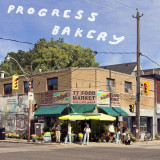
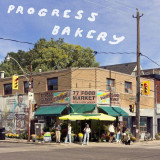
On Progress Bakery, her second album as a solo artist, Eliza knows to leave some questions alone – to let juxtaposition and tension be the proof. It doesn’t have to be hard. The feelings and revelations they provoke rise in the heat. The smell is sweet. Crispy on the outside and soft all the way through. She playfully slip-slides through words and sounds and images, delighting in surprise, skimming ideas like stones cast across clear water, touching down briefly with uncommon grace.
The question provoked between those opening lines resurfaces in the strands between songs – “Do U FM” is fully formed and beautifully layered, while “Novelist Sad Face” is a short, acapella rendering of gentle curiosity. What is holding these ideas together? Some songs demand more, seem to carry a whole load – eventually the skipping stone will halt to sink and resume its idle duty – while others drift in and out of focus, the way thoughts and dreams become interwoven before the mind is sunk into true sleep.
Music and words don’t always have to interact. Where she decides to keep them apart gives a new contour to where and how she puts them together. The kind of thing you’re supposed to take for granted with songs and their singers comes alive in Eliza’s hands – the little miracle of mixing, kneading, stretching, and stopping.
So often on Progress Bakery, Eliza teases out truth and meaning by asking questions. “Do I wanna be crying?” “Do you want me good or do you want me bad?” “Do I need an eye test?” “I’m writing songs in my head while you’re going over stuff with me — is that cruel??” In “Pocky” Eliza ends with a question that feels to me like the actual biography, succinct and revealing:
I don’t wanna be made to see
I just wanna ask “what’s that?”
Grace that ought to be rare, but in its care and precision is offered humbly, with great generosity, and without announcing itself. Eliza’s simple, miraculous music is given further form and shape by a group of collaborators – invaluable guest musicians Jeremy Ray, Evan Cartwright, Steven McPhail, Kenny Boothby, Ed Squires, Carolina Chauffe, Dorothea Paas, Louie Short, and Avalon Tassonyi. Together with Louie Short, who recorded, mixed, and produced the album along with Jeremy Ray and Lukas Cheung, Eliza has cultivated a richness in sound and texture that prods and provokes the ticklish ear. Barely audible guitar tinkering, a brief lo-fi field recording of trumpets, the harmonic clicking of a looped synthesizer, a flourish of reeds, a child’s conversation, each uncanny sound perfectly placed, rippling out under a soft breeze.
Lay in bed alone at night and ask aloud to the stillness,
“What were you doing at the Albuquerque Airport?
What were you doing there??”
And hear your question answered by a dream of swelling, undulating cellos. Try to grasp at the melody and structure. It’s not an answer (if there could be one), but it moves deeper, closer to the weird layer of fleeting moments and disconnected images, barely perceptible at its core. Wait for the dream reel to click into place.
Eliza took me for a ride in Nicole (her beloved Dodge Grand Caravan) and told me she’d been thinking of the album as an embodiment of transition – and I think every transition, known or unknown, carries the weight of new meaning, skittering off the surface tension of life as you know it, creating ripples, sometimes bouncing off and sometimes breaking through. There is a trick you can use to tell if a dough is glutinous enough. You’re supposed to stretch it out as thin as you can without breaking it and hold it up to the light. If you can see through, even if it renders the world murky and uncertain, you should leave it alone. I love this trick. It’s one that Eliza seems to know intuitively: work gently and ask questions and don’t always expect answers, and when you can, take a glimpse at something new, and then leave.
Kneading dough is tricky – you should know how it’s supposed to feel. If you try too hard you could make it worse. It’s a beautiful practice – creation with a gentle touch, to work at something so it can be left alone. “If it’s too drawn out it’s awful. It’s easy to give too much.” Dance in the mirror. Contemplate your veiny hands. Who do they remind you of?
You begin by mixing flour and water. “What happens when your people die? Why’d they move the rock to the other side of Ulster Park?” Eliza Niemi asks two seemingly unrelated questions in a rising melody with guitar accompaniment, like fingers playing spider up to the nape of your neck. Gentle pressure. Strands of gluten form to bind the mix. A new question lingers in the binding. When she admits “but I don’t know how to tell if I’m feeling it or not,” that question surfaces through the text. It is reiterated throughout the album. When I’m working with dough I think the same thing to myself.
On Progress Bakery, her second album as a solo artist, Eliza knows to leave some questions alone – to let juxtaposition and tension be the proof. It doesn’t have to be hard. The feelings and revelations they provoke rise in the heat. The smell is sweet. Crispy on the outside and soft all the way through. She playfully slip-slides through words and sounds and images, delighting in surprise, skimming ideas like stones cast across clear water, touching down briefly with uncommon grace.
The question provoked between those opening lines resurfaces in the strands between songs – “Do U FM” is fully formed and beautifully layered, while “Novelist Sad Face” is a short, acapella rendering of gentle curiosity. What is holding these ideas together? Some songs demand more, seem to carry a whole load – eventually the skipping stone will halt to sink and resume its idle duty – while others drift in and out of focus, the way thoughts and dreams become interwoven before the mind is sunk into true sleep.
Music and words don’t always have to interact. Where she decides to keep them apart gives a new contour to where and how she puts them together. The kind of thing you’re supposed to take for granted with songs and their singers comes alive in Eliza’s hands – the little miracle of mixing, kneading, stretching, and stopping.
So often on Progress Bakery, Eliza teases out truth and meaning by asking questions. “Do I wanna be crying?” “Do you want me good or do you want me bad?” “Do I need an eye test?” “I’m writing songs in my head while you’re going over stuff with me — is that cruel??” In “Pocky” Eliza ends with a question that feels to me like the actual biography, succinct and revealing:
I don’t wanna be made to see
I just wanna ask “what’s that?”
Grace that ought to be rare, but in its care and precision is offered humbly, with great generosity, and without announcing itself. Eliza’s simple, miraculous music is given further form and shape by a group of collaborators – invaluable guest musicians Jeremy Ray, Evan Cartwright, Steven McPhail, Kenny Boothby, Ed Squires, Carolina Chauffe, Dorothea Paas, Louie Short, and Avalon Tassonyi. Together with Louie Short, who recorded, mixed, and produced the album along with Jeremy Ray and Lukas Cheung, Eliza has cultivated a richness in sound and texture that prods and provokes the ticklish ear. Barely audible guitar tinkering, a brief lo-fi field recording of trumpets, the harmonic clicking of a looped synthesizer, a flourish of reeds, a child’s conversation, each uncanny sound perfectly placed, rippling out under a soft breeze.
Lay in bed alone at night and ask aloud to the stillness,
“What were you doing at the Albuquerque Airport?
What were you doing there??”
And hear your question answered by a dream of swelling, undulating cellos. Try to grasp at the melody and structure. It’s not an answer (if there could be one), but it moves deeper, closer to the weird layer of fleeting moments and disconnected images, barely perceptible at its core. Wait for the dream reel to click into place.
Eliza took me for a ride in Nicole (her beloved Dodge Grand Caravan) and told me she’d been thinking of the album as an embodiment of transition – and I think every transition, known or unknown, carries the weight of new meaning, skittering off the surface tension of life as you know it, creating ripples, sometimes bouncing off and sometimes breaking through. There is a trick you can use to tell if a dough is glutinous enough. You’re supposed to stretch it out as thin as you can without breaking it and hold it up to the light. If you can see through, even if it renders the world murky and uncertain, you should leave it alone. I love this trick. It’s one that Eliza seems to know intuitively: work gently and ask questions and don’t always expect answers, and when you can, take a glimpse at something new, and then leave.
- 1: Swarm
- 2: Synthetic Pathogenesis
- 3: Mechanisms Of Omniscience
- 4: Catalyst Of Metamorphosis
- 5: Vigilant Ignorance
- 6: Irreversible
- 7: Hopeless Masses
- 8: Assimilation
- 9: Cymatic Hallucinations
- 10: Consuming Infinity
Sunburst Yellow/Red Vinyl[28,15 €]
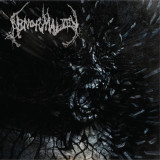
Mechanisms of Omniscience - a brutal and unrelenting journey through technical death metal, returns to the market as a special vinyl reissue, brought to you by our newly established record label. Originally released by Abnormality in 2016, this album has left a lasting mark on the genre with its punishing riffs, precise technicality, and intense lyrical content. Abnormality explores profound and provocative themes in every track, addressing existentialism, corruption, and the darker side of human nature. This is an album that defies genre expectations, marrying complex arrangements with raw aggression. Abnormality, a force hailing from Massachusetts, has carved a niche within extreme metal for its signature blend of technical prowess and relentless heaviness. Led by the fierce vocals of Mallika Sundaramurthy, the band is complemented by the exceptional talents of guitarist Jeremy Henry, bassist Josh Staples, and drummer Jay Blaisdell. Together, they create a sound that is as precise as it is punishing, offering fans a visceral experience in each performance. This reissue celebrates the lasting impact of Mechanisms of Omniscience while paying homage to Abnormality’s powerful contribution to metal.
This is a recorded document performed by Mark Holub, Johanna Pärli and Sofía Salvo.
As a trio, they had not met until sound-checking for their gig at Berlin’s Cashmere Radio on September 1, 2023 — a fact that may be concealed by their immediate understanding as a musical entity but is obvious by their artistic freedom and curiosity towards each hoc encounters, flexible and steadfast in its performance, and that culminated in an experience that shook the floor of the radio station’s headquarters.
The day after, Sofía, Johanna and Mark gathered in Adam Asnan’s studio and deepened their quest for a communal language. They ignored any musical fetters or conventions, enjoyed the possibilities of a wider time frame without a live audience — and exceeded all hopes of what three personalities can achieve when they are given the space and time to experiment, detached from any restrictions.
Mark Holub is a drummer of outstanding versatility and responsiveness, full of ideas and quick on his feet. Through his playing as well as his experience as a band-leader and composer he is able to steer this coequal group towards thundering crescendo, but sits equally comfortable in the centre of complex and fine rhythm probing in response to impulses thrown in by his companions.
Johanna Pärli makes use of her double bass’s entire body, extracting an armada of multi- layered sounds with an immensely high sonic spectrum that is also reflected in the diversity of her musical projects. She is both patient and wildly adventurous in her performance, and in this trio her contribution wanders from considerate bow work to brisk fingerpicking, gnarly string strikes and pedal use to startling effects.
Sofía Salvo unleashes the full unbounded potential of her voice by taking advantage of her baritone saxophone’s broad range of possibilities. She is one of Berlin’s most singular musicians and her widely proven capabilities cover gentle additions to support and underline pulsive interplay just as masterfully as rapid licks and roaring bursts of noise, spurring the collective to unpredictable intensity.
If music of this particular kind often gives the impression of a constant search, this international trio certainly managed to find common ground and capture a special moment in time for listeners to (re-)discover. Contrary to what frequent misconception sometimes suggests, it’s also tremendous fun.
NERR — Filling Open Spaces was instantly composed and performed live in studio by Mark Holub on drums, Johanna Pärli on double bass and Sofía Salvo on baritone saxophone, recorded in Berlin on September 2, 2023 and mixed by Adam Asnan. Mastered and cut by Rashad Becker, vinyl pressed at Pallas. Artwork and design by Stefan Lingg, produced by Christoph Berg and Stefan Lingg.
3x12" Color Vinyls[38,61 €]
It’s time to celebrate an amazing decade for pop music – as popular today as it was back then...and with so many fantastic hits to choose from we had to make this a 100 track selection across 5 CDS – including over 50 #1 singles… Time to immerse yourself in the decade that never stops… legwarmers on – it’s : ‘Also available on 5-LP boxset featuring 78 huge hits, including 40 #1s, over 10 sides of vinyl, pressed in 5 different colours, one for each LP – red, yellow, pink, green and blue. Then we have a 3LP set featuring 45 unforgettable hits, including 27 #1s across 3-LPs, pressed in a red, a blue and a green vinyl
Perila returns with a contemplative spiritual successor to her album »7.37/2.11«, which was also released on Vaagner’s sister label A Sunken Mall back in 2022.
Featuring a collection of 8 pieces produced between 2021 and 2023, the album carries a serene vulnerability that underpins each work, drawing the listener in while gently grounding them amidst a drifting, ephemeral motion of echoing voices, droning guitars and sonorous soundscapes. Like a whispered conversation in the quiet moments of the day.
Perila has once again created a world unto itself, one that doesn’t need to be understood but simply felt. If anything, it’s an album that brings us back to the present, reminding us that the chaotic disarray of the world outside can be addressed and mitigated through our internal landscape. By embracing imperfection and forging new paths, »The Air Outside Feels Crazy Right Now« is a testament towards Perila’s ability to turn fragility into a powerful form of strength.
For Giammarco Orsini, music has always been about creating connections— between tracks, people, and moments in time. 'UNIT-Y 001' embodies this idea, with each track capturing a distinct moment in Giammarco Orsini’s life. The EP blends House, Electro, Progressive, and 80’s influences, while weaving together personal memories and experiences.
His long-awaited solo EP, 'UNITY-001,' will be released through the newly formed label UNIT-Y, created by the minds behind Partisan and Mood Waves. As a label, UNIT-Y celebrates friendship, collaboration, and the inspiration that emerges from shared artistic journeys. Giammarco Orsini’s longstanding friendship with both label’s founders made him the natural choice to be the first artist to debut on this new platform.
Patrick Conway crossed the threshold to find a new hope. This is his third offering for the ESP Institute. On side A, 'Loss' sets an overall melancholic tone for the record. A single repeating high note on the piano establishes a guiding element, which is eventually supported by a tear-jerking yet resolving chord progression, a trailing choir of angelic voices, and a filter-modulating synth that pads the widest zones of the mix with the occasional counter-melody. Robust in and of itself, Patrick’s melodic arrangement floats gracefully over an otherwise antagonistic rhythm section built from his signature corroded dancehall arsenal. This hornets nest of boxed live kick drums, piccolo snares, and high-pitched toms is held together by a dry veneer of saturation, sitting at safe distance from but in natural harmony with the bulbous low-frequency atmospherics. On the flip, 'Silencio' employs a similar statement at the top of each measure, this time an anthemic polyphonic synth stab as opposed to the singular piano note, however, unlike the layered melodies throughout 'Lost', here Patrick explores the narrative possibility of negative space—call and response, rhythmic dialogue, and the implied notes that leave the listener’s or dancer’s intuition to complete a phrase. In the game “musical chairs,” children run around manically until signaled to find a chair, at which point their diverse personalties must urgently synchronize, until set free to run again and repeat the process. Patrick's approach for 'Silencio' conjures said metaphor—his melody and rhythm are unleashed to meander and spasm within the confines of each respective bar, until that anticipated synth stab unifies everything “on the one”—controlling the chaos, calling on muscle memory and affirming logic. These two songs will be with you always as they always have been.
*REPRESS* 2x12"
Poland's finest reggae dubstep export is back to guide us through the long dark winter with his highly anticipated second studio
album, Subconcious. Mat Miller solidified his position as one of the most exciting global ambassadors for the sound with his 2011
debut album and he returns to the mighty Moonshine Recordings with another killer full length selection of thick dread bassweight
and proper roots vibes. Matt's influences have always been varied, and his music's rich diversity is in full effect across the LP as he
adeptly shifts between tempos and moods, utilising his ear for melody and rhythm to create an absorbing collection of timeless
sounds. The ground shaking sub-frequencies central to each track are built to challenge soundsystems and ignite dancefloors,
whether it's on the livewire rhythms of his jungle indebted track 'Wicked Dub', the driving sonic force of the drum and bass styled
'Different Dub' or the dubbed out, skank-ready movements of tracks like 'Earthwalker' and 'Indra'. As well as the all-powerful bass
pressure, Radikal Guru works with a colourful array of instrumentation, and brings in characterful vocalists YT, Danman and Echo
Ranks to provide melodic lead and reggae lyricism on 'Stay Calm', 'Know Yourself' and 'Warning!' respectively. The final result is
shining example of modern roots/ reggae-centred music in 2013, executed brilliantly and certain to last the test of time.
Japanese artists Yumiko Morioka and Takashi Kokubo unite for Gaiaphilia, a journey through ambient soundscapes that seamlessly blends Morioka’s graceful piano compositions with Kokubo’s immersive field recordings and atmospheric synthesisers.
This collaboration brings together two of Japan’s most influential pioneers in ambient and new age music, each with decades of groundbreaking work. Morioka, celebrated for her 1987 album Resonance—reissued to critical acclaim by Métron Records—infuses her introspective playing with Kokubo’s vivid environmental textures, creating a dialogue between nature and melody.
After releasing Resonance, Morioka stepped away from music, moving to America to raise her family. For years, her work was quietly cherished by fans, only gaining wider recognition with its reissue in 2020. A devastating wildfire destroyed her California home seven years ago, prompting her return to Tokyo where she became a chocolatier before rediscovering her passion for the piano in recent years, playing live shows and making new recordings.
Takashi Kokubo’s legendary discography spans over 30 years, and has found wider acclaim in recent years via YouTube algorithms and bootleg uploads, wracking up tens of millions of plays. Yet he is probably best known for his sound design work, specifically the Japanese earthquake alert sound as well as credit card payment jingles - his creations are pervasive in Japanese society.
“From our love and concern for our planet, we both offer a unique sensibility and spirit of inquiry which we express through our music.”
Rooted in shared philosophical interests, Gaiaphilia reflects a profound reverence for nature’s resilience and harmony. Themes of Gaia, Mother Earth’s renewal, and the interconnectedness of life are central, with inspirations drawn from cosmology, sacred geometry, and Japan’s mystical Katakamuna tradition. The album invites listeners into a meditative space where sound mirrors the delicate balance of the natural world.
A master of sound design, Kokubo enhances this vision with his distinctive field recordings, captured using a self-made binaural microphone shaped like a crash test dummy’s head. From the jungles of Borneo to the gentle rhythm of ocean waves, Kokubo’s globe-spanning recordings transform into immersive soundscapes that perfectly complement Morioka’s introspective piano compositions.
“The title, Gaiaphilia, is a newly created word to encompass our love and respect for nature and life, this feeling is the theme we hoped to express.”
Released on Métron Records on 12/03/25 and with artwork from Ventral Is Golden, Gaiaphilia marks a remarkable new chapter for Morioka and Kokubo. Recorded at Kokubo’s log house studio named Studio Ion in Yamanashi, their collaboration offers listeners a deeply emotional and transcendent experience, rooted in the timeless beauty of Japan’s natural landscapes.