What It Means To Fall Apart sees Mayday Parade wading in a wide range of complex emotions. The band shared the first taste of the album with the anthemic single “Kids of Summer,” which infuses nostalgic memories of their care-free formative summers at Warped Tour into song, followed by the self-confrontational and vulnerable “Bad At Love.” On the newest single “One For The Rocks And One For The Scary,” the band sings about making the most of the time we have with the people we love.
Their seventh studio album together, What It Means To Fall Apart was created with longtime collaborators Zack Odom and Kenneth Mount, and saw the band diverge from their typical path in the studio. With no final destination in mind and setting their sights on just writing the best songs they could, they started chipping away at something, letting go of any attachment to whether they left the studio with a single, an EP, or a full record. They arrived at a fully realized album, 12 contemplative tracks written through the eyes of a band moving forward with the knowledge they could only gain from looking back. Full track listing can be found below.
The band is looking forward to sharing these songs in venues around the world, noting that it’s not just about creating music for them, but how that music connects them with their fans and each other. “We all live in different states and have separate lives with different things going on,” bassist Jeremy Lenzo shares, “But just being able to get back together and play music is always a highlight.” Lead singer Derek Sanders mirrors that sentiment as well, sharing that the spark that started Mayday Parade still shines bright, “Even after all this time and plenty of other ways it could have gone or plenty of other things that we could be doing with our lives, we're lucky to be able to do this.”
Поиск:each
Все
- A1: Ceremony
- A2: All Roads Lead To Los Angeles (Feat Jaleel Shaw)
- A3: Blaming Mercury
- A4: Window To A Shimmering World
- A5: Chemical X
- B1: A Ring On Each Finger
- B2: Kamishinjo (Feat Jacob Mann)
- B3: Inner Crooner
- B4: Wax Hands (Feat Brandee Younger)
- B5: You've Got To Pull It Up From The Ground (Feat Theo Croker)
"We're a bunch of outsiders who refused to be kept out," says High Pulp drummer Bobby Granfelt. "We've never had an academic approach to jazz-most of us grew up playing in DIY bands-so it was the rawness and the energy and the absolute freedom of the music that called to us in the first place." Indeed, there's something defiant, something utterly liberating about High Pulp's remarkable ANTI- Records debut, Pursuit of Ends. Drawing on punk rock, shoegaze, hip-hop, and electronic music, the band's brand of experimental jazz is both vintage and futuristic all at once, hinting at times to everything from Miles Davis and Duke Ellington to Aphex Twin and My Bloody Valentine. The songs here balance meticulous composition with visceral spontaneity, and the performances are nothing short of virtuosic, fueled by raw, ecstatic horn runs ducking and weaving their way around thick bass lines and dizzying percussion. While the Seattle-based collective is centered around a crew of six core members, they also make judicious use of a broad network of collaborators on the album, wrangling special guests like sax star Jaleel Shaw (Roy Haynes, Mingus Big Band), harpist Brandee Younger (Ravi Coltrane, The Roots), GRAMMY-nominated trumpet?er Theo Coker, and keyboardist Jacob Mann (Rufus Wainwright, Louis Cole) to help stretch the boundaries of their already-expansive sonic universe. The result is a lush, cinematic collection that's as unpredictable as it is engrossing, an urgent, exhilarating instrumental album that manages to speak to the moment without uttering a single word.
Spectacular live recording from 1986 of two seminal figures of the Japanese avantgarde - Akira Sakata on saxophone and Takeo Moriyama on drums. Mitochondria captures the reunion of the two free jazz masters, who started playing together in the Yosuke Yamashita Trio in 1972 until 1975. For both, the experience with the trio was an important step in the development of their own career and musicianship. The recordings are a remarkable performance in which each successfully highlights the essential elements of his playing while giving of room for the other musician. Recorded at Kashiwa Church Chiba Pref. In Japan on 24 May 1986 by Yukio Tezuka on Sony stereo cassette recorder. Mixed by Jim O'Rourke, Mastered by Martin Siewert. Graphic design/cover photo by Lasse Marhaug. Liner notes by Kazue Yokoi
- A1: Gary Clark & John Carney - Setting Sail 2021
- A2: Rosie Carney - Perfect Perfect
- A3: Jay Wadley - Just Leave, Please
- A4: Andy Shauf - Break My Silence
- A5: Chong The Nomad - Forward
- A6: Skye Edwards - All Frequencies Low
- A7: Jay Wadley - Worst Fears
- A8: Setting Sail (Nerina Pallot Version)
- B1: Gary Clark - Fire
- B2: Brian Byrne - Flirting On A Train
- B3: John Byrne & John Carney - Meet Cute
- B4: Gary Clark - Bedrooms
- B5: Nerina Pallot, Gary Clark & John Carney - Lockdown Dublin
- B6: Gary Clark - Michael
- B7: Gary Clark & Gregor Philp - Christmas
- B8: Gary Clark & Gregor Philp - Home Again
- B9: John Carney, Gary Clark & Gregor Philp - Moonstone
- B10: Setting Sail (Andermo Version)
A co-production of Amazon Studios and the New York Times, based on the weekly same-titled weekly column in The Times. This anthology series explores love in all of its complicated and beautiful forms, as well as its effects on the human connection. Each episode brings a different story to life that has been inspired by the newspaper’s popular Modern Love column. The second season premiered in August, 2021 and stars Kit Harington, Jack Reynor and Minnie Driver.
The score of Modern Love Season 2 features both score music and original songs heard throughout the season’s eight half-hour episodes. The music was written by Jay Wadley in cooperation with Gary Clark and feature vocal tracks featuring Rosie Carney, Nerina Pallot, John Byrne and Adermo. In addition, the score feature never-before-released songs written and performed by Andy Shauf, Chong The Nomad, Morcheeba’s Skye Edwards and Gregor Philp.
In November 2020, with the entire world locked down at home, Amir
Bresler was itching to create - He'd spent years onstage, but never
released a full solo album
A friend's invitation brought him to a rural village outside Tel Aviv, and the move lit a spark: Bresler set up shop in the village's local auditorium named 'The House of Arches', and planned single-day sessions with different combinations of Tel Aviv's finest, including keyboardist/ producer Rejoicer, Yemen Blues frontman Ravid
Kahalani, bassist Gilad Abro, pianist Nomok and trumpeter Sefi Zisling. For nearly a week, crews of friends drove north and dug into psychedelic jazz and funk, all built upon Bresler's polyrhythmic beats. They captured spontaneous bursts of energy ' free-form jams in the morning reigned into tight, mesmerizing grooves in the afternoon. Those six compositions ' each recorded live in one day ' make up
House of Arches, Amir Bresler's first solo LP, out on Raw Tapes, with grooves as deep as the Mediterranean where it was conceived.
The second installment in Fu Manchu’s 30th Anniversary vinyl 10” series, Fu30, Pt.2, includes 2 new original Fu Manchu songs, as well as a cover of Surf Punks’ “My Wave.” The band will be releasing 1 more edition in this 10” series, making a total of 30” of new Fu Manchu music for the Fu30 anniversary. Each release includes 2 new original compositions and a newly recorded cover. Like the band’s most recent album, Clone Of The Universe, and Fu30, Pt. 1, Fu30, Pt. 2 was recorded at The Racket Room in Santa Ana, California by Jim Monroe (Adolescents, Ignite) and co-produced with Fu Manchu. This limited edition 2500 unit run is pressed on pink neon vinyl at 45 RPM for maximum heaviness with a package design that pays homage to the cover of Surf Punk’s original single. Tracklist: 1. “Strange Plan” 2.“Low Road” 3.“My Wave”
Nothing is explained in the mysteries around us, but some art touches their soul: last year, Justin Tripp, one half of the US-American impro electronic duo Georgia and London-based electronic artist Zaheer Gulamhusein man behind projects like Waswaas and XVARR -joined forces as STRING. Together they went on a virtual vacation and never came back. As the virtual is fully real due to its virtuality, they created a truly authentic aural hardware journey, hauntingly adventurous, calm, and surprising.
Without defining the scope, STRING tumbled through a dark musical zone that stretched to the horizon, letting the sound shape itself while falling discreet into an appealing abstract space. Hovering clockwise shortly above the ground, they formed impossible geometric musical figures - weightless, fluid clouds, made up of relations between asymmetrical elements. Like in nature, their collaborative work avoids identical characteristics. In an expression of respectful admiration, they softly celebrate the irregularities between their specific genetic musical fingerprints, creating eight light binding clouds of dawn. A meditative musical voyage that transports cosmic particles of idealistic Berlin school ambient right into the heart of their electronic machines. All tunes swing calm but constitutive, dancing around synthesized surfaces that form obsessed flaming orbs of fear and hope, of matter and antimatter.
A shared love for hardware and the ethos of improvisation guided STRING into an experimentation, in which each party aligns closely to the core ideas of co-operative, in-the-moment electronic music, tied across the eight tracks in a sequence.
Finding a home with the highly esteemed Hamburg based label V I S, STRING’s debut “Last Index Of...“ will enter the earth in double vinyl and cassette format, plus tripping on at the digital platforms.
Even in trying times, “there is no love without electricity.” Electricity is the fourth and most progressive album from Ibibio Sound Machine, and like all good Afrofuturist stories, it begins with an existential crisis. “It’s darker than anything we’ve done previously,” says Eno Williams, the group’s singer. “That’s because it grew out of the turbulence of the past year. It inhabits an edgier world.”
Electricity was produced by the Grammy Award and Mercury Prize nominated British synthpop group Hot Chip, a collaboration born out of mutual admiration watching each other on festival stages, as well as a shared love of Francis Bebey and Giorgio Moroder. The fruits of their labor reveal a gleaming, supercharged, Afrofuturist blinder. Electricity is the first album Ibibio Sound Machine have made with external producers since the group’s formation in London in 2013 by Williams and saxophonist Max Grunhard. True, 2017’s Uyai featured mixdown guests including Dan Leavers, aka Danalogue, the keyboard jedi in future-jazz trio The Comet Is Coming, but Hot Chip and Ibibio Sound Machine worked together more deeply throughout the process, collaborating fully. Along the way, the team conjured a kaleidoscope of delights that include resonances of Jonzun Crew, Grace Jones, William Onyeabor, Tom Tom Club, Kae Tempest, Keith LeBlanc, The J.B.’s, Jon Hassell’s “Fourth World,” and Bootsy Collins.
The hook of opener “Protection From Evil” has Williams wielding a massive synth line from Hot Chip’s Al Doyle like a spiritual shield against unspecified, malign forces unspecified because Williams is speaking in tongues. Her lyrics are onomatopoeic: their meaning is defined in her energetic delivery. As Electricity takes off, so do Williams’ words towards a brighter future, alternating between English and Ibibio, sometimes within verses, and propelled by Joseph Amoako’s unabating afrobeat. She digs into this sentiment further on single “All That You Want,” coolly assuring her romantic interest while also requesting reciprocity. Meanwhile, Scott Baylis’ playful Juno synth guides the listener’s feet along the dancefloor.
Electricity is a deep and seamless realization of Williams’ and Grunhard’s ambitious founding manifesto to combine the singularly rhythmic character of the Ibibio language which Williams spoke growing up in Nigeria with a range of traditional West African music and more modern electronic sounds. While the band enjoys veering further into electronic territory with the help of mutuals like Hot Chip, Grunhard emphasizes, “For us, it’s not just a matter of embracing new technology. What’s key is to keep the music grounded in African roots.” Ibibio Sound Machine best exemplify this on Electricity’s “Freedom.” That track was inspired by the water-drumming rhythms of Cameroon’s Baka women, which in turn fueled its lyrics, which in turn prompted Hot Chip and Ibibio Sound Machine to layer joyfully kinetic electronic counterparts on top in the studio. As the track culminates with the mantra of “rage, hope, cope, soul,” it’s clear that Ibibio Sound Machine have channelled, harnessed, and distilled these words as guiding principles, both for the album and for the turbulent world that awaits it.
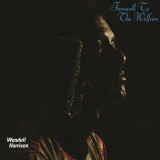
The Tribe Records co-founder’s lost album, rumored to exist no more. Mastered from the original tapes and lacquered by Bernie Grundman. “As I thought about reecting on an aggregate of music for this album, I projected my attitude and spirit while living and working here, in Detroit, Michigan. We are earning and learning a new way of life, which explicitly tells us to become self-reliant in taking care of our families and each other. Government hand-outs are not an option for us.” -Wendell Harrison The first ever issue of this Spiritual Jazz album. The Tribe label, one of the brightest lights of America’s 1970s jazz underground, receives the Now-Again reissue treatment. This is your chance to indulge in the music and story of one of the most meaningful, local movements of the 20th Century Black American experience, one that expanded outwards towards the cosmos. In the words of the collective themselves, “Music is the healing force of the universe.” Included in an extensive, oversized booklet, Larry Gabriel and Jeff “Chairman” Mao take us through the history of the Tribe, in a compelling story that delves not just into the history of the label and its principals, but into the story of Black American empowerment in the latter half of the 20th Century. The booklet features never-before-seen archival photos and rare ephemera from Tribe’s mid-1970s heyday.
Pink Vinyl
On Electro Records' ''Sci Fi Electro'' series, each artist has created a 15 minute track for each side of the record, taking you from pure electro tracks to very experimental compositions, sounds and atmospheres. Each side is divided in ''movements'' in a continuous morphing process without any pause between different tracks. The series is a collection of seven releases inspired by the following films created in the 20th century: THX 1138, 2001 A Space Odyssey, Blade Runner, The Thing, Akira, Terminator and Tron.
Blue Vinyl
On Electro Records' ''Sci Fi Electro'' series, each artist has created a 15 minute track for each side of the record, taking you from pure electro tracks to very experimental compositions, sounds and atmospheres. Each side is divided in ''movements'' in a continuous morphing process without any pause between different tracks. The series is a collection of seven releases inspired by the following films created in the 20th century: THX 1138, 2001 A Space Odyssey, Blade Runner, The Thing, Akira, Terminator and Tron.
DJ Stingray 313's highly-praised FTNWO LP returns to heed its sonic warnings and powerful messages on his own label, Micron Audio. Originally released on WeMe Records in 2012, FTNWO displays the high-tempo, ever forward production DJ Stingray 313 is known world around for. DJ Stingray 313 says "FTNWO was conceptually centered on conspiracy theory, science, prepper doomsday preparation / survivalism and social commentary," and the foreboding introduction of "Evil Agenda" sonically explains just what lies ahead for the listener. The stark warning leads into DJ Stingray 313's stomping "Dark Arts", beginning the FTNWO experience. "Room Clearance" gets straight to business with raw, gritty and true-to-the-art Detroit electro sounds, along with a heavy, quivering lead to piece the track together.
FTNWO's cyber-explorations continue with "Denial Of Service". "I NEED a computer!" shouts a destitute voice throughout the track, as a hypnotic siren lead weaves through pounding 808s. The uptempo onslaught continues with "Interest Rate" - pads that give a feeling of falling accompany samples lamenting the realities of debt in modern society. These statements in the samples permeating the aptly titled track eerily foretell many present-day situations in 2022, as well as prove testament to DJ Stingray 313's ahead-of-the-curve production techniques. "No Knock" also carries on with arpeggiated square waves and dissonant FM stabs laced intricately over thundering drums. "Outsourced" has a call and response feel, with lush, bright tiny synths talking with each other over a thundering rhythm akin to a drum & bass arrangement.
DJ Stingray 313's sound also stretches to more melodic planes, as "Reverse Engineering" displays. Brooding pads and icy percussion engage in a sonic dance. In the same on "Image Search", cold drums and riffs intertwine the warmer layering pads and leads. Both create two powerful compositions on FTNWO that move unlike any other. "Remote Viewing" only moves lower in tempo compared to the rest of FTNWO, DJ Stingray 313's keen ear to melody still burning brightly. F.T.N.W.O. remains an ageless album - an ominous piece from a near-distant past, back again as part of the Micron Audio catalog to soundtrack the new and uncertain times we live in.
The Ricardo Villalobos / Samuel Rohrer partnership has yielded increasingly interesting results over the past few years, with the former’s remixes of the latter’s trio Ambiq being supplemented by further reinterpretations of Rohrer’s solo work and live meetings at select events like Berlin’s Funkhaus and Radialsystem V. As should be the case with any strong collaboration, this partnership has been based on mutual challenge rather than compromise,
seeing each participant shuttle key technical and emotive aspects of the other’s work to previously unexpected places.
Those who have been closely following this relationship will notice a definite sense of continuity between previous outings and the new collaborative release entitled MICROGESTURES. As with those earlier Villalobos / Rohrer pairings, these four new pieces are defined by a special quality of being many things that once: that is to say, depending on the listener’s own level of focus, these can feel very tightly constructed and disciplined, or playful and freely wandering. That the tracks are equally engaging regardless of one’s chosen listening “mode” is a testament to the level of thought put into them; you could almost imagining the creators poring over some elaborate sketched set of architectural blueprints rather than coolly monitoring the usual multi-track editing software.
Altogether the music here is firmly a-melodic and percussive, but within these deliberate limitations there is still a greater variety of individual sounds than most would bother with. Each track is its own observatory of microgestures clustering together into a dense communicative fog or a sort of robotic sound swarm. Yet while all
these tracks are variations on that theme, each one has its own character and, consequently, its own rewards in terms of the exact sectors of the imagination that it activates.
Take for example “Cochlea” and its twin “Helix,” on which the magnetizing, busy layers of percussion are tempered with mischievously disruptive blossomings of digital noise, as well as sampled radio communications (which again bring us back to the idea of listeners’ attentiveness changing the meaning of this music - these
curious transmissions can either be taken as a purely aesthetic element or as something to be actively decoded).
Club-oriented elements are also not absent from this suite, particularly on “Incus” with its traditional sequenced baseline, crisp synthetic trap and hats, and dizzily sliding set of bell-like tones laid on top.?
Yet this track, too, is powered as much by its restless desire to deviate as by its rhythmic consistency: throughout the eleven-minute running time, a mass of ambiguous and restless machine sounds build a parallel narrative, and will maybe prompt the occasional glance over the shoulder as they seem to be taking on their own life. “Lobule” rounds out the program with the most rhythmically eventful sound set off the five.
What this all adds up to is a confident music which builds that quality from its faith in possibilities rather than firm conclusions: it’s an inspiring addition to both the musical landscape and reality in general
Following hot on the heels of his recent mini-album for Elephant Gait, Italian producer Joseph Tagliabue is back with a full-length album on Glasgow's Invisible, Inc.
With Un' Altra Forma Di Vibrazioni Tagliabue continues to expand on the cosmic foundations laid by such pioneering experimental forefathers as Franco Battiato and his ground-breaking abstract ambient work of the '70s and Klaus Schultze whose legendary Innovative Communications label birthed the “Berlin school” sound at the start of the '80s, then tracing a path toward later luminaries like Boards of Canada and Plaid. There's a personal, emotive and ethereal quality also present here conjuring feelings of 4AD's glory years and the likes of This Mortal Coil and Dead Can Dance. However, backwards-looking music this is not. It's fair to say the Milan-based producer is developing his very own distinct sound as he matures from one release to the next and regardless of his wide range of influences, it's Tagliabue's firm grasp of sound design and audio engineering that takes this album far beyond the realm of just “electronica” or “psychedelia” and plants it firmly into a distinctly forward-looking contemporary space of its very own that's as much music for the heart as it is music for the head.
Tagliabue provides some insight: “Un' Altra Forma Di Vibrazioni (meaning Another Form Of Vibration in Italian) is a concept album inspired by one of the most sensational scientific discoveries of recent years, namely evidence of the existence of the "Cosmic Web". The album is comprised of ten tracks, each linked to one another, much like the various forms of matter in the cosmic web, and whose meaning can only be understood by listening to them as a collective whole, rather than as separate pieces of music. The album therefore is a well constructed sonic experience fusing elements of ambient, psych, rock, experimental and trance and is designed to be listened to continuously from start to finish; the album's journey through the universal elements is reflected in each track, whose rhythms resonate in harmony with the phenomena they represent, whilst a backdrop of drones and mesmeric grooves contribute to an atmosphere of otherworldly mechanical oneirism."
Having worked together for several years on the project 'Zeitgeist Freedom Energy Exchange' Zeitgeist and Tucceri come together here in a very intimate and vulnerable setting. This recording offers a place of reflection and healing amongst an ever imposing and disposable pop culture. In a time where we fight for each others attention in 10 second social media grabs. The duo offer something of the opposite. An opportunity to tap out of the technological bombardment and allow the listener the place to reflect, to ponder, to imagine.
Nick Walters returns to his D.O.T. Records imprint with a suite of forward thinking, cosmic, electronic-jazz experiments, inspired by NASA & the concept of gravitational singularity. Each track on “Singularity”, his first home studio produced album, is built around an audio sample recorded by NASA in space, then expertly transported back to earth by Walters via some magical trumpet and synth work on his newly purchased Juno-106. The album features key contributions from Ruby Rushton drummer Tim Carnegie, 22a Music’s Tenderlonious on flute and some sublime guitar work from Thibaut Remy.
Having been previously released digitally and on CD back in 2009. We decided RSD 2022 was a great opportunity to release this seminal album on Red Transparent vinyl for the first time.
‘Don’t You Remember The Future’ is the debut artist album from Jamie Jones, peering into the coming apocalypse with a body-shaking, teeth-grinding, tripped out fusion of sound on Crosstown Rebels.
There are some talents that remain inconspicuous and then there are some you can’t ignore. Jamie Jones is the latter, quickly rising to superstar status in underground dance circles over recent years. Releases on Crosstown Rebels Hot Creations, Defected, Cocoon, Get Physical and BPitch have catapulted him to become a cult figure and he is widely admired for his true originality. From his debut single ‘Amazon’, to his albums' anthem ‘Summertime’, his unique sound has won him worldwide audiences and this album has been widely anticipated as one to change the face of current house music.
With ‘Don’t You Remember The Future’ Jamie Jones delivers an album of “intergalactic techno house, where old school prince meets cybertron.” A seamlessly blended up-tempo mix filled with eerie and energetic moments. Featuring ten brand new tracks from Jamie Jones, alongside this years dance floor anthem ‘Summertime’ and the current ‘Galactic Space Bar’ - which features the vocals of Egyptian Lover - the album’s twelve tracks are stitched together in an entangled web of beats and bleeps, available digitally as separate edits.
Cosmic cuts such as ‘Mars’ and ‘Deep In The Ghetto’ create a new dimension through soaring synths and idiosyncratic samples while the sonic dance floor weapons ‘Half Human’ and ‘This Is How’ release the lethal disco master within Jamie Jones. The jacking, peak time moments of ‘Summertime’ and ‘Sand Dunes’ produce a current take on the early acid house sound and each step of this peculiar story solidifies the strange notion of being within an undiscovered time and place. ‘Don’t You Remember The Future’ features the guest vocals of a variety of musical souls, checking off some of Jones’ remote influences and revealing the greater versatility of this skillful artist. Norwegian oddball duo Ost & Kjex feature on the anthem, ‘Summertime’.
The seductively charged ‘Absolute Zero’ unmasks the talent of London based DJ, producer and vocalist Alison Mars (AKA Alison Marks), resulting in a beautifully epic and mysterious after hours track, and the toxic ‘Galactic Space Bar’ features live vocals from one of the creators of the electro scene, The Egyptian Lover, an old hero to Jamie Jones through early rap cuts like ‘Egypt, Egypt’ and ‘I Need a Freak .’ ‘Don’t You Remember The Future’ vinyl release is the album that brought the future into the present."
Exclusively premiered by Afrodeutsche on BBC Radio 6 Music and supported by Mr Scruff, the new Band on the Wall-released 7" from Manchester's Lovescene is a devastating encapsulation of the collective's multiple personalities.
Finding each other amidst the more soulful side of the Manchester club scene, Suits You/Overnight (Dancefloor Mix) comes out hot on the release of the group's debut album and is an irresistibly rich mix of velvet RnB, groove-laden soul and driving floor filler. The group deliver both in widescreen opulence, a direct link to their name which comes from band leader and vocalist Pops Roberts' love of cinema.
In March 2020, Tahiti 80 had a plan to start recording their new album in the studio. That plan, of course, along with everything else in the world, got derailed. But the five-piece group was resilient and resourceful. They quickly shifted to a socially distanced plan B that included file swapping and virtual sessions, all refereed by producer Julien Vignon. The result, due for release in March 2022, is the buoyant Here With You, a collection of eleven upbeat songs that unfold like a prescription for a post-pandemic panacea.
“When lockdown in France happened, we said, 'We're not going to stay at home not doing anything,'” says singer-guitarist Xavier Boyer. “And our new plan became a hopeful thing, waking up every morning and seeing what the other guys had worked on. It wasn't always easy, but this new method allowed a freer approach where we could really go all the way with an idea without being influenced by each other’s suggestions. It must've been overwhelming for Julien, who ended up selecting all our arrangements. But he stayed positive all the way through.”
To help stay inspired and focused during their time in isolation, the band created a mood board, with the centerpiece a photo of an early '90s rave in the UK.
Boyer says, “Whenever you see pictures from this era, people seem very innocent. There are no cell phones and everybody is in to what they are experiencing. We kept that picture in mind as a kind of mantra that would help everyone feel connected to this idea of people celebrating, gathering and just having fun. We were missing the connection with people, and thought it would be great if we could create music that would inspire that kind of emotion.”
Indeed, the songs on Here With You are brimming the feeling of communion that we've all been missing over the past two years. It's there in the catchy opener Lost in the Sound, which walks the walk with Chic guitar flicks, urban nightfall sparkles and an inviting chorus (“Your heart grooves like a thousand 808s on the right time”). It's there in the Jackson 5-style syncopated bounce of “Vintage Creem,” the lush, dreamy “Breakfast in L.A.” and the panoramic sweep of “UFO.” And it's there in the first single “Hot,” which matches an irresistible groove with a neon-lit, percolating arrangement that evokes the disco clubs of 1979.
What's remarkable is that though Tahiti 80 displays a clear affection for sounds of the past, from bubble gum to '70s soul, they never trade in mere pastiche. Their take is more a slightly warped and playful carnival mirror mash-up of classic pop styles, given depth through Boyer's hang-gliding, coolly emotive vocals and lyrics that often rub against the euphoric grain of the music.
“I like to think of songs as a three-minute drama,” says Boyer. “This concept of drama definitely adds different levels to our music. There's the melody, the lyrics, then the production that can maybe emphasize or counterbalance the interaction between the yin and yang in a song.
“There's a difference between the very upbeat, sunshine-y soft rock and the lyrics, even on our past albums,” he continues. “Not dark, but a little more melancholy, and also looking for some kind of motivation, talking to yourself. Like with a lot of Motown songs, you get that feeling where you body’s dancing while your mind’s reflecting, reminiscing.”
That alluring blend of happy-sad has been a signature part of the Tahiti 80 sound from the time Boyer and bassist Pedro Resende formed the group in 1993, as students at the University of Rouen. Taking their name from a souvenir t-shirt given to Boyer's father in 1980, the duo recruited guitarist Mederic Gontier in 1994, and with the addition of drummer Sylvain Marchand a year later, the lineup was complete. The foursome released a self-produced and self-financed EP, 20 Minutes, in 1996, which resulted a record deal with French label Atmospheriques in 1998. Their full-length debut Puzzle, produced with Ivy's Andy Chase and mixed by Tore Johansson, went gold and featured the international hit “Heartbeat” that established the band throughout Europe and Asia.
In the years since, Tahiti 80 – with the additions of Raphaël Léger on drums and Hadrien Grange on keys - has released eight acclaimed albums. The band has fused what MOJO called a “glorious entente of old and new technology” (including singles like “Yellow Butterfly,” “1000 Times,” “Sound Museum,” “Crush!” and “Big Day,” which was featured on a FIFA video game soundtrack), while collaborating with such producers and arrangers as Richard Swift, Tony Lash and Richard Anthony Hewson, who famously arranged The Beatles' “Long and Winding Road.” Boyer has also put out two solo albums, the first under the anagram Axe Riverboy and the second under his name. In 2019, the band released Fear of an Acoustic Planet, a stripped-down reimagining of some of their best-loved tracks from the previous twenty years. It served not only as a look back but a reminder of their formidable songwriting skills.
Boyer is definitely a student of the timeless three-minute pop song format pioneered by '60s artists like The Beatles and The Beach Boys. He says, “I see it as kind of a frame for a painting. Most of the songs on this album, I wrote a verse, pre-chorus and chorus. There aren't many middle eights. I wanted it to be very concise. I feel like people have less attention. There's so much music. It's too easy to switch off or skip to another track, so I want to hook the listener. The three-minute song is kind of an easy code to crack, but at the same time you have to figure out a new way to tell the stories that we've heard before.”
And the stories on Here With You are very much about the longing for connection. Of the album title, Boyer says, “In the world right now, that can mean a lot of different things. Like missing our fans, missing going to concerts. In a way, it can be a statement of what happened last year, and a wish of 'I want to be here with you again.' It's our ninth album. We've had some had some very open, conceptual titles like Puzzle, Activity Center. Sometimes they were more specific like Fosbury orWallpaper for the Soul. Here with You, seems more personal, more engaging in terms of relationships. When I suggested that title, everyone in the band said, 'Yeah, that's it.'”
Until Tahiti 80 can resume a full tour schedule, Boyer says he hopes the new record will make that personal connection. “If I see from the point of view as a music fan, sometimes I see albums I like as companions throughout my life. So if we can be a part of people's existence, even if it's a song that reminds them of the time they were driving with the windows open and it was sunny. Or a sad song that resonates with them after a breakup. That's what we're all looking for when we're making music. You do this very personal thing and you want it to touch as many people as possible.”
2023 Repress
"banging piece of sound art" - The Observer
"...a fascinating piece of Brutalist techno that pivots between crisp machine-like minimalism and granulated noise." - Clash
"A piece of immediately engaging techno it reveals more of itself with each listen." - CMU Daily
Nik Colk Void is well established with her work as one half of Factory Floor, one third of Carter Tutti Void (alongside Chris Carter and Cosey Fanni Tutti) and with the late Peter Rehberg as NPVR, but perhaps surprisingly, "Bucked up Space" is her first solo album release.
Void explains, "When Peter Rehberg initially asked me to produce a record for Editions Mego, I didn't feel quite ready and asked if we could make a record together instead. Collaboration is so ingrained into what I do, I only felt ready to make this album after working through ideas live, using the audience in place of the collaborator."
Bucked Up Space combines Void's love of improvisation with the driving force of beat-driven music absorbed from performing in galleries, residencies and clubs across the UK and Europe. She goes on to say, "You find out more about yourself when you explain your ideas to others, and that's how I felt the live performance worked for me."
The process steadily teased out a language and Void employed a variety of tactics in the recording process including a methodical approach of collecting data at her home studio in a manner not dissimilar to keeping a diary. Her microscopic focus on raw instrumental noise, layered and reformulated, resulted in a sound catalogue that Void divided into groups for their tone, density and texture.
These initial pieces were taken to a studio in Margate to put them into a more cohesive compositional context. Something that pragmatically started as cold and detached was given warmth, unity and emotion in the studio. Via improvised repetition co-existing alongside organised production, Void conjures new sonic muscle with tracks such as 'Interruption Is Good' and 'FlatTime'. Initial recordings are rendered into sequences initiating the organic rhythms, triggering awkward jerks of high hats and percussion, or used to activate the margins of post effects detectable in the tracks like 'Demna', 'Big Breather' and 'Oversized'.
Void explains: "It was important to me that the simplicity in the work disguised a lot of complexity, I want this work to be absorbed instinctively."
The sleeve image, a still from We Are City by Brazilian artist Maria de Lima, was chosen to illustrate Bucked Up Space, which Void describes as "a distorted reality, the space that lives at start of an idea, then floats in public view, before returning to inform my understanding of the idea. Once the idea is out in the world, it moves and morphs into something else entirely."
Written, performed and produced by Nik Colk Void, the album was engineered by James Greenwood, mastered by Rashad Becker and tracks 1, 4, 5, 7 and 9 were mixed by Marta Salogni.
Bucked up Space is the result of the ideas and resulting sounds of free exploration morphing into a personal structured album that fearlessly moulds patience, listening and restraint. It's a sharp focussed work embracing collective action through the lens of the self. All this, and also one of the best abstract dance records you will hear in some time!