The definitive collection of Laraaji's earliest works, Segue To Infinity compiles his 1978 debut Celestial Vibration and six additional side-long studio sessions from previously unknown acetates from the same period. A lengthy essay by Living Colour's Vernon Reid chronicles the origins of Edward "Flash" Gordon, illustrated with dozens of previously unpublished photographs that capture this beautiful and elusive young artist. Full of discovery and wonderment, Segue To Infinity is a miraculous chronicle of new age's most fabled artist.
Buscar:ear dis
LTD. GALAXY VINYL
The definitive collection of Laraaji's earliest works, Segue To Infinity compiles his 1978 debut Celestial Vibration and six additional side-long studio sessions from previously unknown acetates from the same period. A lengthy essay by Living Colour's Vernon Reid chronicles the origins of Edward "Flash" Gordon, illustrated with dozens of previously unpublished photographs that capture this beautiful and elusive young artist. Full of discovery and wonderment, Segue To Infinity is a miraculous chronicle of new age's most fabled artist.
- A1: Suahn - Glowsticks 03 23
- A2: Chark - Athame 04 57
- A3: Kryptt - Fourfold (Berserk) 03 09
- A4: Phydra & Tobacco Rat - Rabid 03 14
- A5: Flix - Click Clack 03 14
- A6: Moniker - Solitude 03 13
- B1: Styl & Niceotope - Demolition 03 24
- B2: Low Poly - Whiplash 02 51
- B3: Unitled
- B4: Mahsiv - Coast 03 09
- B5: Dead End - Grind 03 39
- B6: Subtle - Don't Play 02 28
HALFTONE The future of heavy bass music has always found its portal via SATURATE! Records, and now alongside WAVECRAFT, we have another glimpse into infinity in the form of HALFTONE! From the onset of this compilation, you can feel the ominous bass ballast even before it first hits you…. Swelling up like a tsunami to engulf your brain with grinding terror. The heaviness is abundant across these tracks, with contributions from synth destroyers like Suahn, Kryptt and Low Poly melting your speakers and eardrums alike. Dark atmospherics rule the day here, which effectively sets the tone for the rabid roughness on display when the bass morphology takes hold of each track so mercilessly. Slow knuckle draggers and upbeat head bangers both hold dominion in this realm, leaving no sonic stone unturned. Always at the crest of the future music wave, HALFTONE shows you just how deep this rabbit hole can get.
I'm in it. The music on Coast doesn't beckon, it purely compels you closer through sheer insistence on its existence. insist in sist ins ist i nsist insist 'Spiral' presents full gorgeous tones, timbres and textures. Round throbs like the lighthouse spins of light, very orbic. orbic orb ic orbi c orbic 'Later' is distilled even further. It makes you stand up, announcing itself not with some cry or bang but with a style of momentum rarely encountered: inviting yet insistent. ins orb ist ic ent
Andrew Choate
Mike Majkowski is a double bassist / music-maker from Sydney, based in Berlin. Active across a wide range of experimental music since the early 2000s, he has released music with numerous projects. Coast is his twelfth solo recording.
Ever dream you're in a spaceship on a never-ending journey to an unknowable destination? That's how Nyles Lannon often thought of life in the early part of the pandemic, when time seemed to stand still, before the vaccines or even knowing when there might be any. But whether that spaceship is a desolate prison or a vessel for escaping to a better world depends on how you use it. With literally nowhere to go, the Film School guitarist and his then-12-year-old son Skye, on drums and modular synths, would jam most evenings in Nyles's home studio, just to have something to focus their minds on and counter the tedium of "remote learning." What started out as a way to keep his talented kid busy became a means to process the anxiety and disorientation of that strange, scary stretch of time. The result is Vanishing, a ten-song album of moody melodies, new wave beats, droney rock, and even an electrogroove instrumental interlude, by the father-son project they named Nyte Skye.
The emotional toll of lockdown, our collective grief, the literal darkness that engulfed the sky thanks to devastating wildfires brought on by climate crisis—these are heavy subjects, but the songs also convey how we managed to keep each other sane, and inspired, through it all. Film School devotees will find plenty to love; so will fans of the Police (Stewart Copeland being one of Skye's major
influences), the Cure, Spiritualized, and Elliott Smith. The album's opener, "Dream State (I'm Vanishing)," is a wistful synth-driven indie gem about disappearing into an alternate universe where worries don't exist. "Doing Time," with its massive washes of 12-string guitar and sophisticated syncopated beat, is a shoegazey meditation on holding onto a child's sanguine outlook in the face of adversity. If dream pop track "Take Me Up Again" is the album's bounciest, its counterpoint is "Faded," whose bittersweet melody and gentle rhythm bely themes of physical and emotional frailty.
Ultimately, not only did working on Vanishing help the duo cope with a uniquely challenging situation, but just being stuck at home helped stoke their creativity. "Music was the only thing I did during the pandemic, besides online school," Skye says. "It gave us all this time we didn't have before to make the album." For Nyles—knowing they might never have that kind of time again—to be able to put out a record with his son is, simply, "a dream come true."
Vanishing was written, recorded, and produced by Nyles Lannon and Skye Lannon and mixed by Dan Long, with additional contributions from Zach Rogue (Rogue Wave), Nichole Kreglow (backup vocals), lyricist Neil Rodenmeyer (Lupa Rosa), and Ian McDonald (FUTRVST).
Studio One was founded by Clement "Coxsone" Dodd1 in 1954, and the first recordings were cut in 1963 on Brentford Road in Kingston.[1][2] Amongst its earliest records were "Easy Snappin" by Theophilus Beckford, backed by Clue J & His Blues Blasters, and "This Man is Back" by trombonist Don Drummond. Dodd had previously issued music on a series of other labels, including World Disc, and had run Sir Coxsone the Downbeat, one
of the largest and most reputable sound systems in the Kingston ghettos.
In the early 1960s, the house band providing backing for the vocalists were the Skatalites[3] (1964–65), whose members (including Roland Alphonso, Don Drummond, Tommy McCook, Jackie Mittoo, Lester Sterling and Lloyd Brevett) were recruited from the Kingston jazz scene by Dodd. The Skatalites split up in 1965 after Drummond was jailed for murder, and Dodd formed new house band the Soul Brothers (1965–66), later named the Soul Vendors (1967) and Sound Dimension (1967-). From 1965 to 1968 they played 9 a.m. to 5 p.m., 5 days a week, 12 rhythms a day (about 60 rhythms a week) with Jackie Mittoo as music director, Brian Atkinson (1965–1968) on bass, Hux Brown on guitar, Harry Haughton (guitar), Joe Isaacs on drums (1966–1968), Denzel Laing on percussion, and on horns (some initially and some throughout): Roland Alphonso, Dennis 'Ska' Campbell, Bobby Ellis, Lester Sterling, among others on horns during the era of Rock Steady. Headley Bennett, Ernest Ranglin, Vin Gordon and Leroy Sibbles were included among a fluid line-up, to record tracks directed by Jackie Mittoo at Studio One from 1966-1968.
During the night hours at Studio One from 1965-1968, singers like Bob Marley, Burning Spear, The Heptones, The Ethiopians, Ken Boothe, Rita Marley, Marcia Griffiths, Judy Mowatt, Alton Ellis, Delroy Wilson, Bunny Wailer[4] and Johnny Nash, among others, would put on headphones to sing lyrics to original tracks recorded by the Soul Brothers earlier each day. These seminal recordings included "Real Rock" (by Sound Dimension), "Heavy Rock", "Jamaica Underground", "Wakie Wakie", "Lemon Tree", "Hot Shot", "I'm Still In Love With You", "Dancing Mood", and "Creation Rebel".
Jackie Mittoo, Joe Isaacs, and Brian Atkinson left Studio One in 1968, recorded drums and bass for Desmond Dekker's and Toots' biggest hits at other Kingston studios, then moved to Canada. Hux Brown stayed in Jamaica to record on the soundtrack The Harder They Come, The Harder They Fall, and toured in Nigeria with Toots and the Maytals and Fela Kuti. The Soul Brothers (a.k.a. Sound Dimension) formed the basis of reggae music in the late 1960s, being versioned and re-versioned time after time over decades by musicians like Shaggy, Sean Paul, Snoop Lion, The Clash, String Cheese Incident, UB40, Sublime, and countless other Billboard originals and remakes trying to emulate their original Rock Steady sound at Coxsone's Studio One.
Breaking the Balls of History, recorded in five days and produced by John Goodmanson at the legendary Robert Lang Studios in Shoreline, WA. Here are two artists at their prime, each a human library of musical knowledge and experience, entirely distinctive in their songcraft and sound. In Quasi-form, the band becomes alchemically even greater than the sum of its parts: Janet’s galloping drums and Sam’s punk-symphonic Rocksichord and their intertwining vocals make something gigantic, anthemic. In the thick of a cataclysmic social and political moment, they’ve crafted exquisitely melodic songs that glitter with rage and wild humor and intelligence, driven by a big bruised pounding heart.
AMBER ARCADES ist das Pseudonym von Annelotte de Graaf, der niederländischen Singer/Songwriterin, die zwei EPs und einige von der Kritik gefeierte Alben aufgenommen hat, von denen das zweite, "European Heartbreak", durch "hints of Lindi Ortega and early Saint Etienne, breezy, dreamy pop more personal than political" (The Guardian) glänzt. AMBER ARCADES verlor kürzlich für einen Moment den Glauben an die Musik, gewann ihn dann aber wieder zurück und liefert nun ihr bisher atemberaubendstes Album ab: "Barefoot On Diamond Road", das am 10. Februar 2023 erscheinen wird - ihre erste Veröffentlichung auf Fire Records. Die erste Single "Just Like Me" ist ein offenkundig tanzbarer und triumphaler Song, der durch seine Stop/Start-Struktur eine beunruhigende und unvorhersehbare Schärfe in das Geschehen bringt. "There's a clear distinction from my last record ,European Heartbreak', which had a complete narrative. This record is completely the opposite" erklärt die Niederländerin in einem Statement zum neuen Album. Eingetaucht in eine alles verzehrende Wall of Sound ist "Barefoot On Diamond Road" wie MY BLOODY VALENTINE in akustischer Form; es sollte eigentlich nicht funktionieren, aber tut es trotzdem. Es ist eine Gegenüberstellung von Texturen, von sprunghaften, unruhigen Dancefloor-Beats bis hin zu symphonischer Kosmik, ein barocker Pop-Teppich, der mit Celli und Harfen bestückt ist, mit einer klagenden Steelguitar, die in der Ferne widerhallt. Die Schlagzeug- und Perkussions-Arrangements von Matt Chamberlain (PEARL JAM, BOWIE, DYLAN, ADELE, LORDE, SPRINGSTEEN, COHEN...) verleihen dem Ganzen zusätzliche Textur. Es ist ein Album von einnehmender Reife, gefüllt mit Zeitlupen und epischen Steigerungen, die es mit all der Dramatik in schwindelerregende Höhen heben - man denke an THE GUN CLUB, die sich mit PORTISHEAD zurücklehnen, alles könnte passieren, es ist ein imaginärer Film... und PJ HARVEY lauert im Schatten. AMBER ARCADES neues Album "Barefoot On Diamond Road" markiert eindeutig eine neue Phase im Schaffen der hochangesehenen Musikerin. "Wistful, glowing dream pop" The Guardian
- 1: La Nouille … L'air
- 2: Complainte De La Bete
- 3: Mordue
- 4: Les Vaches Musiciennes
- 5: La Fille Brule
- 6: Un Bezoar Dans Le Ventre
- 7: Failli Tomber
- 8: La Vie Secršte Des Doryphores
- 9: Boue Qui Roule
- 10: Vengeance Tardive
- 11: Ingurgiter Ton Image
- 12: Para Lo Lop
- 13: La Fontaine Noire
- 14: La Violeta
- 15: Je Suis Sur L'autoroute
- 16: Aucel Perdut
- 17: Chant Pour Dissuader L'etre Aim De Sortir La Nuit
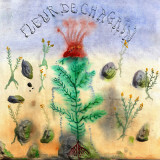
Pauline Marx, formerly of the fantastic duo La Fureur de Vouivre, seems like a being from another time and place; namely, an escaped marauder lurking in the forests of a Bruegel painting and integrating the surreal flora and fauna of a Boschian creation into the scenery and lore of deep Brittany. Her invented mythology is loaded with murky rituals and contorted mantras, backed by the surprising sounds and textures of terrains so earthly and so unreal.
The Devil at the Crossroads
Where do you think you come from? Where do you think you're going? Lasciate ogni speranza, voi ch’entrate: you, with the noodle to the four winds, who pass the threshold of this disc, you better leave all hope there, and glide in the poisonous footstep of the devil your guide.
Where do you think you come from? The mountain is no longer just the mountain; after your passage, it will no longer even be a mountain. Like the whole landscape, it will have been eaten, sauced by invisible leeches. Your nostalgia for the ground and your thirst to find the source will have only discovered a forest of vain words and foul water. Where do you think you're going? At the crossroads, the world is consumed in the previous future. Only the devil will know how to make you overcome the disgust of traditions, and only the love for the devil will give you enough vim to reach your goal: a village, perhaps, but which belongs to no one, a haven to your excessiveness .
The dark tradition to which this game of ternary trampling belongs, like the rhythm of a heart in tune with the inverted world, has no country and no assigned time. Rather a topology of Eve awakened after a thousand-year sleep, an idiosyncratic and possessed reading of our common humus, made up of stories composted in the limbo of the past, of songs captured in extremis vitae and rebus in the privatized antechambers of death.
What does she tell us about? Of our automobile and in love roamings, of the porosity of the membranes that separate beings and things, of the constant inversion of signs. The seventeen stages of this short journey, where intertwine the throbbing of objects, blown horns and rubbed horsehair, form the map of a country never to be found, ours, where only the voice of an old child and the disgusting devil's poisonous charm can guide us.
- A1: Danny - Maantielta Taloon (Nachts Scheint Die Sonne) (Nachts Scheint Die Sonne)
- A2: Koivistolaiset - On Siita Aikaa (Good Grief Christina) (Good Grief Christina)
- A3: Danny - Muuttokoon Maailma Taa (Cigarettes Women & Wine) (Cigarettes Women & Wine)
- A4: Virve Rosti - Antaudun (Giving Up Giving In) (Giving Up Giving In)
- A5: Mona Carita - Mona Carita Soita Mulle (Call Me - Theme From American Gigolo) (Call Me - Theme From American Gigolo)
- A6: Virve Rosti - Ohari (The Runner) (The Runner)
- B1: Markku Aro - Lady Lady Lady (Lady Lady Lady) (Lady Lady Lady)
- B2: Eini - Pista Valot Pois (Vamos A Bailar) (Vamos A Bailar)
- B3: Mona Carita - Mika Fiilis (Flashdance... What A Feeling) (Flashdance... What A Feeling)
- B4: Tarja Jykyla - Jos Valot Sammuttaisit (Turn Out The Night) (Turn Out The Night)
- B5: Seija Simola - Luotan Rakkauteen (Thief Of Hearts) (Thief Of Hearts)
- B6: Tauski Peltonen & Meiju Suvas - Kay Mun Vierellain (Hand In Hand) (Hand In Hand)
The pioneer of electric pop music, Giorgio Moroder (born April 26, 1940 in Ortisei, Italy) is an internationally acclaimed songwriter and producer who left his trace also in Finnish popular music. Several Moroder’s compositions and productions were released in Finland with Finnish lyrics in the 1970s and 1980s, when Moroder had his most creative peak. This compilation includes twelve Finnish Moroder covers from early bubblegum pop to electronic disco. Giorgio Moroder began his musical career as a singer. He gained success performing bubblegum pop in the late 1960s. He wrote some of his hits himself, but he also sang songs written by others. During his singer years he succeeded with songs Looky Looky (1969) and Son of My Father (1971). The latter became well known also in Finland, where it was covered by one of the most famous Finnish singers in 1960s and early 1970s, Ilkka Lipsanen alias Danny. The song found its way to Finland via Britain, where British band Chicory Tip had covered it first and made it to the charts with the song. Danny was not the only Finnish singer in the early 1970s who looked at Moroder’s repertoire when searching for good songs. Koivistolaiset was a singing and dancing duo of sisters Anja and Anneli Koivisto who were well-known celebrities in 1970s Finland. They released Moroder’s composition Good Grief Christina as On siitä aikaa in 1973. This song was also discovered from Chicory Tip’s repertoire. Cheerful and danceable bubblegum pop was an early 1970s phenomenon and in Finland it was the most popular music played in discos during those years.
Originally released on Axis records! This story takes place around the year 3216, in which space travel is something completely contemporary. Humanity is going too far in pushing Mother Nature's boundaries, and now the planet is in danger. Only one person is capable of saving Earth from destruction. Our protagonist travels to other planets to see if there is anything that can aid him in calling the downfall of our home world to a halt. The fragments on this disc are actually snapshots, made in between traveling, amid the rushing realization that a resolution to save the planet must be found. Quickly. DJ Surgeles has a longstanding professional relationship with Detroit legend Jeff Mills. Connected through music, DJ Surgeles learned the insides and tricks of Jeff. Many conversations and meetings over the years led to this new concept, The Escape Velocity. DJ Surgeles has also collaborated exclusively with Jeff Mills on the concepts Something in The Sky and STRMRKD, and produced a special Axis Records 10 year anniversary release, The Bells: DJ Mix back in 2007. I wanna thank Jeff Mills for making this album happen.
Landing on Cosmocities right on cue for the summer season ahead, Japanese producer Masumi Nishimura alias Inner Science deals out a new entry into his shimmering, shape-shifting mindset. Flying us off to a soothingly dreamy and colourful headspace, bristling with vibrant sound design minutiae to wrap your ears around, Inner Science exhibits the elevating power of his music through three original joints, complemented by two exquisite remixes from multi-faceted British genius Joe Goddard and Giegling staple, Map.ache. The acid-infused glitter of “Unfold” paves the way with understated bravura; a piece of squelchy yet dazzling nature, organically making the rounds between propulsive club music territories and exotica-laced cascades of sound. “Quiet Track 3” follows a similar course with its phantasmagoric landslides of chimey melodies and driving bass traction on stealth mode, all scudding and mingling with haiku-esque spiritual balance, while “Never Fade Away” blows the winds of poetic transcendence through a finely engineered mix of forward-racing groove and a honey-dripping, rainbow-like shower of elementally lush textures and envelopes.
Flip it over and here’s Joe Goddard taking “End of the Beginning" for a slower, slightly less sign-busy jaunt across sun-soaked clearings and pastures. Laying further focus and emphasis on the synth work and build-up here, Goddard channels Inner Science's many facets and wildland-like exuberance through a more directed, further orchestrated pathway. Tackling “Momentary Spread”, map.ache treats us to a further dynamic, floor-friendly approach, routing its listener onto proper functional, gridlocked tracks. Bleached-out pads evaporating into aether as the bass etches into your mind with durable effect, it’s a proper oneiric roller that engulfs you down its gushing throat of faded escapism and brittle, post-discoid melancholy
The pandemic affected each of us in different ways. From colossal stars to complete unknowns, it up-ended our lives, and demolished our expectations.
Take Lil Skies. The Philly talent found himself back in his home city, completing a journey that began in pace on his 2017 mixtape ‘Life Of A Dark Rose’. Re-connecting with his roots – his moniker is a nod to his father, while 2019 debut album ‘Shelby’ named after his mother – he’s delivered some of his most potent, open material to date.
‘Unbothered’ is a tight, focussed return – a snappy 14 tracks, is exudes a sense of purpose, retaining the swagger of his debut while upping the word play. It’s an inward journey, one exemplified by those early viral singles ‘OK’ and ‘Havin’ My Way’ but it’s also lit up by some special guests.
Working with alacrity, Lil Skies built ‘Unbothered’ from a series of freestyles, yet every element on the album feels exact, placed with real precision. Using a mere three features – a trilogy that boasts Wiz Khalifa, Lil Durk, and Jodeci – the emphasis is placed on his vocals, on his ability to utilise the voice as an instrument.
‘Trust Nobody’ hinges on fragile paranoia, while ‘Riot’ bristles with a palpable sense of rage. An attempt to channel the repressed – and often extreme – emotions of the past 12 months, ‘Unbothered’ pitches a cool facade against a depth of feeling that often threatens to explode – just check out ‘Think Deep Don’t Sink’ for a mission statement.
Working within clear definitions, ‘Unbothered’ feels more distilled than Lil Skies’ previous work, the sound of someone choosing to work with what they know. Lyrically it’s marked by pain and redemption, lingering on messages of perseverance, and renewal. He may claim to be ‘Unbothered’, but the marks of the pandemic are there for all to see on a brave, at times powerful, new album
Scene Unseen return with their second release, following the debut release from Jinjé and this time we see a release from a pioneer in the Chilean electronic music and Hip-Hop scenes, DJ Raff.
Having released more recently on the label Big in Japan (the previous label from the Scene Unseen camp), with his beautiful Resistancia EP, the label were keen to welcome him back onboard for the new project.
Raff’s routes were originally in the Hip-Hop scene back in his native, Chile. His influence of this scene cannot be understated, as his name appeared in the credits of over 50 Hip-Hop releases coming out of the country. Most notably with Anna Tijoux and Makiza, as well as seeing his own track ‘Latino & Proud’ used in the EA Sports game, FIFA 2012 and then later as the theme music for the Comedy Central show, Broad City.
As time moved on, so did Raff’s sound and he started to move into more of an instrumental focus, moving away from any vocals and the Hip-Hop rhythms. Since then he has released on Mutante Discos, Nacional Records, Wonderwheel Recordings and his own Pirotecnia label, among others. As well as remixing for the mighty Dengue Dengue Dengue, Landikhan and more.
DJ Raff has played events like Sonar Barcelona, Mutek.ES, Lollapalooza (US, Argentina, Chile), RBMA Mexico and Red Bull also invited him to mentor at the 2015 RBMA Bass Camp academy in Chile. His last album 'Movimiento' was released in 2017 on Nacional records and earnt him a nomination for best electronic music artist at the Pulsar awards in Chile.
Raff’s new EP for Scene Unseen, Estado Líquido, is an EP of true beauty once again, showcasing four tracks that combine his signature Latin American vibes with his hip-hop influences.
The title track opens the EP with the calm samples and inspiration from the sound of the ocean, an emotive nod to the people attempting to travel from Africa to Europe over the years and the struggles they have faced.
“Basta” translates to “Enough” in Spanish, this track is inspired by the large-scale protests in Chile back in 2019 and lasting until March 2020. An electronic hip-hop beat alongside a constant synth arpeggio that was something more common to his early productions. Casualidad is a reference to a more personal stage of Raff’s life, with soft, bright, and uplifting melodies flowing between more fine percussive works.
Final track, Ceremonia, combines percussive African rhythms with melancholic Synth leads and pads, alongside a deep solid bass line and repetitive chants. The repetitive chants and percussions hold together the opposite worlds of happy festive rhythms and nostalgic melodies, taking the song to a place where both feelings combine in harmony.
Artwork is made by DMNC (Francisco Meneses) a designer, art director and VJ from Santiago de Chile. Previous work is linked to 3D animation and he actively collaborates with various electronic music projects across Latin America.
Captain Planet has teamed up with 2 long-time collaborators (Zuzuka Poderosa & Raphael Futura) for a new Brazilian disco funk song, "Moqueca." The song harkens back to Brazil's legendary funk parties in the 70's and early 80's - where soundsystems bumped legends like Tim Maia, Sandra Da Sa & Gilberto Gil - while infusing some fresh contemporary energy and extra thump for today's dancefloors. Zuzuka's bright vocals bounce over a bubbly bassline, syncopated percussion and wormy vintage synthesizers, while an additional punch is brought in the form of horn arrangements by the prolific maestro Todd Simon, another frequent Captain Planet collaborator.
"Moqueca" takes inspiration from the Brazilian dish of the same name, a nationally famous fish stew that varies across the regions of Brazil. In her lyrics, Zuzuka talks about the origins and variations of Moqueca, starting with the style from Espirito Santo, her home state, and continuing to Moqueca Baiana, from Bahia, which incorporates African influences and ingredients. The result is a song that is as much an homage to Brazilian music as it is its food, culture and people.
- A1: Logic System - Unit
- A2: Kraftwerk - Computerwelt (2009 Remastered
- B1: Whodini - Magic's Wand
- B2: Rocker's Revenger - Walking On Sunshine (Feat Donnie Calvin
- C1: Klein & Mbo - Dirty Talk (European Connection
- D1: Liaisons Dangereuses - Los Niños Del Parque
- D2: Yello - Bostich
- E1: The The - Giant
- F1: The Residents - Kaw-Liga
- G1: Clan Of Xymox - Stranger
- G2: A Split - Second - Flesh
- H1: Severed Heads - Dead Eyes Opened
- H2: The Weathermen - Poison!
- I1: New Order - Blue Monday
- J1: Anne Clark - Our Darkness
- J2: 16 Bit - Where Are You?
- K1: Phuture - We Are Phuture
- K2: Model 500 - No Ufo's (Vocal
- L1: Frankie Knuckles Feat Jamie Principle - Your Love
- L2: Quest - Mind Games (Street Mix
- M1: Jasper Van't Hof - Pili Pili
- N1: Guem Et Zaka Percussion - Le Serpent
- N2: Hugh Masekela - Don't Go Lose It Baby
- O1: Sly & Robbie - Make 'Em Move
- Q1: The Ecstasy Club - Jesus Loves The Acid
- R1: Foremost Poets - Reason To Be Dismal?
- S1: Lhasa - The Attic
- S2: A Guy Called Gerald - Voodoo Ray
- T1: M/A/R/R/S - Pump Up The Volume - Usa 12" Mix
- T2: Bobby Konders - Nervous Acid
- U1: Meat Beat Manifesto - Helter Skelter
- V1: Raze - Break 4 Love
- W1: Sueño Latino With Manuel Goettsching Performing E2-E4 - Sueño Latino (Paradise Version
- X1: Off - Electrica Salsa
- O2: Brian Eno - David Byrne - Help Me Somebody
- P1: Primal Scream - Loaded (Andy Weatherall Mix
For this uniquely personal retrospective spread over twelve vinyl discs, Sven Väth takes us back to the early days of his DJ career. On What I Used To Play we meet great pioneers of electronic music, gifted percussionists, obscure wave bands, and innovative producers of a bygone 'new electronic' era. Rough beats and irresistible grooves from the identification stage of house, techno, and acid remind us not just how far electronic music has evolved over the past four decades, but how great it was to dance to EBM, techno, and house for the very first time.
If there is one protagonist of the electronic music scene who has remained curious, innovative and at the very cutting edge of music for over four decades, it's Sven Väth. His multi-layered artist albums and Sound of the Season mix compilations have been defining the genre for over two decades, and even today, he is constantly on the lookout for the next top tune to add to the highlights of his next set. At least, that's the case when he's not producing them himself as an artist or remixer. "Actually, it's always been part of my DNA to think ahead," and nothing had been further from his mind than looking back at his past, but when in spring of 2020 the international DJ circuit had to be scaled down to virtually zero, the 'restless traveler' suddenly had time. Time to stop and reflect on "how it actually was back then, at the very beginning of my career..."
"It was a great trip and with every track, beautiful memories came flooding back".
In the London apartment, he had just moved into, Sven has set up a "little music room", where he cocooned himself for several days, "to look way back for the first time and review my musical journey through the eighties, so to speak."
The interim result was six thematically oriented playlists with a grand total of 120 tracks from 'early 80s' to 'Balearic late 80s', together with excursions into afrobeat, European new wave, and EBM sounds and a few epochal techno/house tracks from the USA in between. From these 'Best of Sven Väth's favorites', the project What I Used To Play crystallized. Sven remembers how the Cocoon team reacted to his proposal: "They found the idea of making a compilation out of it MEGA from the beginning and everyone said 'Sven, go for it', but then, of course, the work really started, namely, to clear the rights and to get clean sounding masters of the up to 40-year-old tracks. There was also disappointment, of course. We couldn't clear certain titles because the rights holders in the USA had fallen out with each other or simply disappeared from the scene. In short, it wasn't easy, but now I can safely say we got the most important tracks."
Finally, after two years of research, curation, design, and administrative fine-tuning, the "little retrospective" from 1981 to 1990 is available. The exquisitely packaged, and three-kilo heavy box set is not only physically impressive, WIUTP is also the definitive record of Sven Väth's musical development. On each of the twenty-four sides of vinyl, you can trace track by track, what influenced him during which phase, and how he took off as a DJ from his parents' Queen's Pub straight into the spotlight at Dorian Gray. There and at Vogue (later OMEN), Sven became the style-defining player in the DJ booth that he still is today.
1981 - 1990: Future Sounds of Now
In the early eighties, the crowd in clubs like Vogue and Dorian Gray danced to what nowadays we call 'dance classics' - mainly disco, funk, soul, and chart pop. It was up to a new generation of DJs, including Sven Väth, the youngest protagonist in the Rhine-Main area at the time, to create their own club-ready music mix. Good new tracks and potential floor-fillers were rarities that had to be sought out and found, in order to prove oneself worthy.
Without MP3s, internet streaming, or other digital download possibilities, music didn't just gravitate to the DJ, instead, it had to be tracked down. In well-stocked record stores in Frankfurt and Wiesbaden or even in Amsterdam, London, or New York, Sven and friends sourced the material for countless magical nights. On WIUTP we can follow Sven's very personal journey through this wild, innovative era in which synth-pop, funk, hip-hop, and disco were successively replaced as 'club music' by house, techno, acid, and breakbeat. By the end of the decade, it was clear to see that these once exotic 'fringe' phenomena would soon become 'mass' phenomena.
Early 80s
Dirty Talk by the Italian-American duo Klein & M.B.O. represents the most innovative phase of the Italo-disco genre in the early eighties like no other track. Mario Boncaldo (I) and Tony Carrasco relied entirely on the original synthetic drum and percussion sounds of the Roland TR-808, coupled with the raunchy vocals of Rossana Casale and guitar accents of Davide Piatto. Of course, other tracks from this period were also influential in style, most notably Unit by Logic System, which worked as the perfect soundtrack to the laser lighting system at the legendary Dorian Gray club. With stomping beats and robotic rap interludes, Bostich by Yello also belongs on Sven's eternal playlist - after all, it caught the attention of Afrikaa Bambaataa, who invited the Swiss duo to perform at the Roxy in New York in 1983.
EBM Wave - Mid 80s
From today's point of view, the almost ten-minute-long, downtempo track Giant by Matt Johnson's band project The The, would probably not be considered an obvious club classic. However, a closer (re)listen reveals the rhythmic intricacies of the percussion overdubs by JG Thirlwell (aka Foetus) on Johnson's composition, and it becomes clear why this exceptional piece of music is one of Sven's absolute favorites. Other classics from this phase include Kaw-Liga by the mysterious The Residents, the hypnotic-synthetic Our Darkness by Anne Clark (and David Harrow), and last but not least, the somber, monotonous anthem Where Are You? by 16Bit, one of Sven Väth's projects together with Michael Münzing, Luca Anzilotti from 1986.
US House - Late 80s
You certainly can't talk about Chicago house without mentioning Frankie Knuckles. The resident DJ at the Warehouse not only gave the name to an entire genre, but also produced epochal floor fillers on the Trax label like the timeless Your Love, sung (and moaned) by Jamie Principle. Acid house protagonists Phuture also hail from Chicago, and on We Are Phuture (also released on Trax) we hear the chirping acid sounds of the legendary Roland TB-303 in full effect. Another featured classic is No UFO's by Detroit's Model 500 aka Juan Atkins, who is rightly considered the 'Godfather of Techno' even if the genre-defining track from 1985 still breathes with the spirit of hip-hop and electro from the first breakdance era.
Afrobeat
Le Serpent, by Algerian-born Abdelmadjid Guemguem, is a track that sounds completely different from everything else on WIUTP. Made in 1978, it's a monumental, rousing groove created without bass or synths, just with five congas! Even though Guem sadly passed away in 2021, his immortal, acoustic beats are understood all over the world and will continue to enrich many thousands of DJ sets for years to come. Another classic that not only Sven appreciates beyond measure is Hugh Masekela's Don't Go Lose it, Baby. In addition to being one of the most important jazz pioneers, the trumpeter and freedom fighter from Johannesburg was very experimental, integrating electronic sounds into his music in later years, in a similar vein to Miles Davis and Herbie Hancock. Dutch jazz pianist Jasper van't Hof's afrobeat project Pili Pili has also aged well. The trance-like, almost sixteen-minute-long track of the same name, manages to fill a whole side on the seventh of twelve vinyl discs in the WIUTP box.
UK-US-Euro - Late 80s
Time for a change of scene, in the truest sense of the word, and from a musical perspective, this section is like landing on another planet. First up is Andrew Weatherall's classic remix of Primal Scream's Loaded, featuring the iconic Peter Fonda sample (lifted from the 1966 biker film Wild Angels) that came to personify the mood triggered by the British Second Summer of Love in the late eighties: "We wanna be free to do what we wanna do, and we wanna get loaded...". This period also saw the emergence of M/A/R/R/S whose only single, 1987's Pump Up The Volume, became a club classic with support from DJ legend CJ Mackintosh. In this most eclectic of sections, we also encounter New York house and reggae producer Bobby Konders and his seminal Nervous Acid.
Balearic - Late 80s
Those who know him, know that Sven had already lost his heart to the 'magic island' of Ibiza as a teenager, so with that in mind, the WIUTP project couldn't end without a Balearic chapter. Inspired by Manuel Göttsching's E2-E4, the immortal, eponymously titled Sueño Latino belongs in there without question. Equally popular on the island was, and still is Break 4 Love by Raze, which thinking about it, would also fit perfectly into the house chapter. Last, but not least, there's an overdue reunion with Sven Väth himself, in his role as frontman of the successful Frankfurt trio OFF. Together with Michael Münzing and Luca Anzilotti (later of Snap!) this 'Organization For Fun' created the off-the-wall club hit Electric Salsa in 1986 which incidentally turned into an international chart smash, putting Sven in the enviable position of having to decide between pop stardom and a DJ career. Well, we all know how that decision turned out and the rest, as they say, is history. A not insignificant part of his story is What I Used To Play. Enjoy!
- 1: Anthem
- 2: I Like That - Janelle Monáe
- 3: Outernet
- 4: Spider
- 5: Ballet Memory
- 6: I Got 5 On It (Feat. Michael Marshall) - Luniz
- 7: Beach Walk
- 8: First Man Standing
- 9: Back To The House
- 10: Keep You Safe
- 11: Don't Feel Like Myself
- 12: She Tried To Kill Me
- 13: Boogieman's Family
- 14: Home Invasion
- 15: Once Upon A Time
- 16: Run
- 17: Into The Water
- 18: Spark In The Closet
- 19: Escape To The Boat
- 20: Femme Fatale
- 21: Silent Scream
- 22: News Report
- 23: Zora Drives
- 24: Death Of Umbrae
- 25: Somber Ride
- 26: Immolation
- 27: Down The Rabbit Hole
- 28: Performance Art
- 29: Human
- 30: Battle Plan
- 31: Pas De Deux
- 32: They Can't Hurt You
- 33: Finale
- 34: Les Fleurs - Minnie Riperton
- 35: I Got 5 On It (Feat. Michael Marshall)
Waxwork Records is proud to present the Us Original Motion Picture Soundtrack featuring a score by composer Michael Abels. Us, released in March 2019, is an original nightmare written, directed and produced by Academy Awardr-winning visionary Jordan Peele (Get Out). Set in present day Santa Cruz on the iconic Northern California coastline, the film, starring Oscarr winner Lupita Nyong'o and Black Panther's Winston Duke, pits an ordinary American family against a terrifying and uncanny opponent: doppelgängers of themselves. A blockbuster that earned raves from critics and audiences alike, Us earned more than $250 million at the worldwide box office to become one the highest grossing R-rated horror films of all time, buoyed by an unexpected and innovative soundtrack and by a groundbreaking, terrifying original score by Abels. Us marks the second collaboration between composer Abels and Peele, who first worked together on Peele's 2017 Oscar-winning horror film, Get Out. For the Us score, Abels explored themes of duality and discord. "Sonically, what defines 'scary' is the unfamiliar," Abels says. "It is the things that we can't place, and that we don't expect, that take us to that place of fear. We wanted to really strike terror into the audience." Central to the score was the opening track, an anthem for the doppelgängers, known in the film as The Tethered. Abels hit on the idea of using choral elements. "Jordan really loves the sounds of voices, and the human voice is an incredibly expressive instrument that anyone can relate to," Abels says. "The anthem sounds a little like a march of people preparing for battle, like an uprising maybe, but the sounds are not in a recognizable language. In other parts of the film there are vocal effects, just these strange sounds. They're designed to really freak people out." Abels featured a 30 person choir, a third of them children, in the "Anthem," and implemented Eastern European instruments, violins, percussion and a virtual instrument called a Propanium drum. "It makes this trashy metal sound, but you can also play melodies on it," Abels said. "The Propanium drum has a sound that's both otherworldly but not electronic or like science fiction. It's a sound you can't quite put your finger on, which is why it works well in this film." Also included on the soundtrack is the 1995 hip-hop hit "I Got 5 On It" by Luniz and the stand-out track "I Like That" by Janelle Monáe. Abels also helped with a new arrangement of the Luniz hit, which is featured on the soundtrack as the 'Tethered Mix from Us'.
[xi] 35 I GOT 5 ON IT (FEAT. MICHAEL MARSHALL) [TETHERED MIX FROM US] - LUNIZ
Sharing the spotlight along with the label owner Umwelt on this brand new split EP, Zeta Reticula the Slovenian born artist delivers two tracks of high intensity with distinct energy! Melodic "The Fate Of The Ship Unknown" opens A side with a pure robotic mayhem based upon synthetic strings, rushing leads and frantic arpeggiator flights over seductive vocals. Hostile and heading at the same. Progressive "Documented Contact", coming next, signs an intricate yet groovy electro sci-fi masterpiece made of rolling bassline, moody atmosphere and pounding beats. This is Zeta Reticula at its finest!
The Lord of Darkness treats the flipside with a more aggressive sound. As its title suggests, "Hyperspace" propels the listener at light speed through the depths of the universe thanks to a dystopian machinefunk atmosphere where hammering drums fuse with cold layers in Umwelt's typical trademark. Classical electro shaker "Earth To Unknown" concludes this uncompromising 12" with a luminous structure enhanced with a deeper and soulful approach.
Sharp, underground and always dancefloor oriented, this limited release comes packed in a colorful urban picture disc designed by the great CN6 aka Nexus 6!
Part 2[11,39 €]
Announcing the release of Len Faki’s extended debut album, Figure x34 is the first in a series of special EPs that give a glimpse into the body of work which the label head has put together as Fusion over the course of the last two years. Using the double album format, Faki finally found himself free to explore the whole breadth of electronic club culture, inspired by decades worth of his own experiences as a DJ and clubgoer.
Don’t be Stupid Day, centered around the namesake vocal, is a slow-burning, deep techno roller, while Hymn (In The Name of Fantasy) contrasts a dreamy, wisp-like melody with heavy punches of broken up bass. Both cleverly represent the wide variety of sounds found on the more ambient and house-leaning disc 2 of the album.
Disc 1 is a contemporary take on the techno that has defined Faki’s life and career since the 90s. Hymn (In The Name Of Freedom) borrows on the trancey lead synths and booming bass from those early days, making for an unusually euphoric and uplifting Faki track. Finally, Tempel aligns with his reputation as a DJ, steadily layering mechanic percussion for an ever-increasing sense of rhythmic urgency.
A bold introductory statement, Figure x34 already gives an exciting taster of what is to be expected on the full double LP Fusion coming later this year.
Watch out for two more special EPs (x35 / x37) to be released ahead of the final album drop!