White Vinyl
Remastered reissue of Het Zweet's 1987 self-titled LP + a bonus LP, consisting of previously unreleased material.
Marien Van Oers work under the name Het Zweet (“The Sweat” in English) originally came out in the 1980s (specifically 1983-1988), but listening to the new reissue of this self-titled album from 1987 can feel like one is listening to something that’s both much more current and also much, much older than that. Van Oers, who passed away in 2013, made music that tended to get classed as “industrial”, and tracks here like the steady, clanging churn of “From the Lowland” or “On Earth” show why, but he was as or more inspired by tribal music intended to produce trance-like effects via rhythm and (percussive and vocal) repetition. Using instruments made by himself out of anything from shopping carts to cardboard tubes, the music of Het Zweet locks into grooves that somehow feel more elemental and physical than many of his contemporaries. It never quite feels like Van Oers is emulating or echoing the music of any particular region or tradition so much as trying to synthesize all the ones he’s heard into some sort of ur-pulse, an overtone so powerful as to compel the “Massive Trance” the title of the last song on the record evokes.
While the 1987 Het Zweet has four track titles per side, and on listening you can discern some segues and places where it feels like new movements do shift into place, it’s fitting to have this record on vinyl where the listener is encouraged to experience each side as one uninterrupted piece. The bonus material included on this reissue expands Het Zweet from one LP to two, the second LP consisting entirely of previously unreleased material. This bonus LP is sequenced similarly, with three untitled tracks and two live excerpts presented as side-long experiences that belie their disparate origins with a unity of sound and purpose. Van Oers’ percussive nous and distantly yelled chants certainly sound capable of working up a sweat in both the performer and any movement- minded listeners, but maybe the most striking thing about Het Zweet is how vital it still sounds, despite its age and relative obscurity.
Поиск:ear dis
Все
(Incl. Nick Holder & AceMo Remixes)
BURNING HEAT is a potent tincture, a focused distillation now years in the making. Carefully chosen from over 20 new productions and extensively play-tested at parties across New Orleans and beyond, BURNING HEAT is the latest collaborative effort by locals Quickweave (Jalen Dilosa) and Redance (David Yaconi); a split EP forthcoming on Hiatt dB’s New Orleans-based Mystery Zone Records July 1st 2022.
The 180-gram 12 inch features 2 tracks from each artist along with a pair of remixes split evenly between the “WHITE HOT” and “RED HOT” sides courtesy of Toronto’s Nick Holder and NYC’s AceMo, respectively. Its sound draws inspiration from the lessor-dug House stylings of the early 00s. With BURNING HEAT, Quickweave and Redance have repositioned the era’s lush textures and sensual atmosphere against heavier rhythms and more circular, hypnotic arrangements. The result? Deep club workouts focused on fostering connection, joy and romance on the dancefloor.
These hard-hitting, DJ-friendly productions were made in part to power the duo’s post-lockdown come-back party venture, Mercy. Early demos and updated edits became part of the sound of our collective reconnection as lockdowns relaxed and infection numbers fell in Summer 2021. On BURNING HEAT you’ll hear late-night New Orleans in the dead of Summer – warm and inviting club cuts to soundtrack a low-lit, neighborhood backroom disco-dive. Polished from a trove of DJ tools made for the artists’ personal sets, this selection features nothing but guaranteed party-starters, vetted both in the studio and behind the booth.
What if music had no beginning, no end Can music exist 'for itself' or 'of itself,' without structure constraining it, defining it Can music be non-linear, non-narrative, simply experiential, existential The second full-length album on Mysteries of the Deep, Musica Enterrada from Portland's William Selman, neither answers these questions nor supposes them. But in listening, one can't help but wonder: What if I disappeared into this record forever In another time and place, William Selman was known as Warmdesk, an alias through which he issued a series of sharply precise minimal techno records. In recent past, Selman shifted gears, shedding the dynamics of tension and release that characterized his previous alias' output. Under his own name, Selman began releasing process-oriented, freeform experimental music on cassette-focused outlets like Digitalis and Hausu Mountain. Now comes Musica Enterrada, a diaphanous, weightless musical vision not unlike the theoretical square root of GRM and Popol Vuh's early electronic forays. Split into six tracks across two sides of vinyl, Musica Enterrada bubbles, churns, drifts, and dozes. Dulcet tones pile up gently like waves on shore. Patterns repeat and reconfigure, as if heard from different angles. Rhythms appear, shift the frame, then disappear, into the ether whence they came. Play Musica Enterrada on repeat. And if you disappear into it, fret not — you have drifted into solace.
Yellow Vinyl
Parisian producer DJ Atlance follows up an appearance on Happiness Energy’s various artist compilation late last year with five sun-soaked house cuts on Running Out Of Steam, just in time for January coming to an end.
‘Le Club, La Nuit’ gets things underway with a sample-heavy slice of early evening house music; funk-driven basslines, radiant atmospherics and a distinctive Atlance, hip-house bounce hold the door for the listener as they venture further into the dimly lit room. ‘When I Hear Your Voice’ throws it back to the 00’s with its MTV-pop-dance blend of catchy vocals and murder-on-the-dancefloor energy.
‘Eternal Sunshine’ is as radiant as the title would suggest; a bright sequence ofsaxophones, jazz-keys and feel-good warmth that we wish would never come to an end, before Atlance shows what he would ‘Do For Love’ on a synth-bending, playful cut of coastal house music.
‘After The Storm’ maintains its housey aesthetic, but this time on an electro-tipped 2-step; instantly recognisable vocal samples, dreamscape aesthetics and meditative breaks uniting on a blissed-out trip.
Rome’s own disco wizard L.U.C.A. aka Francesco De Bellis is back for his second LP Terra, hot on the heels of his Venus 12” EP earlier this year. In this far-reaching album, the Edizioni Mondo founder explores the deteriorating relationship between Man and Nature, and the dire consequences. The album is split into two themes - part one is Consacrazione (Consecration) and side two is Coscienza (Conscience) - as L.U.C.A. charts a trip through mankind’s psychic universe, and imagines worlds beyond our physical dimension.
The opening composition Cities is an uptempo number that slowly comes into focus, as dreamy drum machines emerge from the urban bustle, before settling into a soulful groove as keyboard, upright bass and guitar figures dance across bright percussion. As it builds up a head of steam, the piece gives way to an ambient, tribal breakdown, which is also echoed in the following song, Drum Talk. This second tune sets up in a fourth world dreamscape of drums, synths, and abstracted echo effects, and is peppered with word fragments from the bush of ghosts. By the time we’ve reached the third track, Congiunzione sounds like travelling at singularity speed, beaming in from a future where human consciousness and gaia can finally dance on a cosmic plain.
Part two of Terra details how revelation of the spirit can guide the mind, as Time Spirals rises out of a drum motif with a nod to classic ragas, as a disembodied voice asks questions on the nature of corporeality. The sound design is just as front and centre as the sitar and fretless bass, and the song gives way to a richly-layered soup that sounds like the vast space between atoms. It’s this shift from composition to ambience that is the dynamic core of Terra, giving L.U.C.A. plenty of space to showcase his next-level audio and arranging skills. Midway through part two, Giallo Assoluto begins with reverb tails and choral voices before expanding in brightness and texture until the audio field is practically levitating your hi-fi speakers, vibrating them with drones, twinkling keys and shards of digital noise. The closing composition Ritorno al Domani is a perfect balance of optimism and mystery. Tension and release collapse in on themselves as waves of ambient pads crescendo and then break over stretched-out sonic turbulence, before reversed synths bring the listener to a closing door, and the end of the journey.
It’s a mind-expanding musical exploration of other worlds and parallel universes which are surely all around us, and in many ways serve to remind us of the marvel that is our own planet.
Clear Vinyl
sferic venture a new set of plasmic ambient entertainment systems by Jonas Wiese’s TIBSLC, mining that slender but heady sweetspot between the earliest Vladislav Delay productions for Chain Reaction, Japanese environmental x architectural recordings and the sort of gear you’d hear from Move D & Jonas Grossmann at the late 90’s Source Recordings heyday.
sferic pick up the mantle of late ‘90s-into-‘00s ambient with a new variant primed for the times. Following the themes of their ‘Decisive Tongue Shifts - Situation Based Compositions’ album of 2021, TIBSLC (The International Billionaire’s Secret Love Child) distills their sferic debut into a crystal clear, hypersensitive set of eight tracks that slip seamlessly into each other’s space, recalling the amorphous end of Jan Jelinek’s ambient shimmers.
Where TIBSLC’s first album sprawled over two discs, this one relates to the same recording sessions, but glimpsed via more succinct windows of opportunity. In effect they’re like Hitchcockian, voyeurist snapshots of other lives in the urban complex woven into a melting emulation of the city at dusk, replete with infrasonic bass from streets below, and streaked with the wistful dream energy and fizzy optimism of a certain city life. In fleeting rounds of ephemeral shrapnel and synth pad washes, the eight parts evoke a sense of mental discombobulation, lending itself to ruminating on the unbearable lightness of being.
“I’ve been playing since I was 11 years old,” says Charlie Gabriel, the most
senior member of the legendary Preservation Hall Band. “I never did anything in
my life but play music. I’ve been blessed with that gift that God gave me, and I’ve
tried to nurse it the best way I knew how.”
While he’s faced plenty of challenges nursing that gift for more than 78 years,
none likely rank with last winter’s passing of his brother and last living sibling,
Leonard, lost to COVID-19. For the first time ever, Gabriel put down his horn,
filling his days and weeks instead with dark reflection, a stubborn despondency
broken now and then by regular chess matches in the studio kitchen of Hall
leader Ben Jaffe, working overtime to bring his friend some light.
One such afternoon also included Joshua Starkman, sitting off in a corner
playing his guitar and half-watching the chess from a distance. When Charlie
returned the next day, he brought his saxophone. “I was just inspired to try it, to
play again. It had been a long time, and a guitar makes me feel free. I do love the
sound of a piano, but it takes up a lot of a space, keeps me kind of boxed in.”
That day was to be the first session for ‘Eighty Nine’, almost entirely the work of
Gabriel, Jaffe and Starkman, recorded mostly right there, in the kitchen, by Matt
Aguiluz.
Charlie Gabriel’s first professional gig dates to 1943, sitting in for his father in
New Orleans’ Eureka Brass Band. As a teenager living in Detroit, Charlie played
with Lionel Hampton, whose band then included a young Charles Mingus, later
spending nine years with a group led by Cab Calloway drummer J.C. Heard.
While he’s also fronted a bebop quintet, played and/or toured with Ella
Fitzgerald, Tony Bennet, Aretha Franklin and many more, this is the first time his
name appears on the front of a record, as a bandleader.
Since 2006, Gabriel has been a member of the Preservation Hall Jazz Band,
featuring prominently on ‘That’s It, So It Is’, and ‘Tuba to Cuba’. ‘Eighty Nine’ was
different, and not simply due to a smaller ensemble. “We had no particular plan,
or any particular insight on what we were gonna do. But we were enjoying what
we were doing, jamming, having a musical conversation,” Charlie says, further
musing, “Musical conversations cancel out complications.”
The album includes six standards and three newer pieces on which Gabriel is a
writer: ‘Yellow Moon’, ‘The Darker It Gets’ and ‘I Get Jealous’. The record also
marks Charlie’s return to his first instrument, clarinet, on many of the tracks. “The
clarinet is the mother of the saxophone,” he says. “I started playing clarinet early
in life, and this taught me the saxophone.”
Finally, ‘Eighty Nine’ includes three tracks of Charlie singing. “I always sung, but
it wasn’t my forte to become a singer,” he says. “The truth is, people often
develop a real relationship with a song once they hear the words. Sometimes I
enjoy singing them.”
First pressing on translucent gold Loser Edition coloured vinyl
The roots of Naima Bock’s music are far reaching. Born in
Glastonbury to a Brazilian father and a Greek mother, Naima spent
her early childhood in Brazil before eventually returning to England
and various homes in South East London. This heritage combines
with more recent pursuits in Naima’s music. From the Brazilian
standards that the family listened to while driving to the beach, to the
European folk traditions she tapped into on her own, and the pursuits
that interest her today - studies in archaeology, work as a gardener,
and walking the world’s great trails - Naima’s music draws from
family, the earth and music handed down through generations.
Naima’s debut album, ‘Giant Palm’, is undoubtedly infused with the
Brazilian music of her youth and regular family visits. She found
inspiration in “the percussion, the melodies, chords - and particularly
the poetic juxtaposition of tragedy and beauty held within the lyrics.”
By the age of 15, Naima was embedded in the music scene of SouthEast London, eventually forming Goat Girl with school friends and
touring the world. After six years playing bass in Goat Girl, Naima left
the band to try something new. She set up a gardening company and
started a degree at University College London in archaeology
because, as she jokes, “I liked being near the ground.” During this
time, she wrote music, played guitar, learned violin, worked with evershifting South-London collective Broadside Hacks, and met producer
and arranger Joel Burton through Memorials of Distinction labelhead
Josh Cohen. Joel’s burgeoning interest in Western classical music,
global folk music, and experience in large scale arrangement and
orchestration informed the collaborative process that eventually
culminated in ‘Giant Palm’.
Recorded with the help of over 30 musicians (including Josh Cohen
on synth / electronics) by Dan Carey of Speedy Wunderground at his
studio space in Streatham, South-East London, and engineered by
Syd Kemp, the songs on ‘Giant Palm’ represent a snapshot of a
specific feeling, of brief moments in Naima’s life that make up a larger
whole.
The expansive yet delicate arrangements highlight Naima’s love for
the collectivist values of traditional folk music, in which songs belong
to everyone, and singing can take on countless forms without the
need to exactly replicate something. “All the other representations
that I’d had of singing felt so unattainable,” she recalls. ‘Giant Palm’
finds Naima bucking these expectations to let her unique voice and
sense of communal creativity flourish.
“Oberst and company have eectively crafted a searing punk fueled half-hour funeral march for both small-town life and the days when you were more likely to hear the words mom and pop than multinational corporation. At the record's core, there is a sense of great disillusionment with watching the cold, calculated displacement of human interaction and community while the world tries to fill the void with money and chain stores.” - Tiny Mix Tapes
“Desaparecidos is like nding gold when you're looking for silver.” - Exclaim!
2022 nds us releasing the 20th Anniversary Edition of Desaparecidos' Read Music/Speak Spanish into a world in which the dread and disenfranchisement detailed throughout the album feel as pertinent today as they did then. The characters and settings may have changed, but the startling narrative has not.
In late 2001, Conor Oberst, Denver Dalley, Landon Hedges, Ian McElroy, and Matt Baum spent a week at Presto! Recording Studio in Lincoln, NE recording a punk album. That debut album, released in the post-9/11 fog of early 2002, screamed out observational commentary on urban development, the sacrice of human value for the dollar bill, and the new American Dream in a way that felt distinctly out of sync with the hyper-patriotic atmosphere of peak G.W. Bush-era America.
Fabric resident Anna Wall and production partner Corbi link up again for the first time since their debut EP 'DATs In The Attic' dropped on Ritual Poison in 2019. Between then, Anna has gone on to release music on her own label Dream Theory and turned in a gorgeous deep cut for music platform 22 tracks' final send off before closing. Corbi has been no stranger to production either, heading up important label Fina records and releasing stand-out EPs on Rough Recordings & Kouncil Cuts.
The pairing bring their newfound knowledge to LTWHT, shape shifting between colorful displays of breakbeat and melodic perfume. Ahead of the release, Anna & Corbi spoke of their love of digging into the past, delving into old techno and rave records and inspired by artists like LFO. While the influences are apparent their sound remains unique, contemporary and flourishing with personality.
Title track 'Persistence' opens with choppy breakbeats and deep subs, adding extra depth and weight; providing the perfect base for the record's shimmering synth lines. 'Consciousness' then conjures wide-eyed atmospherics, joining hands with a soothing, deep bassline and diamond shaped arpeggio. 'I'm just changing consciousness' is gently spoken as the track ebbs and flows across the oceans moon-lit surface.
Subtly euphoric and inherently introspective, B side opener 'Take A Moment' shows a developing side to the pair's growing sonic palette. Early trance meets breakbeat, in an emotive display of otherworldly electronics and primordial whispers. The tracks bassline and lead add an extra layer of playfulness, turning the track from a cerebral workout to a blissful dance around an open flame. The record comes to a close with 'Regardless' an acid inspired dream that unfolds amongst a backdrop of clouded pads and intoxicating patterns.
DJ Different's alter ego Terra Form explores the artist's tougher, uncompromising self; creating music that meets the needs of the dance-floor with the added ability to load us all into hyper-space. It's electro but with an added sense of largeness, combining carefully selected sounds with rawness at the center.
'Agripinaa' opens the EP with its commanding kick drums and mind-altering electronics, sending a signal for those willing enough to hear it. 'Trinity' then finds the perfect balance between grit and emotion; distorting naturally airy synths and proving that beauty can be found even in the most murky of sounds.
After the record's raucous opening, the ear-wiggling synths and wide-eyed electronics of 'Hydraulics Chamber' lure us back in, before the record takes a surprising turn - the stripped-back grooves of 'XV-88' show Terra Form's ability to use only a few nuanced sounds in both a playful and endearing way, while leading us perfectly down the meandering path to the record's closing sequence.
'MasterBlaster' couldn't be a better suited name and covers almost all the bases. A time-shifting, kinetic overcast that's both palpable and unapologetic. The Swedish based producer has never reached for the brakes since his career began, merging genres and melting minds. Now the age of Terra Form has well and truly begun.
The notorious Glasgow producer, Fear-E is back on Hilltown Disco, after originally appearing on the Dundee imprint in 2019, this time with 4 tracks of techno-infused electro, plus a dance-floor geared remix on the A-side from one of the original Hilltown Disco collectives, J Wax. Fear-E runs wild, broadcasting apocalyptical electro sounds, creating a seriously heavy-duty record to soundtrack the end of society in worlds not too dissimilar to earth. Punchy kicks, disturbing vocals from the mystical Mike James, and venomous sirens create a fresh take on the sound. No nonsense electro. It's all in the game yo!
Japanese experimental group Les Rallizes Denudes are the ultimate rock ‘n’ roll enigma. Sometimes referred to as Hadaka no Rallizes or even as Hadaka no Rarizu, each appellation a variant of the name “Fucked Up and Naked” which equates to being high on hard drugs, they are seen as noise-rock pioneers, yet sifting fact from fiction isn’t easy with their oddball tale. Emerging from the radical hippie communes of Kyoto during the late 1960s, the band was formed in November 1967 by university student Takashi Mizutani, taking the overamplified, distorted guitar of the Velvet Underground as a starting point. Early demo recordings apparently suffered from poor sound quality, leading the perfectionist Mizutani to retreat from the studio environment, meaning that most of the group’s output has appeared as live bootlegs, with the occasional studio demo surfacing as well. Performances were initially staged as part of avant-garde theatre, though the band’s propensity for super-loud noise soon put paid to such collaboration; the ever-changing membership saw Mizutani the only permanent force, despite his embroilment in the 1970 Red Army hijacking of a civilian Japan Airlines flight, enacted partly through bass player, Moriaki Wakabayashi, who defected to North Korea in its aftermath. Though perhaps not quite as notorious, fellow improvisational group, Taj Mahal Travellers, has a backstory of random international travels that is almost as intriguing as that of Les Rallizes; formed in 1969 by six experimental musicians and an electronic engineer, they embarked on a series of improvisational gigs across Japan, notably including an all-day marathon held at a Kanagawa beach, and made their way to Europe in 1971, where they crossed paths with Don Cherry and other likeminded practitioners. They later drove from Holland to the Pakistan border, acquiring santoors in Iran on the way to help broaden their already unpredictable repertoire. The Oz Days Live release is culled from the Oz Last Days festival held in the autumn of 1973, to benefit Tokyo’s Oz Rock Café, which had been closed following repeated drug busts. Here the Taj Mahal Travellers are suitably cosmic, their echoing jams featuring looped vocal chants, disjointed string instruments and sparse, off-kilter percussion; in contrast, the contributions from Les Rallizes are more standard examples of instrumental psychedelic rock, which veers more towards the acid rock end of the spectrum as the performance progresses.
Playing in Dixieland jazz bands during his teens and then passing through some Kansas City jazz acts, New York-born alto saxophonist Steve Lacy became associated with the avant-garde jazz movement from the mid-1950s, playing on free jazz pianist Cecil Taylor’s influential debut LP and early work by the Canadian pianist Gil Evans, before serving a long tenure with the idiosyncratic improv pianist Theolonius Monk, whose work he would continue to reference throughout his career. Visiting Europe from the md-1960s, starting with a trip to Copenhagen with pianist Kenny Drew (who made the Danish city his home thereafter), Lacy later travelled to Italy to form a quartet with Italian trumpeter Enrico Rava (who had earlier played in Argentinian sax player, Gato Barbieri’s group), plus South African exiles and former Blue Notes members Johnny Dyani on double bass and Louis Moholo on drums. Lacy subsequently moved to Paris, which became his permanent base from 1970, leading a sextet there whilst also exploring the limits of the alto saxophone as a solo instrument. The disparate and often discordant album Threads was recorded in Rome at Mama Dog studio in 1977 for filmmaker-turned-record producer Aldo Sinesio’s Horo Records label; comprised of six of Lacy’s own compositions, the album saw Lacy supported by Alvin Curran on piano and Frederic Rzewski on flugelhorn, synthesizer and percussion, the pair both longstanding members of the experimental group, Musica Elettronica Viva.GO
BBE Music presents the first ever reissue of ‘Classifieds’, an ultra-rare, privately pressed 1985 album by Moonshine aka Monica Rypma & Friends. A naive and charming dose of dreamy DIY synth-pop interspersed with off-kilter, ambient interludes, original copies of ‘Classifieds’ are now almost impossible to dig up, but lately, thanks to the internet, the album has earned a cult following from music obsessives all over the globe. Created by aspiring songwriter and recent music-school dropout Monica Rypma, incredibly the album’s recording and production was entirely financed from sponsorship and advertising, way back in 1985. Inspired by René Van Helsdingen, the Amsterdam based composer, pianist and crowd-funding pioneer, Monica decided to sell advertising space on the album sleeve and name the album 'Classifieds', designing the cover to mimic a newspaper’s small ads layout. Written and recorded in only 5 days with René Van Helsdingen collaborator, synth wizard and multi-instrumentalist Brian Batie producing, the album was engineered by Wil Hesen at Studio Farmsound in Heelsum. With Rypma assisting, Batie composed and arranged almost all of the music on the spot, and lyrics were dreamed up by Batie, Rypma and Brian’s friend Jenny Garner. With an album full of music she could be proud of, Monica called in help from friends and family to print, fold and assemble the albums. “The original cover sleeve had three coloured bands; yellow, green or pink” says Rypma. “These were not different pressings, as most people presumed, but came from the limited budget that was left for printing. As one ink ran out, another colour was used, and this method produced the three versions.” Once copies had been distributed to the record’s advertisers and sponsors, hardly any were left. Until now, that is!
MY DYING BRIDE'S CLASSIC 1996 SHOW FROM KRAKOW, POLAND, FOR
A NIGHT OF DOOM METAL MAGIC
PRESENTED ON DOUBLE GATEFOLD VINYL, & ON THE VINYL FORMAT FOR THE
FIRST TIME.My Dying Bride has been the leading light of doom metal since the
debut album 'As The Flower Withers' was released on Peaceville Records back in
1992. Influenced by acts such as Celtic Frost & Candlemass, the British band's
heavy atmospherics have carved a huge worldwide following over the years to
stand as one of the true enduring & distinguishable pillars of the genre. 'For
Darkest Eyes' contains the band's iconic 1996 performance from Krakow, Poland,
featuring numerous classic doom anthems from the early career of the UK Metal
Gods. The show was recorded as the band was riding a wave of popularity due to
their recent breakthrough third album, 'The Angel & the Dark River' (plus their tour
with British metal legends Iron Maiden in the winter of 1995), showcasing several
tracks from that release such as 'The Cry of Mankind' & 'Your Shameful Heaven',
as well as renditions of other established numbers such as 'The Crown of
Sympathy' & 'The Forever People'.
This edition of 'For Darkest Eyes' is presented on double gatefold vinyl & first time
on the vinyl format & contains cover artwork adapted from the original video tape
release.
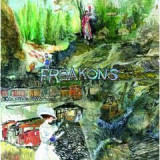
Mekons + Freakwater = FREAKONS.Freakwater and the Mekons have
joined forces to sing songs about coal mining
FREAKONS, the eponymously-titled album on Fluff & Gravy Records , is the first
fruit of this visionary musical union.The Mekons and Freakwater have been
friends for decades, forged in the punk rock/ art school crucibles of late '70s
Leeds and mid '80s Louisville respectively. Both bands mined British folk and
American classic country music for three- chord songs whose lyrics fit the
nihilism or political rage or outlandish joy of the moment. Many of these songs
were about coal mining. Traditional songs about heroic union organizers, deadly
mine disasters, wailing orphans, or mining's grim history of economic and
ecological devastation fit seamlessly alongside each band's original material.
And so it is with FREAKONS.
Deep pit mines, strip mines, mountaintop removal, collapsing slag heaps. Deadly
work, poisoned water, and fantastic songs. Always fantastic songs. This is where
the FREAKONS were born, from the very bowels of the earth.
The Mekons' Jon Langford & Sally Timms and Freakwater's Janet Bean &
Catherine Irwin are joined here by the stellar string and vocal harmonies of Jean
Cook (Ida, Tara Jane O'Neil, Skull Orchard) and Anna Krippenstapel (The Other
Years, Joan Shelley, Freakwater), along with special guest, the beloved guitar
genius Jim Elkington (Jeff Tweedy, Richard Thompson, Eleventh Dream Day,
Horse's Ha, Skull Orchard, Freakwater, The Zincs).
Belgian painter Jo Clauwaert created the album's intricate gatefold cover. Images
from song lyrics and related history emerge and recede again in this gorgeously
illustrated artistic fever dream.The story of coal mining is one of ongoing pillage
and ecological devastation. It is also a story of heroic workers, struggling in
blighted circumstances to feed their families. The songs and the culture that have
risen from the mines deserve our attention. A portion of the profits from the
FREAKONS record will go to Kentuckians For The Commonwealth, a grassroots
organization dedicated to creating a better future for the Appalachian region.
Kentuckians For The Commonwealth (KFTC.ORG) works to end mountaintopremoval coal mining, and to promote political candidates who care about social,
environmental and economic justice and the transition to clean, renewable
resources
With golden voice and silver-dipped pen Grant-Lee Phillips presents
another milestone in a career brimming with the like - Little Moon is track
after track of well-anchored classic American music - rock and folk swirl
under clouds of cinematic strings for a primer on the art of the timeless
tune
His legendary well of melody is in full display on Little Moon, with even the most
lilting piano ballad standing comfortably on a thick, powerful trunk ('Older Now').
Long one of Los Angeles' most sought after songwriters, Grant-Lee meets Little
Moon with positive inspirations including the birth of his daughter Violet ('Violet')
and a creative calm that saw the songs well up organically from earlier live
collaborations with drummer Jay Bellerose, producer bassist Paul Bryan and
keyboardist Jamie Edwards. Captured live in the studio with limited overdubs, the
album keenly chronicles the sunny day feel of the songs and that ever-elusive in
the moment groove of a finely- tuned band working out equally finely- crafted.
Upon Little Moon's 2009 release, American Songwriter named it "His strongest
album ever." This limited edition pressing is on burgundy colour vinyl and limited
to 1,000 copies worldwide.
Green Vinyl Edition - PNFG is frustrated but delighted to bring you a half
of a double treat from The Bathers!In 2022 we aimed bring you the debut
album "Unusual Places To Die" on vinyl and cd - some 35 years after it's
initial release on Go Discs
Accompanying this remastered album we also intended to produce "More
Unusual Places To Die" an 8 track EP featuring early recordings, providing an
incredible insight into the mind and music of Chris Thomson.Both records and
CDs were to be remastered by fellow "Friend Again" Paul McGeechan.
Sadly due to insane problems obtaining licensing contracts from Island Records
via Universal Music, we have taken the decision to make some changes to the
project.The 8 track Mini LP is now a fully-fledged album featuring 12 tracks (14
on CD) Some new never before released tracks, fully remastered and some
alternative versions of previously available tracks. This album is now entitled -
Summer Lightning.
Album first released 1983 and now re-released on 180 Gram vinyl
The Heptones are a Jamaican rocksteady and reggae vocal trio. They were a
significant force in that played a major role in the gradual transition between ska
and rocksteady into reggae with their three-part harmonies.
The Heptones: Barry Llewellyn, Earl Morgan & Dolphin ‘Naggo’ Morris
Recorded at Black Star Recording Studio, 46 Spencer Road, Tottenham, London,
N17 9UU, UK
Includes extensive sleeve notes.
Promotion across social media platforms
Advertising in, Echoes, Record Collector Magazine and Riddim