Third Place is a collective of old friends who bathed in the London electronic music scene for two decades together. Now spread across Montreal, Frome and the Lake District, they collaborate on multiple projects and started the Cabane Musique imprint as a vehicle for their music.
The A-side hosts title track Spectral. A shimmering Balearic sunrise anthem that sounds as if it’s always been here. A natural set closer that will immerse the early morning dance floor in a euphoric rush of hopeful wonder.
Flight kicks off the B-side, sending the listener towards the stars with flickering percussive flourishes, beautifully deep bouncing bass line and rich pads. Music for psilocybin-infused forest parties with the Milky Way piercing through the canopy.
Last we have BenDen’s Hierbas Mix of Spectral which stays very much on the Balearic tip. They slow things down for a lush and tripped out affair.
Cerca:ear
Hooj present Warehouse Tools EP with a spread of tempos, but keeping the energy levels up across the 4 tracks.
Fast rising Brighton bod Jamie Unknown takes Farayen & Liam Parkin's Where Do We Go ‘, and strips it all back into a big floor bassline banger.
Young South Wales / Valleys producer Dan Newman makes his debut with 'Moving' with it's rolling piano's, spacey pads and fat housey rhythms treading the line between Italo scream up and Dream-House journey. Early doors, or first light starting to appear through the cracks in the grimey Warehouse windows, we're here for it..
On the flip we have Dutch duo Dean & Di After’s ‘Wicked Dreams’ keeps it steady paced, subtly bouncy with a crafted, Italo '90 old school feel.
Rounding off the EP we have the South West’s premier MDMA Marxist, Shade Guevara goes mid tempo maximalist piano slammer on 'Ted or Dead'.
- A1: Jezebel
- A2: Parce Que
- A3: Les Deux Gitares
- A4: Je M'voyais Déjà
- A5: Il Faut Savoir
- A6: Les Comédiens
- A7: La Mamma
- A8: Sa Jeunesse Entre Ses Mains
- A9: Et Pourtant
- B1: For Me Formidable
- B2: Sur Ma Vie
- B3: A Ma Fille
- B4: Que C'est Triste Venise
- B5: Une Enfant
- B6: Hier Encore
- B7: Au Printemps Tu Reviendras
- B8: La Bohème
- B9: Paris Au Mois D'août
- C1: Tout S'en Va
- C2: Emmenez-Moi
- C3: Le Cabotin
- C4: Non Je N'ai Rien Oublié
- C5: Mourir D'aimer
- C6: Les Plaisirs Démodés
- D1: Comme Ils Disent
- D2: A Ma Femme
- D3: Tous Les Visages De L'amour
- D4: Mes Emmerdes
- D5: J'ai Vu Paris
- D6: Toi Et Moi
- D7: Je T'aime Aime
- E1: Avec Un Brin De Nostalgie
- E2: Tomorrow Is My Turn
- E3: How Sad Venice Can Be
- E4: The Old Fashioned Way
- E5: The I Love You' Song
- E6: She
- E7: Yesterday When I Was Young
- E8: I'll Be There
- F1: La Légende De Stenka Razine (With Les Compagnons De La Chanson)
- F2: Je Voyage (With Katia Aznavour)
- F3: Il Faut Savoir (With Johnny Hallyday)
- F4: Young At Heart (With Frank Sinatra)
- F5: J'aime Paris Au Mois De Mai (With Zaz)
- F6: Ave Maria
Collected by Charles Aznavour is a wonderful collection of hits and classics by the French chansonnier, that touches your soul at every moment. It’s an overview of his work during the sixties, seventies and duets with Johnny Hallyday on “Il Faut Savoir” and with Frank Sinatra “Young At Heart”. Also his English versions of “How Sad Venice Can Be”, “The Old Fashioned Way”, “She” and four more English songs are included on this deluxe Trifold 3LP album.
In the early 1950s a man of short stature attempts to win over his audience. With a hoarse voice he delivers songs that do not catch on. People jeer at him. Tomatoes fly through the air. The Frenchman with Armenian roots slinks off the stage, but does not quit. Ironically, the song that makes him a household name is the song in which he recalls his agonising trial. The audience reacted indifferently when Charles Aznavour decided to try out his new song on stage. But when he went on to greet the audience for one final time they all stood and gave him a thundering standing ovation.
In the sixties, hits and classics succeed one another. Nobody is bothered any more by his husky voice, by his small stature or his rugged characterful face. The croony “For Me Formidable” (1963), the heart breaking “Et Pourtant” (1963) and the nostalgic “Hier Encore” (1964) confirm his standing as a fan favourite. “La Bohème” (1965) and “Emmenez-moi” (1967) turn Aznavour into a superstar. In “La Bohème”, there are impressionist painters strolling in the shadows of the Sacré-Coeur, the compelling “Comme Ils Dissent” (1972) is the first chanson after Vichy France to overtly endorse homo sexuality and in the present “France Of La Manif Pour Tous” (the movement that opposes gay marriage), does it again to sound particularly topical. “Camarade” (1977) was about the nomenklatura, the ruling elite in the Soviet Union and is a social and historical topic. “Avec Un Brin De Nostalgie” is an Aznavour grand cru, maybe even the best he has made over the last thirty years.
Charles Aznavour Collected is available as a limited pressing of 1000 individually numbered copies on gold vinyl. The package includes a 4-page booklet with liner notes and photos.
Bushwacka’s first release for Radio Slave’s Rekids, the ‘Heaven On Earth’ EP, is out on October 11th 2024 and sees the UK House and Breakbeat innovator deliver two tracks complete with versions.
Title track ‘Heaven On Earth’ is a slice of low-slung House in which a drawling spoken-word vocal about love for music dominates. It’s a track with the sort of cast-iron, funky groove that has permeated Bushwacka’s music since day one. The ‘Instadub’ dubs out the vocals and takes ‘Heaven On Earth’ in a heady direction.
On the flip, Version One and Version Two of ‘Roger That’ see Bushwacka drop finely tuned funk-infused Deep House, with the former treading an earthy heads-down path while the latter ups the melody, chord and vocal sample prominence, creating a restrained euphoria throughout.
Bushwacka, aka Matthew Benjamin or Matthew B/Just Be/Makesome Breaksome and countless other aliases, has been a pivotal part of the electronic music scene for over 30 years. While his wildly successful project with Layo Paskin as Layo & Bushwacka! is his most prominent, this former London School Symphony Orchestra percussionist’s roots go much deeper. A pioneer of the nascent Rave and Acid House scenes who went on to be one of the progenitors of Tech House and UK Breakbeat scenes, Bushwacka’s influence is huge but far from static, with releases on the likes of Classic, Aus and NuGroove in the past few years alone.
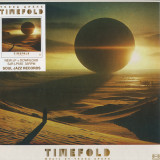
Trees Speak are releasing their new album TimeFold worldwide on 15 Nov 24 on Soul Jazz Records.
Trees Speak return with TimeFold, their sixth release on Soul Jazz Records, further expanding their ever-evolving sonic universe. This new album builds on their signature blend of hypnotic krautrock rhythms, post-punk angularity, and experimental soundscapes while venturing into new terrain by blending influences from avant-garde electronics to ceremonial sound forms.
On TimeFold, Trees Speak (comprised of the Tucson-based duo Damian Diaz and Daniel Martin Diaz) push their musical boundaries from expansive, intergalactic landscapes to eerie, imagined 1970s Italian and French sci-fi horror film scores. The album seamlessly weaves John Carpenter-esque synthesizer motifs with ambient sound sculptures, conjuring immersive worlds that are both cinematic and otherworldly.
The album also incorporates the duo’s deep-rooted influences, which span across electronic pioneers like Jean-Michel Jarre (Oxygene), Tangerine Dream, and Karlheinz Stockhausen. Drawing on the revolutionary techniques of Musique Concrète, TimeFold features experimental track splicing, looping, and collage work that harkens back to the golden age of avant-garde music. At times, the album channels the ceremonial tones and hypnotic rhythms reminiscent of early 1970s krautrock, fusing these sounds with organic instrumentation like dulcimers, adding an earthy, drone-like ritual quality to the experimental electronic framework.
A new element in this release is the inclusion of spoken word by Ashley Christine Edwards, which lends the album a haunting, apocalyptic edge. Her contributions evoke a tone reminiscent of the 1970s avant-garde scene, recalling literary and conceptual artists like Ruth White. The spoken words create a sensory experience akin to ceremonial chants, adding to the atmospheric intensity of the album. These vocal elements tie into the overall theme of TimeFold, which continues Trees Speak’s exploration of futuristic technologies and the communication of nature, with the evocative concept of trees and plants acting as organic hard drives storing data and knowledge.
Drawing further influence from Italian and French horror cinema, Trees Speak explore cinematic tension throughout TimeFold, creating a layered listening experience. The record transports the listener from the haunting, desolate beauty of Southwestern desert vast landscapes to an auditory space that melds early electronic experimentation with the contemporary urgency of conceptual art.
Since their debut Ohms in 2020, Trees Speak’s prolific output on Soul Jazz Records has continually redefined genre boundaries. TimeFold solidifies their position as visionaries in experimental music, offering an album that is as much a meditation on future technologies as it is a tribute to the avant-garde traditions that have come before.
The purpose of DM001 was to create a versatile compilation of tracks with the idea of exploring the limitless boundaries of electronic music. For the labels first release it was fortunate enough to work with an array of talented producers from all over the world. Each of which has their own defining sound. DM001 is a non profit release, both vinyl and digital, with the digital release containing more tracks. All profit's made from this release will be donated to the International Rescue Committee in efforts to aid Syrian refugee's.
Japanese producer Boogie Mason pays homage to the LA Beat Scene with slooped samples, swung grooves, and MPC cuts that will make head-nodders out of rhythm skeptics. These 10 instrumental tracks weave a tale of reverence for the no rules, unquantized ethos that took Los Angeles beatmakers by storm in the early 2010s. Geared toward the inquisitive listener, Bonsai is the perfect companion to a smoked-out sunrise or a solo walk through Tokyo’s back alleyways.
pdqb is a strange entity that claims to live in a sonic vessel and that only communicates via specifically organized sounds. Little to nothing is known about its wetware yet. However, just in time for Christmas, Synaptic Cliffs hereby reveals its first proof of existence with an übergroovy and supernatural Giallo Disco track that could easily be the brainchild of Claudio Simonetti and John Carpenter. The second track will bring you back to technoid earth again. But the journey isn't over then, because now no other than every producer's favorite producer Danny Wolfers takes over and chips in 2 outlandish electro-eargasm Legowelt remixes on the flip-side, just to ensure even more quality time under the tree. Happy holidays, Ho ho ho!
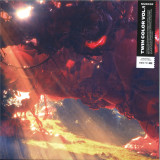
Twin Color - Vol 1 marks the grand return of Murcof to producing a full-length album in all its glory and generosity, nearly two decades after the release of Cosmos in 2007. Celebrated for his classical, minimalist textures and unique soundscapes, Murcof has established himself as a master of modern ambient music alongside Tim Hecker, Alva Noto, and Johann Johannsson. With this new album, Murcof takes a bold step forward, embracing a distinctly cinematic and dystopian narrative influenced by the great science fiction films of the 1980s. This new direction immerses the listener in atmospheres that are at times dark, at times filled with nostalgic brightness, drawing inspiration from post-punk and synth-wave, while partially reconnecting with his early experiments with the Nortec Collective.
Premiered at Mutek Montréal in August 2024, Twin Color is also an unprecedented audiovisual performance, created in collaboration with Simon Geilfus, based in Brussels, who has nourished and colored the album’s production. This immersive performance, conceived in the IRCAM studios in Paris in 2022, unfolds the album's tracks against a backdrop of moving natural landscapes, as mysterious as they are fascinating, highlighted in the album's visual elements.
Twin Color - Vol 1 will be available in vinyl, CD, and digital formats, each with track listings adapted to the listening experience. This album reaffirms Murcof’s unique sonic signature, blending analog synthesizers with modern production techniques to create a multisensory experience, propelling Murcof into an exciting new decade.
(Limited to 500 copies, 12”, 33RPM, High-quality Picture Disc, in high-quality PVC-sleeve) In October, a picture disc of 2 Flying Stones was released and sold out in under 24 hours. As a result, we chose not to repress it but to create a picture disc with a new image.
2 Flying Stones are undeniably one of the leading names in early trance music. Their tracks, including "MAYBE TOMORROW", "KALYPSIA", "NUCLEAR JESUS IN PARADISE", and "A GREAT DAY", possess a timeless quality.
Black Vinyl[12,19 €]
Rhythm Cult's unstoppable momentum continues after achieving consecutive
number-one positions across online and physical platforms. RCM019, their most
recent release, welcomes the incredibly gifted Chilian producer Dinky into the fold.
Dinky's hypnotic blend of deep house, strong techno, and precise minimalism has
earned her a residency at the famed Panorama Bar, in Berlin confirming her position
as a unique voice in the electronic industry.
The EP kicks off with the soulful and uplifting "Come Hold Me," a futuristic house
anthem that effortlessly fuses tribal rhythms with intricate stuttering synth patterns.
Dinky provides the unmistakable and irresistible vocal hook that suggest this will be
a summer anthem in the making. "She's Got Nowhere To Go" follows, riding on an
insistent one-note bass line and yet more addictive vocal snips, complemented by
disco stabs that complete the party vibe. Dinky's skilful use of stuttering glitches and
inventive sample manipulation showcases her love for minimal detail and angular
funk.
Finally, dOP turn in not one but two remixes of their unique and unconventional take
on house and techno. First, their reinterpretation of "Come Hold Me" takes us on a
journey to the deeper realms of house, riding on a low-slung acidic bass groove
while enveloping the listener in waves of lush synths, perfect material for warming up
dancefloors or setting the mood for the early hours. Then they wrap “She’s Got
Nowhere To Go’ around an elastic bass and dosed with warped synth lines to create
an irresistibly explosive dancefloor weapon.
The EP exudes sophistication, weaving intricate futuristic house sounds that are
imprinted with the influences of Balearic, acid, and deep house. These heaters are
undoubtedly set to light up dancefloors throughout the summer season. With this
exciting collaboration, Rhythm Cult further cements its position as one of the
industry's most cutting-edge labels, and Dinky's addition adds a distinctive
dimension to their roster.
Prepare to find yourself absorbed by this exceptional release from two forces
shaping the future of electronic music.
- A1: Amazin` (Kakalak Remix)
- A2: Nuff Love
- A3: Raw Factor
- A4: This Year (Feat Big Kap)
- A5: If You Got Beef
- B1: My Main Man
- B2: Represent (Feat Lil Kalef)
- B3: When I Make Parole (Feat Rock Of Brick Flava)
- B4: I`m On Mine
- B5: Was It Just You
- C1: We Lust For The Papes
- C2: I Gotta Maintain
- C3: Touch Y`all
- C4: Wrecognize
- C5: Freestyle After A Philly
- D1: Touch Y`all (Remix)
- D2: Stage Presence (Feat Toz Torcha)
- D3: Rap Vs Crack
- D4: Turn The Party Out
- D5: We Live That Shit
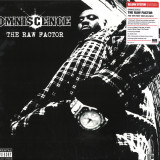
Originally scheduled for release way back in March 1996, "The Raw Factor" by North Carolina native Omniscence is one of the last of the unreleased mid-90's albums to see the light of day. Despite being awarded The Source's coveted "Hip Hop Quotable" and dropping two well-received singles ("Amazin" and "Touch Y'all"), record label politics meant the full-length "The Raw Factor" album was never released and fans were left wondering what might have been.
28 years later, "The Raw Factor" is finally being released on vinyl, CD and digital stores. Featuring punchline-driven lyrics from Omniscence delivered in his unmistakable cadence, and backed by head-nodding production from Fanatic, the album is a must-own for fans of 90's Hip Hop.
Omniscence haunted the same early 90's cyphers and stages that many lyrical greats from the era had to cross. With a gruff delivery and equal adeptness with punchlines and metaphors, his high finish at the 1994 edition Battle For World Supremacy at the New Music Seminar assured heads across the culture were watching. After this, Omniscence locked in with producer Fanatic (who also laced tracks for Notorious B.I.G., Ma$e and Michael Jackson). The result was "The Raw Factor" album, fifteen plus tracks of jazzed out boom-bap, replete with crackin' drums.
Now Below System Records has not only given the album its first deluxe physical release (including 2xLP, CD and digital) as well as a slew of bonus/unreleased tracks.
p Touch Y'all (Remix) feat. Sadat X
p Touch Y'all (Remix) [feat. Sadat X]
Earquake 1991[22,48 €]
Earquake 1992[22,48 €]
Earquake 1993[22,48 €]
Earquake 1994[22,48 €]
Earquake 1996[22,48 €]
Earquake 1997[22,48 €]
Earquake 1998[22,48 €]
Earquake 1999[22,48 €]
It is the year 1995 and it’s summer, the second extremely hot summer after 1994, and the asphalt on Gladbacher Straße in Cologne is glowing. Ravers in much too wide and much too colorful clothes doze off in the glaring midday heat. These are the last days of the legendary Delirium record store, a socio-cultural biotope that would later become KOMPAKT. In June 1995, the store moved deeper into the Belgian Quarter, to Brabanter Straße 42 near Friesenplatz.
Wolfgang Voigt liked to wear too-big sunglasses even back then, just as he already had the master plan for the next few years, the new store, the renaming to KOMPAKT, and the upcoming takeover of the musical world order by minimal techno in his head. On less sunny days, the musician Wolfgang Voigt was tinkering with his very own label Profan, a new sound, new pseudonyms and masquerades. His alter ego Mike Ink had grown tired, another self, one of many, was now pushing forward to become the next torch in the storm.
By early 1995, the first Grungerman EP, "Hout," had been released on Profan. A nucleus of ambient loops that already announced the sonic aesthetics of GAS, stoic rhythmic structures that would shape the coming decade of minimal house and techno, and an all-encompassing gloom and heaviness that didn't want to fit at all with the gaudy reality of the nineties between Loveparade, Mayday and VIVA House TV. This probably most hedonistic decade of the 20th century had celebrated, besides techno, above all a rough guitar music called Grunge, coined and immortalized by a depressive, hyperactive and narcoleptic young man with matted blond hair who had taken his own life a year before. In no other track has Wolfgang Voigt packed these inner and outer contradictions of his art as well as of the mid-nineties more ingeniously than in "In Tyrannis". From wall to wall there are four steps.
"Klang" by Wolfgang Voigt originally comes from the first and only GAS EP on Profan, "Modern", from the spring of 1995 and is one of the most beautiful exhibits of Voigt's sound of those years, which relentlessly runs its course somewhere between glistening sunrises on Ecstasy and bad drugs in the dark Liquid Sky Cologne. With "Hocker DJ 1" and "Hocker DJ 2" there are two more musical references to this myth-enshrouded place in Kyffhäuserstraße, where for a few years the entire, so-called Sound Of Cologne had literally settled down.
Wir schreiben das Jahr 1995. Es ist Sommer, der zweite extrem heiße Sommer nach 1994, und der Asphalt auf der Gladbacher Straße in Köln glüht. Raver in viel zu weiten und viel zu bunten Klamotten dösen ihren Rausch aus in der grellen Mittagshitze. Es sind die letzten Tage des legendären Delirium Plattenladens, eines soziokulturellen Biotops, aus dem später die Firma Kompakt hervorgehen sollte. Im Juni 1995 erfolgte der Umzug tiefer hinein ins Belgische Viertel, in die Brabanter Straße 42 in der Nähe des Friesenplatz.
Wolfgang Voigt trug schon damals gerne zu große Sonnenbrillen, so wie er bereits den Masterplan für die nächsten Jahre, den neuen Laden, die Umbenennung in KOMPAKT sowie die anstehende Übernahme der musikalischen Weltordnung durch Minimal Techno im Kopf hatte. An weniger sonnigen Tagen tüftelte der Musiker Wolfgang Voigt an seinem ureigenen Label Profan, an einem neuen Sound, neuen Pseudonymen und Maskeraden. Sein Alter Ego Mike Ink war müde geworden, ein anderes Ich, eines von vielen, drängte nun nach vorne, um die nächste Fackel im Sturm zu werden.
Anfang 1995 war die erste Grungerman EP “Hout” auf Profan erschienen. Ein Nukleus aus ambienten Loops, die bereits die klangliche Ästhetik von GAS ankündigten, stoischen rhythmischen Strukturen, die das kommende Jahrzehnt Minimal House und Techno prägen sollten, sowie einer allumfassenden Düsternis und Schwere, die so gar nicht zur knallbunten Realität der Neunziger Jahre zwischen Loveparade, Mayday und VIVA House TV passen wollte. Dieses wohl hedonistischste Jahrzehnt des 20. Jahrhunderts hatte neben Techno vor allem eine raue Gitarrenmusik namens Grunge gefeiert, geprägt und unsterblich gemacht von einem depressiven, hyperaktiven und an Narkolepsie leidenden jungen Mann mit verfilzten blonden Haaren, der sich ein Jahr zuvor das Leben genommen hatte. In keinem anderen Track hat Wolfgang Voigt diese inneren und äußeren Widersprüche seiner Kunst wie auch dieser Zeit Mitte der Neunziger genialistischer verpackt als in “In Tyrannis”. Von Wand zu Wand sind es vier Schritte.
“Klang” von Wolfgang Voigt stammt ursprünglich von der ersten und einzigen GAS EP auf Profan, “Modern”, aus dem Frühling 1995 und ist eines der schönsten Exponate des Voigtschen Sounds dieser Jahre; ein Track, der irgendwo zwischen gleisenden Sonnenaufgängen auf Ecstasy und schlechten Drogen im dunklen Liquid Sky Cologne unerbittlich seine Bahnen zieht. Mit “Hocker DJ 1” und “Hocker DJ 2” finden sich zwei weitere musikalische Referenzen an diesen mythenumrankten Ort in der Kyffhäuserstraße, an dem sich für einige Jahre der gesamte sogenannte Sound Of Cologne im wahrsten Sinne des Wortes niedergelassen hatte.
Forest Jams continues the journey into the great beyond with Mori Ra’s Mantra–an EP composed of four edits created for any inquisitive earthling and forest wanderer.
Mori Ra is a DJ based in Osaka, Japan his sets are a witches brew composed of balearic, cosmic, and electronic disco ingredients. He has released on other labels such as Rotating Souls, Macadam Mambo, Berceuse Heroique, MM Discos and more. In Mantra, Mori Ra acts as a mysterious wanderer who has stumbled upon the doors of our minds in the middle of the night. When we answer the door he is bearing gifts of creative glory and all we need to do is provide shelter in return. We invite him in so that he can rest, recharge, and continue his journey.
During his visit in our minds Mori Ra shares “Mantra” the secrets of the universe disguised as parables packaged neatly into four tracks. Catharsis begins the journey and immediately throws us into a sound that feels like we are driving a spaceship in Gran Turismo 37, the spaceship simulator. Now that we have successfully crossed the plane and have entered the digital unknown, Seinn O! becomes the story of communication. Seinn O! gave the smoke leaving my mouth color and the shamanistic chants placed me in an atmospheric state with the ability to cross over and communicate in the digital space. Then comes 孫行者 the Grandson Traveler, which embodies the story of the simulation. Imagine the sound of a bustling dystopian city in the matrix–neon signs, dancing billboards, talking vending machines, radioactive wildlife, and overgrown foliage leaking in from the jungle the city is carved into. Mori Ra seems to have melded all of those sounds together to create the soundtrack of the big city where everyone is lost. Finally, before leaving our minds Mori Ra offers the final parable, あの星 That Star. Which becomes the story of realization, the journey back home from the exploration of the mind. That Star brought me into a cave and I could see the opening at the end of it, all I had to do was walk towards it. However, I couldn’t walk. I could only galumph forward, while bouncing up and down to the beat. My arms slivered and guided my body forward as the vocals came in. As I moved forward the opening, the clearing, the destination remained the same distance away. The endless tunnel of the mind gave me a feeling of comfort because I did not want this journey to end.
The EP ends and we will never know who visited our minds that night, but we know we loved the journey. Mori Ra is the steward of our journey through consciousness, and the vessel is “Mantra”.
“Raggamuffin Soldier” was recorded at Channel One Recording Studio in 1983 with Soldgie as engineer and a rhythm track played by Jolly Stewart and Daniel “Axeman” Thompson. Growing up in the Waterhouse neighborhood of Kingston, Jolly Stewart obviously developed this singing style and gave us a killer early digital dancehall missile with pure conscious lyrics “Raggamuffin soldier, big ina your area...me no deal with badness, me nah deal inna war, me is a raggamuffin soldier...mi raggamuffin ina foreign, raggamuffin sit down pon di riddim...how you know the raggamuffin? Me no wear no gold chain, me no wear no gold ring...”. “Raggamuffin Soldier” was produced by Fitzroy Peterkin who also produced the digital lover tune "Angie".
The Waterhouse style is a particular style of singing that emerged in the late seventies and early eighties within the Jamaican reggae scene. The Waterhouse style is commonly described as a plaintive, groaning and fluctuating vocal style, often nasal and strident, characteristics that will give it a sound that is distinct from the rest of the reggae singers. The commonly recognized founders of the Waterhouse style are the singers Michael "Mykal" Rose, Junior Reid and Don Carlos. The name derives from the famous neighborhood of the same name in Kingston, the capital of Jamaica, the place where the three pioneers were born and emerged. The Waterhouse style influenced many dancehall reggae artists of the eightiesvsuch as Tenor Saw, Half Pint, Nitty Gritty, Anthony Red Rose, King Kong, Yami Bolo, Andrew Bees...
Vincent Stewart aka “Jolly Man” is a reggae singer from Kingston 11, born december 16 1960 at Hunts Bay Lane, 4 Miles, Jamaica. Jolly started singing at age 13, he was placed in an approve School for 3 years and at the age of 16 he was released.
He started his musical career in the late 70's with Ossie Thomas, Phllip Morgan and Tristan Palmer from Black Solidarity label. Jolly Stewart recorded his first song entitled "Money Pyaka" on the classic "Pretty Looks" riddim which was recorded for Oswald Thomas on Ganja Farm label and released in 1979. Tristan Palmer who has another tune "Disappointed Lover" on the same riddim backed by The Soul Syndicate made the link with Jolly Stewart because he liked his style of song writting.
Jolly Stewart wrote three songs for Black Solidarity label: "Collie Man", "Bad Minded" and "Symbol Of Justice". All three tracks were covered by Triston Palmer. As a song writter, Jolly Stewart is behind Yami Bolo's hit on Stalag riddim “When A Man Is In Love” released on Winston Riley's label Techniques.
Jolly Stewart then decided to move on with his singjay career. He ventured to Tuff Gong studio where he met two producers. One was Prince Jazzbo from Ujama label, and the other was John John who owned the Bun Fi Bun label. He recorded "Praise jah" for Ujama and "Poverty Rush" for Bun Fi Bun. Still not satisfied with how his career was heading, he moved on to Lannaman's Preparatory School. There he learned to play guitar from a man named Fred McMurray aka Faf and Donald Jackson. Later he learned to play the keyboards by watching other musicians.
In the late 80's and early 90's, Jolly Stewart recorded many songs for various labels such as “Do Me Like So” for Bunny Gemini's label “Bun Gem Records” in 1987, “Late Last Night” and “War” for producer Zelma Rust and his label Myotta Ruff.
He also recorded for Augustus Pablo on his label Rockers International just before he died in the late 90's but we never heard about this release so probably Addis Pablo have it on old master tapes in the Rockers International archives....only Jah knows!
In the early 1980s, Britain had a vibrant cassette culture that now gets spotlighted through a limited edition 12" featuring multi-instrumentalist Kez Stone's project, Imago. He was a notable name in Cornwall and the West Country's music scenes with previous projects, Artistic Control and Aaah! which have come back via reissues many times in the last ten years. Imago was a new one-ff project that first emerged with one track on the Perfect Motion compilation curated by NTS Radio's Bruno and Flo Dill and now the full LP, originally released in 1985 on the local label A Real Kavoom, has been remastered and added to with three additional gems. Stone's teenage punk influences sit next to Imago's eclectic approach to sound that blends new wave and psychedelic elements into something irresistible.