Search:earl flute

Styles
All
Earle Brown - Music by Earle Brown (Tape)
  • 01: Times Five (1963)
  • 02: Octet I (1953)
  • 03: November 1952
  • 04: Novara (1962)
also available

Vinyl[23,11 €]


Originally released by CRI in 1974 and now reissued on vinyl for the first time by Death Is Not The End, Music by Earle Brown is a concise overview of the composer's landmark early experiments with graphic notation, open form structures and magnetic tape.

_______________________________

Times Five (1963): Govert Jurriaanse (flute), John Floore (trumpet), Harry Sparnaay (bass clarinet), Jaring Walta (violin), Roelof van Driesten (violin), Gerrit Oldeman (viola), and Harro Ruijsenaars (cello). Ton Hartsuiker acts as piano leader, with Earle Brown conducting the acoustic instruments alongside pre-recorded magnetic tape.

Octet I (1953): Composed, created, and realised entirely by Earle Brown using multi-channel magnetic tape.

December 1952: Composed by Earle Brown, solo piano by David Tudor.

Novara (1962): Govert Jurriaanse (flute), John Floore (trumpet), Harry Sparnaay (bass clarinet), Jaring Walta (violin), Roelof van Driesten (violin), Gerrit Oldeman (viola), Harro Ruijsenaars (cello), and Ton Hartsuiker (piano), with Earle Brown conducting.credits

pre-order now25.09.2026

expected to be published on 25.09.2026

16,60 €
Earle Brown - Music by Earle Brown LP

Originally released by CRI in 1974 and now reissued on vinyl for the first time by Death Is Not The End, Music by Earle Brown is a concise overview of the composer's landmark early experiments with graphic notation, open form structures and magnetic tape.

_______________________________

Times Five (1963): Govert Jurriaanse (flute), John Floore (trumpet), Harry Sparnaay (bass clarinet), Jaring Walta (violin), Roelof van Driesten (violin), Gerrit Oldeman (viola), and Harro Ruijsenaars (cello). Ton Hartsuiker acts as piano leader, with Earle Brown conducting the acoustic instruments alongside pre-recorded magnetic tape.

Octet I (1953): Composed, created, and realised entirely by Earle Brown using multi-channel magnetic tape.

December 1952: Composed by Earle Brown, solo piano by David Tudor.

Novara (1962): Govert Jurriaanse (flute), John Floore (trumpet), Harry Sparnaay (bass clarinet), Jaring Walta (violin), Roelof van Driesten (violin), Gerrit Oldeman (viola), Harro Ruijsenaars (cello), and Ton Hartsuiker (piano), with Earle Brown conducting.credits

pre-order now25.09.2026

expected to be published on 25.09.2026

23,11 €
Ltf aka Light The Fuse - SSS 02

Ltf aka Light The Fuse

SSS 02

7"-VinylSSS02
Soul Service
15.09.2026

Intriguing Siberian B-Boy roots informed Anton LTF's first solo album last year and its mix of funk, hip-hop and early turntablism influences really worked. He's back now with a tidy two-tracker on Soul Service Sabrosura that leans into Latin funk. It's raw, direct and charged up tackle for once again getting under the skin of b-boys and girls thanks to the killer breaks. 'Garra' is lit up with shuffling percussive keys and rhythms and big brass horns, while 'Aroma Sunset' is more pared back and loose. There's a celebratory vibe that's smoother and more languorous, with sunny flutes leading the way and irresistible Latin charm in the ways the keys dance.

stock from14.10.2026

Last In: 9 days ago
11,98 €
Various - Synthetic Water Music (2xTAPE)
 
51

There is a pivotal scene in “August in the Water” (dir. Sōgo Ishii, 1995) where the surface of a pool turns into a stone wall. The water that gave the protagonist's life its meaning becomes a threat. As you fall through this stone wall, you appear in a set of underwater coral-reef corridors, and one of the most beautiful musical themes begins to play: Aquatic Ambience, composed by David Wise for Donkey Kong Country (1994). It's a theme that represents the weightless vibe of your new deep-sea life, where you go about your mundane errands, collecting bananas while driving on a swordfish, or, as HerzMayhem put it: "Poor monkey... always swimming, never going anywhere..."

Synthetic Water Music is the second of three compilations, following Synthetic Bird Music and timed to mappa's 10th anniversary. As with the birds, it gathers friends of the label, artists who have released with mappa or played our shows. Most of the music is new, made to measure for this compilation, much of it from Central and Eastern European hands. Birds and water mix well, so please feel invited to play them together, creating your own environments.

Where the birds were in one flock, water is dispersed across four chapters. You live your life as a droppity drop: vapour in the heavens, condensing in clouds, falling into a swamp, trickling into the deepest sea.

Tlālōcān (Cassette 1, Side A)
A place of eternal spring, of aquatic energy that nourishes everything and allows all things to bloom. Bubbly and splishy-sploshy, it is full of dripping sounds and moist caverns (“Emerald Pool” by Pauline Anna Strom), a landscape filled with living fountains (“Oh, to be a Fountain” by Eva Sajanová) and winding streams that flow through the area, forming part of its organic architecture. It is also a paradise reserved for those whose deaths were water-related, where the aquatic and terrestrial beings live in symbiosis and perspectives shift rapidly, from observing a single droplet (Shakali, Lau Nau) to dew (Feronia Wennborg & Lucy Duncombe) and on to flowing currents (Visible Cloaks) that gradually transform into river music (Ursula K. Le Guin & Todd Barton).

Nephelora (Cassette 1, Side B)
A celestial anti-gravity sound world made of evaporation, steam and the formation of clouds, as if looking at “The Sky At The Bottom of the Well” (by Natalia Beylis) or at “The Cloud That Never Rains” (by Henrique Vaz).

If a cloud never rains,
it is not a cloud at all, but a veil that parches the earth with its gaze.
It generates only its own shadow —
a looming mass of suspended longing,
a sky that hoards but never yields,
a reservoir that swallows every river and returns nothing but echoes.

The water in this world is often invisible but sometimes all the more present, as Bint Mbareh describes it: “Recently been obsessed with invisible waters because I come from a place where you have to imagine the water is there even though you cannot see a river, a sea, usually no rain, so water is in the air, the voice and the imaginal realm, drought is imagined to be negotiable.”

Žaboglach Zha-bo-glahch (Cassette 2, Side A)
A fusion of Scottish lochs and Slovak ponds: a misty, foul-smelling, swampy realm, the kind of place that swallowed Artax from The NeverEnding Story. Stagnant waters full of decay become a blooming habitat for sirens (“thereby losing the weightless delight of being swept along with it” by Adam Badí Donoval) and beings straddling the line between fauna and flora, inventing their own communication systems (“Water-lily phase” by Action Pyramid).

R'lyeh (Cassette 2, Side B)
A brooding sunken city at the bottom of the ocean. It’s a journey to get there. Let this chapter guide you, from the shore down to the depths, to the gates of an unexplored world that is inherently dark, unfathomable, and beyond the limits of human perception: starting with seasickness ("Seasick" by Nikolaienko), passing through a classic Poe-esque maelstrom ("Flurry at the Whirl-pull" by Atte Elias Kantonen), a gateway into the darkness and emptiness of the ocean floor, and finally traversing the city itself (“last waves of 2025” by Jules Reidy).
But what is pulling you to a place like this that only a few explore and even fewer leave? Maybe “the darkness that water can contain, the expanse of things we don't know and that can trigger fear instincts even as we try to rationalise them and think we are in control of the rest of nature” (“supercritical fluids” by Diane Barbé).

Dive in and surface wherever you like. Always swimming, never going anywhere. Just don’t forget to take water breaks.

P.S. Birds, then water, can you guess what comes next? Synthetic Soil Music, an elegy for insects and worms? Synthetic Glaciers, or maybe Pollinators? Which sounds would you miss the most if they disappeared? Or what if the third one never comes at all, and somebody, or something, makes Synthetic mappa Music instead. Don't you worry, with the right training data, it can all be replicated, better than the real thing.

pre-order now11.09.2026

expected to be published on 11.09.2026

25,42 €
Freschard And Stanley Brinks - Hotel Berlin LP
  • A1: ) Power
  • A2: ) Nobody Loves You
  • A3: ) Let It Burn
  • A4: ) Visit
  • A5: ) You Never Let Me Down
  • B1: ) Tea In China
  • B2: ) Yavas Yavas
  • B3: ) One Clue
  • B4: ) I Was A Sailor
  • B5: ) I Love You So Much

Stanley Brinks is renowned for his unique anti-folk style: both playful and suggestive, insightful and entertaining. Brinks was born in Paris, France, in 1973. He studied a bit of biology and worked as a nurse for a while. Half Swedish, half Moroccan, strongly inclined to travel the world, he soon began spending most of his life on the road and developed a strong relationship with New York.
By the late 90s he’d become a full time singer-songwriter – André Herman Düne – as part of three piece indie-rock band, Herman Düne alongside his brother, David-Ivar. Several albums and Peel sessions later and after a decade of touring Europe, mostly with American songwriters such as Jeffrey Lewis, Calvin Johnson and early Arcade Fire he settled in Berlin. The early carnival music of Trinidad became a passion, and in the early 21st century he became the unquestioned master of European calypso, changing his name to Stanley Brinks.
Under this moniker he has recorded well in excess of 100 albums, collaborated with the New York Antifolk scene on numerous occasions, recorded and toured with traditional Norwegian musicians, and played a lot with The Wave Pictures.
Freschard grew up in a farm in French Burgundy. Aged 18 she moved to Paris, where she baked pies and cakes in a cafe. There, a local musician and regular customer called Stanley Brinks wrote a few songs for her to sing. Homeless in Paris, she saved up just enough money to get herself a ticket to New York. There she found an old electric guitar and started writing her own songs. In 2004 she moved to Berlin, where she recorded her first LP, "Alien Duck". Her second album, "Click Click", recorded in 2006, features electric guitar by Stanley Brinks. On her third album, she plays the drums herself. On her fourth “Shh...” she also plays the flute, and she breaks out the washboard on her fifth “Boom Biddy Boom”. Press for Stanley Brinks and Freschard.
“an absolute joy.” Q.
“...a set that’s as wistful and charming as it is playful and self-concious.” Uncut.
“quietly charming” Pitchfork.

pre-order now14.08.2026

expected to be published on 14.08.2026

25,63 €
Freschard And Stanley Brinks - Pole Fitness LP
  • A1: ) Near Future
  • A2: ) One More Drink
  • A3: ) No Way Jose
  • A4: ) Nearness Of You
  • A5: ) Rocks
  • B1: ) Meet Me In Hell
  • B2: ) Greek Salad
  • B3: ) This One Is Mine
  • B4: ) Words
  • B5: ) Aquarius

Stanley Brinks is renowned for his unique anti-folk style: both playful and suggestive, insightful and entertaining. Brinks was born in Paris, France, in 1973. He studied a bit of biology and worked as a nurse for a while. Half Swedish, half Moroccan, strongly inclined to travel the world, he soon began spending most of his life on the road and developed a strong relationship with New York.
By the late 90s he’d become a full time singer-songwriter – André Herman Düne – as part of three piece indie-rock band, Herman Düne alongside his brother, David-Ivar. Several albums and Peel sessions later and after a decade of touring Europe, mostly with American songwriters such as Jeffrey Lewis, Calvin Johnson and early Arcade Fire he settled in Berlin. The early carnival music of Trinidad became a passion, and in the early 21st century he became the unquestioned master of European calypso, changing his name to Stanley Brinks.
Under this moniker he has recorded well in excess of 100 albums, collaborated with the New York Antifolk scene on numerous occasions, recorded and toured with traditional Norwegian musicians, and played a lot with The Wave Pictures.
Freschard grew up in a farm in French Burgundy. Aged 18 she moved to Paris, where she baked pies and cakes in a cafe. There, a local musician and regular customer called Stanley Brinks wrote a few songs for her to sing. Homeless in Paris, she saved up just enough money to get herself a ticket to New York. There she found an old electric guitar and started writing her own songs. In 2004 she moved to Berlin, where she recorded her first LP, "Alien Duck". Her second album, "Click Click", recorded in 2006, features electric guitar by Stanley Brinks. On her third album, she plays the drums herself. On her fourth “Shh...” she also plays the flute, and she breaks out the washboard on her fifth “Boom Biddy Boom”. Press for Stanley Brinks and Freschard.
“an absolute joy.” Q.
“...a set that’s as wistful and charming as it is playful and self-concious.” Uncut.
“quietly charming” Pitchfork.

pre-order now14.08.2026

expected to be published on 14.08.2026

25,63 €
Isaiah Collier - Joy

Isaiah Collier

Joy

12inchBWOOD455LP
Brownswood Recordings
03.08.2026
 
3

In a world currently defined by unrest, uncertainty, and cultural fracture, acclaimed saxophonist, composer, and bandleader Isaiah Collier returns with Joy, a 5-track EP that reframes one of humanity’s most nuanced emotions both as a devotional grounding and political act.

Collier’s deeply personal compositions present joy as an act that isn’t rooted in escapism or abstraction, but rather, as something hard-won rooted in lived experience, shaped by transformation, and sustained through connection. Throughout the album’s five compositions, Collier positions joy as a guiding light during challenging times, an expression of challenging yourself to utilize your gifts, an affirmation of love and discovery, and as an affirmative source of reassurance.

“We are in a paradoxical time, where so much is being revealed to us,” Collier shares. “Everything feels political from every scope… our collective hearts feel the heaviness in the air. Yet I say to you all—don’t despair. For right now, the most political thing we can do is share joy.”

That ethos is made clear in the opening title track and lead single “Joy.” A pulsing rhythmic motif anchors the melody with a sense of both searching and certainty. Collier conceived the piece around 3 years ago reflecting on a time where many people in his life were experiencing loss of family and friends and experiencing profound life transitions. “Everything just felt like it was falling apart with no aim in sight,” he reflects. “Yet, there is a light at the end of it all.”

As he played the chords with a sense of urgency, he could feel the vibration of yellow in the piece. That initial triplet motif serves as the guiding light on the piano and the only word Collier could hear was Joy. In addition to Collier at the helm singing and playing piano and tenor sax on the track, it features an expansive 11-piece ensemble with a full horn and string section allowing Collier’s propensity for composition and arrangement to shine with an eclectic sonic palette.

“Landscape of Dreams” finds Collier serendipitously leaning into utilizing his gifts as a multi-instrumentalist. While he had a sketch of the piece going into the studio, a traffic delay caused musicians to be late arriving at the studio. Never one to waste time in the studio environment, Collier stepped into new creative territory and took up the challenge of executing playing all instruments himself as an act of trust and experimentation. “I’ve never done this before, and so it was a leap of faith for me,” he asserts. “I always dream of doing stuff like this, and being part of the small percentage of people who can do it like Prince, Steve Lacy, Frank Zappa, and Stevie Wonder. The end result finds Collier immersed in a hypnotic soundscape playing layered flutes, drums, Metatron, Wurlitzer, and auxiliary percussion.

Another layer of joy is revealed in “Where I’m Loved” that serves as a love letter and leaning into the process of stepping into the willingness to explore life and love with a partner. On the intimate meditation of vulnerability and connection, Collier's vocal prowess is on full display, exerting effortless falsetto reminiscent of D’Angelo over soulful Wurlitzer and guitar as he crosses over into more R&B-inspired realms. “I believe everyone deserves this feeling or to honor the memories of it. Furthermore, I believe you should also go where you’re celebrated and not tolerated.”

“When the Dust Settles” captures the electricity of live collaboration and Collier further steps out of being confined to any specific genre. He had just gotten a microKORG keyboard from co-producer Sonny Daze and was exploring the vast array of sounds on the instrument. Collier plays synth bass on the microKORG joined by the electrifying improvisation of Cole Runge on guitar and the combustible rhythm of his brother Jeremiah Collier on drums with additional post-production work from Sonny Daze.

The album’s final track “God’s By Your Side” reflects on perseverance and artistic legacy, directly inspired from the passing of D’Angelo, whose life’s work was a huge part of Collier’s childhood growing up in the late 90s and early 00s. With gospel flavor and direct influence both from D’Angelo’s vocal and instrumental arrangements, the track speaks to resilience and persistence in the face of obstacles—an affirmation of source and reassurance. “And what’s better than having God by your side, right?” asserts Collier.

Joy is a through-and-through expression of the arc of joy in its truest form. Joy transcends fleeting happiness and is conscious gratitude shaped by taking chances, leaning into your gifts, fostering community, and lived experiences.

“Joy is partially happiness,” Collier explains. “But to me it means happily being grateful for family, friends, lovers, teachers, and good times. These are the things that anchor us.”

The release of Joy comes off the heels of significant momentum for Collier, whose work continues to garner accolades and resonate across cultural spheres. He was featured on the cover of DownBeat’s April 2025 issue, where he was named “The Next Sax Giant,” and profiled on NPR’s Jazz Night in America for his ambitious 13-movement interdisciplinary suite The Story of 400 Years, that traces 400 years of Black American History. He released two full-length albums in 2024 with The World Is on Fire highlighted in The New York Times’ Fall Arts Preview and The Almighty named among the publication’s Best Jazz Albums of the year.

Beyond performance and recoding, Collier’s influence is recognized in broader cultural and intellectual spaces as he was the recipient of the Jazz Journalists Association’s 2025 Up and Coming Artist of the Year Award, the 2024 Chicagoan of the Year in Jazz, and was named a Steve Jobs Archive Fellow joining an elite cohort of the next generation of artistic visionaries through a yearlong program.

In addition to the release of Joy, Collier is touring his “Collier Plays Coltrane” program throughout 2026 in honor of John Coltrane’s centennial. Rather than presenting Coltrane’s expansive catalog as repertory, Collier approaches this music as something living, reshaping it in real-time with a sense of space and improvisational dialog reflecting both reverence to the past and present times.

out of Stock

Order now and we will order the item for you at our supplier.

Last In: 58 days ago
23,95 €
THE EIGHTEENTH DAY OF MAY - THE EIGHTEENTH DAY OF MAY LP 2x12"

“Released on Joe Boyd’s Hannibal label here was a band rooted in Thompson/Swarbrick Fairport but also a snatch of the Velvet Underground and a sprig of The Byrds. The Eighteenth Day Of May evoked a legendary era, and now they are a justifiably legendary band too.” – KLOF Mag

Beginning life as a trio in London, 2003, the original line-up consisted of Allison Brice (vocals, flute), Richard Olson (acoustic guitar) and Ben Phillipson (guitar, mandolin) before expanding the following year to include the rhythm section of Mark Nicholas (bass) and Karl Sabino (drums, autoharp) and finally Alison Cotton (viola).
This being the mid zeros, the independent music scene in the UK was reluctant to embrace a sun-dazed folk band but this, their sole album, has gradually feathered a bed of affection amongst international folk fans. Twenty years on, the album is now rightfully seen as a trailblazer for the myriad alternative/psych folk bands that emerged in its wake.
Andy Childs who signed the band originally takes up the story. “I first heard their music on a cover mounted CD with the much missed Comes With A Smile magazine and as far as I could tell no-one was making music like this anymore, certainly not with such panache and confidence. To my jaded ears it all sounded so uninhibited - old weird folk songs, Americana, original psych-folk, minimalist drones. Great melodies and all six of them could sing! A joyous, unfettered sound that could in one moment conjure up flashes of The Byrds and then effortlessly the spirit of Velvet Underground would drift through. They even covered a Spacemen 3 song. I loved the fact that they had the aplomb to tackle traditional folk songs like Lady Margaret and Flowers In The Forest and not be afraid to stamp their own identity on them.
Signing them to the Hannibal label was straightforward. If anything the album somehow sounds fresh and undated, even better than it did in the day when perhaps eclecticism was out of synch with the times; its subtleties have become more apparent.”
“Their rendition of Lady Margaret builds to a headswirling crescendo that challenges anyone who claims Shirley Collins, Buffy Sainte-Marie or Trees have recorded the definitive version and the hallucinatory The Waterman’s Song To His Daughter raises an already brilliant album to an unholy level” - IT’S PSYCHEDELIC, BABY Magazine

pre-order now31.07.2026

expected to be published on 31.07.2026

25,84 €
UMEK a.k.a. Polyvinyl - Isometrik EP

Isometric is an upcoming hardgroove album by Slovenian DJ and producer UMEK and his hardgroove alter-ego Polyvinyl, released on his own imprint 1605 GROOVESECTOR.

The album features a blend of groove-infused tracks, including originals like Isometric, Unlockable Formations, Mechanically Intensive, and Da Flute.

UMEK, born Uros Umek in Ljubljana, Slovenia, is a techno pioneer who kickstarted Slovenia's electronic music scene with illegal raves in the early '90s. With over three decades of influence, he's released on labels like Drumcode, Filth on Acid and Tronic. As the founder of 1605, UMEK has shaped the genre with hits like "Lanicor" and "Gatex," consistently topping Beatport charts. His relentless production and 100+ annual gigs-from Berlin's underground clubs to festivals like EDC, Ultra and Creamfields-cement his status as a global techno ambassador.

Founded by UMEK in 2007, 1605 Music Therapy boasts over 300 releases, featuring artists like Sam
Wolfe, Maddix, and Space 92. The hardgroove sublabel 1605 GROOVESECTOR was founded in 2024 to give home to UMEK's groovier creations and his alter-ego Polyvinyl, as well as other artists, such as the legendary Hertz and a fast-rising Khabiar.

Available in both vinyl and digital formats, the project continues UMEK's long-standing contribution to the techno scene through rhythmic grooves and club-ready energy.

out of Stock

Order now and we will order the item for you at our supplier.

Last In: 8 days ago
14,08 €
Stella Kola - Stella Kola

Originally self-released in 2023, Stella Kola, the debut album from Beverly Ketch (Jow Jow, Weeping Bong Band) and Robert Thomas (Sunburned Hand of the Man, Dalthom), now returns in a renewed edition—bringing wider attention to a record that already felt like a quietly essential artifact from the moment it first appeared.

Given the pair’s respective roots—and the presence of collaborators drawn from across the Northeast experimental underground—one might expect “a brutal blast of acid swirl.” Instead, what emerges is something far more unexpected. The album is “steeped, not in noise and dissonance, but in the fragrant, captivating folk of Linda Perhacs, Judee Sill, Karen Dalton, and Bridget St John.”

From the opening moments, especially on “Rosa,” the record reveals its core sensibility: “a ballad that digs deep into the psychedelic-folk tradition until it takes root in a freshly sporous permaculture.” What follows is a set of songs that feel both carefully assembled and organically grown—delicate structures held together by a wide circle of contributing musicians, including Wednesday Knudsen (flute), P.G. Six (harp, guitars, keys), Gary War (synth), Jen Gellineau (viola, violin), Willie Lane, L. Gray, and others.

Rather than functioning as studio additions, these collaborators form a genuine collective presence. “The family affair feeds into the album’s charms,” and the feeling is unmistakably communal. Like many of the ‘60s folk records it echoes, Stella Kola carries “the feeling of community and camaraderie” at its core, shaping a warmth that runs through the entire release.

The album’s emotional palette leans toward a quiet, persistent melancholy: “the best records from that era also carried with them an inherent sadness and Stella Kola’s songs wash over the listener with a beautiful woe.” Its sound edges into the terrain of Fairport Convention and Pentangle, with references to “Beggar’s, Kings, Dark Damsels, and Tarot,” yet never settles into revivalism. Instead, Ketch and Thomas extend the tradition outward, refracting it through their own distinctly American, underground language.

As one early description of the album notes, “the masterful restraint of ‘Rosa’ and the rest of Stella Kola’s shimmering debut evokes Anne Briggs, C.O.B., Pentangle and similar ancestors that knew the best way to honor traditions was to widen the heritage even further.”

Even among a prolific and unpredictable network of underground musicians, Stella Kola stands apart. “It’s early in the year, but it’s hard to see an album, especially a debut, capturing the heart as hard as this one.” With its return in reissue form, the album reasserts itself not just as a hidden gem, but as an essential document of contemporary folk experimentation—an intimate, collective work that continues to unfold with time.

pre-order now30.06.2026

expected to be published on 30.06.2026

23,95 €
Ragnar Johnson & Ralph Harrisson - Ethiopian Musics 1971 LP 2x12"

For nearly four decades, since its founding during the mid 1980s, the Belgian imprint, Sub Rosa, has continuously plumbed the depths of numerous, radical creative histories, assembling a catalog of releases that has almost no equivalent, while remaining nearly impossible to nail down. That said, for most of its run, Sub Rosa has been primarily recognized for its rigorous explorations of the lesser explored shadows of experimental sound practice (sound-art, sound-poetry, early electronic and electroacoustic music, free-improvisation, etc.), delivering a remarkable body of artifacts that have collectively helped to rewrite history in their wake. While it's always been impossible to anticipate where the label might take us next, threading their catalog are plenty of releases that throw further wrenches in the cogs, expanding our understanding of what they pursue, as in the case of a handful of titles, appearing as early as the 1980s, dedicated to ethnographic field-recordings from various parts of the world. Among the most striking and celebrated of these was 2017's Ethiopian Urban And Tribal Music: Mindanoo Mistiru / Gold From Wax, comprising an astounding body of recordings made by Ragnar Johnson and Ralph Harrisson in Ethiopia during 1971, reissuing material originally released by Lyrichord the following year. Now, Sub Rosa returns to the incredible work embarked upon by the pair and captured on that same trip with Ethiopian Musics 1971, comprising the recordings originally released by Ocora shortly after their completion, expanded in this edition to include an entire disc of never before released music. Widely regarded as some of the most important field-recordings ever made of indigenous Ethiopian folk music (as captivating and intoxicating as they are revelatory: providing insights into the roots of the country's singular traditions of popular music and jazz that have come to be celebrated the world over), this incredible collection is issued by Sub Rosa in a beautifully produced 2LP edition, complemented by a four page insert providing detailed descriptions of each song, as well as notes by the ethnomusicologists and recordists, as well as a 2CD edition, with a twelve page booklet. Insanely good and absolutely essential for any fan of field-recording, ethnomusicology, the music of Ethiopia, or the label's mission at large. Once again, Sub Rosa has defied our expectations and delivered a remarkably important intervention in the history of recorded sound.

Located in the Horn of Africa region of East Africa, few cultures are distinctly singular, while being so diverse (containing 80 distinct ethnic groups who speak 70 languages and 200 dialects) as that of Ethiopia. The home to some of the oldest surviving sects of Judaism, Christianity, and Islam (each contributing important aspects of its collective cultural body), particularly the country's culinary and musical traditions have become celebrated the world over, and (generally speaking) feel entirely independent of those of its neighbors. Given this, it's unsurprising that, during the summer of 1971, the young ethnographer, Ragnar Johnson, accompanied by Ralph Harrisson, traveled to Ethiopia to begin his brief career as a field recording ethnomusicologist, capturing material on reels of magnetic tape that would be subsequently released across three LPs for Lyrichord and Ocora, respectively, coming to form a cornerstone of documentation and study of the country's many indigenous musical traditions, as well as providing wide, global access to them for the first time. While Johnson's recording career was relatively brief, ending toward the end of the decade when he began to focus more on teaching in UK universities, with a focus on the anthropology of art and social anthropology, his impact on the field was lasting. Between 1971 and 1979, in addition to those he made in Ethiopia, he made hugely significant recordings in Yemen (also issued by Lyrichord before being reissued by Sub Rosa) and Papua New Guinea, which were originally released by David Toop's Quartz Publications to wide celebration, before being revisited by Ideologic Organ in 2023.

While it's worth noting that commercial releases of ethnomusicological recordings by labels like Folkways, Lyrichord, and Ocora were still in their relatively early days when he entered the field, Johnson's recordings quickly stood apart for their vivid qualities and clarity of space, allowing them to stand the test of time. As he later stated: "I used a Uher Report L stereo tape recorder, BASF quarter inch tapes at a recording speed of seven and a half inches per second with two directional microphones mounted to record an isosceles triangle of stereo sound," he reveals. "The location of the microphones and musicians was critical. The musicians were fully informed of all aspects of the recording process."

Johnson's recordings are extremely vivid, there is a clear sense of space and the cries of the flutes exist across the entire stereo field. It's a reflection of Johnson's skill as a field recordist that his recordings continue to be reissued over forty years later. "I used a Uher Report L stereo tape recorder, BASF quarter inch tapes at a recording speed of seven and a half inches per second with two directional microphones mounted to record an isosceles triangle of stereo sound," he reveals. "The location of the microphones and musicians was critical. The musicians were fully informed of all aspects of the recording process… I used to enjoy being in the moment and hearing something wonderful despite the stress of the vigilance required to ensure that the recordings were accomplished according to plan. The responsibility is to record and document the music as effectively as possible so that it has been preserved for posterity. It is better to actually record music than to sit in a seminar room debating the ethics of recording music." It is this very ethos and sense of clarity that can be encountered across the length of Ethiopian Musics 1971.

For the sake of clarity, the two LPs of material that comprise Ethiopian Musics 1971 should be regarded as a single body of recordings alongside those made in Ethiopia by Ragnar Johnson and Ralph Harrisson during the summer of 1971 (previously issued by Lyrichord and reissued by Sub Rosa), and as two that have, until now, remained historically distinct. The first LP gathers that material released by Ocora during the early 1970s on Musiques Ethiopiennes, while the second comprises (as far as we can tell) twelve never before issued recordings, expanding the journey and making this the definitive edition of the release with its incredible total of 23 recordings of songs, allowing it ever greater scope to achieve the recordists' modus operandi of capturing the broadest and most diverse cross section of Ethiopia's many musical cultures, ranging from different forms of urban music captured in Addis Ababa, documenting largely orally transmitted idioms within which lyrical content is given greater emphasis than the instrumental components (played on masenko fiddles, craar and bagana lyres, washint flutes and kabaro drums), to folk idioms hailing from the Danakil desert and the border regions with Sudan and Kenya. There are songs sung and played in bars, divination chants, laments, dances, Christian songs, and Amharic sung poetry, to only begin to scratch the surface.

Ethiopian Musics 1971 is one of those rare albums where each musical moment is pure, intoxicating gold, while also being greater through the sum of its parts. There are the many songs, forming a rich tapestry of remarkable range across the respective two LPs/CDs (moments that wondrously flirt with sonic abstraction; hypnotic rhythms; pulsing chant; melodies that, in structural arrangement and tonal combination, help us reframe how such a thing might be understood, and a great deal more), each imbued with a remarkable directness and emotive sensibility, and there is the stunning quality of these recordings themselves, transporting each sound to our ears as though we intimately share its creator's space, while being imbued with the pure heart and remarkable spirit with which they were made. As we said before, it's little wonder, once heard, why these recordings and this music feels as fresh and relevant (enduring more than 50 years) today as when they were made. Once again, Sub Rosa has raised the bar with this essential addition to the incredible work that Ragnar Johnson and Ralph Harrisson did back in Ethiopia during 1971, radically expanding our access to the sounds that they captured with these stunning, beautifully produced 2LP and 2CD editions. Absolutely engrossing from the first sounding to the last, this one can't be missed.

pre-order now26.06.2026

expected to be published on 26.06.2026

23,95 €
Him & Earl - Falling Backwards LP

Him & Earl

Falling Backwards LP

12inchWAHLP038
Wah Wah 45s
26.06.2026
  • 01: Away
  • 02: Falling Backwards
  • 03: Better Days (feat. Liz Ikamba)
  • 04: Bottled Up
  • 05: Open Road
  • 06: Preside
  • 07: Inside
  • 08: Shadow Overhead
  • 09: Blindside
  • 10: Around Again
  • 11: You Can Only Know

‘Falling Backwards’ is the debut album from Him & Earl via Wah Wah 45s, serving up a mystic brew of desert blues, English folk, Americana and stirring southern soul, with tentacles stretching out into psychedelia and prog, across 11 hot and hazy tracks.

Singer-songwriter Olly Him and DJ, producer and composer Wyndham Earl both have deeply-dug roots in the south coast of England, with the former making his name as a solo artist before exploring his soulful folk/prog sound with a number of live acts, and the latter collaborating on albums and sharing stages with Bonobo, Khruangbin, Alice Russell and TM Juke, having remixes released by Tru Thoughts and Mr Bongo Records and releasing his solo projects on his Time Spun imprint.

The pair first met in 2015 when Wyndham produced some songs for now defunct hypnotic Afro-folk outfit Creatures Of The Deep, of which Olly was a founder member. They instantly clicked, but after the group broke up it was a few years before serendipity brought them back together; a chance encounter at a gig saw them begin hatching plans to make a full album under the name Him & Earl with Olly writing the songs and Wyndham arranging and producing the project.

After so long floating in the creative ether, the connective power of these songs has been strikingly immediate. The debut Him & Earl live show in early 2026, before any tracks had even come out, blew Olly and Wyndham’s expectations out of the water as their five-piece band found themselves toe-to-toe with a sellout crowd – a sweaty room full of happy music fans, on an otherwise bleak January night, throwing shapes to live percussion showdowns, losing themselves in psychedelic guitar and bass wig-outs, and singing along to choruses they’d never heard a note of before.

Since then, the first two singles “Bottled Up” and “Away” have had high profile airplay from the likes of BBC 6 Music’s Huw Stephens and Cerys Matthews, and Radio X’s John Kennedy, adding to widespread tastemaker and specialist support around the world, as excitement builds for the album.The LP’s introspective and philosophical lyrics are brought to life by a sonorous yet strangely uplifting sound palette that morphs by stealth into a darkly propulsive, psychedelic and bluesy trip.

Opening song “Away” taps straight into a key theme of the record – journeying, in both a physical and mental sense, and the quest to move on and embrace the unknown – and its sunny guitars, trumpet and violin barely even hint at the tumultuous sonic adventure that’s set to unfold. A stronger indication comes in the title track,“Falling Backwards”, as its elegant web of staccato finger-picked hook, fluid piano melodies and strings unfurls into a six-minute exploration of what Olly describes as “going through every day normality while feeling close to chaos and like things could fall apart at any moment… when there is a myriad of different things holding everything together and if one thing goes wrong everything can fall apart around it.”


“Better Days” swiftly restores a sense of upbeat calm, with lively Kora and Afrobeat-inspired guitar licks, atmospheric trumpet and a harmony-clad mantra of hope on the horizon; the folky “Bottled Up” continues that blissful notion with undulating finger-picked guitar, earthy clarinet counter-melodies and celestial murmurations of delicately plucked strings. The magnetic pull toward more mysterious horizons comes via the dusty twang of Wild West-esque guitars on “Open Road”, a nomadic journey of self-discovery through spacious sonic plains embellished with eerie flickers of flute and clarinet. This leftward turn gathers pace in the trancelike

psych-prog depths of “Preside”, an instrumental cut at the album’s pivotal halfway point. Hypnotic, guttural desert blues-infused riffs on “Inside” channel the feeling of a psychedelic or spiritual trip where, in Olly’s words, “something clicks and you understand things on a different level – it makes you see inside yourself and see things in a different way.” “Shadow overhead” brings a lighter touch to a darker subject – the feeling of paranoia and being locked away from the world – drawn from Olly’s own experience and also his years of working in and around mental health.

Exuberant horns lend hope to loosely looping suspense on “Blindside” (about being caught out by the unexpected, and searching for something to see or hear to pick you up again) and then mesh with urgent strings, low-slung guitars and subterranean bass on “Around Again”, which explores the modern fight to stay afloat amid the endless churn of information and distractions. Still plumbing the bassy, bluesy depths of this journey into the psyche, “You Can Only Know” is a dreamlike revelation about finding someone or something that helps to make sense of the world. Luminescent synths duck and weave, while a rock-solid bass riff is tracked by a soul-soothing four-part “hey hey” harmony, reassuring as a glowing lamp in the window at the end of a life-changing trip.

pre-order now26.06.2026

expected to be published on 26.06.2026

25,17 €
Brian Auger's Oblivion Express - Reinforcements LP
  • A1: Brain Damage
  • A2: Thoughts From Afar
  • A3: Foolish Girl
  • B1: The Big Yin
  • B2: Plum
  • B3: Something Out Of Nothing
  • B4: Future Pilot

Strut Records presents a brand new reissue of the 1975 Brian Auger’s Oblivion Express original album Reinforcements. A gem from the later years of the Oblivion Express band, Reinforcements sees Auger evolve from his early ‘70s jazz-rock fusions towards smoother jazz funk sophistication, continuing his journey from the previous year’s Straight Ahead.
With two former Oblivion Express drummers joining Average White Band, there are obvious comparisons to draw as several tracks lean into groove-driven arrangements and polished mid-’70s production.Never one to follow a predictable path, Auger crafts a steadfast, stylish album that captures the evolving sound of the era, offering a rich snapshot of mid-’70s British soul and jazz-funk.

A fan favourite, the album also marks the return of vocalist Alex Ligertwood (later of Santana), whose soulful delivery is a highlight of many Oblivion Express recordings.
He is joined by Jack Mills (guitar), Lennox Langton (percussion), Dave Dowle (drums), and new addition Clive Chaman (bass, flute) – a family affair with their various kids joining for the cover shoot, the full cast adorned in an array of fine mid-‘70s tank tops.

Album highlights include the heavy funk instrumental jam ‘Brain Damage,’ a dynamic, keyboard-driven showcase of Auger’s virtuosity alongside the burning latin jazz workout ‘Something Out of Nothing’ and soaring closer ‘Future Pilot’ taking us from our present day troubles to “thread the skies to a new location.”
‘Big Yin’ is a heartfelt tribute to former drummer Robbie McIntosh following his untimely death. As with all Auger albums, the energy is nothing but positive and soulful – his back cover quote states “May the love you bring to this world be reflected upon you.”
This new Strut reissue of Reinforcements is curated by Greg Boraman of Impressive Collective in collaboration with Brian and Karma Auger. Fully remastered from the original tapes by United Archiving’s Bill Smith, it is presented as a high-quality single LP replica edition.

pre-order now19.06.2026

expected to be published on 19.06.2026

24,33 €
Shaka - Amber Dream EP

Shaka

Amber Dream EP

12inchSW020
Silver Walker
18.06.2026

Few producers age into deep house with this level of ease. From Switzerland, Shaka's latest EP feels authentic and lived-in rather than retro while drawing on 90s jazz-inflected house without leaning on pastiche. The opener main vocal mix drifts in on flutes, soft keys and Eve's voice, setting a loose, late-night mood that favours feel over flash. The instrumental flute version pares things back, letting swing and detail breathe. Flip it and 'As If Eternity Belonged To Us', featuring Cate Acupar, locks into a warmer, early-2000s pulse, while 'Life Is Brighter With You' cools the room with sax, piano and patient restraint. Dancefloor-ready but also nice and reflective.

out of Stock

Order now and we will order the item for you at our supplier.

Last In: 3 months ago
15,92 €
Roland Kirk - The Inflated Tear LP
  • 1: The Black And Crazy Blues
  • 2: A Laugh For Rory
  • 3: Many Blessings
  • 4: Fingers In The Wind
  • 5: The Inflated Tea
  • 6: The Creole Love Call
  • 7: A Handful Of Fives
  • 8: Fly By Night
  • 9: Lovellevelliloqui

Roland Kirk was an extremely talented multi-instrumentalist, who lost his sight at a very early age, and played unconventional jazz, which was not entirely free but in which melodic and very beautiful phases alternated with moments of complete dissonance and conjured up his urban background, especially reflecting his view of the world as a handicapped man. Kirk was not only famous for his unique sound achieved through his playing several instruments simultaneously and his innovative approach to music but also for his dynamic live performances.

In November 1967 Kirk left EmArcy for Atlantic Records, leading his quartet through a highly introspective, somewhat melancholy programme, which was based in the blues and groove traditions of the mid-60s. Kirk himself played flutes, the stritch, manzello and tenor saxophones, the whistle, clarinet and more – precisely those instruments that had created his unique sound, particularly when some of these instruments were played simultaneously by him. Jazz critics who had previously criticised Kirk’s sound now praised him once they had heard the restrained and elegantly layered "Black And Crazy Blues", the breathtakingly executed Creole "Love Call", the razor-sharp soul in "The Inflated Tear" and the gyrating lyricism of the winds in "Fly By Night" – and quite rightly so.

Roland Kirk convinced his listenership anyway and sold over 10,000 copies of the present LP in the very first year of its release. This is Roland Kirk in his most competent and visionary form; his reading of jazz harmony and capricious sonances is virtually incomparable.

pre-order now12.06.2026

expected to be published on 12.06.2026

40,29 €
Titi Robin - Lovari LP

Titi Robin

Lovari LP

12inchHTML012
Hot Mule
22.05.2026

An improvisational musician, composer and poet, Titi Robin has travelled extensively since the early 1980s – from Brittany to Catalonia, India to Morocco – crafting his own musical aesthetic. Throughout his journey, he has built bridges between his native Anjou, where he still resides, and the Gypsy cultures of many lands. Neither a compilation nor a mere summary, this selection offers a certain perspective on his body of work, which has earned him praises by luminaries like Peter Gabriel or Brian Eno.

Despite his many travels, it would be a mistake to view Titi Robin as an explorer of the "elsewhere". While he plays the guitar, the bouzouq, or the oud, he does not seek to imitate a Gypsy, Syrian, or Greek style; rather, he plays in a voice that is uniquely his own—a syncretism of his personal journey, from his teenage years playing at Moroccan community celebrations to his collaborations with Gypsy musicians from Southeast France and India. In Angers, in the Roseraie neighbourhood, he was immersed in the rhythms of Moroccan chaabi from an early age. Later, he frequented the gypsy neighbourhood of Saint-Jacques in Perpignan. These encounters nourished an aesthetic territory he likes to call ‘Titistan’, which includes Perpignan and Rajasthan. He views Mediterranean culture as "a bridge, a crossroads, a network of long-standing links woven between North and South, East and West." In this selection, you will hear the palmas marking the compas of the Catalan rumba; strings enveloping the melody of the bouzouq, answered at times by the clarinet or the kaval flute popular in the Balkans and Anatolia.

Produced between 1993 and 2011 these songs have been fully remastered and are presented here for the first time on vinyl, with extensive liner notes.

pre-order now22.05.2026

expected to be published on 22.05.2026

23,95 €
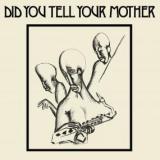
TETE MBAMBISA - DID YOU TELL YOUR MOTHER

Released in 1979, Tete Mbambisa's Did You Tell Your Mother delivers the ultimate blend of African groove with American modal grace, making it one of the all-time classic albums of South African jazz. With Mbambisa presenting original compositions at the piano alongside Basil "Mannenberg" Coetzee on tenor sax and flute, the acoustic quartet featured here is rounded out by Zulu Bidi from the band Batsumi on bass locking in with Dollar Brand drummer Monty Weber. This 2026 reissue presents a flat transfer of the master tapes with album artwork restored using illustrator Hargreaves Ntukwana's original ink drawing.

A self-taught musician, it was as leader of the vocal group The Four Yanks in the early 1960s that Tete Mbambisa’s music career took off. With encouragement from Abdullah Ibrahim, he dedicated himself to the piano and went on to record with The Soul Jazzmen in 1969. Mbambisa's solo recordings from the 1970s, produced by Rashid Vally for the independent As-Shams/The Sun record label, document his creative peak as a recording artist and have contributed to earning him an honorary doctorate and a place among the figureheads of South African jazz history.

pre-order now30.04.2026

expected to be published on 30.04.2026

22,06 €
Cloud Management & Vivien Goldman - Whoops Wrong Planet

Cloud Management return to Altin Village & Mine for a unique collaboration with New York writer and creative polymath Vivien Goldman.

A pairing spanning generations and geography, but with a musical overlap that is quite fitting in both process and result. Cloud Management’s jammy, improvisational approach to their dubby electronics blends well with Goldman’s idiosyncratic vocal style, which has its origins in the early days of post–punk and UK dub experimentalism. Cloud Management blend many historical aspects of German electronic music into something distinctly their own, while retaining a view well beyond those borders or any particular era. This approach fits well with Goldman’s deep multidisciplinary career, not easily defined because of its eclectic abundance across disciplines, yet always orbiting around music as its foundation.

When it comes down to it, these are great tracks created in the same way they sound: loose but refined, circling and turning inwards and outwards, back onto themselves. A dub of a dub of a dub, but never falling too far from the source — the minimalism necessary to deliver a direct, steady resolve and a gripping listen.

The B–Side of the record features three remixes by artists from across the globe, all with strong connections to the front line of dancehall, dub, and electronic music experimentalism. Longtime Equiknoxx member Time Cow from Kingston (Jamaica), delivers a version of »Quick Cover Up« that represents a major overhaul of the original. This remix strips away much of the looseness of the source material and leans into a lush yet slightly darker atmosphere, created by layered synths and a masterful use of underlying percussion and melodic stabs.

Up next are Twin Cities, Minnesota–based Feel Free Hi Fi, who take on »Judge Judge.« The duo tighten things up, overlaying weighty vintage string synths and digi–flute melodies. This version feels designed for smoky, late–night dub sound system sessions, harkening back to dub’s foundations.

Last but not least is London’s Pat Orburn. Stripped way down, the remix rides an interplay between alternating minimalism and a more lo-fi but lush exuberance, somewhat reminiscent of a bossa nova–esque minimal synth sound. This version’s lo–fi pop sensibility provides a fitting contrast and completes an eclectic yet copacetic trio of remixes for the record.

out of Stock

Order now and we will order the item for you at our supplier.

Last In: 5 months ago
23,11 €
Juli Deák - Brisk LP

Brisk is the debut album by Polish-Hungarian flutist Juli Deák (*2000), based in Budapest. Comprised of seven solo flute pieces, the album offers a concentrated snapshot of Deák’s musical world—one shaped by classical training, experimentation, improvisation, and folk influences.

The project began taking shape in 2021, as Deák moved away from the polished ideals of classical performance toward a more personal and exploratory approach. Early fragments only revealed their meaning in front of an audience, whose responses encouraged her to continue developing the material. With over 15 years of musical experience, Deák combines technical precision with a willingness to embrace vulnerability and chance.

Breathing lies at the heart of Brisk. More than a functional necessity, it becomes an expressive and structural force. Through close listening, breath feels tactile and intimate, placing the performer almost within reach. Techniques such as circular breathing, overblowing, harmonics, singing while playing, and wind tones allow the flute to unfold into multiple voices, while percussive key clicks provide a steady rhythmic pulse.

Deák foregrounds sounds often excluded from classical music—breathy tones, unstable pitches, squeaks, and audible inhalations—treating them as essential expressive tools. This focus reflects her long-term exploration of the flute’s physical and expressive limits and connects directly to her ongoing solo practice, The Breathing Project, of which Brisk is a distilled release.

Active across classical, contemporary, jazz, and experimental scenes, Deák has collaborated with ensembles including Konstmusik-systrar and the VENI ensemble, and performed at festivals such as Norbergfestival and Ung Nordisk Musik.

Across its seven pieces, Brisk balances immediacy and rigor, inviting focused listening while remaining open and bodily. It documents a musician in motion, attentive to sound as sensation, gesture, and breath, and committed to honesty

pre-order now24.04.2026

expected to be published on 24.04.2026

21,22 €
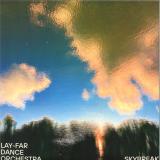
Lay-Far Dance Orchestra - Skybreak LP

DJ Support: Garnier, Opolopo, Worldwide FM, Marcia Carr, Bill Brewster, Timeout Moscow, Craig Smith, Delfonic, Tony Nwachukwu, Marcel Dettmann, DJ Rocca, Shuya Okino, Borrowed Identity, Titonton Duvante, Alex Attias, Rainer Truby, Sol Power All-Stars, Kyri R2, Robert Luis, Severino Panzetta, Lars Behrenroth, Kassian, Alkalino, Getdown Edits, Moodymanc, Gerd, Lea Lisa, Young Pulse, Mark de Clive-Lowe, Mark Grusane, Alex Barck….

International dance music heavyweight, producer and DJ Alexander Lay-Far returns with a powerful new chapter - Lay-Far Dance Orchestra (LFDO) - a fully-fledged live band project that reconnects him with his jazz-funk and fusion DNA while pushing dance music forward with unmistakable groove, musicianship and emotional weight. Formed in early 2024, LFDO is no nostalgia exercise. With Lay-Far at the helm as bassist, bandleader, composer, arranger and sound engineer, the orchestra has already been turning heads with explosive live performances, reinventing classic Lay-Far cuts, and now unveil their first album “Skybreak” with all new and original material written and produced by Lay-Far together with his bandmates and star guests, including Lipelis, Antoha MC and Seven Davis Jr. This work shows the departure from the predominantly electronic sound of Lay-Far's previous solo albums in favour of live instrumentation recorded to analogue tape and effortlessly bridging the gap between Jazz, Library Music, Disco-Funk, House, Broken Beat and Drum’n’Bass. “Skybreak” is dynamic, passionate, spiritual, cinematic, playful, heartfelt, life-affirming, dreamy and deeply romantic. Ultimately, there’s something profoundly romantic in recording and releasing such music in this day and age!


“Take Flight (Part 1)” is opening the album with style. It takes us on a beautifully orchestrated journey, blending the sensuality of Library Music with high-octane Jazz-Funk and raw b-boy breaks, propelled by breathtaking flute and Rhodes solos of Timur Nekrasov and Maxim Glonti. This aural symbiosis of “beauty and the beats” will become more and more prominent as the album unfolds.


It’s time for “Aquarius Love” created with the inimitable artist and vocalist Seven Davis Jr. (Secret Angels, Ninja Tune). In this composition cinematic soul and heavy jazz meet the restless energy of live drum & bass with deep and heartfelt vocals - timeless sound combined with a timeless message about love and life!


Next is “Head In The Clouds” - a theme for an imaginary rom-com, an ode to all the dreamers - sweet, light, naive and heartwarming. Space-Disco-Funk at its best!

“Where You From” is a fiery Soulful House number with heavy Afro-Latin influences recorded in collaboration with Lipelis. It’s full of Sun, joy and passion. Its irresistible rhythm is emphasised by funky octave bass, wah-wah guitar, catchy piano riffs, guitar solo by Lipelis and seemingly light conscious message delivered by Lay-Far and Maryag. Summer is here!

Now the album takes an unexpected twist in the form of “The Harp of Boom” which at first glance appears to be a classic-sounding Boom-Bap banger. Yes, It’s loud, raw, and gritty, yet it gradually evolves into something delicately-touching and deeply-soulful thanks to a memorable flute melody and lush string arrangement. Definitely recorded with tongue in cheek.


Next is “Feel The Moment” a remarkable collaboration with one of the most recognisable and distinctive Russian artists, singer, trumpeter and cultural icon Antoha MC. It’s a feel-good song, hopeful, life-affirming and bittersweet. A stylish excursion into Brit-Funk and Soviet Jazz-Fusion sound, drawing inspiration from the likes of Atmosfear, Light Of The World or Soviet Jazz bands like Allegro and Arsenal, but reimagining the influences through the modern West London broken beat lens.


The spectacular music journey continuous with “Take Flight (Part 2)” - it’s all about the deep infectious jazz-funk groove, heavy beats, rolling percussion and the glory of the soloing instruments - saxophone and flute by Timur Nekrasov, demonstrating the wide range of emotions from thoughtful and lyrical to restless and borderline vicious. One for freestyle dancing!

As the album draws to an end a vibrant musical triptych “Soul Constant” awaits, mixing together the deep and sensual mood of spiritual jazz with heavy syncopated drum’n’bass rhythms by Michail Fotchenkov, lush orchestration, expressive saxophone solos and the ending which can simply be described as “aural bliss”. It’s breath-taking!

A pleasant bonus is the exclusive version of “Where You From” by Lipelis himself, who is taking it into dub territories, further enhancing the rhythm section and enriching the song with his trademark playful synth flourishes and dreamy guitar solos for maximum effect (and appeal).

The album “Skybreak” by Lay-Far Dance Orchestra is the work of real artistry and craftsmanship with timeless sound that’s not only deeply-rooted but also forward-thinking.

out of Stock

Order now and we will order the item for you at our supplier.

Last In: 4 months ago
21,81 €
CALVIN LOVE - Throw My Shadow To The Sun LP

Calvin Love is a Canadian singer-songwriter, composer, and producer from Edmonton, Alberta, now based between Edmonton and Los Angeles. With a sound that blends noir-tinged folk‑pop, crooning rock ’n’ roll, and cinematic storytelling, Love has become a distinctive voice in the international indie landscape. His music has drawn comparisons to Roy Orbison, Leonard Cohen, and Bryan Ferry, with Aquarium Drunkard describing his work as “a crestfallen soundtrack of near‑escape… like Chris Isaak trapped in a David Lynch film.”
Since his debut New Radar (2012), Love has released a run of acclaimed records including Super Future (Arts & Crafts, 2015), Highway Dancer (2018), Night Songs (2020), and Lavender (2021). Along the way, he has collaborated with renowned producers and artists such as Gus Seyffert (Beck, Roger Waters, Black Keys) and the late Richard Swift (The Shins, Damien Jurado), while earning coverage from outlets including SPIN, The Fader, Interview Magazine, and Stereogum.
A seasoned live performer, Love has toured extensively across North America, Europe, and Asia, appearing at festivals such as SXSW, Pop Montréal, Strawberry Festival (China), Endless Daze (South Africa), and Sled Island. He has shared stages with Morrissey, Mac DeMarco, Courtney Barnett, Jonathan Wilson, The Divine Fits, and Jim James, performing in iconic venues like Carnegie Hall, The Troubadour, and Hollywood Forever Cemetery.
In early February 2026, Love releases his seventh studio album, Throw My Shadow To The Sun — a bold, visceral statement that captures him at a new creative peak. Self‑produced and recorded by Reverend Baron at The Ladder Factory in East Los Angeles, the album channels raw, unfiltered energy into a late‑night rock ’n’ roll atmosphere built on moody grooves, gritty textures, and Love’s unmistakable croon.
The sessions brought together a formidable live band: Josh Da Costa (Drugdealer) on drums, Brent Randall (Vanity Mirror) on bass, Davey Chegwidden (De La Soul, Ghostface Killah, Raekwon, Too Short) on percussion, Jeremy Brian Gill (Curtis Harding) on tenor saxophone and flutes, Daniel E. Garcia (Reverend Baron) on lead guitars, and multi‑instrumentalist Laena Myers (White Fence, Orville Peck, El Mariachi Bronx) on violin.
From the hypnotic sway of “Underneath It All,” to the reverb‑drenched sax of “Forever Feels,” to the heavy sludge‑rock crush of “Setting Sun,” Throw My Shadow To The Sun draws from the lyrical storytelling of Dire Straits, the laid‑back blues of JJ Cale, and the timeless melodic drama of Roy Orbison. The result is a cohesive, lived‑in record that transforms fleeting moments and late‑night impressions into something enduring and cinematic.

pre-order now20.03.2026

expected to be published on 20.03.2026

19,75 €
ARN4L2 - TIERRA BOMBA

ARN4L2

TIERRA BOMBA

12inchBARN129
Studio Barnhus
16.03.2026

Studio Barnhus presents ARN4L2, a producer from Cartagena, who debuts on the Stockholm label with the striking EP TIERRA BOMBA, a record built from the fractured memory of an island in the
Colombian Caribbean, understood as a surface in motion.
The project draws on tools present in the early development of the Champeta genre – the Yamaha RY30 drum machine, the Yamaha DD-14 drum pad, and the Pyramid mixer – alongside percussive
gestures and guitars characteristic of the style. On songs like the effortlessly bouncy title track and the gaita-laced curveball BULLA, featuring the characteristic melodic flute of the region, ARN4L2’s instinct for propulsion and detail comes into focus, while vocal tracks like the energetic closer LA ÑAPA integrate the artist’s voice as texture, without hierarchy or center.
TIERRA BOMBA becomes a point of convergence, where technology, sonic practices, and fragments of local popular culture meet in the present tense. Released through Studio Barnhus on
12'' vinyl and all digital platforms on March 13.

Text written by Edna Martinez.

out of Stock

Order now and we will order the item for you at our supplier.

Last In: 5 months ago
15,92 €
Cheeba’s Funky Rock Ensemble - Drug-Crazed London Hippies / You Wanna Ride? (7")

Cheeba’s Funky Rock Ensemble are back with two sides of funky rock breaks for hairy b-boys !

After the great feedback of their debut release 18 months ago, they went back into the studio soon afterwards to record some more slices of hip-hop orientated funky-psyche beats aimed at the dancefloor. Since then, both new tracks have been on a one-off dubplate and getting aired all over the country to an enthusiastic reception - so it’s about time we got them out there for everyone else to, like , just dig, maaaaan !

DRUG-CRAZED LONDON HIPPIES takes you down to the seedy back street clubs of late 60s swinging Soho - to the early discotheque scene and the psychedelic experience of numerous young rock groups and their fans. With heavy fuzz, funky beats and dirty flute loops this takes you straight to those hedonistic dancefloors in the early hours.

YOU WANNA RIDE ? Stays in the same era and same counter-culture, but on the other side of the Atlantic with the free festival vibe of alternative lifestyles in California. More fuzz-rock sounds, blended with heavy beats , screaming hammond and wordless female vocals to take you on a deep trip - to lose yourself in a field as the sun rises.

out of Stock

Order now and we will order the item for you at our supplier.

Last In: 7 months ago
18,07 €
Various - Hogan, The Hawk And Dirty John Crown (LP)

This is that absolute stank-face filth: hard, espionage drama-soul and tough, jazzy street-funk. Hogan, The Hawk & Dirty John Crown sounds like the soundtrack of a blaxploitation movie from the early 70s and, packed with funky fusion and smoother orchestral numbers, it is basically that.

Featuring a veritable who's who of killer library break snakes - Alan Parker, Alan Hawkshaw (under sneaky alias William Parrish), Simon Haseley, Reg Tilsley and Gordon Grant - it's not hard to see how this commands over £350 on secondary markets.

This beautifully presented reissue, part of Be With's fresh campaign with the legendary library label Music De Wolfe, is well overdue.

Recorded for De Wolfe in 1972, Hogan, The Hawk, Dirty John Crown is a fantastic start-to-finish listen. The flute-funk of Hawkshaw and Parker's opener "The Hawk" comprises driving, fuzzy, wah-wah-drizzled bell-laced breaks with synths and basslines to murder for. Up next, Haseley's "The Happening" is a carefree, rhythmic builder with strings and horns. Let's face it, it doesn't prepare us for the monster that follows...

Hawkshaw and Parker's amazing "Main Chance" is likely the reason you're here; it's a moody, beaty proto-hip-hop banger; all rolling drums and flute-laced, organ-drenched, synth-funk breaks. Just sensational - you'll want to play it again and again and again.

The cool AF "Hogan Baby" has a soft, rounded, bluesy feel - it's a lighter number and Haseley's work here sounds more than a little indebted to Burt Bacharach. It's melancholic, reflective and contains ace breaks with beautiful flutes and wistful horns. It's just gorgeous. Grant's pounding "Dirty John Crown" brilliantly conjures swirling string-swept serenity atop driving, incisive drama-funk breaks. Sublime. Hawkshaw and Parker come roaring back with the murky, creeping crime-funk of "Swarf" with killer basslines underpinning slow-mo high-class flute-funk.

Reg Tilsley enters the fray with the bright, snappy, carefree "Turnover". It's lightweight but still retains some nice orchestral movements. The brief “Tarantula” gets us back on track - from the pen and chops of Hawkshaw and Parker, are we surprised? - with the driving crime funk breaks, super clean yet brooding. Synths, sax and 'nuff guitars. YES.

Side 2 opens with the car chase swag of Haseley's dramatic, driving "Precinct". Jazzy, instrumental flute funk over great percussive breaks. We love this. Haseley's rolling "Sidewinder Version 1" is robust and exuberant with bouncy horns before a cracking Parker-Hawkshaw one-two featuring the tense "Pressure" and the deeply soulful "Call Me", a relaxed, medium-tempo organ feature. With building piano and strings Gordon Grant's excellently titled "Scorch" is as aggressive and dramatic as you'd hope. Hawkshaw and Parker's furtive flute-funk of "Digger" precede the light, melodic and romantic themes of Tilsley's "Marianne" whilst "Sidewinder Version 2", a faster iteration of Track B2 sees Haseley close out this remarkable set in bouncy, bright fashion.

The audio for Hogan, The Hawk, Dirty John Crown has been meticulously remastered by Be With regular Simon Francis, ensuring this release sounds better than ever. Cicely Balston's expert skills have made sure nothing is lost in the cut whilst the records have been pressed to the highest possible standard at Record Industry in Holland. The original, iconic sleeve has been restored here at Be With HQ as the finishing touch to this long overdue re-issue.

pre-order now27.02.2026

expected to be published on 27.02.2026

26,01 €
Esa Pethman - In Belgium 1967

Esa Pethman

In Belgium 1967

7"-VinylWJ075001
WE JAZZ
06.02.2026

We Jazz Records kicks off their new series of archival 7" releases with Esa Pethman "In Belgium 1967" released 23 September 2022. The two-tracker is licensed from the Belgian VRT radio archives and both of the pieces are previously unreleased. Finnish jazz legend Pethman, heard here on alto flute and tenor sax, joins forces with European jazz greats such as Heinz Bigler, Uffe Karskov and Jean Fanis. This is a small but valuable piece of unheard European jazz history from the early heyday of modern jazz. The physical release is a quality "inside-out"-styled EP with 3mm spine and small center hole on the 45rpm vinyl.

An excerpt from the liner notes by Mikko Mattlar:

"Esa Pethman (b. 1938) was one of the key figures of modern Finnish jazz in the 1960s. His album The Modern Sound Of Finland was the first Finnish modern jazz album and his composition "The Flame" a true modern Fenno-jazz evergreen.

Pethman was born in Kuusankoski, 135 kilometres from Helsinki in the Kymenlaakso area. The jazz scene was active even though it was an area of rural landscapes and paper mills. Pethman discovered jazz when he heard a Charlie Parker record being played at a local music shop in the late 1940s. Following Parker, bebop became his favourite style of jazz.

Young Pethman played flute and saxophone in local bands who accompanied schlager singers. They played tangos and waltzes for dancers, but usually started a typical dance event with an hour of jazz. In 1959 Pethman moved to Helsinki to study music at the Sibelius Academy. Back then it was a strictly classical music academy, but Pethman later described the studies as crucial for his development and career. He quickly made his way to studio sessions and into the best orchestras in Helsinki.

As a student of composition, Pethman also began writing his own music. "The Flame" was a melody he just got on his mind one night, and he decided to write it down. The catchy composition was released as a 7" single in 1964, a year before Pethman's debut album. Both records stand as benchmarks for modern Finnish jazz. The album consisted entirely of Pethman's compositions, not versions of jazz standards like a lot of the Finnish jazz released until then.

In the mid 1960s, Finnish jazz was also taking its first international steps. Pethman's quintet took part in the first Montreux Jazz Festival in Switzerland in June 1967. At the Montreux jazz band competition, the quintet came in fourth of the twelve contestants. Despite not winning the competition, the band got an honourable mention, and Pethman was now recognized outside Finland.

In December 1967 Pethman travelled to Brussels. His visit was organised by the national Finnish broadcasting company Yleisradio and their jazz program producer Matti Konttinen. Konttinen was supposed to go to Brussels with Pethman, but the musician ended up traveling alone.

In the Decca recording studios Pethman played two songs. He recorded a version of his most famous composition "The Flame", where he played the alto flute and was accompanied by Belgian musicians. On Swiss saxophonist Heinz Bigler's composition "Like Steel", Pethman played the tenor saxophone. The band was now more international, consisting of Bigler, the Italian Francesco Santucci, the Dane Uffe Karskov, a Belgian rhythm section and Pethman. After 55 years, Pethman still remembers Bigler's remarkable skills as a saxophonist.

The two-day visit included the recording session, a dinner and a concert. Pethman and the other non-Belgian musicians came to Brussels mainly to play at a jazz concert organised by the European Broadcasting Union EBU. They played at the studio first, and the concert was held the following day. Pethman and all the other soloists played as members of an international big band. The studio and live session were produced by the Belgian Radio and Television jazz section leader Elias Gistelinck."

out of Stock

Order now and we will order the item for you at our supplier.

Last In: 4 years ago
16,39 €
Debit - Desaceleradas

Debit

Desaceleradas

12inchLOVE141
Modern Love
26.01.2026

A chopped-and-screwed love letter to the sounds of rebajada – half-speed cumbia, pioneered by Sonido Dueñez in the 1990s, and born from an overheated turntable motor that didn’t make the crowd stop dancing. With Debit’s treatment, rebajada becomes an ethereal, at times intense ambient tapestry that’s also a history lesson.

Spend any amount of time pacing the streets of Monterrey, the bustling city in the north of Mexico where Delia Beatriz, aka Debit, grew up, and you’ll be sure to catch traces of cumbia echoing from Bluetooth speakers, DIY soundsystems, or car stereos. An Afro-Latin dance form and »practica cultural« originating in Colombia in the early 19th century, cumbia evolved rapidly in the early 1900s, as a localised sound played on drums and flutes quickly modernised to integrate European instrumentation like the accordion. When it reached Mexico in the 1940s, the sound shifted again, fusing with mariachi styles and integrating further vallenato folk elements. Eventually, cumbia spread across the entirety of Latin America, splintering into a spectrum of different musical styles such as chicha in Peru, and cumbia villera in Argentina. And over in Monterrey, cumbia inadvertently found its own idiosyncratic groove.

From the 1950s to the 1970s, waves of immigrants from across Mexico and Latin America headed to Monterrey to find work, making a home in Colonia Independencia. Colombian cumbia records, shipped in from Mexico City, Houston, and Miami, became the soundtrack of the neighbourhood, relaying familiar stories to a rural working class adjusting to their new industrial reality. The sound struck a chord with locals, and huge street parties hosted by ramshackle soundsystems known as sonideros unified the diverse community. So when cumbia rebajada materialised serendipitously in the 1990s, it emphasised and highlighted the memory distortions at the heart of the immigrant experience. Local record collector, selector, and sonidero Gabriel Dueñez had been playing cumbia for hours one night when disaster struck: his turntable’s motor overheated and slowed down, turning the music into a warped groan, with half-speed voices echoing over wobbly accordion drones and splashy drums. But the crowd kept dancing, and Sonido Dueñez realised he’d struck gold – cumbia rebajada was born.

Over the next few years, he dubbed a popular series of mixtapes, hawking them at the flea market on the dried-up Santa Catarina riverbed beneath El Puente del Papa, the bridge that links downtown Monterrey with Independencia. These woozy archives became the stuff of legend, poetically but subconsciously shadowing DJ Screw’s series of epochal cassettes that appeared over the border in Houston. Beatriz uses Sonido Dueñez’s first two tapes as the starting point for »Desaceleradas«, entering into a dialogue with time, culture, and geography as she recalls the sonic ecosystem that surrounded her decades ago, long before she emigrated to the USA. If 2022’s acclaimed »The Long Count« was an attempt to recover concealed pre-Columbian history in the face of colonisation, »Desaceleradas« jumps forward, figuring out how memory and shared celebration can resist a more contemporary form of cultural erasure. As AI systems scrape, blend, and decontextualise culture around us, leaving vapid slop, »Desaceleradas« proposes a slower, more careful, and ultimately more human kind of engagement. It’s an archive with a pulse.

out of Stock

Order now and we will order the item for you at our supplier.

Last In: 7 months ago
28,15 €
MULUKEN MELLESSE - MULUKEN MELLESSE WITH THE DAHLAK BAND (ETHIOPIQUES)

Swan Song

The vinyl LP at the heart of this éthiopiques 31 tracks 2 to 11 was one of the very last vinyl records ever released in Ethiopia. But above all it represents, we felt, the absolute masterpiece of the Ethiopian Groove – the Swan Song of Swinging Addis. The album leaves a clear idea for posterity of the level of sophistication and mastery that modern Ethiopian music had achieved, before being crushed under the Stalino-military heel of the Derg – as the bloody revolution that was unfolding came to be called.

Ethiopia1976.

The Revolution that broke out in February 1974 rolled on in a ruthless march. The whole of Ethiopian society was utterly stunned. The bouquets of flowers handed joyfully to the first tanks of the coup d'état were to wilt very rapidly. From September 1976 to February 1978, 18 months of Red Terror (the name given by the junta itself) spilled blood throughout the country. This fratricidal conflict took its heaviest toll among students and youth. The shift from feudalism to a cruel and primitive Stalinism left the country's citizens deeply traumatised, and snuffed out any pretence of activism, whatever the sector of society. This ice age was to last for seventeen long years.

ሙሉቀን፡መለሰ Mulukèn Mellèssè Muluqän Mälläsä

It was three tracks by Muluken that served as the opener for éthiopiques-1 more than 25 years ago. Seven more tracks appeared on éthiopiques-3 and 13, all accompanied by The Equators, which was soon to become the Dahlak Band.

The first track, Hédètch alu, also the very first piece that Muluken ever recorded, left audiences both unsettled and amazed. Reflecting the singer's extremely young age (he was just 17 at the time), this angelic voice mystified many, who thought they were in fact listening to a feminine voice. He was not yet 22 when he released his last vinyl record in 1976 with Kaifa Records (KF 39LP), one of the very last to be issued in Ethiopia, before the cassette tape became the dominant medium for music distribution – and before the new revolutionary regime put a stop to all independent musical life, via an unspeakable barrage of prohibitions and other persecutions.

Mulu qèn, literally, “A well filled day”. This tender maternal intention wasn't enough to ward off the cruelty of fate. His mother's premature death drove Muluken to leave his native Godjam, in northeast Ethiopia, to live with an uncle in Addis Ababa. Born Muluken Tamer, he took his uncle's last name – Mèllèssè.

The spelling Muluken appeared in his administrative records. Transcription of Amharic to the Latin alphabet, both in Ethiopia and for scholars, gives rise to controversies and quibbles that can never be neatly settled. French allows for a closer approximation of the original pronunciation, thanks to its battery of accent marks, confusing as they may be to anglophones.

Between rather accommodating administrative record-keepers and the various versions that pop up in interviews given by the artist, Muluken's year of birth oscillates between 1953 and 1955…

1954? One thing is certain: the artist's talent made itself known very early indeed, because he got his start in 1966-67, at the age of 13 or 14. Photos from the period attest to his extreme youth. It's a strange sort of initiation for a very young teenager to become a sensation in the heart of Addis's nightlife at the time, Woubé Bèrèha – the Wilds of Woubé. And what's more, in the club of the Queen of the Night, the Godjamé Assègèdètch Alamrèw herself, the very same that was portrayed by Sebhat Guèbrè-Egziabhér in his novel-memoir Les Nuits d’Addis Abeba2… The legendary female club owner who is remembered to this day by the capital's ageing boomers.

Muluken first tried his hand at the drums, before he grabbed the microphone. He emigrated briefly to the Zula Club, across the street from the old Addis Post Office, one of the ground-breaking bars of the burgeoning musical scene, before joining the Second Police Band in 1968, for around three years. He spent a few months with the short-lived Blue Nile Band founded by saxophonist Besrat Tammènè. As the musical scene grew increasingly successful, and pulled slowly but decisively away from its institutional ties, Muluken released his first 45rpm single in February 1972 (Amha Records AE 440). It was included in two LP Ethiopian Hit Parade compilation albums in September of the same year. All in all, Muluken released eight two-track 45s and the same number of original cassette tapes between February 1972 and 1984, the year that he departed for permanent exile in the USA. After converting to Pentecostalism in 1980, Muluken gradually abandoned all secular musical activity. In 1985, at the end of a concert in Philadelphia, he decided to quit concerts and recording for good. Mèlakè Gèbré, the historic bass player from the Walias band who was playing with him that night, recalls that everything appeared so irredeemably diabolical in Muluken's eyes, that it was to be the end of his contribution to Ethiopian Groove.

The end of the story, the beginning of a legend.

Dahlak Band, forgotten by History

Aside from his personal history and vocal talents, it must be remembered that Muluken Mèllèssè was one of the biggest names in the musical innovations that marked the end of the imperial period. These éthiopiques aim to convince those who are just discovering this hidden gem... As for Ethiopians themselves, they are to this day captivated by this singular and atypical figure in the Abyssinian pop landscape – even though he withdrew from public life some 40 years ago. Incorrigible devotees of poetic twists, of more or less hidden meanings, Ethiopians appreciate above all the care Muluken took in choosing his lyrics and the writers who penned them, such as Feqerte Haylou, Alemtsehay Wodajo and, here, Shewalul Mengistu (1944-1977). Love songs, written by women, a far cry from the conventional drivel that pleases sappy sentimentalists.

Muluken is equally acclaimed for his perfectionism when it came to music, the opposite of the overly casual approach that is all too common. He remained a faithful partner of musicians who came from a lineage that borrowed from several inventive and pioneering bands (Venus, Equators, Dahlak). Amongst them were certain artists who began their musical lives with Nersès Nalbandian at the Haile Sellassie Theatre and who come of age in around 1973 – at just the wrong time, you might say. Among them were the pillars Shimèlis Bèyènè (trumpet), Dawit Yifru (keyboards) and Tilayé Gèbrè (sax & flute). Most notably Tilayé Gèbrè, certainly one of the most important musicians, composers and arrangers of his generation, of the end of the imperial era, and of the early years of the Derg.

It was only in 1981 that a miraculous opportunity arose for Tilayé to escape the Stalinist paradise of the dictator Menguistou Haylè-Maryam. Once again it was Amha Eshèté (1946-2021) who provided a solution. The spirited and courageous producer, who had been in exile in Washington since 1975, succeeded, thanks to his incredible perseverence, in bringing the Walias Band to the USA. It was, in fact an extended Walias Band comprising ten musicians3, six of whom chose to slip away after a few concerts and the recording of an LP (The Best of Walias, WRS 100). Tilayé Gèbrè was one of these. He has been living in the USA ever since. There he joined the then-nascent Ethiopian diaspora, which lived largely unto itself, and was making only very modest headway in the American musical market. It seems unfair that Tilayé Gèbrè and the Dahlak Band were not able to benefit earlier from the public recognition that they do deserve.

A similar draining away of the top-rate talents would lead to the reorganization of the major groups of the “Derg Time”. The remaining artists spread themselves around between Ibex Band (renamed Roha Band), Ethio Star Band and a remodeled Walias Band. That spelled the end of the Dahlak Band.

With this record, produced by the essential Ali Abdella Kaifa a.k.a. Ali Tango, we can appreciate everything that the Derg not only destroyed, but also prevented from flourishing. This gem of Ethiopian-style afrobeat came out in 1976 (and, by way of a parenthesis, before the FESTAC 1977 in Lagos, which was attended by an impressive delegation of Ethiopian musicians — although Fela was already personna non grata in his own country). Despite everything that might distinguish this ethio-groove from Fela’s music – no colonial axe to grind, no question of political confrontation with the authorities, no claims to negritude or Africanism for the Ethiopian musicians, and less extrovertion! –, this LP fits beautifully into the saga of intense and electrified soul of the new “African” groove that Fela and Manu Dibango embodied so well from that point onwards.

In restoring this record to its place in the afrobeat epic, it can be seen that, if nothing else, the timeline bestows a legitimate pedigree and a historical primacy to works that had no international impact when they were originally released.

Warning! Masterpiece!

out of Stock

Order now and we will order the item for you at our supplier.

Last In: 3 months ago
20,59 €
John Also Bennett - Στoν Eλaιώνa / Ston Elaióna LP

Ston Elaióna is John Also Bennett’s first album for Shelter Press since his 2019 solo debut Erg Herbe. The American born, Athens, Greece, based flautist, synthesist, and composer weaves a strikingly singular electroacoustic excursion for bass flute and Yamaha DX7ii, largely recorded in the golden haze of the early morning hours - bending time at the otherworldly juncture of consciousness and place. Translating from Greek as “in the olive grove”, Ston Elaióna is permeated with the ambiences of the ancient and present world, guided into form by a playfully rigorous approach to sound.
Initially emerging during the mid 2000s as part of Columbus, Ohio’s noise scene, before relocating to NYC around 2010, Bennett’s diverse activities picked up an increasing sense of pace over the following decade - performing and recording as a solo artist (JAB), with the trio Forma and with CV &JAB, his prolific duo with his partner Christina Vantzou, as well as playing in Jon Gibson’s ensemble among many other multifaceted collaborations. However, since 2020 the flautist and electroacoustic composer has existed in a semi nomadic state: drifting between Brooklyn, Brussels, extensive tours, and Greece, where he finally came to rest in Athens last year.

Drawing upon a carefully honed attentiveness to the environments and experiences of everyday life, Ston Elaióna is a suite of nine pieces (with an additional track exclusive to physical formats), many of them composed and played live as the early morning sun touched the Parthenon, in full view from Bennett’s studio window in Athens. Bennett’s refinement and restraint, honed over his years adrift, led him to adopt a limited palette focused on his primary instrument, the bass flute, and a Yamaha DX7ii synthesizer tuned to just intonation scales. Alongside a handful of other keyboards, digital oscillators triggered by his flute, and occasional field recordings, this simple palette is reflected by the deeply emotive sense of minimalism that permeates the album’s two sides. Following two solo albums defined by outward facing temperaments - 2022’s Out there in the middle of nowhere (Poole Music), which used a lap steel guitar and generative oscillators to evoke the surreal landscapes of the South Dakota badlands, and the largely synthetic atmospheres of the 2024 anthology Music For Save Rooms 1 & 2 (Editions Basilic) - the shift in Bennett’s worldly circumstances offered an intuitive return to the calm, inward states of creative exploration that have historically defined JAB’s sound. In parallel, context provided clear sources of inspiration for many of the album’s themes, as well as sources for some of its sounds. The aura of Greece, from the ancient to the present, from its stones and olive groves to its traffic, figures heavily across Ston Elaióna’s two sides. John Also Bennett’s Ston Elaióna forms an elegantly rigorous world of electroacoustic sonority, bridging the expanse of time with the immediacies of environment and happening in the here and now: a profound sonic mediation on the countless dimensions unlocked by life in Greece.

out of Stock

Order now and we will order the item for you at our supplier.

Last In: 5 months ago
29,62 €
Various - NICOLA CONTE PRESENTS VIAGGIO

Blue note / Schema / Far Out recordings artist shares a new compilation of golden age italian library music.

Following his acclaimed five-part Viagem compilation series celebrating Brazil's forgotten bossa nova and samba jazz, Far Out, Blue Note and Schema recording artist and international DJ Nicola Conte turns his curatorial attention homeward with Viaggio, an extraordinary exploration of Italy's library music renaissance 1970-79.

The 12-track compilation spotlights the remarkable creative explosion that occurred during the seventies: when some of the greatest yet most historically overlooked composers, including Amedeo Tommasi, Alessandro Alessandroni and Max Rocci, were composing and recording huge amounts of original music for film and television libraries.

Unlike commercial releases designed for mass consumption, library music was created specifically to accompany images on screen. This meant creative freedom for composers who imagined scenarios, feelings and worlds to soundtrack. Pressed in limited quantities, these recordings were distributed only to internal circles of music supervisors, journalists, and television professionals – making them virtually invisible to the general public for decades.

"This is a journey through a largely forgotten world," explains Conte. "While major jazz recording opportunities were scarce, an incredible network of small labels owned by publishing companies – often created by the composers themselves – began to flourish. This created an open space where musicians could express more experimental and free thinking sounds."

At the heart of Viaggio stands Amedeo Tommasi, the sophisticated jazz pianist who emerged in 1960 backing international stars like Chet Baker, Bobby Jaspar, and Jacques Pelzer. Tommasi was among Italy's earliest artists to introduce Black US modal jazz influences, and when traditional recording opportunities dwindled, he pivoted to soundtrack and library music, helping define a distinctly Italian sound that bridged experimental jazz with the emerging possibilities afforded by developments in synthesizer and recording technologies.

The compilation features rare gems from small label outputs, namely the Cenacolo and Rotary label catalogs. Tommasi's contemporaries include the great Alessandro Alessandroni and his vocalist wife Giulia De Mutiis (Kema), Stefano Torrosi (under the alias Farlocco - meaning fake/phony), and Belgian composer Joël Vandroogenbroeck. The recordings capture the technological evolution of the era as beguiling synthesis often combines with global influences spanning Brazilian rhythms, jazz-funk explorations, and Middle Eastern scales.

"You can hear both the haunting melodies and sun-kissed atmospheres so typical of Italian culture from that era," Conte observes. "Some of these albums could have been proper artist releases, while others were specifically designed for accompanying images on screen, yet all were crafted with exploratory creativity that still resonates powerfully today."

out of Stock

Order now and we will order the item for you at our supplier.

Last In: 7 months ago
23,11 €
Richard Youngs - Hidden LP

The inimitable Richard Youngs returns to Black Truffle with this third full-length for the label, Hidden. Like CXXI and Modern Sorrow, Hidden unfolds across two side-long pieces at once eminently listenable and possessed of the ‘bloody-minded’ dedication to ‘having an idea and sticking with it’ that Youngs himself has identified as one of the key qualities of his work.

At the core of both pieces are rapid, randomised arpeggios generated with a Moog Grandmother, hypnotic patterns that wouldn’t be out of place on a Berlin School classic. Alongside these arpeggios, across the seventeen minutes of the first side-long piece Youngs builds an airy structure of shakers, synthetic handclaps and a brief, repeated sample, impossible to identify but sounding like a glitched foghorn. Over the top we hear his unmistakable voice, repeating single syllables—Ha, Ho—with a slow delay, something like a lonely one-man-band take on Anthony Moore’s Pieces from the Cloudland Ballroom or a more musical elaboration of the hypnotically overlapping delayed phonemes of Anton Bruhin’s Rotomotor. Like much of Youngs' work, the arrangement of sounds is sparse, each layer punctuated by spaces that allow others to shine through, in a way that seems to have more to do with dub or early hip-hop than high-brow models of musical reductionism.

On the flipside, the arpeggios return, now accompanied by ringing, filtered guitar chords and long flute tones. The use of a similar ground layer across the two pieces with strikingly different overdubs calls up Youngs' first solo record, the classic Advent, reminding us of how consistent ‘theme and variations’ is as an approach in his enormous body of work. Joined by handclaps and a chiming sound, the piece almost feels like it is about to achieve dance-floor lift-off at times, only for the percussion to disappear and leave the listener once again floating among the guitar and flute, now joined by occasional cut-off vocal snippets, like a radio turned quickly on and off. The suspension of these disparate elements over the steady foundation of the Moog arpeggios might remind some listeners of the free-form studio explorations of Moebius & Plank and Holger Czukay or even give a nod to Youngs’ formative encounter with Cabaret Voltaire.

Like some of Youngs’ much-loved work with Simon Wickham-Smith, Hidden approaches relatively familiar sounds and instruments from skewed angles, delighting in loose structures of interaction that border on gleeful incoherence while remaining outwardly beautiful. Coming up to almost four decades of persistent activity, like little else in contemporary music Youngs’ work beams with the simple joys of exploration and experiment.


out of Stock

Order now and we will order the item for you at our supplier.

Last In: 8 months ago
22,27 €
Ralph Session / Dfra / Missfly - Voices & Kisses

Ralph Rodriguez aka Ralph Session is a Barcelona-based NYC-born house artist who kicks off this lush new Silver Walker 12" with 'Voices Rising', a smooth and song-driven deep house cut with a summery soul and stylish female vocals that hark back to the earliest soulful OGs. DFRA & MissFly combine then for 'Thinking', which is a more percussive and steamy, intense house sound with jazzy chords. Session's 'Love's Dance Floor' (instrumental mix) then taps into smoky late-night soul vibes with meandering leads allowing your mind to get lost in the moment and DFRA's 'Kiss My Soul' closes with a more playful and jazzy sound thanks to the charming flute leads and nimble, dancing keys.

out of Stock

Order now and we will order the item for you at our supplier.

Last In: 10 months ago
13,24 €
SONETOS DEL AMOR OSCURO - VOL. 1: EL SUEÑO SE DESHIZO PARA SIEMPRE LP

Sonetos del Amor Oscuro is an ode performed by four enchanted souls who have intertwined their hearts and conjured harmonies and rhythms that wander endlessly among the spellbinding words of a poet from Granada... Federico García Lorca;
He wrung, pushed and vibrated words like tectonic plates, transforming plains into poetic mountain landscapes. He then covered them with a Moorish carpet of snow crystals and had them reflected by the dark locks of hair of a gypsy girl from Albaicín who, with a voice forged in gold and silver, sings her little sister to sleep with a soothing lullaby.

Helena Casella – vocals
Myrddin De Cauter – flamenco guitar
Stijn Kuppens – cello
Stefan Bracaval – flute, bass flute

Helena Casella, the Belgian-Brazilian vocalist with a deep, soft and warm voice, translates her multicultural background and personal thoughts into music in a passionate, soulful and refined way. With her roots in an exceptionally musical family, her music exudes this unique heritage. She effortlessly interweaves genres such as R&B, soul, hip hop and modern jazz, while remaining true to the vibrant sounds of Brazil, an essential part of her roots.
Her debut album was released earlier this year on W.E.R.F. records.

Myrddin De Cauter's music is deeply moving, complex, passionately rhythmic and deeply emotional. He has mastered the compás of flamenco, which gives him the freedom to converse with elements from jazz or classical music. His speed sometimes seems otherworldly, but those who take the time to listen closely to his music will quickly discover an immense world of pure emotion, beauty and tranquillity. After six albums and countless concerts, Myrddin proves that great virtuosos do not necessarily have to come from Spain. At the tender age of eleven, his father taught him to play the clarinet in jazz and gypsy swing style; he became part of the family orchestra and gained his first experiences on stage. A classical melody composed on the guitar prompted him to ask his father to teach him the basics of flamenco guitar. Soon after, Myrddin seemed ready for the real thing and went to Andalusia to learn from Manolo Sanlucar and Gerardo Núñez. This inspired him to compose in his own unique language, deeply rooted in the pure flamenco tradition but enriched by boundless creativity.

Stijn Kuppens is a cellist, composer and producer. In his own genre, which he describes as non-classical cello, he uses the cello in his own unique way. His profound knowledge of the complex history and techniques of the style is clearly audible: Kuppens' mastery of classical music is evident in every note he plays, whether he is performing solo or collaborating with other musicians. His skill as a musician and ambition to explore the boundaries of conventional classical music is evident in his ability to seamlessly blend different genres.

Stefan Bracaval is a classically trained flutist who graduated from the Royal Conservatory of Antwerp. His fascination with the expressive potential of improvisation led him to jazz, where he became a self-taught jazz flutist. Bracaval has collaborated on projects with prominent jazz figures such as Charles Loos, Bert Joris and the Brussels Jazz Orchestra. In addition, he worked as a soloist and arranger with the VRT Radio Choir in 2016. Bracaval leads the Stefan Bracaval QU4RTET, which emphasises the flute as a central jazz instrument and brings new repertoire rooted in jazz traditions.

Live
31/10/2025 – Café Silverio, Gent (BE)
15/01/2026 – Kloosterkapel Diepenbeek (BE)
16/01/2026 – ‘t Ey, Belsele (BE)
17/01/2026 – Sint-Luciakerk (kerkconcerten Merode), Engsbergen (BE)
23/01/2026 – Muziekcentrum Dranouter (BE)

pre-order now21.11.2025

expected to be published on 21.11.2025

21,47 €
Clark - Steep Stims LP 2x12"

Clark

Steep Stims LP 2x12"

2x12inchTHROT014LP
Throttle Records
21.11.2025

GATEFOLD DOUBLE VINYL WITH SPOT UV FRONT COVER

Following the skewed-unself-help-brilliance of ‘Sus Dog’ (which marked his first full foray into songs, abetted by Thom Yorke), and its companion piece ‘Cave Dog’, Chris Clark returns to the dancefloor’s simple, but no less affecting pleasures, with ‘Steep Stims’.
“I found it hard to pull away from listening to this record, hard to stop making it, I had to remove myself from the Stims and stop enjoying it at some point. The album feels like nature to me. I love it when electronic music feels more naturalistic than acoustic music, more potent, that’s the devil’s trick, the promise of electronic music.” comments Chris.
“I used an old synth - the Virus on all of the tracks. I used it at Mess in Melbourne - run by my friend Robin Fox - I loved it so much I had to buy one when I got back to the UK, it took a while to find. They’re a bit clunky to program but make some of my most favourite sounds.”
‘Steep Stims’ marks a back-to-basics approach, invoking the early years of gung-ho creativity enforced by limitations in technology at the time. “Most of the tracks on this album capture the spirit of making music on old samplers, which don’t have much memory time”, explains Clark. “It reminds me of making ‘Clarence Park’, my first album, where I would have to finish tunes in the session, as they would be saved on floppy disks and I couldn’t easily go between tracks. This new record is just a few synths and a few choice sounds; the writing is the important thing.”
Made quickly, ‘Steep Stims’ reflects the immediate rave energy of his live show, but that’s not to say it’s basic floor fodder, as it’s rife with personality, synth magic, and knack for melody. Although swift and impressionistically captured rather than laboured over, it’s still formidably deft, with plenty of oddball weirdness lurking beneath the dancefloor.
Soft, orange, scorched, brutal, the opening track ‘Gift and Wound’ captures the classic dance music dread / awe / euphoria combo perfectly, before ‘Infinite Roller’ merges sparkly-minimalism with snarling bass and soft sines, which turn more dense and metallic as it progresses.
The melancholic smoke belch of ‘No Pills U’ gives strong classic vibrations, which is belied by its creation, made in just 20 minutes. “I love working quickly sometimes”, comments Clark. “Inspiration hits, rough and ready. It’s off the cuff but also screams ‘don’t gild the lily with nonsense, keep it simple keep it clean’”. Segueing into its elder brother, the piece becomes bigger and beatier on ‘Janus Modal’, where it permutates for over 7 minutes of fluttering, beatific club majesty.
At ‘18EDO Bailiff’ you inexplicably find yourself at a clearing, things have suddenly got much quieter. You enter a decrepit and eerie old house, and as you move through its unsettling interior, you arrive at ‘Globecore Flats’. A real piano tuned to 18 notes per octave gives the pair of tracks a haunted, olde worlde feel, which promptly gets eaten by a huge tech step tearout monster, birthing a strange but exotic beast.
The white hot ‘Blowtorch Thimble’ is all hooktasm-rave-hyper-amen-energy, whilst acidic flute leaps around like Ian Anderson on pingers throughout the catchily simple jump-up lurch of ‘Civilians’.
“‘In Patient’s Day Out’ is like some sort of Morricone-does-kraut-rock-with-drum-machines, but that’s probably just in my head” says Clark. “I made several versions of this then went with the early mix but cranked through some choice outboard because it just had something.”
Drumless, yet still full of exhilarating-big-trance-drama, ‘Who Booed The Goose’ flashes by in stroboscopic fast forward, then ‘5 Millionth Cave Painting’ gives a palate cleanser, letting “the virus with its delicious broken, luxurious reverb have a moment”, before ‘Negation Loop’ swoops down in all its glory, with Clark’s tweaked vocals leading deconstructed trance breakdowns, tape edits and brutal noisebursts.
An antidote to the bombast of its predecessor is ‘Micro Lyf’, which closes the set on a poignant note, of sorts. Muted staccato gives way to field recordings “that gradually put it in this outside space; alien in a meadow somewhere nameless. It feels like a sinkhole. The record kinda swallows itself up and then is gone”, ends Chris.

out of Stock

Order now and we will order the item for you at our supplier.

Last In: 77 days ago
27,31 €
Sven Wunder - Daybreak LP

Sven Wunder

Daybreak LP

12inchPP1005
Piano Piano
14.10.2025

At daybreak, as sunlight travels through the atmosphere and begins to reach Earth’s surface, daylight gradually emerges. This marks the transition from night to the beginning of a brand-new day. As the temperature rises—especially after clear, calm nights—relative humidity decreases, and mist, formed of tiny suspended droplets, begins to evaporate. Warm air rises and cool air sinks, creating an interplay of temperature, humidity and sunlight that gives way to a soft, diffuse glow. The sea breeze slowly clears the morning mist, setting life in motion once again as the world wakes up.

‘Daybreak’ is Sven Wunder’s fifth full-length album, seamlessly continuing the progression of his musical oeuvre. It takes the listener on a vivid maritime expedition, beginning the moment the first rays of light break the darkness of the night and embarking on a lush journey through the early hours of the day and far beyond, until the light slowly fades and night falls once again. True to Wunder’s now-distinctive artistry, ‘Daybreak’ is marked by elaborately crafted compositions and elegant pop-jazz arrangements for flute, percussion, brass and strings—supported by a decisive rhythm section, all of which add depth and build on his body of work, continuing to unfold his creative path.

out of Stock

Order now and we will order the item for you at our supplier.

Last In: 3 months ago
22,65 €
Stefano Pilia - Lacinia LP 2x12"

Stefano Pilia

Lacinia LP 2x12"

2x12inchDSZEIT19-LP
Die Schachtel
10.10.2025

Returning to Die Schachtel with his fourth full-length with the label, the Genoa born, Bologna based, guitarist and electroacoustic composer, Stefano Pilia, delivers “Lacinia”, a new, immersive cycle of compositions, delving deeper into the realm of metaphysical, spiritual, and divine meaning, weaving astounding arrangements of sonority from a palette of synths, strings, brass, organ, various electroacoustic instruments, and percussion. Resting at a refined intersection of the acoustic and electroacoustic, drone, and chamber music - overwhelmingly beautiful, delicate, and bold, - “Lacinia” stands as a high-water mark in Pilia’s already remarkable and forward-looking career.

Since its founding in Milan during the early years of the new millennium, Die Schachtel has occupied a singular place in the landscape of experimental music, issuing a carefully curated body of reissues and archival releases by historically significant figures and projects like Christina Kubisch, Luciano Cilio, Marino Zuccheri, Prima Materia, Claudio Rocchi, Lino Capra Vaccina, Gruppo di Improvvisazione Nuova Consonanza, Roland Kayn, and numerous others, balanced against bristling contemporary counterparts by the likes of Jim O'Rourke, Giovanni Di Domenico, Nicola Ratti, Luigi ArchettI, Valerio Tricoli, etc. Running like a spine through the label’s output is a deep dedication to the work of the Italian guitarist and electroacoustic composer Stefano Pilia. Now Die Schachtel returns with “Lacinia”, Pilia’s forth full-length with the label and their first release of 2024. Building on the ground of deeply personal engagement with metaphysical, spiritual, and divine meaning, explored within his previous LP with Die Schachtel, 2022’s “Spiralis Aurea”, “Lacinia” encounters the composer working in close calibration with various ensembles, including the Bologna based Ensemble Concordanze and Comunale di Bologna String Orchestra, weaving synths, strings, brass, organ, various electroacoustic instruments, and percussion into an astounding reconfiguration of immersive, contemporary minimalism that stands among Pilia’s most noteworthy releases to date. Issued by Die Schachtel in two special double vinyl editions and a CD edition, “Lacinia” features artwork by Bruno Stucchi/Dinamomilano, and is an absolute marvel that draws you in and doesn’t let go.

First emerging during the early 2000s, over the past two decades – via solo releases and numerous collations with artists like Oren Ambarchi, Valerio Tricoli, Alessandra Novaga, Z'EV, Andrea Belfi, David Grubbs, and numerous others - the Genoa born, Bologna based, guitarist and electroacoustic composer, Stefano Pilia has presented a singular voice within Italian experimental music, harnessing visceral energy and hands-on immediacy within delicately woven tapestries of sonority, each investigating the sculptural properties of sound and illuminating its relationship to space, memory, and the suspension of time. “Lacinia”, Pilia’s forth solo venture with Die Schachtel, encounters the composer reentering his longstanding practice of collaboration with various ensemble forms, including the Bologna based Ensemble Concordanze, for the albums central piece, “Lacinia Off Axis”, spinning stunning string confirmations by Pietro David Carami and Elena Maury on violin, Alessandro Savio on viola, and Mattia Cipolli on cello.

A new, important cycle of compositions by Pilia, “Lacinia” (meaning "lace" in Latin) builds upon the exploration of the metaphysical, spiritual, and divine dimensions through numbers, geometry, and the creation of tonal forms explored by 2022’s “Spiralis Aurea”, mirroring archetypal, immutable forms at the juncture of the abstract realm of mathematics and architectural structures in the physical world, expands the poetics and compositional ideas featured in its predecessor. Regraded by Pilia as both a series of individual compositions and a single work, “Lacinia” was conceived to “define a circular path (a sort of "rhizomatic lace") where the beginning and end touch, suggesting the concept of time not only as linear but also cyclical and ritualistic—an eternal return, a process of transformation where matter changes, its state changes, but without altering the invisible internal principle of mutation”, embarking upon a a series of “steps, degrees, and energetic quanta in a progression of archetypal whole numbers and transcendent creation.”

The resulting 16 tracks unfold as a series of complex sonic meditations. While deeply resonant with the minimalism of composers like Arvo Pärt, LaMonte Young, Pauline Oliveros, and Eliane Radigue, Pilia digs deep and moves far beyond the predictable tonal relationships and structures of that idiom, echoing the ancient liturgical and devotional music of composers like Gesualdo da Venosa, Monteverdi, and John Dowland, at a refined intersection of the acoustic and electroacoustic, drone, and chamber music.

Fascinatingly structured as a whole to include a number of motif returns, across which we encounter works like “Lacinia Off Axis” appearing in slightly different rendering, states, or evolutions three times, and compositions like “Eve” appearing twice in subtly different forms and arrangements - first for four oscillators, guitar and voice and then for string orchestra - as well “Maris Stella”, which similarly makes two appearances, first for horn trio, organ and percussion, and then for string orchestra, with “Lacinia” Pilia delves further into the world of chamber music than ever before, creating a deeply inward, mediative body of work the totality of which, guided by its rich string arrangements of arching, sorrowful tone, feels almost like a mass for some unproclaimed loss; simultaneously locked in the nuances of a moment, while managing to suspend time.

Perhaps most remarkable is Pilia's ability to create a remarkable sense of sonic cohesion while using such a varied number of ensembles and instrumentation. From the sprawling string arrangements delivered by Comunale di Bologna String Orchestra, under the direction of Paolo Mancini, and Ensemble Concordanze, and a flute trio (Cadux / Plectere) brilliantly played by Manuel Zurria, to pieces for sax, organ and percussion, violin duo and percussion, organ and percussion, Pilia manages to create a sense of singular, encompassing world that flows forward like a shifting stream.

Overwhelmingly beautiful, delicate, and bold, “Lacinia” is unquestionably a high-water mark in Stefano Pilia’s already remarkable, forward-looking career. Nothing short of a marvel of contemporary Minimalism that, through its shifting arrangements of harmonics, tonality, and texture draws flickering images of ancient forms of music into the present day, “Lacinia” is Issued by Die Schachtel in two special editions on double vinyl and a CD edition, featuring artwork by Bruno Stucchi/Dinamomilano. This is an immersive all-consuming listen that can’t be missed.


out of Stock

Order now and we will order the item for you at our supplier.

Last In: 11 months ago
46,43 €
IAN LAMPEL - THE PARQUE RODO TAPES
  • MONTEVIDEO DISNEY SAMBA
  • PARQUE RODO COOKIES
  • NOA NOA BLUES
  • LAS CANTERAS BREAKBEAT SCIENCE
  • CANDOMBE DOBLE GOTA
  • LA SOMBRA DEL LIMONERO
  • PARQUE RODO THUGS
  • THE SOUND OF RAMIREZ SHORE

A unique sonic journey blending jazz, candombe, dub, hip-hop, and electronic music. Written, sequenced, and recorded by Ian Lampel (Uruguay), the album captures Montevideo's vibrant essence with innovative beats and deep roots. Embark on a sonic journey through the rich tapestry of Ian Lampel's multicultural heritage with his debut solo album, "The Parque Rodó Tapes." From the echoes of his grandparents' wartime exodus from Europe's tumultuous past to the rhythms of daily life in Parque Rodó, Lampel's artistic vision was shaped by a kaleidoscope of influences: Science fiction and fantasy books, graphic design annuals, comics, films, early computers and videogames as well as music; the haunting melodies of Russian and Polish classical composers hummed by his grandmother while cooking, the choir and hammond music of the synagogue, his early explorations in club music and dub or the syncopated drumming of candombe and carnaval echoing in the streets of Montevideo. The composer, producer and bass player, wrote, sequenced and recorded practically everything that is heard throughout the album. With meticulous attention to detail, he has crafted a sonic landscape that seamlessly blends elements of jazz and Uruguayan music with the innovative spirit of dub, hip-hop and electronica; from the infectious rhythms of candombe and the raw energy of murga, to breakbeats, moog's and samples. Drawing from a treasure trove of samples collected over two decades, "The Parque Rodó Tapes" weaves together a tapestry of sound that is both nostalgic and forward-thinking, from the haunting voice of Marosa Di Giorgio and the vibrant cacophony of a carnival field recording by Lauro Ayestaran, to the guest contributions from notable musicians including Lampel's wife, singer/songwriter Eco Lopez, multi-instrumentalist Luciana Giovinazzo on flute, and Ferna Nunez on repique drum. Each track is a testament to Lampel's eclectic vision. A debut album with a certain degree of melancholy that works as a soundtrack to the world in which the artist grew up, a world now gone, without cellphones or social networks, in which everything had to be proactively pursued "in the streets".

pre-order now19.09.2025

expected to be published on 19.09.2025

29,83 €
Mr.  Theolonius - Clap Ya Hands /WEB Edits rework 7"

Give It Up Or Turnit a Loose (Edit) by James Brown b/w Web (Edit) by Hampton Hughes / Give It Up or Turnit a Loose (Bonus Breaks) by James Brown| Galaxy Sound Company — GSC45-044, test pressing | The long-running @galaxy_sound_company imprint has been responsible for some superb re-edits over the years, most of which are pleasingly purist in tone — meaning they are pro rearrangements with no added effects but & needless new beats or cheap trickery like so many out there— making any of their releases cop-on-site. & as you can hear from the test pressing, the 44th in the stellar series delivers yet again.

Side A is a masterclass in breakbeat editing of a b-boy classic sample source. Yes, there are many killer JB edits out in the universe, but when you see that the legendary Black Cash & Theo AKA Thelonious Beats take a turn, you know you gotta cop this mutha on site. Here the edit master bravely returns to one of the main sources of the dawn of hip-hop — JB’s comp “In The Jungle Groove” which was released in 1986 to capitalize on it’s popularity in the genre at the time. The comp is named for a breakdown section that appears in “Give It Up Or Turnit a Loose” which is the workout we have here. JB quiets the band down to handclaps, footstomps & congas played by Johnny Griggs. After he raps a little, JB cues legendary drummer Clyde Stubblefield back in, followed by bassist Bootsy Collins & the rest of the band. JB wasn’t intentionally trying to create a perfect batch of hip-hop samples in the late 60s & early 70s, but he couldn’t have succeeded any better if he had been. This edit may enter well-worn territory but he uniquely delivers an edit that showcases why it inspired so many & still delivers the goods to help you get your party started off right & quickly.

Next up on the flipside we are treated to an edit of “Web” by Hampton Hughes, from his 1974 David Axelrod produced & arranged album “Northern Windows”. Heads will recall it as the core sample for “Off the Record” by Hieroglyphics, from the 1998 LP “3rd Eye Vision”. This jazz-funk burner features a stellar line-up:
Piano/keyboards = Hawes
Trumpet = Allen DeRienzo, Snooky Young
Trombone = George Bohanon
Sax/flute = Jackie Kelso, Jay Migliori, William Green
Electric Bass = Carol Kaye
Drums = Spider Webb

But wait, GSC ain’t done yet! We get some bonus beats from the A-side. Another reason why doubles are highly recommended when you need assistance in your set.

out of Stock

Order now and we will order the item for you at our supplier.

Last In: 12 months ago
10,50 €
AGUSTIN PEREYRA LUCENA - PUERTOS DE ALTERNATIVA

Far Out Recordings continues its reissue campaign of the late Argentinian guitarist Agustin Pereyra Lucena's work with the first-ever vinyl reissue of his singular 1988 private press album, Puertos De Alternativa, now his most sought-after LP. The album features some of Agustin’s most uniquely beautiful compositions, including “Luces de Valeria” and “Preparativos Maritimos,” alongside Baden Powell's “Pequeño Vals” and “O Cego Aderaldo (Nordeste...),” and “Tema Barroco” by his longtime collaborator, Guilhermo Reuter.

By 1988, Agustín had established himself as one of Argentina’s foremost interpreters of Brazilian music. The seventies saw success with his group Candeias, and he gained recognition in Brazil, forming friendships and collaborations with luminaries such as Vinicius de Moraes, Baden Powell, Dorival Caymmi, Toquinho, and Maria Bethania. Following the era of dictatorship in South America, Agustín spent the late seventies and early eighties, living and touring in Norway as part of his European travels with his group Agustín Pereyra Lucena quartet.

Recorded after returning to his native Buenos Aires, Agustin Peyera Lucena’s Puertos de Alternativa emerged from this confluence of diverse experiences and influences, revealing an artist deeply connected to his environment. The album's title, meaning "Alternative Harbours," reflects Agustín's particular affinity for water. He observed that much of his favourite music originated from places with rivers and seas nearby, noting, "There is a flow near water that influences guitar playing for sure."

With a profound connection to both instrument and environment, Agustín’s music is often difficult to place. The album begins rooted deeply in South American soil, drawing clear inspiration from Brazilian guitar masters like Heitor Villa Lobos, Garoto and Baden Powell. But, as it progresses, a sense of journey unfolds, evoking new landscapes and horizons – from the crystalline beauty of glacial Norway to the gentle currents of the Rio de la Plata.

The ensemble on Puertos de Alternativa features notable Argentinian musicians, including drummer Osvaldo Avena, flautist Rubén Izarrualde, and saxophonist Bernardo Baraj.

Mastered by Stuart Hawkes at Metropolis Studios from the original master tapes which had been lovingly kept by Agustin’s nephew José Lucena Perreyra


Tracklist & Credits:

A1. Luces De Valeria (Agustin Pereyra Lucena)
Guitar, Vocals – Agustin Pereyra Lucena
Piano, Bass, Drums, Vocals – Guillermo Reuter
Tamboril – Julio Said

A2. Pequeña Valsa (Baden Powell)
Arranged By Flute – Lucho González
Drums – Osvaldo Avena
Flute – Alejandro Santos
Guitar – Agustin Pereyra Lucena
Tambora – Eduardo Avena

A3. Planicie (El Llano) (Agustin Pereyra Lucena)
Arranged By Flute – Lucho González
Flute – Rubén Izarrualde
Keyboards, Acoustic Bass, Percussion, Arranged By Keyboards – Guillermo Reuter
Guitar – Agustin Pereyra Lucena

A4. Tema Barroco (Guillermo Reuter)
Guitar – Agustin Pereyra Lucena
Percussion – Guillermo Reuter

A5. O Cego Aderaldo (Nordeste...) (Baden Powell)
Guitar – Agustin Pereyra Lucena

B1. Tres Que Quedaron (Agustin Pereyra Lucena, Andrés Laprida)
Drums – Osvaldo López
Flute – Rubén Izarrualde
Piano, Keyboards, Bass, Directed By – Guillermo Reuter
Soprano Saxophone – Bernardo Baraj
Electric Piano, Arranged By – Andrés Laprida
Guitar, Electric Guitar, Vocals – Agustin Pereyra Lucena

B2. Preparativos Maritimos (Andrés Laprida, Agustin Pereyra Lucena, Guillermo Reuter)
Guitar, Vocals – Agustin Pereyra Lucena
Keyboards, Acoustic Bass, Percussion, Arranged By – Guillermo Reuter

B3. Puertos De Alternativa (Agustin Pereyra Lucena)
Guitar, Effects – Agustin Pereyra Lucena

B4. Casi-Numbe (Luis González Cárpena, Agustin Pereyra Lucena)
Bass – Lucho González
Bass Flute – Rubén Izarrrualde
Berimbau – Horacio Veros
Keyboards, Piano, Vocals, Drums, Arranged By – Guillermo Reuter
Guitar, Vocals, Arranged By – Agustin Pereyra Lucena

out of Stock

Order now and we will order the item for you at our supplier.

Last In: 15 months ago
23,11 €
Rising Seed - True Lies LP

Founded in 2020 by Austrian producer Lee Stevens, Rising Seed has evolved into a joint venture with Ken Hayakawa and a collective of guest musicians. Blending Acid Jazz, Trip Hop, and Disco, the project bridges the warmth of live instrumentation with the depth of electronic production.
With a strong focus on recording and re sampling real instruments, Rising Seed crafts a rich, organic sound—where vintage samplers, drum machines, and analog textures meet hypnotic grooves and cinematic atmospheres. Inspired by artists like Moby, Kruder & Dorfmeister, and Massive Attack, their debut album True Lies unfolds like a layered collage, blurring the lines between past and future, truth and illusion.
The opening track, “Follow Me,” perfectly embodies this fusion: sampled instruments and vocal snippets blend seamlessly with live recordings of flute and saxophone, all set against a funky drum break. “Gone West” does the unthinkable—marrying a house groove with esoteric vocals, live sitar by Amrith Jan, and—why not?—a touch of harmonica. “Like A Lion” is a dub-infused downbeat track packed with crusty blues samples.
On “Freedom,” we hear a more minimalist side of Rising Seed, with a tight brush-drum arrangement and densely layered sitar melodies. Another high point is “Soldier of Peace,” featuring even more funky sitar and a subtle acid line, reminiscent of the early days of big beat. It’s followed by “True Lies,” which elegantly distills the downbeat sound of the late '90s while staying true to the Rising Seed formula.
“Psych Jazz” is, as the title suggests, both psychedelic and jazzy, albeit with a somber, low-slung trip-hop feel, while “Don’t Worry” is equally trippy yet more upbeat, carried by a moaning vocal sample that urges us not to worry. Finally, “Stay with Me” closes the album with a jazz-infused vibe that is both moody and uplifting, its shuffling drum groove and elegant piano melodies providing a fitting conclusion.

out of Stock

Order now and we will order the item for you at our supplier.

Last In: 11 months ago
20,59 €
FRANCES WAYNE - Warm Sound (Ltd/Reissue Of Wpcr-25018) LP
  • A1: Early Autumn; Bass – Milt Hinton; Drums – Osie Johnson; Flute – Jerome Richardson; Guitar – Billy Mure; Piano – Billy Rowland, Written-By – Johnny Mercer, Ralph Burns, Woody Herman 3:09
  • A2: Round Midnight; Bass – Milt Hinton; Drums – Osie Johnson; Guitar – Billy Mure; Piano – Billy Rowland; Trumpet – Billy Butterfield, Written-By – B. Hanighen*, C. Williams*, Thelonious Monk 2:59
  • A3: Prelude To A Kiss; Bass – Milt Hinton; Drums – Osie Johnson; Guitar – Billy Mure; Piano – Billy Rowland; Trombone – Urbie Green; Written-By – Duke Ellington, Irving Gordon, Irving Mills 2:58
  • A4: My One And Only Love; Bass – Wendell Marshall; Drums – Don Lamond; Piano – Hank Jones; Tenor Saxophone – Al Cohn; Written-By – Guy Wood, Robert Mellin 3:28
  • A5: In Other Words; Bass – Wendell Marshall; Drums – Don Lamond; Piano – Hank Jones; Tenor Saxophone – Al Cohn; Written-By – Bart Howard 3:51
  • A6: Two For The Blues; Baritone Saxophone – Jerome Richardson; Bass – Milt Hinton; Drums – Osie Johnson; Guitar – Billy Mure; Piano – Billy Rowland, Written-By – J. Hendricks*, Neal Hefti 2:38
  • B1: Blue And Sentimental; Bass – Milt Hinton; Drums – Osie Johnson; Guitar – Billy Mure; Piano – Billy Rowland; Trombone – Urbie Green, Written-By – Count Basie, Jerry Livingston, Max David* 2:52
  • B2: Speak Low; Bass – Wendell Marshall; Drums – Don Lamond; Piano – Hank Jones; Tenor Saxophone – Al Cohn, Written-By – Kurt Weill, Ogden Nash 3:57
  • B3: Oh What A Night For Love; Bass – Milt Hinton; Drums – Osie Johnson; Guitar – Billy Mure; Piano – Billy Rowland, Written-By – Neal Hefti, Steve Allen (3) 2:55
  • B4: You Go To My Head; Bass – Wendell Marshall; Drums – Don Lamond; Piano – Hank Jones; Tenor Saxophone – Al Cohn, Written-By – Haven Gillespie, J. Fred Coots 3:04
  • B5: Caravan; Bass – Milt Hinton; Drums – Osie Johnson; Flute – Jerome Richardson; Guitar – Billy Mure; Piano – Billy Rowland, Written-By – Duke Ellington, Irving Mills, Juan Tizol 3:51
  • B6: Soft Winds; Baritone Saxophone – Jerome Richardson; Bass – Milt Hinton; Drums – Osie Johnson; Guitar – Billy Mure; Piano – Billy Rowlandm, Written-By – Benny Goodman, Fred Royal 2:36
pre-order now16.06.2025

expected to be published on 16.06.2025

41,13 €
Items per Page:

Language