Since its founding back in 2014, Blume has carved a unique place in cultural landscape, issuing free-standing works, spanning the historical and contemporary, that represent singular gestures of creativity within the field of experimental sound. Joining their broad efforts in building networks of context and understanding that already includes the works by Werner Durand, Sarah Hennies, Bruce Nauman, John Butcher, Jocy de Oliveira, Mary Jane Leach, Valentina Magaletti, Alvin Curran, Julius Eastman, Alvin Lucier, and shortly after returning with the first ever vinyl release to attend to James Tenney’s legendary “Postal Pieces”, the label is now offering a brand new, ambitious work by the American composer Ben Vida, entitled “Vocal Trio”, conceived, performed, and recorded in Bremen, Germany, during the Spring of 2022. A truly stunning work of compositional conceptualism, combining the ideas of systems based synthesis with real-time vocal collaboration - issued in a highly limited vinyl edition of 200 copies mastered by Stephan Mathieu, featuring specially commissioned liner notes by Bradford Bailey and a leporello insert offering the piece visual score - it’s a landmark in contemporary experimental practice and arguably the most forward-thinking and exciting piece by one of the most exciting American artists working today.
Ben Vida first emerged during the mid 1990s within a loose constellation of experimental musicians, centred around a performance series of improvised workshops at the Myopic Bookstore in Chicago, alongside Jim O'Rourke, Kevin Drumm, Chad Taylor, and the other future members of Town and Country - Jim Dorling, Joshua Abrams, and Liz Payne - the band within which he would gain widespread recognition over the following years. Like many other members of that scene, Vida remains a restless product of a fleeting context - Chicago during the 1990s and early 2000s - continuously undermining concrete notions of idiom and signifier within a practice that witnessed him rendering bristling abstractions within Pillow, glacial melodies with Town and Country, the art-rock mayhem of Bird Show Band, and the angular, driving indie rock of Joan of Arc, before becoming immersed in a practice of systems based synthesis, beginning in the 2010s, that guided much of his first decade of output as a solo performer and composer.
As early as 2013, he began to incorporate acoustic sound sources - specifically the human voice - into his work. It was this shift, evolving and refining itself over the last decade, that underscores radically the leap in his practice represented by “Vocal Trio”, a work that encounters Vida composing for the human voice with the ideas that allow for synthesis - transferring the underlying concepts and structures of both subtractive and additive synthesis to the acoustic realm - without using a synthesiser.
During the Spring of 2022 Vida was in Bremen, Germany, collaborating on a dance piece with the choreographer Fay Driscoll, when the production fell into delays. Finding himself with time on his hands, a space at his disposal, and the company of two dancers - Amy Gernux and Lotte Rudhart - who were also singers, the idea for the piece - to utilising the larynx as audio paths (multi-harmonic or harmonically pure) while conceptualising each person’s mouth as a filter to sculpt the timbre and resonance of a given tone - began to take shape in his mind. Considering how typographical scores might be developed into a non-linguistic social framework, Vida drafted a single page of text - what became the score for “Vocal Trio” - accompanied by a set of harmonic suggestion and loose parameters, seeking a core meaning from each word's phonic make-up by each of the three singers (Vida, Gernux and Rudhart) singing as slowly as possible.
At the core of the pulsing vocal drones - intoxicating, harmonically rich long-tones - that make up the duration abstraction of “Vocal Trio”, is Vida’s regard for music as a social space. It is an experiment that seeks liberation through the act of collective music making, by challenging the terms through which the act of composing is perceived and then relinquishing control. The piece’s rehearsals were simply the three performers hanging out, allowing their knowing each other and natural dynamics to contribute to its form as the score, before recording during a single afternoon at the end of a number of days sharing company and space.
Creatively visionary and groundbreaking on numerous terms, as well as being intoxicatingly beautiful and remarkably listenable, Ben Vida’s “Vocal Trio” represents a striking step forward for one of the most ambitious and outstanding sonic artists working in the United States today. Issued by Blume in a highly limited vinyl edition of 200 copies mastered by Stephan Mathieu, featuring specially commissioned liner notes by Bradford Bailey and a leporello insert offering the piece visual score, this is hands down one of the most important contemporary records we’re likely to encounter in 2024.
Search:east 4
Simon Huxtable’s alias Inhmost, returns to Tonight's Dream Records with a new album, Breaks & Dreams, a continuation of his 2022 release, Space & Awareness. This album is a captivating blend of deep baselines, downtempo breaks, and atmospheric ambient textures. Its rhythmic breaks and ethereal melodies create a nostalgic tranquillity that invites you to immerse yourself in its delicate atmosphere and let your mind wander and dream.
- A1: Impact
- A2: No Reward
- A3: Mence (Feat. Conway The Machine)
- A4: Living Proof (Feat. Benny The Butcher)
- B1: Value Of A Check
- B2: Power Steering (Feat. Jadakiss)
- B3: Fell In Love
- B4: Socialize
- C1: Murda One
- C2: Don't Switch (Feat. Tony Yayo)
- C3: Dead Roses
- D1: Trapped
- D2: Traffic (Feat. Vado, Dave East)
- D3: On My Way
Following last year's ground-breaking return with "The Course of The Inevitable", Lloyd Banks is back with more hunger on this 2nd instalment! Featuring guest appearances by Jadakiss, Dave East, Vado, Conway The Machine, Benny The Butcher and Tony Yayo.
In this musical journey, Banks weaves together a compelling storyline, sharing pieces of his own pain and struggles, inviting listeners to connect with his authenticity. With Method Man's signature lyrical prowess, Cormega's poetic finesse, and the raw energy of 38 Spesh, the album boasts a stellar lineup of features that enhance its impact.
Banks' sharp lyricism and introspective storytelling shine throughout the album, exploring themes of resilience, triumph over adversity, and the complexities of life. Each track serves as a piece of his soul, revealing layers of vulnerability and strength. With the collaborative efforts of his fellow artists, "The Course of the Inevitable 3: Pieces of My Pain" delivers an immersive and powerful listening experience, solidifying Lloyd Banks' position as a master in the rap game and the one and only Punch Line King.
Lebanon oud master Rabih Abou-Khalil's stunning 1996 album 'Arabian
Waltz' is appearing here on vinyl for the first time."Arabian Waltz is the
pinnacle of Rabih Abou-Khalil's achievement as a composer and arranger
It is a sublime fusion of jazz, Middle Eastern traditional music, and Western
classical. In addition to Abou-Khalil on oud (the Arabic lute), Michel Godard on the
tuba and the serpent (the tuba's antique kinsman), and Nabil Khaiat on frame
drums, the album also features the Balanescu String Quartet instead of the usual
trumpet or sax. The presence of the Balanescu might seem to pose a dilemma
for the composer: traditional Middle Eastern music uses no harmony but a string
quartet is all about harmony. Abou- Khalil achieves a compromise by generally
writing the string parts in unison (or in octaves), in effect using the quartet as a
single voice, but also letting the quartet split up to play parts in unison with the
other instruments or to provide ornamentation. Without surrendering jazziness at
all, the presence of the strings makes possible a wondrous atmosphere, almost
as if one is listening to the soundtrack of a classy movie set in Beirut or
Damascus during the '40s. This feeling is greatest on "Dreams of a Dying City"
with its brooding tuba and cello motifs and grave, repeated rhythms. "The Pain
After" starts with an impressive tuba solo that turns into a long interlude for tuba
and string quartet; sad, slow music that sounds like one of Beethoven 's late
quartets. Then Abou- Khalil finally enters on oud, bringing a sustained note of
wistfulness. Fortunately, beside the darker numbers lie the propulsive drama of
"Arabian Waltz" and the bobbing and weaving quirkiness of "Ornette Never
Sleeps." Abou- Khalil is known for experimenting with the possibilities his guest
musicians bring to his style. In this case, the guests have inspired the host to
reach a new height and maybe even a new style. This recording suits every fan of
world music, jazz, classical, or just good music." - Kurt Keefner
3 Feet Deep is back with a new record infused with personal significance - five UKG tracks cooked up by French artists. Folklore associates Bernardo & Stefan Dubs deliver two enthralling dark 2-step tunes respectively on A1 and B1 while Enrico Dragony, DJ W!LD, and Pépé Elle explore the rhythmic realms of 4x4 beats. The record is guided by the loose, instinctive style of each artist, evolving organically following their own interpretations of UKG.
On 9 August, 2024, Merge Records reissues David Kilgour's A Feather in the Engine, remastered and pressed on vinyl for the very first time. Originally released in 2002, A Feather in the Engine followed two full-band efforts_1997's David Kilgour & the Heavy Eights and The Clean's 2001 album Getaway_and is thus almost startling in its intimacy. Recorded at home and mostly alone (The Verlaines' Graeme Downes provides lush string arrangements), Kilgour once called A Feather in the Engine "the most solo LP I've made." Interpolating his genius for guitar pop through acoustic guitars and gorgeous instrumentals, its melodies unfold gently, suggesting that the 13 songs here, written over the course of four years, were searching Kilgour as much as he was searching them. The dichotomy between A Feather in the Engine's pop songs and instrumentals fascinates the ear, drawing the listener closer and closer to Kilgour's virtuosic guitar playing when his lyrics aren't imparting his breezy charm. The depth of style he achieves_the psych pop of "Today Is Gonna Be Mine," the Velvet Underground-esque churn of "All the Rest," the chamber folk of "The Perfect Watch"_is daunting; listening to it now, every song feels capable of generating a dozen playlists, or like the spawning point of a new microgenre. Perhaps anomalous upon release, it's A Feather in the Engine's instrumentals that feel weightiest in this regard now. "Sept. 98" and "Backwards Forwards," respectively the opening and closing tracks of the album, are elegant, pastoral epics that call out into the yawning expanse, presaging the simmering ambient country of William Tyler and SUSS, while "Instra 2" pushes out the boundaries of Eastern-influenced psychedelia. Lovingly remastered (and in some cases remixed) from the original tapes by Tom Bell at Port Chalmers Recording Services, the vinyl reissue of A Feather in the Engine is a crucial opportunity to rediscover one of David Kilgour's best records, a handcrafted gem that perfects guitar pop's past while pointing to its future, idiosyncratic in its making and tantalizing in its potential. There is good reason for David Kilgour to be your favorite musician's favorite musician. A Feather in the Engine is good reason for him to become yours.
Amsterdam's Toman is set to release his first EP since 18 months ‚Dolce Far Niente‘ on Cécille Records!
Dutch producer and DJ Toman, based in the country's capital, Amsterdam, has been steadily rising up the ranks of underground house music in recent years. He has released tracks on labels such as Meta, Eastenderz, Cuttin' Headz, and NO ART. As a rising star in the Netherlands, Toman tours the globe, bringing his raw, stripped-back style to many of the hottest locations, including reputed clubs and festivals across multiple continents.
'Courtyard' opens and sees Toman fuse together crunchy drums with an amalgamation of plucked bass tones and pulsating subs alongside filter house synth licks and vocal hooks, with the vocal on the track provided by Toman himself, all dynamically evolving throughout its eight-minute duration. 'De Bongo Man', as the name would suggest, shifts focus towards a more tribal feel, merging organic percussion atop subtly unfurling synth tones, dubbed-out stabs, resonant
flutters, a weighty low-end drive, and a sturdy rhythm section.
Title-cut 'Dolce Far Niente' follows next on the flip-side, a high-octane house cut fueled by a robust drum groove, twitchy synth lines, breathy vocal chants, and multilayered, gritty stab lines. 'Good Old Sunny Day' then rounds out the release on a more stripped-back tip via bumpy reduced drums, choppy vocals, and airy, fluttering chord sequences.
2024 Repress
Vinyl Only
Originally released on Southampton label Adrenalin Records run by Stu J. Stu J was a big shaker in the south coast rave industry in the early 90’s and played at all the top clubs in the area including Sterns, Kevins House and Madisons. It was Madisons though that he had the biggest impact, leaving a long-lasting legacy to this day. It was at this venue that Stu J caned this 12” which would later become an anthem at raves up and down the country in 1991 and 1992.
KZ1 was from Eastleigh, just outside of Southampton and this was his only release, though he did remix 3rd Rail on Delirious Recordings the following year (repressed in 2019 Vinyl fanatiks – VFS008). At the same time, he was a writer for Blaze, Wax and Hit The Decks magazines as well as a reviewer of rave releases at Mixmag. On top of that, he was Fantazia’s official photographer during this era. But he then disappeared from the industry, leaving this handstamped white label release as his only legacy, until now.
Repressed on 180g heavyweight vinyl. Take a trip back to 1991 and the high energy that was the UK rave scene.
Marking sixty years of Bossa Nova, and twenty years since Marcos Valle’s first release for Far Out Recordings, what better time to bring back this era-defining classic from the Brazilian master composer?
Throughout his astounding six-decade career, infiltrating pop, bossa nova, samba, delicate psychedelia, jazz and funk, Marcos Valle has consistently shown a dogged determination to transcend the traditions and structures of bossa nova, whilst never veering away from the movement’s inherent, fundamental spirit. To some extent, his epithet ‘the original Rio beach boy’ is a handy one: it reflects the origin and character of his often sun-soaked sound, but expounding his importance in the lineage of Brazilian music, he is more discerningly known as ‘the renaissance man of Brazilian pop’. He is indeed one the very greatest and most important composers, arrangers, writers and performers in Brazil.
Up until Nova Bossa Nova, Marcos Valle hadn’t released an album for well over a decade. After 1983, he resented the way the music industry had changed with commercialisation and new demands curtailing his creative freedom. This was until 1994 when Marcos met Far Out boss Joe Davis and they recorded a track for Far Out’s first Friends From Rio album. This new collaborative partnership resulted in a new solo album, which commenced recording in 1996.
Nova Bossa Nova brought Marcos bouncing back into the 90s, slotting nicely in place alongside the acid jazz movement as well as a voracious new demand for Brazilian music on dancefloors from London to Tokyo. It was witnessing the London club scene’s growing appetite for Brazilian music, as well as a lack of new sounds coming out of Brazil at the time, that a young Joe Davis put in a proposal to record a new album with one of his musical idols. Joe wanted to facilitate an album which would combine the latest technologies and production techniques, with live to analogue tape recording: a Marcos Valle album tailor-made for London’s clubs. Always open to modern influences and possibilities, Marcos agreed to the project, and Joe and his production partner Roc Hunter flew to Rio in ‘96. The record wasn’t released until ’98, as the original ½ inch tapes were stolen from Far Out’s London studio, meaning parts of the album had to be re-recorded.
Nova Bossa Nova was unveiled at the peak of the of the Brazilian movement, the record would also prove to be something of a revolution, inspiring a new generation of artists like Bebel Gilberto, Sabrina Malheiros, Da Lata and Bossacucanova, who continued to fuse Brazilian influences with modern electronic sounds.
- 1: Still Diggin Wit Buck
- 2: The People's Champ
- 3: Definition Of A Rap Flow (Ft. Amalie Bruun)
- 4: Learn Truth (Ft. Talib Kweli)
- 5: Bang Boogie
- 6: Tom Thum
- 7: Holla-Loo-Yuh (Ft. Tech N9Ne & Krizz Kaliko)
- 8: Media Midgets
- 9: Shoot Me In The Head
- 10: Legends Never Die (Daddy's Halo)
- 11: The Dangerous Three (Ft. Brother Ali & Masta Ace)
- 12: Luv To Fuk (Ft. Eamon)
- 13: Underground Hitz (Ft. Hopsin)
- 14: Laugh, Clown, Laugh
- 15: Sam Pecknpah (Ft. Vinnie Paz & Sadat X)
- 16: Outro
- 17: Still Get Through The Day (Ft. Eamon)
- 18: Bonus: Make You Famous (Ft. Block Mccloud)
Nur wenige Künstler sind so umstritten und einflussreich. New York-Legende R.A. The Rugged Man wird dieser Einordnung durch seine Kombination aus Authentizität, seines unbestreitbar wilden Lebens mit seinen unverkennbar außergewöhnlichen Fähigkeiten am Mikrophon gerecht. Schon in den Neunzigern, als er mit Notorious BIG, Sadat X und Company Flow aufnahm und zwischenzeitlich bei Jive gesigned war, wo sein Album jedoch nie veröffentlicht wurde, glaubte niemand mehr an eine erfolgreiche Karriere. Aufgrund seiner vielen Eskapaden war er aus sämtlichen Studios, Konzerthallen und Plattenfirmenbüros verbannt worden. Doch R.A. The Rugged Man blieb sich treu, veröffentlichte mehrere Underground-Singles und ein Album auf Rawkus, Eastern Conference und Nature Sounds und erhielt sich einen harten Kern an treuen Fans. Nun legt er mit "Legends Never Die" den Nachfolger zu "Die Rugged Man Die" vor. Mit dabei sind MCs wie Tech N9ne, Talib Kweli, Brother Ali, Masta Ace, Vinnie Paz (Jedi Mind Tricks), Sadat X, Bumpy Knuckles u.v.a. Für die Beats haben unter anderem Marco Polo, Buckwild, Apathy, Ayatollah und Mr. Green gesorgt.
2024 Repress
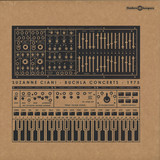
Finders Keepers invite you to witness the incredible first ever Buchla synthesiser concerts/demonstrations providing a distinctive feminine alternative to The Silver Apples Of The Moon if they had ever been presented in phonographic form. This is history in the remaking.
This spring Finders Keepers Records are proud to release an archival project that not only redefines musical history but boasts genuine claim to the overused buzzwords such as pioneering, maverick, experimental, groundbreaking and esoteric, while questioning social politics and the evolution of music technology as we've come to understand it. To describe this records as a game-changer is an understatement. This record represents a musical revolution, a scientific benchmark and a trophy in the cabinet of counter culture creativity. This record is a triumphant yardstick in the synthesiser space race and the untold story of the first woman on the proverbial moon. While pondering the early accolades of this record it's daunting to learn that this record was in fact not a record at all... It was a manifesto and a gateway to a new world, that somehow never quite opened. If the unfamiliar, modernistic, melodic, pulses, tones and harmonics found on this 1975 live presentation/grant application/educational demonstration had been placed in a phonographic context alongside the promoted work of Morton Subotnick, Walter Carlos or Tomita then the name Suzanne Ciani and her influence would have already radically changed the shape, sound and gender of our record collections. Hopefully there is still chance.
In short, Suzanne was a self-imposed twenty-year-old employee of the Buchla modular synthesiser company, San Francisco's neck and neck contender to New York's Moog. Buchla was run by a community of festival freaks and academic acid eaters whose roots in new age lifestyles and the reinvention of art and music replaced the business acumen enjoyed by its likeminded East Coasters. In the eyes of the consumer the creative refusal to adopt rudimentary facets like a piano keyboard controller rendered the Buchla synthesiser the more obscure stubborn sister of the synth marathon, steering these incredible units away from the mainstream into the homes and studios of free music aficionados, art house composers and die-hard revolutionaries. Championed and semi-showcased by composer Morton Subotnick on his albums The Bull and Silver Apples Of The Moon, Buchla's versatility began to open the minds of a new generation, but the high-end design features and no-compromise modus operandi was often confused with incompatibility and, in the pulsating shadow of Moog's marketing, the revolution would not be televised nor patronised. Suzanne Ciani, as one of the very few female composers on the frontline (and also providing the back line) did not lose faith.
These concerts' are the epitome of rare music technology historic documents, performed by a real musician whose skills and academic education in classical composition already outweighed her male synthesiser contemporaries of twice her age. At the very start of her fragile career these recordings are nothing short of sacrificial ode to her mentor and machine, sonic pickets of the revolution and love letters to an absolutely genuine vision of and 'alternative' musical future. In denouncing her own precocious polymathmatic past in a bid to persuade the world to sing from a new hymn sheet, Suzanne Ciani created a bi-product of never before heard music that would render the pigeon holes ambient' and futuristic' utterly inadequate. Providing nothing short of an entirely different feminine take on the experimental records' of Morton Subotnick and proving to a small, judgmental audience and jury the true versatility of one of the most radical and idiosyncratic musical instruments of the 20th century. These recordings have not been heard since then.
The importance of these genuinely lost pieces of electronic musics puzzle almost eclipses the glaring detail of Suzanne's gender as a distinct minority in an almost exclusively male dominated, faceless, coldly scientific landscape. Those familiar with Suzanne's work, a vast vault of previously unpublished non-records', will already know how the creative politics in her art of being' simultaneously reshaped the worlds of synth design, advertising and film composition before anyone had even dropped a stylus in her groove. Needless to say this record, finally commanding the archival format of choice, courtesy of the Ciani and Finders Keepers longstanding unison, was not the last first' with which this hugely important composer would gift society, and the future of a wide range of exciting evolving creative disciplines.
You have found a holy grail of electronic music and a female musical pioneer who was too proactive to take the trophies. With the light of Buchla and Ciani's initial flame Finders Keepers continues to take a torch through the vaults of this lesser-celebrated music legacy shining a beam on these non-records' that evaded the limelight for almost half a century. You can't write history when you are too busy making it. With fresh ink in the bottomless well, let's start at the beginning. Again. You, are invited!
LTD. COKE BOTTLE CLEAR VINYL[23,49 €]
Written with no big plan in mind, Reverend Baron's "Overpass Boy" becomes a Los Angeles meditation, an eight song prayer of poetic topography. The album gives the city its own sound, and its own songs to hum. Recorded in several different locations of LA, and loosely sketching the story of a young wanderer, the album is an easy current of observations and longings. Slices of soul and doo-wop emerge in stacked harmonies, while the percussion and grooves are the blooms that could only come from East LA. Garcia's investment to vocal tenderness and instrumental high style strikes our universal center. His soft serenade reconnects us to something misplaced. Playing almost every instrument on the album, Garcia's spirit is tailored into the sound, designing an amalgam of tones and frequencies as idiosyncratic as the singer himself. Traversing the alleys, passing the sous-chef's cigarette smoke, under the shaking bridges, behind a velvet curtain in a good suit, with a slide guitar in the rain, the titles quilt together for us: Every promise out here walks and waits in the little hours. Jackie and Jimmy drive away and we're left in that little valley, suspended. Recorded and digitally released in 2019, "Overpass Boy" will be re-released by Karma Chief Records on 8/2/2024
Black Vinyl[23,49 €]
Written with no big plan in mind, Reverend Baron's "Overpass Boy" becomes a Los Angeles meditation, an eight song prayer of poetic topography. The album gives the city its own sound, and its own songs to hum. Recorded in several different locations of LA, and loosely sketching the story of a young wanderer, the album is an easy current of observations and longings. Slices of soul and doo-wop emerge in stacked harmonies, while the percussion and grooves are the blooms that could only come from East LA. Garcia's investment to vocal tenderness and instrumental high style strikes our universal center. His soft serenade reconnects us to something misplaced. Playing almost every instrument on the album, Garcia's spirit is tailored into the sound, designing an amalgam of tones and frequencies as idiosyncratic as the singer himself. Traversing the alleys, passing the sous-chef's cigarette smoke, under the shaking bridges, behind a velvet curtain in a good suit, with a slide guitar in the rain, the titles quilt together for us: Every promise out here walks and waits in the little hours. Jackie and Jimmy drive away and we're left in that little valley, suspended. Recorded and digitally released in 2019, "Overpass Boy" will be re-released by Karma Chief Records on 8/2/2024
Marking its first decade of activity, Blume returns with the first ever vinyl reissue of the seminal “New Music for Electronic and Recorded Media”, from 1977, the third and final instalment in a suite of releases that includes James Tenney’s “Postal Pieces” and Ben Vida’s “Vocal Trio”. Unquestionably among the most important collections of experimental music to emerge during the 20th Century, “New Music for Electronic and Recorded Media” is the original feminist presentation in its context, releasing the work of Johanna M. Beyer, Annea Lockwood, Pauline Oliveros, Laurie Spiegel, Megan Roberts, Ruth Anderson, and Laurie Anderson under its collective banner. Includes newly commissioned liner notes by Jennifer Lucy Allen and Bradford Bailey.
Since its founding back in 2014, Blume has carved a unique place in cultural landscape, issuing free standing works, spanning the historical and contemporary, that represent singular gestures of creativity within the field of experimental sound. Joining their broad efforts in building networks of context and understanding that already includes the efforts of efforts of Werner Durand, Sarah Hennies, Bruce Nauman, John Butcher, Jocy de Oliveira, Mary Jane Leach, Valentina Magaletti, Alvin Curran, Julius Eastman, Alvin Lucier, and others, Blume delivers their third release in their first suite of releases for 2024, the fist ever vinyl reissue of the seminal “New Music for Electronic and Recorded Media” compilation, originally issued by Thomas Buckner's 1750 Arch Records in 1977. Out of print for decades on vinyl and arguably the most important feminist statement in the history of experimental music, illuminating the work of Johanna M. Beyer, Annea Lockwood, Pauline Oliveros, Laurie Spiegel, Megan Robert, Ruth Anderson, and Laurie Anderson - in a number of cases representing their recording debuts - during a crucial moment in the history of experimental music. Blume’s brand new edition - complete with newly commissioned liner notes by Jennifer Lucy Allen and Bradford Bailey, as well as reproducing Charles Amirkhanian’s original accompanying text - radically shifts perceptions of the past and present day with its truly revolutionary sounds.
Issued by Thomas Buckner's 1750 Arch Records in 1977, and out of print nearly the entire time since, “New Music for Electronic and Recorded Media” can be understood within two simple frameworks. On one hand, it is an astounding document of the landscape of experimental music toward the end of the 1970s. On the other, it is a historically significant feminist statement, being the first collection of experimental music entirely dedicated to female composers, a number of whom were grossly under-celebrated at the time, but have since gone on to be regarded as among the most important composers of their generation.
The eight pieces gathered by “New Music for Electronic and Recorded Media” - Johanna M. Beyer’s “Music of the Spheres”, Annea Lockwood’s “World Rhythms”, Pauline Oliveros’ “Bye Bye Butterfly”, Laurie Spiegel’s “Appalachian Grove I”, Megan Roberts’ “I Could Sit Here All Day”, Ruth Anderson’s “Points”, and Laurie Anderson’s “New York Social Life” and “Time To Go (For Diego)” - might be regarded as the first cohesive vision of alternate proximity or expression of experimental music to what has always been a frustratingly male dominated environment, and to the tropes, temperaments, and sensibilities that have been historically perceived to define it. It is an expanded vision of truth. While the presence of feminine sensibilities and temperaments in experimental music, however they may present themselves, were anything but new in 1977, “New Music for Electronic and Recorded Media” was the first opportunity, beyond the temporal limitations of live performance, to view them collectively, rather than as individualised expressions within a larger body of similar gestures (as was the case of Oliveros’ inclusion in Odyssey’s 1967 “New Sounds In Electronic Music” and “Extended Voices” compilations) where they might be confused for something else; to regard and celebrate a radical notion of feminine sonority for its unique characteristics and through its interrelations.
While its historical significance and groundbreaking nature can not be debated in its totality, nearly half a century on “New Music for Electronic and Recorded Media” remains compelling in both its musicality and the palpable sense of its lasting influence. Every composition across the album’s two sides is not only engrossing and deeply compelling - feeling as fresh and relevant as the day it was laid to tape - but clearly tangible in their lasting influence. Viewed in context, the album’s eight works feel like breath of fresh air when compared to much of what came before, and laid the groundwork for much of what was to come, introducing a new, often more holistic temperament and more sensitive and inclusive sensibility into the landscape of experimental music.
Particularly in the case of Annea Lockwood, Pauline Oliveros, Laurie Spiegel, Ruth Anderson, and Laurie Anderson, it's hard to throw ourselves back in time and imagine a moment when these composers rested in a fairly marginalised corner of the creative landscape. Blume’s brand new edition of “New Music for Electronic and Recorded Media” - complete with newly commissioned liner notes by Jennifer Lucy Allen and Bradford Bailey, as well as reproducing Charles Amirkhanian’s original accompanying text - brings us back to this confounding moment and points us toward a crucial moment of change set forth by these incredible composers and their sounds. Absolutely seminal and not to be missed.
Repress.
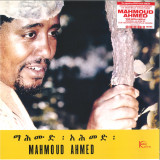
The re-release series of original Ethiopian classic vinyl continues -- the finest Ethio jazz by Mahmoud Ahmed and his band from 1975 plus two tracks from 1978.The liner notes: 'Melancholy blues, piercingly minimalist country airs, brassy, danceable urban jazz, heart-wrenching, off-key crooners: a rich and stirring patchwork of sounds, crossing Afro-beat, Latino-swing moves and Eastern arabesques (Ana�s Prosa�c).' Such were the first -- informed and enthusiastic -- opinions of the music press when the first strains of modern Ethiopian music sounded on our shores. This was in 1984-1985. Such a positive note, struck about such a country at such a time, created plenty of reverb. The country had been so thoroughly trashed by the media's feeding-frenzy, which spewed out a mix of horror and pious pity, bitter denunciation and humanitarian appeals, wallet-tickling clich�s and refusal of identity. In one brutal swoop, TV-reality transformed Ethiopia into a cursed nation, forsaken by God and by man. In contrast to these tragedies, but in the same hackneyed tones, Mahmoud Ahmed's life resembles an edifying fairy-tale where destiny, talent and achievement combine to triumph over poverty, fate and the evil eye. Biography, history and legend, with the help of God, infallibly weave the lesson of merit rewarded. But who can argue, in spite of the mockery that celebrities invariably draw, when faced with one of the greatest voices in all of Africa? Once upon a time, there was a street urchin in Addis Ababa, who started off as a shoe-shine boy and went on to become one of his country's biggest stars, opening the door to Ethiopian music to Western audiences. --Francis Falceto
- A1: Princess Aya Sarah – O Wina Tienge
- A2: Meta & Feza – Mivé Temoin
- B1: The African House Party Project Feat. Splash, Patricia Majalisa & Dalom Kids – P-Coq
- B2: V-Mash – Naughty Boy
- B3: Di Groovy Girls – Ririmi Rotsombela
- B4: Tshala Muana – Djepué
- C1: Lady Isa – Djambo
- C2: Pembey Sheiro – Sala Ni Toto
- C3: Princesse Mansia M’bila – Ngoma Mansia
- D1: Samba Mapangala And Orchestra Virunga – Mashariki
- D2: International Zaistars & Nene Tshaku – Je T’aime Au Pluriel
- D3: M.d. Shirinda & Gaza Sisters – Mabazi
- D4: “Bwaluka” Founders Band – Kimbera
Strut introduces a pioneering new compilation 'A Dancefloor In Ndola,' curated by revered East African DJ, Kampire. This release marks an evolution in Strut's approach to compilations, showcasing emerging DJ talent from across the world and embracing an innovative approach to musical discovery from the next wave of selectors. Forging her reputation through memorable sets for the Nyege Nyege Festival in Uganda over the last decade, Kampire now tours worldwide and is celebrated for her brilliantly curated sets spanning the full range of African music styles from the ‘70s and ‘80s to the present day.
Although born in Kenya to Ugandan parents, Kampire spent her formative years in Ndola, Zambia. ‘A Dancefloor In Ndola’ is inspired by artists and songs that formed part of her soundtrack during that time. “It is important for me to continually reference Africa’s own musical history,” she explains. “At 17, I didn’t pick up on my Dad’s music but now I love and collect those records. I’m constantly referencing them in my music sets today. I love that feeling of shared nostalgia where people recognise a song they haven’t heard in a long time. It is a touchstone for me when I’m playing.”
The compilation flows through different East African and South African genres from Congolese rumba and soukous to 1980s township bubblegum and the rich guitar-led sounds of Zambian kalindula. “There are styles of music on the compilation which are often considered unsophisticated from rural areas. I and other contemporary African artists and DJs draw inspiration from them; it is part of what makes us ourselves.” Kampire also shines the spotlight on many incredible women in African music from the ‘80s, including Congolese legends like Pembey Sheiro, Feza Shamamba and Princesse Mansia M’bila to V-Mash and Di Groovy Girls from South Africa.
‘A Dancefloor In Ndola’ is released on 2LP and CD and features exclusive new edits by Kampire alongside personal liner notes tracing her links to the music. Cover artwork montage is by Canon Rumanzi and vinyl restoration / mastering by The Carvery
Debut compilation by one of East Africa’s leading new generation DJs, Kampire.
Mix of African classics and rarities spanning 1970s – 1990s from Congolese soukous, South African bubblegum and Zambian kalindula.
Shining the spotlight on women in African music Pembey Sheiro, Feza Shamamba and Princesse Mandisa M’bila.
Exclusive cover artwork collage by Canon Rumanzi.
Worldwide DJ dates supporting release during Summer and Autumn 2024.
Big Yawn - NGB
Research Records welcomes back Melbourne quartet Big Yawn for their fourth full-length offering, "NGBE."
Big Yawn's ability to blend complex rhythm sections with infectious basslines, deep synth work, and tongue-in-cheek sampling remains ever-present, and perhaps is the most advanced we've heard yet.
Sitting in a world of its own, the album—named after the group's beloved and lost warehouse space, National Gallery of Brunswick East (where most of the material was recorded)—features a wide array of soundscapes spanning mutated drum 'n' bass, low-key grime, rap, and dub-wise antics, all laced with a heavy dose of FX.
Equal parts deep and menacing, the nine tracks encapsulate Big Yawn's evolution in the studio and on stage, most notably through their collaboration '2Stroke' with Melbourne-based future rap prodigy Teether and brought to life visually with album artwork by Julian Hocking.
A holy grail for fans of French boogie, early hip hop, Arabic funk and Balearic bops,"Ettika" has been seriously sought after since Vidal Benjamin found it in the 1€ bin back in 2006. Teasing the ears of the underground via Vidal's 'Balearic Nightmare' mix for Noncollective, copies of the original were soon snapped up completely, and the later adopters were sated by a Blackdisco edit from Alexis Le-Tan (himself gifted Vidal's second copy), which is now also rare as hen's teeth. The fervour for the track is easy to understand. Underpinned by an endlessly buoyant bass groove, chanted female vocals dart out the speakers like a post- modern mantra while synth vamps flare in stuttering stereo.
Middle-Eastern motifs add an air of mystery, but this truly belongs in a dance floor utopia. That the track was the product of a 'back-to-work' scheme aimed at unemployed immigrant youth in Rouen only adds to the appeal. Led by teacher Bernard Guégan, a quartet of students delivered lyrics in French and Arabic inspired by their rejection letters, serving a little social commentary and a lot of funk. If you're mad on Ahmed Fakroun and Shams Dinn, or even those folks in the Bush of Ghosts, then this is a must have for you.
Archeology isn't just about excavation, there should be interpretation too, and in this case it comes from Italian duo Hear & Now and Leeds' The Veteran Delinquents. The former furnish the 12" with two radical takes, the dreamy downtempo stroll of their French Remix - all unhurried percussion, Gilmour-riffing and coastal élan - and the peaktime pump of their Arab Remix, which transports the original vocal into a land of desert new beat and Balearic trance with a little space left for some frazzled fretwork. If you've followed their work with Claremont you know the quality on show.
The Veteran Delinquents, the collaborative vehicle of Leeds stalwarts Craig Christon and Tim Hutton, condense a lifetime of club experiences into their remix, establishing the infectious groove of the original before subverting with chugging bass and winking acid, all augmented with their own slick synth work. The original was an all time classic at Craig's Joe's Bakery nights way back when, and this new interpretation is both respectful and revolutionary.
Electro-boogie-machine 'Straight Line' is taken from 'Cool Cool', the upcoming third album by British multi-hyphenate James Alexander Bright. "'Straight Line' started out as a wonky homage to 80s & 90s radio", says James. "It's based on the memory of meeting someone you want to stay up all night listening to music with".
James' passionate voice, pitched somewhere between Eddie Chacon, Beck and Michael McDonald, takes a confident lead over a melange of body-popping LinnDrum beats, a host of swooping, fuzzy synths, and backseat-rocking bass. Initially written and recorded at his home studio in the rolling hills of the Hampshire countryside, 'Straight Line' was completed with regular collaborator Peter Lyons in East London.
- A1: Meat Loaf - I'll Do Anything For Love (But I Won't Do That) (But I Won't Do That)
- A2: D Ream - Things Can Only Get Better
- A3: Wet Wet Wet - Love Is All Around (From "Four Weddings & A Funeral" Soundtrack)
- A4: All-4-One - I Swear
- A5: The Pretenders - I'll Stand By You
- A6: Youssou N'dour - 7 Seconds (Feat Neneh Cherry)
- A7: East 17 - Stay Another Day
- B1: Livin' Joy - Dreamer
- B2: Coolio/L.v. - Gangsta's Paradise
- B3: Radiohead - Street Spirit (Fade Out) (Fade Out)
- B4: Oasis - Don't Look Back In Anger
- B5: Saint Etienne - He's On The Phone
- B6: Mark Morrison - Return Of The Mack
- B7: Spice Girls - Wannabe
- C1: George Michael - Fastlove
- C2: Deep Blue Something - Breakfast At Tiffany's
- C3: The Prodigy - Breathe
- C4: Eternal - I Wanna Be The Only One (Feat Bebe Winans)
- C5: Hanson - Mmmbop
- C6: Chumbawamba - Tubthumping
- C7: All Saints - Never Ever
- D1: Robbie Williams - Angels
- D2: Natalie Imbruglia - Torn
- D3: Aqua - Barbie Girl
- E1: Britney Spears - Baby One More Time
- E2: Steps - Tragedy
- E3: Gabrielle - Rise
- E4: Sonique - It Feels So Good
- E5: Craig David - 7 Days
- E6: Atomic Kitten - Whole Again
- E7: S Club - Don't Stop Movin
- F1: Kylie Minogue - Can't Get You Out Of My Head
- F2: Mary J Blige - Family Affair
- F3: Sophie Ellis-Bextor - Murder On The Dancefloor
- F4: Liberty X - Just A Little
- F5: Las Ketchup - The Ketchup Song (Asereje) (Asereje)
- F6: Girls Aloud - Sound Of The Underground
- F7: Nelly/Kelly Rowland - Dilemna
- D4: The Tamperer - Feel It (Feat Maya)
- D5: Boyzone - No Matter What
- D6: Cher - Believe
- D7: Atb - 9Pm (Till I Come) (Till I Come)
In November 2023 we celebrated NOW’s 40th anniversary with a collection of massive Pop hits – but with 40 years of hits to choose from we had to leave out so many fantastic tracks – so it’s time to continue that celebration with NOW That’s What I Call 40 Years - Part 2 – again honouring the legacy with a stellar selection from the past four decades of NOW. Embark on a musical journey from 1983 right up to the present day. Released on a triple vinyl set pressed on Green, Clear Transparent, and Pink LPs with 43 essential hit tracks. and 100 essential hit tracks across the 5 CD set