Soul To Burn features highly inventive and memorable avant-rock songs by trio of celebrated musicians, Reciprocate. The germ of the notion that would flower into Soul To Burn came when Reciprocate’s vocalist/guitarist Stef Kett reflected on the idea of funk rock. It ought, he thought to himself, be the best of genres but so often in practice it ends up being the poorest. True enough. Kett decided to approach the problem from a fresh angle, multiple fresh angles, grinding angles, creating an “alt-soul” in which the soul gets to stretch and burn, applied with the power of a rock’n’roll trio but dynamism and agility, rather than cumbersome bulkiness. Reciprocate is a super-group made up of highly celebrated musicians from the UK DIY music scene – their singular, searing-hot power conjured by Stef Kett (Shield Your Eyes) in tandem with drummer Henri Grimes (Shield Your Eyes, Big Lad) and Marion Andrau (The Wharves, Underground Railroad) on bass. The result is the excellent Soul To Burn, which proceeds at a cadence all of its own, halting and blasting, ducking and weaving, zooming away from its distant cousins: Taste era Rory Gallagher or Mr Zoot Horn Rollo of Captain Beefheart’s Magic Band. That’s particularly evident on “Self Regarding Floor Sweepings”, with echoes of “When Big Joan Sets Up” from Beefheart’s Trout Mask Replica, especially with Kett’s added harmonica as the trio hit the winding dirt track, slaloming and swerving. Here is an album of full throttle soul, an avant-rock made up of ear worms so intoxicating they borrow from deep in the mind down deeper into the heart – it’s the cool, weighty groove of Tony Joe White leathering it at full throttle, fuelled by virtuosic back beats that remind of somewhere between the rolling rock of Mitch Mitchell and the fractured noisebeat of Lightning Bolt’s Brian Chippendale: immediate, innovative, virtuosic, exhilarating. Key to the impact of Soul To Burn is Grimes’ drumming, a force unto itself, which sometimes feels like it’s engaged in a creative and playful tussle with Kett’s virtuosic vibrato guitar. Take “Rhodia”, which sounds initially like a radical reworking, an anagram of Free’s “All Right Now”, on which Grimes doesn’t so much hit the groove as hammer it into the ground. Reciprocate tend to be averse to mere repetition, too full as they are of ideas, possibilities. But they know how to hit a riff, as on “Pissed Hymn”. Kett’s vocals are unconventionally impassioned - no vibrato or performative hollering. Rather they climb, up and and again up from the pit of the soul. There’s a sense throughout that this music is hard wrought, squeezed through small apertures, produced against the odds, born to trouble as the sparks fly upwards. There are quieter moments, however, such as the exquisitely beautiful “Ressypressocate”, which affirm the ultimately tender place from where this album proceeds, notes plucked like black flowers, twisted and cherished. Reciprocate demonstrate an astonishing virtuosity, nuance and musical sensitivity manifested through their deep mutual understanding and synergetic interactions. There are moments of sync and camaraderie that remind of the very late Beatles, those rare moments during the Let It Be Era when they loosened up, reassumed their old understanding. But then Kett’s lets fly with a long, looming note and suddenly we’re somewhere else again. With Soul To Burn, Reciprocate set out their stall of intoxicating, super catchy good-time, big heart music – a human album delivering a human message of love and love lost. By the album’s end, you’ll feel pushed and pulled through the mill, wiped out, blissfully exhausted, strangely serene
Search:echoes of sound
A1 - Synergy
A long-awaited release for seasoned fans of the label familiar with ASC's DJ sets since creating Spatial, Synergy has been requested for release many times and is finally here - and it hasn't aged a bit. A track which lifts you gradually through a true journey of escalating, dynamic atmospheric soundscapes with crisp detailed break patterns that ebb and flow to an intricate collage of synths, keys and vocal hits to an inquisitive melody. A
stunning piece which somehow has something new to offer each time you hear it.
A2 - Suspended Animation
Conjuring an ethereal feeling with grand atmospheric backdrops reminiscent of early Intense, Suspended Animation is a calming yet suspenseful track which slowly builds with expressive break patterns and minimal kickdrums as subtle basslines rumble below. Long echoing effects and melodies gently nudge the proceedings forward, ASC once again showcasing the diversity of his production toolset.
AA1 - Repetition
It's been a while since a pure two-step drum loop has had this much impact - make no mistake - the breaks of Repetition will bore their way into your brain like Pulp Fiction did in the mid 90's with a thumping kickdrum and stabbing snare tweaked to perfection. While the beats drive the track along, a collage of audio texture surrounds them with a signature female vocal sample closing out phrases filled with finely tuned synthwork.
AA2 - Pharaoh
Landing with immediate impact and building the mood with a subdued urgency, the Hot Pants breaks of Pharaoh surf the dunes of sound to an abundance of sheer atmosphere as ASC crafts a stunningly evocative track which is aptly titled, transporting the listener to mystical Egyptian sands, the synths and horns whispering like the echoes of of a bygone era demanding their timely reprise through the medium of Spatial.
Epic.
Words by Chris Hayes
Kallaikoi is the term used to refer to all the Celtic clans settled in ancient Gallaecia (northwest of the Iberian Peninsula). They were skilled in metallurgy and the production of tools and weapons, and worshiped a variety of deities, some of them related to nature
and war. Although they disappeared as an ethnic group in antiquity due to Romanization and subsequent consequences, their cultural legacy and Celtic influence in Galicia persist until today. Somehow, that ancestral legacy lingers between the grooves of this
release you have in your hands.
The double EP opens with The Transhumans: Techno, syncopated bass drums and industrial nuances appear in 'Ánima'. Ian Axide proposes robust and percussive Techno in 'Antro', while Obseth lets arpeggios fly in 'Pink Pills'. These tracks are indebted to that
Techno reminiscent of the late 90s golden years monolithic sound.
Side B opens with the local heroine and co-founder of Archaic, Proyecto Inopia, who opts for resounding rhythms and synth sequences sharp like shark teeth, seemingly paying homage to earlier decades in 'Hécate'. Mist Gasp also follows a metallic monotrax line in 'Standarte'. And the first 12” closes with Brai’s '75', where he unleashes Techno meets New and Synth Wave with a nod to the 80s.
The second EP lowers the intensity and tempo, opening with the calm and nostalgic Electro from Synth Alien in 'Pakhum'. Local artist Lefrenk raises the tempo and intensity in arpeggios in a propulsive Electro-Techno wave in 'Fenix'. And also from A Coruña, Roi controls the beats in an electro base that advances later towards obsessive and lacerating synths in 'Melusa'.
The last side of the double album is opened by David Karro with 'Ionosphere', a track with unsettling synths that doesn't need beats to shape its hypnotic and nebulous character. 27 003 delves into the sounds of classic Electro drum machines in 'Sweet', also with clear IDM and dreamy evocations. Corrosivo continues in that vein, with marked Sheffieldier echoes in 'Fast Food'. The EP is closed by Death Whistle with one of his usual opuses where darkness, beauty and epic coexist.
Element, co-founder of Riddim Chango imprint, introduces his latest creation, a 4 track EP, under the freshly forged subsidiary label, Parallel Line.
The EP opens with the abstract dancehall mic-man in Kingston I Jahbar, reprising his collaboration with Element from their 2021” Andromeda EP on Bokeh Versions, narrating rhythmic tales of style and ambitious hustle. The records transitions to the intense dubwise cut to the A1,“Chicken Gravy Dub”, and the B-side unfolds“Nine Mall”and“Martian Gravity,”instrumentals resonating with obscure yet atmospheric dancehall/dembow echoes.
The EP embodies a fusion of eclectic influences, resonating with reflecting the innovative and unique soundscapes of Element and his Parallel Line imprint.
The wait for HULKOFF's forthcoming folk-metal album "Hersir" will soon be over. The album will be released on December 15, which is the official release date. Hersir is HULKOFF's fourth album and is preceded by "KVEN" 2017, Pansarfolk 2020 and Ragnarök 2021. With a dash of Scandinavian melancholy, ancient instruments and acoustic violins, Hersir offers an assortment of rockhard, earthy, melodic and furious folk-metal - a throwback in time accompanied by familiar and ancient Nordic tones. HULKOFF's sound is a seamless fusion of melody and aggression, forged to resonate with the ancient echoes of the North. His lyrics are a gateway to the distant past, delving into the ancestral tales and beliefs of the Kvens, Scythians, Goths, Celts, Finns, and the later Norse, all of which from which influences can be glimpsed through HULKOFF's rich repertoire. Songwriter, composer, and guitarist Pär Hulkoff stands apart from other artists with his uniquely deep voice and thunderous folk-sound - that are impossible to imitate. Unusual but familiar tones surround the ancient source material of Hersir, resulting in highly varied songs that range from aggressively uplifting to gnarly and determined folk-metal. Hersir comes with eleven tracks, blended with both English and Swedish lyrics.
Drawing inspiration from his homeland Germany, with a particular focus on the organic house and techno scene of Berlin, Sanoi has meticulously crafted Echoes Of Home to reflect his diverse influences.
Echoes Of Home finds Sanoi challenging conventional music production norms, steering clear of familiar tropes and techniques. The result is eight carefully curated tracks with a rich tapestry of ambient layers, recorded sounds, and melodies that range from quirky and playful to nostalgic and melancholic. The finely crafted drums take centre stage, emphasising the unique groove that defines Sanoi's distinctive sound.
The album traverses warm, bouncy & melodic house music, with touches of deep-house, techno & organica. While largely instrumental, the album’s centrepiece is a collaboration with Christchurch artist Beacon Bloom on the track ‘Silver’. Both artists previously collaborated on the popular single ‘Club Jesus’, once again featuring Ryan Ferris' delicate yet strong vocals. The final track on the album, ‘Moon Boy’ offers a few moments of quiet as the journey draws to an end with just Sanoi & his piano.
Created at his home in Auckland, and road-tested across multiple live performances across NZ & Australia over the past two years, Echoes Of Home sees Sanoi’s composition & production step up another level. Available on limited edition vinyl, the digital release also includes an eclectic collection of four remixes from acclaimed New Zealand artists micronism & Paige Julia, alongside German producers Gabriel Ananda & Fabian Krooss.
Over the past five years, Sanoi has become an integral part of the growing underground house and techno scene in New Zealand, all the while expanding his international presence with releases on labels Bar 25, Stil Vor Talent, Magician On Duty, and Zehn Records. Sanoi's music has already gained support from student radio stations in New Zealand and has caught the attention of tastemaker DJs worldwide
Black Truffle is pleased to announce the first LP documenting master khene player Sombat Simla, the label’s first collaboration with Japanese sound artist, field recordist, and researcher Yasuhiro Morinaga. Simla is known in Thailand as one of the greatest living players of the khene, the ancient bamboo mouth organ particularly associated with Laos but found throughout East and Southeast Asia. His virtuosic and endlessly inventive renditions of traditional and popular songs have earned him the title ‘the god of khene’, and he is known for his innovative techniques and ability to mimic other instruments and non-musical sound, including, as a writer for the Bangkok Post describes, ‘the sound of a train journey, complete with traffic crossings and the call of barbecue chicken vendors’. Aided by a group of Thai friends, in 2018 Morinaga travelled to the Maha Sarakham province in the Isan region, arranging to meet Simla in a remote spot surrounded by rice fields. Then and there, Morinaga recorded the solo performances heard on the LP’s first side. At Morinaga’s request, Simla began with a rendition of the train song ‘Lot Fay Tay Lang’. Beginning with long tones that seem to mimic a train horn, the performance soon moves into a rapid chugging rhythm, interrupted at points by vocal exclamations and the remarkable timbre Simla produces by singing through the khene. To listeners unfamiliar with Thai music, the pentatonic scales and rhythmic chug of many of the pieces can have surprising echoes of the rawest American blues. The range of Simla’s performance is astonishing, moving from compulsive rhythmic workouts on single chords and rapid-fire runs of single notes to gentle sing-song melodies, and using a fascinating array of techniques, including a rapid tremolo that sometimes sounds almost electronic. Later the same day, Morinaga followed Simla to a cattle shed where he met percussionist Mali Moodsansee to play some molam (folk songs found in Isan and neighbouring Laos), with Pattardon Ekchatree joining in on cymbal. At times, these molam songs have a wistful, romantic character quite different from the solo pieces. Backed up by the propulsive hand drums, Simla again dazzles with his melodic fluidity, rhythmic drive, and wild displays of unorthodox technique. As Morinaga writes, ‘It felt like they had been playing together so long that their breathing was perfectly in sync, and it was like listening to the precision of James Brown’s funk’. Accompanied by extensive liner notes by Morinaga detailing the day of recording, this is a stunning document of a master musician, seamlessly integrating tradition and innovation.
Repress!
Little Dragon return with a spectacular second album offering in August, a pulsating electro pop epic that Prince would be proud of (only fronted by a beautiful Swedish lady with a sultry voice). A bold and surprising side/two step onwards from their self titled debut, released two years ago to great acclaim especially among specialist circles. Machine Dreams, with its nagging hooks and gloriously infectious tunes, should finally see the band break out into the mainstream.
Recorded in their home city of Gothenburg, Machine Dreams is a gigantic leap on from previous material but still maintains a distinct sound that can only be Little Dragon. Be it Yukimi s warmly inviting vocals, Erik s dextrous drumming, the vast array of synths and bleeps created by Hakan or Frederik s bubbling bass lines, together they don t sound like anything else around right now. The move towards a more electronic sound was a conscious one, as Yukimi explains; The title Machine Dreams seems obvious. These days, humans seem more and more like machines, and as technology evolves, machines feel more human and it becomes fuzzy and beautiful and science fiction-ish. We feel dependent on our machines to create and live, and their sounds reflect us .
Album opener A New breaks us in gently with a single whirring note on the synthesiser, an almost alien sound that gradually morphs into a slow, thumping bassline. Yukimi s vocals flow alongside Hakan s assortment of sound effects interspersed with militaristic drums breaks. A magical opener that sets the scene and seems to sink into itself, taking us with it, until the pace is swiftly ratcheted skywards with Looking Glass , the massive snare, crisp driving beat and experimental synths revealing the band s current penchant for the 80 s. This influence continues apace into stand out track My Step . Utilising a solid drumbeat that nestles next to jagged and playful synthlines, the track breaks down into motorik propulsion with a scuzzy techno bassline that Yukimi works with ease.
Upcoming single Feather finds Yukimi s voice at its most detached and blaze, seemingly nonchalant yet magnificently seductive. Backed by Hakan s keyboard atmospherics, the song creates a soundscape reminiscent of Tears For Fears more reflective moods. Gradually layering more vocals, synths, echoes and reverb, it builds to a quietly psychedelic, dreamy cosmic swirl. Runabout brings forth a mini Airto style percussive breakdown at the tail end of yet another Little Dragon pop gem. Swimming bursts forth into vision with stabbing keys and reflective bass alongside yet another wonderful vocal performance from Yukimi who sings of young love and now so many years have past, my memories as clear as glass . The song is over as quickly as it started, flowing into the next miniature masterpiece in the form of Blinking Pigs
The album closes with the stunning track Fortune , which has already caught the attention of none other than DJ Shadow. It s no wonder really, as the textured melodies blend with the drifting percussion, creating a blissful sonic mood. With a smattering of drums and bass and the magic of Yukimi s voice and Hakan s electronic dynamics floating on top, it s the perfect track to end this fascinating journey through Little Dragon s brave new world.
With disparate influences from Depeche Mode to Prince, LCD Soundsystem to James Holden, Dancehall to R&B, Jazz and Soul, Little Dragon take their place among artists who straddle many genres, yet somehow create their own and in doing so create sounds that make time stop (Yukimi). Futuristic yet somehow retro, Machine Dreams sees Little Dragon achieve something timeless; that elusive pop classic.
ONE LEVEL is delighted to announce its latest release, the captivating 'Big Tal's Elements' EP by French DJ/Producer, ALEQS NOTAL.
Following the resounding success of One Level's debut release, the awe-inspiring Afro-futurism of Hagan's 'Forward Focus' EP - a production that ignited a dynamic and fruitful chapter for the London-based artist - the label has been meticulously crafting its return. One Level prides itself on championing quality over quantity, and this ethos is beautifully demonstrated in its second release...
Aleqs Notal, the former scratch champion and consistently evolving producer, joins the label family with a collection of four remarkable tracks. Despite his years of experience, Aleqs admits that he's still in the process of refining his own sound and with 'Big Tal's Elements’, a nickname affectionately bestowed by longtime friend and fellow artist Manaré, his four carefully curated house joints encapsulate a wealth of influences, all beautifully combining to create a modern and innovative soundtrack.
Following his early years of turntable virtuosity, and having embarked on a new creative chapter in the studio, it was 2014 and as a founding member of the innovative ClekClekBoom collective - a group of young French talents who spearheaded a groundbreaking movement that reshaped the Parisian electronic landscape - that saw Notal continue to cultivate his own sound, one rooted in the sounds of Detroit and Chicago. He became a respected DJ on the cities’ club circuit, and has gone on to to feature his music on esteemed labels including Phonogramme, Salon Recordings, Release Sustain and Patrice Scott's Sistrum Recordings.
The EP opens with 'Untwisted Delight', a homage to the timeless sound of the Motor City. A bass-driven DJ tool, pulsating with the resonance of the 808, evoking echoes of Pittman, and igniting a powerful dancefloor energy.
‘Save Ya’ is an ode to determination and self-preservation. A track with its roots deeply embedded in the dancefloor and featuring an archive sound-bank vocal alongside glorious hi-hats, it is a firm favourite of Notals. “I think its from my scratch background. I always work with the hi-hats. For me, when I hear the hats its as though I hear somebody singing." Fully road-tested at Fabric London, Save Ya is now set to rescue many a night.
'Come Get It' channels the spirit of early Chicago house. A fusion of spirited 606 and 808 drum patterns, coupled with the enchanting allure of resounding hi-hats, it offers a heartfelt homage to the revolutionary sounds that defined an era and continue to influence so much of today’s music.
Concluding the EP is 'Hymn Of Passion', a track inspired by Ron Trent's Future Vision imprint. Drawing on a diverse palette of Nigerian percussive elements and samples garnered from past projects, Aleqs weaves a sonic mosaic. Crafted in a single jam session, the track elegantly melds a rhythmic finesse with resonant congas, intertwining with the emotive Rhodes piano, to craft an unforgettable finale.
With a diverse array of influences seamlessly interwoven, Aleqs Notal’s ‘Big Tal's Elements’ EP is a journey through sound that fully captivates the listener.
Emerging from the cold echoes of Reykjavík's underground music scene, ex.girls, previously known as Russian Girls, chart an inspiring journey from inception to international recognition. Founded in 2017 as a personal venture by Guðlaugur Einarsson, the act soon evolved into a vibrant, collaborative platform for kindred spirits bonded by an unyielding passion for music.
The project consists of three: frontman Tatjana Dís on vocals, alongside Guðlaugur Einarsson and Gylfi Sigurðsson. Their kinship took root at their erstwhile studio on Skúlagata in Reykjavík, where this creative sanctum became a melting pot of musical exploration, learning, and leisurely hangouts. Guðlaugur and Tantjana also ride the waves as members of the rock band Skrattar, whose album 'Hellraiser IV' saw Bjarki's experimental bbbbbb recors imprint venture outside strictly electronic music for the first time in 2021.
Despite their penchant for maintaining an enigmatic aura, ex.girls won the ‘Best Icelandic Electronic Music Song’ in 2022 with their anthem, 'Halda Áfram', released during the backdrop of the COVID-19 pandemic on bbbbbb recors, which translates to “keep on going”, became a beacon of hope during tough times in the Icelandic music scene. Their distinctive sound palette paints with broad strokes of lush arrangements cemented with a lo-fi disposition. It's a soundscape where the rumble of a crunchy bass meets a quirky sprinkle of Nordic humour, a signature style they fondly dub as 'SauerLounge'.
While the group has traditionally embraced a leisurely cadence in unveiling new music, anticipation bubbles as they gear up to their debut album, ‘Verk’. A twelve-track exploration of experimental, conceptual and unorthodox textures and sonics, with sounds and influences spanning rock and nu-wave through to electro, drone and ambient. The result? An absorbing and hypnotic trip, with twists and turns across every track, presenting a debut album that keeps you guessing minute by minute.
To be released in both vinyl and digital formats, the album will also welcome engaging remixes from artists native to Iceland and the broader global stage. In a world of ever-evolving music, ex.girls stand out as a testament to authentic collaboration, raw talent, and the art of electronic storytelling.
ex.girls ‘Verk’ LP drops via bbbbbb recors on 24th November 2023, with remixes to follow in the months ahead.
Following on from the psychoacoustic concrète of Outside Ludlow / Desert Disco LP (BT075), Sam Dunscombe returns to Black Truffle with Two Forests / Oceanic. Dunscombe has been active in recent years on multiple fronts, including as a key member of the Berlin community of Just Intonation researchers and practitioners; working with composers like Taku Sugimoto, Mary Jane Leach, and Anthony Pateras; and the release of Horatiu Radulescu - Plasmatic Music vol. 1 (the result of many years performance research into the thought and music of this seminal Romanian spectralist). In parallel with these activities, Dunscombe has been deeply involved in research on the role of music in psychedelic-assisted psychotherapy, prompting these two side long pieces, composed using field recordings and digital synthesis. As Dunscombe explains in the accompanying liner notes, music plays a key role in psychedelic-assisted therapy, yet it is often restricted to stock forms of New Age, ambient and electronica. Taking seriously the potential for spatio-environmental sonic experiences to add to the therapeutic process, these two pieces are intended to suggest how ‘a music-as-environment approach may help to add options to the therapist’s toolbox’. ‘Two Forests’ begins in a central Californian sequoia grove. Bird songs and buzzing insect life are treated with a variety of time-based processing methods (slicing and recombination, primitive granular synthesis, delay, and so on), which strip the field recordings of their linear, documentary character, reframing them in an enchanted web of traces and echoes. Analysing the pitches found in the original recordings, Dunscombe used them to generate a large Just Intonation pitch set. These tones are woven slowly into the field recordings, gradually building in density and complexity until the forest has been transformed into an unreal space of infinite proportions. Emerging from this cosmic expanse in the final minutes of the piece, we find ourselves in the Amazon rainforest outside Manaus, Brazil. As Dunscombe writes, the piece creates ‘a sense of place-gone-strange, of space and time simultaneously expanding and contracting across octaves, miles, and minutes’. On ‘Oceanic’, several recordings of different beaches fade in and out to create a texture both homogenous and constantly shifting in both the rhythm of the waves and each recording's sense of depth and distance. Tones relating in simple ratios to the average rhythm of each beach float over each other, colouring the white noise texture of the field recordings with shifting hues. In both pieces, Dunscombe forgoes the easy consonance that bogs down much contemporary ambient music for a richer harmonic array informed by extended tuning practices and spectralism. The end results suggest a hitherto undreamt-of meeting of Radulescu’s undulating sonic masses and the discreetly processed location recordings of Irv Teibel’s ‘psychologically ultimate’ Environments. Looking beyond the insularity that can afflict experimental music culture, Dunscombe’s work is a moving argument for the healing power of expanded approaches to sound and music. Even outside of a psychedelics-assisted therapy, frequent immersion in Two Forests / Oceanic is almost guaranteed to produce beneficial psychological results.
Volume 3 of the TRUST XY recombination series again sees four unique artists channel sonic echoes from the label's past. Stenny is up first, the Italian producer whose name is synonymous with Ilian Tape's much acclaimed crossover of techno and bass music. He complements the deep pads of Versalife's 'Nova Prospekt' with a scorching bass line and rolling breaks programmed in his unmistakable style. Canadian producer and Planet Euphorique label owner D.Tiffany is a champion of complex percussions and an obvious choice to rework Alex Cortex's percussive electro anthem 'We Run Your Life'. Her take chops and warps Cortex's vocals around a twitching techno beat that's both experimental and effective. Side B has UK electro and breakbeat pioneer Clatterbox return to TRUST, reshaping one of the very first Microthol tracks into modern form. At his hands 'Intertronic' turns into a bleeping and hissing, snarling and growling electro bass monster. Lastly Delsin's dub master and TRUST alumni VC-118A takes on 'Tides' by /DL/MS/, replacing the original's sparse funk with a low slung dub techno groove that serves as the foundation for perpetually cascading ebbs and flows of lush and dreamy soundwaves.
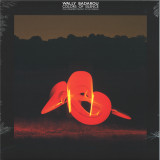
Synth pioneer and musical polymath, Wally Badarou is a genius. But you know that already. A vinyl version of his majestic Colors Of Silence has been craved by the Balearic cognoscenti ever since its low-key 2001 release. Indeed, when we first started work on Be With, we asked some pals with exquisite taste what their dream release would be. We asked Balearic legend Moonboots and, without hesitation, he said Colors Of Silence by Wally Badarou. We didn't know Wally had made this album. And most still don't. But that's about to change.
Colors Of Silence is ostensibly a new age album. As ever though, Wally's sophisticated synth textures and expressive keyboard runs are so full of character, so full of life, that this work of art transcends any easy genre categorisation. It's simply stunning, throughout. It sounds like A.r.t. Wilson or Suzanne Kraft, with traces of CFCF and Jonny Nash. But it was made a good decade earlier than the work of these modern giants. Sometimes, it doesn't seem far from some Larry Heard albums.
Island Records founder Chris Blackwell's friend Nathalie Delon asked Wally to provide music for the yoga DVD she was to release. Lack of time on both sides made them agree on using "quality demos" Wally had in his ideas bank. It's understandable why Colors Of Silence remains somewhat of a lost gem. As Wally explains: "Total lack of promotion made it an 'intimate' release, which was exactly what I was looking for: just a buzz-maker and time-buyer that would allow me to concentrate on the real thing as soon as I'd have time, which could also turn into a rare collecting item later, once the final versions made their way to success. You never know."
Over the years, Colors Of Silence has become a true cult record for the ambient/Balearic heads.
The beguiling but brief "Dance In The Dust" is the shuffling, hyper-percussive, hypnotic opener. It gives way to the deep serenity of "Amber Whispers". It's a gliding, divine, mini melodic masterpiece. It'll make you swoon in its extreme beauty. The bright and breezy "Where Were We" follows, a tropical, reggae-tinged bounce through the islands.
The uptempo groove is maintained on the keys-drizzled soca-funk of "The Lights Of Kinshasa" before Side A is rounded out with "Pictures Of You". It starts with stately, melancholic, unadorned piano and this alone would make for a beautiful song. But Wally always gives us that bit extra and he effortlessly introduces warm, dreamy pads and minimal, slo-mo percussion to augment a frankly stunning piece of work.
Ushering in Side B, Wally's mesmeric piano playing is to the fore again, in the intro to uber-chilled "Serendipity For Two". The playing becomes more mellifluous as the track progresses and adds warmth through exotic percussion, woodwind, sweeping synths and digi-drums. It has echoes of, er, Echoes. It segues seamlessly into the more propulsive, wavy "Smiles By The Millions". If you're not nodding and grinning along widely to the gently throbbing bassline underpinning this, we can't help you. The meditative "Higher Still" follows, cinematic in feel and ever so slightly sinister with the strings. It sounds particularly Badalamenti-esque, if you ask us.
That unmistakable, almost peculiar Badarou funk - so lyrical, so texturally rich and so rhythmically spacious - is all over "Oriental". Next up, "Days To Wonder" brings the serenity back, insistent yet melodic keys, as if played in a place of worship, coupled with birdsong, conjure a kind of instant nostalgia for halcyon days of youth. The contemplative "Dawn Of Europa" is a sombre, beatless, ambient journey whilst the glorious, too-brief "Crystal Falls" features soft percussion and sparkle before fully glistening with some gentle head-nod beats. Wally brings this incredible collection to a mellow, tender close with the graceful "Purple Lines".
There can be few artists more under-appreciated given their vast influence than Wally Badarou. His solo work practically defined the sound of the Balearic DJs of the 1980s, and thus the more sophisticated sound of dance culture thereafter. A synth specialist, Badarou was the long-time associate of Level 42. He was one of the Compass Point All Stars (with Sly and Robbie, Barry Reynolds, Mikey Chung and Uziah "Sticky" Thompson), the in-house recording team of Compass Point Studios responsible for a series of albums in the 1980s recorded by Grace Jones, Tom Tom Club, Mick Jagger, Black Uhuru, Gwen Guthrie, Jimmy Cliff and Gregory Isaacs. Badarou's keyboard playing could also be heard on albums by Robert Palmer, Marianne Faithfull, Herbie Hancock, M (Pop Muzik), Talking Heads, Manu Dibango and Miriam Makeba. He also produced Fela Kuti. Phew!
Meticulously remastered and cut by both Simon Francis and Cicely Balston respectively, it has been pressed to the highest possibly quality at Record Industry in Holland. Special thanks must go to Apiento from Test Pressing who first introduced us to Wally and facilitated all those early zoom meetings. It couldn't have happened without his help. Not least on pulling the art together, too, which features striking original photography by Mads Perch. Benji Roebuck of Roebuck Press did his thing brilliantly in art working the whole package to completion. All in all: essential.
The phoenix symbolizes a new beginning. The fire burns off the last vestiges of the past as the bird spreads its wings and takes flight into the future. The Polyphonic Spree harness the flames of rebirth on their 2023 full-length offering, Salvage Enterprise. Led by frontman, founder, producer, multi-instrumentalist, and visionary Tim DeLaughter, the group embark on their next season. They're reverent of their history, yet they're also ready for an even brighter tomorrow. "Across all of the music I've done, lyrically there's a sense of desperation and a moment of convincing myself I'm going to make it through regardless of how the music dresses up," notes Tim. "On this one, I struggled with the amount of vulnerability I was experiencing and was willing to share both musically and lyrically, but ultimately decided to let it play out. Now that it's done, I'm happy with the dance between the two. It's a `rising-from-theashes' record." Salvage Enterprise beckons complete immersion. Opener "Galloping Seas (Section 44)" affixes softly strummed acoustic guitar to an orchestral hum as Tim urges, "Hold on through the galloping seas." "We're all galloping through rough waters," he says. "I tried to describe the process as well as I could and encourage people to keep their heads above the storm and the waves. Ride it out. It's going to be okay. It starts off very calm and introspective, and you can envision where it's going." Flute echoes over nimbly plucked guitar during "Shadows On The Hillside (Section 48)" as keys twinkle. A glorious harmony amplifies the nostalgia of "Hop Off The Fence (Section 49)." It concludes with "Morning Sun, I Built The Stairs (Section 52)." Optimism strains through his hopeful intonation, "I learned to fly, the more that I become a new reason, I want to try," uplifted by boisterous horns and cinematic strings. It crashes into an Ennio Morricone-style crescendo bolstered even higher by operatic vocals. "There is an arc of leaving the world behind, stripping your old self away, and becoming new again," he offers. "You're shedding off this old world, and you're heading into the future. It's an epic ending. You've made it. You're going to be alright." In the end, The Polyphonic Spree are the soundtrack to that light at the end of the tunne
Istanbul born performing artist, producer, composer and instrument builder Berke Can Ozcan, in collaboration with critically acclaimed Norwegian trumpet mastermind Arve Henriksen and Brooklyn-based baritone saxophonist Jonah Parzen-Johnson, takes you on a captivating journey through the depths of nature on the Lycian Way, immersing the listener in a mesmerizing soundscape that echoes the wonder and mystery of the trail leading to the ancient Lycia As Ozcan ventures deeper into uncharted territory, he stumbles upon a sight that would spark an artistic flame - the Twin Rocks. This collaboration weaves together a tapestry of sonic explorations that capture the essence of Ozcan's journey. The ambient-jazz album's delicate balance between organic sounds and electronic manipulation creates a dreamlike atmosphere that transports the listener to the rugged terrain of the Lycian Way. Mastered by three time Grammy winner Dave Darlington, each track on this ethereal album mirrors a different aspect of the journey to the Twin Rocks, meticulously composed by Ozcan, Parzen-Johnson and Henriksen with each section of the trail in mind. The album is infused with melodic bird songs and sound walk memories that add depth and texture to the ethereal soundscape. Ozcan's array of self- crafted instruments made out of bamboos, soda bottle caps, straws, house keys, terracotta flower pots alongside with his long time companions like his steel drums, chimes, gongs, and vibraphone, serve as the medium through which he expressed the reflections of his encounters in his own world of rhythm and melody
The sophomore album from NYC musician and singer-songwriter Kyle Avallone, is a collection of nostalgic meditations that take you out of the smoky bar and into the gray daylight of a seaside town. It is a cinematic dreamscape steeped in warm vocals, lush synthesizers, and sweeping steel guitars. Throughout the ten songs, tender narratives play like home movies on a living room wall, revealing little worlds and distilled memories.
Recorded at Studio G in Brooklyn with Jeff Berner (Psychic TV), Avallone reaches beyond the lo-fi sleaze of his 2020 debut, Last Minute Man, for a higher fidelity and grander sound palette. “After making a record by myself on an old four-track tape machine, it felt like a natural progression to go into a proper studio and play music with my friends". The core band consists of Mark Perro (The Men) on keys and Russell Hymowitz on bass, who both sing backing vocals, along with David Christian on drums. On several tunes, pedal steel played by Jon “Catfish” DeLorme (The Nude Party) dances around Avallone’s baritone voice, delivering a twang that is distinctively more New York than Nashville.
Inspired by the conversational storytelling of artists like Terry Allen and Lou Reed, Avallone was moved to capture the drama and mystery of his own life experiences. The characters we meet here are flawed. Mistakes are made and lies are told. Love is either lost or on the line. Dreams manifold as both echoes of the past and hopes for the future – the faded glow of childhood impressions in “Down the Hill”; the single mothers’ kitchen table reverie in “Going to the Beach”; the lament for summer’s end in “Vacant Sea”.
We're excited to welcome Mako back to the label with a followup to his LP 'Death Of A Romantic'.
Primera / Vamos both capture and convey the accomplished and unmistakable Mako sound refined once again for a Samurai Music focused delivery. Primera steps deep with a slicing riff leading into a perfectly honed amen jumpstart, while Vamos recalls echoes of Spirit with a persistent stab attack riding across a characteristically warm and weighty rhythmic bounce.
“A piece of music never truly comes to An end. Revisiting a theme illustrates this idea that life goes on.” These are the words of Wayne Shorter, uttered in 2018 upon the release of Emanon, his final opus. On this record, the octogenarian uses dusky hues to shade in the passions of his youth - drawing and science-fiction, as well as the causes he has defended all his life - the fight against ecological upheaval and structural racism. This sentiment did not fail to resonate with Julien Lourau, who has reached a stage in life where he has begun to look back over certain pages written by the man he has always considered one of the masters of his trade. Five years later, this Parisian native has also chosen to revisit his glory days, offering reworked versions of specific tracks composed by his titular elder throughout the 80s. “When I play this music, I find myself back in my teenage bedroom. These are my standards, and they remind me of autumn in Rambouillet.” At that time, after practising his scales, Julien would also play Dungeons & dragons, and immerse himself in SF as well as heroic fantasy - epic influences which are not without a certain connection to the dreamworlds Shorter conjured up, as another fan of landscapes beyond the grasp of reality.
This album features four themes taken from Atlantis, which came out in 1985, and two from Joy Ryder, released three years later. To these, he has added a composition penned at around the same time for Sportin’ Life, the penultimate LP by Weather Report. This is rounded off by a tune taken
from Native Dancer, the record which, ten years earlier, in 1975, brought together this saxophonist who learnt his trade alongside Art Blakey, before joining Miles’ second quintet, and Brazilian Milton Nascimento.
“Between Native Dancer and Atlantis, Shorter did not release anything under his own name, but he took the time and care to really perfect his writing. Upon his return, he injected a very Brazilian form of subtlety into his compositions, especially rhythmically. And from a harmonic point of view, these themes are extremely sophisticated, and reveal truly singular colours. In fact, he decided to display the score as if it constituted the liner notes of Atlantis.”
Julien Lourau is a fan of every Wayne Shorter era, from his Blue Note days, where Mr Gone defined the bases of a truly unique repertoire, all the way to his final quartet - a reference like no other. He decided to focus on this “highly electric” period, which is not necessarily Shorter’s best known, nor his most widely appreciated - despite being a unanimous reference, Shorter has nonetheless never had a direct descendent. In Lourau’s line of sight there lies a desire to focus on typically South American tonic accents which characterise this repertoire, twinned with the ambition to switch up their actual sound “by attempting to open up onto a production highly influenced by eighties fusion". However, he admits that modifying the structures of these most unique of worlds constituted a fresh challenge. “There’s this labyrinthine harmonic system where you’ve no idea how it holds together, but where it’s actually impossible to touch the slightest element without the whole edifice wavering. It is in fact a very difficult thing to achieve!”
In order to successfully transcribe all this creativity free of obstacles, Julien Lourau once again called upon the help of Mathieu Debordes. From January 2023 onwards, Mathieu endeavoured to break down all the musical elements, on paper, before creating any actual music. The record was therefore constructed on the faith of these scores, without necessarily transiting through a creative residency - just two live gigs, to make sure the setup worked. Besides Mathieu Debordes and his synthesisers, Julien Lourau has assembled an ad hoc team by his side. On the bass, according to the track, we can hear erstwhile companion Sylvain Daniel or a new acolyte on the fretless bass, Joan Eche Puig.
Stéphane Edouard, on percussion, even dives headfirst into an unlikely proto-rap of sorts, on Pearl On The Half Shell (where, on the original version, Bobby McFerrin adjusted his interventions in a rather madcap style). Aesthete and drummer Jim Hart as well as pianist Leo Jassef also figure on this release - both were present on previous project devoted to label
CTI. “At sixteen, I wanted to sound like Michael Brecker rather than Ben Webster - that was equated with modernity in those days”, adds Julien with a smile, as for him, all this rings out a little like a logical next step, a joyful immersion into the fountain of youth. And if, for this record, he plays the soprano more than ever, the saxophone Shorter set in his sights on, he never tries to replicate an unattainable ideal note by note. What would be the point?
“Wayne Shorter is not just a saxophonist’s saxophonist. In fact, I don’t know a single person who has risen to challenge of his solos. I have not done it myself either, but on the other hand, I have retained a lot of his phraseology. His way of approaching the instrument reveals a more evanescent language, a work on colour and shape. Keeping this in mind has allowed me to gravitate towards certain elements, that in hindsight, I find echoes of in my work, even in Groove Gang.” Shorter etches out these phrases, creating a groove within which Lourau had traced subtle punctuation, managing, from a highly written base, to create fresh apertures, promises of a great escape. Emblematic of this standpoint, his regal version of Ponte de Areia, originally a wonderful dialogue between Milton Nascimento and Wayne Shorter. Here, the Frenchman takes liberties with the original melodies, without ever growing distant from the original spirit, extending one section with delicacy, offering a rubato development and then a groove “like a little suite”. Julien Lourau also renews with an accomplice from last century, Magic Malik, who lends his high-pitched vocals to the track. Though they had not recorded together for more than twenty years, the two of them got on as if they had only ceased collaborating yesterday, everything flowed naturally. The track was wrapped up in just one take, much like other themes, such as opener Who Goes There where the flautist deploys smooth, enchanted and smoky wisps.
Fundamentally, reflecting of the sleeve which features a child playing with a ball, image that could symbolise the sun just as much as the moon, Julien Lourau manages to translate the ambiguous candour which characterizes Shorter’s work - solar and crepuscular at the same time, that of a visionary and poet definitively situated outside of all chronology, but with whom Julien shares surprising and ‘timely’ coincidences. Shorter was born August 25, 1933, the same day as Julien’s father, “if we take time zones into account”, and who died on Lourau’s birthday, March 2, 2023. Should we take this as a random fact? Or could we not see here the sign of a destiny connecting the agnostic Frenchman to the man who, as a fervent Buddhist, believed in the transmission of his spiritual flow ?