Pål Waaktaar-Savoy has explained that much of the atmosphere and the lyrical themes of Savoy’s seventh album “Under” are drawn from his move with his fellow songwriter and wife Lauren Savoy to Los Angeles, where they found themselves surrounded by loneliness.
Waaktaar-Savoy is one of the most prolific and impressive songwriters of the twentieth century and beyond, and having been working at the very top of the music industry for as long as he has, it is no surprise that the record is well-crafted. The production is good, with careful arrangements and instrumentation. Every instrument’s voice is given room and there is space in the mix. Only occasionally does this slip over into over-production, as with the treated strings on the opening track “Lonely Surfer” or the treatment of Lauren’s vocals, which sound overly processed.
It is also true that the record exhibits a fair measure of melancholy. The chords and melody lines are dark in places, and there is a hint of sadness in the lyrics, many of which have a retrospective quality, describing moments in the past. However, beyond this, the understated feel of the record is just that – understated. Many of songs feel a few RPM too slow and the delivery of the vocal lines too underplayed to give them any emotional authority. At times, it also seems like the arrangement has to step in to bolster the songwriting or lyrics, by filling space with strings or brass, or the counterpoint of the instrumentation on “Camden Palace Chronicles” which distracts from some fairly mediocre words. It is important to emphasise that this is a joint songwriting exercise for Pål and Lauren, so we should not compare the output to the work of a-ha, but still, the themes lean in the direction of suburban banality, far from Pål’s more oblique or allegorical writing.
There are other moments of real quality beyond the production and arrangement. The title track has an excellent Bowie-esque chorus (and there are echoes of his work and sound throughout, along with Beatles and Beck), “The Life and Times of a Wannabe” has some first-rate guitar work on it, edgy riffs and some good textures. Likewise, “Coming Down”, which also exemplifies Frode Unneland’s drumming on the record, which is generally prominent in the mix, and with good reason, as it carries the record along well.
quête:echoes of sound
Pål Waaktaar-Savoy has explained that much of the atmosphere and the lyrical themes of Savoy’s seventh album “Under” are drawn from his move with his fellow songwriter and wife Lauren Savoy to Los Angeles, where they found themselves surrounded by loneliness.
Waaktaar-Savoy is one of the most prolific and impressive songwriters of the twentieth century and beyond, and having been working at the very top of the music industry for as long as he has, it is no surprise that the record is well-crafted. The production is good, with careful arrangements and instrumentation. Every instrument’s voice is given room and there is space in the mix. Only occasionally does this slip over into over-production, as with the treated strings on the opening track “Lonely Surfer” or the treatment of Lauren’s vocals, which sound overly processed.
It is also true that the record exhibits a fair measure of melancholy. The chords and melody lines are dark in places, and there is a hint of sadness in the lyrics, many of which have a retrospective quality, describing moments in the past. However, beyond this, the understated feel of the record is just that – understated. Many of songs feel a few RPM too slow and the delivery of the vocal lines too underplayed to give them any emotional authority. At times, it also seems like the arrangement has to step in to bolster the songwriting or lyrics, by filling space with strings or brass, or the counterpoint of the instrumentation on “Camden Palace Chronicles” which distracts from some fairly mediocre words. It is important to emphasise that this is a joint songwriting exercise for Pål and Lauren, so we should not compare the output to the work of a-ha, but still, the themes lean in the direction of suburban banality, far from Pål’s more oblique or allegorical writing.
There are other moments of real quality beyond the production and arrangement. The title track has an excellent Bowie-esque chorus (and there are echoes of his work and sound throughout, along with Beatles and Beck), “The Life and Times of a Wannabe” has some first-rate guitar work on it, edgy riffs and some good textures. Likewise, “Coming Down”, which also exemplifies Frode Unneland’s drumming on the record, which is generally prominent in the mix, and with good reason, as it carries the record along well.
“All this I do for glory” is a reasoning and exploration of the machinations of ambition and legacy, an examination of the concepts of afterlife, and the first half of a doomed love story in the model of the greek tragedies. As a narra- tive, it exists temporally somewhere between 2015’s “Never were the way she was” (with Sarah Neufeld) and the 1st volume of the NHW Trilogy.
With this, his first solo outing since 2013’s “To See More Light”, Colin Stetson ventures into territory both familiar and strange. Here still, is the dogmatically stripped down approach to performance and capture (all songs recorded live with no overdubs or loops) but there is an immediacy to the album that belies a more invasive and thorough miking of the various instruments being utilized and a seeming influence drawn from the early nineties electronica of artists like Aphex Twin and Autechre, evident in the more pointed role played by the instruments’ many percus- sive elements.
There are ancestries, motivic and timbral, woven through these six songs that plainly anchor them within the shared universe of his Trilogy, though the overall experience is one of extreme intimacy, the sounds and imagery more tangible and immersive than previous offerings. The brief and brutal “In the clinches” recalls (or presages) echoes of songs like “Judges”, though now feeling like one has fallen down the bell of Stetson’s ancient bass sax- ophone itself. “Spindrift”, crystalline and serene, calls to mind the ambient works of Aphex Twin, while “Between Water and Wind” with it’s “Immigrant Song” swagger, relentlessly carves it’s way into the bedrock here, paving the way with an increasing focus on the minute and the minimal, with a deepened sense of patience shared by most of the album’s six tracks.
Engineered and mixed by Stetson himself, this album represents a decidedly independent approach across the entire creative process and finds him at the top of his game, both as a composer and instrumentalist as well as a producer.
180GM BLACK VINYL : 500 PRESSED WORLDWIDE.
Furthermore, Billy Mahonie now have their own label, Whistling Sam Projects, an almost sold-out London launch show at The Lexington on May 4th, and they are confirmed to play Portals Festival Saturday May 25th in East London. After nearly quarter of a century, Billy Mahonie are very much back.
Formed in the first wave of British post-rock alongside the likes of Mogwai in the late 90s, John Peel favourites Billy Mahonie are set to return with the first new music from their original line-up in some twenty-four years. Whilst their debut album ‘The Big Dig’, released in 1999 on Too Pure Records, is considered a classic of the post rock genre, Billy Mahonie always crafted their intricate music with memorable hooks and melodies and performed it with energy and gusto. Theirs was not an aimless, meandering sound, instead the songs and attitude were rooted in punk rock, and still are. Billy Mahonie put the rock into post-rock.
Set for release this coming May 24th via Whistling Sam Projects, ‘Field Of Heads’ sees the band returning with their classic original line-up of Gavin Baker (guitar), Howard Monk (drums), Hywell Dinsdale (bass and guitar) and Kevin Penney (bass and guitar). Whilst this line-up has been semi active for a few years, no new material came to fruition. After their last gig in 2017, however, the band decided it was time to get back into the studio, but with two members living abroad new challenges were faced, but ideas were shared, old ones were resurrected and finally in October of 2019, Billy Mahonie were back in the studio.
Recorded over two long weekends on either side of the Covid 19 lockdowns, the band tracked at The Church studios, owned by their former collaborator and front of house engineer Paul Epworth, with senior engineer Luke Pickering at the controls, allowing ‘Field Of Heads’ to quickly take shape.
New single ‘Kaiju’ gives the music world the first taste of ‘Field Of Heads’ and right from the off, it’s classic Billy Mahonie. Immediately bursting into life with the energy and melody that is so unique to their sound, Howard’s driving drums thrust the music ahead as the guitars and synths weave their way around them. Intricate and shifting, but never at the expense of a tune that sticks in your head.
“This one came from a chord progression myself and Gav first tried out jamming in 2010,” explains drummer Howard. “Needless to say, when Hywell and Kev got their hands on it, it became something no-one ever envisaged. Kev's great title is, of course, the Japanese name for the subgenre of monster-based science fiction. A frenetic riff opens the song and for a counter guitar part only two options remain, play in the minimal gaps or find an overarching theme. We chose both. Kaiju films influence the additional Synths, echoes of those early Japanese movie themes. Some people we have played this to in advance have suggested this track is one we should lead with, as it is kind of where we left off. We agree. It rocks pretty hard. And is a bit funky too. What’s not to like?!”
Furthermore, Billy Mahonie now have their own label, Whistling Sam Projects, set up for global distribution through SRD, an almost sold-out London launch show at The Lexington on May 4th, and they are confirmed to play Portals Festival Saturday May 25th in East London. After nearly quarter of a century, Billy Mahonie are very much back.
2024 repress
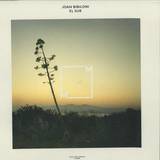
Staying on the Mediterranean coast for their third release, Music From Memory this time shift their attention to the work of Mallorcan musician Joan Bibiloni. TIP!
Primarily a guitarist, Bibiloni was creating music at an early age, releasing his first single at the tender age of 15. In his twenties he formed Spanish progrock outfits Zebra and Euterpe where he would meet Pepe Milan, the two of them becoming the bluesy folk duo 'Milan & Bibiloni'. Bibiloni himself would later go on to play with a number of luminary musicians such as Larry Coryell, Daevid Allen and John Cage to name but a few.
In 1982 Bibiloni set up his own label Blau in order to highlight the muchoverlooked work of musicians not only on his home island of Mallorca but across the Balearic Islands. In doing so he created a platform not only for
local talent but also for his own music to breathe a new life, much influenced by the landscape and life that surrounds the islands.
Whilst Bibiloni's first solo releases on his Blau imprint have stronger echoes of contemporary Jazz fusion of the time, it is on the album known as 'Una Vida Llarga I Tranquila' where Bibiloni really began to experiment with new sounds
and technologies; fusing tape loops, drum computers and synthesizers.
Taking these more electronic infused works as a departure point for the compilation and drawing on material from across his following five albums, 'El Sur' sets out to highlight Joan Bibiloni's unique ambient fusion and sun-drenched Mediterranean beach boogie.
Bruno Berle, the young songwriter and poet originally hailing from Maceió, the capital of Brazil’s Alagoas state, crafts songs that are simple, direct, and full of tender nuance. With his first album No Reino Dos Afetos (which translates to "In the Realm of Affections” and was released in 2022), Berle firmly established himself as a unique and important voice in the burgeoning scene of new Brazilian artists making a global impact, including peers like Ana Frango Elétrico, Tim Bernardes, Bala Desejo, Sessa and more. Now back with his second album, No Reino Dos Afetos 2, he stretches that further.
Bruno Berle’s music lives between two worlds – a traditional Brazilian folk talent steeped in history, and a contemporary, dreamy electronic pop; the result is songwriting that’s genre-bending, intentional, iconoclastic and consuming, spacious and sinewy and singular, a striking reflection of its composer while leaving space for the listener to settle in. The album follows Bruno’s relocation to São Paulo, and the songs are a reflection of his past and present. A rebuke of former categorizations of his work in Brazilian music scenes, and an idea of where his music can move, unfettered.
Berle’s music is purposeful in being a true portrait of himself, and a reflection of the music, art, and fashion scenes he personally moves through. Berle aims to provide an entrypoint for Black queer joy in his music, in his storytelling, in his presence and vision as a creative. For him, it feels subversive to be playing MPB laced with dubstep and lo-fi, a sort of intentional sacrilege, capturing a dialogue of modernity in traditional music.
Berle wrote most of the arrangements and co-produced his new album, Reino Dos Afetos 2 with longtime friend and musical partner Batata Boy, who is also from Maceió; the album was recorded in Rio de Janeiro, Maceió, and São Paulo, his new home, and picks up the conversation begun in 2022 on Berle’s debut album No Reino dos Afetos. Both records are the result of a nonlinear but coherent seven-year music creation process culminating in these albums, holding hands across space and time.
“Tirolirole,” the first single from the record, was released at the end of 2023; sun-soaked rhythms and soft voice coat the song, the lilting refrain of “Tirolirole” throughout – hushed, gentle, but somehow almost tactile, a golden-hour moment unlocked in the mind. “Tirolirole” is a triumphant future classic about the temporality of a blossoming love, with Bruno’s stunning vocal soaring over melodies which ebb and flow like the waters on the Atlantic shore. Of the track, Berle explains: “Despite ‘Tirolirole’ being an expression that evokes my childhood, just like the light words about nature, the harmony, and the poetry are epic, carrying a great hope for love.”
In fact, the guiding theme of No Reino dos Afetos 2 is a relationship, unfolding in the arc of a weekend. It traverses the innocence of an early young love, how that can be formative, can stretch on to take new shapes, or shape you. The album happens at the genesis of meeting someone and falling for them, before the relationship is thrown into overdrive – set in a big city, against a backdrop of major life changes, rising energy, the sound of São Paulo.
Something transcendental emerges in “Dizer Adeus,” with an arrangement that echoes a gospel atmosphere (evangelical and Catholic environments were pivotal to Berle’s upbringing). On “É Só Você Chegar,” piano and flute gracefully intertwine, a dance, while “Quando Penso” skews sparser, the voice-and-guitar minimalism somehow cultivating an entirely different shape – somehow both cozy and melancholy, with the background sound of a rainy day. Coupled with the lo-fi aspects that shape much of the album’s personality in the vocals and the production, No Reino Dos Afetos 2 is meticulously elaborated by Berle’s sonic alchemy, like on the mid-album instrumental “Sonho,” which feels like floating. “It’s the apex. It’s when lovers are sleeping together,” Berle explains of the feeling he wanted to encapsulate in the song.
On “Love Comes Back” Berle interprets Arthur Russell, the late Iowa musician who only reached greater visibility after he died in 1992. “His way of making music is similar to mine,” Berle explains. “He sings in a more fragile way, has more of an experimental way of recording, letting ‘chance’ appear in the final work.”
Even so, Berle doesn’t want his music to be buried in sentimentality – and the purposefulness of his craft serves as a sort of north star. The production, the arrangements, his restraint and intentionality in crafting his songs feel just as vital as their emotional cores. His songwriting is amorphous, fluid, an encompassing genre-bending movement in-and-of-itself, quietly daring. The songs are often in conversation with other works – drinking in fountains as diverse as the filmmaking of Ingmar Bergman, the poetry of Walt Whitman, the rhythm of Djavan, and the painting of Maxwell Alexandre. Musically he weaves together a rich tapestry of Brazilian folk, UK 2-step garage/dub, trip hop and sun soaked west coast songwriters; something akin to the worlds of Milton Nascimento, Arthur Russell, James Blake, Feist, and Sade colliding into one. But even then No Reino Dos Afetos 2 floats separately, a romanticism driven by a simplicity and intimacy, an open-ended possibility, Berle’s singularity as an artist at the helm of the ship.
Throw the gauntlet: Fast Castle is back with Gent1e $oul’s “Shoals”-EP, our furthest excursion into the unexplored depths of mind-bending bassweight! Having perfected his build order on his recent “Block Printing'' and “Silk Armor”-EPs, Gent1e $oul continues to infuse his productions with sonic bass strategies over five versatile tracks.
“Dark Age” provides an aggressive opening, immediately applying pressure with nasty bass wobbles, dembow echoes and a 4x4 switch that might catch distracted players off guard. Tried and tested in many settings, this is an essential option for the incoming dancefloor rush!
With its heavy neo-stepper energy, ”Bad Neighbor” lays siege to dancefloor resistance with a piercing lead, breathing drums and powerful waves of sub wubs. Just like the AoE2’s legendary trebuchet of the same name, “Bad Neighbor” – paired with the right Soundsystem – will make the walls shake.
“Dusty Acer” is a homage to Gent1e $oul’s dear but aging AoE2 gaming machine, capable of producing similar noises to this dark UKG cuts’ central bassline.
Deep dubstep cut “Illumination” takes us to the for a wholesome mana refill: Mystic ambiences make you pull down your cowl, before diving into a fully blown sub massage.
The standout self-titled cut “Shoals” concludes the release: A deep-yet-powerful half-stepping perc grower at 160bpm, operating on subdued rhythmic shifts and layers.
As a special tribute to the AoE2 community, all tunes are flavored with the game's original sound effects. Thanks for keeping us inspired, Nili_Aoe for NAC5 and T90 for HC5!
"ECHOES PART 1 and 2 scheduled for release on 17th of May is the first of three singles set to introduce the next album project of Ulrich Troyer - TRANSIT TRIBE - to be released later this year.
Featuring the jazz vibes of Flip Philipp of the Vienna Symphony Orchestra, "ECHOES" has all the resonance of pure gamelan in dub, stately, processional and instrumentally rhythmic with its sparser second part isolating contrasting pulses as the complexity unfolds and dazzles.
Twenty years in the making, now the fully developed vision of multi-instrumentalist Vienna-based Ulrich Troyer can be heard coming to its final fruition. The interface of electronics and the unique warmth of human interplay is apparent on this track as well as all the other sounds to be heard on the album where a remarkable array of new and old friends contribute to the proceedings. Thematically the album, as may be gathered from its title, is a clear appeal for humanity to be shown as the people of the world struggle to cope with increasing problems, whether caused by movement or lack of movement."
Steve Barker (DJ, Radio Presenter - On the Wire, BBC 1984 – 2023,
now Slack City Radio & reggae/dub columnist and contributor to The Wire)
Credits:
Flip Philipp: vibraphone, c-marimba
Ulrich Troyer: analog synthesizers, drum-machine, sampler, field recordings, dub effects
Written & arranged by Ulrich Troyer
Recorded by Ulrich Troyer at 4Bit Studio & 4Bit Bungalow except Vibraphone, C-Marimba recorded by Ulrich Troyer at Konzerthaus, Vienna
Mixed by Ulrich Troyer at 4Bit Bungalow, Vienna
Produced by Osman Murat Ertel & Ulrich Troyer
Mastering & Lacquer Cut by Kassian Troyer at Dubplates & Mastering, Berlin
Cover Drawing by Ulrich Troyer
Kindly supported by the City of Vienna (MA7 - Kultur), Federal Ministry Republic of Austria (Arts, Culture, Civil Service & Sport), SKE-FONDS (AT) & Amt für Kultur, Bozen (IT)
Special Thanks: Steve Barker, Osman Murat Ertel, Eva Kelety & Flip Philipp
Warehouse Find!
As we hurtle towards our 200th Freerange release the quality output you've come to expect from Freerange shows no sign of faltering with Bas Amro bringing you an absolutely stellar EP entitled You And Me. Dutch wunderkind Bas has built himself a solid reputation through only a handful of releases on labels such as Wolfskuil, Kutchuli and most notably his 2011 EP Ten on Freerange which has gone onto become a stone-cold classic in the deep house mecca of Johannesburg. This long awaited follow up delivers on every level and if early feedback and crowd
response is anything to go by looks set to push Bas further into the spotlight where he deserves to be.
You And Me starts in a deceptively understated manner wrapping you in a shroud of warm, dubby stabs underpinned by a rolling groove that can't fail to draw you onto the dancefloor. Things stay deep with hints of Chandler and echoes of Basic Channel until the breakdown arrives, the filters roll up and the whitenoise
shines through bringing a new energy and dynamic to the track. A classic, timeless vibe which we're proud to be bringing you on Freerange. As with his previous release Ten, Bas works hard to deliver not one but two faultless originals so flip over for Across The Street featuring the vocals of Jennifer and you won't be disappointed. A simple, repeating six-measure synth hook drives the track and brings with it a lovely looseness and lack of obvious
structure. Kennifer's sparse, almost improvised sounding vocal drops heighten the sense of space and freefall effect making such a refreshing change to most of todays formulated and conventional house music. Last up is an amazing remix of You and Me from rising start Matt Karmil who brings his own unique and refreshing sound to the EP. Karmil's recent LP on PNN
won rave reviews from all corners and with just two other releases on Beats In Space and International Records Recordings he seems to have burst from out of nowhere but has certainly become hot property in the last 12 months. His forthcoming remix for John Talabot and Axel Boman under their Talaboman is immense and here he treads a similar path focusing on a raw percussion-heavy sound with very minimal tweaks and effects adding subtle colour and interest. These days it's very hard to breakthrough with an original, new approach to house
but Matt Karmil seems to have done it with ease.
- A1: Honkaya - Boat Rowing Song
- A2: Etukuma Kara - Dance Practice On Ice
- A3: Uekap - Greeting Song
- A4: Cikap - Dance For The Crane
- A5: Sonkayno - Game Song
- A6: Haw Sa - King Of Round Singing
- A7: Hetono He Karakara - Sake Ritual
- A8: Yaykatekara - Wedding Song
- A9: Tacuro - Birds
- B1: Sikata Kuykuy - Snow Falling From A Tree
- B2: Horippa - Dance Song
- B3: Hunpe Yan Na - A Whale Ashore
- B4: Hunpe Pa Wa - From The Whale Head
- B5: Pon Repun Kamuy - Little Orca Sea God
- B6: Orouru Roahun - Lullaby
- B7: Kanerenren - Bear Ceremony Song
Marewrew (pronounced: Ma-leoo-leoo / mɑleːul̯ eːu)̯ is a female vocal group that sings traditional Ainu songs. The music of the long-suppressed people from northern Japan has been a particular focus of Pingipung's output in recent years, together with Oki Kano who recorded and produced many Ainu artists. Following various re-releases by Umeko Ando, the late grande dame of traditional Ainu music, the spotlight is now on the a cappella music of Marewrew, which by the way means ‘butterfly’ in Ainu. Attentive listeners will recognise the voices, as some of the band have already performed as backing singers on recordings by Umeko Ando. Their a cappella versions of traditional Ainu music shed a whole new light on the fascinating songs that have been passed down through generations exclusively through song. 'Ukouk' means 'round singing', which refers to the form in which Marewrew perform and record. Many of the songs are set as tightly interwoven canons: one starts, the others join in, but slightly out of phase: Almost like dub echoes, except that they are sung and not created in post-production. The short songs sometimes unfold into a wondrous trance ('Sikata Kuykuy', 'Honkaya') that seems to spin round and round - if singing can actually dance, then this is how. Nature sounds and woodpeckers can be heard ('Hawsa’), and there is a funny miniature in which the ladies imitate birdsong ('Takuro'). Things get hypnotic with an evocative song about stranded whales ('Hunpe Yan Na’) or an ode to the Orca as ‘Little Sea God’ (‘Pon Repun Kamuy’). The album culminates in unexpected pop ('Yaykatekara') or cumbia moments ('Kanerenren') with a band line-up including percussions and Oki Kano on the famous Tonkori harp. Marewrew are Rekpo, Hisae and Mayunkiki. Rim-Rim was a member of the group until 2022. Mayunkiki reflects on the ambivalence of performing traditional music as a contemporary band: "When we first started performing, we all thought we had to perform in an Ainu way. But over time we have become more and more open to new ways of singing. I think if our way of singing is seen as the only, correct way of our tradition, then it won't spread, it's not alive. We like it when it's traditional, but it changes, just like our voices have changed over time.” * 'Ukouk' is a selection of Marewrew's work from the last 13 years, compiled from CD releases by Pingipung's Andi Otto. Oki Kano has contributed unreleased material and added new versions of the songs which had only been released in Japan. The album has been remastered by Kassian Troyer and is now available on LP for the first time.
The prolific and versatile Ian Martin arrives on Shipwrec with four tracks that make up Future Dawn. Cosmic Garden opens. A piece that blurs genre lines; soft synth-lines are coupled with ruffled rhythms that immerse the listener in gentle orchestral ebbs and flows. Sounds of isolation introduce Future Dawn, modulations reaching over an ever-widening expanse before strings descend. Drums arrive late in this atmospheric journey, one that pulses with a primal energy while conjuring vivid images. The ominously titled Dead Calm opens the flip. Soundtracks have always been an inspiration for Martin and the scores of the silver screen are at the forefront of this work. Brittle beat patterns are the bedrock on which melodies whirl - a bitter acid bass bubbling as tension builds to paranoic peaks. Darker skies loom with the marine chop of Phantom Machine finishing. A flotsam and jetsam of hi hats swirl in the liquid undulations of distorted bass and aquatic echoes, rougher rusted rhythms providing ballast to the eddies and maelstrom of Martin's machines.
Step into a time machine and groove back to the electrifying era of the mid-80s, where undiscovered US tracks found their sonic sanctuary on Morgan Kahn’s groundbreaking Street Wave record label. The reverberations of this musical revolution rippled from the gritty streets of NYC, transcending borders to captivate the entire globe. Picture it: 808s pulsating, synthesisers painting the airwaves with vibrant hues of rhythm and nostalgia. In the heyday of the eighties, rap wasn’t just a genre – it was a movement, a cultural force with a message that resonated through the beats and break moves. The lyrical poets of the time wove tales of real-life struggles and triumphs, creating a tapestry of sound that still echoes with relevance today.
Fast forward to the present, and the spirit of the 80s lives on in a classic track that encapsulates the magic of that unforgettable era. The torchbearers of timeless tunes, High Fashion Music, recognised the gem that was waiting to be polished. Enter Ben Liebrand, a musical maestro tasked with breathing new life into this iconic piece. Liebrand, has conjured three versions of this classic anthem. First up, the Nu-Disco funk-boogie rub, a groove so infectious it’ll have you hitting the dance floor in a heartbeat. Then, there’s the percussive-led Funk Mix – a rhythm-driven journey that takes the original to new heights. And for the pièce de résistance, the outrageously good nu vintage Electro Mix, a sonic masterpiece that bridges the gap between the past and the present with unmatched finesse.
Join us on this sonic voyage, fast forward into the future, as we celebrate the resurgence of an 80s cult classic, transformed by the wizardry of Ben Liebrand.
‘Står op med solen’ (Rising with the sun) is the second album by Amalie Dahl’s Dafnie. With this album, the band continues the exploration of their collective sound. We hear influences from both old school free jazz, and contemporary Scandinavian jazz like Fire! Orchestra and Christian Wallumrød Ensemble, as well as clear connection to the Trondheim milieu, where the group was founded in 2020.
The energetic and expressive band explores their more subtle side with this record. ‘Står op med solen’ is an album longing for humans to be one with nature. The music comments on the world’s ultra-capitalistic power structures of today. The band navigates like one organism through parts of organic free jazz, strict structures and composed cells.
They start out where their first record ended, in the familiar free jazz sound with riffs and melodies, and take us safely on their onward journey. Amalie Dahl’s Dafnie brings together five well-known names from the Norwegian jazz scene, also known from other projects like Kongle Trio, Bliss Quintet, I like to sleep, Veslemøy Narvesen, Galumphing Duo, Treen and Trondheim Jazz Orchestra, among others.
The band has already been touring in Scandinavia, Poland and Germany during the past 3 years, and is well known for their playful and close chemistry. Their first record ‘Dafnie’ (Sonic Transmissions Records, 2022) received excellent reviews in The Wire, The Quietus among others. To celebrate the new album Amalie Dahl’s Dafnie will do 11 concerts in Europe between April 22nd and May 5th.
Emptyset present ash — a new collection of sound experiments developed over the last three years and assembled in Bristol during summer 2023.
The work draws on the project's roots in structural percussion and physical sonics, employing spatialised recording techniques and an array of analogue hardware,evoking the transformative and sculptural properties of sound.
The release marks a return for the collaborative duo of James Ginzburg and Paul Purgas, following Ginzburg's work within the exploratory performance group Osmium and Purgas' extensive research into the history of India's first electronic music studio. It brings them back to Bristol where the project first began, channeling the echoes of the city's sound system culture and resonant musical continuum, anchoring their sound within its formative origins.
Launching on October 20th through Subtext Recordings as the 50th release for the label, there will be a series of live shows including Berlin Atonal on September 16th and London's Village Underground on November 5th, their first live show in the city in over a decade. Emptyset will also be bringing together a special day of sound and performance across multiple venues in Bristol planned for Spring 2024.
2025 Repress
Following the success of last years Babe Roots EP, Echocord revisits the package with reworks from Forest Drive West, Mike Schommer, Felix K, DB1 and Babe Roots themself.
London’s DB1 leads the package with his take on ‘Work Hard’, a mostly beatless interpretation fuelled by oscillating white noise, winding dub chords and snippets of the original’s dub reggae vocals. Hidden Hawai’s Felix K then ups the energy levels with a high-octane take on ‘Sufferation Time’, driven by upfront, shuffled and distorted drums and unfaltering, tension building dub swells.
The hotly tipped Forest Drive West steps up next to remix ‘Jah Nuh Dead’, a typically classy reimagining from the Livity Sound artist, stipping things back to ethereal pads, off-kilter percussion and sporadic echoes of the original composition. Former Deepchord member Mike Schommer’s take on ‘Bless Me’ follows, the pioneer of contemporary dub techno delivers a cinematic rework employing sweeping voices, glitched out electronics and resonant swells alongside the bouncy dub reggae groove of the original.
Lastly Babe Roots revisit one of their own compositions, ‘Sufferation Time’, delivering a more refined feel this time round with more impetus on drums and dark, hypnotic synths to contrast the original’s more vocal focused feel.
Repress!
It's five years since we first released Yosi Horikawa's 'Vapor' album. To commemorate the occassion, we're releasing the album on vinyl for the very first time, also including a previously unreleased bonus track, 'Yoggo'.
The devil is in the details. And Yosi Horikawa understands this perhaps better than most musicians from his generation, crafting compositions with broad appeal that also withstand the most intricate scrutiny. Originality has always been a rare currency in the creative arts, and having honed his voice over the years Yosi has plenty of it to give to those willing to listen.
The RBMA graduate has collaborated with artists such as Jesse Boykins III, Dorian Concept & Daisuke Tanabe, performed at Glastonbury, Sónar, Mutek, Dimensions, Low End Theory, Ninja Tune's Solid Steel & Boiler Room, featured in Time Out Tokyo, XLR8R, Dummy & more, and received acclaim and support from the likes of Benji B, Tom Ravenscroft, Fulgeance, DJ Food and Gilles Peterson, with whom he has worked with on several projects since the release of 'Vapor', for Brownswood, Worldwide Festival & Worldwide FM respectively, producing a regular feature, 'Soundscape with Yosi Horikawa'.
Besides writing and producing music, Yosi is a highly skilled sound engineer, working with prestigious architects, fashion brands, and technology firms as well as designing speakers for bars and clubs. He's also composed numerous jingles and theme songs for radio stations to science exhibitions. Such is his diversity and originality, he was the subject of an RBMA film documentary in 2014, 'Layered Memories'.
Following his debut EP on Eklektik Records, two EPs were released on First Word prior to this, his debut album, 'Vapor'. 17 tracks from the Japanese sound designer and producer that weave together diverse field recordings and sample sources, with rhythms and melodies, creating something that defies stylistic boxing. Echoes of dance music, hip hop and musique concrete can all be found amid the sounds of nature and everyday life that underpin the grooves of the music. 'Vapor' is an album in the old-fashioned sense, a tightly-woven sonic journey that benefits from repeat listens.
'Vapor' was named amongst 2013 Albums of the Year lists in Fact Magazine and The Japan Times.
"A sonic masterpiece and an entirely new pathway in to the matrix of emerging electronic creativity. Every piece on the album sounds boundless and full of texture & colour imaginable"
Earmilk: "A serendipitous mishmash of electronic, hip hop beats, and a litany of genres that fall in that spectrum with a liberal dose of acoustic magic
Available on ltd edition Eco mix vinyl, with only 250 copies pressed. Includes download.
We’re delighted to bring you the latest full length from London psych heads The Confederate Dead.
‘As an artist, one of the most extraordinary gifts is the ability to convert life's experiences and emotions into music, transmuting pain into beauty, tragedy into art. With our latest album, 'Flamingo', we embarked on this creative journey. The inception of this project dates back to 2022, a year marked by a period of separation that was both challenging and transformative. 'Flamingo' is not just an album; it is a voyage through the labyrinth of heartache and healing. Each track resonates with the overarching theme of the album, yet each presents a unique interpretation of it. Every song echoes the same meaning, the same core narrative, but from a different emotional lens.’ Butchy Davy (The Confederate Dead)
‘“Flamingo by London’s psychedelic indie band The Confederate Dead flows by like a strange dream. Each song flows differently, shifting the dreamy images into another direction. Thoughts of The Black Angels, the Fuzz Club catalogue and genres from shoegaze to garage pop and back to good old psych rock fight a confusing fight for my attention. In the end it appears that this struggle will never truly be decided. The Confederate Dead is their own beast, and a great one at that.
Theirs is a sound that oozes confidence and grandeur, presented like a big name would. and there is no reason why The Confederate Dead would not dream big, they have the chops, the songs, the looks, the only thing standing in the way of moving up might be their dark brooding undertones and their refusal to do a cool thing twice.
Because the most powerful thing about Flamingo is its versatility. The album is like a box of assorted chocolates, the one you can’t get enough of because each song is delicious and sweet in its own way. So, indulge yourself, have a chocolate, or ten…before you know it the album is over, and you’ll press play again.’
@weirdoshrineblog 2023.
Bruno Berle, the young songwriter and poet originally hailing from Maceió, the capital of Brazil’s Alagoas state, crafts songs that are simple, direct, and full of tender nuance. With his first album No Reino Dos Afetos (which translates to "In the Realm of Affections” and was released in 2022), Berle firmly established himself as a unique and important voice in the burgeoning scene of new Brazilian artists making a global impact, including peers like Ana Frango Elétrico, Tim Bernardes, Bala Desejo, Sessa and more. Now back with his second album, No Reino Dos Afetos 2, he stretches that further.
Bruno Berle’s music lives between two worlds – a traditional Brazilian folk talent steeped in history, and a contemporary, dreamy electronic pop; the result is songwriting that’s genre-bending, intentional, iconoclastic and consuming, spacious and sinewy and singular, a striking reflection of its composer while leaving space for the listener to settle in. The album follows Bruno’s relocation to São Paulo, and the songs are a reflection of his past and present. A rebuke of former categorizations of his work in Brazilian music scenes, and an idea of where his music can move, unfettered.
Berle’s music is purposeful in being a true portrait of himself, and a reflection of the music, art, and fashion scenes he personally moves through. Berle aims to provide an entrypoint for Black queer joy in his music, in his storytelling, in his presence and vision as a creative. For him, it feels subversive to be playing MPB laced with dubstep and lo-fi, a sort of intentional sacrilege, capturing a dialogue of modernity in traditional music.
Berle wrote most of the arrangements and co-produced his new album, Reino Dos Afetos 2 with longtime friend and musical partner Batata Boy, who is also from Maceió; the album was recorded in Rio de Janeiro, Maceió, and São Paulo, his new home, and picks up the conversation begun in 2022 on Berle’s debut album No Reino dos Afetos. Both records are the result of a nonlinear but coherent seven-year music creation process culminating in these albums, holding hands across space and time.
“Tirolirole,” the first single from the record, was released at the end of 2023; sun-soaked rhythms and soft voice coat the song, the lilting refrain of “Tirolirole” throughout – hushed, gentle, but somehow almost tactile, a golden-hour moment unlocked in the mind. “Tirolirole” is a triumphant future classic about the temporality of a blossoming love, with Bruno’s stunning vocal soaring over melodies which ebb and flow like the waters on the Atlantic shore. Of the track, Berle explains: “Despite ‘Tirolirole’ being an expression that evokes my childhood, just like the light words about nature, the harmony, and the poetry are epic, carrying a great hope for love.”
In fact, the guiding theme of No Reino dos Afetos 2 is a relationship, unfolding in the arc of a weekend. It traverses the innocence of an early young love, how that can be formative, can stretch on to take new shapes, or shape you. The album happens at the genesis of meeting someone and falling for them, before the relationship is thrown into overdrive – set in a big city, against a backdrop of major life changes, rising energy, the sound of São Paulo.
Something transcendental emerges in “Dizer Adeus,” with an arrangement that echoes a gospel atmosphere (evangelical and Catholic environments were pivotal to Berle’s upbringing). On “É Só Você Chegar,” piano and flute gracefully intertwine, a dance, while “Quando Penso” skews sparser, the voice-and-guitar minimalism somehow cultivating an entirely different shape – somehow both cozy and melancholy, with the background sound of a rainy day. Coupled with the lo-fi aspects that shape much of the album’s personality in the vocals and the production, No Reino Dos Afetos 2 is meticulously elaborated by Berle’s sonic alchemy, like on the mid-album instrumental “Sonho,” which feels like floating. “It’s the apex. It’s when lovers are sleeping together,” Berle explains of the feeling he wanted to encapsulate in the song.
On “Love Comes Back” Berle interprets Arthur Russell, the late Iowa musician who only reached greater visibility after he died in 1992. “His way of making music is similar to mine,” Berle explains. “He sings in a more fragile way, has more of an experimental way of recording, letting ‘chance’ appear in the final work.”
Even so, Berle doesn’t want his music to be buried in sentimentality – and the purposefulness of his craft serves as a sort of north star. The production, the arrangements, his restraint and intentionality in crafting his songs feel just as vital as their emotional cores. His songwriting is amorphous, fluid, an encompassing genre-bending movement in-and-of-itself, quietly daring. The songs are often in conversation with other works – drinking in fountains as diverse as the filmmaking of Ingmar Bergman, the poetry of Walt Whitman, the rhythm of Djavan, and the painting of Maxwell Alexandre. Musically he weaves together a rich tapestry of Brazilian folk, UK 2-step garage/dub, trip hop and sun soaked west coast songwriters; something akin to the worlds of Milton Nascimento, Arthur Russell, James Blake, Feist, and Sade colliding into one. But even then No Reino Dos Afetos 2 floats separately, a romanticism driven by a simplicity and intimacy, an open-ended possibility, Berle’s singularity as an artist at the helm of the ship.
Advitam Aeternamour, Cléa Vincent's third album, will be released on 29 March 2024 by Midnight Special.
If the 90s gave us “French touch,” then the 2010s ushered in “French pop,” and it was in the midst of this revival that Cléa began her artistic journey. As early as the music video for
“Achète-le-moi” from her debut LP Retiens mon désir (2016), we witness the singer striking selfie-like poses with her French pop comrades (La Femme, Bertrand Burgalat), appearing pell-mell on screen in the form of their vinyl records. Since then, whether singing with Philippe Katerine or co-producing (and composing) Jeanne Balibar's D'ici là tout l'été (2023), Cléa Vincent has effortlessly carved out a niche for herself in the French pop scene. The advantage of being a “jack-of-all-trades” — Cléa is a writer, composer, and producer — is that her music casts a wide net. Both highly acclaimed in the indie circuit and “as seen on TV” (on Quotidien, among others), she has also enjoyed a stint as the host for web-TV show Sooo Pop, for which she regularly interviewed a plethora of French artists. Beyond France, the singer tours extensively. After a run of concerts in Europe, Asia, North and South America, it was her visit to Latin and Central America that inspired Tropi-cléa (2017-2020-2022). The three EPs bathed in a tropicalist glow do more than just dip their toes in the water; they mark a deep desire to escape in a post-lockdown world.
In between these projects emerged Cléa’s LP Nuits sans sommeil (2019). The album quickly became an instant classic and lives up to its name, since Clea never seems to stop — writing, composing, singing, or dancing. Mixed by Stephane ALF Briat, who has lent his magic touch to records by Phoenix, Bonnie Banane, Air, and Flavien Berger, Cléa Vincent's third LP Advitam Aeternamour proves once again that her music is in perpetual renewal. The artist takes risks both in her pursuit for innovative sounds and in the themes she tackles: coming out, incest, grief...and of course, she will always be a true romantic at heart; there’s no need to be ashamed of loving love. Cléa’s songs are full of “explicit lyrics,” but not in the typical sense: rather than ringing harsh and raw, her words are tinged with sweetness and melancholy, at the risk of shocking less sentimental listeners.
Written hand-in-hand with Raphaël Léger, her creative soulmate for the last ten years who also recorded and produced the album, Advitam Aeternamour features lyrics charged with Epinal and equinox imagery. On the poignantly sober title track, sudden flashes of light are padded by tinkling synthesizers swathed in the voices of an angelic choir, as also heard on “Nuit de Yalda.” Cléa offers a modern take on 90s house music (“C'est Ok”) and 2-step garage (“Free Demain”). Particularly influenced by The Beloved, she is not above dipping pop songs into the electronic melting pot to get them through the club door (“État Second,” where we “turn up the BPM”). And whether on “Shut down ma tête,” or “Douce Chavirée,” Cléa pushes the champagne cork down even further so that the party never stops. The bass gets louder, the rhythm intensifies — the melodies of these eternal hits are an invitation onto the dance floor, lit up by her smile.
As depicted in the soothing embrace that appears on the album artwork, the bright psychedelic hues are the perfect complement to her therapeutically inclined synthetic pop. Even if they tackle themes such as breakups, Cléa's songs, which are vitamin-packed and deep on the surface, are intended to heal and repair. “Se laisser partir,” with its light vocoder echoes, emulating the vocal shadow of a loved one, is an optimistic breakup song. Advitam Æternamour gives us life, from birth to grief — and in the middle, wild, beating passion. If her songs resonate with us, it's because Cléa speaks to us in her songs, as heard on the girl power anthem “Free demain,” where she addresses the listener as a friend (“put the pedal to the metal and you’ll take off for the stars”). When she shares the microphone with Jacques on “État Second,” enveloped by the sounds of unidentified musical objects, the complementary nature of the two artists is evident. The album is as much a tribute to the healing virtues of music as it is a self-portrait of Cléa inhabited by her art. Ad vitam æternam and with love.
A Chaos Of Flowers is an album that builds on their ferocious 2023 album nature morte. BIG|BRAVE"s music has been described as massive minimalism. Their fusillades of textural distortion and feedback emphasize their music"s frayed edges as much as its all-encompassing weight. The potency of the trio"s work is their singular artistry combining elements of traditional folk techniques and a modern deconstruction of guitar music. Gain, feedback, and amplitude are essential. For A Chaos Of Flowers guitarist/vocalist Robin Wattie drew heavily on the poems of artists whom Wattie found kinship in, their words resonant with experiences of those often sidelined by cultural norms. "I discovered that most poems from folk traditions or in the public domain seem to be by men - to which I could not quite relate. In my search, I rediscovered some of my favorite works and poets," says Wattie. Guitarist Mathieu Ball and drummer Tasy Hudson help Wattie shape poetry into pieces as dense and impenetrable as they are vulnerable. BIG|BRAVE achieve their colossal sound through minimalist approaches, a deft understanding of dynamics and an inventive employment of percussion and distortion. The trio reconceptualize what it is to be heavy or minimal, challenging perceptions with their illumination of painfully overlooked perspectives. Guest guitarist Marisa Anderson lends earthen, blues-inflected atmospheres to the album, where guitarist Tashi Dorji and saxophonist Patrick Shiroishi amplify the squall. Working closely with frequent collaborator and producer/engineer Seth Manchester, the internal tumult of Wattie"s voice rings out in warbles, haunting echoes, and unearthly harmonies across bold immense walls of distortion. BIG|BRAVE have collaborated with metal monsters The Body on a previous Thrill Jockey release, Leaving None But Small Birds, and have toured internationally with bands like SUMAC, Godspeed You! Black Emperor, SUNN O))), and Lingua Ignota. As they continue to ascend in their journey as pioneers in the contemporary metal scene, it"s safe to say that BIG|BRAVE are here to stay.
Introducing THE BAD BEATS! A vibrant force embodying the true spirit of 60's garage punk! Hailing from the Pacific North-West and emerging on the scene in 2014, THE BAD BEATS have conquered both local stages and European circuits with their frenetic live performances, leaving audiences drenched in sweat.
In relentless pursuit of their unapologetic sonic mission, this dynamic quintet hurls a sonic onslaught reminiscent of the gritty, soulful vocals and fuzz guitar that defined the 60's punk scene. With the unmistakable whirr of an acetone organ in the mix, THE BAD BEATS resurrect the authentic spirit of that era while infusing it with a vitality that echoes the revival sounds of the 80's garage scene.
Their upcoming LP, "Gotta Get Loose," is on the brink of release, adding to THE BAD BEATS' already impressive discography. This powerhouse quintet already boasts two critically acclaimed albums, both launched through the esteemed SOUNDFLAT RECORDS.
Brace yourself as they persist in their sonic uprising! THE BAD BEATS are the torchbearers of a bygone era, bringing you the spirit of 60s rebellion, and the world is tuned in!
Matteo Mussoni and Nicola Zucchi were raised on the disco romance of the 1970s and early 80s. Channelling their shared love of music machines and mirrorballs, the duo founded Sparkling Attitude. Their debut EP draws on the magic of italo disco, the synthesizer soundtracks of the silverscreen and the open stretches of the Italian coastline.
“Dov’eri Sabato Sera” recounts the tale of unrequited love; youth, possibility and dashed hopes play out to a crisp rhythm and wistful melodies. Those heart-strained notes then take the limelight for the instrumental version, analogue strings soaring to impassioned heights. The flames keep burning on the flip with “Melodico Romantico”.
Disco infused, bold and brazen beats are made-up in dark rouges and effervescent greens as breathy vocals whisper. Mussoni and Zucchi dive deep into their machines for the curtain close. Inspired by Japanese culture, made in Italy, daring key stabs and astral echoes are draped in a late-night groove for this glittering finale. Joyous sounds from a Sparkling Attitude
- D3: 4 3S 555
- A1: Trojan Horus (Pt 1)
- A2: Trojan Horus (Pt 2)
- D2: 4 3S 555
- A3: Lam Vril (Album Mix / Remastered) 00 04:31
- A4: Truth Benders D I.e (Album Mix / Remastered) 00 03:23
- B1: Bolt 23 Blue Screen Ov Death (Album Mix / Remastered) 00 00:37
- B2: Alt-Return-Dash-Kill (Album Mix / Remastered) 00 03:54
- B3: Bolt 777 Ordinary Boy (Album Mix / Remastered) 00 00:42
- B4: Drexian City R I.d.e (Album Mix / Remastered) 00 03:38
- B5: Remote Viewing (Album Mix / Remastered) 00 04:34
- C1: Gummi Void (Album Mix / Remastered) 00 04:55
- C2: Machine Machina (Album Mix / Remastered) 00 01:36
- C3: The Stele Of Revealing (Album Mix / Remastered) 00 02:56
- C4: Songs For Other People (Album Mix / Remastered) 00 02:08
- C5: Break Down On Lake Shore Drive (Album Mix / Remastered) 00 01:11
- C6: Bolt 33 Glitch & Chin (Album Mix / Remastered) 00 01:03
- D1: Sudden Intake (Album Mix / Remastered) 00 05:12
In the enigmatic realm of electronic music, The Black Dog stands as a visionary act, responsible for crafting, among other things, the mesmerising album "Silenced". Notably, this release marks a significant milestone in the band's evolution, being the first album from the new line-up and their collaboration with the fledgling label Dust Science.
Defying industry norms, The Black Dog embodies a Do-It-Yourself (DIY) ethos. Their artistic journey remains steadfast, with a commitment to originality and creative freedom, unfettered by the limitations imposed by the commercial music industry.
The record label Dust Science takes pride in championing The Black Dog's musical prowess, with its first release being the band's 4-track EP "Bite Thee Back". However, this EP was only a prototype for the revitalised collective, eventually leading to the composition of Silenced, which followed soon after.
This creative period denotes a fresh start for The Black Dog, a testament to their resilience and a commitment to evolving their sound. The resulting album represents a new beginning, celebrating and transcending the echoes of the past. It redefines the band's sonic landscape and establishes a distinct musical narrative that resonates with dedicated followers and newcomers alike.
a A1 The Black Dog Trojan Horus Part 1 (Album Mix / Remastered) 00:05:42
b A2 The Black Dog Trojan Horus Part 2 (Album Mix / Remastered) 00:02:29
q D2 The Black Dog 4 3s 555 Part 1 (Album Mix / Remastered) 00:02:57
[r] D3 The Black Dog 4 3s 555 [Part 2] (Album Mix / Remastered) 00:08:16
[a] A1 Trojan Horus [Part 1] (Album Mix / Remastered) 00:05:42
[b] A2 Trojan Horus [Part 2] (Album Mix / Remastered) 00:02:29
[q] D2 4 3s 555 [Part 1] (Album Mix / Remastered) 00:02:57
[Part 2] (Album Mix / Remastered) 00:08:16
[a] A1 Trojan Horus [Part 1] (Album Mix / Remastered) 00:05:42
[b] A2 Trojan Horus [Part 2] (Album Mix / Remastered) 00:02:29
[q] D2 4 3s 555 [Part 1] (Album Mix / Remastered) 00:02:57
[Part 2] (Album Mix / Remastered) 00:08:16
Jamwax presents the resurrection of a hard-hitting space synth masterpiece that's set to ignite your senses and shake the very foundations of sound systems worldwide. 'In Ting Sound' is a sonic juggernaut, a hard-as-nails sound bwoy killer that refuses to be confined to the constraints of time. With its pulsating beats and infectious rhythms, this track commands attention from the moment the first note hits. But it's the heavy drums that truly set it apart, pounding with relentless force and driving the groove forward with unstoppable momentum.
Get ready to embark on a sonic journey like no other as this reissue comes with three exclusive unreleased tracks :
'Mandela': Feel the pulse of liberation with this uptempo digital killer, featuring Winston's impassioned plea to "Free Nelson Mandela...he never done no wrong, he is just a conscious man..."
Let the rhythm of justice resonate as you groove to this powerful anthem of freedom. 'Life All Over': Flip over to the B-side for a digital roots tune that- hits hard with its strong bassline and conscious lyrics. "Life AllOver" dives deep into the essence of existence, delivering a message of hope and resilience that reverberates with every beat. 'Finnegan' aka 'Life All Over Dubwise': Prepare to enter the realm of dub mastery. The second part of "Life All Over" takes you on a journey through the echoes of space and time, where the music transcends boundaries and the spirit of dub reigns supreme.
About Winston Fergus : Winston Fergus, a stalwart of the UK reggae scene whose career spans over four decades. Winston kickstarted his journey in 1976 as the vibrant lead singer of The Equators, renowned for their iconic track 'Father Oh Father' released under Joe Sinclair's esteemed Klik label. Not only did The Equators make waves in their own right, but they also provided the musical backdrop for rising star Pablo Gad, solidifying Winston's reputation as a mentor in the industry.
In 1977, Winston ventured into solo territory with the soulful release 'Give Me Love' on Jah Jah Bus, marking the beginning of a prolific solo career. Lightning Records recognized his talent and signed him, resulting in the release of 'African Woman'. Throughout the '80s, Winston remained a prominent figure, collaborating with luminaries like Clement Bushay, Clive Stanhope, and John Dread, producing hits such as 'Jezebel Woman', 'Keep On Dancing', and 'Hope For The World'.
In the late 80's, Winston's entrepreneurial spirit led him to establish his own imprint, Fergie Music label, marking a new chapter in his illustrious career.
"A Vision of Misery is the third full-length album by Californian metal band Sadus and was originally released in 1992. Originally a quartet, the band's sound fuses thrash metal with death metal, featuring highly technical musicianship. They are known for the unique death growl of vocalist Darren Travis, and bassist Steve Di Giorgio mind-boggling bass licks and impossible tricks. After two albums straddling the stylistic transition between thrash and death metal, Sadus pretty much committed to the latter with this record. A Vision of Misery with compositions such as ""Through the Eyes of Greed,"" ""Machines,"" and ""Echoes of Forever"" epitomizing technical death metal. For fans of Sadus' habitually inventive arrangements and sharp dynamic shifts, there's plenty on offer here. A Vision of Misery is available as a limited edition of 750 individually numbered copies on gold coloured vinyl and includes an insert. "
A Vision Of Misery by Sadus, released 4 April 2024, includes the following tracks: "Machines ", "Throwing Away the Day ", "Deceptive Perceptions ", "Echoes of Forever " and more.
This version of A Vision Of Misery comes as a 1xLP. This release comes with (a) Insert(s).
The vinyl is pressed as a gold disc.
If 2022’s The Children Of Scorpio was the debut album that turned people onto the world of Project Gemini aka Paul Osborne, Colours & Light is the body of work that will be buried deep into their hearts. It is a majestic album, bringing together the worlds of folk rock, psych soundtracks and hazy cinematic funk.
A growing confidence and ease emanate from the writing and production of this sophomore LP, bolstered by the reception to his standout debut. “It’s a more layered and diverse record” Paul mentions, “with a more outward-looking, global sound, born out of the records I was listening to and the musicians I was lucky enough to collaborate with”. It feels relaxed yet self-assured, with a kaleidoscope of sounds that twist together in a mesmerising fashion.
The theme of the album developed naturally through the lyrics Paul began writing. A creative process both plagued and fed by insomnia, nourished by relationships, entwined in emotions, nights out, nights in and the after-effects on the human condition. Relatable themes yet seen through the prism of a soundscape that takes in many a different culture and scene. From acid folk to psych-funk, Francophile elements to Anatolian and Eastern inspirations, all interlocking and rotating as one.
Drawing inspiration from those he admires, Colours & Light radiates with collaborations. The title track, which tips its hat to a live 1973 TV version of Pentangle’s ‘Wedding Dress’, features the folk rock, guitar brilliance of Jack Sharp from Wolf People/Large Plants.
Elsewhere, two tracks are blessed by the sultry, smokey French vocals of Gloria’s Wendy Martinez, ‘Extra Nuit’ and ‘Entre chien et loup’. The former echoes Paul's love of classic French psych-pop from the late ’60s and early ’70s and artists such as Laurance Vanay, Calcium, Leonie, and Serge Gainsbourg. Martinez's sublime vocal work nestles perfectly within Paul's psych-folk-funk productions, as her Gloria partner, Alexis Morel (aka Kid Victrola) sprinkles a dose of entrancing guitar line magic on proceedings.
The list of collaborations extends further with Raz and Markey Funk, drummer Tony Coote and percussionist Paul Elliott all featuring. Regular collaborator and underground icon Barrie Cadogan (Little Barrie) returns along with Bert Page from The Cromagnon Band, who between them provide a hit of whacked-out, fuzzed-up country guitar and Moog madness respectively on ‘Lost In The Woods (Bacchanal)’.
Rounding off the record Paul’s daughter, Olivia Osborne, supplies the keyboard intro on the penultimate track ‘Twilight’. Dorian Conway from The Soundcarriers (whose bandmate Paul Isherwood returns on mixing duties) then layers echoing heavy flute parts to magically capture the psychedelic sunrise images brought to mind.
Balancing light and shade on this record, there is beauty and tension all wrapped up in Paul’s vivid and visceral, storytelling gift.
If 2022’s The Children Of Scorpio was the debut album that turned people onto the world of Project Gemini aka Paul Osborne, Colours & Light is the body of work that will be buried deep into their hearts. It is a majestic album, bringing together the worlds of folk rock, psych soundtracks and hazy cinematic funk.
A growing confidence and ease emanate from the writing and production of this sophomore LP, bolstered by the reception to his standout debut. “It’s a more layered and diverse record” Paul mentions, “with a more outward-looking, global sound, born out of the records I was listening to and the musicians I was lucky enough to collaborate with”. It feels relaxed yet self-assured, with a kaleidoscope of sounds that twist together in a mesmerising fashion.
The theme of the album developed naturally through the lyrics Paul began writing. A creative process both plagued and fed by insomnia, nourished by relationships, entwined in emotions, nights out, nights in and the after-effects on the human condition. Relatable themes yet seen through the prism of a soundscape that takes in many a different culture and scene. From acid folk to psych-funk, Francophile elements to Anatolian and Eastern inspirations, all interlocking and rotating as one.
Drawing inspiration from those he admires, Colours & Light radiates with collaborations. The title track, which tips its hat to a live 1973 TV version of Pentangle’s ‘Wedding Dress’, features the folk rock, guitar brilliance of Jack Sharp from Wolf People/Large Plants.
Elsewhere, two tracks are blessed by the sultry, smokey French vocals of Gloria’s Wendy Martinez, ‘Extra Nuit’ and ‘Entre chien et loup’. The former echoes Paul's love of classic French psych-pop from the late ’60s and early ’70s and artists such as Laurance Vanay, Calcium, Leonie, and Serge Gainsbourg. Martinez's sublime vocal work nestles perfectly within Paul's psych-folk-funk productions, as her Gloria partner, Alexis Morel (aka Kid Victrola) sprinkles a dose of entrancing guitar line magic on proceedings.
The list of collaborations extends further with Raz and Markey Funk, drummer Tony Coote and percussionist Paul Elliott all featuring. Regular collaborator and underground icon Barrie Cadogan (Little Barrie) returns along with Bert Page from The Cromagnon Band, who between them provide a hit of whacked-out, fuzzed-up country guitar and Moog madness respectively on ‘Lost In The Woods (Bacchanal)’.
Rounding off the record Paul’s daughter, Olivia Osborne, supplies the keyboard intro on the penultimate track ‘Twilight’. Dorian Conway from The Soundcarriers (whose bandmate Paul Isherwood returns on mixing duties) then layers echoing heavy flute parts to magically capture the psychedelic sunrise images brought to mind.
Balancing light and shade on this record, there is beauty and tension all wrapped up in Paul’s vivid and visceral, storytelling gift.
Northwest & Nebulous is Liverpool-based musician Luce Mawdsley’s sixth studio release, a lush and accomplished instrumental album suffused with radiant and fluid possibilities, where expansively cinematic instrumentals conjure queer cowboy landscapes via the Northern English coastline. The album is a world-building piece of work, pulling from folk, Americana and soundtrack influences, fusing their romantic and exploratory energies to signal the beginning of a new journey for composer, with an open invitation for listeners to come along for the ride. The album was recorded and mixed by Luce Mawdsley in the Grade II listed Scandinavian Church in Liverpool, with a core chamber trio of Luce on guitar, organ and percussion, Nicholas Branton on clarinets, and Rachel Nicholas on viola. A self-taught musician, Mawdsley has released a host of both solo and collaborative albums (Mésange, Cavalier Song), and in 2023 started Pure O records, an independent record label dedicated to the nurture of queer and curious music based in the Northwest of England. “Wordlessly fashions heady, droney atmospheres that could soundtrack a film where a man walks through a monochrome desert” - The Quietus “The spindly guitars and knotty progressions of ‘Insect Fire Dance’ and ‘Heathen’ explore an unprissy English prog with soil under its fingernails” - 8/10 UNCUT "A triumph of imagination – a wide-eyed stare at the skies, in love with sound and possibility." - **** The Skinny “It’s not a stretch to suggest that no one is making music like Mawdsley. While the Liverpool visionary’s 2020 release, Vulgar Displays of Affection (Maple Death Records), was something likened to splintered bones passing through a meat grinder, Mawdsley’s Luke Two is far removed, solidifying the notions of an artist leaping from one sound world” - Sun 13 “Hallucinatory echoes of Alejandro Jodorowsky’s dream-realism symbolic El Topo share room with otherworldly portals and the all-too real depressive, bleak traps of a run-down, unloved English seaside town.” Monolith Cocktail
Mesmerizing and exuberant Argentinian La Yegros, probably the most magnetic artist on the South American continent, is back with a new album!
The undisputed Queen of "Nu Cumbia" has not rested on her laurels. Surrounded by the same accomplices who have supported her for the last ten years, but eager to renew herself, she has set about recording her fourth album, which stands out from her discography. Although her personal folklore is still rooted in South American folklore, La Yegros is now absorbing contemporary, global music, while tackling intimate, often melancholy and even painful subjects, which she overcomes with the same resilience that drives her in concert. Nothing stands in the way of this Argentinian whirlwind, all the more fascinating for the fact that personal considerations are now surfacing beneath the veneer of the party atmosphere she sets alight.
La Yegros returned to the stage in 2022 to celebrate the 10th anniversary of Viene de Mí, her single hit from the self-titled album, released in 2012 in Argentina and then worldwide in 2013, which catapulted her to international fame. We then discovered a singer who had grown up in the traditions of her country. Her parents come from Misiones, a province bordering Brazil and Paraguay, where balls are filled with the sounds of chamamé (a mix of polka and Guaraní music), Carnavalito (Andean folklore) and Colombian Cumbia. But she herself is a native of Buenos Aires, whose nights are enlivened by the bass of Dancehall and electronic music.
These influences have merged in two further successful albums, Magnetismo (2016) and Suelta (2019), followed by high voltage tours during which La Yegros has been able to display her generous nature, inexhaustible energy, exuberant personality and infectious enthusiasm.
To record her new album entitled 'HAZ', La Yegros has put her faith in the same team that has worked with her since Viene de Mí. On one hand, producer Gaby Kerpel (also known as King Coya), a pioneer of synthetic experimentation applied to traditional music, who has remained her faithful accomplice for over twenty years. On the other hand, composer Daniel Martín, who knows how to come up with melodies to dream about and hymns to sing along to. Inseparable and complementary, the trio continues to concoct this mesmerizing mixture where acoustic instruments meet samples and the rolling of machines. But the new productions don't rely on a tried and tested formula. Generally co-produced between France and Argentina, they break away from over-defined genres. La Yegros knits together new rhythms and incorporates sounds that are unheard of in her country, derived from the latest urban trends, as well as echoes of reggae and funk. As for the lyrics, signed alternately by the trio, they are embodied by La Yegros whose charismatic voice questions a period of her life tossed by waves of love and lovelessness, joy and sorrow, euphoria and anguish, indulgence and resentment.
The album is open to a wealth of musical styles. You'll hear funk guitar and Andean flutes, melancholy accordion and rolling drums, Tuareg blues enhanced by brass, house and electro Cumbia loops, and the bassoons of a chamber orchestra. The folklore 2.0 of La Yegros, nourished by its colorful inspiration, at times tender or exalted, has been imagined as a hymn to love and the contradictory feelings that come with it. As always, it has also been conceived with the stage in mind. Hatching in a storm of overturned emotions, the album is all the more explosive for the strength of the live show that accompanies it. In addition to the usual line-up of guitar, accordion and percussion, a musician handles synthesizers and machines to boost the electronic turboshaft. In any case, you can count on the singer to assert her increasingly clear-cut character with each new project. And, above all, she won't give up. L.a Yegros is back and her batteries are fully charged.
“Black Ark in Dub” is an album that belongs to Lee Perry’s series of dub albums, showcasing his innovative sound experiments. Particularly notable for its creative use of sound effects, echoes, and studio manipulations characteristic of dub aesthetics, “Black Ark in Dub” has often been praised for its creativity and influence on the dub genre. The album bears witness to Lee Perry’s experimental genius and his ability to push the boundaries of music production. Unavailable for many years, it is now released in a limited edition on SILVER vinyl.
The vinyl is pressed as a silver disc.
- A1: Aphotic Judgement
- A2: In Light We Walk
- A3: Mournstead Withers
- A4: Orian Ascendance
- A5: Call To War
- A6: Warmaster
- A7: Archnemesis
- B1: Stigmata
- B2: Hallowed Punisher
- B3: Maw Of Faith
- B4: Rotting Whispers
- B5: Deathless Duty
- C1: Fiery Malice
- C2: Bloodletter
- C3: Molten Heart
- C4: Seething Dread
- C5: The Unbroken Promise
- C6: Blinding Faith
- D1: Iceheart
- D2: Bulwark Of Scorn
- D3: Anathema Phase 1
- D4: Anathema Phase 2
- D5: The Twice Ordained Phase 1
- E1: Unbridled Nightmare
- E2: Howl Of Devastation
- E3: Indomitable
- E4: Frigid Grief
- E5: Rotting Tyrant
- F1: Wrath Of Orius
- F2: The Picture Of Innocence
- F3: Lord Of The Fallen
- F4: Crimson Pact
- F5: The Honored Dead
- F6: Creeping Bloodlust
- F7: Echoes Of Entropy
- D6: The Twice Ordained Phase 2
Vom HEXWORKS Art-Team entworfene Deluxe-Ausgabe des OST für das Action-RPG "Lords Of The Fallen" (2023), sorgfältig für 180g Triple-Vinyl gemastert. Die mehrfach preisgekrönten Komponisten Cris Velasco und Knut Avenstroup Haugen erzeugen ein aufwändes Dark-Fantasy-Meisterwerk zwischen romantischer Oper, Mozarts Requiem-Messen, dissonanter Klassik des 20. Jahrhunderts und großartigen Horrorfilm-Soundtracks. Teils live aufgenommen mit dem Budapest Scoring Orchestra & Choir, den Solist*innen Eurielle und Jess Dandy, dem Solocellisten des London Symphony Orchestra, David Cohen, und dem Flötisten Tony Hinnigan (bekannt aus Hollywood-Scores wie "Titanic" und "Avatar").
Tyler Pope's latest EP is an absolute belter, and the primary concern these four tracks are asking of you is right up front: Pay Attention to the Bass. And, honestly, with a sense low-end like what's on display here, how could you not? This new release from Pope-a dance veteran who's also known as a full-time member of LCD Soundsystem as well as a collaborator with artists like Hercules & Love Affair and Pantha Du Prince-arrives on his always eclectic Interference Pattern label, an imprint that has previously spanned left-field electronic sounds, noise rock, and avant-R&B. As such, Pay Attention to the Bass is anything but straightforward, with ricocheting rhythms and alluring textures that are as easy to get lost in as they are to move your body to.
Listeners familiar with last year's Make Each Other Happy EP, which embraced dark disco grooves and crisp percussion, will be delighted at the new curveballs on display here: "Why Must I" euphorically merges the propulsive charge of UK funky with delicious piano-house stabs, while "OKay" anchors itself around a rubbery bass line like a lost cut from the Remain In Light sessions. The flip side gets dark and dank with it, as "Close the Door" echoes with spooky clatter and dubby wobbles before sprightly vibes break through-and the closing cut "Where r they Hiding" goes full-on tunnel techno with it, conjuring a mood that recalls the haunted house music of Sandwell District as well as the cold-sweat futuristic visions of jungle. With Pay Attention to the Bass, Pope expands his sound wider than ever, and it just so happens that it's an absolute blast to listen to as well.
FRN Dancehall might have emerged in Jamaica, but over the last few decades the popular genre's tendrils have stretched out across the globe. In Kampala, Ratigan Era is adding a distinct Ugandan twist to dancehall, fusing it with East African humor and hyper-melodic afrobeats elements imported from Ghana and Nigeria. The versatile MC grew up listening to Jamaican music like Vybz Kartel, Busy Signal and Mavado - in his hometown of Kawempe there was almost no way to avoid it - and it blurred into the background, blending with local church music, US hip-hop and radio pop. He developed this diverse range of influences into a completely unique Afro-dancehall flow that simmers between Luganda, patois, Spanish and English, reflecting the melting pot of cultures and dialects that characterizes contemporary Africa. Ratigan broke out with a memorable feature on Pallaso's Ugandan hit 'Nsaba', a track that echoed throughout the country booming from nightclubs, motorcycle loudspeakers or from convenience stores. Now he's assembled his first album "Era", a furiously inventive interweaving of rubbery vocals and memorable chants backed by futuristic beats from Hakuna Kulala's most boundary-pushing producers. Congolese producer Chrisman takes the reins on 'Gorilla Attack', providing a downtempo groove that echoes recent Jamaican chop deployments from breakthrough artists like Skillibeng and Skeng. For his part, Ratigan ducks and dives between Chrisman's gqom-inspired low end womps and corrosive synths, commanding attention with his smart, dextrous flow and tongue-twisting lyrics.The Modern Institute and Golden Teacher's Richard McMaster handles 'Top Strike Force' leaving space in his wiry, minimal beats for Ratigan to flit between anthemic repetitions and ice-cold AutoTuned wails. On stand-out track 'Badman Style', Ratigan's guttural patois is measured against a dizzy trap-dancehall hybrid beat from HHY & The Kampala Unit's Jonathan Uliel Saldanha, aka Lithium Beats, while on the surreal 'Drop it Down', Japanese mad scientist Scotch Rolex brings out Ratigan's cheeky sense of humor with toytown bleeps and laser zaps. MC Yallah collaborator Debmaster appears on 'Gan Dem', meeting Ratigan's double-time raps with soundsystem destroying rolling subs, and veteran US noisemaker Kush Aurora sprinkles magic dust on 'Cool and Deadly', galvanizing the link between global bass mutations, Jamaica and East Africa.And despite the grab-bag of producers and inspirations, "Ratigan" is a strikingly coherent listening experience that accurately snapshots Kampala's colorful froth of sounds and phrases. Ratigan's outsized personality is welcoming and captivating, providing the sights, sounds and smells of the city with a frenetic rhythm that's as intimate and local as it is far-reaching. It might just be the future we so desperately need.
SOYUZ (СОЮЗ) stole our hearts back in 2022 when we released their album Force Of The Wind to critical acclaim. Here we proudly present the predecessor to that LP, the band’s sophomore long player from 2019 that was previously only available digitally. It captures a pivotal evolving period in the band's career, the recordings giving a snapshot of what would become their sound on Force Of The Wind, yet with echoes of avant-psychedelic-pop footprints from yester years.
Produced at a time when band leader Alex Chumak had moved from Minsk to Kyiv, torn between the need to try something new and the homesickness it brought about. Travelling back to Minsk almost weekly, Alex joined fellow band members Mikita Arlou and Stanislav Murashko to lay down II at Studio 42. The album captures these transient feelings, contextualised through the broad scope of influences the band were nourished by. From MPB to Ethio-Jazz and the Italian library soundtracks of Piero Piccioni and Piero Umiliani, the album shines with touches of joy from across the globe.
The opening track 'Verocai' is a tribute to the Brazilian maestro and 'Mirouze', whilst being named after a French favourite of the band, Jean-Pierre Mirouze, pays clear homage to Milton Nascimento and Lô Borges. A ghostly sample and invisible connection to music made miles away in a different era that has influenced and become part of the band’s lives. This is further reinforced in the album's enchanting closer, the aptly titled 'Nascimento', another nod to the great Brazilian musician and singer.
The beginnings of the cinematic, soul-laden jazz SOYUZ are now known for, are on display across the likes of ‘Lyric’ and 'Motive I'. The latter an orchestrated jazz instrumental with sensuous string sections, all of which were recorded on the warmth of a Studer reel-to-reel and waltzing Rhodes keys.
SOYUZ’s wide-ranging palate is further demonstrated in tracks like ‘Business Partners’ with its Krauty, kosmische, new wave production featuring Inturist, and the oh-too-short Anatolian-influenced interlude 'Corrida'. Elsewhere, 'Tezeta' and ‘ES-2 Jazz’ hint at the psychedelic haze of soul-funk, with the former featuring verses from Serbian rapper Petar Martic.
For this new physical and digital release, the whole album was mixed from scratch by Ryan Power before Joker worked his magic on the remaster. More excellence is to come from SOYUZ, but in the meantime, we are thrilled to present this essential recording from the band’s foundational years, mixed to a level that does it the justice it deserves.
Embark on a soul-stirring voyage with Oriana Ikomo as she unveils "THE HEALING," an EP that encapsulates the profound metamorphosis she has undergone in recent years. This musical journey is an ode to personal empowerment, and Oriana's resilience echoes through each note and lyric.
The EP unfolds with a powerful, ethereal introduction where the piano and Oriana's soulful voice are in the center. With a hauntingly beautiful atmosphere, she passionately repeats the mantra, "Be kind to the mothers, the sisters, the brothers, and the sisters," serving as both an affirmation and an importantmessage to the world.
Oriana's sonic palette is a rich tapestry of genres, seamlessly weaving together R&B, Gospel, Ambient, Jazz, Electronic, and Pop influences. Her sound throughout the EP is affirmed and robust, reflecting the strength she has discovered within herself.
In each track, Oriana showcases her exceptional versatility as an artist. From the heart-wrenching 'MAMA, LET'S GO' to the rhythmically charged 'IMMA PLEASER', she navigates effortlessly through different musical landscapes. The EP becomes a sonic experience, offering you a diverse and immersive experience.
"THE HEALING" is not just an EP; it's a musical expedition that invites you to delve into the depths of Oriana Ikomo's soul. Through her evocative lyrics and dynamic melodies, she invites you to witness the beauty that emerges from personal growth and self-discovery. Join Oriana on this transformative journey as she leaves an indelible mark on the intersection of R&B, Gospel, Ambient, Jazz, Electronic, and Pop, proving that empowerment and artistry go hand in hand.
2024 Repress
Four tracks of techno pressure from Spanish heavyweight Kwartz. Since 2011, Kwartz has been steadily building a renowned discography of powerful and rugged club cuts. The "Fast Focus" EP, his first appearance on Setaoc Mass's label series SK_x. It is a prime example of this deep, dark and driving sound: from the peak-time grind of "Impulse" to the dank, atmospheric echoes of "Haram".
Like the best of them, Daniel Chavez got his start immersing himself in the nightclubs, dingy basements, and record stores of Chicago. Cycling around the South Side with records and a small PA system strapped to his back, he found himself at Smartbar and eventually began slinging records at Gramaphone alongside some of the deepest heads of his generation. Before long, Daniel made the jump to Brooklyn and landed at A-1 Records, while diving further into the global deep house community and soaking up knowledge like a sponge. After sowing seeds in obscurity for many years, Daniel saw the fruits of his labor in 2023 with a debut 12” on Halo’s Muted Noise imprint.
These tracks were designed and refined over the course of a year to meet the strict specifications of the Jewel soundsystem and dancefloor. “Writing on Water” is a submersive, simmering tune that heaves and moans for eight minutes, but could probably go on for an hour. “Terras” strips away the layers to reveal a spacious, floating world supported by a fat, rolling bassline. On the flip, “Spiraling” echoes a feeling of early My Love Is Underground and the New York deep house golden era before it: a time of revolution. Finally, “67th Session” combines space and depth with a simple vibraphone riff that can go off day or night.
Cardinal Fuzz and Little Cloud Records bring to you the new LP from a band we hold dear, Firefriend – ‘Decreation Facts’ – From São Paulo in Brazil and now close to two decades of creating and honing what has become their trademark, a heavy reverb, minimalistic slow-burn menace which sends chills down your bones. If you don't know Firefriend from somewhere along the last decade, you must cut a safe course through music. ‘Decreation’ is the undoing of creation, something destructive and primal and that Firefriend carry through on all the twelve songs written for this LP. Yury explained that the album "is a commentary on our 21st century, so violent and radical. We live in times of accelerated transformation. We wrote and recorded this album between the pandemic and WW3 – times of ground-breaking changes – and somehow that uneasy feeling got into our songs. Reality is the most crazy trip, isn it? And we are always trying to explore new territories: we want a new album to take you to new places, so we were chasing the sounds, structures and moods to make this a truly new album to match this wild new world’ ‘Decreation Facts’ is all this as they simply inject you with a liquid paranoia for their dark conjuring’s that is hugely dark and foreboding – Julia and Yury’s uber cool stoned and detached delivery creates a seriously dark menace with Julia’s delivery having echoes of Nico – all the while THAT claustrophobic reverb and tremolo encloses and swirls around the inside of your head and vibrates your inner core. This is HEAVY shit. Decreation Facts’ is an unsettling sonic fuck you to those that seek to destroy this planet for their love of money and power and we think it is a stunning achievement. As Terence McKenna might once have said – ‘Firefriend should be consumed alone, in the dark, in silence, with your eyes closed’. Firefriend advises, “Express yourself through any method you want. That is how you become a transmitter, generating waves that will open connections with others vibrating on the same frequencies. That energy field will change the game.” Now that is a truly psychedelic perspective if there ever was one. RCKNRLL, FUZZ, FEED YOUR HEAD
Miles Davis' A Tribute to Jack Johnson is the best jazz-rock record ever made. Equally inspired by the leader's desire to assemble the "greatest rock and roll band you have ever heard,” his adoration of Johnson, and Black Power politics, Davis created a hard-hitting set that surges with excitement, intensity, majesty, and power. Bridging the electric fusion he'd pursued on earlier efforts with a funkier, dirtier rhythmic approach, Davis zeroes in on concepts of spontaneity, freedom, and identity seldom achieved in the studio — and just as infrequently accepted by the mainstream.
Sourced from the original analog master tapes, pressed on MoFi SuperVinyl, and housed in a Stoughton jacket, Mobile Fidelity's 180g LP reissue brings it all to fore with startling realism. Benefitting from SuperVinyl’s nearly inaudible noise floor, superb groove definition, and clean, ultra-quiet surfaces, this 180g LP showcases everything — from the bold tonality of the headliner's white-hot trumpet solos to the decay of crashing cymbals, carry of wiry guitar notes, and echoes of the studio — in reference fashion.
Bristling with exuberance, Davis' high-register passages explode with authority and commanding presence. Around him, a barrage of urgent backbeats, knifing riffs, and supple bass lines emerge amidst black backgrounds. One of the most prominent differences long-time fans will notice is how much more aggressive, immediate, and vibrant the music sounds, with those aspects central to the composer's original desires.
Utilizing wah-wah and distortion, the go-to instrumentalist of the performances— guitarist John McLaughlin — attacks with a nasty edge, slashing style, and vicious streak that allows A Tribute to Jack Johnson< cross the until-then-impenetrable divide between rock and jazz. Davis puts both feet in the former camp and erases any gap. The stories of the record’s creation are nearly as legendary as the sounds within: Two sessions, multiple jams, different sets of musicians (several uncredited), and near-miraculous production perfectionism that made it all appear cohesive.
The least-well-known masterpiece of Davis' career, the 1971 record — seamlessly assembled and spliced together by producer Teo Macero — was a victim of limited record-label promotion. Audiences also didn’t immediately know what to make of its original cover art — faithfully replicated here. In addition, the powers that be at Columbia Records were directing the public’s attention to Miles at Fillmore, a completely different kind of album guided by two keyboardists. A Tribute to Jack Johnson practically lives in a different universe, one from the future. To many listeners who did manage to hear it — among them critic/musician Robert Quine, Stooges leader Iggy Pop, and renowned critic Robert Christgau — it surpassed everything that came before.
Indeed, Davis treated it as a personal manifesto: An opportunity to salute the Black championship boxer admired for his threatening image to the establishment and impeccable taste in clothes, cars, women and music. Davis explains in the liner notes his affinity for Johnson — a stance mirrored by the defiant music, which hits with a prize fighter's force and reflects the graceful elegance with which a pugilist navigates the ring — and closes the album with a Johnson quote read by Brock Peters.
Inspired not only by Johnson but by Jimi Hendrix and Sly Stone, Davis changed his approach and his band. He surrounds himself with a cadre of musicians in their 20s and, in the case of bassist Michael Henderson, a 19-year-old fresh from touring with Stevie Wonder. Henderson gives Davis what he requested: boogie-based grooves that don’t lose shape or direction. Soprano saxophonist Steve Grossman, drummer Billy Cobham, and organist Herbie Hancock adhere to a similar aesthetic that prizes brazenness, innovation, and energy.
In that vein, during a portion of “Yesternow,” Davis segues into a separate performance (which became known in its entirety as “Willie Nelson”) played by guitarists McLaughlin and Sonny Sharrock, bass clarinetist Bernie Maupin, keyboardist Chick Corea, bassist Dave Holland, and drummer Jack DeJohnette. Dig it!
Talking with jazz scholar Bill Milkowski — who himself noted how McLaughlin’s unrestrained style, decibel-forward volumes, and rapid-fire power chords engendered himself to the rock crowd at the same time that his harmonics and syncopation still definitely made him a jazz player — guitarist Henry Kaiser summed up part of the appeal of A Tribute to Jack Johnson as well as anyone, saying: “It’s a jazz record that way way more open than other jazz records at the time, but still not free jazz. McLaughlin’s rhythm guitar playing on ‘Right Off’ — the use of different chords in a rock shuffle than what anybody had used before — was revolutionary.”
And to think that’s just one aspect of a record that contains multitudes. “Never let them forget it.” Indeed.
One of New Zealand’s fastest-rising electronic producers, Sanoi aka Jonas Fischer announces the release of his new album, ‘Echoes Of Home’. Rooted in melodic house and techno, the album is a journey through electronic music, one that is as at home on the dancefloor as it is on headphones. Having previously released on labels such as Bar 25, Stil Vor Talent, Beat & Path, Magician On Duty, Sounds Of Sin and Tube & Berger’s Zehn Records, Loop are proud to present Sanoi’s second full-length. The New Zealand-based, German-born producer has crafted deeply personal electronic music that pushes the boundaries of creativity, skill and production techniques, while influenced by organic deep house and electronic techno from Berlin. Created at his home in Auckland, and road tested across countless live performances across New Zealand and Australia over the past two years, ‘Echoes Of Home’ sees Sanoi’s songwriting step up to another level. Constantly developing as an artist and finding expression through music are some of the key factors that drive him, whether it be in the studio or behind the decks. His deeply danceable, meticulous though mischievous DJ sets see him move seamlessly across warm, melodic, groove-driven techno and beyond. Featuring vocals by Beacon Bloom on ‘Silver’.
An intimate, vast, and mineral landscape, that's MaMaMa’s first album.
« Hier Sera Meilleur » (« Yesterday Will Be Better ») is the most personal project the musician has ever undertaken. It's an album of confessions and echoes. The echoes of the world within him, those of the past that haunt and drive the present, and also the echoes of the future that are already speaking to us.
Entirely composed, written, arranged, and mixed by Elliot, the tracks that make up this album blend organic recordings with synthetic productions. Euphonium, saxophone, clarinet, or a string quintet recorded in the studio coexist and intersect with various synthesizers and electronic plug-ins.
Ancient textures meet modern sounds. Black and white turns into color.
Everything changes and nothing is ever just what we perceive it to be, MaMaMa seems to tell us, however for the duration of a song, we are there. Yesterday will be better.
With the fantastic 'Black Rabbit,' dub don Prince Fatty masterfully navigates the realms of dub and reggae, infusing each track with his signature vintage sound and infectious grooves. The single is a great trip through rich basslines, swirling echoes, and soulful melodies that all showcase Fatty's exceptional production skills and deep understanding of Jamaican music traditions. From the laid-back instrumentals to his lively vocal performance, this tune has timeless charm and undeniable authenticity so is a testament to Prince Fatty's enduring influence in the contemporary reggae scene.
“Though seeing they do not see, though hearing they do not hear or understand.”
NYC-based producer/visual artist Nathaniel Young returns with the sophomore 12” under their techno-focused alias, Guilt Attendant. “A Flower Wilts Under The Heat Of The Son” is cut from the same cloth as 2020’s “Suburban Scum” where Young delves into overtly religious motifs and ideological critique of their cult-like upbringing. Here, though, Young challenges themself and the listener to seek hope and resolve rather than hatred and contempt.
Considering its sometimes-monolithic sound palette, the timeless sub-genre of dub techno has long stood as a versatile vehicle for exploring and expressing a wide range of emotions. From mourning those we’ve lost, to somber reflection, to hope and celebration–all united by warmth, soul, and perhaps most importantly, groove. This versatility has underpinned Young’s affinity for the dub techno framework, and this collection of tracks is the culmination of material that they’ve long aspired to manifest. Atop this foundation, Young explores the place of acceptance and understanding that they’ve ultimately had to reach in relation to their religious upbringing and the inherent dualities that plague dogmatic religious circles and our beloved dance-floor communities alike.
“A Flower Wilts Under The Heat Of The Son” places a heavy emphasis on groove and swing while attempting to stretch the limits of classic dub techno tropes. Through creative melodic layering, swung low-end, and syncopation, these tracks hope to offer a fresh take on the sound while remaining solely devoted to the dancefloor.
Through their design work for Dais Records and Hospital Productions, Young had the pleasure of crossing paths with the recently departed Juan Mendez (Silent Servant), who graciously contributed a striking, cacophonous, and noise-laden remix. Given Mendez’s expansive and diverse body of work, as well as his own affinity for dub techno, Juan’s contribution could not be more harmonious. A singular talent and an extremely kind, generous soul, Juan will be dearly missed.
Rest in peace Juan Mendez, 1977-2024
The cinematic opening track Inthenever starts off as a film >> somewhere on a desolate coast, where everything has already ceased. This is going to be an album with a story and depth, a fearless tour of the barren shores of our days // or is it possibly just a mirage conclusion of their razor-sharp sound brutalism? Tittingur's third album, Epiphany, is here, pounding with waves they had not done before.
It seems as though this dyad has disposed of all the genre confines that had locked them in, and have grasped the sound of new subject matters, for which the moniker of experimental techno is finally too narrow. With utter urgency and candid to their emblematic, thunderous sound, Dominik's and Matus's deafening mallets collide in beats which are now, more than ever, drenched in a mass of palpable gloom and anguish. As though we could touch the rising levels of the oceans, and smell the melting of the glaciers themselves.
In one way or another, the music of Tittingur has always been about nature, its fierce essence, and its stark contrast with the post-era that we have found ourselves living in. However, whereas before, it was the sound of old, weather-stained concrete, and the pounding of abandoned, overgrown buildings, now it is, unavoidably, their most direct and honest return to nature landscapes, and to human, age-old traditions, referenced in the Slovak folk motives, recordings and found sounds.
On Epiphany, Tittingur's sound becomes yet more abstract, in a sound world that is ambiguous but also unified, and works on its own. The duality of nature and technology, of inland human folklore and the trenches of deepest oceans, invite us to come closer and observe the volatile obliteration taking place. Can we even attempt to re-assess our position with nature, or is this whole experiment doomed to fail?
Unsurprisingly, in the echoes, all the ingredients of the classic Tittingur sound are still present, distilled into new forms >> the ever-present over-saturation, the exaggerated, maximalist approach and megalomania >> the sound of impending climate change, doom, and near-apocalyptic visions, the scent of borovička mixed with the wild North Sea, the agony of contemporary urban life, and the adventure of wilderness: ferocious synths, monumental beats, aggressive basslines and crumbling noise-scapes built of a found-sound, music concréte-like, collagist approach.
At moments, it seems the means have changed. Just until you realise that the sentences of this story are spoken in a new language. If you dive deep enough, and listen to the essence that the music of Tittingur articulates, it's surprisingly easy to understand >> although the notions and emotions are difficult to put into words. The profound narrative of Epiphany is that of an endless inner struggle of society, anxiety, crises, and ambiguously easy // difficult solutions in the post-modern global chaos. It is the calm before a storm. It is the storm. Is it the calm. It is all of it, in itself. credits
- The Black Angels' classic sophomore album - Special color edition pressed on Metallic Silver Wax. - Triple LP housed in a Stoughton tri-fold gatefold jacket // "The Black Angels bring the aura of mid-1966 the drilling guitars of early Velvet Underground shows, the raga inflections of late-show Fillmore jams, the acid-prayer stomp of Austin avatars the 13th Floor Elevators everywhere they go, including the levitations on their second album, Directions to See a Ghost. Mid-Eighties echoes of Spacemen 3 and the Jesus and Mary Chain also roll through the scoured-guitar sustain and Alex Maas' rocker-monk incantations. But he knows what time it is. 'You say the Beatles stopped the war," Maas sings in `Never/Ever.' `They might've helped to find a cure/But it's still not over.' Even so, this medicine works wonders." - David Fricke, Rolling Stone Last time we met The Black Angels, they were staring into the desert sun somewhere outside of Austin, Texas. Two years later, night has fallen and the spirits have come out. It's time for The Black Angels to provide Directions On How To See A Ghost. If you're familiar with Passover, the band's 2006 debut, you'll know that The Black Angels's music alone is enough to invoke spirits. There's a name for the band's sound; they call it `hypno-drone 'n roll'. It's the sound of long nights on peyote, of dreams of a new world order, and of half-invented memories of the seamy side of '60s psychedelia. While the Iraq war is still a major influence on the band's lyrics, there are new forces at work here, including Eugene Zamyatin's dystopian novel We and in Christian Bland's words "psychic information from the past and future." See, The Black Angels really are in contact with ghosts. "Civil War battlefields are prime spots for seeing ghosts," says Bland. "One time at Kennesaw mountain in Georgia, I was climbing the mountain in the middle of June and it must have been close to 100 degrees, but in this one particular spot it was very cold. The hairs on my neck stood up and I knew something strange was happening. Then the wind whispered something like `retreat,' and I did. I later learned that the spot where I was on the battlefield was known as `the dead angle', the place where the fiercest fighting took place. The confederates ended up retreating from the mountain towards Peachtree Creek." The Black Angels formed in Austin, Texas, in 2004, comprising from six people (now five) from very different backgrounds. Singer/vocalist Christian Bland is the son of a Presbyterian Pastor and was raised in a devoutly religious household. Bassist / guitarist Nate Ryan was born on a cult compound and drummer Stephanie Bailey claims she's a descendent of Davy Crocket. She and Alex Maas (vocals/guitar) believe a little girl in a red linen dress haunts the group's home. The band released Passover in 2006 to critical acclaim for both the album and the song "The First Vietnamese War". Most of all, Passover established The Black Angels as a band with brains, balls and a strong message. And this time around, the message is there to read in a 16-page booklet that comes with the album. "Our central theme is that people need to open up their minds and let everything come through, and to learn from past mistakes," says Christian. "Only then will we understand the reality of this world and progress beyond where we are now as humans. We've built upon that theme with Directions to See a Ghost. We want people to study the booklet we are providing with the album in hopes that they will be able to relate each song to something in their life." _"War is Peace. Freedom is Slavery. Ignorance is Strength. Keep Music Evil."_
"Days Gone By," the latest creation from Manuel Gonzales (MGUN), showcases his remarkable versatility inside of the contemporary musical landscape. This 9-track EP, released for 100 LIMOUSINES, is a vibrant mosaic of raw, gritty sounds that capture the quintessence of Detroit's musical heritage.
Each track on the album is an immersive experience that echoes the feel of street techno, rhythmic and driving. MGUN's ingenious use of the studio as an instrument is striking, as he shapes tracks that embody the essence of bedroom production. The album vibrates with deep sub-bass frequencies, eerie highs, and peculiar artifacts of found sound.
Gonzales, a name synonymous with raw and unadulterated music, brings his signature touch to the 100 LIMOUSINES catalog, a label rapidly gaining recognition for its bold defiance of genre constraints. "Days Gone By" is more than a mere collection of tracks; it's a deep dive into Gonzales' daily sonic experiments, a testament to his relentless pursuit of pushing the boundaries of techno music.
This album is an essential listen for those who value the fusion of Detroit's robust underground legacy with innovative, avant-garde electronic music. It's a journey designed for those who revel in the unrefined authenticity of analog production and the boundless potential of cross-genre exploration. "Days Gone By”, an absolute experimental body of music, a unique auditory adventure that defies convention.
For Listeners Who Enjoy: Rob Hood, A Guy Called Gerald, RZA, Autechre, UR
Having been part of the family for quite some time now, Lauren Bush aka re:ni joins the Timedance roster with an incredibly potent quartet of Techno infused bass-bin weaponry.
« BeautySick » sees re:ni plunging into a world of intoxicating serpentine grooves. Spectral vocal slabs chime like echoes of a distant hallucinatory trance, while industrial drumworks find a mesmerizing counterpoint in eerie dubwise atmospheres.
These four compositions not only showcase re:ni's sonic evolution but also explore the transient moments where darkness converges with light. They stand as a testament to the sonic prowess of one or favorite dancefloor sorceress.
Picture Hakime Sorayama’s ‘Sexy Robot’ in front of an unreasonably large stack of speakers at a dimly lit sound-system dance; this is the soundtrack.
Press + Tour highlights :
DJ Mag, Resident Advisor, XLR8R, BBC6 Music (Sweatbox Mix for Sherelle), First Floor, The Quietus, Phonographe Corp + more TBA
Upcoming tour dates for Q1-Q2:UK, Switzerland, Netherlands, Germany, Sweden, Belgium, Slovenia, Ireland, Australia, Croatia, USA
Pink Vinyl[24,16 €]
The theme of the Album, titled "Echoes from the Universe",is the attempt, as human and temporal beings, to escape the idea of an alleged destiny predetermination by managing to build one's own individual life path trough will power. The "Concept Album" is based on the of the Norse Norns myth, who weave the threads of universal destiny on a tapestry, in which all existence, in a continuous mix of past, present and future, intersect and influence each other, thereby generating a kaleidoscopic vortex of infinite and unpredictable possibilities. For this reason, we have used them as a symbol of freedom of choice, which never excludes but indeed implies, the element of chance. The Artwork, interpreted by the artist "Django Nokes", reflects the Concept perfectly. Echoes from the Universe is an evocative soundscapes trip and fresh breeze of groovy beats and psychedelia swaying between sweet moments and massive progressive deliriums.
Black Vinyl[21,22 €]
The theme of the Album, titled "Echoes from the Universe",is the attempt, as human and temporal beings, to escape the idea of an alleged destiny predetermination by managing to build one's own individual life path trough will power. The "Concept Album" is based on the of the Norse Norns myth, who weave the threads of universal destiny on a tapestry, in which all existence, in a continuous mix of past, present and future, intersect and influence each other, thereby generating a kaleidoscopic vortex of infinite and unpredictable possibilities. For this reason, we have used them as a symbol of freedom of choice, which never excludes but indeed implies, the element of chance. The Artwork, interpreted by the artist "Django Nokes", reflects the Concept perfectly. Echoes from the Universe is an evocative soundscapes trip and fresh breeze of groovy beats and psychedelia swaying between sweet moments and massive progressive deliriums.
PRAISE THE PLAGUE formulate the introduction to the dark, grim soundscape of their third album themselves by saying: "The gate is passed, upon us is a bleak, raging sea. Tidal waves crushing ashore, out of desperation evolves anger and frustration. Time, as a construct, imprisons its architects. "Suffocating In The Current Of Time" takes us from a dark and devouring realm, to staring the devourer into its cold, dead eyes. Lead by fierce and unforgiving melodies, we are marching into our own decay. Lead by the pounding of drums we indulge ourselves in the cloak of false promises." The quintet from the German capital Berlin has been around since 2017. After the debut "Antagonist" and their first album for LIFEFORCE RECORDS, "The Obsidian Gate" (2021), "Suffocating In The Current Of Time" showcases a further intensification of the band's dense and intense black metal. PRAISE THE PLAGUE are modern representatives of their guild and not purists. There are also ominous echoes of doom and sludge as well as atmospheric post-metal. It is no coincidence that the Berliners' third album remains instrumental for longer passages. This increases the impact of the furious tempo sections with their nagged vocals. "Suffocating In The Current Of Time" is full of emotion. Not all of them are purely negative and depressing. Nevertheless, PRAISE THE PLAGUE's playing will be perceived above all as oppressive and hopeless. Given their band name, who can blame them? The musicians pursue relentless catharsis.
Elias Landberg, channeling the rich techno legacy of Skudge, presents "The Wind" EP on Syncrophone Records. This 3-track odyssey pays homage to Skudge's atmospheric finesse and hypnotic rhythms, showcasing Landberg's seamless blend of raw analog energy. Limited Edition: Immerse yourself in the Skudge-inspired techno experience with the exclusive golden-colored vinyl, a sonic canvas capturing the essence of the genre's pioneers. Embark on a journey through "Wander's" hypnotic beats, unravel the enigmatic "Hidden Location," and surrender to the ambient allure of the title track, "The Wind." Secure your golden vinyl copy now, and let Elias Landberg guide you through the echoes of Skudge's influential sound, inviting you into the heart of techno exploration.
Egil Kalman has levelled up on this one; we were stunned by his last solo opus, and on ‘Forest of Tines’, the bassist/synthesist has traded the EMS Synthi 100 for the Buchla Series 200, recording at Stockholm’s illustrious Elektronmusikstudion (EMS). Here, he builds on themes he explored on his debut with a generous 20 track double album that marks firmer lines between Scandinavian folk music and contemporary electro- acoustic minimalism.
Using woody, synthesised tones that gradually open into sawing wails, Kalman suggests harmonies that lie between the 17th century polska and earlier, pre-Renaissance sounds, mimicking the tonal and textural fluctuations of strings with advanced tuning and sequencing techniques. There are plenty of artists delving into the past to unravel their identity, but Kalman’s approach is refreshingly unadulterated. He recorded the entire set on the fly, using just spring reverb to add extra texture, without overdubs or modern DAW-style layering, the Buchla 200 played almost like an acoustic instrument.
There’s a glimmer of vintage acid on the lithe ‘Dub One’, a complex, rhythmic experiment that lashes its pulses together with willowy portamento slides. And on ‘Klystron’, he absorbs warehouse techno’s architectural oomph, splaying psychedelic, reverberating ascending sequences over jagged kicks; listen carefully, and there’s something else going on in the background too, as Kalman meets his stabs with flute-like echoes. It’s a peculiar cocktail of ideas and provocations: ‘Mbira’ finds the composer shaping his synth into dusty, fluttering hits that resemble the titular Zimbabwean finger harp, and on ‘Drums’, he pipes pre-recorded percussion through the system, triggering its oscillators and helping shape its rhythmic patterns. He’s most comfortable when he’s mines a hazier past, ‘Autumn Leaves’ is a mystickal, just intoned droner that harmonises with Mattias Petersson’s awesome ‘Triangular Progressions’, and ‘Subtines’ sounds as if Kalman has deployed his instrument in a subterranean crevice, resonating his rumbles around synthetic water droplets.
If it’s uncanny court music you’re particularly interested in, there’s plenty of that too. ‘Polska’ is another sublimely hauntological Swedish folk interpolation, while closing track ‘Ocquet’ appears to blur Kalman’s ideas more thoroughly, melting folk phrasing and peaceful, uneasy drones to draw us to a neat conclusion. Soft-hearted but animated, it’s modern electronic music that isn’t afraid of employing vintage techniques to suggest new directions.
- A1: Passage Through The Spheres
- A2: All Life Long (For Organ)
- A3: No Sun To Burn (For Brass)
- B1: Prisoned On Watery Shore
- B2: Retrograde Canon
- B3: Slow Of Faith
- C1: Fastened Maze
- C2: No Sun To Burn (For Organ)
- D1: All Life Long (For Voice)
- D2: Moving Forward
- D3: Formation Flight
- D4: The Unification Of Inner & Outer Life
Kali Malone's anticipated new album "All Life Long" is a collection of music for pipe organ, choir, and brass quintet composed by Kali Malone, 2020 - 2023. Choral music performed by Macadam Ensemble and conducted by Etienne Ferschaud at Chapelle Notre-Dame-de-L'Immaculée-Conception in Nantes. Brass quintet music performed by Anima Brass at The Bunker Studio in New York City. Organ music performed by Kali Malone and Stephen O'Malley on the historical meantone tempered pipe organs at Église Saint-François in Lausanne, Orgelpark in Amsterdam, and Malmö Konstmuseum in Sweden. Kali Malone composes with a rare clarity of vision. Her music is patient and focused, built on a foundation of evolving harmonic cycles that draw out latent emotional resonances. Time is a crucial factor: letting go of expectations of duration and breadth offers a chance to find a space of reflection and contemplation. In her hands, experimental reinterpretations of centuries-old polyphonic compositional methods become portals to new ways of perceiving sound, structure, and introspection. Though awe-inspiring in scope, the most remarkable thing about Malone's music is the intimacy stirred by the close listening it encourages. Malone's new album All Life Long, created between 2020 - 2023, presents her first compositions for organ since 2019's breakthrough album The Sacrificial Code alongside interrelated pieces for voice and brass performed by Macadam Ensemble and Anima Brass. Over the course of twelve pieces, harmonic themes and patterns recur, presented in altered forms and for varied instrumentation. They emerge and reemerge like echoes of their former selves, making the familiar uncanny. Propelled by lungs and breath rather than bellows and oscillators, Malone's compositions for choir and brass take on expressive qualities that complicate the austerity that has defined her work, introducing lyricism and the beauty of human fallibility into music that has been driven by mechanical processes. At the same time, the works for organ, performed by Malone with additional accompaniment by Stephen O'Malley on four different organs dating from the 15th to 17th centuries, underscore the mighty, spectral power that those rigorous operations can achieve. All Life Long simmers in an ever-shifting tension between repetition and variation. The pieces for brass, organ, and voice are alternated asymmetrically, providing nearly continuous timbral fluctuation across its 78-minute runtime even as thematic material reiterates. Each composition's internal framework of fractal pattern permutations has the paradoxical effect of creating anticipated keystone moments of dramatic reverie and lulling the listener into believing in an illusory endlessness. On an even more granular level, the historical meantone tuning systems of each organ used, and the variable intonation of brass and voice, provide further points of emotional excavation within the harmony. The titular composition "All Life Long" appears twice on the album, first as an extended canon for organ and again in the final quarter, compactly arranged for voice In the latter, Malone pairs the music with "The Crying Water" by Arthur Symons, a poem steeped in language of mourning and eternity. For organ, "All Life Long" moves with a patient stateliness, the drama concentrated in moments when shifting tonalities generate and release dissonance and ecstasy. For voice, each word is saturated with feeling, the singers swooping gracefully downward to capture the melancholy of the narrator's relationship to the timeless tears of the sea. "Passage Through The Spheres," the album's opening piece, contains lyrics in Italian pulled from Giorgio Agamban's essay In Praise of Profanation. In it, Agamban defines profanation as, in part, the act of bringing back to communal, secular use that which has been segregated to the realm of the sacred, a process Malone enacts each time she performs on church organs. This is not music of praise, or of spiritual revelation, but it is an artistic enactment of translating the indescribable. It carries the gravity of liturgical chant, and its fixation on the infinite, but draws its weight from the earthly realm of human experience. A music that draws the listener into the present moment where they can discover themselves within the interwoven musical patterns that can come to resemble the passage of days, weeks, years, a lifetime.
Alara Music is releasing the new album of OXY, the new stunning electronic project by Ivan Pavlov (COH) and Sasha Galianov (Shortparis).
OXY is a transient project combining talents of Ivan Pavlov, major electronic artist better known as CoH who has collaborated with Coil, and Sasha Galianov, the main force behind the electronic sound of the avant-garde performance collective Shortparis. The two once met at a festival where they performed a semi-improvised live set. The first performance sparked mutual interest in continuing joint experimentation, which, after a series of concerts, eventually led to this studio recording.
The name of the album is constructed of the two titles presented each on one side of the LP. The first side, AETHER, delivers a powerfully charged contemplative exploration, in which the two seem to carefully study the sound of each other's instruments. The search for balance between the analogue and the digital reveals a murky terrain of focused sonic pressure interwoven with potent silence filled with echoes. Towards the end, AETHER, amorphous in the beginning, gains structure and rhythm, as if preparing the listener to its more agitated sequel, GUST.
Side two, starting with trademark minimalistic patterns of CoH quickly picks up in intensity and wanders into the domains of digital heavy-metal, in which Sasha's menacing guitar riffs are meticulously disjointed in favour of power focus. Then GUST takes the listener through a minor apocalypse, past a few relieving joyful moments of temporal enlightenment, and towards a strange peace found in a disorienting, synth-framed collage of acoustic guitar sounds.
AETHER GUST is a record that requires listener's full attention, offering in return a captivating journey though peculiar landscapes at the intersection of the worlds of two adventurous music explorers, exchanging their sonic beliefs and passions. An intense journey through a landscape of contrasts, between the warmth of analogue sounds and the aridity of demanding electro, both minimalist and abundant. This journey, these intersections, but also this permanent encounter between analogue and digital, are magnified by the physical version of AETHER GUST: it comes as a bundle of both Vinyl + CD versions of the album, all in a 12" vinyl sleeve then nestled in a thick crafted carboard black embossed sheath.
repress, yellow viny
When we established Balmat in 2021, neither of us could have imagined that within two years, we’d be putting out an album by one of our musical heroes: Mike Paradinas, aka µ-Ziq. The British producer has been an inspiration to label co-founders Albert Salinas and Philip Sherburne since the 1990s. In fact, his album-length remix project The Auteurs Vs µ-Ziq was one of the very first pieces of electronic music that Philip bought, way back in 1994. To have the opportunity to release his music now feels like a real full-circle moment.
Paradinas, of course, needs no introduction. Under a slew of aliases, chief among them µ-Ziq, the British artist revolutionized leftfield electronic music in the 1990s—coincidentally, this year marks the 30th anniversary of his debut album, Tango N’ Vectif, for his friend and sometime collaborator Aphex Twin’s Rephlex label—and his label Planet Mu has built up a formidable catalog of visionary, forwardlooking records, mapping virtually every corner of the electronic spectrum. With 1977, he turns the clock backward in a sense, and not just with the album’s title: Rooted in classic ambient and electronic sounds, these 15 tracks evoke the anything-goes spirit of the early ’90s, before the tools and tropes had calcified into cut-and-dried styles.
There’s no shortage of familiar sounds on 1977. There are echoes of raves and chillout rooms and transmissions from the fringes of techno; there are detuned synths and glistening reverb tails and, above all, gauzy vox pads, the eerie glue that holds it all together. The title, he says, is meant to invoke a general sense of nostalgia, bookmarking a year in his boyhood when he became more selfaware. More than anything, 1977 sounds like µ-Ziq distilled: Stripped of his signature breakbeats and customary chaos, Paradinas’ first-ever strictly (well, mostly) ambient album presents the essence of his music in a whole new light.
Along the way Paradinas touches on dark-ambient drones (“Marmite”), horror-film themes (“Belt & Carpet”), jungle breaks (“Mesolithic Jungle”), and even house music (“Houzz 13”), which marks the first bona fide dance-floor moment on Balmat to date). Yet the album never—to our ears, anyway— feels expressly retro. Rather, Paradinas plucks timeless sounds out of the ether and gives them a gentle tap, spinning them into unexpected new orbits. At times, 1977 feels like an experience of extended déjà vu: When we first listened to it, we had the sense that we already knew this music. It was as though we had heard it years ago, perhaps on a battered cassette tape lent to us by a friend, and been searching for it ever since. We hope you feel the same.
Roberto Agosta, or just Agosta as he likes to be called, is a Sicilian DJ and producer from Catania active all along the eastern coast of Sicily, a place that proved to be a soulful place and a training ground for a long career, making him an excellent music selector and a reference point in the spread of alternative music.
A soundtrack music enthusiast since he was a child, now a vinyl "serial gathere", Agosta has always put his vast knowledge at the service of a very personal sound that sums many different music styles and contaminations, simple and profound but straightforward and direct at the same time.
Agosta’s eponymous album, released on LP, CD and digital formats, was conceived during the Covid-19 lockdown, thanks to the precious collaboration of friend DJ and producer Massimo Napoli aka Galathea, with whom Roberto has already started another project called AN-AN that will produce a new record for Space Echo at the end of 2022.
This record highlights a typical chill-out aesthetic, thanks to its trip-hop and ambient rhythms and atmospheres, while a deeper exploration reveals the psychedelic essence of the entire work, a daring and exciting journey in the most primitive Sicily, and the energy that sustains all of its ten tracks.
Much of their author and his lifestyle - mainly based on meditation, the search for spiritual elevation, the relationship with nature and the regaining of contact with those particular places and with the people who live there - is revealed by those tracks that constitute a soundtrack for this spiritual but also extremely physical journey.
The song titles are, in fact, intrinsically linked to Roberto’s real life: the Gorna and Ilice mountains at the foot of Etna, the Carricante vineyard and its excellent wine, Unna, Three Chestnuts, Varanni, Don Alfio, Lady G. Each of them represents a pleasant and dreamlike narration and the escape from the complex dynamics of a city like Catania, among echoes of the most dreamy Pink Floyd, the softer side of ’70s krautrock, but also the Massive Attack and Tricky’s Bristol scene.
There’s also an excellent choice of synthesizers and overdubbed guitars, thanks to the talent of the multifaceted musician and producer Salvo Bruno Dub, and of Manuela Amalfitano, Loredana Poidomani and Deran Obika’s voices.
Agosta is an introspective, deep work with a cinematic vocation, perfectly rooted in the territory where it took shape, among sunny landscapes, lush with vegetation but also deserted and arid lands. From Sicily to the cosmos... enjoy!
Celebrated techno producer, sound artist and one half of ORKA, Jens L. Thomsen announces groundbreaking EP ÆÐR, landing 15th December via Kervið. ÆÐR (meaning ‘vein’ in English) is a uniquely atmospheric two-track EP, exploring modernity and post-war freedom through a Faroese lens. Commissioned for Eysturoyartunnil, a 12km subsea tunnel - the largest of its kind - in Jens’ native Faroe Islands, a structural marvel with striking art that has both a voice and aesthetic identity of its own. The EP currently lives as a live audio installation, broadcast around the clock on FM radio for anyone travelling through the tunnel. This is the first time a soundscape has been permanently installed and broadcast via this kind of technical solution allowing the sound to become part of the experience of the space itself. As one half of revered techno duo, ORKA, twice nominated for the Nordic Council Music Prize, who recently released their sixth album, All At Once, and an integral part of Yann Tiersen’s live band, Thomsen has already made a significant impact in electronic music. ÆÐR is an expansion of his work as a composer, which includes several site-specific soundscapes, including NORD which was commissioned by the Southbank Centre and installed across the entire fifth floor of the Royal Festival Hall in London. On ÆÐR, Thomsen brings his talent for one-of-a-kind environmental sonic experiences to a wider audience. A paean to human endeavour and the developmental history of humanity, the tunnel is at once progressive and ancient: a liminal setting where late-modern and pre-modern longings somehow seem to rub off on each other. These intersecting ideas are translated into a striking soundscape of dark drones, creeping frequencies, bleeping ambience, groaning masses of sound, and pulsating echoes from the hidden world beneath us. The underworld that we somehow are able to move through temporarily in our car under the sea, giving the tunnel and the islands a voice of their own, while exploring the parallels between the tunnel and Faroese society today. This uniquely immersive and compelling work, previously existing only as a transitory experience for users of the Eysturoyartunnil, is now available on vinyl for the first time to be considered and enjoyed in all its fascinating detail. A thought-provoking and groundbreaking piece from one of Europe’s most exceptional composers and sound artists today
DRIVETRAIN/Fairytale Turbo-charged to ignite any sound system with the ruthless energy of pure acid over subsonic frequencies is the impetus for a hypnotic vocal mantra. REOSC/Alarms A boisterous awakening, pounding with the quaking pulse that transmits bleeps and dings, effectively producing a warning signal to move your body.
CLOUDMASTERWEED/Sweet A mesmerizing groove opens with a hammering kick, directing a determined bassline, while chord progressions escort erratic female echoes.
TAKUYA YAMASHITA & TOMI CHAIR/Heaven’s Jungle Packed with rhythm, melody and shrewdly orchestrated pads, piano, and an unrestrained bass hook, a persuasive female voice captures the ambience.
‘WAVES’ will make you dive deep in bodies of water, making you get lost in a mixture of downtempo, modern music with sounds of nature and passing time. The dualities of sounds were gathered on a sampler and used to produce beats, rhythms, deep reverbs and delayed echoes via a vintage drum machine.
The opposites of nature are felt through this release, side A containing Cosmic dance tracks and side B relaxing tunes to meditate to at any time. Take it easy and enjoy the slow, lapping atmosphere.
With lush seascape artwork on body and case insert, two inserts with download code.
- A1: Relax 2:11
- A2: C.i.a. Agent 2:10
- A3: Agent Tale 2:16
- A4: Journey In Athens 1:33
- A5: Athens Reprise 1:33
- A6: Investigation Rhythm 3:51
- A7: Relax 2:00
- A8: Sad Death 1:56
- A9: Dangerous Memories 2:17
- B1: Murder In Athens 1:01
- B2: Programmed Man 2:33
- B3: The Old Spy 0:34
- B4: Lester's Book 3:20
- B5: Lester And Anna 1:57
- B6: Love And Peace 1:21
- B7: Acropolis Fight 1:39
- B8: Another Sad Death 0:20
- B9: Relax 1:35
“Sono Stato Un Agente CIA” (1978), also known as “Covert Action”, is a twilight film directed by Romolo Guerrieri and set in Greece, starring David Janssen, in the role of a former Central Intelligence Agency agent who became a writer of incendiary books on prostitution and drug trafficking, flanked by Maurizio Merli, a colleague in possession of some compromising tapes, sentimentally linked to the romance novel character played by the seductive Corinne Cléry. The two are involved in a murky game: the stars and stripes secret services intend to eliminate those who could spread the dangerous content of the military plan designed to stem the advance of communism, to be implemented through the assassination of government officials.
It's not among the most famous crime stories. It's not even a real action movie. “Sono Stato Un Agente CIA” benefits, however, from the admirable compositional talent of Stelvio Cipriani. His soundtrack, released for the first time in full vinyl version, reveals an npredictable versatility. His 'classic' style expressed in the course of the scores for previous 'poliziotteschi' is enriched here with disco suggestions and Hellenic exoticisms. The writing on the staff of the Roman composer is effective and empathetic in commenting on every fold of the dark and violent story. A simple and catchy theme, even danceable. The atmospheric situations with guitars and synthesizers. Some funk echoes, tension peaks, melancholy notes. The constants of success.
Soul To Burn features highly inventive and memorable avant-rock songs by trio of celebrated musicians, Reciprocate. The germ of the notion that would flower into Soul To Burn came when Reciprocate’s vocalist/guitarist Stef Kett reflected on the idea of funk rock. It ought, he thought to himself, be the best of genres but so often in practice it ends up being the poorest. True enough. Kett decided to approach the problem from a fresh angle, multiple fresh angles, grinding angles, creating an “alt-soul” in which the soul gets to stretch and burn, applied with the power of a rock’n’roll trio but dynamism and agility, rather than cumbersome bulkiness. Reciprocate is a super-group made up of highly celebrated musicians from the UK DIY music scene – their singular, searing-hot power conjured by Stef Kett (Shield Your Eyes) in tandem with drummer Henri Grimes (Shield Your Eyes, Big Lad) and Marion Andrau (The Wharves, Underground Railroad) on bass. The result is the excellent Soul To Burn, which proceeds at a cadence all of its own, halting and blasting, ducking and weaving, zooming away from its distant cousins: Taste era Rory Gallagher or Mr Zoot Horn Rollo of Captain Beefheart’s Magic Band. That’s particularly evident on “Self Regarding Floor Sweepings”, with echoes of “When Big Joan Sets Up” from Beefheart’s Trout Mask Replica, especially with Kett’s added harmonica as the trio hit the winding dirt track, slaloming and swerving. Here is an album of full throttle soul, an avant-rock made up of ear worms so intoxicating they borrow from deep in the mind down deeper into the heart – it’s the cool, weighty groove of Tony Joe White leathering it at full throttle, fuelled by virtuosic back beats that remind of somewhere between the rolling rock of Mitch Mitchell and the fractured noisebeat of Lightning Bolt’s Brian Chippendale: immediate, innovative, virtuosic, exhilarating. Key to the impact of Soul To Burn is Grimes’ drumming, a force unto itself, which sometimes feels like it’s engaged in a creative and playful tussle with Kett’s virtuosic vibrato guitar. Take “Rhodia”, which sounds initially like a radical reworking, an anagram of Free’s “All Right Now”, on which Grimes doesn’t so much hit the groove as hammer it into the ground. Reciprocate tend to be averse to mere repetition, too full as they are of ideas, possibilities. But they know how to hit a riff, as on “Pissed Hymn”. Kett’s vocals are unconventionally impassioned - no vibrato or performative hollering. Rather they climb, up and and again up from the pit of the soul. There’s a sense throughout that this music is hard wrought, squeezed through small apertures, produced against the odds, born to trouble as the sparks fly upwards. There are quieter moments, however, such as the exquisitely beautiful “Ressypressocate”, which affirm the ultimately tender place from where this album proceeds, notes plucked like black flowers, twisted and cherished. Reciprocate demonstrate an astonishing virtuosity, nuance and musical sensitivity manifested through their deep mutual understanding and synergetic interactions. There are moments of sync and camaraderie that remind of the very late Beatles, those rare moments during the Let It Be Era when they loosened up, reassumed their old understanding. But then Kett’s lets fly with a long, looming note and suddenly we’re somewhere else again. With Soul To Burn, Reciprocate set out their stall of intoxicating, super catchy good-time, big heart music – a human album delivering a human message of love and love lost. By the album’s end, you’ll feel pushed and pulled through the mill, wiped out, blissfully exhausted, strangely serene
A1 - Synergy
A long-awaited release for seasoned fans of the label familiar with ASC's DJ sets since creating Spatial, Synergy has been requested for release many times and is finally here - and it hasn't aged a bit. A track which lifts you gradually through a true journey of escalating, dynamic atmospheric soundscapes with crisp detailed break patterns that ebb and flow to an intricate collage of synths, keys and vocal hits to an inquisitive melody. A
stunning piece which somehow has something new to offer each time you hear it.
A2 - Suspended Animation
Conjuring an ethereal feeling with grand atmospheric backdrops reminiscent of early Intense, Suspended Animation is a calming yet suspenseful track which slowly builds with expressive break patterns and minimal kickdrums as subtle basslines rumble below. Long echoing effects and melodies gently nudge the proceedings forward, ASC once again showcasing the diversity of his production toolset.
AA1 - Repetition
It's been a while since a pure two-step drum loop has had this much impact - make no mistake - the breaks of Repetition will bore their way into your brain like Pulp Fiction did in the mid 90's with a thumping kickdrum and stabbing snare tweaked to perfection. While the beats drive the track along, a collage of audio texture surrounds them with a signature female vocal sample closing out phrases filled with finely tuned synthwork.
AA2 - Pharaoh
Landing with immediate impact and building the mood with a subdued urgency, the Hot Pants breaks of Pharaoh surf the dunes of sound to an abundance of sheer atmosphere as ASC crafts a stunningly evocative track which is aptly titled, transporting the listener to mystical Egyptian sands, the synths and horns whispering like the echoes of of a bygone era demanding their timely reprise through the medium of Spatial.
Epic.
Words by Chris Hayes
Kallaikoi is the term used to refer to all the Celtic clans settled in ancient Gallaecia (northwest of the Iberian Peninsula). They were skilled in metallurgy and the production of tools and weapons, and worshiped a variety of deities, some of them related to nature
and war. Although they disappeared as an ethnic group in antiquity due to Romanization and subsequent consequences, their cultural legacy and Celtic influence in Galicia persist until today. Somehow, that ancestral legacy lingers between the grooves of this
release you have in your hands.
The double EP opens with The Transhumans: Techno, syncopated bass drums and industrial nuances appear in 'Ánima'. Ian Axide proposes robust and percussive Techno in 'Antro', while Obseth lets arpeggios fly in 'Pink Pills'. These tracks are indebted to that
Techno reminiscent of the late 90s golden years monolithic sound.
Side B opens with the local heroine and co-founder of Archaic, Proyecto Inopia, who opts for resounding rhythms and synth sequences sharp like shark teeth, seemingly paying homage to earlier decades in 'Hécate'. Mist Gasp also follows a metallic monotrax line in 'Standarte'. And the first 12” closes with Brai’s '75', where he unleashes Techno meets New and Synth Wave with a nod to the 80s.
The second EP lowers the intensity and tempo, opening with the calm and nostalgic Electro from Synth Alien in 'Pakhum'. Local artist Lefrenk raises the tempo and intensity in arpeggios in a propulsive Electro-Techno wave in 'Fenix'. And also from A Coruña, Roi controls the beats in an electro base that advances later towards obsessive and lacerating synths in 'Melusa'.
The last side of the double album is opened by David Karro with 'Ionosphere', a track with unsettling synths that doesn't need beats to shape its hypnotic and nebulous character. 27 003 delves into the sounds of classic Electro drum machines in 'Sweet', also with clear IDM and dreamy evocations. Corrosivo continues in that vein, with marked Sheffieldier echoes in 'Fast Food'. The EP is closed by Death Whistle with one of his usual opuses where darkness, beauty and epic coexist.
Element, co-founder of Riddim Chango imprint, introduces his latest creation, a 4 track EP, under the freshly forged subsidiary label, Parallel Line.
The EP opens with the abstract dancehall mic-man in Kingston I Jahbar, reprising his collaboration with Element from their 2021” Andromeda EP on Bokeh Versions, narrating rhythmic tales of style and ambitious hustle. The records transitions to the intense dubwise cut to the A1,“Chicken Gravy Dub”, and the B-side unfolds“Nine Mall”and“Martian Gravity,”instrumentals resonating with obscure yet atmospheric dancehall/dembow echoes.
The EP embodies a fusion of eclectic influences, resonating with reflecting the innovative and unique soundscapes of Element and his Parallel Line imprint.
The wait for HULKOFF's forthcoming folk-metal album "Hersir" will soon be over. The album will be released on December 15, which is the official release date. Hersir is HULKOFF's fourth album and is preceded by "KVEN" 2017, Pansarfolk 2020 and Ragnarök 2021. With a dash of Scandinavian melancholy, ancient instruments and acoustic violins, Hersir offers an assortment of rockhard, earthy, melodic and furious folk-metal - a throwback in time accompanied by familiar and ancient Nordic tones. HULKOFF's sound is a seamless fusion of melody and aggression, forged to resonate with the ancient echoes of the North. His lyrics are a gateway to the distant past, delving into the ancestral tales and beliefs of the Kvens, Scythians, Goths, Celts, Finns, and the later Norse, all of which from which influences can be glimpsed through HULKOFF's rich repertoire. Songwriter, composer, and guitarist Pär Hulkoff stands apart from other artists with his uniquely deep voice and thunderous folk-sound - that are impossible to imitate. Unusual but familiar tones surround the ancient source material of Hersir, resulting in highly varied songs that range from aggressively uplifting to gnarly and determined folk-metal. Hersir comes with eleven tracks, blended with both English and Swedish lyrics.
Drawing inspiration from his homeland Germany, with a particular focus on the organic house and techno scene of Berlin, Sanoi has meticulously crafted Echoes Of Home to reflect his diverse influences.
Echoes Of Home finds Sanoi challenging conventional music production norms, steering clear of familiar tropes and techniques. The result is eight carefully curated tracks with a rich tapestry of ambient layers, recorded sounds, and melodies that range from quirky and playful to nostalgic and melancholic. The finely crafted drums take centre stage, emphasising the unique groove that defines Sanoi's distinctive sound.
The album traverses warm, bouncy & melodic house music, with touches of deep-house, techno & organica. While largely instrumental, the album’s centrepiece is a collaboration with Christchurch artist Beacon Bloom on the track ‘Silver’. Both artists previously collaborated on the popular single ‘Club Jesus’, once again featuring Ryan Ferris' delicate yet strong vocals. The final track on the album, ‘Moon Boy’ offers a few moments of quiet as the journey draws to an end with just Sanoi & his piano.
Created at his home in Auckland, and road-tested across multiple live performances across NZ & Australia over the past two years, Echoes Of Home sees Sanoi’s composition & production step up another level. Available on limited edition vinyl, the digital release also includes an eclectic collection of four remixes from acclaimed New Zealand artists micronism & Paige Julia, alongside German producers Gabriel Ananda & Fabian Krooss.
Over the past five years, Sanoi has become an integral part of the growing underground house and techno scene in New Zealand, all the while expanding his international presence with releases on labels Bar 25, Stil Vor Talent, Magician On Duty, and Zehn Records. Sanoi's music has already gained support from student radio stations in New Zealand and has caught the attention of tastemaker DJs worldwide
Black Truffle is pleased to announce the first LP documenting master khene player Sombat Simla, the label’s first collaboration with Japanese sound artist, field recordist, and researcher Yasuhiro Morinaga. Simla is known in Thailand as one of the greatest living players of the khene, the ancient bamboo mouth organ particularly associated with Laos but found throughout East and Southeast Asia. His virtuosic and endlessly inventive renditions of traditional and popular songs have earned him the title ‘the god of khene’, and he is known for his innovative techniques and ability to mimic other instruments and non-musical sound, including, as a writer for the Bangkok Post describes, ‘the sound of a train journey, complete with traffic crossings and the call of barbecue chicken vendors’. Aided by a group of Thai friends, in 2018 Morinaga travelled to the Maha Sarakham province in the Isan region, arranging to meet Simla in a remote spot surrounded by rice fields. Then and there, Morinaga recorded the solo performances heard on the LP’s first side. At Morinaga’s request, Simla began with a rendition of the train song ‘Lot Fay Tay Lang’. Beginning with long tones that seem to mimic a train horn, the performance soon moves into a rapid chugging rhythm, interrupted at points by vocal exclamations and the remarkable timbre Simla produces by singing through the khene. To listeners unfamiliar with Thai music, the pentatonic scales and rhythmic chug of many of the pieces can have surprising echoes of the rawest American blues. The range of Simla’s performance is astonishing, moving from compulsive rhythmic workouts on single chords and rapid-fire runs of single notes to gentle sing-song melodies, and using a fascinating array of techniques, including a rapid tremolo that sometimes sounds almost electronic. Later the same day, Morinaga followed Simla to a cattle shed where he met percussionist Mali Moodsansee to play some molam (folk songs found in Isan and neighbouring Laos), with Pattardon Ekchatree joining in on cymbal. At times, these molam songs have a wistful, romantic character quite different from the solo pieces. Backed up by the propulsive hand drums, Simla again dazzles with his melodic fluidity, rhythmic drive, and wild displays of unorthodox technique. As Morinaga writes, ‘It felt like they had been playing together so long that their breathing was perfectly in sync, and it was like listening to the precision of James Brown’s funk’. Accompanied by extensive liner notes by Morinaga detailing the day of recording, this is a stunning document of a master musician, seamlessly integrating tradition and innovation.
Repress!
Little Dragon return with a spectacular second album offering in August, a pulsating electro pop epic that Prince would be proud of (only fronted by a beautiful Swedish lady with a sultry voice). A bold and surprising side/two step onwards from their self titled debut, released two years ago to great acclaim especially among specialist circles. Machine Dreams, with its nagging hooks and gloriously infectious tunes, should finally see the band break out into the mainstream.
Recorded in their home city of Gothenburg, Machine Dreams is a gigantic leap on from previous material but still maintains a distinct sound that can only be Little Dragon. Be it Yukimi s warmly inviting vocals, Erik s dextrous drumming, the vast array of synths and bleeps created by Hakan or Frederik s bubbling bass lines, together they don t sound like anything else around right now. The move towards a more electronic sound was a conscious one, as Yukimi explains; The title Machine Dreams seems obvious. These days, humans seem more and more like machines, and as technology evolves, machines feel more human and it becomes fuzzy and beautiful and science fiction-ish. We feel dependent on our machines to create and live, and their sounds reflect us .
Album opener A New breaks us in gently with a single whirring note on the synthesiser, an almost alien sound that gradually morphs into a slow, thumping bassline. Yukimi s vocals flow alongside Hakan s assortment of sound effects interspersed with militaristic drums breaks. A magical opener that sets the scene and seems to sink into itself, taking us with it, until the pace is swiftly ratcheted skywards with Looking Glass , the massive snare, crisp driving beat and experimental synths revealing the band s current penchant for the 80 s. This influence continues apace into stand out track My Step . Utilising a solid drumbeat that nestles next to jagged and playful synthlines, the track breaks down into motorik propulsion with a scuzzy techno bassline that Yukimi works with ease.
Upcoming single Feather finds Yukimi s voice at its most detached and blaze, seemingly nonchalant yet magnificently seductive. Backed by Hakan s keyboard atmospherics, the song creates a soundscape reminiscent of Tears For Fears more reflective moods. Gradually layering more vocals, synths, echoes and reverb, it builds to a quietly psychedelic, dreamy cosmic swirl. Runabout brings forth a mini Airto style percussive breakdown at the tail end of yet another Little Dragon pop gem. Swimming bursts forth into vision with stabbing keys and reflective bass alongside yet another wonderful vocal performance from Yukimi who sings of young love and now so many years have past, my memories as clear as glass . The song is over as quickly as it started, flowing into the next miniature masterpiece in the form of Blinking Pigs
The album closes with the stunning track Fortune , which has already caught the attention of none other than DJ Shadow. It s no wonder really, as the textured melodies blend with the drifting percussion, creating a blissful sonic mood. With a smattering of drums and bass and the magic of Yukimi s voice and Hakan s electronic dynamics floating on top, it s the perfect track to end this fascinating journey through Little Dragon s brave new world.
With disparate influences from Depeche Mode to Prince, LCD Soundsystem to James Holden, Dancehall to R&B, Jazz and Soul, Little Dragon take their place among artists who straddle many genres, yet somehow create their own and in doing so create sounds that make time stop (Yukimi). Futuristic yet somehow retro, Machine Dreams sees Little Dragon achieve something timeless; that elusive pop classic.
ONE LEVEL is delighted to announce its latest release, the captivating 'Big Tal's Elements' EP by French DJ/Producer, ALEQS NOTAL.
Following the resounding success of One Level's debut release, the awe-inspiring Afro-futurism of Hagan's 'Forward Focus' EP - a production that ignited a dynamic and fruitful chapter for the London-based artist - the label has been meticulously crafting its return. One Level prides itself on championing quality over quantity, and this ethos is beautifully demonstrated in its second release...
Aleqs Notal, the former scratch champion and consistently evolving producer, joins the label family with a collection of four remarkable tracks. Despite his years of experience, Aleqs admits that he's still in the process of refining his own sound and with 'Big Tal's Elements’, a nickname affectionately bestowed by longtime friend and fellow artist Manaré, his four carefully curated house joints encapsulate a wealth of influences, all beautifully combining to create a modern and innovative soundtrack.
Following his early years of turntable virtuosity, and having embarked on a new creative chapter in the studio, it was 2014 and as a founding member of the innovative ClekClekBoom collective - a group of young French talents who spearheaded a groundbreaking movement that reshaped the Parisian electronic landscape - that saw Notal continue to cultivate his own sound, one rooted in the sounds of Detroit and Chicago. He became a respected DJ on the cities’ club circuit, and has gone on to to feature his music on esteemed labels including Phonogramme, Salon Recordings, Release Sustain and Patrice Scott's Sistrum Recordings.
The EP opens with 'Untwisted Delight', a homage to the timeless sound of the Motor City. A bass-driven DJ tool, pulsating with the resonance of the 808, evoking echoes of Pittman, and igniting a powerful dancefloor energy.
‘Save Ya’ is an ode to determination and self-preservation. A track with its roots deeply embedded in the dancefloor and featuring an archive sound-bank vocal alongside glorious hi-hats, it is a firm favourite of Notals. “I think its from my scratch background. I always work with the hi-hats. For me, when I hear the hats its as though I hear somebody singing." Fully road-tested at Fabric London, Save Ya is now set to rescue many a night.
'Come Get It' channels the spirit of early Chicago house. A fusion of spirited 606 and 808 drum patterns, coupled with the enchanting allure of resounding hi-hats, it offers a heartfelt homage to the revolutionary sounds that defined an era and continue to influence so much of today’s music.
Concluding the EP is 'Hymn Of Passion', a track inspired by Ron Trent's Future Vision imprint. Drawing on a diverse palette of Nigerian percussive elements and samples garnered from past projects, Aleqs weaves a sonic mosaic. Crafted in a single jam session, the track elegantly melds a rhythmic finesse with resonant congas, intertwining with the emotive Rhodes piano, to craft an unforgettable finale.
With a diverse array of influences seamlessly interwoven, Aleqs Notal’s ‘Big Tal's Elements’ EP is a journey through sound that fully captivates the listener.
Emerging from the cold echoes of Reykjavík's underground music scene, ex.girls, previously known as Russian Girls, chart an inspiring journey from inception to international recognition. Founded in 2017 as a personal venture by Guðlaugur Einarsson, the act soon evolved into a vibrant, collaborative platform for kindred spirits bonded by an unyielding passion for music.
The project consists of three: frontman Tatjana Dís on vocals, alongside Guðlaugur Einarsson and Gylfi Sigurðsson. Their kinship took root at their erstwhile studio on Skúlagata in Reykjavík, where this creative sanctum became a melting pot of musical exploration, learning, and leisurely hangouts. Guðlaugur and Tantjana also ride the waves as members of the rock band Skrattar, whose album 'Hellraiser IV' saw Bjarki's experimental bbbbbb recors imprint venture outside strictly electronic music for the first time in 2021.
Despite their penchant for maintaining an enigmatic aura, ex.girls won the ‘Best Icelandic Electronic Music Song’ in 2022 with their anthem, 'Halda Áfram', released during the backdrop of the COVID-19 pandemic on bbbbbb recors, which translates to “keep on going”, became a beacon of hope during tough times in the Icelandic music scene. Their distinctive sound palette paints with broad strokes of lush arrangements cemented with a lo-fi disposition. It's a soundscape where the rumble of a crunchy bass meets a quirky sprinkle of Nordic humour, a signature style they fondly dub as 'SauerLounge'.
While the group has traditionally embraced a leisurely cadence in unveiling new music, anticipation bubbles as they gear up to their debut album, ‘Verk’. A twelve-track exploration of experimental, conceptual and unorthodox textures and sonics, with sounds and influences spanning rock and nu-wave through to electro, drone and ambient. The result? An absorbing and hypnotic trip, with twists and turns across every track, presenting a debut album that keeps you guessing minute by minute.
To be released in both vinyl and digital formats, the album will also welcome engaging remixes from artists native to Iceland and the broader global stage. In a world of ever-evolving music, ex.girls stand out as a testament to authentic collaboration, raw talent, and the art of electronic storytelling.
ex.girls ‘Verk’ LP drops via bbbbbb recors on 24th November 2023, with remixes to follow in the months ahead.
Following on from the psychoacoustic concrète of Outside Ludlow / Desert Disco LP (BT075), Sam Dunscombe returns to Black Truffle with Two Forests / Oceanic. Dunscombe has been active in recent years on multiple fronts, including as a key member of the Berlin community of Just Intonation researchers and practitioners; working with composers like Taku Sugimoto, Mary Jane Leach, and Anthony Pateras; and the release of Horatiu Radulescu - Plasmatic Music vol. 1 (the result of many years performance research into the thought and music of this seminal Romanian spectralist). In parallel with these activities, Dunscombe has been deeply involved in research on the role of music in psychedelic-assisted psychotherapy, prompting these two side long pieces, composed using field recordings and digital synthesis. As Dunscombe explains in the accompanying liner notes, music plays a key role in psychedelic-assisted therapy, yet it is often restricted to stock forms of New Age, ambient and electronica. Taking seriously the potential for spatio-environmental sonic experiences to add to the therapeutic process, these two pieces are intended to suggest how ‘a music-as-environment approach may help to add options to the therapist’s toolbox’. ‘Two Forests’ begins in a central Californian sequoia grove. Bird songs and buzzing insect life are treated with a variety of time-based processing methods (slicing and recombination, primitive granular synthesis, delay, and so on), which strip the field recordings of their linear, documentary character, reframing them in an enchanted web of traces and echoes. Analysing the pitches found in the original recordings, Dunscombe used them to generate a large Just Intonation pitch set. These tones are woven slowly into the field recordings, gradually building in density and complexity until the forest has been transformed into an unreal space of infinite proportions. Emerging from this cosmic expanse in the final minutes of the piece, we find ourselves in the Amazon rainforest outside Manaus, Brazil. As Dunscombe writes, the piece creates ‘a sense of place-gone-strange, of space and time simultaneously expanding and contracting across octaves, miles, and minutes’. On ‘Oceanic’, several recordings of different beaches fade in and out to create a texture both homogenous and constantly shifting in both the rhythm of the waves and each recording's sense of depth and distance. Tones relating in simple ratios to the average rhythm of each beach float over each other, colouring the white noise texture of the field recordings with shifting hues. In both pieces, Dunscombe forgoes the easy consonance that bogs down much contemporary ambient music for a richer harmonic array informed by extended tuning practices and spectralism. The end results suggest a hitherto undreamt-of meeting of Radulescu’s undulating sonic masses and the discreetly processed location recordings of Irv Teibel’s ‘psychologically ultimate’ Environments. Looking beyond the insularity that can afflict experimental music culture, Dunscombe’s work is a moving argument for the healing power of expanded approaches to sound and music. Even outside of a psychedelics-assisted therapy, frequent immersion in Two Forests / Oceanic is almost guaranteed to produce beneficial psychological results.
Volume 3 of the TRUST XY recombination series again sees four unique artists channel sonic echoes from the label's past. Stenny is up first, the Italian producer whose name is synonymous with Ilian Tape's much acclaimed crossover of techno and bass music. He complements the deep pads of Versalife's 'Nova Prospekt' with a scorching bass line and rolling breaks programmed in his unmistakable style. Canadian producer and Planet Euphorique label owner D.Tiffany is a champion of complex percussions and an obvious choice to rework Alex Cortex's percussive electro anthem 'We Run Your Life'. Her take chops and warps Cortex's vocals around a twitching techno beat that's both experimental and effective. Side B has UK electro and breakbeat pioneer Clatterbox return to TRUST, reshaping one of the very first Microthol tracks into modern form. At his hands 'Intertronic' turns into a bleeping and hissing, snarling and growling electro bass monster. Lastly Delsin's dub master and TRUST alumni VC-118A takes on 'Tides' by /DL/MS/, replacing the original's sparse funk with a low slung dub techno groove that serves as the foundation for perpetually cascading ebbs and flows of lush and dreamy soundwaves.
Synth pioneer and musical polymath, Wally Badarou is a genius. But you know that already. A vinyl version of his majestic Colors Of Silence has been craved by the Balearic cognoscenti ever since its low-key 2001 release. Indeed, when we first started work on Be With, we asked some pals with exquisite taste what their dream release would be. We asked Balearic legend Moonboots and, without hesitation, he said Colors Of Silence by Wally Badarou. We didn't know Wally had made this album. And most still don't. But that's about to change.
Colors Of Silence is ostensibly a new age album. As ever though, Wally's sophisticated synth textures and expressive keyboard runs are so full of character, so full of life, that this work of art transcends any easy genre categorisation. It's simply stunning, throughout. It sounds like A.r.t. Wilson or Suzanne Kraft, with traces of CFCF and Jonny Nash. But it was made a good decade earlier than the work of these modern giants. Sometimes, it doesn't seem far from some Larry Heard albums.
Island Records founder Chris Blackwell's friend Nathalie Delon asked Wally to provide music for the yoga DVD she was to release. Lack of time on both sides made them agree on using "quality demos" Wally had in his ideas bank. It's understandable why Colors Of Silence remains somewhat of a lost gem. As Wally explains: "Total lack of promotion made it an 'intimate' release, which was exactly what I was looking for: just a buzz-maker and time-buyer that would allow me to concentrate on the real thing as soon as I'd have time, which could also turn into a rare collecting item later, once the final versions made their way to success. You never know."
Over the years, Colors Of Silence has become a true cult record for the ambient/Balearic heads.
The beguiling but brief "Dance In The Dust" is the shuffling, hyper-percussive, hypnotic opener. It gives way to the deep serenity of "Amber Whispers". It's a gliding, divine, mini melodic masterpiece. It'll make you swoon in its extreme beauty. The bright and breezy "Where Were We" follows, a tropical, reggae-tinged bounce through the islands.
The uptempo groove is maintained on the keys-drizzled soca-funk of "The Lights Of Kinshasa" before Side A is rounded out with "Pictures Of You". It starts with stately, melancholic, unadorned piano and this alone would make for a beautiful song. But Wally always gives us that bit extra and he effortlessly introduces warm, dreamy pads and minimal, slo-mo percussion to augment a frankly stunning piece of work.
Ushering in Side B, Wally's mesmeric piano playing is to the fore again, in the intro to uber-chilled "Serendipity For Two". The playing becomes more mellifluous as the track progresses and adds warmth through exotic percussion, woodwind, sweeping synths and digi-drums. It has echoes of, er, Echoes. It segues seamlessly into the more propulsive, wavy "Smiles By The Millions". If you're not nodding and grinning along widely to the gently throbbing bassline underpinning this, we can't help you. The meditative "Higher Still" follows, cinematic in feel and ever so slightly sinister with the strings. It sounds particularly Badalamenti-esque, if you ask us.
That unmistakable, almost peculiar Badarou funk - so lyrical, so texturally rich and so rhythmically spacious - is all over "Oriental". Next up, "Days To Wonder" brings the serenity back, insistent yet melodic keys, as if played in a place of worship, coupled with birdsong, conjure a kind of instant nostalgia for halcyon days of youth. The contemplative "Dawn Of Europa" is a sombre, beatless, ambient journey whilst the glorious, too-brief "Crystal Falls" features soft percussion and sparkle before fully glistening with some gentle head-nod beats. Wally brings this incredible collection to a mellow, tender close with the graceful "Purple Lines".
There can be few artists more under-appreciated given their vast influence than Wally Badarou. His solo work practically defined the sound of the Balearic DJs of the 1980s, and thus the more sophisticated sound of dance culture thereafter. A synth specialist, Badarou was the long-time associate of Level 42. He was one of the Compass Point All Stars (with Sly and Robbie, Barry Reynolds, Mikey Chung and Uziah "Sticky" Thompson), the in-house recording team of Compass Point Studios responsible for a series of albums in the 1980s recorded by Grace Jones, Tom Tom Club, Mick Jagger, Black Uhuru, Gwen Guthrie, Jimmy Cliff and Gregory Isaacs. Badarou's keyboard playing could also be heard on albums by Robert Palmer, Marianne Faithfull, Herbie Hancock, M (Pop Muzik), Talking Heads, Manu Dibango and Miriam Makeba. He also produced Fela Kuti. Phew!
Meticulously remastered and cut by both Simon Francis and Cicely Balston respectively, it has been pressed to the highest possibly quality at Record Industry in Holland. Special thanks must go to Apiento from Test Pressing who first introduced us to Wally and facilitated all those early zoom meetings. It couldn't have happened without his help. Not least on pulling the art together, too, which features striking original photography by Mads Perch. Benji Roebuck of Roebuck Press did his thing brilliantly in art working the whole package to completion. All in all: essential.
The phoenix symbolizes a new beginning. The fire burns off the last vestiges of the past as the bird spreads its wings and takes flight into the future. The Polyphonic Spree harness the flames of rebirth on their 2023 full-length offering, Salvage Enterprise. Led by frontman, founder, producer, multi-instrumentalist, and visionary Tim DeLaughter, the group embark on their next season. They're reverent of their history, yet they're also ready for an even brighter tomorrow. "Across all of the music I've done, lyrically there's a sense of desperation and a moment of convincing myself I'm going to make it through regardless of how the music dresses up," notes Tim. "On this one, I struggled with the amount of vulnerability I was experiencing and was willing to share both musically and lyrically, but ultimately decided to let it play out. Now that it's done, I'm happy with the dance between the two. It's a `rising-from-theashes' record." Salvage Enterprise beckons complete immersion. Opener "Galloping Seas (Section 44)" affixes softly strummed acoustic guitar to an orchestral hum as Tim urges, "Hold on through the galloping seas." "We're all galloping through rough waters," he says. "I tried to describe the process as well as I could and encourage people to keep their heads above the storm and the waves. Ride it out. It's going to be okay. It starts off very calm and introspective, and you can envision where it's going." Flute echoes over nimbly plucked guitar during "Shadows On The Hillside (Section 48)" as keys twinkle. A glorious harmony amplifies the nostalgia of "Hop Off The Fence (Section 49)." It concludes with "Morning Sun, I Built The Stairs (Section 52)." Optimism strains through his hopeful intonation, "I learned to fly, the more that I become a new reason, I want to try," uplifted by boisterous horns and cinematic strings. It crashes into an Ennio Morricone-style crescendo bolstered even higher by operatic vocals. "There is an arc of leaving the world behind, stripping your old self away, and becoming new again," he offers. "You're shedding off this old world, and you're heading into the future. It's an epic ending. You've made it. You're going to be alright." In the end, The Polyphonic Spree are the soundtrack to that light at the end of the tunne
Istanbul born performing artist, producer, composer and instrument builder Berke Can Ozcan, in collaboration with critically acclaimed Norwegian trumpet mastermind Arve Henriksen and Brooklyn-based baritone saxophonist Jonah Parzen-Johnson, takes you on a captivating journey through the depths of nature on the Lycian Way, immersing the listener in a mesmerizing soundscape that echoes the wonder and mystery of the trail leading to the ancient Lycia As Ozcan ventures deeper into uncharted territory, he stumbles upon a sight that would spark an artistic flame - the Twin Rocks. This collaboration weaves together a tapestry of sonic explorations that capture the essence of Ozcan's journey. The ambient-jazz album's delicate balance between organic sounds and electronic manipulation creates a dreamlike atmosphere that transports the listener to the rugged terrain of the Lycian Way. Mastered by three time Grammy winner Dave Darlington, each track on this ethereal album mirrors a different aspect of the journey to the Twin Rocks, meticulously composed by Ozcan, Parzen-Johnson and Henriksen with each section of the trail in mind. The album is infused with melodic bird songs and sound walk memories that add depth and texture to the ethereal soundscape. Ozcan's array of self- crafted instruments made out of bamboos, soda bottle caps, straws, house keys, terracotta flower pots alongside with his long time companions like his steel drums, chimes, gongs, and vibraphone, serve as the medium through which he expressed the reflections of his encounters in his own world of rhythm and melody
The sophomore album from NYC musician and singer-songwriter Kyle Avallone, is a collection of nostalgic meditations that take you out of the smoky bar and into the gray daylight of a seaside town. It is a cinematic dreamscape steeped in warm vocals, lush synthesizers, and sweeping steel guitars. Throughout the ten songs, tender narratives play like home movies on a living room wall, revealing little worlds and distilled memories.
Recorded at Studio G in Brooklyn with Jeff Berner (Psychic TV), Avallone reaches beyond the lo-fi sleaze of his 2020 debut, Last Minute Man, for a higher fidelity and grander sound palette. “After making a record by myself on an old four-track tape machine, it felt like a natural progression to go into a proper studio and play music with my friends". The core band consists of Mark Perro (The Men) on keys and Russell Hymowitz on bass, who both sing backing vocals, along with David Christian on drums. On several tunes, pedal steel played by Jon “Catfish” DeLorme (The Nude Party) dances around Avallone’s baritone voice, delivering a twang that is distinctively more New York than Nashville.
Inspired by the conversational storytelling of artists like Terry Allen and Lou Reed, Avallone was moved to capture the drama and mystery of his own life experiences. The characters we meet here are flawed. Mistakes are made and lies are told. Love is either lost or on the line. Dreams manifold as both echoes of the past and hopes for the future – the faded glow of childhood impressions in “Down the Hill”; the single mothers’ kitchen table reverie in “Going to the Beach”; the lament for summer’s end in “Vacant Sea”.
We're excited to welcome Mako back to the label with a followup to his LP 'Death Of A Romantic'.
Primera / Vamos both capture and convey the accomplished and unmistakable Mako sound refined once again for a Samurai Music focused delivery. Primera steps deep with a slicing riff leading into a perfectly honed amen jumpstart, while Vamos recalls echoes of Spirit with a persistent stab attack riding across a characteristically warm and weighty rhythmic bounce.
“A piece of music never truly comes to An end. Revisiting a theme illustrates this idea that life goes on.” These are the words of Wayne Shorter, uttered in 2018 upon the release of Emanon, his final opus. On this record, the octogenarian uses dusky hues to shade in the passions of his youth - drawing and science-fiction, as well as the causes he has defended all his life - the fight against ecological upheaval and structural racism. This sentiment did not fail to resonate with Julien Lourau, who has reached a stage in life where he has begun to look back over certain pages written by the man he has always considered one of the masters of his trade. Five years later, this Parisian native has also chosen to revisit his glory days, offering reworked versions of specific tracks composed by his titular elder throughout the 80s. “When I play this music, I find myself back in my teenage bedroom. These are my standards, and they remind me of autumn in Rambouillet.” At that time, after practising his scales, Julien would also play Dungeons & dragons, and immerse himself in SF as well as heroic fantasy - epic influences which are not without a certain connection to the dreamworlds Shorter conjured up, as another fan of landscapes beyond the grasp of reality.
This album features four themes taken from Atlantis, which came out in 1985, and two from Joy Ryder, released three years later. To these, he has added a composition penned at around the same time for Sportin’ Life, the penultimate LP by Weather Report. This is rounded off by a tune taken
from Native Dancer, the record which, ten years earlier, in 1975, brought together this saxophonist who learnt his trade alongside Art Blakey, before joining Miles’ second quintet, and Brazilian Milton Nascimento.
“Between Native Dancer and Atlantis, Shorter did not release anything under his own name, but he took the time and care to really perfect his writing. Upon his return, he injected a very Brazilian form of subtlety into his compositions, especially rhythmically. And from a harmonic point of view, these themes are extremely sophisticated, and reveal truly singular colours. In fact, he decided to display the score as if it constituted the liner notes of Atlantis.”
Julien Lourau is a fan of every Wayne Shorter era, from his Blue Note days, where Mr Gone defined the bases of a truly unique repertoire, all the way to his final quartet - a reference like no other. He decided to focus on this “highly electric” period, which is not necessarily Shorter’s best known, nor his most widely appreciated - despite being a unanimous reference, Shorter has nonetheless never had a direct descendent. In Lourau’s line of sight there lies a desire to focus on typically South American tonic accents which characterise this repertoire, twinned with the ambition to switch up their actual sound “by attempting to open up onto a production highly influenced by eighties fusion". However, he admits that modifying the structures of these most unique of worlds constituted a fresh challenge. “There’s this labyrinthine harmonic system where you’ve no idea how it holds together, but where it’s actually impossible to touch the slightest element without the whole edifice wavering. It is in fact a very difficult thing to achieve!”
In order to successfully transcribe all this creativity free of obstacles, Julien Lourau once again called upon the help of Mathieu Debordes. From January 2023 onwards, Mathieu endeavoured to break down all the musical elements, on paper, before creating any actual music. The record was therefore constructed on the faith of these scores, without necessarily transiting through a creative residency - just two live gigs, to make sure the setup worked. Besides Mathieu Debordes and his synthesisers, Julien Lourau has assembled an ad hoc team by his side. On the bass, according to the track, we can hear erstwhile companion Sylvain Daniel or a new acolyte on the fretless bass, Joan Eche Puig.
Stéphane Edouard, on percussion, even dives headfirst into an unlikely proto-rap of sorts, on Pearl On The Half Shell (where, on the original version, Bobby McFerrin adjusted his interventions in a rather madcap style). Aesthete and drummer Jim Hart as well as pianist Leo Jassef also figure on this release - both were present on previous project devoted to label
CTI. “At sixteen, I wanted to sound like Michael Brecker rather than Ben Webster - that was equated with modernity in those days”, adds Julien with a smile, as for him, all this rings out a little like a logical next step, a joyful immersion into the fountain of youth. And if, for this record, he plays the soprano more than ever, the saxophone Shorter set in his sights on, he never tries to replicate an unattainable ideal note by note. What would be the point?
“Wayne Shorter is not just a saxophonist’s saxophonist. In fact, I don’t know a single person who has risen to challenge of his solos. I have not done it myself either, but on the other hand, I have retained a lot of his phraseology. His way of approaching the instrument reveals a more evanescent language, a work on colour and shape. Keeping this in mind has allowed me to gravitate towards certain elements, that in hindsight, I find echoes of in my work, even in Groove Gang.” Shorter etches out these phrases, creating a groove within which Lourau had traced subtle punctuation, managing, from a highly written base, to create fresh apertures, promises of a great escape. Emblematic of this standpoint, his regal version of Ponte de Areia, originally a wonderful dialogue between Milton Nascimento and Wayne Shorter. Here, the Frenchman takes liberties with the original melodies, without ever growing distant from the original spirit, extending one section with delicacy, offering a rubato development and then a groove “like a little suite”. Julien Lourau also renews with an accomplice from last century, Magic Malik, who lends his high-pitched vocals to the track. Though they had not recorded together for more than twenty years, the two of them got on as if they had only ceased collaborating yesterday, everything flowed naturally. The track was wrapped up in just one take, much like other themes, such as opener Who Goes There where the flautist deploys smooth, enchanted and smoky wisps.
Fundamentally, reflecting of the sleeve which features a child playing with a ball, image that could symbolise the sun just as much as the moon, Julien Lourau manages to translate the ambiguous candour which characterizes Shorter’s work - solar and crepuscular at the same time, that of a visionary and poet definitively situated outside of all chronology, but with whom Julien shares surprising and ‘timely’ coincidences. Shorter was born August 25, 1933, the same day as Julien’s father, “if we take time zones into account”, and who died on Lourau’s birthday, March 2, 2023. Should we take this as a random fact? Or could we not see here the sign of a destiny connecting the agnostic Frenchman to the man who, as a fervent Buddhist, believed in the transmission of his spiritual flow ?