A year and a half has passed since Slovak-Hungarian artist Adela Mede self-released her debut album ‘Szabadság’. Its liner notes described it as “a navigation”, a search through “the personal, familial, cultural, folkloric and geographic of her past and present.” Her second album, ‘Ne Lépj a Virágra’ no longer searches; here, she puts down roots and delves deeper into the earthy reality of her home, Central Europe. Mede sings in three languages with newfound conviction and grace – this is an album of profound faith and confidence in the potential of this fertile soil.
Composed and recorded during the last 18 months in Bratislava, Slovakia – a city where three countries meet, where the East and the West collide – 'Ne Lépj a Virárga' translates to “don't step on the flower”. Its themes – budding potential, recognizing the beauty in the ordinary, solidarity, turning despair into hope – emerged through Mede's wholehearted involvement with her community, teaching singing to both children and adults, and various grassroots volunteering initiatives. It features collaborations with local artists, Mede's singing students, as well as fellow Eastern European contemporary artists Martyna Basta and Wojciech Rusin.
Adela Mede embellishes carefully crafted songs with minimalist and folklore influences, but also embraces more experimental approaches. The result is a collection of quite varied yet consistent pieces which highlight Mede's proficiency as a singer, arranger, producer and improviser. It is a grounded, confident next step for the Bratislava-based artist. Whether her vocals are naked, heavily processed, warped and reversed, or looped and layered; whether the production is sparse and minimalist or overwhelming and swampy; none of that changes the fact that the gentle tentativeness of her debut is gone. This is “Central European music”, at its most striking and meaningful: patient, determined, embracing both complexity and possibility.
Suche:ed ed
Explicit isolation is the third album by the international collective E/I, led by composer and percussionist Szymon Pimpon Gąsiorek. The group’s seven core members came together while studying at Copenhagen’s Rhythmic Music Conservatory and the Royal Danish Academy of Music. For this latest release, they are joined by Slovenian musicians Samo Kutin (hurdy-gurdy) and Kaja Draksler (organ), alongside Danish tuba player Rasmus Svale.
The three compositions distill sound down to its essential elements, drifting freely through space. The material is minimal, moving in the geological rhythm of endless cycles of tension and release, formation and dissolution, density and lightness. Pimpon acts here more as a guide than a creator with a master plan. He is a navigator, leading us to the most crucial moments where sonic emissions merge into vibrating drones, building to an inevitable leap—an explosion after which the particles rearrange themselves once again. It feels like futuristic temple music infused with intergalactic spiritual jazz, the extensions of drone music, and acoustic ambient textures, all highlighted by the jolly grin of the navigator.
“I wrote the scores and asked each of the musicians to record their parts individually. What’s interesting for me about doing it this way is that it removes the element of immediate interaction and introduces a factor of randomness. I then edited and mixed it myself, also adding my own parts. Previously, it was strictly acoustic music, and the recordings were ‘live,’ meaning they were captured in one room at the same time, with no subsequent edits.” Pimpon has also incorporated electronics, which make the album even more airy and organically complement the sounds of the hurdy-gurdy and organ, recorded in Trboje, the small Slovenian village.
- A1: Apt A (1) 06 29
- A2: Apt A (2) 05 52
- B1: And All You Can Do Is Laugh (1) 05 35
- B2: And All You Can Do Is Laugh (2) 05 51
- C1: I Promise Never To Get Paint On My Glasses Again (1) 05 46
- C2: I Promise Never To Get Paint On My Glasses Again (2) 06 02
- D1: Jimmybreeze (1) 07 01
- D2: Jimmybreeze (2) 05 33
- E1: (Cloud Dead Number Five) (1) 05 23
- E2: (Cloud Dead Number Five) (2) 06 00
- F1: Bike (1) 07 13
- F2: Bike (2) 06 54
european exclusive version[39,92 €]
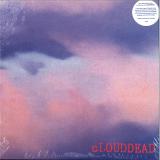
cLOUDDEAD's debut album, compiling six 10" EPs that appeared between 2000-2001, is aurally dense and obscured. A sprawling mass of miniature beat-suites and Dadaist lyrics, this strange and beautiful 3xLP would influence a myriad of sub-genres (cloud rap, hauntology, lo-fi hip-hop, etc.) in the two decades since its initial release.
Only the three members of cLOUDDEAD – Why?, Doseone and Odd Nosdam – can speak to the group's origins, but in the context of underground hip-hop towards the end of the 20th century, their arrival makes perfect sense. Cincinnati had a vital scene; home to Scribble Jam, an annual confluence of MCs, DJs, B-boys and graffiti artists. While the trio soon relocated to the Bay Area where they co-founded the Anticon collective, their Midwestern roots – in ramshackle basements of off-campus hovels, as the "cerberus of Southern Ohio" – would remain the atomic heart of their early recordings.
As Chris Martins writes in the liner notes, "The only reason we know their names today is because of how loudly and curiously they aired their insularity. They rewrote the entire world as they knew it through their own fucked perspective, and when those mysterious 10-inches started popping up in record shops, it wasn't just a puzzle to investigate: there seemed to be a whole cosmology hidden in those grooves."
Each side of the album represents one of those elusive 10-inches, each embodying a universe unto itself. Opening salvo "Apt. A" and "And All You Can Do Is Laugh" are perhaps most emblematic of the cLOUDDEAD experience. Why? and Dose create a new language through boundless non-sequiturs, sing-song non-choruses and call-and-response hooks, while Nosdam's dexterous production shifts from crackling ambience of Flying Saucer Attack to tight Ohio Players drum breaks and oblique film samples.
Taken all together, cLOUDDEAD is an original interpretation of hip-hop in the surreal Y2K glow – a bizarre meeting point between William Basinski's Disintegration Loops and MF DOOM's Operation: Doomsday. All it took was a Dr. Sample SP-202, Tascam cassette eight-track and cheap RadioShack mic. There's truly nothing like it.
This edition has been faithfully restored by Nosdam. European exclusive version comes on clear vinyl, incl. fold-out poster and liner notes insert.
Allowing yourself to find meaning or beauty in the mundane is an act of generosity, Whether it’s seeing a smiling face in an electrical outlet socket, or discerning cosmic design amidst the forest floor detritus, it comes from a place of kindness to yourself and senses – and openness to hidden spirit of the world. These tracks came together during a period of intense personal change for adaa, rooted in a fruitful reflection on the connections between spirit and body, “feeling my flesh so I can feel and understand my spirit,” as adaa puts it. The sense of a crossover and clash of multiple connected realities – on-screens, on-line, on-earth, off-world, after-life – unites adaa’s multifaceted productions.
Ostensibly an assemblage of found sounds. scribbled thoughts and poems from diaries, and musial snippets, the album's scattered production reflects adaa’s own many mirror worlds. Field recording sit behind most tracks, alongside VST synths, guitars, and a variety of voices, from adaa’s own mangled vox to EVP samples taken from YouTube (recorded sounds believed to be spirits or paranormal activity), all processed to varying degrees.
While the music was mostly produced either in adaa’s studio in Providence, Rhode Island, or in bed, the field recordings bring the outside world in. The result of walks in the woods, hum of roads and highways, hiss of beaches, warmth of walks with friends and past lovers “around the East Coast”. It sits behind tracks like ‘sight’ where a lilting piano lin bobs atop a pond of rustling and distant whistles. Is that birdsong? Or ghosts? Saccharine hyperpop arpeggiation crossfades sharply into noise guitar squall. Angelic demon voices yawn into a hefty crescendo. Pure drones duet with gales of undefinable field sounds.
“Sometimes I feel like a seed in frosted soil,” says adaa. “If i choose to be optimistic.”
A house is something that is so deeply temporary, yet it can hold so much energy. How do we carry or leave behind those energies while transitioning into new spaces? How does each space we occupy for some time shape us and how do we tear ourselves away from it and its influence once it’s time to go? These are some of the core questions behind CC Sorensen’s new album for mappa, ‘Phantom Rooms’ – it’s a record about movement, change, transformation, family, juxtapositions… but most of all, home.
CC Sorensen was reflecting a lot on their childhood home in rural Kansas, USA while working on this music. The album could be characterised by a familial, chamber feel and both of CC Sorensen’s brothers, Ryan and Nyal Ruehlen, make an appearance on ‘Phantom Rooms’, among other instrumentalists. Using a wide palette of sounds – CC Sorensen alone in charge of keyboards, software instruments, voice, electronics, percussion, trumpet, guitar and field recordings, in addition to guests on pedal steel, voice, chimes, saxophone and drumset – the American musician crafts music as mysterious as it is inviting. The idea behind it would be almost surrealist – ghostly rooms in houses where we live – if we all didn’t know exactly what CC Sorensen means. Home isn’t something concrete, but it’s also not just an abstract concept. It’s a space beyond space; home in itself is a phantom room we enter. And what enables us to enter is the object of exploration here.
CC Sorensen’s approach is playful – tracks like “Beat Bot” and “Plastic Portals” are almost fun – but also contemplative. They make thoughtful, meandering chamber music intertwined with field recordings and electronics. Reeds, strings and percussion often set the atmosphere – sometimes airy, gentle, at other points more insistent – as the music grapples with departure, instability, deep reflection and imagined future spaces. Especially in the closing “Bexar” there’s a tangible yearning for a stable home, a longing to rekindle and keep ablaze this beautiful familial connection to a physical place. It’s both music that invites to reflect and music that in itself reflects; desires, hopes and dreams.
To decay is also to transform. Rusting metal is the visible traces of passing time, as the oxidation process accumulates dampness in our atmosphere and imprints it as unpredictable patterns onto hard iron and steel. Working in construction for a year now, Kensho Nakamura sees rust all the time, clambering up ageing chunks of material. Normally discarded as waste, Nakamura began discerning beauty in the phenomenon, organically spiralling around and consuming some of the very hardest of manufacturing stuffs into unique new forms.
‘Electric Rust’ continues the conceptual electronic composition mode of Nakamura’s previous works with a series of fractured musical dioramas. These scurrying notes, sparse hums, and quivering bleeps explore the topics of rust and the accumulation of time. The music ticks like a clock, drips like a tap, and manifests unknowable inorganic shapes. Recognisable musical snippets of bells, pianos, or murmured voices are buried inside counterintuitive synthetic rhythms and tension.
On ‘wet air’ piano notes tinkle and pipes gargle, digital detritus tap dances and arpeggios stumble. On ‘unique faces’, idle marimbas and malfunctioning animalistic squeaks flounder. This is music from the promethean space between being forgotten and being conceived. ‘Electric Rust’ is a topography of a world of rust, where corroding structures evolve into new — and beautiful — patterns of life.
- A1: This Doesn't Exist Anymore
- A2: It Started To Hurt And Then It Just Continued
- A3: Everything You've Ever Dreamt Of And Less
- A4: A Substitute For Experience
- A5: Cyclopentane Fantasy
- A6: Post Sport Principle
- A7: Reverse Nightmare
- A8: 100 Feet To Burn On The Ground
- B1: Dumb Milestone
- B2: I'm Noticing The Blossoms More This Year
- B3: The Extremes
- B4: Terminally Online (For You)
- B5: Underachievers Anonymous
- B6: I Have Been To Heaven Once
- B7: Old Love, Old Fears
Inspired by witnessing the broken tension and renewed possibilities of a laptop breaking down at a gig – not to mention the void left behind by the sudden end of a relationship – Pentu’s latest release is a jump-cut menagerie of musical moments. Sewn together into ‘And I Saw My Devil And I Saw My Deep Blue Sea’, these fifteen tracks continue the London-based producer’s active departure from the soundscapes and song structures that dominated their previous writing style. These disparate pieces slice themselves off into sudden silence, or veer into unpredictable sidebars, hopping from hyperactive instrumentals to beautifully deconstructed YouTube samples. Described by Pentu as “emotionally intuitive to write”, this is music by and for the endlessly scrolling modern mind – “navigating the world alongside the splintered, interruptive emotional hyper realities of social media.”
The sudden silences, drones, and interruptions are perhaps less surprising than the guitar-based textures of metal & shoegaze woven into several vital passages by Pentu. The result is a collage that encapsulates the erratic feeling, not only of a relationship’s end, but simply of navigating online mediascapes.”I found myself realising that my phone, the constant interrupter of nothingness and silence, was both a cause of depression (reliving memories, dating apps) and a relief from it (creating new friendships, distractions, also dating apps)”, says Pentu.
Pentu’s attempt to overcome content overload by actively curbing his setup of laptop-guitar--synth does little to reduce the scope of this album’s sonic palette. YouTube vlog samples (from videos with next-to-no views) are an attempt to recontextualise and dramatise material that “would have otherwise been throwaway moments lost in the internet”, adding staccato moments of reality to Pentu’s beautiful and jarring album-length paean to overstimulation.
- A1: Rock Around The Clock - Bill Haley And His Comets
- A2: Sixteen Candles - The Crests
- A3: Runaway - Del Shannon
- A4: Why Do Fools Fall In Love - Frankie Lymon & The Teenagers
- A5: That'll Be The Day - Buddy Holly & The Crickets
- A6: At The Hop - Danny & The Juniors
- A7: He's So Fine - The Chiffons
- A8: See You In September - The Tempos
- A9: I Only Have Eyes For You - The Flamingos
- B1: Surfin' Safari - The Beach Boys
- B2: Little Darlin' - The Diamonds
- B3: Almost Grown - Chuck Berry
- B4: (He's) The Great Imposter - The Fleetwoods
- B5: Smoke Gets In Your Eyes - The Platters
- B6: Peppermint Twist (Part 1) - Joey Dee & The Starliters
- B7: Barbara-Ann - The Regents
- B8: Book Of Love - The Monotones
- B9: A Thousand Miles Away - The Heartbeats
- C1: Do You Wanna Dance - Bobby Freeman
- C2: Party Doll - Buddy Knox
- C3: Come Go With Me - The Del-Vikings
- C4: You're Sixteen - Johnny Burnette
- C5: Love Potion #9 - The Clovers
- C6: Since I Don't Have You - The Skyliners
- C9: Get A Job - The Silhouettes
- D1: Come Back My Love - The Wrens
- D2: Crying In The Chapel - The Orioles
- D3: Cupid - Sam Cooke
- D4: Earth Angel - The Penguins
- D5: Freight Train - Rusty Draper
- D6: Gee - The Crows
- D7: I'm Sorry - Brenda Lee
- D8: Johnny B. Goode - Chuck Berry
- D9: The Locomotion - Little Eva
- E1: Mr. Lonely - Bobby Vinton
- E2: Reet Petite - Jackie Wilson
- E3: Runaround Sue - Dion
- E4: Searchin' - The Coasters
- E5: A Teenager In Love - Dion & The Belmonts
- E6: To The Aisle - The Five Satins
- E7: Whispering Bells - The Del-Vikings
- E8: Will You Love Me Tomorrow - The Shirelles
- E9: Hey Little One - Dorsey Burnette
- F1: Diana - Paul Anka
- F2: The Girl Can't Help It - Little Richard
- F3: It's All In The Game - Tommy Edwards
- F4: A Kiss From Your Lips - The Flamingos
- F5: Oh What A Night - The Dells
- F6: Rock And Roll Music - Chuck Berry
- F7: Sh-Boom - The Crew Cuts
- C7: Chantilly Lace - Big Bopper
- F8: The Stroll - The Diamonds
- F9: Walking Along - The Solitaires
- C8: Tutti Frutti - Little Richard
Inspired by the soundtrack from the motion picture American Graffiti, this 3LP collection captures the sound of late night cruising, jukebox romance and early rock ’n’ roll rebellion. Spanning doo wop, rockabilly and classic pop, the set brings together era defining hits from the mid 1950s to early 1960s, featuring timeless favourites by Chuck Berry, The Beach Boys, Dion, Little Richard, Sam Cooke, The Platters and many more. Pressed across three vividly coloured vinyl records, red, blue and yellow, this set is both a nostalgic listening experience and a striking collector’s piece, celebrating the golden age of American rock and pop in authentic style.
Very limited repress. Buy or cry!
Opening the release we have one of the most interesting, boundary-pushing artists - Bawrut, who twists Burning Up into outer space. Never one to shy away from a bit of high drama in his tracks, he squeezes every ounce of the original through his sonic mangle resulting in a bass bin wobbling slice of intergalactic house music which confidently stands out in the crowd. Next up, and in perfect contrast, we have UK producer Telfort flipping Becoming Cyclonic on its head. He has well and truly stamped his mark with a fresh sound which takes influence from golden era 90’s deep house but adds a solid, bass-heavy Detroit edge.
He delivers a moody, late-night excursion dripping with fat strings, crisp hats and chiming arps. Flipping over you have the master of deep, iconic and prolific UK producer Charles Webster, who pushes Burning Up to a new sonic level. A sublime rework which is unmistakably his sound, cerebral and dark yet also uplifting, warm and enveloping.
- A1: Svitanie - Jonáš Gruska
- A2: Yamaha Birds Pt 1 - Dialect
- A3: La Guardiana De Las Ondas Radiales 1 - Makakinho Do Amor
- A4: Sonderbare Ereignisse Am Lake Hillier - Baldruin
- A5: Kirkas Laulu, Haalea Valo - Olli Aarni
- A6: Wind Up Paradise Birds -Øyvind Torvund, Bit20 Ensemble, Trond Madsen, Jørgen Træen, Kjetil Møster
- A7: Whizz -Vic Bang
- A8: A Glitch In The Jungle - Grykë Pyje
- A9: Harpusta / Tarjous -Tomutonttu
- B1: Vögel Unserer Heimat - Native Instrument
- B2: Irekle Qoştar - Hmot
- B3: Ptakodisk - Artificial Memory Trace
- B4: Mijn Papegaai Fluit Pure Tonen - Floris Vanhoof
- B5: Aviary - John Also Bennett
- B6: Susurrus - Cheryl E Leonard
- B7: The Wild Birds Of Bluesealand - Mike Cooper
- C1: Un Signe Sylvestre - Matthias Puech
- C2: Barrockstadt Feathered Symphony - Enchanted Lands
- C3: Kolibřík - Ursula Sereghy
- C4: Pigeon Tones For Eggflute - Ecka Mordecai, Malvern Brume
- C5: Bird To Bottle - Banana, Alexandra Spence, Mp Hopkins
- C6: Whistle & Bag - Rie Nakajima
- C7: The Listener - Martina Lussi
- D1: Clivis - James Rushford
- D4: Synthetic Birdsong - Andrew Pekler
- D5: 030652_0125ꜱ12 ᴡᴀᴠ - Atte Elias Kantonen
- D6: Dive Woodz - Kensho Nakamura
- D7: Time Flys - Felicity Mangan
- D8: While They Gathered My Ears Grew - Maria Komarova
- D9: Birds In Gutter - Misha Kurilov
- D2: Three Calls - Kate Carr
- D3: Starlings Gulls Doves - Infant
When you listen to birds, they usually talk about food, sex/family, or anxiety. If they knew about the true nature of humanity's cruel and exploitative relationship with birds, they would be discussing rebellion. Humanity's current trajectory about birds is to cause the extinction of one-third of all bird species by the end of this century.
This record crystallises the borders between memory, beauty, and anxiety. At the core is an amalgam of all the birds we have met and heard, their sounds synthesised from a blend of memories. Esthetically it simulates the qualities of bird sounds, hitting similar frequential sweet spots. There is a great variety of birds captured here, from high to low frequencies, from solo voices to groups, from birds standing on their own to complex world-building, where the bird voices are part of an ecosystem, becoming one of the instruments.
You could stop there, enjoying this record on a musical level, but it invites us to do one step further, to consider reconfiguring our relationship with the Earth and its inhabitants. To question our impact, and to ask why we need synthetic bird music. Is it just a visionary endeavour or is it because we are failing at fostering a world in which organic birds and other creatures can thrive?
32 artists from the whole world, including our favourite artists from Eastern Europe, have contributed to this compilation both with new and previously released music. Their music is ordered from dawn to dusk and into the night. For many of the artists it's their first time on mappa, but some have previously released an album with us.
This one already has created a nice little stir with the soul crowd, and rightly so.
The A side "Is It Still Good For You" is a wonderful Modern soul chugger that oozes that late night club feel. Simple in its melody and production but bounces along so soulfully. Great vocals but the late Johnny Kemp with the group on some killer backing harmonies.
Kinky Foxx could be described as an ever changing funk machine with nuts and bolts that remained strong over time. This band planted its roots in the Bahamas where the name "Kinky" was given to Joseph Foxx and teaming up with his Brother Donny Foxx formed the musical group named, "DER KINKY FOXX"!!! The two Foxx Brothers added members Kevin Bassett-Guitar, Johnny Kemp-Vocals, and Burnis Stubbs-percussion performing clubs and concerts in the Bahamas. Moving to New York City Kinky Foxx changed members to compete with the major funk venue during the early 80s. Acquiring Dan Atherton Sr. AKA "The Slammin 'Drummer", Larry Robinson-Keyboardist, Timmy Allen-Bass, Kevin Robinson-Guitar these musicians combined forces with Johnny Kemp, Kevin Bassett, and Burnis Stubbs to form the New York City based "Original" Kinky Foxx from '79 to '81, burning up the famous Cellar Club in NYC, the mecca for Black Funk entertainment. With a front line of top musical talent some members moved on to follow solo recording and production careers and contracts. To fill lead gutiarist and Bass guitarist vacancies Jerry Powell was added on guitar,and Leslie Booker was added on bass. In 1982 Kinky Foxx added Vincent Lilly on lead vocals and Curtis Styles on Keyboards.The Foxx released the hit song "So Different" on Sound of New York records in '83 and embarked on a Canadian experiment leaving the US to play briefly in Montreal, Quebec at Club Checkers. The rest is history as the band became so popular in Quebec and Ontario they could have been called Canadian residents, usually working 6 nights a week and 11 months out of the year from '83-'91 . Dan Atherton moved on in '83 to pursue a career as The "Slammin Drummer" for hire, and was sought after by a barrage of major artists,touring with Bobby Brown,New Edition,Levert,Teddy Riley and Guy,Cameo,and Atlantic Starr. Tyrone Govan aka "King" moved in as the Foxx Drummer in '83 and remained with the group until the band went their separate ways in the mid 90's. The Foxx's last performance in the States was in North Carolina on tour and backing Prince's sister Tyka Nelson in the 90's. Currently the band has sparked interest once again writing and recording new material and is forming a reunion show which will eventually lead to additional performances with other recording acts and headline shows.
Nina Wilson, better known as Ninajirachi, is a 26-year-old Australian electronic producer who released her debut album I Love My Computer earlier this year via NLV Records. A concept record built on her connection with her PC, swiping between genres of EDM, tech-house, speed garage, dubstep, and hyperpop. Wilson builds on the legacy of early-2000s and 2010s Australian electronic artists like PNAU and Flume using technology as a medium, a motif, and a mirror for reflection. Between remixing Princess Nokia, Deadmau5 & The Neptunes, releasing on Nina Las V egas’ NLV Records and RL Grime’s Sable V alley, Ninajirachi has performed at Lollapalooza, EDC, Laneway, Listen Out, Splendour, Falls Festival, and more and toured with Mallrat, Charli XCX, Porter Robinson and Cashmere Cat.
This is a super limited double vinyl only press.
Twelve Il Bosco edits of new wave bangers tried and tested down in the Manctalo Disko at The White Hotel and beyond...
No digital will be sold. Again as we said plenty of times before the reason we don't sell the digital tracks is out of respect for the original artists. We make no money on pressing vinyl.
It's expensive. time consuming and nobody fukin buys it anymore.
We do it because we love this shit and the chance to share our discoveries with ya'll.
We hope our compilations serve as an advert for the original artists.
You fall in love with a track, find out who it is and then go and discover more about them.
Shouts here to Hysteric (Mothball Records) for track 3 and Kelvin Andrews & Balearic Mike (Down To The Sea And Back) for putting me onto Car Crash Set leading me to discover track 1.
- A1: Ghetto Chronicle Daily
- A2: Use To Fear Death
- A3: Drug War Rages
- A4: Saturday Night, Sunday Morning
- A5: What U Saying
- B1: Nighty Night
- B2: Stick N Step
- B3: Death Of A Salesman
- B4: White Chalk Pt. (Feat. Biggie Smalls)
- B5: Same Shit
A long-overdue vinyl reissue for this underground gem from the Bronx! Originally released in the late ’90s, Ghetto Chronicle Daily stands as a timeless snapshot of New York street rap in its rawest form — a true reflection of the city’s golden era grit and lyrical craftsmanship.
The Money Boss Players — made up of Big Ah (RIP), Lord Tariq, Tre Bag, Eddie Cheeba, C-Dubb, and legendary producer Minnesota — were key figures in shaping that unmistakable Bronx sound. Their chemistry was electric: sharp lyricism, vivid street storytelling, and cinematic beats that carried the DNA of hip-hop’s golden age.
This first-ever vinyl reissue brings this underground classic back to the masses in its full glory and goes a step further with bonus tracks previously unreleased on vinyl, including “Drug War Rages” and “Same Shit” — raw, unfiltered cuts that capture the crew at their most authentic. Also included is “White Chalk Pt. 2”, featuring none other than The Notorious B.I.G., a rare collaboration that cements the group’s deep roots in the East Coast rap lineage.
Since the original release, members of Money Boss Players have continued to carve their own lanes — with Eddie Cheeba and Tray Bag evolving into Boss Money, and Lord Tariq making his mark as a solo artist. In recent years, Bronx rapper Yung JB has joined the fold, carrying the Boss legacy into a new generation.
Now, more than two decades later, Ghetto Chronicle Daily returns to turntables worldwide — remastered and pressed with care for true heads and collectors alike. A must-have piece of hip-hop history, finally on wax where it belongs.
Am 13. Februar 2026 veröffentlicht Sony Music Austria die ersten beiden Hansi-Lang-Alben "Keine Angst" und "Der Taucher" auf einer LP neu in einer limitierten Auflage auf farbiger Vinyl.
Hansi Lang gilt als eine der charismatischsten Stimmen der heimischen Rock- und Popkultur. Mit seinem experimentierfreudigen Stil, der Elemente aus Rock, Pop, Punk und New Wave verband, prägte er maßgeblich die österreichische Musikszene der frühen 80er Jahre.
In bildhaften, existenzialistischen Texten griff Lang Themen wie Unsicherheit, die Selbstbehauptung in einer konformen Gesellschaft und Großstadtgefühl auf und traf damit den Nerv einer jungen, urbanen Generation.
Während "Keine Angst" und die bahnbrechende gleichnamige Single den Grundstein für Hansi Langs Solokarriere legte und lautstark und zeitgeistig eine Brücke zwischen Wiener Underground und Mainstream-Pop schlug, präsentierte sich das zweite Album "Der Taucher" komplexer und konzeptioneller als der Vorgänger und stellt möglicherweise Langs künstlerisch ambitioniertestes Werk dar. Mit "Monte Video" und "Ich spiele Leben" enthält es zudem zwei absolute Klassiker aus dem Repertoire des Ausnahmekünstlers.
Die limitierte coloured Vinyl Reissue vereint beide Alben in einer hochwertigen Edition - ideal, um das einzigartige musikalische Erbe Hansi Langs wieder oder auch neu zu entdecken!
Beide Alben werden zum Release der Vinyl-Edition endlich auch vollständig im Streaming erhältlich sein.
- A1: Wild
- A2: Bite
- A3: Fools
- A4: Ease
- B1: The Quiet
- B2: Dkla
- B3: Talk Me Down
- B4: Cool
- C1: Heaven
- C2: Youth
- C3: Lost Boy
- C4: For Him
- D1: Suburbia
- D2: Too Good
- D3: Blue
- D4: Swimming Pools
- D5: Strawberries & Cigarettes
The limited edition blush-and-blue 10th anniversary edition of Troye's debut album 'Blue Neighbourhood' with brand-new, reimagined art from original illustrator Hsiao-Ron Cheng. Celebrating a decade since its release, 'Blue Neighbourhood - Ten Years On' includes two tracks much loved and requested by fans “Strawberries & Cigarettes” and “Swimming Pools”.
- Elegia
- Voce In Xy
- Canti Delle Sfere
- Frammenti Di Sonno
- Movimenti E Silenzi Per Spazi Bianchi
- Antico Adagio
- Ondulazione Melodica
- Motus
- Frammenti Di Suono
- Vocis
- E Echi Armonici Part 1
- F Echi Armonici Part 2
For the first time, all the 1978 recording sessions of Lino Capra Vaccina's legendary Antico Adagio - including Frammenti da Antico Adagio and Echi Armonici da Antico Adagio - collected in one definitive deluxe edition. Minimalism, and so much more. Sheets of resonance, stunning harmonic interplay, intricate rhythms rising as one. Sidelong works of pulsing, hypnotic, ritualistic drone built from vibraphones, marimbas, gongs, bells, and cymbals, threaded by the sustained vocal tones of Juri Camisasca and Dana Matus. A trance-inducing, meditative, cosmic world of sonic interplay - the world beyond, joined with that which lays within.
Before an aberrant idea of progress ludicrously sped up our daily lives, even in hectic Milan it was possible to "play slowly" - with no pressure, simply following the path your art was showing you. This music moves between modal fascinations, ritual evocations, and states of hypnotic trance, evoking the acoustic environment of Tibetan and Zen Buddhist ceremonies and the temporal structures of Noh theatre, from which Vaccina took the name of his original label, Nō. Now, fittingly, this complete collection appears on Ubi Kū, the label of the Italian Buddhist Union.
Lino Vaccina (1953) first gained note as a member of Aktuala, creating a hybrid of rock, avant-garde, and ancient musics while incorporating sonic traditions from across the globe. After leaving in 1974, he studied at Milano's Civica Scuola di Musica, collaborating with Franco Battiato and Juri Camisasca, and forming Telaio Magnetico in 1975. In 1978 he self-released Antico Adagio in a tiny edition and wouldn't be heard from again until 1992. From 1979 to 1985 he was percussionist with the Orchestra of Teatro alla Scala under maestros such as Abbado and Ozawa. His career has been marked by an incredibly high bar of quality and a tragically slim recorded output - a rigorous and sensual language fusing Oriental, Mediterranean, and African influences with ritual elements and a cosmic sense of time.
As Massimo Torrigiani writes: "Lino Vaccina's music captivates through its internal coherence and its ability to generate states of suspension and deep listening - through undulations, small melodic fragments, dialogues between acoustic instruments and resonances that seem to evoke a phantom orchestra. An example of personal exploration, discipline and openness that speaks across time to anyone willing to be drawn into its sound."
Frammenti da Antico Adagio and Echi Armonici da Antico Adagio contain material from the original sessions, restored and issued by Die Schachtel in 2014 and 2017. The new masters, prepared by Giuseppe Ielasi, are based on those restorations and the original material. The package includes previously unpublished photographs from the May 1978 sessions and liner notes by Mauro Radice in Italian, English, and French. Cover art by Dana Matus. Printed by Legno, Milano & Mother Tongue, Verona.
Personnel: Lino Capra Vaccina (vibraphone, marimba, tablas, wooden drums, darbuka, cymbals, gong, metal sheets, bells, bass drum, tom, snare drum, piano, voice), Dana Matus (voice, percussion, cetra), Juri Camisasca (voice), Mario Garuti (violin), Roberto Mazza (oboe). Original production by Massimo Villa & Lino Vaccina with Piero Cannizzaro. Recorded May 1978 at Circle Studios, Milano.
The heights of the Italian avant-garde, at their very best.
Mess Esque are a duo featuring music and instruments by Mick Turner
and words and voice by Helen Franzmann. Their self-titled album is a
beguiling travelogue of restless, somnambulant wanderings.
Perhaps best known as one of the Dirty Three, Mick’s been playing
guitar and making music with many collaborators for forty years. He’s
loved his paintings too but revered especially for his solo music - since
1997, Drag City have released four of his albums, plus an EP and an
album of the Tren Brothers (Mick with percussionist and fellow Dirty
Three-ite, Jim White) and two EPs featuring Mick as the Marquis de Tren
with Bonnie ‘Prince’ Billy.
Mick’s last record was 2013’s ‘Don’t Tell the Driver’, a work that found
him departing from his traditional hermetic instrumental template by
employing a rhythm section and brass charts and even collaborating with
a vocalist. After all the purely instrumental music he’s made with Dirty
Three and solo, a singer is now part of the sound he’s hearing in his
head these days; while demoing new material, he realized that he was
again writing music that needed lyrics - and for that matter, someone
other than himself to sing them. But who? In 2019, he was introduced to
Helen through a mutual friend who’d produced her last album. Under the
name Mckisko, Helen has released three albums over the past 12 years,
working and touring with a range of Australian musicians along the way.
Her music has been described as numinous and transformative. Her
most recent album, ‘Southerly’, saw her moving into a more expansive
sound which led to an openness and excitement around further
collaboration.
Helen’s words are carefully observed, her phrasing responding intuitively
to Mick’s looping guitar figures with vocal repetitions of her own. Starting
with a feeling or a voicing, there are often no words - both players are
searching on their own paths. Then suddenly they have arrived and are
passing the emerging meaning back and forth, the rising intensity
forming a kind of undertow that pulls the listener deeper into their world.
Often, Helen would record her vocals in the middle of the night, seeking
that 2am flow, a moment of greatest isolation through which to trace her
melodie with fragility and strength. This crystallizes Mess Esque’s
intention: riding the sleepy drift through the blurred edges of the day…
time-traveling to that moment beyond stasis where sense and no sense
coincide and share space and time and energy. Viewing from afar the
immense peace of this planet when its ghost world of spirits below - the
madness of crowds, people sliding past each other faraway in the night -
are quieted at last.